 by Tom Gurney
Tom Gurney BSc (Hons) is an art history expert with over 20 years experience
Published on June 19, 2020 / Updated on November 6, 2025
Email: tomgurney1@gmail.com / Phone: +44 7429 011000
Michelangelo’s life and work, year by year
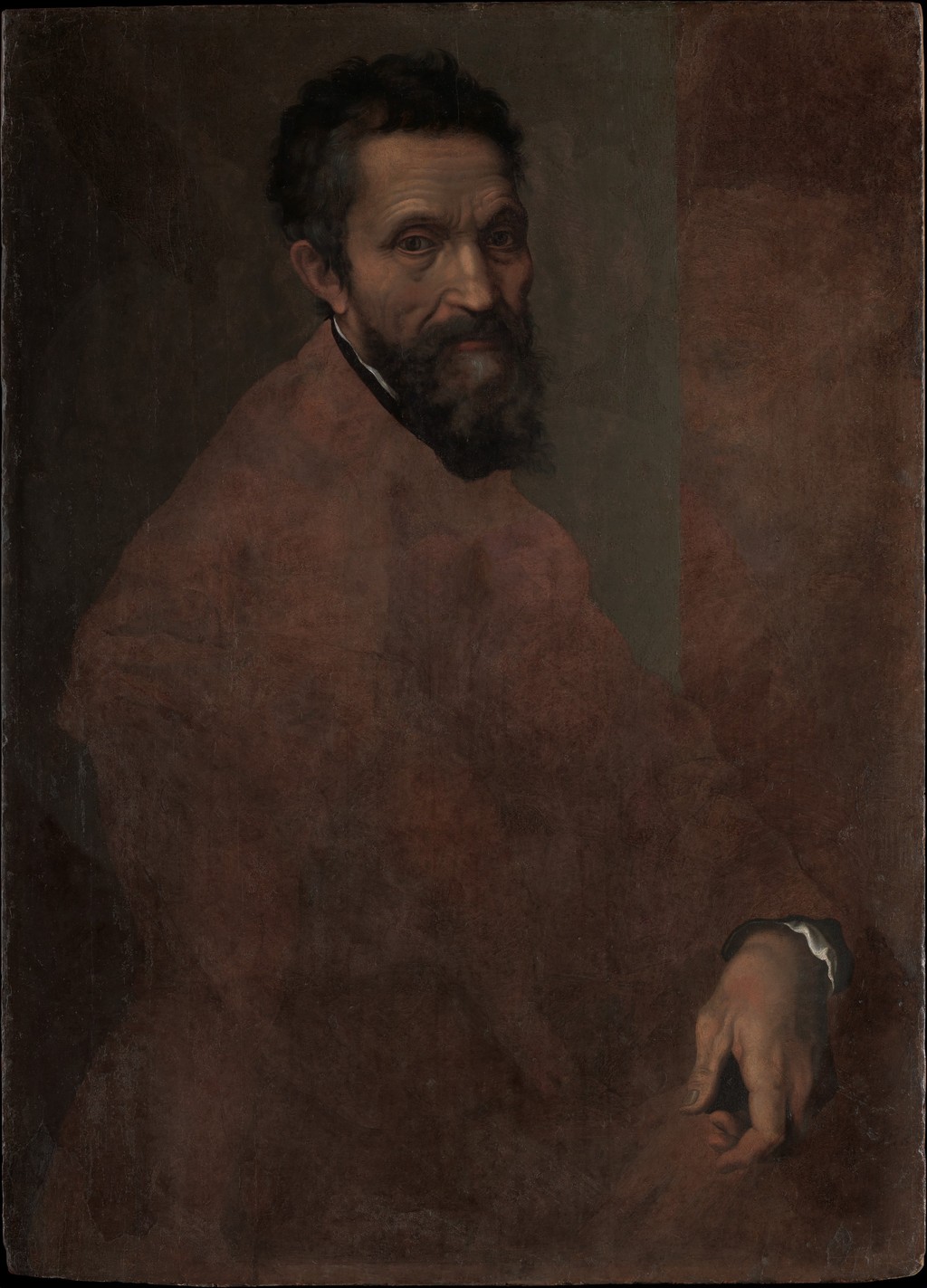
This timeline follows Michelangelo Buonarroti from his birth in 1475 to his death in 1564, connecting the main events of his life with works, patrons, cities, poems, drawings and architectural projects. It is designed as a practical companion to the Michelangelo biography, the medium pages for sculpture, painting, drawings, architecture and poetry, and the individual work pages across the cluster.
Dates for Michelangelo are sometimes precise and sometimes approximate. Contracts, letters, biographies, museum catalogues and surviving objects do not always line up neatly, especially for long-running commissions such as the tomb of Pope Julius II or projects continued by assistants and later architects. Where a date is approximate, this page says so rather than forcing false certainty.[1][2][21]
At a Glance
- Life span1475–1564 [2][23]
- Main centresFlorence and Rome, with important periods in Bologna and Carrara [1][2]
- Longest-running problemThe tomb of Pope Julius II, begun in 1505 and repeatedly reduced before the 1545 monument [9][10]
- Late-career centreRome, especially the Pauline Chapel, St Peter’s Basilica and late devotional sculpture [15][18][20]
Contents
- 1475–1488: family and training
- 1488–1496: Florence, the Medici and Bologna
- 1496–1501: first Rome
- 1501–1505: republican Florence
- 1505–1512: Julius II and the Sistine ceiling
- 1513–1534: Medici Florence and crisis
- 1534–1545: Rome, the Last Judgement and Julius tomb
- 1546–1564: late architecture, poetry and Pietàs
- Frequently asked questions
1475–1488: family and training
- 6 March 1475: Michelangelo di Lodovico Buonarroti Simoni is born at Caprese, where his father is serving a temporary Florentine administrative appointment.[1][2]
- 1475–1476: The Buonarroti family returns to Florence. Michelangelo’s later identity is inseparable from Florence, even when his most famous commissions are Roman.[1][2]
- Early childhood: Later biographies describe the child’s resistance to a conventional family career. The safe historical point is that he enters art through the workshop-and-patronage culture of Florence rather than through isolated genius.[4]
- 1481: Michelangelo’s mother, Francesca di Neri, dies while he is still a child. This belongs to the family background that later biographers use to frame his severity and independence.[1][4]
- Mid-1480s: He receives grammar-school training but is increasingly drawn toward drawing, copying and the practical world of artists in Florence.[4]
- 1488: Michelangelo is placed in Domenico Ghirlandaio’s workshop. The apprenticeship gives him contact with fresco practice, large narrative cycles and the disciplined organization of a successful Florentine bottega.[1][2]
- 1488–1489: His early training includes copying earlier masters and absorbing Florentine figure design, a foundation that remains visible even in the later Sistine and Last Judgement bodies.[1]
- By the late 1480s: The young artist is already moving from ordinary workshop training toward the elite artistic environment that will soon bring him into the orbit of Lorenzo de’ Medici.[2]
1488–1496: Florence, the Medici and Bologna
- About 1490: Michelangelo enters the circle around the Medici sculpture garden at San Marco, where antique fragments, humanist learning and elite patronage reshape his ambitions.[2][3]
- 1490–1492: He studies and competes in an environment associated with Bertoldo di Giovanni and the Medici household, learning to treat ancient sculpture as a living design language rather than as a museum of fixed forms.[1][2]
- About 1490–1491: The Madonna of the Stairs shows his early command of shallow relief, compressed space and monumental feeling on a small scale.[3]
- About 1491–1492: The Battle of the Centaurs tests crowded bodies, violence and antique subject matter, already pointing toward the muscular density of his mature art.[3]
- 1492: Lorenzo de’ Medici dies. Michelangelo loses the patronage setting that had supported his early formation, and Florence’s political atmosphere becomes more unstable.[2]
- 1493–1494: Early works and experiments continue in Florence, but the Medici order is giving way to crisis, Savonarolan reform and republican politics.[1][4]
- 1494: The Medici are expelled from Florence. Michelangelo leaves the city during the upheaval, a pattern of movement between Florence, Bologna and Rome that will mark the next decade.[2]
- 1494–1495: In Bologna he contributes small marble figures to the shrine of St Dominic, including saints now represented in the cluster by St Petronius and St Proculus.[2][5]
- 1495: Michelangelo returns to Florence with broader experience of patrons, marble carving and civic instability.[2]
- 1495–1496: He prepares the ground for his first Roman period, where antique taste and high-status collecting will give him a new stage.[2]
1496–1501: first Rome
- 1496: Michelangelo arrives in Rome, where ancient sculpture, cardinals, bankers and collectors offer a different scale of opportunity from Florence.[2]
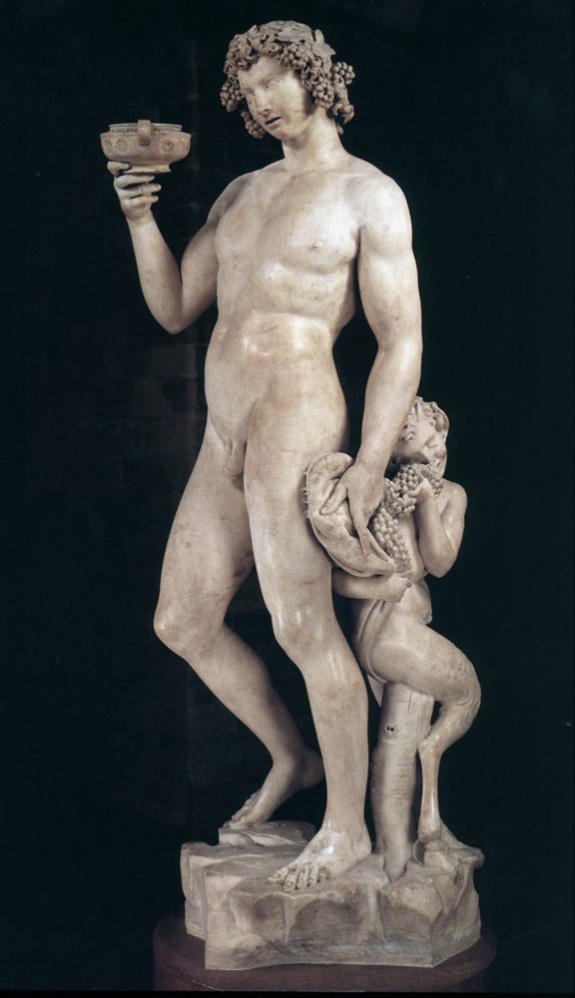
- 1496–1497: The Bacchus responds to antique sculpture while making the god’s body unstable, tipsy and psychologically ambiguous rather than simply heroic.[2][5]
- Late 1490s: Roman patrons begin to read Michelangelo as a sculptor capable of equalling antiquity, a reputation that will matter for both devotional marble and papal tomb projects.[2]
- 1497–1498: He negotiates the environment of Rome’s French, papal and banking patrons, building the relationships that lead to the Vatican Pietà commission.[6]
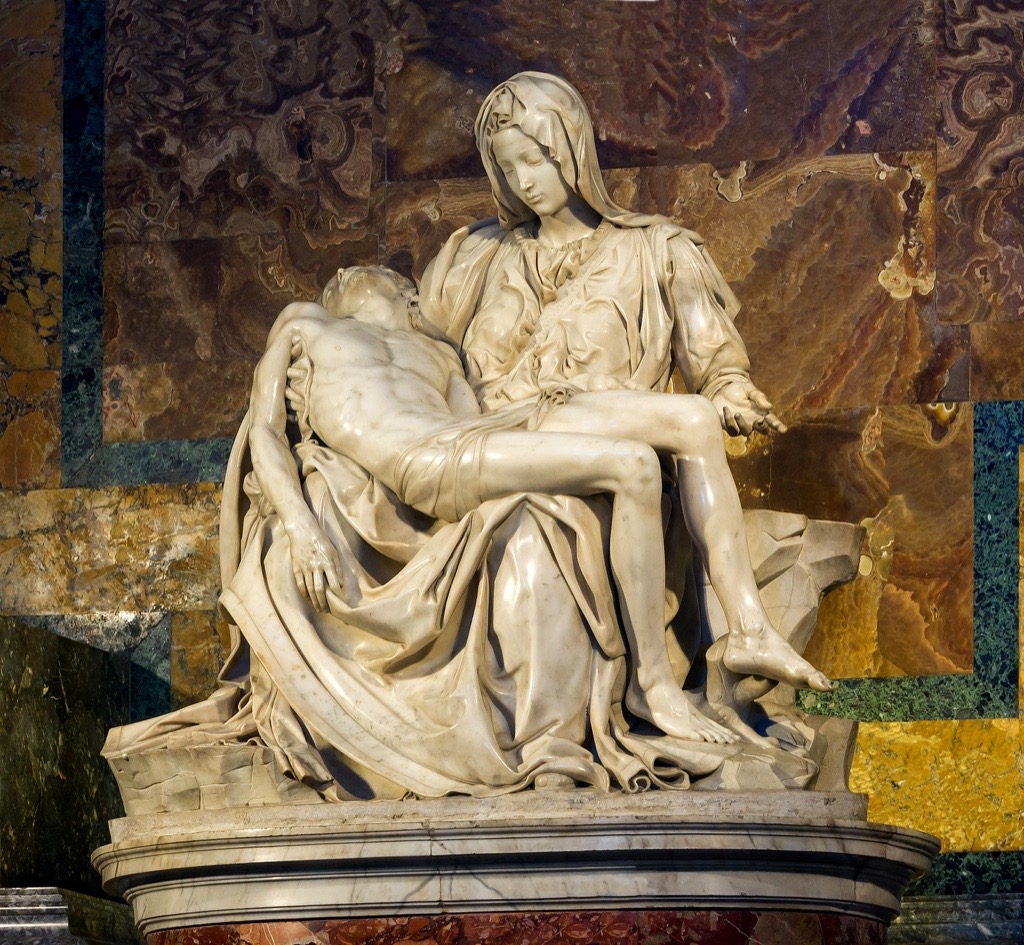
- 1498: The commission for the Vatican Pietà is agreed for the French cardinal Jean de Bilhères.[6]
- 1498–1499: Michelangelo carves the Vatican Pietà, joining devotional intensity to an extraordinary polish of marble surface.[6]
- 1499: The Pietà is completed and quickly becomes the work that secures his Roman fame; it is also the sculpture most associated with his signed name.[6]
- 1500: Michelangelo remains a young artist with a rapidly expanding reputation, but not yet the civic sculptor of the Florentine David or the papal artist of the Sistine ceiling.[2]
- 1501: He returns to Florence with Roman experience and a dramatically enlarged reputation, ready for the commission that will define his public image in the city.[2]
1501–1505: republican Florence
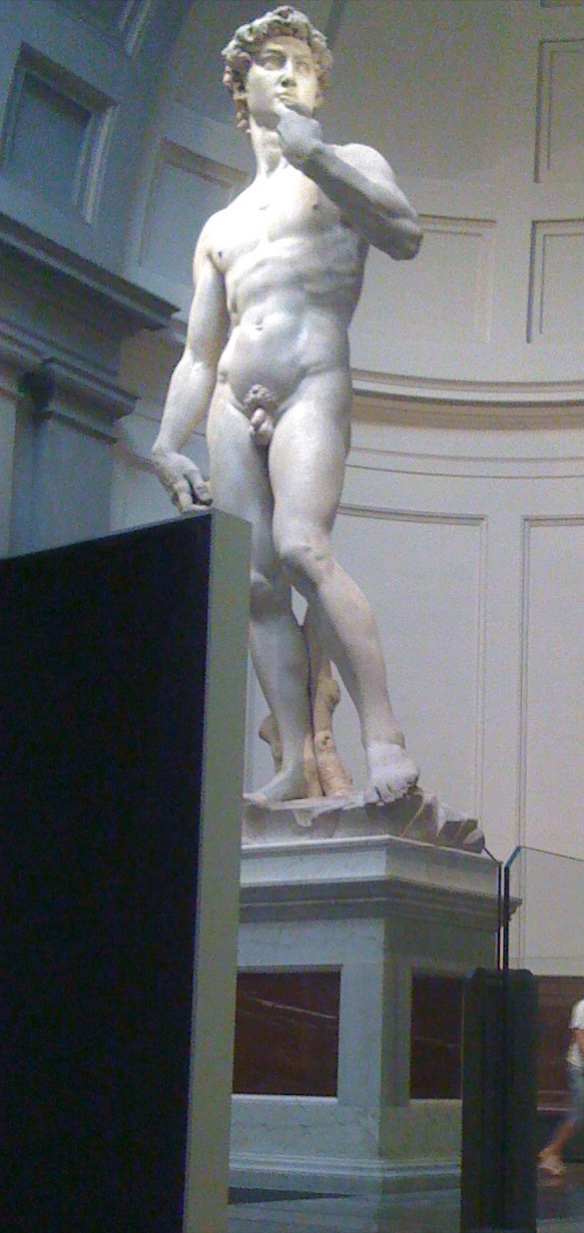
- 1501: Michelangelo receives the commission to carve David from a difficult block of marble already attempted by others.[7]
- 1501–1504: He carves David, turning the biblical subject into a public Florentine image of vigilance, courage and bodily intelligence.[2][7]
- 1501–1504: Michelangelo also works on the Piccolomini commission, represented locally by the Piccolomini Altarpiece route and its saint-label caveats.[1]
- 1503–1504: He develops marble relief projects including the Taddei Tondo and Pitti Tondo, where unfinished surfaces are central to the viewing experience.[1]
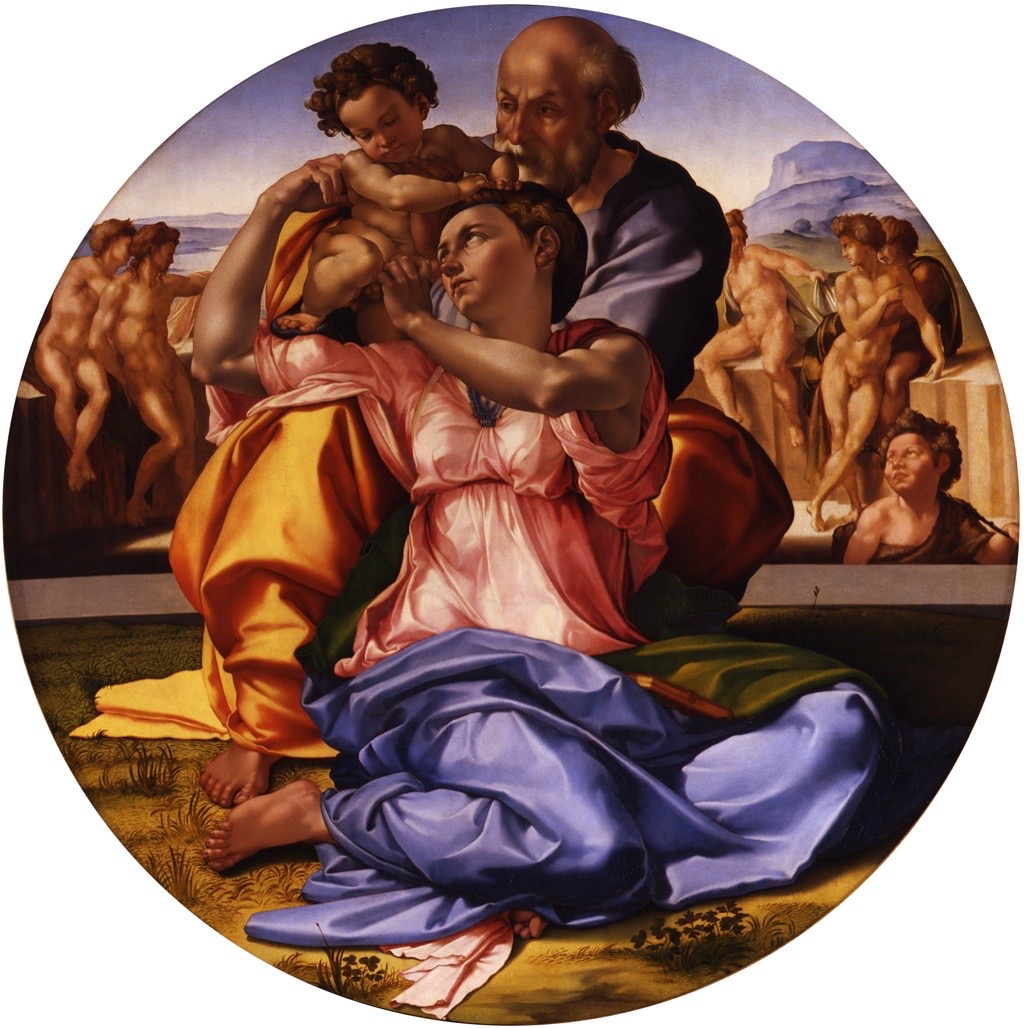
- About 1503–1504: The Doni Tondo belongs to this Florentine moment, joining family devotion, bright colour and dense figure design.[8]
- 1504: The David is installed in front of the Palazzo Vecchio after debate over its placement, shifting from biblical sculpture to civic emblem.[7]
- 1504: Michelangelo receives the Battle of Cascina commission for the Palazzo Vecchio, setting him in implied rivalry with Leonardo’s Battle of Anghiari project.[2]
- 1504–1505: Drawings and cartoons connected with the Battle of Cascina become famous for the invention of nude bodies in motion, even though the fresco is never completed.[1][2]
- 1505: Work in Florence is interrupted by the call to Rome from Pope Julius II, whose tomb commission will redirect Michelangelo’s career for decades.[9]
1505–1512: Julius II and the Sistine ceiling
- 1505: Pope Julius II summons Michelangelo to Rome for the tomb project, beginning the commission that will trouble him for forty years.[9][10]
- 1505: Michelangelo travels to Carrara to select marble for the tomb, a practical and logistical phase that shows how much of his art begins with quarrying, transport and contract risk.[9]
- 1506: Conflict over the tomb and papal priorities contributes to Michelangelo’s flight from Rome to Florence, one of the defining crises of his career.[2]
- 1506: Michelangelo is reconciled with Julius II at Bologna, shifting from the abandoned tomb momentum toward new papal demands.[2][4]
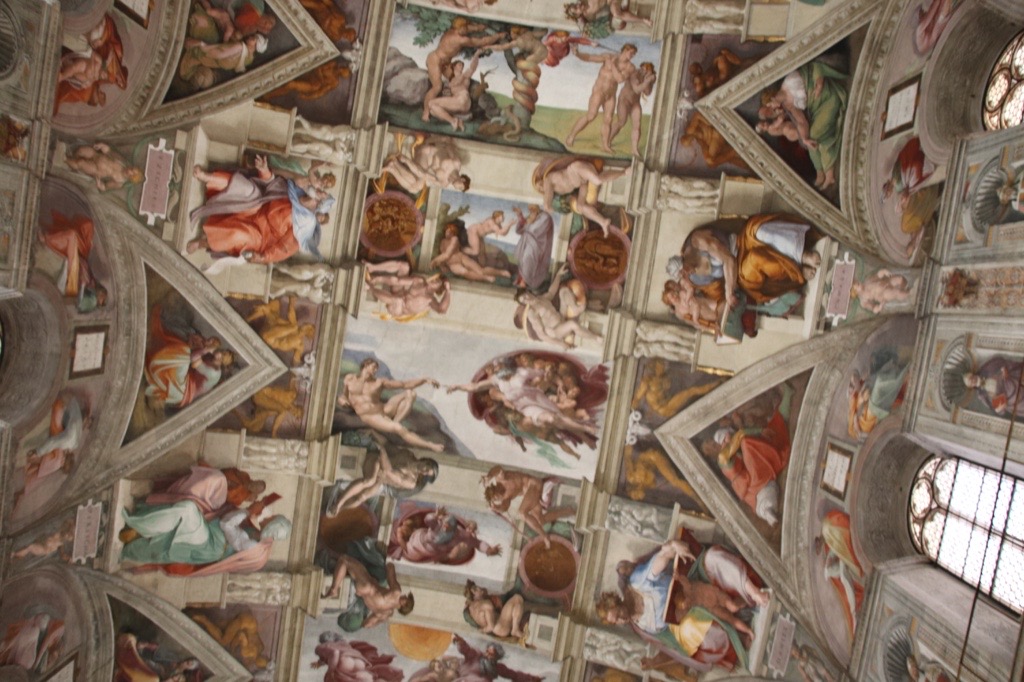
- 1508: Michelangelo begins painting the Sistine Chapel ceiling, despite his self-identification as a sculptor.[11]
- 1508–1510: The early ceiling campaign establishes the Genesis narrative, prophets, sibyls, ancestors, fictive architecture and supporting figures as one integrated system.[11]
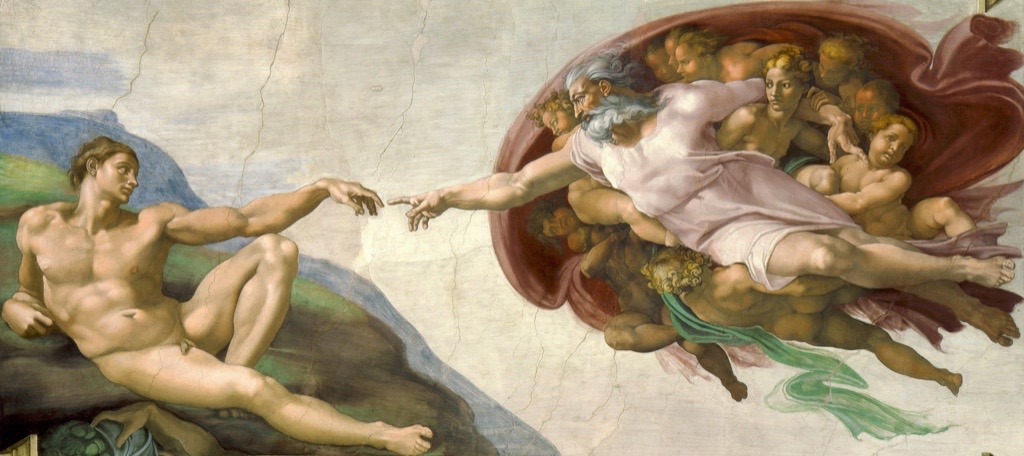
- 1508–1512: The ceiling includes individual routes such as Creation of Adam, Creation of the Sun, Moon and Plants, the Ignudi, the Medallions and the corner pendentives.[11]
- 1510–1511: Figure scale, colour and bodily compression intensify as the work advances toward the altar end, including the prophets and sibyls such as the Libyan Sibyl.[11]
- 1511–1512: Drawings and design studies connected with the ceiling, including later pages such as Studies for the Libyan Sibyl and Study for the Drapery of the Erythraean Sibyl, preserve the labour behind the fresco surface.[1][11]
- 1512: The Sistine ceiling is unveiled, radically changing Michelangelo’s standing as a painter and designer of monumental bodies.[11]
1513–1534: Medici Florence and crisis
- 1513: Julius II dies. The tomb commission is revised, reduced and renegotiated across later contracts.[9][10]
- 1513 onward: Michelangelo continues work connected with the Julius monument, including figures later associated with the Slaves and Moses.[9]
- 1513–1516: The Louvre Slaves, including the Dying Slave and Rebellious Slave, belong to the changing tomb project rather than a stable single final plan.[10]
- 1514–1521: The Risen Christ project moves through version, completion and later intervention issues; the timeline should not flatten it into one simple finished moment.[1]
- 1516–1520: The Medici commission for the façade of San Lorenzo absorbs Michelangelo in drawings, models, quarrying and an ultimately unrealised architectural project, represented by the San Lorenzo façade project route.[13]
- 1519: Work begins on the New Sacristy at San Lorenzo, one of the key places where his sculpture and architecture meet.[12]
- 1520s: Michelangelo develops the Medici tombs, including Night, Day, Dawn and Dusk.[12]
- 1520s: He works on the Laurentian Library, especially the vestibule and reading-room design at San Lorenzo.[13]
- About 1524–1534: The Library and New Sacristy show Michelangelo thinking architecturally even when the sculptural program remains unfinished or interrupted.[12][13]
- 1527: The Medici are expelled from Florence after the Sack of Rome changes the political map of Italy.[2]
- 1529–1530: Michelangelo works on the fortifications of republican Florence, a political and technical episode often overshadowed by the sculptures.[14]
- Early 1530s: The unfinished Medici projects and the return of Medici power leave Michelangelo in a tense Florentine position that helps explain his final move to Rome.[2][12]
- 1532–1534: Michelangelo’s Roman friendships and presentation drawings become increasingly important, including works later grouped with Cleopatra, the Risen Christ drawing and other intimate devotional or literary designs.[1][16]
- 1534: Michelangelo leaves Florence and settles permanently in Rome.[2]
1534–1545: Rome, the Last Judgement and Julius tomb
- 1534: The permanent move to Rome opens Michelangelo’s late career, with major papal, devotional and architectural commitments.[2]
- 1534–1535: The political and religious climate of Rome is changing quickly; Michelangelo’s late work should be read against papal reform, personal devotion and the memory of the Sack of Rome.[2][16]
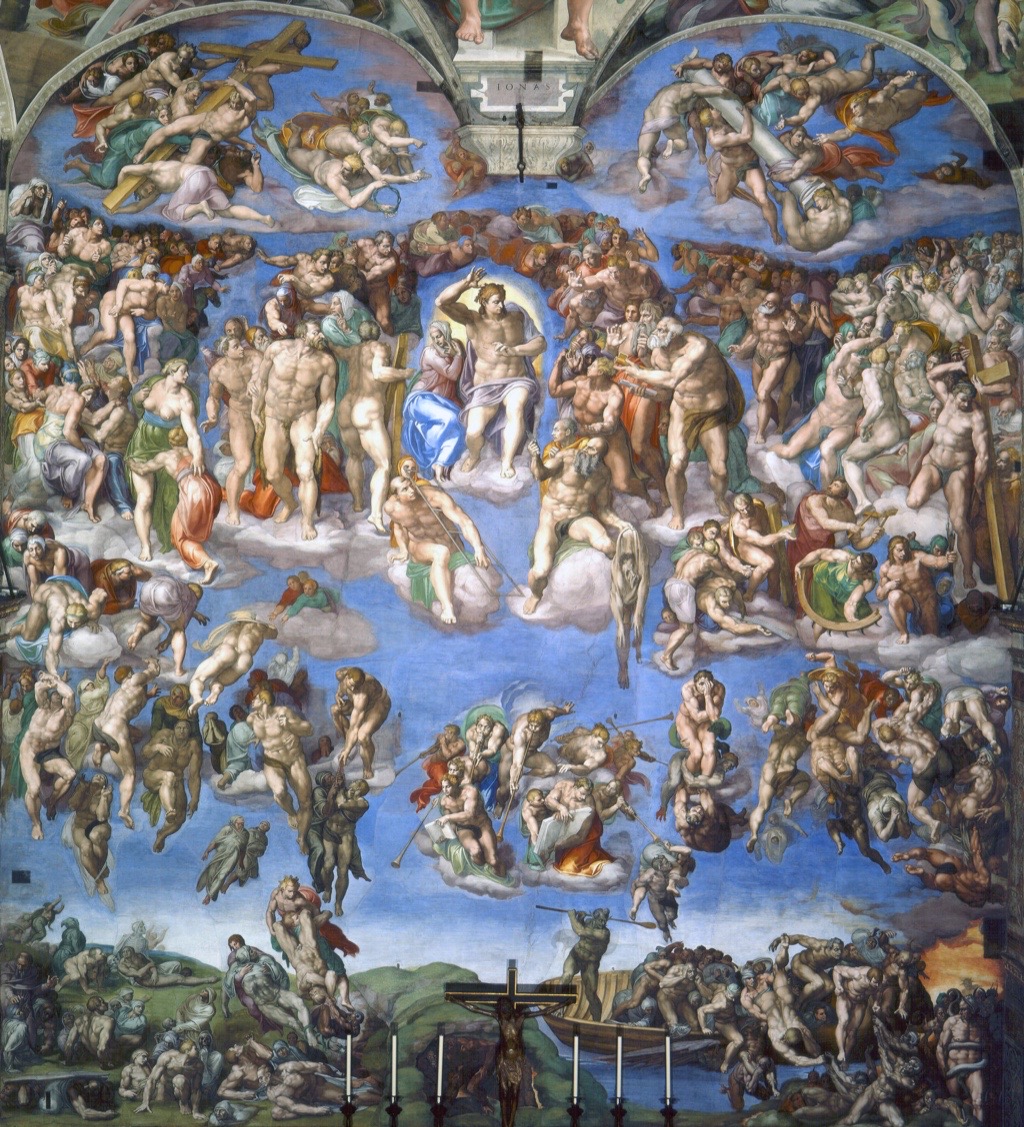
- 1536: Work begins in earnest on The Last Judgement for the altar wall of the Sistine Chapel.[15]
- 1536–1541: Michelangelo paints the vast fresco, replacing earlier altar-wall decoration with a single apocalyptic field of bodies, judgement and motion.[15]
- 1538: Work begins around the Capitoline/Campidoglio project in Rome, later central to his urban-design reputation even though execution extends beyond his lifetime.[18]
- 1539–1540: Sculptural and political-allegorical works such as Brutus and, with caveats, related Bargello works belong to the atmosphere of late republican memory and Medici politics.[5]
- 1541: The Last Judgement is unveiled. Its nude bodies, scale and theology provoke admiration and anxiety, setting up later debates over decorum.[15]
- 1542: Michelangelo begins work for the Pauline Chapel, turning from the public drama of the Sistine altar wall to the pope’s more private chapel.[2]
- 1542–1545: The Conversion of Saul develops the first half of the Pauline fresco project.[2]
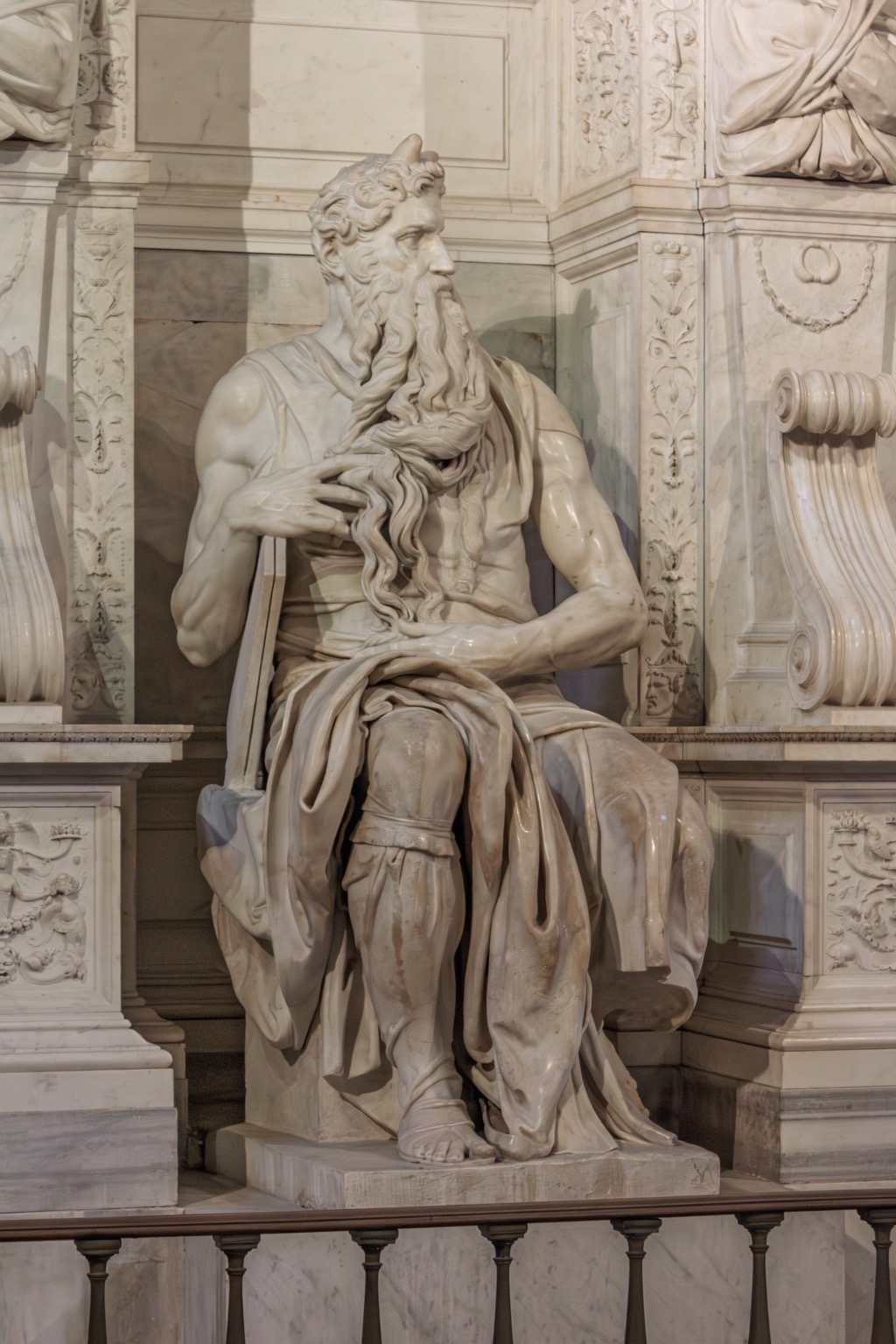
- 1545: The reduced monument to Julius II is unveiled in San Pietro in Vincoli, with Moses as its central surviving Michelangelo figure.[9][10]
- 1545: The Julius tomb’s final form makes visible the gap between Michelangelo’s first grand conception and decades of compromise, contract revision and changed papal priorities.[9]
1546–1564: late architecture, poetry and Pietàs
- 1546: Michelangelo becomes chief architect of St Peter’s Basilica, inheriting a complex project with earlier designs by Bramante, Raphael and Antonio da Sangallo the Younger.[18]
- 1546 onward: His work at St Peter’s focuses on simplifying, strengthening and rethinking the great centralized project, while later execution complicates what can be called directly his own.[18]
- Late 1540s: His drawings, letters and poems increasingly show late devotional concerns, friendships and a changing relation to fame.[16][17][21]
- 1546–1550: The later Pauline Chapel fresco, the Martyrdom of St Peter, closes Michelangelo’s career as a fresco painter.[2]
- Late 1540s–1550s: Michelangelo works on the Bandini Pietà, a late sculpture whose condition, intended destination and partly self-reflective reading remain historically complex.[19]
- 1550: Vasari’s first edition of the Lives helps consolidate Michelangelo’s status while he is still alive, making him both artist and living historical monument.[4]
- 1550s: Architectural work continues in Rome, including St Peter’s, Palazzo Farnese, church projects and civic designs where Michelangelo’s ideas often pass through assistants, later architects and altered execution.[18]
- 1550s: The late poems and letters deepen the record of Michelangelo as a writer, not only a sculptor, painter and architect; this material belongs with the poetry and future quotes pages.[17][21]
- 1559–1564: Michelangelo’s late architectural designs include work connected with Porta Pia and other Roman commissions, where design history must be separated from later construction and restoration.[18]
- Last years: Michelangelo reworks the Rondanini Pietà, a sculpture often read through late spirituality and non-finito, but still best handled as a specific object with a documented late history.[20]
- 18 February 1564: Michelangelo dies in Rome.[23]
- 1564: His remains are transferred to Florence and buried at Santa Croce, where the city claims him as one of its defining artists.[23]
- After 1564: The posthumous image of Michelangelo is shaped by burial, biography, collecting, restoration and the separation of autograph works from workshop, copy and later completion problems.[4][23]
Frequently Asked Questions
Discussion
Michelangelo’s timeline is not just a list of masterpieces. It is a record of changing patrons, delayed commissions, altered designs, political shocks and late religious concerns.
Reader Insights
Which date changes your understanding of Michelangelo most: the first Roman period, the Sistine ceiling, the move to Rome, or the appointment at St Peter’s?
How does the long history of the Julius tomb affect the way you read Moses and the Slaves?
Do the late Pietà sculptures look different when placed beside architecture, poetry and devotional friendships?
Join the Conversation
Share which moment in Michelangelo’s chronology helps you connect the works most clearly.
References
- Carmen C. Bambach, Michelangelo: Divine Draftsman and Designer, Metropolitan Museum of Art and Yale University Press, 2017, Metropolitan Museum of Art publication, View source.
- Metropolitan Museum of Art, “Michelangelo: Divine Draftsman and Designer — Exhibition Galleries.”, Exhibition chronology and themes, View source.
- Fondazione Casa Buonarroti, museum collection and early reliefs, Casa Buonarroti, View source.
- Giorgio Vasari, The Life of Michelangelo, modern scholarly edition and introduction by Hellmut Wohl, Getty Publications, Getty Publications, View source.
- Musei del Bargello, “Michelangelo: the Bloom of Renaissance Art.”, Bargello itinerary, View source.
- Papal Basilicas of the Holy See, “Michelangelo’s Pietà.”, Saint Peter’s Basilica, View source.
- Galleria dell’Accademia di Firenze, “Michelangelo’s David.”, Accademia collection record, View source.
- Uffizi Galleries, “Holy Family, known as the Doni Tondo.”, Uffizi collection record, View source.
- Rijksmuseum Research Library, Michelangelo’s Tomb for Julius II: Genesis and Genius, Bibliographic record, View source.
- Musée du Louvre, “The Louvre’s Slaves.”, Louvre visitor trail, View source.
- Vatican Museums, “Sistine Chapel Ceiling.”, Vatican Museums, View source.
- Musei del Bargello, “Cappelle Medicee.”, Medici Chapels, View source.
- Biblioteca Medicea Laurenziana, “The Visit in Brief.”, Laurentian Library, View source.
- Fondazione Casa Buonarroti, “Study of Fortification for the Porta al Prato of Ognissanti.”, Casa Buonarroti collection record, View source.
- Vatican Museums, “The Last Judgement.”, Vatican Museums, View source.
- Metropolitan Museum of Art, exhibition section “Art and Personal Spirituality.”, Exhibition galleries, View source.
- Metropolitan Museum of Art, “James M. Saslow on Sensuality and Spirituality in Michelangelo’s Poetry.”, Met Perspectives, View source.
- Holy See, “Saint Peter’s Dome and Lantern.”, Vatican architectural record, View source.
- Opera di Santa Maria del Fiore, “Michelangelo Buonarroti, Pietà Bandini.”, Opera del Duomo, View source.
- Castello Sforzesco, “La Pietà Rondanini.”, Comune di Milano museum record, View source.
- Fondazione Casa Buonarroti, “Buonarroti Archive.”, Archive research route, View source.
- British Museum, “Michelangelo Buonarroti.”, Collection and person record, View source.
- Opera di Santa Croce, “Monumental Tomb of Michelangelo Buonarroti.”, Santa Croce collection record, View source.