 by
Tom Gurney
Tom Gurney BSc (Hons) is an art history expert with over 20 years experience
Email:
tomgurney1@gmail.com
/ Phone:
+44 7429 011000
Lady with a Harp: Eliza Ridgely by Thomas Sully: Introduction
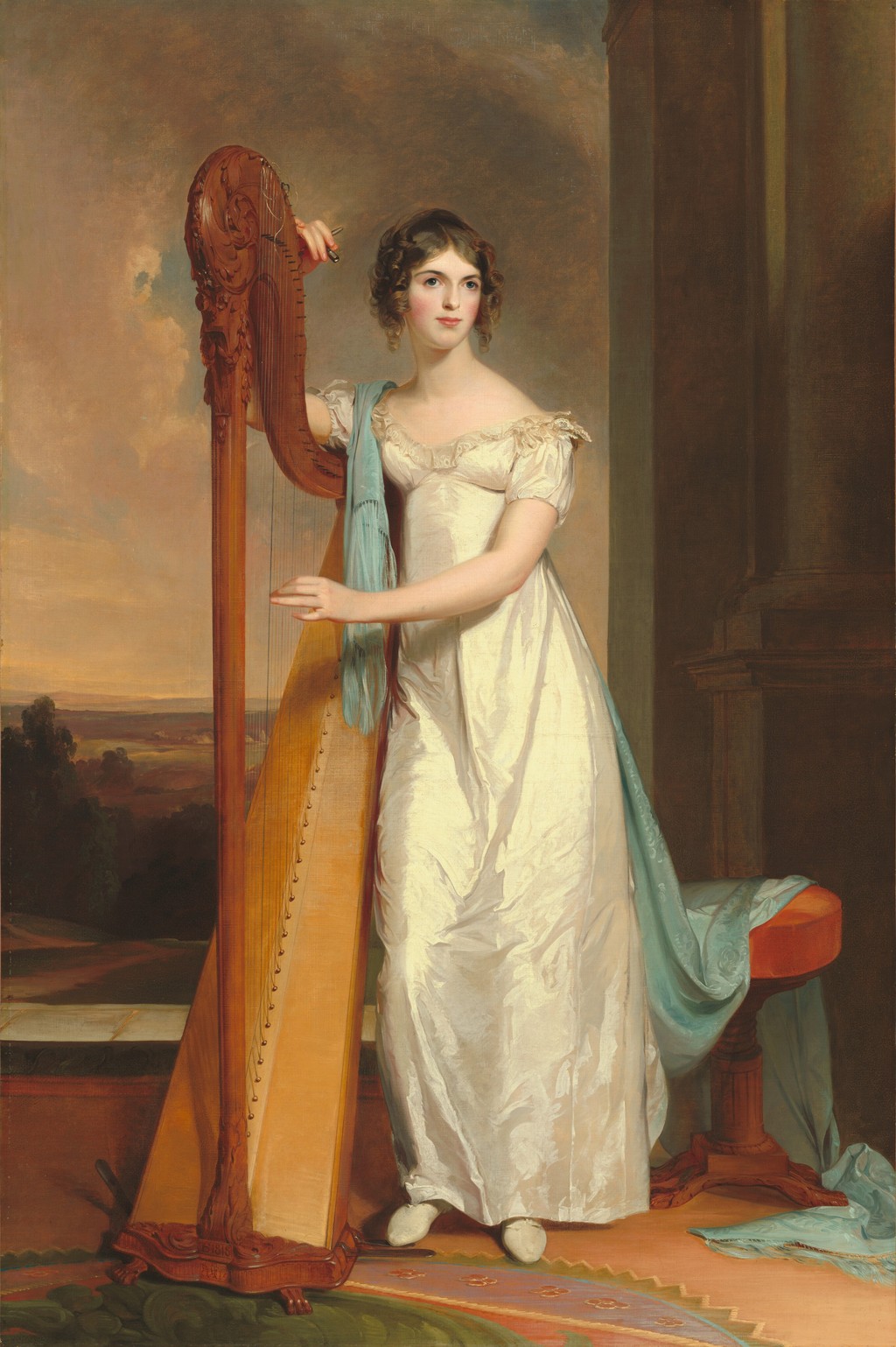
Thomas Sully painted Lady with a Harp: Eliza Ridgely in 1818, when his sitter was fifteen. The portrait brings together an expensive musical instrument, a carefully arranged pose and an imposing architectural setting. Yet its most engaging feature is the connection between the figure and the harp: Eliza’s raised hand, extended arm and foot make the instrument part of her activity, rather than an ornament placed beside her. [1]
The large canvas now belongs to the National Gallery of Art in Washington. It is a portrait of a particular young musician and a presentation of the education her family had provided. Its later history leads to Hampton, the Maryland estate where Eliza lived after her marriage, and to a surviving harp whose identity needs to be distinguished from the one Sully painted. [1] [2]
At a Glance
- Artist Thomas Sully
- Title Lady with a Harp: Eliza Ridgely
- Date 1818
- Sitter Elizabeth, known as Eliza, Eichelberger Ridgely, aged fifteen
- Medium Oil on canvas
- Dimensions 214.5 × 142.5 cm
- Collection National Gallery of Art, Washington
- Accession 1945.9.1
- Credit Gift of Maude Monell Vetlesen
This work across Thomas Sully’s career
Musidora
1813–35; Met panelThe Torn Hat
1820Portrait of the Artist
1821; Met canvasJohn Quincy Adams
1824; NGA oil studyQueen Victoria
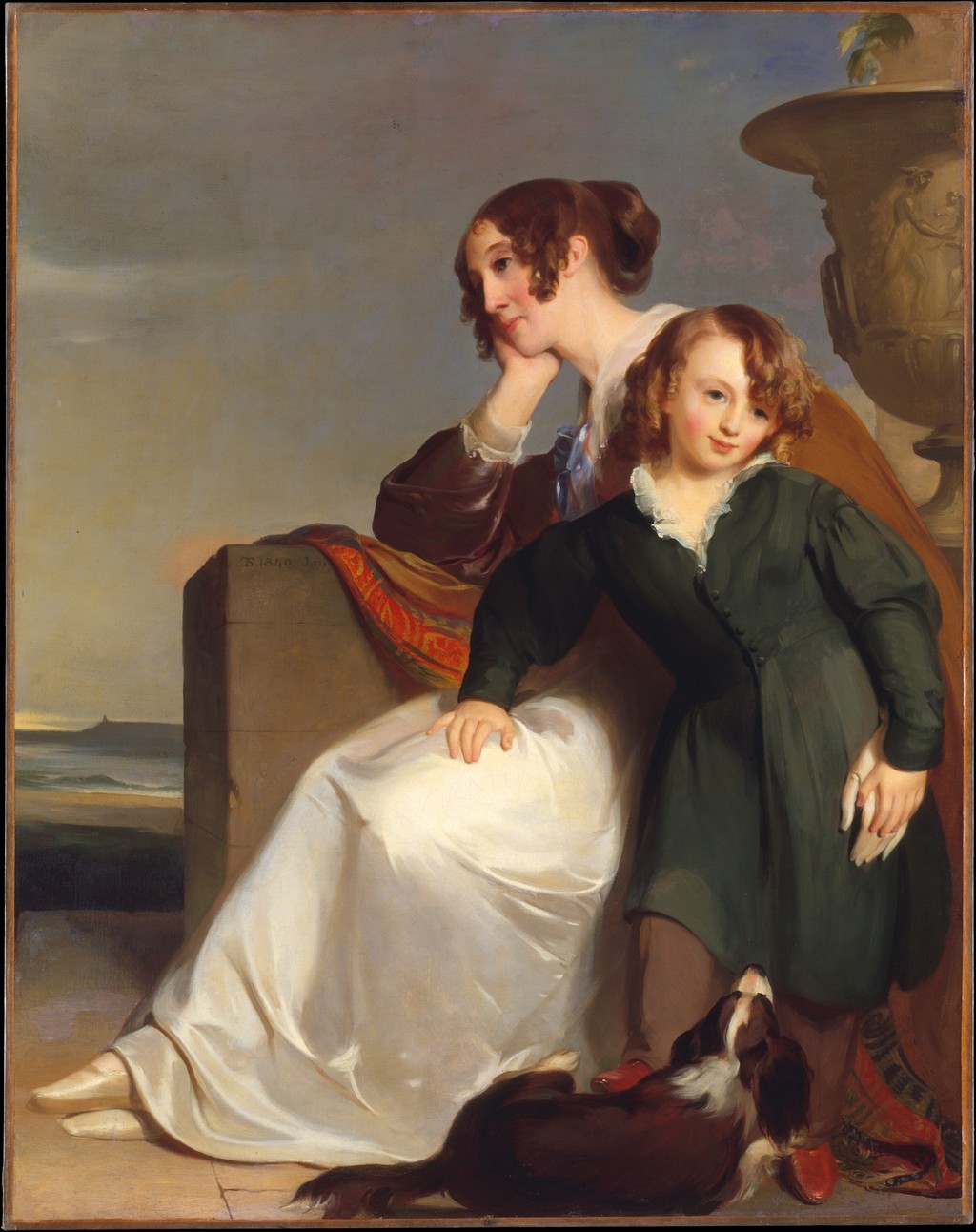
1838; full-length Met canvasMother and Son
1840; inscription dateAndrew Jackson
1845; after the 1824 life portraitNotes and sources
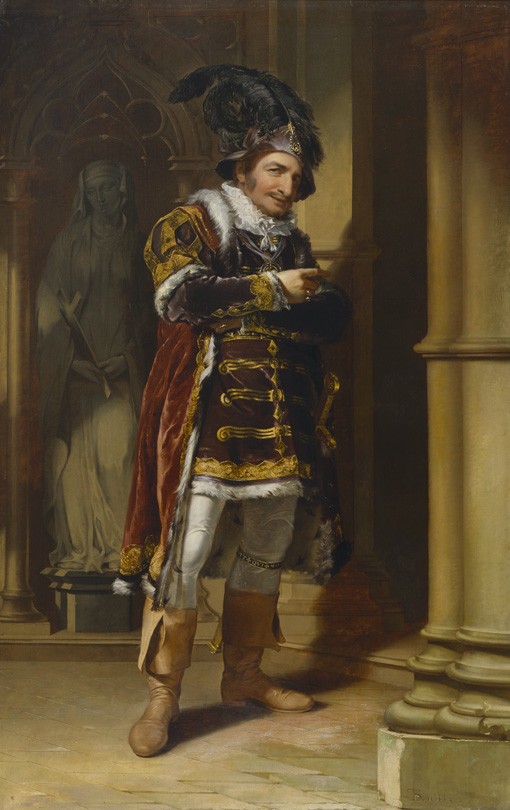
George Frederick Cooke as Richard III. Actor and theatrical role meet in an imposing full-length portrait. [3]
Musidora. A turned figure beside a pool belongs to a literary episode, not a named portrait sitter. [4]
Lady with a Harp: Eliza Ridgely (current article). The harp connects the sitter’s accomplishment with the arrangement of her body. [5]
The Passage of the Delaware. Washington is mounted on shore while the crossing proceeds around him. [6]
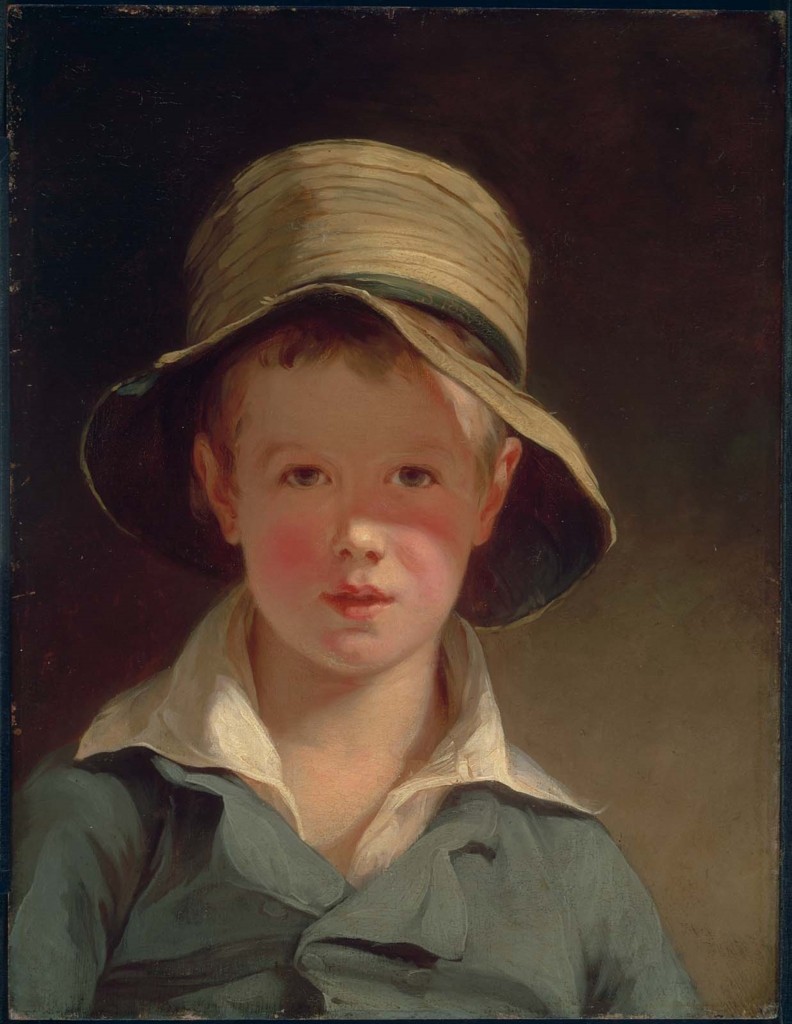
The Torn Hat. A worn hat and directed light give the artist’s son an informal presentation. [7]
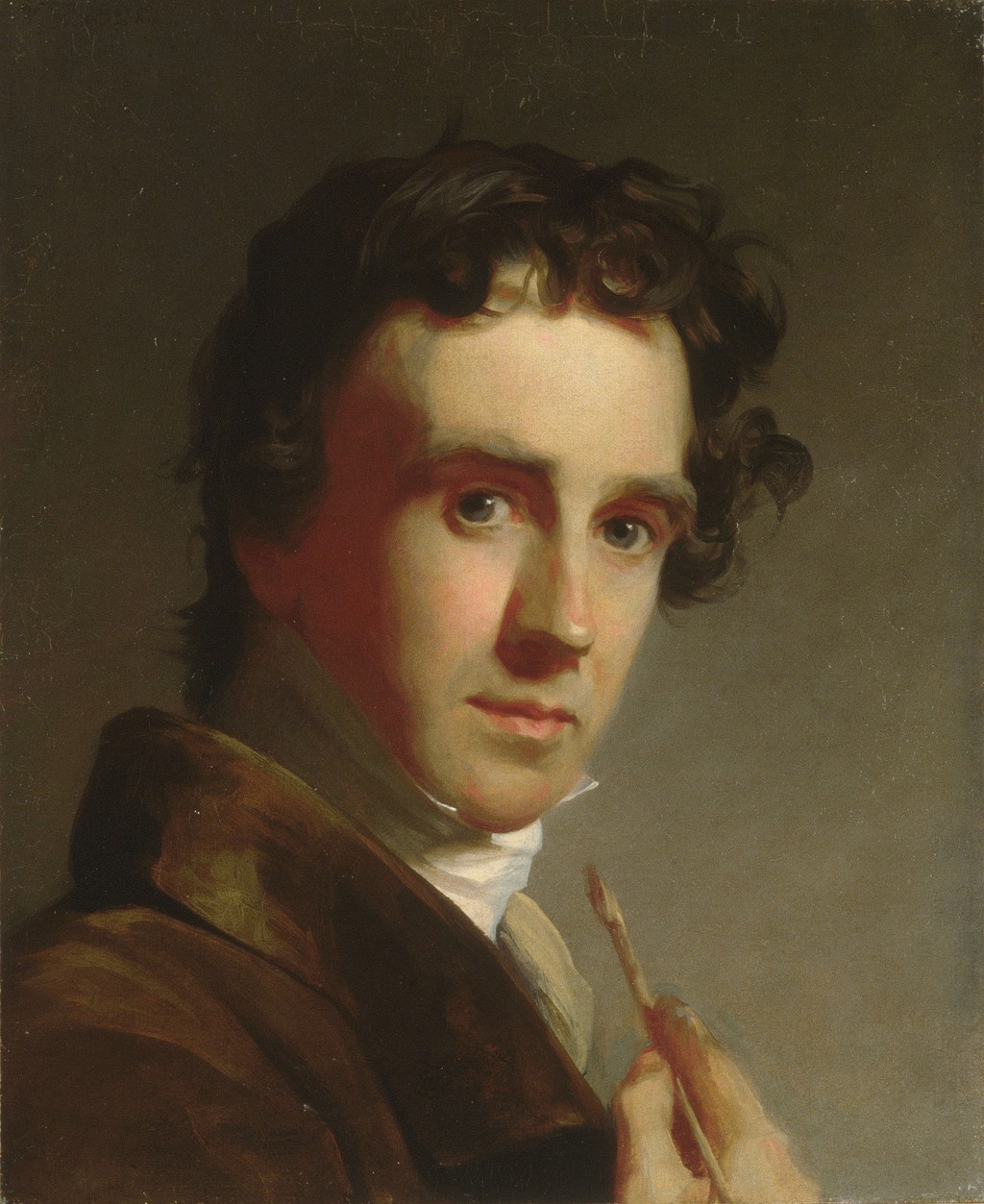
Portrait of the Artist. A raised brush joins the painter’s hand to the illuminated head. [8]
John Quincy Adams. A developed likeness supplied information for a larger portrait project. [5]
The David Children. The older children direct attention toward the reclining infant. [5]
The Vanderkemp Children. A portfolio and overlapping hands connect the three children. [5]
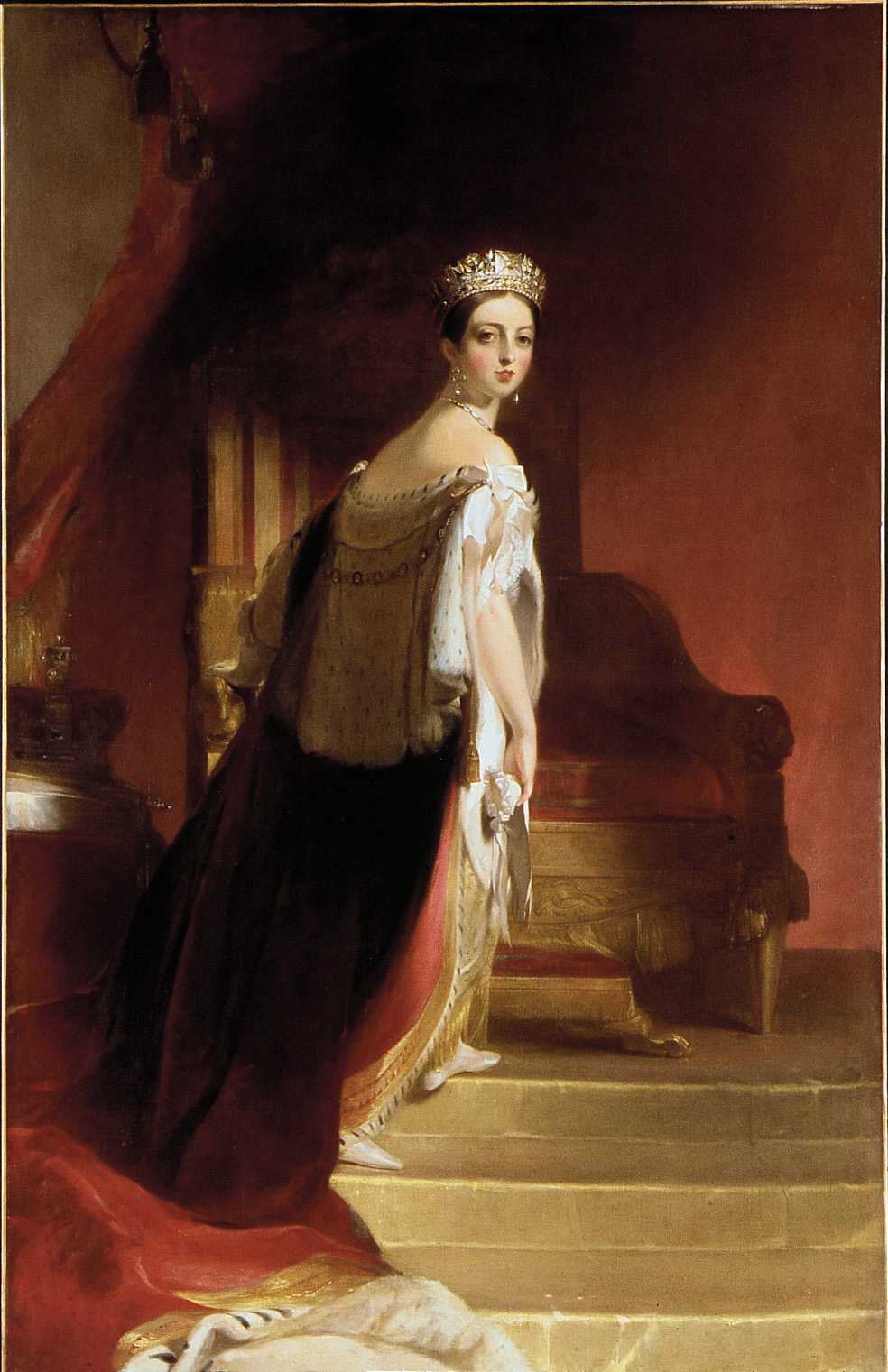
Queen Victoria. The royal likeness extends through robes, insignia and a ceremonial setting. [9]
Mother and Son. Jane Darley and her son are connected through touch and differing gazes. [10]
The Coleman Sisters. Contrasting dresses, heights and gestures hold three individual likenesses together. [5]
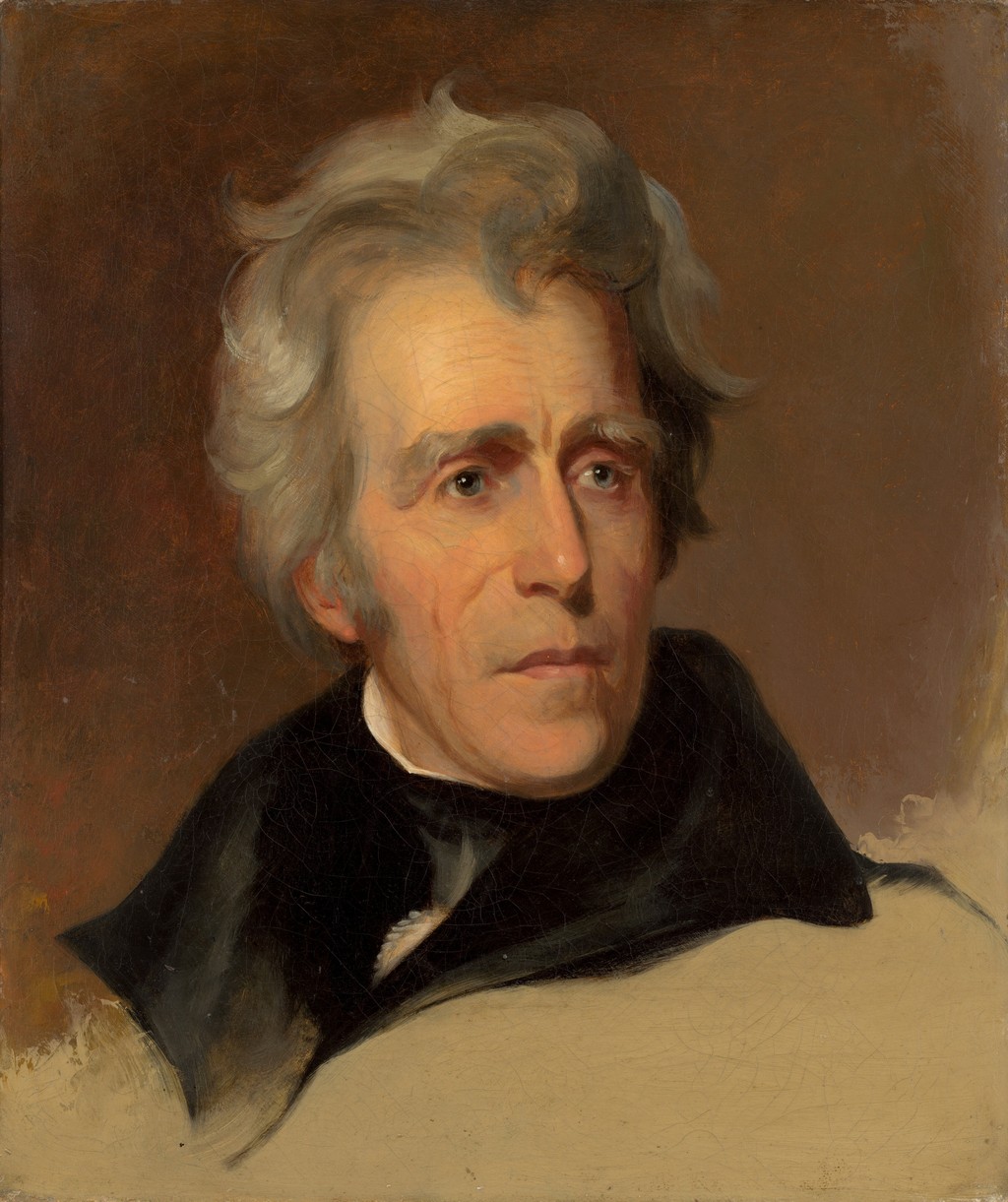
Andrew Jackson. This later version must be distinguished from its earlier life source. [5]
Contents
- Eliza’s education and her father’s commission
- The whole composition: harp, figure and column
- Tuning rather than simply playing
- Which harp did Sully paint?
- Music, education and social display
- Idealisation and the individual sitter
- How the painted surface supports the effect
- Eliza’s later life at Hampton
- The surviving harp after conservation
- Annotated details
Eliza’s education and her father’s commission
Eliza was the daughter of Baltimore merchant Nicholas Ridgely. Her schooling took her to Philadelphia, where she attended Miss Lyman’s institution for young women. Music belonged to a wider programme that included languages, drawing and other studies. The portrait therefore presents an accomplishment that formed part of her education, rather than introducing an instrument for which no personal connection is known. [2]
According to the NGA’s systematic catalogue, Sully painted the picture in Philadelphia between 1 and 21 May 1818 for five hundred dollars. The commission came from Eliza’s father. Its early exhibition title, Full length Portrait of a Young Lady of Maryland , identified the format and the sitter’s regional background without supplying her name. [2]
The scale of the painting matters to its effect. At more than two metres high, the canvas gives Eliza a substantial presence. Her body, the harp and the column all extend vertically, while the floor and distant landscape provide enough horizontal space to keep the figure from seeming trapped between them. The result is a portrait that can command a room while still rewarding attention to the delicate adjustments of fingers, strings and dress.
The commission also made the portrait an object through which a parent’s expenditure on education could become visible. The musical association is specific, but the setting enlarges it into a presentation of social position. That does not prove that every viewer understood the painting in the same way, or that the family commissioned it for one single symbolic purpose.
Annotated Details from Lady with a Harp: Eliza Ridgely
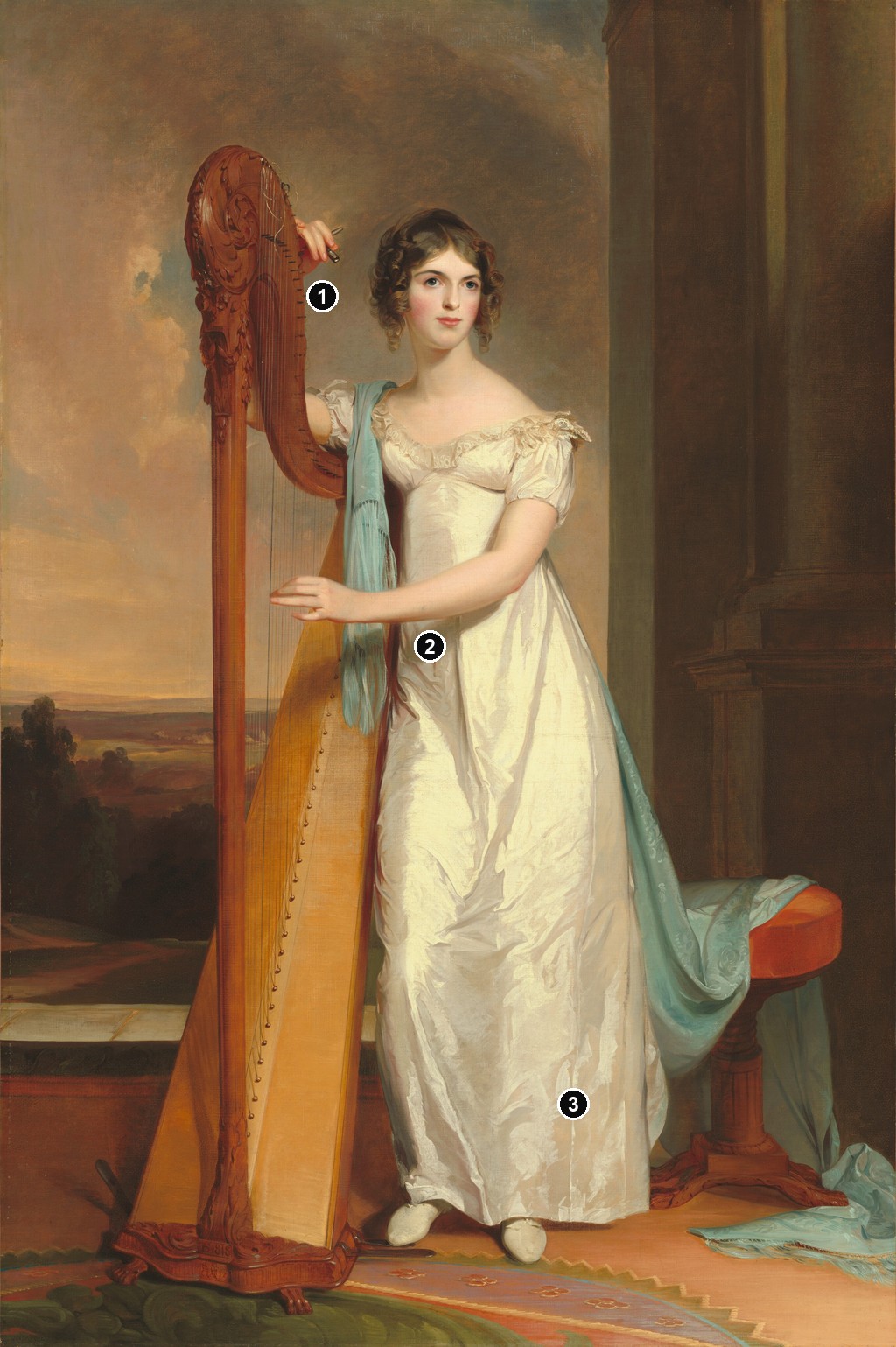
The numbered points identify visible features discussed in this article. Return from each detail to the whole composition. Thomas Sully, Lady with a Harp: Eliza Ridgely, 1818. Oil on canvas, 214.5 × 142.5 cm. National Gallery of Art, Washington, Gift of Maude Monell Vetlesen, 1945.9.1. CC0. Image source. CC0; National Gallery of Art Open Access. Numbers added to a separate overview; detail images cropped from the source. The complete unnumbered image is retained in this article.
Details from LADY WITH A HARP: ELIZA RIDGELY
Compare the cropped details with the complete images above. Notice how their colours, shapes and positions contribute to the larger compositions.
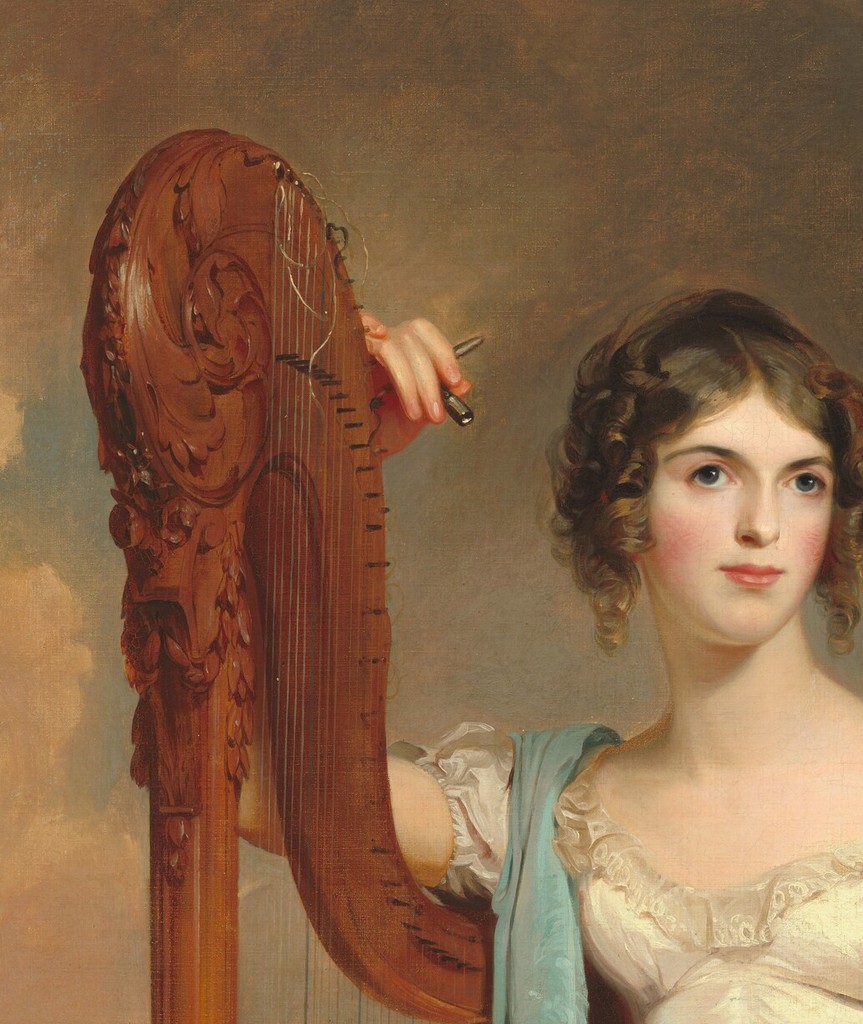
Raised hand and harp
The raised hand touches the harp near its curved top. Its position links the sitter to the instrument without showing both hands actively playing the strings.
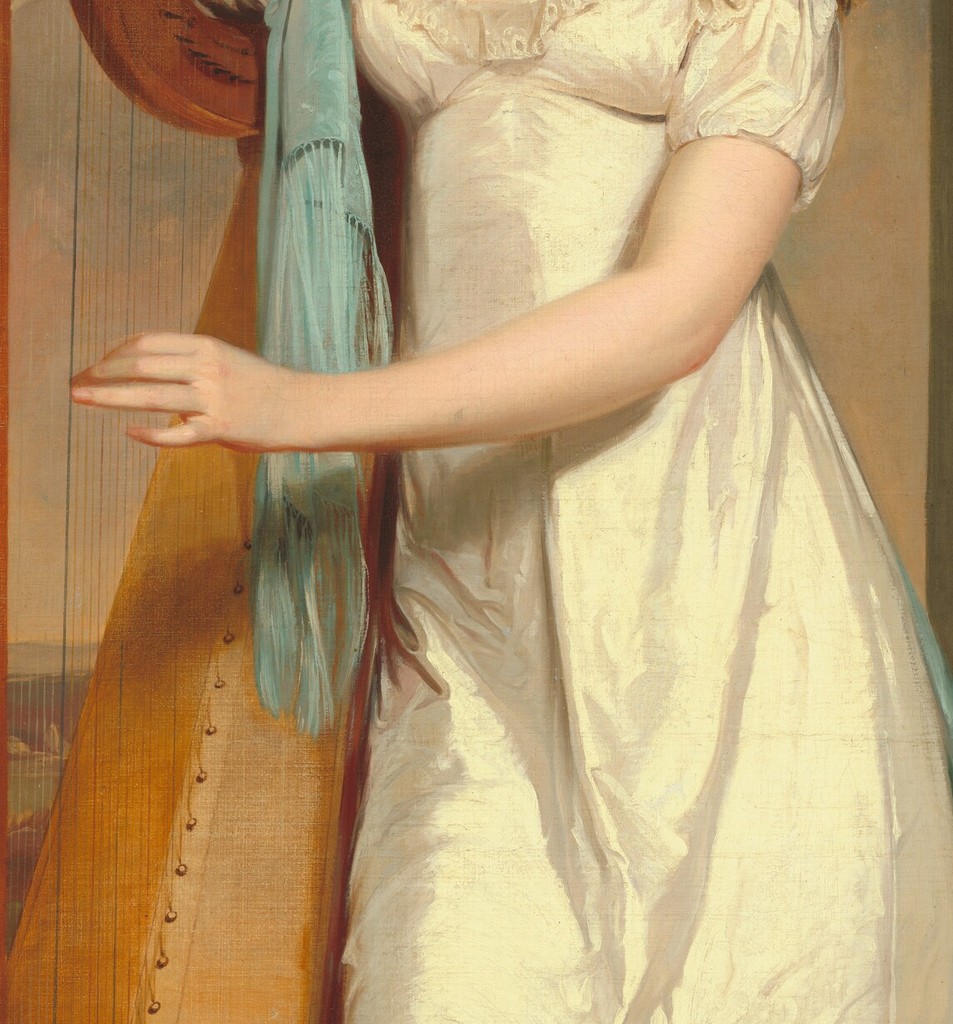
Arm across the strings
The other arm reaches across the upright instrument. The horizontal line of forearm and hand interrupts the long verticals of harp, dress and architectural setting.
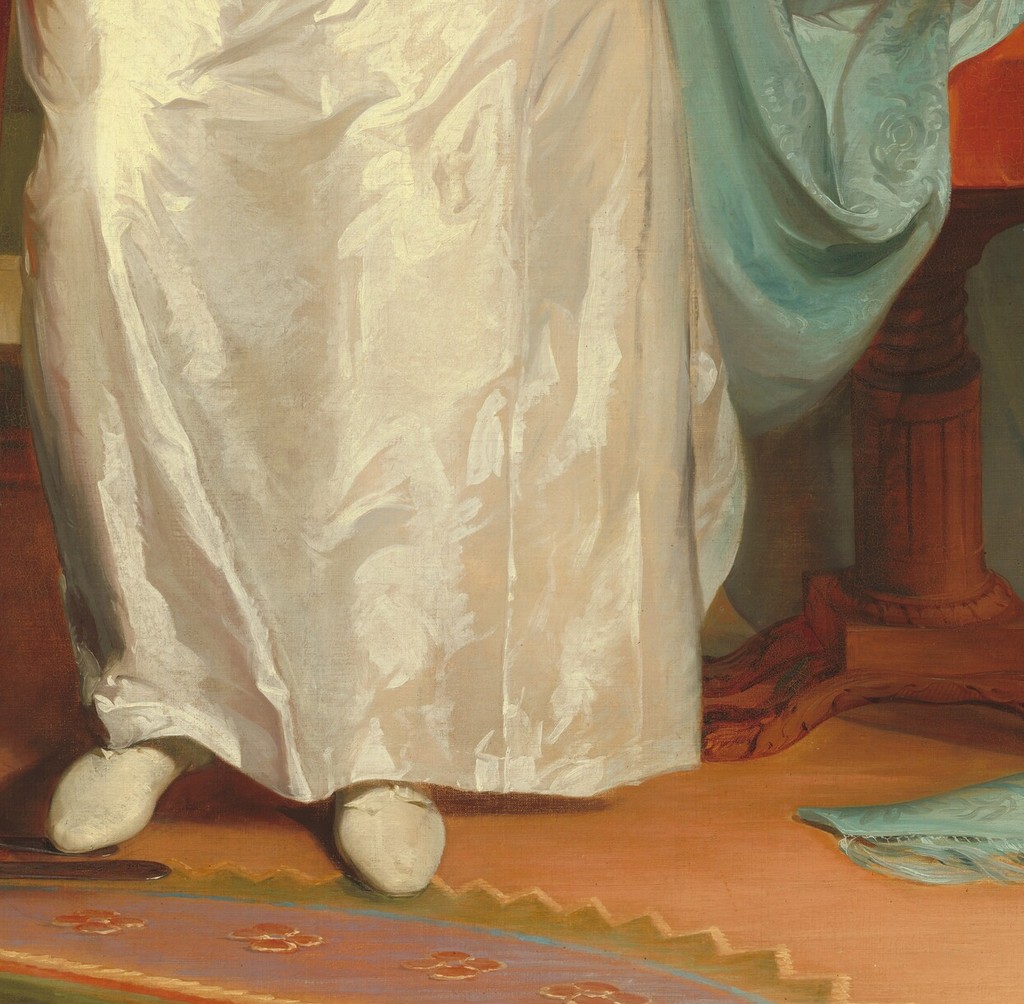
Dress and trailing cloth
Pale folds descend towards the feet while the blue-green cloth sweeps across the seat and down to the floor. Their different paths enliven the lower half of the standing portrait.
The whole composition: harp, figure and column
The harp occupies the left foreground, its curving neck rising almost to the level of Eliza’s head. To the right, the column and its base form a heavier, straighter vertical. Eliza stands between these different structures. The shape of her lifted arm links her to the harp, while the fall of her dress brings the eye back down toward her feet.
The background opens into a landscape on one side and closes into architecture on the other. This gives the portrait both distance and enclosure. The horizontal ledge behind the harp separates the immediate setting from the land beyond, while the column’s dark mass makes the light fabric stand out more clearly.
The blue scarf carries colour through the arrangement. It falls from Eliza’s shoulder, crosses the stool and gathers on the floor at the right. Following it reveals how much space is occupied by the figure and her accessories. Its course also prevents the white dress from becoming an isolated shape: the cooler blue connects shoulder, furniture and foreground in one extended movement.
The red seat of the stool introduces a smaller, warmer accent. Its rounded top answers the curve of the harp without repeating it exactly. Together, these objects make the setting more than a backdrop. They support the pose, distribute colour and determine the spaces through which the eye travels.
Tuning rather than simply playing
Eliza holds a tuning key in her raised right hand, visible on the left side of the picture. Her other hand reaches across the strings, and one foot is placed at the instrument’s base. The NGA catalogue identifies this as an act of tuning, with the hands and pedal brought into a composed relationship. [2]
The distinction changes the scene. A viewer expecting a performance might imagine sound continuing beyond the frame. Tuning instead suggests preparation and attention: listening to a string, adjusting it and bringing the instrument into order. Sully’s portrait can evoke musical knowledge through that action without representing a concert or an audience.
The pose is designed to make the action readable. The raised hand rests above a long run of strings, while the extended left arm crosses the light dress. The hand, instrument and body remain distinct because their shapes overlap against contrasting colours. From a distance, the arm supplies a clear diagonal; at closer range, the fingers and key explain the activity.
The arrangement should not be treated as an instructional diagram for harp technique. The portrait’s task is to present a musician gracefully within a full-length composition. Its intelligible tuning gesture and the elegant contour of the body serve that task together. This is one reason the picture can feel both purposeful and carefully posed.
Which harp did Sully paint?
The painted instrument is a single-action pedal harp. The NGA catalogue distinguishes it from the double-action Erard harp bought for Eliza by her father in 1817. Sully evidently used a different instrument available to him in Philadelphia. The painting’s connection with Eliza’s musical life is secure without assuming that every piece of equipment represented was her own. [2]
That difference is particularly important when looking at the surviving harp at Hampton. The National Park Service identifies it as the Erard instrument purchased for her in June 1817. It is a historical object with its own construction, ownership and conservation history, rather than a three-dimensional duplicate of the harp in the portrait. [11]
Seen together, painting and instrument provide different kinds of evidence. The portrait shows how Sully arranged a harpist, dress and setting for a public image. The surviving object preserves material evidence of an instrument associated with the sitter. One helps us understand the representation; the other helps us understand an aspect of her musical surroundings.
The distinction also explains why a contextual photograph can be valuable without proving the literal accuracy of the painted room. Hampton’s Music Room is part of Eliza’s later history. Its furniture, display and present appearance cannot be projected backwards into Sully’s Philadelphia studio in 1818.
Music, education and social display
The harp belongs to a history of portraits in which musical accomplishment helped present a sitter’s education and social identity. The NGA catalogue places Sully’s painting within that tradition and discusses the wider debate over what young women should learn. Languages, drawing and music could be admired as signs of cultivation while also being criticised as ornamental attainments. [2]
The painting gives these arguments a visible form without illustrating a written debate directly. Eliza’s ability to engage with the instrument is placed alongside an expensive gown, substantial architecture and an extensive view. Knowledge and possessions appear together. The portrait makes it difficult to separate accomplishment entirely from the resources needed to cultivate and display it.
At the same time, the instrument is not merely a substitute for its cost. The tuning gesture gives Eliza something to do and supplies a specific relationship between her hands and the object. If the harp were removed, the figure’s posture would lose much of its explanation. Musical activity is therefore built into the portrait’s design, even while the design also communicates wealth.
It is useful to hold those readings together. Treating the work only as a display of luxury would overlook the sitter’s documented musical training. Treating it only as an informal image of practice would overlook its grand scale and elaborate setting. The picture presents skill through the visual language of a commissioned society portrait.
Watch: Thomas Sully
Choose a film to explore the artist’s work, its interpretation and its wider setting.
Thomas Sully: A Lesson in Conservation
The Columbus Museum explores the conservation of a painting by Thomas Sully.
Watch on YouTubeIdealisation and the individual sitter
Eliza’s head is framed by dark curls, with a pale forehead and warm colour in her cheeks. Her face is turned slightly away from the line of her shoulders. The restrained expression differs from the more emphatic movement of the raised arm and the flowing scarf, giving the upper figure a calm centre.
Sully’s long, continuous contours contribute to the portrait’s elegance. The dress falls in a comparatively narrow shape, while highlights travel through its folds and gather around the neckline. The large areas of pale fabric make the figure appear luminous against the brown architecture and sky.
Art historians have differed over how to evaluate this idealising presentation. The NGA catalogue discusses readings that emphasise feminine beauty, educational accomplishment and elite status. These are ways of interpreting the painting’s choices, not interchangeable facts about Eliza’s character. [2]
The distinction is useful when looking at the face. The portrait gives the sitter a particular appearance, but its elegance cannot establish that she was naturally reserved, that she wished to attract a specific suitor or that she understood herself through every ideal later writers have attached to the image. The documented person, the represented pose and the history of interpretation belong together without becoming the same thing.
How the painted surface supports the effect
The NGA’s technical account describes a more developed, multilayered figure against a more loosely painted background. It notes glazes around the eyes and cheekbones and thicker paint in lighter passages of drapery. These findings help explain the different kinds of attention directed to face, fabric and surrounding space. [2]
The reproduction makes the contrast easy to explore. Eliza’s features and the edges of the harp are relatively definite. In the landscape, the forms become broader and less individually specified. The white dress alternates between sharp highlights and more gradual changes of tone, giving the fabric volume without making every fold equally insistent.
The examination was published in 1998 and also records earlier treatment. Its condition observations belong to that dated report, rather than automatically describing the painting’s condition today. The most useful connection for a reader is between the reported handling and the visible organisation: a carefully developed sitter emerging from a more broadly treated setting.
Eliza’s later life at Hampton
Eliza married John Ridgely in 1828 and became closely associated with Hampton. The National Park Service describes her work on its gardens, greenhouses and domestic management. It also records that she and her husband purchased sixty-one enslaved people as they rebuilt the estate’s plantation operations. [12]
This later history is part of the sitter’s biography, even though it is absent from the idealised scene Sully painted when she was fifteen. The portrait represents an earlier moment. It should neither be made to illustrate events that had not yet occurred nor be allowed to stand as a complete account of the adult life that followed.
The distinction is especially important at Hampton, where portraits and furnishings can create a vivid impression of their owners while leaving the labour sustaining the household outside the room’s immediate visual focus. A contextual account can restore that relationship without pretending that Sully’s landscape depicts the plantation or that its architectural setting records the estate.
The canvas’s move to Hampton is not precisely dated. The NGA’s current provenance suggests a probable interval between Eliza’s marriage in 1828 and her father’s death in 1829. That uncertainty separates the firmly documented commission from the painting’s later place within the Ridgely household. [1]
The surviving harp after conservation
The NPS photograph shows Eliza’s surviving harp in Hampton’s Music Room after conservation completed in 2023. The instrument’s decorated column, strings and pedal base occupy a furnished room, with a music stand nearby. The photograph offers a material counterpart to the portrait’s musical subject while preserving the difference between the two instruments. [11]
The Park Service’s account describes structural and surface problems, including difficulties following an earlier restoration. Specialist treatment began in 2019 and was completed after pandemic delays. The history explains why a surviving instrument is not simply an unchanged object waiting to be compared with a painting: it has experienced use, ageing and intervention. [11]
Looking between the photograph and the canvas is most productive when the questions remain specific. How does a harp occupy space beside a figure? What do its strings and decorated framework contribute to the room? Where does Sully simplify or rearrange surroundings to make his sitter clear? These questions connect the images without requiring them to depict the same moment or location.
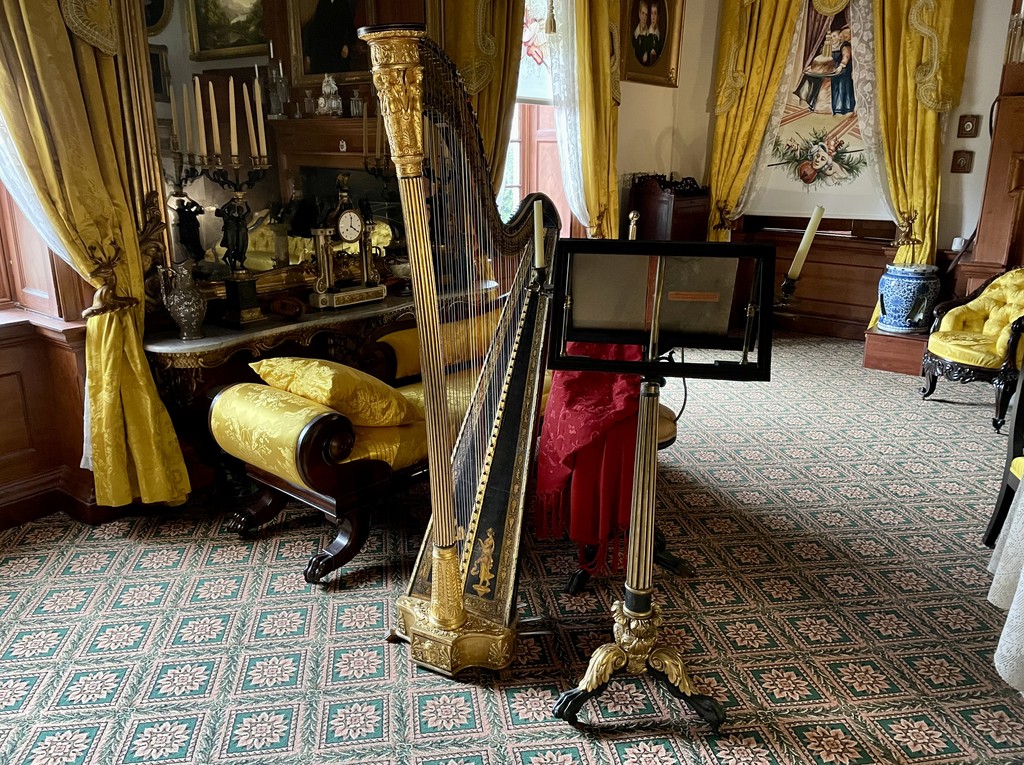
Eliza Ridgely’s surviving double-action Erard harp, HAMP 2598, in Hampton’s Music Room after conservation in 2023. It is distinct from the single-action harp in Sully’s portrait. National Park Service; no claim to original U.S. Government works.
Image source
.
Public domain
.
From a family portrait to the National Gallery
The portrait remained with the Ridgely family before the NGA purchased it in 1945 with funding credited as the Gift of Maude Monell Vetlesen. The museum’s accession number is 1945.9.1. The gift credit identifies the support behind the acquisition; it does not mean that Eliza or her descendants personally donated the painting to the Gallery. [1]
Its present setting changes the encounter. A family member might once have recognised the young sitter before attending to the arrangement. A museum visitor often begins with the harp, white dress and unusually elegant full-length pose, then learns the name and history. The painting can sustain both approaches because the musical action remains clear even before the surrounding biography is known.
Within Sully’s portraits , Lady with a Harp offers a particularly expansive example of his ability to make an accessory organise a likeness. Compare the single raised brush in his self-portrait : a small tool can announce a profession, while the harp’s scale allows it to shape the sitter’s entire posture. In both, an object gives visible form to an aspect of the person represented.
Artworks directory
A selection documented in the linked articles, with related studies and a print after Sully listed separately. Dates identify individual objects; Musidora’s date range does not imply continuous work. This is not a catalogue raisonné. The Drawing filter includes watercolour and reproductive printmaking.
| Name | Date | Medium |
|---|---|---|
| Captain Charles Stewart | 1811–1812 | Painting — oil on canvas |
| George Frederick Cooke as Richard III | 1811–1812 | Painting — oil on canvas |
| Musidora | 1813–35; Met panel | Painting — oil on wood |
| Lady with a Harp: Eliza Ridgely | 1818 | Painting — oil on canvas |
| The Passage of the Delaware | 1819 | Painting — oil on canvas |
| The Torn Hat | 1820 | Painting — oil on panel |
| Portrait of the Artist | 1821; Met canvas | Painting — oil on canvas |
| John Quincy Adams | 1824; NGA oil study | Painting — oil on canvas |
| John Quincy Adams (watercolour study) | 1824; Met 38.146.1 | Drawing — watercolour, black chalk and graphite on paper |
| John Quincy Adams (Durand after Sully) | 1826; PAFA 1876.9.184a | Drawing — etching and engraving on paper |
| The David Children | 1826 | Painting — oil on canvas |
| The Vanderkemp Children | 1832 | Painting — oil on canvas |
| Queen Victoria | 1838; full-length Met canvas | Painting — oil on canvas |
| Queen Victoria (life study) | 1838; Met 14.126.1 | Painting — oil on canvas |
| Mother and Son | 1840; inscription date | Painting — oil on canvas |
| The Coleman Sisters | 1844 | Painting — oil on canvas |
| Andrew Jackson | 1845; after the 1824 life portrait | Painting — oil on canvas |
Frequently Asked Questions
She was fifteen when Sully painted her in 1818. [1]
The NGA catalogue identifies the action as tuning. She holds a tuning key in her raised hand and reaches toward the strings with the other. [2]
It was painted in Philadelphia. Hampton belongs to Eliza’s later married life, and the painting’s landscape is not a documented view of the estate. [2]
Discussion
Look again at the images and ideas explored in Lady with a Harp: Eliza Ridgely by Thomas Sully. These editorial prompts invite your observations.
Reader Insights
Follow the blue scarf from shoulder to floor. How does it connect the figure with the stool and surrounding space?
What changes when the action is understood as tuning rather than performing?
Compare the portrait with the surviving-harp photograph. Which details clarify the instrument’s physical presence, and which belong specifically to Sully’s composition?
Join the Conversation
Share a detail, comparison or question about Lady with a Harp: Eliza Ridgely by Thomas Sully below.
References
- National Gallery of Art: Lady with a Harp: Eliza Ridgely , 1818, 1945.9.1. View source
- National Gallery of Art: American Paintings of the Nineteenth Century , Part II, 1998, pp. 151–158. View source
- Pennsylvania Academy of the Fine Arts, George Frederick Cooke as Richard III, 1811–1812, 1812.1. View source
- Metropolitan Museum of Art, Musidora, 1813–35, 21.48. View source
- National Gallery of Art, Open Data: selected Sully object and published-image records. View source
- Wikimedia Commons / MFA image source, The Passage of the Delaware: original image and PD-Art record. View source
- Wikimedia Commons / MFA source image, The Torn Hat: 16.104 image and PD-Art rights. View source
- Metropolitan Museum of Art, Portrait of the Artist, 1821, 94.23.3. View source
- Metropolitan Museum of Art, Queen Victoria,1838,2021.140. View source
- Metropolitan Museum of Art, Mother and Son, 1840, 14.126.5. View source
- National Park Service: Eliza Ridgely’s Harp . View source
- National Park Service: Eliza Eichelberger Ridgely . View source
- Splash image source.
Thomas Sully, Lady with a Harp: Eliza Ridgely, 1818. Oil on canvas, 214.5 × 142.5 cm. National Gallery of Art, Washington, Gift of Maude Monell Vetlesen, 1945.9.1. CC0. CC0; National Gallery of Art Open Access .
View source