 by
Tom Gurney
Tom Gurney BSc (Hons) is an art history expert with over 20 years experience
Email:
tomgurney1@gmail.com
/ Phone:
+44 7429 011000
Andrew Jackson by Thomas Sully: Introduction
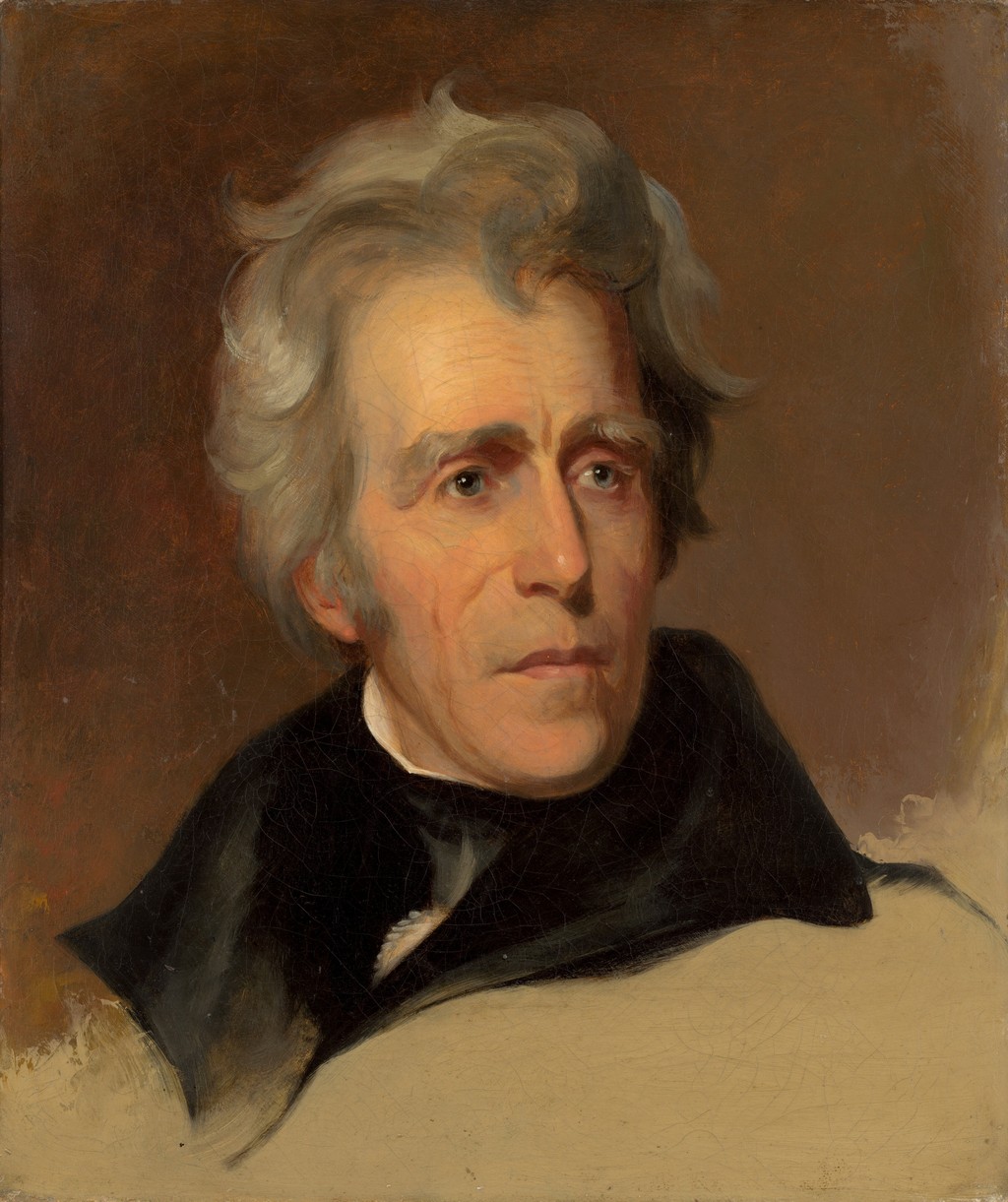
Thomas Sully’s Andrew Jackson at the National Gallery of Art is dated 1845, but it derives from a likeness painted from life in 1824. Keeping those dates separate is the key to understanding the work. The surviving canvas is a later version of an established image, not evidence that Jackson sat to Sully again in 1845. [1] [2]
The head is immediately forceful: grey hair rises around a long face, the eyes turn to one side, and a high dark collar encloses the lower jaw. The painting leaves much of the lower clothing unfinished. Its identity as a particular object, accession 1942.8.34, matters because Sully’s Jackson likenesses were repeated, adapted and circulated in several formats. [1]
At a Glance
- Artist Thomas Sully
- Title Andrew Jackson
- Date of this canvas 1845
- Source likeness Sully’s 1824 portrait from life
- Medium Oil on canvas
- Dimensions 51.8 × 43.8 cm
- Collection National Gallery of Art, Washington
- Accession 1942.8.34
- Credit Andrew W. Mellon Collection
This work across Thomas Sully’s career
Musidora
1813–35; Met panelThe Torn Hat
1820Portrait of the Artist
1821; Met canvasJohn Quincy Adams
1824; NGA oil studyQueen Victoria
1838; full-length Met canvasMother and Son
1840; inscription dateAndrew Jackson (current article)
1845; after the 1824 life portraitNotes and sources
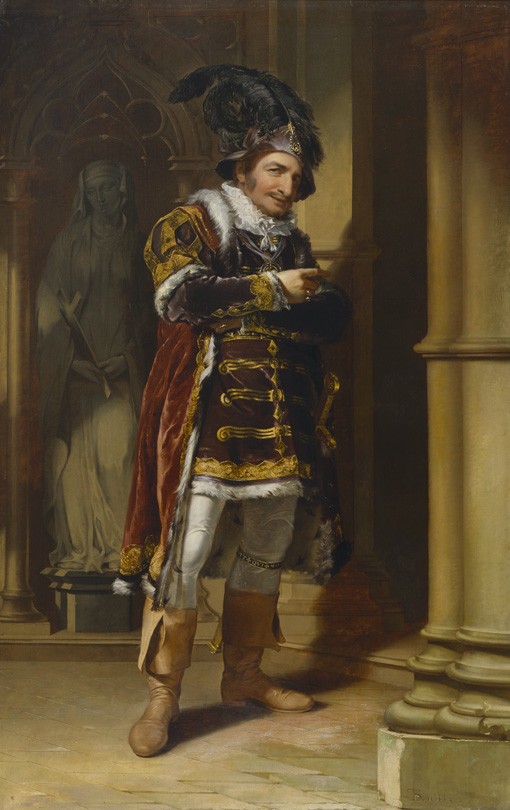
George Frederick Cooke as Richard III. Actor and theatrical role meet in an imposing full-length portrait. [3]
Musidora. A turned figure beside a pool belongs to a literary episode, not a named portrait sitter. [4]
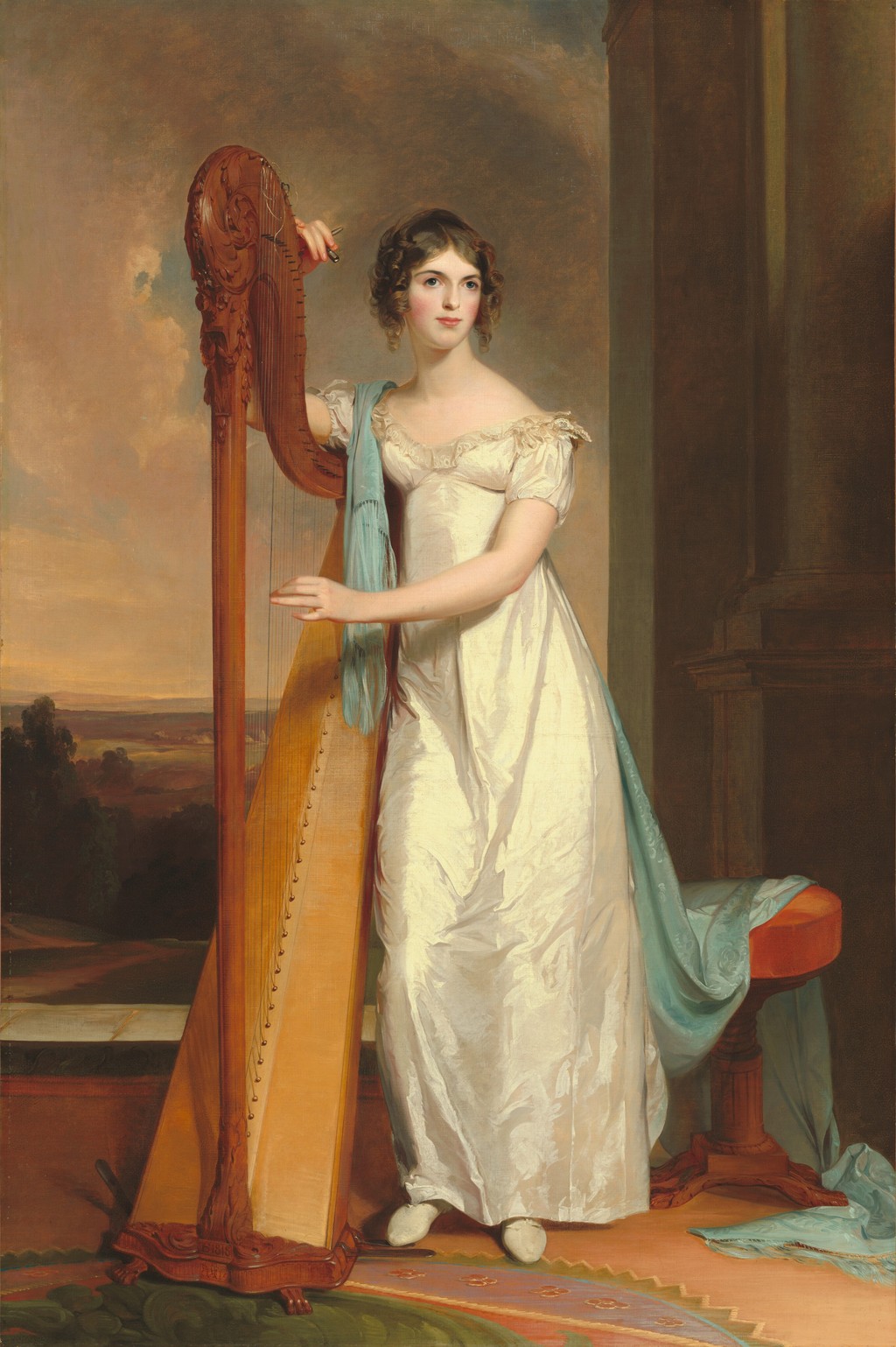
Lady with a Harp: Eliza Ridgely. The harp connects the sitter’s accomplishment with the arrangement of her body. [5]
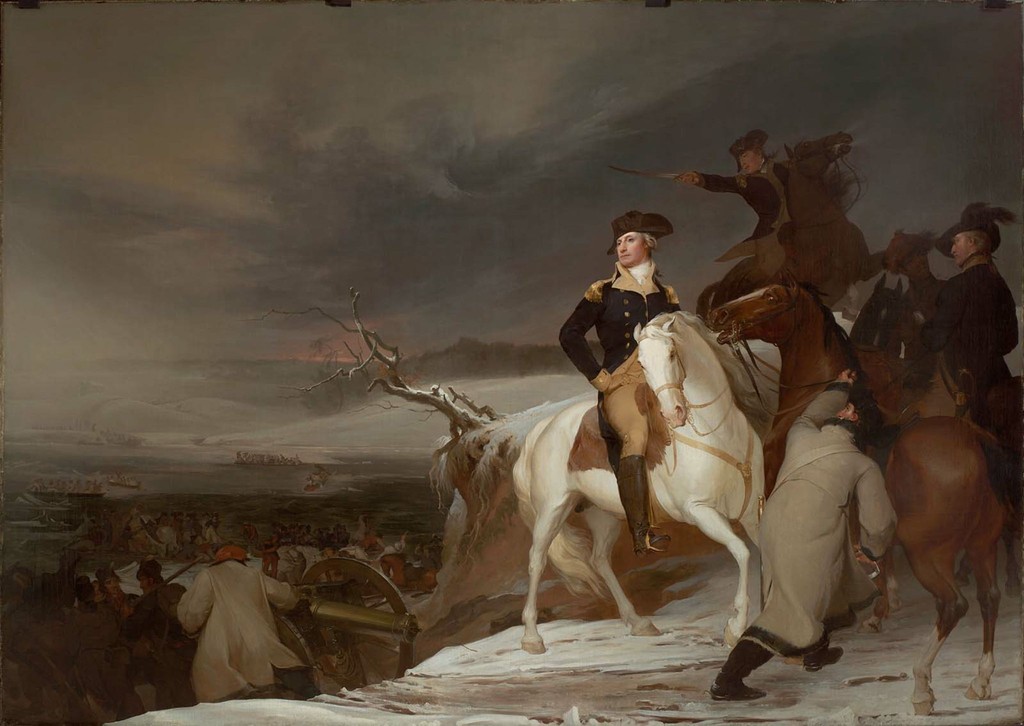
The Passage of the Delaware. Washington is mounted on shore while the crossing proceeds around him. [6]
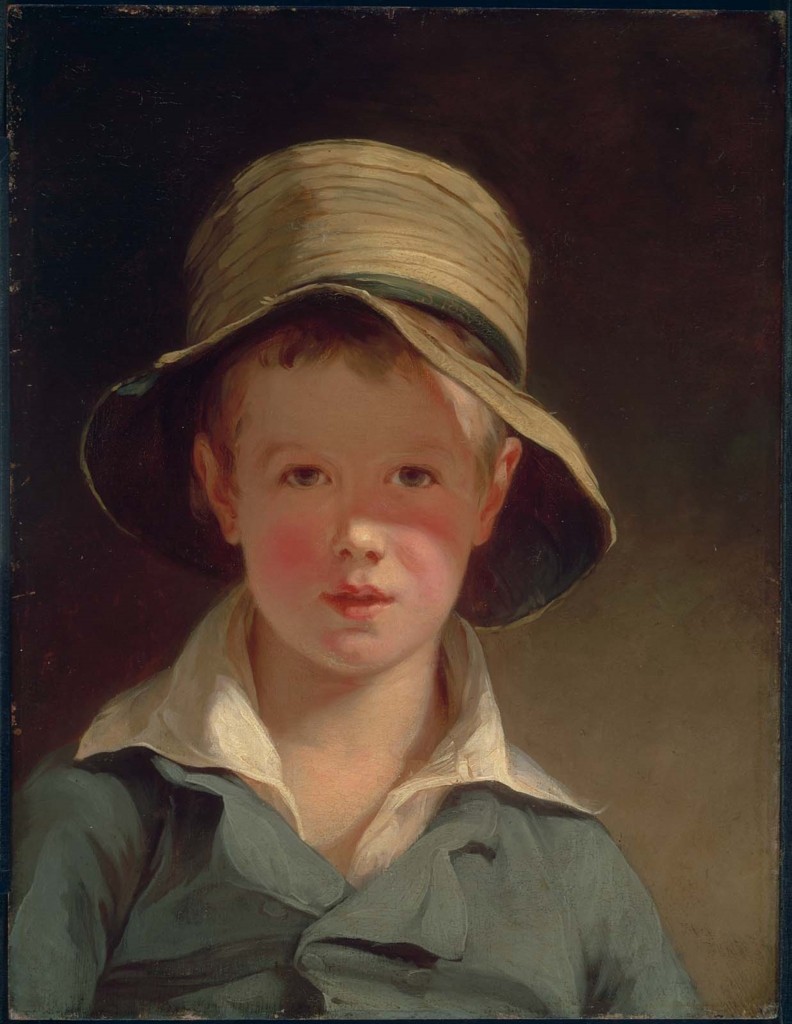
The Torn Hat. A worn hat and directed light give the artist’s son an informal presentation. [7]
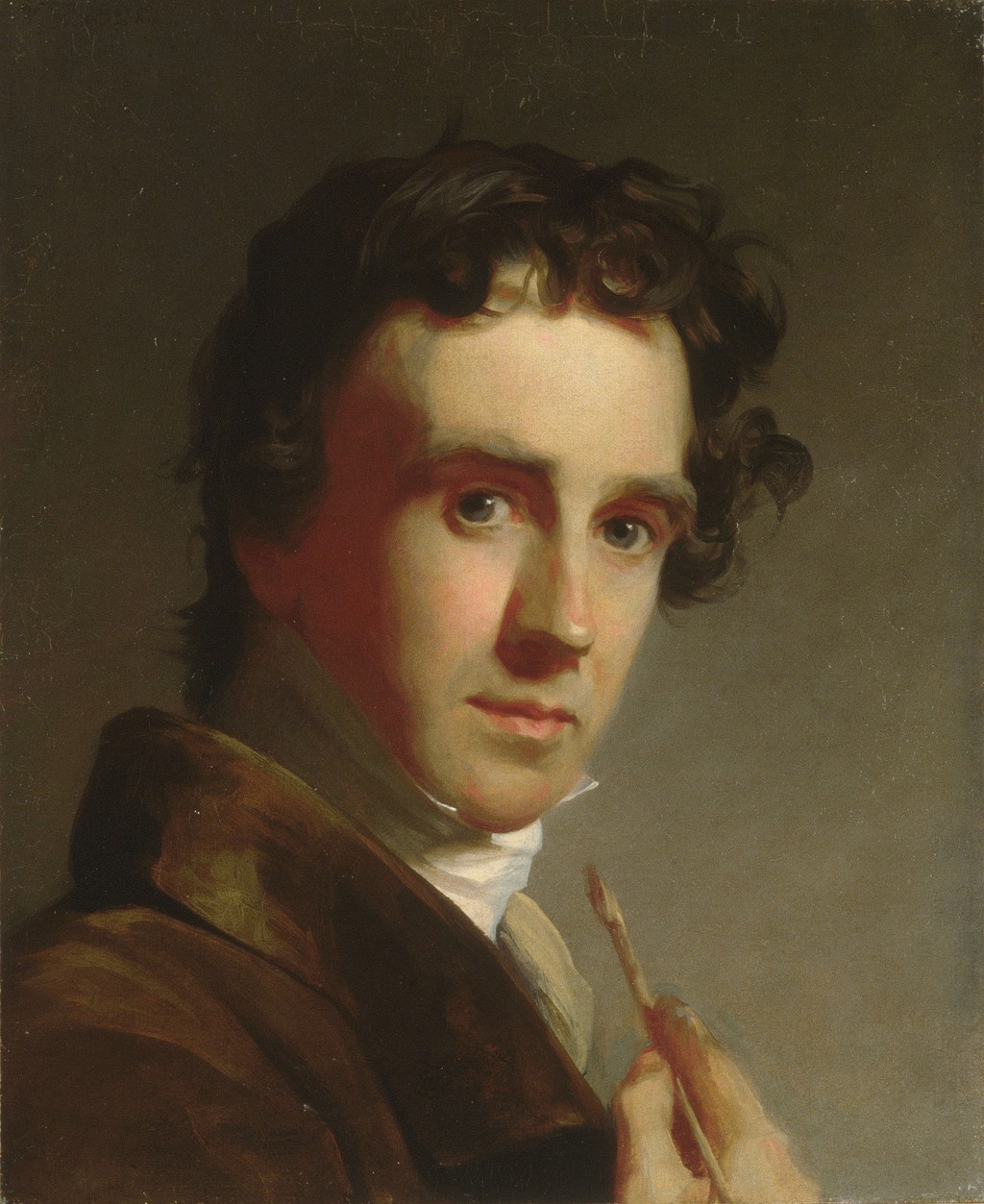
Portrait of the Artist. A raised brush joins the painter’s hand to the illuminated head. [8]
John Quincy Adams. A developed likeness supplied information for a larger portrait project. [5]
The David Children. The older children direct attention toward the reclining infant. [5]
The Vanderkemp Children. A portfolio and overlapping hands connect the three children. [5]
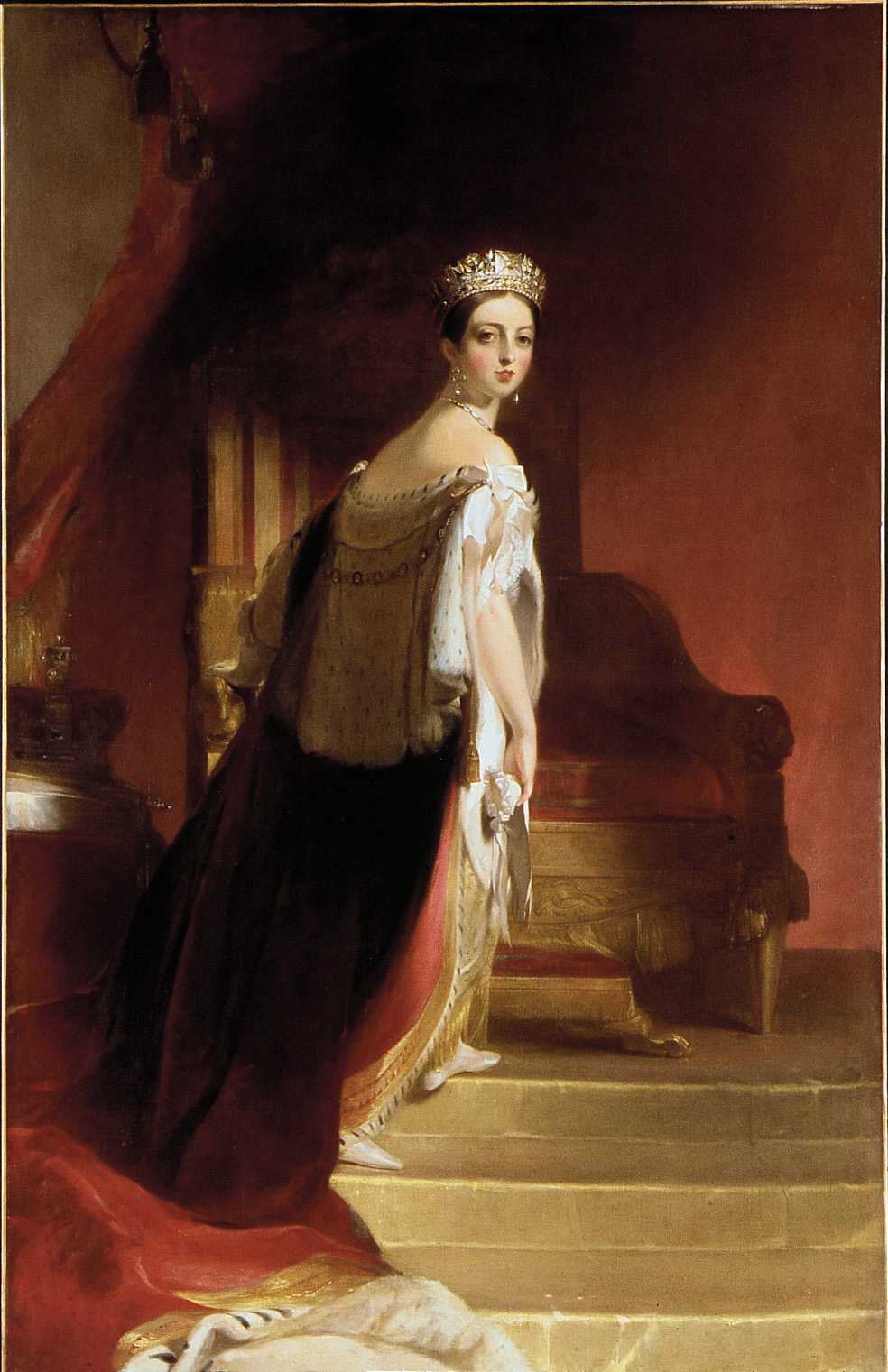
Queen Victoria. The royal likeness extends through robes, insignia and a ceremonial setting. [9]
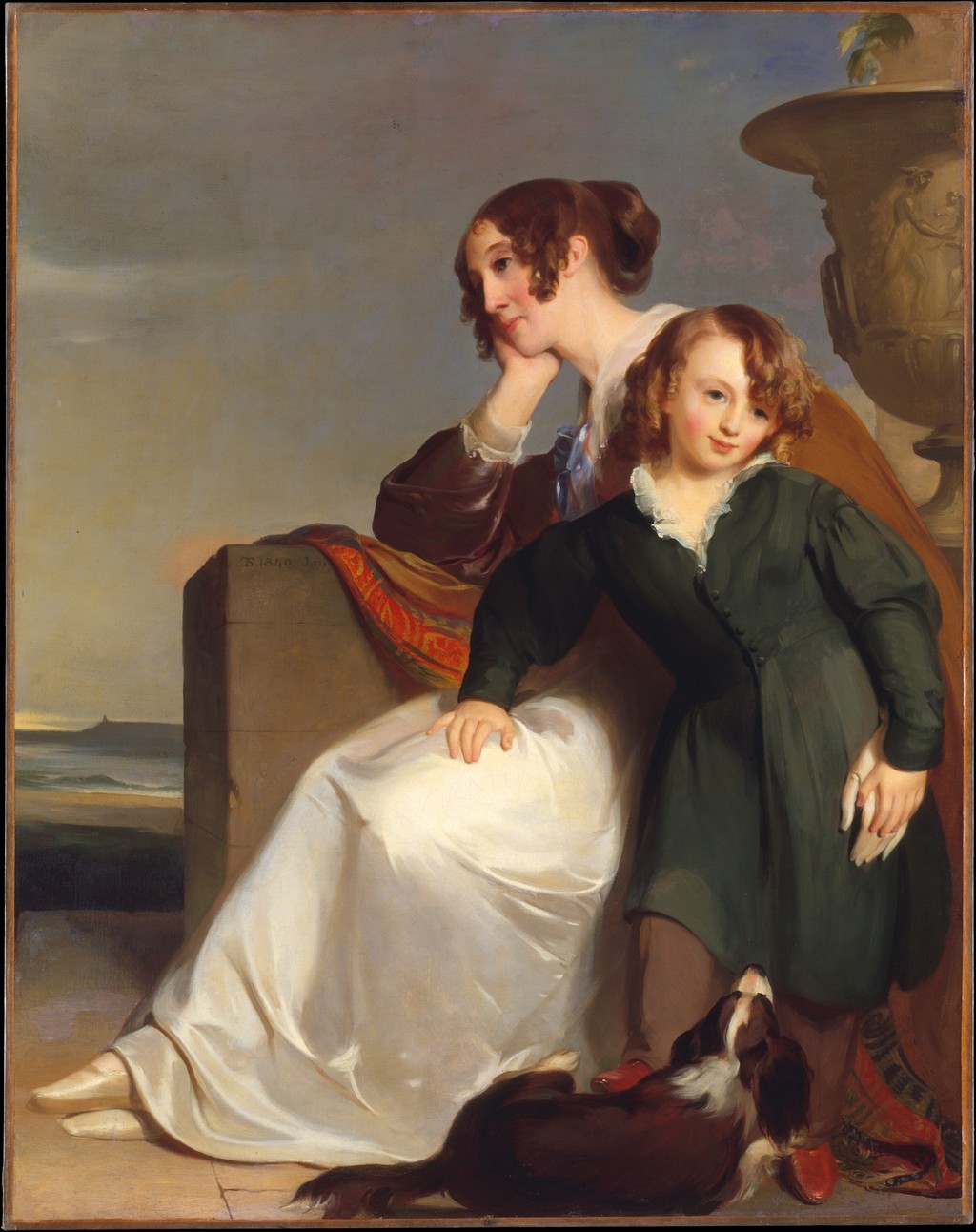
Mother and Son. Jane Darley and her son are connected through touch and differing gazes. [10]
The Coleman Sisters. Contrasting dresses, heights and gestures hold three individual likenesses together. [5]
Andrew Jackson (current article). This later version must be distinguished from its earlier life source. [5]
Contents
- Looking at the head
- The 1824 life likeness and the 1845 canvas
- How the canvas helped resolve the date
- Francis Preston Blair and the portrait’s ownership
- Other formats of the Jackson likeness
- George Caleb Bingham’s use of the likeness
- From painted likeness to familiar public image
- A presidential likeness and the history outside it
- Comparing John Quincy Adams
- Annotated details
Looking at the head
Jackson’s face turns toward the right side of the picture, while his shoulders face slightly the other way. His hair breaks the upper outline into irregular curls and rising strands. Beneath that movement, the forehead, nose and cheekbones form a much firmer sequence of planes.
The eyes do not meet the viewer directly. Their sideways direction gives the head an alert quality, reinforced by the contrast between the raised hair and the dark collar. The mouth is closed, with small changes around its corners and the chin. These details make the face specific without providing a reliable account of the sitter’s private thoughts.
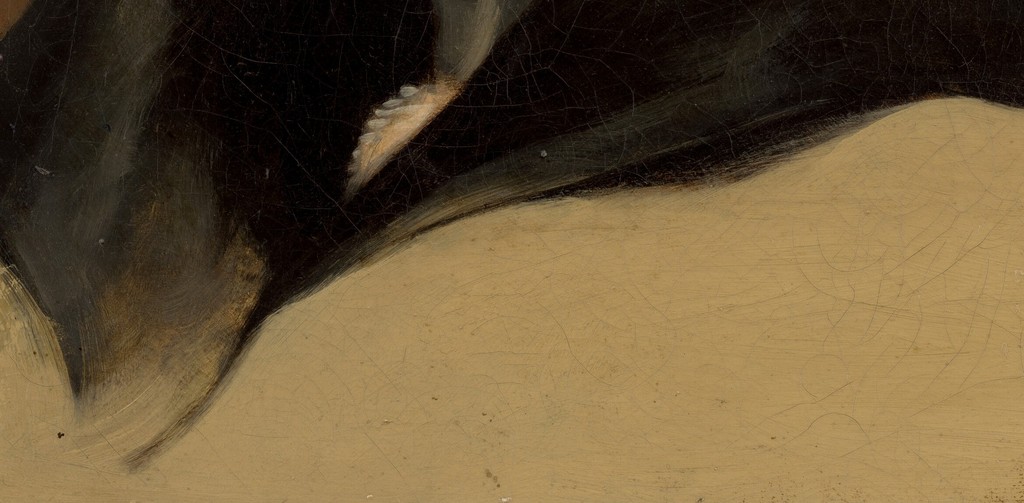
The coat supplies a broad, dark base. A small white collar appears above it, but the black shape occupies much more space. At the lower edge, the paint gives way to a paler, less developed area, leaving the bust visibly incomplete. The most concentrated information is consequently in the head and the dark form immediately surrounding it.
The warm background helps unify the portrait. It contains shifts of tone rather than a detailed setting, so there is little to compete with the silhouette of the hair. The image establishes its effect through a relatively small number of elements: face, hair, collar and their contrasting colours.
Annotated Details from Andrew Jackson
The numbered points identify visible features discussed in this article. Return from each detail to the whole composition. Thomas Sully, Andrew Jackson, 1845, after his 1824 portrait from life. Oil on canvas, 51.8 × 43.8 cm. National Gallery of Art, Washington, Andrew W. Mellon Collection, 1942.8.34. CC0. Image source. CC0; National Gallery of Art Open Access. Numbers added to a separate overview; detail images cropped from the source. The complete unnumbered image is retained in this article.
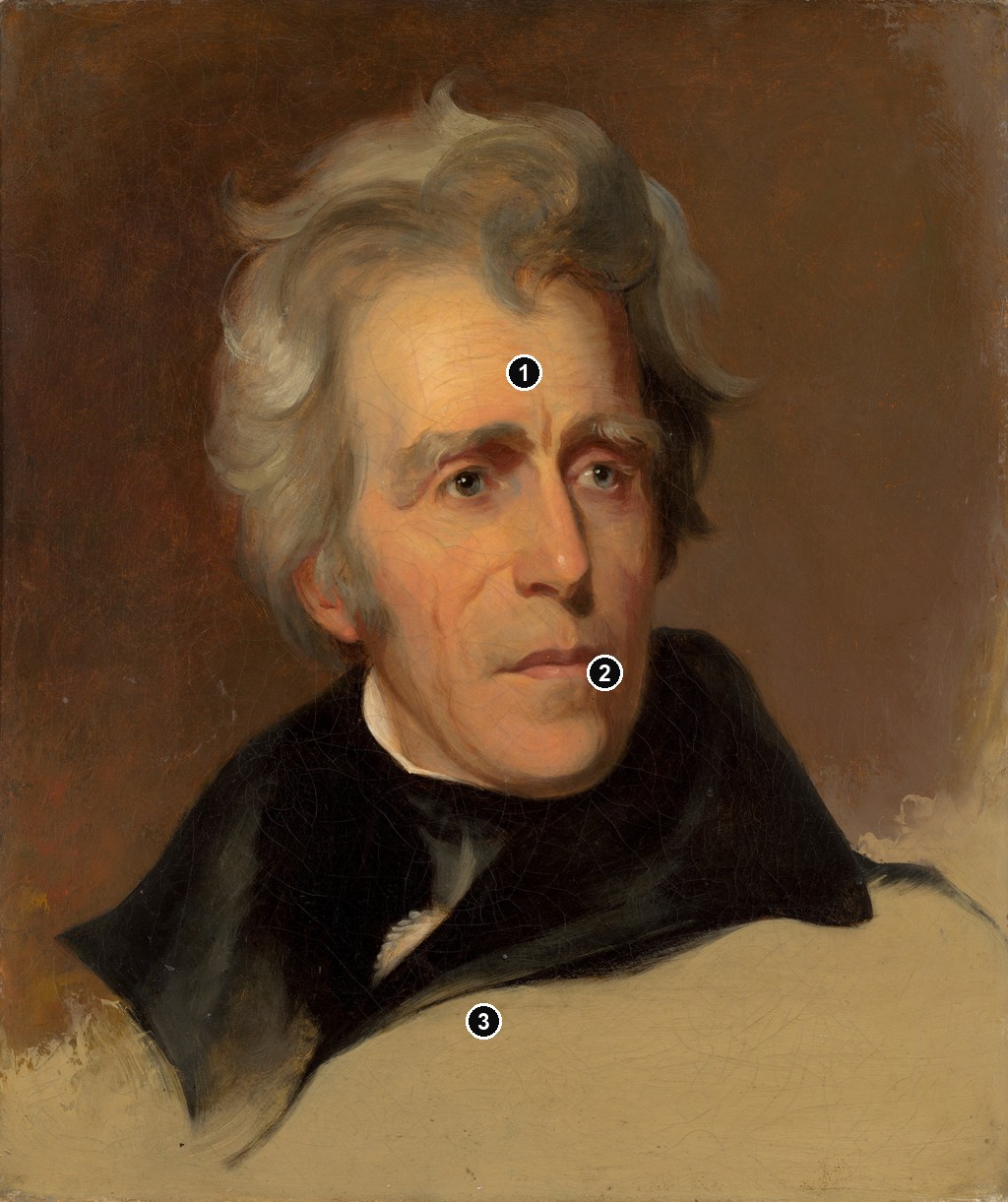
Details from ANDREW JACKSON
Compare the cropped details with the complete images above. Notice how their colours, shapes and positions contribute to the larger compositions.
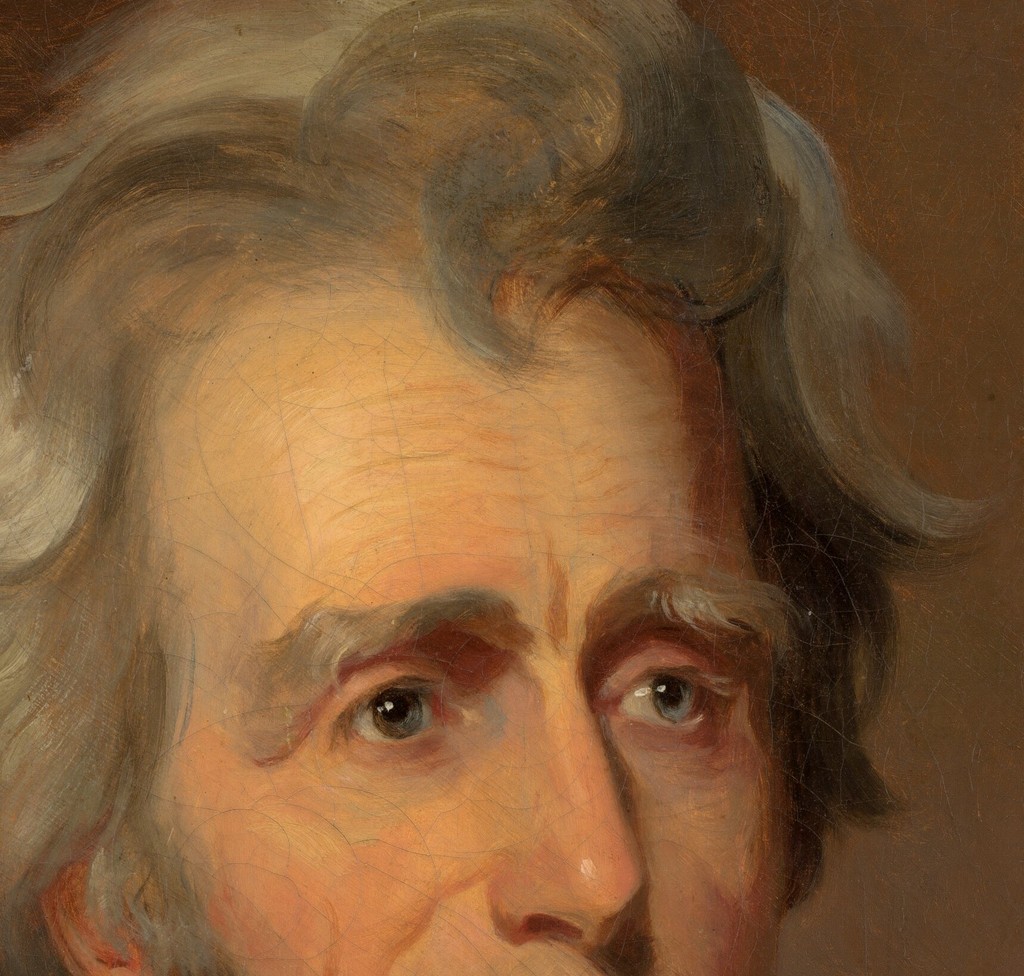
Hair and head
The swept grey hair gives the head a strong, irregular outline against the warm background. The face remains the most carefully articulated area of this bust-length image.
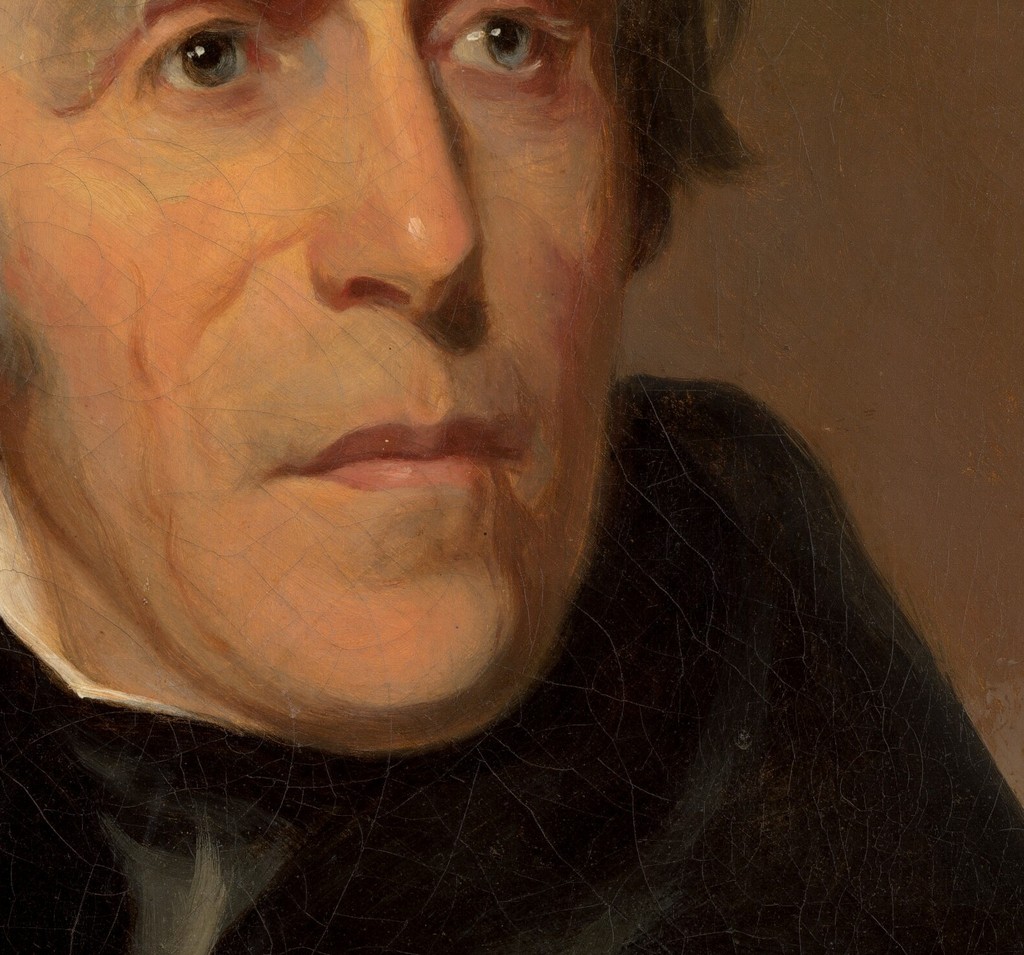
Face and high collar
The long face is framed by a very high dark collar. Light on the cheek and nose makes the facial structure readable against the surrounding black clothing.
Unfinished lower edge
Dark strokes establish the coat above a broad, lightly worked lower area. The contrast in finish is visible in this 1845 version and should not be confused with physical damage.
The 1824 life likeness and the 1845 canvas
Sully painted Jackson from life in Washington late in 1824, during the same visit in which he worked on a likeness of John Quincy Adams. The NGA catalogue identifies the present Jackson as a copy made from that earlier portrait. Its register dates are 9–18 April 1845, with a fee of fifty dollars. [2]
The later date does not mean that Sully updated every feature to Jackson’s appearance twenty-one years after the original sitting. The work repeats an earlier source. That relationship is essential when interpreting the face: a portrait’s painted date and the date of the observation underlying it can answer different questions.
The same distinction appears elsewhere in Sully’s practice. Studies could remain useful after a sitting ended, providing a likeness for larger compositions or further versions. The Queen Victoria project offers another example, with London observations developed into a full-length canvas in Philadelphia.
For Jackson, however, the interval is much longer. The 1845 painting participates in the preservation and renewed circulation of a recognisable image. It should be described as an artist’s later version after his own life portrait, rather than dismissed as an anonymous copy or mistaken for the original sitting itself.
How the canvas helped resolve the date
The NGA’s systematic catalogue discusses earlier disagreement over which surviving version was the 1824 original. Visual impressions alone had not settled the question. The authors connected evidence on the reverse with Sully’s recorded purchase of prepared canvas and his notes about making a copy. [2]
The support bears a supplier’s stencil naming Brown at 163 High Holborn in London. The catalogue relates that mark to Sully’s later canvas-supply records, including a memorandum of prices obtained in 1838. It also cites a note written when he began the 1845 copy. Together, these records support the identification of this particular canvas as the later work. [2]
The significance is methodological as well as chronological. The face can look immediate and closely observed without having been painted during a fresh sitting. Conversely, apparently hesitant or fluent handling cannot securely date an image by itself. Information on the support and in the written record can change the account suggested by the front of the painting.
This evidence concerns the physical object now at the NGA. It does not require every other Sully portrait of Jackson to share the same materials or date. The accession number helps keep the discussion attached to the canvas that was actually examined.
Francis Preston Blair and the portrait’s ownership
The Gallery’s current provenance traces the painting to Francis Preston Blair and then through the Blair and Lee family before its sale to Knoedler. The A. W. Mellon Educational and Charitable Trust purchased it in 1934, and it entered the NGA in 1942. [1]
The scholarly catalogue proposes that Blair probably commissioned the 1845 version and supplied Sully with the earlier painting as a model. That explanation fits the shared family history, but it remains a reconstruction of the circumstances rather than a surviving commission letter reproduced in the account. [2]
The distinction matters because an ownership chain and an account of making are related but different kinds of evidence. Provenance can show where a picture passed; it may not explain every decision made at its beginning. The documented 1845 dates and the proposed role of Blair should therefore retain their different degrees of certainty.
Other formats of the Jackson likeness
Sully also produced a full-length Jackson and an oval version in 1845. The NGA catalogue discusses these separately from the small rectangular canvas. Their existence shows how an established head could be developed for different purposes, but the shared sitter and year do not make them one painting. [2]
An oval changes the relation between head and surrounding space. A full-length must add a body, gesture, costume and setting capable of supporting the likeness across a much larger surface. The NGA bust concentrates almost entirely on the face and collar. Each format asks a different compositional question even when an earlier study supplies the same essential identity.
The rectangular painting’s unfinished lower area is especially useful in that comparison. It lets the viewer see how little surrounding information is required for the head to remain effective. The portrait can function as a strong likeness while leaving the torso only broadly indicated.
Its print history adds another transformation. The catalogue describes engraved adaptations, including one by Thomas B. Welch. Reproducing a painted likeness in line changes the handling of hair, skin and shadow; it also makes the image available to audiences who may never encounter the original oil. [2]
Watch: Thomas Sully
Choose a film to explore the artist’s work, its interpretation and its wider setting.
Thomas Sully: A Lesson in Conservation
The Columbus Museum explores the conservation of a painting by Thomas Sully.
Watch on YouTubeGeorge Caleb Bingham’s use of the likeness
The image also became a source for another painter. In 1860, George Caleb Bingham received a Missouri legislative commission for portraits of Jackson and Henry Clay. The NGA catalogue records that he examined Sully’s Jackson at Captain Lee’s home in Washington. Bingham’s resulting equestrian portrait was later destroyed by fire in 1911. [2]
This connection extends the painting’s history beyond engraved reproduction. A later artist could consult the established head when faced with the problem of representing a sitter who was no longer available. The source likeness might supply facial information while a new composition placed that identity within a different body, action and setting.
For readers exploring George Caleb Bingham , the episode provides a direct connection with Sully’s portrait practice. It also clarifies what survival means in this history. The source image remains available, while the later equestrian work does not survive as an original painting. Those two objects should remain distinct when discussing how the likeness travelled between artists and public commissions.
From painted likeness to familiar public image
The NGA catalogue traces the image’s later use through prints, stamps and currency. The U.S. Currency Education Program confirms that the current twenty-dollar note carries Jackson’s portrait on the front and the White House on the reverse. The museum’s account supplies the artistic lineage; the currency authority supplies the current identification of the note. [2] [11]
That circulation changes how the painting may first be encountered. A viewer can recognise the head before knowing Sully’s name, the date of the canvas or its relationship to the earlier life study. Familiarity with a reproduced image can make its construction seem almost invisible.
Returning to the oil restores differences that a small printed adaptation may suppress. The warm ground, varied edges of the hair, dark collar and unfinished lower passage belong to a painted object with its own scale and surface. The familiar public face is not the whole of that object.
The relationship should also be described precisely. A modern banknote is not a photographic reproduction of the entire 1845 painting. It is a designed and engraved adaptation within a different format. Recognising the connection is useful; treating canvas and currency as materially identical would obscure the work of the intervening makers.
A presidential likeness and the history outside it
The forceful head can communicate authority, but a portrait is not a complete assessment of a presidency. Jackson signed the Indian Removal Act in 1830. The National Park Service places that legislation within a history of displacement, resistance and forced removal, including the Cherokee Trail of Tears. [12]
None of those events is depicted in the bust. Its plain background and restricted format give the viewer a face, without showing the people affected by the sitter’s policies. That absence is part of the limitation of this kind of political image: a compelling likeness can become widely familiar while conveying little about the exercise of power behind it.
The point is not to make the hairstyle or facial expression stand as evidence for a particular policy. Historical evidence establishes the policy; the picture establishes how the sitter was represented. Reading them together allows the portrait’s public role to be examined without converting appearance into moral proof.
Nor does the painting by itself disclose Sully’s position on every aspect of Jackson’s record. The commissioned likeness, the later repetition and the image’s circulation are documented activities. An account of the artist’s personal political commitments would need additional, specific evidence.
Comparing John Quincy Adams
Sully’s John Quincy Adams offers a useful comparison because its life study belongs to the 1824 Washington visit. The NGA Adams is itself dated 1824, whereas the Jackson canvas discussed here is the 1845 repetition. That difference should remain clear even when the two similar bust formats are placed side by side. [2]
Visually, the contrast is striking. Jackson’s rising grey hair breaks the upper contour, while Adams’s head has a smoother, more continuous outline. Jackson’s broad black collar encloses the jaw; Adams’s white neckcloth creates a larger pale passage beneath his face. Both portraits rely on a relatively simple ground and limited clothing to concentrate attention on the head.
Their differences can be described without turning either man into a character type. Hair, clothing, pose and handling are visible choices. The political relationship between the sitters belongs to their historical circumstances, rather than being something that a viewer can securely read from the direction of their eyes.
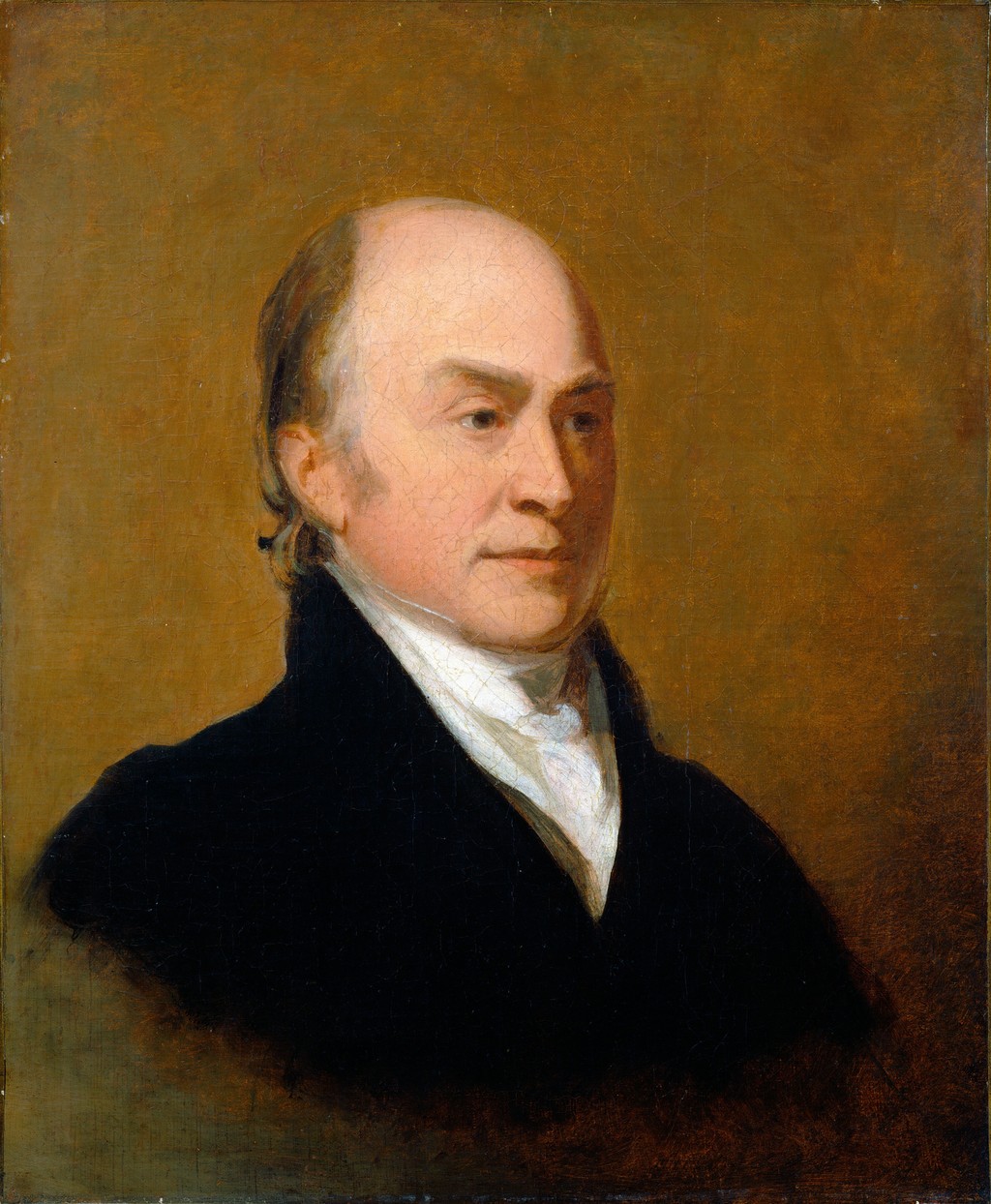
Thomas Sully, John Quincy Adams, 1824. Oil on canvas, 61 × 51 cm. National Gallery of Art, Washington, Andrew W. Mellon Collection, 1942.8.30. CC0.
Image source
.
CC0; National Gallery of Art Open Access
.
Artworks directory
A selection documented in the linked articles, with related studies and a print after Sully listed separately. Dates identify individual objects; Musidora’s date range does not imply continuous work. This is not a catalogue raisonné. The Drawing filter includes watercolour and reproductive printmaking.
| Name | Date | Medium |
|---|---|---|
| Captain Charles Stewart | 1811–1812 | Painting — oil on canvas |
| George Frederick Cooke as Richard III | 1811–1812 | Painting — oil on canvas |
| Musidora | 1813–35; Met panel | Painting — oil on wood |
| Lady with a Harp: Eliza Ridgely | 1818 | Painting — oil on canvas |
| The Passage of the Delaware | 1819 | Painting — oil on canvas |
| The Torn Hat | 1820 | Painting — oil on panel |
| Portrait of the Artist | 1821; Met canvas | Painting — oil on canvas |
| John Quincy Adams | 1824; NGA oil study | Painting — oil on canvas |
| John Quincy Adams (watercolour study) | 1824; Met 38.146.1 | Drawing — watercolour, black chalk and graphite on paper |
| John Quincy Adams (Durand after Sully) | 1826; PAFA 1876.9.184a | Drawing — etching and engraving on paper |
| The David Children | 1826 | Painting — oil on canvas |
| The Vanderkemp Children | 1832 | Painting — oil on canvas |
| Queen Victoria | 1838; full-length Met canvas | Painting — oil on canvas |
| Queen Victoria (life study) | 1838; Met 14.126.1 | Painting — oil on canvas |
| Mother and Son | 1840; inscription date | Painting — oil on canvas |
| The Coleman Sisters | 1844 | Painting — oil on canvas |
| Andrew Jackson | 1845; after the 1824 life portrait | Painting — oil on canvas |
Frequently Asked Questions
The catalogue identifies it as a copy after the earlier life portrait, not a new life sitting. [2]
It belongs to the National Gallery of Art, Washington, Andrew W. Mellon Collection, accession 1942.8.34. [1]
Discussion
Look again at the images and ideas explored in Andrew Jackson by Thomas Sully. These editorial prompts invite your observations.
Reader Insights
What does the unfinished lower part contribute to your experience of the more developed head?
Compare Jackson’s hair and collar with the Adams portrait. How do these different outlines affect the balance of each image?
How does seeing a familiar public likeness as a painted object change the details you notice?
Join the Conversation
Share a detail, comparison or question about Andrew Jackson by Thomas Sully below.
References
- National Gallery of Art Open Data: current object record for Andrew Jackson , object 1128, 1942.8.34. Museum object page. View source 1 · View source 2
- National Gallery of Art: American Paintings of the Nineteenth Century , Part II, 1998, pp. 162–164 and 184–188. View source
- Pennsylvania Academy of the Fine Arts, George Frederick Cooke as Richard III, 1811–1812, 1812.1. View source
- Metropolitan Museum of Art, Musidora, 1813–35, 21.48. View source
- National Gallery of Art, Open Data: selected Sully object and published-image records. View source
- Wikimedia Commons / MFA image source, The Passage of the Delaware: original image and PD-Art record. View source
- Wikimedia Commons / MFA source image, The Torn Hat: 16.104 image and PD-Art rights. View source
- Metropolitan Museum of Art, Portrait of the Artist, 1821, 94.23.3. View source
- Metropolitan Museum of Art, Queen Victoria,1838,2021.140. View source
- Metropolitan Museum of Art, Mother and Son, 1840, 14.126.5. View source
- U.S. Currency Education Program: the twenty-dollar note . View source
- National Park Service: Permanent Indian Frontier . View source
- Splash image source.
Thomas Sully, Andrew Jackson, 1845, after his 1824 portrait from life. Oil on canvas, 51.8 × 43.8 cm. National Gallery of Art, Washington, Andrew W. Mellon Collection, 1942.8.34. CC0. CC0; National Gallery of Art Open Access .
View source