 by
Tom Gurney
Tom Gurney BSc (Hons) is an art history expert with over 20 years experience
Email:
tomgurney1@gmail.com
/ Phone:
+44 7429 011000
John Quincy Adams by Thomas Sully: Introduction
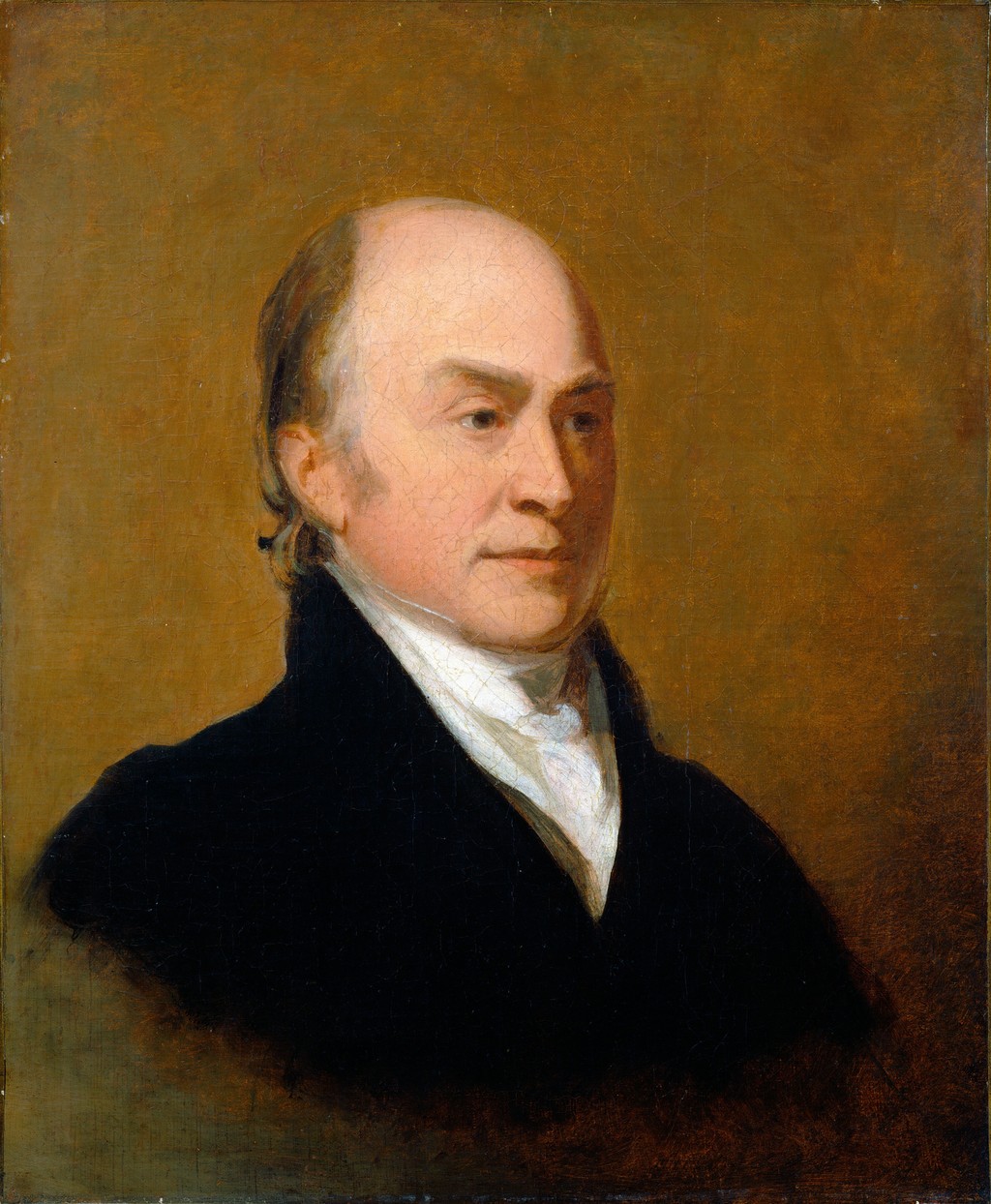
Thomas Sully painted this oil portrait of John Quincy Adams in Washington in December 1824, before Adams became president. The head is carefully established above a white neckcloth and dark coat, while the lower part of the bust remains loosely finished. The painting now belongs to the National Gallery of Art, accession 1942.8.30. [1] [2]
It formed part of a larger portrait project. Sully also made a small watercolour study and developed a seated full-length image, later reproduced by Asher B. Durand. Looking at these related objects shows how observations made during sittings could be reorganised into a more extensive public likeness. [2] [3]
At a Glance
- Artist Thomas Sully
- Title John Quincy Adams
- Date 1824
- Medium Oil on canvas
- Dimensions 61 × 51 cm
- Collection National Gallery of Art, Washington
- Accession 1942.8.30
- Credit Andrew W. Mellon Collection
- Related Met watercolour 1824, 38.146.1
- Related Durand print 1826
This work across Thomas Sully’s career
Musidora
1813–35; Met panelThe Torn Hat
1820Portrait of the Artist
1821; Met canvasJohn Quincy Adams (current article)
1824; NGA oil studyQueen Victoria
1838; full-length Met canvasMother and Son
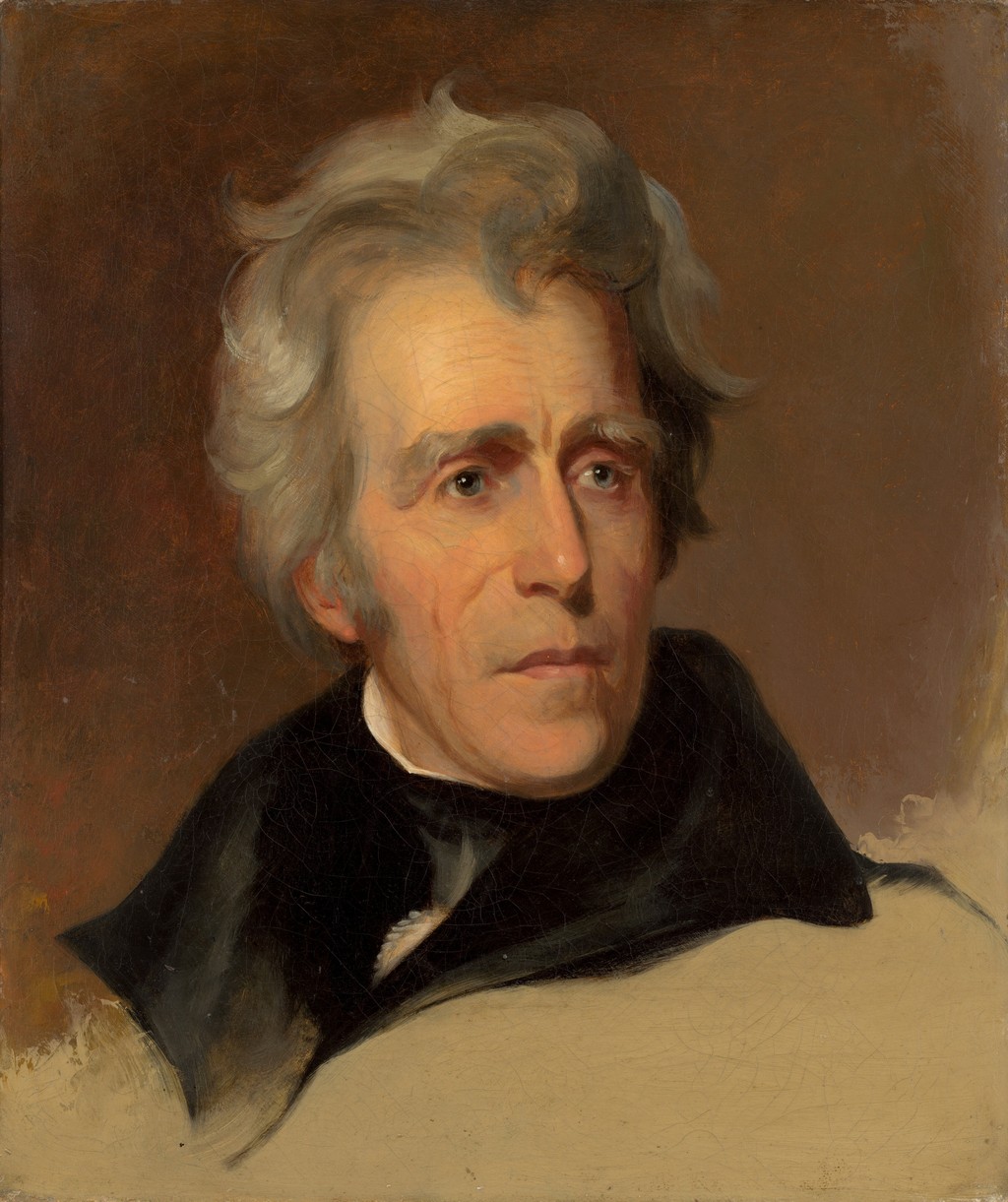
1840; inscription dateAndrew Jackson
1845; after the 1824 life portraitNotes and sources
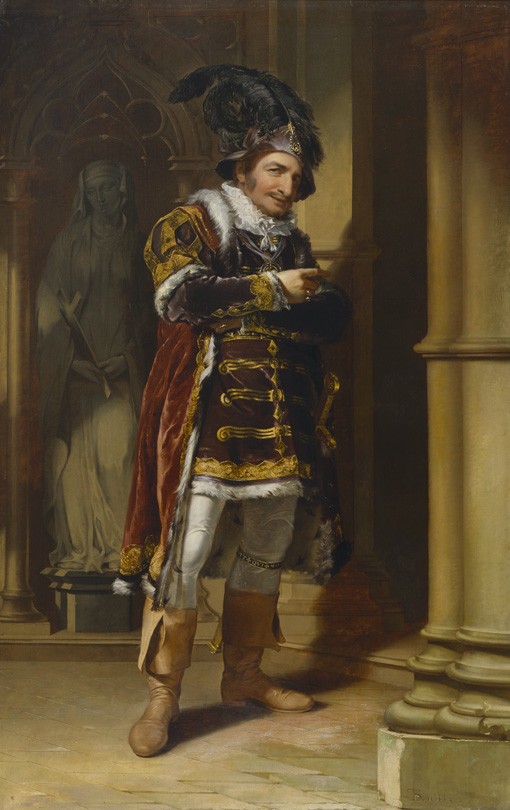
George Frederick Cooke as Richard III. Actor and theatrical role meet in an imposing full-length portrait. [4]
Musidora. A turned figure beside a pool belongs to a literary episode, not a named portrait sitter. [5]
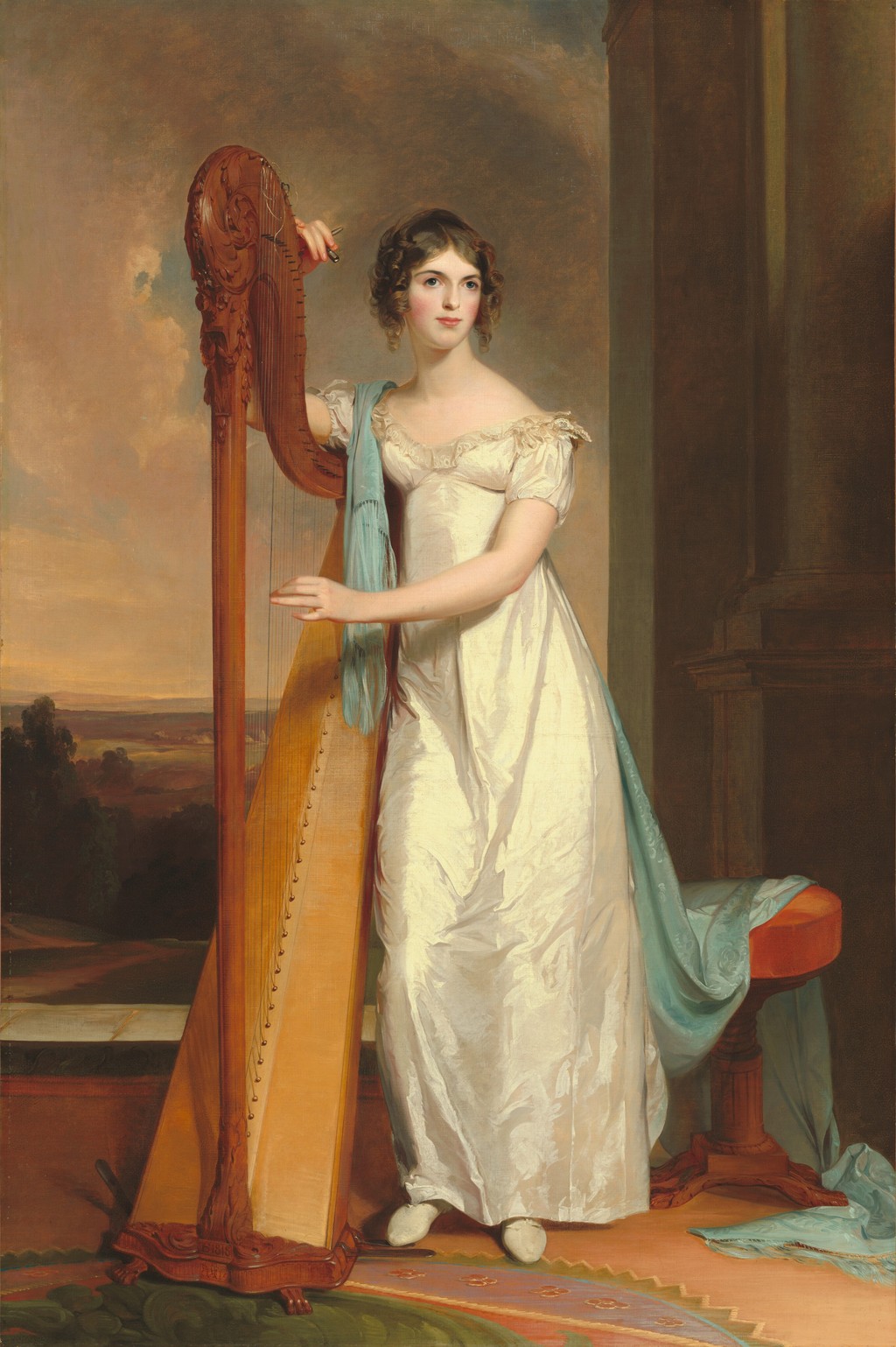
Lady with a Harp: Eliza Ridgely. The harp connects the sitter’s accomplishment with the arrangement of her body. [1]
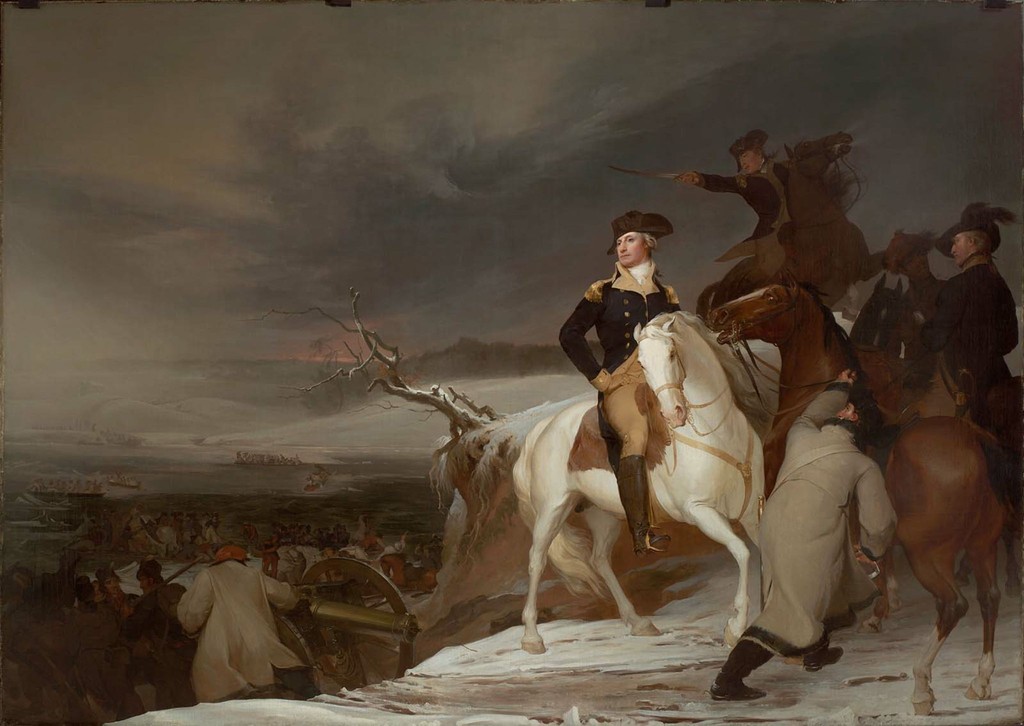
The Passage of the Delaware. Washington is mounted on shore while the crossing proceeds around him. [6]
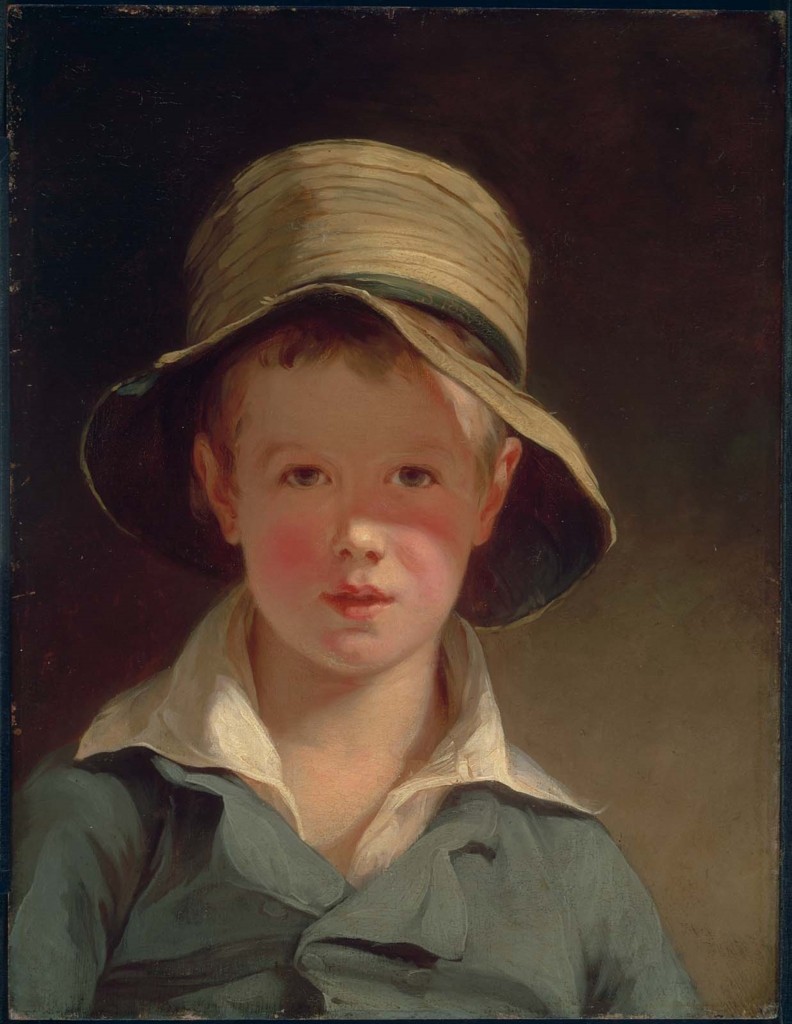
The Torn Hat. A worn hat and directed light give the artist’s son an informal presentation. [7]
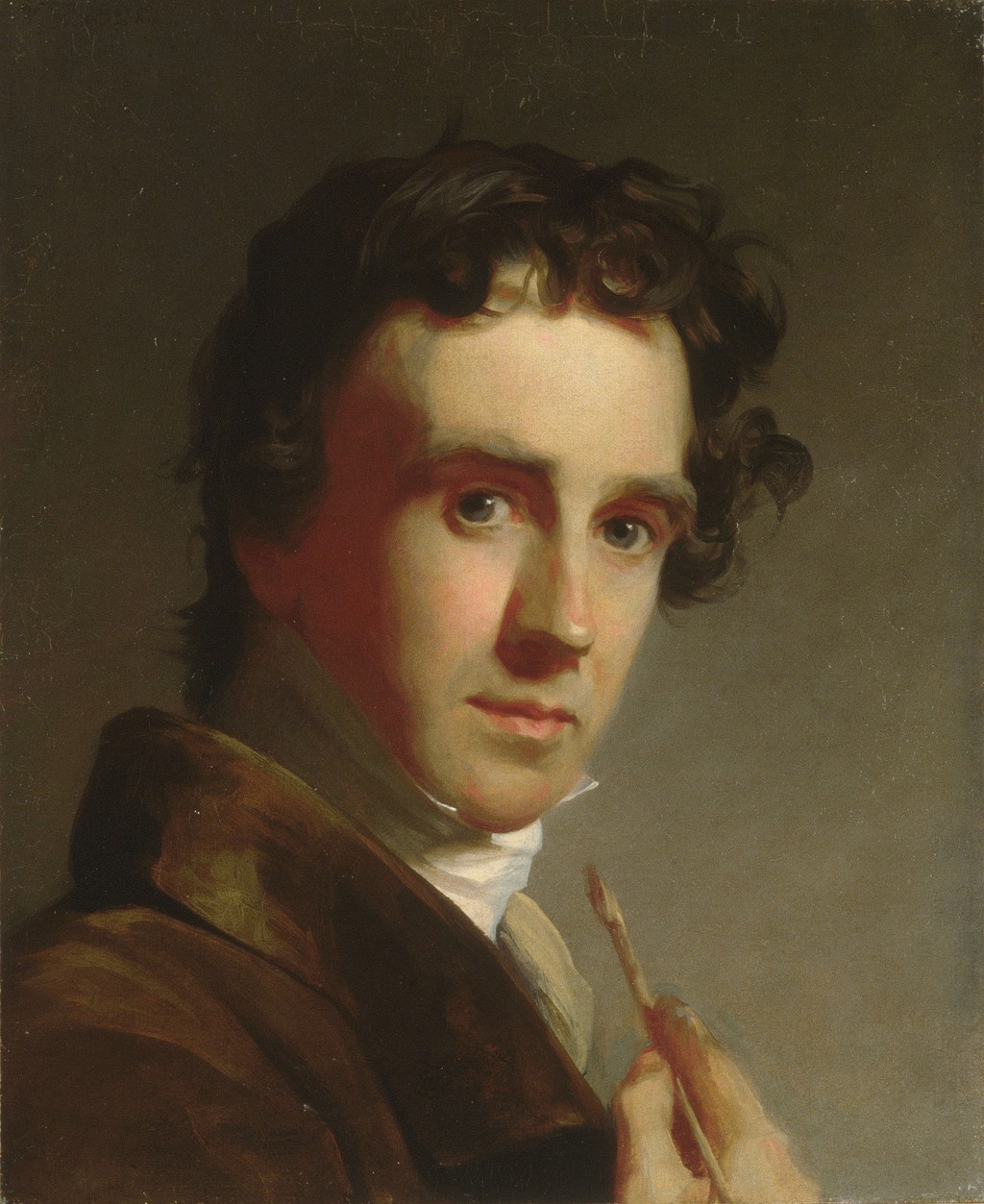
Portrait of the Artist. A raised brush joins the painter’s hand to the illuminated head. [8]
John Quincy Adams (current article). A developed likeness supplied information for a larger portrait project. [1]
The David Children. The older children direct attention toward the reclining infant. [1]
The Vanderkemp Children. A portfolio and overlapping hands connect the three children. [1]
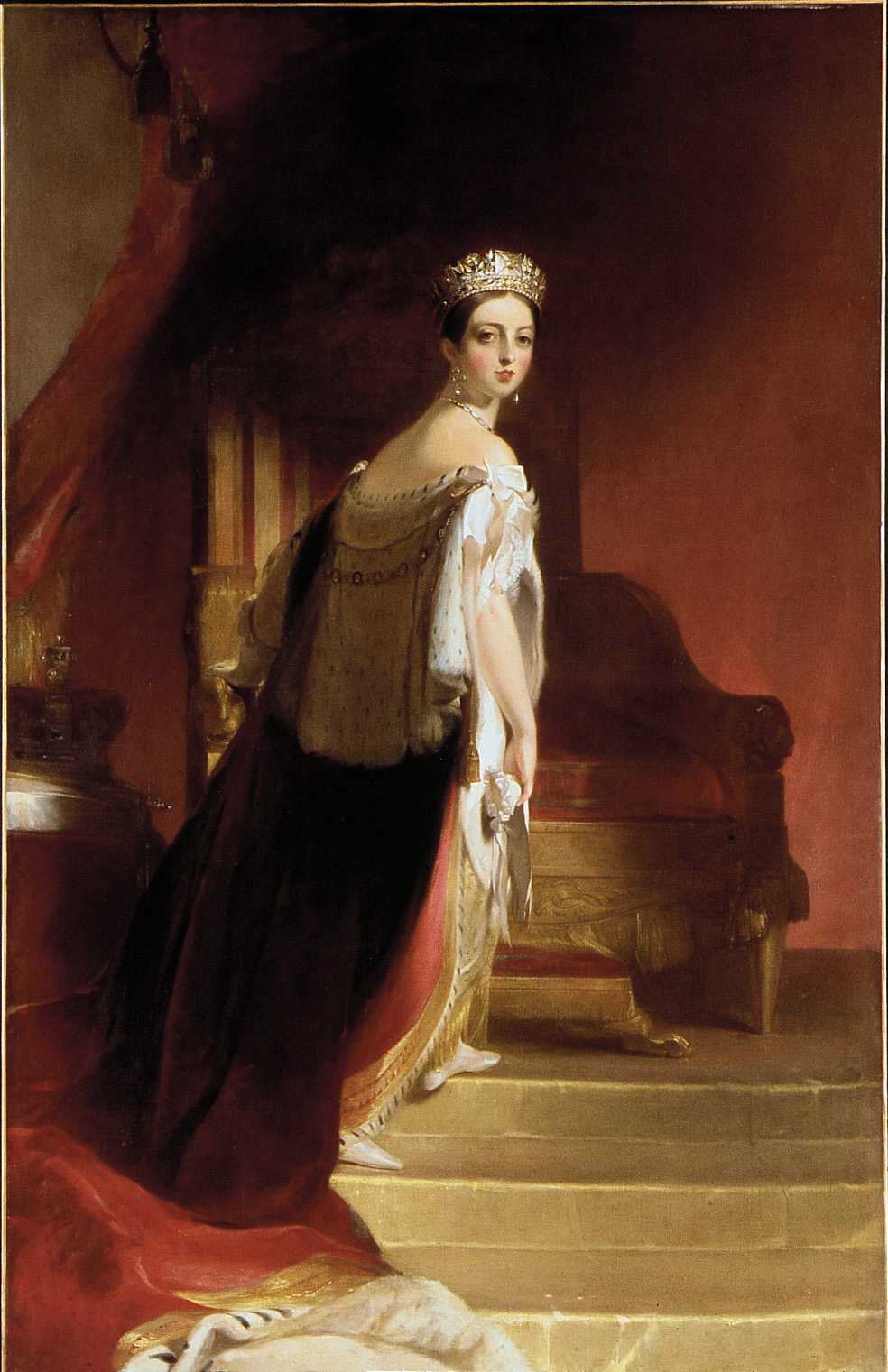
Queen Victoria. The royal likeness extends through robes, insignia and a ceremonial setting. [9]
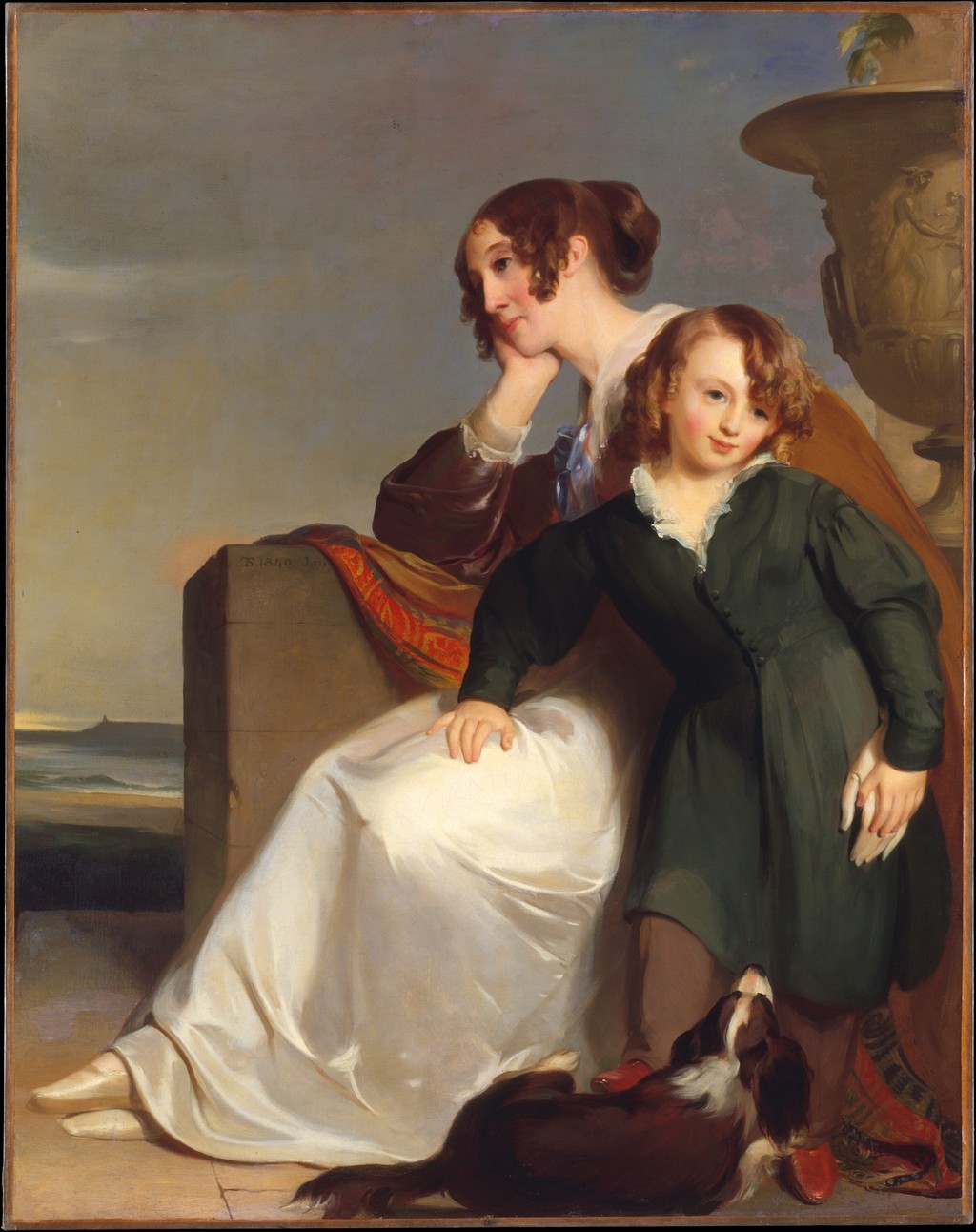
Mother and Son. Jane Darley and her son are connected through touch and differing gazes. [10]
The Coleman Sisters. Contrasting dresses, heights and gestures hold three individual likenesses together. [1]
Andrew Jackson. This later version must be distinguished from its earlier life source. [1]
Contents
- A study made before the presidency
- Three recorded sittings
- Face, neckcloth and unfinished coat
- What examination of the canvas reveals
- The Met’s watercolour sheet
- From study to seated full-length portrait
- Durand’s engraving after Sully
- Likeness, judgement and the sitter’s response
- Collection history and the related objects
- Annotated details
A study made before the presidency
When Sully worked on the likeness, Adams was secretary of state. The presidential election had not yet produced a final outcome: the December sittings fell between the electoral vote and the House of Representatives’ decision in February 1825. The portrait consequently records the future president during a period when his next office remained unsettled. [2] [3]
That context should not be made into a story visible in the expression. The face does not document Adams calculating an election result or anticipating a particular political arrangement. Its historical circumstances are known from records outside the picture. The painting itself gives a carefully presented head, a plain setting and a restrained turn of the body.
Sully’s Washington visit also included work on Andrew Jackson . The NGA’s Adams belongs to the 1824 sittings, whereas its familiar Sully Jackson canvas is a later version painted in 1845 after an earlier life likeness. Their similar formats can make them useful companions for comparison without making their object histories identical. [2]
Annotated Details from John Quincy Adams
The numbered points identify visible features discussed in this article. Return from each detail to the whole composition. The captions keep each work’s identity, date and medium separate.
John Quincy Adams Oil Study
Thomas Sully, John Quincy Adams, 1824. Oil on canvas, 61 × 51 cm. National Gallery of Art, Washington, Andrew W. Mellon Collection, 1942.8.30. CC0. Image source. CC0; National Gallery of Art Open Access. Numbers added to a separate overview; detail images cropped from the source. The complete unnumbered image is retained in this article.
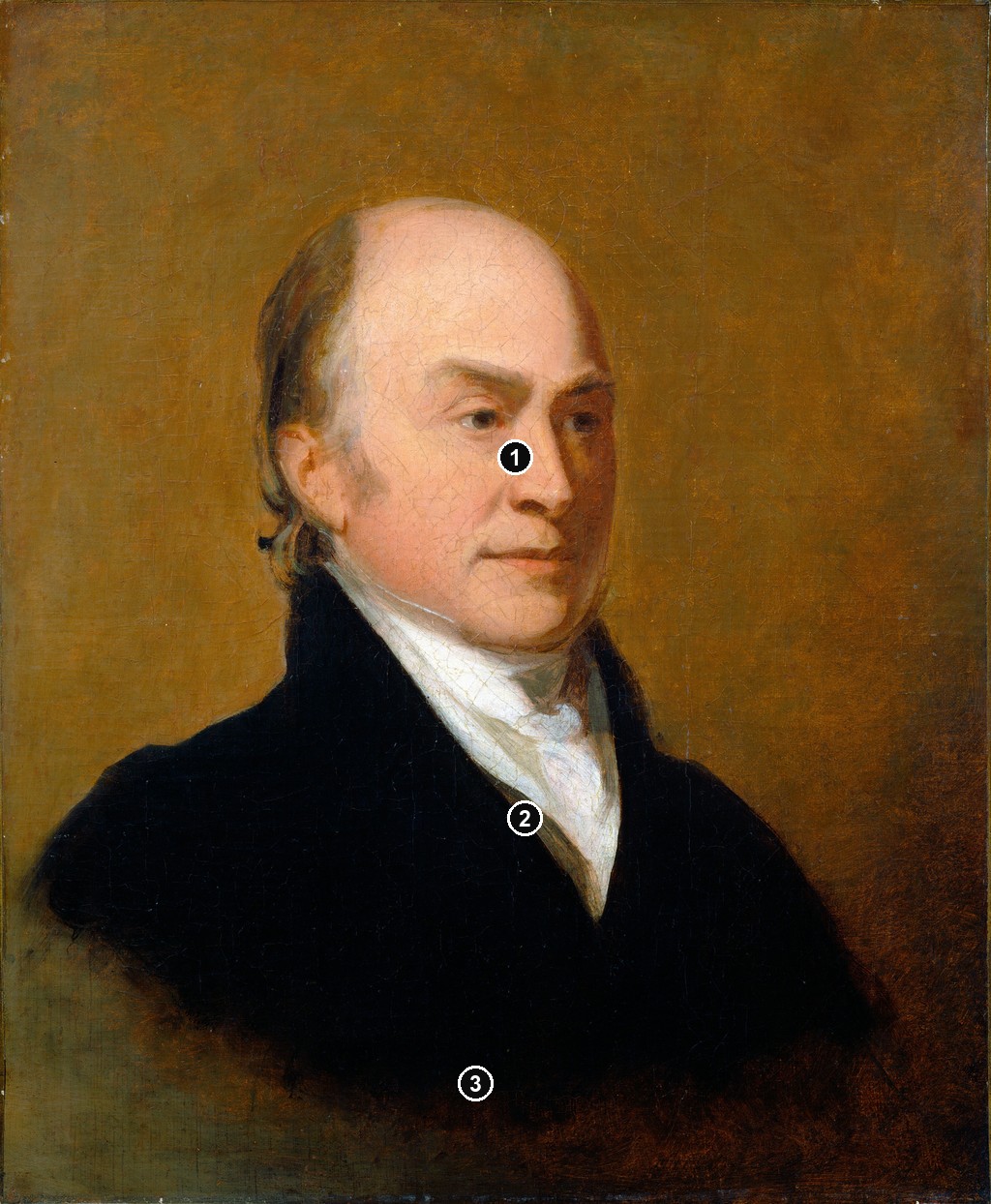
John Quincy Adams Watercolour Reproduction
Thomas Sully, John Quincy Adams, 1824. Watercolour, black chalk and graphite on off-white laid paper, 26.4 × 16.5 cm; shown in the museum’s monochrome reproduction. The Metropolitan Museum of Art, Fletcher Fund, 1938, 38.146.1. Public domain. Image source. Public domain. Numbers added to a separate overview; detail images cropped from the source. The complete unnumbered image is retained in this article.
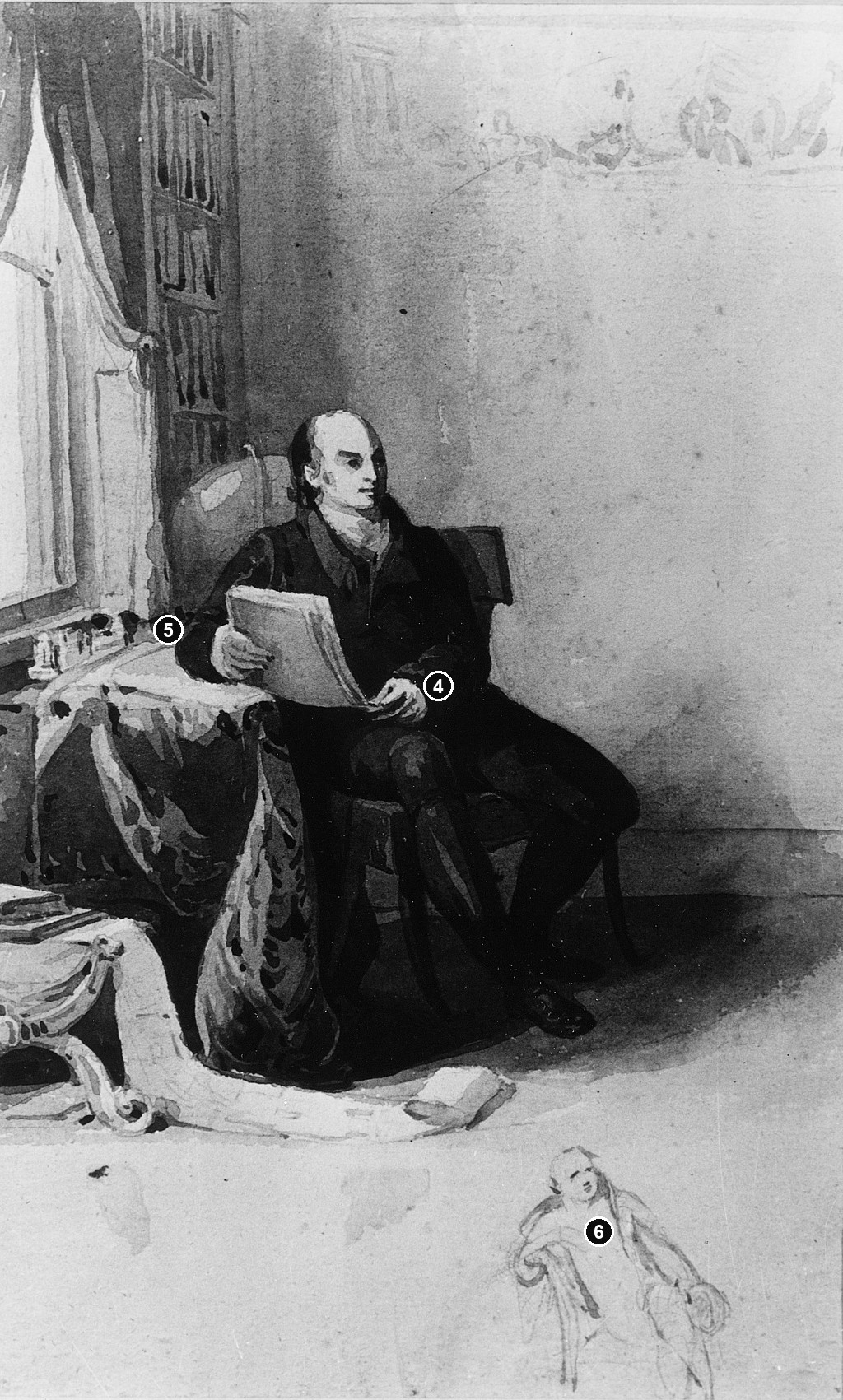
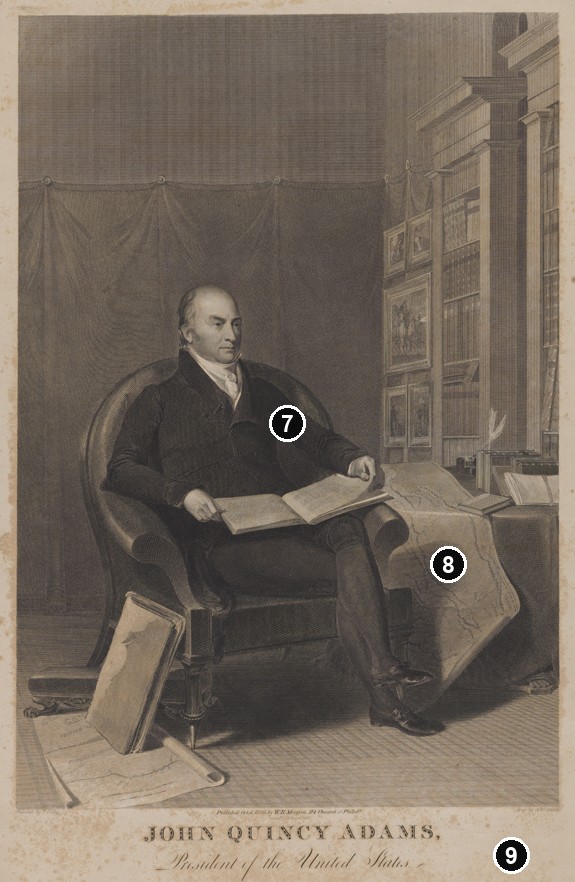
Adams Engraved by Durand
Asher B. Durand after Thomas Sully, John Quincy Adams, 1826. Etching and engraving on cream wove paper. Pennsylvania Academy of the Fine Arts, John S. Phillips Collection, 1876.9.184a. No known copyright restrictions. Image source. No known copyright restrictions, as stated by PAFA. Numbers added to a separate overview; detail images cropped from the source. The complete unnumbered image is retained in this article.
Details from JOHN QUINCY ADAMS
Compare the cropped details with the complete images above. Notice how their colours, shapes and positions contribute to the larger compositions.
John Quincy Adams Oil Study
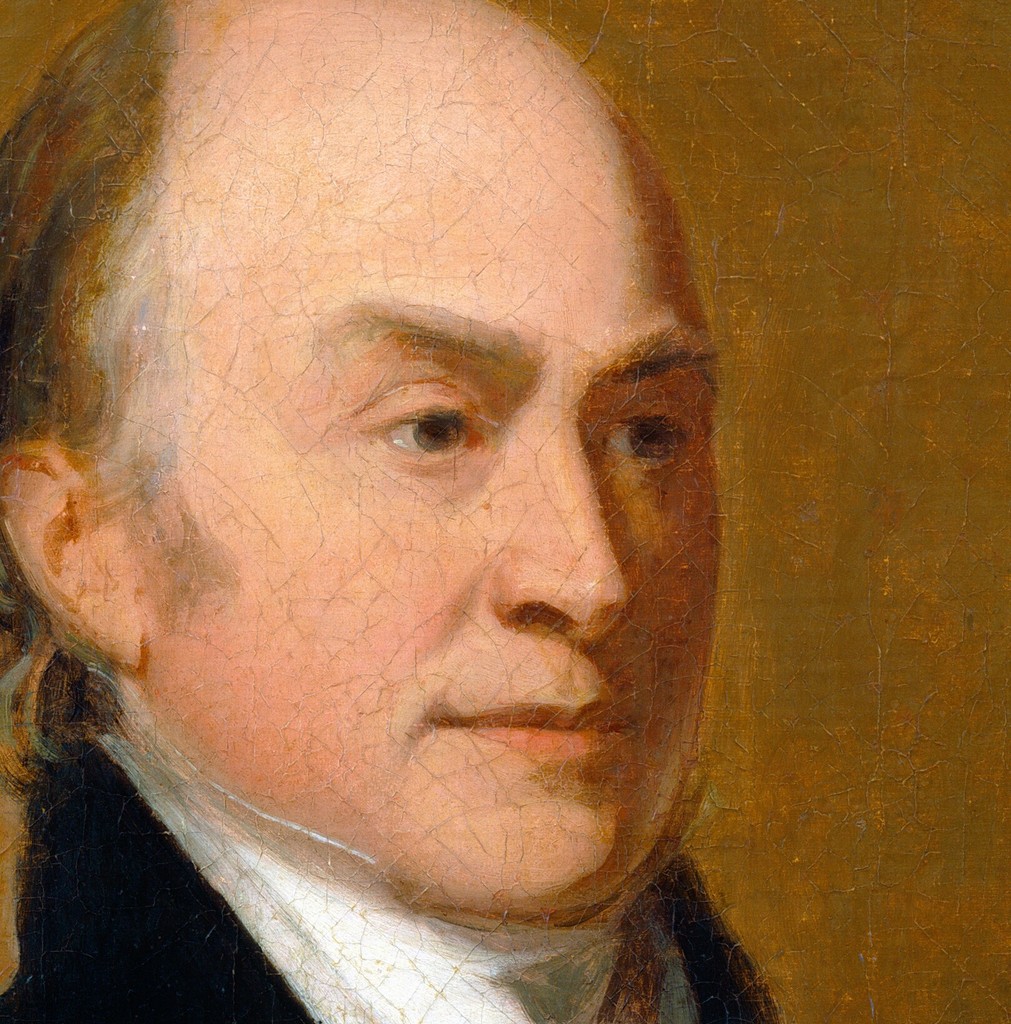
Head against warm ground
The sharply defined head stands against a warm, loosely varied background. The difference in finish concentrates attention on the sitter’s face.
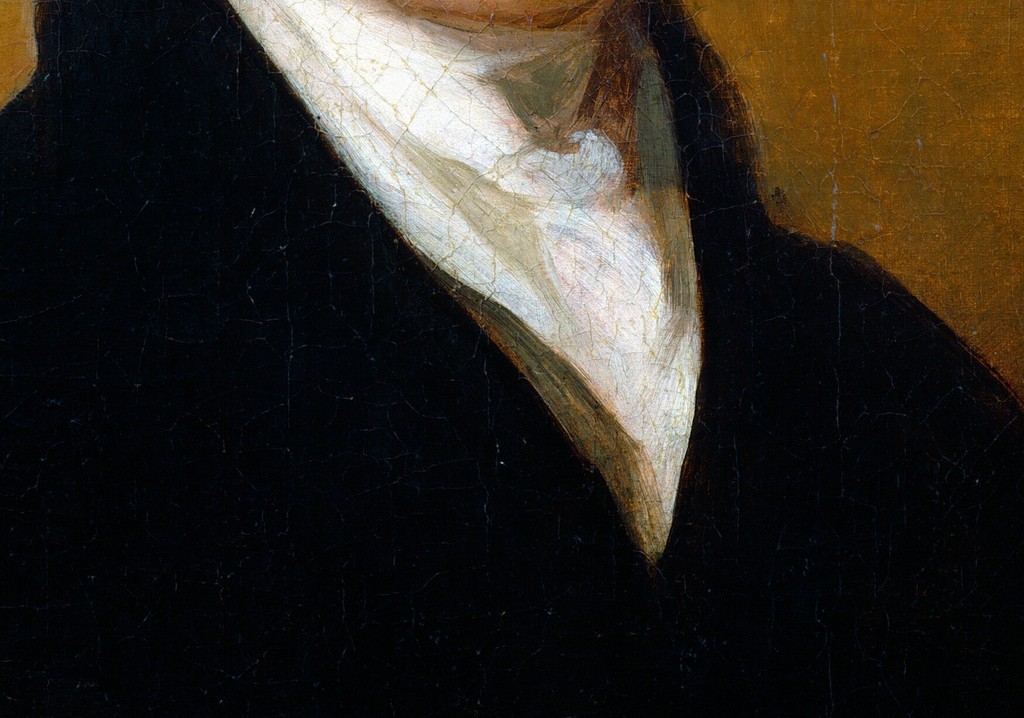
Cravat and dark coat
The white cravat makes a small, bright wedge between face and coat. Broad dark shapes establish the shoulders without matching the face’s level of detail.
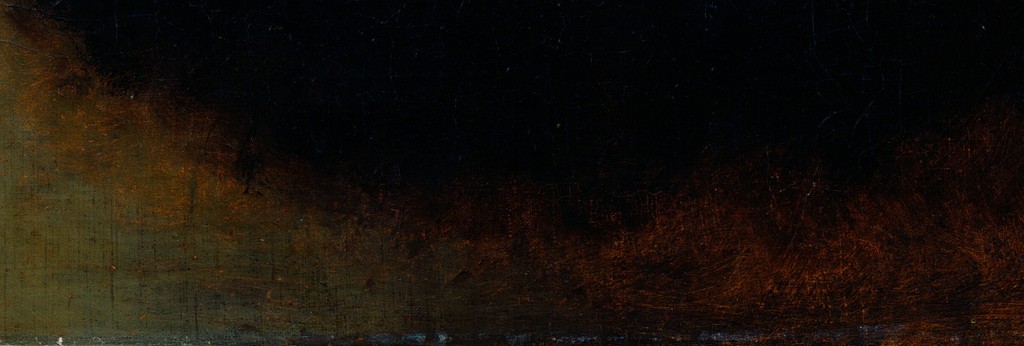
Open lower boundary
The coat ends in an uneven, visibly incomplete boundary. This edge makes the image useful for comparing a developed likeness with the more tentative surrounding paint.
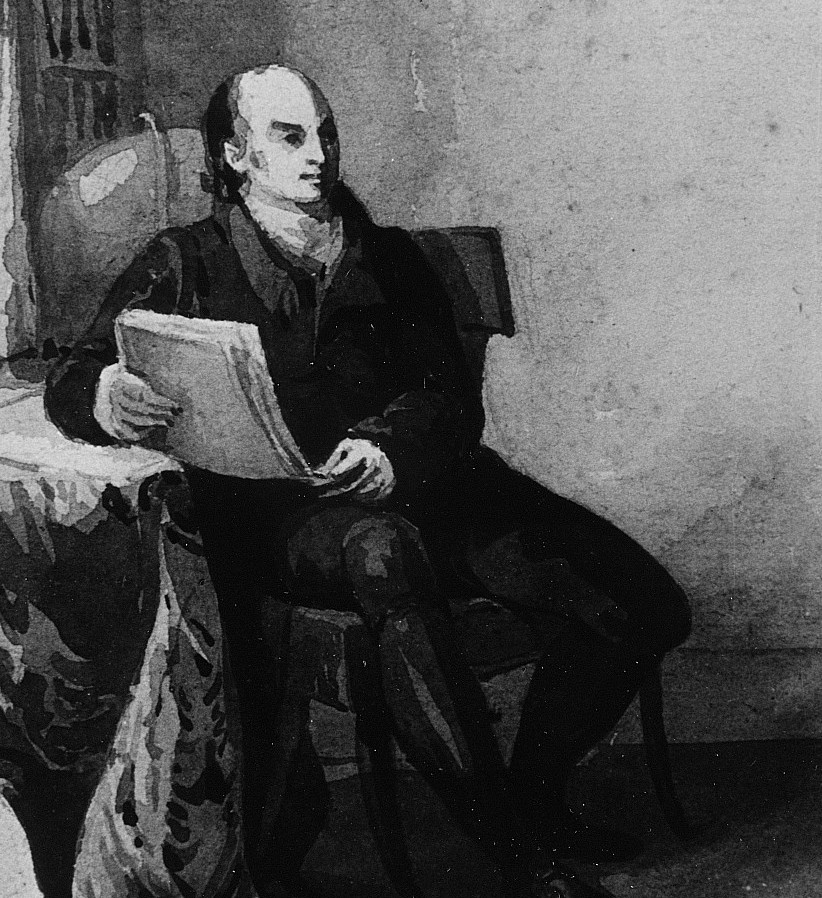
John Quincy Adams Watercolour Reproduction
Seated figure
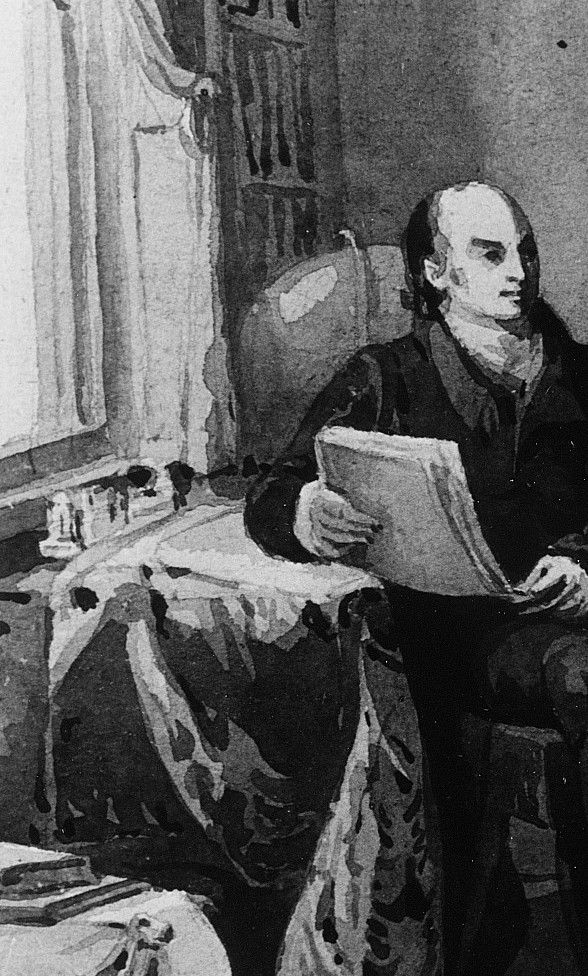
The seated figure holds an open object across his lap, within an interior setting. This digital image is a monochrome reproduction of a watercolour, chalk and graphite work, so it cannot support conclusions about the original colours.
Curtain and furniture
The curtain, table covering and nearby chair build up the setting at the left. Compare their broad placement with the engraved interior while keeping the two objects and their media distinct.
Subsidiary sketch
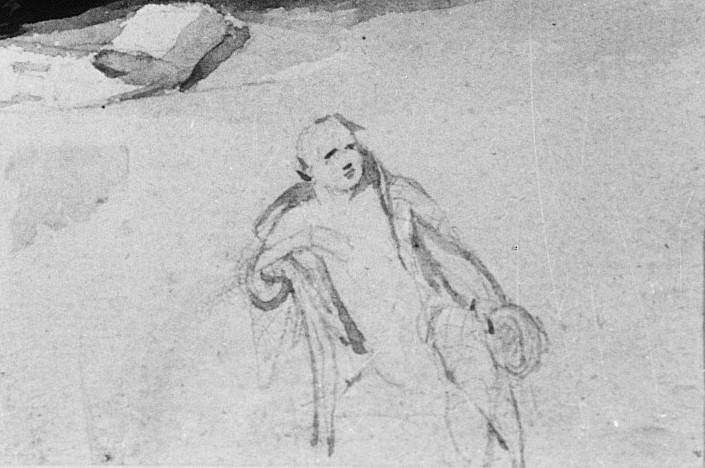
A smaller figure study appears below the principal composition. Keeping this area visible shows that the sheet contains exploratory material beyond the more developed seated portrait.
Adams Engraved by Durand
Seated figure and book
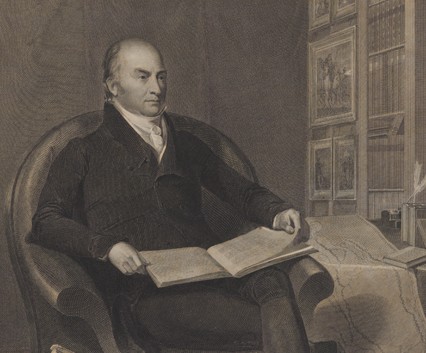
The engraved figure sits with an open book across his lap. Fine linear marks translate the portrait into print, but this modest native image is best used for the broad seated arrangement.
Map and interior
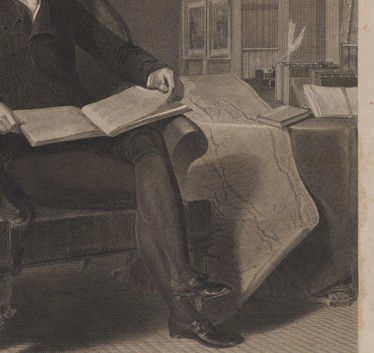
Bookshelves and a hanging map expand the setting around the seated figure. Their placement supports a comparison with the drawn interior without assuming that the two images record an identical room.
Printed identification
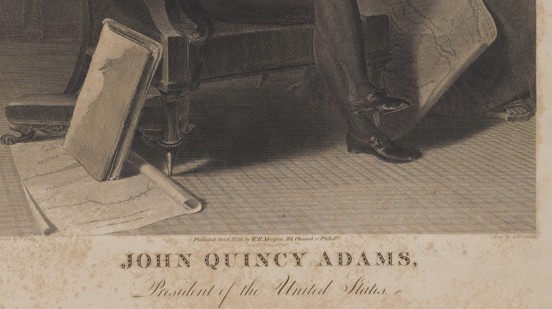
The printed identification sits below the pictorial field. Retaining it distinguishes this engraved publication from an oil painting and preserves the sheet’s original relationship between image and lettering.
Three recorded sittings
The NGA catalogue cites Adams’s diary for sittings on 23, 28 and 31 December 1824. It places the first at the house of the painter Charles Bird King. These are dated records published through the catalogue’s discussion, rather than a timetable reconstructed simply from the picture’s degree of finish. [2]
The Met’s account of the separate watercolour allows one or possibly two sittings for that part of the project. Its uncertainty should not be replaced by borrowing the three-sitting total for the oil. Related studies can share a working period without having precisely the same session history. [3]
The distinction helps explain what a study is. It need not be an incidental doodle or an incomplete attempt abandoned for lack of skill. A concentrated likeness can preserve the facial information required for a later composition, even where clothing or surrounding space receives less attention. The value of the oil lies partly in that selective concentration.
Face, neckcloth and unfinished coat
The face turns to the right, with the shoulders angled slightly differently beneath it. The largely bare forehead makes a broad pale contour against the warm background. Darker hair at the sides, the brows and small accents around the eyes break that light shape into more specific features.
The white neckcloth forms a second major light passage. Its folds narrow toward the chest and remain clearly separated from the dark coat. This gives the head a visible support without requiring an elaborate costume. At the lower edge, the black form becomes less definite and meets a background that is left comparatively open.
The painting therefore asks for different kinds of attention in different areas. The small adjustments around eyes, mouth and cheek establish the likeness. The broader coat and ground establish its position. Looking only at the face would miss how effectively those simpler areas isolate it; looking for an equally high finish everywhere would misunderstand the study’s organisation.
The eyes are directed away from the viewer. The expression can seem reserved, but appearance alone cannot establish a complete personality. The portrait’s restraint is most securely described through visible choices: a closed mouth, relatively still pose, limited accessories and a gaze that does not make a direct appeal outward.
What examination of the canvas reveals
The NGA’s technical account describes a white ground followed by coloured preparatory layers, including a pink layer used beneath the flesh tones. It reports predominantly wet-into-wet painting and confirms that the lower portion was left unfinished. These findings belong to this particular canvas, rather than providing a universal recipe for Sully’s portraits. [2]
The catalogue also records an inscription on the reverse identifying the likeness as made from life in Washington in 1824. That inscription was recorded before the canvas was lined in 1920. Its evidence is therefore preserved through documentation of the earlier surface, not through a claim that the reverse remains unobstructed today. [2]
The technical history offers a useful counterpart to visual interpretation. Broad handling and an unfinished lower edge can suggest a preparatory purpose; the documented inscription and relationship to later works give that suggestion a firmer basis. Surface appearance, written records and the history of the support work together to identify the object.
The Met’s watercolour sheet
The small study at the Met, accession 38.146.1, uses watercolour, black chalk and graphite on off-white laid paper. It shows Adams seated beside a table and window, with additional sketches on the sheet. The museum relates it to Sully’s planning of the larger portrait. [3]
The reproduction shown here is monochrome. Its greys should not be treated as proof that Sully’s original watercolour had no colour. What remains clear in this reproduction is the arrangement of the room and figure: a dark seated body, a bright window at the left and a comparatively large open area above and to the right.
A small figure study appears below the main scene. Keeping that subsidiary drawing visible changes the way the object is read. It is a sheet on which alternatives could be considered, rather than a finished illustration whose margins can be discarded without consequence. The Met identifies the smaller sketch as evidence of a contemplated variation in the final pose. [3]
Compared with the oil bust, this sheet gives more information about a possible setting and less concentrated attention to the head. The two studies solve related but different problems. One preserves a likeness in oil; the other explores how a sitter, furniture and light might occupy a room.
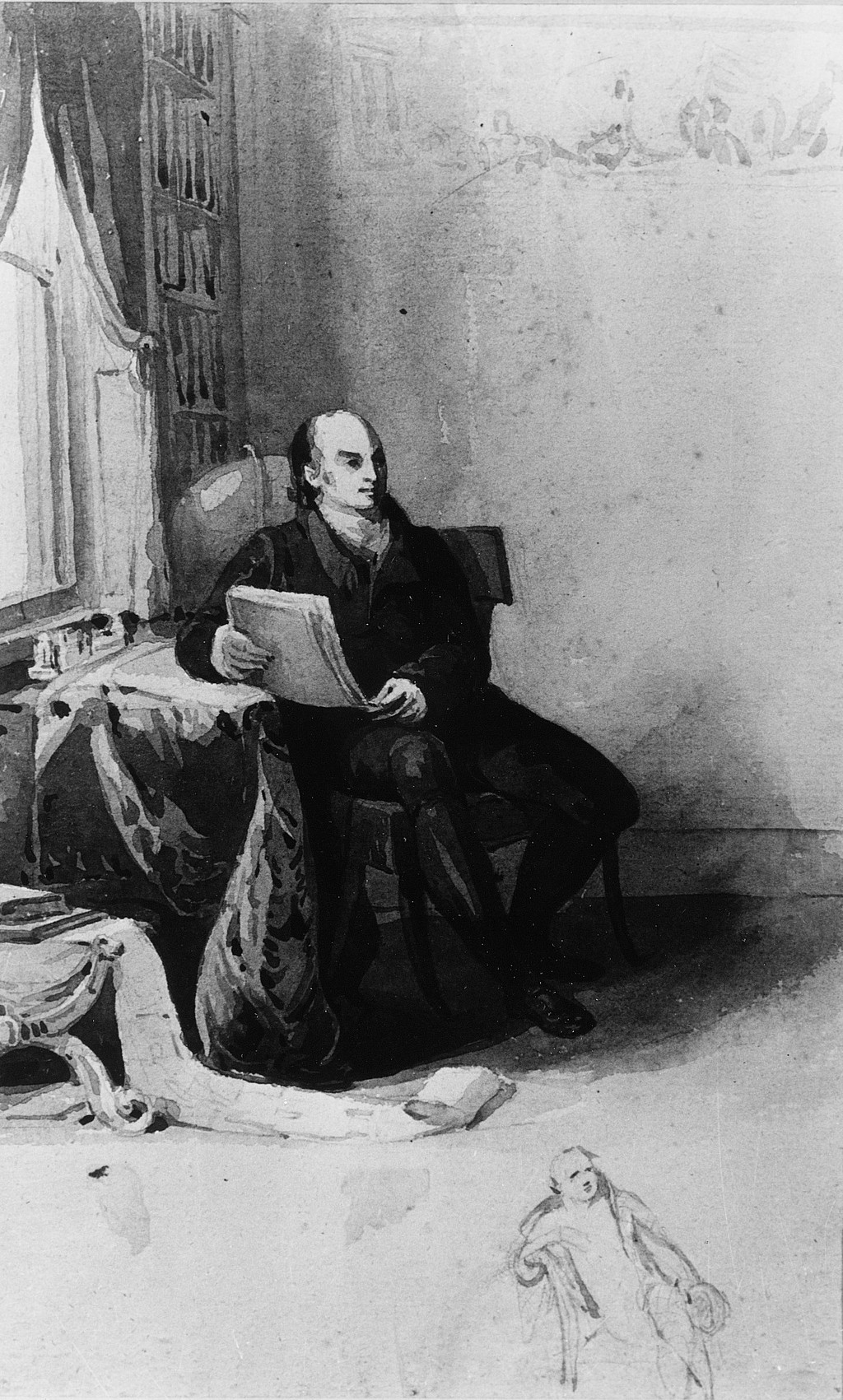
Thomas Sully, John Quincy Adams, 1824. Watercolour, black chalk and graphite on off-white laid paper, 26.4 × 16.5 cm; shown in the museum’s monochrome reproduction. The Metropolitan Museum of Art, Fletcher Fund, 1938, 38.146.1. Public domain.
Image source
.
Public domain
.
Watch: Thomas Sully
Choose a film to explore the artist’s work, its interpretation and its wider setting.
Thomas Sully: A Lesson in Conservation
The Columbus Museum explores the conservation of a painting by Thomas Sully.
Watch on YouTubeFrom study to seated full-length portrait
The later oil composition, dated 1825, places Adams in a seated full-length arrangement. The NGA catalogue identifies it with the portrait commissioned by Philadelphia print seller William H. Morgan and located at Philipse Manor Hall. The Met’s current study account likewise connects its sheet with that final picture. [2] [3]
Moving from a head to a complete figure required more than adding a lower body. The painter had to organise a chair, hands, costume, surrounding objects and the space between them. The likeness remained essential, but it could no longer carry the entire composition by occupying most of the surface.
The relationship clarifies why Sully kept preparatory information in several forms. A small oil could establish the head; a drawing or watercolour could test pose and room. Their usefulness was not limited to the moment of the sitting. They could support decisions made later, when the sitter was no longer immediately available.
Durand’s engraving after Sully
Asher B. Durand translated the seated portrait into a print published in 1826. PAFA owns an impression, accession 1876.9.184a, which it identifies as etching and engraving on cream wove paper. The NGA catalogue gives 6 October 1826 as the publication date. [11] [2]
The print makes the complete arrangement easy to compare with the earlier studies. Adams sits with an open book across his lap. A map extends over the table at the right, with books and a bookcase behind it. His crossed legs and the furniture occupy the lower half, while a broad curtain fills much of the upper background.
The effect differs from the Met sheet. The figure and setting are more evenly distributed, the room’s objects are more definite, and the inscribed name and office identify the sitter below the image. The print is presented as an object to be read as well as viewed. Its lettering belongs to that purpose and should remain visible in a reproduction.
Attribution matters here. The print is by Durand after Sully: the painted invention and the engraved translation involved different makers. The printed lines, tonal pattern and sheet are not simply a colour photograph of an oil painting. They constitute another object through which the likeness could circulate.
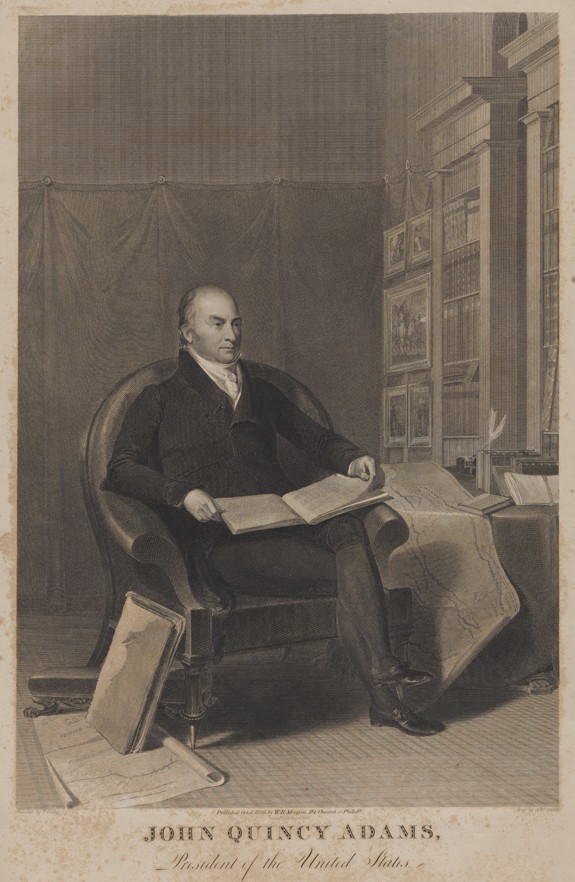
Asher B. Durand after Thomas Sully, John Quincy Adams, 1826. Etching and engraving on cream wove paper. Pennsylvania Academy of the Fine Arts, John S. Phillips Collection, 1876.9.184a. No known copyright restrictions.
Image source
.
No known copyright restrictions, as stated by PAFA
.
Likeness, judgement and the sitter’s response
The NGA catalogue records Adams’s later reservations about the likeness, alongside his response to the engraved image. Such comments show that a portrait could be evaluated differently by its sitter, artist and subsequent viewers. Recognition of the person did not necessarily mean agreement about whether the image captured his character. [2]
That disagreement is more informative than treating the finished picture as an unquestionable psychological verdict. The painter selected a pose, lighting and degree of finish; the sitter brought another understanding of his own appearance. Later viewers approach both through the histories and reproductions that survive.
The oil’s strength can be discussed without resolving that disagreement on Adams’s behalf. Its head remains clear and specific, the white neckcloth separates it from the coat, and the limited surrounding detail holds attention in a small area. The portrait offers a constructed likeness, with both the clarity and the limits that term implies.
Collection history and the related objects
The current NGA provenance traces the oil through Henry Clay and members of his family before Thomas B. Clarke acquired it in 1920. The precise circumstances in which Clay first obtained the portrait are not established by the catalogue. The painting later passed through the Mellon trust and entered the Gallery in 1942. [1] [2]
The NGA oil, Met watercolour, later full-length and Durand engraving should remain separate when an image is labelled. They share a sitter and a project, but differ in date, medium and purpose. Together they offer an unusually clear route through Sully’s portrait practice , from concentrated observation to a more elaborate likeness designed for wider circulation.
Artworks directory
A selection documented in the linked articles, with related studies and a print after Sully listed separately. Dates identify individual objects; Musidora’s date range does not imply continuous work. This is not a catalogue raisonné. The Drawing filter includes watercolour and reproductive printmaking.
| Name | Date | Medium |
|---|---|---|
| Captain Charles Stewart | 1811–1812 | Painting — oil on canvas |
| George Frederick Cooke as Richard III | 1811–1812 | Painting — oil on canvas |
| Musidora | 1813–35; Met panel | Painting — oil on wood |
| Lady with a Harp: Eliza Ridgely | 1818 | Painting — oil on canvas |
| The Passage of the Delaware | 1819 | Painting — oil on canvas |
| The Torn Hat | 1820 | Painting — oil on panel |
| Portrait of the Artist | 1821; Met canvas | Painting — oil on canvas |
| John Quincy Adams | 1824; NGA oil study | Painting — oil on canvas |
| John Quincy Adams (watercolour study) | 1824; Met 38.146.1 | Drawing — watercolour, black chalk and graphite on paper |
| John Quincy Adams (Durand after Sully) | 1826; PAFA 1876.9.184a | Drawing — etching and engraving on paper |
| The David Children | 1826 | Painting — oil on canvas |
| The Vanderkemp Children | 1832 | Painting — oil on canvas |
| Queen Victoria | 1838; full-length Met canvas | Painting — oil on canvas |
| Queen Victoria (life study) | 1838; Met 14.126.1 | Painting — oil on canvas |
| Mother and Son | 1840; inscription date | Painting — oil on canvas |
| The Coleman Sisters | 1844 | Painting — oil on canvas |
| Andrew Jackson | 1845; after the 1824 life portrait | Painting — oil on canvas |
Frequently Asked Questions
The painting served as a concentrated life likeness connected with a later portrait. The NGA’s technical account confirms the unfinished lower portion. [2]
Its listed medium includes watercolour. The museum’s digital reproduction used here is monochrome, which should not be mistaken for the original palette. [3]
The 1826 print discussed here is by Asher B. Durand after Sully. [11]
Discussion
Look again at the images and ideas explored in John Quincy Adams by Thomas Sully. These editorial prompts invite your observations.
Reader Insights
Compare the finished head with the broadly indicated lower coat. How does the difference affect where you look?
What information does the watercolour sheet supply that the oil bust does not?
Compare the sheet with Durand’s engraving. Which changes most clearly turn a working study into a public portrait?
Join the Conversation
Share a detail, comparison or question about John Quincy Adams by Thomas Sully below.
References
- National Gallery of Art Open Data: current record for John Quincy Adams , object 1124, 1942.8.30. View source
- National Gallery of Art: American Paintings of the Nineteenth Century , Part II, 1998, pp. 162–165. View source
- The Metropolitan Museum of Art: John Quincy Adams , 1824, watercolour study, 38.146.1. View source
- Pennsylvania Academy of the Fine Arts, George Frederick Cooke as Richard III, 1811–1812, 1812.1. View source
- Metropolitan Museum of Art, Musidora, 1813–35, 21.48. View source
- Wikimedia Commons / MFA image source, The Passage of the Delaware: original image and PD-Art record. View source
- Wikimedia Commons / MFA source image, The Torn Hat: 16.104 image and PD-Art rights. View source
- Metropolitan Museum of Art, Portrait of the Artist, 1821, 94.23.3. View source
- Metropolitan Museum of Art, Queen Victoria,1838,2021.140. View source
- Metropolitan Museum of Art, Mother and Son, 1840, 14.126.5. View source
- PAFA: Asher B. Durand after Thomas Sully , John Quincy Adams, 1826, 1876.9.184a. View source
- Splash image source.
Thomas Sully, John Quincy Adams, 1824. Oil on canvas, 61 × 51 cm. National Gallery of Art, Washington, Andrew W. Mellon Collection, 1942.8.30. CC0. CC0; National Gallery of Art Open Access .
View source