 by
Tom Gurney
Tom Gurney BSc (Hons) is an art history expert with over 20 years experience
Email:
tomgurney1@gmail.com
/ Phone:
+44 7429 011000
The Vanderkemp Children by Thomas Sully: Introduction
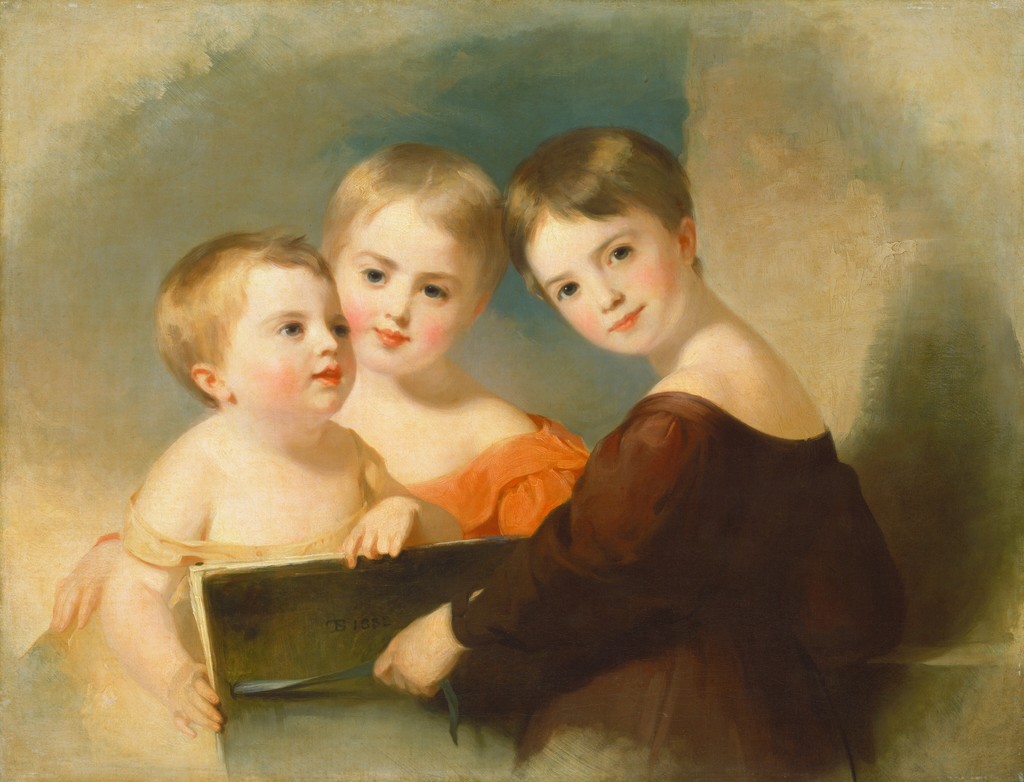
Three children gather around a portfolio in Thomas Sully’s The Vanderkemp Children . One looks outward, another turns toward her brother, and the youngest seems about to speak. Their overlapping hands and differently directed faces make the group feel occupied with a shared activity. Painted in 1832, the portrait belongs to the National Gallery of Art in Washington, which received it as a gift from Countess Mona Bismarck in 1966. [1]
The children are John Jacob Vanderkemp, Jr., at the left, Bertha Frances in the middle and Pauline Elizabeth at the right. Their identities and positions are important because an earlier exhibition catalogue reversed the order. The NGA’s systematic catalogue corrects that identification and provides evidence about the commission and changes beneath the visible background. [2]
At a Glance
- Artist Thomas Sully
- Title The Vanderkemp Children
- Date 1832
- Sitters, left to right John Jacob, Jr.; Bertha Frances; Pauline Elizabeth Vanderkemp
- Medium Oil on canvas
- Dimensions 70.9 × 90.5 cm
- Collection National Gallery of Art, Washington
- Accession 1966.11.1
- Credit Gift of Countess Mona Bismarck
This work across Thomas Sully’s career
Musidora
1813–35; Met panelThe Torn Hat
1820Portrait of the Artist
1821; Met canvasJohn Quincy Adams
1824; NGA oil studyQueen Victoria
1838; full-length Met canvasMother and Son
1840; inscription dateAndrew Jackson
1845; after the 1824 life portraitNotes and sources
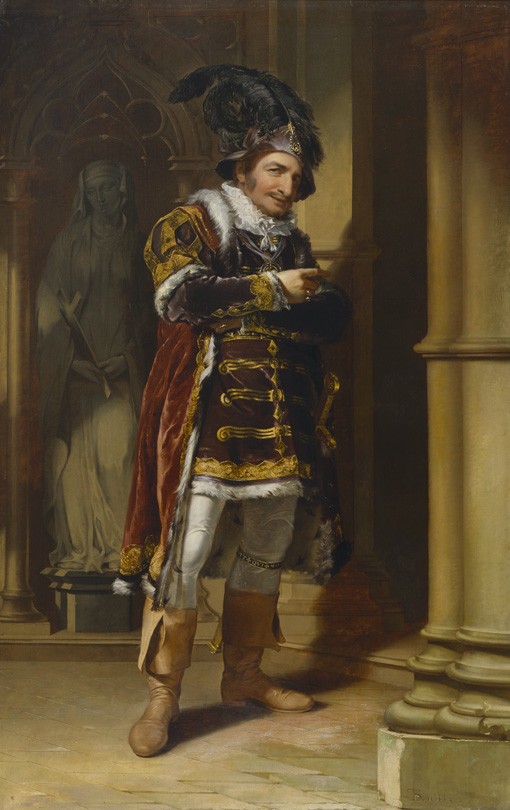
George Frederick Cooke as Richard III. Actor and theatrical role meet in an imposing full-length portrait. [3]
Musidora. A turned figure beside a pool belongs to a literary episode, not a named portrait sitter. [4]
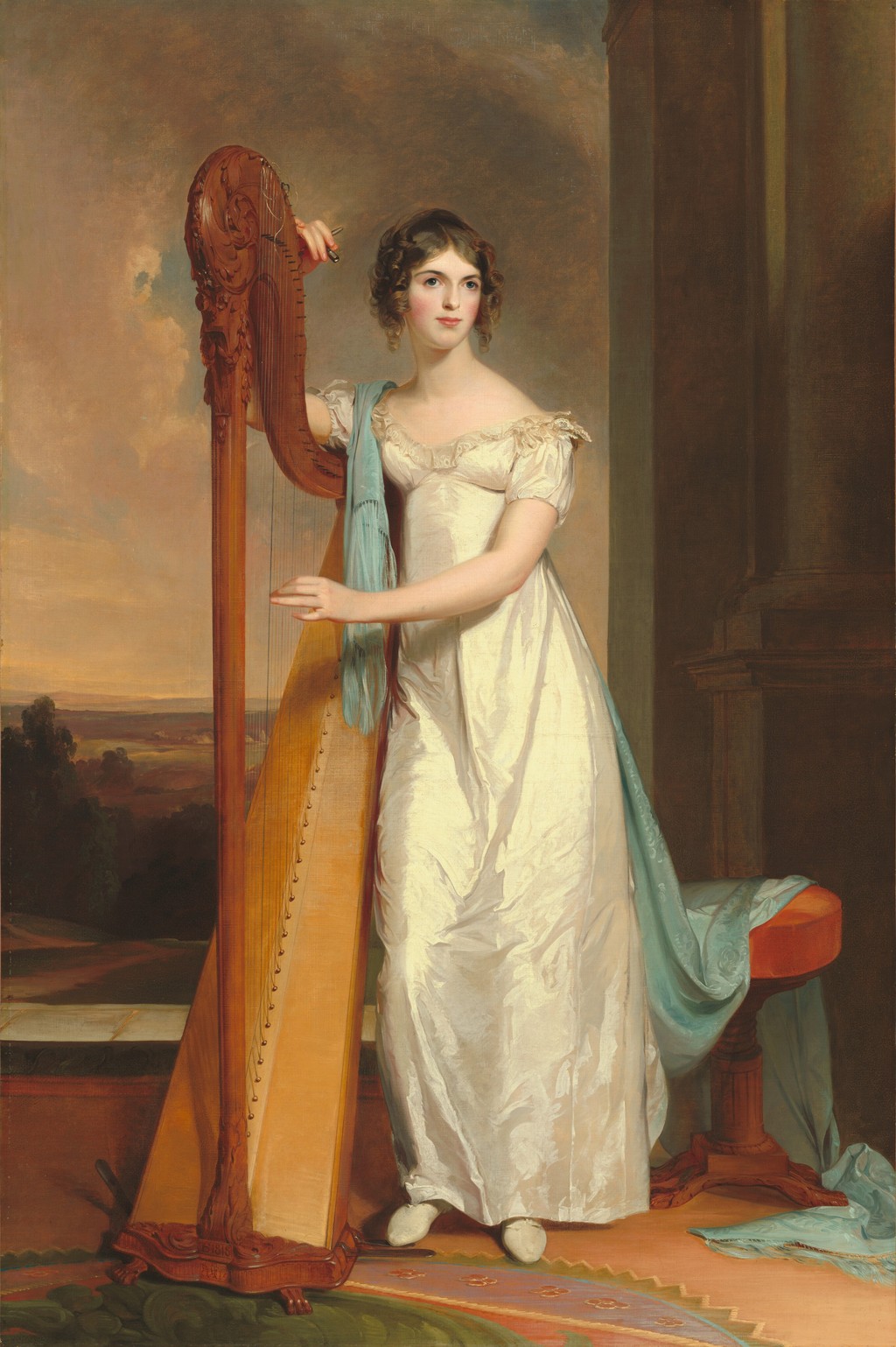
Lady with a Harp: Eliza Ridgely. The harp connects the sitter’s accomplishment with the arrangement of her body. [5]
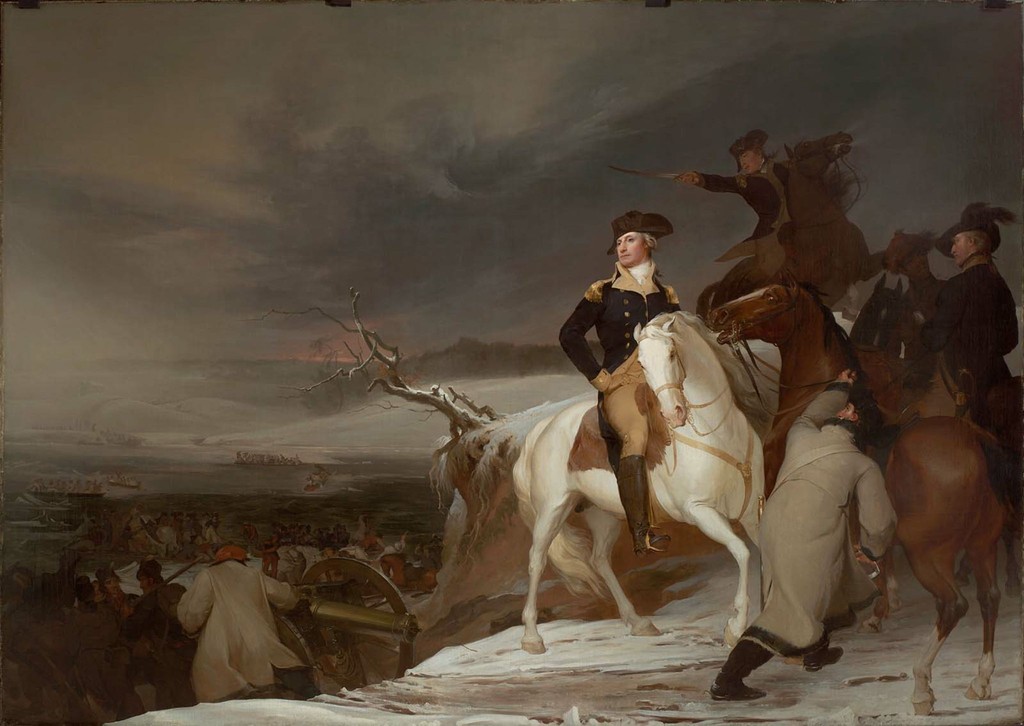
The Passage of the Delaware. Washington is mounted on shore while the crossing proceeds around him. [6]
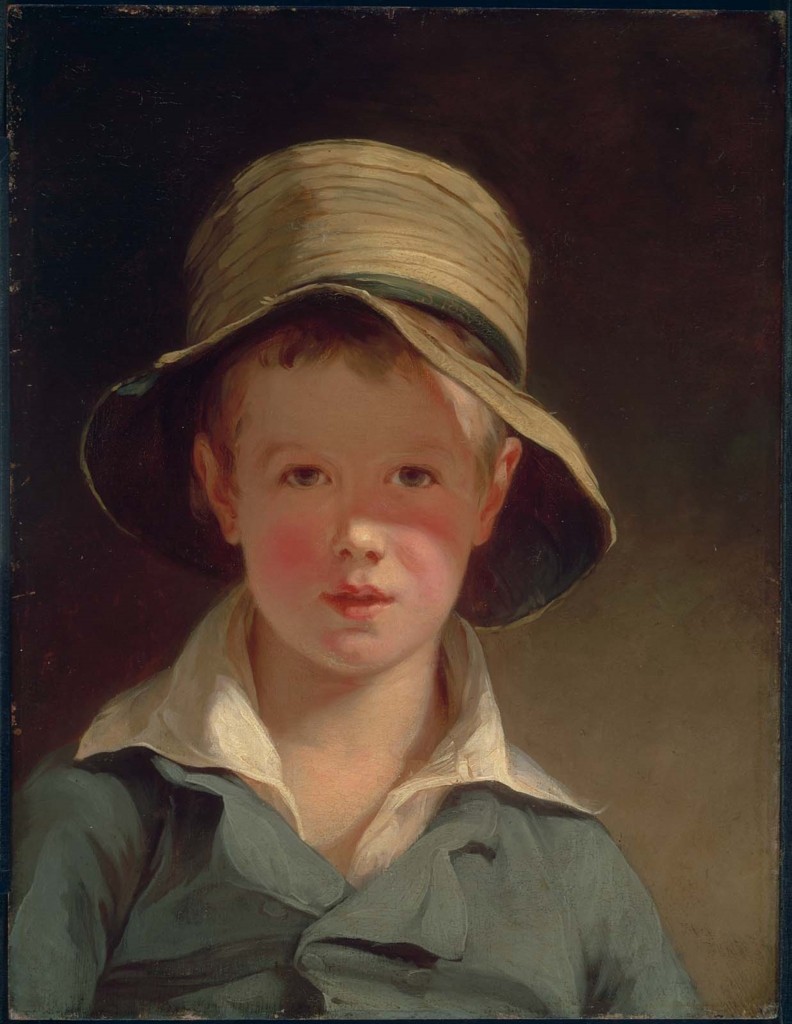
The Torn Hat. A worn hat and directed light give the artist’s son an informal presentation. [7]
Portrait of the Artist. A raised brush joins the painter’s hand to the illuminated head. [8]
John Quincy Adams. A developed likeness supplied information for a larger portrait project. [5]
The David Children. The older children direct attention toward the reclining infant. [5]
The Vanderkemp Children (current article). A portfolio and overlapping hands connect the three children. [5]
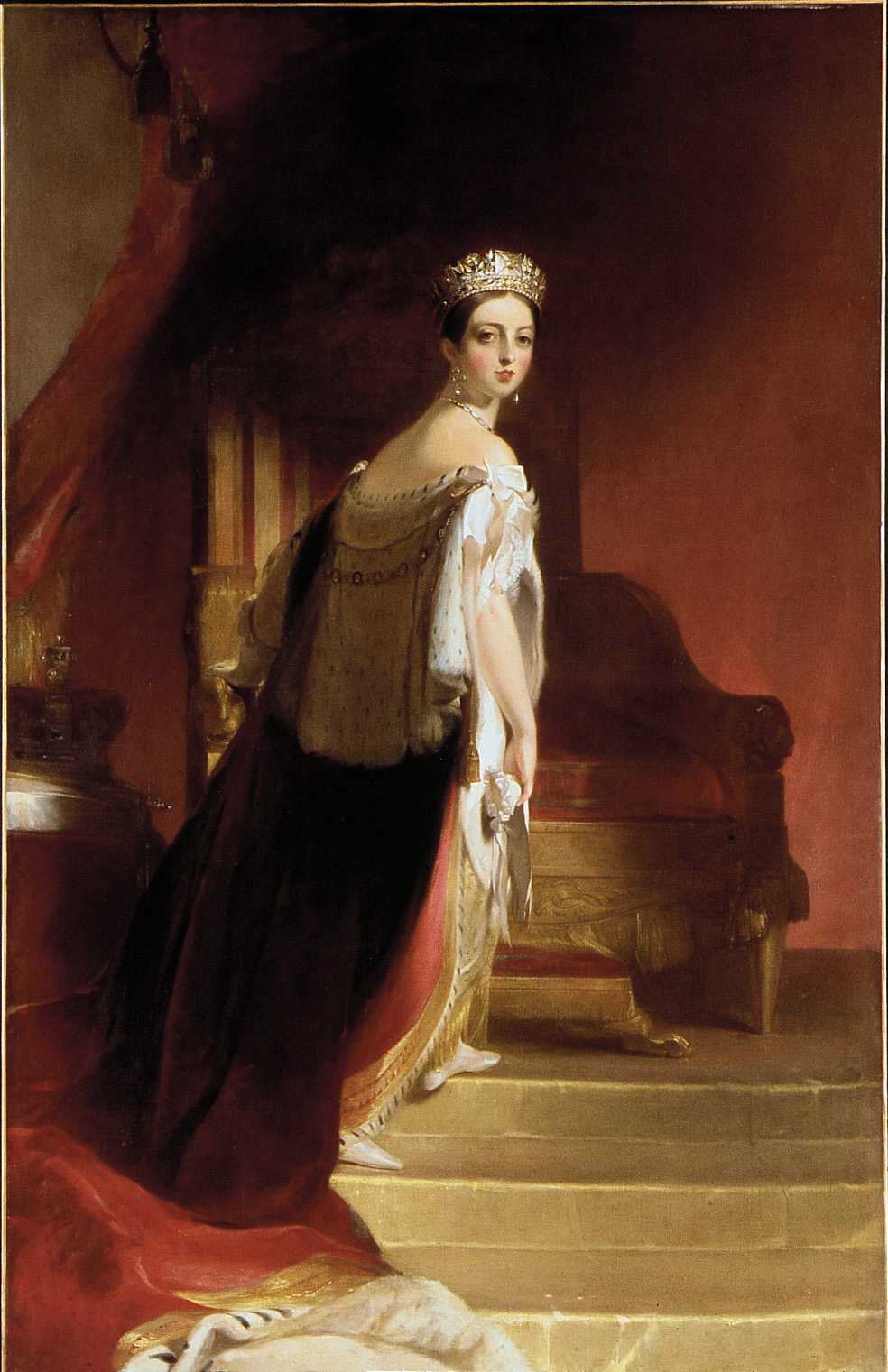
Queen Victoria. The royal likeness extends through robes, insignia and a ceremonial setting. [9]
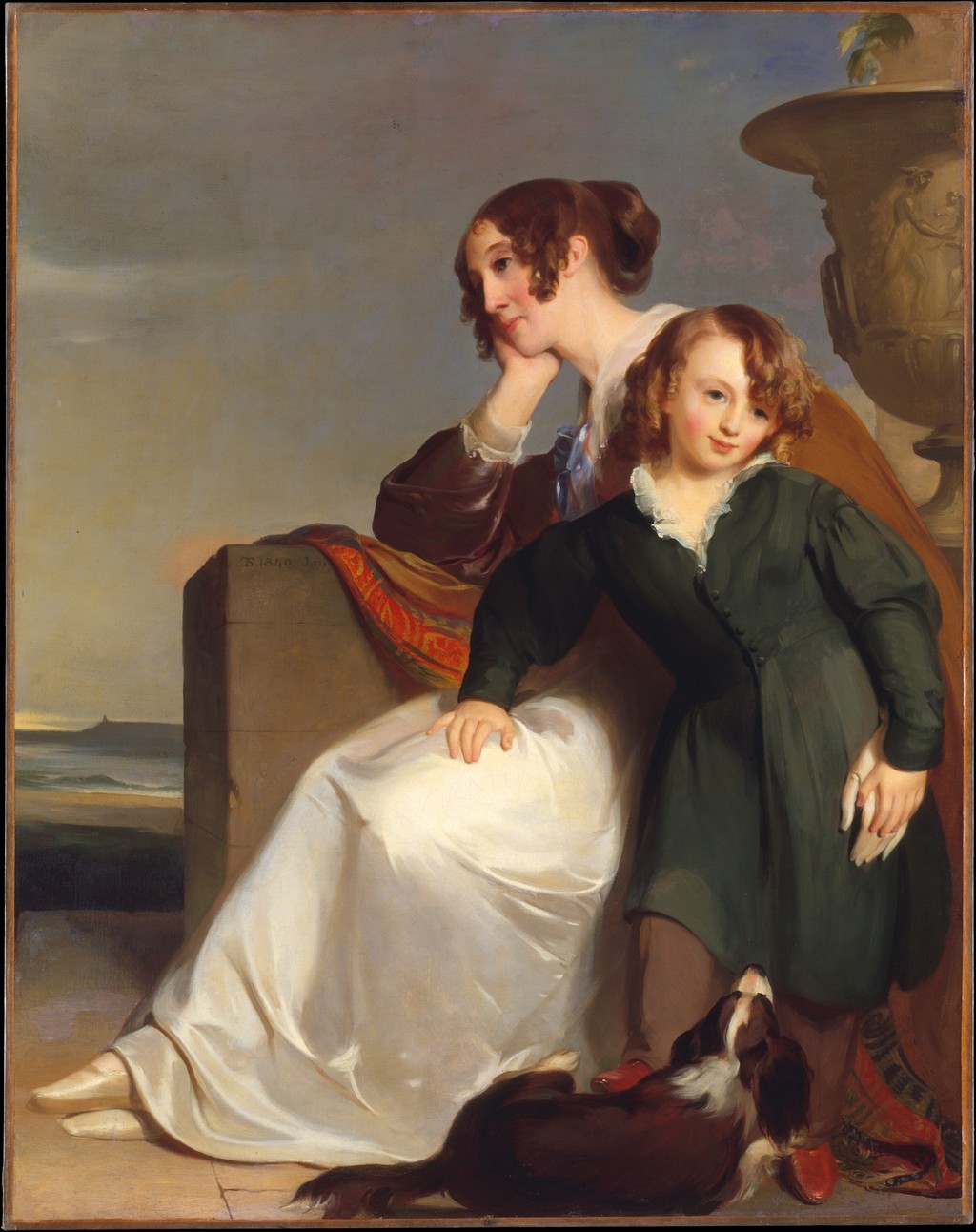
Mother and Son. Jane Darley and her son are connected through touch and differing gazes. [10]
The Coleman Sisters. Contrasting dresses, heights and gestures hold three individual likenesses together. [5]
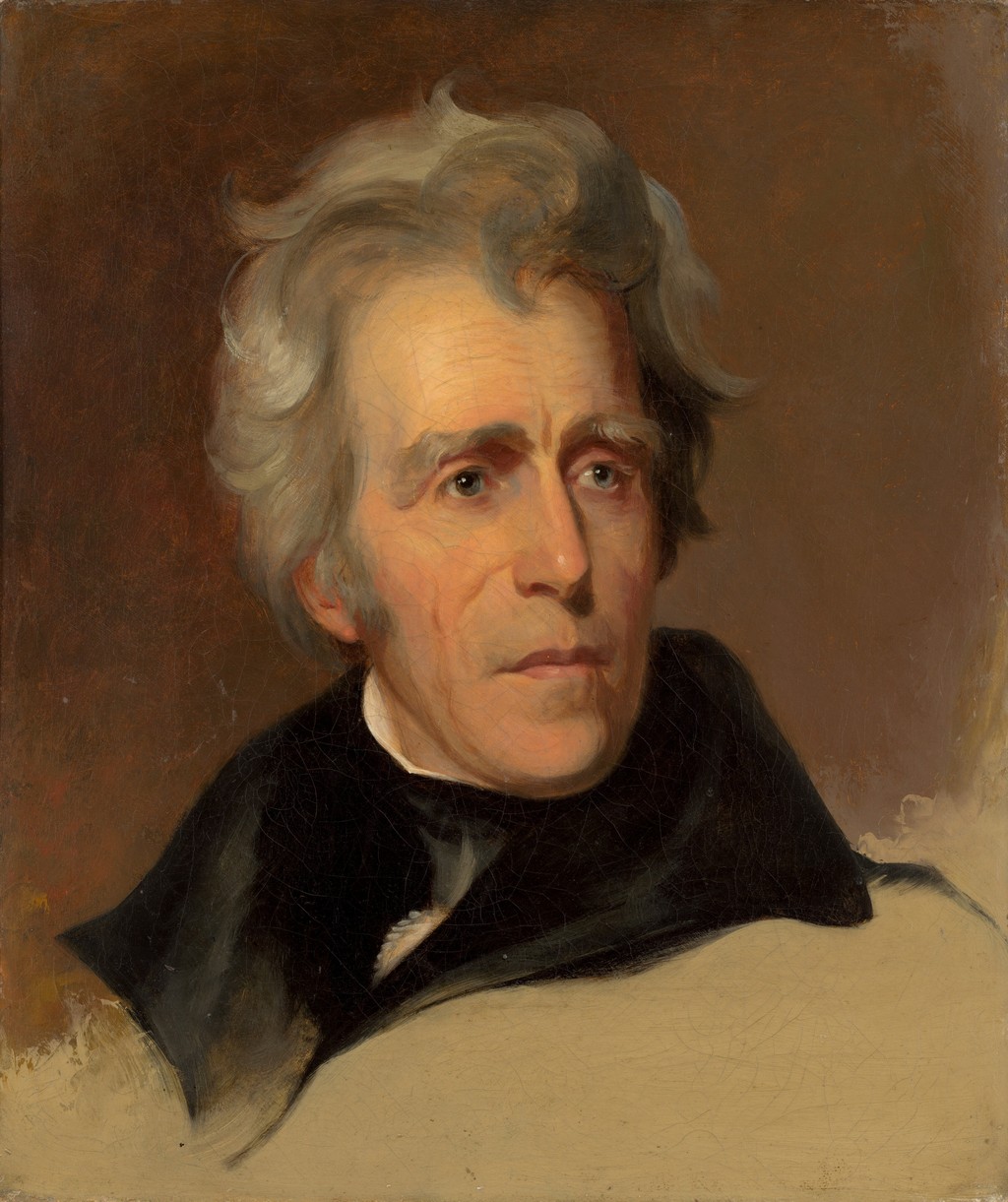
Andrew Jackson. This later version must be distinguished from its earlier life source. [5]
Contents
- Three children with three directions of attention
- Identifying the sitters
- The portfolio at the centre
- A documented commission in 1832
- Colour and the appearance of informality
- An earlier outdoor setting beneath the paint
- Comparing The Coleman Sisters
- Collection history and the limits of the record
- Annotated details
Three children with three directions of attention
John stands at the left in a pale yellow dress. His mouth is open and his face turns toward the centre. Bertha, wearing orange, leans into the group behind him. Pauline occupies the right foreground, with one shoulder turned toward us and her head looking back. The three faces make a compact sequence across the top of the composition.
Their gazes do not form a neat, symmetrical pattern. John and Bertha appear engaged within the group, while Pauline acknowledges someone outside it. This gives the viewer a point of entry without making all three children pose in the same way. The resulting impression is of a short interval in an activity rather than a formal lineup.
The arrangement remains carefully controlled. Bertha’s head rises above the others, creating a shallow arch. Pauline’s dark clothing anchors the right, balanced by the portfolio spreading across the lower centre. John’s paler costume keeps the left side lighter and less densely enclosed. The sense of ease depends on these unequal shapes working together, rather than on an absence of design.
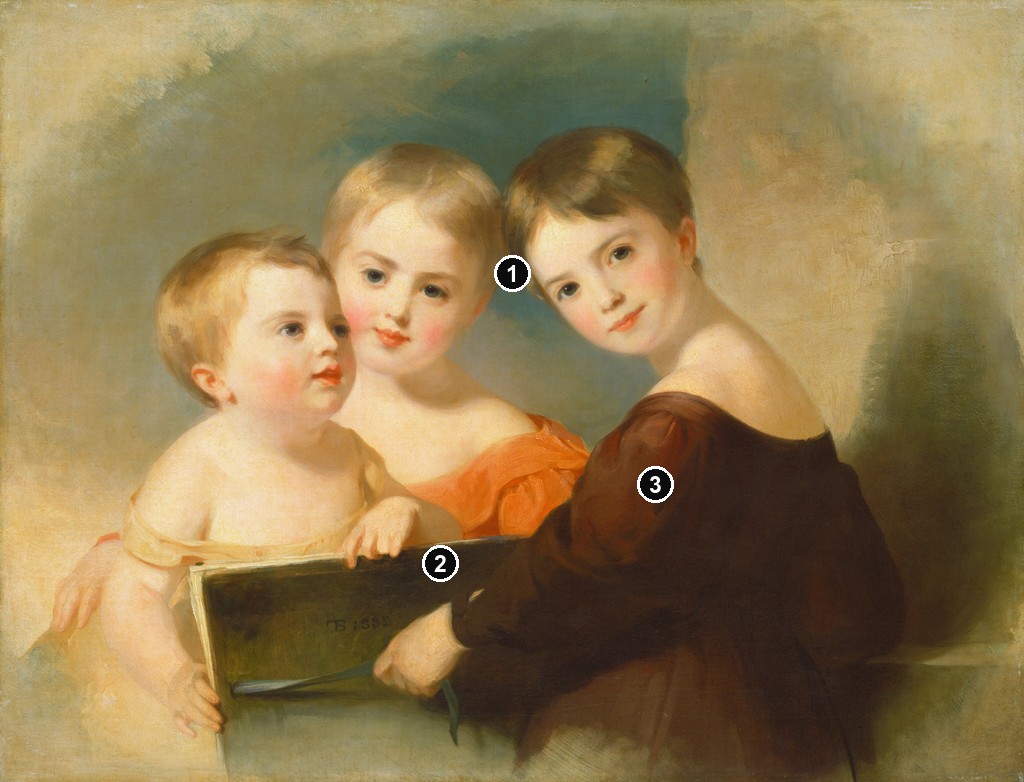
Annotated Details from The Vanderkemp Children
The numbered points identify visible features discussed in this article. Return from each detail to the whole composition. Thomas Sully, The Vanderkemp Children, 1832. Left to right: John Jacob, Jr., Bertha Frances and Pauline Elizabeth. Oil on canvas, 70.9 × 90.5 cm. National Gallery of Art, Washington, Gift of Countess Mona Bismarck, 1966.11.1. CC0. Image source. CC0; National Gallery of Art Open Access. Numbers added to a separate overview; detail images cropped from the source. The complete unnumbered image is retained in this article.
Details from THE VANDERKEMP CHILDREN
Compare the cropped details with the complete images above. Notice how their colours, shapes and positions contribute to the larger compositions.
Three connected heads
The three heads form a compact group: the youngest child turns towards the central child while the right-hand figure looks outwards. The varied directions prevent a mechanically repeated pose.
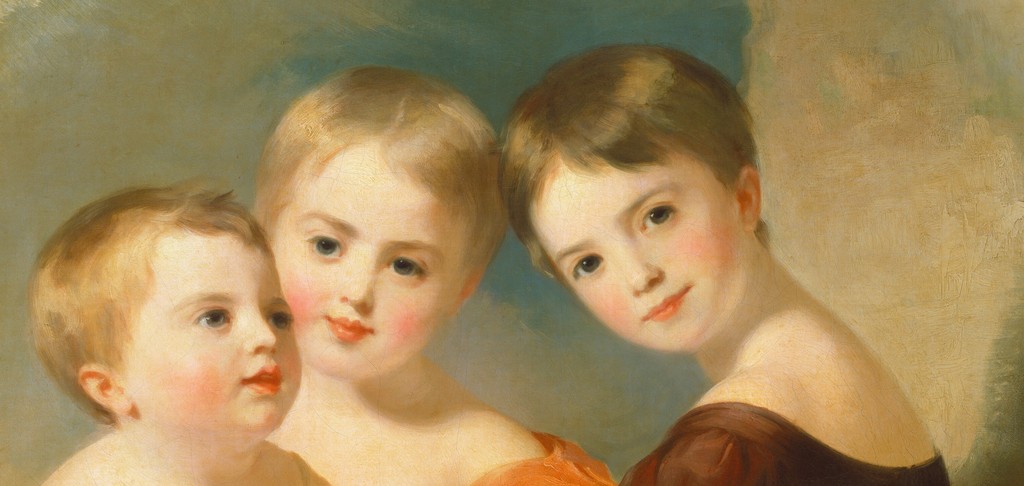
Hands and portfolio
Hands gather around the dark portfolio at the front. Its broad rectangular shape provides a common object that connects the figures across the lower part of the portrait.
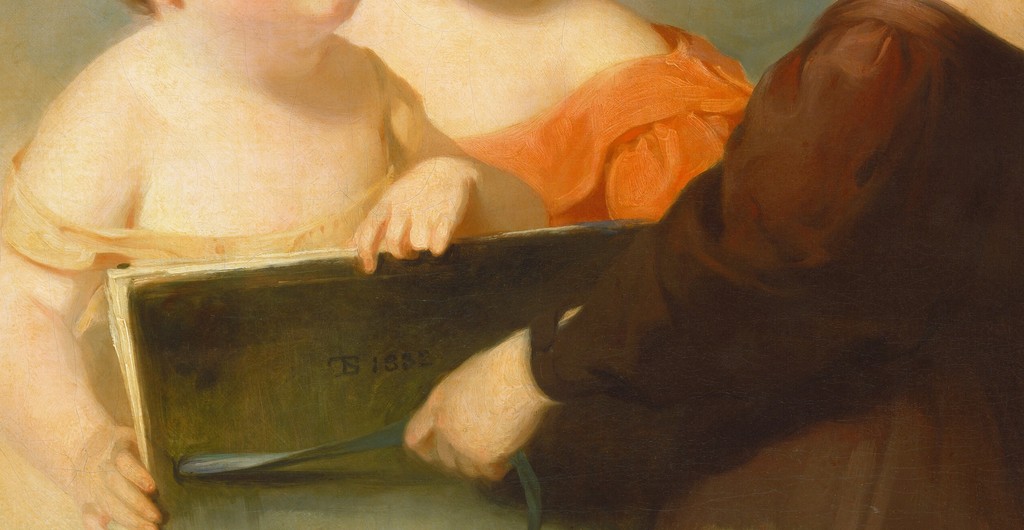
Contrasting dress colours
Orange-red fabric beside the dark brown dress separates the two older children. Soft contours keep this strong colour contrast within the closely joined group.
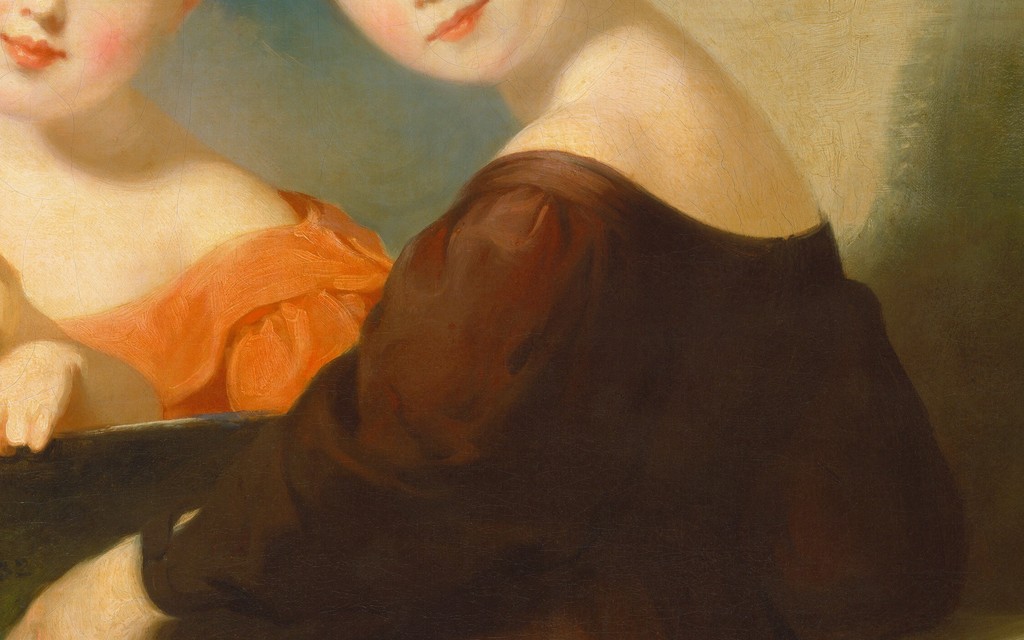
Identifying the sitters
The children were the son and daughters of John Jacob Vanderkemp and Eliza Hepburn Vanderkemp. The NGA catalogue identifies their father as a Philadelphia merchant and general agent for the Holland Land Company. It gives birth years of 1829 for John, 1827 for Bertha and 1826 for Pauline, establishing that the youngest child is the boy at the left. [2]
The differences between their clothing and positions can help a viewer remember the names, but the identifications come from documentary scholarship. John is in yellow; Bertha’s orange dress is visible centrally; Pauline wears the dark dress and holds the portfolio’s ribbons. Clothing alone should not be used to decide who each child must be.
Keeping the names straight also changes how we describe the activity. The youngest child approaches the portfolio from one side while the oldest handles its fastening from the other. Bertha connects them through her turned face and close position. What might initially look like three interchangeable examples of childhood becomes a particular arrangement of siblings, even though their private thoughts remain beyond the evidence.
The portfolio at the centre
The object at the bottom is an artist’s portfolio, not simply a large reading book. Its broad cover, loose ribbon fastening and position across the group make it an effective shared focus. Pauline holds a ribbon while John reaches toward its edge. The artist’s monogram and date, TS 1832, are placed on the portfolio itself. [1] [2]
This placement gives the signature a role within the painted world. Rather than floating separately in an empty corner, the letters belong to an object that already attracts attention. Following the hands toward the cover also brings the viewer toward the painter’s identifying mark. The portfolio therefore connects the children’s activity with Sully’s own presence as the maker of the image.
What it meant to the family is less certain. Scholars have proposed that drawings might have held the children’s attention during the sitting, or that the portfolio suggests cultivation and an interest in art. These are interpretations, not a surviving account of precisely what Sully gave the children to look at. [2] The closed and partly obscured contents leave the viewer in much the same position: we can see an interest being represented without inspecting its full object.
A documented commission in 1832
The NGA catalogue reports that Sully painted the portrait between 25 February and 3 May 1832 for a fee of one hundred and fifty dollars. It also records its exhibition that year at the Pennsylvania Academy of the Fine Arts under the descriptive title Portraits of a Gentleman’s Three Children (grouped) . [2]
That early title foregrounded the format rather than the family name. It described what the painter had accomplished: three children brought together within one portrait. The modern title supplies the identity that the exhibition wording withheld, while the composition itself still demonstrates the challenge of giving each child a distinct position within a shared group.
The execution dates should not be confused with a record of continuous daily sittings. They establish a period of work, not the number of hours each child spent in front of Sully. His later manual discusses how portrait sittings could be organised, but those instructions do not provide a session log for this particular canvas. [11] The portrait belongs to the practical world of commissioned likenesses as well as to the affectionate scene it presents.
Colour and the appearance of informality
The three costumes provide a clear progression. Pale yellow at the left moves into warm orange at the centre and then into deep brown on the right. Across these larger shapes, the lighter faces and hands create smaller connections. The ribbon introduces a cooler blue-green note near the lower middle, separating the fastening from the dark portfolio cover.
Around the children, the painting becomes looser. The background contains cloudy transitions of grey, green and brown rather than a crisply described room. Lower contours also soften as they approach the edge. This means the faces, gestures and portfolio can remain the clearest information without being enclosed by a highly detailed setting.
The effect is especially noticeable when the painting is viewed as a whole. The children seem to emerge from the surrounding colour, with some edges more definite than others. That selective finish makes the close grouping feel less rigid. It should not be mistaken for proof that the portrait was painted in one rapid sitting: the impression of spontaneity is an artistic result, not a timetable.
Watch: Thomas Sully
Choose a film to explore the artist’s work, its interpretation and its wider setting.
Thomas Sully: A Lesson in Conservation
The Columbus Museum explores the conservation of a painting by Thomas Sully.
Watch on YouTubeAn earlier outdoor setting beneath the paint
Technical examination gives the background a more complicated history. The NGA’s 1998 catalogue reports that infrared reflectography revealed an earlier arrangement of trees and foliage around the children. Sully subsequently converted that exterior setting into the more neutral background now visible. Areas that began as sky and cloud were reworked as wall and shadow. [2]
The catalogue also describes an abandoned landscape drawing with a figure along the bottom edge. It was detected through infrared examination but did not appear in X-radiography, leading the authors to place its abandonment early in the working process. This is evidence from examination beneath the visible surface, rather than a feature a reader should expect to find in an ordinary colour photograph. [2]
These findings help explain why the apparently simple setting deserves attention. The finished portrait did not merely acquire an empty backdrop by default: a more specific environment was replaced. The surviving arrangement concentrates attention on the children and their shared object. The examination does not, however, establish Sully’s reason for every alteration, so an imagined dissatisfied patron or restless sitting would add a story the evidence does not provide.
Comparing The Coleman Sisters
Sully returned to a three-sitter family group in The Coleman Sisters , painted in 1844. That canvas places three older sisters in a more upright arrangement, with a red book and flowers near the lower right. Looking at the two pictures together shows how much the format can change even when the number of sitters remains the same. [12]
The Vanderkemp group is wider and more compressed. Its hands converge around one object, and its faces occupy a closely connected arc. In the Coleman portrait, the costumes extend farther downward and the heads descend across the composition. Both pictures use differences in gaze to connect the sitters while allowing some of them to address the viewer.
The comparison need not become a contest over which family appears more affectionate. A painted arrangement cannot measure the actual warmth of sibling relationships. It can show how Sully gave those relationships different visible forms: here through a shared portfolio and close cluster, elsewhere through the more spacious presentation of three individual figures. Further examples appear in the overview of Sully’s portraits .
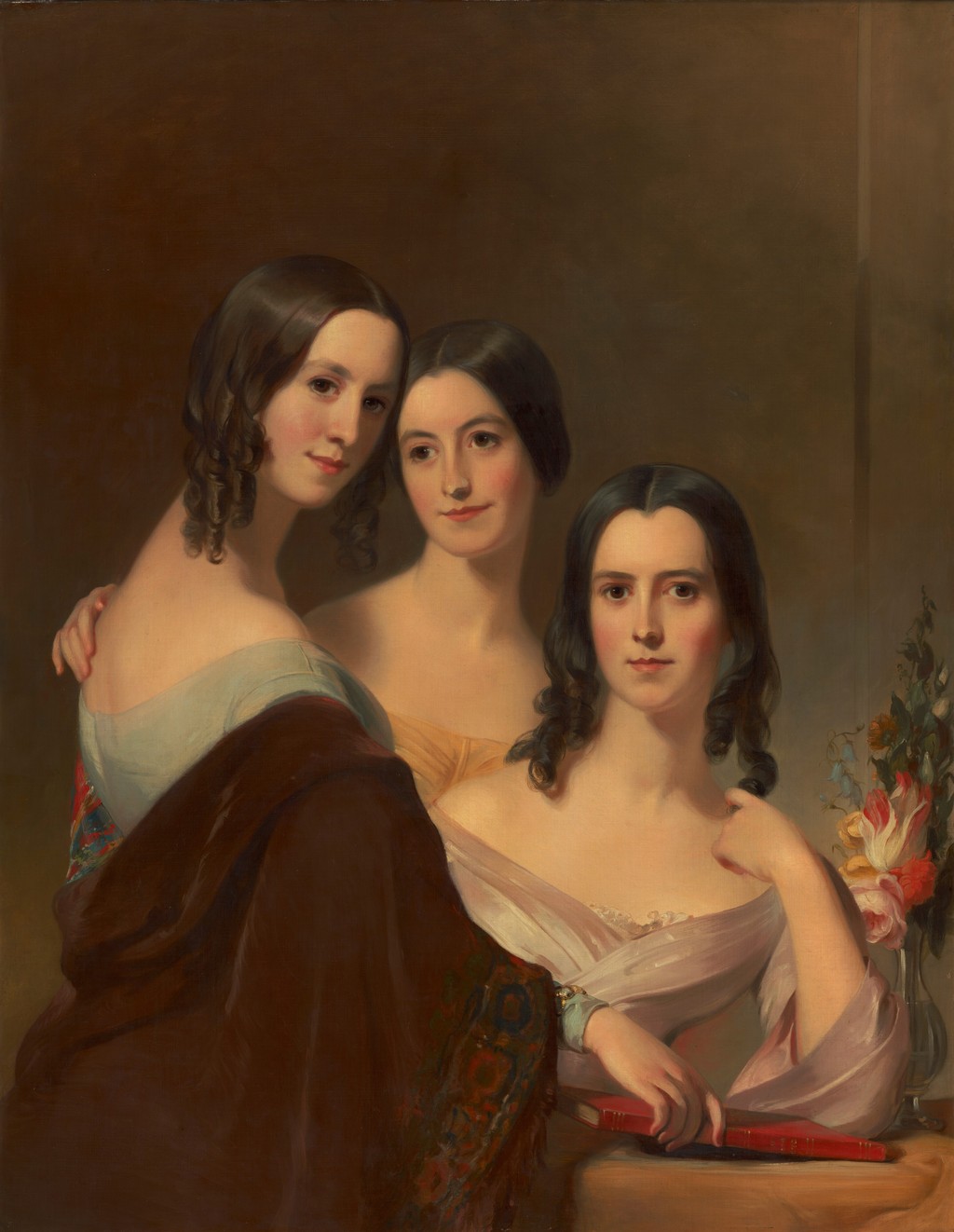
Thomas Sully, The Coleman Sisters, 1844. Sarah Hand Coleman at left, Isabel centrally and Margaret seated right. Oil on canvas, 112.5 × 87.5 cm. National Gallery of Art, Washington, Gift of William C. Freeman, 1947.9.3. CC0.
Image source
.
CC0; National Gallery of Art Open Access
.
Collection history and the limits of the record
The painting’s known later history includes the Ehrich Galleries in New York and the collection of Countess Mona Bismarck. Her gift brought it to the NGA in 1966. The museum’s current provenance also preserves an unresolved label naming Mrs. B. M. Liddell, whose identity has not been established. [1]
That gap should remain visible rather than being filled with an assumed inheritance. A record can identify the sitters securely while leaving part of the object’s subsequent ownership uncertain. The current accession, 1966.11.1, gives a stable way to distinguish this canvas from other portraits, later reproductions and general references to the Vanderkemp family.
The picture rewards a final return to its smallest actions. Pauline’s turn brings the viewer into the group; Bertha’s gaze connects the central face with John; the ribbon and cover direct attention downward. The painting’s economy lies in how much these few gestures achieve. Sully gives three named children a shared activity while keeping each one individually present.
Artworks directory
A selection documented in the linked articles, with related studies and a print after Sully listed separately. Dates identify individual objects; Musidora’s date range does not imply continuous work. This is not a catalogue raisonné. The Drawing filter includes watercolour and reproductive printmaking.
| Name | Date | Medium |
|---|---|---|
| Captain Charles Stewart | 1811–1812 | Painting — oil on canvas |
| George Frederick Cooke as Richard III | 1811–1812 | Painting — oil on canvas |
| Musidora | 1813–35; Met panel | Painting — oil on wood |
| Lady with a Harp: Eliza Ridgely | 1818 | Painting — oil on canvas |
| The Passage of the Delaware | 1819 | Painting — oil on canvas |
| The Torn Hat | 1820 | Painting — oil on panel |
| Portrait of the Artist | 1821; Met canvas | Painting — oil on canvas |
| John Quincy Adams | 1824; NGA oil study | Painting — oil on canvas |
| John Quincy Adams (watercolour study) | 1824; Met 38.146.1 | Drawing — watercolour, black chalk and graphite on paper |
| John Quincy Adams (Durand after Sully) | 1826; PAFA 1876.9.184a | Drawing — etching and engraving on paper |
| The David Children | 1826 | Painting — oil on canvas |
| The Vanderkemp Children | 1832 | Painting — oil on canvas |
| Queen Victoria | 1838; full-length Met canvas | Painting — oil on canvas |
| Queen Victoria (life study) | 1838; Met 14.126.1 | Painting — oil on canvas |
| Mother and Son | 1840; inscription date | Painting — oil on canvas |
| The Coleman Sisters | 1844 | Painting — oil on canvas |
| Andrew Jackson | 1845; after the 1824 life portrait | Painting — oil on canvas |
Frequently Asked Questions
From left to right, they are John Jacob Vanderkemp, Jr., Bertha Frances Vanderkemp and Pauline Elizabeth Vanderkemp. The NGA catalogue corrects an earlier reversed identification. [2]
They gather around an artist’s portfolio with ribbon fastenings. Sully placed his monogram and the date 1832 on it. [1]
No. Infrared examination reported by the NGA revealed an earlier exterior setting with trees and foliage, subsequently reworked into the present background. [2]
It belongs to the National Gallery of Art in Washington, accession 1966.11.1, Gift of Countess Mona Bismarck. [1]
Discussion
Look again at the images and ideas explored in The Vanderkemp Children by Thomas Sully. These editorial prompts invite your observations.
Reader Insights
Follow the children’s hands around the portfolio. Which gesture most strongly suggests an activity about to happen?
How does Pauline’s outward gaze change the relationship between the viewer and the other two children?
Compare the group with The Coleman Sisters. How do the width of the canvas and the arrangement of the heads change your experience of the sitters?
Join the Conversation
Share a detail, comparison or question about The Vanderkemp Children by Thomas Sully below.
References
- National Gallery of Art: The Vanderkemp Children , 1832, 1966.11.1. View source
- National Gallery of Art: American Paintings of the Nineteenth Century , Part II, 1998, pp. 175–178. View source
- Pennsylvania Academy of the Fine Arts, George Frederick Cooke as Richard III, 1811–1812, 1812.1. View source
- Metropolitan Museum of Art, Musidora, 1813–35, 21.48. View source
- National Gallery of Art, Open Data: selected Sully object and published-image records. View source
- Wikimedia Commons / MFA image source, The Passage of the Delaware: original image and PD-Art record. View source
- Wikimedia Commons / MFA source image, The Torn Hat: 16.104 image and PD-Art rights. View source
- Metropolitan Museum of Art, Portrait of the Artist, 1821, 94.23.3. View source
- Metropolitan Museum of Art, Queen Victoria,1838,2021.140. View source
- Metropolitan Museum of Art, Mother and Son, 1840, 14.126.5. View source
- Thomas Sully: Hints to Young Painters and the Process of Portrait-Painting , 1873. View source
- National Gallery of Art: The Coleman Sisters , 1844, 1947.9.3. View source
- Splash image source.
Thomas Sully, The Vanderkemp Children, 1832. Left to right: John Jacob, Jr., Bertha Frances and Pauline Elizabeth. Oil on canvas, 70.9 × 90.5 cm. National Gallery of Art, Washington, Gift of Countess Mona Bismarck, 1966.11.1. CC0. CC0; National Gallery of Art Open Access .
View source