 by
Tom Gurney
Tom Gurney BSc (Hons) is an art history expert with over 20 years experience
Email:
tomgurney1@gmail.com
/ Phone:
+44 7429 011000
Mother and Son by Thomas Sully: Introduction
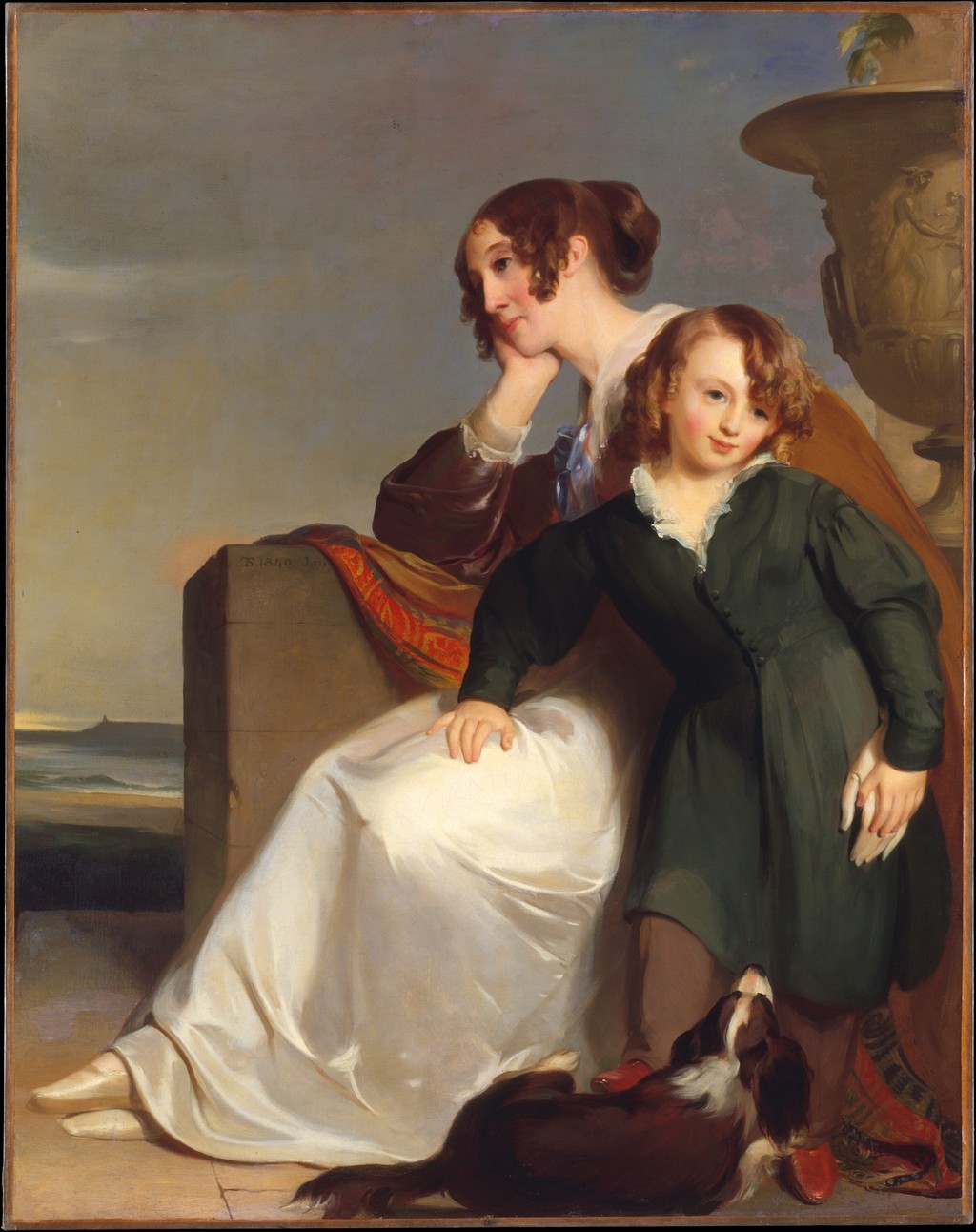
In Mother and Son , Thomas Sully brings together a family portrait and a setting that seems removed from everyday domestic life. His daughter Jane sits beside her young son Francis against a low wall, with a seashore beyond and a carved urn above. The Metropolitan Museum of Art dates the painting to 1840. Its full title is simple, but the relationship between the two figures, their surroundings and their different expressions makes the picture unusually open to interpretation. [1]
Jane Cooper Sully Darley was herself a practising portrait painter. Recognising that fact changes the encounter: the woman represented as a mother also belonged to the profession of the father painting her. Francis Thomas Sully Darley, who eventually bequeathed the canvas to the Met, appears beside her in a dark dress and red stockings. The painting remained a family object before entering a public collection. [2]
At a Glance
- Artist Thomas Sully
- Title Mother and Son
- Catalogue date 1840
- Sitters Jane Cooper Sully Darley and Francis Thomas Sully Darley
- Medium Oil on canvas
- Dimensions 144.8 × 115.3 cm
- Collection The Metropolitan Museum of Art, New York
- Accession 14.126.5
- Acquisition Bequest of Francis T. S. Darley, 1914
This work across Thomas Sully’s career
Musidora
1813–35; Met panelThe Torn Hat
1820Portrait of the Artist
1821; Met canvasJohn Quincy Adams
1824; NGA oil studyQueen Victoria
1838; full-length Met canvasMother and Son (current article)
1840; inscription dateAndrew Jackson
1845; after the 1824 life portraitNotes and sources
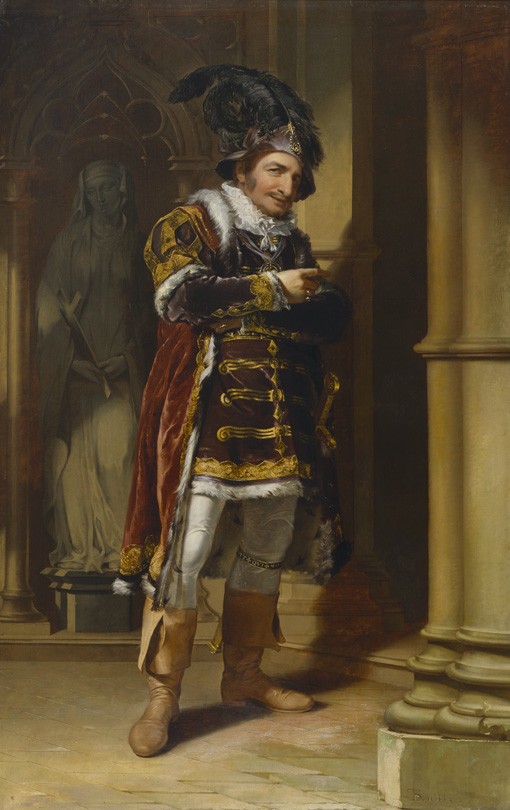
George Frederick Cooke as Richard III. Actor and theatrical role meet in an imposing full-length portrait. [3]
Musidora. A turned figure beside a pool belongs to a literary episode, not a named portrait sitter. [4]
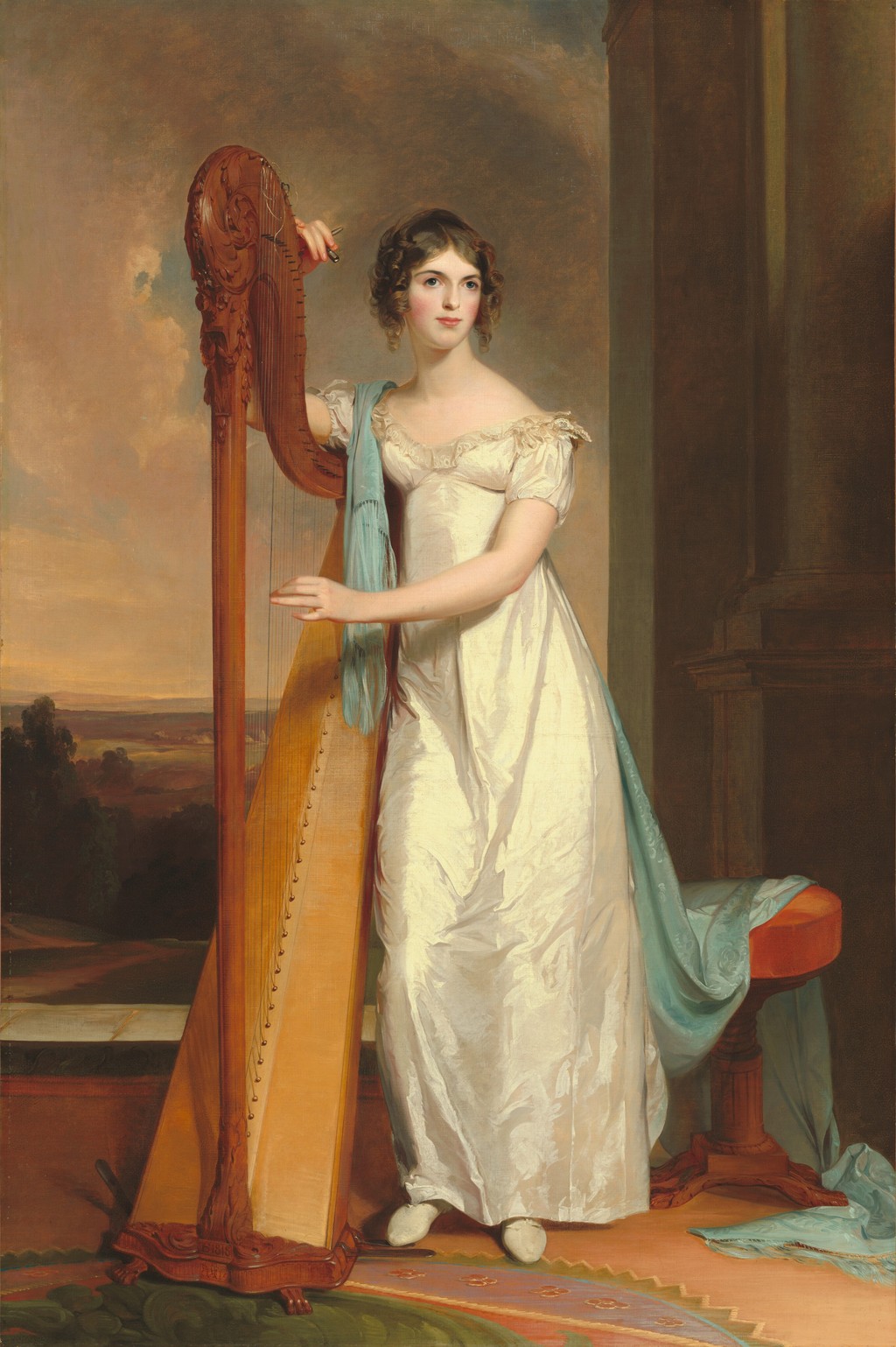
Lady with a Harp: Eliza Ridgely. The harp connects the sitter’s accomplishment with the arrangement of her body. [5]
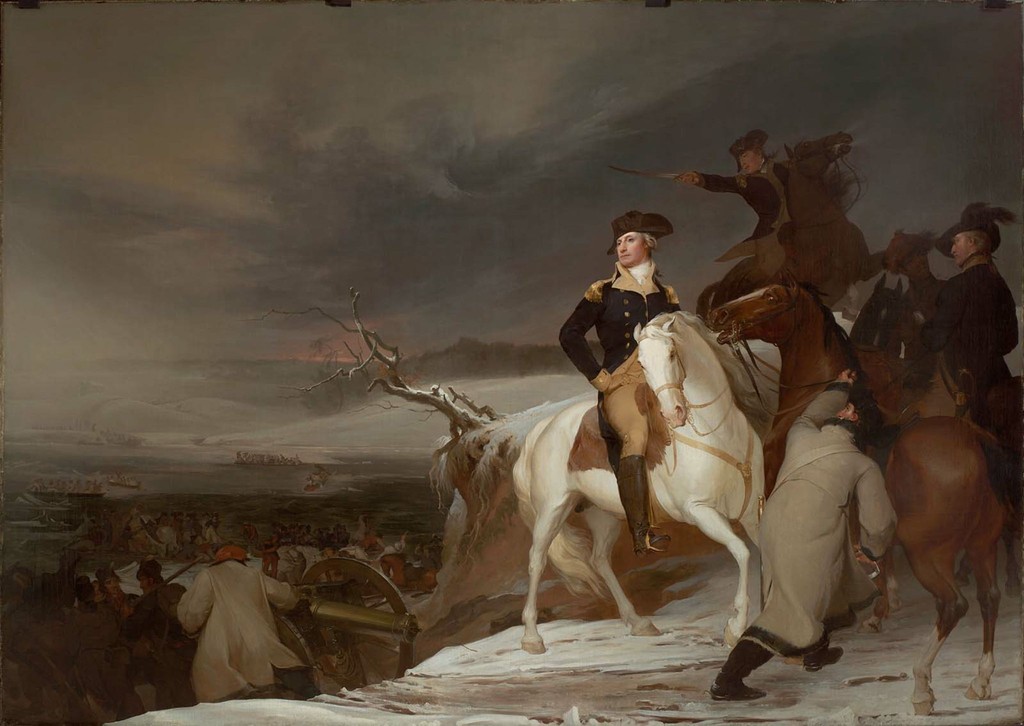
The Passage of the Delaware. Washington is mounted on shore while the crossing proceeds around him. [6]
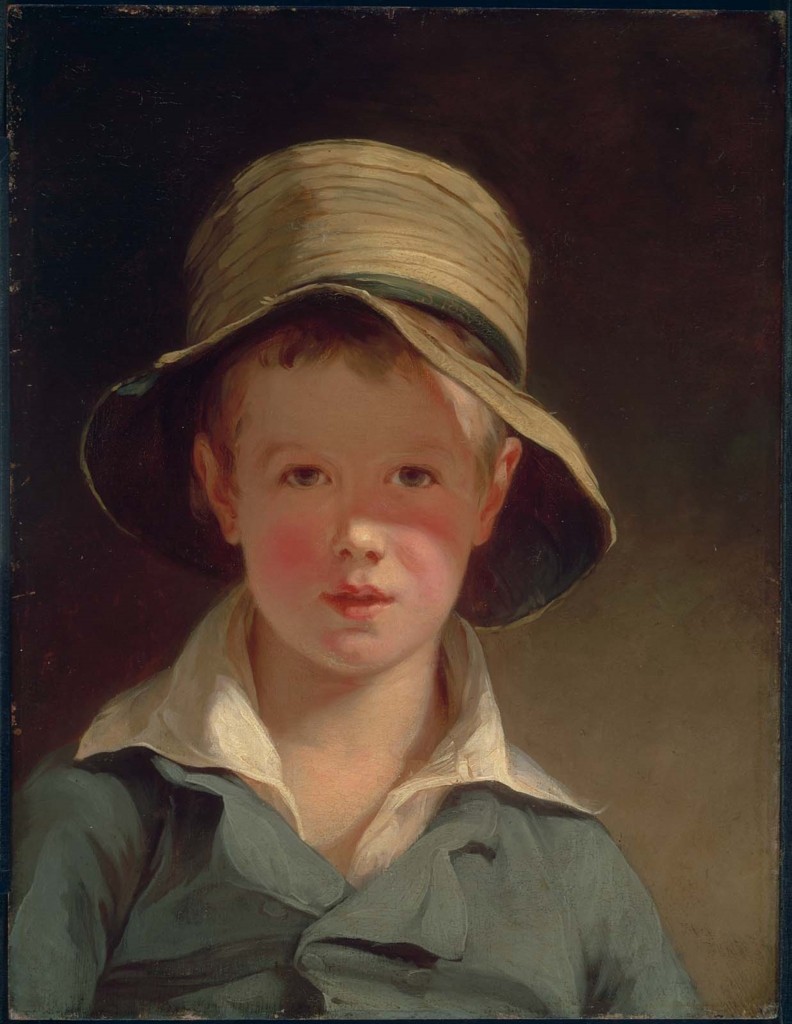
The Torn Hat. A worn hat and directed light give the artist’s son an informal presentation. [7]
Portrait of the Artist. A raised brush joins the painter’s hand to the illuminated head. [8]
John Quincy Adams. A developed likeness supplied information for a larger portrait project. [5]
The David Children. The older children direct attention toward the reclining infant. [5]
The Vanderkemp Children. A portfolio and overlapping hands connect the three children. [5]
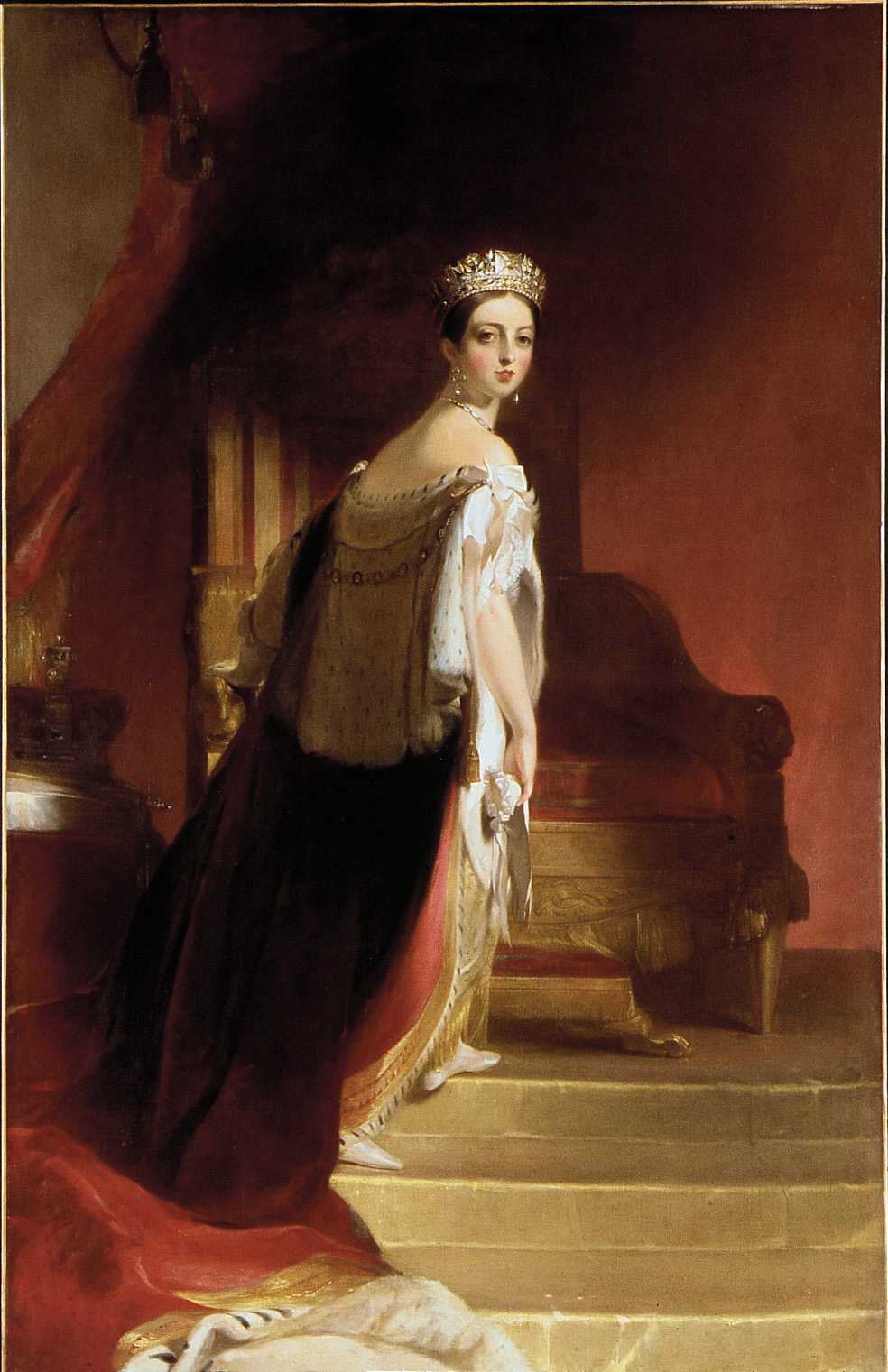
Queen Victoria. The royal likeness extends through robes, insignia and a ceremonial setting. [9]
Mother and Son (current article). Jane Darley and her son are connected through touch and differing gazes. [1]
The Coleman Sisters. Contrasting dresses, heights and gestures hold three individual likenesses together. [5]
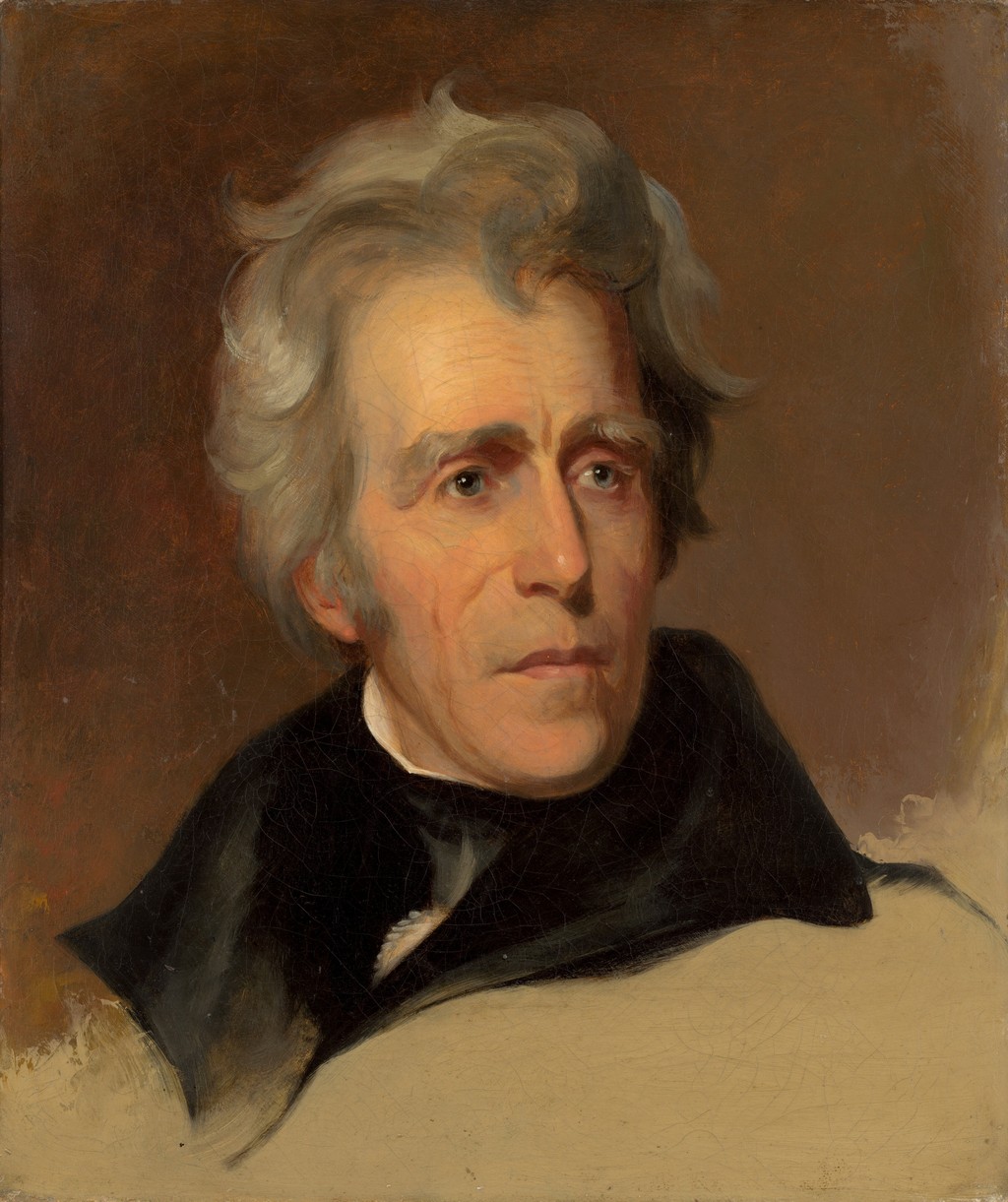
Andrew Jackson. This later version must be distinguished from its earlier life source. [5]
Contents
- Looking at the two figures
- Jane Darley as a fellow artist
- Why 1839 and 1840 both appear in its history
- White fabric, dark green and red accents
- A seashore rather than a domestic room
- Ivy, the urn and the dog
- Was Jane intended to resemble Penelope?
- Studies and the construction of a family image
- A valued picture kept within the family
- Annotated details
Looking at the two figures
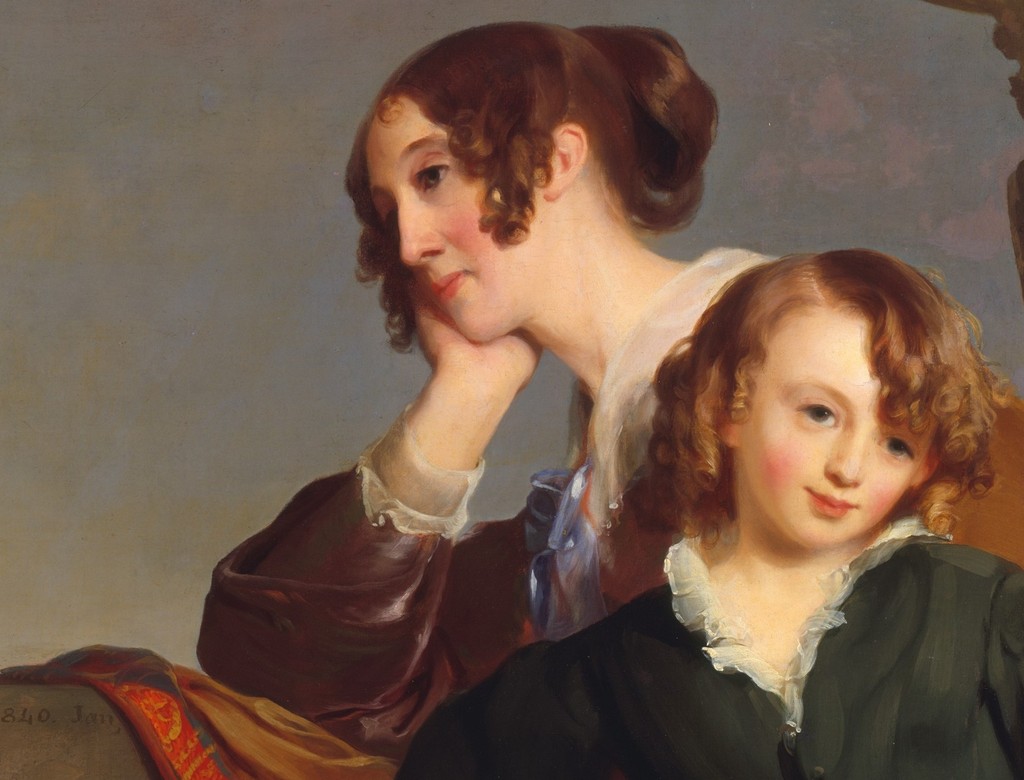
Jane occupies the left side of the group. Her elbow rests on the wall and her cheek settles into her hand, while her eyes turn away from the viewer. Francis stands closer to the front, meeting our gaze. His hand rests on the pale fabric across her knee. This creates a connection between the figures without requiring them to look at each other.
Their faces are close in height, but their postures work differently. Jane’s bent arm makes a supporting structure beneath her head. Francis’s upright body gives the right side of the composition a longer, more continuous movement. His dark costume contrasts with the broad white skirt that spreads across the lower left of the painting.
The effect is both intimate and slightly distant. The child addresses the viewer more openly; the mother’s attention seems elsewhere. That visible difference can suggest reflection, but it cannot tell us what Jane was thinking. Descriptions of grief, anxiety or an absent husband would turn a pictorial mood into a personal history that the image alone does not establish.
Annotated Details from Mother and Son
The numbered points identify visible features discussed in this article. Return from each detail to the whole composition. Thomas Sully, Mother and Son, 1840. Jane Cooper Sully Darley and Francis Thomas Sully Darley. Oil on canvas, 144.8 × 115.3 cm. The Metropolitan Museum of Art, Bequest of Francis T. S. Darley, 1914, 14.126.5. Image source. Public domain. Numbers added to a separate overview; detail images cropped from the source. The complete unnumbered image is retained in this article.
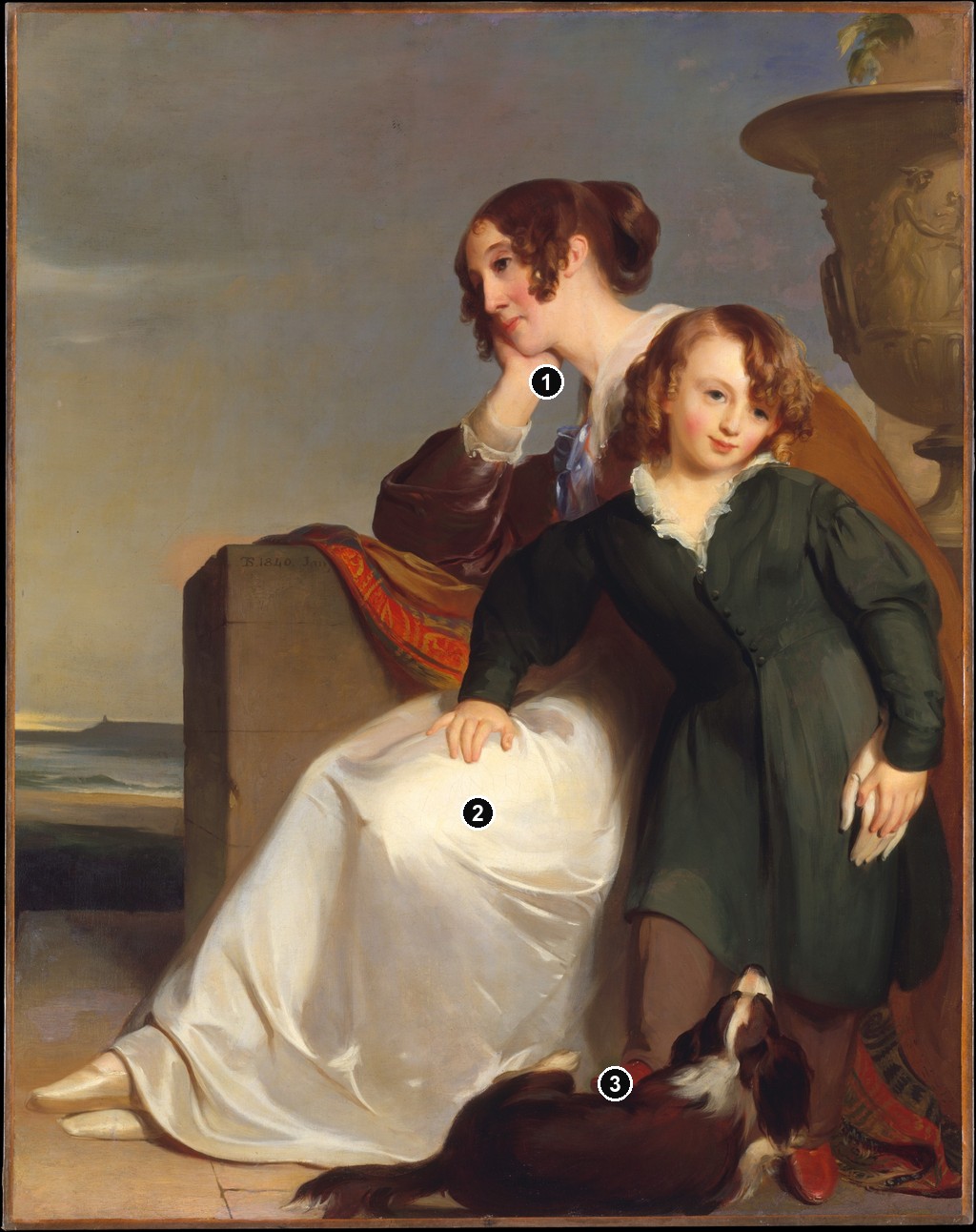
Details from MOTHER AND SON
Compare the cropped details with the complete images above. Notice how their colours, shapes and positions contribute to the larger compositions.
Two different poses
The seated woman supports her cheek with one hand while the standing child turns out towards the viewer. Their contrasting attitudes animate the otherwise closely joined pair.
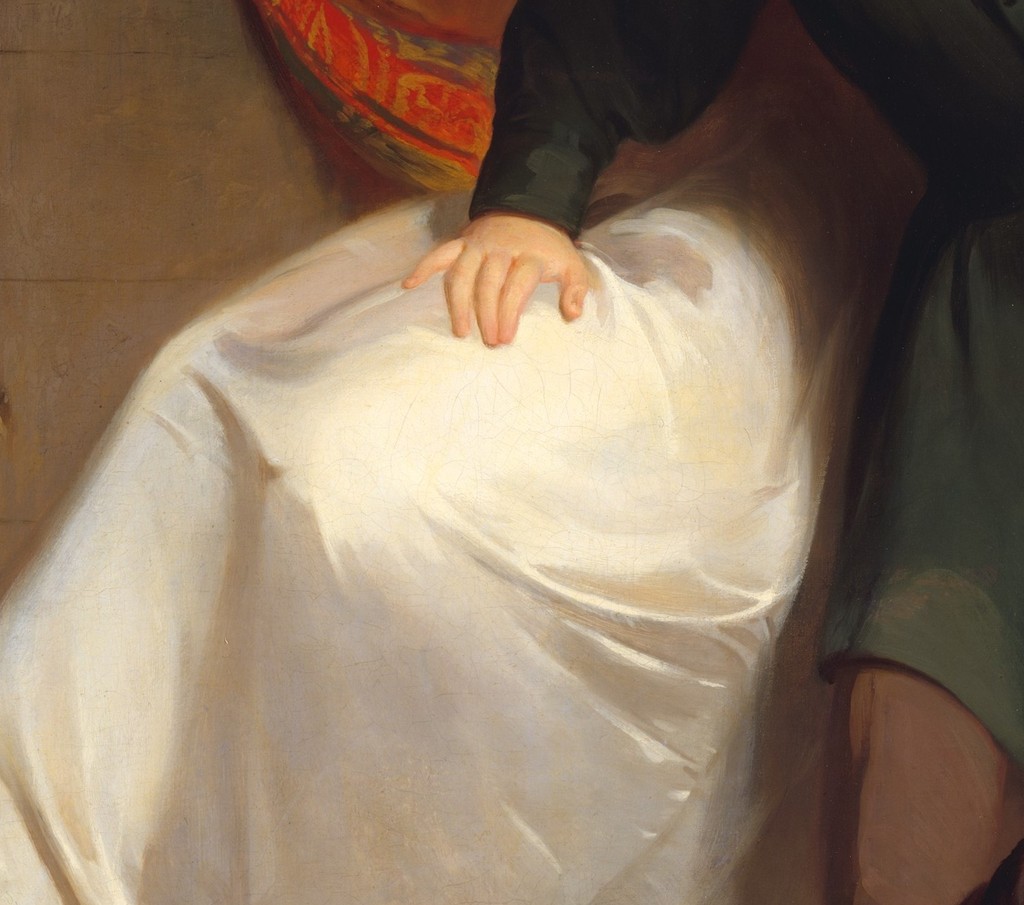
Hand and white dress
The child’s hand rests against the pale fabric on the seated figure’s lap. This small contact links the figures while the large folds carry light down through the picture.
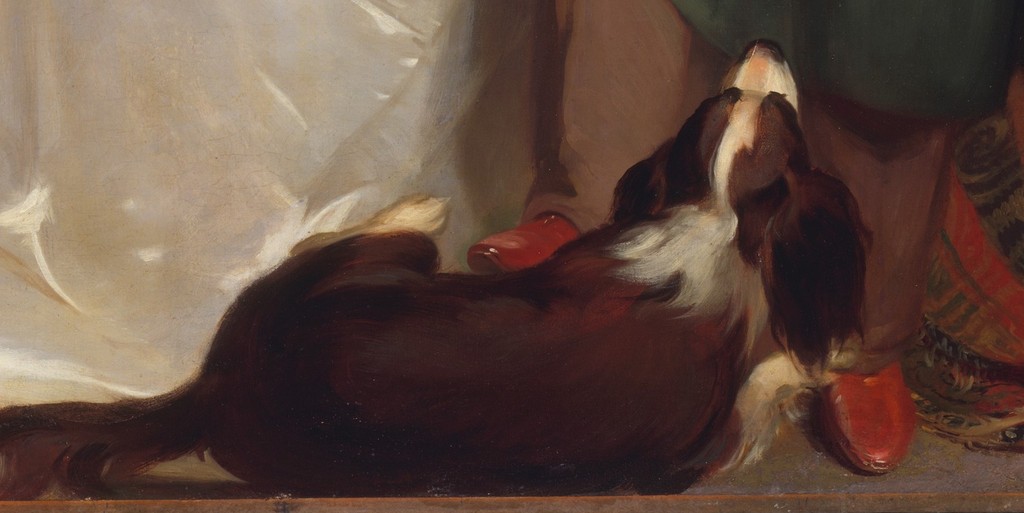
Dog and lower foreground
The dog looks upwards beside the child’s red stockings. Its low position closes the group at floor level and introduces another direction of attention.
Jane Darley as a fellow artist
The Met’s scholarly catalogue identifies Jane as a Philadelphia portrait painter with a substantial exhibition history. Her work appeared at the Pennsylvania Academy of the Fine Arts and other institutions. She was therefore more than a familiar face available within Sully’s household: she participated in the same broader culture of portrait making. [2]
Nothing visible in this particular canvas directly announces her profession. She holds no palette or brush, and the setting includes no easel. The title foregrounds her relationship to Francis instead. A reader who knows only the title might consequently miss an important part of the sitter’s identity. Stating her occupation allows the family relationship to remain central without treating it as an exhaustive account of her life.
There is a useful comparison with Sully’s 1821 self-portrait . There, the raised brush makes the painter’s occupation immediately legible. Here, Jane’s identity as an artist depends on information outside the picture. The difference shows how selectively a portrait can present its sitter. A likeness may describe one role very fully while leaving another role unmarked.
Why 1839 and 1840 both appear in its history
The Met catalogues Mother and Son as an 1840 painting, matching the date inscribed on the canvas. Its 1994 catalogue also reports a longer working history from Sully’s register: the picture was begun on 13 April 1839 and completed on 31 December that year. The painted inscription gives January 1840. [1] [2]
These dates answer different questions. The register records the work’s execution, while the inscription places a date on the finished object. Retaining 1840 as the catalogue date does not require concealing the preceding months. Equally, identifying the 1839 working period does not justify silently changing the museum’s title date to a single earlier year.
The distinction is useful when comparing the painting with other works in Sully’s career. A dated signature provides an important piece of evidence, but it is not always a complete account of how long a picture remained in progress. In this case, the two records allow a more specific account than either one could provide alone.
White fabric, dark green and red accents
The white skirt is the painting’s largest area of light. Its folds range from bright highlights to soft grey and cream shadows, turning the fabric into a broad, sculptural shape. The shoe projecting at the lower left continues this pale passage almost to the edge of the canvas. Above it, warmer browns gather around Jane’s sleeve, hair and the drapery on the wall.
Francis’s dark green dress provides a counterweight. It rises as a relatively solid shape on the right, but its collar, sleeves and front fastening receive smaller adjustments of light. Red stockings, the patterned textile behind the group and a warmer strip near the wall repeat the colour in separated parts of the composition. These accents keep the darker figure connected to the rest of the picture.
Colour also helps distinguish textures. The skirt reads as smooth and reflective; the dog’s coat has broken patches of light and dark; the wall and urn have a more muted, stone-like appearance. This is an observation about how the reproduced picture works, rather than a technical finding about pigments or paint layers. A conservation examination would be needed to establish those material details.
A seashore rather than a domestic room
The setting offers enough detail to establish space but leaves its precise identity uncertain. At the left, water and a distant horizon open beyond the wall. To the right, the large urn and rising masonry close the composition. The figures stand between that open distance and the substantial objects immediately beside them.
The arrangement changes the tone of the family portrait. An ordinary chair, carpet and domestic wall might have located the sitters within a familiar room. Here, the seashore and classical-looking ornament allow the pair to seem both specific people and participants in a more general scene of reflection. The Met’s catalogue discusses these elements within a Romantic and classical vocabulary. [2]
The landscape should not be treated as a verified view from Jane’s home. Nor does the masonry prove that the family sat among actual ruins. Painted surroundings can give a portrait rhythm, depth and associations without recording a single real place. The lower wall is especially effective in that respect: it supports Jane’s arm, carries the drapery and sets a horizontal boundary behind the figures.
Watch: Thomas Sully
Choose a film to explore the artist’s work, its interpretation and its wider setting.
Thomas Sully: A Lesson in Conservation
The Columbus Museum explores the conservation of a painting by Thomas Sully.
Watch on YouTubeIvy, the urn and the dog
The ivy at the upper right, the carved scene on the urn and the dog at the child’s feet all invite symbolic readings. The Met’s interpretation connects these details with family fidelity and motherhood. Its catalogue identifies the urn’s model as the ancient Salpion krater and discusses possible ways Sully could have known its imagery through reproductions or a cast. [1] [2]
Those associations can enrich a reading without becoming a set of instructions that every viewer must follow. The dog also occupies a practical position at the base of the group, joining the darker clothing above to the foreground below. The urn balances the space around Jane’s head with a large form on the opposite side. Ivy softens the boundary where plant growth meets the stone.
It is helpful to begin with these visible functions. Once the arrangement is clear, the proposed meanings have something concrete to attach to. A symbol should not make the actual painted object disappear. Here, the dog remains an individual animal looking upward, and the ivy remains a small passage of leaves placed near the top edge, even while they can carry wider associations.
Was Jane intended to resemble Penelope?
One proposed reading identifies Jane with Penelope and Francis with Telemachus, figures from the story of Odysseus. The mother's reflective posture and the classical setting have encouraged this comparison. The Met’s catalogue explicitly cautions, however, that the Darley family’s history does not directly support such an identification. It allows that Sully may have sought an evocative mood rather than a fully specified allegory. [2]
The qualification is essential. An association with a wife waiting for an absent husband does not establish that Jane was waiting for hers, or that her circumstances matched a classical story. It also does not establish bereavement. The painting’s omission of a father is a feature of its selected grouping, not proof of what had happened to him.
Viewers can still test the proposed comparison against the image. Jane’s supported head, turned gaze and relative stillness do create a reflective centre. Yet Francis’s open look and the dog’s upward movement make the group less withdrawn than the mother alone might seem. The picture holds these different kinds of attention together rather than supplying a single emotional label for everyone represented.
Studies and the construction of a family image
The Met catalogue identifies a sheet in the Museum of Fine Arts, Boston, as containing a compositional study for the painting. It records the sheet as pen, wash and watercolour, accession 52.1634. Other figures on the sheet may relate to alternative arrangements, but that relationship is presented as a possibility rather than a complete sequence of documented stages. [2]
The existence of a study matters because the finished group can appear so naturally assembled. The meeting of the child’s hand with the skirt, the close spacing of the heads and the distribution of light across the costumes are all decisions within a constructed image. Family familiarity may have supplied knowledge of the sitters, but it did not remove the need to organise their shapes within the canvas.
Sully’s later manual describes portrait making as a process involving preliminary decisions and successive sittings. It is a useful primary source for his stated approach, provided it is kept separate from a reconstruction of this particular painting. The manual does not establish the number of sittings Jane and Francis gave for Mother and Son . [10] His wider practice is discussed in style and technique .
A valued picture kept within the family
The register valuation reported by the Met is one thousand dollars. That records the value Sully assigned to the painting; it does not by itself show that the family paid him that sum. The catalogue also records a much smaller copy made in 1866, which must be kept distinct from the large canvas now in New York. [2]
The current painting measures 144.8 × 115.3 cm and entered the Met through Francis’s bequest in 1914. [1] His later role as the person who passed it to the museum adds another relationship to the picture: the child shown beside his mother became the adult responsible for its public destination.
For a closer comparison within Sully’s portraits , consider how differently another family group can organise attention. In The Vanderkemp Children , three children gather around a portfolio in a compact cluster. Here, the seashore, wall and urn make the surrounding space much more prominent. The choice of setting changes how the relationship is presented, even before any symbolic interpretation is added.
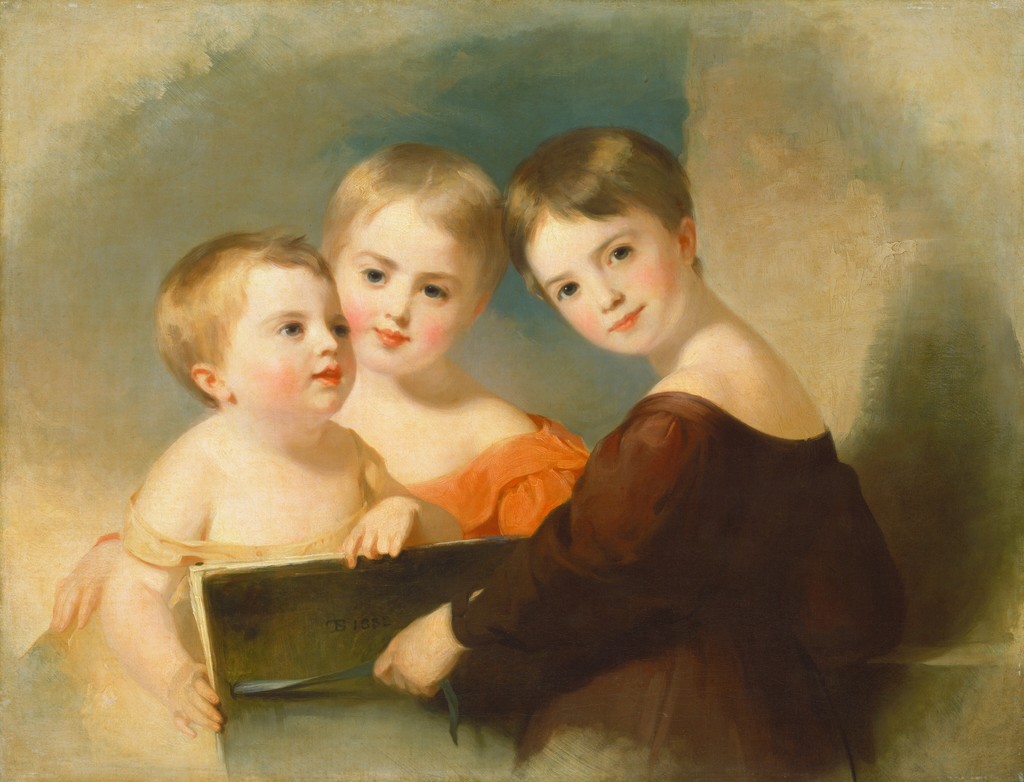
Thomas Sully, The Vanderkemp Children, 1832. Left to right: John Jacob, Jr., Bertha Frances and Pauline Elizabeth. Oil on canvas, 70.9 × 90.5 cm. National Gallery of Art, Washington, Gift of Countess Mona Bismarck, 1966.11.1. CC0.
Image source
.
CC0; National Gallery of Art Open Access
.
Artworks directory
A selection documented in the linked articles, with related studies and a print after Sully listed separately. Dates identify individual objects; Musidora’s date range does not imply continuous work. This is not a catalogue raisonné. The Drawing filter includes watercolour and reproductive printmaking.
| Name | Date | Medium |
|---|---|---|
| Captain Charles Stewart | 1811–1812 | Painting — oil on canvas |
| George Frederick Cooke as Richard III | 1811–1812 | Painting — oil on canvas |
| Musidora | 1813–35; Met panel | Painting — oil on wood |
| Lady with a Harp: Eliza Ridgely | 1818 | Painting — oil on canvas |
| The Passage of the Delaware | 1819 | Painting — oil on canvas |
| The Torn Hat | 1820 | Painting — oil on panel |
| Portrait of the Artist | 1821; Met canvas | Painting — oil on canvas |
| John Quincy Adams | 1824; NGA oil study | Painting — oil on canvas |
| John Quincy Adams (watercolour study) | 1824; Met 38.146.1 | Drawing — watercolour, black chalk and graphite on paper |
| John Quincy Adams (Durand after Sully) | 1826; PAFA 1876.9.184a | Drawing — etching and engraving on paper |
| The David Children | 1826 | Painting — oil on canvas |
| The Vanderkemp Children | 1832 | Painting — oil on canvas |
| Queen Victoria | 1838; full-length Met canvas | Painting — oil on canvas |
| Queen Victoria (life study) | 1838; Met 14.126.1 | Painting — oil on canvas |
| Mother and Son | 1840; inscription date | Painting — oil on canvas |
| The Coleman Sisters | 1844 | Painting — oil on canvas |
| Andrew Jackson | 1845; after the 1824 life portrait | Painting — oil on canvas |
Frequently Asked Questions
They are Sully’s daughter Jane Cooper Sully Darley, herself a portrait painter, and her son Francis Thomas Sully Darley. [2]
That is a proposed interpretation, not a documented identification of Sully’s intention. The Met catalogue states that the family’s history does not directly support it. [2]
It belongs to the Metropolitan Museum of Art, accession 14.126.5. Ownership does not guarantee that a work is on display on any particular visit. [1]
Discussion
Look again at the images and ideas explored in Mother and Son by Thomas Sully. These editorial prompts invite your observations.
Reader Insights
Compare Jane’s gaze with Francis’s. How does their difference affect the atmosphere of the portrait?
Trace the white, dark green and red passages. How do they connect the two figures with the surrounding objects?
Which details seem most useful to understanding the family relationship before considering any classical symbolism?
Join the Conversation
Share a detail, comparison or question about Mother and Son by Thomas Sully below.
References
- The Metropolitan Museum of Art: Mother and Son , 1840, 14.126.5. View source
- Caldwell , Rodriguez Roque and Johnson: American Paintings in the Metropolitan Museum of Art, volume 1, 1994, pp. 354–356. View source
- Pennsylvania Academy of the Fine Arts, George Frederick Cooke as Richard III, 1811–1812, 1812.1. View source
- Metropolitan Museum of Art, Musidora, 1813–35, 21.48. View source
- National Gallery of Art, Open Data: selected Sully object and published-image records. View source
- Wikimedia Commons / MFA image source, The Passage of the Delaware: original image and PD-Art record. View source
- Wikimedia Commons / MFA source image, The Torn Hat: 16.104 image and PD-Art rights. View source
- Metropolitan Museum of Art, Portrait of the Artist, 1821, 94.23.3. View source
- Metropolitan Museum of Art, Queen Victoria,1838,2021.140. View source
- Thomas Sully: Hints to Young Painters and the Process of Portrait-Painting , 1873, selected instructions on portrait sittings. View source
- Splash image source.
Thomas Sully, Mother and Son, 1840. Jane Cooper Sully Darley and Francis Thomas Sully Darley. Oil on canvas, 144.8 × 115.3 cm. The Metropolitan Museum of Art, Bequest of Francis T. S. Darley, 1914, 14.126.5. Public domain .
View source