 by
Tom Gurney
Tom Gurney BSc (Hons) is an art history expert with over 20 years experience
Email:
tomgurney1@gmail.com
/ Phone:
+44 7429 011000
The Torn Hat by Thomas Sully: Introduction
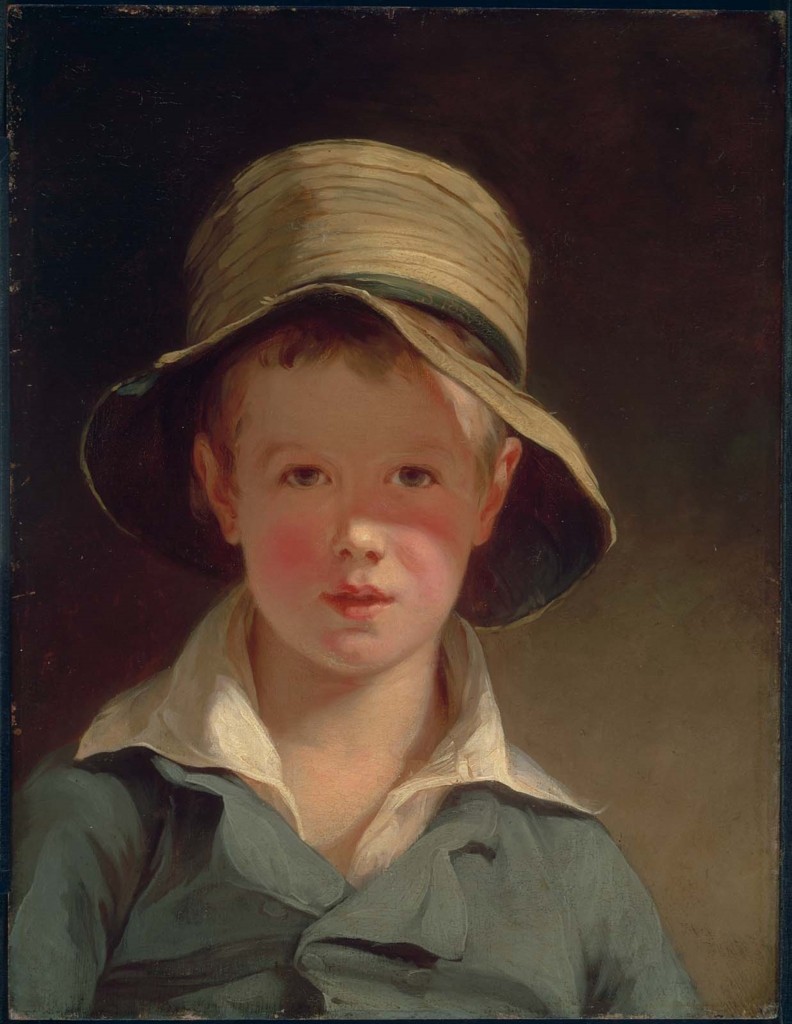
Thomas Sully’s The Torn Hat represents his nine-year-old son, Thomas Wilcocks Sully, looking outward beneath a damaged straw brim. The open collar, loosely arranged coat and irregular hat give the portrait an unusually informal appearance. Painted in 1820, the oil on panel belongs to the Museum of Fine Arts, Boston. [1] [2]
The title directs attention to an accessory rather than naming the sitter. That choice encourages a small narrative question: how did the hat become torn? The picture supplies no answer. Its interest lies in the way the damaged shape frames a carefully painted face, bringing an apparent trace of everyday life into a composed likeness.
At a Glance
- Artist Thomas Sully
- Title The Torn Hat
- Date 1820
- Sitter Thomas Wilcocks Sully, the artist’s son, aged nine
- Medium Oil on panel
- Collection Museum of Fine Arts, Boston
- Accession 16.104
- Credit Gift of Miss Belle Greene and Henry Copley Greene in memory of their mother, Mary Abby Greene
This work across Thomas Sully’s career
Musidora
1813–35; Met panelPortrait of the Artist
1821; Met canvasJohn Quincy Adams
1824; NGA oil studyQueen Victoria
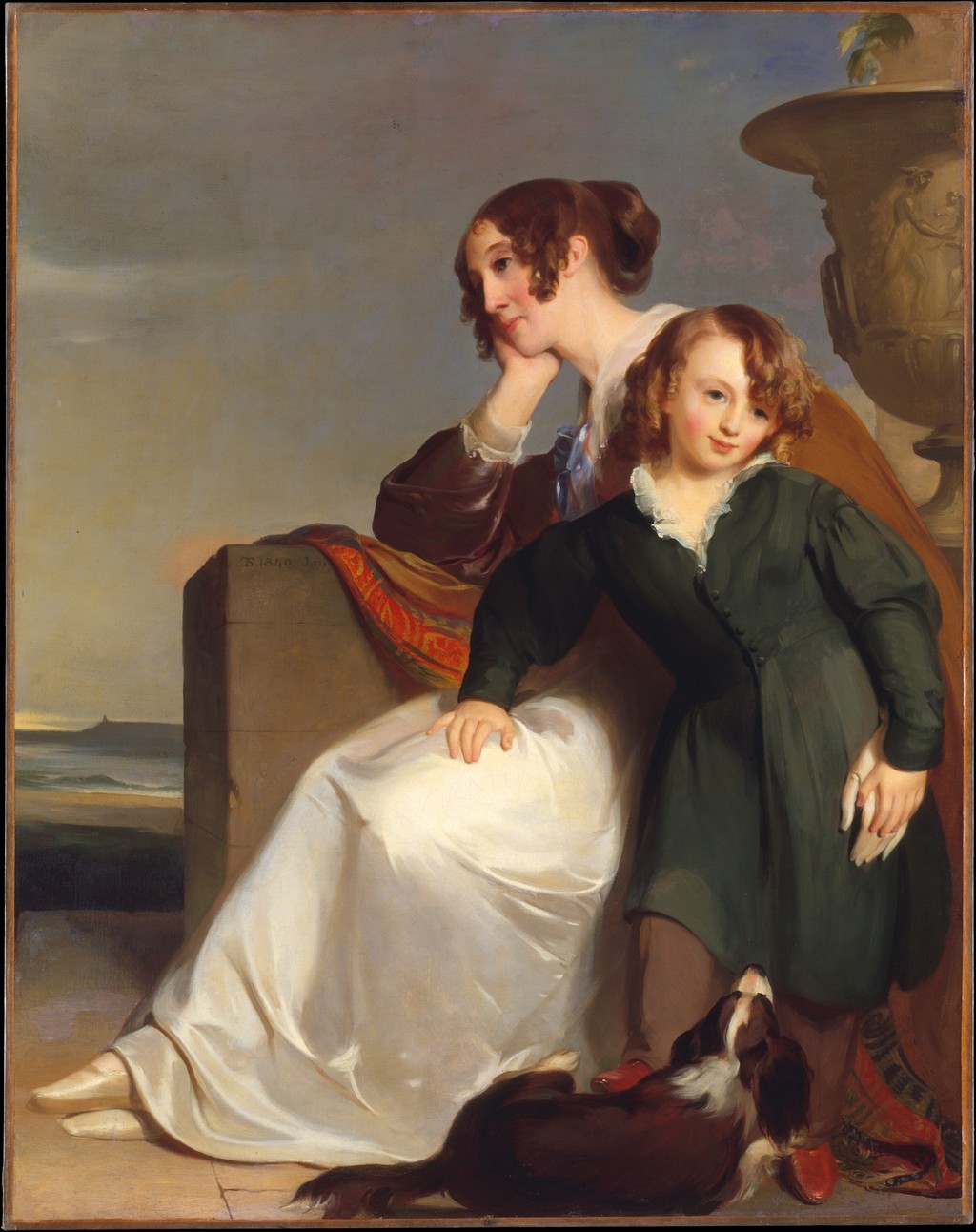
1838; full-length Met canvasMother and Son
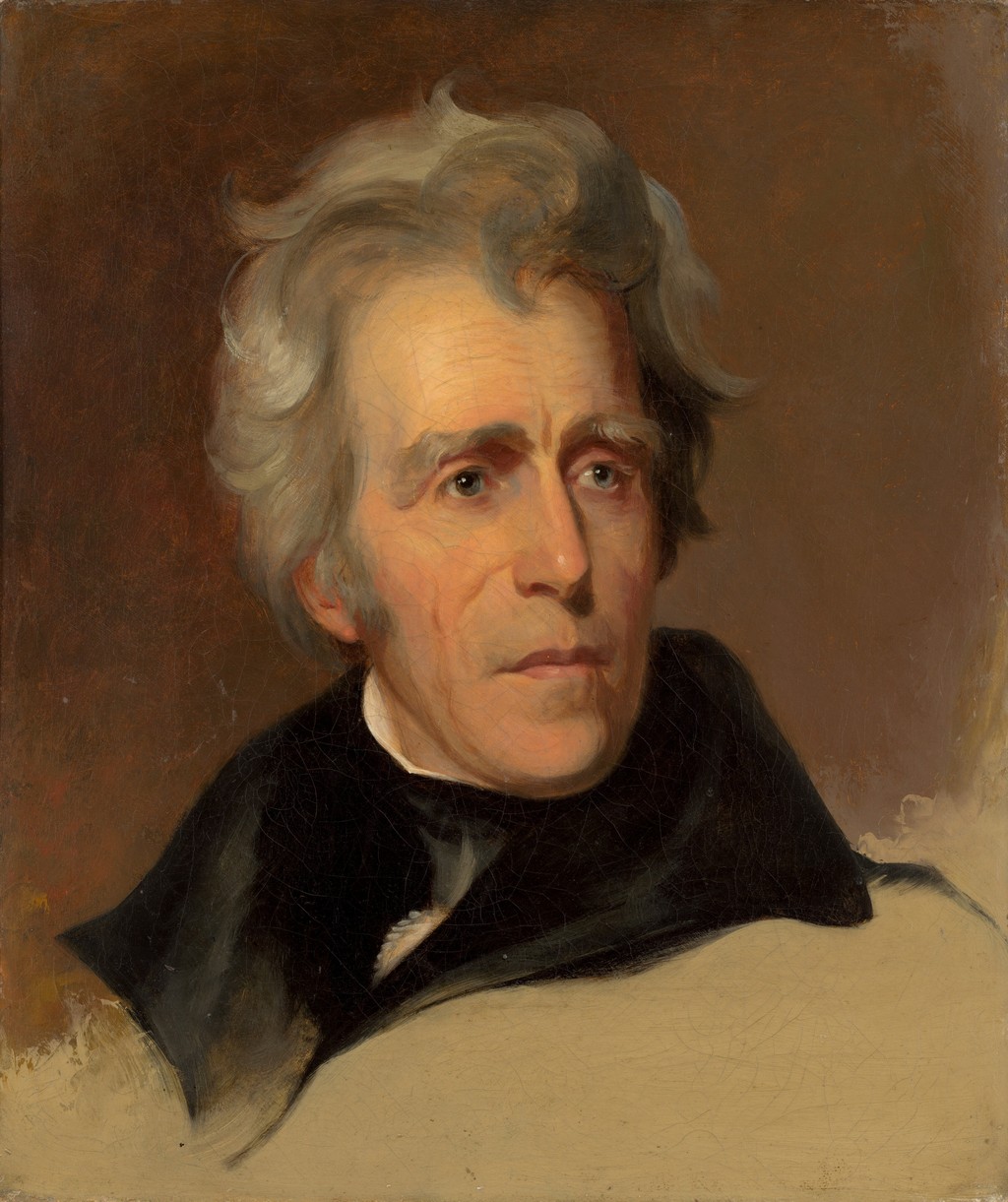
1840; inscription dateAndrew Jackson
1845; after the 1824 life portraitNotes and sources
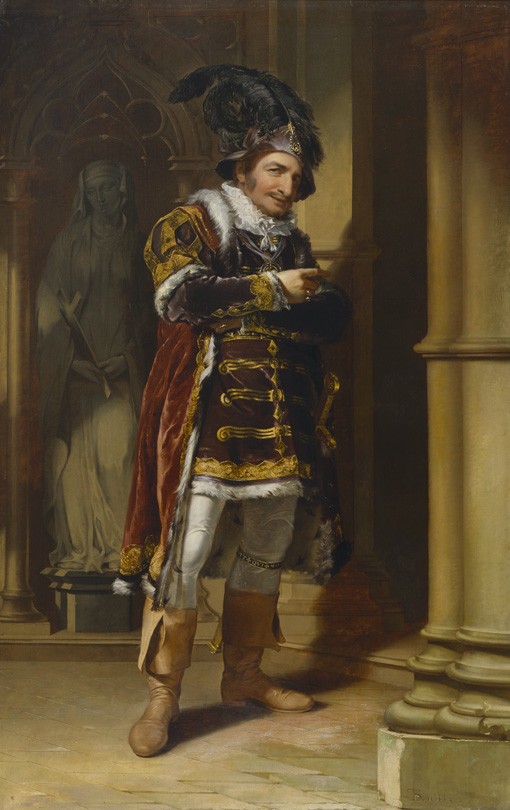
George Frederick Cooke as Richard III. Actor and theatrical role meet in an imposing full-length portrait. [3]
Musidora. A turned figure beside a pool belongs to a literary episode, not a named portrait sitter. [4]
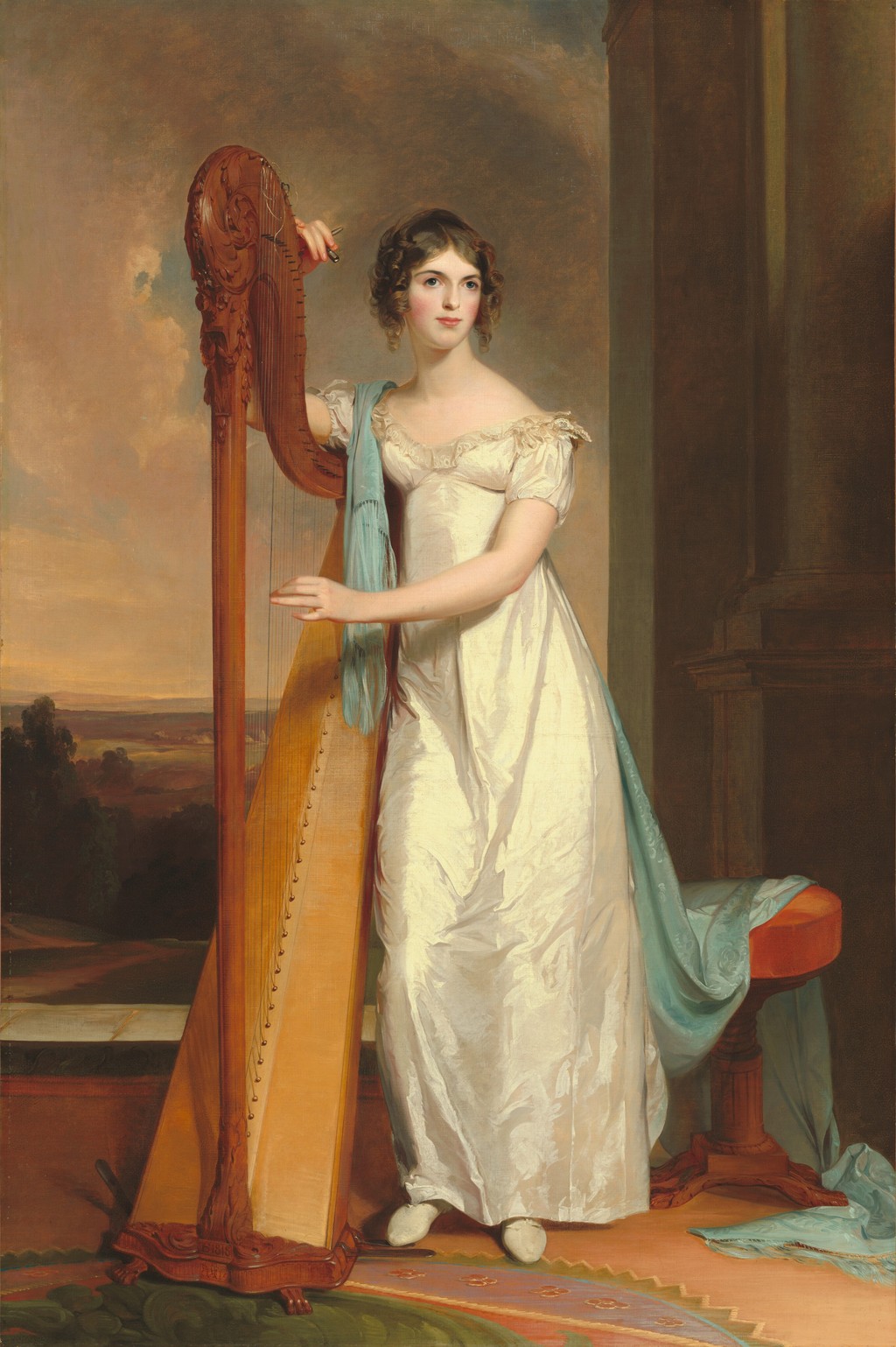
Lady with a Harp: Eliza Ridgely. The harp connects the sitter’s accomplishment with the arrangement of her body. [5]
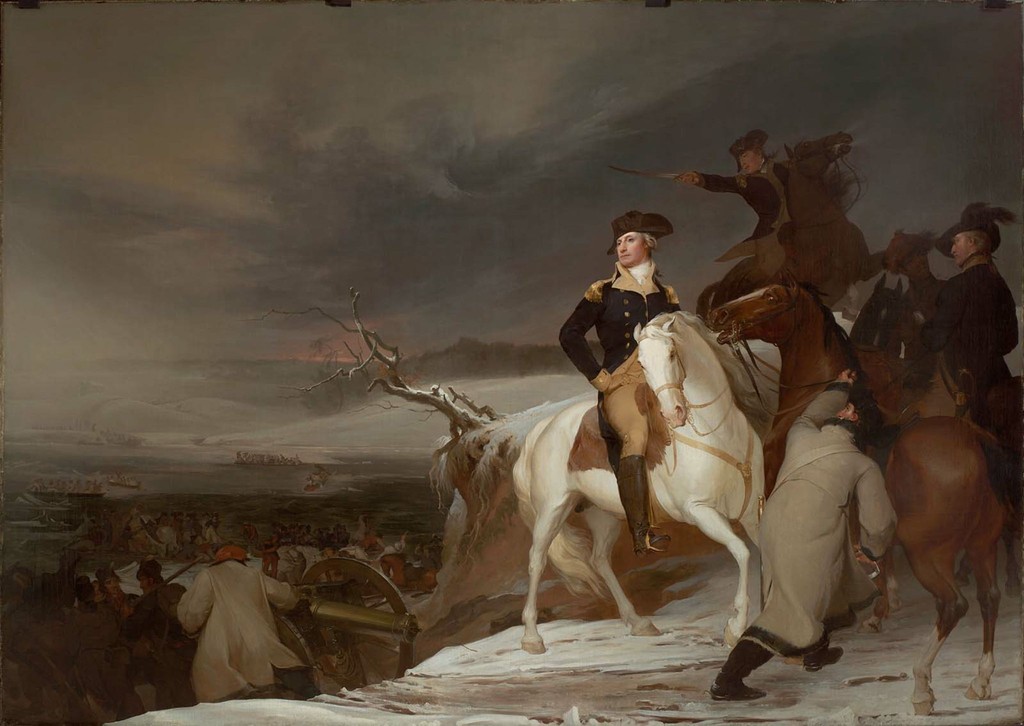
The Passage of the Delaware. Washington is mounted on shore while the crossing proceeds around him. [6]
The Torn Hat (current article). A worn hat and directed light give the artist’s son an informal presentation. [7]
Portrait of the Artist. A raised brush joins the painter’s hand to the illuminated head. [8]
John Quincy Adams. A developed likeness supplied information for a larger portrait project. [5]
The David Children. The older children direct attention toward the reclining infant. [5]
The Vanderkemp Children. A portfolio and overlapping hands connect the three children. [5]
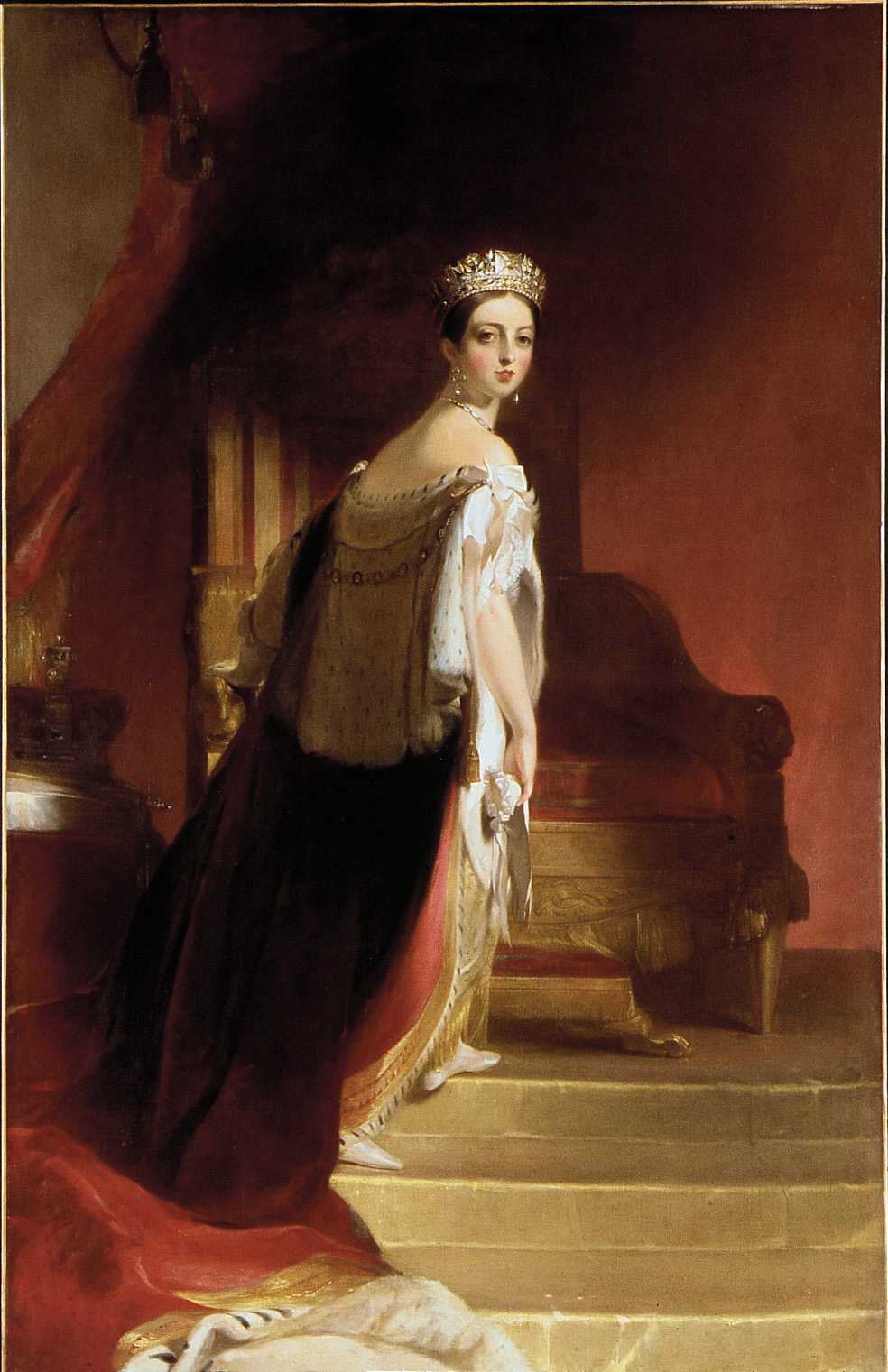
Queen Victoria. The royal likeness extends through robes, insignia and a ceremonial setting. [9]
Mother and Son. Jane Darley and her son are connected through touch and differing gazes. [10]
The Coleman Sisters. Contrasting dresses, heights and gestures hold three individual likenesses together. [5]
Andrew Jackson. This later version must be distinguished from its earlier life source. [5]
Contents
- A face beneath an irregular brim
- Thomas Wilcocks Sully, aged nine
- Light passing around the hat
- Open collar and rumpled clothing
- The title’s suggestion of a story
- A family portrait outside a paid commission
- The son’s later artistic life
- Comparing Sully’s own self-portrait
- The painting in Boston
- Annotated details
A face beneath an irregular brim
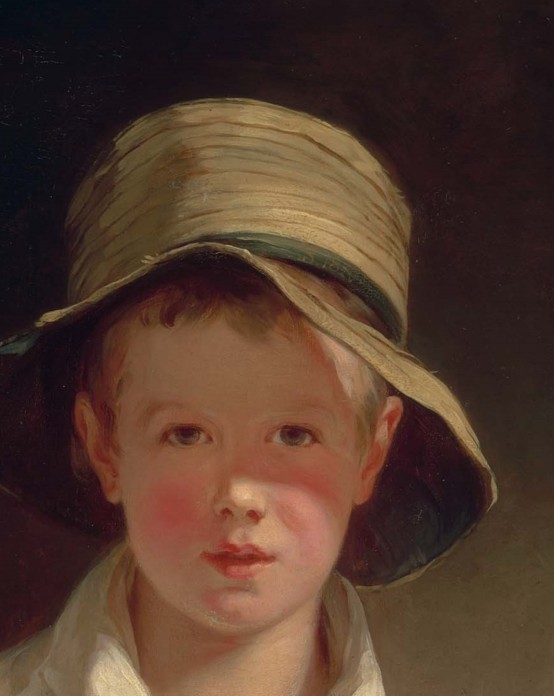
The boy occupies most of the painting. His eyes look toward the viewer and his lips are slightly parted. Pale skin and warm cheeks contrast with the darker underside of the hat, while the white shirt collar creates another light shape below the face.
The brim is uneven. At one side it extends outward in a thin, projecting form; at the other it curves around the head and opens into a broad dark passage. The crown rises above the hair in a series of gently curving bands. Its pale straw colour gives the upper painting a large, distinct shape without separating the hat completely from the warmer background.
The face is placed below this asymmetrical structure, making the head seem less ceremonially arranged than it would beneath a balanced, pristine hat. Yet the relationship is carefully controlled. The eyes remain easy to find, the cheeks receive different degrees of light and the nose supplies a small bright centre.
The coat extends more broadly at the bottom. Its green-grey folds and dark openings carry the bust downward, but the most precise information remains in the face. The clothing establishes a body close to the viewer without drawing attention away from the head above it.
Annotated Details from The Torn Hat
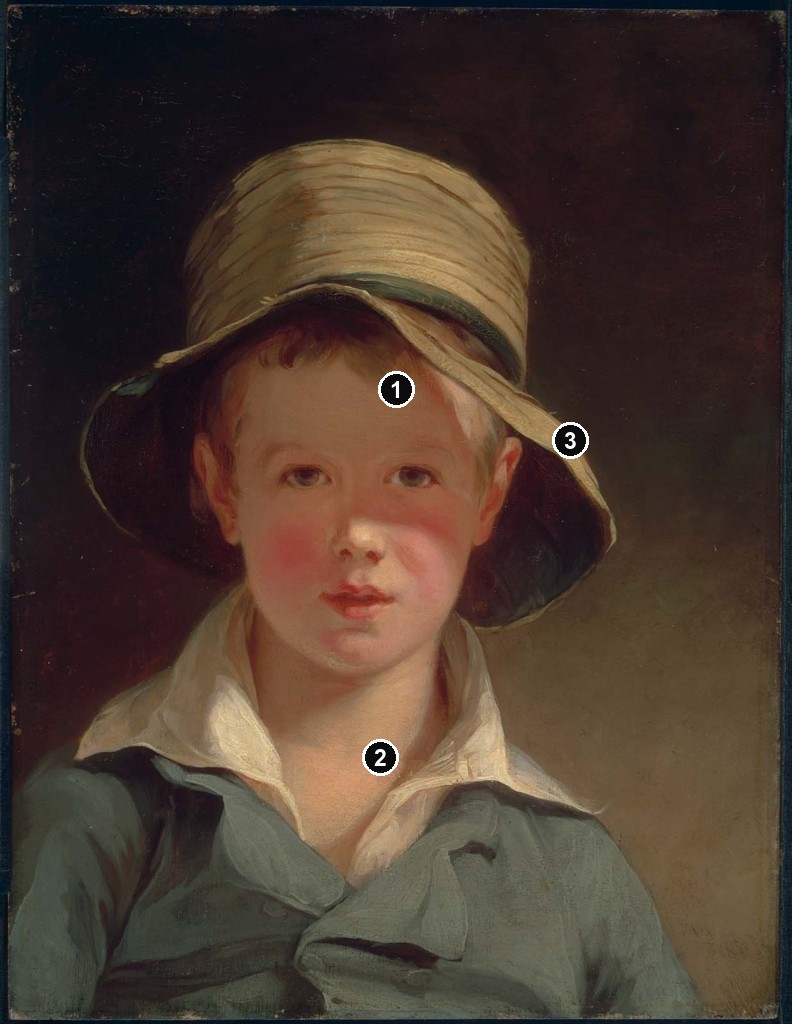
The numbered points identify visible features discussed in this article. Return from each detail to the whole composition. Thomas Sully, The Torn Hat, 1820. Thomas Wilcocks Sully, the artist’s son, aged nine. Oil on panel. Museum of Fine Arts, Boston, Gift of Miss Belle Greene and Henry Copley Greene in memory of their mother, Mary Abby Greene, 16.104. Public-domain reproduction via Wikimedia Commons. Image source. Public domain. Numbers added to a separate overview; detail images cropped from the source. The complete unnumbered image is retained in this article.
Details from THE TORN HAT
Compare the cropped details with the complete images above. Notice how their colours, shapes and positions contribute to the larger compositions.
Hat and face
The irregular brim frames the brightly lit face. Its uneven edge and the child’s outward gaze give the familiar object an active role within the portrait.
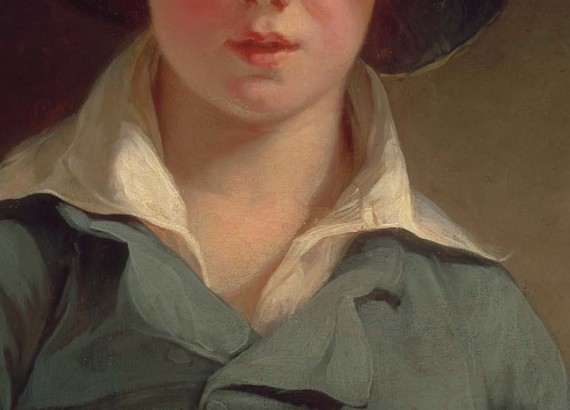
White collar
The open white collar creates a wide light shape above the blue-green coat. Its pointed folds lead the eye back towards the warm skin of the neck and face.
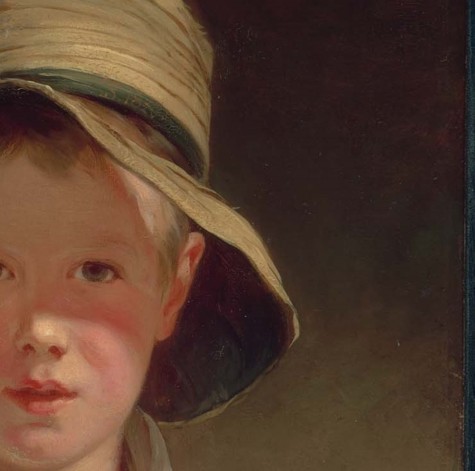
Brim and surrounding light
The brim turns downward beside the ear against the darker surroundings. The contrast of light and shadow makes the hat’s wavering outline especially clear at this side.
Thomas Wilcocks Sully, aged nine
The sitter was born in Philadelphia on 3 January 1811. He was the son of Thomas Sully and Sarah Annis Sully and later became a painter of portraits and miniatures. The NGA’s biographical account identifies his training with his father and his subsequent exhibition activity in Philadelphia. [11]
Those later facts help identify the child, but they should not be treated as a future already visible in his expression. There is no brush or palette in this picture to announce an artistic occupation. The painting presents a boy in a particular costume, not an illustrated prediction of the profession he would eventually follow.
The name also needs care. Thomas Wilcocks Sully later signed as Thomas Sully, Jr., while the painter of this portrait was his father. The family relationship explains the resemblance of the names without making the image a childhood self-portrait by the elder artist. [11]
The MFA identifies him as nine in 1820, consistent with his documented birth in 1811. [1] [11]
Light passing around the hat
The hat is not only the object named in the title. Its shape creates the conditions under which the face is seen. The dark underside encloses parts of the forehead and hair, while light reaches the cheeks, bridge of the nose and open collar below.
This produces several levels of contrast. The pale hat is visible against the darker background; its shadowed underside is darker than the face; the collar becomes brighter again beneath the chin. Looking from top to bottom therefore involves a sequence of light, shade and renewed light rather than one uniformly illuminated figure.
The MFA’s interpretation draws attention to Sully’s use of this complicated pattern. The torn brim gives him a way to vary the lighting across a face while retaining an apparently everyday accessory. [1]
The effect remains legible even before the damage is studied in detail. The viewer can recognise a child beneath a broad hat and then look more closely at how its irregular edges shape the surrounding darkness. What seems casually worn becomes an important part of the portrait’s construction.
Open collar and rumpled clothing
The white collar spreads outward rather than closing into a formal neckcloth. One point rises more prominently, while the other meets the darker coat. Together they create an uneven border below the head, repeating the informality of the brim in a different material.
The coat is similarly varied. Broad folds turn across the chest, with dark openings and loose edges that make the garment feel worn rather than displayed on a perfectly ordered figure. Its subdued green colour sits between the warm skin and the darker surroundings, helping those parts belong to one image.
The costume does not establish poverty, neglect or an adventurous incident. The sitter was the painter’s son, and the museum describes this as a work made outside an ordinary paid commission. [1] The informal appearance belongs to the selected presentation. It should not be converted into an unsupported account of the family’s circumstances.
The title’s suggestion of a story
The title The Torn Hat lets the accessory stand for the whole picture. A reader approaching it through the name may begin by looking for the damage, only afterwards attending to the individual features of the boy. A conventional name-and-date title would reverse that order, making identification the first task.
That small shift helps explain why the portrait can approach genre painting. An individual child is represented, but the worn hat invites the viewer to imagine an everyday event beyond the sitting. The MFA likewise discusses the work’s connection with narrative and genre. [1]
The painting leaves the imagined event open. It does not show the tear happening or provide a companion object that explains it. Nor does the boy’s look confirm guilt, pride or mischief. Those responses may arise in a viewer, but the distinction between a suggestive title and a documented childhood anecdote should remain clear.
The unresolved question is part of the image’s effectiveness. The title supplies just enough incident to make the accessory noticeable while the face remains available as a likeness. Neither role needs to exclude the other.
Watch: Thomas Sully
Choose a film to explore the artist’s work, its interpretation and its wider setting.
Thomas Sully: A Lesson in Conservation
The Columbus Museum explores the conservation of a painting by Thomas Sully.
Watch on YouTubeA family portrait outside a paid commission
The MFA describes Sully as having greater freedom to experiment in this portrait because it was not commissioned. That is a useful context for the lighting and informal presentation. The painter could explore an arrangement whose appeal did not depend on satisfying a separate patron’s expectations for clothing and status. [1]
Freedom from a paid commission does not mean freedom from design. The brim, face and collar are arranged to create a sequence of contrasts, and the larger coat supports the smaller features above. The picture’s apparent ease is produced through those relationships.
The family setting also gave Sully access to a sitter he knew closely. It is reasonable to connect that familiarity with the circumstances of making a family portrait, but the painting does not record exactly how many sittings occurred or how the boy behaved in the studio. A convincing sense of immediacy should not be turned into proof that the work was completed at a single spontaneous encounter.
The son’s later artistic life
Thomas Wilcocks Sully became active as a painter in the 1830s and 1840s. The NGA account records portraits and miniatures, exhibitions at Philadelphia institutions and theatrical likenesses reproduced by Albert Newsam. He died in 1847. [11]
This later career places the childhood portrait within a household in which artistic work could pass between generations. It also gives the sitter an identity beyond the appealing face through which many viewers first encounter him. The child represented here became a maker of images, including portraits of other people.
The connection with theatre is especially relevant to his father’s work. George Frederick Cooke as Richard III shows the elder Sully using costume and full-length presentation to represent a performer. The son’s later theatrical portraits belong to the wider family engagement with that field, although they should not be confused with the father’s canvas.
Comparing Sully’s own self-portrait
In the 1821 self-portrait , Sully places a raised brush beside his own face. The object identifies a profession and directs attention upward. In The Torn Hat , the named accessory frames the head from above and shapes its lighting. Both paintings use something beside the face to help organise the viewer’s encounter with it.
The differences are equally useful. The self-portrait’s white neckcloth and dark coat present an adult painter at work; the child’s open collar and damaged straw hat suggest a less formal appearance. One object announces an activity, while the other encourages a possible story that remains untold.
Neither comparison makes the pictures identical family documents. The father presents himself through a selected professional identity. The son is presented through a costume whose irregularities create visual interest. Their common strength is the way likeness and arrangement remain closely connected.
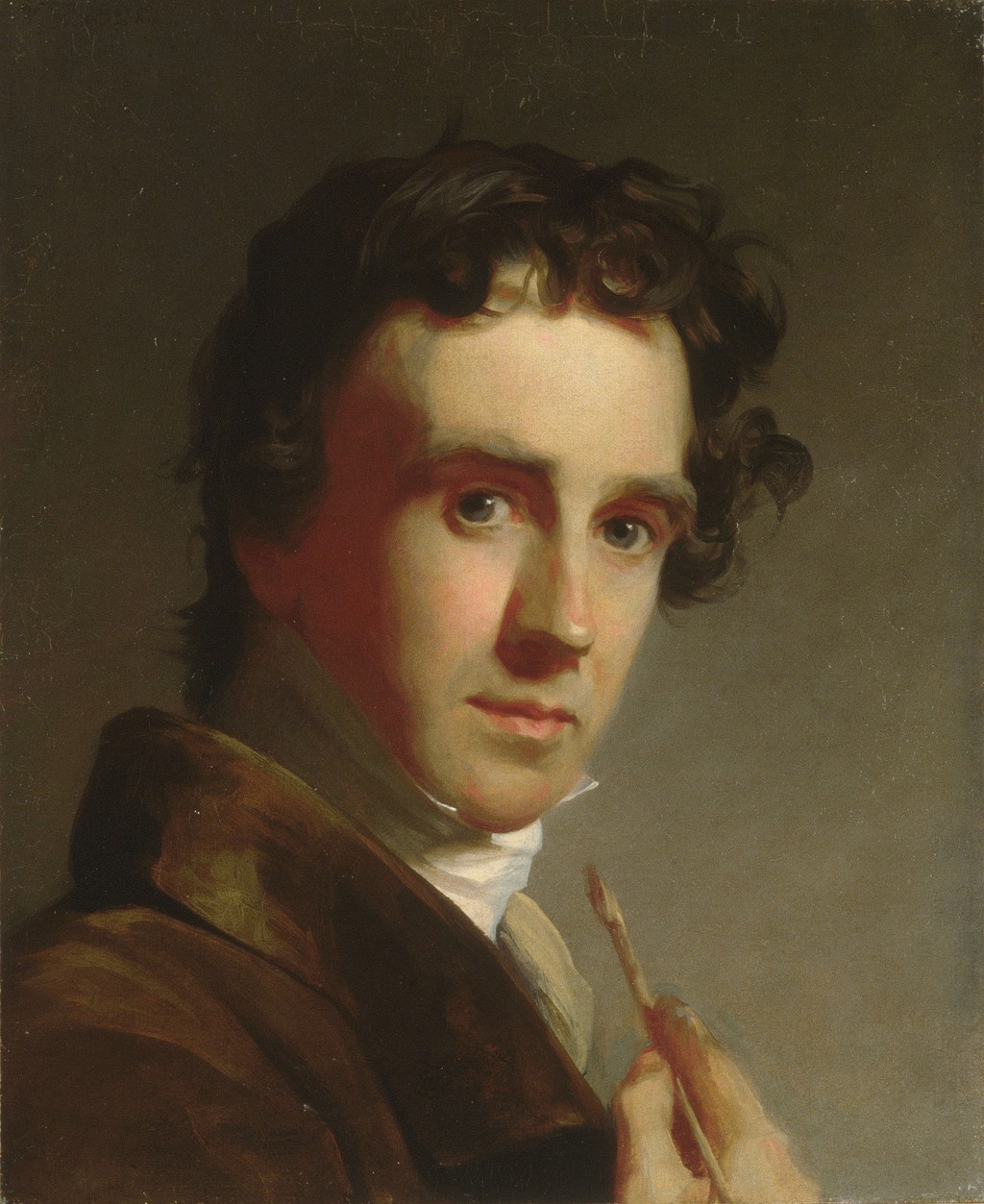
Thomas Sully, Portrait of the Artist, 1821. Oil on canvas, 43.5 × 35.6 cm. The Metropolitan Museum of Art, Gift of Rosa C. Stanfield, 1894, 94.23.3.
Image source
.
Public domain
.
The painting in Boston
The MFA records the work as oil on panel, accession 16.104. Its gift came from Miss Belle Greene and Henry Copley Greene in memory of their mother, Mary Abby Greene. These details distinguish the original painting from modern prints offered in different paper sizes. [2]
The portrait rewards attention to the hat as both an individual object and a structure around the head. Its damage invites curiosity, but its more enduring contribution is visual: the irregular brim, enclosed shadow and light face give a small family likeness an unusually memorable form.
Artworks directory
A selection documented in the linked articles, with related studies and a print after Sully listed separately. Dates identify individual objects; Musidora’s date range does not imply continuous work. This is not a catalogue raisonné. The Drawing filter includes watercolour and reproductive printmaking.
| Name | Date | Medium |
|---|---|---|
| Captain Charles Stewart | 1811–1812 | Painting — oil on canvas |
| George Frederick Cooke as Richard III | 1811–1812 | Painting — oil on canvas |
| Musidora | 1813–35; Met panel | Painting — oil on wood |
| Lady with a Harp: Eliza Ridgely | 1818 | Painting — oil on canvas |
| The Passage of the Delaware | 1819 | Painting — oil on canvas |
| The Torn Hat | 1820 | Painting — oil on panel |
| Portrait of the Artist | 1821; Met canvas | Painting — oil on canvas |
| John Quincy Adams | 1824; NGA oil study | Painting — oil on canvas |
| John Quincy Adams (watercolour study) | 1824; Met 38.146.1 | Drawing — watercolour, black chalk and graphite on paper |
| John Quincy Adams (Durand after Sully) | 1826; PAFA 1876.9.184a | Drawing — etching and engraving on paper |
| The David Children | 1826 | Painting — oil on canvas |
| The Vanderkemp Children | 1832 | Painting — oil on canvas |
| Queen Victoria | 1838; full-length Met canvas | Painting — oil on canvas |
| Queen Victoria (life study) | 1838; Met 14.126.1 | Painting — oil on canvas |
| Mother and Son | 1840; inscription date | Painting — oil on canvas |
| The Coleman Sisters | 1844 | Painting — oil on canvas |
| Andrew Jackson | 1845; after the 1824 life portrait | Painting — oil on canvas |
Frequently Asked Questions
The MFA identifies him as nine when the portrait was painted in 1820. [1]
The painting and museum account do not document an incident causing the damage. The title encourages a story without establishing one.
Yes. Thomas Wilcocks Sully painted portraits and miniatures and exhibited in Philadelphia. [11]
Discussion
Look again at the images and ideas explored in The Torn Hat by Thomas Sully. These editorial prompts invite your observations.
Reader Insights
How does the uneven brim change the light around the face?
Does the title make you look at the accessory before the sitter? How would a title naming the child change that order?
Compare the torn hat with the raised brush in Sully’s self-portrait. What different kinds of information do the two objects supply?
Join the Conversation
Share a detail, comparison or question about The Torn Hat by Thomas Sully below.
References
- Museum of Fine Arts , Boston Custom Prints: The Torn Hat, 1820, About the Artwork. View source
- MFA Prints: The Torn Hat , object metadata and gift credit, 16.104. View source
- Pennsylvania Academy of the Fine Arts, George Frederick Cooke as Richard III, 1811–1812, 1812.1. View source
- Metropolitan Museum of Art, Musidora, 1813–35, 21.48. View source
- National Gallery of Art, Open Data: selected Sully object and published-image records. View source
- Wikimedia Commons / MFA image source, The Passage of the Delaware: original image and PD-Art record. View source
- Wikimedia Commons / MFA source image, The Torn Hat: 16.104 image and PD-Art rights. View source
- Metropolitan Museum of Art, Portrait of the Artist, 1821, 94.23.3. View source
- Metropolitan Museum of Art, Queen Victoria,1838,2021.140. View source
- Metropolitan Museum of Art, Mother and Son, 1840, 14.126.5. View source
- National Gallery of Art: American Paintings of the Nineteenth Century , Part II, 1998, Thomas Wilcocks Sully biography, p. 191. View source
- Splash image source.
Thomas Sully, The Torn Hat, 1820. Thomas Wilcocks Sully, the artist’s son, aged nine. Oil on panel. Museum of Fine Arts, Boston, Gift of Miss Belle Greene and Henry Copley Greene in memory of their mother, Mary Abby Greene, 16.104. Public-domain reproduction via Wikimedia Commons. Public domain .
View source