 by
Tom Gurney
Tom Gurney BSc (Hons) is an art history expert with over 20 years experience
Email:
tomgurney1@gmail.com
/ Phone:
+44 7429 011000
Musidora by Thomas Sully: Introduction
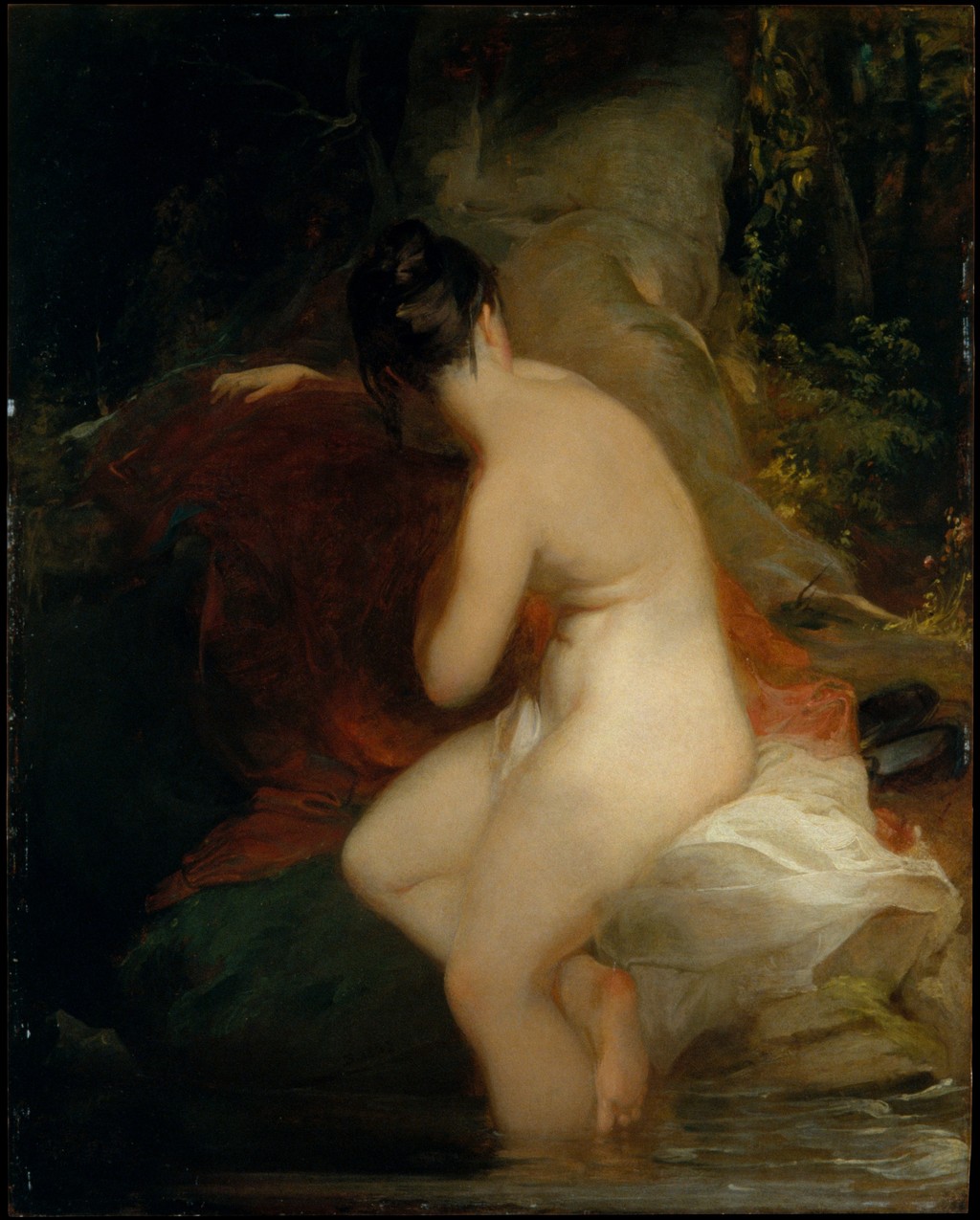
In Musidora , Thomas Sully places a bathing figure beside a shaded pool. Her back turns toward the viewer, while her head moves farther away, toward the drapery at the left. The bright body stands out against dark trees and a rocky bank. The Metropolitan Museum of Art dates the painting to 1813–35 and identifies its subject with James Thomson’s poem Summer . [1]
This is a literary picture rather than a portrait of an identified sitter. Its meaning depends partly on a person who is absent from the canvas: Damon, the concealed observer in Thomson’s episode. The painting gives the viewer an intimate view of Musidora without painting the man whose looking supplies the narrative context. [1] [2]
At a Glance
- Artist Thomas Sully
- Title Musidora
- Catalogue date 1813–35
- Subject Musidora from James Thomson’s Summer
- Medium Oil on wood
- Dimensions 71.4 × 57.2 cm
- Collection The Metropolitan Museum of Art, New York
- Accession 21.48
- Acquisition Gift of Louis Allston Gillet, 1921
This work across Thomas Sully’s career
Musidora (current article)
1813–35; Met panelThe Torn Hat
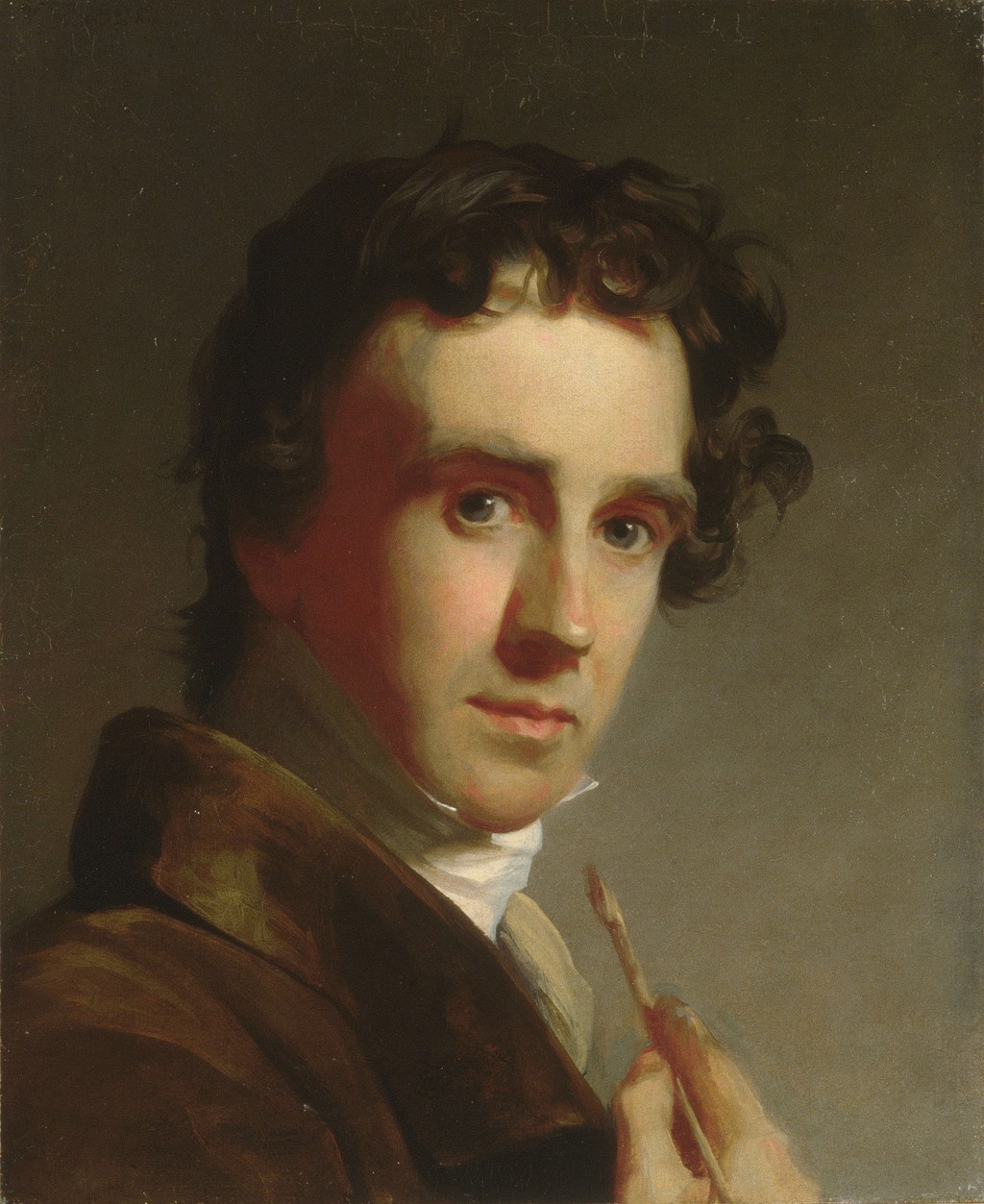
1820Portrait of the Artist
1821; Met canvasJohn Quincy Adams
1824; NGA oil studyQueen Victoria
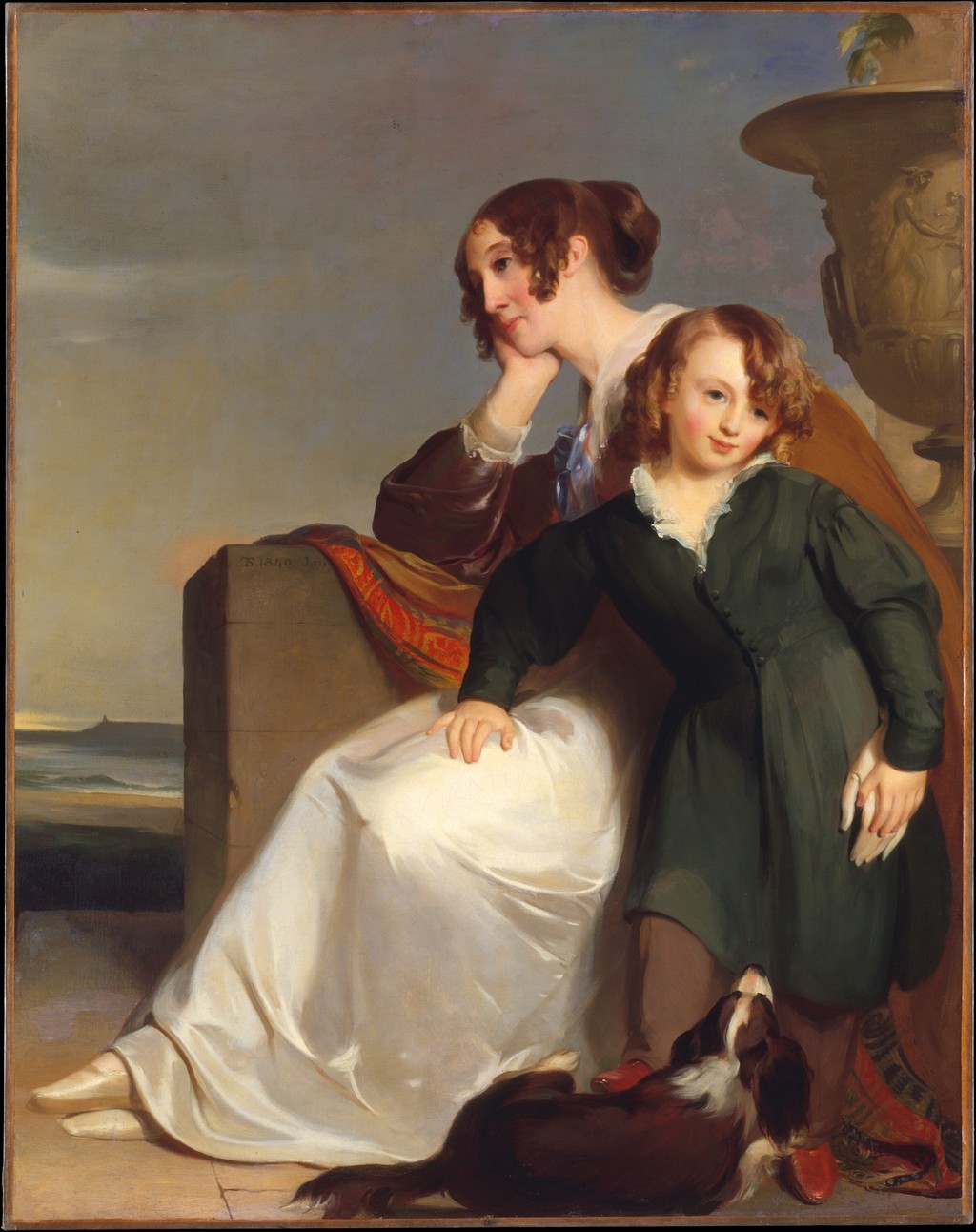
1838; full-length Met canvasMother and Son
1840; inscription dateAndrew Jackson
1845; after the 1824 life portraitNotes and sources
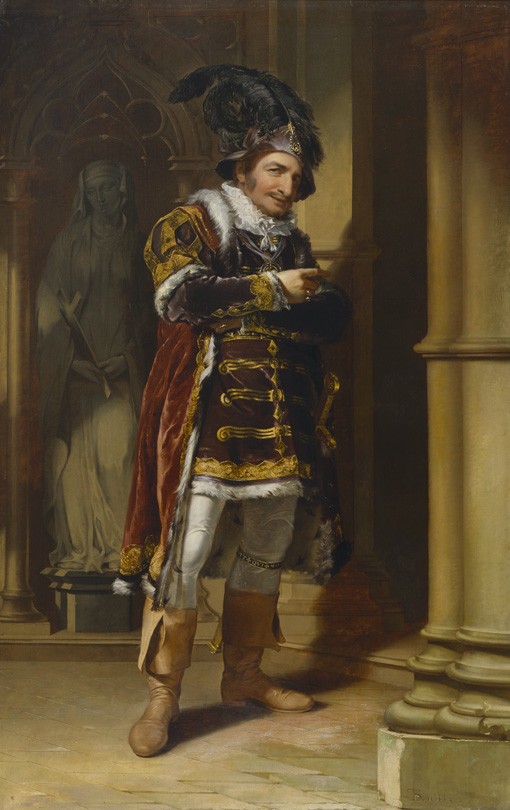
George Frederick Cooke as Richard III. Actor and theatrical role meet in an imposing full-length portrait. [3]
Musidora (current article). A turned figure beside a pool belongs to a literary episode, not a named portrait sitter. [1]
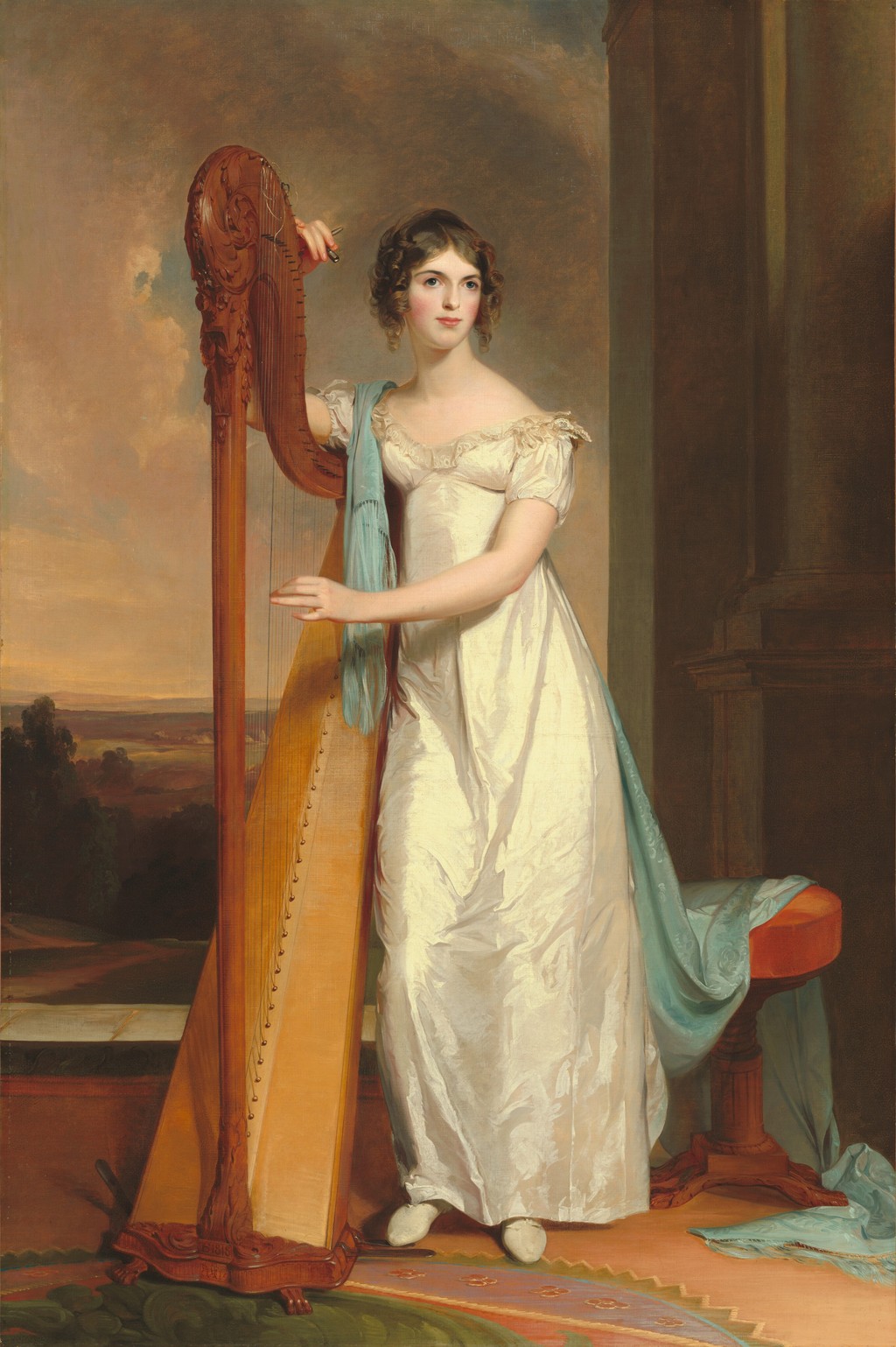
Lady with a Harp: Eliza Ridgely. The harp connects the sitter’s accomplishment with the arrangement of her body. [4]
The Passage of the Delaware. Washington is mounted on shore while the crossing proceeds around him. [5]
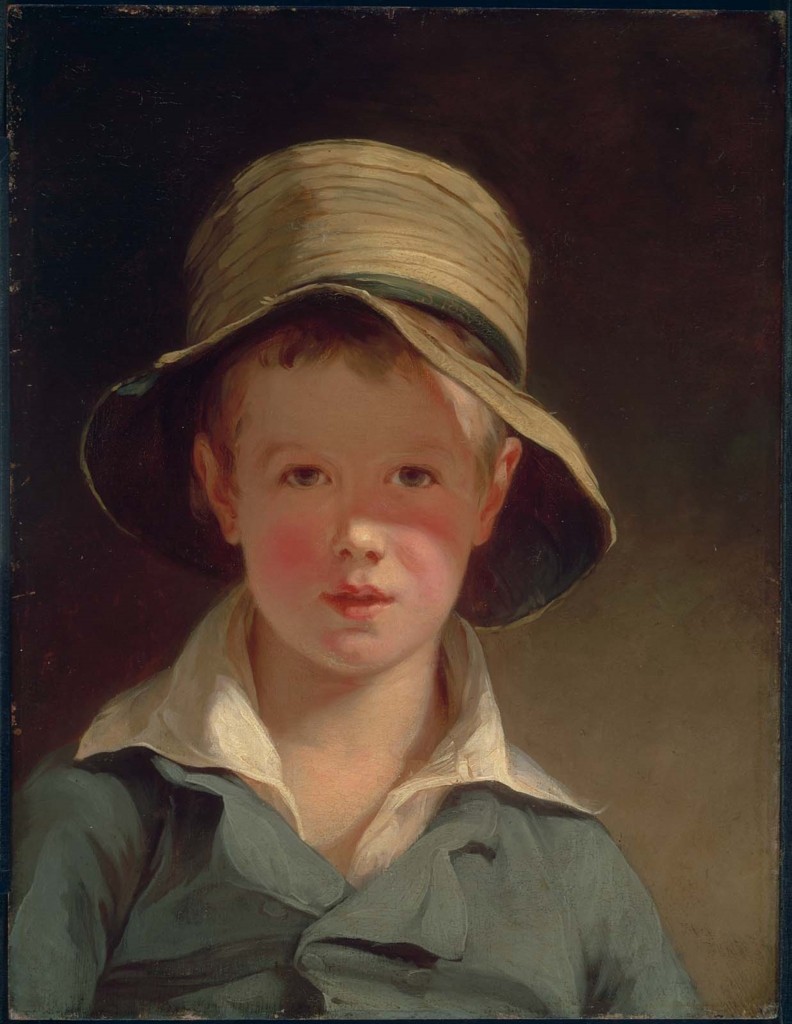
The Torn Hat. A worn hat and directed light give the artist’s son an informal presentation. [6]
Portrait of the Artist. A raised brush joins the painter’s hand to the illuminated head. [7]
John Quincy Adams. A developed likeness supplied information for a larger portrait project. [4]
The David Children. The older children direct attention toward the reclining infant. [4]
The Vanderkemp Children. A portfolio and overlapping hands connect the three children. [4]
Queen Victoria. The royal likeness extends through robes, insignia and a ceremonial setting. [8]
Mother and Son. Jane Darley and her son are connected through touch and differing gazes. [9]
The Coleman Sisters. Contrasting dresses, heights and gestures hold three individual likenesses together. [4]
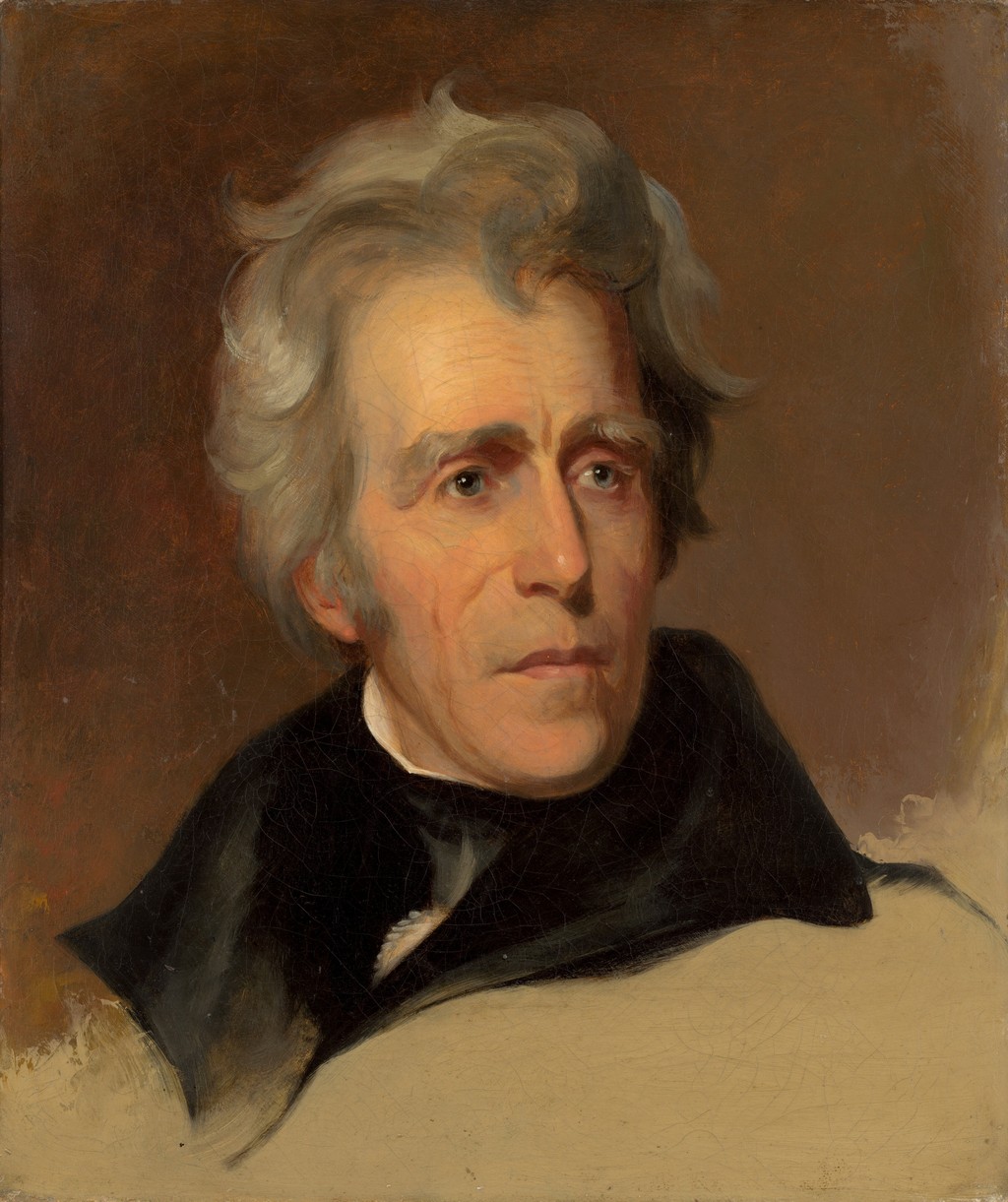
Andrew Jackson. This later version must be distinguished from its earlier life source. [4]
Contents
- A figure turning away
- The episode in Thomson’s Summer
- The viewer in Damon’s place
- Red cloth, white fabric and the shaded bank
- Why the date spans more than twenty years
- Benjamin West, Charles Robert Leslie and related pictures
- Comparing the turn in Queen Victoria
- From Sully’s possession to the Met
- Annotated details
A figure turning away
Musidora occupies most of the vertical panel. Her back forms the largest uninterrupted light area, rising from the bent legs toward the shoulder and neck. One arm bends close to the body, while the other extends toward the red cloth on the bank. These unequal actions make the pose turn rather than settle into a symmetrical arrangement.
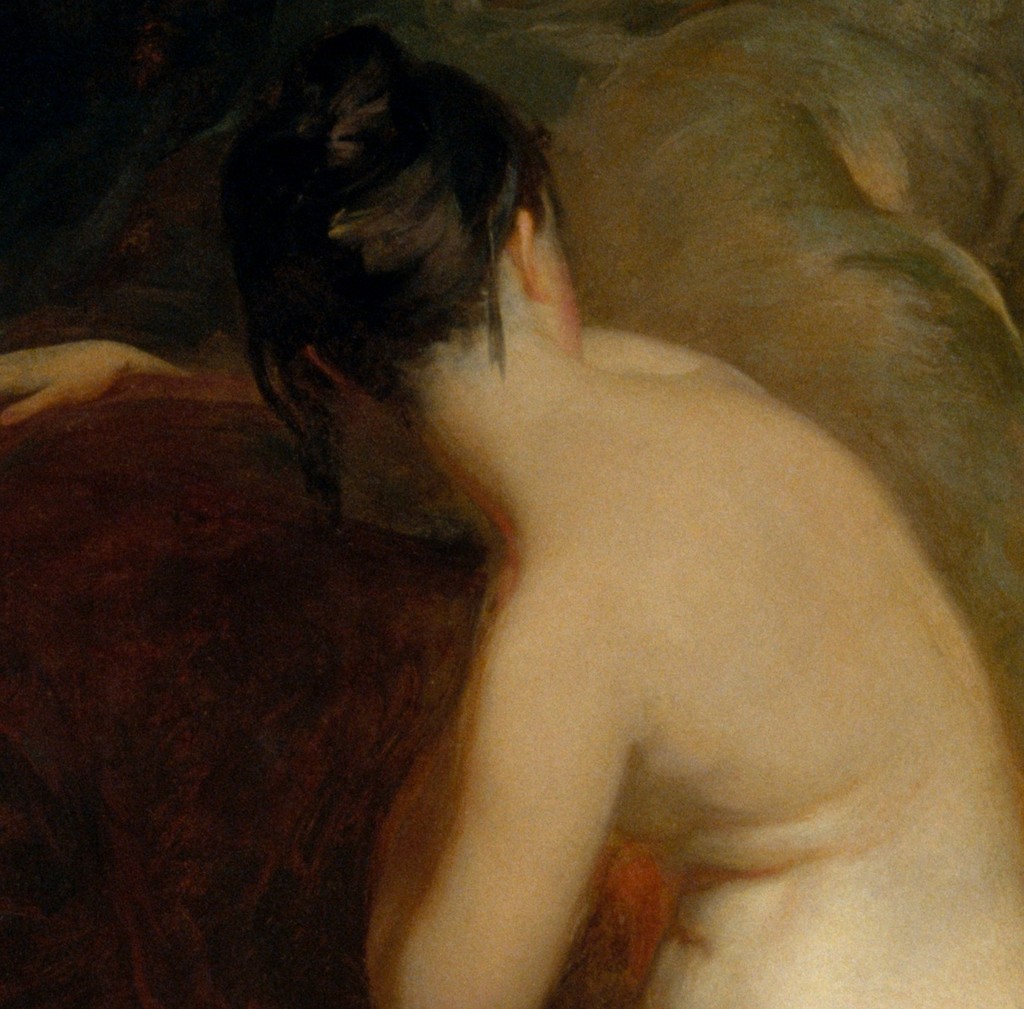
The head does not offer the direct encounter familiar from many of Sully’s portraits. Dark hair and the back of the neck are more prominent than facial expression. That choice directs attention toward the posture and the relation between the figure and the surrounding cloth. The viewer has considerable access to the body while receiving little information from the face.
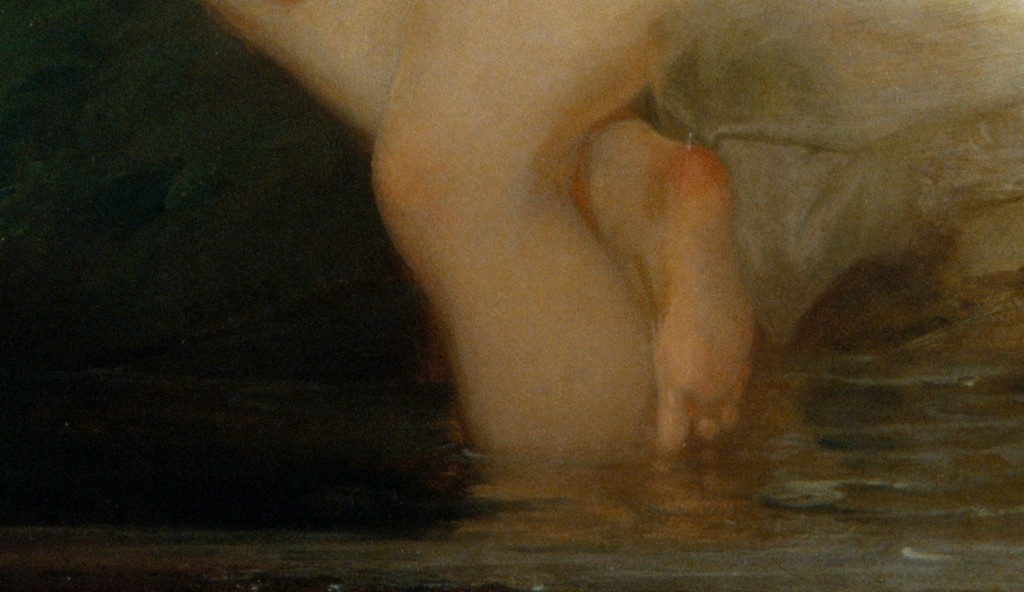
The lower edge brings the water very close. Musidora’s feet meet the pool, whose small, pale ripples interrupt the darker foreground. Behind her, the rock rises almost like a wall. It separates the light figure from a more distant landscape and makes the space feel enclosed.
This enclosure is important to the scene. The bank, vegetation and shaded water suggest a place of retreat. The picture allows the viewer to enter that apparently secluded space, creating a tension between the setting’s privacy and the visibility of its central figure.
Annotated Details from Musidora
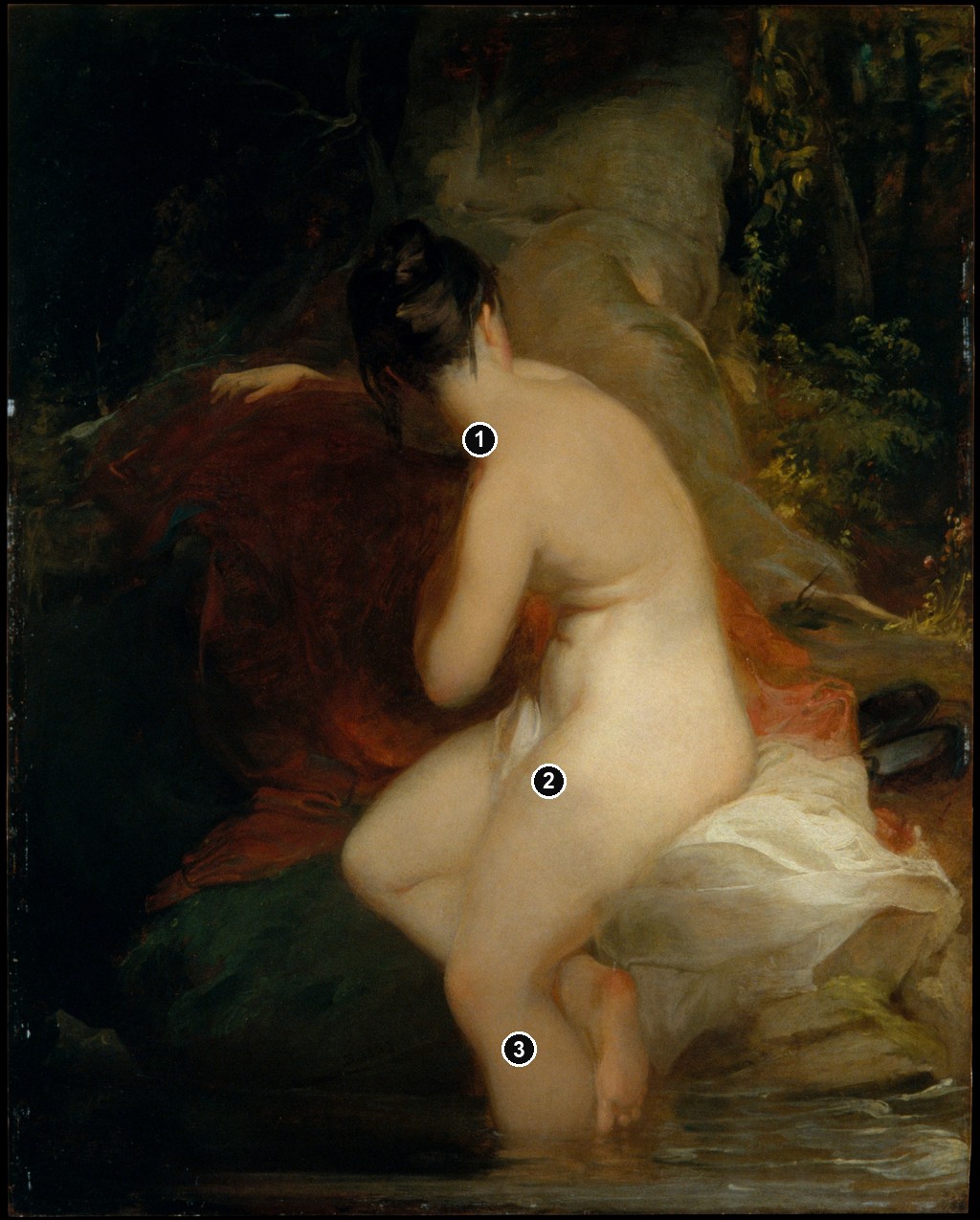
The numbered points identify visible features discussed in this article. Return from each detail to the whole composition. Thomas Sully, Musidora, 1813–35. Oil on wood, 71.4 × 57.2 cm. The Metropolitan Museum of Art, Gift of Louis Allston Gillet, in memory of his uncles, Sully Gillet and Lorenzo M. Gillet, 1921, 21.48. Public domain. Image source. Public domain. Numbers added to a separate overview; detail images cropped from the source. The complete unnumbered image is retained in this article.
Details from MUSIDORA
Compare the cropped details with the complete images above. Notice how their colours, shapes and positions contribute to the larger compositions.
Turned head and back
The head turns away while light falls across the back and shoulder. This arrangement makes the figure’s pose and outline more prominent than a directly presented facial likeness.
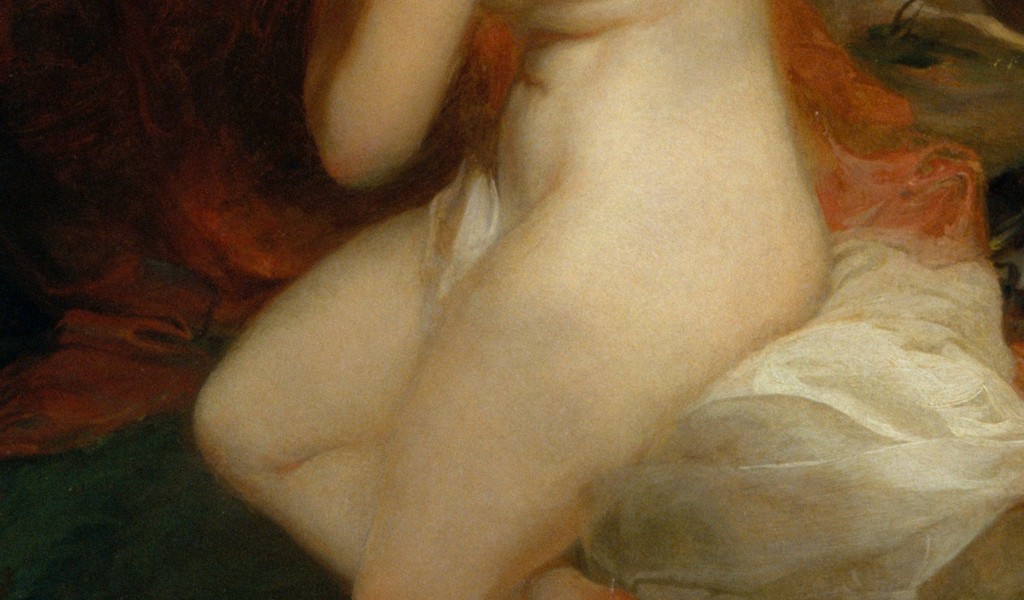
Contrasting fabrics
Red fabric behind the figure contrasts with the pale cloth gathered beside the hip. Their folds create a warmer, denser area between the lit body and the bank.
Feet and water
The lower leg reaches towards the pool, where horizontal reflections interrupt the figure’s downward movement. The edge of the bank links the seated body to the water below.
The episode in Thomson’s Summer
In the later version of the poem’s Musidora episode, Damon is concealed nearby when she comes to bathe. He watches before deciding that he should withdraw. He leaves a written message, which she discovers after the bathing scene. Her reply acknowledges affection while requiring continued discretion. [2]
The ending is more qualified than a simple statement that she immediately rewards his conduct with unrestricted love. Her response includes the words, “Discreet: the time may come you need not fly.” The poem combines attraction with questions about looking, restraint and what the observer should do next. [2]
Sully’s painting does not show the note exchange. There is no visible piece of writing that resolves the situation, and Damon does not appear as a second figure. The canvas condenses a longer narrative into the encounter with Musidora at the water’s edge. Knowing the poem supplies a context for the view without fixing every painted gesture to one precise line.
The distinction matters because the picture can be understood on two levels. A reader familiar with Thomson can connect it with a sequence of events. Someone encountering it without the text can still notice the turned body, enclosed setting and absence of direct eye contact. The literary source adds to those visible relationships rather than replacing them.
The viewer in Damon’s place
The Met interprets the viewpoint as placing the viewer in a position comparable to Damon’s. The missing observer is therefore still important: his absence leaves the act of looking to the person standing before the painting. [1]
The effect is quite different from an image in which two painted figures look at one another. There is no visible exchange to observe from outside. Instead, the viewer must consider the relation between their own access to the scene and Musidora’s apparent withdrawal from the gaze.
Her turned head helps sustain that uncertainty. It does not establish whether she has noticed someone, heard a sound or simply moved toward her clothes. Those possibilities can arise in looking at the image, but the painting does not document a separate factual incident. The safest interpretation begins with the arrangement actually given: an exposed figure, a secluded place and an observer whose position is outside the frame.
Red cloth, white fabric and the shaded bank
The colour structure is built around the contrast between the pale body and the dark surroundings. Red drapery gathers at the left and continues behind the figure. A white cloth spreads over the rock at the lower right, providing another light passage beside the skin.
These fabrics keep the body from appearing as a single isolated shape. The red introduces warm, deep folds against the extended arm; the white creates a broken, reflective area near the bent legs. Their edges move in different directions, giving the figure more than one connection with the bank.
The vegetation is handled less explicitly. Small leaves and touches of light can be recognised at the right, while much of the left background remains densely shadowed. The space does not unfold into a broad panorama. Its purpose is to contain the figure and establish the setting through a limited number of natural forms.
At the bottom, the water makes a quieter pattern. Narrow strokes suggest movement around the feet without competing with the large curves of the body. The painting’s strongest contrasts occur above that passage, allowing the pool to remain part of the setting rather than becoming a separate landscape subject.
Watch: Thomas Sully
Choose a film to explore the artist’s work, its interpretation and its wider setting.
Thomas Sully: A Lesson in Conservation
The Columbus Museum explores the conservation of a painting by Thomas Sully.
Watch on YouTubeWhy the date spans more than twenty years
The current catalogue date, 1813–35, follows the painting’s recorded working history. The Met’s 1994 catalogue relates this panel to a register entry giving an 1813 beginning and an 1835 completion. It also notes a different beginning date, 1815, inscribed on the reverse. The museum retains the earlier start date in its current title record. [1] [10]
The range does not establish continuous work over every intervening year. A picture could remain unfinished or be returned to later, and the surviving dates do not supply a complete studio diary for this object. Treating the painting simply as a single-session work of 1835 would lose the longer recorded history; imagining twenty-two years of uninterrupted revision would add something equally unsupported.
The 1994 catalogue cites a conservation memorandum reporting that X-radiography did not reveal changes to the composition. That bounded finding is useful, but it does not explain every stage of the painting’s development or settle the discrepancy between the two beginning dates. [10]
Benjamin West, Charles Robert Leslie and related pictures
Sully made more than one treatment of Musidora. The Met catalogue connects an earlier 1813 version with a copy by Charles Robert Leslie after Benjamin West. It distinguishes that picture from the panel now in New York and discusses a possible further West connection for the latter’s design. [10]
The distinction prevents the shared title from doing too much work. Two paintings of the same literary figure need not have identical poses, dates or histories. A documented copying relationship for one version cannot simply be transferred to another without qualification.
For the Met panel, the older catalogue’s proposed source remains an interpretation based on related works and records. It is more accurate to describe the picture within this network of subjects and artistic exchange than to identify a currently available West original as its proved, exact model. The modern museum object can be studied closely even where parts of that earlier network are incompletely preserved.
Comparing the turn in Queen Victoria
The Met’s exhibition account has drawn attention to the relation between Musidora and Sully’s royal portrait. The comparison is useful at the level of pose: both figures turn within a vertical composition, and both depend on the relationship between shoulders, head and surrounding fabric. [11]
The differences are just as instructive. In Queen Victoria , the face returns toward the viewer while the body moves toward the throne. The state robes extend the figure’s presence across the room. In Musidora , the head remains turned away and the cloth lies around a figure preparing for or emerging from bathing.
One setting is ceremonially public, the other apparently private. A similar compositional resource can therefore serve very different kinds of encounter. The comparison does not require the literary figure to be a disguised royal portrait or prove that Sully treated the subjects as equivalent. It shows how a turning body can direct attention, establish distance and organise fabric within an image.
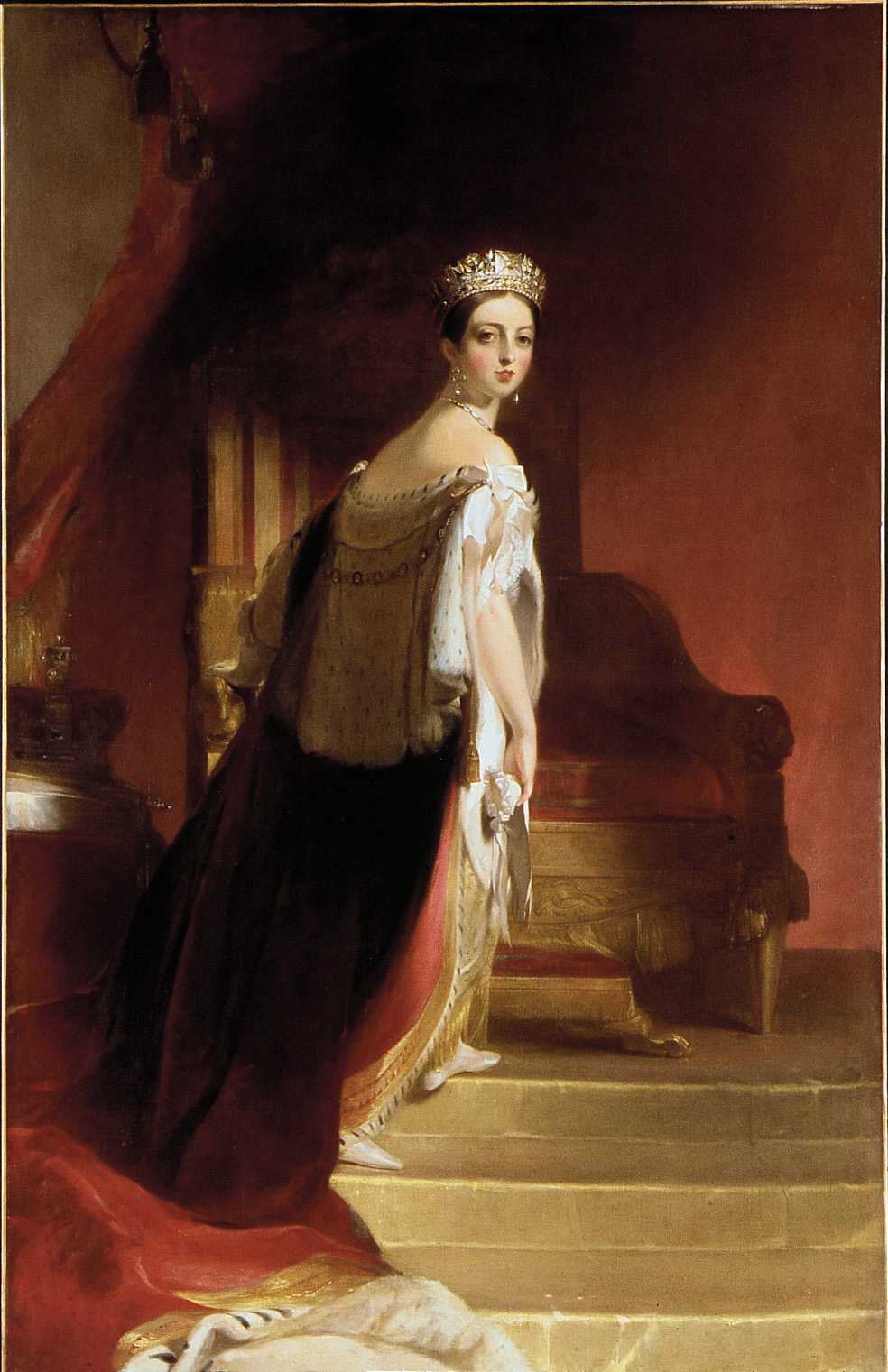
Thomas Sully, Queen Victoria, 1838, the full-length Philadelphia commission. Oil on canvas, 238.8 × 147.3 cm. The Metropolitan Museum of Art, purchase with funds from the Brooke Russell Astor Bequest, Louis V. Bell Fund, named donors and other donors, in honor of Morrison H. Heckscher, 2021; 2021.140. Public domain.
Image source
.
Public domain
.
From Sully’s possession to the Met
According to the 1994 catalogue, Sully retained the picture until selling it to Lewis Warrington Gillet in 1844. The work subsequently passed through the Gillet family before Louis Allston Gillet gave it to the Met in 1921, in memory of his uncles Sully Gillet and Lorenzo M. Gillet. [10]
Its support is wood rather than the canvas used for many of Sully’s portraits . That is an object-specific distinction, not a reason to infer an entirely separate painting method without examination. The present accession, 21.48, identifies the panel amid the several pictures associated with the subject. [1]
The painting rewards a final look at what remains unresolved within its single scene. The viewer can see the figure clearly, yet cannot meet her eyes or see the absent Damon. Sully gives the literary episode a concentrated visual form by holding those kinds of access apart. The detailed source story and the immediate experience of the picture remain connected, but neither supplies every answer offered by the other.
Artworks directory
A selection documented in the linked articles, with related studies and a print after Sully listed separately. Dates identify individual objects; Musidora’s date range does not imply continuous work. This is not a catalogue raisonné. The Drawing filter includes watercolour and reproductive printmaking.
| Name | Date | Medium |
|---|---|---|
| Captain Charles Stewart | 1811–1812 | Painting — oil on canvas |
| George Frederick Cooke as Richard III | 1811–1812 | Painting — oil on canvas |
| Musidora | 1813–35; Met panel | Painting — oil on wood |
| Lady with a Harp: Eliza Ridgely | 1818 | Painting — oil on canvas |
| The Passage of the Delaware | 1819 | Painting — oil on canvas |
| The Torn Hat | 1820 | Painting — oil on panel |
| Portrait of the Artist | 1821; Met canvas | Painting — oil on canvas |
| John Quincy Adams | 1824; NGA oil study | Painting — oil on canvas |
| John Quincy Adams (watercolour study) | 1824; Met 38.146.1 | Drawing — watercolour, black chalk and graphite on paper |
| John Quincy Adams (Durand after Sully) | 1826; PAFA 1876.9.184a | Drawing — etching and engraving on paper |
| The David Children | 1826 | Painting — oil on canvas |
| The Vanderkemp Children | 1832 | Painting — oil on canvas |
| Queen Victoria | 1838; full-length Met canvas | Painting — oil on canvas |
| Queen Victoria (life study) | 1838; Met 14.126.1 | Painting — oil on canvas |
| Mother and Son | 1840; inscription date | Painting — oil on canvas |
| The Coleman Sisters | 1844 | Painting — oil on canvas |
| Andrew Jackson | 1845; after the 1824 life portrait | Painting — oil on canvas |
Frequently Asked Questions
The subject is the literary character in James Thomson’s Summer. The current museum account does not identify the painting as a portrait of a named model. [1]
He is not represented as a visible figure. The Met relates the viewer’s position to his concealed observation in the poem. [1]
It belongs to the Metropolitan Museum of Art, accession 21.48. [1]
Discussion
Look again at the images and ideas explored in Musidora by Thomas Sully. These editorial prompts invite your observations.
Reader Insights
How does Musidora’s turned head affect your position as a viewer?
Follow the red and white cloth around the figure. Where do their edges reinforce or interrupt the body’s outline?
Compare the pose with Queen Victoria. Which similarities remain useful once the very different settings and subjects are considered?
Join the Conversation
Share a detail, comparison or question about Musidora by Thomas Sully below.
References
- The Metropolitan Museum of Art: Musidora , 1813–35, 21.48. View source
- James Thomson: Summer , selected Musidora and Damon episode, poem lines 1264–1365, Wikisource transcription. View source
- Pennsylvania Academy of the Fine Arts, George Frederick Cooke as Richard III, 1811–1812, 1812.1. View source
- National Gallery of Art, Open Data: selected Sully object and published-image records. View source
- Wikimedia Commons / MFA image source, The Passage of the Delaware: original image and PD-Art record. View source
- Wikimedia Commons / MFA source image, The Torn Hat: 16.104 image and PD-Art rights. View source
- Metropolitan Museum of Art, Portrait of the Artist, 1821, 94.23.3. View source
- Metropolitan Museum of Art, Queen Victoria,1838,2021.140. View source
- Metropolitan Museum of Art, Mother and Son, 1840, 14.126.5. View source
- Caldwell , Rodriguez Roque and Johnson: American Paintings in the Metropolitan Museum of Art, volume 1, 1994, pp. 347–349. View source
- The Metropolitan Museum of Art: Queen Victoria and Thomas Sully , 2000 exhibition overview. View source
- Splash image source.
Thomas Sully, Musidora, 1813–35. Oil on wood, 71.4 × 57.2 cm. The Metropolitan Museum of Art, Gift of Louis Allston Gillet, in memory of his uncles, Sully Gillet and Lorenzo M. Gillet, 1921, 21.48. Public domain. Public domain .
View source