 by
Tom Gurney
Tom Gurney BSc (Hons) is an art history expert with over 20 years experience
Email:
tomgurney1@gmail.com
/ Phone:
+44 7429 011000
Portrait of the Artist by Thomas Sully: Introduction
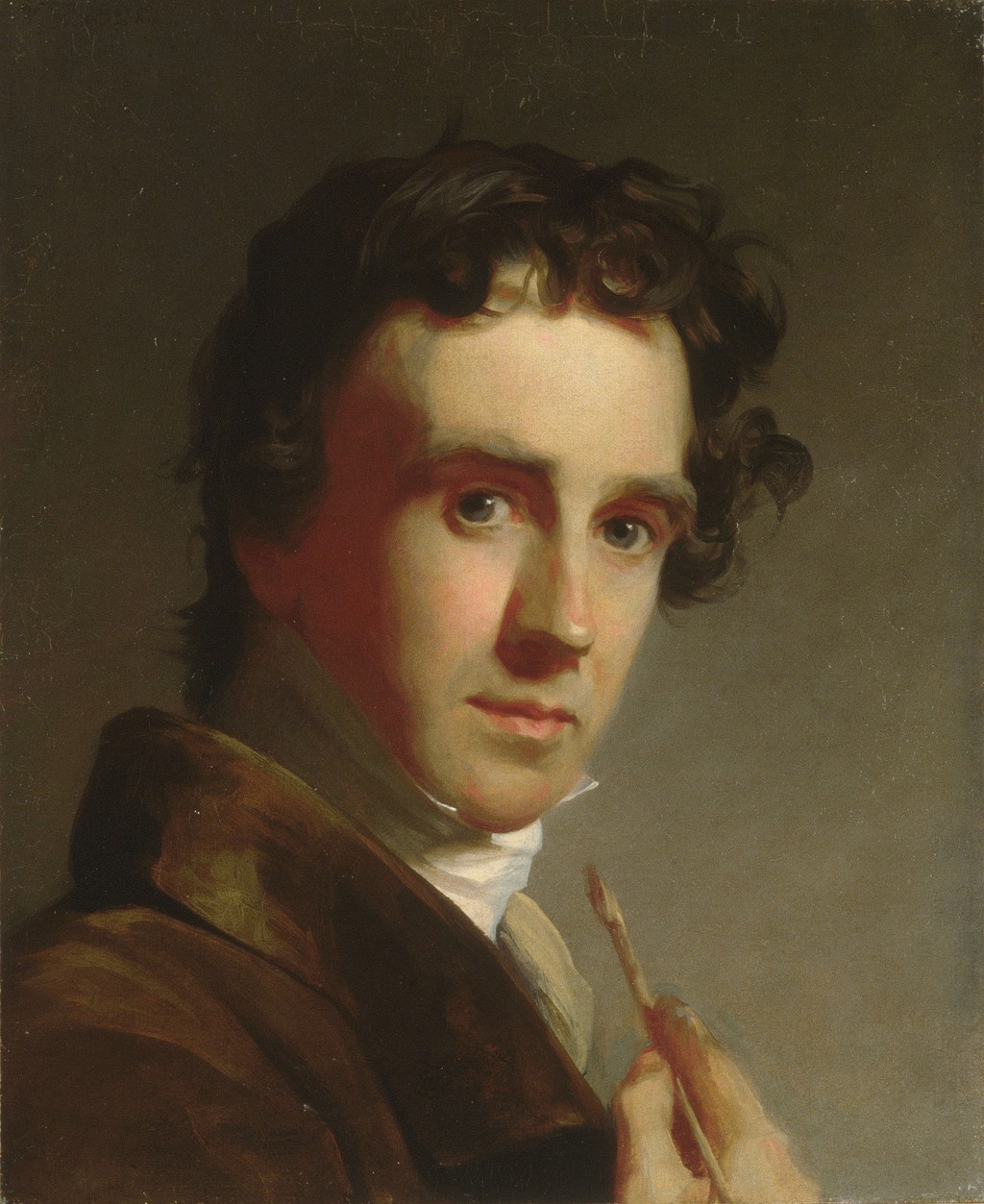
Thomas Sully’s Portrait of the Artist brings a face and a paintbrush unusually close together. The brush rises from the bottom of the canvas toward the white collar and illuminated head; its owner looks directly outward. Painted in 1821, the small oil portrait now belongs to the Metropolitan Museum of Art. It presents Sully through the instruments and concentrated attention of his profession, rather than through an elaborate studio interior. [1]
The picture also belongs to a specific relationship. Sully painted it in Baltimore for Henry Robinson, who had offered him hospitality. The Met’s catalogue argues that it was probably a gift, alongside portraits of two other men, rather than an ordinary paid commission. Its apparent intimacy therefore has a practical setting: an artist giving a host a lasting image of himself. [2]
At a Glance
- Artist Thomas Sully
- Title Portrait of the Artist
- Date 1821
- Medium Oil on canvas
- Dimensions 43.5 × 35.6 cm
- Collection The Metropolitan Museum of Art, New York
- Accession 94.23.3
- Acquisition Gift of Rosa C. Stanfield, 1894
This work across Thomas Sully’s career
Musidora
1813–35; Met panelThe Torn Hat
1820Portrait of the Artist (current article)
1821; Met canvasJohn Quincy Adams
1824; NGA oil studyQueen Victoria
1838; full-length Met canvasMother and Son
1840; inscription dateAndrew Jackson
1845; after the 1824 life portraitNotes and sources
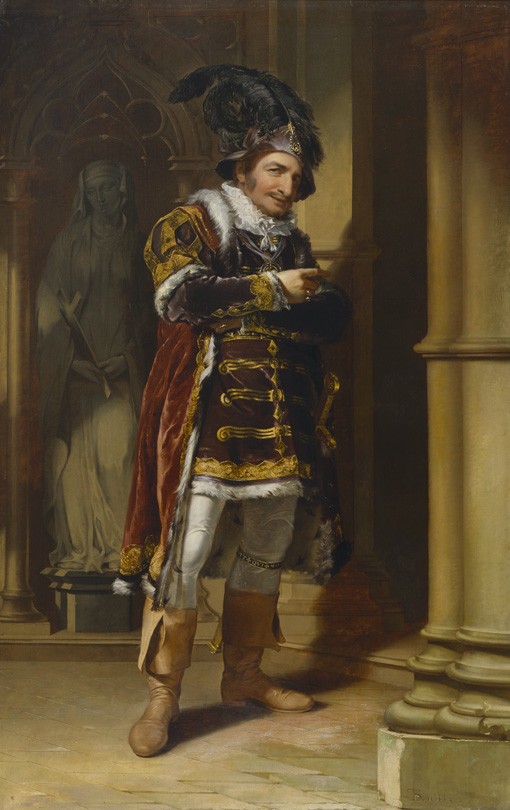
George Frederick Cooke as Richard III. Actor and theatrical role meet in an imposing full-length portrait. [3]
Musidora. A turned figure beside a pool belongs to a literary episode, not a named portrait sitter. [4]
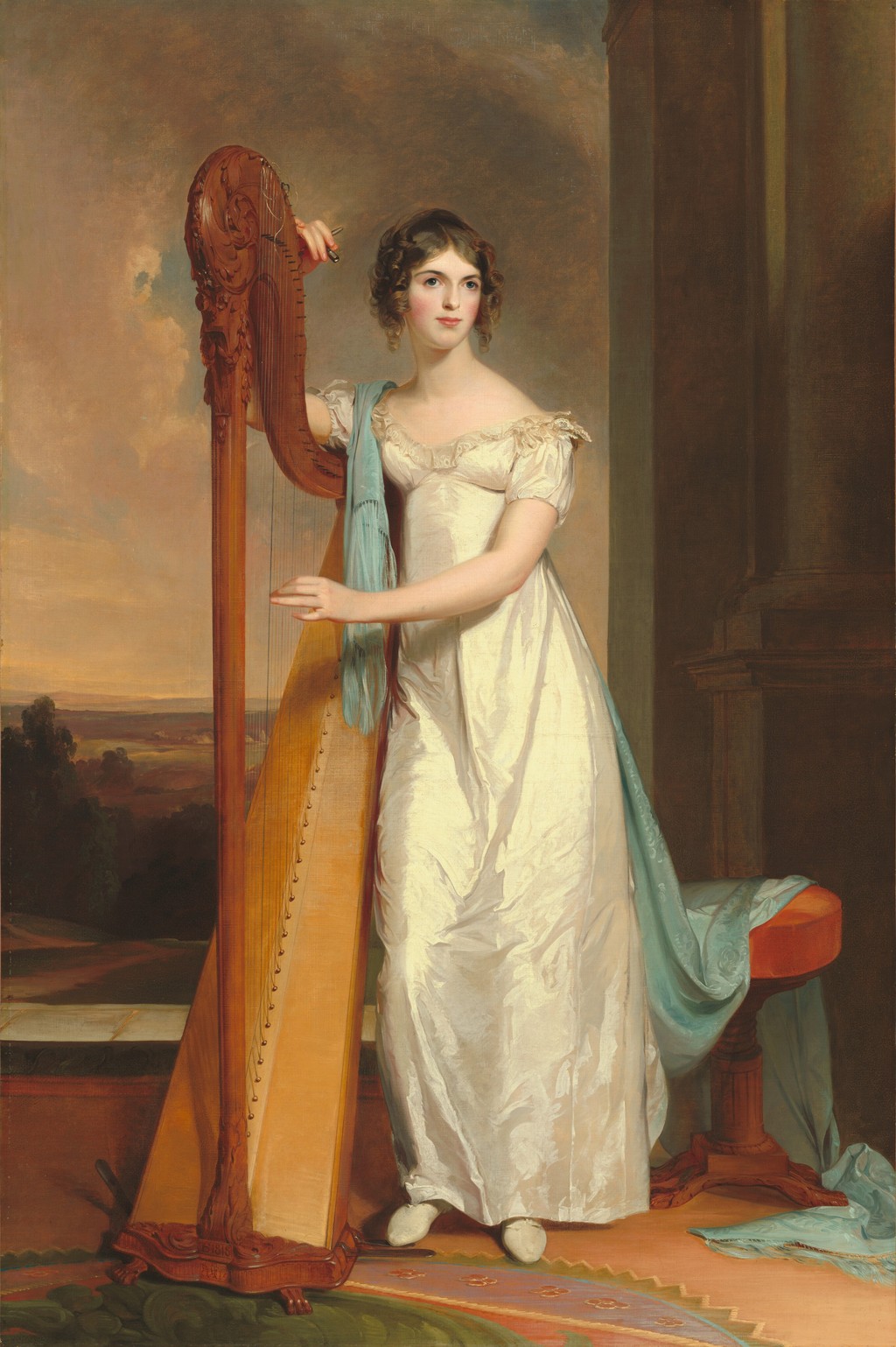
Lady with a Harp: Eliza Ridgely. The harp connects the sitter’s accomplishment with the arrangement of her body. [5]
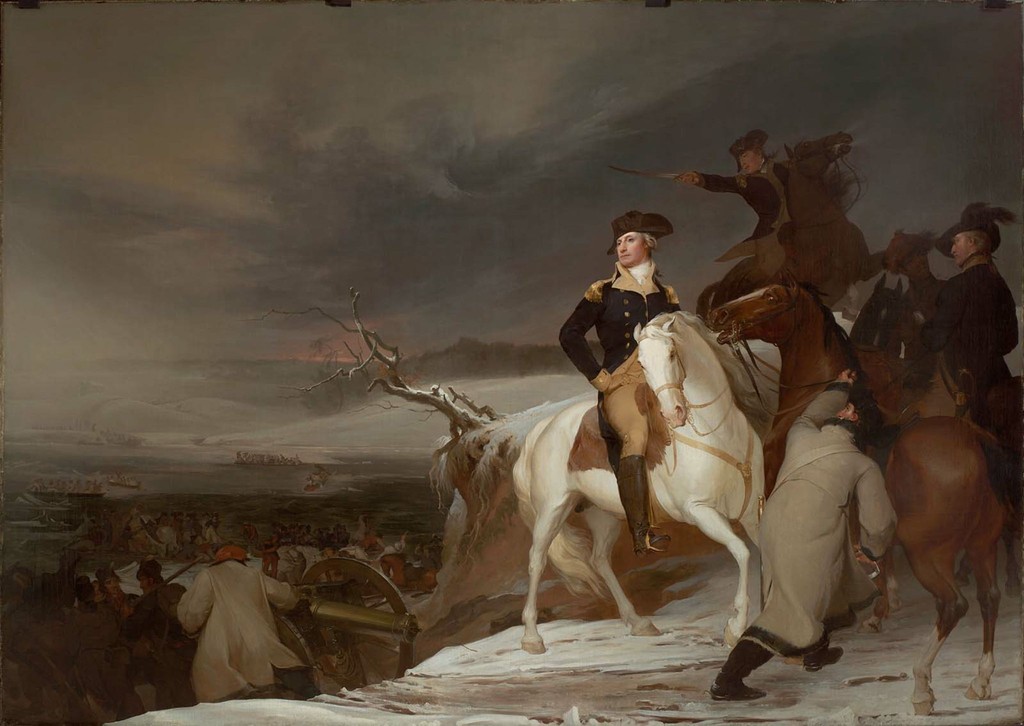
The Passage of the Delaware. Washington is mounted on shore while the crossing proceeds around him. [6]
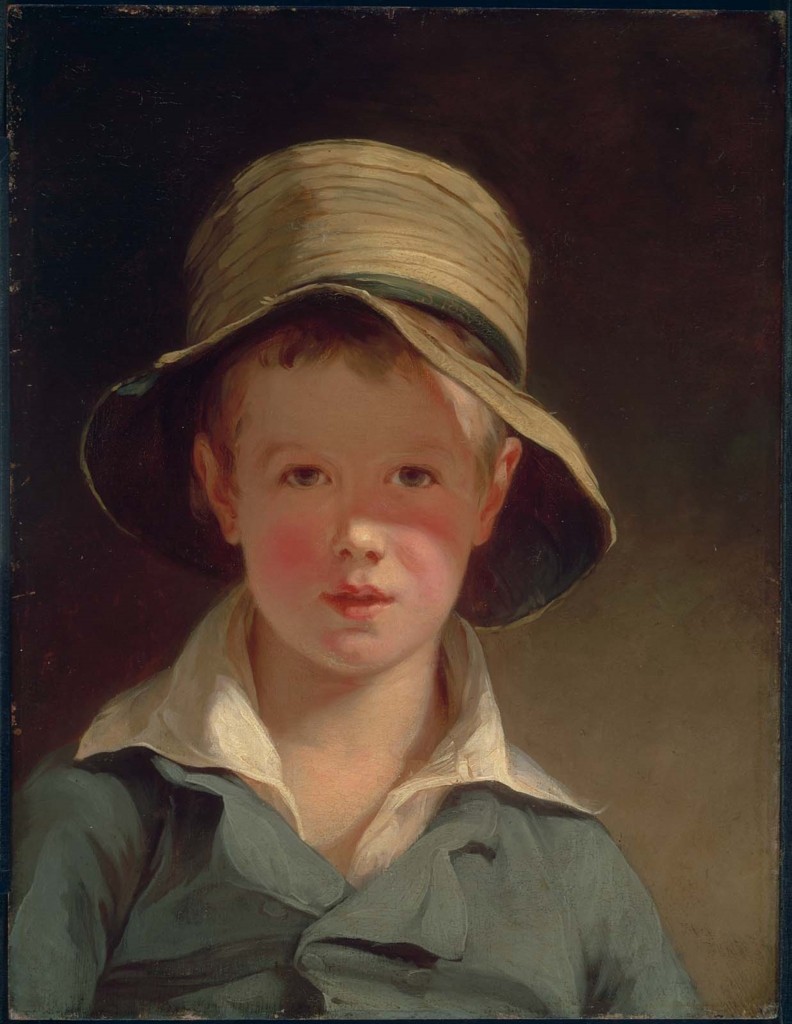
The Torn Hat. A worn hat and directed light give the artist’s son an informal presentation. [7]
Portrait of the Artist (current article). A raised brush joins the painter’s hand to the illuminated head. [1]
John Quincy Adams. A developed likeness supplied information for a larger portrait project. [5]
The David Children. The older children direct attention toward the reclining infant. [5]
The Vanderkemp Children. A portfolio and overlapping hands connect the three children. [5]
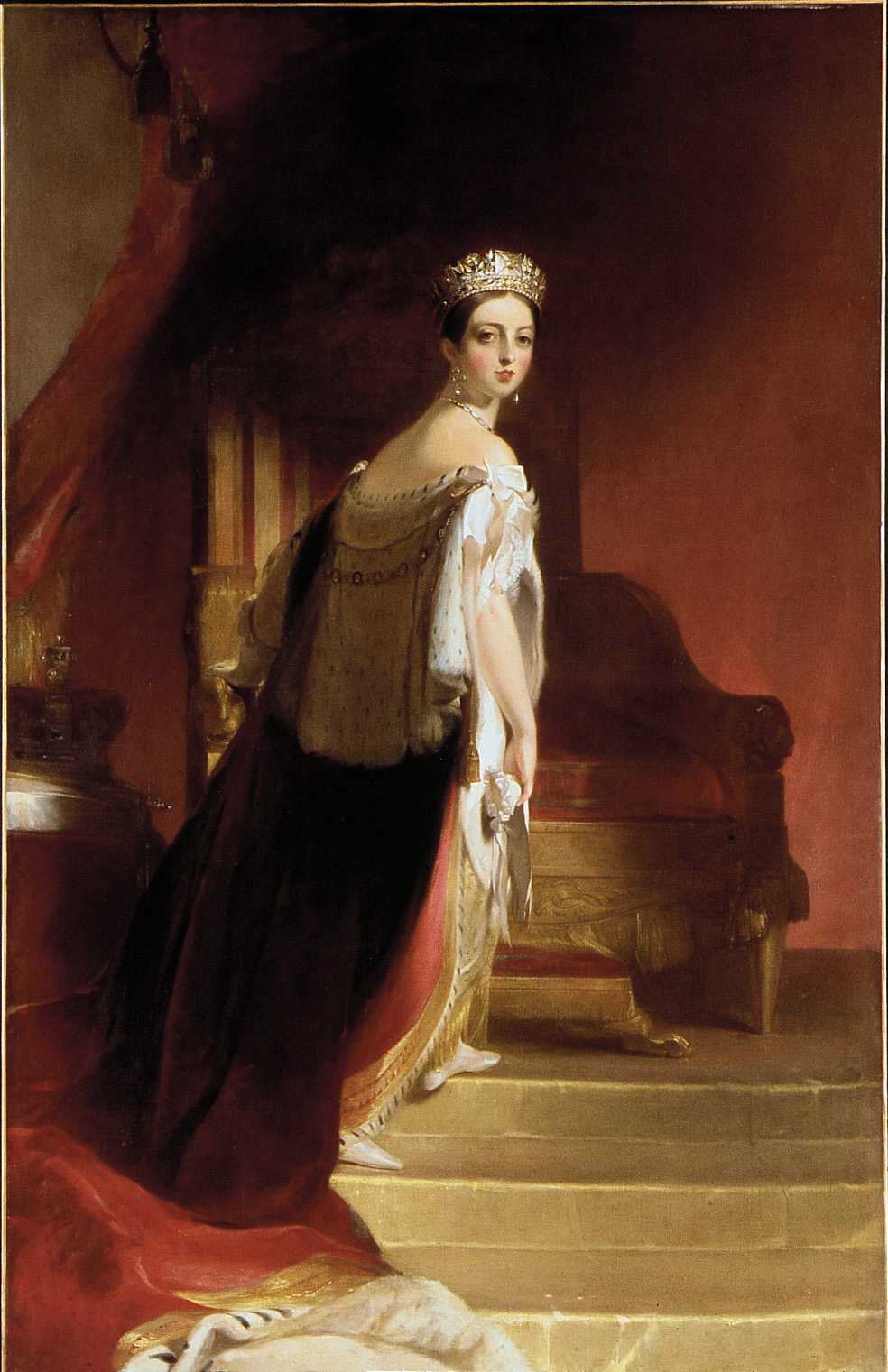
Queen Victoria. The royal likeness extends through robes, insignia and a ceremonial setting. [8]
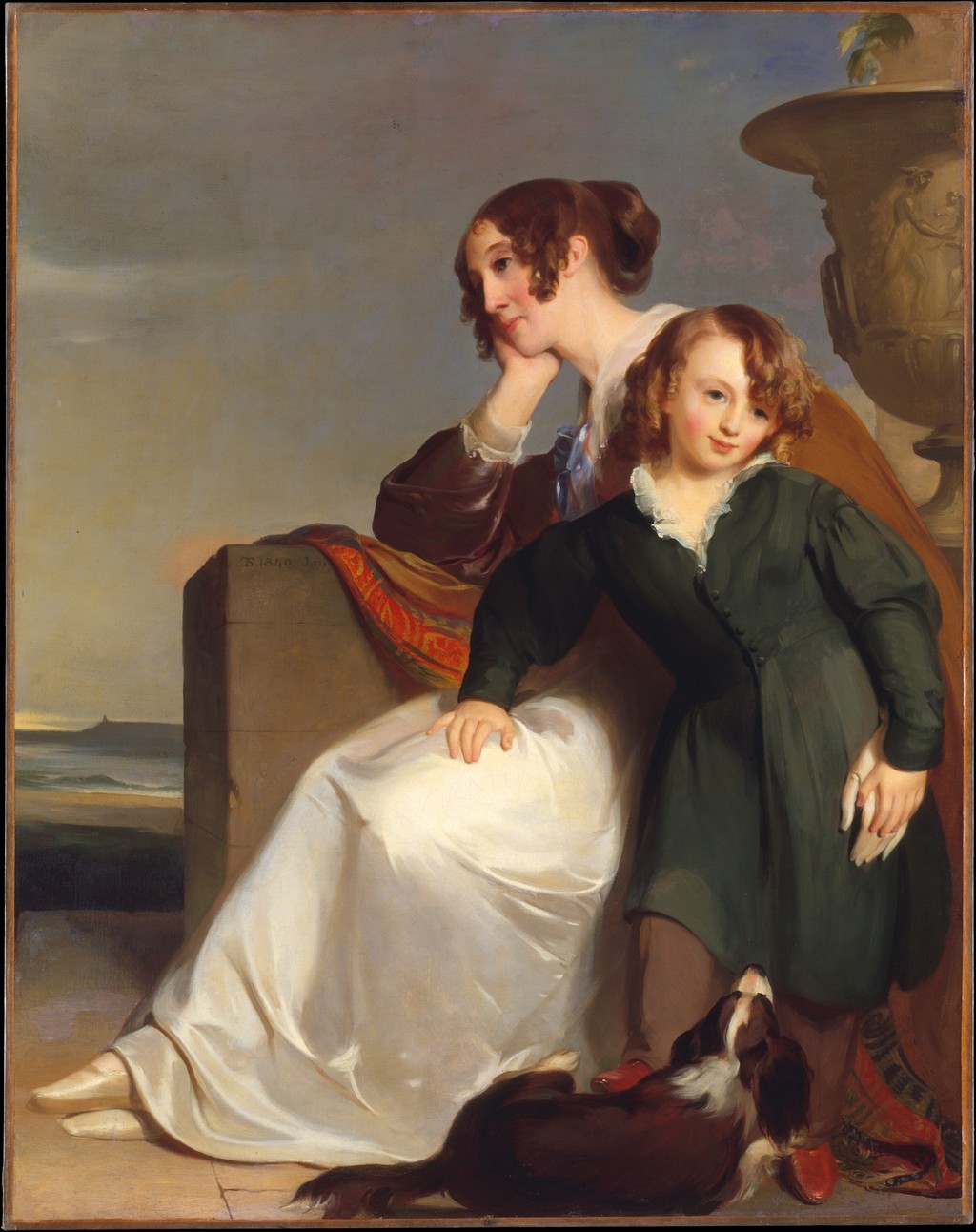
Mother and Son. Jane Darley and her son are connected through touch and differing gazes. [9]
The Coleman Sisters. Contrasting dresses, heights and gestures hold three individual likenesses together. [5]
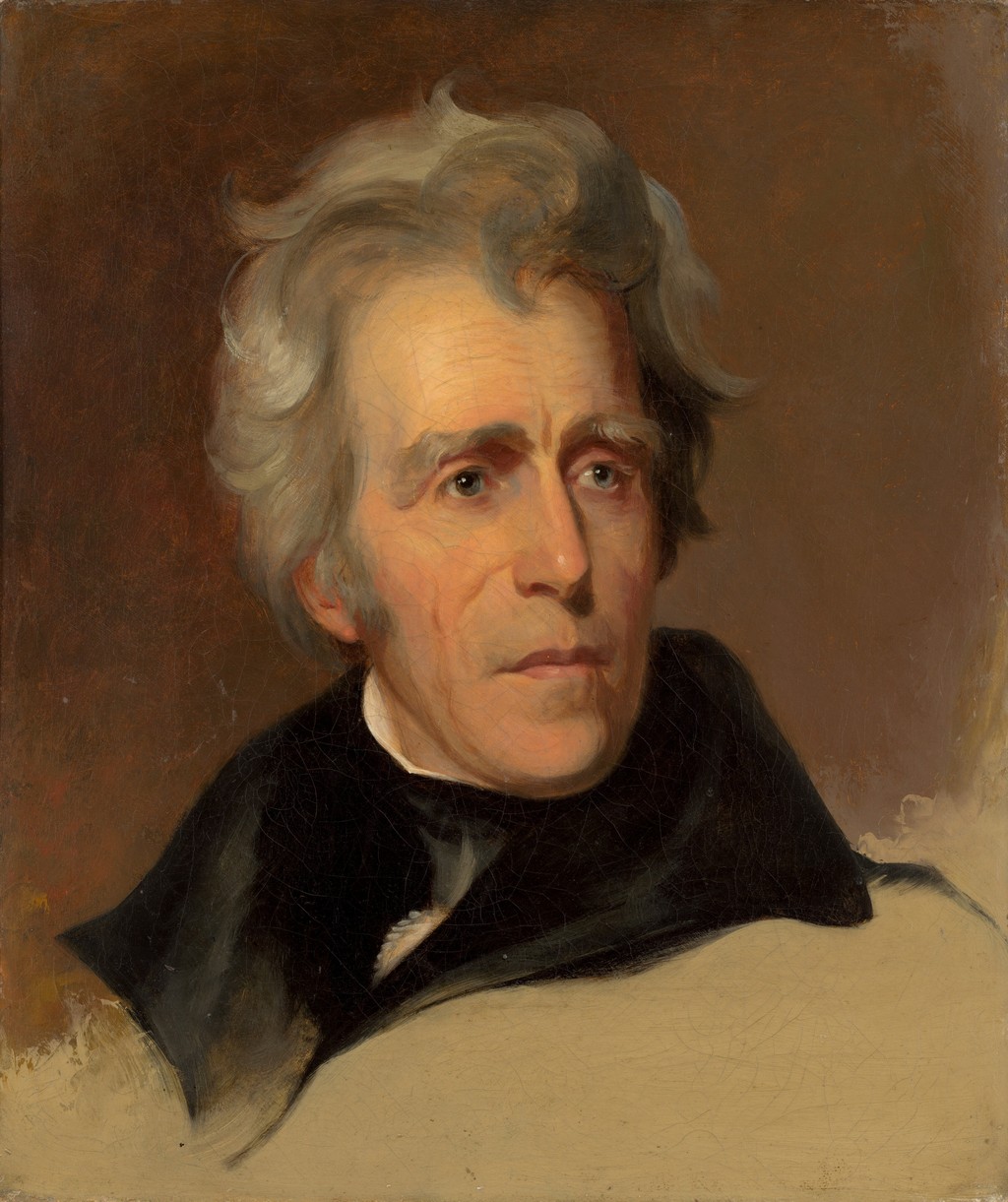
Andrew Jackson. This later version must be distinguished from its earlier life source. [5]
Contents
- A face, a hand and a brush
- Baltimore and the question of a gift
- The appearance of an interruption
- Light and the selective description of clothing
- Likeness and the painter’s own advice
- A possible connection with Benjamin West
- Another image of Sully, and the portrait’s later home
- Annotated details
A face, a hand and a brush
The head occupies most of the upper painting. Dark curls separate the pale forehead from the muted background, while a warm shadow runs down one side of the face. The eyes meet the viewer beneath slightly uneven brows. Sully gives the mouth a firm, quiet shape: the portrait’s animation comes chiefly from the turn of the body, the direct gaze and the raised hand.
Below the face, the white neckcloth forms a narrow interval of brightness. The brown coat spreads into much broader, darker passages. Against these areas, the thin brush handle is easy to follow. Its diagonal leads the eye upward from the fingers toward the head, making the painter’s tool part of the portrait’s structure rather than a separate accessory. The Met likewise draws attention to the brush’s relationship with the illuminated face. [1]
There is no need for a palette, easel or half-finished canvas to establish the occupation. A single implement does that work. The hand is cut by the lower boundary, which makes the figure feel close to the picture’s surface. We see enough of an action to understand it, while the larger task taking place outside the frame remains unspecified. Nothing in the painting identifies the canvas on which Sully might supposedly have been working.
Annotated Details from Portrait of the Artist
The numbered points identify visible features discussed in this article. Return from each detail to the whole composition. Thomas Sully, Portrait of the Artist, 1821. Oil on canvas, 43.5 × 35.6 cm. The Metropolitan Museum of Art, Gift of Rosa C. Stanfield, 1894, 94.23.3. Image source. Public domain. Numbers added to a separate overview; detail images cropped from the source. The complete unnumbered image is retained in this article.
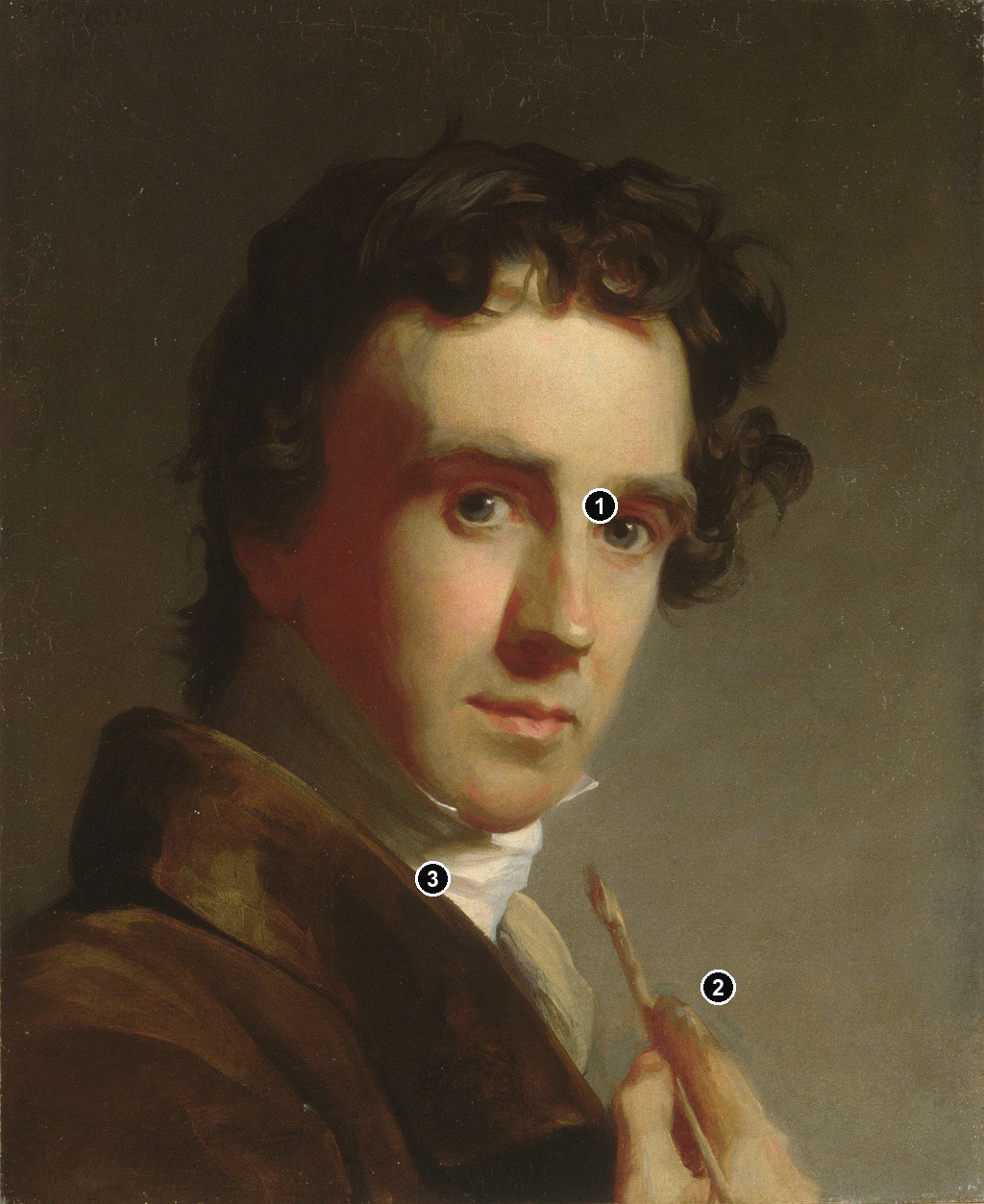
Details from PORTRAIT OF THE ARTIST
Compare the cropped details with the complete images above. Notice how their colours, shapes and positions contribute to the larger compositions.
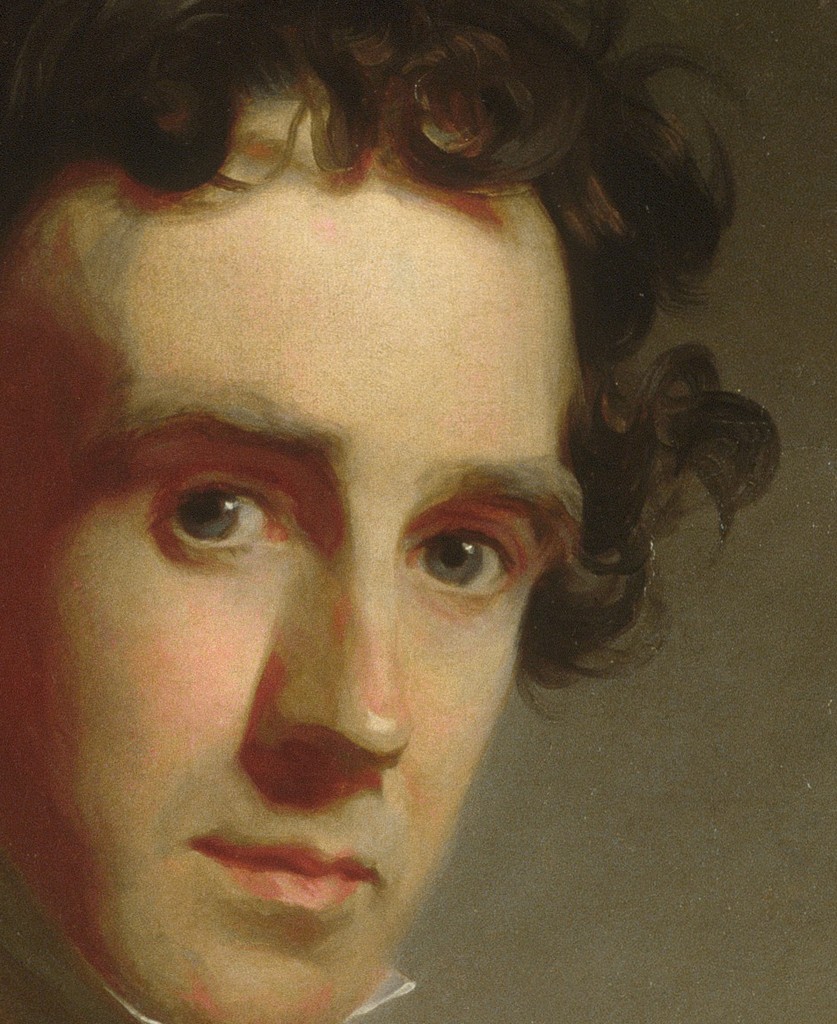
Face and outward gaze
The head turns over the shoulder towards the viewer. Light shapes the forehead, nose and cheek while darker curls frame the upper face.
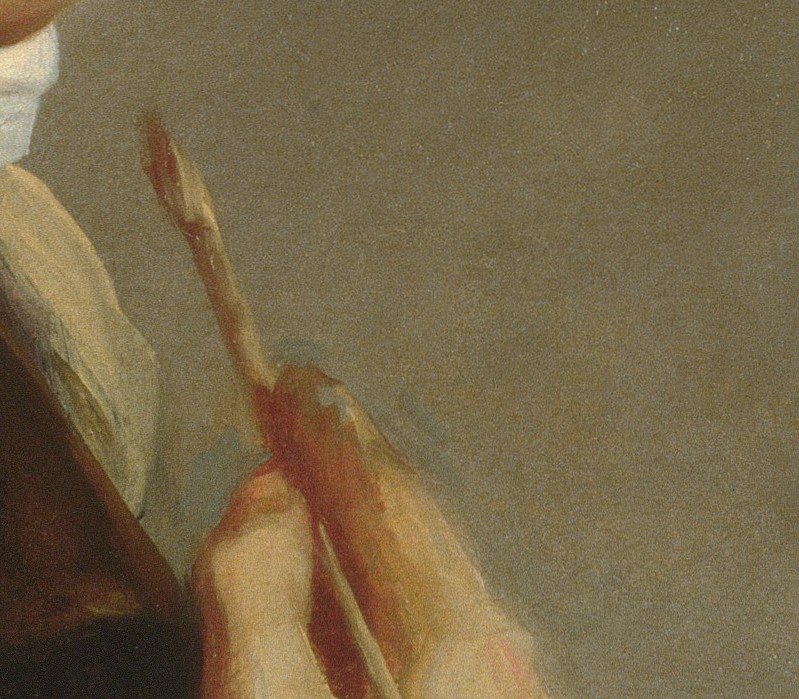
Brush and hand
The hand holding a brush identifies the sitter through his working tool. The narrow brush rises beside the coat rather than filling the foreground with studio equipment.
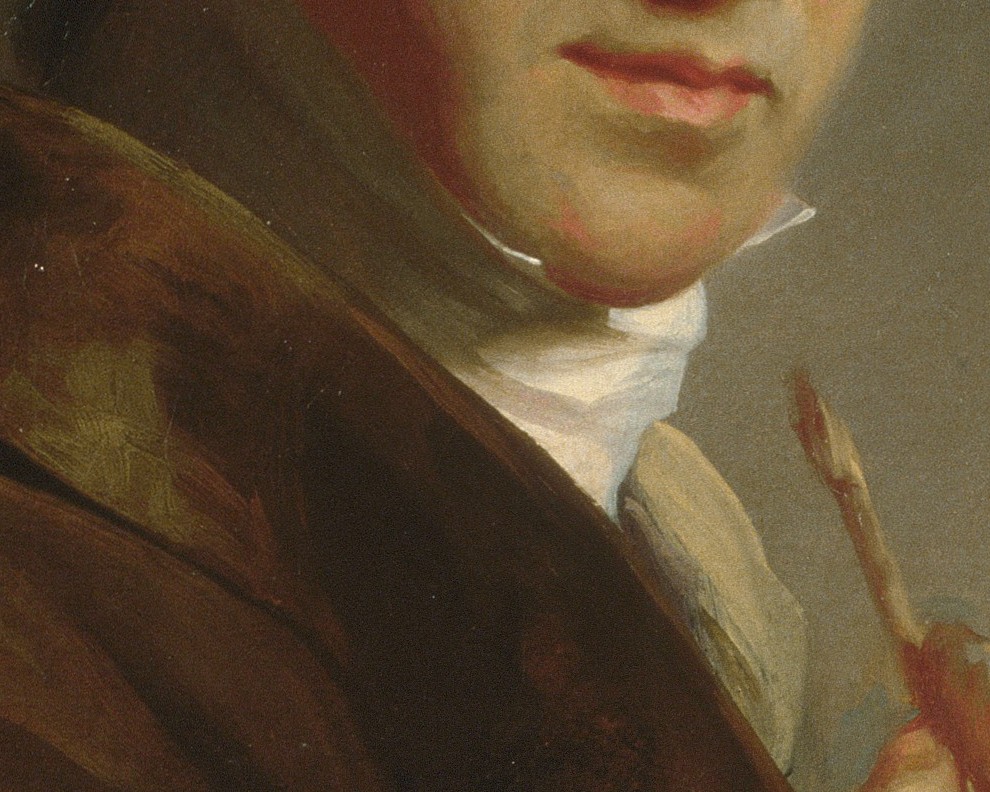
Coat and white collar
A small white collar separates the head from the broad brown coat. The turned shoulder gives the bust a strong diagonal rather than a frontal, symmetrical outline.
Baltimore and the question of a gift
According to the register information published in the Met’s catalogue, Sully began the self-portrait on 8 May 1821 and completed it on 15 May. The same account places him in Robinson’s Baltimore household during the period surrounding its execution. The catalogue’s gift interpretation draws on the journal’s language and the relationship between recorded picture valuations and income. [2]
That distinction matters. A sum entered against a picture does not necessarily establish that a patron paid it. Here, the register’s fifty-dollar figure should be described as a recorded valuation, alongside the evidence that the portrait was presented to Robinson. Calling it a fifty-dollar purchase would make the financial record say more than the published evidence supports. [2]
The possibility of a gift changes how we imagine the picture’s first audience. Robinson would have known the person represented, so the portrait could recall an acquaintance as well as display a painter’s skill. The compact format suits close attention to the face and hand. This is a different encounter from the full-length, ceremonious presentation of Queen Victoria , where Sully had to establish royal identity through an extensive setting and costume.
The appearance of an interruption
The body turns away while the face returns toward us. Because the hand remains raised, the pose can suggest that someone has looked up briefly from work. That is an effect arranged within the picture, rather than evidence that an actual visitor interrupted Sully at a particular instant. The Met’s catalogue places it within an established type of artistic self-presentation. [2]
The effect depends on a balance between motion and stillness. The diagonal shoulder and brush supply movement, but the firmly modelled forehead, nose and chin hold the gaze. The face does not dissolve into the surrounding dark paint. Its carefully differentiated lights and shadows give the apparent instant a stable centre.
Looking closely, the portrait’s invitation is quite demanding. Sully meets our eyes while retaining his tool; the viewer seems to enter a working situation whose purpose already exists. The painting offers access to the artist without making him a passive object of scrutiny. This is a useful way to understand its directness without assigning him a particular private emotion. Confidence, curiosity or impatience would each be a viewer’s interpretation, rather than a documented state of mind.
Light and the selective description of clothing
The lightest passage is not spread evenly across the figure. It falls strongly on the forehead, nose and neckcloth, then becomes more broken across the hand. Brown and olive tones hold much of the remaining surface together. The coat’s shoulder has broad changes of colour, but it does not compete with the small adjustments around the eyes and mouth.
This difference in emphasis allows the costume to remain legible without requiring every fold to have an equally sharp edge. At the lower left, the coat can be read as both a garment and an arrangement of dark, warm shapes. Across the face, smaller transitions distinguish the cheek from the nose and the eye socket from the forehead. The painting asks us to look at different speeds in different places.
The visible surface of the museum reproduction includes age-related marks. These should not be mistaken for strokes deliberately added to describe Sully’s appearance. Nor can a digital photograph establish the complete sequence of paint layers. What it does allow is a comparison of the areas that carry the likeness with those that establish the broader silhouette. A fuller discussion of the artist’s written working methods belongs in Sully’s style and technique .
Watch: Thomas Sully
Choose a film to explore the artist’s work, its interpretation and its wider setting.
Thomas Sully: A Lesson in Conservation
The Columbus Museum explores the conservation of a painting by Thomas Sully.
Watch on YouTubeLikeness and the painter’s own advice
In the manual published after his death, Sully wrote, “From long experience I know that resemblance in a portrait is essential.” He also warned that excessive refinement could weaken the sitter’s identity. These comments offer a useful statement of his priorities, although the book was prepared decades after this self-portrait and cannot be treated as a day-by-day account of its making. [10]
The 1821 picture provides a particular problem for that advice: painter and sitter are the same person. A self-portrait can demonstrate skill while also choosing the appearance through which its maker wishes to be remembered. Here, the collar, coat and brush establish a professional identity, but the specific arrangement of eyes, curls, nose and mouth must still carry the individual likeness.
The brush makes this relationship visible. It belongs to the hand that supposedly produces portraits, while its upward direction returns attention to the face that is being portrayed. The image can therefore be read as a compact presentation of the act of painting. That reading follows the visible arrangement; it does not require a claim that Sully intended a coded allegory of artistic genius.
A possible connection with Benjamin West
The Met has suggested a relationship between this portrait and Benjamin West’s self-portrait imagery. Its catalogue discusses an earlier West image in which the painter looks up from drawing, while also recognising that an interrupted-working pose was more widely available. The connection is best retained as a comparison, rather than a claim that Sully copied a particular composition exactly. [1] [2]
For the viewer, the important question is what the comparison helps explain. The working artist can be represented as alert and cultivated through a modest action: holding a brush or turning from a drawing. An enormous collection of studio equipment is unnecessary. Sully’s own painting makes the small implement and direct encounter sufficient.
It would be harder to reconstruct the practical arrangement of the sitting. A mirror may seem an obvious explanation for a self-portrait, but the image does not document the position of a mirror, lighting apparatus or easel. Those details should remain outside the account unless supported by evidence. The painted pose is available to study; the exact studio setup is not.
Another image of Sully, and the portrait’s later home
A photographic print in the Archives of American Art provides a separate image of Sully with a sketchbook. The Smithsonian dates the print to 1869 and records an inscription identifying it as taken from a daguerreotype. The photographer is unknown. The print’s catalogue date should not be turned into a precise date for the exposure of its earlier photographic source. [11]
Placed beside the painted portrait, the photograph offers a useful comparison between two objects and their different forms of evidence. The painting gives colour, a chosen lighting pattern and a strongly directed brush gesture. The photographic print records a seated figure, clothing and sketchbook through another process. Neither object supplies a neutral summary of an entire life, and the photograph should not be used to reconstruct how Sully looked in 1821.
The self-portrait remained associated with Robinson’s family before Rosa C. Stanfield gave it to the Met in 1894, in memory of her father. Its current accession number is 94.23.3. [2] That history returns attention to the portrait’s earliest relationship. A picture that presents Sully’s professional identity also survives as an object kept by the household for which it was made.
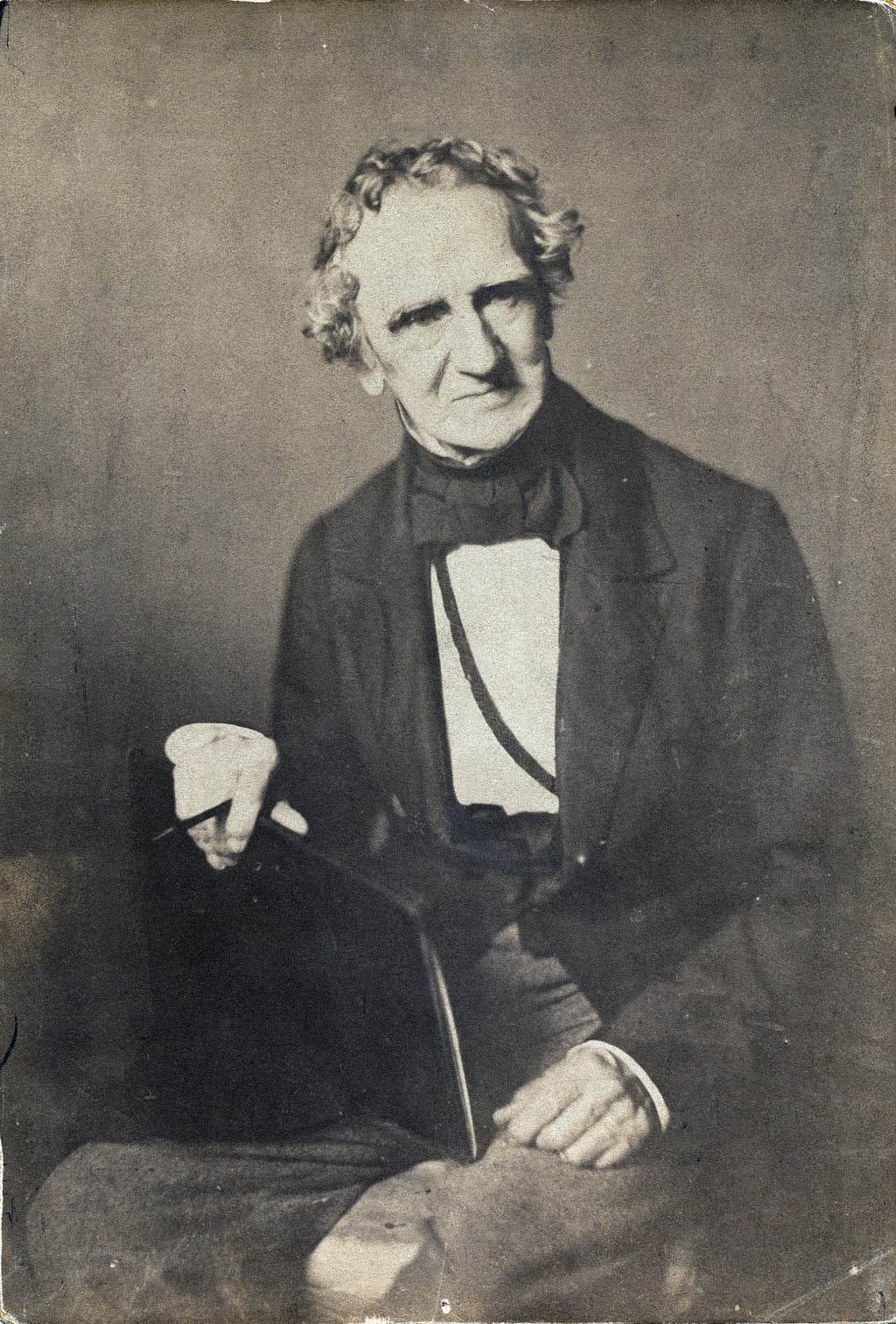
Thomas Sully holding a sketchbook. Photographic print catalogued 1869, identified on its reverse as copied from a daguerreotype; original exposure date not established. Unidentified photographer. Archives of American Art, Smithsonian Institution, aaa_macbgall_4844.
Image source
.
No known copyright restrictions (institution); US public domain (Commons)
.
Artworks directory
A selection documented in the linked articles, with related studies and a print after Sully listed separately. Dates identify individual objects; Musidora’s date range does not imply continuous work. This is not a catalogue raisonné. The Drawing filter includes watercolour and reproductive printmaking.
| Name | Date | Medium |
|---|---|---|
| Captain Charles Stewart | 1811–1812 | Painting — oil on canvas |
| George Frederick Cooke as Richard III | 1811–1812 | Painting — oil on canvas |
| Musidora | 1813–35; Met panel | Painting — oil on wood |
| Lady with a Harp: Eliza Ridgely | 1818 | Painting — oil on canvas |
| The Passage of the Delaware | 1819 | Painting — oil on canvas |
| The Torn Hat | 1820 | Painting — oil on panel |
| Portrait of the Artist | 1821; Met canvas | Painting — oil on canvas |
| John Quincy Adams | 1824; NGA oil study | Painting — oil on canvas |
| John Quincy Adams (watercolour study) | 1824; Met 38.146.1 | Drawing — watercolour, black chalk and graphite on paper |
| John Quincy Adams (Durand after Sully) | 1826; PAFA 1876.9.184a | Drawing — etching and engraving on paper |
| The David Children | 1826 | Painting — oil on canvas |
| The Vanderkemp Children | 1832 | Painting — oil on canvas |
| Queen Victoria | 1838; full-length Met canvas | Painting — oil on canvas |
| Queen Victoria (life study) | 1838; Met 14.126.1 | Painting — oil on canvas |
| Mother and Son | 1840; inscription date | Painting — oil on canvas |
| The Coleman Sisters | 1844 | Painting — oil on canvas |
| Andrew Jackson | 1845; after the 1824 life portrait | Painting — oil on canvas |
Frequently Asked Questions
It dates to 1821. Register information published by the Met gives 8–15 May as its execution dates. [2]
It was painted for Robinson, but the Met’s catalogue argues that it was probably presented as a gift. A recorded valuation is not proof of a paid purchase. [2]
Discussion
Look again at the images and ideas explored in Portrait of the Artist by Thomas Sully. These editorial prompts invite your observations.
Reader Insights
Follow the brush from the fingers toward the face. How does that diagonal affect where you look first?
Does the pose feel like a pause during work or a carefully arranged presentation? Which visible details shape your answer?
Compare the painted portrait with the archival photograph. What does each object reveal about the way a working artist can be presented?
Join the Conversation
Share a detail, comparison or question about Portrait of the Artist by Thomas Sully below.
References
- The Metropolitan Museum of Art: Portrait of the Artist , 1821, 94.23.3. View source
- Caldwell , Rodriguez Roque and Johnson: American Paintings in the Metropolitan Museum of Art, volume 1, 1994, pp. 341–343. View source
- Pennsylvania Academy of the Fine Arts, George Frederick Cooke as Richard III, 1811–1812, 1812.1. View source
- Metropolitan Museum of Art, Musidora, 1813–35, 21.48. View source
- National Gallery of Art, Open Data: selected Sully object and published-image records. View source
- Wikimedia Commons / MFA image source, The Passage of the Delaware: original image and PD-Art record. View source
- Wikimedia Commons / MFA source image, The Torn Hat: 16.104 image and PD-Art rights. View source
- Metropolitan Museum of Art, Queen Victoria,1838,2021.140. View source
- Metropolitan Museum of Art, Mother and Son, 1840, 14.126.5. View source
- Thomas Sully: Hints to Young Painters and the Process of Portrait-Painting , 1873, p. 38. View source
- Archives of American Art , Smithsonian Institution: Thomas Sully, photographic print catalogued 1869. View source
- Splash image source.
Thomas Sully, Portrait of the Artist, 1821. Oil on canvas, 43.5 × 35.6 cm. The Metropolitan Museum of Art, Gift of Rosa C. Stanfield, 1894, 94.23.3. Public domain .
View source