 by
Tom Gurney
Tom Gurney BSc (Hons) is an art history expert with over 20 years experience
Email:
tomgurney1@gmail.com
/ Phone:
+44 7429 011000
The Passage of the Delaware by Thomas Sully: Introduction
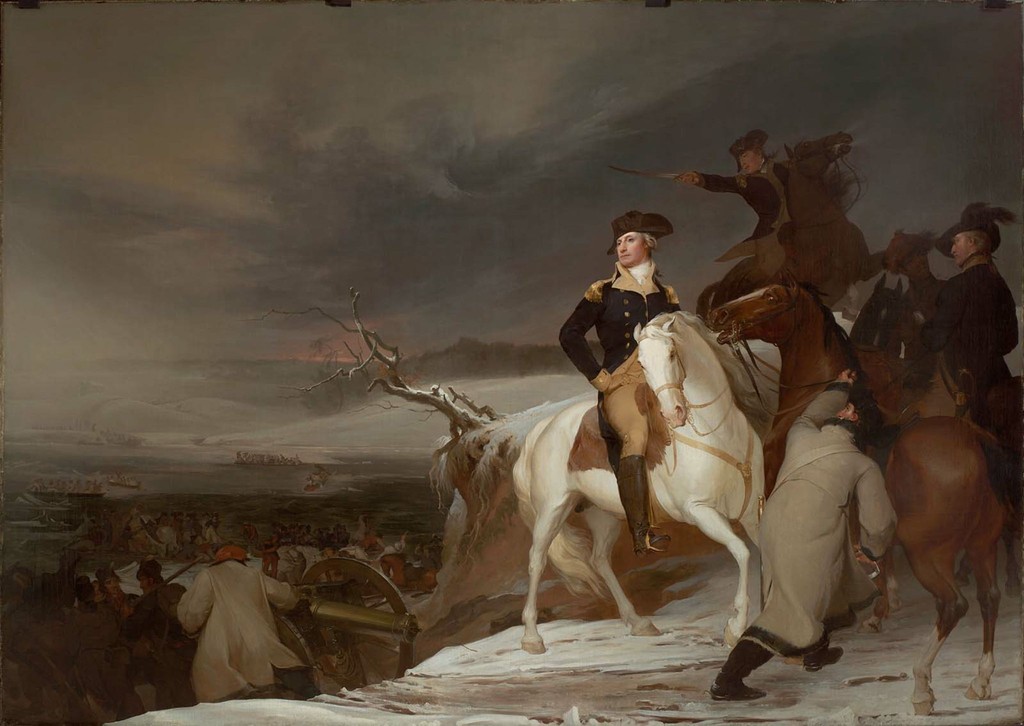
Thomas Sully’s The Passage of the Delaware , completed in 1819, places George Washington on horseback above a river crowded with boats and soldiers. The commander has not yet embarked. His pale horse, dark uniform and illuminated face dominate the right side, while the operation extends into the distance at the left. The large oil painting belongs to the Museum of Fine Arts, Boston, accession 03.1079. [1]
The choice of moment distinguishes it from the more familiar boat scene painted by Emanuel Leutze in 1851. Sully presents command before departure: a recognisable individual surrounded by the labour needed to move an army. MFA curator Elliot Bostwick Davis describes this combination as a “historical portrait,” connecting the commanding likeness with an extensive landscape and a crowded military action. [2]
At a Glance
- Artist Thomas Sully
- Date 1819; completed 15 December
- Medium Oil on canvas
- Subject Washington on the Pennsylvania bank before crossing the Delaware
- Historical event Christmas night, 25–26 December 1776, before the attack on Trenton
- Collection Museum of Fine Arts, Boston, 03.1079
- Scale Approximately 3.7 metres high and 5.3 metres wide
- Key distinction Washington is mounted on shore, rather than standing in Leutze’s boat
This work across Thomas Sully’s career
Musidora
1813–35; Met panelThe Torn Hat
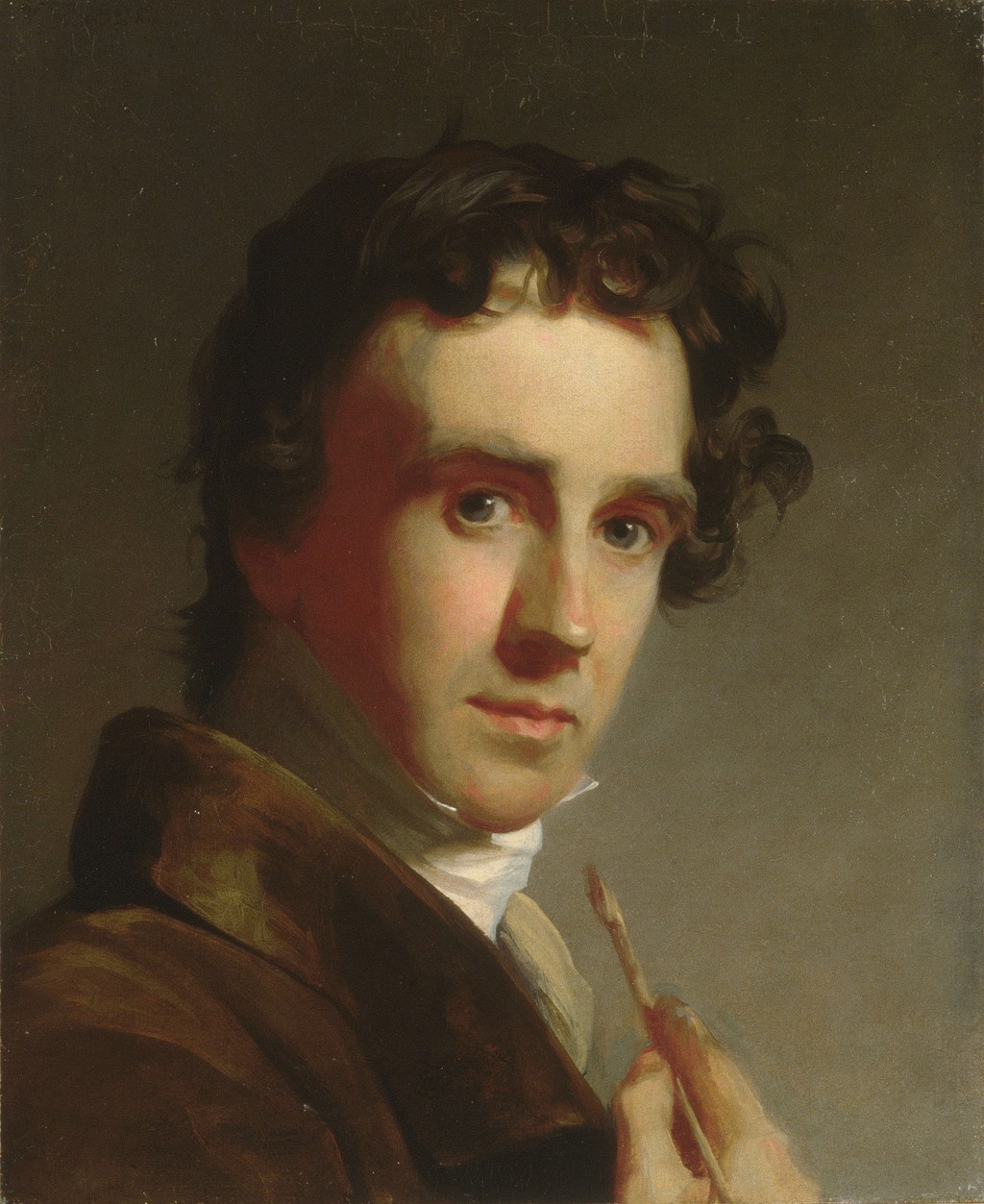
1820Portrait of the Artist
1821; Met canvasJohn Quincy Adams
1824; NGA oil studyQueen Victoria
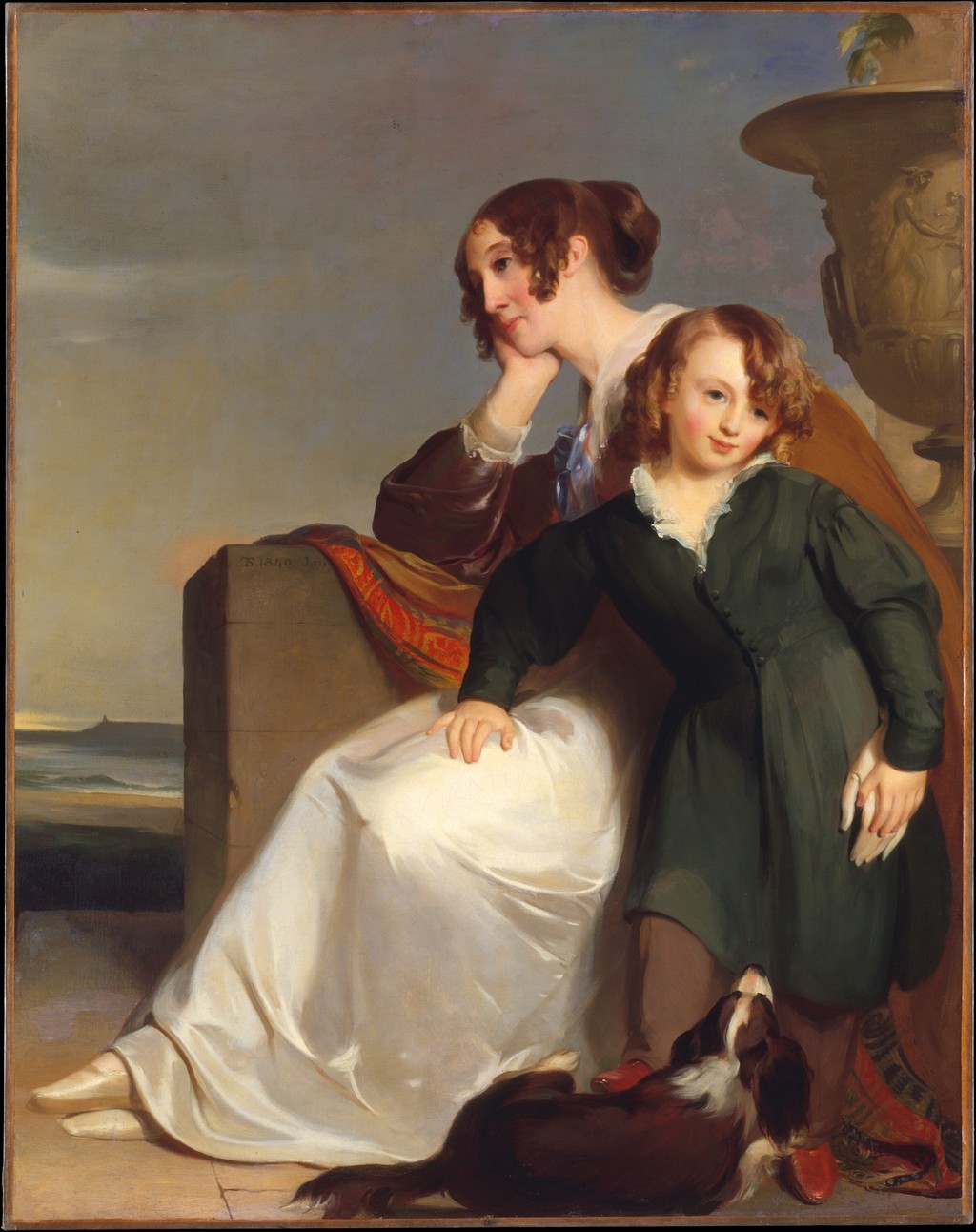
1838; full-length Met canvasMother and Son
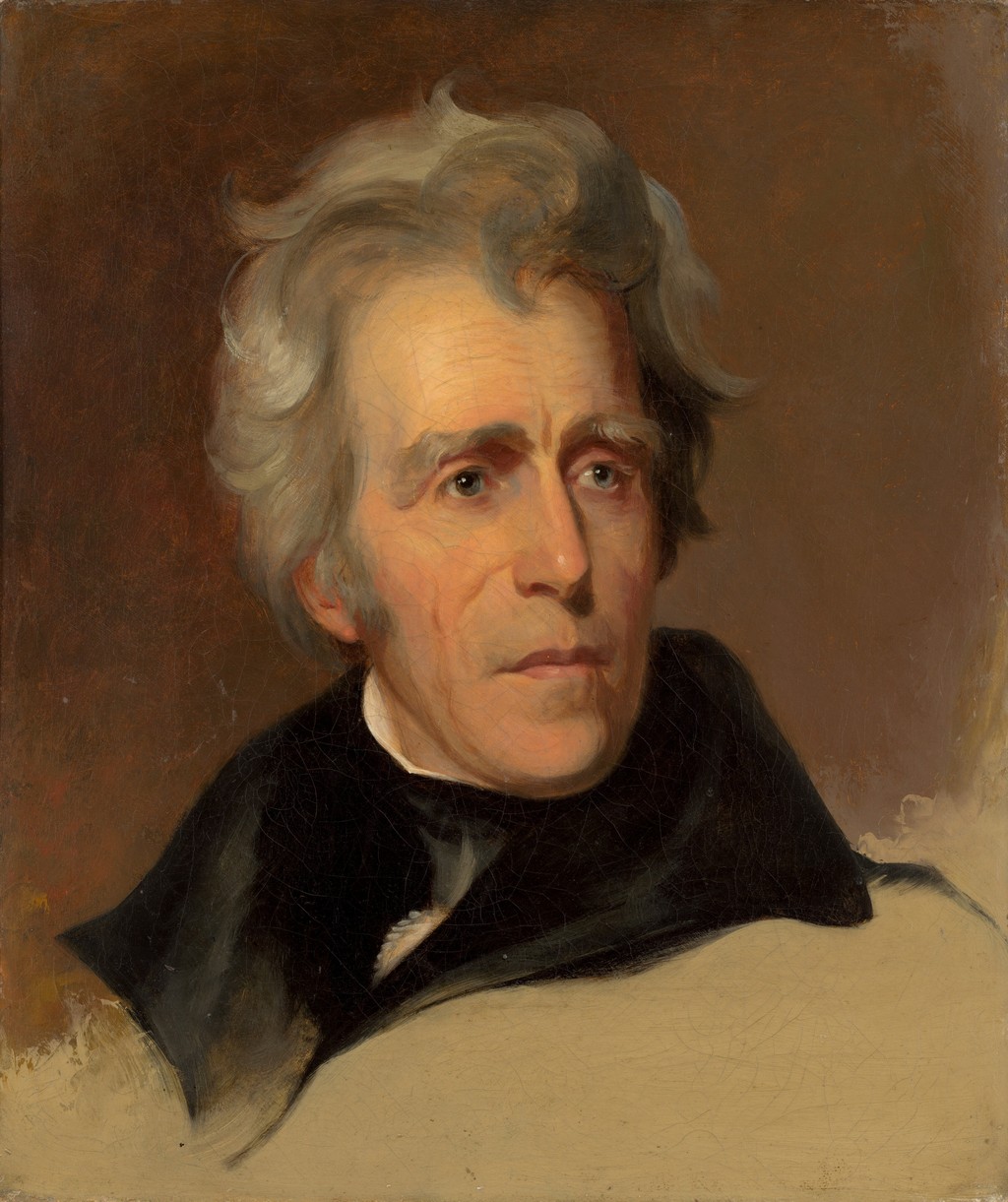
1840; inscription dateAndrew Jackson
1845; after the 1824 life portraitNotes and sources
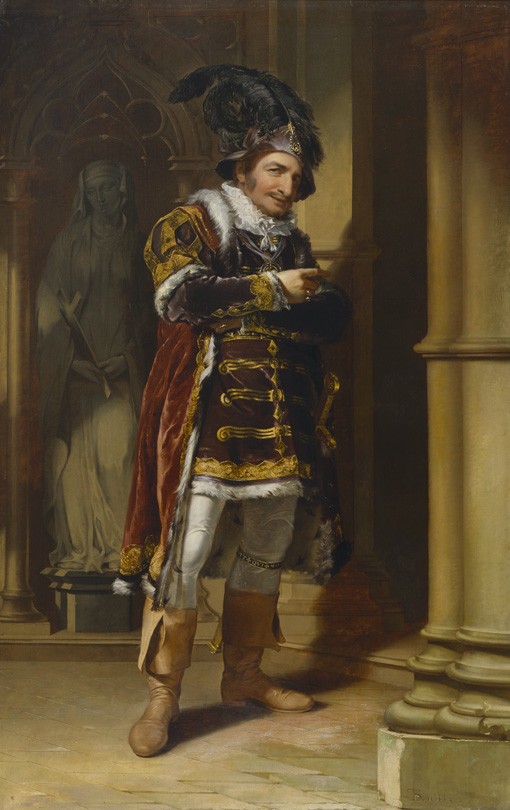
George Frederick Cooke as Richard III. Actor and theatrical role meet in an imposing full-length portrait. [3]
Musidora. A turned figure beside a pool belongs to a literary episode, not a named portrait sitter. [4]
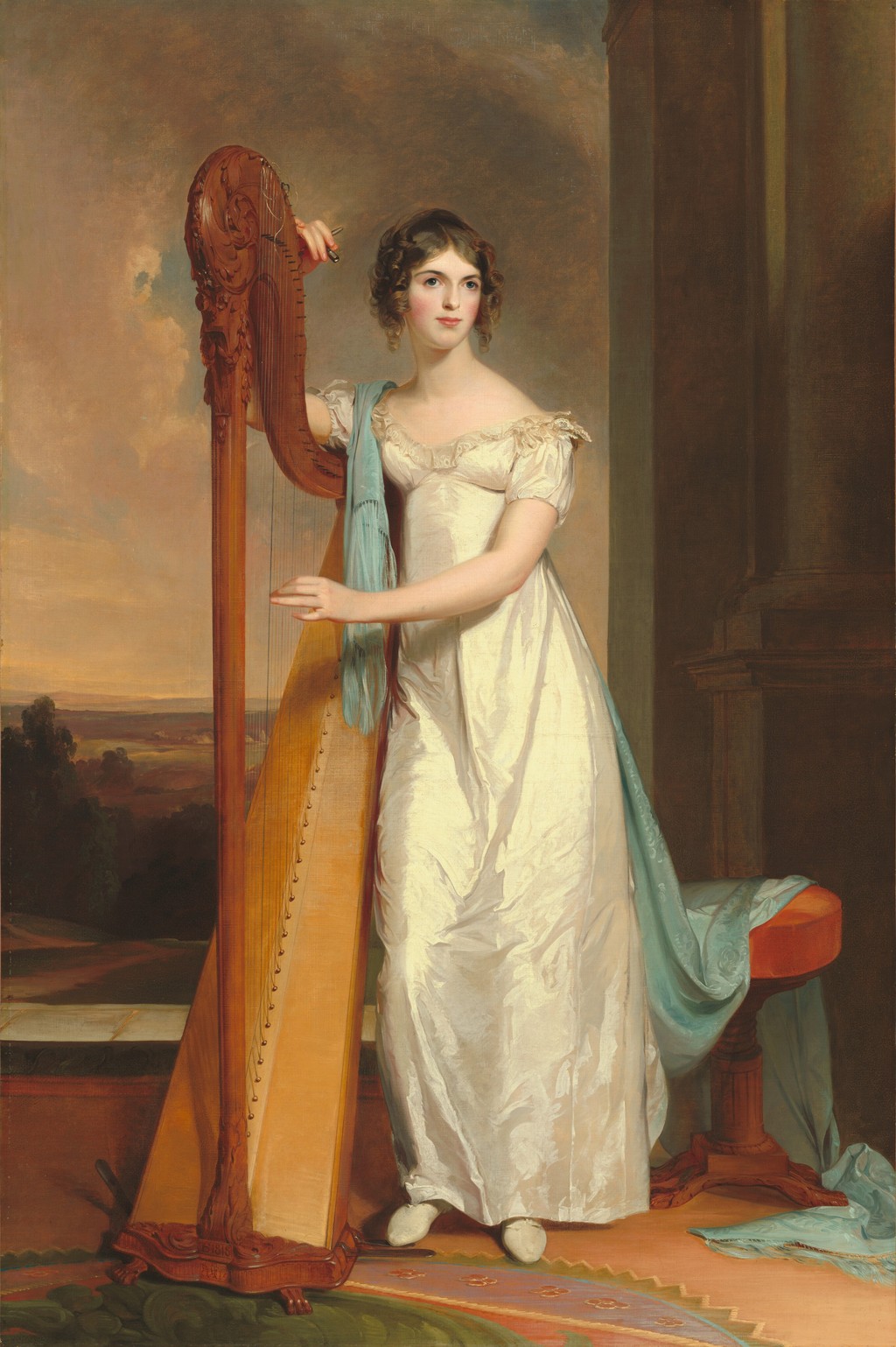
Lady with a Harp: Eliza Ridgely. The harp connects the sitter’s accomplishment with the arrangement of her body. [5]
The Passage of the Delaware (current article). Washington is mounted on shore while the crossing proceeds around him. [1]
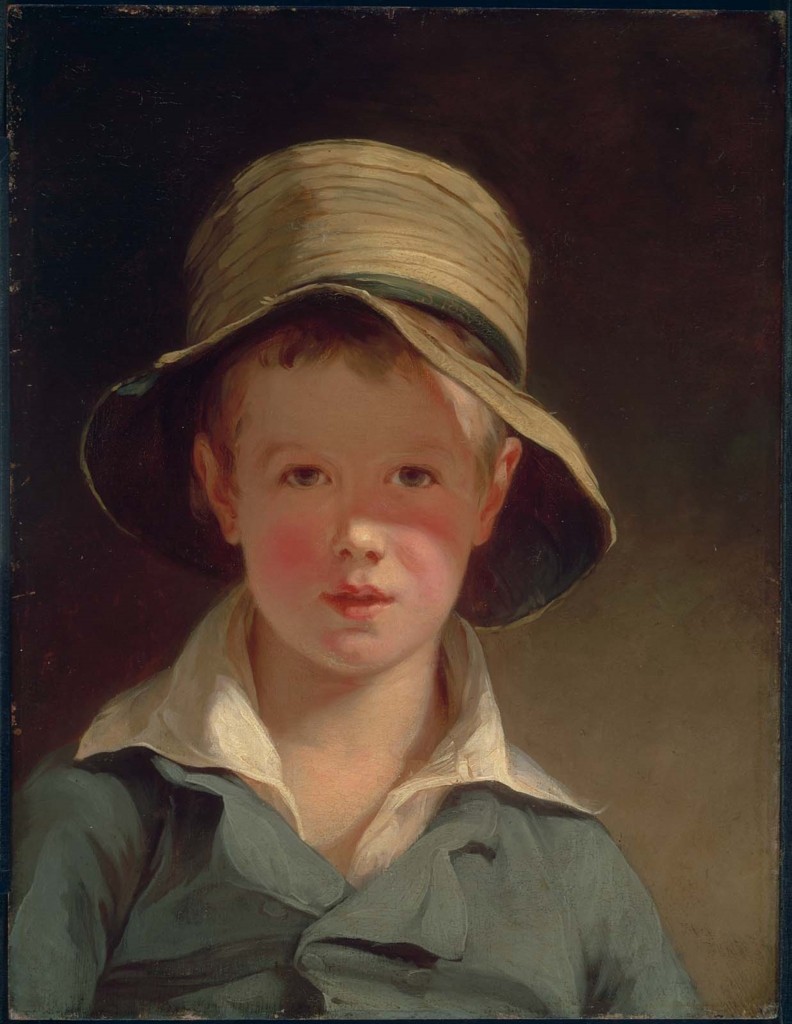
The Torn Hat. A worn hat and directed light give the artist’s son an informal presentation. [6]
Portrait of the Artist. A raised brush joins the painter’s hand to the illuminated head. [7]
John Quincy Adams. A developed likeness supplied information for a larger portrait project. [5]
The David Children. The older children direct attention toward the reclining infant. [5]
The Vanderkemp Children. A portfolio and overlapping hands connect the three children. [5]
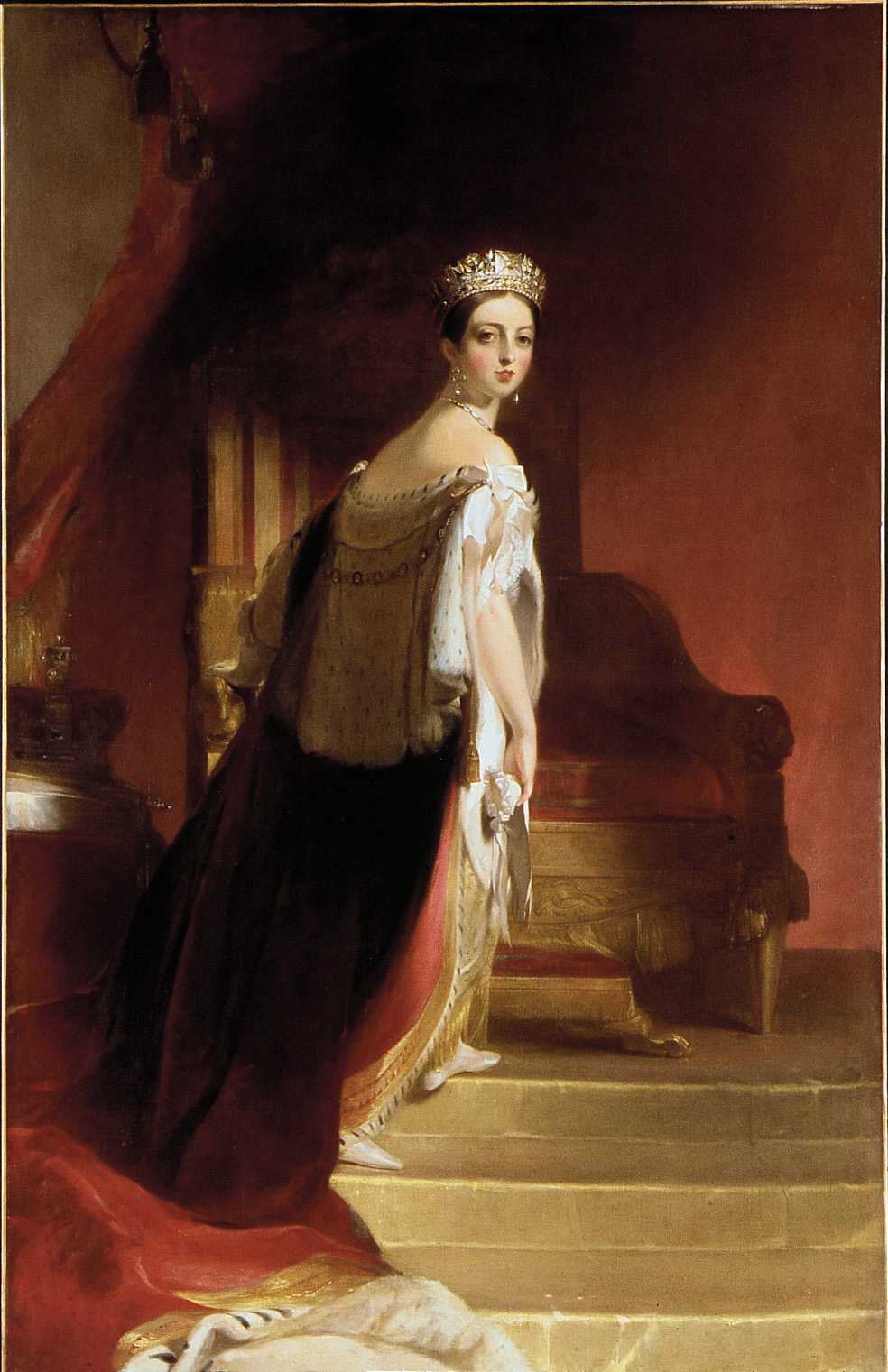
Queen Victoria. The royal likeness extends through robes, insignia and a ceremonial setting. [8]
Mother and Son. Jane Darley and her son are connected through touch and differing gazes. [9]
The Coleman Sisters. Contrasting dresses, heights and gestures hold three individual likenesses together. [5]
Andrew Jackson. This later version must be distinguished from its earlier life source. [5]
Contents
- The historical crossing and the painted moment
- Washington and the white horse
- A foreground full of work
- The river and the scale of the landscape
- From two Washington portraits to a historical composition
- Scale, exhibition and sale
- What Sully said about its paint
- Sully and Leutze: two decisions about the same event
- Reading a historical picture critically
- Annotated details
The historical crossing and the painted moment
The crossing took place during the night of 25–26 December 1776, as Washington prepared a surprise attack on the Hessian garrison at Trenton. Mount Vernon’s account identifies about 2,400 men in his main force and describes severe weather, a delayed operation and other planned crossings that did not succeed. The movement of soldiers, horses and artillery required different kinds of craft, including Durham boats and flat ferries. [10]
These circumstances help explain why Sully made the riverbank an active part of the story. Crossing was a problem of coordination before it became an image of a leader aboard a boat. Men and equipment had to reach the water, load, travel and disembark while the larger operation continued around them.
The painting does not offer a single close view of every stage. The foreground shows preparations and movement on land; the middle distance contains occupied boats; the farther river recedes beneath an extensive sky. The different scales allow the viewer to move mentally through an operation too large to be contained in one encounter.
Sully was born after the Revolutionary War and painted this work more than four decades after the event. Its illumination, placement of the commander and distribution of activity are decisions made for a historical picture. They should not be mistaken for the record of a witness who stood at this exact point on the bank.
Annotated Details from The Passage of the Delaware
The numbered points identify visible features discussed in this article. Return from each detail to the whole composition. Thomas Sully, The Passage of the Delaware, 1819. Oil on canvas. Museum of Fine Arts, Boston, Gift of the owners of the Old Boston Museum, 03.1079. Public domain reproduction. Image source. Public domain. Numbers added to a separate overview; detail images cropped from the source. The complete unnumbered image is retained in this article.
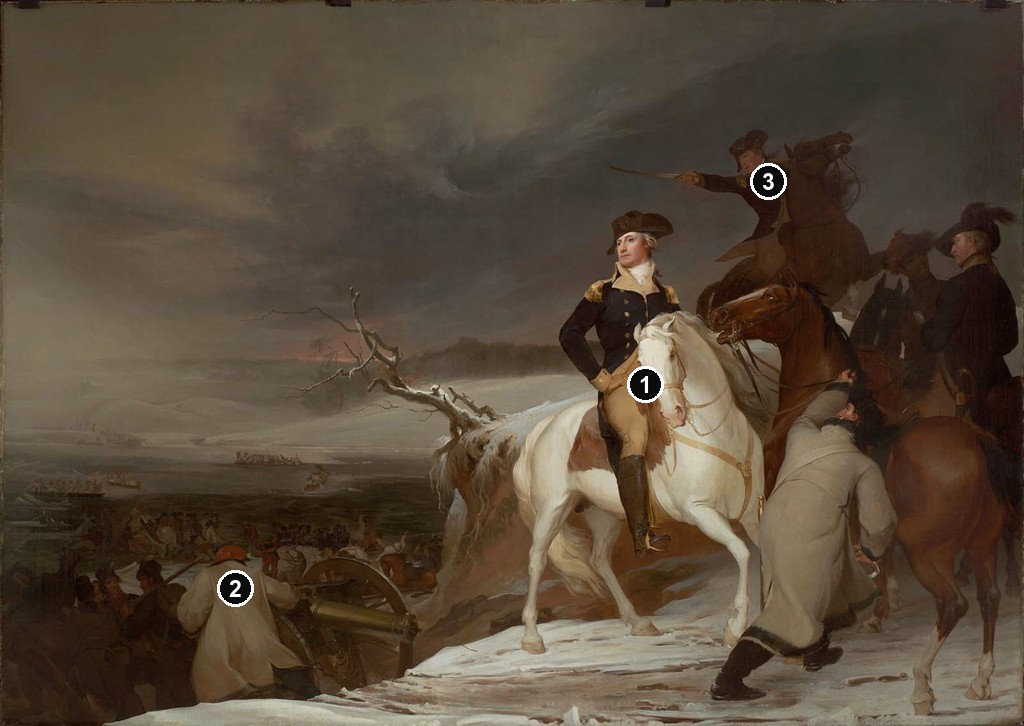
Details from THE PASSAGE OF THE DELAWARE
Compare the cropped details with the complete images above. Notice how their colours, shapes and positions contribute to the larger compositions.
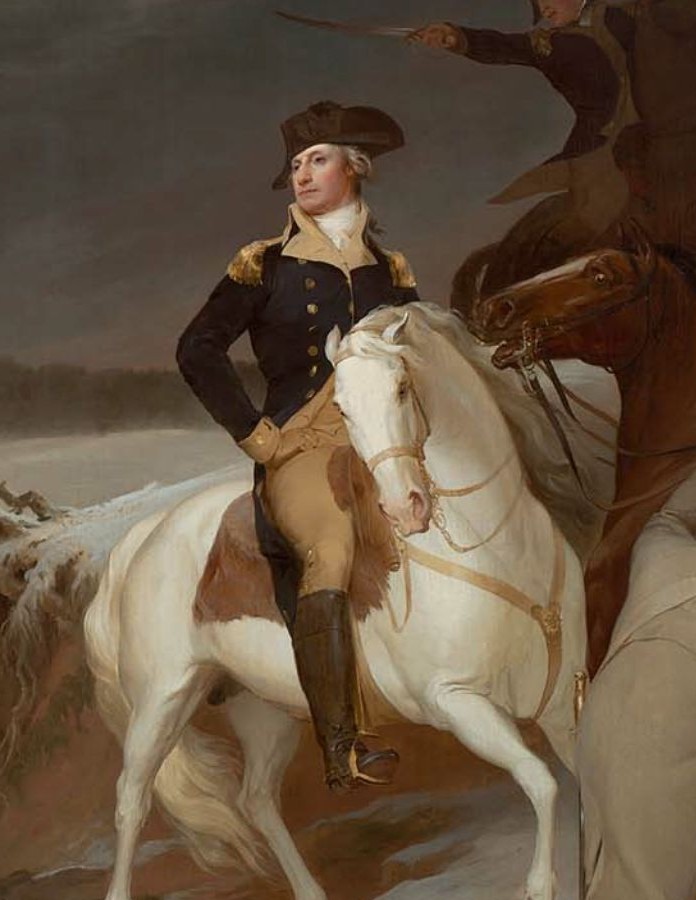
Washington and white horse
The pale horse makes the mounted commander stand out against the darker riders. Horse and rider occupy the rising bank; the river crossing extends behind them rather than placing Washington inside a boat.
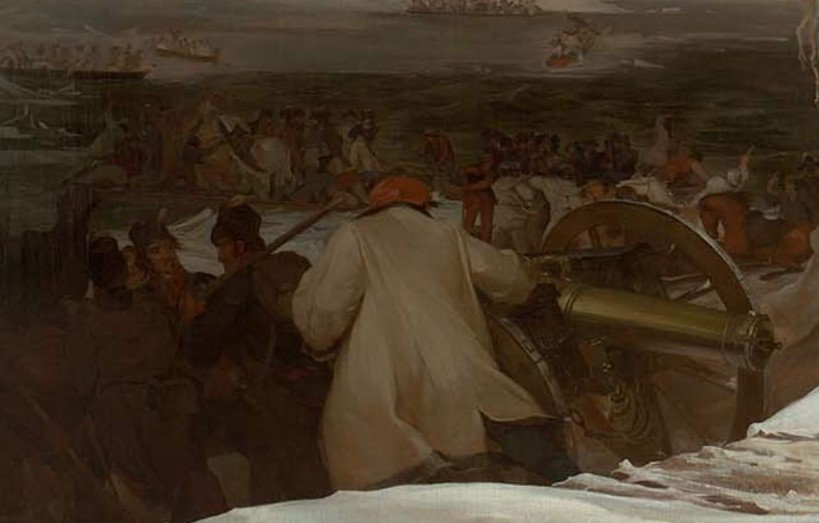
Troops and artillery
The cannon and crowded figures continue the action into the lower left. Their smaller scale connects the imposing foreground group with the movement of an army through the river landscape.
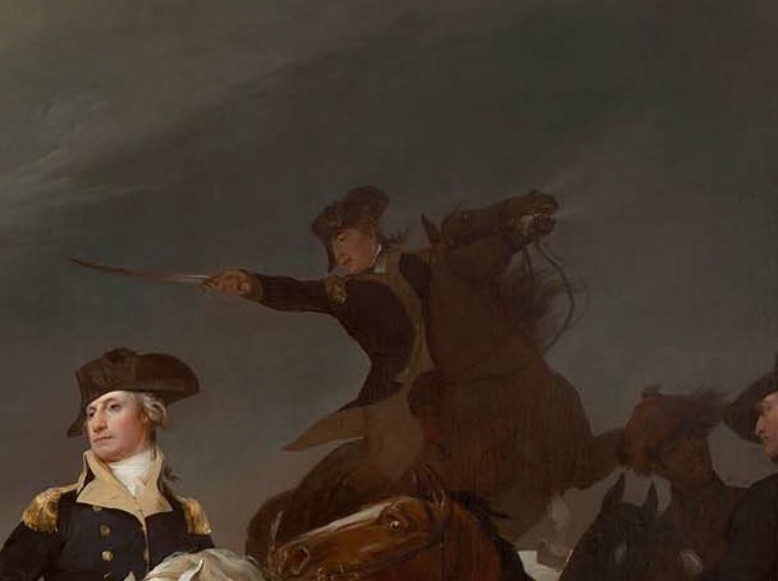
Gesture and stormy sky
An extended arm directs the eye across the scene, while the broad clouded sky opens to the left. The contrast between concentrated figures and open atmosphere gives the scene its dramatic direction.
Washington and the white horse
Washington’s position is slightly right of centre, but the light makes him the main point of arrival for the eye. His white neckcloth, pale waistcoat and breeches connect the face with the horse’s broad light body. The dark coat separates his torso from both the surrounding landscape and the animal beneath him.
The horse provides more than an identifying accessory. Its angled head and placed legs carry the figure across the sloping ground, giving Washington an elevated position without the painter needing a throne, platform or architectural pedestal. The animal’s large pale form also separates him from the compressed brown horses and figures farther to the right.
Washington looks toward the left, into the space occupied by the operation. His arm rests at his side rather than supplying the most emphatic gesture in the picture. Above and behind him, another mounted figure points outward. The contrast allows the commander to remain comparatively contained while surrounding people express direction and movement.
This arrangement makes the painting legible as a portrait even when the viewer first encounters it at a distance. The face is small within the enormous canvas, but its place is reinforced by the horse, costume and open space around the upper body. Sully has organised several layers of visual emphasis around one individual.
A foreground full of work
Below Washington, men and a cannon occupy the darker slope leading toward the river. The wheel introduces a strong circular shape among the more irregular outlines of coats, bodies and equipment. Its proximity to the bottom edge brings the preparation close to the viewer, even though much of the activity remains in shadow.
At the right, a figure in a pale outer garment leans among the horses. The contrast of bent human body and raised equine head makes that group particularly tense. Reins, overlapping limbs and strongly angled forms compress the available space. It is a different kind of movement from the calmer presentation of Washington.
The foreground therefore offers several speeds at once. The commander is held in a readable pose, an officer gestures, animals respond and lower figures attend to the material work of the crossing. The picture does not require every person to repeat the same emotional or physical action.
These supporting figures are essential to the composition without all needing a securely identified name. It is possible to discuss what a figure visibly does, where light falls and how a body relates to its neighbours without inventing a biography. The painting’s public hero depends on an operation carried out by many people whose individual identities are less prominent.
The river and the scale of the landscape
The left half opens into a broad, dim river landscape. Boats and groups of men become progressively smaller, while the distant bank softens beneath the sky. This shift from large foreground forms to small distant activity makes the crossing appear extensive rather than confined to the cluster around Washington.
A bare, broken tree near the centre helps connect the two areas. Its branches reach into the open sky, while its lower trunk and roots sit against the pale ground behind the horse. The tree gives the bank a jagged interruption and helps prevent the broad left-hand space from becoming visually detached from the foreground.
The sky occupies a substantial part of the canvas. Its low light and heavy clouds make the clear face and white horse more conspicuous. They also place human decisions within an environment whose scale is not controlled by any single person in the scene.
Davis’s curatorial account connects the picture’s landscape with the sublime and describes the combination of military detail with a beautiful setting. That interpretation is useful because it recognises the force of the surroundings rather than treating them as an empty backdrop. [2] The visual effect depends on both the commander’s prominence and the larger world through which the army must move.
From two Washington portraits to a historical composition
The project began with a North Carolina commission. In December 1816 the state’s General Assembly sought two full-length Washington portraits. Sully proposed replacing the second conventional likeness with a historical composition. The completed canvas proved too large for the State House, creating a fundamental mismatch between the scale of the painting and the place intended to receive it. [11]
That change in purpose matters. A full-length portrait could present Washington in an established pose, accompanied by carefully chosen attributes. A historical composition required a larger setting, other participants and a moment through which the subject’s authority could become visible in action.
Sully retained the clarity expected of a public portrait while allowing the surrounding scene to expand. Washington’s place is easy to recognise, but the crossing also demands boats, weather, terrain and the work of other people. The resulting picture tests how much narrative a commanding likeness can accommodate.
The commission also exposes a practical limit to artistic ambition. A painting’s success depends partly on whether it can be housed, transported and seen. Its size was not an incidental detail to be considered only after the image had been completed. It shaped the entire subsequent history of the work.
Watch: Thomas Sully
Choose a film to explore the artist’s work, its interpretation and its wider setting.
Thomas Sully: A Lesson in Conservation
The Columbus Museum explores the conservation of a painting by Thomas Sully.
Watch on YouTubeScale, exhibition and sale
Worcester Art Museum’s account gives the completion date as 15 December 1819. Sully subsequently sent the work on tour. The Boston frame maker and gallery owner John Doggett purchased it for $500 in 1823 and arranged for an engraving two years later. [11] Exhibition and reproduction offered different ways of reaching an audience after the original destination had fallen through.
The dimensions help explain the problem. Worcester records a canvas approximately 372.1 by 525.8 centimetres: more than five metres across. The foreground figures and equipment consequently meet a viewer at a very different physical scale from the small illustrations in a book or on a screen. [11]
A digital reproduction makes the overall arrangement convenient to inspect, but it reduces the commanding horse and tiny distant boats to the same manageable page. In front of the object, seeing the whole design and examining a small passage require different distances. Scale is part of how the painting separates the individual leader from the many people involved.
The engraved version introduced another transformation. A print could carry the composition into settings that could never accommodate the enormous canvas. Its audience encountered a translated image on paper, rather than the material paint surface and physical proportions of the original.
What Sully said about its paint
Sully referred to the Delaware painting in his Hints to Young Painters . Discussing a method of loading the prominent lights, he stated that he had used it in this large work and remained satisfied with its appearance in 1851. The observation survives in the posthumous 1873 edition. [12]
This is unusually relevant evidence because the artist names the individual picture. It connects the physical making of the large composition with his later advice about handling paint. The contrast between strongly lit foreground forms and broad dark surroundings can therefore be discussed alongside a specific statement of practice.
The passage remains a retrospective report, rather than a modern technical examination. It does not establish the current condition of every highlight, identify every material across the canvas or provide a treatment history. Nor does the artist’s satisfaction in 1851 guarantee that the surface has remained unchanged ever since.
The distinction allows the manual to contribute without asking it to answer questions it cannot settle. Sully’s words record a procedure and his own assessment of its result; the ordinary colour image shows the arrangement visible in the supplied reproduction. A laboratory or conservation claim would require further object-specific evidence.
Sully and Leutze: two decisions about the same event
Mount Vernon’s comparison distinguishes Sully’s mounted Washington on the Pennsylvania bank from Leutze’s Washington aboard a boat. The difference is a choice of narrative moment as well as pose. [13] In Sully, the commander looks toward an operation unfolding before him. In Leutze, the viewer is brought into the crossing itself.
Sully spreads the action across land, river and distant bank. The open landscape allows the small boats to register as part of a much wider military undertaking. His dominant foreground horse gives Washington a stable place from which the rest of the picture can be read.
Leutze’s Washington Crossing the Delaware brings the participants together within a single, more immediately legible vessel. Comparing the two works makes clear how a change of viewpoint changes the story a picture can tell. Neither should be judged solely by whether it resembles the other.
The dates also matter: Sully’s painting was completed in 1819, thirty-two years before Leutze’s 1851 canvas. The earlier work should not be treated as an illustration made after the familiar later image. It belongs to a separate stage in the visual remembrance of Washington and the Revolution.
Reading a historical picture critically
The painting can sustain close attention without becoming an illustrated checklist of military facts. Its weather, boats, gestures and equipment contribute to a persuasive scene, but that does not make every detail independently verified. Visual plausibility and documentary proof answer different questions.
The clearest starting point is the decision the picture makes openly: Washington is still on shore, elevated on horseback, with the crossing already active around him. From there, a reader can follow how the broad sky, broken tree, pale ground, crowded right edge and dark lower figures support that moment.
The work’s later museum history adds another question of space. Davis describes the challenge of displaying the canvas with its original frame in the MFA’s installation. [2] That historical account helps explain the demands of the object; it is not a fresh check of which gallery is open or whether the painting is on view today.
The MFA credit identifies the gift of the owners of the Old Boston Museum. [11] That earlier museum and theatre should remain distinct from the present Museum of Fine Arts. Following the painting between institutions is part of its history, just as following the army between banks is part of its subject.
Within Sully’s paintings , the Delaware canvas gives unusual prominence to historical narrative and landscape. It also remains connected to his portrait practice: the surrounding operation is organised around a carefully presented face, body and public role. The picture’s ambition lies in holding those different demands together.
Artworks directory
A selection documented in the linked articles, with related studies and a print after Sully listed separately. Dates identify individual objects; Musidora’s date range does not imply continuous work. This is not a catalogue raisonné. The Drawing filter includes watercolour and reproductive printmaking.
| Name | Date | Medium |
|---|---|---|
| Captain Charles Stewart | 1811–1812 | Painting — oil on canvas |
| George Frederick Cooke as Richard III | 1811–1812 | Painting — oil on canvas |
| Musidora | 1813–35; Met panel | Painting — oil on wood |
| Lady with a Harp: Eliza Ridgely | 1818 | Painting — oil on canvas |
| The Passage of the Delaware | 1819 | Painting — oil on canvas |
| The Torn Hat | 1820 | Painting — oil on panel |
| Portrait of the Artist | 1821; Met canvas | Painting — oil on canvas |
| John Quincy Adams | 1824; NGA oil study | Painting — oil on canvas |
| John Quincy Adams (watercolour study) | 1824; Met 38.146.1 | Drawing — watercolour, black chalk and graphite on paper |
| John Quincy Adams (Durand after Sully) | 1826; PAFA 1876.9.184a | Drawing — etching and engraving on paper |
| The David Children | 1826 | Painting — oil on canvas |
| The Vanderkemp Children | 1832 | Painting — oil on canvas |
| Queen Victoria | 1838; full-length Met canvas | Painting — oil on canvas |
| Queen Victoria (life study) | 1838; Met 14.126.1 | Painting — oil on canvas |
| Mother and Son | 1840; inscription date | Painting — oil on canvas |
| The Coleman Sisters | 1844 | Painting — oil on canvas |
| Andrew Jackson | 1845; after the 1824 life portrait | Painting — oil on canvas |
Frequently Asked Questions
No. His Washington is mounted on the Pennsylvania riverbank before his own passage. The familiar standing figure aboard a boat belongs to Leutze’s later composition. [13]
Worcester Art Museum’s research gives 15 December 1819. [11]
The completed canvas was too large for its intended State House setting. [11]
It belongs to the Museum of Fine Arts, Boston, accession 03.1079. Check the museum’s current information before planning a visit to see it. [1]
No. The event occurred in 1776; Sully was born in 1783 and completed his painting in 1819.
Discussion
Look again at the images and ideas explored in The Passage of the Delaware by Thomas Sully. These editorial prompts invite your observations.
Reader Insights
Trace your eye from Washington’s face through the horse to the boats. Which shapes make the separate areas feel connected?
What changes when a leader is shown preparing to cross rather than already aboard a boat?
How might standing before a five-metre-wide canvas change your understanding of the small distant figures?
Join the Conversation
Share a detail, comparison or question about The Passage of the Delaware by Thomas Sully below.
References
- Wikimedia Commons / Museum of Fine Arts , Boston: The Passage of the Delaware, 1819, image and object identification. View source
- Museum of Fine Arts , Boston: Elliot Bostwick Davis, curator transcript on Sully’s Delaware painting. View source
- Pennsylvania Academy of the Fine Arts, George Frederick Cooke as Richard III, 1811–1812, 1812.1. View source
- Metropolitan Museum of Art, Musidora, 1813–35, 21.48. View source
- National Gallery of Art, Open Data: selected Sully object and published-image records. View source
- Wikimedia Commons / MFA source image, The Torn Hat: 16.104 image and PD-Art rights. View source
- Metropolitan Museum of Art, Portrait of the Artist, 1821, 94.23.3. View source
- Metropolitan Museum of Art, Queen Victoria,1838,2021.140. View source
- Metropolitan Museum of Art, Mother and Son, 1840, 14.126.5. View source
- George Washington’s Mount Vernon: 10 Facts about Washington’s Crossing of the Delaware River . View source
- Worcester Art Museum: Early American Paintings , Thomas Sully biography, Delaware commission and subsequent history. View source
- Thomas Sully: Hints to Young Painters and the Process of Portrait-Painting , 1873, printed p. 49. View source
- George Washington’s Mount Vernon: Crossing the Delaware in Art . View source
- Splash image source.
Thomas Sully, The Passage of the Delaware, 1819. Oil on canvas. Museum of Fine Arts, Boston, Gift of the owners of the Old Boston Museum, 03.1079. Public domain reproduction. Public domain .
View source