 by
Tom Gurney
Tom Gurney BSc (Hons) is an art history expert with over 20 years experience
Email:
tomgurney1@gmail.com
/ Phone:
+44 7429 011000
The Coleman Sisters by Thomas Sully: Introduction
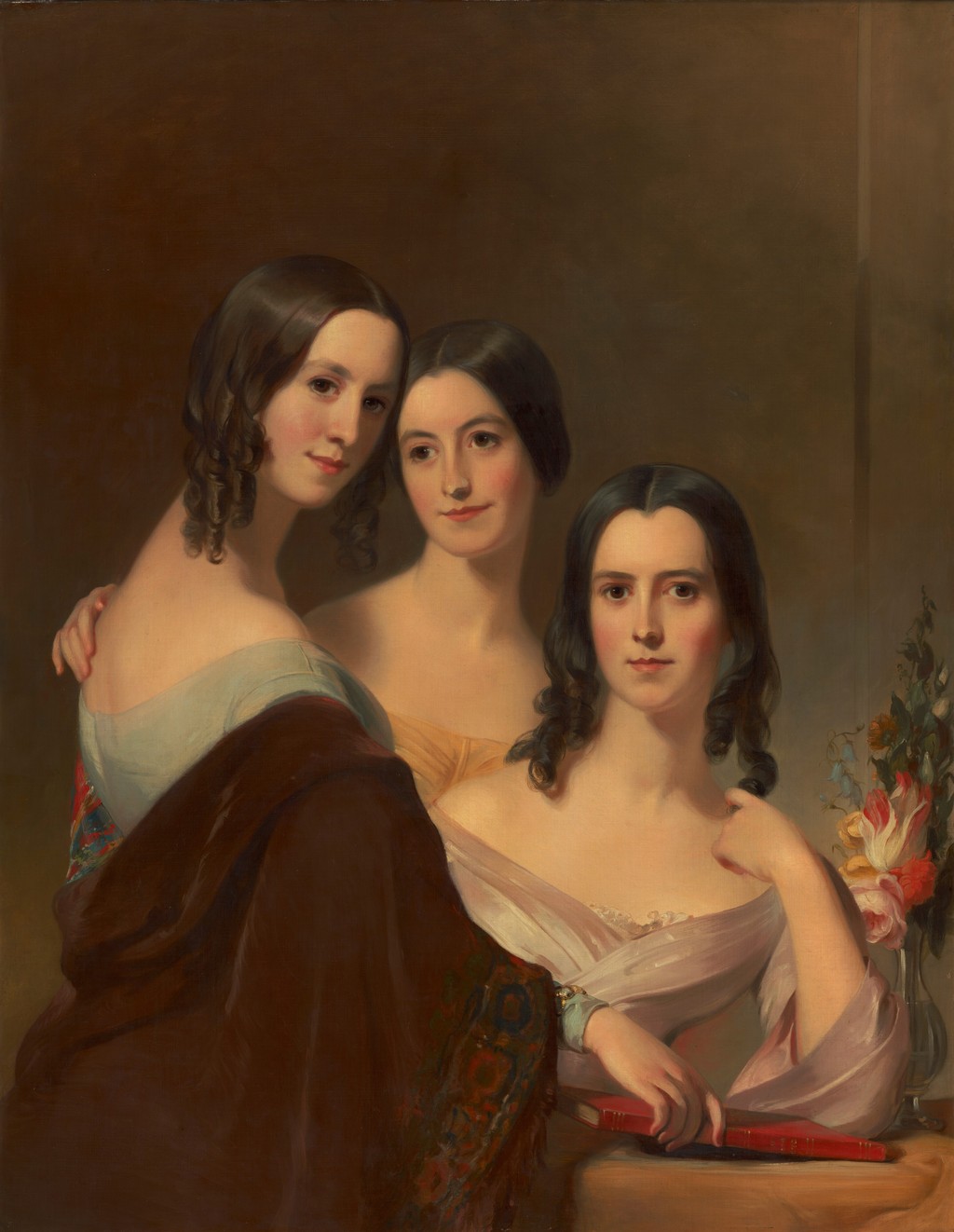
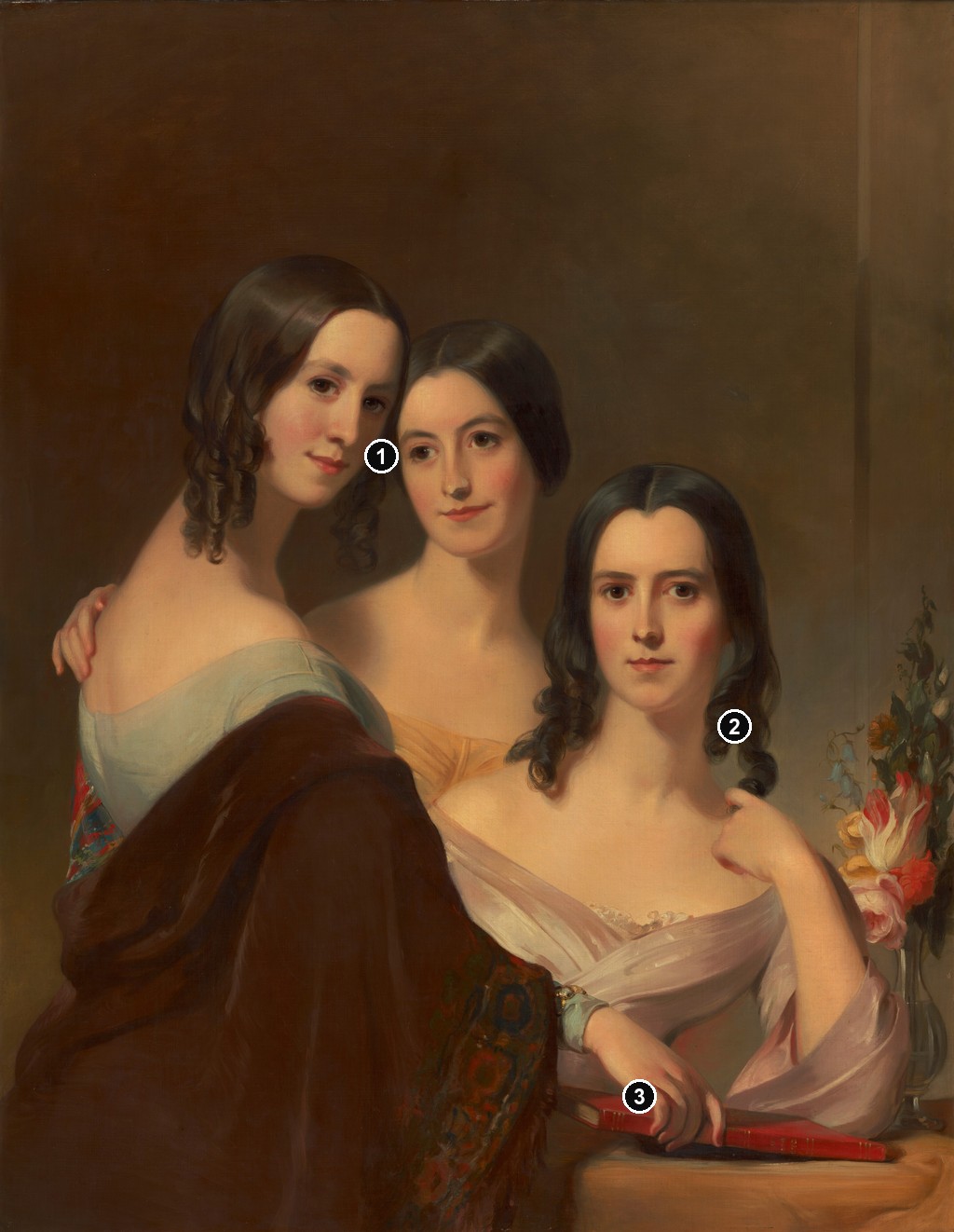
Thomas Sully’s The Coleman Sisters presents three members of a wealthy Pennsylvania family in a closely connected group. Sarah stands at the left, Isabel appears between her sisters, and Margaret sits at the right. Their blue, yellow and pink dresses distinguish the figures while a dark shawl, a red book and a vase of flowers draw the arrangement together. Sully painted the portrait in 1844; it now belongs to the National Gallery of Art in Washington. [1] [2]
The picture combines the public formality of an accomplished group portrait with small gestures of familiarity. Isabel places a hand on Sarah’s shoulder, while Margaret touches a curl near her neck. Two sisters look outward and one turns within the group. These differences give the portrait movement without disturbing its carefully arranged presentation.
At a Glance
- Artist Thomas Sully
- Title The Coleman Sisters
- Date 1844
- Sitters Sarah Hand Coleman, Isabel Coleman and Margaret Coleman
- Medium Oil on canvas
- Dimensions 112.5 × 87.5 cm
- Collection National Gallery of Art, Washington
- Accession 1947.9.3
- Credit Gift of William C. Freeman
This work across Thomas Sully’s career
Musidora
1813–35; Met panelThe Torn Hat
1820Portrait of the Artist
1821; Met canvasJohn Quincy Adams
1824; NGA oil studyQueen Victoria
1838; full-length Met canvasMother and Son
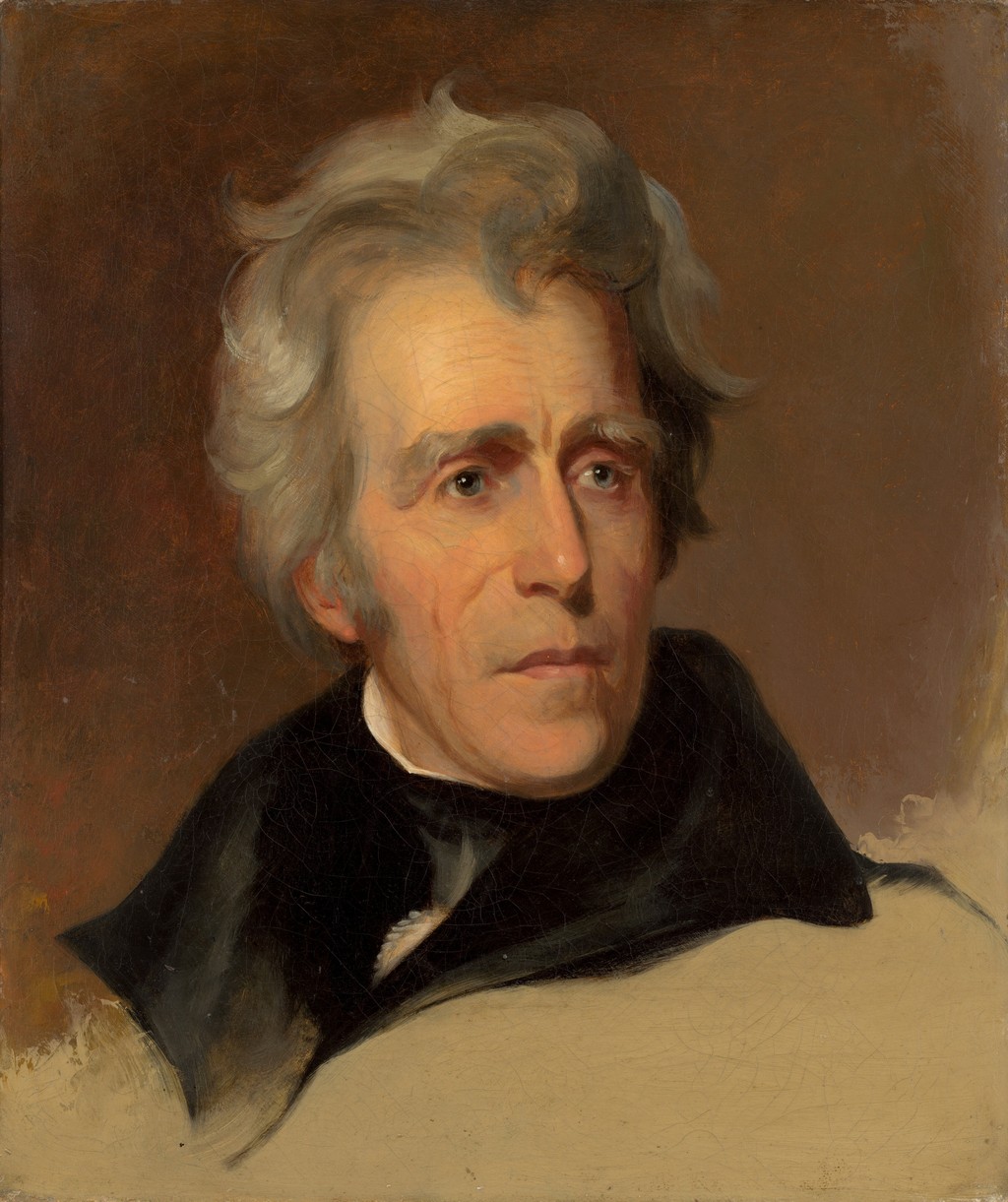
1840; inscription dateAndrew Jackson
1845; after the 1824 life portraitNotes and sources
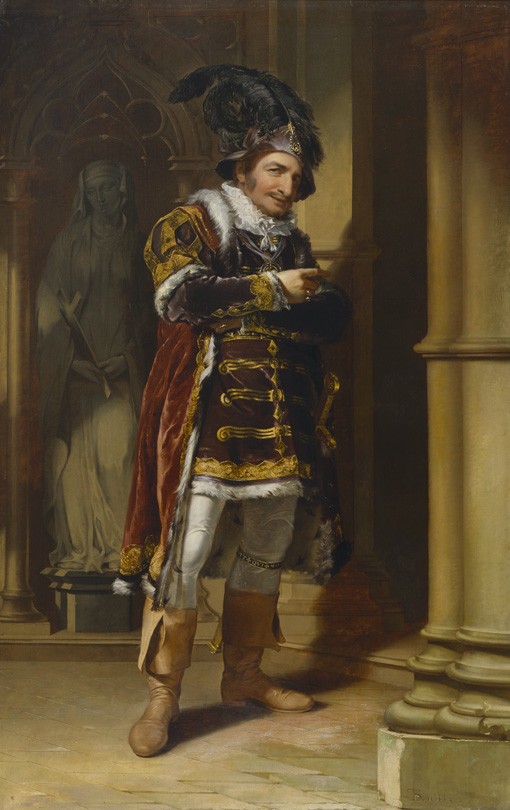
George Frederick Cooke as Richard III. Actor and theatrical role meet in an imposing full-length portrait. [3]
Musidora. A turned figure beside a pool belongs to a literary episode, not a named portrait sitter. [4]
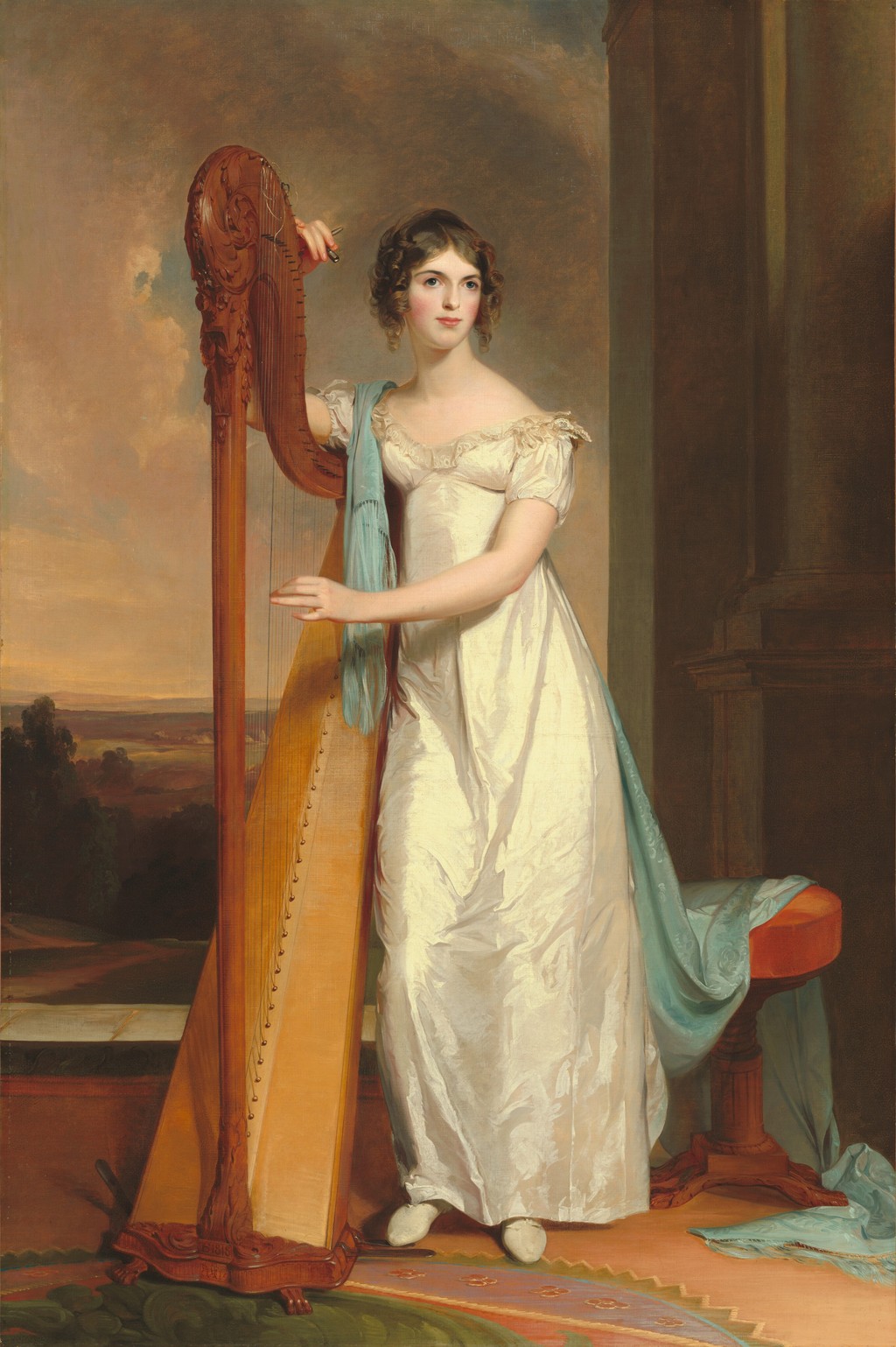
Lady with a Harp: Eliza Ridgely. The harp connects the sitter’s accomplishment with the arrangement of her body. [5]
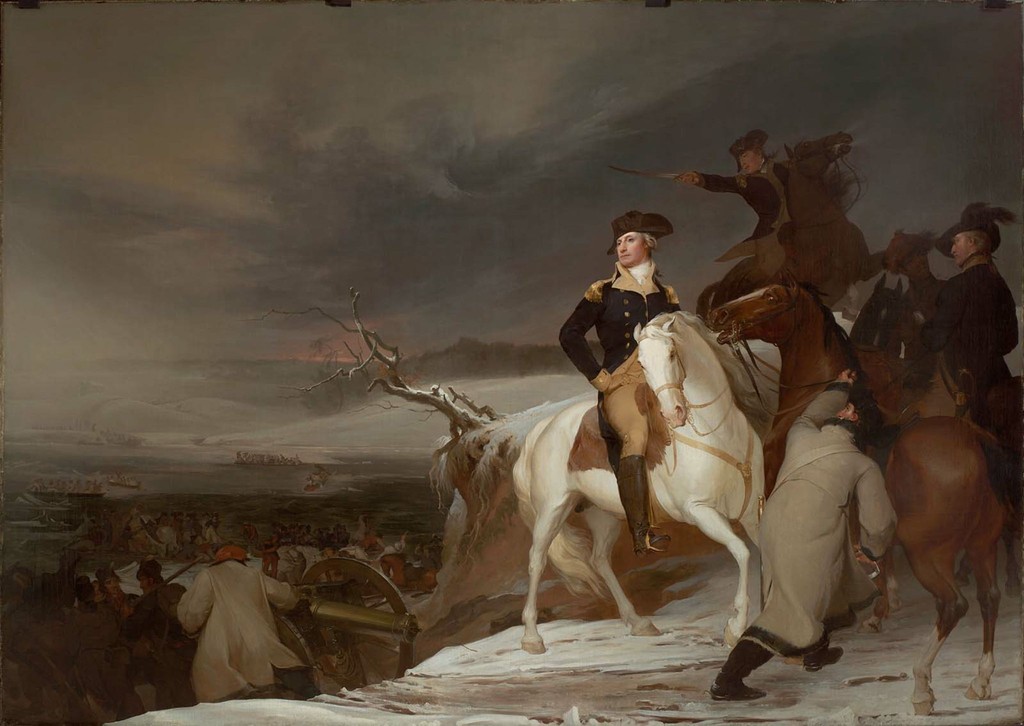
The Passage of the Delaware. Washington is mounted on shore while the crossing proceeds around him. [6]
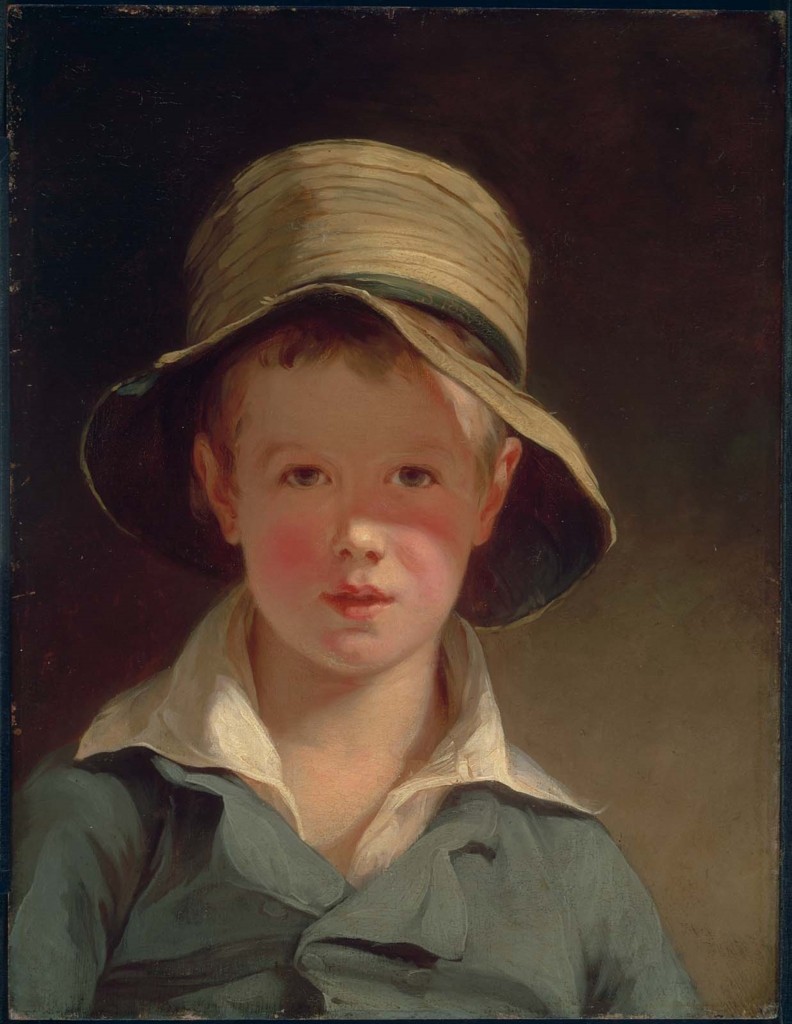
The Torn Hat. A worn hat and directed light give the artist’s son an informal presentation. [7]
Portrait of the Artist. A raised brush joins the painter’s hand to the illuminated head. [8]
John Quincy Adams. A developed likeness supplied information for a larger portrait project. [5]
The David Children. The older children direct attention toward the reclining infant. [5]
The Vanderkemp Children. A portfolio and overlapping hands connect the three children. [5]
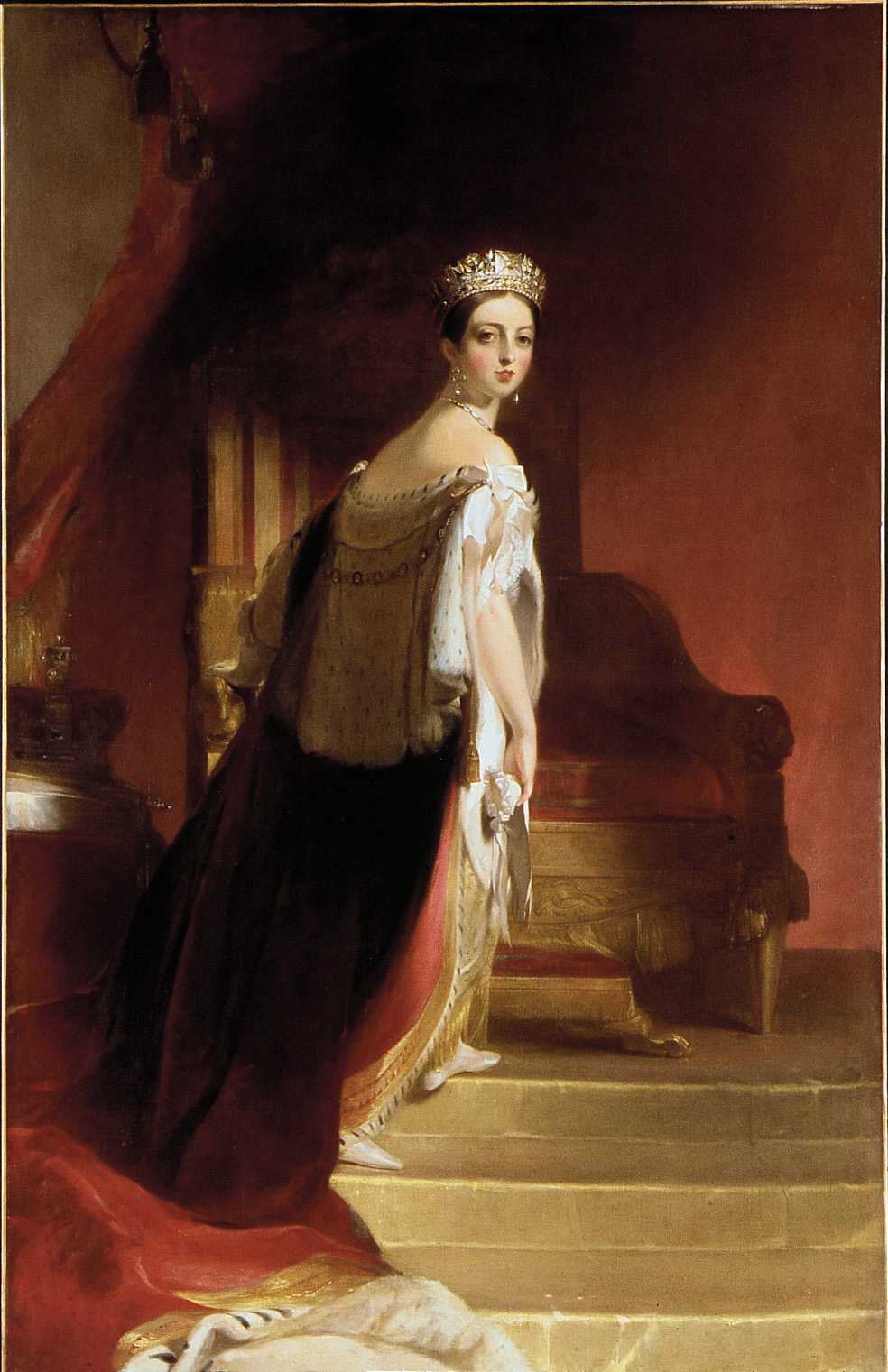
Queen Victoria. The royal likeness extends through robes, insignia and a ceremonial setting. [9]
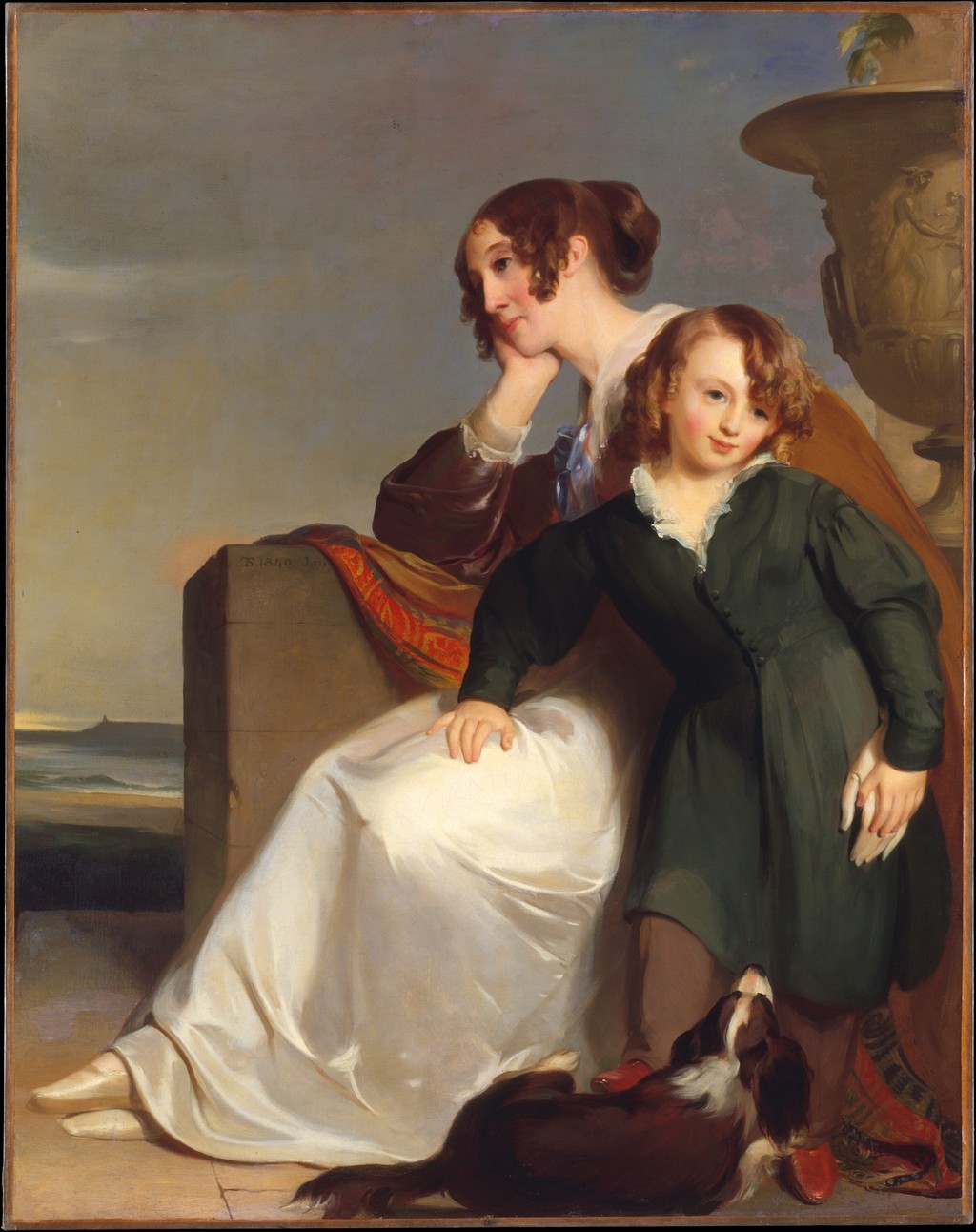
Mother and Son. Jane Darley and her son are connected through touch and differing gazes. [10]
The Coleman Sisters (current article). Contrasting dresses, heights and gestures hold three individual likenesses together. [5]
Andrew Jackson. This later version must be distinguished from its earlier life source. [5]
Contents
- Who are the three sisters?
- An ironmaking family and an expensive commission
- Three faces on a descending line
- The colours of the dresses and shawl
- The red book and flowers
- A polished surface, and evidence of later treatment
- Comparing The Vanderkemp Children
- From Margaret’s family to the National Gallery
- Annotated details
Who are the three sisters?
The sitters were daughters of Thomas Bird Coleman and Hannah Coleman of Cornwall, Pennsylvania. The NGA catalogue identifies Sarah Hand Coleman at the left, Isabel in the middle and Margaret at the right. Margaret, although seated lower than the other two, was the oldest of the three represented. [2]
Their positions are easier to remember when connected with their clothing. Sarah wears a pale blue dress beneath a dark, patterned shawl. Isabel’s yellow dress is largely hidden because she stands behind her sisters. Margaret’s pink dress fills much of the lower right. The painter makes a distinct place for each sitter without separating them into three independent portraits.
The family connection is expressed through proximity and touch. The heads overlap closely against a subdued background, while Isabel’s hand extends around Sarah’s shoulder. This gesture creates a visible bond across the gap between their faces. Margaret’s position is different: her seated body extends downward, giving the closely gathered heads a broader support beneath them.
Annotated Details from The Coleman Sisters
The numbered points identify visible features discussed in this article. Return from each detail to the whole composition. Thomas Sully, The Coleman Sisters, 1844. Sarah Hand Coleman at left, Isabel centrally and Margaret seated right. Oil on canvas, 112.5 × 87.5 cm. National Gallery of Art, Washington, Gift of William C. Freeman, 1947.9.3. CC0. Image source. CC0; National Gallery of Art Open Access. Numbers added to a separate overview; detail images cropped from the source. The complete unnumbered image is retained in this article.
Details from THE COLEMAN SISTERS
Compare the cropped details with the complete images above. Notice how their colours, shapes and positions contribute to the larger compositions.
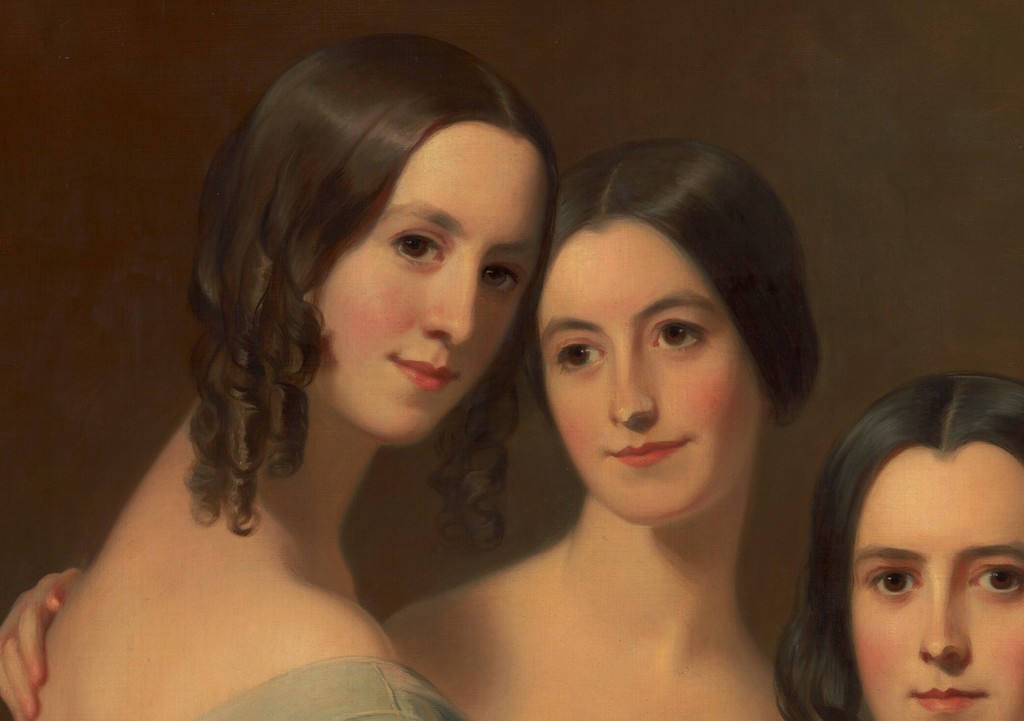
Sarah and Isabel
The two figures at the left lean towards one another. Their faces sit at slightly different heights, and the arm around the left shoulder helps bind the pair into the group.
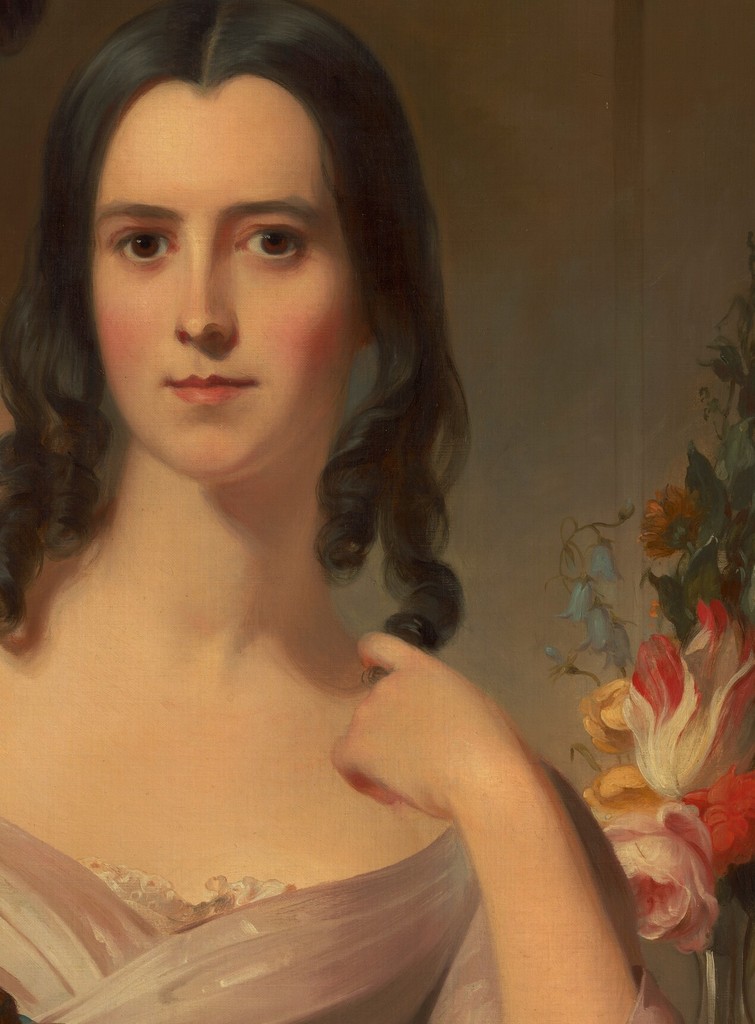
Margaret and flowers
The figure at the right faces more directly outwards, beside the flowers at the edge. Her lower position carries the sequence of heads down across the composition.
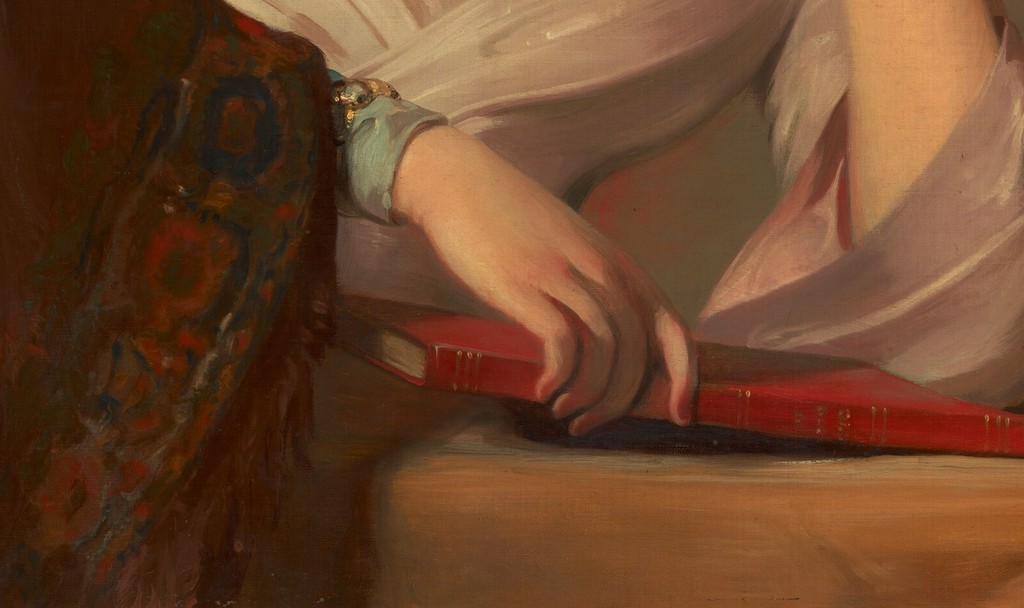
Hands and red book
A hand rests on the red book near the lower edge. The small horizontal accent steadies the flowing fabrics and gives the group a firm visual base.
An ironmaking family and an expensive commission
The Coleman family’s wealth came from industrial holdings and land. The NGA’s catalogue identifies the sisters’ father with the Colebrook iron furnace and extensive property in the Cornwall area. That background matters because this was a substantial commissioned portrait, with fashionable clothing, multiple sitters and the cost of a large painted likeness. [2]
The catalogue reports an execution period of 6 March to 13 April 1844 in Sully’s Philadelphia studio, with a fee of three hundred dollars. It also records a later journal entry stating that the sisters’ guardian paid both the painter and the framer, James Earle. This places the picture within the practical business of portrait making, where the finished object included a frame as well as a painted canvas. [2]
The industrial history should be kept specific. The source names the Colebrook furnace; it does not justify treating every surviving historic furnace around Cornwall as the exact property intended. Nor does the portrait show the family’s workplace. It presents the sisters through clothing, objects and relationships, leaving the economic activity that supported this setting outside the visible scene.
Three faces on a descending line
Sarah’s head is highest and farthest left. Isabel’s appears slightly lower and farther right; Margaret’s completes the descent at the front. This diagonal gives the composition a clear direction even before the viewer begins to follow the eyes and hands. The arrangement also allows all three faces to remain visible within a relatively narrow vertical canvas.
The gazes modify that order. Sarah and Margaret face the viewer, while Isabel looks toward Sarah. Isabel therefore becomes a connection within the group: her attention draws the eye back toward the left, interrupting a simple movement down and out of the picture. Her hand on Sarah’s shoulder reinforces that return.
Margaret’s gesture works more quietly. Her raised hand touches a curl, creating a small passage of movement beside her face. The other hand rests near the red book at the bottom. The two actions distribute attention between the upper group of heads and the objects that close the composition below. They give the sitter a particular presence without explaining exactly what she might be thinking.
The colours of the dresses and shawl
The light blue, yellow and pink dresses make the sisters easy to distinguish at a glance. Yet none of these colours occupies the whole painting. Sarah’s blue is interrupted by a deep brown-maroon shawl, while Isabel’s yellow appears mainly between the two foreground figures. Margaret’s pink has a larger, lighter passage across the lower right.
The shawl is especially important to the balance. Its dark expanse prevents the left side from becoming a continuous pale area of skin and dress. Near the lower middle, the fabric’s ornamental pattern introduces smaller touches of colour. These details reward a closer look after the faces have established the group’s main rhythm.
Across the three women, skin tones create another continuity. The exposed shoulders form a series of light shapes beneath the heads. Their different angles prevent the figures from merging completely, but the repeated warm colour makes them belong together. Sully uses costume to distinguish the individuals and flesh tones to connect the ensemble.
The red book and flowers
The book lies along the lower edge near the seated Margaret. Its bright red cover provides a narrow horizontal accent beneath the curves of arms, shoulders and dresses. At the far right, flowers rise in a glass vase, bringing smaller changes of colour into an area otherwise dominated by the pale dress and subdued background.
The objects help establish the portrait’s social setting, but their visible role is also compositional. The book gives the group a firm lower boundary; the flowers carry attention upward along the right edge. Their different shapes offer a contrast between something regular and flat and something irregular and growing.
It would be tempting to identify the book as a particular work or the flowers as a coded message. The consulted evidence does not establish either claim. The picture is more secure ground for asking how the objects work with the figures: what their colours repeat, where their edges lead and how much space they occupy. The catalogue draws particular attention to the ornamental fabric and still-life details. [2]
Watch: Thomas Sully
Choose a film to explore the artist’s work, its interpretation and its wider setting.
Thomas Sully: A Lesson in Conservation
The Columbus Museum explores the conservation of a painting by Thomas Sully.
Watch on YouTubeA polished surface, and evidence of later treatment
The technical account published by the NGA in 1998 describes thin, smooth painting with little appreciable impasto and modifying glazes. It also records that the canvas had been mounted onto plywood during a 1935 treatment. These are object-specific findings; they should not be transferred automatically to every painting Sully made. [2]
The smooth appearance suits the portrait’s careful control of faces, fabrics and accessories. It helps the three heads read as a continuous, highly finished passage. The decorative detail in the shawl and flowers can then supply variety without disrupting the overall presentation.
The same catalogue records a false monogram on the reverse. That observation concerns a later mark, not a reattribution of the portrait away from Sully. It is a useful reminder that an object can accumulate inscriptions and interventions after leaving the painter’s studio. The owning museum continues to attribute the painting to Thomas Sully. [1] [2]
Comparing The Vanderkemp Children
In The Vanderkemp Children , painted twelve years earlier, Sully grouped three younger siblings around an artist’s portfolio. The wider canvas compresses their bodies and brings their hands together across one shared object. The Coleman Sisters uses a taller format and gives more space to the fall of costumes beneath the faces. [2]
The difference changes the pace of looking. In the Vanderkemp portrait, the portfolio’s ribbons and the youngest child’s open mouth suggest an action still unfolding. In the Coleman picture, the hand on a shoulder, the touched curl and the carefully placed book are quieter gestures. They sustain a more settled presentation.
Neither arrangement gives direct access to the family’s private relationships. The comparison is useful because it shows the range of solutions available within a three-person portrait. Sully could gather sitters through a shared activity or connect them through repeated colours, touch and a sequence of heads. The two paintings make different uses of the same basic task: presenting individuals together without losing the group.
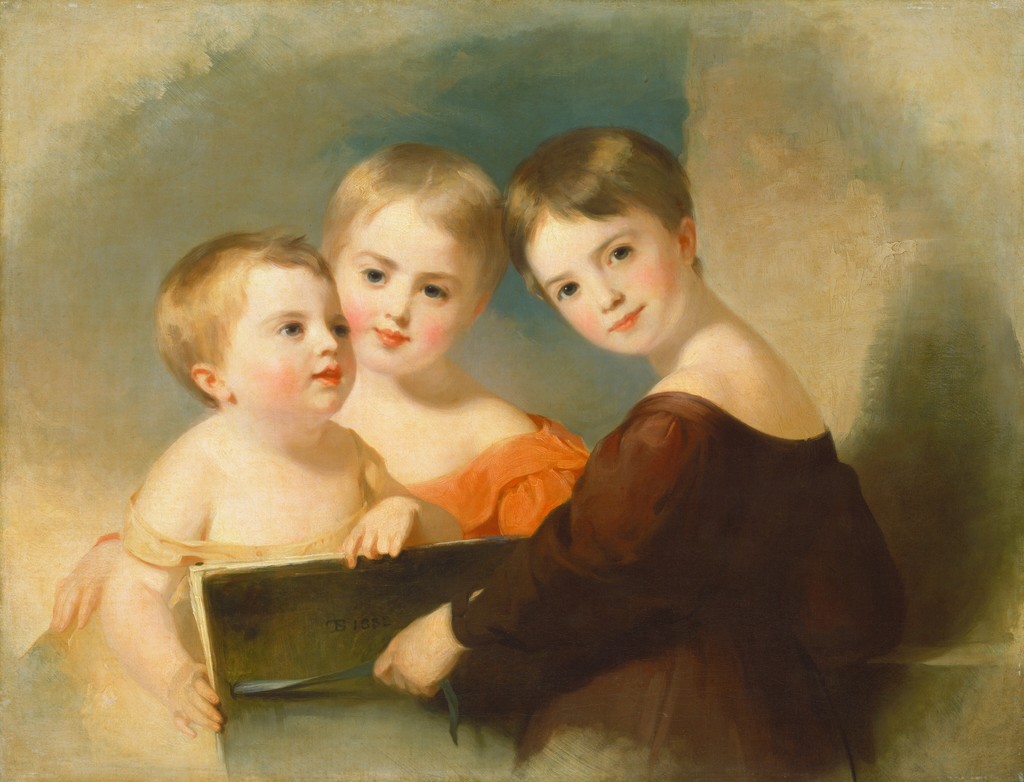
Thomas Sully, The Vanderkemp Children, 1832. Left to right: John Jacob, Jr., Bertha Frances and Pauline Elizabeth. Oil on canvas, 70.9 × 90.5 cm. National Gallery of Art, Washington, Gift of Countess Mona Bismarck, 1966.11.1. CC0.
Image source
.
CC0; National Gallery of Art Open Access
.
From Margaret’s family to the National Gallery
The NGA’s current provenance traces the painting through Margaret Coleman Freeman, one of the sitters, and her daughter Margaret Freeman Buckingham. It then passed to William Coleman Freeman, who gave it to the museum in 1947. The accession number is 1947.9.3. [1]
That history preserves the connection between the represented family and the physical portrait. The seated figure at the right was also an owner through whom the painting descended. What now appears in a national collection began as a likeness intended for a particular family, with its own knowledge of the faces and relationships represented.
Returning to the picture after reading those names, the small gestures become more specific. Sarah’s outward look, Isabel’s turned attention and Margaret’s raised hand belong to three identifiable people. The formal arrangement does not remove their individuality; it gives the viewer a measured way to approach it. The broader Sully portraits page places this family group beside his actors, public figures and more intimate likenesses.
Artworks directory
A selection documented in the linked articles, with related studies and a print after Sully listed separately. Dates identify individual objects; Musidora’s date range does not imply continuous work. This is not a catalogue raisonné. The Drawing filter includes watercolour and reproductive printmaking.
| Name | Date | Medium |
|---|---|---|
| Captain Charles Stewart | 1811–1812 | Painting — oil on canvas |
| George Frederick Cooke as Richard III | 1811–1812 | Painting — oil on canvas |
| Musidora | 1813–35; Met panel | Painting — oil on wood |
| Lady with a Harp: Eliza Ridgely | 1818 | Painting — oil on canvas |
| The Passage of the Delaware | 1819 | Painting — oil on canvas |
| The Torn Hat | 1820 | Painting — oil on panel |
| Portrait of the Artist | 1821; Met canvas | Painting — oil on canvas |
| John Quincy Adams | 1824; NGA oil study | Painting — oil on canvas |
| John Quincy Adams (watercolour study) | 1824; Met 38.146.1 | Drawing — watercolour, black chalk and graphite on paper |
| John Quincy Adams (Durand after Sully) | 1826; PAFA 1876.9.184a | Drawing — etching and engraving on paper |
| The David Children | 1826 | Painting — oil on canvas |
| The Vanderkemp Children | 1832 | Painting — oil on canvas |
| Queen Victoria | 1838; full-length Met canvas | Painting — oil on canvas |
| Queen Victoria (life study) | 1838; Met 14.126.1 | Painting — oil on canvas |
| Mother and Son | 1840; inscription date | Painting — oil on canvas |
| The Coleman Sisters | 1844 | Painting — oil on canvas |
| Andrew Jackson | 1845; after the 1824 life portrait | Painting — oil on canvas |
Frequently Asked Questions
Sarah Hand Coleman stands at the left in blue, Isabel appears centrally in yellow, and Margaret sits at the right in pink. [2]
It dates to 1844. The NGA catalogue reports work between 6 March and 13 April. [2]
William C. Freeman gave it in 1947 after it had passed through the family of Margaret, the seated sister. [1]
Discussion
Look again at the images and ideas explored in The Coleman Sisters by Thomas Sully. These editorial prompts invite your observations.
Reader Insights
Follow the descending line of the three heads. Where do the sisters’ gazes redirect your attention?
How do the shawl, red book and flowers affect the balance of the lighter dresses?
Compare this painting with The Vanderkemp Children. Which choices make one group seem more settled and the other more active?
Join the Conversation
Share a detail, comparison or question about The Coleman Sisters by Thomas Sully below.
References
- National Gallery of Art: The Coleman Sisters , 1844, 1947.9.3. View source
- National Gallery of Art: American Paintings of the Nineteenth Century , Part II, 1998, pp. 175–178 and 182–184. View source
- Pennsylvania Academy of the Fine Arts, George Frederick Cooke as Richard III, 1811–1812, 1812.1. View source
- Metropolitan Museum of Art, Musidora, 1813–35, 21.48. View source
- National Gallery of Art, Open Data: selected Sully object and published-image records. View source
- Wikimedia Commons / MFA image source, The Passage of the Delaware: original image and PD-Art record. View source
- Wikimedia Commons / MFA source image, The Torn Hat: 16.104 image and PD-Art rights. View source
- Metropolitan Museum of Art, Portrait of the Artist, 1821, 94.23.3. View source
- Metropolitan Museum of Art, Queen Victoria,1838,2021.140. View source
- Metropolitan Museum of Art, Mother and Son, 1840, 14.126.5. View source
- Splash image source.
Thomas Sully, The Coleman Sisters, 1844. Sarah Hand Coleman at left, Isabel centrally and Margaret seated right. Oil on canvas, 112.5 × 87.5 cm. National Gallery of Art, Washington, Gift of William C. Freeman, 1947.9.3. CC0. CC0; National Gallery of Art Open Access .
View source