 by
Tom Gurney
Tom Gurney BSc (Hons) is an art history expert with over 20 years experience
Email:
tomgurney1@gmail.com
/ Phone:
+44 7429 011000
Queen Victoria by Thomas Sully: Introduction
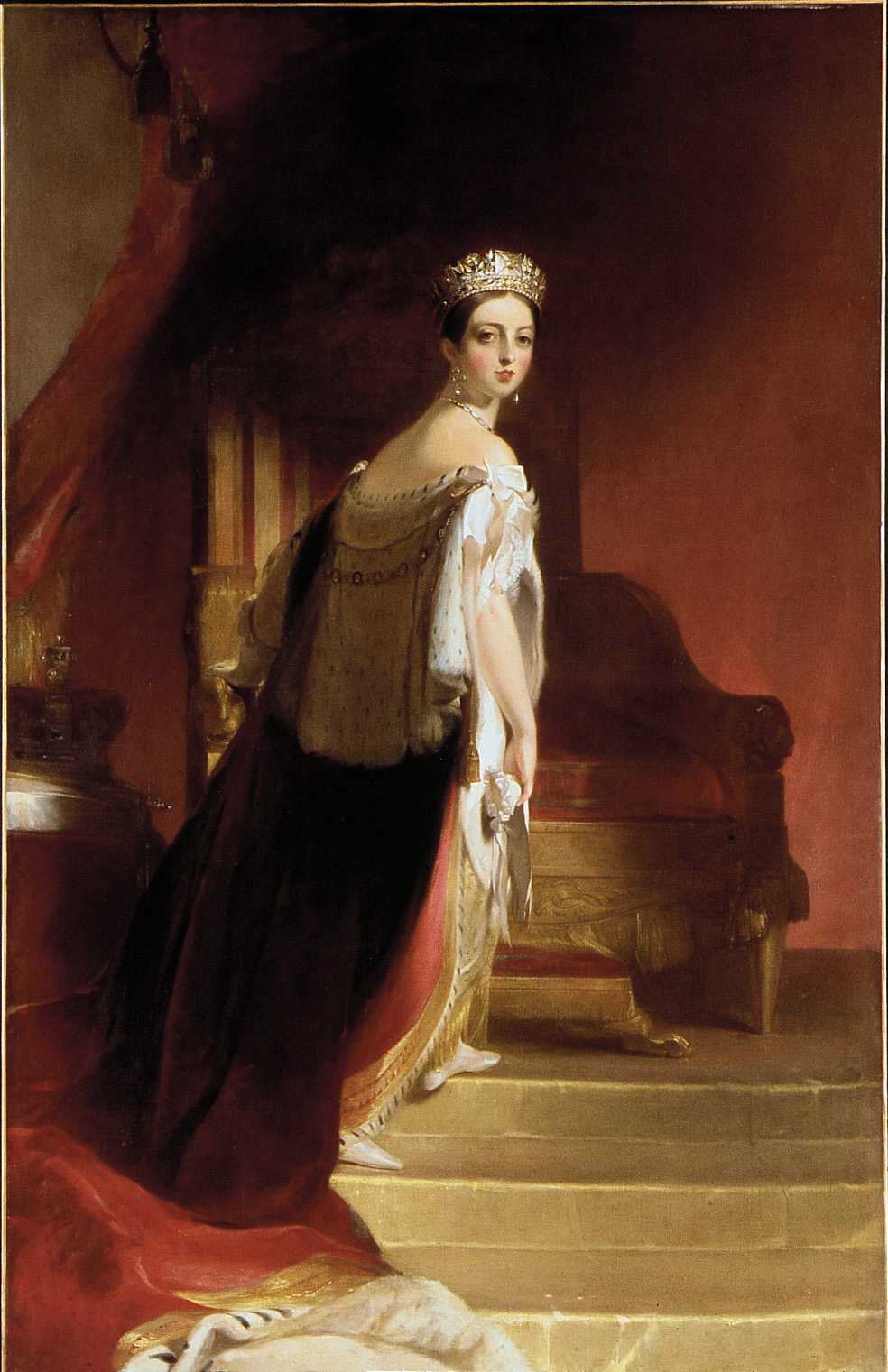
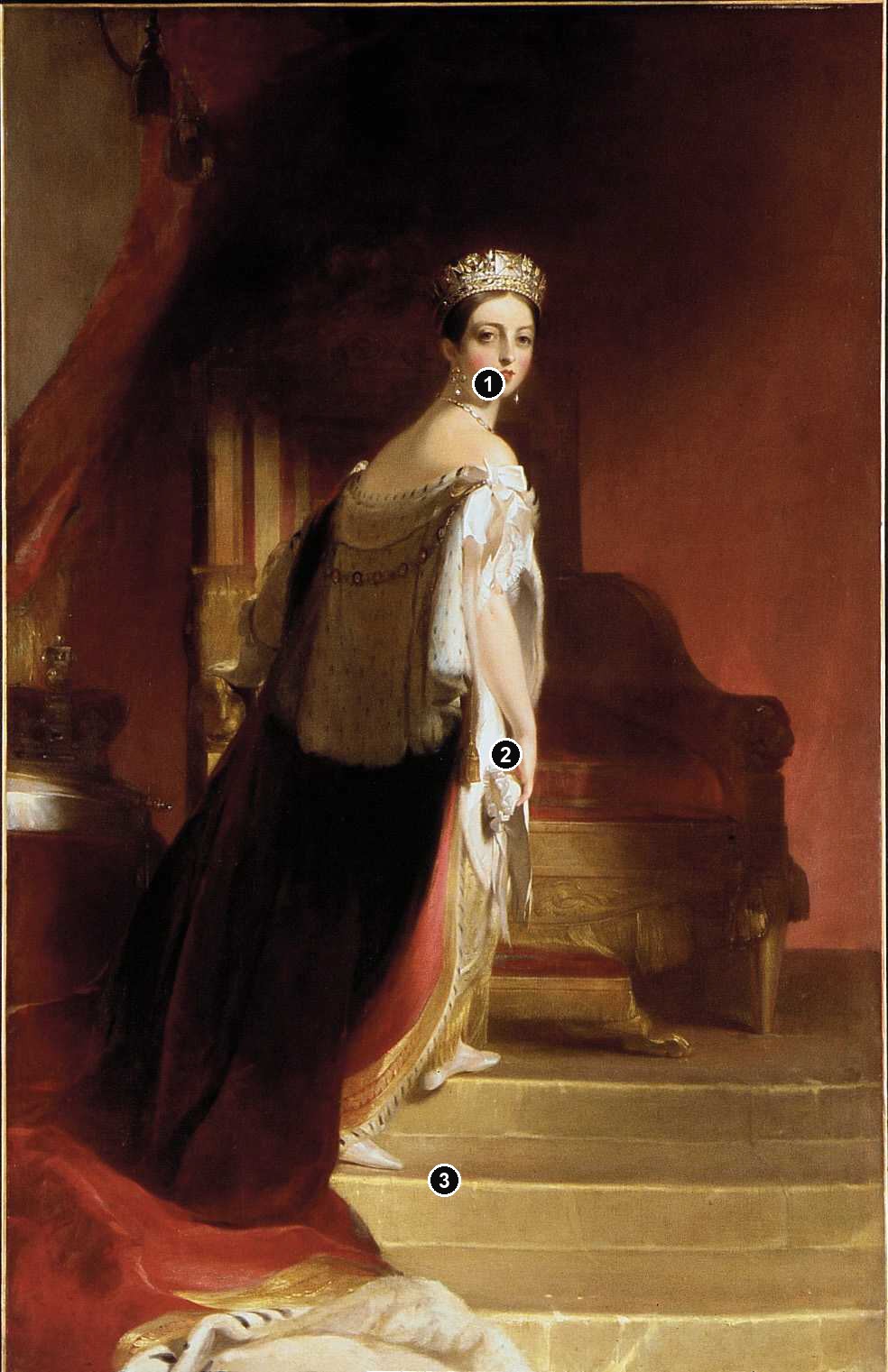
Thomas Sully’s full-length Queen Victoria presents the young monarch turning toward the viewer as she ascends the steps of her throne. The turn gives the portrait a sense of movement, while the state robes, diadem and surrounding furnishings establish the ceremony of royal representation. The painting belongs to the Metropolitan Museum of Art, which catalogues it as an 1838 work and acquired it in 2021. [1]
It was an American commission, made for the Philadelphia Society of the Sons of Saint George. Sully travelled to London to obtain the likeness from life, then developed the full-length canvas after returning to Philadelphia. The finished picture is only one part of that project: a head study, a separate version made for engraving and later replicas each have their own identity and history. [1] [2]
At a Glance
- Artist Thomas Sully
- Title Queen Victoria
- Catalogue date 1838
- Medium Oil on canvas
- Dimensions 238.8 × 147.3 cm
- Original commission Society of the Sons of Saint George, Philadelphia
- Collection The Metropolitan Museum of Art, New York
- Accession 2021.140
- Related Met life study Queen Victoria, 1838, 14.126.1
This work across Thomas Sully’s career
Musidora
1813–35; Met panelThe Torn Hat
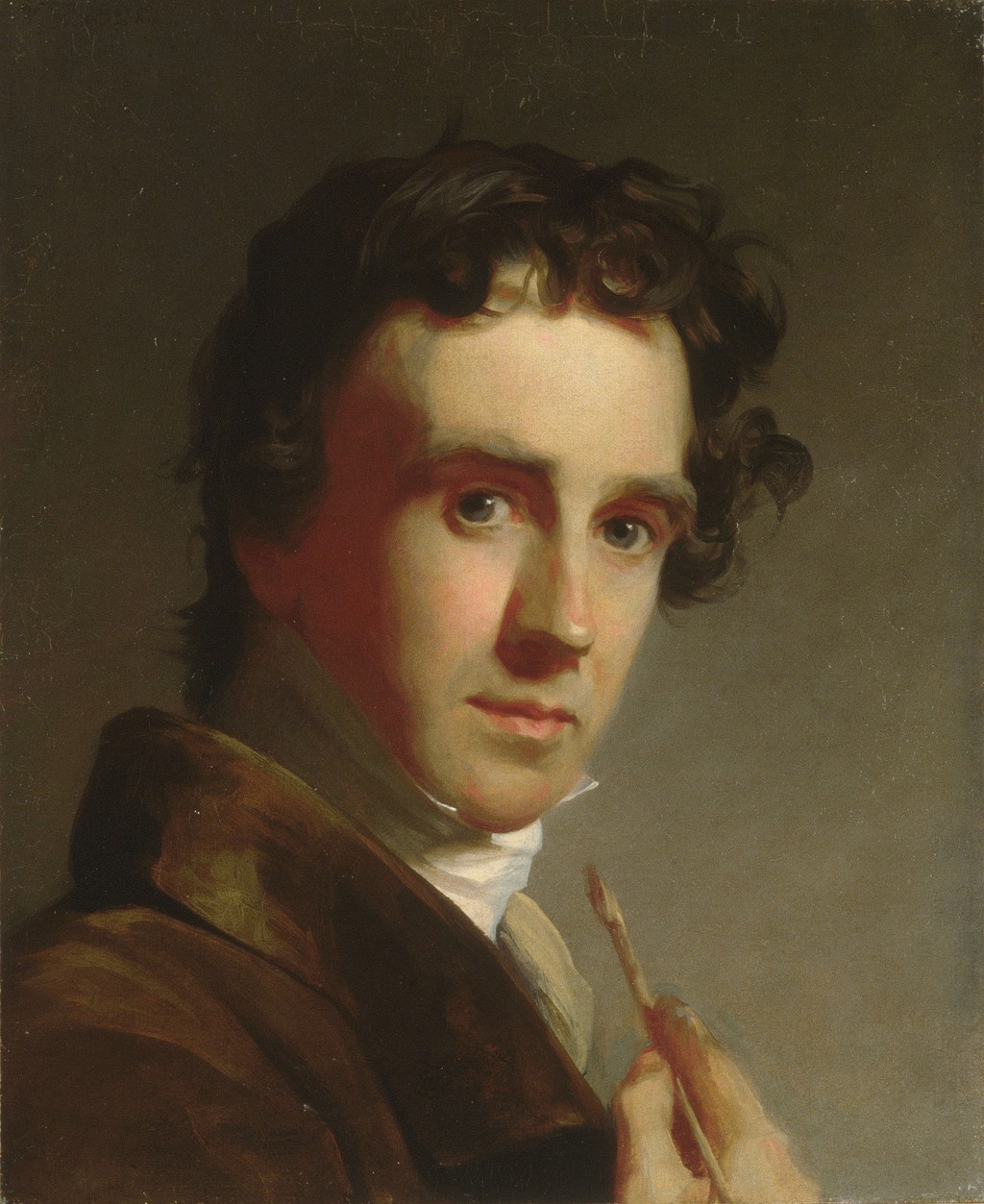
1820Portrait of the Artist
1821; Met canvasJohn Quincy Adams
1824; NGA oil studyQueen Victoria (current article)
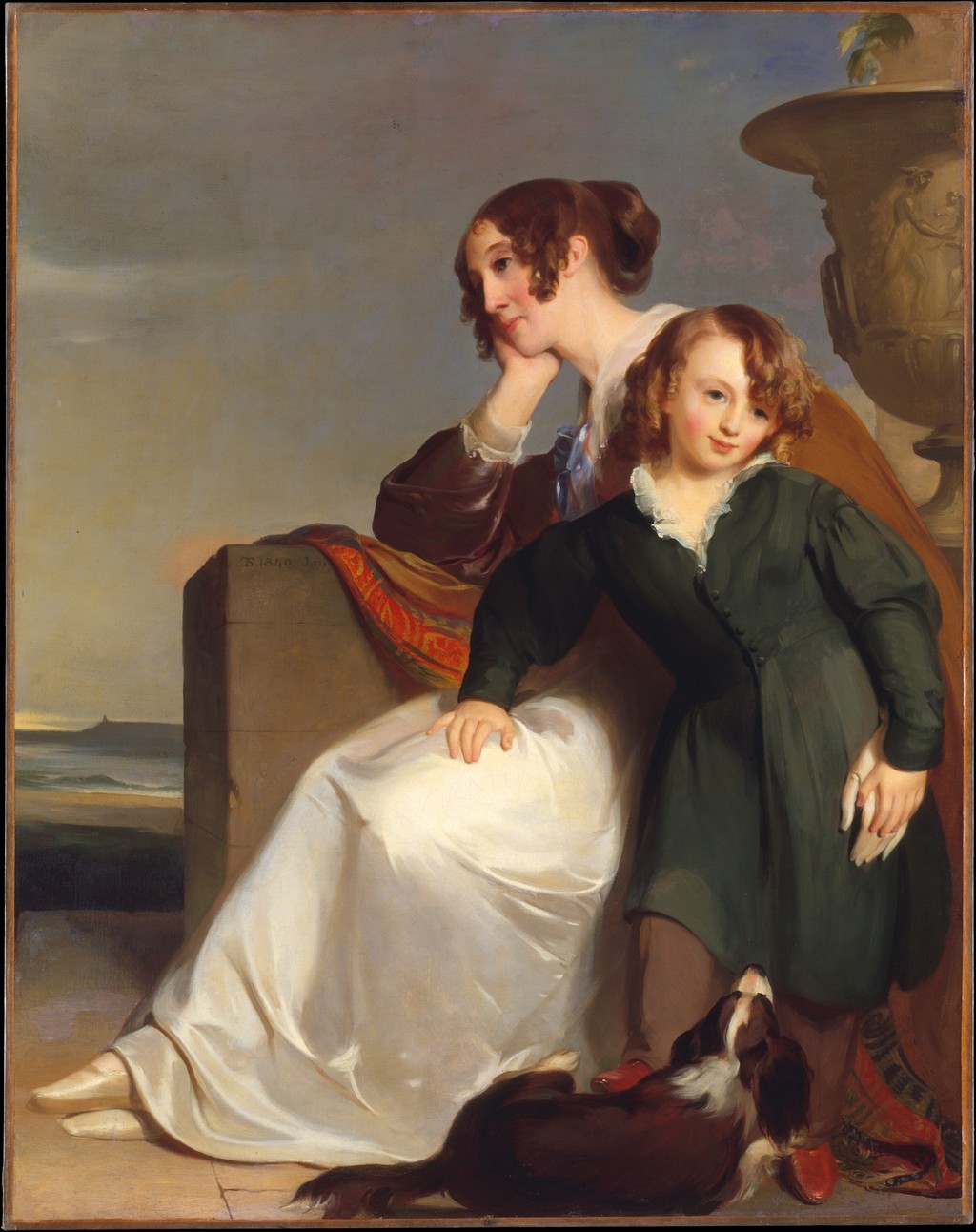
1838; full-length Met canvasMother and Son
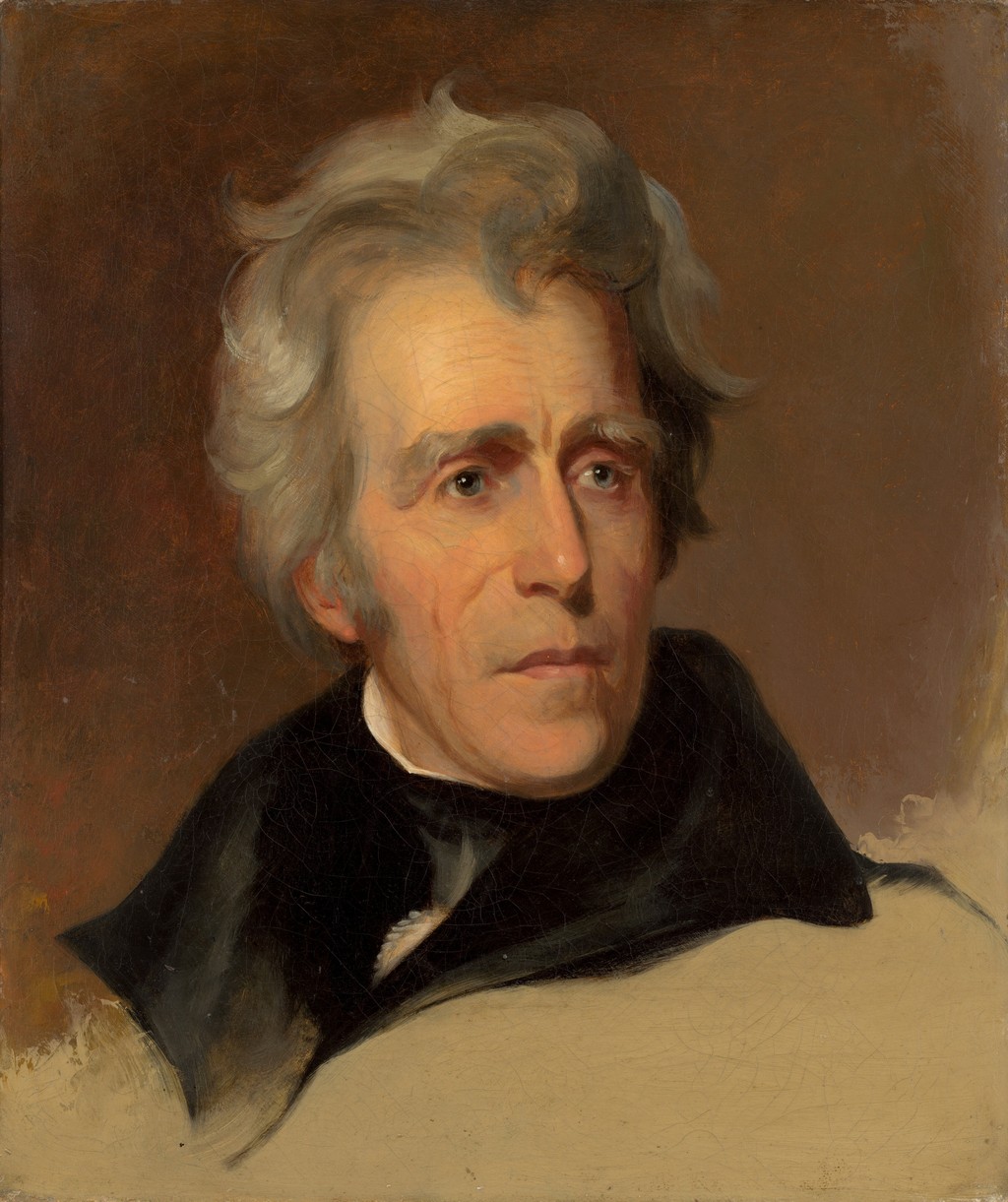
1840; inscription dateAndrew Jackson
1845; after the 1824 life portraitNotes and sources
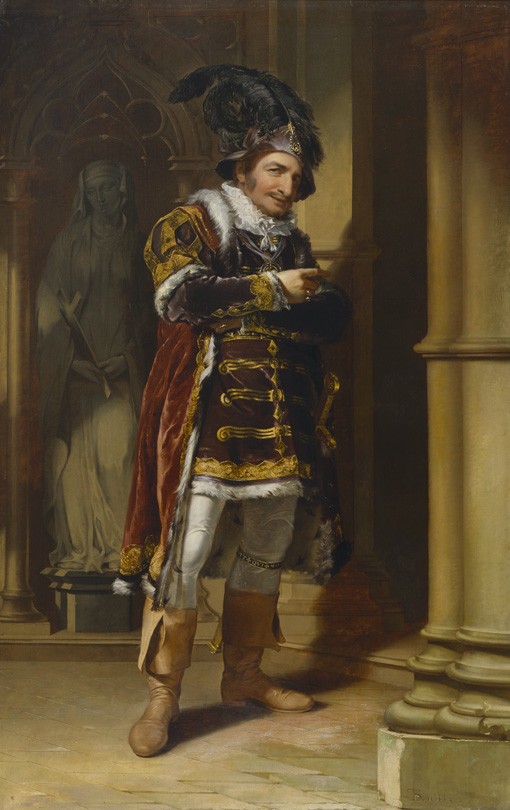
George Frederick Cooke as Richard III. Actor and theatrical role meet in an imposing full-length portrait. [3]
Musidora. A turned figure beside a pool belongs to a literary episode, not a named portrait sitter. [4]
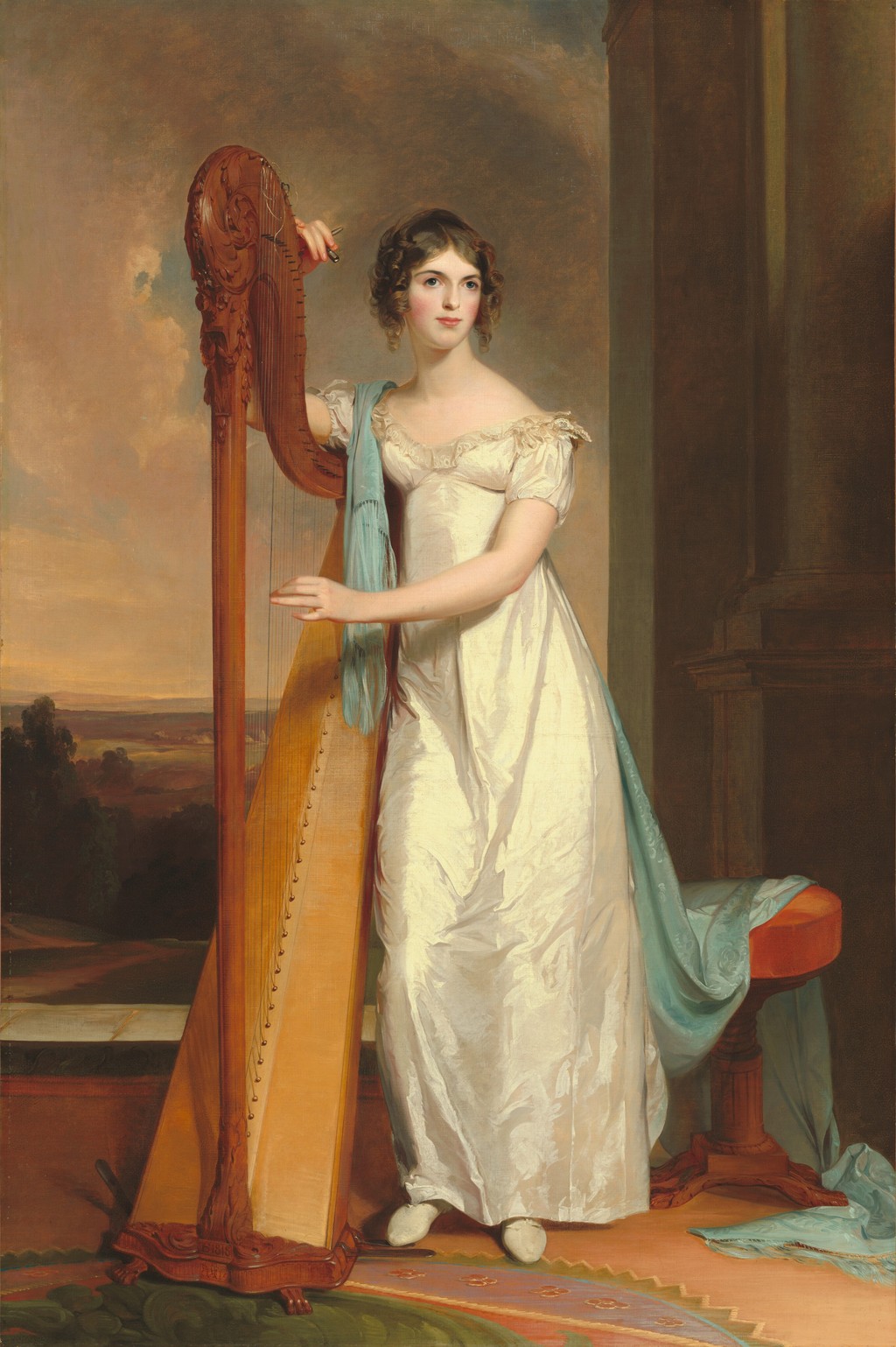
Lady with a Harp: Eliza Ridgely. The harp connects the sitter’s accomplishment with the arrangement of her body. [5]
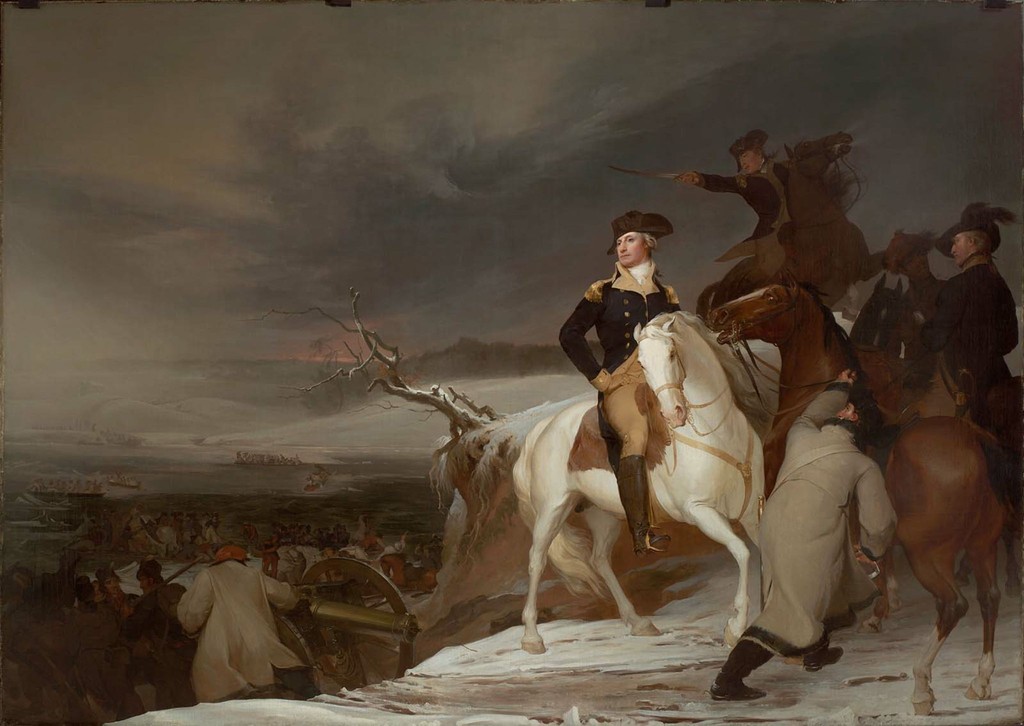
The Passage of the Delaware. Washington is mounted on shore while the crossing proceeds around him. [6]
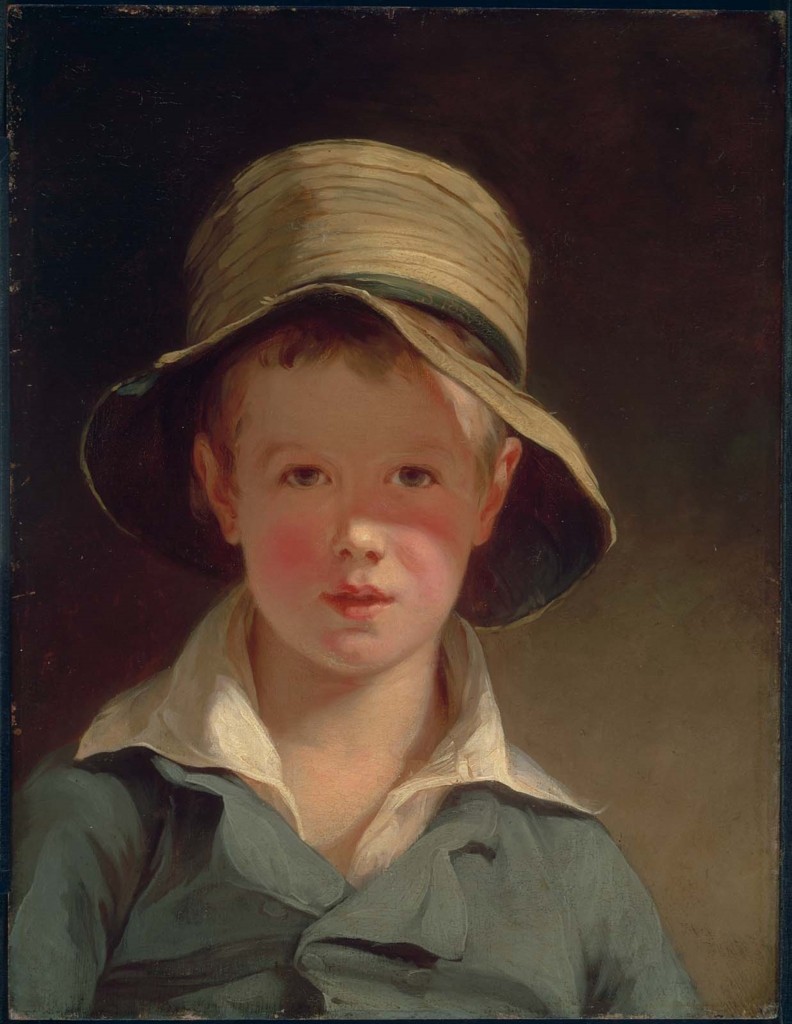
The Torn Hat. A worn hat and directed light give the artist’s son an informal presentation. [7]
Portrait of the Artist. A raised brush joins the painter’s hand to the illuminated head. [8]
John Quincy Adams. A developed likeness supplied information for a larger portrait project. [5]
The David Children. The older children direct attention toward the reclining infant. [5]
The Vanderkemp Children. A portfolio and overlapping hands connect the three children. [5]
Queen Victoria (current article). The royal likeness extends through robes, insignia and a ceremonial setting. [1]
Mother and Son. Jane Darley and her son are connected through touch and differing gazes. [9]
The Coleman Sisters. Contrasting dresses, heights and gestures hold three individual likenesses together. [5]
Andrew Jackson. This later version must be distinguished from its earlier life source. [5]
Contents
- A queen turning on the steps
- Why a Philadelphia society wanted the portrait
- Getting access to the sitter
- A letter from the painting room
- The Met’s life study
- Blanche Sully and the robes
- From London studies to a Philadelphia canvas
- The Wallace version and the engraving
- Replicas and the disagreement with the society
- Annotated details
A queen turning on the steps
The most striking choice is the direction of the figure. Victoria’s body turns toward the throne while her head returns toward us. The viewer therefore encounters a face looking back across a shoulder rather than a monarch seated squarely before an audience. This allows the picture to suggest an unfolding action without giving up the stillness needed for a recognisable portrait.
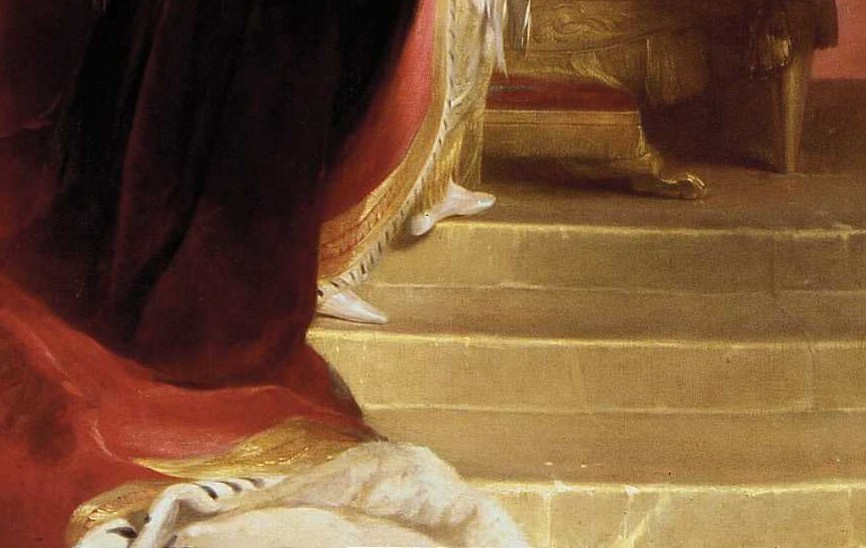
The robe extends far below the figure, spreading across the steps and into the foreground. Its dark outer passages, red lining and pale fur create different routes through the lower painting. Following them upward brings the eye toward the exposed shoulder, the white costume and the illuminated face.
The throne occupies the right side, balanced by the heavier drapery and furnishings on the left. These objects do more than identify an official setting. They surround the comparatively narrow figure with large, contrasting shapes. Sully gives the head a small but emphatic place near the upper centre, where the diadem and pale skin stand out against the dark background.
The painting can be read from the bottom upward, through steps and robes toward the face, or from the face downward, following the extended arm and long sweep of cloth. Both movements depend on the choice to show Victoria turning. A seated arrangement would have distributed her body and costume very differently.
Annotated Details from Queen Victoria
The numbered points identify visible features discussed in this article. Return from each detail to the whole composition. The captions keep each work’s identity, date and medium separate.
Queen Victoria Full-Length
Thomas Sully, Queen Victoria, 1838, the full-length Philadelphia commission. Oil on canvas, 238.8 × 147.3 cm. The Metropolitan Museum of Art, purchase with funds from the Brooke Russell Astor Bequest, Louis V. Bell Fund, named donors and other donors, in honor of Morrison H. Heckscher, 2021; 2021.140. Public domain. Image source. Public domain. Numbers added to a separate overview; detail images cropped from the source. The complete unnumbered image is retained in this article.
Queen Victoria Study
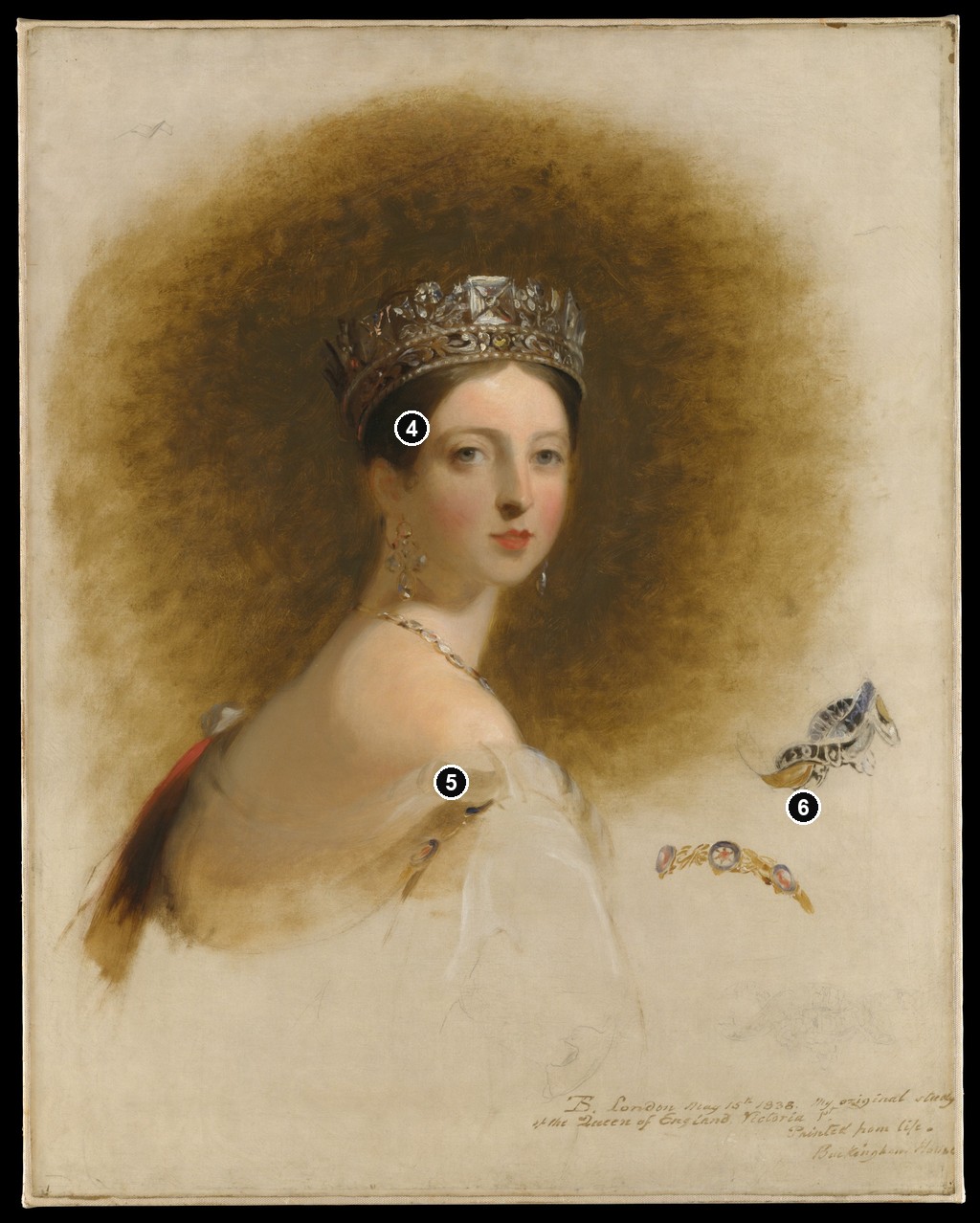
Thomas Sully, Queen Victoria, 1838, life study. Oil on canvas, 91.4 × 71.5 cm (museum display dimensions). The Metropolitan Museum of Art, Bequest of Francis T. S. Darley, 1914, 14.126.1. Public domain. Image source. Public domain. Numbers added to a separate overview; detail images cropped from the source. The complete unnumbered image is retained in this article.
Details from QUEEN VICTORIA
Compare the cropped details with the complete images above. Notice how their colours, shapes and positions contribute to the larger compositions.
Queen Victoria Full-Length
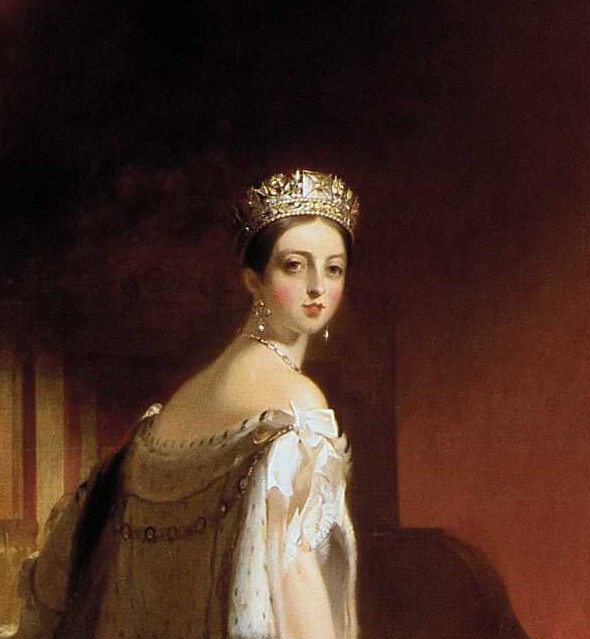
Turned head and upper body
Victoria turns her head towards the viewer while her shoulders face away. The crown, exposed shoulder and dark surroundings concentrate attention on the lit upper figure.
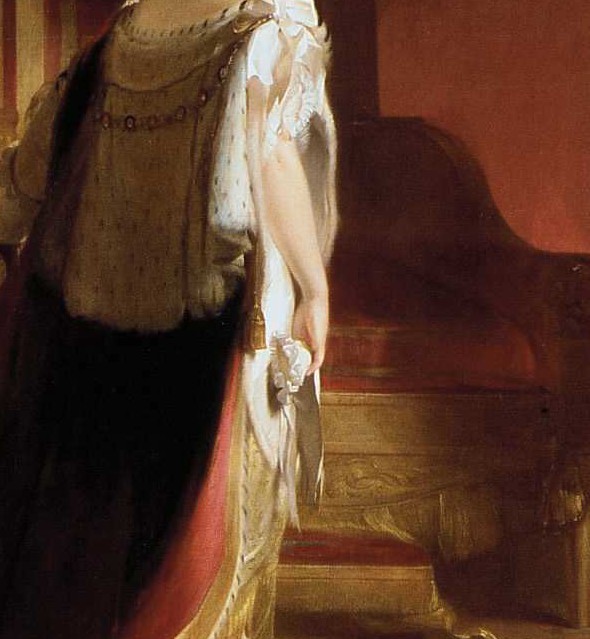
Arm and pale robe
The long pale sleeve and bare forearm form a bright vertical line beside the dark mantle. Their descending movement leads from the shoulder towards the folds below.
Train and steps
Red cloth spreads across the lower left and meets the pale lining at the foot of the steps. These large folds extend the ceremonial figure into the surrounding space.
Queen Victoria Study
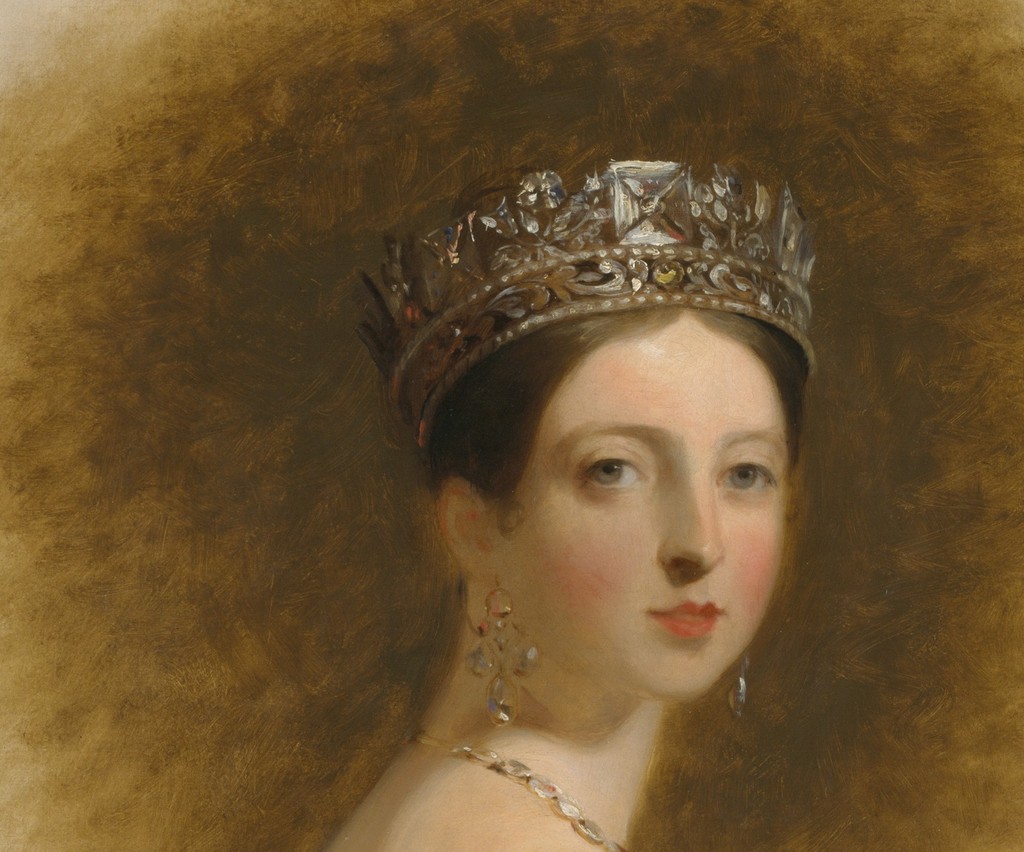
Crown and turned head
The head is more fully developed than much of the lower costume. Its turn and direct gaze provide a useful comparison with the large ceremonial portrait shown above.
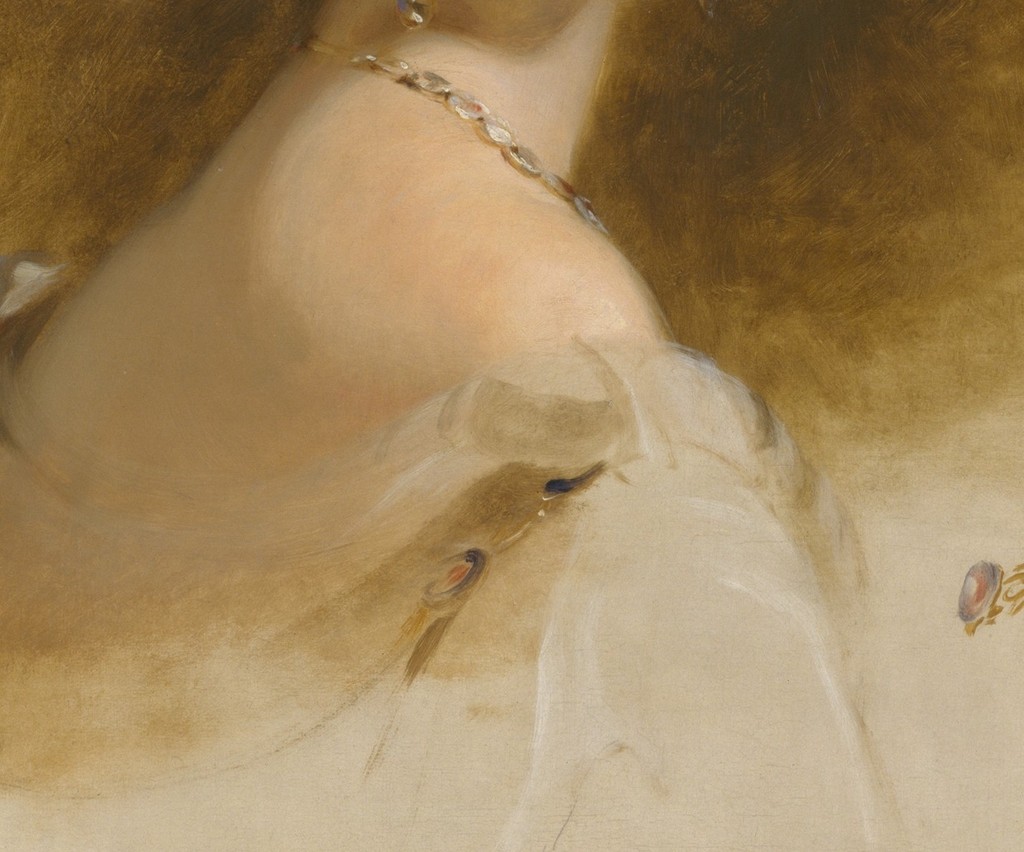
Shoulder and open ground
Painted skin and pale fabric give way to lightly worked areas of the support. This visible difference in finish lets the study retain several stages of preparation within one image.
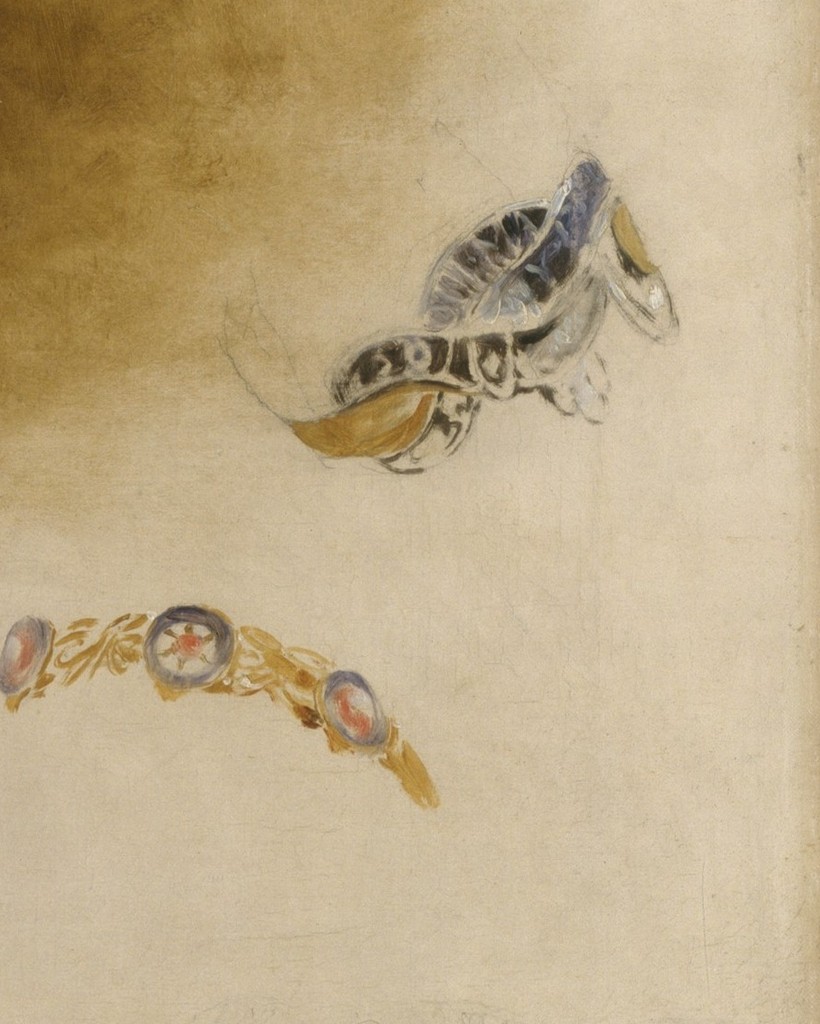
Separate jewel studies
Small studies of jewellery sit beside the main figure rather than being absorbed into her costume. They show the page-like arrangement of this particular painted study.
Why a Philadelphia society wanted the portrait
The Sons of Saint George was a benevolent association supporting English emigrants and their families. Its Philadelphia chapter commissioned Sully to paint the young queen. The project connected a local organisation with a British sovereign through an American painter’s visit to the royal court. [1]
That destination helps explain why the insignia and costume mattered. The picture had to remain recognisably royal when seen far from the person represented. A likeness alone could identify Victoria to someone already familiar with her appearance; the robes, throne and jewels made her public role visible within the painting itself.
The family correspondence reproduced in Edward Biddle and Mantle Fielding’s 1921 biography shows how strongly Sully’s household followed the project. His son Thomas Wilcocks Sully urged the use of royal robes, treating them as essential to the portrait’s effect for an American audience. Those letters offer a specific contemporary response rather than evidence that every member of the society wanted precisely the same arrangement. [2]
Getting access to the sitter
Sully travelled with his daughter Blanche and reached London in 1837. The request for royal sittings moved through social and diplomatic channels, and obtaining consent did not immediately produce a working appointment. The reproduced letters describe repeated waiting and changing expectations before the sittings began in the spring of 1838. [2]
This history gives the finished portrait a less effortless background than its graceful appearance suggests. The painter needed space, equipment, access to costume and time with a sitter whose schedule he could not control. His correspondence records the practical work of preparing for appointments, not merely the prestige of being admitted to the palace.
The sources differ over the exact number and dating of sittings. The safest account follows the documented sequence of work in the spring rather than treating one short summary as a complete timetable. The study’s own inscription provides an important fixed point: Sully dated it in London on 15 May 1838. [2] [10]
A letter from the painting room
In a letter dated 2 April 1838, reproduced in the 1921 biography, Sully described arriving early at Buckingham Palace and having “set my Palette and all in apple-pie order” before Victoria entered. The phrase gives a vivid glimpse of preparation: the painter had to make himself ready within a larger royal household whose routines continued around him. [2]
The same letter describes arranging other people so that conversation would not draw the queen away from the required position. A subsequent account discusses moving the curtain to improve light and shade. These details show the painter working actively with the conditions of a sitting, rather than simply recording a pose presented to him unchanged. [2]
The letters also distinguish different kinds of work. Time with Victoria supplied information about her face and presence. Other sessions could be used for robes, jewels and compositional decisions. This helps explain how the project could continue after the artist left London: the final canvas depended on studies made from life, but it was not painted in its entirety in front of the queen.
These are letters reproduced by later biographers, not a transcript of every royal appointment. They are most useful when tied to the particulars they actually describe: setting a palette, adjusting an easel, controlling the direction of attention and obtaining access to the regalia.
The Met’s life study
The separate oil study now at the Met, accession 14.126.1, concentrates on Victoria’s head and shoulders. The face and dark surrounding paint are developed much more fully than the lower costume. Broad areas of ground remain visible, with separate studies of insignia and an inscription near the bottom. [10]
This uneven finish makes the object particularly informative. The canvas preserves the difference between the likeness Sully needed to establish carefully and the parts that could be abbreviated or studied separately. It does not behave like a small, fully resolved version of the entire final portrait. Its purpose is visible in the selective distribution of detail.
The jewellery studies at the right also show that the final appearance was assembled from more than one kind of observation. They record objects in a different position and scale from the head above. In the finished full-length, those separately considered details become part of a continuous image of a dressed figure.
The headpiece is a diadem rather than the royal crown. The Met’s catalogue distinguishes the studies of the Order of the Garter and the collar and associated insignia. These identifications help prevent the regalia from being reduced to a generic collection of sparkling accessories. [11] Their precise forms contribute to the portrait’s public identity even when a viewer first notices only their brightness against the surrounding cloth.
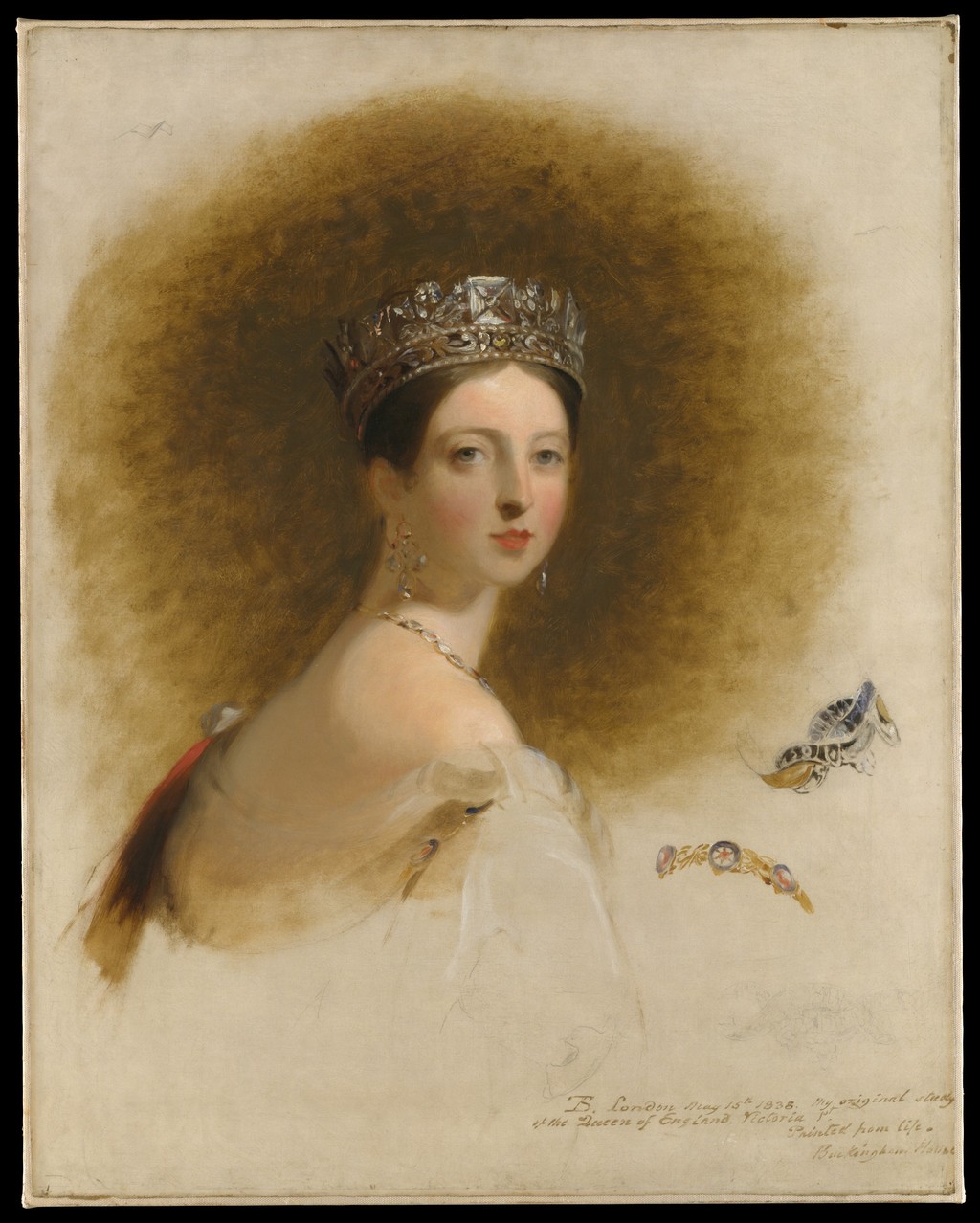
Thomas Sully, Queen Victoria, 1838, life study. Oil on canvas, 91.4 × 71.5 cm (museum display dimensions). The Metropolitan Museum of Art, Bequest of Francis T. S. Darley, 1914, 14.126.1. Public domain.
Image source
.
Public domain
.
Blanche Sully and the robes
Blanche’s part in the project extended beyond travelling with her father. The historical accounts describe her modelling the royal costume so that Sully could work on its appearance without requiring the queen’s presence throughout. This assistance belongs to the construction of the portrait, not to a claim that Blanche supplied Victoria’s likeness. [2] [11]
The distinction is visible when the study and full-length are compared. The face remained the essential personal information, while the larger canvas demanded a complete arrangement of shoulders, arms, robes and steps. A model could help solve those spatial and material problems while the life study continued to anchor the identity of the sitter.
Blanche’s contribution also reminds us that the apparent unity of a portrait can conceal several kinds of work. A face observed during royal appointments, costume studied with another model and a final composition developed elsewhere can all become one apparently continuous moment. The painting’s coherence is an achievement of organisation, rather than proof that everything represented was seen together at once.
From London studies to a Philadelphia canvas
The full-length portrait was developed after Sully returned to Philadelphia. The current Met record retains the date 1838 and describes completion after the London journey. Biddle and Fielding give a more extended sequence, reporting that he began the canvas on 30 September 1838 and finished it on 14 January 1839. [1] [2]
The catalogue date and the reported execution history should remain distinguishable. Calling the picture an 1838 work follows the owning museum’s title date. Noting the later reported completion explains why 1839 also appears in accounts of the commission. The two dates cannot be made identical simply by repeating one and dropping the other.
The return to Philadelphia also changed the conditions under which Sully worked. He could develop the large canvas from the studies and other information he had gathered, rather than depend on another immediate royal sitting. This was the stage at which the portrait had to function as a complete full-length arrangement, with the sweep of the robe connecting the likeness to the scale of the room.
Watch: Thomas Sully
Choose a film to explore the artist’s work, its interpretation and its wider setting.
Thomas Sully: A Lesson in Conservation
The Columbus Museum explores the conservation of a painting by Thomas Sully.
Watch on YouTubeThe Wallace version and the engraving
The Wallace Collection owns another Queen Victoria , accession P564. This is a separate three-quarter-length painting, also dated 1838, associated with the engraving by Charles Edward Wagstaff. It should be distinguished both from the Met’s head study and from the full-length Philadelphia commission. [12]
An engraving gave the likeness a different kind of circulation. The oil portrait occupied one physical place; a print could reproduce an authorised composition for viewers who would never stand before the original canvas. Producing an image for engraving therefore involved a purpose beyond making another private oil copy.
The difference in format matters as well as the difference in medium. A three-quarter-length view reduces the extent of the robe and steps, changing the relationship between face, torso and surrounding space. The full-length can make ascent and trailing cloth part of its main effect. A more closely framed version must establish the royal presence with a different balance of figure and accessories.
Shared titles are therefore insufficient for identifying an illustration. The Met’s 2021.140, its 14.126.1 study and Wallace P564 name three distinct objects. A reproduction labelled only Queen Victoria, 1838 can easily leave a reader uncertain which part of Sully’s project is being shown.
Replicas and the disagreement with the society
The commission led to a dispute when the society objected to Sully making and retaining another full-length version. The 1921 biography describes an injunction and subsequent arbitration. The majority decision supported his right to retain a replica, while a dissenting opinion took a narrower view of how he could reuse his studies. [2]
The issue was not simply whether the physical painting belonged to the commissioning organisation. It concerned what that ownership meant for the artist’s ability to repeat the design. The biography also distinguishes the replica question from the right to exhibit the commissioned canvas before delivery, which it says the award did not decide. [2]
This episode helps explain why a portrait’s history can include several closely related paintings without those works becoming interchangeable. Repetition was part of the practical and financial life of the image. The commission generated a recognisable design that could circulate through paintings, prints and exhibitions, and the people involved did not automatically agree about who controlled those uses.
The replica later sent to the Saint Andrew’s Society in Charleston was destroyed by fire in 1865, according to the Met catalogue. That lost canvas should not be confused with the surviving original commission or treated as the present location of the Met painting. [11] The dispute belongs to this particular historical project; it is not a statement of present-day reproduction law.
Reading the finished image beside the study
The study and full-length reward comparison because they solve different problems. In the study, exposed ground makes the developed face seem concentrated and immediate. In the finished painting, the surrounding costume and room must carry that small area of likeness across a much larger surface.
The long white sleeve is especially effective. It descends from the illuminated shoulder toward the hand, creating a pale route beside the dark robe. Near the bottom, the white shoes and fur return light to the foreground. These separated bright areas allow the figure to remain legible within an otherwise richly shadowed composition.
The throne and steps supply a destination, while the backward turn prevents the figure from disappearing into it. Victoria appears to move toward her public position and still acknowledge the viewer. That is an interpretation of the visible arrangement, rather than a report of an actual interrupted ascent. The power of the portrait lies in how convincingly Sully makes those two directions coexist.
The portrait at the Metropolitan Museum
The Met acquired the full-length canvas in 2021, and its current accession is 2021.140. This replaces older loan-number references that can still appear in earlier accounts. The life study entered the museum separately through Francis T. S. Darley’s bequest in 1914. [1] [10]
Their shared museum home makes it possible to understand the project through two materially different surviving objects. One preserves the selective work of establishing a royal likeness; the other presents that likeness within an imposing public image. Neither makes the other redundant. Together they clarify the relationship between observation, preparation and the final work that reached Philadelphia.
Within Sully’s paintings , the portrait marks an ambitious expansion of the problems visible in his smaller likenesses. His self-portrait brings a face and brush into close contact. Queen Victoria must carry a face through an extensive apparatus of costume and authority. Both depend on directing attention precisely, but they do so at dramatically different scales.
Artworks directory
A selection documented in the linked articles, with related studies and a print after Sully listed separately. Dates identify individual objects; Musidora’s date range does not imply continuous work. This is not a catalogue raisonné. The Drawing filter includes watercolour and reproductive printmaking.
| Name | Date | Medium |
|---|---|---|
| Captain Charles Stewart | 1811–1812 | Painting — oil on canvas |
| George Frederick Cooke as Richard III | 1811–1812 | Painting — oil on canvas |
| Musidora | 1813–35; Met panel | Painting — oil on wood |
| Lady with a Harp: Eliza Ridgely | 1818 | Painting — oil on canvas |
| The Passage of the Delaware | 1819 | Painting — oil on canvas |
| The Torn Hat | 1820 | Painting — oil on panel |
| Portrait of the Artist | 1821; Met canvas | Painting — oil on canvas |
| John Quincy Adams | 1824; NGA oil study | Painting — oil on canvas |
| John Quincy Adams (watercolour study) | 1824; Met 38.146.1 | Drawing — watercolour, black chalk and graphite on paper |
| John Quincy Adams (Durand after Sully) | 1826; PAFA 1876.9.184a | Drawing — etching and engraving on paper |
| The David Children | 1826 | Painting — oil on canvas |
| The Vanderkemp Children | 1832 | Painting — oil on canvas |
| Queen Victoria | 1838; full-length Met canvas | Painting — oil on canvas |
| Queen Victoria (life study) | 1838; Met 14.126.1 | Painting — oil on canvas |
| Mother and Son | 1840; inscription date | Painting — oil on canvas |
| The Coleman Sisters | 1844 | Painting — oil on canvas |
| Andrew Jackson | 1845; after the 1824 life portrait | Painting — oil on canvas |
Frequently Asked Questions
It belongs to the Metropolitan Museum of Art, accession 2021.140. The museum acquired it in 2021. [1]
She travelled with her father and modelled the royal costume, helping him work on the robes separately from the queen’s own sittings. [2]
No. Wallace P564 is a separate three-quarter-length version associated with Wagstaff’s engraving. [12]
Discussion
Look again at the images and ideas explored in Queen Victoria by Thomas Sully. These editorial prompts invite your observations.
Reader Insights
Follow the light passages from the face down the sleeve to the shoes. How do they make the figure clear within the dark room?
Compare the life study with the full-length. Which information is developed in both, and which problems belong chiefly to the larger painting?
How does the backward turn change your encounter with a portrait of someone ascending a throne?
Join the Conversation
Share a detail, comparison or question about Queen Victoria by Thomas Sully below.
References
- The Metropolitan Museum of Art: Queen Victoria , 1838, 2021.140. View source
- Edward Biddle and Mantle Fielding: The Life and Works of Thomas Sully , 1921, chapter VIII, especially pp. 51–65. View source
- Pennsylvania Academy of the Fine Arts, George Frederick Cooke as Richard III, 1811–1812, 1812.1. View source
- Metropolitan Museum of Art, Musidora, 1813–35, 21.48. View source
- National Gallery of Art, Open Data: selected Sully object and published-image records. View source
- Wikimedia Commons / MFA image source, The Passage of the Delaware: original image and PD-Art record. View source
- Wikimedia Commons / MFA source image, The Torn Hat: 16.104 image and PD-Art rights. View source
- Metropolitan Museum of Art, Portrait of the Artist, 1821, 94.23.3. View source
- Metropolitan Museum of Art, Mother and Son, 1840, 14.126.5. View source
- The Metropolitan Museum of Art: Queen Victoria , 1838, life study, 14.126.1. View source
- Caldwell , Rodriguez Roque and Johnson: American Paintings in the Metropolitan Museum of Art, volume 1, 1994, pp. 349–352. View source
- The Wallace Collection: Queen Victoria , 1838, P564. View source
- Splash image source.
Thomas Sully, Queen Victoria, 1838, the full-length Philadelphia commission. Oil on canvas, 238.8 × 147.3 cm. The Metropolitan Museum of Art, purchase with funds from the Brooke Russell Astor Bequest, Louis V. Bell Fund, named donors and other donors, in honor of Morrison H. Heckscher, 2021; 2021.140. Public domain. Public domain .
View source