 by Tom Gurney
Tom Gurney BSc (Hons) is an art history expert with over 20 years experience
Published on June 19, 2020 / Updated on October 2, 2026
Email: tomgurney1@gmail.com / Phone: +44 7429 011000
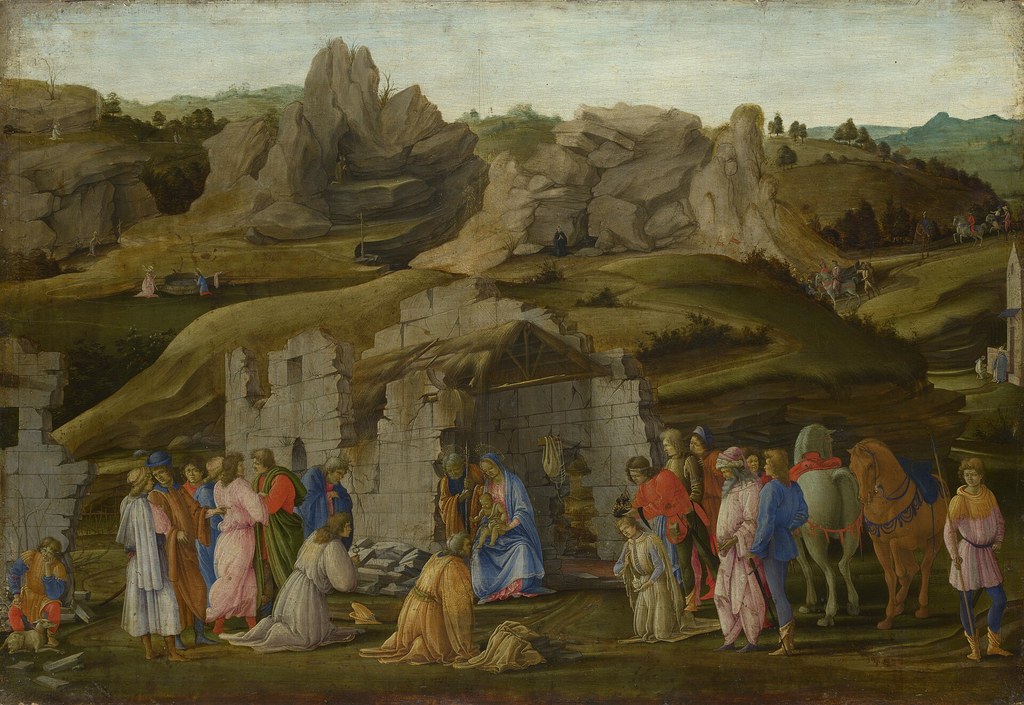
The Adoration of the Kings by Filippino Lippi — National Gallery
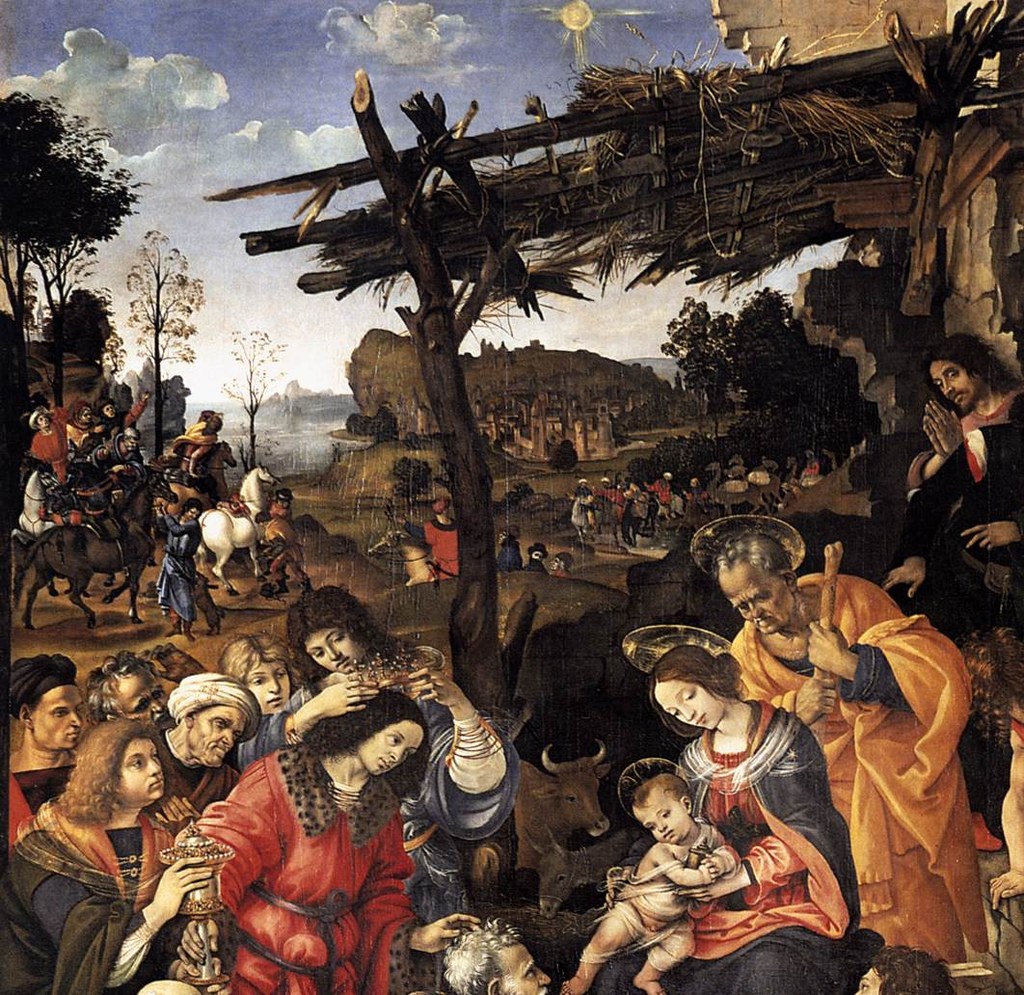
Filippino Lippi’s Adoration of the Kings in the National Gallery, London, painted around 1480, is one of the most revealing works of his early independent career. The painting combines a familiar Florentine subject with an unusually austere landscape populated by hermit saints and sacred travellers, creating a devotional atmosphere very different from the sumptuous Medici-oriented Adorations for which Renaissance Florence is famous.[1]
The National Gallery considers it likely that the painting was made for Francesco del Pugliese, a wealthy Florentine merchant whose testament refers explicitly to an Adoration of the Kings by Filippino. The Pugliese family had a chapel at Sommaia, in the mountainous area north-west of Florence, and the Gallery notes that the rugged landscape of the painting is not unlike the terrain around that village.[1]
This possible original location matters because the setting is one of the work’s most distinctive features. A ruinous chapel-like structure rises amid rocky hills. The Virgin sits on the remains of a wall and presents Christ to the three kings, while their retinue approaches in flanking groups. But the biblical narrative is only part of the painting.
In the background appear Saints Mary Magdalene, Bernard of Clairvaux, Jerome and Augustine, together with the Archangel Raphael and Tobias. These figures do not come from Matthew’s account of the Magi and were probably included for devotional reasons connected with the patron. The National Gallery links this unusual hermit imagery with Francesco del Pugliese’s strong religious interests and later support for Girolamo Savonarola. It also compares the painting with Thebaid compositions associated with Fra Angelico and Gherardo Starnina, in which large landscapes are populated by episodes from the lives of hermit saints.[1]
Filippino therefore transforms the Adoration from a courtly procession into something closer to an ascetic sacred landscape. The painting is also a key document in his relationship with Botticelli. It was long attributed to Botticelli and entered the National Gallery as his work in 1882. The misattribution reflects how closely Filippino’s early style remained connected with the workshop in which he had trained.[1] Yet the painting already shows the independent interests that would soon define his career: rocky terrain, spiritual withdrawal, unusual secondary narratives and a preference for complexity beyond the central sacred group.
At a Glance
- ArtistFilippino Lippi
- TitleThe Adoration of the Kings
- Datec. 1480
- MediumOil with some egg tempera on wood
- Dimensions57.5 × 85.7 cm
- Current locationNational Gallery, London
- Inventory numberNG1124
- Probable patronFrancesco del Pugliese
- Probable original contextPugliese family chapel at Sommaia, north-west of Florence
- Distinctive figuresMary Magdalene, Bernard of Clairvaux, Jerome, Augustine, Raphael and Tobias
- Stylistic significanceearly independent work, still close to Botticelli
- Later attribution historyentered the National Gallery as a Botticelli in 1882
Contents
- The Biblical Adoration
- Sommaia
- Saint Augustine
- A Different Kind of Adoration
- The Collaborative Adoration
- Fifteenth-Century Frame
- Same Subject, Different Patronal Worlds
- Humility and Kingship
- Patronal Preference and Artistic Freedom
- Why the National Gallery Adoration Matters
- Frequently Asked Questions
- References
The Biblical Adoration
The Gospel of Matthew tells how wise men from the East followed a star to find the newborn Christ. They arrived with gifts and worshipped him. Later Christian tradition identified the visitors as three kings representing different ages and regions of the world.
The subject became especially popular in Florence. Epiphany celebrations featured elaborate processions through the city, and Medici patronage helped make Magi imagery closely associated with elite civic culture. Filippino knew that tradition intimately. His painting deliberately moves away from its most luxurious form.
What the Painting Shows. Mary sits within a ruined structure and presents Christ to the kings. The kings and attendants gather in two broad groups. The setting is rocky, mountainous and austere.
The Holy Family occupy the centre, but the landscape competes strongly for attention. This is unusual. Many Adorations use landscape primarily to accommodate a procession. Filippino turns landscape into a devotional world in its own right.
The Ruined Building. The chapel-like ruin creates both historical and symbolic depth. Ruins in Nativity and Adoration imagery could suggest the passing of the old order with the birth of Christ. They also create an atmosphere of poverty and withdrawal.
The Virgin does not receive kings inside a palace. She sits amid broken architecture. Royal wealth therefore approaches sacred humility. The contrast gives the kings’ act of kneeling its meaning.
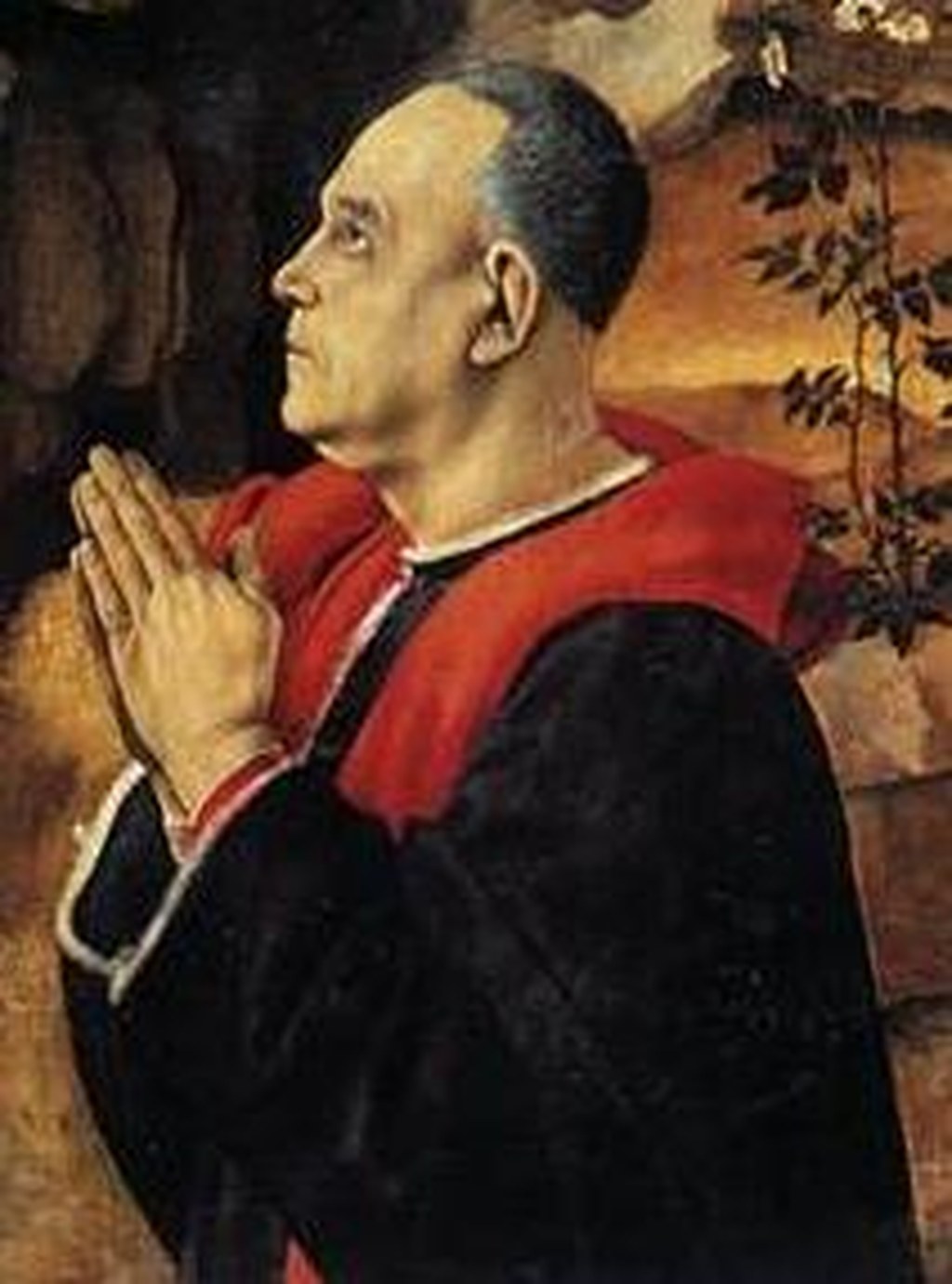
Francesco del Pugliese. The probable patron is unusually important to interpretation. The National Gallery notes that Francesco del Pugliese’s testament explicitly mentions an Adoration by Filippino.[1] The family’s relationship with Filippino is otherwise well documented.
This does not produce absolute proof that NG1124 is the testamentary work, but the combination of subject, patronal relationship and Sommaia landscape makes the identification persuasive. Pugliese patronage also connects this painting with Filippino’s later Vision of Saint Bernard for Piero del Pugliese. The family therefore forms one of the strongest networks in his early career.
Sommaia
The Pugliese had a family chapel at Sommaia, north-west of Florence. The National Gallery notes the resemblance between that mountainous region and the painted setting.[1] If the work was indeed intended for Sommaia, the landscape may have felt locally meaningful to its first viewers. This possibility should remain cautious rather than being treated as a topographical portrait. What is secure is that the painting’s rugged terrain fits unusually well with an upland chapel context.
Hermit Saints. The background contains saints associated with penitence, withdrawal and contemplative life. Mary Magdalene appears within the landscape tradition of the penitent saint. Bernard of Clairvaux represents monastic devotion.
Jerome is the archetypal desert scholar. Augustine adds another major theological authority. Together they change the emotional character of the Adoration. The Magi’s public journey is surrounded by examples of withdrawal from worldly life.
Bernard of Clairvaux. Bernard’s presence has special importance because Filippino would later paint the Vision of Saint Bernard for Piero del Pugliese. The recurring saint suggests a genuine devotional interest within the patronal network. Bernard combined monastic asceticism with learning and intense Marian devotion. He is therefore an ideal figure to accompany an image centred on Mary and Christ. The early Adoration already anticipates themes Filippino would develop more fully in the later masterpiece.
Saint Jerome. Jerome represents scholarship transformed by penitence. His desert identity made him central to Thebaid imagery. Filippino places him within a landscape where intellectual and spiritual retreat become visible.
This is very different from simply adding a saint as a frontal devotional companion. The background saint inhabits a world. Landscape becomes biography.
Saint Augustine
Augustine introduces another dimension of learned Christianity. Unlike Jerome or Bernard, his identity is not defined primarily by hermit withdrawal. Yet his inclusion strengthens the intellectual tone of the painting. The landscape is therefore not anti-intellectual asceticism. It represents learned devotion purified from worldly display.
Mary Magdalene. Mary Magdalene’s later devotional identity as a penitent in the wilderness made her a natural participant in this kind of landscape. Her presence adds female asceticism to the male saints. She also creates a distant anticipation of Christ’s Passion and resurrection, events with which she would become closely associated. The infant at the centre therefore exists within a landscape already populated by future Christian history.
Raphael and Tobias. The Archangel Raphael and Tobias belong to a different narrative tradition. Raphael guides the young Tobias on a journey and helps bring healing to his family. Their presence complements the Magi because both stories concern divinely guided travel.
Journey becomes a recurring theme across the picture. The Magi travel towards Christ. Tobias travels under angelic protection. Hermits travel away from ordinary society. The landscape becomes a field of sacred movement.
Thebaid Tradition. The National Gallery explicitly compares Filippino’s painting with Thebaid compositions associated with Fra Angelico and Gherardo Starnina.[1] Thebaids represent landscapes populated with small episodes from the lives of early Christian hermits. They encourage slow viewing.
A spectator moves visually from one saintly action to another. Filippino adapts this landscape logic to an Adoration. Instead of making the background incidental, he turns it into a network of religious examples.
A Different Kind of Adoration
This makes the painting a deliberate alternative to courtly versions of the subject. Florentine Adorations often provided opportunities for gorgeous textiles, horses, portraits and Medici pageantry. Filippino’s early panel is far more austere. The kings remain wealthy visitors, but the world they enter is one of rocks, ruins and hermits. The spiritual centre is therefore humility rather than spectacle.
Savonarola and the Pugliese. The National Gallery notes that Francesco del Pugliese became an ardent follower of Girolamo Savonarola.[1] Savonarola called Florentines towards stricter Christian life and criticised excessive luxury and moral corruption. The painting predates the height of Savonarola’s political influence, so it should not be described simply as a “Savonarolan painting”. However, the patron’s later religious commitments make the ascetic imagery especially suggestive. The work may reflect devotional tendencies that later found stronger expression in his support for the preacher.
Avoiding Anachronism. It is important not to read the 1490s directly back into 1480. Francesco’s later Savonarolan allegiance does not prove every earlier commission encoded reform ideology. The safer conclusion is that the background saints emphasise contemplative and ascetic Christianity and may reflect patronal preferences. The National Gallery itself uses cautious language.[1] That caution should be preserved.
Filippino and Botticelli. The painting’s early attribution history demonstrates how close Filippino still was to Botticelli around 1480. He had trained in Botticelli’s workshop. The National Gallery also owns an earlier Adoration of the Kings on which both artists collaborated.[1]
That work makes the relationship unusually concrete. The young Filippino did not simply admire Botticelli from outside. He participated in his production.
The Collaborative Adoration
The National Gallery’s Botticelli-and-Filippino Adoration dates to about 1470.[1] The Gallery assigns the large crowd at left mainly to Botticelli and several central foreground figures to Filippino. This collaborative panel provides a training-stage comparison with NG1124. Within roughly a decade, Filippino moves from contributing figures to another master’s design to creating an independent Adoration with a very different devotional character. The progression is important evidence of professional emergence.
Long Misattribution to Botticelli. The National Gallery acquired NG1124 in 1882 as a work by Botticelli.[1] That attribution persisted into the twentieth century. The mistake is historically understandable.
Filippino’s early figures share workshop traits with Botticelli. Modern connoisseurship gradually separated the two hands more confidently. The history of attribution therefore tells us something about workshop culture as well as scholarship. Artists trained to produce compatible styles can be difficult to disentangle centuries later.
Medici Collection History. The painting is documented in a Medici collection in Florence in the seventeenth century, where it was already attributed to Botticelli. This later ownership is ironic given the painting’s probable Pugliese origin and ascetic tone. A work that may have reflected a different patronal world eventually entered Medici collecting history. The object’s meaning therefore changed as ownership changed.
Hamilton Collection. The National Gallery bought the painting at the Hamilton sale in 1882.[1] Before that it had passed through the collection of William Thomas Beckford and then the Duke of Hamilton. This nineteenth-century provenance places the panel within the British culture of collecting Italian Old Masters. Its journey from a Florentine devotional context to aristocratic collections and finally a public museum parallels many Renaissance paintings.
Fifteenth-Century Frame
Unlike many paintings whose frames were replaced, the National Gallery lists a fifteenth-century Italian frame.[1] This enhances the object’s material historical character. Frame and painted panel work together visually. A Renaissance painting was not conceived as borderless image content. Its frame mediated the transition from real wall to fictive sacred space.
Oil and Egg Tempera. The medium is oil with some egg tempera on wood. This mixed technique belongs to the experimental material world of late-fifteenth-century Florence. Filippino could achieve both crisp drawing and softer tonal effects. The rocky landscape particularly benefits from variation in modelling and texture.
Early Independent Style. Around 1480 Filippino was still close to Botticelli but already developing distinctive interests. The landscape is unusually important. Narrative is dispersed.
Ascetic figures populate the margins. The sacred event feels psychologically and geographically expanded. These tendencies would become central to the Vision of Saint Bernard a few years later. The painting therefore captures independence emerging rather than already complete.
Comparison with the 1496 Uffizi Adoration. Filippino returned to the subject sixteen years later in the great Uffizi altarpiece.[5] The contrast is dramatic. The early National Gallery painting is relatively small, rocky and ascetic.[1]
The Uffizi panel is monumental, brilliant and crowded with contemporary portraiture.[5] Yet the National Gallery notes that Filippino retained certain compositional ideas, including the central Holy Family and the division of the kings’ retinue into flanking groups.[1] Continuity survives beneath stylistic transformation.
Same Subject, Different Patronal Worlds
The two Adorations reveal how subject alone never determines meaning. For the probable Pugliese patron, hermit saints and austere landscape dominate. For San Donato in 1496, monumental scale, probable Medici portraits and ceremonial abundance dominate. Filippino adapts the same biblical story to different functions and audiences. This flexibility is one of the clearest signs of mastery.
Comparison with the Vision of Saint Bernard. The later Del Pugliese Vision of Saint Bernard develops the same taste for rugged sacred landscape. Bernard moves from secondary background saint to protagonist. Books, rocks, penitence and supernatural encounter become concentrated around one figure. The comparison suggests that the earlier Adoration was not an isolated experiment. It belongs to a sustained devotional relationship between Filippino and the Pugliese network.
Landscape as Patronal Language. The repeated use of rocky contemplative terrain in Pugliese-connected paintings raises the possibility that landscape itself became part of the patronal language. One should not claim a fixed family iconography without documentation. But the recurrence is meaningful enough to compare. The Pugliese commissions appear to favour sacred worlds of withdrawal rather than courtly splendour. That preference distinguishes them strongly from Medici-oriented art.
The Adoration and Florentine Epiphany Culture. The subject had unusually strong civic resonance in Florence because Epiphany processions turned the story of the Magi into public performance. Citizens dressed as kings and attendants moved through the city in elaborate spectacle. The Medici were particularly associated with this culture.
Filippino’s probable Pugliese commission therefore uses a subject that Florentines knew both from scripture and from urban ceremony. Its austere treatment becomes more striking against that background. Instead of reproducing festive splendour, the painting redirects the familiar story towards contemplation.
Humility and Kingship
The kings arrive with wealth but must kneel before a child in a ruin. That reversal is central to the Adoration theme. Filippino intensifies it by surrounding the event with hermits who have renounced worldly comfort.
Courtly power and ascetic withdrawal meet in one image. The painting therefore asks what true authority looks like. The correct king recognises Christ and submits. The correct saint withdraws from pride and luxury. The two paths converge around the Holy Family.
Ruins and the Passing of the Old Order. The broken architecture can be read within a common Christian visual tradition in which ancient structures signify the old world giving way to Christ. The ruin also suits Filippino’s early interest in irregular, evocative settings. Later, after Rome, antique ruins would become even more important to his imagination.
Here the ruined building is not an archaeological spectacle. It serves the devotional mood. The old structure provides shelter for the new sacred order.
Travel as a Spiritual Metaphor. Almost every important group in the painting is defined by movement. The Magi have travelled from the East. Raphael guides Tobias on a journey.
Hermits have withdrawn from cities into wilderness. The viewer’s eye travels through the landscape from one episode to another. Journey therefore becomes both subject and viewing structure. Faith is represented not as static possession but as movement towards, away from or under divine guidance.
The Landscape and Sommaia. The possible Sommaia connection gives the rugged terrain another layer. If the painting was destined for a chapel in that region, the mountain landscape may have felt less exotic than familiar. Sacred geography could therefore overlap with local geography. The biblical event would appear within terrain resonant with the patron’s own devotional life. This possibility remains suggestive rather than proven topography, but it helps explain why the landscape dominates so strongly.
Patronal Preference and Artistic Freedom
If the unusual background saints were requested by Francesco del Pugliese, Filippino had to integrate a complex patronal programme without losing the Adoration itself. He succeeds by distributing the added saints through the landscape. The central biblical scene remains legible. The patron’s devotional interests enrich the periphery. This is an elegant solution to one of Renaissance patronage’s recurring problems: how to accommodate specific requested imagery without overloading the main composition.
Early Evidence of Filippino’s Narrative Mind. The painting already shows Filippino thinking beyond one central event. He wants secondary stories. He wants distant figures.
He wants the landscape to carry time and spiritual meaning. These habits would later expand dramatically in the Carafa and Strozzi chapels. The early Adoration is therefore important not only as a Botticellian work but as evidence of the narrative mind that would eventually produce his most complex frescoes.
Attribution as a Window into Workshop Practice. The long Botticelli attribution should not simply be treated as an embarrassing mistake by earlier scholars. It reveals how closely workshop language could bind master and pupil. Filippino learned within a system designed to produce compatible visual results. Modern art history values individual authorship intensely, but fifteenth-century workshops also valued continuity. The difficulty of separating the two painters is therefore historically informative.
From Furniture Collaboration to Independent Panel. The earlier Botticelli-Filippino Adoration may have formed part of furniture rather than an altarpiece. Filippino’s later independent painting moves the subject into a more concentrated devotional format. This transition mirrors his professional growth. He moves from contributing to another master’s large workshop object towards shaping an entire sacred landscape himself. The change in authorship is as important as the change in style.
Why the National Gallery Adoration Matters
The painting matters because it records Filippino at the point where workshop formation turns into independent identity. Its Botticellian roots are unmistakable. Its long misattribution proves that.
Yet the strange landscape, hermit saints and possible Pugliese devotional programme already point towards a distinctly Filippino world. It also provides an essential early counterpart to the 1496 Uffizi Adoration.[5] Those two paintings use the same biblical subject to reveal sixteen years of artistic change.
One is intimate and ascetic. The other is monumental and political. Together they demonstrate that Filippino’s strength lay not in repeating successful formulas but in adapting subject, landscape and social meaning to each commission.
Frequently Asked Questions
Discussion
What stands out to you most about Adoration of the Kings National Gallery in relation to Filippino Lippi's wider career?
Reader Insights
Notice how the page connects close visual detail with patronage, workshop practice and the wider Renaissance setting.
Which comparison elsewhere in the cluster helps clarify this work or theme most strongly?
Join the Conversation
Have a thought or observation about Adoration of the Kings National Gallery? Share it below. Thoughtful responses may be added to this section.
References
- National Gallery, London, Filippino Lippi, The Adoration of the Kings, NG1124. View Source
- National Gallery, London, in-depth catalogue and provenance for NG1124.
- National Gallery, London, Sandro Botticelli and Filippino Lippi, Adoration of the Kings, NG592. View Source
- Metropolitan Museum of Art, The Drawings of Filippino Lippi and His Circle, 1997. View Source
- Uffizi Galleries, Filippino Lippi, Adoration of the Magi, 1496, for later comparison. View Source