 by Tom Gurney
Tom Gurney BSc (Hons) is an art history expert with over 20 years experience
Published on June 19, 2020 / Updated on October 2, 2026
Email: tomgurney1@gmail.com / Phone: +44 7429 011000
Filippino Lippi and Sandro Botticelli
The relationship between Filippino Lippi and Sandro Botticelli is one of the most important workshop relationships of the Florentine Renaissance. It was also unusually complicated because Botticelli had trained with Filippino’s father, Fra Filippo Lippi. When Fra Filippo died in 1469, the young Filippino entered the artistic orbit of his father’s former pupil.
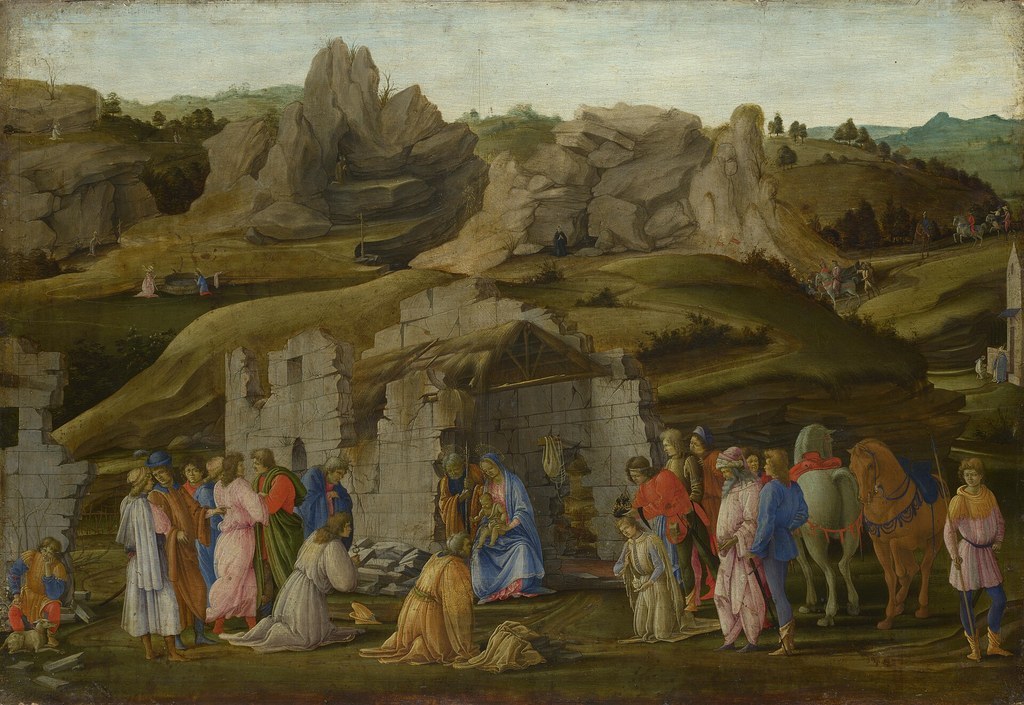
The National Gallery describes the sequence clearly: Filippino was soon in Botticelli’s workshop after his father’s death, and the two painters collaborated on an Adoration of the Kings. A Milanese agent writing around 1490 identified Filippino as “a pupil of Botticelli and son of the most outstanding master of his time.”[1] That description captures how contemporaries understood him. Filippino’s identity was inseparable from both family and workshop inheritance.
Yet the relationship should not be reduced to apprenticeship. The National Gallery notes that Botticelli and Filippino’s collaboration could reverse normal workshop hierarchy. In one Adoration of the Kings, Botticelli appears to have completed or contributed to a work associated substantially with the younger artist, an unusual reversal of the more common pattern in which an assistant finished the master’s picture.[1]
Their styles also remained close enough to create centuries of attribution problems. Paintings now accepted as Filippino were long attributed to Botticelli; works once given to Filippino have moved in the other direction after cleaning and reassessment. This uncertainty is not a nuisance to be eliminated. It is evidence for how Renaissance workshops functioned. Master and pupil shared drawings, figure types, compositions and habits of line. Originality emerged gradually from within that shared culture.
Filippino’s career then diverged dramatically. By the mid-1480s, landscapes, psychological tension and unusual secondary narratives became increasingly important. Rome transformed him further after 1488, giving his mature art a taste for antique fragments, grotesques and architectural fantasy that Botticelli never adopted in the same way. The relationship therefore provides a rare opportunity to watch dependence become dialogue and finally divergence.
At a Glance
- Older artistSandro Botticelli, c. 1445–1510
- Younger artistFilippino Lippi, c. 1457–1504
- Family linkBotticelli had trained with Filippino’s father, Fra Filippo Lippi
- Workshop relationshipFilippino entered Botticelli’s workshop after Fra Filippo’s death in 1469
- Documented collaborationAdoration of the Kings, National Gallery, London
- Shared early traitselegant contour, graceful figures, flowing drapery, intimate Madonnas
- Major divergenceFilippino’s increasingly complex landscapes, psychological movement and Roman antique vocabulary
- Attribution significancenumerous works have moved between Botticelli, Filippino and their circles in scholarship
Contents
- Botticelli’s Training under Fra Filippo
- Learning through Shared Composition
- Attribution in the Other Direction
- Domestic Madonnas
- Antiquity
- Reciprocal Influence
- Drawing
- The Problem of “Originality”
- Two Responses to Humanism
- The National Gallery’s Reputation Claim
- Filippino’s Independence without Rejection
- Different Uses of Florence
- Frequently Asked Questions
- References
Botticelli’s Training under Fra Filippo
The relationship begins before Filippino’s artistic career. Botticelli trained with Fra Filippo Lippi. The National Gallery emphasises that Fra Filippo’s workshop gave Botticelli both technical formation and valuable patronal contacts, including access to the Medici circle.[1]
This means Botticelli’s own style already carried elements of Lippi inheritance before he taught Filippino. When Filippino entered Botticelli’s workshop, he therefore encountered a transformed version of his father’s art. Artistic influence moved in a loop.
The Death of Fra Filippo. Fra Filippo died in Spoleto in 1469. Filippino was still a boy. The death prevented a straightforward father-to-son workshop succession.
Botticelli became the crucial intermediary. This arrangement was practical and artistically logical. He knew Fra Filippo’s methods, figure types and patrons. The younger Lippi therefore entered an environment simultaneously familiar and new.
Apprenticeship in Botticelli’s Workshop. By the early 1470s, Botticelli had an independent workshop. The National Gallery records Filippino as his apprentice.[1] Workshop training involved more than watching the master paint.
Young artists learned by copying drawings, preparing materials, repeating figures, painting secondary passages and participating in collaborative commissions. Similarity was expected. A successful assistant had to reproduce workshop language convincingly. This helps explain why early Filippino can look so Botticellian.
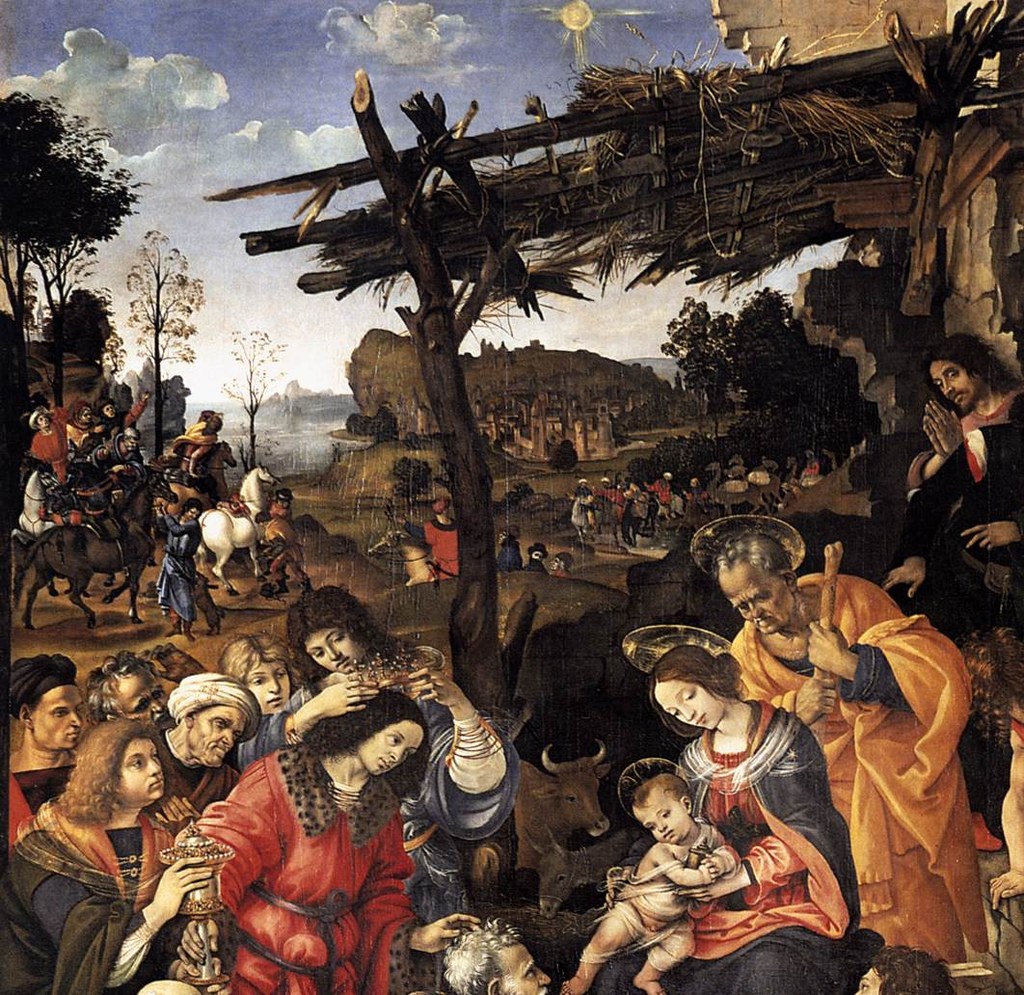
The Collaborative Adoration. The National Gallery owns an Adoration of the Kings attributed jointly to Botticelli and Filippino.[1] The work is particularly valuable because it gives us a physical object documenting collaboration. The Gallery assigns different figure groups to the two artists. More unusually, its account suggests Botticelli may have completed Filippino’s version, reversing the normal hierarchy of apprentice finishing master. This implies a relationship more flexible than a simple teacher issuing instructions.
Learning through Shared Composition
Collaborative painting teaches through direct comparison. One painter’s figure stands beside another’s. The younger artist learns how the master resolves drapery, face and movement.
The master can intervene where necessary. The finished object becomes a record of workshop exchange. Modern connoisseurship tries to divide hands. Renaissance production often depended upon making those hands work together.
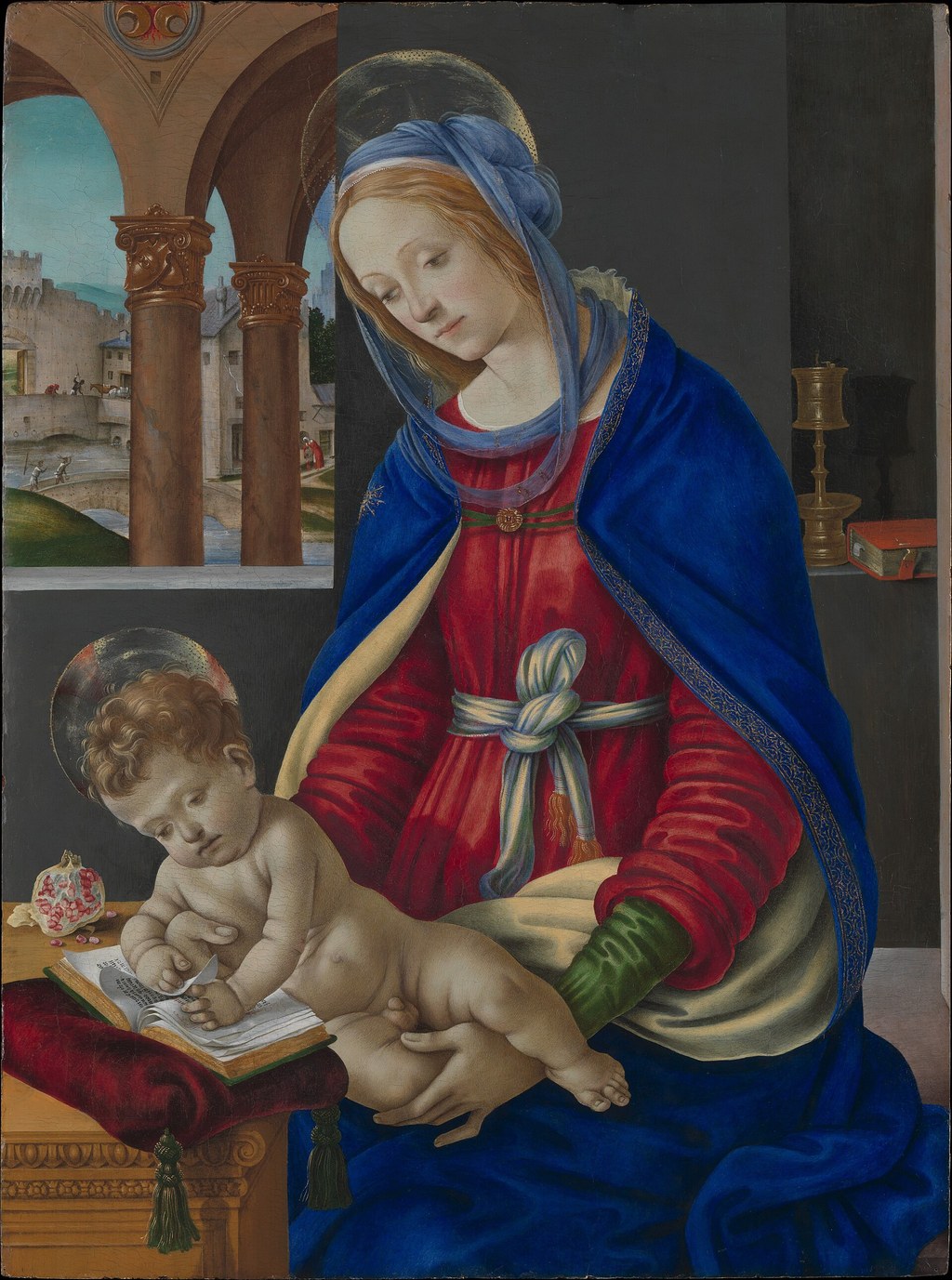
The Virgin and Child with Saint John. The National Gallery’s early Virgin and Child with Saint John is one of the clearest examples of Filippino still working within Botticelli’s visual world.[1] The Gallery describes it as among his earliest known paintings and likely made while he was still in Botticelli’s workshop. Graceful contour, elegant drapery and the domestic Madonna format all reflect that context. Yet the small landscape and geometric arrangement already point towards independent concerns.
Adoration of the Kings around 1480. Filippino’s independent National Gallery Adoration of the Kings shows a major step forward.[1] It was nevertheless acquired by the National Gallery in 1882 as a Botticelli.[1] The long misattribution reveals how persistent workshop resemblance remained. The rocky landscape, hermit saints and ascetic mood, however, create a devotional world increasingly characteristic of Filippino rather than Botticelli. Independence emerges through subject treatment more than abrupt stylistic rejection.
Portrait of a Youth. The Washington Portrait of a Youth provides another attribution case. Twentieth-century scholarship repeatedly moved it between Botticelli, Botticelli’s school, the “Amico di Sandro” and Filippino. The sitter’s direct gaze and restrained setting make it a useful test case because iconography cannot settle the question. Connoisseurs must compare faces, contour, modelling and technique. The uncertainty again points back to shared workshop language.
Attribution in the Other Direction
The National Gallery’s Saint Francis of Assisi with Angels demonstrates that attribution can move from Filippino back towards Botticelli.[1] The painting was once thought to be by Filippino, but cleaning and restoration in 2002 led the Gallery to regard it probably as an early Botticelli. This is a valuable reminder that attribution history is not a one-way march towards Filippino’s independence. Works in this circle remain genuinely difficult.
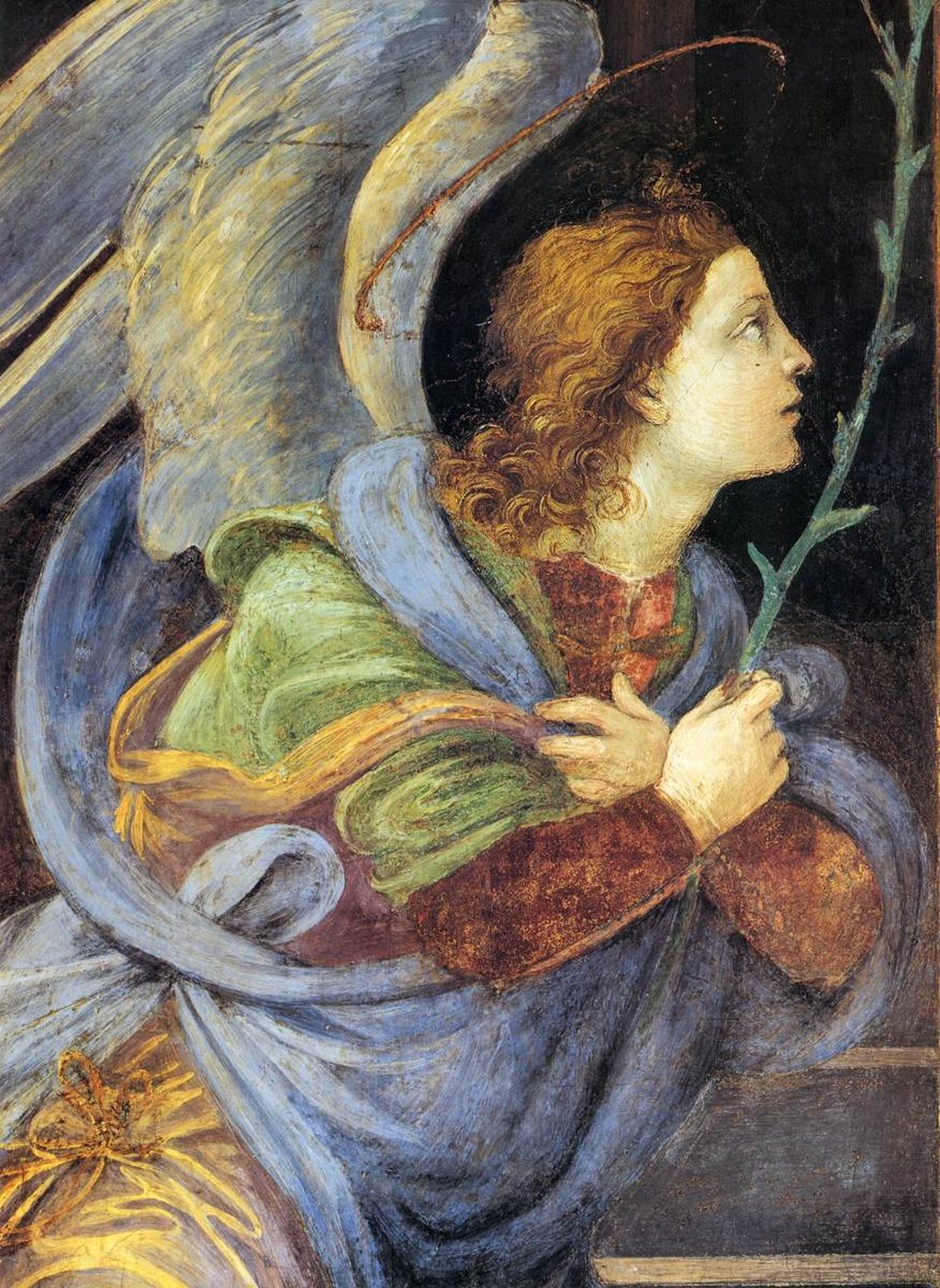
Shared Line. The most obvious visual inheritance is line. Botticelli’s figures are famously organised by elegant contour. Hair, drapery and limbs create rhythmic movement across the surface.
Filippino absorbed this deeply. Even his mature Roman figures retain animated edges and curling cloth. What changes is the environment around them. Filippino increasingly makes line participate in more crowded, strange and psychologically unstable settings.
Drapery. Drapery provides another bridge. Botticelli can make cloth appear almost calligraphic. Filippino learns the same pleasure in moving folds.
In early paintings, this produces close resemblance. Later, the folds become part of more complicated bodily motion. The Roman drawings push drapery into increasingly inventive shapes. The inheritance survives but mutates.
Faces. Early faces can also be difficult to separate. Both painters use refined profiles, almond-shaped eyes, curling hair and youthful idealisation. Filippino gradually becomes more interested in expressive variation. His fresco crowds contain strange, elderly, tense and highly individualised physiognomies. Botticellian grace remains one foundation, but Filippino expands the emotional range.
Domestic Madonnas
Both artists were deeply involved in the market for small household Madonnas. The National Gallery notes that these images were an important source of workshop income.[1] This shared commercial context matters.
The painters were not merely creating isolated masterpieces. They were supplying repeated devotional demand. Their similar figure types partly reflect economic production.
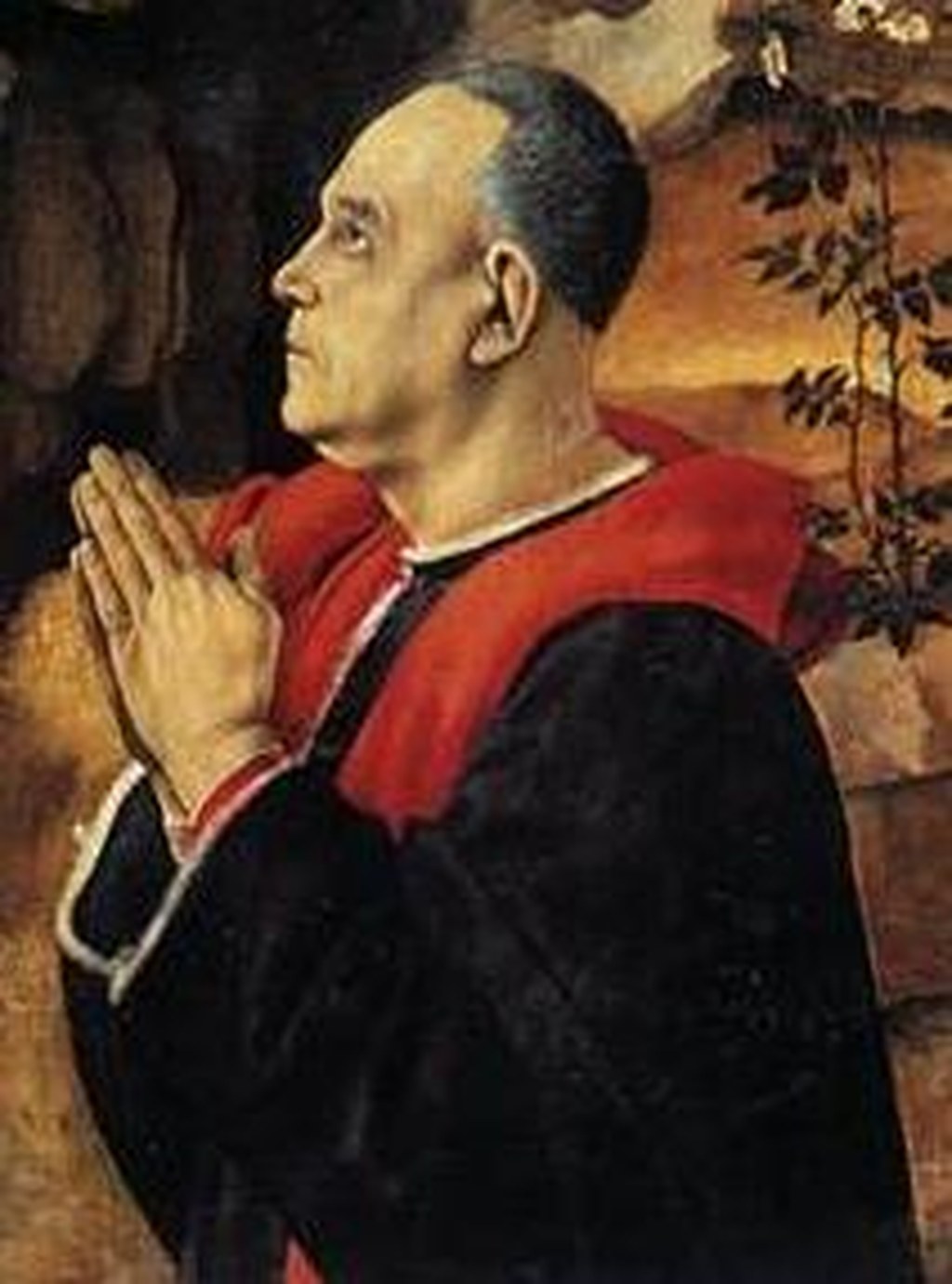
The Medici Circle. Botticelli spent much of his career working for the Medici and their associates. Filippino also entered Medici networks. Lorenzo the Magnificent recommended him for Cardinal Carafa’s Roman chapel. The 1496 Uffizi Adoration of the Magi contains probable portraits of the Pierfrancesco branch. The workshop relationship therefore transmitted patronal access as well as style.
The Brancacci Chapel. Filippino’s Brancacci commission marks a major assertion of independence. He was asked to complete the fresco cycle begun by Masolino and Masaccio. This required a different kind of historical sensitivity from Botticelli’s workshop practice. MUS.E also identifies Botticelli’s likeness among figures Filippino inserted in the chapel. If accepted, the portrait turns the monument into a visual acknowledgment of the teacher.
Botticelli’s Rome and Filippino’s Rome. Both painters worked in Rome, but their Roman experiences differed. Botticelli went to the Vatican in 1481 to contribute frescoes to the Sistine Chapel. The National Gallery describes this as his only known work outside Florence.[1]
Filippino arrived later for the Carafa Chapel. For him, Rome became a profound antiquarian transformation. He studied fragments, grotesques, sculpture and architecture intensely. The same city affected the two painters differently.
Antiquity
Botticelli was deeply engaged with classical mythology, especially in Medici-connected works such as Primavera and The Birth of Venus. Filippino’s antiquity became more archaeological after Rome. He copied fragments, studied sculpture and reinvented decorative systems.
The distinction is important. Botticelli often uses classical subject matter. Filippino increasingly uses classical visual fragments even within Christian subjects.
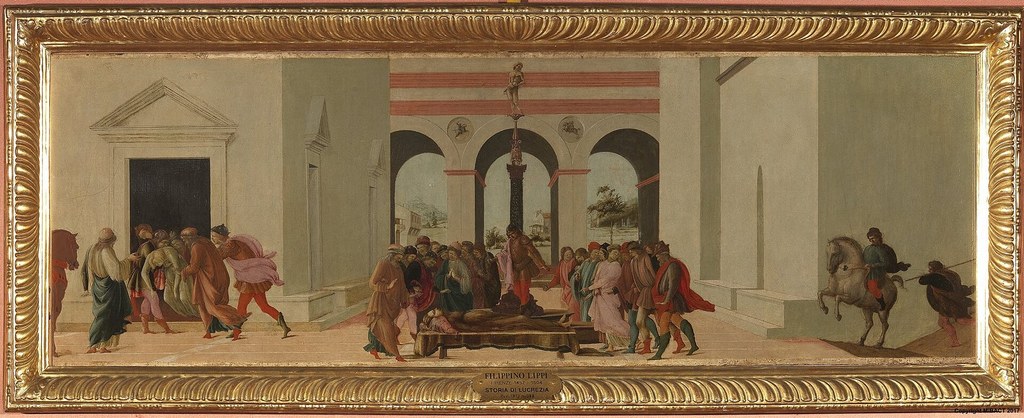
Story of Lucretia. Filippino’s early Story of Lucretia may already reflect Botticelli’s influence in classical narrative composition. The Uffizi suggests such a relationship. Yet the panel’s emotional tension and perspectival experimentation show the younger artist testing his own abilities. Ancient subject matter therefore becomes another arena in which influence turns towards independence.
Vision of Saint Bernard. By the Vision of Saint Bernard, the divergence is clearer. The figures still possess elegance learned from Botticelli. But the rocky landscape, chained demon and psychologically interrupted saint belong strongly to Filippino.
The environment becomes active. Sacred experience feels strange. This is one of the clearest points at which “Botticelli’s pupil” becomes insufficient description.
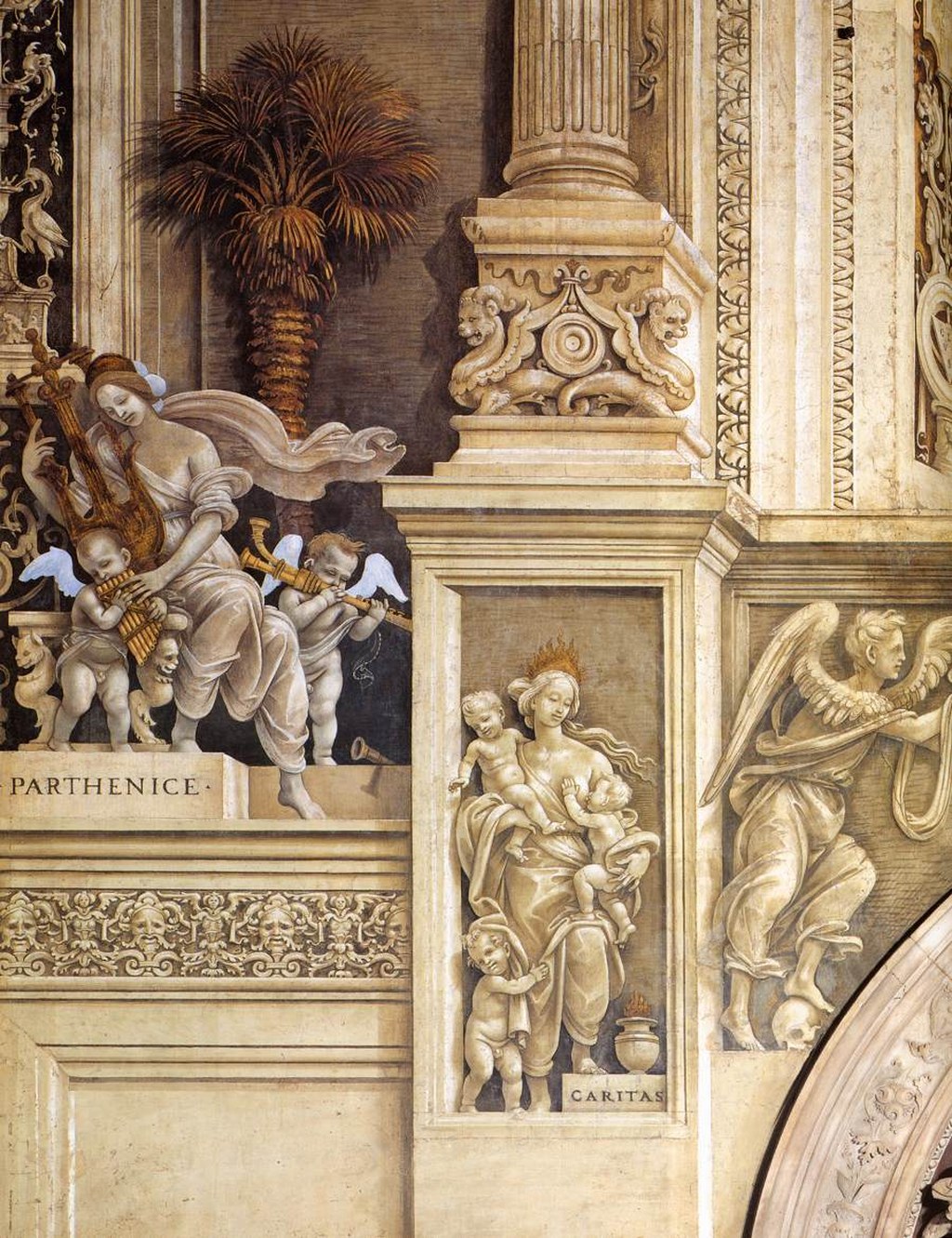
Rome as the Great Separation. Cleveland’s 2025–26 exhibition makes Rome the decisive hinge in Filippino’s mature career.[6] Between 1488 and 1493, antique fragments transformed his style and iconography. After Rome, the difference from Botticelli becomes unmistakable. The Carafa and Strozzi chapels develop a visual world of grotesques, triumphal forms and bizarre architecture that has no close equivalent in Botticelli’s oeuvre.
Reciprocal Influence
Influence need not travel only from older artist to younger. Once Filippino became successful, the workshop relationship could become reciprocal. The National Gallery’s unusual collaborative Adoration already suggests flexible hierarchy.[1] Cleveland’s recent exhibition emphasises reciprocal flows of invention between Filippino and other contemporaries.[6] Mature artists worked within networks rather than isolated lines of descent.
Contemporary Reputation. Modern fame can distort the comparison. Today Botticelli is one of the most famous Renaissance painters. The National Gallery explicitly notes that Filippino’s contemporary success may have been greater than Botticelli’s.[1]
Around 1490, Filippino was not simply the lesser follower of a canonical genius. Both were major Florentine masters. The later hierarchy is a product of reception history.
Why Botticelli Became More Famous. Botticelli’s modern revival was helped by a small number of exceptionally recognisable works. The Birth of Venus and Primavera became icons of Renaissance culture. Filippino’s achievement is more dispersed across fresco cycles, altarpieces, drawings and varied devotional works. His art is harder to summarise through one image. This difference in modern branding should not be confused with contemporary importance.
Shared Interest in Movement. Both artists make bodies move through contour. Botticelli’s movement can feel lyrical. Filippino’s becomes increasingly restless.
The difference is one of emotional temperature. A flowing Botticelli figure often remains elegant. A late Filippino figure may twist, react or strain. The same linear inheritance moves towards different expressive ends.
Drawing
Botticelli was an accomplished draughtsman. Filippino’s surviving drawing corpus, however, is exceptionally large. The Met describes his drawings as energetic, incisive, spontaneous and expressive.[7] This surviving evidence lets us study his design process more deeply than Botticelli’s in many cases. Drawing becomes one of the major areas in which the pupil established an independent legacy.
Teacher and Pupil as Historical Categories. Calling Botticelli “teacher” and Filippino “pupil” is accurate but incomplete. The terms describe one phase of their relationship. They do not define an entire lifetime.
By the 1480s, Filippino was an independent colleague. By the 1490s, he was receiving some of the most prestigious commissions available to a Florentine painter. Historical language should therefore change with the career.
The Workshop Economy. The relationship also makes more sense when considered economically. Botticelli’s workshop had to produce enough work to survive. Private Madonnas, furniture paintings, altarpieces and collaborative pictures all contributed to income.
Filippino’s apprenticeship therefore happened inside a commercial system. He learned not only how to draw graceful figures but how to produce saleable art efficiently. This practical education mattered later when he ran his own projects and dealt with major patrons.
Reusing Designs. Workshop drawings could be reused. A successful head, child or drapery arrangement might appear in more than one work. Modern viewers sometimes treat repetition as evidence of weak invention. For Renaissance workshops, it could signal efficient production and continuity of house style. Filippino’s early resemblance to Botticelli therefore reflects institutional practice as much as personal imitation.
The Problem of “Originality”
Modern art history often celebrates the moment an artist becomes visibly unique. Renaissance patrons did not necessarily demand radical novelty. A young painter who could produce a beautiful picture in a respected workshop manner had already succeeded. Filippino’s originality developed within competence rather than against it. This makes the transition more historically accurate than a story of rebellion against Botticelli.
Shared Drawing Culture. Botticelli was himself an outstanding draughtsman. Filippino’s later reputation as one of the most inventive draughtsmen of the Renaissance therefore grew from an environment where drawing was central. Workshop designs organised figures before painting. Drawings transmitted ideas between master and assistants. Filippino later pushed this culture towards extraordinary freedom, but its foundation was Botticellian.
Shared Love of Elaborate Hair. The Met’s description of Filippino’s taste for fanciful hairstyles has a clear Botticellian precedent.[7] Hair in Botticelli can move like ornament. Filippino inherits that pleasure. In later drawings, hairstyles become even more elaborate and strange. A relatively small decorative trait therefore reveals continuity across decades.
Mythology and Sacred Art. Botticelli is famous today for mythological paintings, while Filippino is associated more strongly with sacred art and frescoes. This modern distinction can exaggerate their difference. Both artists worked across religious and secular subjects.
Filippino’s Story of Lucretia demonstrates his engagement with ancient narrative. Botticelli’s Marian and saint paintings remained fundamental to his output. The workshop relationship crossed genres.
Two Responses to Humanism
Both painters operated within Florentine humanist culture. Botticelli often turned classical mythology into elegant poetic image. Filippino increasingly transformed ancient form itself.
The difference becomes clearest after Rome. Botticelli’s antiquity is often literary and courtly. Filippino’s becomes fragmentary, archaeological and decorative. These are two different Renaissance humanisms rather than one being “more classical” than the other.
Savonarola. Both painters have also been connected with the religious world around Savonarola. The evidence and degree differ, and later biographies sometimes overstate direct ideological transformation. What is more useful is that both worked in a Florence where devotional intensity and criticism of luxury became powerful in the 1490s. Filippino’s patron Francesco del Pugliese became an ardent Savonarolan. The religious environment therefore intersects with both careers even when individual beliefs remain difficult to document precisely.
The 1490 Milanese Assessment. The Milanese agent’s description of Filippino as Botticelli’s pupil and son of an outstanding master is especially revealing because it preserves contemporary reputation before modern canon formation. The writer defines Filippino genealogically but still treats him as worth reporting. Workshop ancestry was not an insult. It was a credential. The statement also confirms that Botticelli’s role in Filippino’s identity remained widely recognised after the younger painter had become independent.
Contemporary Competition. By around 1490, teacher and former pupil were both established masters working in Florence. They could compete for patrons and prestige. Filippino’s growing success did not require Botticelli’s decline. Florence supported multiple workshops. The relationship therefore evolved from hierarchy towards professional coexistence.
The National Gallery’s Reputation Claim
The National Gallery’s observation that Filippino’s contemporary success may have exceeded Botticelli’s is especially useful for correcting hindsight.[1] Modern museum visitors know Botticelli instantly. Filippino requires introduction.
Fifteenth-century patrons did not experience that hierarchy. A major commission entrusted to Filippino was not a second-choice Botticelli substitute. He was a leading master in his own right.
Why Attribution Swings Matter. The repeated movement of works between the two names also reveals how modern reputations influence scholarship. A famous name can attract uncertain works. Later cleaning and technical examination can challenge those traditions. The process is healthiest when uncertainty remains visible. The goal is not to force every picture into one brand but to understand the shared workshop culture that made certainty difficult.
Cleaning as Attribution Evidence. The National Gallery’s reassessment of Saint Francis of Assisi with Angels after conservation in 2002 is a good example.[1] Cleaning altered what scholars could see. Brushwork, colour and modelling previously obscured by surface condition became more legible. Attribution is therefore not based solely on intuition. Material conservation can change stylistic evidence.
Collaboration as Respect. The unusual suggestion that Botticelli contributed to or completed a work associated with Filippino can also be interpreted as evidence of respect. A mature master participating in the younger artist’s project suggests flexibility. Even if the exact division of labour remains debated, the object undermines a rigid model of master above apprentice. Workshop relationships could evolve.
Filippino’s Independence without Rejection
By the Strozzi Chapel, nothing about Filippino’s mature architecture could be mistaken for ordinary Botticelli workshop production. Yet elegant line, beautiful youth types and animated drapery remain. This is the deepest lesson of the relationship. Independence does not require erasure of influence. Filippino becomes most himself by transforming inherited strengths rather than abandoning them.
Why Filippino and Botticelli Matter Together. The relationship matters because it reveals how Renaissance style is transmitted. Fra Filippo’s ideas pass to Botticelli. Botticelli teaches Filippino.
The younger artist initially looks close enough to the master to confuse generations of scholars. Then new patrons, new subjects and Rome pull him elsewhere. This is not a story of influence overcome.
Filippino never stops being formed by Botticelli. He carries elegant line and workshop knowledge into increasingly personal environments. The most useful comparison therefore asks not when Filippino “escaped” Botticelli but how he transformed what he had learned. That process is visible across the entire career, from early Madonnas to the restless late frescoes.
Comparing Their Adorations. The Adoration subject gives one of the best direct comparisons because both painters used it repeatedly. Botticelli’s great Adorations often organise courtly figures in elegant rhythms and have become famous for Medici associations. Filippino’s early National Gallery Adoration instead fills rocky terrain with hermit saints.[1] His 1496 Uffizi version later becomes monumental and political in a different way. The comparison shows that Filippino did not merely inherit a composition. He inherited a subject flexible enough to reinvent.
Different Uses of Florence
Botticelli’s art is often deeply tied to the poetic and mythological culture of Medici Florence. Filippino’s Florence feels more institutionally varied. He works in the Carmine, Santo Spirito, Santa Maria Novella and for multiple rival families. This gives his oeuvre a broader map of the city’s religious and patronal environments. The distinction is one reason the two artists produce different kinds of historical evidence.
Different Responses to Late-Century Change. Both lived through the upheavals of the 1490s, including Medici expulsion and Savonarolan reform. Botticelli’s later career has often been interpreted through this religious climate. Filippino continued to work across complex patronal networks and complete highly elaborate commissions. Their responses remind us that one political crisis does not generate one artistic outcome.
Why are their early works difficult to distinguish? Filippino learned directly within Botticelli’s workshop and shared figure types, drawing habits and devotional formats.
When did Filippino’s style become most different?
The difference becomes especially pronounced after Filippino’s Roman period of 1488–93, when antique fragments, grotesques and architectural fantasy transformed his work.
Was Botticelli more successful during their lifetimes?
Not necessarily. The National Gallery notes that Filippino’s contemporary success may have been greater than Botticelli’s, despite Botticelli’s much greater modern fame.[1]
Frequently Asked Questions
Discussion
What stands out to you most about Filippino and Botticelli in relation to Filippino Lippi's wider career?
Reader Insights
Notice how the page connects close visual detail with patronage, workshop practice and the wider Renaissance setting.
Which comparison elsewhere in the cluster helps clarify this work or theme most strongly?
Join the Conversation
Have a thought or observation about Filippino and Botticelli? Share it below. Thoughtful responses may be added to this section.
References
- National Gallery, London, Filippino Lippi artist biography. View Source
- National Gallery, London, Sandro Botticelli artist biography.
- National Gallery, London, Botticelli and Filippino Lippi, Adoration of the Kings.
- National Gallery, London, Filippino Lippi, Virgin and Child with Saint John. View Source
- National Gallery, London, Filippino Lippi, Adoration of the Kings. View Source
- Cleveland Museum of Art, Filippino Lippi and Rome, 2025–26. View Source
- Metropolitan Museum of Art, The Drawings of Filippino Lippi and His Circle, 1997. View Source