 by Tom Gurney
Tom Gurney BSc (Hons) is an art history expert with over 20 years experience
Published on June 19, 2020 / Updated on October 2, 2026
Email: tomgurney1@gmail.com / Phone: +44 7429 011000
Selected Filippino Lippi Paintings
Browse the main artwork pages in this cluster through the legacy image-and-link layout used across approved medium pages.
Filippino Lippi Paintings
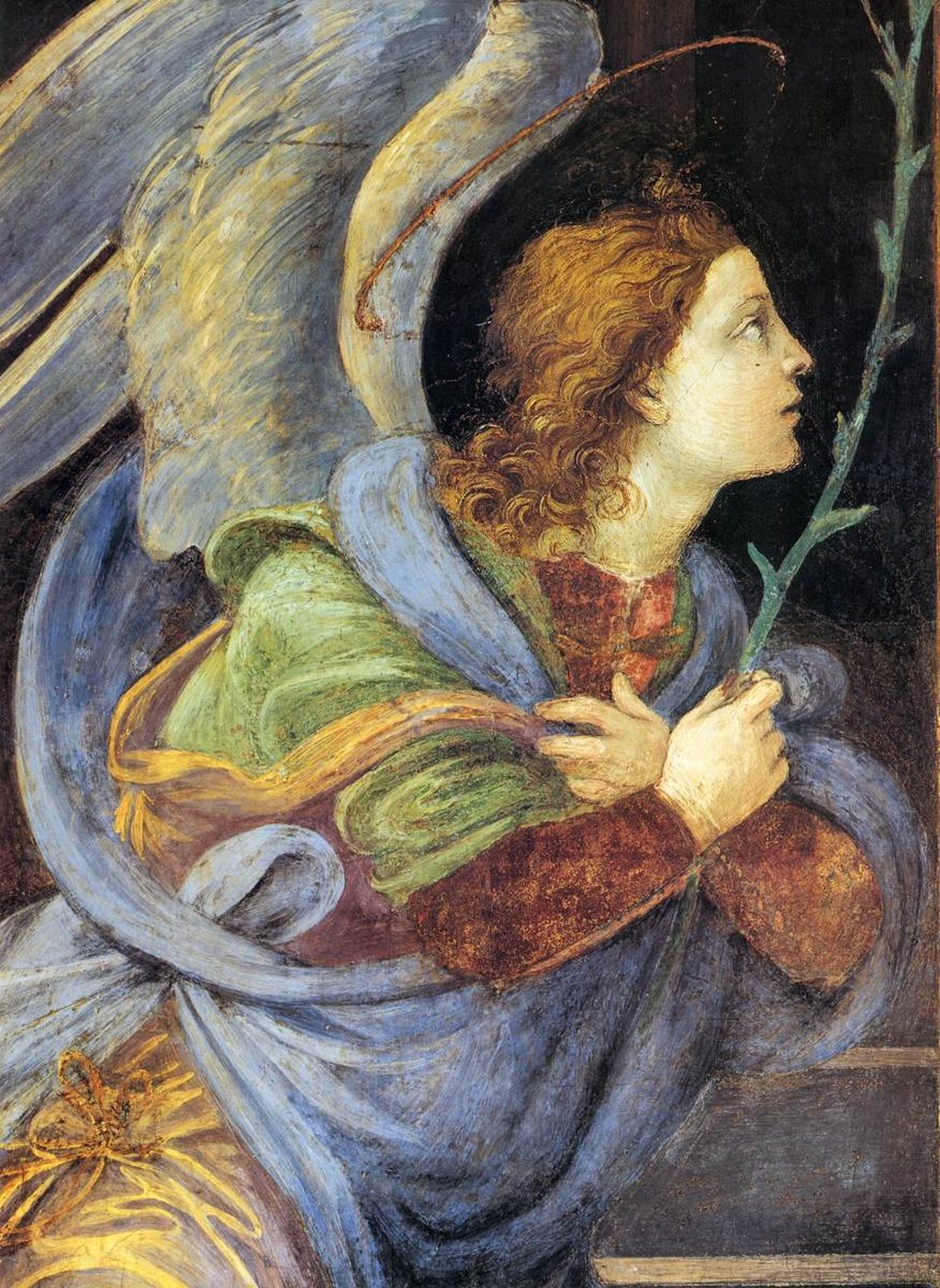
Filippino Lippi’s surviving paintings trace one of the most distinctive careers of the Florentine Renaissance. His earliest works emerge from the workshop culture of Sandro Botticelli in the 1470s, while his mature paintings reveal increasingly independent interests in landscape, psychological expression, antique ornament and elaborate narrative. The range is unusually broad. Filippino painted small domestic Madonnas, large altarpieces, portraits, classical stories, private devotional works and monumental fresco cycles. He also left an exceptional body of drawings that makes it possible to follow the development of many finished compositions from first study to final form.
A chronological approach is particularly useful because Filippino’s style changed markedly. Early works can appear close to Botticelli. The paintings of the mid-1480s become more reflective and atmospheric. His Roman period from 1488 to 1493 transformed his use of architecture and classical ornament, while the late Florentine works combine those Roman discoveries with increasingly expressive movement and complex decoration.
This gallery therefore focuses on paintings that reveal distinct stages or functions rather than attempting to turn every attributed panel into a separate major work. The strongest group includes paintings in Florence, London, New York, Washington and Cleveland together with the major fresco cycles at the Brancacci, Carafa and Strozzi chapels.[5]
At a Glance
- ArtistFilippino Lippi
- Bornc. 1457, probably Prato
- Died1504, Florence
- Early formationFra Filippo Lippi and Sandro Botticelli
- Principal centresFlorence and Rome
- Major fresco cyclesBrancacci Chapel, Carafa Chapel, Strozzi Chapel
- Major patronsPugliese, Strozzi, Medici, Rucellai and Cardinal Oliviero Carafa
- Important collectionsUffizi, National Gallery London, Metropolitan Museum, National Gallery of Art Washington, Cleveland Museum of Art
- Key stylistic turning pointRoman period, 1488–93
- Related strengthunusually large surviving body of drawings
Contents
- The Earliest Surviving Works
- Tobias and the Angel
- The Brancacci Chapel
- Virgin and Child with Saints Jerome and Dominic
- The Strozzi Chapel Begins
- Adoration of the Magi — Uffizi
- How Filippino’s Painting Changed
- Drawings and Paintings
- Frequently Asked Questions
- References
The Earliest Surviving Works
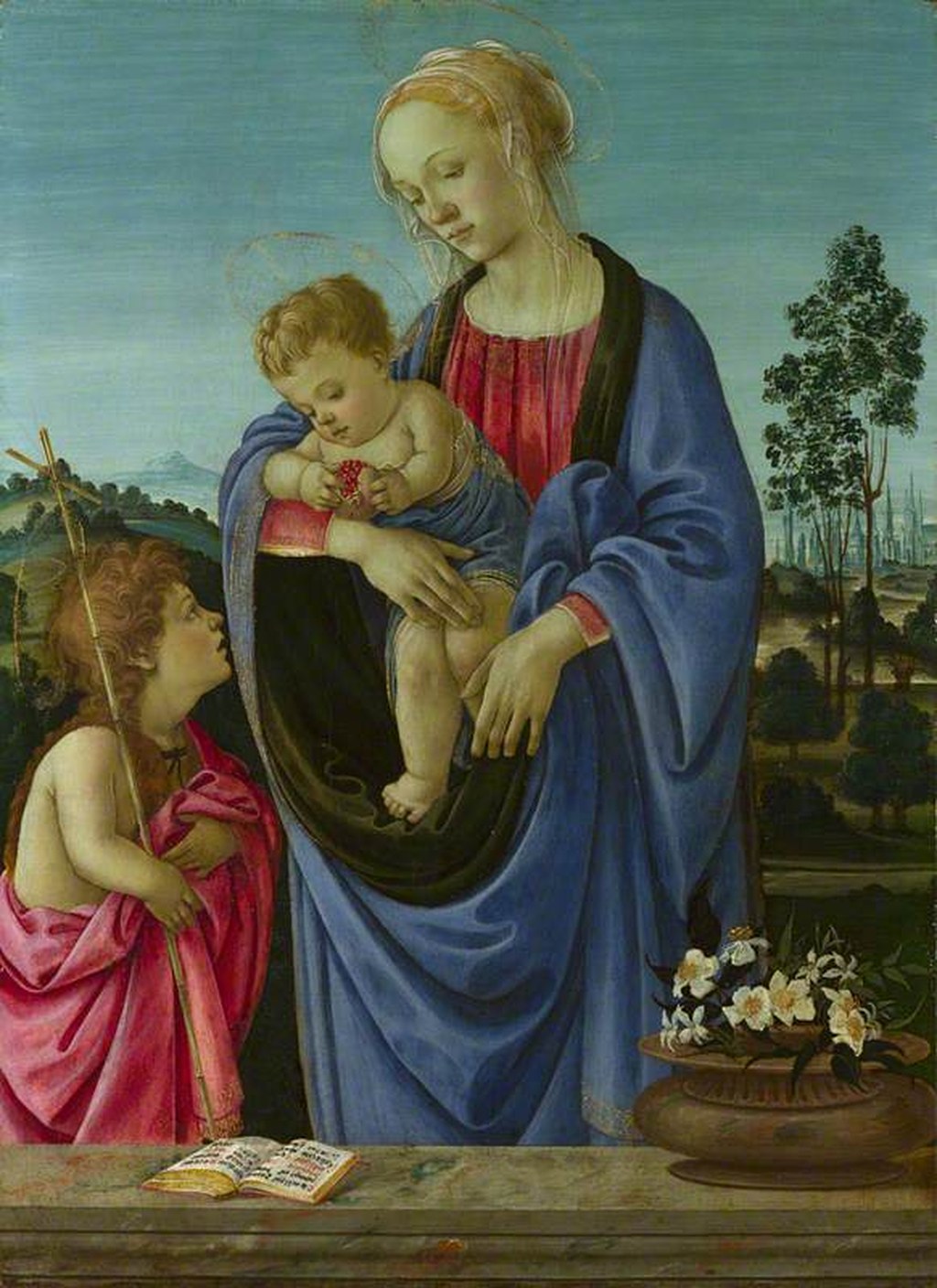
Filippino’s earliest surviving paintings belong to the period in which he was still closely connected with Botticelli’s workshop. The National Gallery’s Virgin and Child with Saint John, painted around 1480, is one of the clearest examples. The small devotional panel shows the Virgin holding Christ while the infant Saint John looks on. Christ takes seeds from a pomegranate, a traditional symbol of the Passion.[1]
The picture is useful not because it is spectacular but because it shows how Florentine workshops produced intimate religious paintings for domestic interiors. Small Madonnas were an important source of income, and workshop assistants could learn through repeated variations on successful compositions. Filippino’s hand remains close to Botticelli’s visual language: delicate profiles, flowing contours, slender hands and graceful drapery. Yet the landscape and small descriptive details already hint at interests that would later become more pronounced.
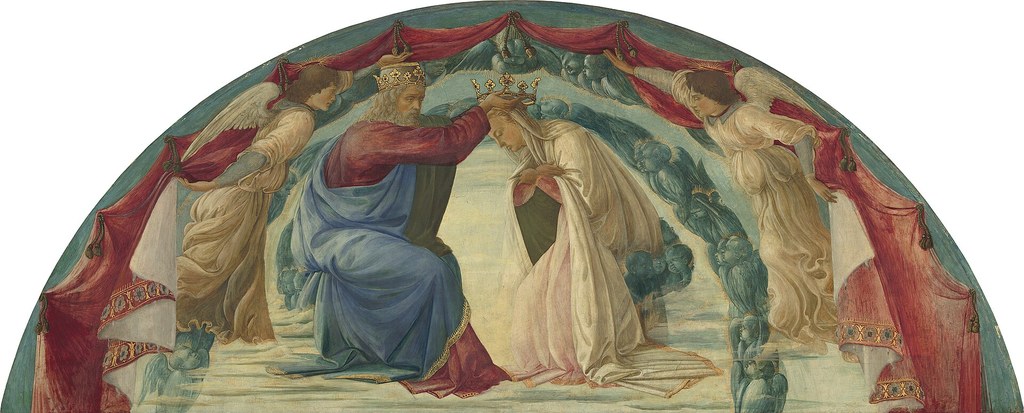
Coronation of the Virgin. The National Gallery of Art in Washington dates Filippino’s Coronation of the Virgin to around 1475, placing it extremely early in his known career.[4] The composition is relatively restrained compared with his later work. God the Father crowns the Virgin while angels support a red cloth behind them. Its importance lies partly in chronology. It provides evidence for Filippino’s earliest independent or semi-independent activity and gives a useful comparison with the far more complex religious imagery of the 1490s. The painting also creates an immediate connection with Fra Filippo Lippi, who had produced major Coronation compositions during his own career.
Tobias and the Angel
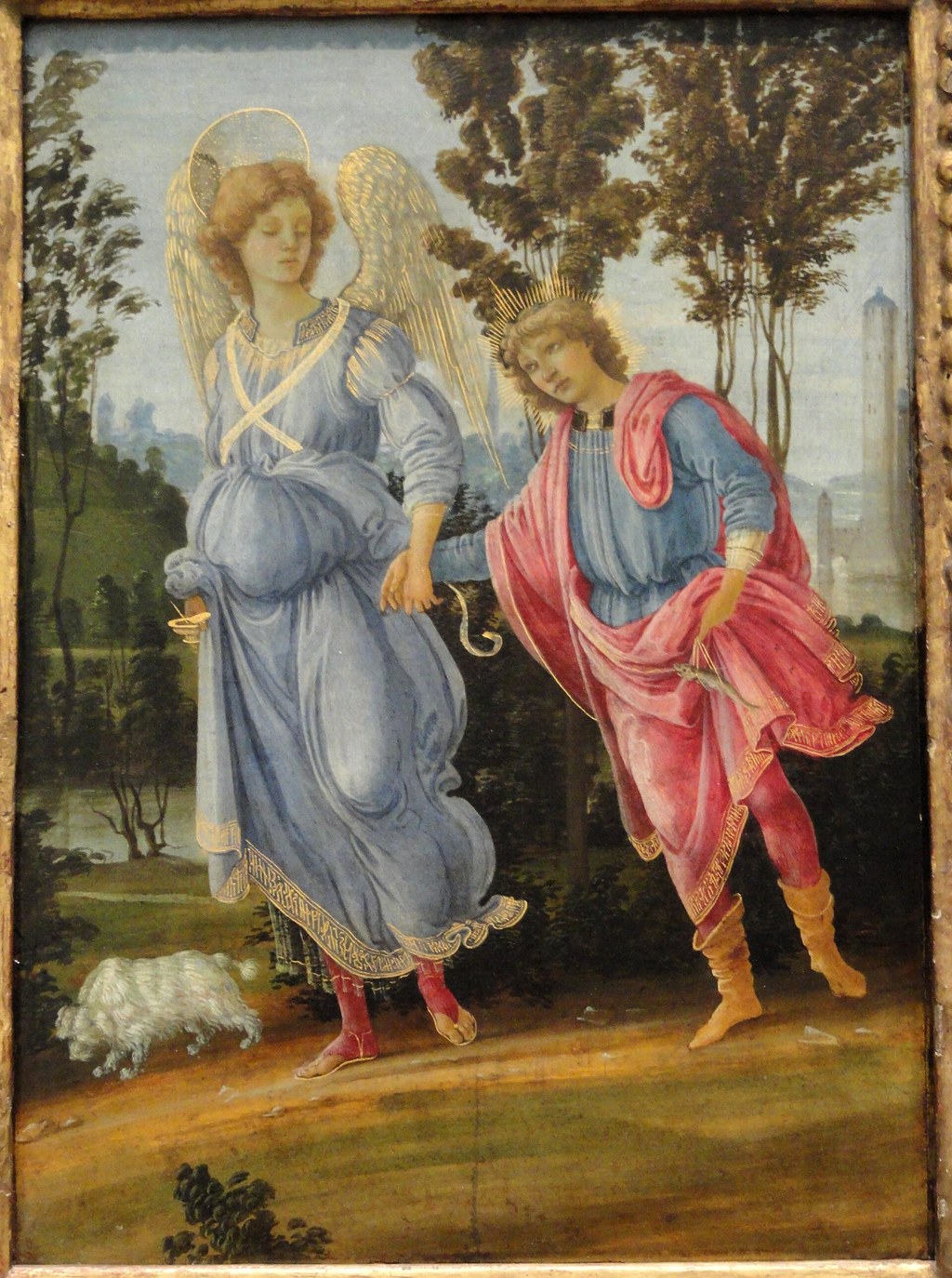
Tobias and the Angel, also in Washington, belongs to around 1475–80. The subject comes from the Book of Tobit. Tobias travels with the Archangel Raphael and carries the fish whose organs will later be used in acts of healing. The story was popular in Florence partly because of its themes of travel, guidance, family duty and safe return.
Filippino’s treatment belongs to his Botticellian phase but already shows a sensitivity to movement and youthful figures that would remain important throughout his career. The painting also has strong comparative value with other Florentine treatments of Tobias by Verrocchio’s workshop and related artists.
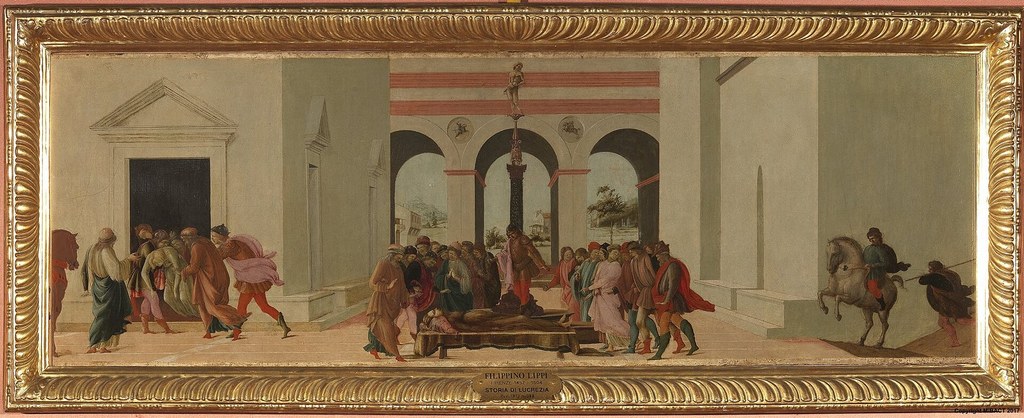
Story of Lucretia. The Story of Lucretia, around 1478–80, moves away from devotional painting entirely. The Uffizi connects the panel with Florentine domestic furnishing and marriage culture. Its Roman Republican subject concerns Lucretia, whose rape and suicide triggered the overthrow of the Tarquin monarchy according to ancient tradition.[2] The painting was historically paired with Filippino’s Story of Virginia, now in the Louvre.
Together, such stories could present ideals of female chastity, family honour and resistance to tyranny within elite domestic interiors. The work is also an important reminder that Filippino’s interest in classical history began well before his transformative journey to Rome.
The Adoration of the Kings. The National Gallery’s Adoration of the Kings, around 1480, is likely to have been made for the wealthy Florentine merchant Francesco del Pugliese.[1] The painting is unusual because the biblical scene occupies a rugged landscape populated by hermit saints. The National Gallery connects this with Pugliese’s religious interests and possibly his later sympathy for Savonarolan reform.[1]
Saints Bernard, Jerome, Augustine and Mary Magdalene appear in the background together with Raphael and Tobias. This creates a very different Adoration from the glittering Medici processions associated with Botticelli. Filippino instead turns the subject towards asceticism, landscape and contemplative spirituality.
The Brancacci Chapel
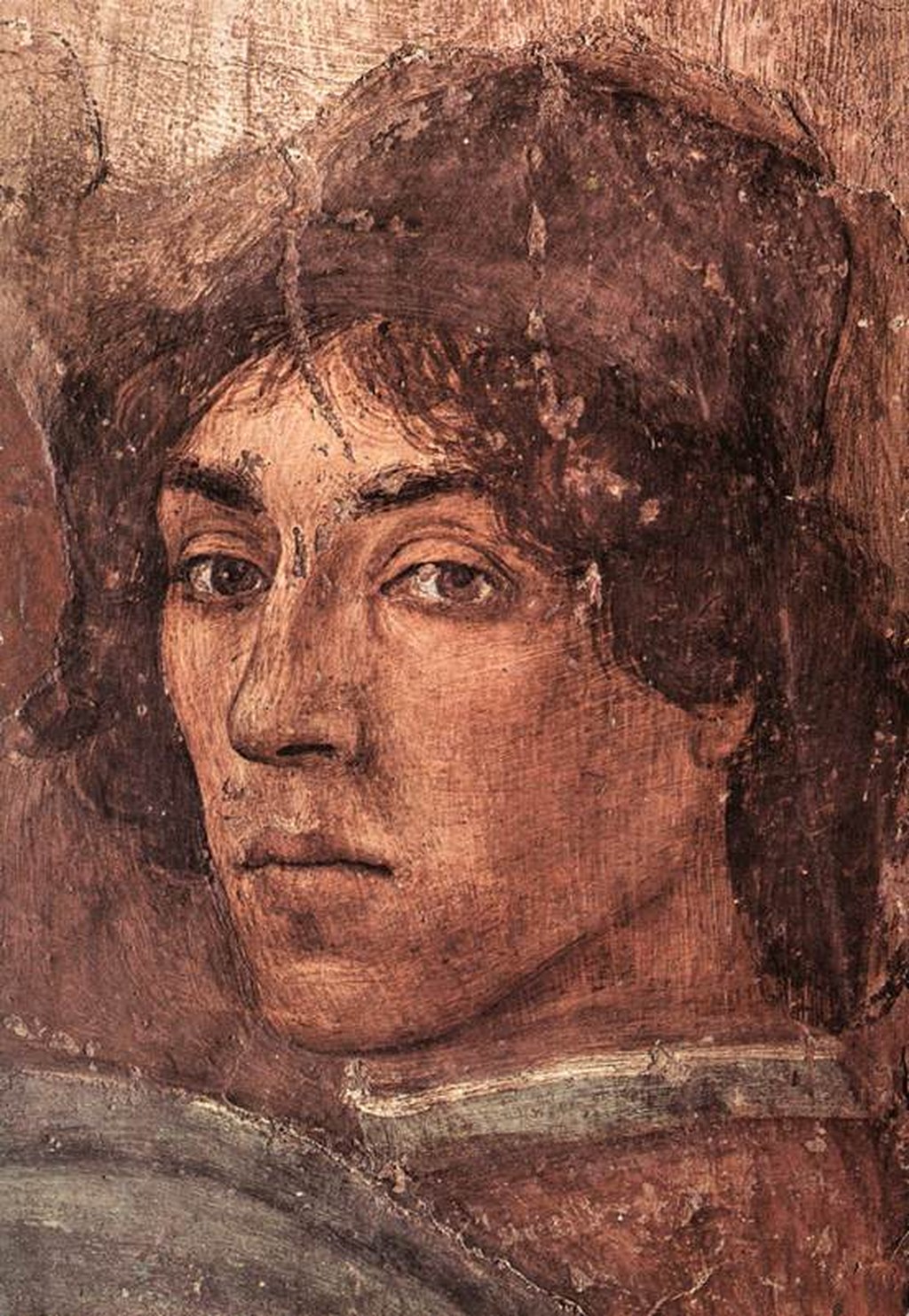
Filippino’s work in the Brancacci Chapel during the early 1480s marks his arrival as a major Florentine painter. The chapel had been begun by Masolino and Masaccio roughly half a century earlier. Filippino completed important sections of the cycle, including episodes from the life of Saint Peter.
His contribution is essential because it demonstrates his ability to adapt to an existing monumental style. Rather than attempting to imitate Masaccio slavishly, Filippino balanced continuity with his own increasingly animated figures. The project also gave him an extraordinary position within Florentine artistic history.
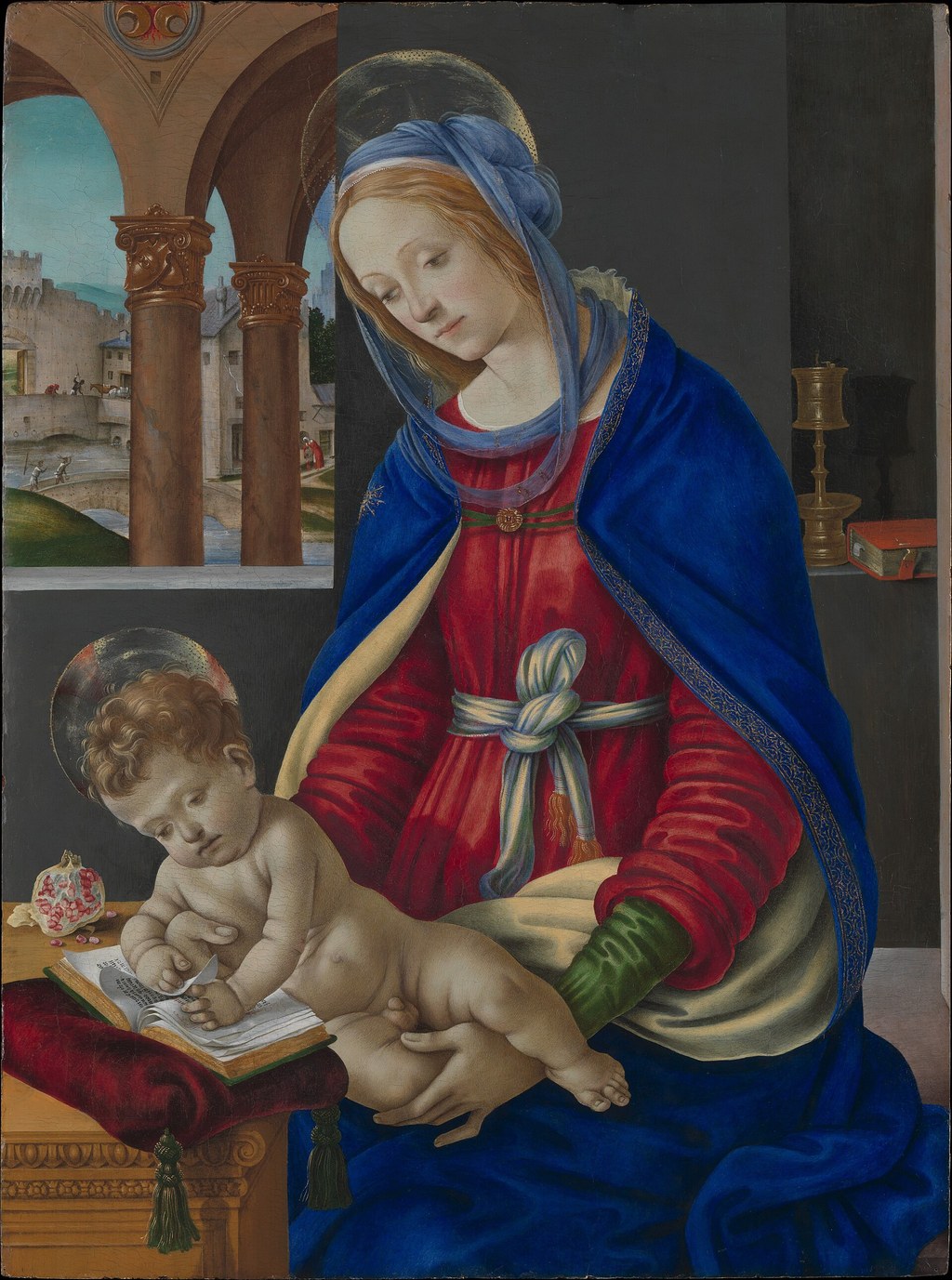
Madonna and Child — Metropolitan Museum. Filippino’s Madonna and Child in the Metropolitan Museum dates to about 1483–84 and was commissioned by Filippo Strozzi.[3] The Virgin and Christ occupy a contemporary palace interior. Through the loggia appears a landscape connected with Strozzi property, and the patron’s three-crescent device is visible. The Met identifies Flemish influence in the landscape, still-life detail and cast shadow.[3]
The painting also contains two Black figures in the background. Museum research relates them to documentary evidence for enslaved Africans in Florence and within the Strozzi household. A 2011 conservation project removed a thick, discoloured varnish and revealed a remarkably well-preserved, brilliant surface.
Vision of Saint Bernard. The Vision of Saint Bernard, probably painted between 1482 and 1486, is one of Filippino’s defining masterpieces. Made for Piero di Francesco del Pugliese, the panel originally stood at Santa Maria delle Campora and is now in the Badia Fiorentina.[8] Bernard is interrupted while writing as the Virgin appears with angels.
The rocky landscape is filled with expressive details, including a small demon biting or struggling with chains. The painting combines Netherlandish-looking detail with psychological movement and a poetic handling of landscape. It also creates an exceptional comparison with Fra Filippo Lippi’s earlier painting of the same rare subject.
Virgin and Child with Saints Jerome and Dominic
The National Gallery dates this large altarpiece to around 1485.[1] It originally stood in a Rucellai family chapel at San Pancrazio in Florence. The Virgin breastfeeds Christ at the centre, while Saints Jerome and Dominic kneel before her.
The surrounding landscape contains an unusually rich secondary narrative: a lion confronts a bear, Jerome appears again in a cave, and Joseph walks near a donkey. The painting therefore combines the formal requirements of an altarpiece with the detailed landscape storytelling that had become increasingly important to Filippino.
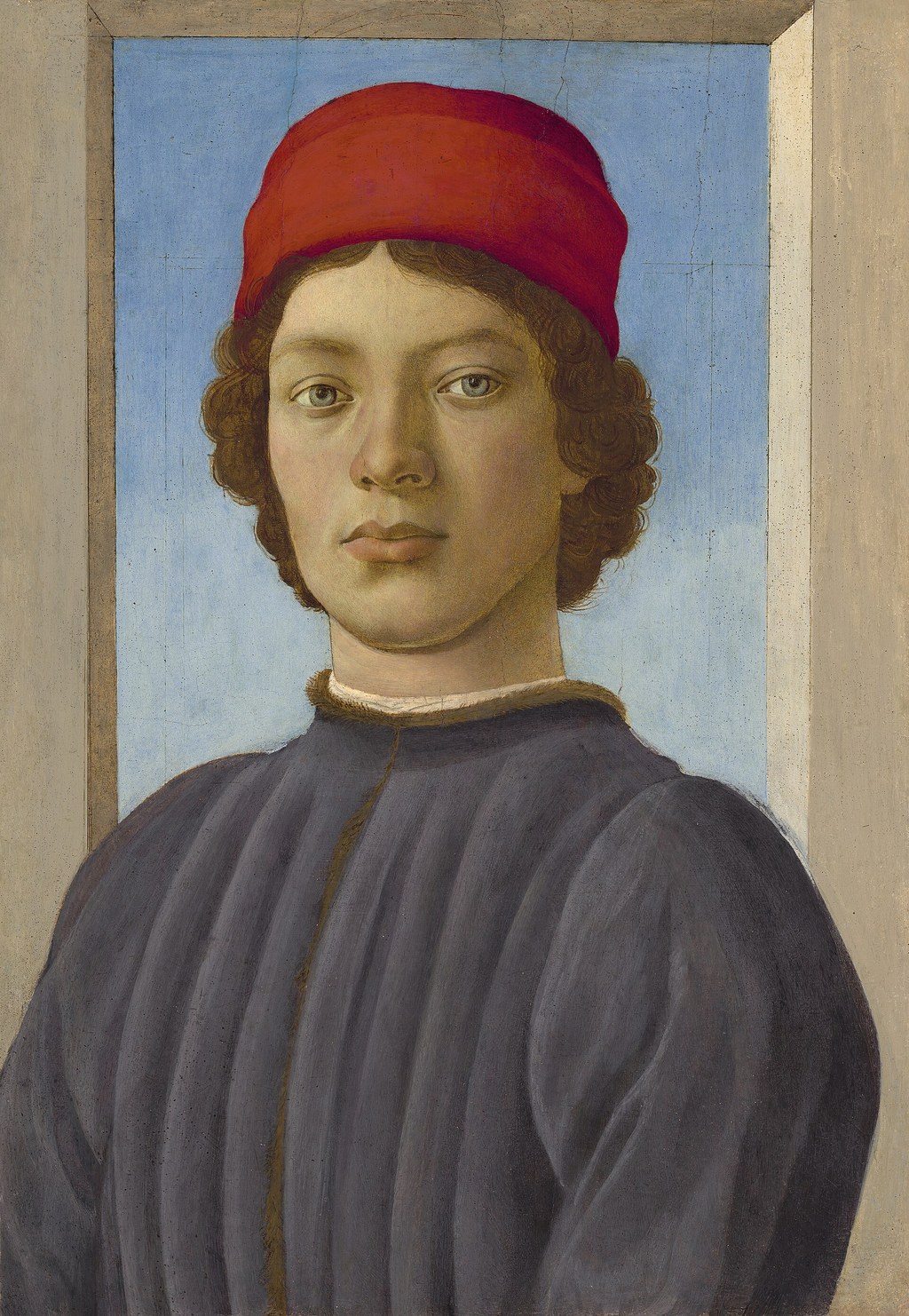
Portrait of a Youth. The Portrait of a Youth in Washington dates to around 1485. Its attribution history reflects Filippino’s close relationship with Botticelli’s workshop style. The young sitter is represented with unusual restraint. There is little of the extravagant ornament associated with Filippino’s later frescoes. That quietness makes the portrait especially useful within the wider catalogue because it demonstrates his ability to concentrate on individual presence rather than narrative abundance.
Nerli Altarpiece. The Nerli Altarpiece remains in Santo Spirito in Florence, in the chapel associated with the Nerli family. Recent archival research places it around 1485–88. That date makes the work one of the most useful benchmarks in Filippino’s career because it belongs immediately before the Roman transformation.
The painting can therefore be compared with the Carafa Chapel and later Strozzi frescoes to see how his use of architecture and antique motifs changed. Its survival in the original chapel also preserves the relationship between painting and site.
The Strozzi Chapel Begins
Filippo Strozzi the Elder acquired the patronage of a chapel at Santa Maria Novella around 1486 and soon commissioned Filippino to decorate it.[6] The project would eventually become Filippino’s final fresco cycle, but its long history spans his journey to Rome. This interruption is crucial. The Strozzi Chapel allows viewers to understand the Roman period not as an isolated episode but as something that transformed an existing Florentine project.
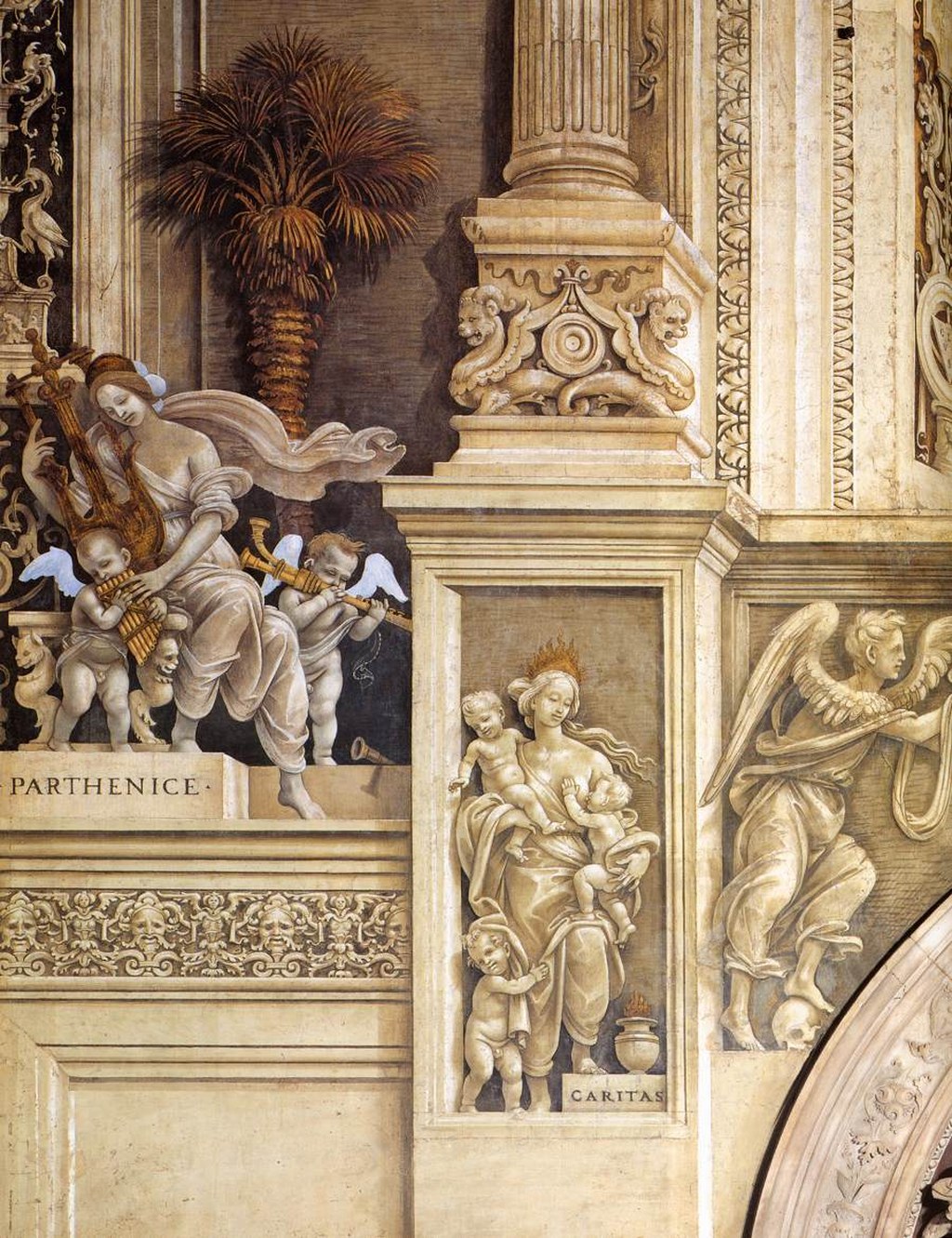
The Carafa Chapel. Filippino travelled to Rome in 1488 after Cardinal Oliviero Carafa commissioned him to decorate a chapel in Santa Maria sopra Minerva. The chapel’s programme centres on Saint Thomas Aquinas and the Virgin. Filippino responded to Rome by filling the sacred cycle with antique architecture, grotesques, allegorical figures, Sibyls and decorative motifs derived from ancient fragments. The Carafa Chapel is one of the major monuments of Filippino’s career and the clearest turning point in his mature style.
Holy Family with Saint John the Baptist and Saint Margaret. While in Rome, Filippino painted the Cleveland Museum of Art’s Holy Family with Saint John the Baptist and Saint Margaret.[5] Cleveland identifies it as the only known independent painting he produced during the Roman period.[5] Cardinal Carafa commissioned the tondo while Filippino was working on the chapel frescoes. Recent technical imaging has revealed underdrawing, underpainting and changes in composition. The research demonstrates how Filippino revised his ideas during execution and how studies of antique sculpture could be transformed into Christian figures.
Adoration of the Magi — Uffizi
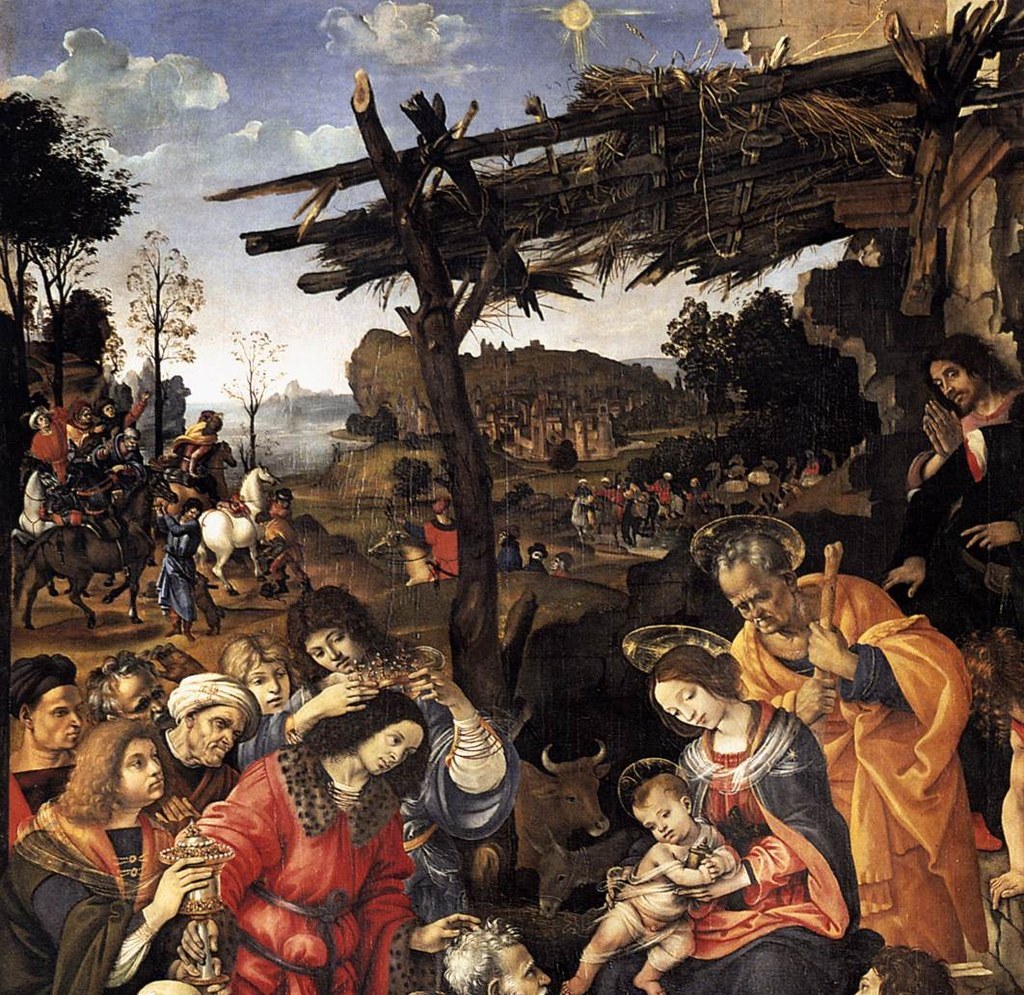
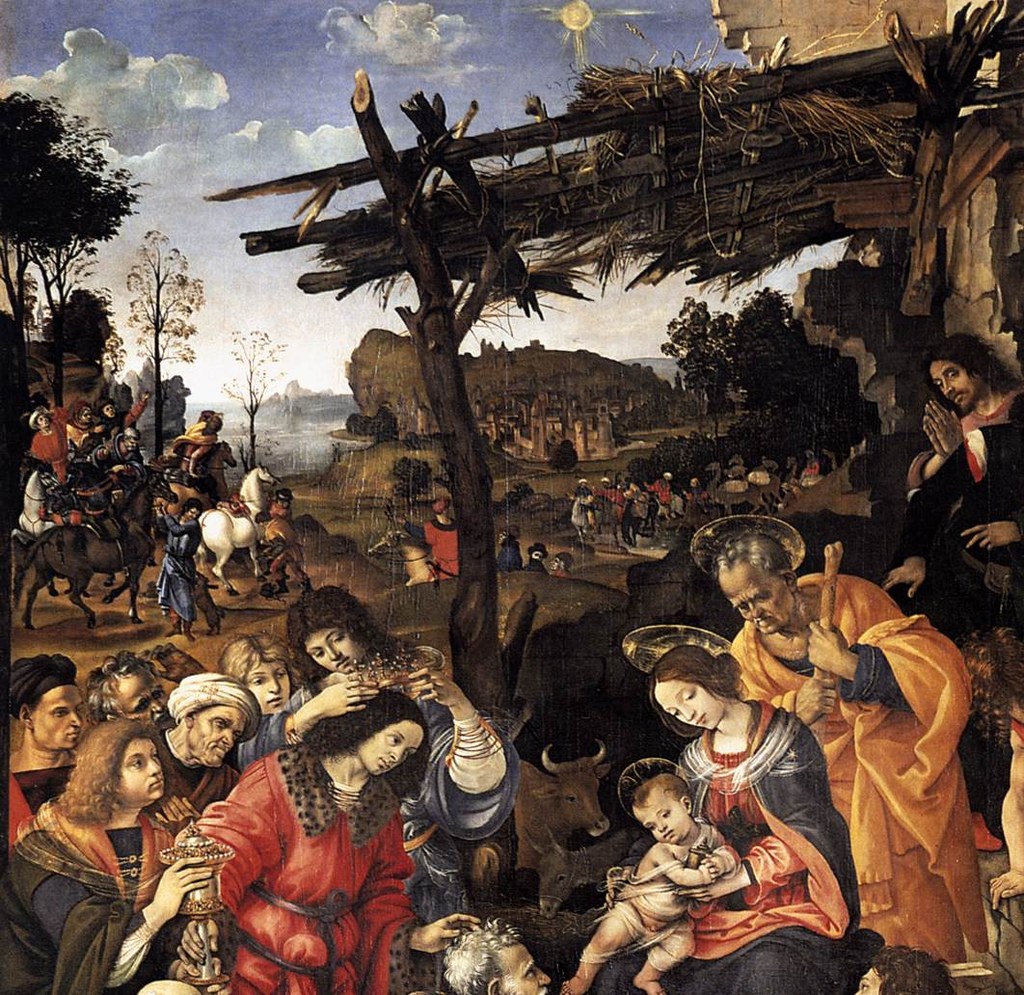
Filippino’s great Uffizi Adoration of the Magi is signed and dated 29 March 1496.[2] The Augustinian community at San Donato a Scopeto commissioned it for the high altar after Leonardo da Vinci had abandoned an earlier painting of the same subject. Filippino’s version is crowded, richly coloured and politically alert.
Probable Medici portraits appear among the Magi and their retinue, while jewellery and a crown help identify contemporary family associations. The painting is one of the clearest examples of how biblical narrative, patronage and Florentine politics could coexist within a major Renaissance altarpiece.
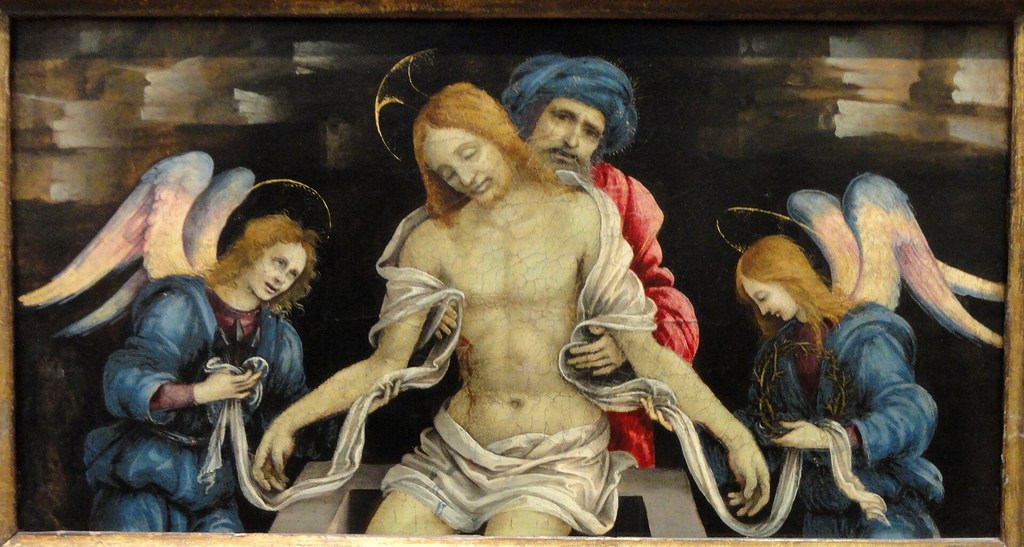
Pietà. The National Gallery of Art’s Pietà, around 1500, represents Filippino’s late devotional style.[4] The dead Christ is mourned in an image of concentrated grief. Its emotional intensity contrasts strongly with the elegant domestic Madonnas of the 1470s and early 1480s. The work helps demonstrate that Filippino’s late style was not defined only by ornamental complexity. It could also produce direct devotional emotion.
The Strozzi Chapel Completed. Santa Maria Novella dates the completion of the Strozzi Chapel frescoes to around 1502.[6] The cycle tells stories of Saint Philip the Apostle and Saint John the Evangelist. Architecture, allegorical sculpture and antique ornament have become extraordinarily elaborate.
The Roman experience is everywhere. Yet the chapel remains a Florentine work shaped by the Strozzi family, the existing dedication to Saint John and the architecture of Santa Maria Novella.[6] As Filippino’s final fresco cycle, it provides one of the clearest statements of his mature visual language.
How Filippino’s Painting Changed
The development from the early Madonnas to the Strozzi Chapel is dramatic. In the 1470s, Botticellian grace dominates. By the mid-1480s Filippino becomes more atmospheric, psychologically reflective and interested in landscape.
Rome then expands his decorative vocabulary. After 1493, antique forms become increasingly imaginative rather than merely learned references. His late art can feel crowded or deliberately strange because ornament has become part of the drama. This is why Filippino cannot be represented adequately by one famous painting. His importance lies partly in transformation.
Fresco, Panel and Domestic Object. One reason Filippino’s catalogue is so varied is that Renaissance paintings were made for very different kinds of use. A fresco cycle such as the Brancacci, Carafa or Strozzi Chapel is inseparable from architecture. The viewer moves through a real chapel while painted figures occupy walls, vaults and windows. An altarpiece such as the Rucellai or Nerli painting has another function. Its composition is organised around liturgy, patronage and the scale of a specific altar.
Domestic Madonnas are different again. Their smaller size and close emotional focus suited household devotion and more intimate viewing. Narrative panels such as the Story of Lucretia could be integrated into furniture and marital interiors rather than functioning as independent gallery pictures. Understanding these differences prevents Filippino’s paintings from becoming a flat checklist of titles. His style changes partly because the job changes.
Original Locations and Museum Collections. Filippino is fortunate in that several of his most important works remain in or close to their original settings. This is especially true of the chapel frescoes and the Nerli Altarpiece. Museum paintings provide different advantages. Conservation laboratories, technical imaging and extensive provenance research can reveal information invisible at the original site.
The Cleveland Holy Family and Metropolitan Museum Madonna and Child demonstrate this particularly well.[3] A complete account of Filippino therefore needs both forms of evidence: architectural context and close museum study. The two approaches are complementary rather than competing.
Drawings and Paintings
The unusually large body of surviving drawings gives Filippino’s paintings another dimension. Preparatory sheets reveal figure studies, alternative poses, antique sources and changes of design. The Cleveland tondo is now particularly valuable because technical imaging can be compared with related drawings.[5] The Met’s 1997 catalogue demonstrates that drawing remained central throughout Filippino’s career.[3] His paintings therefore represent only the finished stage of a much more fluid process of visual invention.
Where to See Filippino Lippi. Florence remains the most important city for encountering Filippino in context. The Uffizi holds the great 1496 Adoration of the Magi.[2] The Badia Fiorentina preserves the Vision of Saint Bernard.[8]
Santa Maria del Carmine contains his Brancacci Chapel frescoes. Santo Spirito retains the Nerli Altarpiece. Santa Maria Novella preserves the Strozzi Chapel.[6]
Rome contains the Carafa Chapel at Santa Maria sopra Minerva. Important portable works are held by the National Gallery in London, the Metropolitan Museum in New York, the National Gallery of Art in Washington and the Cleveland Museum of Art.[4]
Why Filippino Lippi’s Paintings Matter. Filippino’s paintings matter because they document one of the most creative transitions in Renaissance art. His early works preserve the living workshop culture of Botticelli. The Brancacci Chapel connects him directly with Masaccio.
The mid-career panels reveal important patronage networks and growing independence. Rome transforms his engagement with classical antiquity.[4] The late works then carry that Roman experience back into Florence.
Seen chronologically, the career becomes a story of reinvention rather than inheritance. Filippino was born into an artistic dynasty, but his greatest achievement was creating a visual language that neither his father nor Botticelli could have predicted.
Frequently Asked Questions
Discussion
What stands out to you most about Paintings in relation to Filippino Lippi's wider career?
Reader Insights
Notice how the page connects close visual detail with patronage, workshop practice and the wider Renaissance setting.
Which comparison elsewhere in the cluster helps clarify this work or theme most strongly?
Join the Conversation
Have a thought or observation about Paintings? Share it below. Thoughtful responses may be added to this section.
References
- National Gallery, London, Filippino Lippi artist page and collection records. View Source
- Uffizi Galleries, Adoration of the Magi and Story of Lucretia collection resources. View Source
- Metropolitan Museum of Art, Filippino Lippi collection records and The Drawings of Filippino Lippi and His Circle. View Source
- National Gallery of Art, Washington, Filippino Lippi artist and object records.
- Cleveland Museum of Art, Filippino Lippi and Rome and Holy Family with Saint John the Baptist and Saint Margaret. View Source
- Santa Maria Novella, institutional history of the Strozzi Chapel. View Source
- MUS.E / Musei Civici Fiorentini, Brancacci Chapel resources. View Source
- Badia Fiorentina, institutional information on the Vision of Saint Bernard. View Source