 by Tom Gurney
Tom Gurney BSc (Hons) is an art history expert with over 20 years experience
Published on June 19, 2020 / Updated on October 2, 2026
Email: tomgurney1@gmail.com / Phone: +44 7429 011000
Filippino Lippi and Fra Filippo Lippi
Filippino Lippi was born into one of the most unusual artistic families of the Florentine Renaissance. His father, Fra Filippo Lippi, was a Carmelite friar and one of the leading painters of the mid-fifteenth century. His mother, Lucrezia Buti, was connected with the convent of Santa Margherita in Prato. Their relationship became the subject of legend, scandal and conflicting later accounts.
For art history, however, the most important question is not the romance of Filippino’s birth but what he inherited artistically. Fra Filippo died in 1469 when Filippino was still young. The son therefore did not simply take over his father’s workshop as an adult master. Instead, he entered the workshop of Sandro Botticelli, who had himself trained under Fra Filippo.
This creates a remarkably layered inheritance. Filippino learned partly from his father, partly from his father’s paintings and partly from a teacher who had already absorbed and transformed Fra Filippo’s style. The National Gallery describes Fra Filippo as gracious, ornate, highly skilled in composition, colouring, relief and ornament. The same institution presents Filippino as one of the leading Florentine painters of the next generation.[1]
Their careers overlap thematically but differ dramatically in visual language. Both painted Madonnas. Both created major fresco cycles.
Both worked for elite patrons including the Medici world. Both painted Saint Bernard receiving a vision of the Virgin. Yet Filippino’s mature art becomes more restless, archaeological and psychologically complex, especially after Rome. The comparison therefore provides one of the clearest ways to see how Florentine painting changed from the middle to the end of the fifteenth century.
At a Glance
- FatherFra Filippo Lippi, c. 1406–1469
- SonFilippino Lippi, c. 1457–1504
- MotherLucrezia Buti
- Shared centresFlorence and Prato
- Workshop linkBotticelli trained with Fra Filippo and later taught Filippino
- Shared subjectsMadonna and Child, Saint Bernard’s vision, altarpieces and fresco cycles
- Major differenceFilippino’s mature Roman antiquarian and grotesque vocabulary
- Shared patronal worldMedici and elite Florentine families
- Historical bridgeFra Filippo connects Masaccio to Botticelli; Filippino connects Botticelli and the fifteenth century to the High Renaissance generation
Contents
- Fra Filippo’s Formation
- Madonna Painting
- What the Bernard Comparison Shows
- Spoleto and the Father’s Death
- Colour
- Psychology
- Illegitimacy and Career
- Fra Filippo’s Drawings and Models
- Masaccio’s Long Shadow
- Reputation during Filippino’s Lifetime
- Death and Artistic Succession
- Two Different Final Fresco Careers
- Father-Son Comparison through Space
- Frequently Asked Questions
- References
Fra Filippo’s Formation
Fra Filippo grew up within the Carmelite environment of Santa Maria del Carmine in Florence. The Brancacci Chapel frescoes by Masaccio and Masolino formed part of that visual world. Modern scholarship avoids claiming a documented formal apprenticeship under Masaccio. What is clear is that Masaccio’s monumentality and spatial logic exerted a profound influence. Fra Filippo absorbed early Renaissance solidity and gradually combined it with greater elegance, ornament and emotional accessibility.
Filippino’s Formation. Filippino inherited a different Florence. Masaccio’s innovations were already historical achievements. Fra Filippo had transformed them.
Botticelli had then transformed Fra Filippo. Filippino therefore entered a much more developed workshop culture. This difference alone helps explain why father and son should not be expected to look alike. They began from different artistic baselines.
The Carmine Connection. Santa Maria del Carmine creates one of the most powerful links between the two careers. Fra Filippo belonged to the Carmelite community there and experienced Masaccio’s frescoes as part of his formation. Decades later, Filippino was commissioned to complete those same Brancacci Chapel frescoes. The son therefore worked physically inside a monument that had helped shape the father. This creates artistic inheritance through place rather than direct collaboration.
Botticelli as Bridge. Botticelli is the essential middle figure. Fra Filippo taught Botticelli. Botticelli taught Filippino.
The resulting line of transmission is unusually visible. Filippino’s early Madonnas look Botticellian partly because Botticelli’s language itself contains Lippi inheritance. The son therefore receives aspects of his father twice: through memory and through workshop mediation.
Madonna Painting
Fra Filippo’s Madonnas were among his most influential achievements. He brought Mary and Christ into intimate emotional relationship. The Uffizi Madonna and Child with Two Angels became one of the most famous expressions of this approach.[5]
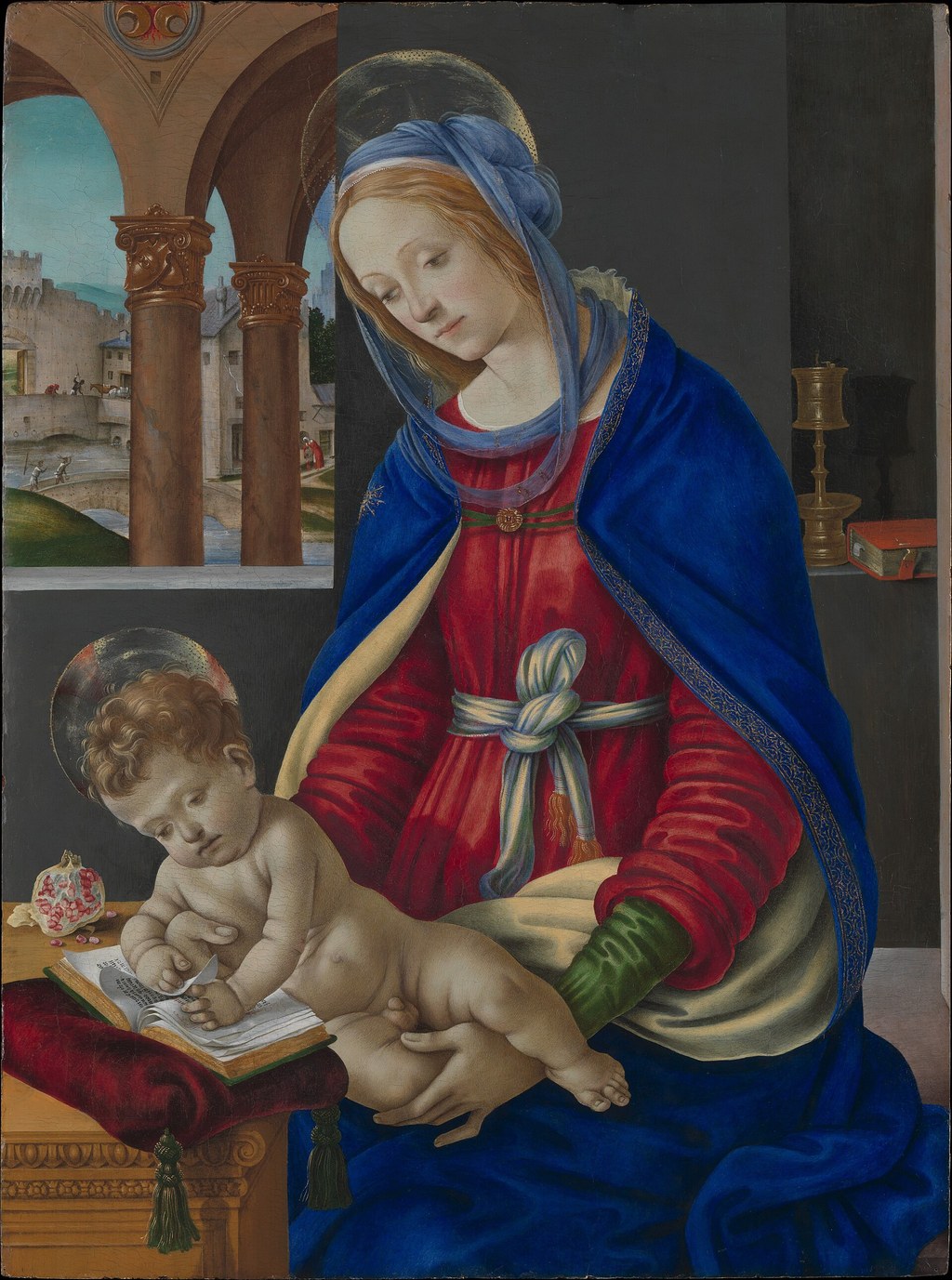
Filippino’s early domestic Madonnas continue the same broad tradition. The sacred figures feel human and close. Yet the son increasingly surrounds them with landscape, objects and complex spatial settings.
The Humanised Sacred. Fra Filippo’s great contribution was often to make sacred figures emotionally accessible. Mary can feel like a young mother. Christ behaves like a real child.
Filippino retains this humanity. The Cleveland Holy Family demonstrates it vividly through the embrace between Christ and Saint John.[6] But Filippino increasingly places human affection inside stranger environments. The sacred remains intimate while the world around it becomes more complex.
Saint Bernard’s Vision: Father. Fra Filippo painted Saint Bernard’s Vision of the Virgin in 1447, now in the National Gallery.[1] The composition is relatively concentrated. Bernard receives the apparition in rocky surroundings. The spiritual event is intimate and controlled. The work reflects the elder Lippi’s ability to make mystical experience physically convincing without overwhelming narrative detail.
Saint Bernard’s Vision: Son. Filippino returned to the subject in the 1480s. His version, now in the Badia Fiorentina, expands everything.[4] The Virgin arrives with angels.
The landscape becomes denser. Books and roots gain descriptive importance. A chained demon appears.
Bernard twists away from writing in a moment of psychological interruption. The subject remains the same. The visual world changes.
What the Bernard Comparison Shows
The two paintings give an unusually direct father-son comparison because the subject is relatively rare. Fra Filippo emphasises contemplation. Filippino emphasises event.
The father’s spiritual world is concentrated. The son’s is more populated and narratively unstable. This difference anticipates the broader development of Florentine painting across the century.
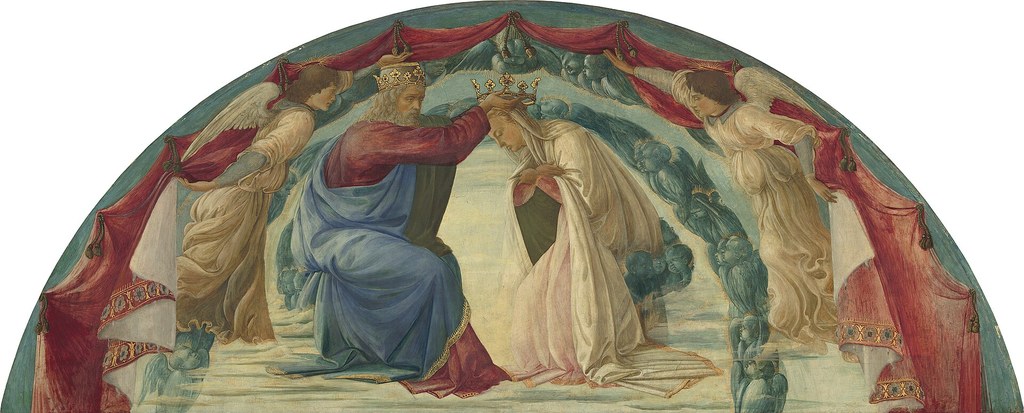
Coronation of the Virgin. Both artists also painted Coronations. Fra Filippo’s Uffizi Coronation is monumental and densely populated.[5] Filippino’s very early Washington Coronation is much simpler and broader.
Direct influence should not be assumed merely from shared subject. Coronation imagery was widespread. Yet the pair again shows how one devotional theme can generate very different solutions across generations.
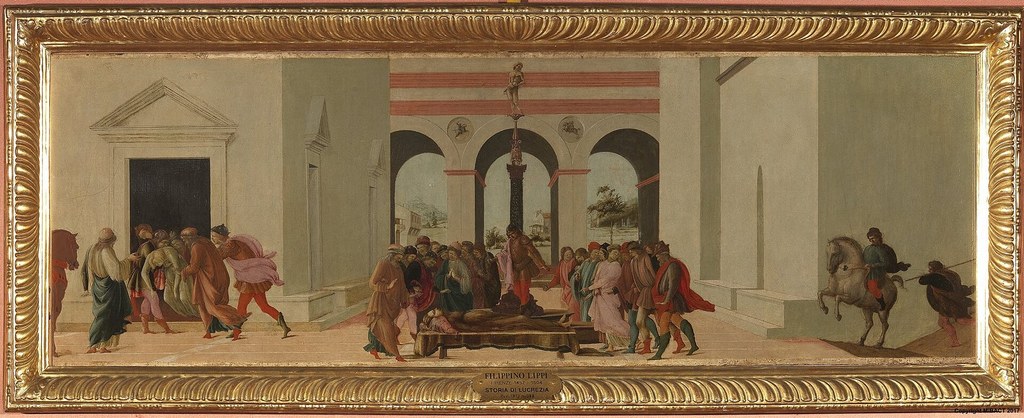
Fresco Careers. Fra Filippo’s major fresco cycles include Prato Cathedral and Spoleto Cathedral. Filippino’s principal cycles include the Brancacci completion, Carafa Chapel and Strozzi Chapel. Both artists were therefore much more than panel painters.
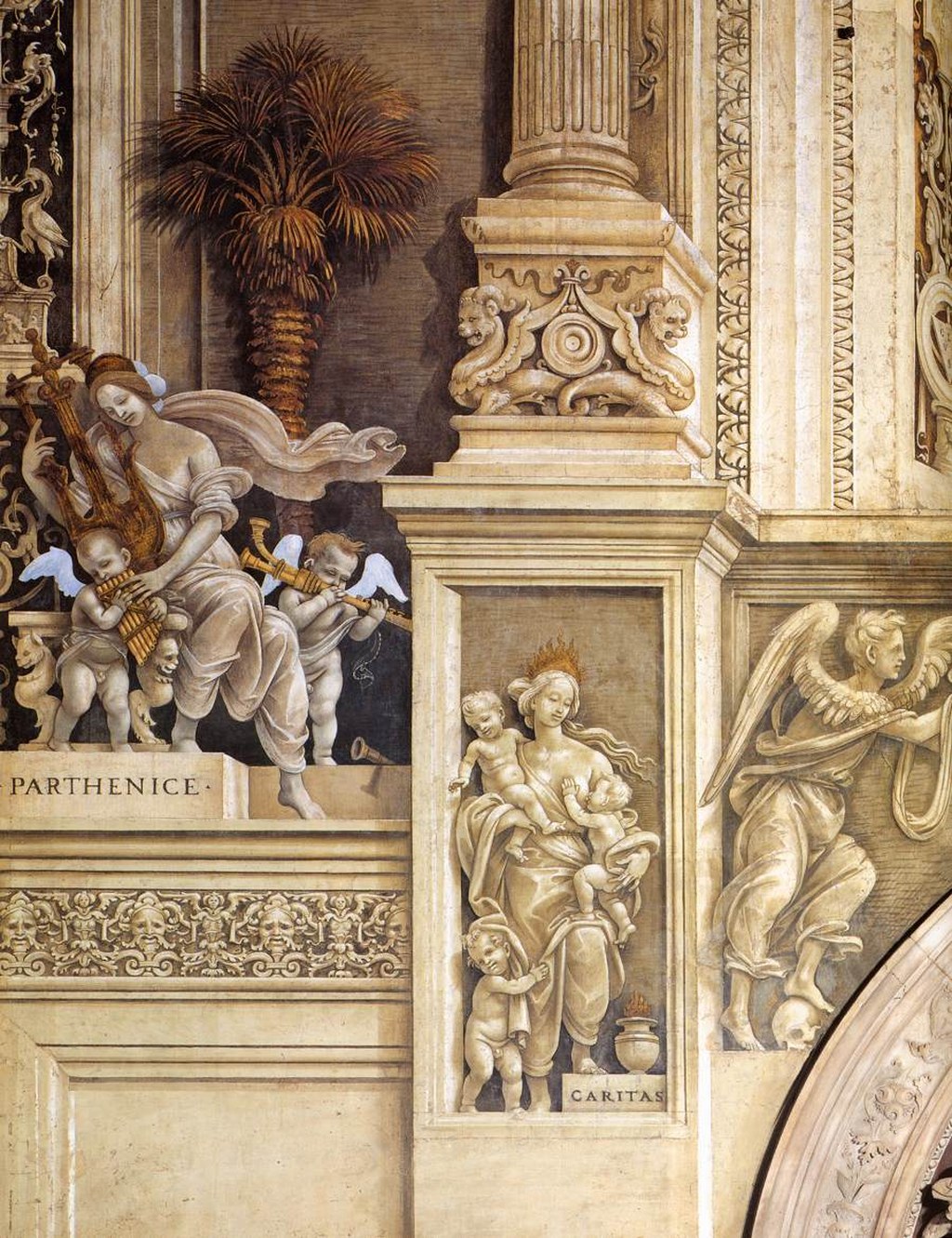
Their reputations depended upon the ability to organise sacred history across architecture. The comparison also shows changing expectations of fresco. Filippino’s late chapels become far more archaeologically and allegorically elaborate.
Prato. Prato has special significance to both. Fra Filippo spent years working on the cathedral frescoes there. His relationship with Lucrezia Buti also unfolded in the city.
Filippino was probably born there. The city therefore connects family biography, artistic production and scandal. For the son, however, Prato was more origin than principal mature workplace. His career became increasingly centred on Florence and Rome.
Spoleto and the Father’s Death
Fra Filippo died in Spoleto in 1469 while working on his final cathedral fresco cycle. Filippino was still young. That death changed the structure of his training permanently. Instead of growing into his father’s workshop naturally, he had to enter another. Botticelli’s role in the later career cannot be understood without this interruption.
Patronage. Fra Filippo was actively supported by the Medici and worked for major religious institutions. Filippino likewise benefited from elite patronage. Lorenzo the Magnificent recommended him for Cardinal Carafa’s Roman chapel.
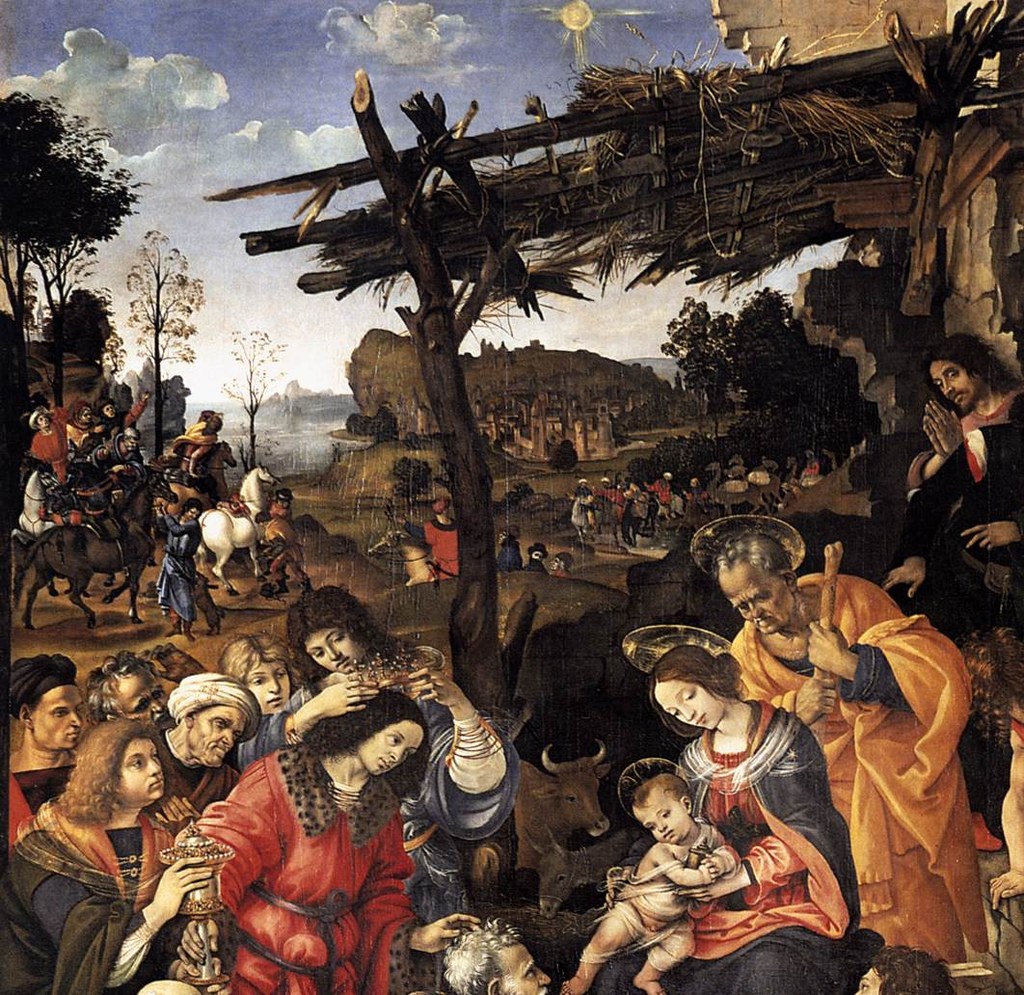
Filippo Strozzi employed him repeatedly. The Pierfrancesco Medici branch appears in his 1496 Adoration. Artistic inheritance therefore included patronal networks as well as style.
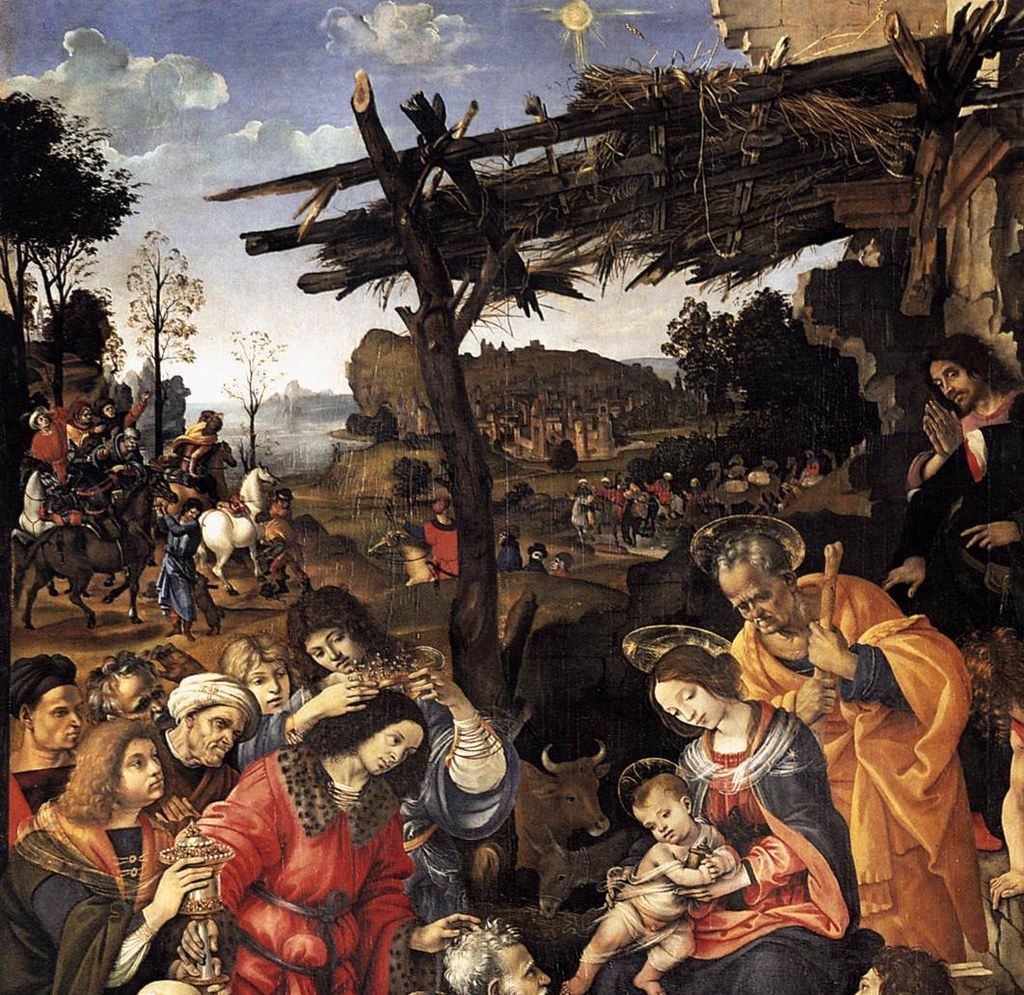
The Medici. Fra Filippo’s Medici commissions include the National Gallery panels The Annunciation and Seven Saints, formerly connected with Palazzo Medici.[1] Filippino’s Medici relationships operated in a later and more politically unstable Florence. By 1496, the main branch had been expelled. His Uffizi Adoration engages the Pierfrancesco branch in that changed context.[5] The same family name therefore means different political realities across father and son.
Line and Contour. Fra Filippo helped move Florentine painting towards more elegant line after Masaccio’s severe monumentality. Botticelli pushed that tendency further. Filippino inherited the result.
His early contours are therefore graceful and fluid. Later, line becomes more restless. The family inheritance remains visible but emotionally intensified.
Colour
Both painters were admired for colour. Fra Filippo’s surfaces combine richness and grace. Filippino’s mature paintings use warm colour to control increasingly complex compositions.
The Met’s restored Strozzi Madonna and Cleveland’s technical study of the Holy Family show how expensive pigments such as ultramarine could play major roles in elite commissions.[7] Material splendour runs across both careers.
Ornament. The National Gallery’s quotation from Cristoforo Landino praises Fra Filippo for ornament.[1] Filippino would become even more intensely ornamental after Rome. Yet the nature of ornament changes.
Fra Filippo’s elegance often belongs to textile, architecture and decorative detail. Filippino’s late ornament absorbs grotesques, antique fragments and fantastic sculpture. The son expands an inherited taste into something stranger.
Rome. Rome provides the clearest separation. Fra Filippo’s career is fundamentally Florentine, Pratese and Umbrian. Filippino’s Roman period of 1488–93 transformed his mature identity. Cleveland’s recent exhibition demonstrates how ancient sculpture, architecture and painted fragments changed both style and iconography.[6] There is no equivalent turning point in Fra Filippo’s surviving career.
Antiquity. Fra Filippo worked within an early Renaissance increasingly interested in classical form. Filippino encountered antiquity at a later stage, when direct study of Roman fragments had become far more intense. The son therefore develops a much more visibly archaeological imagination.
Ancient statues can become Christian saints. Grotesques invade sacred architecture. The difference reflects historical moment as much as personality.
Psychology
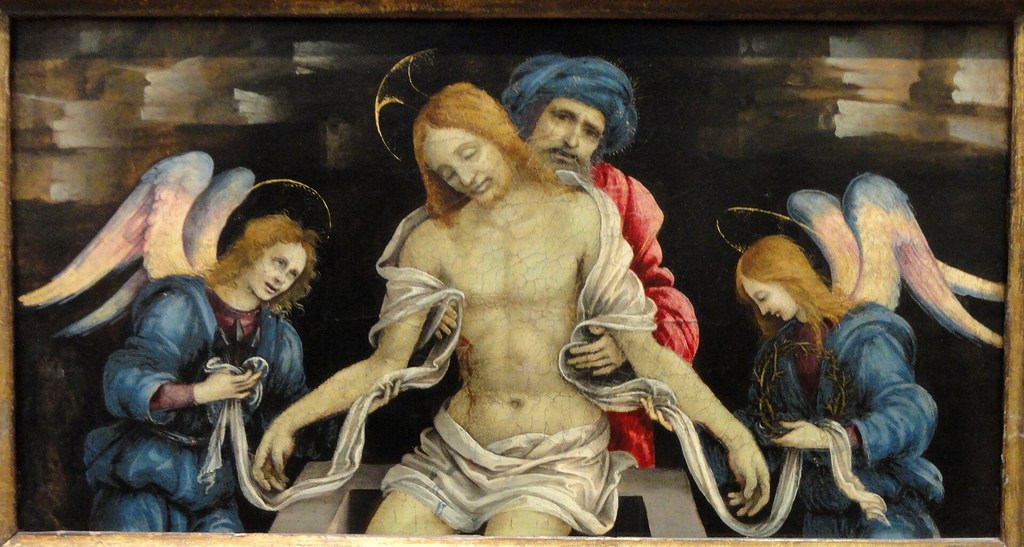
Filippino also pushes sacred psychology further. Fra Filippo’s figures are emotionally accessible. Filippino’s figures increasingly react, twist and experience interruption. The Vision of Saint Bernard again provides the clearest example. The son’s art often asks not only what a saint sees but how the body responds to seeing it.
Narrative Density. Fra Filippo can organise large narratives effectively, especially in fresco. Filippino increasingly multiplies secondary incidents. Backgrounds contain saints, travellers, monsters or allegorical detail.
The viewer is asked to look repeatedly. This density becomes a defining late feature. It is one reason Filippino’s art can feel less immediately harmonious than his father’s.
Father and Son as Modern Brands. Modern fame has treated them unevenly. Fra Filippo is widely known through the Uffizi Madonna and his colourful biography.[5] Filippino is often introduced simply as “his son”.
This hierarchy obscures the younger painter’s contemporary success. The National Gallery notes that Filippino became one of the leading Florentine painters of his generation and may have enjoyed greater contemporary success than Botticelli.[1] He deserves independent status.
Lucrezia Buti and the Family Story. The relationship between Fra Filippo and Lucrezia Buti has often overshadowed Filippino’s birth. Institutional sources differ over details such as whether the couple formally married. Later legend amplified scandal. For the son’s artistic history, the secure facts matter more than romantic embellishment. He was their child and inherited a complicated social identity but ultimately built a major career of his own.
Illegitimacy and Career
Filippino’s birth circumstances did not prevent artistic success. Florentine workshop culture could accommodate complex family backgrounds when talent, patronage and training aligned. His rise to major commissions in Florence and Rome demonstrates that professional reputation could overcome social ambiguity. This does not mean illegitimacy had no consequences. It means it did not define the limits of his career.
Artistic Dynasty without Workshop Dynasty. The Lippis form an artistic dynasty in retrospect, but not through straightforward workshop succession. Fra Filippo dies before Filippino matures. Botticelli becomes teacher.
The son develops independently. This indirect structure makes the dynasty historically more interesting. It demonstrates how artistic inheritance depends upon networks rather than blood alone.
The Problem of Direct Training. The phrase “trained by his father” can sound more certain than the evidence allows. Filippino was still young when Fra Filippo died. He almost certainly grew up around paintings, drawings and workshop practice, but the duration and formal structure of instruction are difficult to reconstruct. The Met’s drawing catalogue treats both Fra Filippo and Botticelli as formative.[7] That balanced formulation is preferable to imagining a long conventional apprenticeship that documents do not securely prove.
Growing Up around a Workshop. Even without formal apprenticeship, a painter’s child could absorb enormous amounts through proximity. Pigments, panels, drawings, assistants and patrons formed part of daily life. Filippino’s earliest visual education may therefore have begun before any formal teaching. The workshop was not simply a workplace entered at adolescence. It could be a family environment.
Fra Filippo’s Drawings and Models
Workshop designs allowed an artist’s language to survive beyond his death. Filippino could encounter his father’s figure types through drawings, cartoons or paintings even after 1469. Botticelli also carried that inheritance. This means Fra Filippo’s influence did not depend upon living instruction alone. Artistic memory had material form.
The Lippi Madonna Tradition. Fra Filippo’s Madonnas helped establish a model of maternal tenderness that influenced Botticelli and Filippino. The figures often occupy shallow, intimate spaces. Children move naturally. Angels can appear youthful and emotionally present. Filippino’s early household Madonnas emerge from this tradition even when their immediate workshop source is Botticelli.
Windows and Landscapes. Fra Filippo’s Uffizi Madonna famously opens towards landscape.[5] Filippino also repeatedly uses windows, loggias and distant views. The Met Madonna extends this tendency into an elaborate Strozzi domestic environment.[7] The relationship is not necessarily direct quotation. It reflects a family-workshop preference for connecting intimate sacred figures with visible worldly space.
Sacred Affection across Generations. Both father and son make sacred relationships bodily. Mary touches Christ. Children move.
Saints turn towards visions. This humanisation helps explain why their devotional works remain accessible. Filippino’s later complexity never entirely destroys that emotional foundation. The Cleveland Holy Family, despite Roman learning and expensive material, still centres on children embracing.[6]
Masaccio’s Long Shadow
Masaccio provides a deeper family link. Fra Filippo absorbed his monumentality through the Carmine environment. Filippino later completed Masaccio’s unfinished chapel. The son therefore enters directly into the historical source that had influenced the father indirectly. This circular relationship makes the Lippi story central to Florentine artistic continuity.
Prato as Family Landscape. Prato is more than Filippino’s probable birthplace. It is where Fra Filippo produced one of his great fresco cycles and where the relationship with Lucrezia Buti developed. For Filippino, the city therefore contained family history before he could remember it personally. His identity would have been tied to a place already marked by his father’s art.
The Question of Lucrezia’s Status. Institutional sources differ over whether Fra Filippo and Lucrezia formally married after being released from vows. That disagreement should remain visible. It has little impact on Filippino’s artistic importance. What matters is avoiding the false confidence of choosing one romantic version simply because it makes a better story.
Vasari and the Lippi Legend. Giorgio Vasari turned Fra Filippo into one of the most colourful personalities in the Lives. Stories of sexual appetite, escape and adventure shaped later reception. Filippino’s biography was inevitably pulled into that mythology. Modern scholarship benefits from separating documented chronology from literary anecdote. The son should not be interpreted as a character in Vasari’s story about the father.
Reputation during Filippino’s Lifetime
Fra Filippo remained highly admired after death. The Milanese report around 1490 called him the most outstanding master of his time while identifying Filippino as his son. This shows that family reputation functioned as capital. Filippino inherited a famous name. That inheritance could open doors but also create comparison.
The Burden of a Famous Father. Modern discussion often assumes a famous parent overshadows a child. In Filippino’s own lifetime, however, he established major independent prestige. Brancacci, Carafa and Strozzi prove that patrons trusted him with monumental commissions. The historical story is therefore not one of a son failing to equal his father. It is one of a second-generation master building a different career.
Shared Medici Networks. The Medici relationship also changes across generations. Fra Filippo worked for Cosimo-era family culture. Filippino operated through Lorenzo the Magnificent and later the Pierfrancesco branch. The political environment changed, but the family’s role as cultural network persisted. This makes the two Lippis useful for tracing patronage history across decades.
From Domestic Intimacy to Roman Fantasy. The greatest stylistic contrast emerges when comparing Fra Filippo’s intimate devotional world with Filippino’s late Romanised architecture. The father’s sacred figures often inhabit elegant but comprehensible settings. The son can make settings bizarre, crowded and archaeological. Yet this should be seen as historical development rather than rejection. Filippino’s Rome belongs to another phase of Renaissance antiquarianism.
Death and Artistic Succession
Fra Filippo’s death in 1469 creates a rupture. Filippino’s death in 1504 creates another. By 1504, Michelangelo and Leonardo were redefining Florentine expectations. The two deaths therefore bracket a period of extraordinary transition. Father and son together span much of the fifteenth-century transformation from early Renaissance monumentality to the threshold of the High Renaissance.
Why the Same Subject Is So Valuable. Comparisons between unrelated subjects can become vague. The two Saint Bernard paintings solve that problem. Because father and son address the same unusual theme, differences in landscape, gesture, narrative density and psychology become especially clear. The pair deserves to be treated almost as a controlled comparison across generations.
The Father as Humaniser. Fra Filippo can be understood as an artist who softened some of Masaccio’s severity without losing bodily credibility. He made sacred art more elegant and emotionally immediate. This achievement shaped Botticelli profoundly. It also prepared the ground for Filippino. The son’s innovation therefore depends upon an earlier family innovation.
The Son as Complicator. Filippino takes emotional accessibility and complicates its world. More happens around the figures. Landscapes become symbolic.
Antique fragments invade sacred settings. The viewer must work harder. This is not simply “more detail”. It is a different model of devotional experience—one based on discovery, movement and intellectual density.
Two Different Final Fresco Careers
Fra Filippo ends at Spoleto with a cathedral cycle. Filippino ends with the Strozzi Chapel. Both finish as monumental fresco painters.
The comparison is poignant. The father’s final work remains tied to traditional sacred narrative and graceful monumental composition. The son’s final cycle is saturated with the Roman antiquarian transformation of the late Quattrocento. The fifty-year history of Renaissance change is visible in their endings.
Why Father and Son Matter Together. Fra Filippo and Filippino matter together because their careers span one of the most transformative periods in Florentine art. The father absorbs the lessons of Masaccio and turns them towards grace, intimacy and ornament. The son receives that inheritance through Botticelli, completes Masaccio’s chapel and then transforms himself through Rome.
Their relationship therefore forms a chain: Masaccio → Fra Filippo → Botticelli → Filippino → the generation of Raphael and Michelangelo. The comparison also shows why family resemblance should never replace individual analysis.
Filippino is genuinely his father’s heir. He is also a very different painter. His greatest achievement was not preserving Fra Filippo’s style unchanged but carrying parts of it into a new artistic world.
Father-Son Comparison through Patrons. The two careers also reveal changes in elite patronage. Fra Filippo worked within the Medici world of Cosimo and Piero. Filippino inherited a later Florence in which Strozzi resurgence, Pierfrancesco Medici politics and republican upheaval had changed the balance. Shared family contacts therefore did not mean identical patronal conditions. The art changes partly because the city changes.
Father-Son Comparison through Space
Fra Filippo’s most important surviving fresco environments are Prato and Spoleto. Filippino’s are Brancacci, Carafa and Strozzi. The shift from cathedral choir cycles towards family and cardinal chapels reflects different commission types as well as personality. Comparing spaces is therefore more useful than comparing isolated brushwork alone.
A Family across the Quattrocento. Taken together, father and son cover almost the entire central span of fifteenth-century Florentine painting. Fra Filippo’s mature work belongs to the decades immediately after Masaccio. Filippino dies in 1504 as Leonardo and Michelangelo redefine the city. Few artistic families provide such a long continuous lens onto Renaissance change.
Why did Botticelli teach Filippino? Botticelli had himself trained with Fra Filippo Lippi, making him a natural artistic bridge after the elder painter’s death.
Did father and son paint the same subjects?
Yes. Both painted Madonnas, Coronations and the Vision of Saint Bernard, among other shared religious themes.
Which painter was more influenced by Rome?
Filippino. His Roman period of 1488–93 transformed his use of antiquity, architecture and grotesque ornament.
Did Filippino simply continue his father’s style?
No. His early work inherited Lippi and Botticellian grace, but his mature art became much more psychologically animated and antiquarian.
Frequently Asked Questions
Discussion
What stands out to you most about Filippino and Fra Filippo Lippi in relation to Filippino Lippi's wider career?
Reader Insights
Notice how the page connects close visual detail with patronage, workshop practice and the wider Renaissance setting.
Which comparison elsewhere in the cluster helps clarify this work or theme most strongly?
Join the Conversation
Have a thought or observation about Filippino and Fra Filippo Lippi? Share it below. Thoughtful responses may be added to this section.
References
- National Gallery, London, Fra Filippo Lippi artist biography. View Source
- National Gallery, London, Filippino Lippi artist biography. View Source
- National Gallery, London, Fra Filippo Lippi, Saint Bernard’s Vision of the Virgin. View Source
- Badia Fiorentina, Filippino Lippi, Vision of Saint Bernard. View Source
- Uffizi Galleries, Fra Filippo Lippi collection records.
- Cleveland Museum of Art, Filippino Lippi and Rome, 2025–26. View Source
- Metropolitan Museum of Art, The Drawings of Filippino Lippi and His Circle, 1997. View Source