 by Tom Gurney
Tom Gurney BSc (Hons) is an art history expert with over 20 years experience
Published on June 19, 2020 / Updated on October 2, 2026
Email: tomgurney1@gmail.com / Phone: +44 7429 011000
Filippino Lippi, the Medici and Florentine Patrons
Filippino Lippi’s career was built through patronage networks that connected some of the most powerful families, religious institutions and political figures of Renaissance Italy. The Medici are central to that story, but they were not his only patrons. The Strozzi, Del Pugliese, Rucellai and Nerli families each commissioned important works, while Cardinal Oliviero Carafa brought Filippino to Rome.
Understanding these relationships changes the way the paintings are read. A patron did not simply purchase whatever style an artist happened to produce. Commissions had specific locations, saints, family identities, heraldry, materials and political contexts.
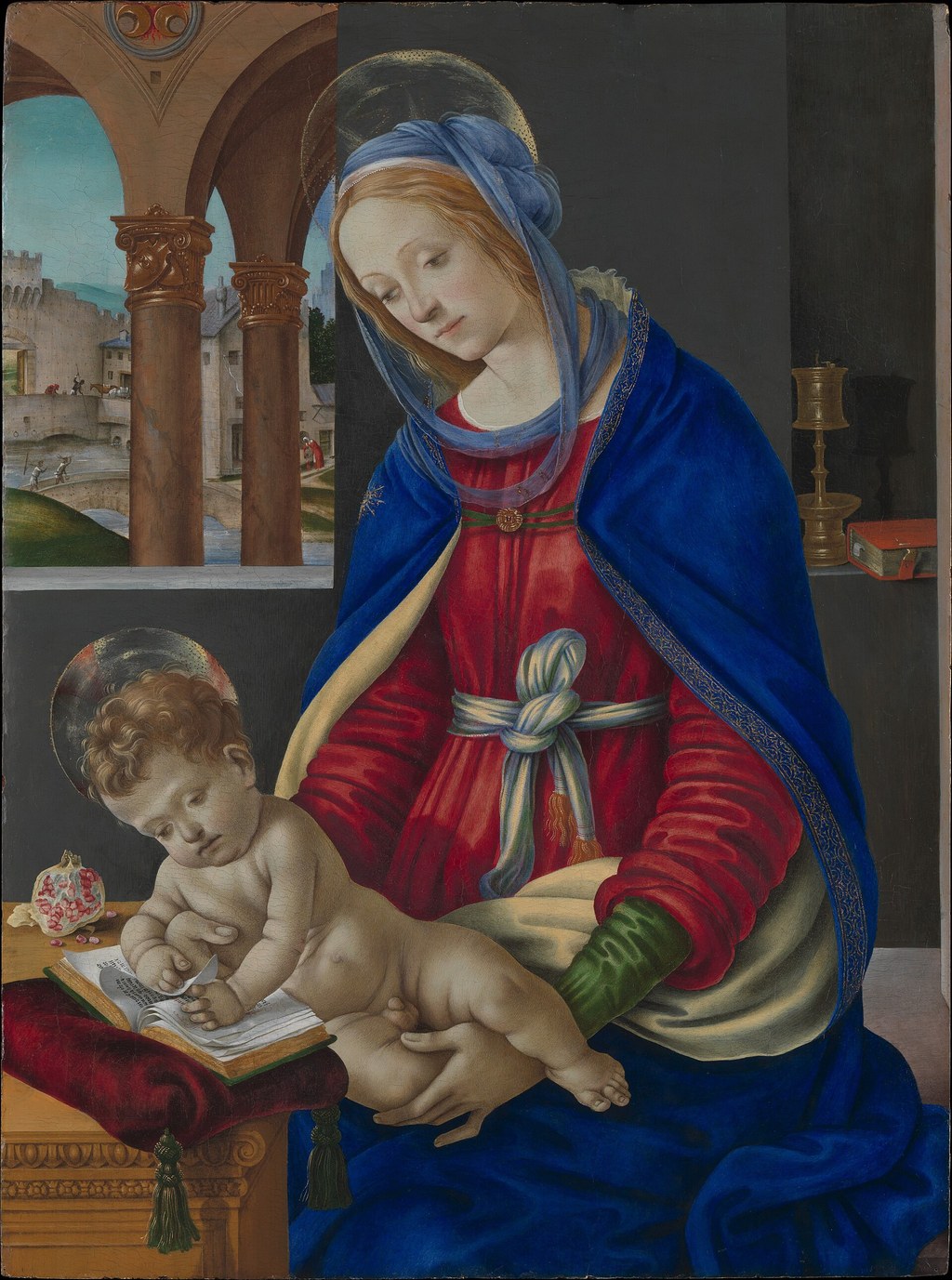
The Met Madonna and Child reflects Filippo Strozzi’s villa and family emblem.[4] The Nerli Altarpiece places Tanai and Nanna Nerli before their chosen saints in their own chapel. The Rucellai altarpiece responds to a chapel dedicated to Saint Jerome.
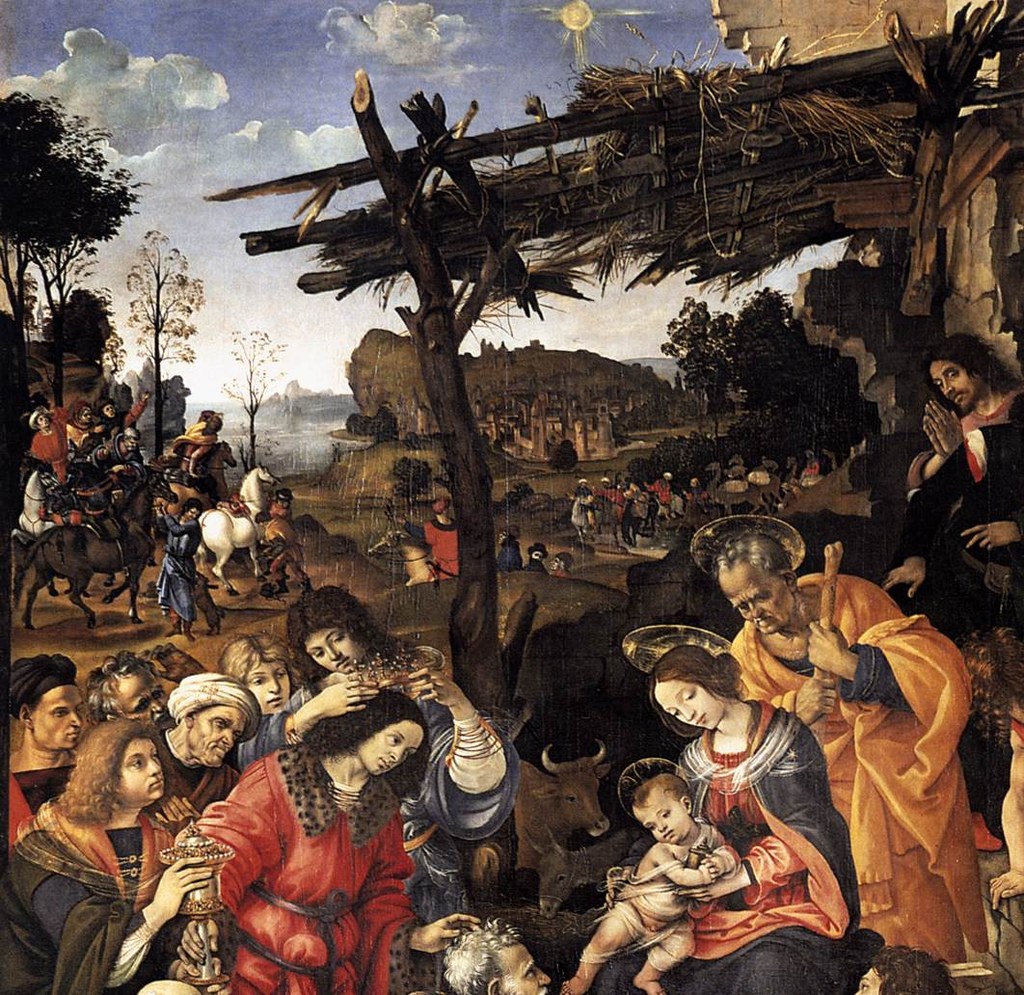
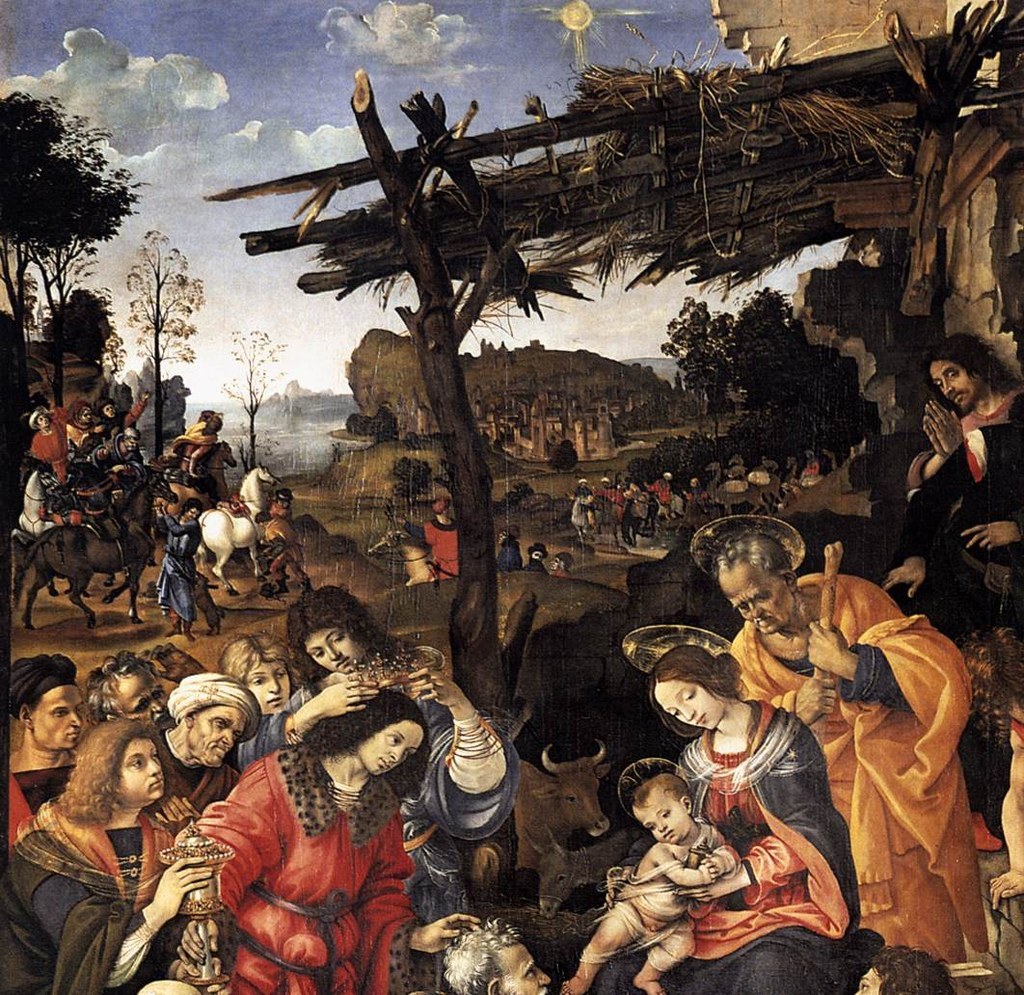
The Del Pugliese paintings favour ascetic landscape and Saint Bernard. The Carafa Chapel centres Saint Thomas Aquinas and Dominican intellectual authority. The Uffizi Adoration of the Magi responds to the changed status of the Pierfrancesco Medici branch after 1494.[2]
Patronage therefore helps explain why Filippino’s work is so varied. He was not repeating one personal programme. He was solving different social and religious problems for different people.
At a Glance
- Major family networksMedici, Strozzi, Del Pugliese, Rucellai, Nerli
- Major Roman patronCardinal Oliviero Carafa
- Institutional patronschurches, monasteries and religious communities including San Donato a Scopeto
- Medici rolepatronal inheritance through Fra Filippo and Botticelli; Lorenzo’s recommendation for Carafa; Pierfrancesco branch in 1496 Adoration
- Strozzi roleprivate Madonna and monumental funerary chapel
- Del Pugliese roleearly Adoration and Vision of Saint Bernard
- Rucellai roleSan Pancrazio altarpiece
- Nerli roleSanto Spirito family altar
- Core principlesubject, site, material and style change according to patronal need
Contents
- Patronage in Renaissance Florence
- Carafa
- San Donato a Scopeto
- Social History in the Strozzi Landscape
- Piero del Pugliese
- Husband and Wife
- Patronage and Scale
- Patronage and Politics
- Patronage as Risk
- Family Women as Patrons and Donors
- Clerical Patrons
- Botticelli as Network
- Patronage and Reform
- Patronage and Provenance
- Filippino’s Professional Strength
- Patronage as a Structure for Understanding the Career
- Frequently Asked Questions
- References
Patronage in Renaissance Florence
Renaissance artists worked within a system of commissions. Some paintings were ordered by religious institutions. Others came from families.
A commission might specify subject, dimensions, materials and deadline. Even where full contracts do not survive, the original setting often reveals patronal requirements. Artistic freedom operated within this structure rather than outside it.
Family Chapels. Family chapels were especially important. They gave elite lineages a sacred location within public churches. A chapel could contain tombs, heraldry, donor portraits and commissioned altarpieces.
Masses could be celebrated for family souls. Art therefore linked wealth with memory and salvation. Filippino’s Nerli, Rucellai and Strozzi commissions all belong to this world.
The Medici Inheritance. Filippino inherited Medici connections indirectly through his father and Botticelli. Fra Filippo had worked for the family. Botticelli’s career was deeply connected with the Medici circle. Filippino therefore entered a workshop environment already embedded within those networks. Patronage can be transmitted socially just as style is transmitted artistically.
Lorenzo the Magnificent. Lorenzo de’ Medici played a particularly important role when he recommended Filippino to Cardinal Oliviero Carafa. Cleveland and Santa Maria sopra Minerva preserve this connection.[9] The recommendation demonstrates Lorenzo’s influence as cultural broker. He did not need to purchase the frescoes himself. His endorsement placed Filippino before one of Rome’s most powerful cardinals.
Carafa
Carafa’s patronage transformed Filippino’s career. The cardinal commissioned the chapel devoted to Thomas Aquinas and also the Cleveland Holy Family.[9] This sustained relationship gave Filippino years in Rome.
The artistic consequences were enormous. A patronal connection altered the painter’s style permanently. This is one of the clearest cases in which patronage changes art history beyond the commissioned objects themselves.
The Pierfrancesco Medici Branch. The 1496 Uffizi Adoration of the Magi brings the Medici relationship into a very different political moment.[2] The main Medici branch had been expelled from Florence in 1494. The sons of Pierfrancesco, Lorenzo and Giovanni, had gained new prominence. The Uffizi identifies probable portraits of Pierfrancesco and his sons within the Adoration.[2] This makes the painting inseparable from post-1494 politics.
Lorenzo di Pierfrancesco. The Uffizi’s online jewellery exhibition goes further in interpreting Lorenzo di Pierfrancesco’s representation.[2] An attendant places a crown on the probable Medici figure. The museum calls this an unequivocal sign of royalty and a bold gesture in republican Florence. Such imagery reflects expectations surrounding a family branch whose political status had changed dramatically. The biblical king becomes a contemporary political signal.
Jewellery and Medici Identity. The Uffizi also notes precious objects and family references used to direct attention towards the Medici portraits.[2] Jewellery therefore functions as visual identification. Luxury is not merely decorative. It carries dynastic meaning. This demonstrates how patrons and associated families could be inserted into sacred history through objects as well as faces.
San Donato a Scopeto
The Augustinian community, not the Medici directly, commissioned the 1496 Adoration. This distinction is important. The friars had prior relationships with Medici protection and apparently chose to honour the Pierfrancesco branch. Institutional patronage could therefore express political gratitude through iconography. The commission belongs simultaneously to church history and family politics.
Filippo Strozzi. Filippo Strozzi the Elder was one of Filippino’s most important Florentine patrons. The relationship spans private and public commissions. The Met Madonna and Child around 1483–84 was made for his villa.[4] The Strozzi Chapel became a monumental funerary project. Together, these works trace Filippino’s development across nearly two decades.
Strozzi and Medici Politics. The Strozzi family had a complicated political relationship with the Medici. Filippo had experienced exile before returning to Florence. His later patronage helped rebuild family prestige. Palazzo Strozzi and the Santa Maria Novella chapel belong to that programme.[5] Art therefore participated in the social reconstruction of a lineage.
The Met Madonna. The Strozzi Madonna and Child carries patronal identity through the three-crescent family device and landscape associated with the villa at Santuccio. The sacred image inhabits a Strozzi world. The Met also identifies expensive ultramarine and Flemish-looking detail.[4] The painting therefore reflects both devotional purpose and the resources of an international banking family.
Social History in the Strozzi Landscape
The background includes Black labouring figures. The Met connects these with documentary evidence for enslaved Africans in Florence and the Strozzi household.[4] This complicates elite patronage. The wealth funding sacred art existed inside broader systems of labour and inequality. Patronage history therefore includes people beyond the named patron.
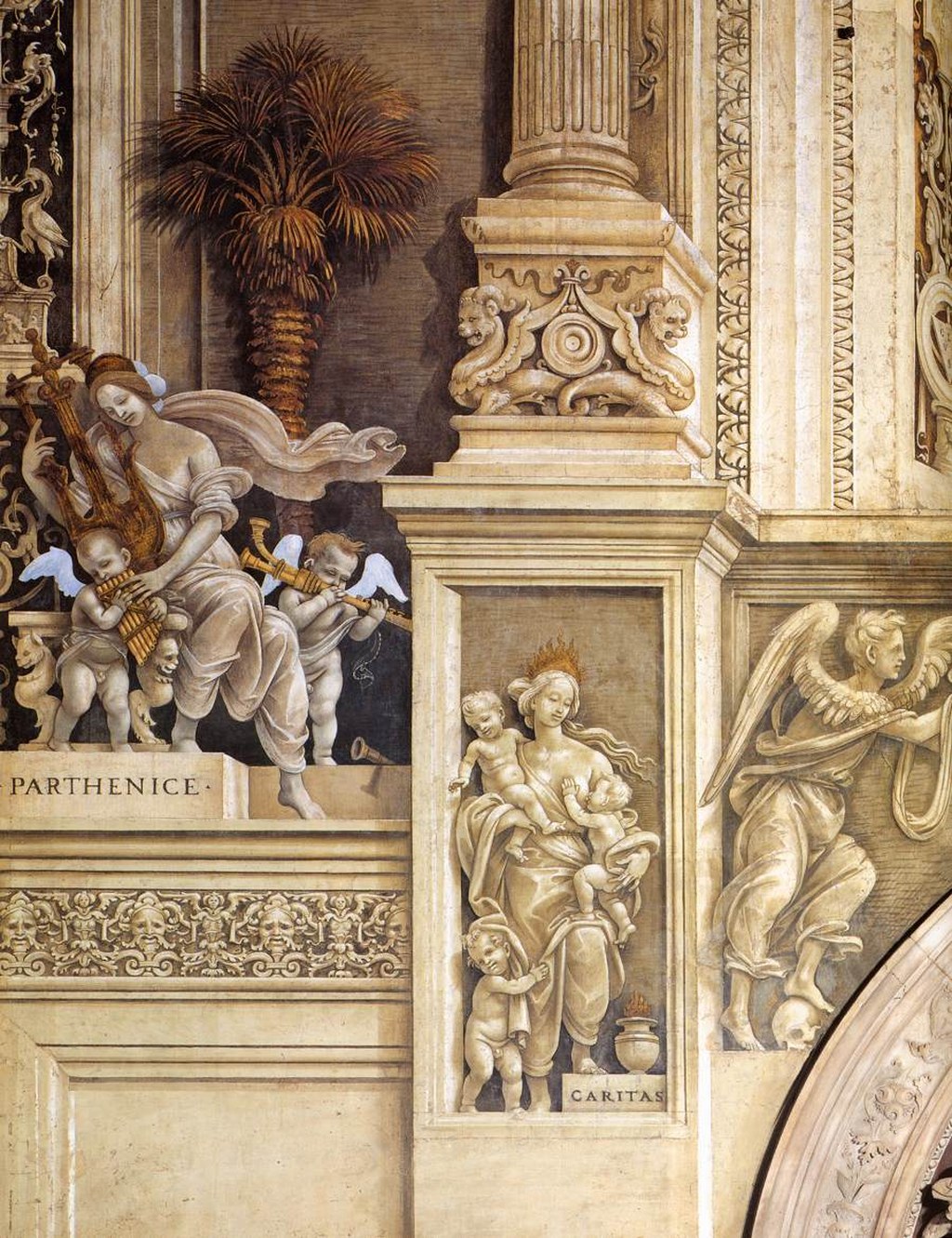
Strozzi Chapel. The chapel demonstrates patronage operating architecturally. Saint Philip corresponds to Filippo’s name. Saint John preserves the earlier dedication.
Benedetto da Maiano’s tomb memorialises the patron. Filippino designed frescoes and stained glass. The commission becomes a total family environment.
Del Pugliese Family. The Del Pugliese relationship shaped Filippino’s early independent career. The National Gallery associates its Adoration of the Kings probably with Francesco del Pugliese.[1] The Vision of Saint Bernard was commissioned by Piero di Francesco del Pugliese. The recurrence of ascetic landscapes and Saint Bernard suggests a distinct devotional character within this patronal network.
Francesco del Pugliese. Francesco later became an ardent follower of Savonarola. The National Gallery cautiously connects this religious orientation with the hermit saints populating the early Adoration.[1] The painting predates Savonarola’s political ascendancy, so direct ideological labelling would be anachronistic. Still, patronal preference helps explain why Filippino’s Adoration differs so sharply from courtly Medici versions.
Piero del Pugliese
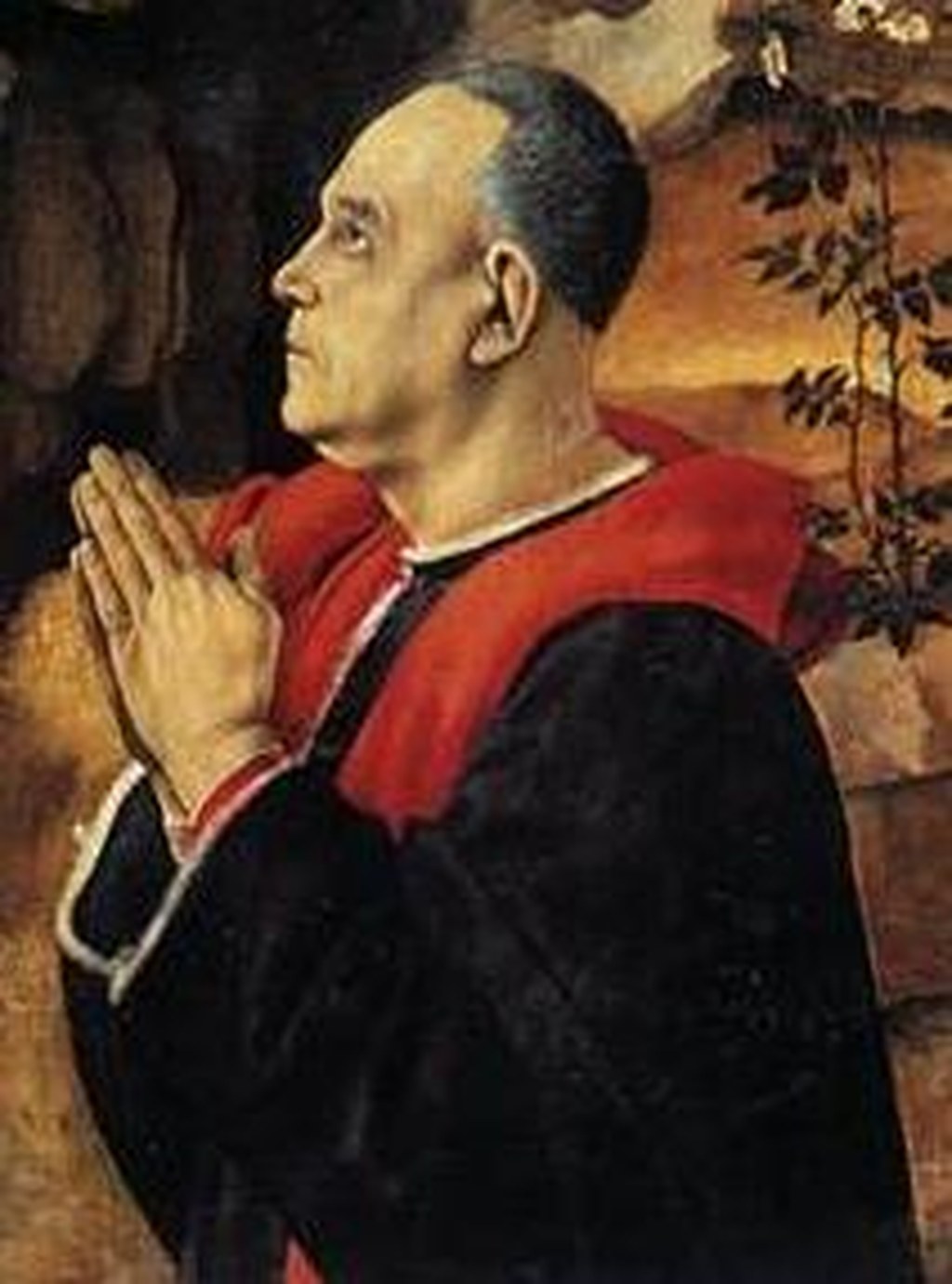
Piero commissioned the Vision of Saint Bernard and appears kneeling as donor. His portrait makes family presence explicit. The painting was designed for the Del Pugliese chapel at Santa Maria delle Campora. Patron, subject and original monastic setting therefore reinforce one another.
Rucellai. The Rucellai altarpiece in the National Gallery was made for a family chapel at San Pancrazio dedicated to Saint Jerome.[1] The saint’s prominent position therefore responds directly to site. This is a perfect example of why iconography cannot be interpreted independently from patronage. Jerome is not randomly selected. He belongs to the chapel’s identity.
Rucellai Cultural Status. The Rucellai were among Florence’s most sophisticated patrons, associated with Alberti and major architectural projects. Filippino’s commission therefore placed him within a distinguished cultural network. The altarpiece later remained with the family even after San Pancrazio was suppressed, eventually moving to Palazzo Rucellai. Patronal continuity helped preserve the painting.
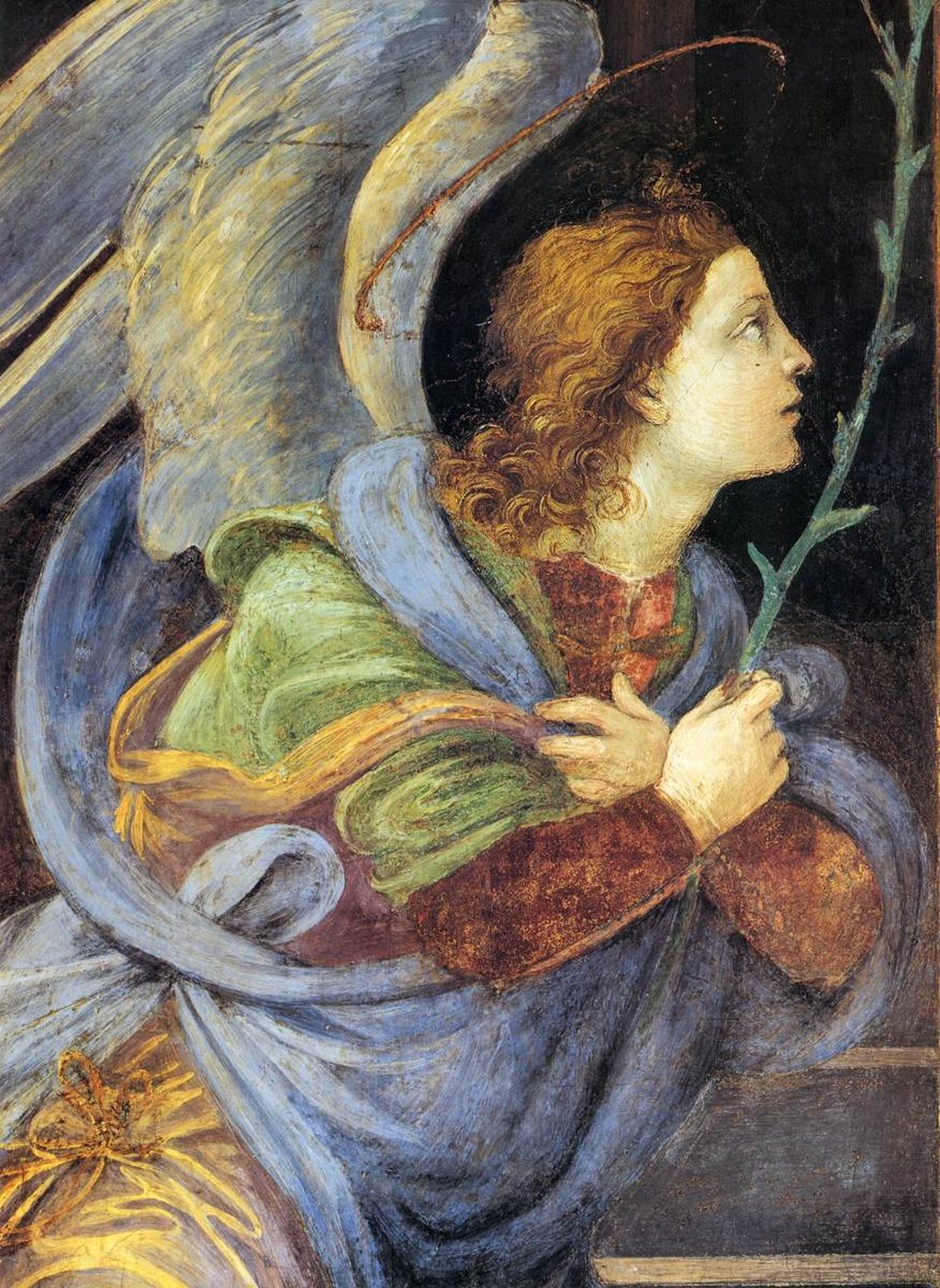
Nerli. Tanai de’ Nerli commissioned the altarpiece still preserved in Santo Spirito.[8] He and his wife Nanna appear as donors. Angels display the family arms.
The painting’s survival in the original chapel makes its patronal function especially visible. The family does not merely own the image historically. Its identity remains embedded within the space.
Husband and Wife
The paired donor portraits at Nerli demonstrate that family patronage is marital as well as individual. Tanai and Nanna represent the household together. Their shared presence before saints turns the altarpiece into a statement about lineage and pious marriage. Patronage therefore includes gendered family identity.
Religious Institutions. Not every commission came from a private family. Religious communities such as San Donato a Scopeto made major decisions about artists and imagery. Church patrons had institutional priorities. An altarpiece needed to serve liturgy and community identity. Filippino’s ability to adapt to these demands contributed to his success.
Bologna and Wider Italy. The probable Casali Chapel Pietà in Bologna reminds us that Filippino’s patronage extended beyond Florence and Rome. The National Gallery biography also notes commissions from Milan, Bologna and Genoa.[1] His reputation was Italian rather than merely local. Networks of recommendation allowed works to travel farther than the artist’s permanent residence.
Patronage and Material Cost. Patrons affected materials. The Met suggests Strozzi requested costly ultramarine.[4] Cleveland demonstrates lavish ultramarine use in Carafa’s Holy Family.[9]
Such pigments required money. Technical choices therefore belong partly to patronage history. Colour can be evidence of budget.
Patronage and Scale
Scale also depends upon function. A household Madonna may be under a metre high. A high-altarpiece like the 1496 Adoration exceeds two metres.
A chapel fresco covers architecture. The patron’s desired object determines the painter’s compositional problem. Filippino’s range reflects his ability to work across these scales.
Patronage and Portraiture. Donor portraits are one of the clearest ways patrons enter sacred history. Piero del Pugliese kneels before Bernard’s vision. Tanai and Nanna Nerli appear before saints.
Carafa is presented to Mary by Thomas Aquinas. Probable Medici portraits enter the Magi’s retinue. Each strategy differs. Filippino did not use one donor formula.
Patronage and Heraldry. Heraldry can replace or reinforce portraiture. The Strozzi crescents identify the Met Madonna.[4] Nerli arms appear within the altarpiece.
Carafa arms occupy the chapel vault. Family devices make ownership and memory visible across generations. They also help modern scholars reconstruct provenance.
Patronage and Saints. Chosen saints often reflect names, chapel dedications or family devotion. Saint Philip corresponds to Filippo Strozzi. Jerome belongs to the Rucellai chapel dedication.
Thomas Aquinas reflects Carafa’s Dominican devotion. Saint Bernard recurs in Del Pugliese imagery. Iconography becomes far clearer when these relationships are restored.
Patronage and Politics
The most obvious political case is the 1496 Medici Adoration. But politics also shape other commissions. Strozzi patronage follows exile and return.
Brancacci history is marked by family political disgrace. Medici recommendation enables Carafa. Artistic careers unfold inside political networks even when paintings are religious.
Artists as Networked Professionals. Filippino’s success depended upon reputation travelling through people. One patron recommended him to another. A successful chapel generated further trust.
Workshop connections brought family contacts. This is how Renaissance careers expanded. The artist was a creative individual but also a professional embedded in social systems.
Patronage versus Artistic Freedom. Patronage does not mean Filippino merely obeyed instructions mechanically. A commissioner could specify subject and materials while leaving large areas of design to the artist. The most successful works emerge from negotiation. Carafa’s programme is intellectually specific, but Filippino’s grotesque transformation is highly personal. Patron and artist contribute different forms of authorship.
Contracts. Where contracts survive for Renaissance commissions, they often reveal concerns that modern viewers overlook. Patrons cared about dimensions, delivery, materials and subject. Expensive pigments might be specified.
Deadlines mattered. Artists negotiated payment. The resulting picture therefore emerged from practical agreement as well as inspiration. Even where Filippino’s individual contracts do not survive completely, this broader system shaped his work.
Patronage as Risk
Commissioning an artist also involved risk. A major altarpiece could take years. Artists could leave cities.
Leonardo’s unfinished San Donato Adoration is the most famous example within Filippino’s own career. The Augustinians eventually solved that problem by commissioning Filippino to make a replacement. Reliability was therefore part of artistic reputation.
Filippino as Reliable Master. The 1496 Adoration demonstrates Filippino’s value as an artist who could deliver a monumental finished object. This practical achievement should not be underestimated. Patrons did not commission paintings merely to generate future museum legends. They needed functioning altars and chapels. Filippino’s career benefited from being able to complete demanding projects.
Patronal Taste. Different patrons preferred different religious moods. The Del Pugliese works lean towards ascetic landscape and contemplative saints. Strozzi commissions display domestic luxury and dynastic monumentality. Carafa demands intellectual Dominican complexity. Patronal taste therefore helps explain stylistic variety within one career.
Personal Saints. Name saints and chapel dedications could determine imagery. Filippo Strozzi’s Saint Philip is the clearest example. Such choices made sacred history personally relevant. The saint acted as heavenly patron to the human patron. Filippino’s task was to make those relationships visually compelling.
Family Women as Patrons and Donors
Nanna Nerli’s inclusion reminds us that patronage history should not be written only through men. Women could appear as donors, inherit devotional responsibilities and influence household imagery. Documentation is often less explicit, but visual presence matters. The Nerli Altarpiece preserves husband and wife together as a patronal unit.
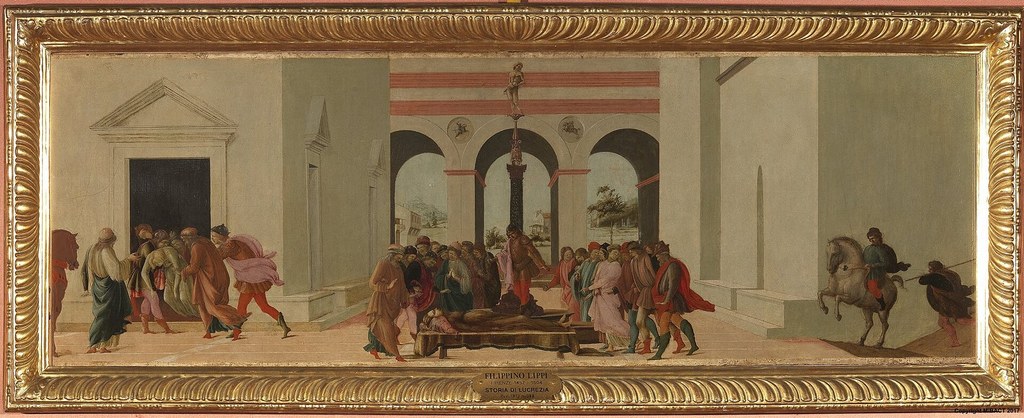
Marriage and Household Commissions. The Story of Lucretia belongs to another aspect of family patronage: marriage interiors. Such paintings served household formation rather than church liturgy. The patronal audience included women expected to engage with moral examples embedded in domestic furniture. This broadens Filippino’s clientele beyond chapel commissioners.
Merchants. Florentine merchants such as the Del Pugliese operated in a society where commercial success and religious devotion were deeply intertwined. Wealth generated moral anxiety as well as prestige. Commissioning sacred art could express piety and social responsibility. The ascetic imagery of Del Pugliese works becomes especially interesting within this mercantile context.
Bankers. The Strozzi represent banking patronage at the highest level. International finance supplied resources for pigments, villas, palaces and chapels. The resulting art cannot be separated from the economic systems generating such wealth. Filippino’s paintings make that connection visible through material luxury and family landscape.
Clerical Patrons
Carafa demonstrates a different form of power. As a cardinal, his status was ecclesiastical, political and intellectual. His chapel had to represent all three.
The Thomas Aquinas programme communicates learned Dominican authority. The donor portrait communicates personal devotion. The scale communicates institutional power.
Institutional Memory. Religious communities also commission art to preserve institutional identity. San Donato needed a high-altarpiece. Santa Maria sopra Minerva’s Dominican context shaped Carafa.[10] Santo Spirito’s chapel system shaped Nerli.[8] The church itself is therefore a patronal actor even when a named individual pays.
Recommendation Networks. Lorenzo’s recommendation of Filippino demonstrates how careers could depend on reputation transmitted verbally or through correspondence. Artists did not submit modern portfolios. Trusted intermediaries mattered. A powerful recommender reduced patronal risk. Filippino’s move to Rome is therefore a product of social capital.
The Artist’s Famous Father as Capital. Filippino also inherited name recognition from Fra Filippo. The Milanese agent around 1490 identified him through both Botticelli and his father. Lineage helped situate him. Yet inherited reputation only opens doors temporarily. His major independent successes show that patrons continued hiring him because the work justified the name.
Botticelli as Network
Botticelli transmitted more than technique. His Medici connections and workshop reputation placed Filippino inside influential circles. Apprenticeship therefore produced social as well as artistic education. The young painter learned who commissioned art and how elite workshops operated.
Competition among Families. Florentine patronage often carried competitive elements. Large palaces and chapels signalled family status. The Strozzi could not be understood independently from the broader culture in which Medici, Rucellai and other families constructed visible identities. Artists benefited from this competition. Prestige generated commissions.
Politics after 1494. The Medici expulsion transformed patronal symbolism. A portrait or family emblem could carry different meaning before and after the political rupture. The Uffizi’s interpretation of Lorenzo di Pierfrancesco’s crown in the 1496 Adoration depends upon this context.[2] Iconography is political because patronal status changes.
Savonarolan Florence. Savonarola’s rise also affected patronal culture. His criticism of luxury and calls for religious reform altered the atmosphere in which wealthy Florentines commissioned art. Francesco del Pugliese’s allegiance is especially relevant. Yet patrons did not stop commissioning sophisticated paintings. Religious intensity could coexist with artistic expenditure.
Patronage and Reform
This apparent contradiction is historically important. A reform-minded merchant could favour austere subject matter while still paying a leading artist. Patronage was not simply luxury for luxury’s sake. The content of the commission could express moral seriousness. Filippino’s flexibility made him suitable for both ascetic and magnificent programmes.
Death and Posthumous Completion. Filippo Strozzi died before the chapel frescoes were completed. The project continued. This shows that patronage can outlive patrons. Families, executors and institutions preserve obligations. The finished chapel becomes a posthumous collaboration between original intention and later completion.
Donor Portraits as Permanent Prayer. A painted donor remains kneeling even after the person dies. This gives donor portraiture a special devotional logic. Piero del Pugliese and the Nerli couple continue to pray visually. The image performs memory continuously. Family members could see ancestors permanently oriented towards sacred figures.
Heraldry after Death. Coats of arms perform a similar function without faces. They identify lineage beyond one lifetime. Carafa, Strozzi and Nerli devices make patronage visible long after individual biography fades. Heraldry is therefore one of the most durable languages in Renaissance art.
Patronage and Provenance
Knowing the patron often helps reconstruct later provenance. A painting that remains in a family palace or chapel can be traced more securely. The Rucellai altarpiece is an excellent example. Its movement from chapel to Palazzo Rucellai to National Gallery is unusually clear because family ownership persisted.[1]
When Patronage Is Lost. Anonymous works present harder problems. The Washington Portrait of a Youth has no secure sitter or original patron. Interpretation therefore becomes narrower.
This contrast demonstrates how much patronage knowledge contributes to art history. A named commission opens social history. An anonymous one leaves style and object as primary evidence.
Patronage and Modern Museums. Museums reorganise works by artist, school or chronology. Original patrons disappear from the room. A Strozzi Madonna may hang beside paintings made for unrelated families. Scholarly reconstruction has to restore those social relationships mentally. Filippino’s paintings become much clearer when these patrons are made visible again.
Patronage as Co-Authorship. It can be useful to think of patrons as partial co-authors of meaning. They did not paint. But they chose sites, saints, budgets and commemorative goals.
Filippino translated those requirements into visual form. This does not diminish artistic genius. It explains the problem that genius was solving.
Filippino’s Professional Strength
His ability to serve such different patrons is itself evidence of skill. A narrow artist might repeat one successful formula. Filippino could work for ascetic merchants, ambitious bankers, family chapels, Medici networks and a Roman cardinal. The resulting diversity helped make him one of the most sought-after painters of his generation.
Why Patronage Matters. Patronage matters because it explains variety that style alone cannot. Why does one Filippino painting contain hermit saints while another contains Medici portraits? Why does one chapel focus on Thomas Aquinas and another on Saint Philip?
Why is one Madonna filled with Strozzi heraldry? The answer lies in people, places and institutions. Filippino’s career becomes far richer when paintings are returned to those relationships.
The Medici are essential, but they are only one part of a wider network. Strozzi, Del Pugliese, Rucellai, Nerli and Carafa each brought different demands. Filippino’s greatness lay partly in his capacity to satisfy those demands without becoming stylistically anonymous.
Patronage and Reputation. Each major successful commission strengthened Filippino’s ability to obtain the next. Brancacci demonstrated monumental competence. Strozzi patronage demonstrated elite trust.
Lorenzo’s recommendation carried him to Carafa. Rome increased his prestige further. The career therefore accumulates credibility. Patronage is not a sequence of isolated transactions but a reputation network.
Rivalry without Simple Factions. It is tempting to divide Florentine patrons into political camps and assign artists accordingly. Reality was more fluid. Filippino could work in environments connected with Medici, Strozzi and Pugliese interests.
Artists needed professional flexibility. A commission did not automatically make the painter a permanent partisan of the patron’s politics. This caution is especially important in late-fifteenth-century Florence.
Patronage as a Structure for Understanding the Career
Filippino’s career becomes much clearer when organised through patrons. Strozzi explains two major works and a long career span. Del Pugliese explains ascetic landscape.
Carafa explains Rome. Nerli and Rucellai explain family-chapel iconography. The Medici explain recommendation and political portraiture. Patronage therefore provides one of the strongest ways to understand relationships across his surviving works.
Why is Cardinal Carafa important? His Roman commission transformed Filippino’s mature style through sustained exposure to ancient Rome.
Did patrons influence materials?
Yes. Elite commissions could fund expensive pigments such as ultramarine, and museum research links such material choices directly with patrons including Strozzi and Carafa.
Frequently Asked Questions
Discussion
What stands out to you most about Medici and Florentine Patrons in relation to Filippino Lippi's wider career?
Reader Insights
Notice how the page connects close visual detail with patronage, workshop practice and the wider Renaissance setting.
Which comparison elsewhere in the cluster helps clarify this work or theme most strongly?
Join the Conversation
Have a thought or observation about Medici and Florentine Patrons? Share it below. Thoughtful responses may be added to this section.
References
- National Gallery, London, Filippino Lippi artist biography. View Source
- Uffizi Galleries, Filippino Lippi, Adoration of the Magi, 1496. View Source
- Uffizi Galleries, Jewels in the Uffizi, Medici portrait interpretation. View Source
- Metropolitan Museum of Art, Filippino Lippi, Madonna and Child, Strozzi commission. View Source
- Santa Maria Novella, Strozzi Chapel institutional history. View Source
- Badia Fiorentina, Vision of Saint Bernard and Del Pugliese patronage. View Source
- National Gallery, London, Adoration of the Kings and Rucellai altarpiece records.
- Basilica of Santo Spirito, Nerli Altarpiece institutional history. View Source
- Cleveland Museum of Art, Filippino Lippi and Rome, 2025–26. View Source
- Basilica of Santa Maria sopra Minerva, Carafa Chapel institutional guide. View Source