 by Tom Gurney
Tom Gurney BSc (Hons) is an art history expert with over 20 years experience
Published on June 19, 2020 / Updated on October 2, 2026
Email: tomgurney1@gmail.com / Phone: +44 7429 011000
Pietà by Filippino Lippi — National Gallery of Art
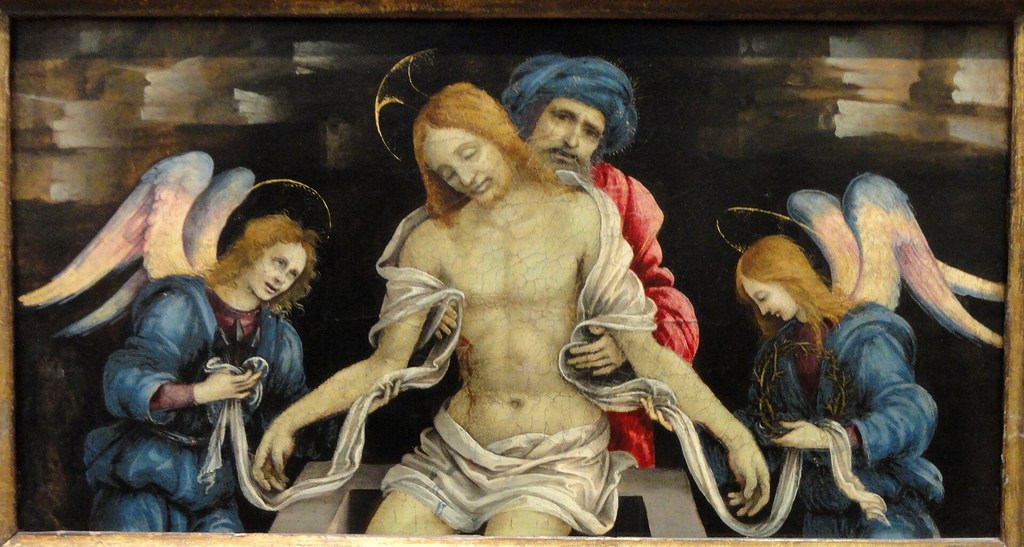
Filippino Lippi’s Pietà (The Dead Christ Mourned by Nicodemus and Two Angels), painted around 1500 and now in the National Gallery of Art in Washington, is a small but emotionally concentrated work from the end of his career. The panel measures only 17.5 by 33.3 centimetres across the painted surface and was probably made as part of a predella rather than as an independent altarpiece.[1]
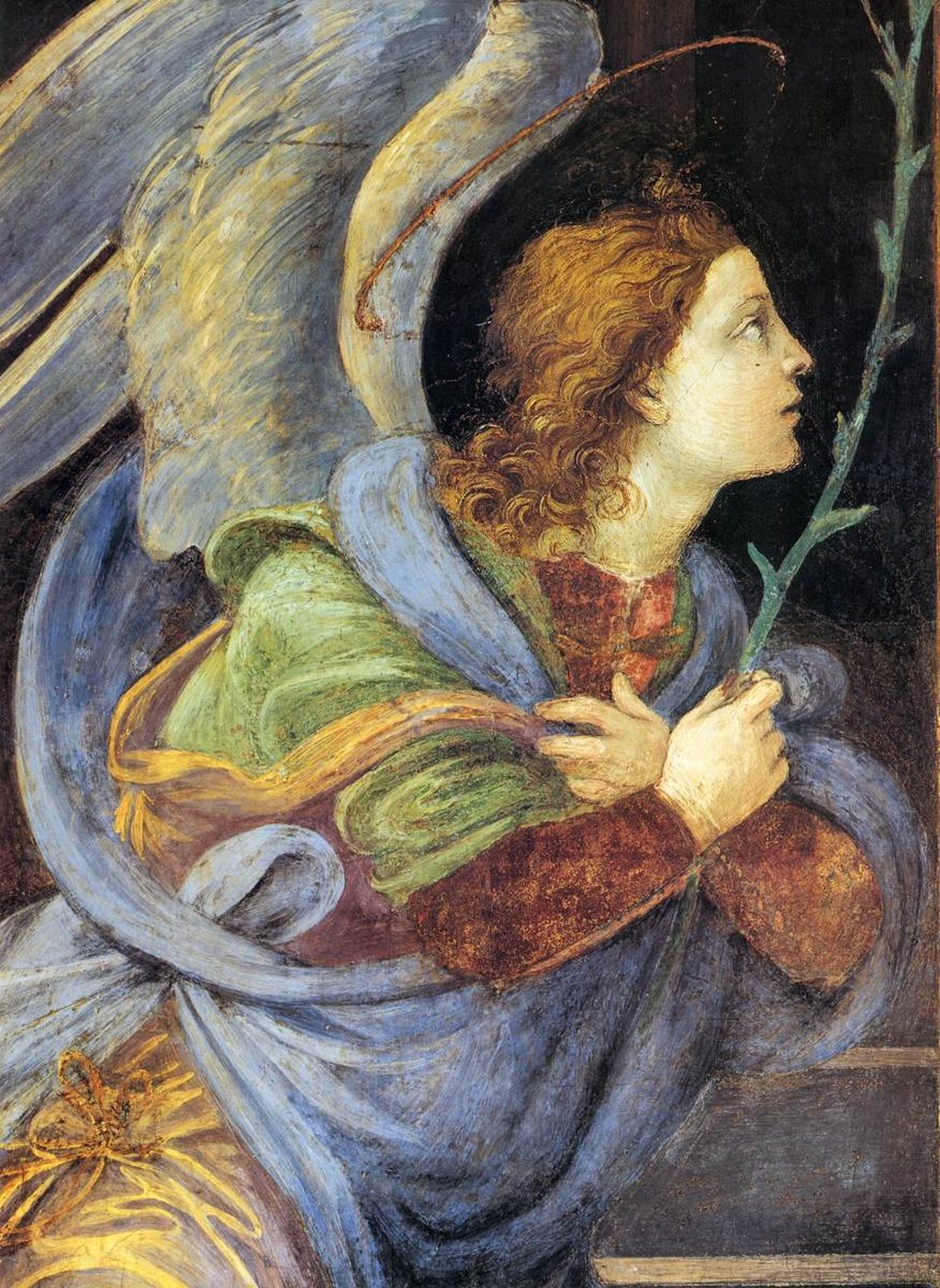
The NGA describes the medium as oil, possibly with tempera, on panel. The painting shows the dead Christ supported by Nicodemus and two angels at the mouth of a dark tomb set within a rocky outcrop.[1] One angel looks upward towards Christ while holding the cloth wrapped around his shoulders. The other looks down and holds the crown of thorns.
The composition is intimate and compressed. Filippino’s monumental late style is often associated with the elaborate Strozzi Chapel, completed around 1502. The Pietà reveals another side of the same late artist. There is little architectural spectacle.
There are no crowds. The emotional field is reduced to Christ’s dead body, three mourners, a dark tomb and instruments of the Passion. The NGA provenance further suggests that the panel may have been executed around 1501 for the church of San Domenico in Bologna, where it probably formed part of the predella of an altarpiece in the Casali Chapel.[1] If that reconstruction is correct, the Washington panel once belonged to a much larger devotional ensemble and only later became an independent collectible picture.
At a Glance
- ArtistFilippino Lippi
- TitlePietà (The Dead Christ Mourned by Nicodemus and Two Angels)
- Datec. 1500
- MediumOil, and possibly tempera, on panel
- Painted surface17.5 × 33.3 cm
- Current locationNational Gallery of Art, Washington
- Accession number1952.5.86
- Credit lineSamuel H. Kress Collection
- Principal figuresDead Christ, Nicodemus and two angels
- Distinctive attributecrown of thorns
- Probable original functionpredella panel
- Possible original locationCasali Chapel, San Domenico, Bologna
- Career significancelate devotional work near the period of the Strozzi Chapel
Contents
- What Is a Pietà?
- The Crown of Thorns
- Late Filippino
- The Casali Chapel
- Nicodemus and Burial Devotion
- Provenance after Bologna
- Why Predellas Were Easily Dispersed
- The Dead Body as Devotional Focus
- The Tomb and Resurrection Knowledge
- From Sacred Fragment to Collectible Masterpiece
- Frequently Asked Questions
- References
What Is a Pietà?
A Pietà centres on mourning over the dead Christ. The term is used broadly for devotional images of lamentation and compassion. The most familiar type shows Mary holding Christ across her lap.
Filippino’s Washington painting uses a different arrangement. Nicodemus and angels support Christ. This shifts the emotional focus from maternal grief towards reverent presentation of the body and contemplation of the Passion.
Christ. Christ occupies the centre. His body is shown emerging from or positioned against the dark tomb. The dead weight of the figure is essential.
He does not stand through his own strength. Others support him. This transforms doctrine into physical fact. The Incarnation ends in a real human death. The devotional viewer is confronted with bodily vulnerability.
Nicodemus. Nicodemus appears in the Gospel accounts of Christ’s burial. He helped Joseph of Arimathea prepare and entomb the body. His presence therefore links the painting specifically with burial rather than a generic heavenly lament.
He supports Christ without becoming the emotional focus. His role is practical and reverential. The body must be handled carefully.
The Angels. Two angels assist in supporting Christ. Their inclusion lifts the scene beyond historical burial. Human mourning becomes cosmic mourning.
Heaven itself attends the dead body. The angels also create symmetry. One looks upward. The other looks down. Their differing gazes encourage the viewer to move across the figure of Christ.
The Crown of Thorns
One angel holds the crown of thorns. This small object summarises the Passion. The instrument of humiliation becomes a devotional relic within the image. Its presence ensures that Christ’s death is understood through the events that produced it. The body and attribute work together.
The White Cloth. A white cloth wraps around Christ’s shoulders and separates parts of his body from the hands supporting him. The cloth has practical and symbolic force. It evokes burial linen.
It also emphasises reverence. The sacred body is handled through fabric. The material creates a visual line across the composition and helps organise the three supporting figures.
The Tomb. The dark rectangular tomb creates a stark background. Its blackness contrasts with flesh and coloured garments. The tomb is both physical setting and theological symbol.
Christ is dead and buried. Yet Christian viewers know the tomb will not remain final. The painting therefore exists in the interval between Crucifixion and Resurrection. This knowledge shapes the sorrow. The scene is tragic but not hopeless.
The Rocky Outcrop. The rocky setting encloses the figures closely. Unlike Filippino’s expansive mid-career landscapes, this terrain does not invite the eye into distance. It compresses.
The devotional encounter becomes claustrophobic. That compression suits the predella scale. A small panel can create intensity by eliminating unnecessary world.
Late Filippino
Around 1500 Filippino was in the final years of his career. He had completed the Roman Carafa cycle and was working towards the culmination of the Strozzi Chapel. His mature language could be extremely elaborate. The Pietà proves that late complexity was a choice rather than an inability to simplify. When the subject required concentration, Filippino could reduce the image drastically.
Comparison with the Strozzi Chapel. The contrast with Strozzi is striking. The chapel teems with architecture, crowds, allegory and antique ornament. The Washington panel contains almost none of that.
Yet both belong to the same late phase. This demonstrates adaptability. Filippino did not possess one “late style” applied mechanically to every commission. Scale, function and subject changed the result.
Predella Function. The NGA suggests that the panel probably belonged to the predella of an altarpiece.[1] A predella is the lower horizontal zone beneath a principal altarpiece. It often contains smaller narrative or devotional scenes.
This explains the panel’s dimensions. The picture is wide and shallow because it was designed to form part of an architectural ensemble. Its small figures would have been viewed in relation to a much larger sacred image above.
San Domenico in Bologna. The NGA provenance indicates a possible execution around 1501 for the church of San Domenico in Bologna.[1] The panel probably remained on the altar of the Casali Chapel as part of the predella until the late 1720s. This history expands Filippino’s geographic reach beyond Florence and Rome. His reputation attracted commissions elsewhere in Italy. The probable Bologna setting also reminds us that artists could produce work for sites they did not permanently inhabit.
The Casali Chapel
If the reconstruction is correct, the Pietà belonged to a specific family chapel. Its meaning would therefore have been shaped by altar, patronage and surrounding imagery. Today the Washington panel is isolated. The original ensemble has to be reconstructed through provenance research. This is a common problem with predella paintings because lower panels were especially easy to detach and sell separately.
Fragmentation of Altarpieces. European collections contain many predella scenes divorced from their parent altarpieces. The market often valued smaller panels as independent pictures. This fragmentation changed interpretation.
Narrative relationships disappeared. Original scale hierarchies were lost. The Filippino Pietà should therefore be approached as a surviving fragment of a larger object rather than assumed to have been designed as a standalone painting.
Devotion at Small Scale. Predella scenes reward close attention. Their reduced scale can intensify intimacy. The Pietà’s mourners are physically small, but the emotional subject is enormous. A viewer standing before the altar might move from the principal image above to this concentrated meditation below. The change in scale could encourage a change in devotional tempo.
Passion and Eucharist. A Pietà beneath an altar also has strong Eucharistic resonance. The dead body of Christ represented in paint stood close to the place where the Eucharist was celebrated. The connection between represented body and sacramental body would have been immediate to Renaissance worshippers. This is another meaning lost when the panel is displayed at eye level in a museum.
Nicodemus and Burial Devotion
Nicodemus’s practical role in burial suits a predella associated with contemplation of Christ’s body. He is not an apostle or heavenly ruler. He is a participant in care for the dead. That human action gives the painting emotional realism. Sacred devotion is expressed through lifting, wrapping and supporting.
Angels as Mourners. The angels complicate the historical realism. They were not visible human participants in the Gospel burial. Their inclusion transforms the scene into devotional meditation.
The painting is not trying to reconstruct one moment archaeologically. It makes theological truth visible. Christ’s death matters to heaven as well as earth.
Colour against Darkness. The dark tomb gives the coloured garments exceptional intensity. Even in a small panel, colour helps separate the mourners. The visual structure is simple but effective. The body remains brightest and most important. Darkness surrounds rather than absorbs it.
Oil and Possibly Tempera. The NGA cautiously describes the medium as oil and possibly tempera.[1] That caution is useful. Technical classifications can remain uncertain when artists combine binders or when old surfaces have changed. Filippino’s late work belongs to a period of increasing oil use in Italian painting. The mixed possibility reflects material transition.
Provenance after Bologna
The NGA traces the panel into private ownership, probably in Bologna, before it entered the art market around 1900.[1] Charles Fairfax Murray was involved in its sale. It then passed through Thomas Agnew & Sons and the Benson collection. This history mirrors many Italian Renaissance fragments that left religious settings during the eighteenth and nineteenth centuries.
Benson and Duveen. Robert and Evelyn Benson owned important Italian paintings. Their collection was sold to Duveen Brothers in 1927. The Pietà then passed through further dealers before Samuel H. Kress acquired it in 1952. The chain demonstrates the central role of dealers in constructing American Old Master collections.
Samuel H. Kress. Kress assembled one of the most important collections of European art given to American museums. The Pietà entered the National Gallery of Art through this collecting programme.[1] Its transition from Bolognese chapel fragment to Washington museum object encapsulates a major modern history of Renaissance art.
The Predella as Narrative Foundation. Predellas often functioned as the narrative foundation beneath a larger sacred image. The principal altarpiece might present saints in timeless devotional presence. The smaller panels below could tell stories, show miracles or focus on the Passion.
This vertical relationship allowed different kinds of sacred time to coexist. If Filippino’s Pietà belonged beneath a larger Casali Chapel altarpiece, its compressed mourning would have been understood through whatever monumental image rose above it. The fragment now survives without that dialogue.
Why Predellas Were Easily Dispersed
Small lower panels were particularly vulnerable when altarpieces were dismantled. They were portable. Individual scenes could be sold separately.
Collectors often valued them as cabinet pictures. As a result, museums now hold fragments whose original relationships are difficult to reconstruct. The Washington Pietà is an excellent example of why provenance research matters. Its shape makes fuller sense when the lost ensemble is restored historically.
Bologna and Filippino’s Wider Reputation. A probable commission in Bologna demonstrates that Filippino’s reputation extended beyond the two cities most associated with him. He is often narrated through Florence and Rome. Yet successful Renaissance painters operated within wider Italian networks.
Patrons heard recommendations. Drawings and artists travelled. A Bolognese commission near 1501 places Filippino within that broader geography.
San Domenico. San Domenico in Bologna was one of the city’s major Dominican churches. If the Pietà belonged there, the institutional context would connect the painting with an order Filippino knew well from the Carafa Chapel in Rome. This does not mean the two commissions shared one programme. It does show that Dominican patronage appears repeatedly in his mature career.
Casali Patronage. The probable Casali Chapel setting makes the panel part of family patronage as well as institutional devotion. Like the Nerli, Rucellai and Strozzi commissions in Florence, a family altar could combine prayer, memory and status. The Pietà’s small scale should therefore not be mistaken for low importance. Predella scenes could sit within very expensive and prestigious ensembles.
The Dead Body as Devotional Focus
The central body is deliberately difficult to avoid. Christ’s arms are lifted and supported. His torso is exposed.
His face is lifeless. The viewer is invited to look at death rather than only remember it intellectually. Late medieval and Renaissance devotion often encouraged affective contemplation of Christ’s suffering. The image supports that practice through physical specificity.
Compassion. The word Pietà itself is related to pity, compassion and pious feeling. The picture asks the viewer not merely to know that Christ died but to respond emotionally. The angels model this response.
One looks upward. One looks down. Nicodemus supports the body. Different forms of grief surround the same event. The spectator completes the circle through contemplation.
The Crown of Thorns as Evidence. The crown is no longer on Christ’s head. It has become an object held for viewing. This changes its role.
During the Passion it wounds. After death it testifies. The instrument becomes evidence of suffering. That shift is common in devotional imagery, where the instruments of the Passion acquire almost relic-like significance.
Cloth and Reverence. The cloth between hands and body can also be understood through practices of reverent handling. Sacred relics and liturgical objects were often touched through fabric. Even without claiming one specific ritual reference, the visual effect is clear. Christ’s body is treated as precious. Physical support does not become casual contact.
The Tomb and Resurrection Knowledge
The tomb is visually dark but narratively temporary. Christian viewers approached the Pietà knowing what follows. This creates a paradox.
The painting asks for genuine grief while guaranteeing that death will be overcome. The emotional intensity therefore exists inside hope. The viewer remains at Holy Saturday psychologically even while possessing Easter knowledge.
A Small Work after Rome. Filippino’s Roman studies are not displayed conspicuously here. That absence is important. By 1500 he had no need to prove his knowledge of antiquity in every painting. The Pietà’s restraint demonstrates artistic control. A mature vocabulary includes the ability not to use everything one knows.
Late Emotion. The work also shows how Filippino’s late career increasingly explored emotional intensity. The Strozzi Chapel contains dramatic martyrdom and resurrection. The Pietà condenses comparable concerns into one moment. Death, grief and promised renewal appear without narrative crowd. The small panel is therefore thematically connected with the monumental cycle even when visually different.
Surface and Condition. A small panel that has travelled through collections over centuries inevitably bears material history. Varnishes, handling and restoration affect how the surface appears. The NGA’s cautious medium description itself reminds us that technical certainty can be difficult after long object histories.[1] This is another reason to distinguish what the museum knows securely from what older catalogues may have assumed.
From Sacred Fragment to Collectible Masterpiece
Once detached from its altarpiece, the Pietà became easier to treat as an autonomous work by Filippino Lippi. This increased attention to authorship. The original worshipper likely understood the panel primarily as part of an altar. The modern collector understood it as a portable Old Master. Both histories belong to the same object.
Fairfax Murray. Charles Fairfax Murray was an artist, connoisseur and dealer deeply involved in the circulation of Italian Renaissance art. His connection with the Pietà places the panel within the late-nineteenth-century rediscovery and trade of early Italian painting. Such figures helped preserve works but also contributed to their removal from original contexts. The modern museum inheritance is therefore complicated.
The Benson Collection. The Benson collection gave the panel another prestigious private home. Its later acquisition by Duveen transformed it into a commodity within the transatlantic market. By the time Kress acquired it, the small sacred fragment had travelled far from Bolognese liturgy. That journey is part of why provenance deserves a full place in art history.
Why the Pietà Matters. The Pietà matters because it corrects an overly simple picture of Filippino’s late style. Around 1500, he was capable of extraordinary decorative abundance. Yet this tiny panel is controlled, dark and emotionally direct.
The work also preserves the history of the Renaissance altarpiece as a composite object. Its unusual dimensions and probable Casali Chapel provenance make sense only when the lost predella context is restored. Most importantly, the painting concentrates the Passion into touch.
Nicodemus and angels support a body that can no longer support itself. The crown of thorns lies nearby. The tomb is open. The viewer is invited to contemplate death before resurrection. In a career famous for restless invention, the small Pietà demonstrates the power of restraint.
Frequently Asked Questions
Discussion
What stands out to you most about Pieta National Gallery of Art in relation to Filippino Lippi's wider career?
Reader Insights
Notice how the page connects close visual detail with patronage, workshop practice and the wider Renaissance setting.
Which comparison elsewhere in the cluster helps clarify this work or theme most strongly?
Join the Conversation
Have a thought or observation about Pieta National Gallery of Art? Share it below. Thoughtful responses may be added to this section.
References
- National Gallery of Art, Washington, Filippino Lippi, Pietà (The Dead Christ Mourned by Nicodemus and Two Angels), 1952.5.86. View Source
- National Gallery of Art, provenance and bibliography for the Pietà.
- Metropolitan Museum of Art, The Drawings of Filippino Lippi and His Circle, 1997. View Source
- Santa Maria Novella, Strozzi Chapel chronology for comparison with Filippino’s late career. View Source