 by Tom Gurney
Tom Gurney BSc (Hons) is an art history expert with over 20 years experience
Published on June 19, 2020 / Updated on October 2, 2026
Email: tomgurney1@gmail.com / Phone: +44 7429 011000
Filippino Lippi: Drawings, Style and Technique
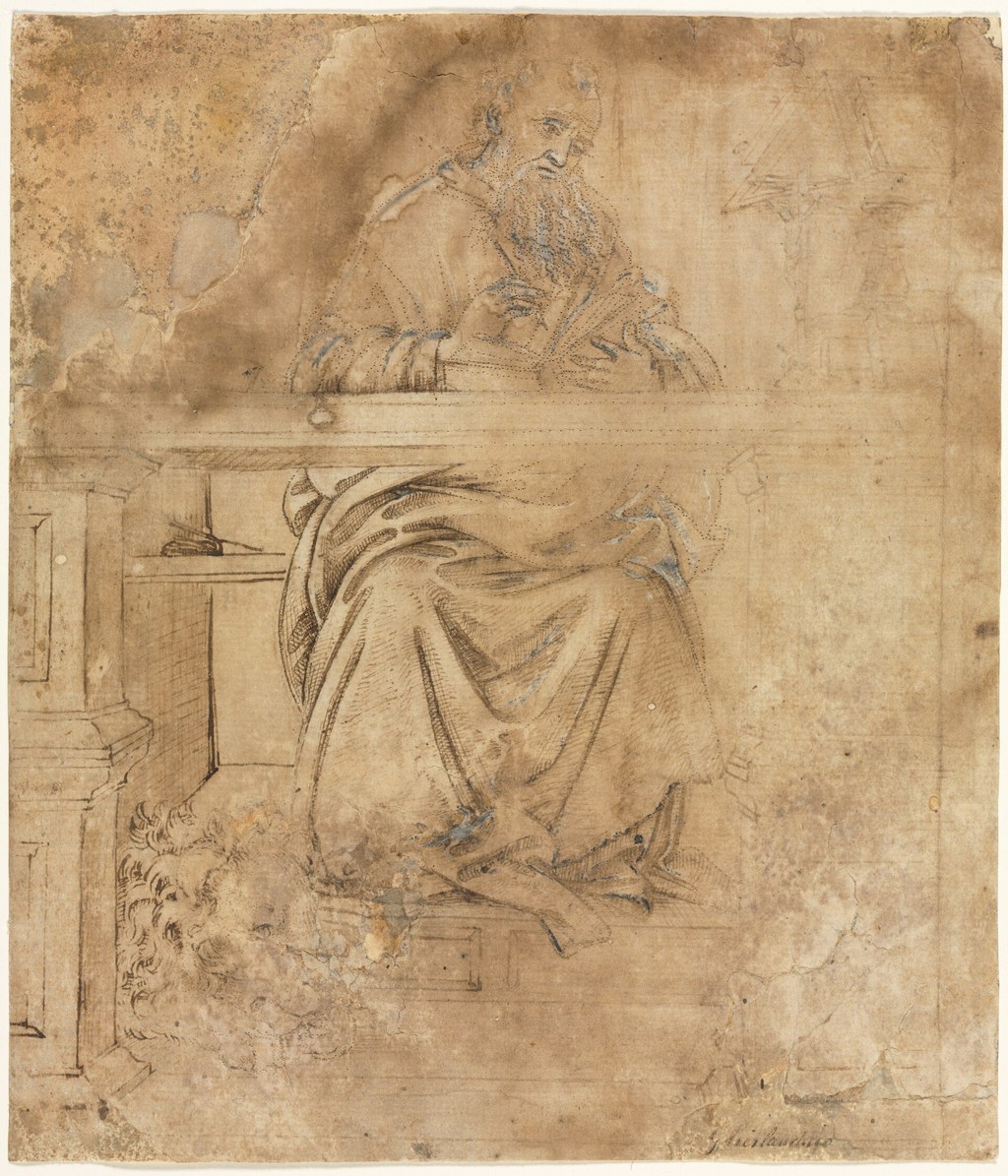
Filippino Lippi is one of the Renaissance painters whose artistic process can be reconstructed unusually well because an exceptional number of his drawings survive. The Metropolitan Museum of Art’s major 1997 catalogue The Drawings of Filippino Lippi and His Circle runs to 420 pages and describes his drawings as among the most original and creative of the Italian Renaissance.[1]
The Met characterises them as energetic, incisive, spontaneous and expressive.[1] It also emphasises a rare freedom of handling, taste for abstraction and mannerism, early concern with movement and expression, elaborate costumes, fanciful hairstyles, ornate settings and spirited reinvention of antique designs. This body of work changes how we understand Filippino as a painter.
Finished paintings stabilise decisions. Drawings preserve uncertainty. A pose may be tested repeatedly.
Hands change position. Drapery expands. An antique fragment is copied and then transformed.
Architecture can be invented without needing to function physically. The Cleveland Museum of Art’s recent technical study of the Roman Holy Family adds another layer. Infrared reflectography and X-radiography reveal underdrawing and compositional changes beneath the paint, allowing surviving paper studies to be compared with hidden stages of execution.[3] Together, drawings and technical imaging make Filippino an exceptional case study in Renaissance design. His style was not simply a collection of visible traits. It was a process of iteration.
At a Glance
- Major drawing corpusexceptionally large for a fifteenth-century painter
- Principal scholarly resourceMet, The Drawings of Filippino Lippi and His Circle (1997)
- Catalogue size420 pages, 288 illustrations
- Drawing qualitiesenergetic, incisive, spontaneous, expressive
- Techniquesmetalpoint, pen, ink, wash and other drawing media
- Recurring interestsmovement, expression, elaborate dress, hairstyles, ornament and antique design
- Roman transformationintensive drawing after ancient sculpture, painting and architecture
- Technical evidenceCleveland tondo IRR, X-radiography and scientific pigment analysis
- CircleRaffaellino del Garbo and other artists influenced by Filippino’s drawings
- Later influenceMet notes impact extending even to Raphael
Contents
- Why So Many Drawings Survive
- Wash
- Drapery
- Drawing and the Brancacci Chapel
- Architectural Drawing
- The Circle
- The Alternative Drapery Bundle
- Ultramarine
- Roman Style
- Landscape
- Sketchbooks and Working Memory
- Copying versus Studying
- Pouncing and Transfer
- Grid and Scaling
- Mariette and Lawrence
- Mannerism before Mannerism
- Conservation as Art History
- Panel Preparation
- Drawing and Attribution across the Career
- Frequently Asked Questions
- References
Why So Many Drawings Survive
The survival of large numbers of Filippino drawings is partly chance. Paper is fragile. Most workshop sheets from the Renaissance disappeared through use, damage or disposal.
Filippino’s drawings were also collected relatively early. The Met notes later ownership by prestigious collectors including Giorgio Vasari, Pierre-Jean Mariette and Sir Thomas Lawrence.[1] Collecting helped preserve what workshop practice normally destroyed.
Drawing as Thinking. A preparatory drawing is not simply a smaller version of a finished painting. It can record thought before resolution. The artist tests alternatives.
This makes drawings especially valuable for Filippino because his mature compositions are complex. Paper gives him freedom to fail cheaply. A wall fresco does not.
Metalpoint. Metalpoint is a disciplined drawing technique in which a metal stylus leaves a fine line on specially prepared paper. It does not erase easily. The medium therefore rewards control. Filippino’s metalpoint studies demonstrate careful observation and figure construction. They provide a useful contrast with his freer pen drawings.
Pen and Ink. Pen allows greater speed. Lines can thicken, loop and change direction. For an artist interested in movement, this freedom is especially valuable.
Filippino’s pen drawings can feel almost animated. Figures are not always polished. Their energy comes from the act of searching.
Wash
Wash adds tone with diluted ink. It can establish shadow quickly. This helps the artist test volume and lighting. For complex drapery or architecture, wash can turn line into mass. Filippino uses such techniques as part of a flexible design vocabulary rather than one fixed drawing method.
Figure Studies. Individual bodies appear repeatedly in the corpus. A figure may be studied before entering a larger scene. This separation allows pose to be solved independently from composition. The method is especially important for fresco, where complex crowds need reliable figures before transfer to wall.[1]
Heads. Filippino’s paintings are populated by highly varied faces. Drawing allowed him to study heads, expressions and hairstyles separately. The Met specifically notes his taste for fanciful hairstyles.[1]
This detail is not trivial. Hair becomes part of character and movement. It can transform an otherwise ordinary head into something memorable.
Hands. Hands carry narrative. They point, bless, support, reject and mourn. Filippino’s frescoes depend heavily upon gesture. Preparatory drawing allows those actions to be tested. A hand that looks minor in the finished scene may have required repeated study.
Drapery
Drapery is one of Filippino’s strongest inherited interests from Botticelli and Fra Filippo. Drawing lets cloth become almost independent line. Folds can exaggerate movement. Late Roman-period drapery becomes increasingly complex. The material responds to bodies while also creating its own visual rhythm.
Costumes. The Met highlights elaborate costume as a characteristic shared by Filippino’s drawings and paintings.[1] Clothing differentiates figures socially and dramatically. In crowded scenes, hats, sleeves and patterned garments help prevent anonymity. Costume therefore serves narrative clarity as well as decorative pleasure.
Movement. Movement is perhaps the most consistent theme in the drawing corpus. Even early paintings such as Tobias and the Angel show bodies advancing through space. Later sheets explore turns, bends and unstable poses more aggressively. The Met describes a precocious concern with movement and expression.[1] Rome expanded the sources available for these experiments.
Expression. Filippino’s figures react strongly. Saints are interrupted. Crowds argue.
Mourners grieve. Figures look towards miracles. Drawing allows expression to be tested through head angle, brows, mouth and body position. Psychology is therefore built structurally rather than added only through facial detail.
Drawing and the Brancacci Chapel
The Brancacci commission required Filippino to adapt to Masaccio’s earlier monumental language. Preparatory design would have been essential. He needed new figures that respected inherited scale and composition. The project therefore demonstrates drawing as historical negotiation. The artist designs himself into another artist’s monument.
Drawing and the Carafa Chapel. Carafa gave Filippino far greater freedom. Studies for the chapel reveal architectural, figure and antiquarian invention. Rome becomes visible on paper before it becomes fresco.
This sequence is crucial. The artist does not simply copy ruins onto walls. He processes them through drawing first.
Drawings after Antiquity. The Roman sheets are among the most important. Filippino copies ancient sculpture and decorative forms selectively. The Met calls the process spirited reinvention.[1] The artist is interested in usable ideas. A pose, mask or architectural fragment can be detached from original context and repurposed.
Venus to Saint Margaret. The Cleveland tondo provides the clearest example.[3] A drawing after an antique Venus informs the final Saint Margaret. This proves that formal borrowing could cross religious identity completely. Drawing is the bridge. The pagan source becomes raw material.
Architectural Drawing
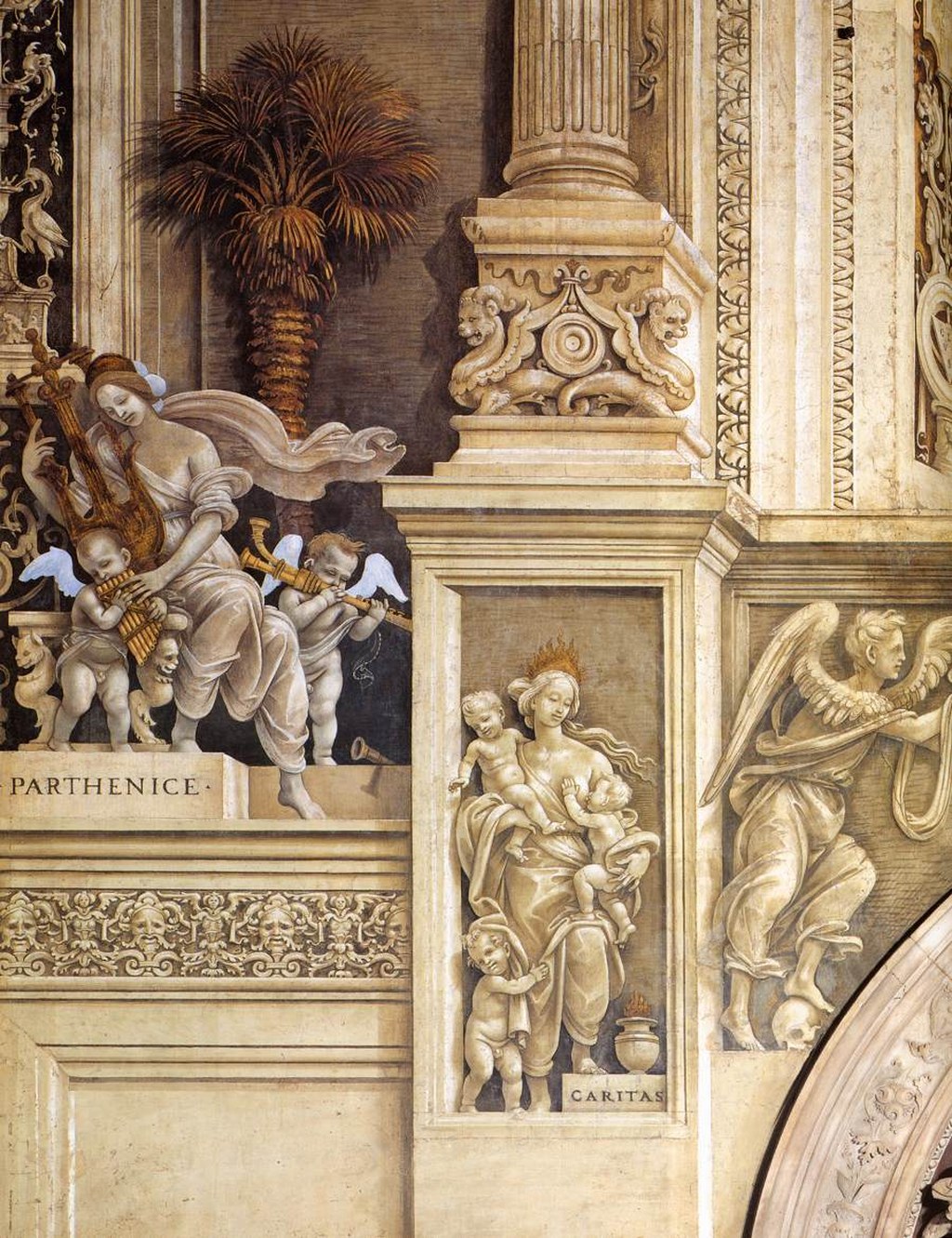
Filippino’s mature architecture often seems too fantastic to exist. Drawing made such freedom possible. Columns, arches, masks and ornament could be combined without engineering constraints. The page becomes a space for imaginary building. The Strozzi Chapel demonstrates what happens when these inventions are translated into fresco.
Grotesques. Grotesque ornament is especially suited to drawing because it depends upon fluid transformation. Plants become bodies. Bodies become ornament.
Symmetry can be established and broken. The pen’s speed encourages hybrid invention. Filippino’s Roman interest in grotesques therefore aligns perfectly with his draughtsmanship.
From Drawing to Cartoon. Large frescoes required designs to be enlarged or transferred. Cartoons and related transfer methods allowed workshop teams to move composition onto plaster. Not every intermediate stage survives. The surviving drawings are therefore fragments of a larger production chain. They should not be assumed to connect directly to wall without intervening work.
Workshop Use. Drawings circulated within workshops. Assistants could use master studies as models. A successful figure might reappear.
This complicates attribution. A sheet may be by Filippino, an assistant or a close follower using his designs. The Met catalogue devotes major attention to these distinctions.[1]
The Circle
Raffaellino del Garbo was among the artists closest to Filippino. The Met also discusses the wider circle and artists influenced by his designs.[1] This reminds us that drawings are social objects.
They transmit style. A painting is fixed in one place. A sheet can travel between hands.
Raphael. The Met notes Filippino’s influence reaching even Raphael.[1] This is especially significant because modern narratives often place Filippino before the “real” High Renaissance. The drawings challenge that hierarchy. His inventions continued to matter to younger artists. He was part of the transmission into the sixteenth century.
Piero di Cosimo. Piero di Cosimo also belongs to the broader field of artists responding to Filippino’s inventions. Both painters shared a taste for unusual imagery and imaginative transformation. Influence need not mean direct copying. A drawing can suggest ways of thinking.
Technical Imaging and Hidden Drawing. Cleveland’s examination of the Holy Family makes the relationship between paper and panel especially concrete.[3] Infrared reflectography reveals underdrawing beneath paint. The hidden lines record composition in development. This means the panel itself contains another drawing layer.
The Alternative Drapery Bundle
IRR shows a bundle of drapery where Joseph eventually appears. This is direct evidence of revision. The finished figure hides an abandoned idea. Technical imaging therefore reveals something comparable to a crossed-out sentence in a manuscript. The painting becomes a record of editing.
The Grid. A rough grid appears in the underdrawing. It may have helped organise or transfer the design. The grid demonstrates planning.
This is important because Filippino’s art can look spontaneous. Spontaneity and structure are not opposites. He could improvise within geometry.
X-Radiography. X-rays reveal features dependent on density rather than visible colour. In the Cleveland tondo, they expose panel structure and aspects of execution.[3] This helps conservators understand the object materially. Artistic technique begins with wood, joins and preparation before reaching visible paint.
Pigment Analysis. Cleveland used FORS, XRF, cross-sections and SEM-EDS to identify materials.[3] The palette includes ultramarine, copper greens, lead-tin yellow, vermilion, red lakes, lead white, earth pigments and gold. Scientific analysis therefore complements visual style. Colour can be discussed materially rather than impressionistically.
Ultramarine
The lavish ultramarine in the Cleveland painting demonstrates how patronage affects technique.[3] The pigment was exceptionally expensive. Carafa’s resources made its extensive use possible. Technical style is therefore partly economic. A painter can only deploy certain materials when a patron pays for them.
Tempera and Oil. Filippino’s paintings frequently combine tempera and oil. This places him within late-fifteenth-century technical transition. Oil allows richer blending and saturation. Tempera supports crisp detail. The mixed practice suits an artist whose work combines line with colouristic complexity.
Early Style. The earliest works remain close to Botticelli. Figures are graceful. Contours are clear.
Drapery is elegant. Landscapes remain relatively subordinate. These traits should not be dismissed as derivative. They are the workshop foundation from which later originality develops.
Mid-Career Style. By the mid-1480s, Filippino’s environments become more active. The Vision of Saint Bernard is a key example. Landscape, books, demon and gesture all contribute to psychological narrative. This phase demonstrates independence before Rome.
Roman Style
Between 1488 and 1493, antique fragments transform his vocabulary. Architecture becomes more archaeological. Grotesques appear. Classical poses are reinvented. Drawings become a key record of this shift.
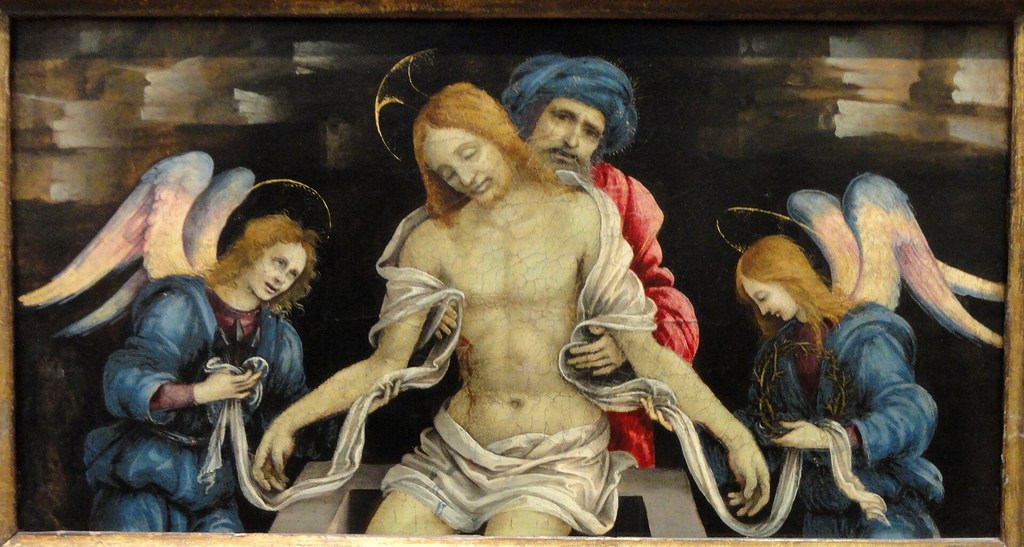
Late Style. After Rome, the new vocabulary remains active. The Strozzi Chapel is the culmination. Architecture and ornament become almost theatrical participants. Yet late works such as the small Washington Pietà show that Filippino could still simplify when function required it. There is no single late formula.
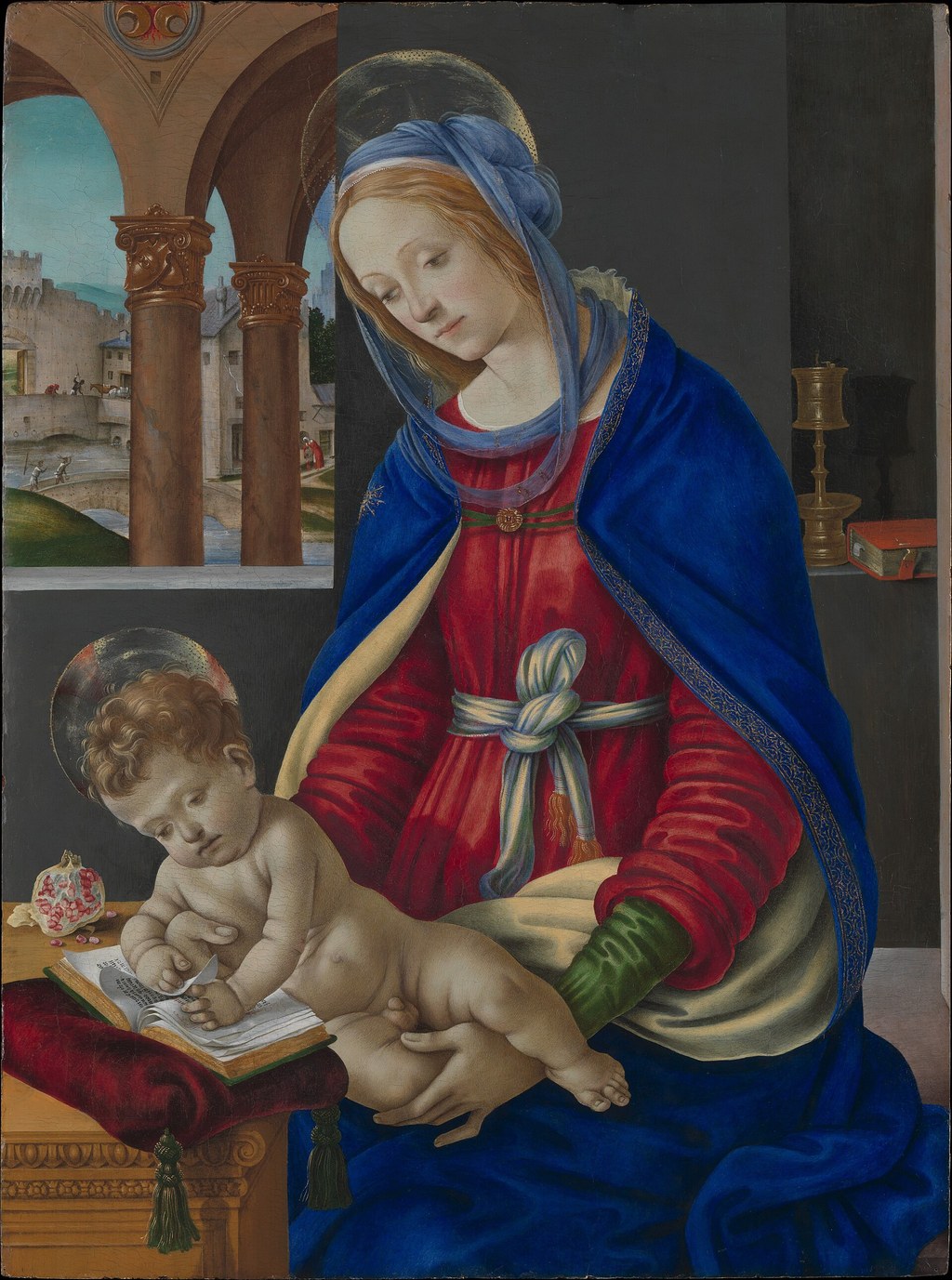
Colour. The Met calls Filippino a warm colourist in discussion of his mid-career work.[1] Colour helps organise increasingly crowded scenes. Bright garments separate bodies. Luxury pigments communicate patronal status. The restored Met Madonna demonstrates how much later varnish could hide this colouristic achievement.
Light. Filippino’s early works use relatively clear modelling. Mid-career panels increasingly explore subtle chiaroscuro and northern-looking effects. The Met Strozzi Madonna’s cast shadow is especially significant.[1] His technique therefore evolves alongside broader Florentine interest in oil and northern European visual culture.
Landscape
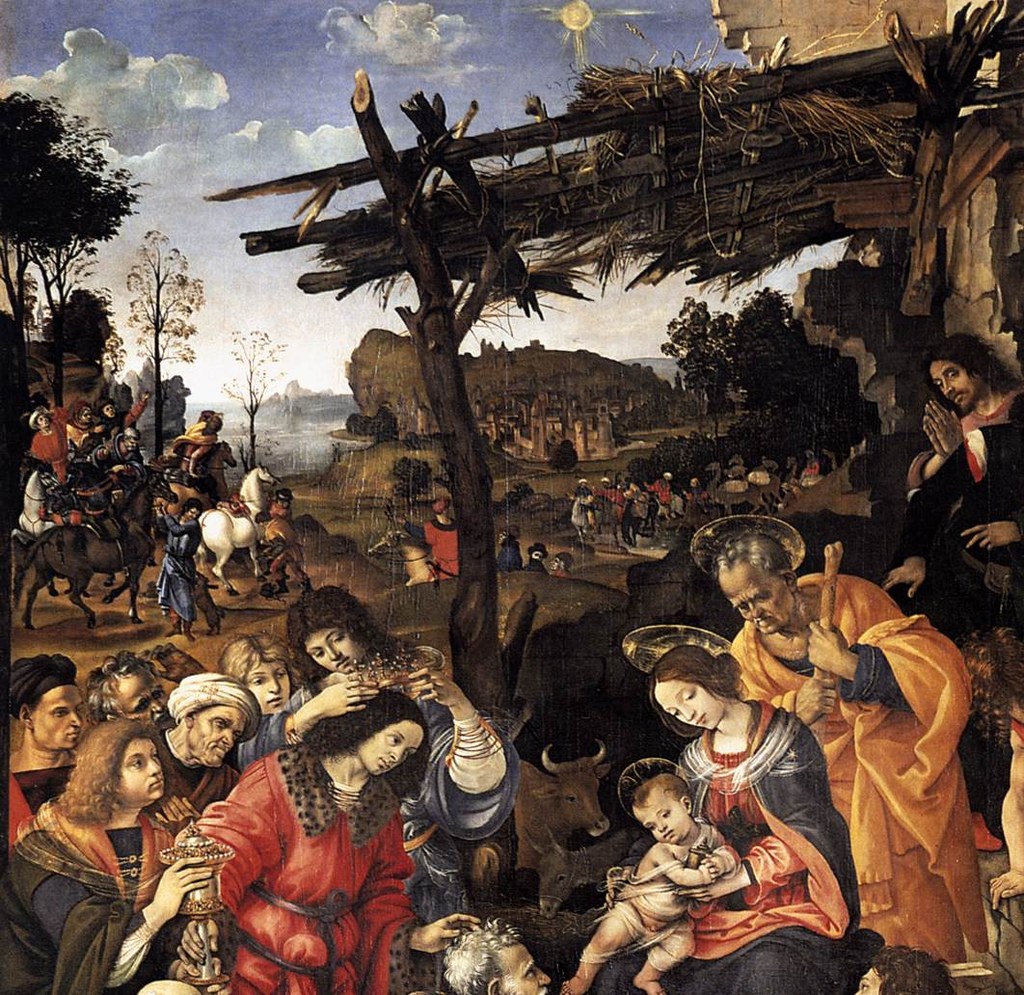
Landscape changes dramatically across the career. Early Tobias landscapes support journey. The Adoration of the Kings turns terrain into ascetic narrative.
The Vision of Saint Bernard makes landscape psychological. Later Roman architecture partially replaces natural terrain as the principal environmental force. Setting is always active.
Architecture. Architecture begins relatively controlled. Rome radicalises it. By Strozzi, architectural forms are overloaded with antique and grotesque invention. This progression is one of the clearest stylistic arcs in Filippino’s career.
Portraiture. Filippino could also suppress decorative complexity. The Washington Portrait of a Youth is almost austere. Face, cap, jacket and sky carry the image. This demonstrates that style is shaped by genre. A portrait cannot be understood through the same criteria as a fresco cycle.
Iteration. The central technical lesson from Cleveland is iteration.[3] Filippino changed his mind. He revised.
He overpainted earlier ideas. This makes the finished masterpiece feel less inevitable. The artist’s greatness lies partly in decision-making rather than flawless first conception.
Sketchbooks and Working Memory
Although the exact organisation of Filippino’s surviving sheets varies, drawings collectively functioned as working memory. An artist could preserve a useful pose long after first observation. A Roman fragment seen during one visit could reappear years later in Florence. Paper therefore extended the lifespan of visual experience. This is one reason Rome continued affecting Filippino after he left.
Recto and Verso. Renaissance artists often used both sides of sheets. A drawing was working material, not necessarily a precious autonomous artwork. Studies might accumulate without concern for clean presentation. Later collectors transformed these functional sheets into valued objects. That change in status helped preserve them.
Drawing from Life. Some studies appear to involve live models. Life drawing allows observation of weight, balance and muscle in ways copied workshop types cannot. Filippino’s increasing concern with movement benefited from such practice. A model can turn repeatedly while the artist searches for the most expressive pose.
Drawing from Sculpture. Sculpture provides another kind of model. Unlike a living sitter, a statue does not move. The artist can study it from different angles. Ancient sculpture also carries historical prestige. Filippino’s Roman drawings therefore combine observation with antiquarian learning.
Copying versus Studying
The word “copy” can imply lack of invention. In Renaissance workshops, copying was a method of study. The goal was to understand a form well enough to reuse it. Filippino’s Venus-to-Margaret transformation demonstrates this perfectly. The copied source becomes the foundation of invention.
Memory Drawings. Artists could also draw from memory after leaving an object. Such sheets are inevitably transformative. Proportions shift.
Details simplify. What remains is what the artist found important. Memory itself becomes a filter. This may help explain the increasingly fantastical character of Filippino’s antique-derived forms.
Chalk and Other Media. Not every surviving sheet uses the same materials. Different media suit different questions. A hard point produces precise line.
Pen encourages speed. Wash creates mass. Chalk can allow softer modelling. Technique is therefore partly problem-solving.
Paper as Cheap Experiment. Compared with ultramarine, gold, panel preparation or fresco plaster, paper made experimentation relatively inexpensive. This economic fact matters. Artists could afford to discard ideas on paper. The freedom of Filippino’s drawings depends partly upon the medium’s lower material risk.
Pouncing and Transfer
Large designs could be transferred through techniques such as pouncing, where small holes along outlines allow charcoal dust to mark the surface below. Other transfer methods also existed. The exact procedure varied by project. These practices remind us that a beautiful drawing could also be a practical industrial tool.
Incision. Designs on panels or walls could be incised into prepared surfaces. Technical examination can reveal such marks. Drawing therefore does not end when paper disappears. Lines migrate into the object physically.
Underdrawing. Infrared reflectography is particularly valuable because certain carbon-rich drawing materials become visible beneath paint. The Cleveland tondo reveals how much design survives hidden.[3] The visible picture is only the last layer of a longer graphic process.
Pentimenti. Changes made during execution are often called pentimenti. The word evokes “repentance” or change of mind. Filippino’s alternative drapery and later Joseph provide a clear example. Pentimenti demonstrate authenticity of process. A copyist often follows a settled model; an inventor changes course.
Grid and Scaling
A grid can help enlarge or organise a design. Its appearance beneath the Cleveland painting shows that even a highly inventive composition may depend on measured structure.[3] The Romantic opposition between inspiration and calculation is therefore false. Filippino uses both.
Workshop Assistants and Drawings. Assistants could learn from master sheets. A drawing might be copied multiple times. This explains why attribution within a circle becomes difficult. A follower can reproduce the master’s idea without reproducing his exact hand. The Met catalogue’s attention to authenticity reflects this workshop reality.[1]
Connoisseurship of Drawings. Attributing a drawing depends upon line quality, media, paper, provenance and relationship with known works. Small differences matter. A hesitant contour may suggest a pupil.
A rapid confident line may support the master. Yet certainty can remain impossible. Responsible catalogues preserve degrees of confidence.
Vasari as Collector. Giorgio Vasari collected drawings as evidence of artistic genius and development. His collecting helped elevate drawings from workshop scraps towards historical documents. Filippino’s sheets surviving in such traditions therefore owe part of their preservation to early art historiography.
Mariette and Lawrence
Later collectors such as Pierre-Jean Mariette and Sir Thomas Lawrence valued Old Master drawings intensely. Ownership marks and collection histories can help trace sheets. The drawings therefore carry two histories: Renaissance production and later connoisseurship.
Drawing and Personal Style. Paintings may involve assistants. Drawings often bring us closer to the master’s individual hand, though not always. This makes them especially attractive to scholars. A rapid sketch can feel more personal than a polished altarpiece. For Filippino, this immediacy contributes strongly to modern reputation.
Line as Energy. The Met’s word “energetic” is apt because Filippino’s line often seems to move faster than the figure it describes.[1] Contours double. Drapery flickers. The hand searches. This visible process gives drawings life even when the subject is unfinished.
Abstraction. The Met also notes a taste for abstraction.[1] This is an intriguing quality in a Renaissance painter usually discussed through naturalism. Filippino can let line become pattern. Costume and ornament detach from ordinary physical logic. The late grotesques push this tendency far.
Mannerism before Mannerism
The catalogue uses “mannerism” to describe aspects of his draughtsmanship well before the sixteenth-century movement usually associated with that word. Here it refers to deliberate stylisation, elongation and expressive artificiality. Filippino therefore complicates a clean chronology in which Mannerism begins only after the High Renaissance.
Technique and Personality. Technical choices are not neutral. A fast pen line suits Filippino’s restless imagination differently from slow metalpoint. The artist chooses media according to temperament and problem. Technique becomes part of style.
Colour Preparation. Drawings could also prepare colour indirectly through organisation of forms and shadows. The exact palette is decided later, but successful drawing gives colour a structure to inhabit. Filippino’s increasingly rich colour therefore depends upon graphic planning beneath it.
Varnish and Modern Appearance. The Met Strozzi Madonna demonstrates how later varnish can distort style.[1] Before cleaning, warm brown coatings obscured brilliant colour. Technical history must therefore be considered before describing Filippino as dark, muted or tonal. What we see today may depend upon conservation state.
Conservation as Art History
Scientific conservation has become one of the strongest sources for understanding Filippino. Cleveland’s technical imaging does not merely preserve the panel.[3] It reconstructs decision-making. The boundary between conservator and art historian becomes productive. Material evidence can correct purely visual assumptions.
Technique across Scale. Filippino’s technique had to adapt from tiny predella to monumental fresco. A small panel rewards minute detail. Fresco demands rapid work on wet plaster and large-scale readability. The artist’s range therefore cannot be understood through one medium alone.
Fresco. True fresco involves applying pigment to fresh plaster so colour becomes bound with the wall. Artists work in sections because plaster must remain workable. Large projects therefore require planning and workshop coordination. Filippino’s chapel cycles demonstrate technical organisation as well as invention.
A Secco. Some details can be added on dry plaster using other binders. Such passages often age differently. Conservation of fresco cycles therefore has to distinguish techniques and vulnerabilities. This is particularly important in complex, centuries-old chapel surfaces.
Panel Preparation
Wood panels required joining, sizing and ground before painting. Cleveland’s X-ray study of the tondo reveals four large boards and original battens.[3] The support is sophisticated carpentry. Painting begins long before visible pigment.
Material Collaboration. Carpenters, pigment suppliers, assistants and gilders could all contribute to a finished object. The named master remains responsible artistically, but production is collective. Technical study restores those invisible workers to the history of the artwork.
Why Style Is Process. The most useful conclusion is that Filippino’s “style” is not one set of motifs. It is a process. He observes.
Draws. Revises. Transfers.
Paints. Changes again. He responds to patron, site, material and source. The visible result changes because the process encounters different problems. That is why one artist can produce the restrained Washington portrait, the intimate Cleveland tondo and the overwhelming Strozzi Chapel without contradiction.[3]
Why Drawings Matter. Filippino’s drawings matter because they make artistic intelligence visible. Paintings show answers. Drawings show questions.
They reveal an artist continually testing how bodies move, how cloth turns, how antiquity can be transformed and how crowded narratives can remain coherent. The large surviving corpus also changes his historical status. He is not merely an accomplished panel and fresco painter.
He is one of the Renaissance’s most inventive draughtsmen. The Met’s description of his sheets as energetic, incisive, spontaneous and expressive captures why they remain compelling.[1] They allow us to meet Filippino before the paint dries over the decisions.
Drawing and Attribution across the Career
The large corpus also helps date paintings. A pose in a securely connected drawing can support chronology. Changes in handling can reveal development. This does not create mechanical certainty, but drawings add another line of evidence beyond painted style. For an artist whose early works overlap Botticelli closely, that evidence is especially valuable.
Drawing and Lost Works. Some drawings may preserve ideas for paintings or decorations that no longer survive. This gives the corpus documentary importance beyond surviving masterpieces. A sheet can become the only witness to a lost commission. Filippino’s graphic legacy therefore partially compensates for gaps in the painted oeuvre.
Technique as Evidence of Patronage. Technical study repeatedly reveals the patron behind the surface. Ultramarine signals expense. Large panel construction signals workshop resources.
Fresco scale signals assistants and planning. Technique is therefore social history. The material object records not only what Filippino wanted to do but what a commission allowed him to do.
Frequently Asked Questions
Discussion
What stands out to you most about Drawings Style and Technique in relation to Filippino Lippi's wider career?
Reader Insights
Notice how the page connects close visual detail with patronage, workshop practice and the wider Renaissance setting.
Which comparison elsewhere in the cluster helps clarify this work or theme most strongly?
Join the Conversation
Have a thought or observation about Drawings Style and Technique? Share it below. Thoughtful responses may be added to this section.
References
- Metropolitan Museum of Art, The Drawings of Filippino Lippi and His Circle, 1997. View Source
- George R. Goldner et al., documented chronology and catalogue entries in the Met publication.
- Cleveland Museum of Art, Filippino Lippi and Rome, 2025–26. View Source
- Cleveland Museum of Art, technical research on Holy Family with Saint John the Baptist and Saint Margaret. View Source
- National Gallery, London, Filippino Lippi collection records. View Source