 by Tom Gurney
Tom Gurney BSc (Hons) is an art history expert with over 20 years experience
Published on June 19, 2020 / Updated on October 2, 2026
Email: tomgurney1@gmail.com / Phone: +44 7429 011000
Filippino Lippi Biography
Filippino Lippi was one of the leading Florentine painters of the late fifteenth century, admired in his own lifetime for elegant drawing, complex sacred narrative and highly inventive decorative detail. He was born around 1457, the son of Fra Filippo Lippi and Lucrezia Buti, and his early identity was shaped by one of the most unusual family stories in Renaissance art.
The biography matters because Filippino’s career joins several major strands of quattrocento painting. He inherited the Lippi family tradition, trained in the orbit of Sandro Botticelli, completed parts of the Brancacci Chapel, worked for Florentine families including Strozzi, Nerli and Del Pugliese, and transformed his mature style through sustained contact with ancient Rome. His life therefore offers a compact route through the changing artistic culture between Masaccio and the generation of Michelangelo.
Modern accounts sometimes introduce him only as Fra Filippo’s son or Botticelli’s pupil. Those relationships are important, but they are only the beginning. Filippino became an independent master whose mature frescoes and panel paintings are among the most psychologically animated works of the Florentine Renaissance.
At a Glance
- Bornc. 1457, probably in Prato
- DiedApril 1504, Florence
- FatherFra Filippo Lippi
- MotherLucrezia Buti
- Key teacherSandro Botticelli
- Major centresFlorence, Prato and Rome
- Major fresco cyclesBrancacci Chapel, Carafa Chapel and Strozzi Chapel
- Signature strengthsline, drawing, expressive movement, ornament and antique detail
Contents
- Birth and Family Background
- Training after Fra Filippo's Death
- Early Independent Work
- Brancacci Chapel
- Patrons and Florentine Career
- Rome and the Carafa Chapel
- Return to Florence and Late Work
- Death and Reputation
- Frequently Asked Questions
- References
Birth and Family Background
Filippino was born around 1457 into a family story that later writers found irresistible. His father, Fra Filippo Lippi, was a Carmelite friar and a celebrated painter; his mother, Lucrezia Buti, was connected with the convent of Santa Margherita in Prato. The relationship between them became surrounded by legend, but the central point for Filippino’s biography is clear: he grew up with both artistic inheritance and social ambiguity built into his identity.
That inheritance gave him access to a powerful visual tradition. Fra Filippo had absorbed lessons from earlier Florentine painting and made sacred subjects more graceful, intimate and emotionally approachable. Even if the details of Filippino’s earliest training are difficult to reconstruct, he entered life inside a world of panels, drawings, pigments, assistants and patrons.
Prato is especially important to this family history. Fra Filippo worked there for years, and the city became the setting in which artistic labour, religious institutions and private life overlapped. Filippino’s origins therefore connect him not only to a famous father, but also to a wider workshop environment in which art, scandal and patronage were inseparable.
Training after Fra Filippo's Death
Fra Filippo died in 1469, when Filippino was still young. That death prevented a simple father-to-son succession inside the workshop. Instead, Filippino entered the orbit of Botticelli, who had himself trained with Fra Filippo and carried parts of the elder Lippi’s style into a new generation.
This makes Filippino’s training unusually layered. He inherited his father through family memory, through surviving works and through Botticelli’s mediation. The result was not a mechanical continuation of Fra Filippo’s art, but a more complicated transmission in which line, grace and devotional intimacy passed through another master before becoming Filippino’s own language.
The National Gallery records Filippino’s close association with Botticelli and notes the difficulty of distinguishing some early works between them.[1] That uncertainty is historically useful. It shows how workshop training depended on shared figure types, common drawings and repeated devotional formats before an artist’s independent personality became fully visible.
Early Independent Work
Filippino’s early paintings often retain Botticellian elegance while beginning to develop a more personal sense of landscape, atmosphere and psychological response. Works such as the National Gallery Adoration of the Kings and Virgin and Child with Saint John show the younger painter moving within familiar Florentine devotional subjects while introducing more particular settings and moods.[1]
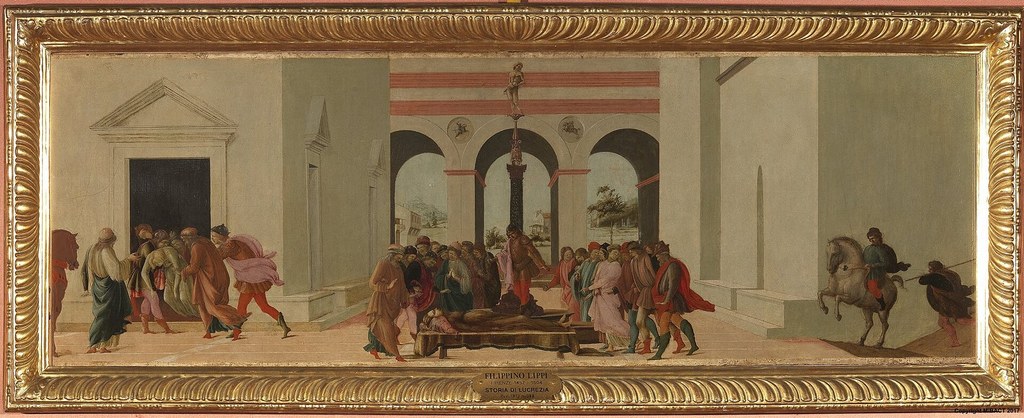
The Tobias and the Angel and early Madonnas also demonstrate his command of graceful contour and carefully staged intimacy. These paintings are not merely apprentice exercises. They show a young artist learning how to make inherited formulas more spatially alert and emotionally varied.
Drawing was central to this development. The Metropolitan Museum’s publication on Filippino’s drawings presents him as one of the most energetic and expressive draughtsmen of his generation.[7] His command of line allowed him to move from Botticellian grace towards more restless, animated forms.
Brancacci Chapel
Filippino’s work in the Brancacci Chapel was a defining early public achievement. The chapel had been transformed by Masaccio and Masolino earlier in the century, and its unfinished fresco cycle remained one of the great monuments of Florentine painting. Completing it required tact as well as ambition.
Filippino had to make his additions work beside Masaccio’s more monumental language without simply imitating it. This placed him in direct conversation with the earlier Renaissance revolution that had shaped his father’s generation. Few commissions could have made artistic inheritance more visible.
The Brancacci project also marked Filippino as more than a painter of small panels. He could manage large-scale sacred narrative inside a historically charged architectural setting. That ability helped prepare the way for later chapel commissions in Rome and Florence.
Patrons and Florentine Career
Filippino’s career depended on a broad network of Florentine patrons. The Medici world mattered, but it was not the whole story. The Strozzi, Del Pugliese, Rucellai and Nerli families each shaped important commissions, while religious institutions gave his works specific chapel settings and devotional purposes.
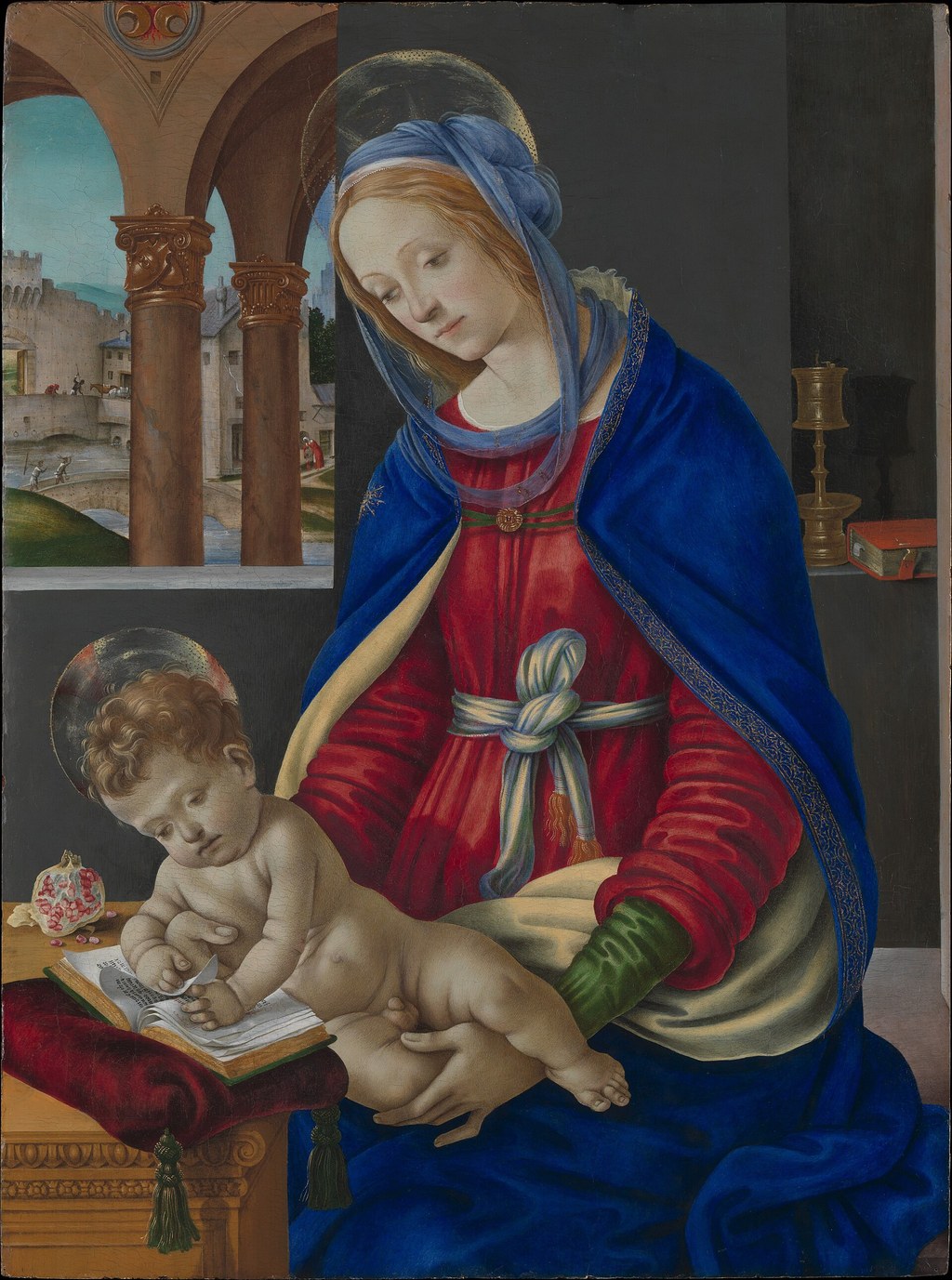
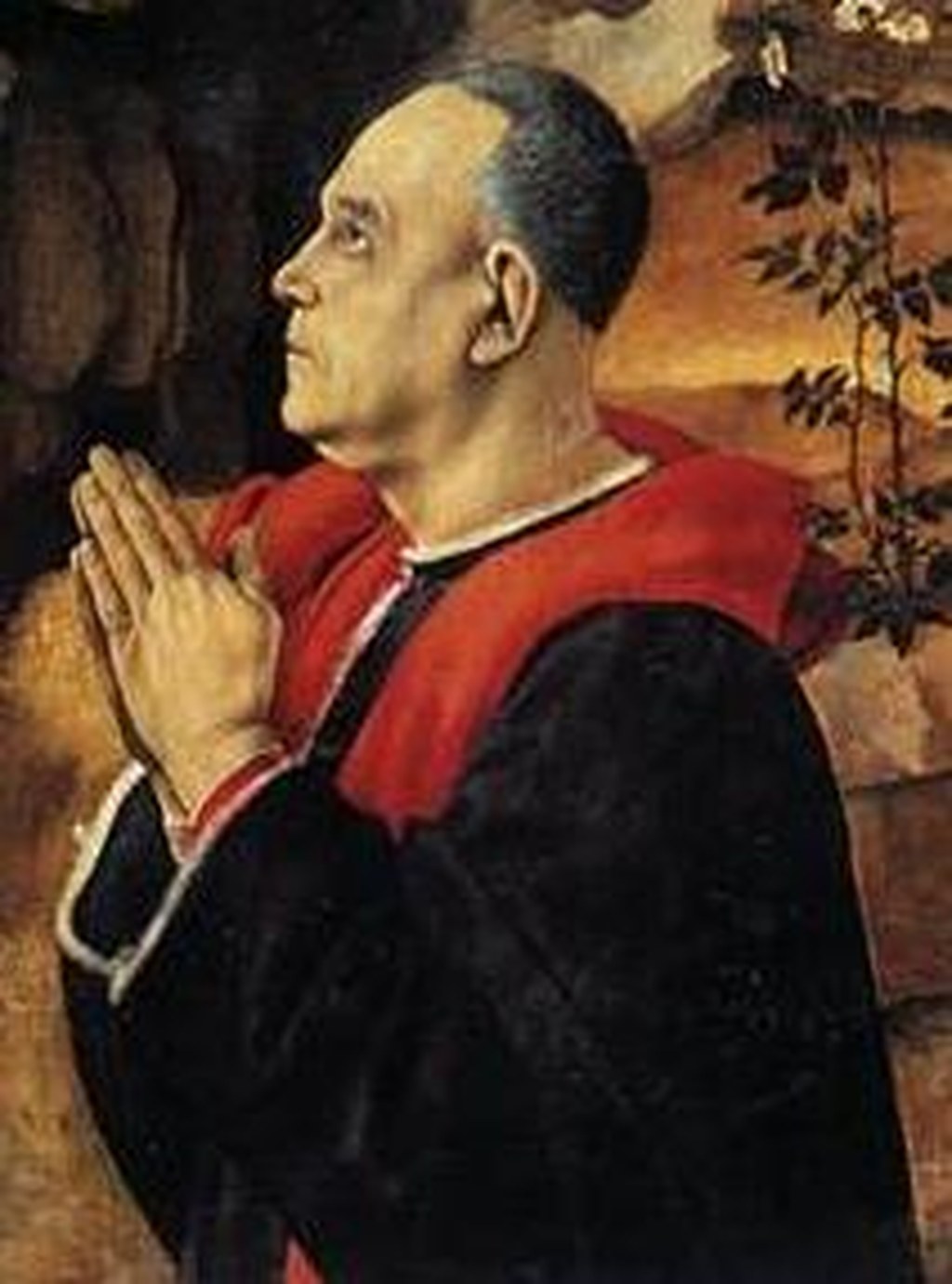
His Vision of Saint Bernard was connected with Piero di Francesco del Pugliese, while the Nerli Altarpiece still makes family identity visible through donors and heraldry. The Madonna and Child in New York reflects Strozzi patronage through setting, device and material richness.[4]
These commissions show why biography and patronage cannot be separated. Filippino did not move through a neutral sequence of masterpieces. He worked for specific families, chapels and institutions, each with its own saints, politics, memory and budget.
Rome and the Carafa Chapel
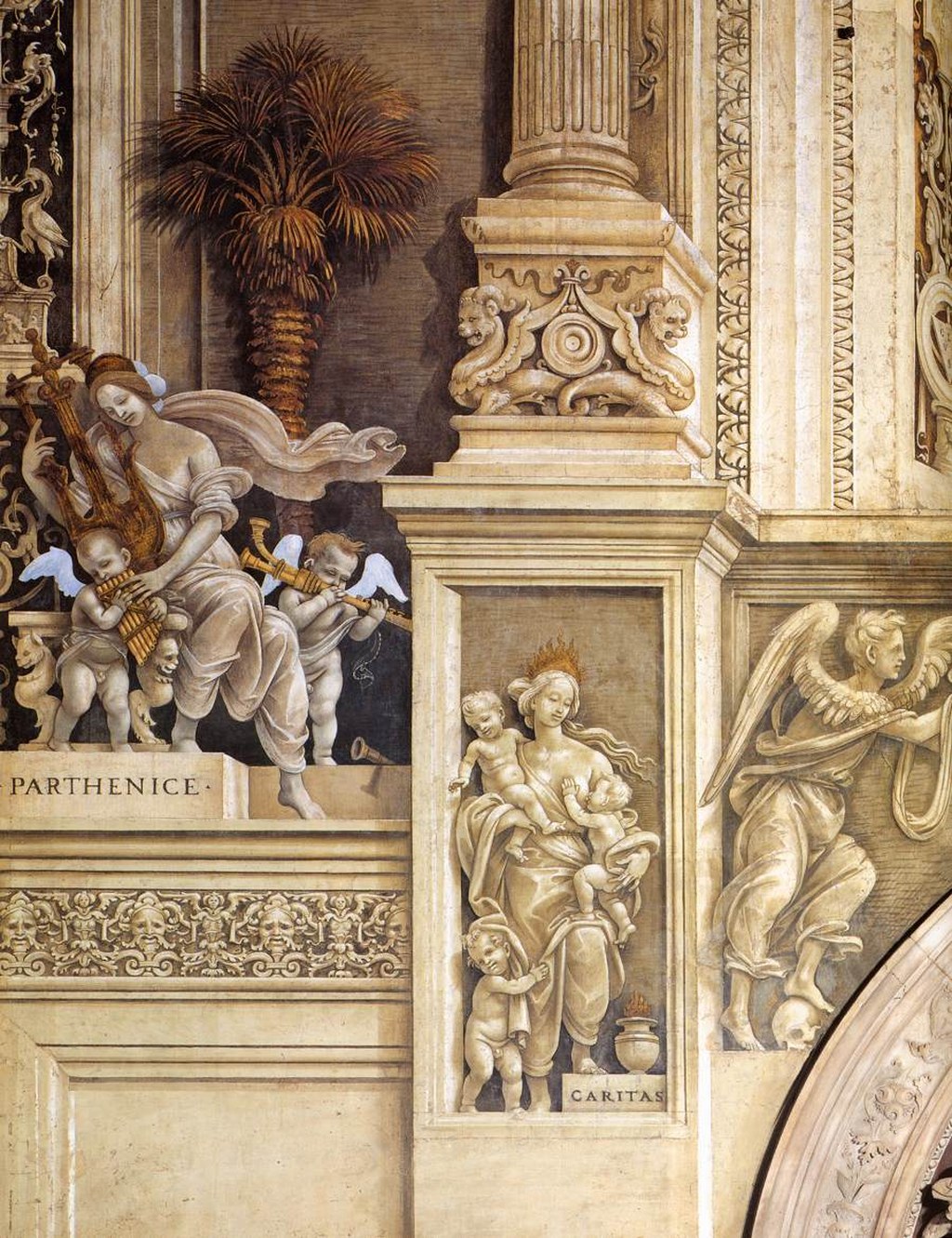
Rome transformed Filippino’s mature style. Lorenzo de’ Medici recommended him to Cardinal Oliviero Carafa, and the resulting work in Santa Maria sopra Minerva placed him before one of the most demanding patrons of late-fifteenth-century Italy. The Carafa Chapel became the key setting for his encounter with antique architecture, sculptural fragments and Roman decorative invention.[6]
After Rome, Filippino’s art becomes more crowded, archaeological and psychologically charged. Grotesque ornament, antique motifs and strange architectural settings begin to animate sacred scenes. His figures still preserve Florentine elegance, but they now inhabit a more complex and sometimes unsettling world.
This Roman experience separates him sharply from a simple Botticellian identity. Botticelli gave Filippino an essential foundation, but Rome gave him a mature vocabulary that was unmistakably his own. The change is visible across the cluster in pages on the ancient Roman imagination, the Carafa Chapel and the later Strozzi frescoes.
Return to Florence and Late Work
Filippino returned to Florence in the 1490s and continued to receive important commissions. The Strozzi Chapel in Santa Maria Novella became his great late Florentine fresco cycle. It brought together family memorial, saintly narrative, Roman ornament and complex architectural fantasy.
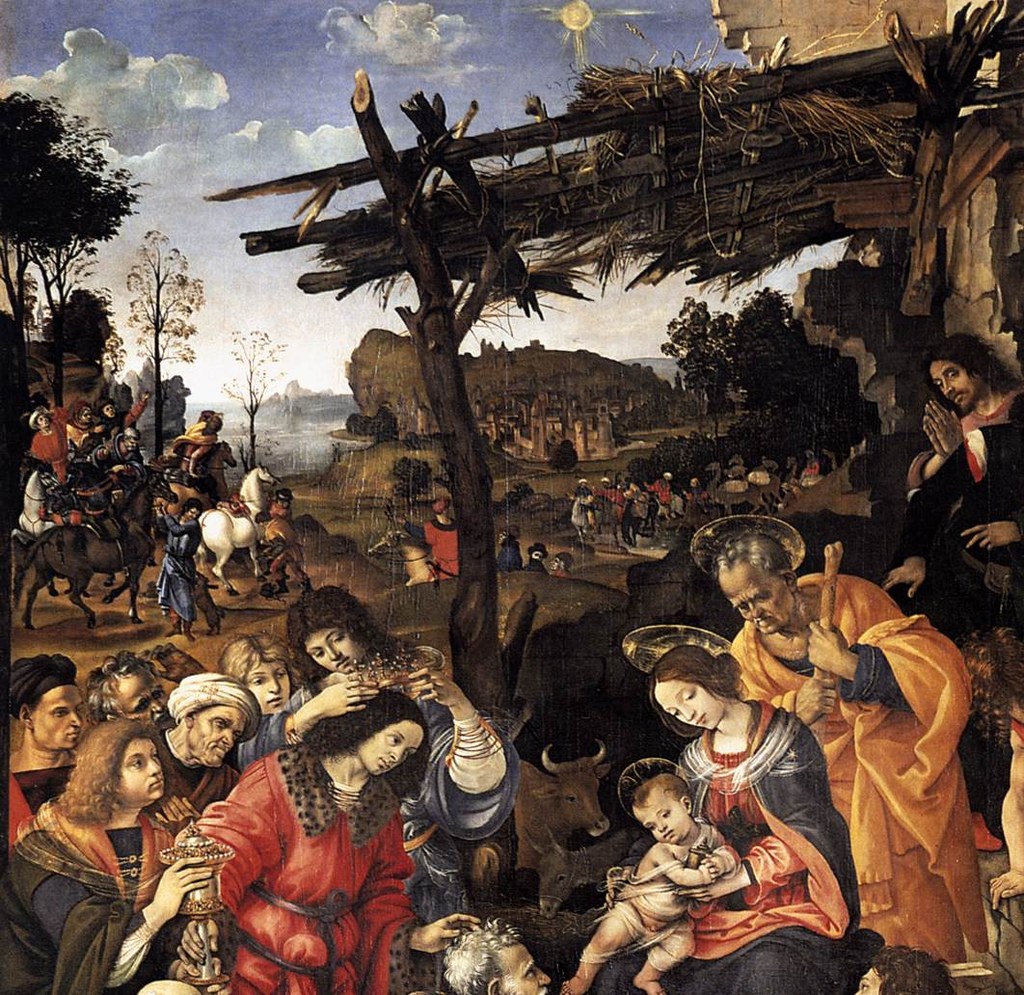
The Uffizi Adoration of the Magi of 1496 belongs to a changed political Florence after the expulsion of the main Medici branch. Its probable references to the Pierfrancesco Medici circle show how Filippino could adapt traditional religious subjects to contemporary patronal meaning.[2]
Late works and drawings show increasing freedom in line and movement. Filippino’s figures twist, gesture and react with unusual intensity. His achievement lies in making inherited Florentine grace serve a more restless, imaginative and historically dense art.
Death and Reputation
Filippino died in Florence in April 1504. Later tradition reports that the city’s workshops closed for his funeral, a sign of the esteem attached to his name. Whether every detail of that account can be pressed literally, it reflects a real truth: he was regarded as a major master, not a minor follower.
His modern reputation has sometimes suffered because Botticelli became far more famous and because Fra Filippo’s life story remained so colourful. Yet the National Gallery notes that Filippino may have enjoyed greater contemporary success than Botticelli.[1] That observation helps correct the modern hierarchy.
Filippino’s biography is therefore a story of inheritance transformed. He began as the son of Fra Filippo and pupil of Botticelli, but his mature career moved beyond both. By completing Masaccio’s chapel, absorbing Rome and reshaping Florentine fresco, he became one of the most distinctive painters of the late Renaissance in Florence.
Frequently Asked Questions
Discussion
What stands out to you most about Filippino Lippi's biography and his movement between family inheritance, Botticelli's workshop and Rome?
Reader Insights
Notice how the biography links workshop training, patrons and place rather than treating the career as a simple list of paintings.
Which moment seems most decisive: his Lippi inheritance, Botticelli's training, the Brancacci Chapel, or Rome?
Join the Conversation
Have a thought or observation about Filippino Lippi's biography? Share it below. Thoughtful responses may be added to this section.
References
- National Gallery, London, Filippino Lippi artist biography. View Source
- Uffizi Galleries, Filippino Lippi, Adoration of the Magi, 1496. View Source
- National Gallery, London, Virgin and Child with Saint John. View Source
- Metropolitan Museum of Art, Filippino Lippi, Madonna and Child. View Source
- Basilica of Santo Spirito, Nerli Altarpiece institutional history. View Source
- Cleveland Museum of Art, Filippino Lippi and Rome. View Source
- Metropolitan Museum of Art, The Drawings of Filippino Lippi and His Circle, 1997. View Source