 by Tom Gurney
Tom Gurney BSc (Hons) is an art history expert with over 20 years experience
Published on June 19, 2020 / Updated on October 2, 2026
Email: tomgurney1@gmail.com / Phone: +44 7429 011000
Tobias and the Angel by Filippino Lippi
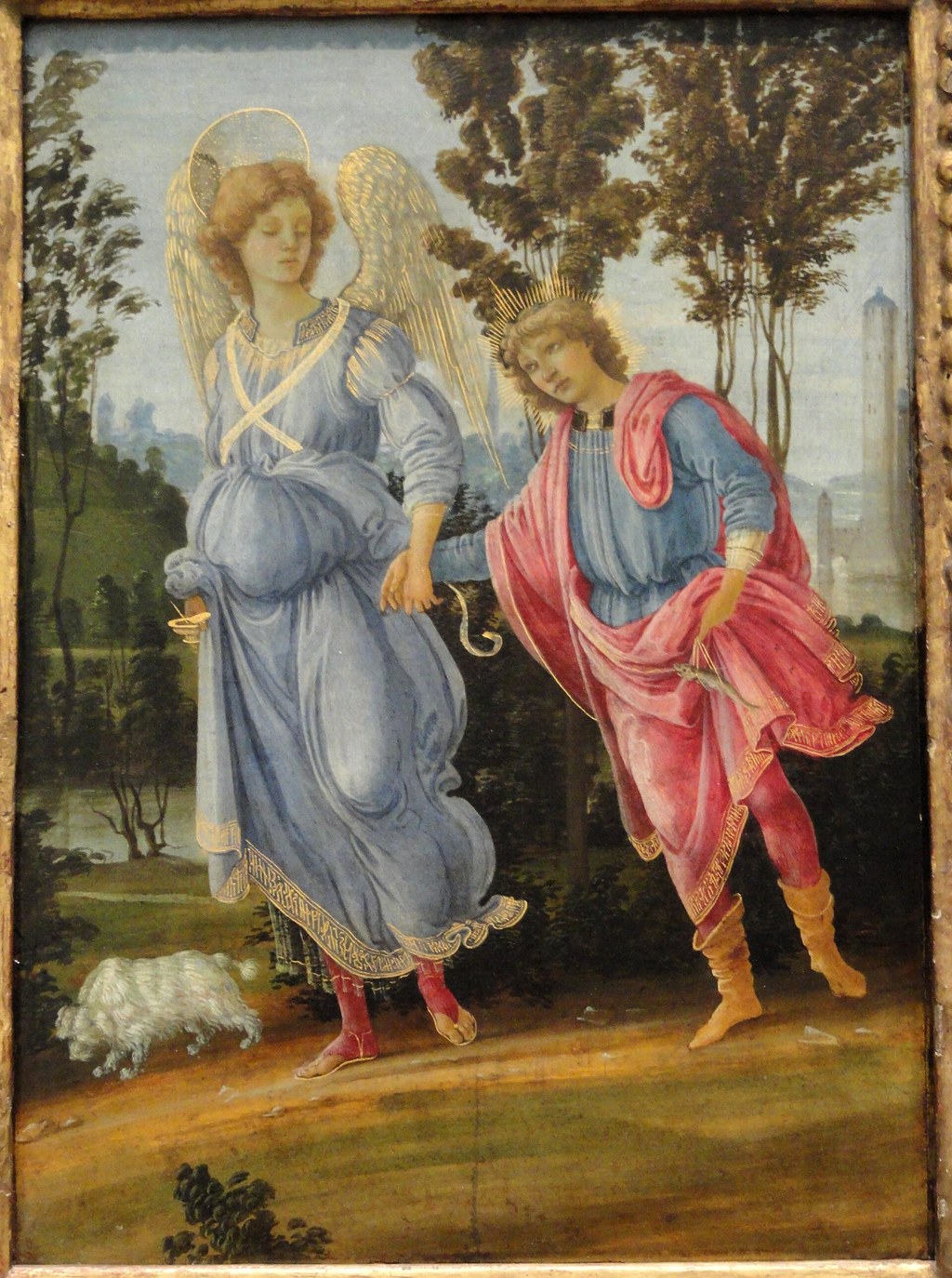
Filippino Lippi’s Tobias and the Angel, painted around 1475–80 and now in the National Gallery of Art in Washington, is one of the most appealing surviving pictures from his early career. The small panel shows the Archangel Raphael leading the young Tobias through a landscape while Tobias carries the fish whose organs will later be used to heal his father.[1]
The NGA dates the painting to about 1475–80 and identifies the medium as oil and tempera on poplar panel. The painted surface measures only 32.7 by 23.5 centimetres.[1] Its modest scale suits the intimate character of the subject. Raphael and Tobias nearly fill the composition, linked physically as they walk. A small white dog accompanies them. Water winds into the distance towards white buildings, trees and a church tower.
The story comes from the Book of Tobit, a narrative about family duty, divine guidance, travel and healing. Those themes made Tobias especially attractive in Renaissance Florence, where young men frequently travelled for commerce and family business. The painting also belongs to the period when Filippino was still deeply shaped by Botticelli’s workshop. Its graceful figures, fluttering robes and elegant movement reflect that formation. Yet the work already reveals interests that would become central to Filippino’s independent style: narrative movement, landscape, psychologically linked figures and small details that enrich the story.
At a Glance
- ArtistFilippino Lippi
- TitleTobias and the Angel
- Datec. 1475–80
- MediumOil and tempera on poplar panel
- Painted surface32.7 × 23.5 cm
- Current locationNational Gallery of Art, Washington
- Accession number1939.1.229
- Credit lineSamuel H. Kress Collection
- Principal figuresTobias and Archangel Raphael
- Distinctive detailsfish, small white dog, scroll, gold vessel, winding water landscape
- Career significanceearly Botticellian phase
- Earlier attribution historyformerly attributed to Antonio Pollaiuolo and others before acceptance as Filippino
Contents
- The Story of Tobias
- The Fish
- The Landscape
- Marriage
- Attribution and Workshop Culture
- Open Access
- Tobias and the Florentine Merchant Family
- Clothing and Elegance
- Tobias as a Model for Sons
- Early Landscape and Later Landscape
- Frequently Asked Questions
- References
The Story of Tobias
The Book of Tobit tells the story of a Jewish family living in exile. Tobit becomes blind. His son Tobias is sent on a journey to recover money owed to the family.
A mysterious travelling companion accompanies him. The companion is actually the Archangel Raphael. During the journey, Tobias catches a fish.
Raphael instructs him to preserve parts of the fish because they will later be used for healing. Tobias eventually marries Sarah and returns home. The fish’s gall restores Tobit’s sight. The story therefore moves from danger and uncertainty towards healing and family restoration.
Raphael as Guide. Raphael’s role is central. He does not simply appear at the end to perform a miracle. He accompanies Tobias through the entire journey.
The angel therefore represents divine protection within ordinary movement. This made the subject especially resonant in a mercantile society. Travel was necessary but risky. A young person leaving home could encounter disease, robbery, accident and political instability. Raphael offered a sacred model of safe guidance.
Tobias. Tobias is represented as youthful and elegant. He leans towards Raphael as they walk. The bodily relationship suggests trust.
He is not leading himself confidently through the landscape. He depends upon guidance. This gives the story emotional accessibility. The viewer can understand divine providence through the simple image of one traveller being led by another.
The Joined Arms. The NGA describes Tobias reaching forward so that his wrist hooks with Raphael’s.[1] This detail makes the relationship physical. The angel’s guidance is not abstract.
He literally leads. Touch creates trust. Filippino repeatedly used linked bodies to make relationships visible. The same instinct would later appear in the Cleveland Holy Family, where sacred meaning is structured through chains of touch.
The Fish
Tobias carries the fish hanging from a thread. The object is the narrative key. Without it, the picture could appear to show a generic angelic journey.
The fish points towards future healing. Its organs will help defeat a demon and cure Tobit’s blindness. The ordinary animal therefore becomes an instrument of providence. This mixture of everyday material and sacred purpose suited Renaissance devotional imagination well.
The Dog. A small shaggy white dog walks near Raphael. The Book of Tobit mentions a dog accompanying Tobias. Filippino’s inclusion gives the biblical text unusual specificity.
The animal also makes the journey feel domestic rather than heroic. Tobias has not entered a mythological quest alone. He travels with a familiar creature. The dog adds affection and normality.
The Scroll. A scroll curls from Tobias’s wrist. Its exact significance is less immediately clear than the fish or dog. It may relate to the journey, instructions or the broader tradition of identifying sacred figures through written attributes. Even when the text cannot be read, the scroll introduces learning and message into the travelling group. Filippino often used books and inscriptions to give thought physical form.
Raphael’s Vessel. Raphael holds a small gold object or vessel. Its precise function is not as immediately legible as the fish. The golden detail nevertheless contributes to the angel’s sacred identity and to the painting’s material richness. Small attributes in a panel of this size reward close viewing. The work was designed to be approached rather than seen from across a church nave.
The Landscape
The landscape is an important early feature. Trees, water, white buildings and distant tower create a believable route. The figures are walking through a world rather than across a decorative ground.
This makes journey central to the composition. The receding water also draws the viewer’s eye into depth. Filippino’s later landscapes would become far more complex, but the basic interest is already present.
Travel in Renaissance Florence. The Tobias story had special relevance in a city organised around trade and banking. Florentine families sent young men abroad for apprenticeships, commercial work and political business. The image of a youth protected by an angel could therefore resonate directly with household anxiety. A Tobias panel might function as more than illustration. It could become prayer for safe travel.
Family Duty. Tobias travels because of obligation to his father. The story therefore celebrates filial duty. He leaves home in order to recover family resources and returns with the means to restore Tobit’s sight. The journey strengthens rather than abandons household bonds. For Renaissance families concerned with inheritance and commercial continuity, this theme was especially powerful.
Healing. Healing gives the narrative its final emotional purpose. Tobit’s blindness is not permanent. The fish caught during travel becomes the means of cure.
Raphael’s guidance is therefore revealed retrospectively as providential. Events that appear accidental acquire meaning. This structure made the story a strong devotional example of trust.
Marriage
Tobias also marries Sarah during the journey. Her previous husbands had died because of a demon. Raphael teaches Tobias how to use the fish to defeat the threat. Marriage therefore joins healing as another family theme. The story offered a rich collection of concerns relevant to Renaissance households: travel, marriage, inheritance, danger and parental care.
Early Filippino. The painting belongs to Filippino’s earliest known phase. His father died in 1469. Filippino then entered Botticelli’s workshop.
Around 1475–80, his style was still closely connected with that environment. This is visible in the graceful figures, curling hair and fluttering drapery. The painting should therefore be read as workshop formation becoming independent production.
Botticelli and Tobias. Botticelli and other Florentine painters treated Tobias imagery. The subject circulated widely within workshop culture. Filippino’s version belongs to that shared repertory.
What matters is how he animates the relationship between figures. Raphael and Tobias move together. The landscape stretches ahead. The dog follows. The whole picture is about progress.
Pollaiuolo Attribution. The NGA provenance records that the painting was sold in the nineteenth century as a work by Antonio Pollaiuolo.[1] This older attribution shows how uncertain early Renaissance authorship could become after original context was lost. Pollaiuolo’s interest in moving bodies may have made the attribution seem plausible to earlier collectors. Later scholarship reconnected the panel with Filippino.
Attribution and Workshop Culture
Misattribution is not simply a museum error. It demonstrates how painters shared visual languages. Small panels could circulate without documents.
Signatures were uncommon. Later connoisseurs therefore relied heavily on style. The Tobias panel’s attribution history belongs to the same broader problem seen in Filippino works once assigned to Botticelli.
Alexander Barker. The picture was in the collection of Alexander Barker by 1868. It later passed through the London art market and several British collections. This nineteenth-century history reflects the growing appetite for Italian Renaissance painting outside Italy. Objects that had lost their original devotional settings became collectible Old Masters.
Benson Collection. Robert and Evelyn Benson acquired the painting after its sale through London dealers. Their collection became one of the notable British holdings of Italian pictures. The painting’s move into such collections changed its function. Private devotion gave way to connoisseurial display. The subject remained sacred, but the object was increasingly valued through artist, school and period.
Duveen and Kress. The Benson collection was sold to Duveen Brothers in 1927. The Tobias panel later entered the Samuel H. Kress Collection and was given to the National Gallery of Art in 1939.[1] This path is typical of many European Old Masters now in American museums. Dealers and philanthropists translated private European collections into American public institutions.
Open Access
The NGA makes the image available in the public domain.[1] This is particularly valuable for a small painting. Digital enlargement allows viewers to examine the dog, fish, gold details and distant landscape more closely than might be possible in ordinary gallery viewing. The object’s scale remains important, but high-resolution access reveals Filippino’s precision.
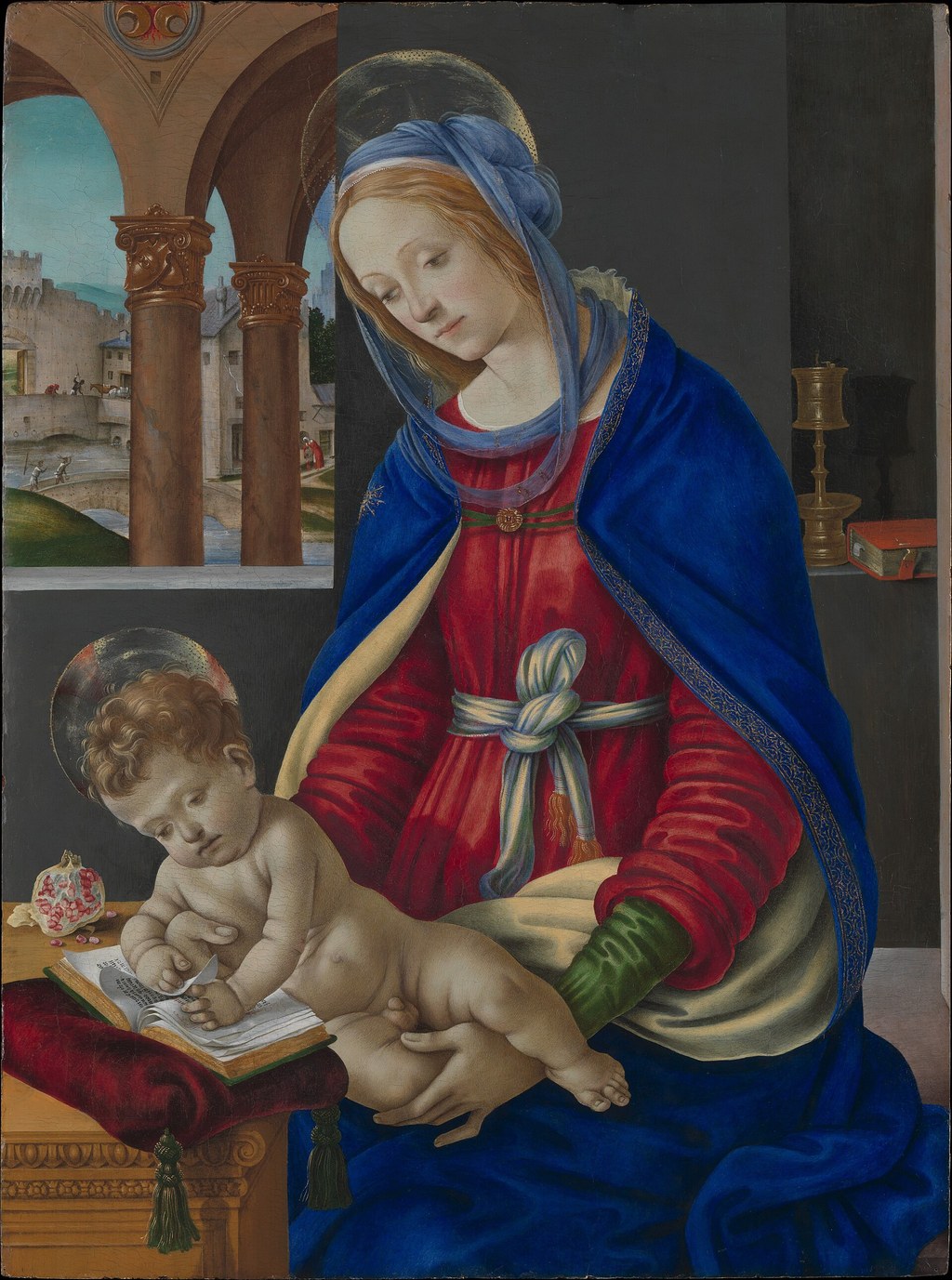
Comparison with the Virgin and Child with Saint John. The National Gallery’s early Madonna dates to roughly the same phase.[4] Both are intimate, small-scale works. Both retain strong Botticellian qualities.
Yet the Madonna is stationary and domestic. Tobias and the Angel is entirely about movement. Together they demonstrate the range Filippino already possessed within his earliest years.
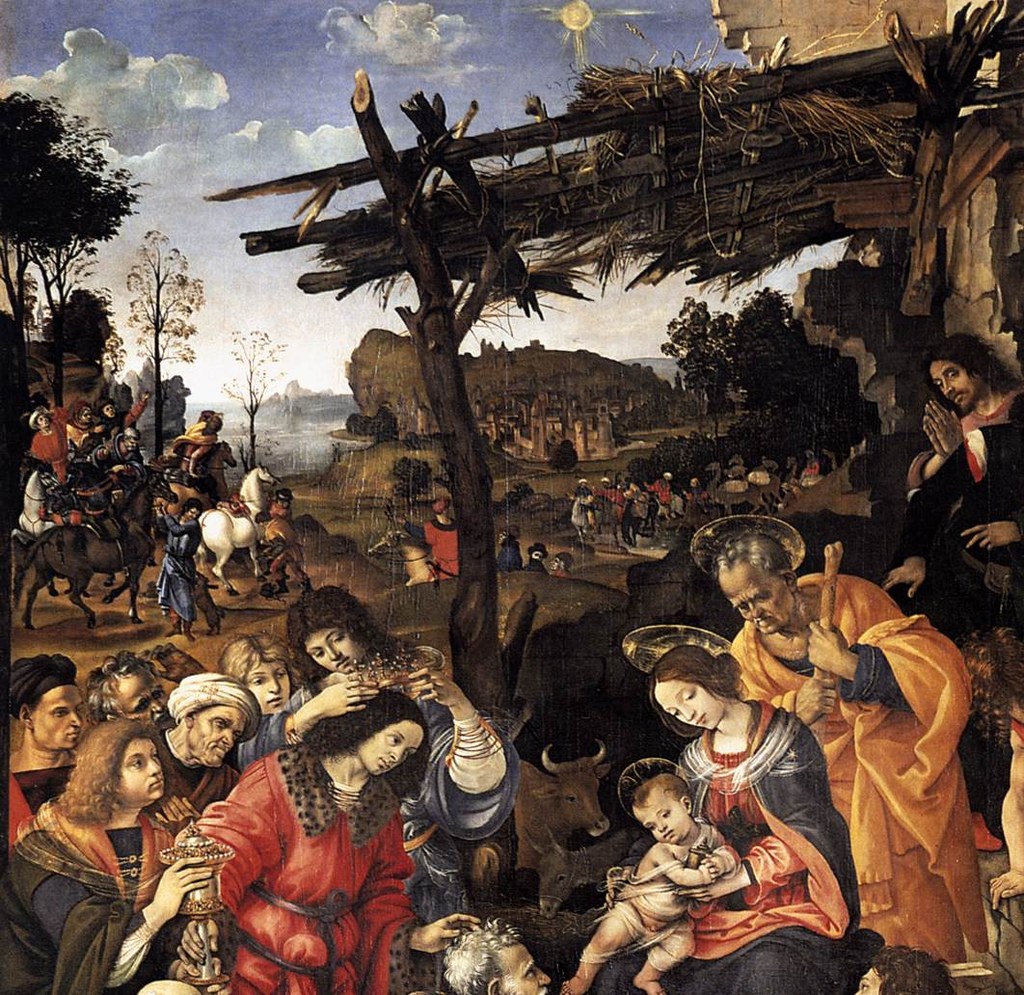
Comparison with the Adoration of the Kings. The early National Gallery Adoration of the Kings expands the same landscape interest dramatically.[4] Tobias travels through a relatively simple world. The Adoration populates rugged terrain with hermits and secondary sacred stories. The progression shows Filippino learning to make landscape carry more narrative information.
Comparison with Later Drawings. Filippino’s mature drawings would become famous for energetic line and moving figures. The Tobias panel already suggests that instinct. Drapery responds to motion.
Bodies lean forward. The linked pair advances through space. The later drawing master is not yet fully visible, but movement is already central to his imagination.
Tobias and the Florentine Merchant Family
The Tobias story had exceptional relevance in Florence because elite family life frequently depended upon absence. Young men might leave the city to work in branches of family firms, learn commercial practice or manage distant business. Parents therefore had practical reasons to worry about travel.
The biblical Tobias offered a reassuring model in which a son leaves home, encounters danger and returns safely because divine guidance accompanies him. The subject could therefore carry very personal meaning inside a merchant household.
The Angel as Invisible Providence Made Visible. Raphael is theologically interesting because Tobias does not initially know the full identity of his guide. The angel represents providence operating within ordinary experience. Filippino solves the problem visually by making the supernatural guide completely visible to us.
The viewer knows more than Tobias. This dramatic advantage encourages trust. Even when the traveller does not understand the whole journey, divine protection is present.
The Road. The path beneath the figures is more than landscape. It gives the story direction. Raphael and Tobias are represented mid-step rather than posing after arrival.
Their journey remains unfinished. This distinguishes the painting from devotional images in which saints exist outside time. Here sacred meaning depends upon process. The figures become models of faithful movement.
The Winding Water. The water receding into distance helps organise perspective. It also reinforces the theme of travel. The viewer’s eye follows the landscape just as Tobias follows Raphael. This parallel between visual path and narrative path is simple but effective. Filippino turns perspective into storytelling.
Clothing and Elegance
Both Tobias and Raphael wear bright, elegant garments. This makes the biblical travellers look closer to contemporary Florentine youth than archaeological figures from antiquity. Such translation was normal. It allowed sacred history to feel immediate. The youth who looked at Tobias could recognise fashionable bodily grace rather than an inaccessible ancient costume.
Gold Lettering and Sacred Identity. The hems of the garments contain gold lettering or decorative script-like forms. Even when the words are difficult to read, gold distinguishes the figures from ordinary travellers. The landscape is natural. The pair are visibly sacred. This combination prevents naturalism from erasing transcendence.
The Small Panel as Portable Devotion. At roughly thirty-three centimetres high, the picture could be approached closely. Its original location is not securely documented, but the scale is consistent with private viewing rather than monumental church display. That intimacy matters. The fish, scroll, dog and gold details are designed to be discovered nearby. The image could support repeated household contemplation.
The Dog and Everyday Affection. The dog is one of the most memorable details because it lowers the emotional temperature of the miracle. Angels and healing might feel remote. A small dog makes the journey ordinary. This ordinary detail is precisely what allows the extraordinary story to enter daily life. Filippino would repeatedly use minor observations to humanise sacred events.
Tobias as a Model for Sons
Renaissance household culture placed strong expectations on sons. They carried family names, business interests and future inheritance. Tobias behaves correctly.
He obeys his father. He accepts guidance. He marries.
He returns. He restores the household. The biblical narrative therefore maps surprisingly well onto Renaissance ideas of successful male maturation.
Raphael as a Model for Guardianship. Raphael’s name became closely associated with protection of travellers and children. The painting contributes to that devotional tradition. The angel does not dominate Tobias through force.
He guides through companionship. This makes the image particularly gentle. Authority is represented as care.
Healing Eyes and the Art of Seeing. Tobit’s blindness gives the story an especially suggestive relationship with painting. The journey ultimately restores sight. A visual artwork represents the process through which vision will return.
This does not require a deliberate art-theoretical allegory from Filippino. Yet for the viewer, the connection between seeing and healing would be difficult to miss. The object itself depends upon sight while telling a story about its recovery.
Comparing Filippino with Verrocchio’s Workshop. The story of Tobias was famously treated in Verrocchio’s Florentine workshop as well. Comparisons across workshops reveal how popular subjects circulated through the city. Different painters could use the same biblical episode to train assistants, satisfy patrons and experiment with moving figures. This shared culture is more historically useful than treating one version as the single definitive image.
Early Landscape and Later Landscape
The Washington landscape is relatively calm. By the time of the Vision of Saint Bernard, terrain becomes more spiritually charged and strange. By the late frescoes, architecture and environment nearly compete with figures. The Tobias panel therefore gives us a useful early baseline. Filippino’s interest in setting is present, but it remains subordinate to the walking pair.
Early Movement and Later Movement. The forward step, fluttering cloth and linked wrists point towards a lifelong fascination with bodily motion. Later drawings would push figures into far more complex turns and gestures. The early panel demonstrates that movement was not a Roman discovery. It belonged to Filippino’s imagination from the beginning.
From Pollaiuolo to Filippino. The old Pollaiuolo attribution is especially interesting because Antonio Pollaiuolo was celebrated for anatomical movement. A nineteenth-century viewer seeing energetic walking figures might plausibly connect the panel with that circle. Modern attribution to Filippino gives the same feature a different history. What looked Pollaiuolesque becomes evidence for Filippino’s own early interest in motion.
Why Tobias and the Angel Matters. The painting matters because it captures Filippino at the beginning of his career through a subject perfectly suited to youth. Tobias is himself a young traveller learning under guidance. Filippino was a young painter emerging from Botticelli’s workshop.
That parallel should not be pushed into biography as though the picture were autobiographical, but it gives the work an especially appropriate place in his chronology. More securely, the panel demonstrates the visual foundations of later Filippino. Elegant line comes from Botticelli.
Narrative movement is already strong. Landscape opens into distance. Small objects carry meaning. Human relationships are expressed through touch. The painting may be modest in scale, but it contains many of the habits that would later expand into monumental frescoes.
Frequently Asked Questions
Discussion
What stands out to you most about Tobias and the Angel in relation to Filippino Lippi's wider career?
Reader Insights
Notice how the page connects close visual detail with patronage, workshop practice and the wider Renaissance setting.
Which comparison elsewhere in the cluster helps clarify this work or theme most strongly?
Join the Conversation
Have a thought or observation about Tobias and the Angel? Share it below. Thoughtful responses may be added to this section.
References
- National Gallery of Art, Washington, Filippino Lippi, Tobias and the Angel, 1939.1.229. View Source
- National Gallery of Art, provenance and bibliography for Tobias and the Angel.
- Metropolitan Museum of Art, The Drawings of Filippino Lippi and His Circle, 1997. View Source
- National Gallery, London, Filippino Lippi early works and Botticelli workshop context. View Source