 by Tom Gurney
Tom Gurney BSc (Hons) is an art history expert with over 20 years experience
Published on June 29, 2026 / Updated on June 29, 2026
Email: tomgurney1@gmail.com / Phone: +44 7429 011000
Frans Hals: The Painter Who Made Portraits Feel Alive
Frans Hals was one of the greatest portrait painters of the Dutch Golden Age, celebrated for his ability to make painted faces appear animated, alert and psychologically present. Born in Antwerp around 1582 or 1583 and active for most of his life in Haarlem, Hals transformed portraiture by replacing rigid formality with movement, expression and human immediacy.1 His sitters seem to smile, turn, speak, listen or laugh before our eyes, creating the impression that we are encountering living people rather than fixed historical images.
Although he is often grouped with Rembrandt and Vermeer as one of the supreme masters of seventeenth-century Dutch painting, Hals' achievement was distinctive. Rembrandt became famous for spiritual depth and dramatic light; Vermeer for stillness, interiors and luminous quiet. Hals' genius lay in the opposite direction: energy, gesture, social presence and the illusion of a fleeting moment captured with extraordinary confidence.2
His portraits range from wealthy merchants and married couples to civic guard officers, children, musicians, drinkers, theatrical characters, regents and charitable governors. Together they form one of the richest visual records of urban society in the Dutch Republic. Hals painted Haarlem not as an abstract city but as a community of individuals: prosperous, ageing, laughing, self-conscious, proud, vulnerable and alive.
This biography explores Frans Hals' life, his move from Antwerp to Haarlem, his artistic training, his rise as a portrait painter, his great civic guard commissions, his family life, financial struggles, late masterpieces, rediscovery by nineteenth-century artists and lasting influence on modern painting.
- Full Name Frans Hals
- Born c.1582/1583, Antwerp
- Died 1666, Haarlem
- Nationality Dutch
- Movement Dutch Golden Age
- Known For Portraits, civic guard paintings and expressive brushwork
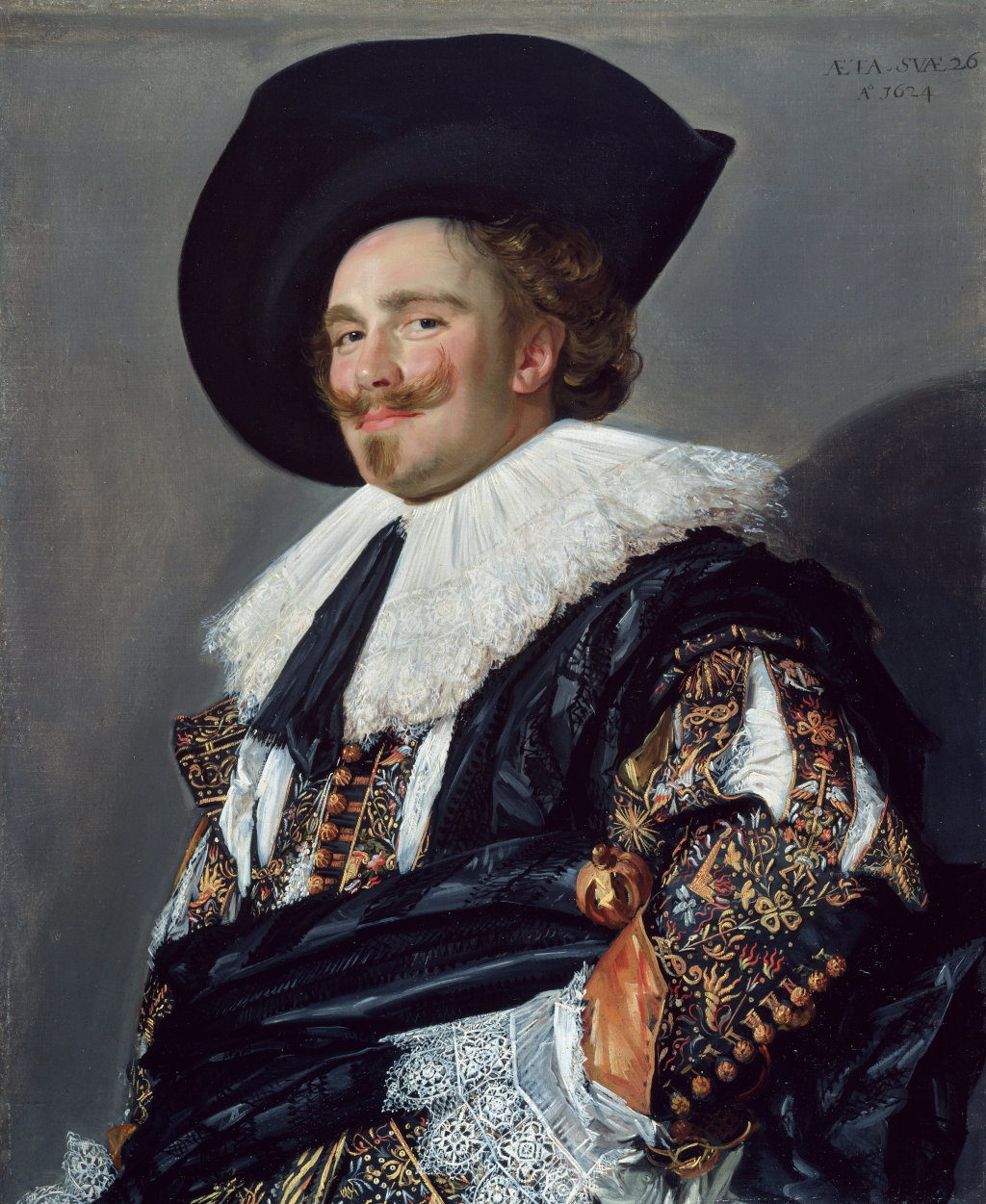
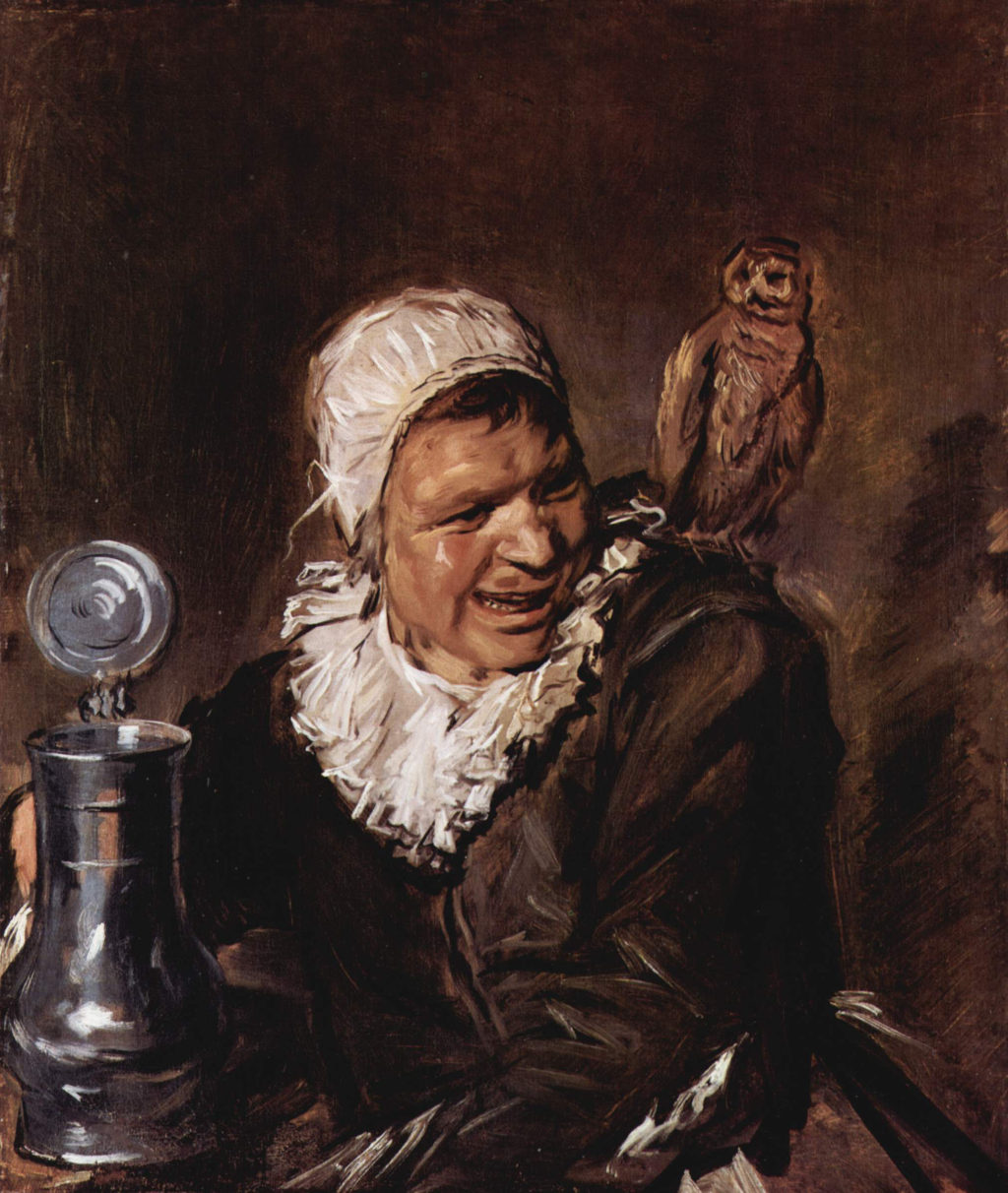
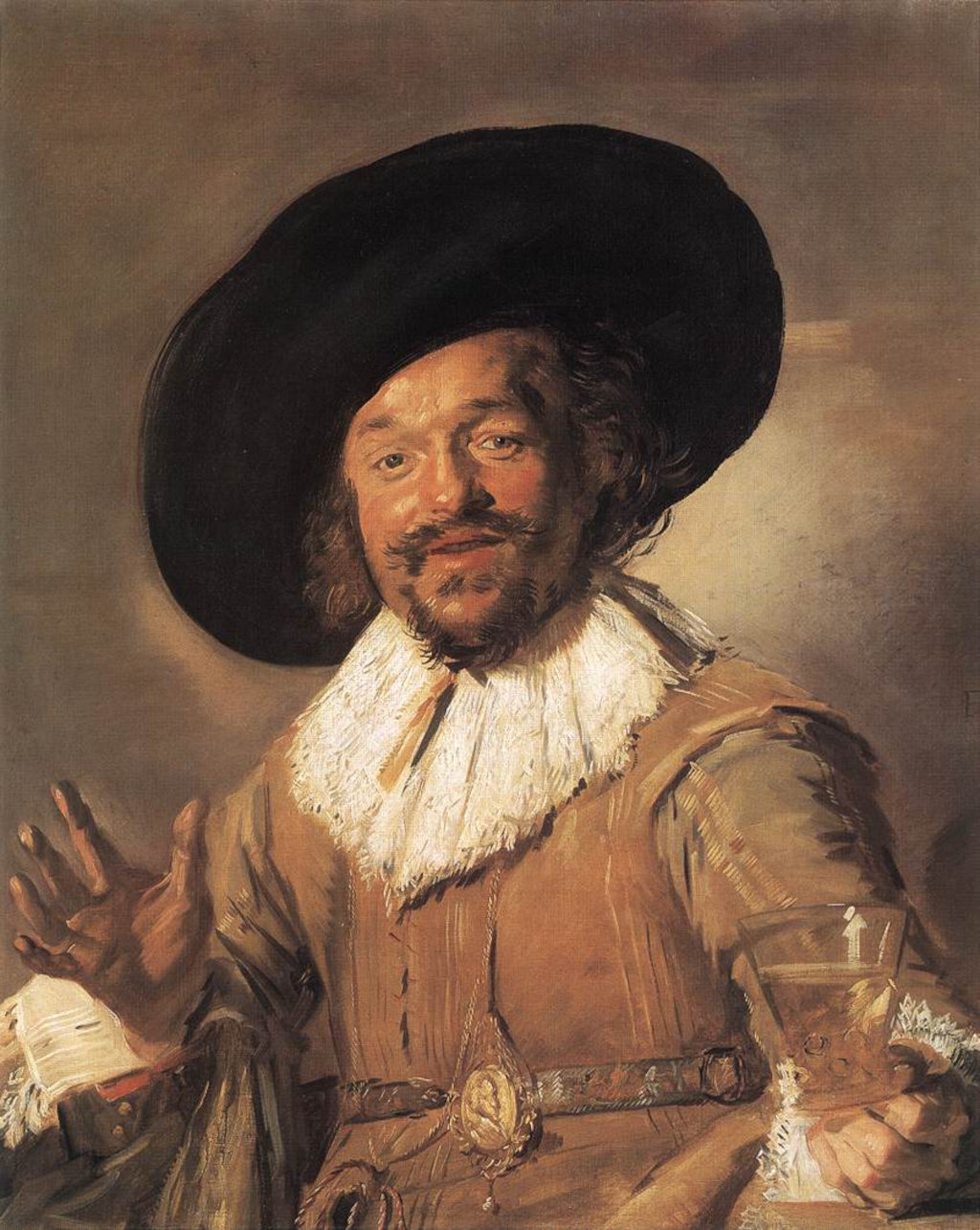
- Famous Works The Laughing Cavalier, Malle Babbe, The Merry Drinker
- Main City Haarlem
- Why He Matters Hals transformed portraiture by making sitters appear animated, spontaneous and alive.
Early Life: From Antwerp to Haarlem
Frans Hals was probably born in Antwerp in 1582 or 1583, then part of the Spanish Netherlands. His father, Franchois Hals, was a cloth worker originally from Mechelen, and his mother was Adriana van Geertenryck.3 The family background is important because it places Hals within the wider movement of Flemish immigrants who transformed cities in the northern Netherlands during the late sixteenth century.
The decisive event in the family's early history was the Fall of Antwerp in 1585. After the city was taken by Spanish forces, many Protestant or commercially ambitious families moved north to towns within the emerging Dutch Republic. The Hals family settled in Haarlem, where Frans spent almost his entire life.4 Haarlem was a natural destination: it possessed a strong textile industry, an active immigrant community and a growing market for art.
This migration shaped Hals' career in subtle but important ways. He was born in the southern Netherlands, but became one of the defining painters of the Dutch Republic. Like many of his patrons, he belonged to a world formed by displacement, commerce and urban reinvention. Haarlem itself was enriched by immigrants from the south, whose skills in textiles, trade and the arts helped create the prosperous civic culture that Hals would later portray.
Hals' younger brother Dirck Hals, born in Haarlem in 1591, also became a painter, specialising in elegant merry companies and genre scenes.5 The artistic activity of the Hals family suggests a household closely connected with the visual culture of Haarlem, although the details of Frans' earliest artistic education remain uncertain.
Training and the Haarlem Guild of Saint Luke
Hals is traditionally said to have trained with Karel van Mander, the Flemish-born painter, poet and art theorist whose Schilder-boeck became one of the most important early sources on Netherlandish art.6 The connection is plausible because both men lived in Haarlem and shared Flemish immigrant backgrounds, but the documentary evidence is not straightforward. Van Mander himself does not mention Hals in the Schilder-boeck, and modern scholars remain cautious about treating the apprenticeship as certain.
What is certain is that Hals entered the Haarlem Guild of Saint Luke in 1610, the professional association that regulated painters and other artists in the city.7 This is the first secure record of his independent artistic career. Guild membership allowed him to work as a master painter, take commissions and participate fully in Haarlem's artistic economy.
The early 1610s were crucial years. Hals was no longer merely a young painter from an immigrant family; he had become a professional artist in a city where portraiture was increasingly in demand. Religious painting had declined in importance after the Reformation, while private citizens, civic institutions and militia companies offered new opportunities for ambitious painters.8
Hals' earliest surviving works already show confidence in portraiture. His breakthrough came with large civic guard paintings, most famously The Banquet of the Officers of the St George Militia Company of 1616. This work announced him as a painter capable of transforming a formal group portrait into a lively social event.
Haarlem and the World Hals Painted
Haarlem was central to Hals' life and art. Unlike artists who moved between courts or major European capitals, Hals remained closely tied to one city. The National Gallery describes him as born in Antwerp but active for most of his life in Haarlem, where he became best known for portraits of the city's citizens.9
The Haarlem that Hals painted was prosperous, self-confident and socially complex. Its wealth came from textiles, brewing, trade and civic administration. Its patrons were not kings or popes but merchants, brewers, militia officers, regents, families and local dignitaries. Hals' art therefore reflects the values of an urban republic rather than a royal court.
This difference mattered. In much of Europe, portraiture remained closely tied to aristocratic lineage, courtly status and inherited rank. In Haarlem, portraits often celebrated commercial success, civic office, marriage, charity and public responsibility. Hals responded by developing a portrait style that could convey status while still preserving individuality.
He did not simply paint the rich as symbols of wealth. He made them appear alert, sociable and psychologically specific. This is why his portraits still feel so immediate. A sitter by Hals rarely seems like an emblem. He or she feels like a person.
Early Career and the Reinvention of Portraiture
Hals' early career coincided with the rise of a strong market for portraits in the Dutch Republic. Prosperous citizens wanted images that preserved family identity, marked marriage, celebrated office and displayed social success. Hals quickly distinguished himself from more static portraitists by introducing relaxed poses, direct eye contact and animated expressions.
This innovation is visible in his individual portraits, but it is even more striking in his group portraits. Civic guard paintings were difficult commissions because every sitter expected to be recognisable and suitably honoured. Many artists solved the problem by arranging figures in stiff rows. Hals instead created the illusion of conversation, movement and shared experience.
In works such as The Banquet of the Officers of the St George Militia Company and later militia portraits, he made groups feel alive. Officers turn, toast, gesture and respond to one another. The paintings remain records of civic office, but they also become portraits of community.
This ability to combine individual likeness with collective animation became one of Hals' defining achievements. It helped establish him as Haarlem's leading painter of public life and prepared the way for later masterpieces of group portraiture, including Rembrandt's The Night Watch.
Marriage, Family and Personal Life
Hals married his first wife, Anneke Harmensdr Abeels, around 1610. She died in 1615, leaving him with young children.10 In 1617 he married Lysbeth Reyniers, with whom he had a large family. The Frans Hals Museum states that Hals married twice and had fourteen children.11
His domestic life was therefore crowded, expensive and probably difficult. Several of his sons became painters, including Harmen Hals, Frans Hals the Younger, Jan Hals, Reynier Hals and Nicolaes Hals.12 None achieved his father's reputation, but their careers show that painting became a family profession.
Hals' large household helps explain some of the financial pressures that followed him throughout life. Even successful painters in the Dutch Republic could experience instability. They depended on commissions, changing taste, patronage networks and the ability to manage debts. Hals' reputation was considerable, but fame did not guarantee security.
The Civic Guard Paintings
Some of Hals' greatest achievements are his civic guard portraits. These paintings depicted officers of Haarlem's militia companies, volunteer organisations that combined local defence, ceremony, social prestige and civic identity. The officers were not professional soldiers in the modern sense; they were prominent citizens whose militia roles reflected public responsibility and status.
Hals returned to this genre throughout his career. His militia paintings allowed him to explore one of his greatest artistic problems: how to paint many individuals together without reducing them to a list of faces. In the 1616 and 1627 St George militia paintings and the St Adrian militia works, he developed a dynamic language of raised glasses, turning heads, banners, coloured sashes and overlapping conversation.
These paintings are essential to understanding Hals because they show his genius on a monumental scale. The same qualities that animate a single portrait—glance, gesture, expression, posture—are expanded across entire groups. The result is not simply a portrait of officers, but a portrait of civic society itself.
Merchants, Couples and Families
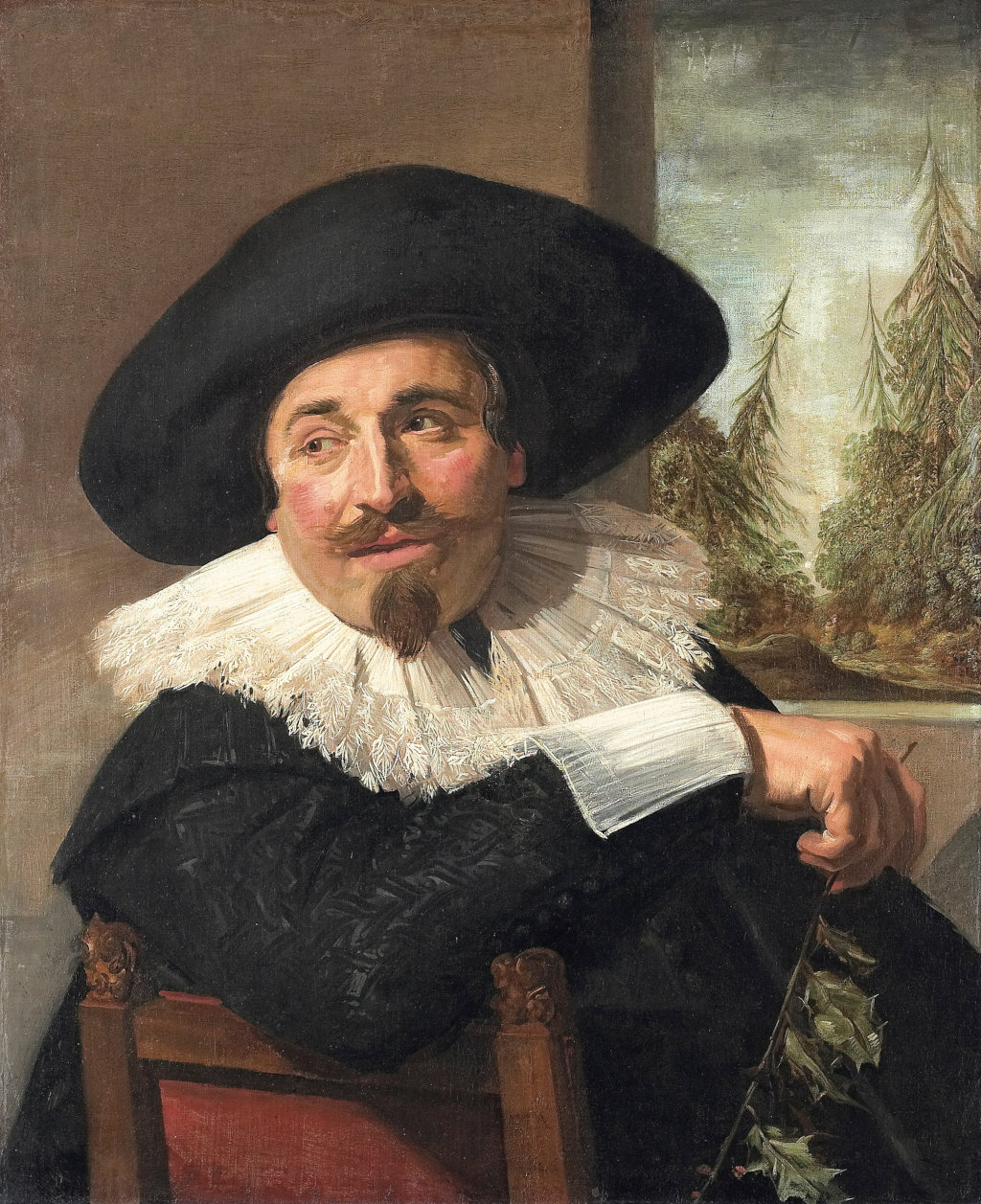
Hals also excelled at individual, marriage and family portraits. Sitters such as Willem Heythuijsen, Isaak Abrahamsz. Massa, Beatrix van der Laen, Pieter van den Broecke and many others reveal the range of Haarlem's mercantile and civic elite.
In these works, Hals avoided excessive theatrical display. He preferred natural posture, direct engagement and a sense of psychological ease. Even when sitters wear expensive clothing, the viewer's attention usually returns to the face. Status matters, but personality matters more.
His marriage portraits are particularly important because they often replace rigid formality with companionship. In Isaak Massa and Beatrix van der Laen, for example, the couple appear relaxed and unusually intimate by the standards of seventeenth-century portraiture. Hals' gift was to make social relationships visible.
Tronies, Laughter and Character Studies
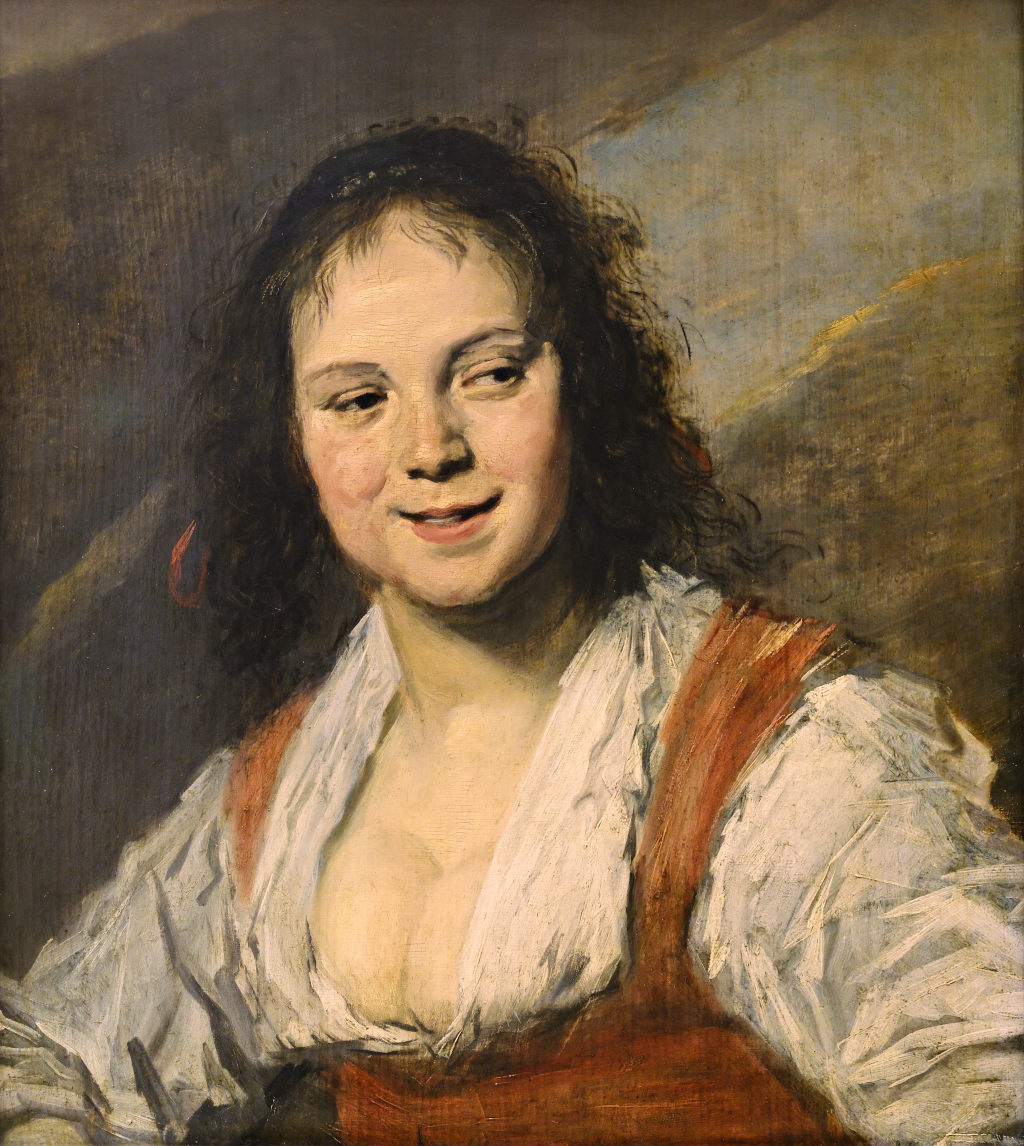
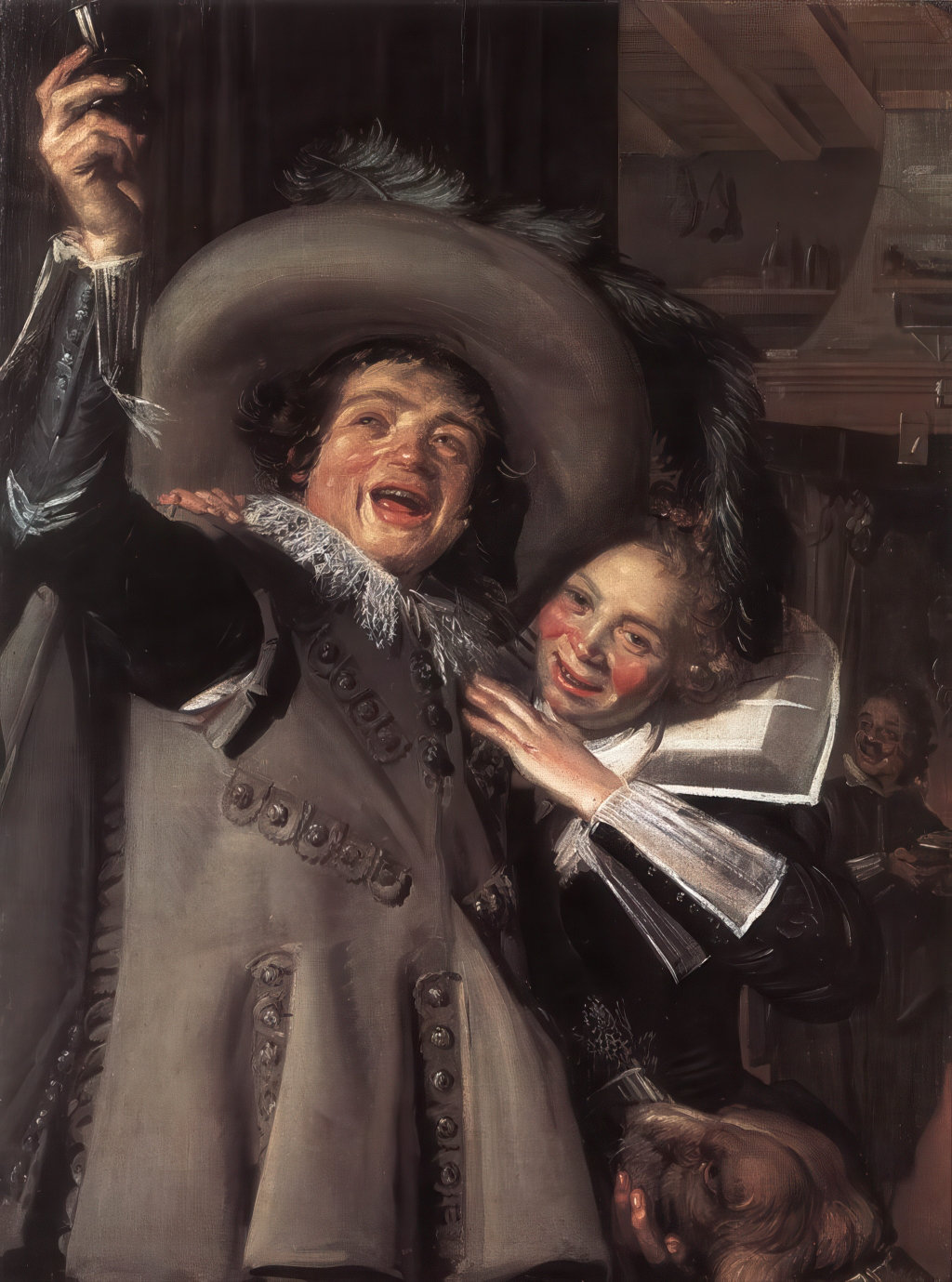
Alongside formal portraits, Hals painted expressive character studies often described as tronies. These works were not always intended as commissioned likenesses. Instead, they explored expression, costume, mood, performance and social type.
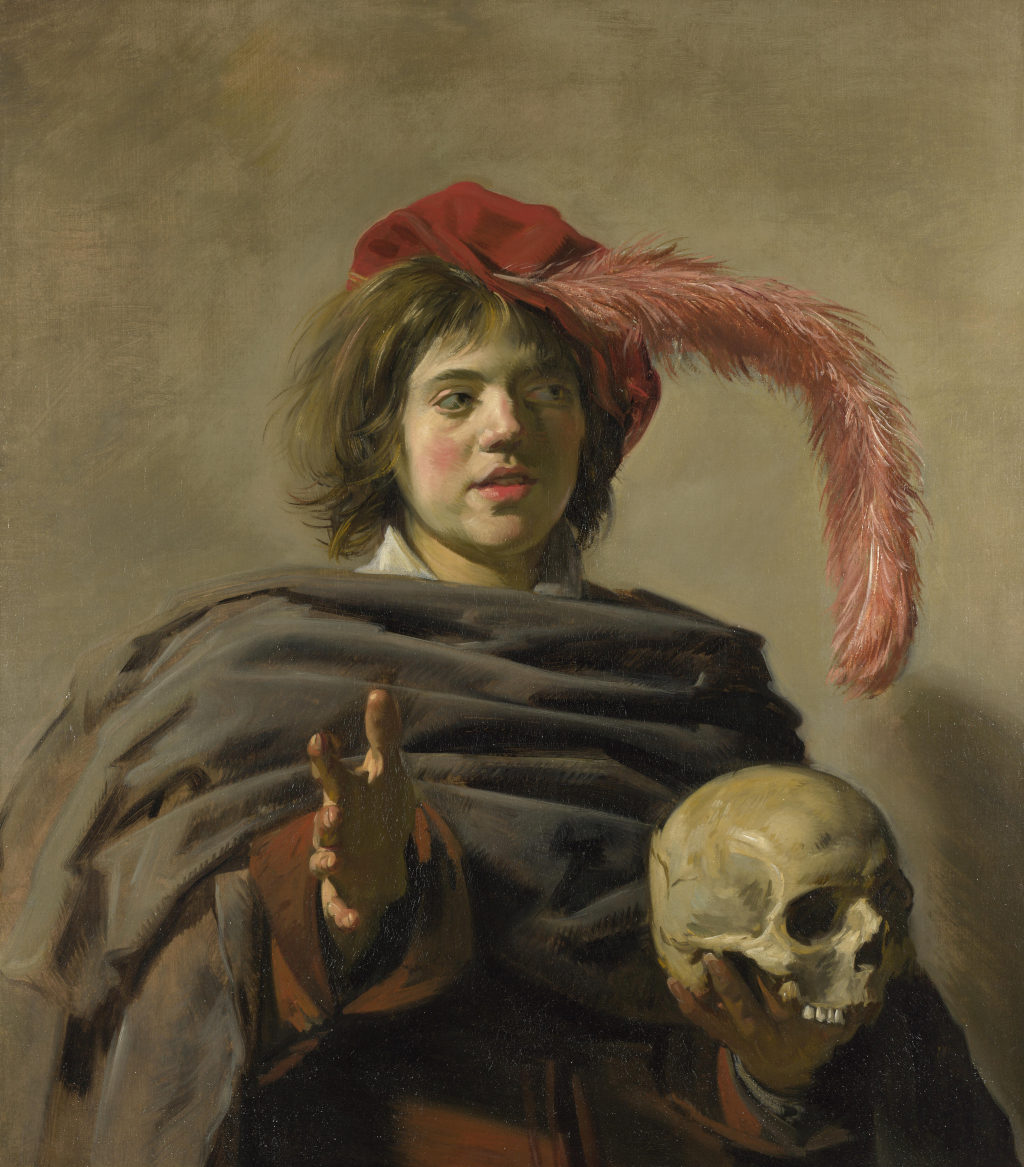
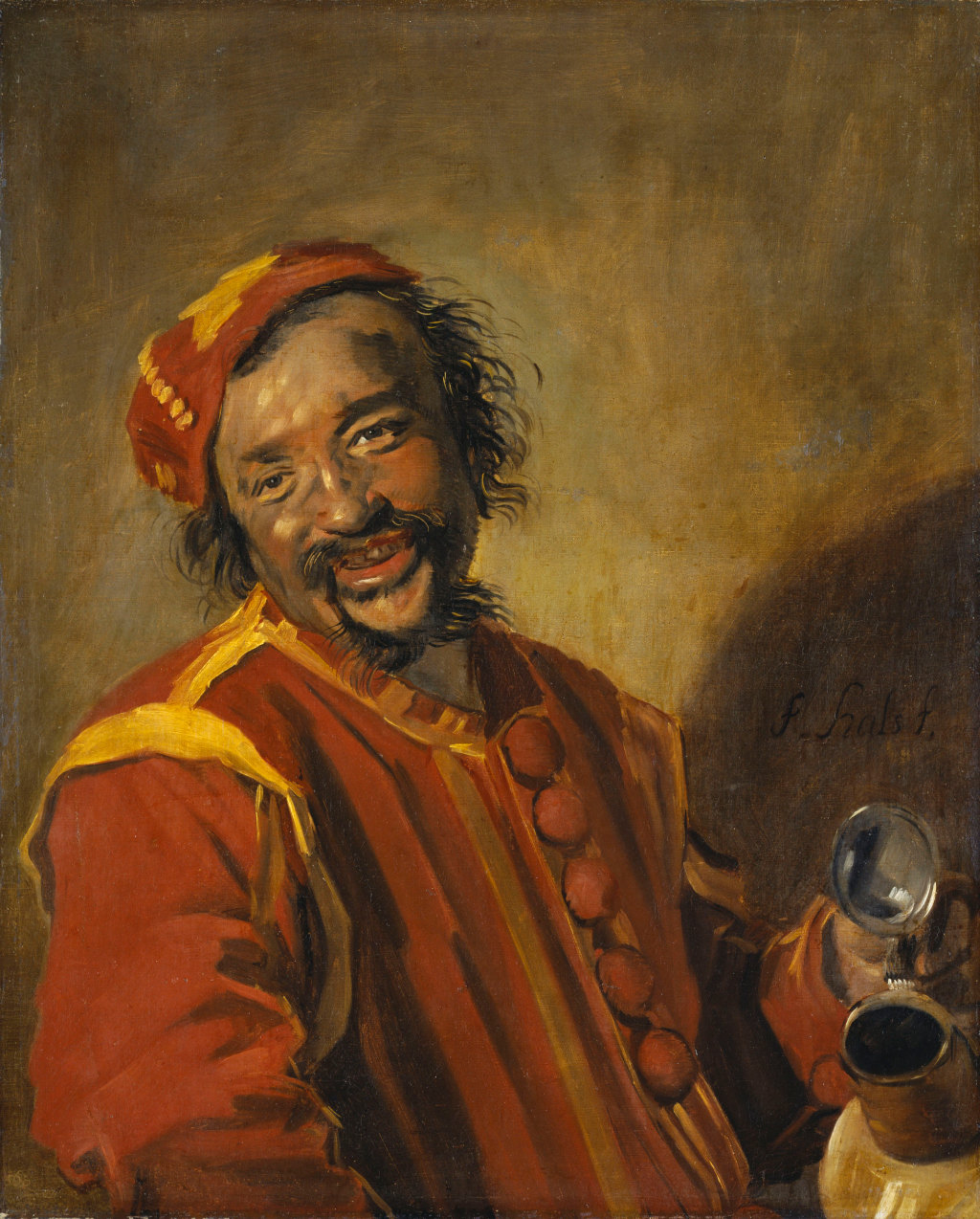
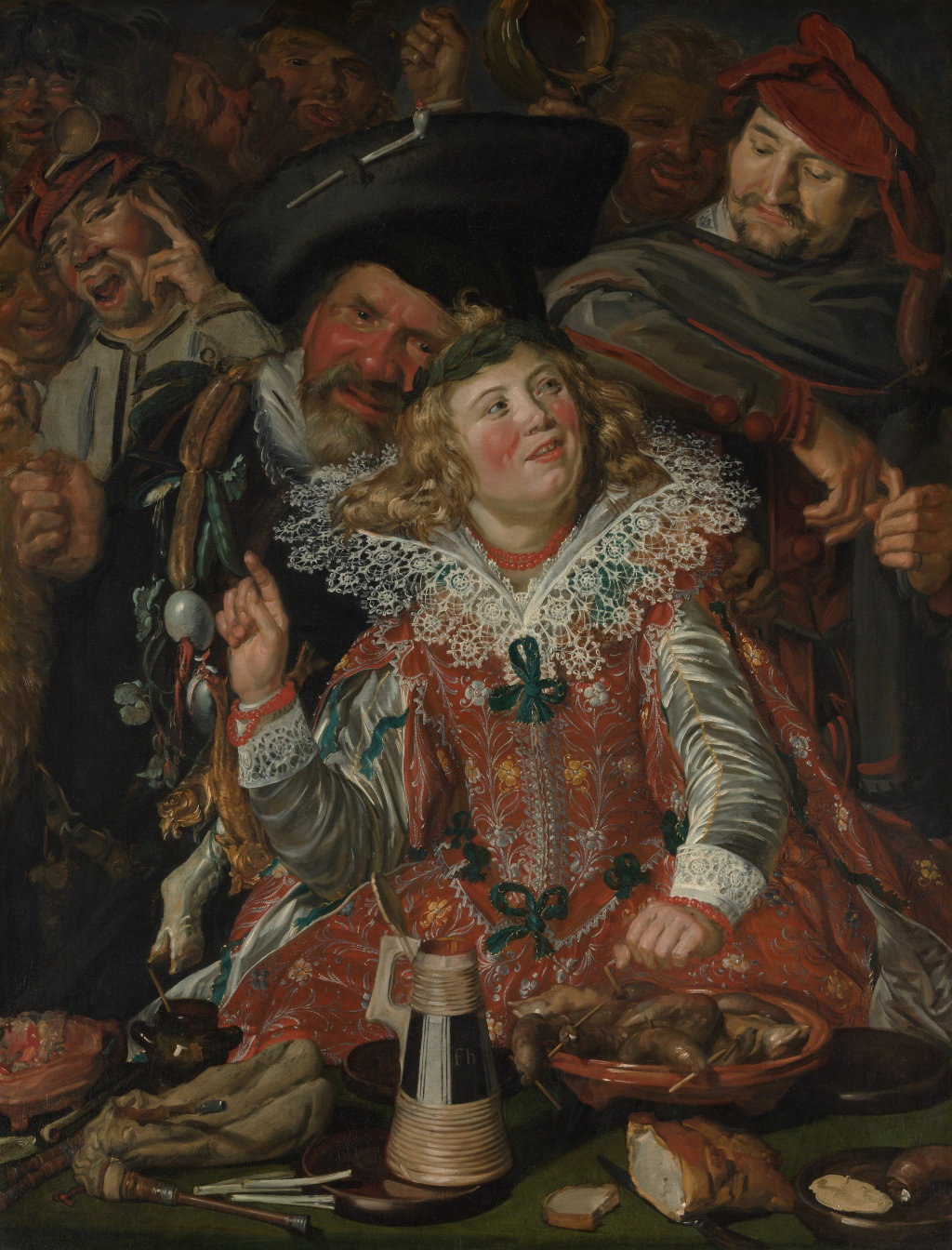
Paintings such as The Merry Drinker, Malle Babbe, Peeckelhaering, The Smoker and Young Man Holding a Skull show Hals' fascination with people outside the conventions of formal portraiture. Drinkers, musicians, theatrical figures, laughing women and young men with symbolic objects allowed him to investigate fleeting states of expression.
This is one reason Hals feels unusually modern. He was interested in the unstable moment: the smile before speech, the laugh before it disappears, the gesture that cannot be held. Seventeenth-century portraiture often sought permanence. Hals repeatedly painted impermanence.
The Metropolitan Museum of Art describes Hals' portraits and genre scenes as famous for their immediacy and dazzling brushwork.13 That immediacy is nowhere clearer than in these character studies, where conventional dignity gives way to human vitality.
Brushwork and Technique
Frans Hals is now especially admired for his visible brushwork. From a distance, his lace collars, black costumes, flesh tones, hair and fabric seem convincing and carefully observed. Close up, they often dissolve into bold, economical strokes. The illusion depends on the viewer's eye completing what the artist has suggested.
This painterly freedom was not carelessness. It was control. Hals understood how little detail was needed to create the effect of life. He did not paint every thread of lace or every hair of a beard. He painted the visual impression of lace, hair, skin and movement.
The RKD study on Hals preserves a striking contemporary response from Theodorus Schrevelius, who praised Hals' portraits as rough and bold, yet so effective from a distance that they seemed to lack nothing but life itself.14 That comment captures the paradox of Hals' technique: roughness close up, life at a distance.
Later artists recognised this quality as revolutionary. The National Gallery notes that Hals' dazzling brushwork became an important precedent for Édouard Manet.15 Nineteenth-century painters saw in Hals a freedom that anticipated modern art, even though he had worked more than two centuries earlier.
Financial Difficulties and Late Career
Despite his reputation, Hals experienced financial difficulties, especially in old age. The romantic image of Hals as a neglected genius should be treated carefully, but the evidence does show genuine hardship. The Rijksmuseum states that from 1664 he received an annual pension of 200 guilders from the city of Haarlem.16
This late poverty has often shaped interpretations of his final works, especially The Regents of the Old Men's Almshouse and The Regentesses of the Old Men's Almshouse, both painted in 1664. It is tempting to imagine Hals painting the governors of charity while himself dependent on charity. The truth is more nuanced. He did receive municipal support, but the paintings should not be reduced to a sentimental story of poverty.
What matters artistically is that Hals' late works show no decline in psychological power. If anything, they become more concentrated. Colour is restrained, gestures are quieter and brushwork is reduced to essentials. The late regent portraits are among the most profound studies of age, responsibility and civic duty in European art.
Hals died in Haarlem in 1666 and was buried in the city's Grote Kerk, or St Bavo's Church.17
Reputation and Rediscovery
Hals was admired in his own time, but his reputation fluctuated after his death. The highly finished styles favoured in later seventeenth- and eighteenth-century art made his loose brushwork seem unfinished to some viewers. For a period, he was less celebrated than he is today.
His rediscovery came in the nineteenth century, when artists and critics began to value visible brushwork, immediacy and painterly freedom. Courbet, Manet, Sargent, Whistler and Van Gogh all admired Hals in different ways. For painters seeking to escape academic polish, Hals appeared astonishingly fresh.
This revival was not merely antiquarian. Hals became a painter's painter. His works seemed to demonstrate that truth in art did not require smooth finish. A few strokes, placed with confidence, could create presence, texture and character more powerfully than laborious detail.
Recent exhibitions have further strengthened his reputation. Major retrospectives in London, Amsterdam and Berlin have presented Hals as one of the defining artists of the seventeenth century, alongside Rembrandt and Vermeer.18
Legacy: Why Frans Hals Still Matters
Frans Hals matters because he changed what portraiture could do. He did not invent the portrait, the group portrait or the character study, but he transformed each through movement, expression and painterly immediacy.
Before Hals, many portraits aimed above all at permanence. Hals introduced the sensation of time. His sitters seem to exist in moments: a laugh, a turn, a pause, a toast, a glance. This gives his work a vitality that remains accessible to modern viewers.
His influence extends beyond Dutch painting. Nineteenth-century artists found in Hals a precedent for modern brushwork. Modern audiences find in him a painter of personality rather than status alone. His art reminds us that the face is never still, that identity is partly performance and that a portrait can preserve the feeling of encounter.
Above all, Hals made people feel present. That remains his greatest achievement.
FAQs
References
- National Gallery, London, “Frans Hals,” artist biography.
- Metropolitan Museum of Art, Walter Liedtke, “Frans Hals (1582/83–1666),” Heilbrunn Timeline of Art History.
- National Gallery of Art, Washington, “Frans Hals,” artist biography.
- The Leiden Collection, “Frans Hals,” artist biography.
- National Gallery of Art, Washington, “Frans Hals,” artist biography.
- The Leiden Collection, “Frans Hals,” artist biography; discussion of the traditional Karel van Mander training claim.
- Frans Hals Museum, “About Frans Hals”; Getty Museum, “Frans Hals.”
- Metropolitan Museum of Art, Walter Liedtke, “Frans Hals (1582/83–1666).”
- National Gallery, London, “Frans Hals.”
- The Leiden Collection, “Frans Hals,” artist biography.
- Frans Hals Museum, “About Frans Hals.”
- National Gallery of Art, Washington, “Frans Hals,” artist biography.
- Metropolitan Museum of Art, “Frans Hals in the Metropolitan Museum,” exhibition overview.
- RKD Studies, Frans Hals and his Workshop, “Hals's recognition by his contemporaries.”
- National Gallery, London, “Frans Hals.”
- Rijksmuseum, “Frans Hals,” Dutch Masters story.
- The Leiden Collection, “Frans Hals,” artist biography.
- Rijksmuseum, National Gallery and Gemäldegalerie Berlin exhibition materials for the 2023–2024 Frans Hals retrospective.