 by Tom Gurney
Tom Gurney BSc (Hons) is an art history expert with over 20 years experience
Published on June 29, 2026 / Updated on June 29, 2026
Email: tomgurney1@gmail.com / Phone: +44 7429 011000
The Joy of Youth: Frans Hals' Celebration of Love, Music and Laughter
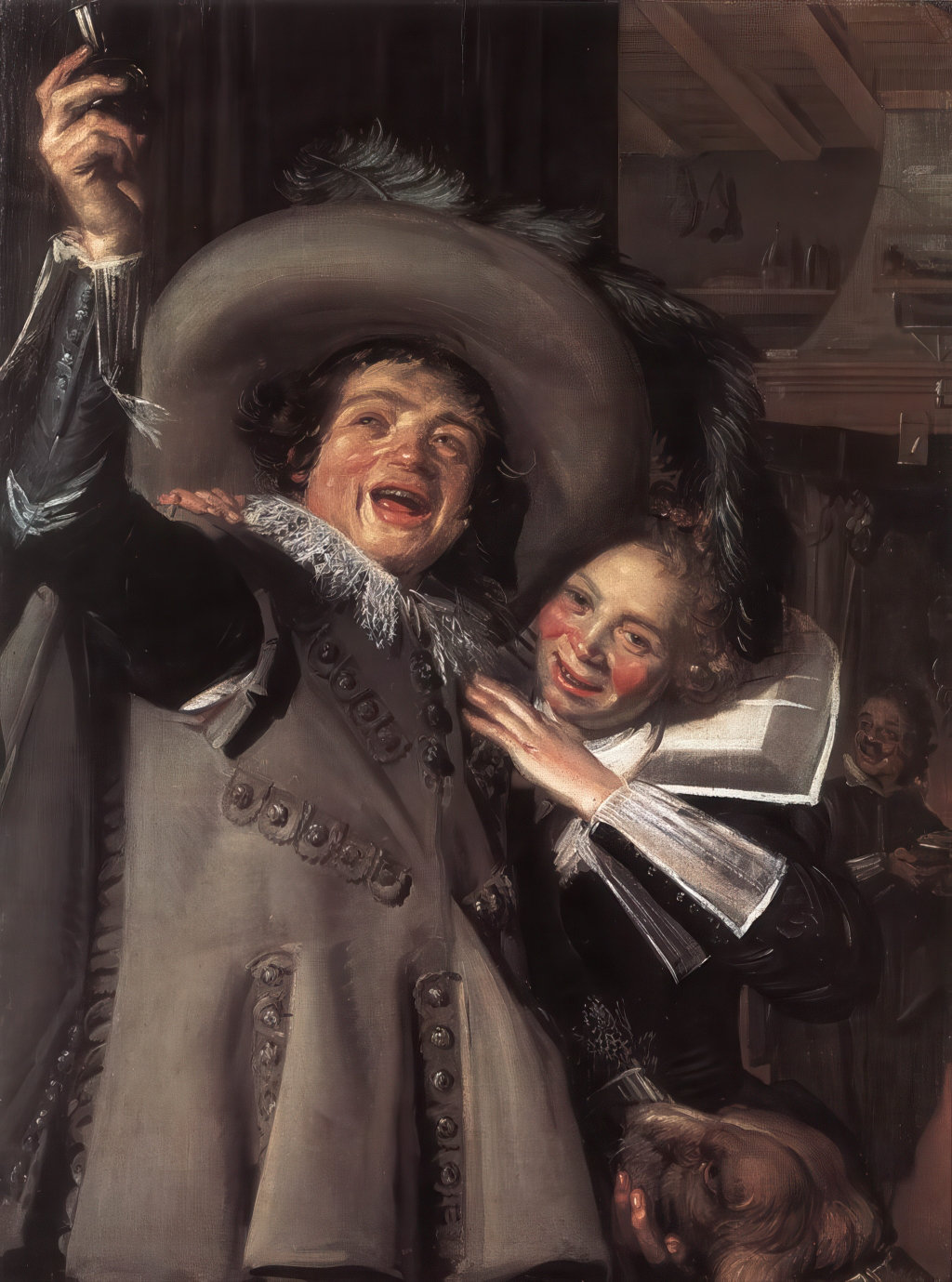
Among all of Frans Hals' paintings, few capture the exuberance of youth as vividly as Yonker Ramp and His Sweetheart. Painted around 1623, the work presents an elegantly dressed young couple enjoying a carefree moment together, surrounded by symbols of music, courtship and celebration. The young man raises a glass in apparent good humour while his smiling companion leans comfortably beside him, creating an atmosphere of warmth and spontaneous pleasure that has delighted viewers for centuries.
At first glance, the painting appears wonderfully straightforward—a cheerful couple sharing a drink. Yet closer examination reveals a work rich in ambiguity. Are these identifiable individuals whose portraits happened to include playful elements, or are they fictional characters representing youthful love and merriment? Art historians have debated this question for generations, and the uncertainty only adds to the painting's fascination.
The title itself contributes to the mystery. "Yonker Ramp" almost certainly refers not to a documented historical figure but to a stock theatrical character familiar to seventeenth-century audiences. The name suggests a fashionable young gentleman with a taste for pleasure and display, while his unnamed companion embodies charm, elegance and wit. Whether Hals intended these figures to represent actual sitters, theatrical types or something between the two remains one of the central questions surrounding the painting.
The work also demonstrates Hals at the height of his early maturity. Painted during one of the most productive periods of his career, it combines lively composition, brilliant observation and increasingly confident brushwork. Every smile, glance and gesture contributes to a convincing sense of movement, while the artist's handling of lace, satin, velvet and flesh reveals the technical assurance that would later inspire artists from Édouard Manet to John Singer Sargent and Vincent van Gogh.
Today, Yonker Ramp and His Sweetheart is celebrated not simply as a charming scene of youthful enjoyment but as one of Hals' finest explorations of human interaction. It captures a fleeting social moment with extraordinary freshness, inviting viewers to imagine the conversation, laughter and music that seem to continue beyond the edges of the canvas.
This article explores the history of the painting, the meaning of its unusual title, the debate over portrait versus genre scene, its symbolism, Hals' remarkable technique and the reasons why this joyful masterpiece continues to resonate four centuries after it was painted.
- Artist Frans Hals (c.1582/3–1666)
- Title Yonker Ramp and His Sweetheart
- Date c.1623
- Medium Oil on canvas
- Current Location Metropolitan Museum of Art
- Movement Dutch Golden Age
- Subject A fashionable young couple enjoying music, drink and courtship
- Main Themes Love, courtship, theatre, music and youthful celebration
- Why It Matters One of Frans Hals' finest early masterpieces, combining portraiture with the vitality of genre painting.
Contents
- Historical Background
- Who Was Yonker Ramp?
- Looking at the Painting
- Portrait or Genre Scene?
- Love, Music and Symbolism
- Composition and Psychology
- Brushwork and Technique
- Legacy and Influence
- The Journey of the Painting
- Where is the Painting Today?
- Timeline
- Interesting Facts
- Explore More Frans Hals Paintings
- FAQs
- Further Reading
- References
Historical Background
Around 1623, when Frans Hals painted Yonker Ramp and His Sweetheart, Haarlem stood at the centre of one of Europe's most dynamic artistic cultures. The Dutch Republic had achieved independence from Spanish rule only a generation earlier, and its growing prosperity created an expanding market for paintings celebrating everyday life alongside traditional portraits and religious subjects. Wealthy merchants, prosperous craftsmen and successful professionals all sought works that reflected both their social ambitions and the pleasures of contemporary Dutch society.
Frans Hals was emerging as Haarlem's most original portrait painter. His ability to capture fleeting expressions and relaxed poses distinguished him from many contemporaries whose sitters still appeared formal and static. Instead of presenting carefully arranged symbols of status alone, Hals increasingly sought to convey personality itself. Smiles, laughter and casual gestures became central elements of his artistic language.
Yonker Ramp and His Sweetheart belongs to this exciting period of experimentation. Although rooted in portraiture, the painting also embraces qualities associated with genre scenes, depicting a lively social encounter rather than a purely ceremonial likeness. Music, drinking and flirtation were popular subjects within Dutch painting, yet Hals approached them with unusual freshness, avoiding moralising stereotypes in favour of convincing human interaction.
The painting also reflects broader developments within Dutch urban culture. Taverns, gardens and private houses provided spaces where prosperous citizens gathered for conversation, music and entertainment. Such settings became fertile subjects for artists interested in the rhythms of everyday life. Rather than depicting historical heroes or mythological figures, Hals celebrates contemporary experience, revealing that ordinary moments could possess extraordinary artistic significance.
Looking Closely: First Impressions
Before analysing costumes or symbolism, ask yourself what emotion dominates the scene. Is it simply happiness, or is there also an element of theatrical performance? Hals deliberately blurs the boundary between spontaneous human interaction and carefully staged display.
Who Was Yonker Ramp?
The unusual title Yonker Ramp and His Sweetheart immediately raises an obvious question: who exactly was Yonker Ramp? Surprisingly, no convincing evidence has ever identified a historical individual by this name connected with Frans Hals or the painting itself. Modern scholarship generally agrees that the title is almost certainly a later invention rather than one supplied by the artist.
The word jonker (often modernised from the older spelling "yonker") derives from the Dutch term for a young gentleman or member of the lesser nobility. During the seventeenth century it could refer simply to a fashionable young man of good social standing rather than identifying a specific person. "Ramp", meanwhile, appears to have entered the title later and has been associated with theatrical traditions and comic characters rather than documented biography.
One influential interpretation suggests that the title refers to a popular stage character familiar to audiences in the Dutch Republic. Seventeenth-century theatre frequently featured boastful, pleasure-loving young gentlemen whose extravagant clothing, flirtatious behaviour and fondness for drinking made them instantly recognisable comic figures. Whether Hals consciously drew upon such theatrical conventions remains uncertain, but the lively atmosphere of the painting certainly encouraged later viewers to make these associations.
Because the title emerged after the painting itself, historians now distinguish carefully between the work and its later name. The traditional title remains useful because it has become firmly established within the history of art, yet it should not be mistaken for documentary evidence about the identities of the figures portrayed.
Portrait, Character or Both?
The uncertainty surrounding the title reflects a broader question running throughout Hals' career. Many of his most engaging paintings occupy the boundary between formal portraiture and character study. Rather than presenting sitters in rigid ceremonial poses, Hals often allowed expression, movement and informal interaction to dominate the composition. As a result, viewers sometimes struggle to decide whether they are looking at identifiable individuals or carefully constructed types representing broader aspects of Dutch society.
Yonker Ramp and His Sweetheart exemplifies this ambiguity perfectly. The remarkable individuality of the faces suggests real models observed from life, yet the theatrical energy of the composition points towards something more imaginative. Instead of choosing between portrait and genre scene, Hals may deliberately combine both traditions, creating a work that feels simultaneously believable and symbolic.
This ambiguity helps explain the painting's enduring popularity. The couple appear real enough to encourage emotional engagement, yet mysterious enough to stimulate curiosity. We are invited to imagine their conversation, speculate about their relationship and wonder whether we are witnessing an actual encounter or an artist's imaginative interpretation of youthful courtship.
Looking Closely: Ignore the Title
Imagine seeing this painting without knowing its traditional name. Would you assume these are identifiable individuals, actors playing a role or symbolic representations of youthful love? Removing the title encourages us to respond first to the painting itself rather than to later interpretations.
Looking at the Painting
The composition immediately draws the viewer into an intimate social encounter. A fashionably dressed young man sits confidently with a raised glass, smiling broadly as though greeting an arriving guest. Beside him, a young woman leans comfortably against his shoulder, returning his cheerful mood with an expression that combines warmth, amusement and quiet confidence. Their physical closeness creates an immediate sense of familiarity, suggesting affection rather than formal display.
Unlike many seventeenth-century double portraits, the figures appear caught in the middle of an unfolding moment rather than posed for posterity. Hals creates the impression that conversation has only briefly paused. The raised glass, the subtle turn of the woman's body and the direct engagement of both faces encourage the viewer to become an uninvited participant within the scene.
The clothing contributes significantly to this atmosphere. Rich fabrics, lace collars and elegant hats demonstrate prosperity while simultaneously reflecting the fashionable tastes of Haarlem's urban elite. Hals delights in describing contrasting textures: crisp linen, soft velvet, polished leather and luminous flesh all emerge through remarkably varied handling of paint. Yet despite the obvious luxury of their dress, neither figure appears stiff or self-conscious. Their elegance feels entirely natural.
Music also plays an important role. The lute resting beside the couple was widely recognised in Dutch art as an instrument associated with courtship, harmony and social entertainment. Its presence expands the meaning of the painting beyond simple portraiture, suggesting that music, conversation and shared pleasure formed essential parts of educated urban life.
A Moment Rather Than a Pose
One of Hals' greatest innovations was his ability to transform portraiture into something resembling lived experience. Earlier generations of painters often arranged sitters in carefully balanced poses that emphasised permanence and dignity. Hals instead sought the fleeting expressions and natural gestures that occur between formal moments. In Yonker Ramp and His Sweetheart, this approach reaches one of its earliest and most successful expressions.
The young man's raised glass captures an instant that seems impossible to sustain. We instinctively imagine that he is about to speak, laugh or drink. Likewise, the woman's gentle lean towards her companion feels wonderfully spontaneous. These subtle suggestions of movement prevent the composition from becoming static while preserving the stability expected of a finished painting.
Perhaps most importantly, the couple acknowledge one another as much as they acknowledge us. Their relationship forms the emotional centre of the composition. Rather than existing merely as independent portraits displayed side by side, they appear genuinely connected through shared experience. Hals therefore creates not simply two convincing likenesses but a convincing relationship.
Looking Closely: The Raised Glass
Follow the line of the young man's arm towards the raised glass. Ask yourself whether he is proposing a toast, welcoming the viewer or celebrating a private joke with his companion. Hals deliberately leaves the narrative unresolved, allowing each viewer to complete the story differently.
Portrait or Genre Scene?
One of the most fascinating aspects of Yonker Ramp and His Sweetheart is that it resists simple classification. At first glance, it appears to be a double portrait. The couple are presented at almost life size, dressed in fashionable contemporary clothing and observed with remarkable individuality. Yet many elements of the composition also resemble Dutch genre painting, in which artists depicted everyday scenes populated by characters rather than specifically identifiable individuals.
Modern scholars increasingly recognise that Frans Hals deliberately blurred these categories. Rather than choosing between portraiture and genre painting, he combined the strengths of both. The result is an image that possesses the psychological conviction of a portrait while retaining the theatrical vitality of a carefully staged social scene.
This approach was highly innovative during the early seventeenth century. Portraits traditionally commemorated specific people, recording their appearance, status and family identity for future generations. Genre paintings, by contrast, explored broader themes such as music, courtship, drinking or domestic life. Hals realised that combining these traditions could create something more engaging than either genre alone.
The Evidence for Portraiture
Several features suggest that the figures may represent real individuals. Their faces possess remarkable specificity, avoiding the generalised features often associated with purely symbolic characters. Hals appears to have studied each sitter carefully from life, recording subtle differences in expression, complexion and posture. The richness of their clothing likewise reflects the fashionable appearance of prosperous young people within Haarlem's urban society.
Double portraits celebrating engagement or marriage were also common in the Dutch Republic. Couples frequently commissioned paintings marking important moments in their lives, and Hals himself produced numerous portraits of husbands and wives. The relaxed interaction between the figures therefore need not exclude the possibility that they were genuine sitters.
The Evidence for Genre Painting
At the same time, several aspects point in the opposite direction. The raised drinking glass, the prominently displayed lute and the playful atmosphere all belong to a visual language frequently employed within Dutch genre painting. Rather than documenting a particular event, these objects evoke broader ideas about youthful pleasure, music and courtship. The traditional title further strengthens the impression that viewers understood the figures as recognisable character types rather than documented historical personalities.
The composition itself also feels unusually theatrical. The couple appear almost to perform for the viewer, inviting participation in their cheerful celebration. Such direct engagement differs subtly from the more reserved dignity expected of formal commissioned portraits, suggesting that Hals wished to create a scene extending beyond straightforward likeness.
Why the Ambiguity Matters
Perhaps the greatest strength of the painting lies precisely in its refusal to resolve this question. If the couple are real individuals, their personalities remain unusually vivid. If they are fictional characters, they possess extraordinary psychological credibility. In either case, Hals succeeds in making them feel completely alive.
This ambiguity also explains why the painting continues to appeal to modern audiences. Contemporary viewers are accustomed to images that blend reality with performance, from theatre and cinema to photography and social media. Hals achieves something surprisingly similar centuries earlier. The figures seem both authentic and self-aware, inviting us to wonder how much of what we see belongs to genuine emotion and how much to carefully cultivated social display.
Looking Closely: Real People or Performers?
Spend a few moments looking only at the faces. Do they feel like portraits painted from life, or like actors playing recognisable roles? Then look again at the raised glass and lute. These theatrical elements subtly shift the balance, leaving the painting suspended between reality and performance.
Love, Music and Symbolism
Although Yonker Ramp and His Sweetheart delights viewers through its apparent spontaneity, Hals carefully incorporates objects and gestures that would have carried richer meanings for a seventeenth-century audience. Dutch paintings of the period frequently communicated ideas through visual symbolism, allowing everyday objects to suggest broader themes concerning love, morality, prosperity and the passage of time. Hals employs these traditions with unusual subtlety, avoiding heavy-handed allegory while enriching the emotional texture of the scene.
The Raised Glass
The young man's raised glass immediately attracts attention. On the simplest level, it celebrates sociability and conviviality. Drinking formed an important element of urban life within the Dutch Republic, accompanying feasts, musical gatherings and private celebrations. Yet the gesture also functions symbolically, suggesting hospitality, friendship and perhaps even a toast to love itself.
Importantly, Hals avoids obvious moral judgement. Many Dutch genre painters contrasted moderation with excess, using drinking scenes to warn against vice. Here, however, the atmosphere remains balanced and joyful. The raised glass expresses pleasure without descending into drunken disorder, reinforcing the painting's overall tone of cultivated enjoyment.
The Lute
The lute was among the most familiar symbols of courtship in seventeenth-century Dutch art. Associated with harmony, refined entertainment and romantic relationships, it frequently appears in portraits of engaged or newly married couples. Its delicate strings also carried more philosophical associations, suggesting the harmony required to sustain successful human relationships.
Within Hals' composition, the instrument quietly reinforces the emotional connection between the figures. It implies that their companionship extends beyond physical attraction towards shared cultural interests and mutual enjoyment. Music becomes another language through which affection is expressed.
Fashion as Symbol
The luxurious clothing worn by the couple undoubtedly reflects prosperity, but it also communicates participation in the sophisticated urban culture of Haarlem. Fine lace, elegant hats and carefully tailored garments demonstrate familiarity with contemporary fashion while emphasising the confidence expected of successful young adults entering public society.
Unlike portraits commissioned purely to display wealth, however, Hals never allows costume to overwhelm personality. Rich fabrics remain subordinate to expression. We notice the smiles before we notice the satin, and the relationship before the lace. This balance between elegance and humanity distinguishes the painting from many more conventional portraits of the period.
Looking Closely: Objects That Tell a Story
Cover the faces and examine only the objects within the painting. The raised glass, the lute and the fashionable clothing already suggest a narrative of celebration, companionship and youthful confidence. When the faces are revealed again, those symbolic meanings become personal rather than merely decorative.
Composition and Psychology
One of the reasons Yonker Ramp and His Sweetheart feels so modern is that Frans Hals constructs the composition around interaction rather than display. Earlier portrait painters often presented couples as two independent figures placed side by side, each concerned primarily with demonstrating status and respectability. Hals instead creates a genuine relationship. The young man and woman occupy the same emotional space, responding not only to the viewer but to one another.
The composition is organised through a series of intersecting diagonals. The raised drinking glass draws the eye upward, while the leaning figure of the young woman gently redirects our attention back towards her companion. Their shoulders overlap, their bodies incline towards one another and their expressions reinforce the impression of shared experience. Instead of appearing frozen in time, they seem caught within a fleeting moment that continues beyond the limits of the canvas.
This sense of movement is remarkably subtle. Hals avoids exaggerated gestures, relying instead upon small adjustments of posture that suggest living bodies rather than carefully arranged mannequins. The result is a composition that feels both spontaneous and perfectly balanced, a combination that became one of the defining characteristics of his mature portrait style.
The Psychology of Shared Attention
Modern psychologists often speak of "shared attention"—the way two people naturally focus upon the same object, event or conversation. Hals captures something very similar. Although each figure possesses a distinct personality, their gestures and expressions imply that they are participating in the same social moment. The raised glass, the gentle smile and the subtle turn of the heads all contribute to the impression that we have interrupted an ongoing conversation rather than encountered a formal portrait session.
This quality helps explain why the painting remains so engaging. The figures invite interpretation without providing complete answers. We instinctively imagine what has just been said, what will happen next and how their relationship might continue beyond the painted surface. Hals therefore transforms static portraiture into implied narrative.
Gesture as Character
Every gesture within the painting contributes to personality. The young man's confident toast suggests sociability and self-assurance, yet it never feels boastful. His companion's relaxed posture conveys ease rather than passivity. Neither figure appears constrained by social convention, despite their fashionable appearance. Hals achieves a delicate balance between elegance and informality that was highly unusual in early seventeenth-century portraiture.
The couple's physical proximity also deserves attention. Dutch portraits of husbands and wives often maintained a respectful distance between sitters, reflecting conventions of decorum. Here, however, Hals allows the figures to occupy a shared personal space. Their closeness immediately communicates familiarity, affection and mutual trust, reinforcing the interpretation that companionship itself forms the true subject of the painting.
Looking Closely: The Space Between Them
Rather than looking at the figures themselves, focus on the small gap separating them. Hals minimises this space, encouraging us to read the pair as a united relationship rather than two isolated portraits. The emotional centre of the painting lies not in either individual but in the connection between them.
Brushwork and Technique
By the early 1620s Frans Hals had already begun developing the energetic handling of paint that would later become one of his defining characteristics. Yonker Ramp and His Sweetheart demonstrates this evolution at an important stage. Although more carefully finished than many of his late portraits, the painting already reveals an artist increasingly willing to trust confident brushstrokes rather than painstaking detail.
Seen from across the gallery, the textures of lace, velvet, satin and flesh appear astonishingly convincing. As the viewer approaches, however, these carefully observed surfaces dissolve into energetic strokes of cream, ochre, black, grey and white. Hals understood that the human eye naturally completes visual information. Instead of recording every thread or hair individually, he supplied precisely the amount of detail required for the illusion to succeed.
Painting Fabric
The costumes provide an excellent demonstration of Hals' technical confidence. The crisp lace collars are built from broad passages of white enlivened by cool shadows, while the darker garments shimmer with subtle variations of brown, blue and charcoal. Rather than treating black as a single colour, Hals layers warm and cool tones to create depth and richness. This sophisticated handling would later become one of the qualities most admired by Vincent van Gogh.
Particularly impressive is the contrast between different materials. Satin reflects light softly across its surface, velvet absorbs illumination to produce richer shadows and lace catches highlights with extraordinary delicacy. Hals distinguishes each texture not through exhaustive detail but through changes in the direction, thickness and pressure of individual brushstrokes.
Painting Flesh
The faces demonstrate Hals' remarkable understanding of human complexion. Warm pinks, ochres and soft greys blend almost effortlessly to suggest living skin animated by circulating blood beneath the surface. Tiny highlights around the eyes and lips bring the expressions to life without becoming overly polished. Even today, the couple seem capable of speaking at any moment.
This naturalism impressed generations of later artists. Van Gogh famously praised Hals as one of the greatest painters of flesh, marvelling at the vitality he achieved through apparently simple means. John Singer Sargent likewise studied Hals' portraits closely, recognising that true confidence often depends upon knowing what to leave out rather than what to include.
Visible Brushwork
Unlike painters who sought to conceal every trace of their technique, Hals allowed the movement of the brush to remain visible. These marks remind viewers that the painting is simultaneously an illusion of living people and a carefully constructed arrangement of coloured pigment. This dual awareness became enormously influential during the nineteenth century, when artists such as Édouard Manet and the Impressionists rejected excessively polished academic surfaces in favour of more direct, expressive handling.
Although Hals worked more than two centuries before Impressionism, his confidence in visible brushwork anticipated many of the ideas that later transformed European painting. His technique demonstrates that realism need not depend upon microscopic finish. Instead, it can emerge through intelligent observation, carefully judged simplification and complete trust in the viewer's eye.
Looking Closely: Step Back
Move close enough to see individual strokes describing lace and skin, then gradually step backwards. Observe the point at which separate marks suddenly merge into convincing fabric and living faces. Hals painted for normal human vision, not for magnification, and the painting reveals its full brilliance when viewed from an appropriate distance.
Legacy and Influence
Yonker Ramp and His Sweetheart occupies an important place within Frans Hals' career because it demonstrates how successfully he expanded the possibilities of portraiture. Instead of recording appearance alone, he created paintings that captured relationships, conversation and the fleeting rhythms of everyday life. This achievement influenced not only later Dutch artists but generations of European painters searching for more natural ways of representing human interaction.
During the nineteenth century, Hals' reputation experienced a remarkable revival. Artists including Gustave Courbet, Édouard Manet and John Singer Sargent admired his ability to combine painterly freedom with acute observation. Vincent van Gogh, in particular, praised Hals repeatedly in his letters, marvelling at the extraordinary vitality of his portraits and his incomparable treatment of flesh, black costume and expression.
Today, Yonker Ramp and His Sweetheart is appreciated not only as one of Hals' most charming works but also as one of his most innovative. It stands at the intersection of portraiture and genre painting, combining individual likeness with theatrical storytelling in a manner that continues to feel surprisingly modern. The painting reminds us that some of the most memorable works of art do not provide definitive answers. Instead, they invite viewers to participate in the story, imagining conversations, relationships and emotions that remain forever just beyond our reach.
``` ```html id="tq82mx"The Journey of the Painting
The early history of Yonker Ramp and His Sweetheart is less completely documented than that of some of Frans Hals' commissioned civic portraits. Because the identities of the figures remain uncertain, it has proved impossible to reconstruct an unbroken chain of ownership stretching back to the artist's studio. Like many seventeenth-century Dutch paintings, the work almost certainly passed through several private collections before emerging more clearly within the documented art market of the eighteenth and nineteenth centuries.
By this time Hals' reputation had begun to recover after a prolonged period in which his energetic style had fallen from favour. Collectors increasingly recognised the originality of his portraiture, while museums sought representative examples of the Dutch Golden Age. The painting's unusual combination of intimacy, humour and technical brilliance ensured that it attracted particular attention.
Eventually, Yonker Ramp and His Sweetheart entered the collection of the Metropolitan Museum of Art in New York, where it remains one of the museum's most admired Dutch paintings. Displayed alongside masterpieces by Rembrandt, Vermeer and other leading artists of the seventeenth century, it illustrates the extraordinary diversity of Dutch art during its Golden Age.
The painting's survival in excellent condition has also allowed conservators and art historians to study Hals' technique in remarkable detail. Modern examination has confirmed the confidence of his brushwork, the sophistication of his colour relationships and the deliberate economy with which he constructed forms. Far from appearing unfinished, the visible strokes reveal a highly controlled method developed through years of observation and experience.
Looking Closely: A Painting That Travelled Across the Atlantic
Imagine how differently the painting would have been experienced in seventeenth-century Haarlem compared with modern New York. Although separated by four centuries and an ocean, viewers continue to respond to the same smiles, gestures and atmosphere of shared celebration that Hals first placed on canvas.
Where is the Painting Today?
Today, Yonker Ramp and His Sweetheart is housed in the Metropolitan Museum of Art in New York City, one of the world's greatest collections of European painting. The museum's Dutch galleries provide an ideal setting in which to appreciate Hals alongside contemporaries such as Rembrandt, Vermeer, Pieter de Hooch and Judith Leyster, allowing visitors to compare different approaches to portraiture and everyday life within the Dutch Republic.
Viewed in person, the painting possesses an immediacy that reproductions struggle to convey. From several metres away, the couple appear effortlessly alive. As one approaches the canvas, the illusion gradually dissolves into individual brushstrokes describing lace, satin, skin and hair with astonishing confidence. This changing visual experience forms an essential part of Hals' artistic achievement.
The work is also relatively intimate in scale compared with Hals' great civic commissions. This encourages viewers to engage with the figures almost at eye level, creating the impression of participating directly in their conversation. Such immediacy helps explain why the painting remains one of the most popular works in the museum's Dutch collection.
Looking Closely: Meet Their Eyes
When viewing the painting in the gallery, stand where the couple appear roughly life-sized. Notice how naturally your attention shifts between their expressions rather than focusing on either individual alone. Hals encourages us to experience the painting as a relationship rather than as two separate portraits.
Timeline
- c.1623 — Frans Hals paints Yonker Ramp and His Sweetheart during one of the most productive phases of his early career.
- 1620s — Hals develops a more relaxed and expressive approach to portraiture, combining psychological observation with lively social interaction.
- 17th–18th centuries — The painting passes through private collections, while its early provenance remains only partially documented.
- 19th century — Frans Hals is rediscovered by artists including Courbet, Manet, Sargent and Van Gogh, whose admiration contributes to the renewed appreciation of works such as Yonker Ramp and His Sweetheart.
- Early 20th century — The painting enters the collection of the Metropolitan Museum of Art, becoming one of its most important Dutch Golden Age works.
- Today — It remains among the museum's finest examples of Hals' ability to combine portraiture with the vitality of genre painting.
Interesting Facts
- The title is almost certainly not original. There is no convincing evidence that Frans Hals himself called the painting Yonker Ramp and His Sweetheart.
- The identities of the couple remain uncertain. Art historians continue to debate whether the figures represent real sitters, theatrical characters or an intentional blend of both.
- The lute carries symbolic meaning. In Dutch seventeenth-century painting, it commonly represented harmony, courtship and refined companionship.
- The painting helped redefine portraiture. Hals created one of the earliest convincing combinations of formal portrait and lively genre scene.
- Visible brushwork was one of Hals' greatest innovations. His confident handling of paint profoundly influenced later artists, particularly Manet, Sargent and Van Gogh.
- The atmosphere remains deliberately unresolved. Hals never explains exactly what the couple are celebrating, allowing every generation of viewers to imagine its own story.
- The work is one of the highlights of the Metropolitan Museum of Art's Dutch collection. It remains among the museum's most admired paintings by Frans Hals.
Explore More Frans Hals Paintings
FAQs
Further Reading
- Seymour Slive, Frans Hals, 3 vols. London: Phaidon, 1970–1974.
- Christopher D. M. Atkins, Frans Hals. London: Reaktion Books, 2012.
- Claus Grimm, Frans Hals: The Complete Work. New York: Harry N. Abrams, 1990.
- Norbert Middelkoop & Antoon Erftemeijer (eds.), Frans Hals: Eye to Eye with Rembrandt, Rubens and Titian. Rotterdam: nai010 publishers, 2013.
- Friso Lammertse et al., Frans Hals. National Gallery Global, 2023.
- Walter Liedtke, Dutch Paintings in The Metropolitan Museum of Art. New York: Metropolitan Museum of Art, 2007.
- Mariët Westermann, A Worldly Art: The Dutch Republic 1585–1718. Yale University Press, 2004.
- Wayne Franits, Looking at Seventeenth-Century Dutch Art. Cambridge University Press, 1997.
References
- Metropolitan Museum of Art. Collection catalogue entry for Yonker Ramp and His Sweetheart.
- RKD – Netherlands Institute for Art History. Catalogue record for Yonker Ramp and His Sweetheart.
- Seymour Slive. Frans Hals. 3 vols. London: Phaidon, 1970–1974.
- Christopher D. M. Atkins. Frans Hals. London: Reaktion Books, 2012.
- Claus Grimm. Frans Hals: The Complete Work. Harry N. Abrams, 1990.
- Norbert Middelkoop & Antoon Erftemeijer (eds.). Frans Hals: Eye to Eye with Rembrandt, Rubens and Titian. Rotterdam: nai010 publishers, 2013.
- Friso Lammertse et al. Frans Hals. National Gallery Global, 2023.
- Walter Liedtke. Dutch Paintings in The Metropolitan Museum of Art. Metropolitan Museum of Art, 2007.
- Mariët Westermann. A Worldly Art. Yale University Press, 2004.
- Wayne Franits. Looking at Seventeenth-Century Dutch Art. Cambridge University Press, 1997.
- Van Gogh Museum / Huygens ING. Vincent van Gogh: The Letters. Correspondence discussing Frans Hals' brushwork and portraiture.