 by Tom Gurney
Tom Gurney BSc (Hons) is an art history expert with over 20 years experience
Published on June 29, 2026 / Updated on June 29, 2026
Email: tomgurney1@gmail.com / Phone: +44 7429 011000
The Comic Hero Who Made Seventeenth-Century Audiences Laugh
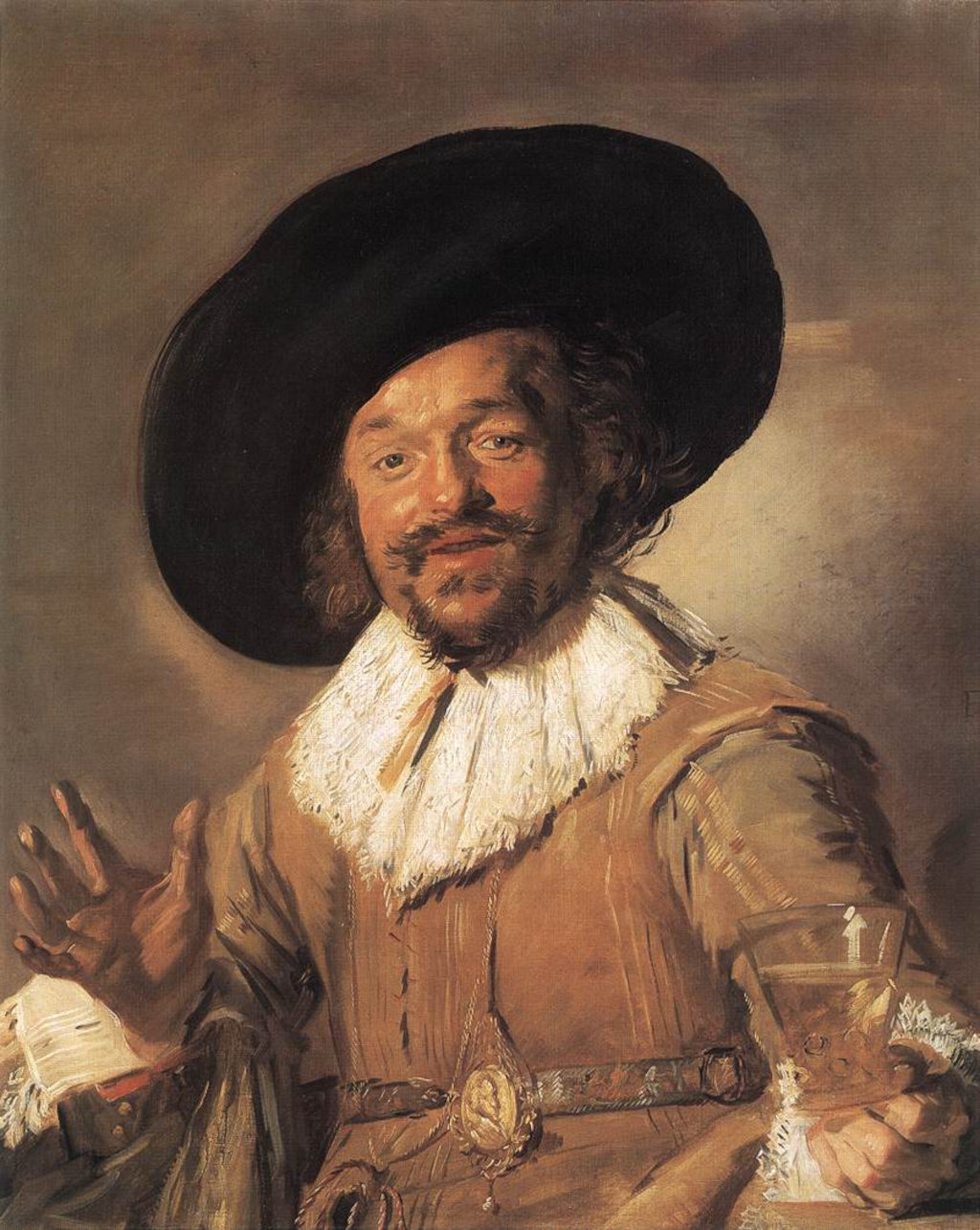
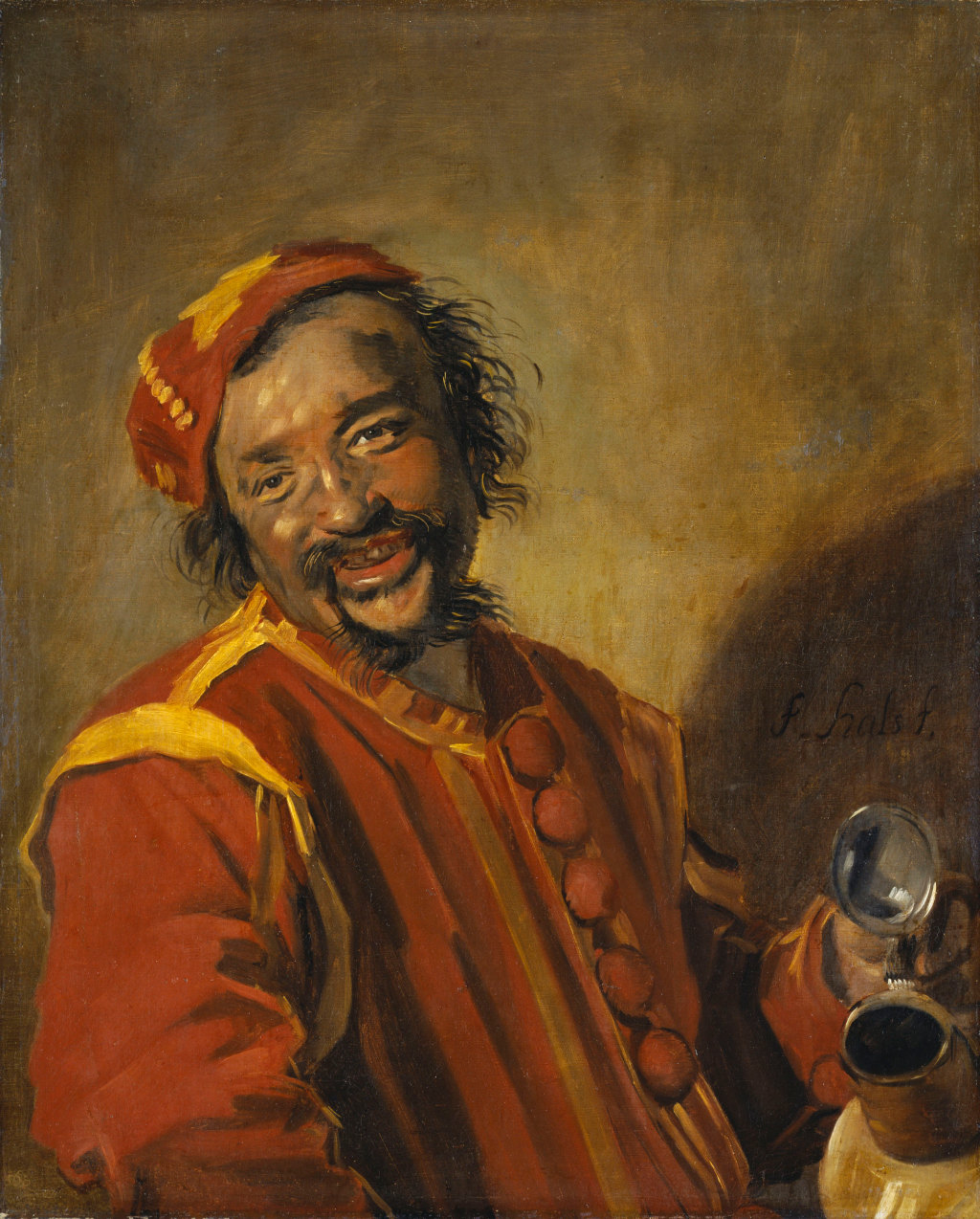
Few paintings by Frans Hals are as exuberant or as entertaining as Peeckelhaering. At first glance, the picture appears to be another of the artist's famous laughing figures—a cheerful man raising a tankard with infectious good humour. In reality, Hals was depicting one of the best-known comic characters of the Dutch stage, transforming a familiar theatrical personality into one of the most memorable character studies of the Dutch Golden Age.
The name Peeckelhaering, literally "Pickled Herring", would have been instantly recognised by seventeenth-century audiences. The character was a gluttonous buffoon whose fondness for salty herring ensured a constant thirst for beer. Appearing in comic performances throughout the Dutch Republic, he delighted audiences through exaggerated humour, clumsy bravado and insatiable appetite. Hals captures that theatrical energy with remarkable immediacy, creating a figure who seems ready to burst into laughter at any moment.
Painted around 1628–1630, the work belongs to one of the most inventive periods of Hals' career. By this stage he had moved far beyond conventional portraiture, demonstrating that paintings could capture not only individual likeness but also performance, personality and fleeting human expression. Whether or not the figure represents a specific actor, Hals presents him as a fully convincing human character rather than a simple comic stereotype.
The painting also illustrates the close relationship between theatre and painting during the Dutch Golden Age. Artists frequently borrowed popular dramatic characters, while actors adopted poses and costumes familiar from contemporary art. Hals' Peeckelhaering therefore occupies a fascinating space between portrait, genre painting and theatrical performance.
Today, the work is recognised as one of Hals' greatest tronies—expressive character studies that allowed artists to explore emotion, costume and gesture without the formal constraints of commissioned portraiture. More than simply a humorous image, it reveals Hals' extraordinary understanding of how personality can be conveyed through expression, movement and paint itself.
- Artist Frans Hals (c.1582/3–1666)
- Date c.1628–1630
- Medium Oil on canvas
- Current Location :contentReference[oaicite:3]{index=3}
- Main Themes Theatre, humour, performance and character
- Why It Matters One of Frans Hals' finest character studies and an outstanding example of Dutch theatrical culture translated into paint.
Contents
- Historical Background
- Looking at the Painting
- Meaning and Symbolism
- Composition and Technique
- Legacy & Why It Still Matters
- Timeline
- Interesting Facts
- FAQs
- References
Historical Background
By the late 1620s Frans Hals had established himself as one of the most original painters in the Dutch Republic. Alongside prestigious portrait commissions, he increasingly explored expressive character studies known as tronies. Unlike formal portraits, tronies were not primarily intended to record the appearance of a specific individual. Instead, they examined emotion, costume, gesture and personality, allowing artists far greater creative freedom.
Peeckelhaering emerged directly from this tradition. The figure was already familiar through popular theatre, where comic stock characters entertained audiences with exaggerated behaviour and physical humour. Hals recognised that these lively personalities offered ideal subjects for his increasingly confident brushwork and his fascination with spontaneous human expression. Rather than simply illustrating a theatrical role, he transformed it into a convincing psychological study.
The painting also reflects the flourishing urban culture of the Dutch Republic. Theatre, taverns, literary societies and civic festivals formed an important part of everyday life, creating shared cultural references that artists could assume their audiences would recognise. Hals therefore expected contemporary viewers to appreciate not only the figure's laughter but also the theatrical tradition from which he emerged.
Looking at the Painting
The first impression is one of irresistible energy. Peeckelhaering leans forward with an animated expression, his mouth open in laughter and his raised tankard inviting the viewer into the joke. Hals captures a fleeting instant rather than a carefully arranged pose. The figure seems to exist in the middle of a performance, as though the next line of dialogue is only moments away.
Unlike the restrained expressions found in many seventeenth-century portraits, every aspect of the composition celebrates movement. The tilted head, lively eyes and expressive hands all contribute to a sense of animation that was highly unusual in portrait painting of the period. Hals demonstrates that personality could be conveyed through gesture just as effectively as through facial likeness.
Costume also plays an important role. The distinctive clothing immediately separates Peeckelhaering from Hals' fashionable merchants and civic officials. Rather than signalling wealth or social status, the costume helps identify him as a comic figure belonging to the world of popular entertainment. Yet Hals paints these garments with the same care and observational skill that he devoted to aristocratic portrait commissions, suggesting that every subject deserved serious artistic attention.
Looking Closely: The Open Mouth
Very few painters of the early seventeenth century dared to depict a figure laughing with an open mouth. Hals does so repeatedly, creating expressions that feel spontaneous rather than exaggerated. Notice how the laughter seems to continue beyond the painted moment.
Meaning and Symbolism
To a modern audience, Peeckelhaering may simply appear to be a cheerful drinker. Seventeenth-century viewers, however, would have recognised a familiar comic personality whose appetite for food and drink formed part of a long theatrical tradition. His humorous name, usually translated as "Pickled Herring", alluded to the salty fish that supposedly left him permanently thirsty, providing endless opportunities for comic drinking scenes.
The painting therefore operates on two levels. On one hand it celebrates theatrical entertainment, preserving the lively spirit of popular performance. On the other, it explores broader ideas about humour, sociability and the pleasures of everyday life. Hals never reduces the character to a simple caricature. Instead, he presents Peeckelhaering as someone whose exuberance feels genuinely human.
Tronie or Portrait?
Modern scholars generally classify the work as a tronie, a character study rather than a formal portrait. Tronies allowed artists to experiment with expression, costume and lighting without the expectations attached to commissioned likenesses. They occupied a space between portraiture and genre painting, encouraging viewers to appreciate the artist's imagination as much as technical skill.
Hals was particularly well suited to this format. His lifelong fascination with laughter, conversation and spontaneous movement made expressive character studies a natural extension of his portrait practice. Peeckelhaering demonstrates how convincingly he could transform a familiar theatrical type into a figure of remarkable individuality.
Humour Without Mockery
An important aspect of the painting is its generosity. Although Peeckelhaering is undoubtedly comic, Hals never treats him with cruelty or contempt. The humour depends upon warmth rather than ridicule. This sympathetic approach distinguishes Hals from some later genre painters, whose comic figures could become objects of moral judgement or satire.
Instead, the artist appears to delight in the vitality of the character. Laughter becomes something shared between the figure and the viewer, creating a sense of participation rather than distance. It is one of the reasons the painting still feels approachable today.
Composition and Technique
The composition is remarkably economical. Hals strips away unnecessary background detail, allowing the figure's expression, gesture and costume to dominate the image. The raised tankard forms a natural counterbalance to the animated face, guiding the viewer's eye through the composition before returning once again to the broad smile.
By the late 1620s Hals' brushwork had become increasingly confident. Rather than smoothing every transition, he relied on energetic strokes to suggest texture, volume and movement. Fabric, flesh and hair are distinguished through subtle variations in colour and direction of the brush, creating an illusion of remarkable vitality without excessive detail.
The handling of the face is especially impressive. Broad passages of warm flesh tones are enlivened by carefully placed highlights around the eyes, nose and mouth. Seen from close range, the brushwork appears surprisingly free. From a normal viewing distance, these individual marks merge into one of the most convincing expressions in Dutch Golden Age painting.
This painterly confidence would later attract the admiration of artists such as Édouard Manet, John Singer Sargent and Vincent van Gogh. They recognised that Hals' apparent spontaneity rested not upon speed alone but upon decades of careful observation and complete understanding of how paint could suggest living presence.
Legacy and Why It Still Matters
Peeckelhaering demonstrates that Frans Hals could transform even the most familiar comic character into a work of lasting artistic significance. What might easily have become a simple theatrical illustration instead becomes a remarkably convincing study of human expression. Hals treats the character with warmth and dignity, allowing laughter itself to become the central subject of the painting.
The work also illustrates the growing importance of popular culture within Dutch art. Rather than limiting his attention to wealthy patrons or historical subjects, Hals recognised that theatre, music and everyday entertainment formed an equally important part of urban life. His paintings remind us that the Dutch Golden Age was shaped as much by festivals, taverns and performances as by commerce and civic government.
The popularity of Peeckelhaering extended well beyond Hals' own lifetime. The image was engraved by Jonas Suyderhoef, helping to circulate the composition to a much wider audience, while later painters—including Jan Steen—depicted Hals' famous character hanging on the walls of painted interiors. Such references demonstrate that the painting itself had become a recognised work of art within Dutch culture, admired not only by collectors but also by fellow artists.
Why It Still Matters
Modern viewers continue to respond to Peeckelhaering because its humour feels remarkably genuine. Hals avoids exaggerated caricature, instead capturing the fleeting expressions and relaxed body language that people still recognise today. The painting reminds us that laughter is one of the most universal forms of human communication, capable of crossing differences of language, culture and historical period.
The work also helps explain why Hals became such an important influence on later painters. Artists from Édouard Manet to John Singer Sargent admired his ability to suggest personality with extraordinary economy, while Vincent van Gogh praised the vitality of his brushwork. Peeckelhaering encapsulates those achievements perfectly, combining technical brilliance with a profound understanding of human character.
Looking Closely: Why Are We Smiling?
Ask yourself why the painting still feels amusing today. The answer lies not in the costume or the theatrical role but in Hals' extraordinary observation of genuine human expression. The character may belong to the seventeenth century, but the laughter belongs to everyone.
Explore More Frans Hals Paintings
Timeline
- c.1628–1630 — Frans Hals paints Peeckelhaering during one of the most creative periods of his career.
- 17th century — The comic character remains popular on the Dutch stage and in printed literature.
- Mid-17th century — Jonas Suyderhoef engraves the composition, helping to spread Hals' image to a wider audience.
- Later 17th century — Jan Steen includes Hals' Peeckelhaering hanging within painted domestic interiors, demonstrating its fame among artists and collectors.
- Today — The painting is recognised as one of Hals' greatest tronies and an outstanding example of Dutch theatrical culture translated into paint.
Interesting Facts
- Peeckelhaering literally means "Pickled Herring".
- The character originated in popular Dutch theatre rather than history.
- The composition was engraved by Jonas Suyderhoef, greatly increasing its fame.
- Jan Steen later painted Hals' Peeckelhaering hanging on the wall inside one of his own interiors.
- It is considered one of Frans Hals' finest surviving tronies.
FAQs
Further Reading
- Seymour Slive, Frans Hals, 3 vols. London: Phaidon, 1970–1974.
- Christopher D. M. Atkins, Frans Hals. London: Reaktion Books, 2012.
- Claus Grimm, Frans Hals: The Complete Work. New York: Harry N. Abrams, 1990.
- Norbert Middelkoop & Antoon Erftemeijer (eds.), Frans Hals: Eye to Eye with Rembrandt, Rubens and Titian. Rotterdam: nai010 publishers, 2013.
- Friso Lammertse et al., Frans Hals. National Gallery Global, 2023.
References
- RKD Studies, Frans Hals and his Workshop, Catalogue A1.50, "Peeckelhaering", 2024.
- Museumslandschaft Hessen Kassel, Gemäldegalerie Alte Meister, collection catalogue.
- Seymour Slive. Frans Hals. 3 vols. London: Phaidon, 1970–1974.
- Christopher D. M. Atkins. Frans Hals. London: Reaktion Books, 2012.
- Claus Grimm. Frans Hals: The Complete Work. New York: Harry N. Abrams, 1990.
- Norbert Middelkoop & Antoon Erftemeijer (eds.). Frans Hals: Eye to Eye with Rembrandt, Rubens and Titian. Rotterdam: nai010 publishers, 2013.
- Friso Lammertse et al. Frans Hals. National Gallery Global, 2023.