 by Tom Gurney
Tom Gurney BSc (Hons) is an art history expert with over 20 years experience
Published on June 29, 2026 / Updated on June 29, 2026
Email: tomgurney1@gmail.com / Phone: +44 7429 011000
A Skull, a Smile and One of Frans Hals' Greatest Mysteries
Few paintings by Frans Hals have generated more speculation than Young Man Holding a Skull. For generations the work was widely reproduced under the title Hamlet, encouraging viewers to believe they were looking at Shakespeare's melancholy prince contemplating Yorick's skull. Modern scholarship, however, paints a far more intriguing picture. There is no convincing evidence that Hals intended to depict Hamlet at all.
Instead, the painting appears to belong to a much older artistic tradition. Throughout Europe, skulls served as powerful reminders of mortality, encouraging viewers to reflect upon the brevity of life, the certainty of death and the importance of living wisely. Artists often incorporated such symbols into portraits, allegories and theatrical costume studies, creating images whose meanings extended far beyond simple likeness.
The uncertainty surrounding the subject transforms the painting into one of Hals' most intellectually engaging works. Is the young man an actor? A real sitter? A symbolic figure? A participant in a theatrical performance? Or simply an anonymous model exploring the popular theme of memento mori? Each possibility reveals something different about Dutch culture during the seventeenth century.
Painted during one of the most accomplished phases of Hals' career, the work also demonstrates his extraordinary gift for psychological immediacy. The young man's alert expression, elegant costume and confident handling of the skull create an image that feels both theatrical and intensely human. Hals captures not only physical appearance but the momentary spark of thought passing across the sitter's face.
Today, Young Man Holding a Skull is recognised as one of Hals' most enigmatic paintings. Its uncertain subject, remarkable brushwork and rich symbolic possibilities continue to provoke debate among historians while captivating museum visitors. Few works better demonstrate Hals' ability to balance realism with ambiguity, leaving viewers to complete the story for themselves.
This article explores the origins of the painting, the myth of Hamlet, the symbolism of the skull, its relationship to seventeenth-century theatre, Hals' technique and the reasons why this mysterious image remains one of his most compelling creations.
- Artist Frans Hals (c.1582/3–1666)
- Title Young Man Holding a Skull
- Date c.1626–1628
- Current Location :contentReference[oaicite:1]{index=1}
- Main Themes Mortality, theatre, identity, symbolism
- Traditional Title Hamlet (now generally rejected)
- Why It Matters One of Frans Hals' most debated paintings and a fascinating example of portraiture, symbolism and theatrical ambiguity.
Contents
- Historical Background
- Was This Really Hamlet?
- Looking at the Painting
- The Symbolism of the Skull
- Theatre and Performance
- Composition and Psychology
- Brushwork and Technique
- Legacy and Influence
- The Journey of the Painting
- Where is the Painting Today?
- Timeline
- Interesting Facts
- Explore More Frans Hals Paintings
- FAQs
- Further Reading
- References
Historical Background
Around the middle of the 1620s, Frans Hals had firmly established himself as Haarlem's leading portrait painter. His reputation rested not only upon his extraordinary ability to capture physical likeness but also upon something far rarer: the ability to suggest personality through fleeting expression and apparently spontaneous gesture. Wealthy merchants, civic officials and prosperous families increasingly sought commissions from the artist, while his growing confidence encouraged him to experiment with subjects extending beyond conventional portraiture.
Young Man Holding a Skull belongs to this period of experimentation. Although the painting shares many qualities with Hals' formal portraits, its unusual subject immediately distinguishes it from most commissioned likenesses. The elegant costume, dramatic gesture and symbolic skull suggest that Hals was engaging with ideas drawn from theatre, allegory and the long European tradition of memento mori imagery rather than simply recording the appearance of an individual sitter.
The Dutch Republic of the early seventeenth century possessed a remarkably sophisticated visual culture. Portraits, genre scenes, still lifes and allegories all circulated among collectors whose understanding of symbolism allowed relatively simple objects to communicate complex moral and philosophical ideas. A skull, for example, immediately reminded viewers of mortality, encouraging reflection upon the brevity of earthly existence. Such themes appeared frequently in Dutch art, particularly within the flourishing tradition of vanitas painting.
At the same time, Haarlem supported an active theatrical culture. Civic festivals, travelling performers and literary societies ensured that audiences were familiar with historical dramas, biblical stories and comic performances. Costumes worn on stage often influenced painters, while artists in turn borrowed theatrical gestures and expressive poses to enrich their own compositions. This close relationship between painting and performance forms an important part of the debate surrounding Hals' mysterious young man.
For much of the nineteenth and twentieth centuries the work became widely known as Hamlet, encouraging viewers to interpret the skull through Shakespeare's famous tragedy. Recent scholarship, however, has questioned this identification, suggesting that the traditional title tells us more about later taste than about Hals' original intentions. Rather than reducing the painting's significance, this uncertainty opens a far richer discussion concerning symbolism, theatrical costume and the multiple meanings that seventeenth-century audiences may have recognised.
Looking Closely: Your First Assumption
When you first notice the skull, what story immediately comes to mind? Shakespeare's Hamlet? A reminder of death? An actor in costume? Hals deliberately provides just enough information to encourage speculation while withholding a definitive answer.
Was This Really Hamlet?
For generations this painting appeared in books, exhibitions and reproductions under the title Hamlet. The identification seemed irresistible. A young man dressed dramatically, holding a skull in thoughtful contemplation, naturally recalled one of the most famous scenes in Western literature: Hamlet reflecting upon the skull of Yorick in William Shakespeare's tragedy. Yet despite the popularity of this interpretation, the historical evidence supporting it is remarkably weak.
The principal difficulty lies in chronology. Although Shakespeare's plays were known in parts of continental Europe during the seventeenth century, there is no documentary evidence that Frans Hals intended to illustrate a specific scene from Hamlet. Nor is there evidence that the painting originally bore this title. The association appears to have emerged much later, when nineteenth-century scholars and collectors increasingly sought literary subjects within earlier European painting.
Modern art historians therefore approach the traditional title with caution. Museums, including the National Gallery in London, generally refer to the work simply as Young Man Holding a Skull or similar variants, acknowledging that the identity of the sitter remains unknown. This more neutral title allows the painting to be understood within the broader context of Dutch art rather than through a single literary interpretation.
A Theatrical Costume?
One persuasive alternative suggests that the young man may be wearing theatrical costume rather than everyday dress. During the seventeenth century actors frequently appeared in historical or imaginative clothing that combined contemporary fashion with dramatic embellishment. The expressive pose, elegant feathered hat and confident gesture all possess a certain theatrical quality that distinguishes the work from Hals' conventional commissioned portraits.
If this interpretation is correct, the skull becomes less a reference to Shakespeare than a stage property associated with broader themes of mortality, tragedy and philosophical reflection. Rather than depicting Hamlet specifically, Hals may have portrayed an actor, a model or an allegorical figure embodying ideas familiar to audiences regardless of any particular play.
Why the Mystery Matters
The uncertainty surrounding the painting is not a problem to be solved but one of its greatest strengths. By resisting definitive identification, the work remains open to multiple readings. Viewers may recognise echoes of Shakespeare, Christian symbolism, theatrical tradition or simple human curiosity about mortality. Hals leaves sufficient ambiguity for each interpretation to illuminate different aspects of the image without entirely excluding the others.
Looking Closely: Forget Shakespeare
Imagine that Shakespeare had never written Hamlet. How would you interpret the painting? Removing the literary association allows the skull to recover its broader seventeenth-century meanings as a symbol of mortality, reflection and the transience of life.
Looking at the Painting
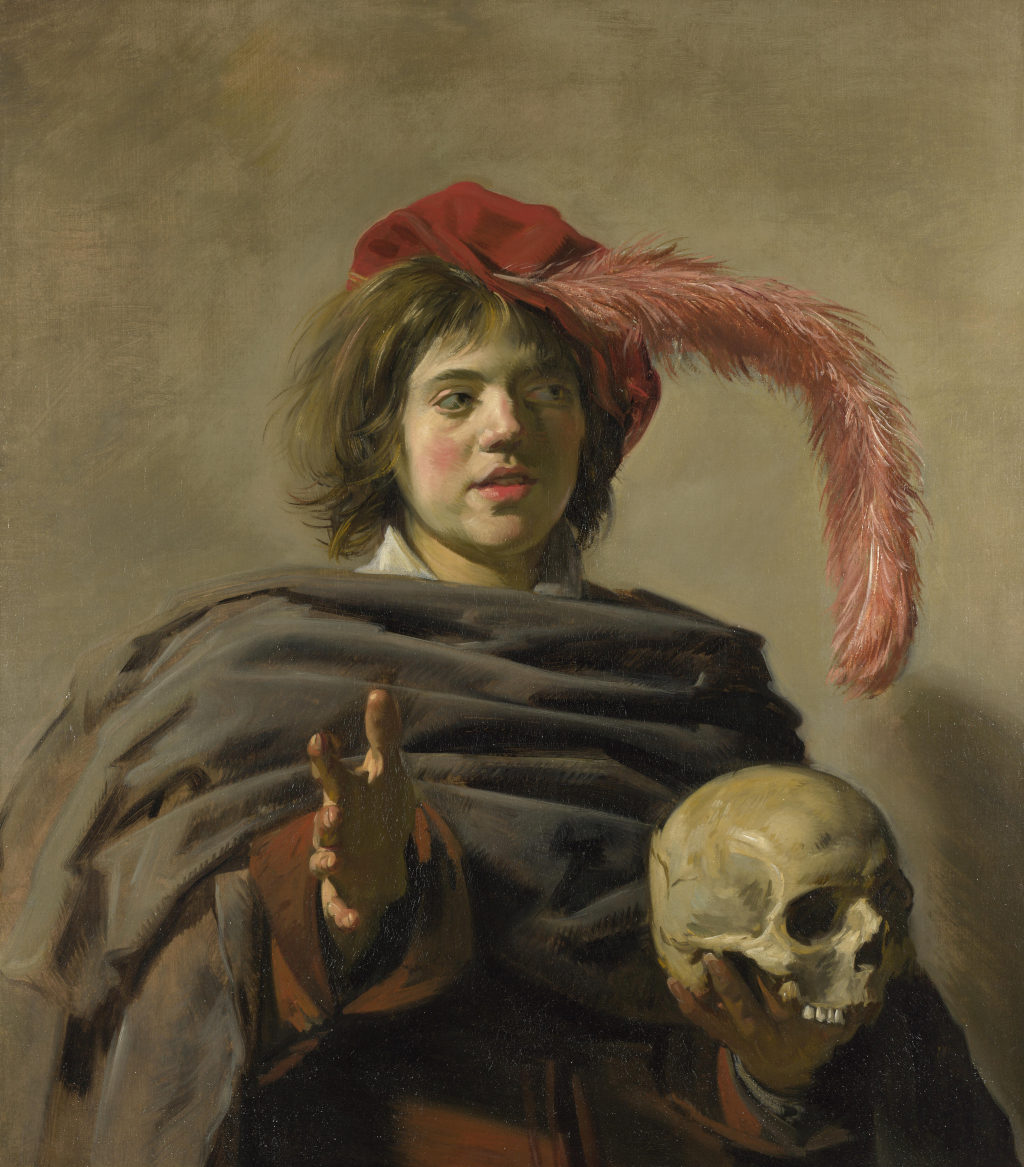
The composition is deceptively simple. A richly dressed young man turns towards the viewer while holding a human skull in his left hand. His elegant costume, broad-brimmed feathered hat and confident bearing immediately suggest theatricality, yet his expression remains surprisingly open and alert rather than sombre. Unlike later artistic representations of Hamlet lost in philosophical melancholy, Hals' figure appears energetic, engaged and very much alive.
This contrast forms one of the painting's greatest strengths. The skull inevitably reminds us of death, but the sitter himself radiates vitality. His healthy complexion, animated gaze and upright posture create a deliberate tension between life and mortality. Hals invites the viewer to hold these apparently contradictory ideas together, producing an image that is intellectually provocative without becoming emotionally heavy.
The background is deliberately restrained. Hals eliminates almost every unnecessary detail, ensuring that our attention remains focused upon the relationship between the figure and the skull. Rather than distracting us with elaborate architecture or symbolic landscapes, he creates a neutral space in which gesture and expression become the principal vehicles of meaning.
The Dialogue Between Life and Death
One of Hals' most remarkable achievements is the way he stages an apparent conversation between the living and the dead. The young man neither recoils from the skull nor contemplates it with despair. Instead, he handles it naturally, almost conversationally, as though presenting it for consideration. This relaxed confidence distinguishes the painting from many later depictions in which the skull becomes an object of horror or existential crisis.
Such an approach would have been readily understood by seventeenth-century audiences. Christian teaching regularly encouraged believers to remember the inevitability of death, not in order to cultivate fear but to promote humility, gratitude and wise living. The skull therefore functions less as a terrifying object than as an invitation to philosophical reflection.
Costume and Character
The sitter's clothing contributes significantly to the painting's ambiguity. The feathered hat, richly coloured garments and decorative sleeves are more elaborate than those normally encountered in Hals' straightforward portraits. Whether these belong to theatrical costume, festive dress or imaginative invention remains uncertain, but they clearly separate the figure from ordinary everyday life.
At the same time, Hals paints the fabrics with extraordinary realism. Velvet, satin and lace each possess their own distinctive texture, while subtle highlights animate the folds of cloth without overwhelming the composition. The luxurious costume reinforces the painting's theatrical atmosphere while simultaneously demonstrating Hals' growing technical confidence during the 1620s.
Looking Closely: Which Captures Your Attention First?
Notice whether your eye moves first to the sitter's face or to the skull. Hals deliberately balances these two focal points. The painting works because neither element dominates completely. Instead, our attention shifts continually between the vitality of youth and the certainty of mortality.
The Symbolism of the Skull
Few objects possess a longer artistic history than the human skull. Long before Frans Hals painted this mysterious young man, skulls had appeared in religious art, devotional images and philosophical allegories throughout Europe. By the seventeenth century they had become among the most recognisable symbols within Dutch painting, immediately evoking the concept of memento mori—the reminder that every human life is temporary.
The Latin phrase memento mori, meaning "remember that you must die," encouraged viewers to reflect upon the transience of earthly existence. Rather than promoting despair, such images invited moral self-examination. Wealth, beauty, power and fame were all understood to be fleeting. True wisdom lay in recognising mortality while living responsibly and virtuously.
Vanitas Tradition
The painting also relates closely to the Dutch tradition of vanitas imagery. Vanitas still lifes frequently combined skulls with extinguished candles, wilting flowers, musical instruments, watches and luxurious objects to demonstrate the passing nature of earthly pleasures. Hals adopts only one of these symbols, yet its impact is no less powerful. By isolating the skull within a portrait rather than a still life, he transforms an abstract moral lesson into a deeply personal encounter.
Unlike many vanitas paintings, however, Hals avoids overt moralising. The young man does not appear burdened by regret or fear. Instead, he seems intellectually engaged with the symbol before him, encouraging viewers to undertake their own reflection rather than prescribing a particular emotional response.
The Skull as a Human Object
Another striking aspect of the painting is the natural way in which the skull is handled. It is not displayed as a gruesome curiosity but as an ordinary physical object. This calm treatment reflects early modern attitudes towards death, which was a far more visible presence in everyday life than it is for many people today. Epidemics, warfare and shorter life expectancy ensured that reminders of mortality were familiar rather than exceptional.
By presenting the skull without theatrical horror, Hals restores its original symbolic function. It becomes a tool for contemplation rather than sensation, encouraging viewers to think about the relationship between youth, ambition and the inevitability of time.
Looking Closely: A Symbol Without Fear
Observe how calmly the sitter holds the skull. There is no dramatic recoil or exaggerated emotion. Hals invites us to see mortality not as an interruption to life but as one of its permanent companions, a reminder that gives greater value to the present moment.
Theatre and Performance
Whether or not the painting depicts a specific theatrical character, performance remains central to its atmosphere. During the Dutch Golden Age, theatre occupied an important place within urban culture. Literary societies organised dramatic productions, travelling companies visited major towns and educated audiences became increasingly familiar with both classical and contemporary plays. Costume, gesture and expressive movement therefore carried associations extending well beyond the stage itself.
The sitter's elegant clothing, confident posture and direct engagement with the viewer all suggest someone accustomed to performance. Even if he is not literally an actor, he presents himself with a theatrical awareness that distinguishes him from Hals' more conventional portrait sitters. This quality contributes significantly to the painting's enduring ambiguity, allowing it to occupy the fascinating space between portrait, allegory and staged performance.
Rather than illustrating a single dramatic scene, Hals appears to explore the broader idea of performance itself. The young man becomes a figure through whom questions of identity, appearance and mortality are examined. We are left uncertain whether we are witnessing an individual revealing his true self or consciously adopting a role. That uncertainty remains one of the painting's greatest strengths.
``` ```html id="m8y3qh"Composition and Psychology
At first sight, Young Man Holding a Skull appears remarkably direct. A single figure occupies most of the canvas, turning towards the viewer while holding the skull prominently before him. Yet beneath this apparent simplicity lies one of Frans Hals' most carefully balanced compositions. Every element—the direction of the gaze, the position of the hands, the angle of the shoulders and the placement of the skull—works together to create an image that feels suspended between action and contemplation.
Unlike traditional vanitas paintings, in which symbolic objects often dominate the composition, Hals ensures that the skull never overwhelms the sitter. Instead, the eye moves naturally between the young man's expressive face and the object he carries. This continual visual dialogue encourages viewers to connect life and death rather than treating them as opposing forces. The painting becomes a meditation on coexistence rather than contrast.
A Gesture Frozen in Time
One of Hals' greatest innovations was his ability to capture the instant before or after significant action. Here, the young man appears neither fully posed nor completely absorbed in private thought. He seems about to speak, to demonstrate something or perhaps to continue an unseen conversation. The skull functions almost like a prop within that interaction, giving physical form to ideas that would otherwise remain abstract.
This quality distinguishes Hals from many contemporaries. Rather than constructing a static allegory, he creates an event unfolding in real time. The viewer becomes an active participant, mentally completing the narrative. Is the young man presenting the skull to us? Has someone just handed it to him? Is he addressing an unseen audience? Hals deliberately leaves these questions unanswered.
The Psychology of Curiosity
Remarkably, the sitter's expression suggests curiosity rather than sorrow. His eyes remain alert, his posture relaxed and his mouth neither smiles nor frowns decisively. This emotional openness gives the painting extraordinary flexibility. Different viewers often reach different conclusions about his state of mind, yet each interpretation feels plausible because Hals avoids obvious theatrical exaggeration.
Such ambiguity reflects a broader characteristic of Hals' portraiture. Instead of defining personality through a single dominant emotion, he captures moments in which thought appears to be developing. The sitter seems intellectually engaged with the object he holds, inviting us to undertake the same process of reflection rather than presenting us with a completed philosophical statement.
Looking Closely: The Direction of the Gaze
Does the young man look towards the skull, towards us or beyond the picture altogether? Spend a few moments following the direction of his eyes. Hals leaves the gaze deliberately ambiguous, allowing the viewer to feel simultaneously included in the scene and excluded from its full meaning.
Balancing Reality and Allegory
Perhaps the most impressive aspect of the composition is the way Hals balances natural observation with symbolic meaning. The young man's body possesses convincing weight, the costume hangs realistically and the skull is painted with careful anatomical understanding. At the same time, every element contributes to an idea extending beyond ordinary portraiture. Hals demonstrates that symbolism becomes most persuasive when grounded in convincing observation rather than abstract invention.
This fusion of realism and allegory became one of the defining achievements of Dutch Golden Age painting. Rather than abandoning everyday experience in favour of idealised symbolism, artists increasingly embedded philosophical ideas within recognisable human situations. Young Man Holding a Skull represents one of the most compelling examples of this approach.
Looking Closely: A Living Presence
Ignore the skull for a moment and study only the sitter. Notice how alive he appears. Hals deliberately paints vitality before mortality, reminding us that the symbolic meaning of the skull depends entirely upon its relationship with living humanity.
Brushwork and Technique
Painted during the 1620s, Young Man Holding a Skull belongs to the period in which Frans Hals' mature style was reaching full confidence. His handling of paint had become increasingly economical, yet it retained a freshness that astonished later generations of artists. Rather than concealing his brushstrokes beneath highly polished surfaces, Hals allowed individual marks to remain visible, trusting the viewer's eye to transform energetic paint into convincing reality.
This approach was revolutionary for its time. Many seventeenth-century painters sought smooth finishes that concealed the artist's labour. Hals pursued the opposite strategy. His visible brushwork reminds us that painting is both illusion and physical object, encouraging viewers to appreciate the movement of the hand alongside the illusion of living flesh and luxurious fabric.
The Face
The young man's complexion demonstrates Hals' extraordinary sensitivity to colour. Warm pinks, pale ochres, cool greys and translucent highlights combine to create skin that appears animated by light rather than merely covered with pigment. Tiny adjustments around the eyes and mouth communicate alert intelligence without requiring excessive detail. The result is a face that feels capable of changing expression from one moment to the next.
Seen from close range, these passages resolve into surprisingly free strokes of paint. Individual marks that appear almost abstract at a distance merge seamlessly into a convincing human presence when viewed from across the room. Hals understood instinctively how the eye reconstructs visual information, allowing him to paint with remarkable efficiency.
Costume and Texture
The costume provides an equally impressive display of technical skill. The feathered hat is suggested through swift, confident strokes that capture texture without laborious description. Rich fabrics shimmer through subtle variations of tone, while the crisp white collar contrasts beautifully with the darker garments beneath. Hals demonstrates that convincing texture depends less upon minute detail than upon carefully observed relationships of light and shadow.
Particularly striking is the handling of the feather itself. Rather than outlining every strand individually, Hals employs loose directional strokes that imply softness and movement. This ability to suggest rather than describe became one of the defining characteristics of his mature technique.
Painting the Skull
Although the skull occupies a central symbolic role, Hals refuses to overemphasise it through excessive finish. It is painted with the same confident economy evident throughout the composition. Warm ivory tones, soft grey shadows and restrained highlights create convincing volume without distracting from the sitter's face. The object therefore retains its symbolic importance while remaining fully integrated into the painting as a whole.
This balanced treatment reinforces one of Hals' central achievements. The skull is neither gruesome nor sentimental. It exists simply as another carefully observed object within a world of living experience. By painting it with the same honesty applied to flesh, cloth and feather, Hals strengthens the painting's philosophical message without resorting to theatrical effect.
Looking Closely: Follow the Brush
Stand close enough to distinguish individual strokes describing the feather, collar and skull. Then step back several metres. Notice how effortlessly these separate marks unite into a coherent image. Hals relied upon the intelligence of human vision rather than exhaustive finish, a quality that later inspired painters from Manet to Sargent.
Legacy and Influence
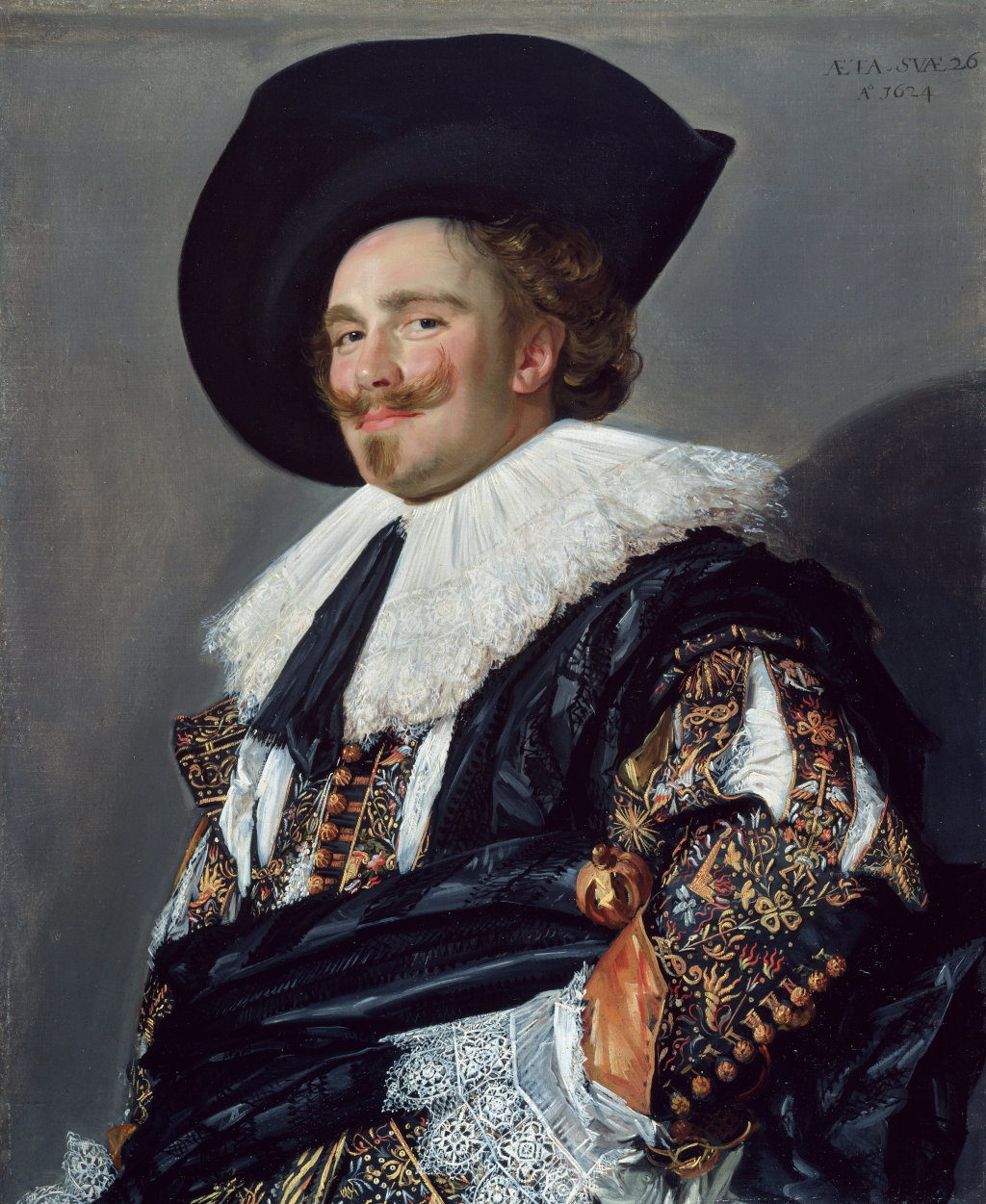
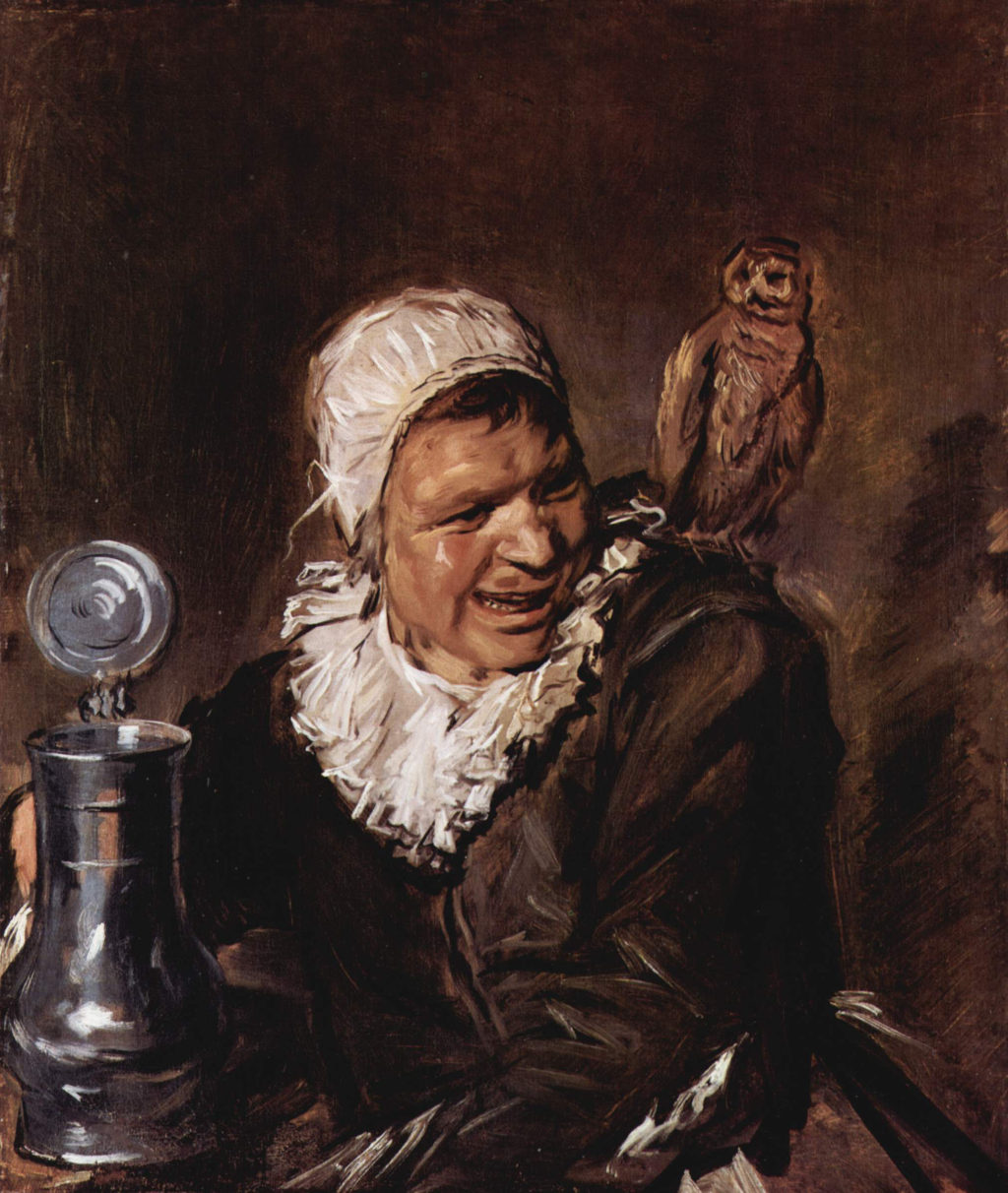
Although Young Man Holding a Skull has never achieved the popular fame of The Laughing Cavalier or Malle Babbe, it occupies a unique position within Frans Hals' oeuvre. Few of his paintings combine portraiture, symbolism, theatrical suggestion and psychological ambiguity with such economy. The work demonstrates that Hals was not simply a brilliant recorder of appearances but an artist capable of engaging profound philosophical questions while maintaining complete naturalness.
The painting also illustrates the changing nature of art historical interpretation. Once celebrated almost exclusively as a representation of Hamlet, it is now appreciated as a more open and intellectually complex work whose meaning cannot be reduced to a single literary source. This shift reflects broader developments within modern scholarship, which increasingly values historical evidence while remaining sensitive to multiple layers of interpretation.
For later artists, Hals' achievement lay above all in his extraordinary ability to animate paint. Gustave Courbet admired his uncompromising realism, Édouard Manet recognised the expressive possibilities of visible brushwork, John Singer Sargent studied his effortless handling of portraiture and Vincent van Gogh repeatedly praised his treatment of flesh, costume and psychological vitality. Young Man Holding a Skull therefore belongs not only to the history of Dutch Golden Age art but also to the longer story of modern painting itself.
``` ```html id="7w2kfe"The Journey of the Painting
The early history of Young Man Holding a Skull remains only partly documented, adding another layer of mystery to an already enigmatic work. Unlike many commissioned portraits whose sitters can be identified through family records, inventories or civic archives, this painting lacks a secure contemporary description that explains precisely who the young man is or why Hals created the image. As a result, art historians have reconstructed its history through surviving ownership records, stylistic comparison and later catalogue references.
Like many Dutch paintings of the seventeenth century, the work almost certainly passed through several private collections before entering the international art market. During the eighteenth century Hals' reputation declined as collectors increasingly favoured highly polished academic styles. His energetic brushwork, once admired for its freshness, appeared unfinished to changing tastes, and many of his finest paintings received less attention than they deserved.
The nineteenth century transformed Hals' reputation. Artists rather than collectors led this rediscovery, recognising in his portraits a vitality that anticipated many of their own artistic ambitions. Paintings once regarded as rough suddenly appeared astonishingly modern. It was during this period that Young Man Holding a Skull became widely associated with Shakespeare's Hamlet, a title reflecting Romantic enthusiasm for literary interpretation rather than contemporary documentary evidence.
Eventually the painting entered the collection of the National Gallery in London, where it remains one of the museum's most intriguing works by Frans Hals. Displayed alongside masterpieces from across Europe, it offers visitors an opportunity to explore not only Hals' technical brilliance but also the evolving ways in which works of art acquire new meanings across successive generations.
Looking Closely: A Changing Identity
This painting has not changed, but our understanding of it has. For much of the nineteenth century many viewers confidently believed they were looking at Hamlet. Today the same image encourages broader questions about symbolism, theatre and mortality. The history of interpretation is itself part of the painting's story.
Where is the Painting Today?
Today, Young Man Holding a Skull is part of the collection of the National Gallery in London, where it hangs among some of the greatest achievements of European painting. Within the museum's galleries devoted to the seventeenth century, Hals' work provides a striking contrast to the approaches of artists such as Rembrandt, Rubens and Van Dyck, demonstrating the remarkable diversity of portraiture during the period.
Seen in person, the painting possesses a vitality that photographs struggle to reproduce. From across the gallery the young man's expression appears entirely convincing, while closer inspection reveals the extraordinary confidence of Hals' brushwork. Broad passages of paint describing fabric, flesh and bone retain an immediacy that reminds viewers of the artist's physical presence at work nearly four hundred years ago.
The relatively intimate scale of the painting also contributes to its impact. Unlike Hals' monumental civic portraits, this work invites a more personal encounter. The sitter stands almost at conversational distance, encouraging viewers to engage directly with his expression and to consider the symbolic object he presents. The experience becomes less like observing a historical artefact than participating in an unfinished dialogue.
For many visitors, the painting's greatest attraction lies in its uncertainty. Museums often present works with reassuring labels identifying subjects and meanings. Here, however, the National Gallery openly acknowledges the continuing debate surrounding the identity of the sitter. Rather than diminishing appreciation, this honesty encourages closer looking and more thoughtful interpretation, qualities entirely consistent with Hals' own approach to portraiture.
Looking Closely: Two Distances
View the painting first from several metres away, then approach slowly until the brushstrokes become visible. Hals intended both experiences to work together. At a distance we meet a living individual; close up we witness the remarkable economy with which paint itself creates that illusion.
Timeline
- c.1626–1628 — Frans Hals paints Young Man Holding a Skull during one of the most inventive phases of his early maturity.
- Seventeenth century — The painting circulates in private collections; its original ownership and intended subject remain uncertain.
- Eighteenth century — Hals' reputation declines as more polished academic styles become fashionable across Europe.
- Nineteenth century — Frans Hals is rediscovered by artists including Courbet, Manet, Sargent and Van Gogh. During this period the painting becomes widely known as Hamlet.
- Twentieth century — Modern scholarship increasingly questions the Hamlet identification, emphasising the lack of contemporary evidence.
- Today — The painting remains in the National Gallery, London, where it continues to inspire debate about portraiture, symbolism and theatrical identity.
Interesting Facts
- The painting was once widely known as Hamlet. Modern museums generally avoid this title because there is no contemporary evidence linking the work to Shakespeare's play.
- The skull may represent memento mori symbolism. Rather than illustrating a specific literary scene, it may simply remind viewers of life's brevity.
- The identity of the sitter remains unknown. This uncertainty is one of the reasons the painting continues to fascinate historians.
- The work combines several artistic traditions. Portraiture, allegory, theatrical costume and symbolic imagery all contribute to its unusually rich meaning.
- Hals deliberately leaves the narrative unresolved. The painting encourages viewers to construct their own interpretation rather than supplying a definitive story.
- Visible brushwork became one of Hals' greatest legacies. His painterly confidence later inspired artists including Manet, Sargent and Van Gogh.
- The painting demonstrates how art historical interpretations change. The shift away from the title Hamlet illustrates how modern scholarship continually reassesses long-held assumptions in the light of new evidence.
Explore More Frans Hals Paintings
FAQs
Further Reading
- Seymour Slive, Frans Hals, 3 vols. London: Phaidon, 1970–1974.
- Christopher D. M. Atkins, Frans Hals. London: Reaktion Books, 2012.
- Claus Grimm, Frans Hals: The Complete Work. Harry N. Abrams, 1990.
- Norbert Middelkoop & Antoon Erftemeijer (eds.), Frans Hals: Eye to Eye with Rembrandt, Rubens and Titian. Rotterdam: nai010 publishers, 2013.
- Friso Lammertse et al., Frans Hals. National Gallery Global, 2023.
- Lorne Campbell, The Sixteenth Century Netherlandish Paintings with French Paintings before 1600. National Gallery, London.
- Walter Liedtke, Dutch Paintings in The Metropolitan Museum of Art. Metropolitan Museum of Art, 2007.
- Mariët Westermann, A Worldly Art: The Dutch Republic 1585–1718. Yale University Press, 2004.
References
- National Gallery, London. Collection catalogue for Young Man Holding a Skull.
- RKD – Netherlands Institute for Art History. Catalogue entry for Frans Hals' Young Man Holding a Skull.
- Seymour Slive. Frans Hals. 3 vols. Phaidon.
- Christopher D. M. Atkins. Frans Hals. Reaktion Books.
- Claus Grimm. Frans Hals: The Complete Work.
- Norbert Middelkoop & Antoon Erftemeijer (eds.). Frans Hals: Eye to Eye with Rembrandt, Rubens and Titian.
- Friso Lammertse et al. Frans Hals. National Gallery Global, 2023.
- Lorne Campbell. National Gallery collection catalogues.
- Mariët Westermann. A Worldly Art.
- Van Gogh Museum / Huygens ING. Vincent van Gogh: The Letters.