 by Tom Gurney
Tom Gurney BSc (Hons) is an art history expert with over 20 years experience
Published on June 29, 2026 / Updated on June 29, 2026
Email: tomgurney1@gmail.com / Phone: +44 7429 011000
Portrait of Willem Heythuijsen: Wealth, Confidence and the Dutch Golden Age
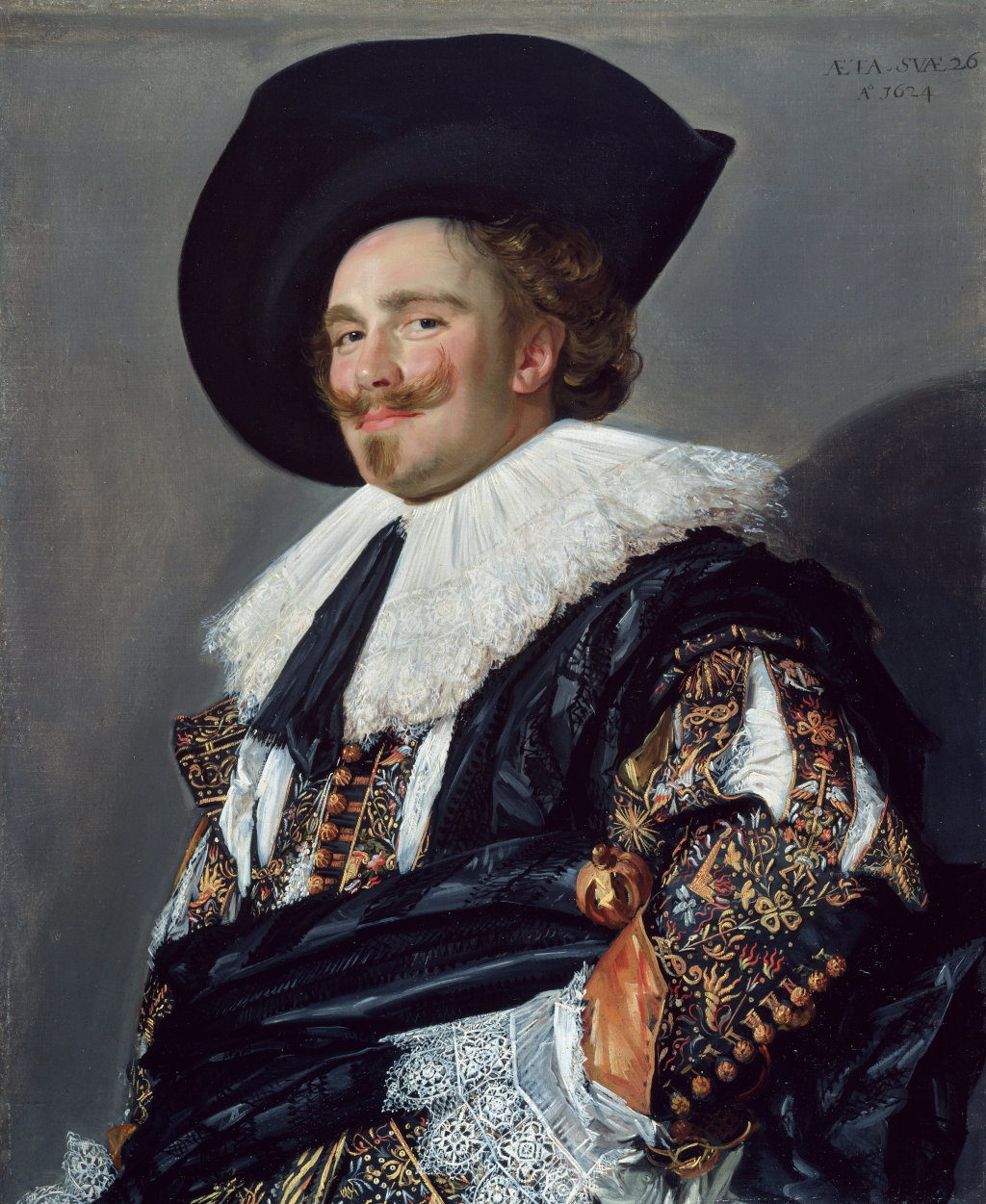
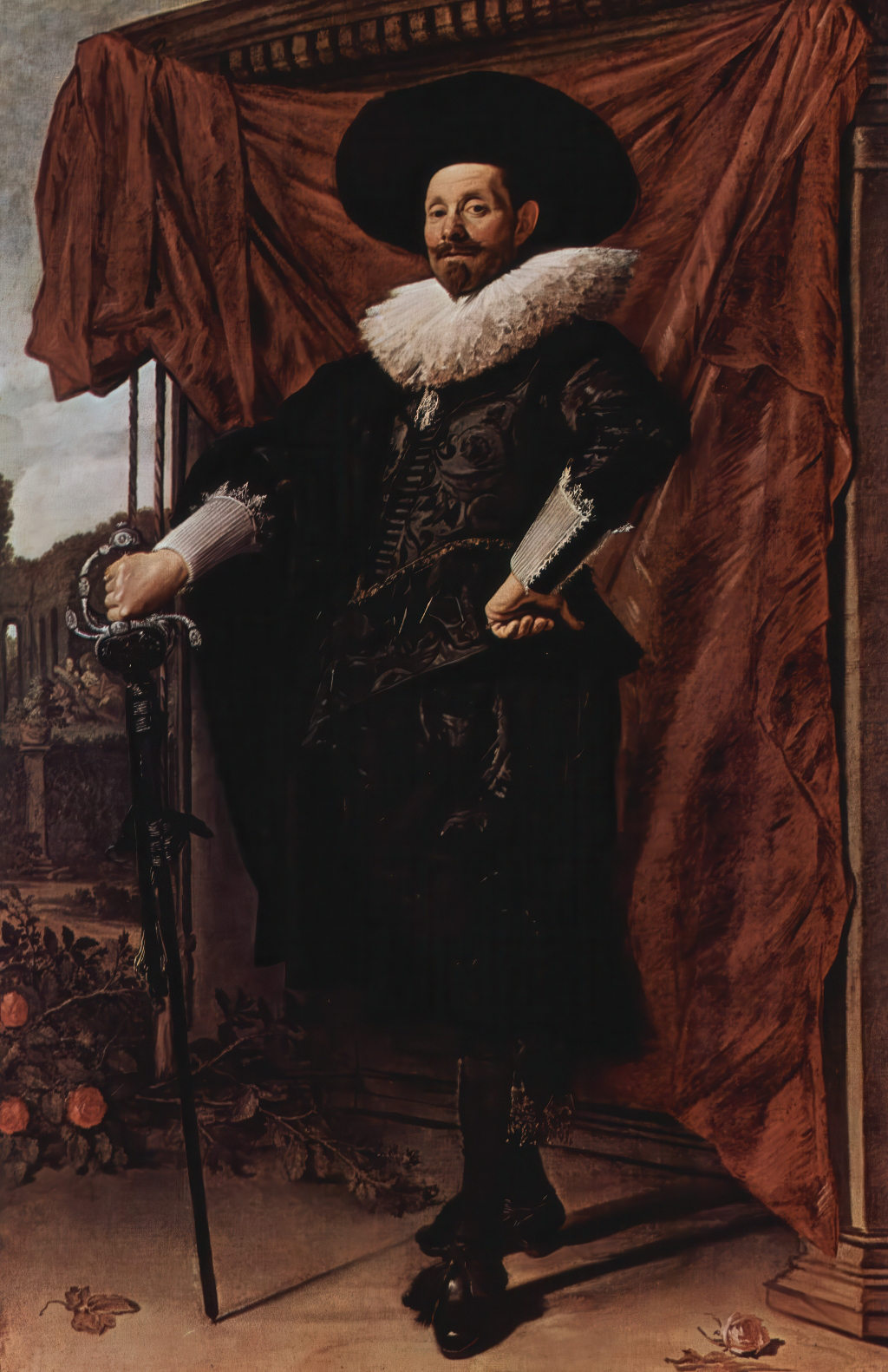
Among Frans Hals' many portraits of Haarlem's prosperous citizens, few possess the effortless confidence of Portrait of Willem Heythuijsen. Standing elegantly with one hand resting upon the hilt of a ceremonial sword and the other placed confidently upon his hip, the wealthy cloth merchant appears completely at ease with both his success and his social position. Every aspect of the composition communicates assurance. Yet, unlike the aristocratic swagger of The Laughing Cavalier, Willem Heythuijsen's confidence is rooted not in inherited nobility but in the commercial prosperity that transformed the Dutch Republic during the seventeenth century.
The portrait occupies a special place within Frans Hals' career because it demonstrates his ability to elevate merchant portraiture into something approaching heroic art. Hals avoids rigid ceremony without sacrificing dignity. Instead, he presents a sitter whose relaxed posture, direct gaze and fashionable clothing suggest genuine personality rather than carefully rehearsed formality. Four centuries later, the portrait still feels strikingly modern in its psychological immediacy.
The sitter himself was no ordinary merchant. Willem Heythuijsen ranked among Haarlem's wealthiest citizens, building his fortune through the flourishing textile trade that helped make the Dutch Republic one of Europe's greatest commercial powers. His success enabled him to commission ambitious works of art, and Hals responded by creating one of the most memorable portraits of Dutch mercantile confidence ever painted.
Although the painting celebrates wealth, it does so with restraint. There are no overflowing treasures, elaborate architectural settings or obvious displays of luxury. Instead, prosperity is communicated through carefully chosen details: rich black fabrics, immaculate lace, polished leather, elegant posture and a commanding yet relaxed presence. Hals understood that genuine authority often requires surprisingly little explanation.
From an artistic perspective, the portrait also represents an important stage in Hals' continuing exploration of naturalism. Broad, confident brushstrokes create convincing textures without sacrificing spontaneity, while subtle variations in posture and expression prevent the sitter from becoming merely another prosperous businessman. The painting therefore functions simultaneously as an historical document, a psychological study and a masterclass in portrait technique.
This article explores Willem Heythuijsen's life, the historical context in which the portrait was commissioned, Hals' handling of paint, the symbolism of costume and gesture, the painting's later influence on European portraiture and the reasons why it remains one of the defining images of Dutch Golden Age prosperity.
- ArtistFrans Hals (c.1582/3–1666)
- TitlePortrait of Willem Heythuijsen
- Datec.1625
- MediumOil on canvas
- Current LocationAlte Pinakothek, Munich
- MovementDutch Golden Age
- SitterWillem Heythuijsen
- OccupationWealthy Haarlem cloth merchant
- Main ThemesSuccess, confidence, prosperity and identity
- Why It MattersOne of Frans Hals' greatest portraits of Dutch mercantile wealth.
At a Glance
| Artist | Frans Hals |
|---|---|
| Date | c.1625 |
| Medium | Oil on canvas |
| Genre | Portrait |
| Movement | Dutch Golden Age |
| Sitter | Willem Heythuijsen |
| Occupation | Cloth merchant |
| Current Location | Alte Pinakothek, Munich |
| Famous For | Relaxed confidence, mercantile status and expressive brushwork |
Contents
- Historical Background
- Looking at Portrait of Willem Heythuijsen
- Who Was Willem Heythuijsen?
- Merchant Patronage in Haarlem
- How Frans Hals Created the Illusion of Presence
- Costume, Sword and Symbolism
- Legacy and Influence
- The Journey of the Painting
- Where is Portrait of Willem Heythuijsen Today?
- Timeline
- Interesting Facts
- FAQs
- Further Reading
- References
Historical Background
By the middle of the 1620s, Frans Hals had established himself as Haarlem's most sought-after portrait painter. His reputation rested upon an unusual ability to combine convincing likeness with extraordinary vitality. Wealthy merchants increasingly sought portraits that reflected not only their prosperity but also their individuality, and Hals proved uniquely capable of satisfying both ambitions. Rather than presenting his sitters as distant symbols of social rank, he transformed them into living personalities whose expressions, gestures and posture continue to feel immediate.
Few individuals embodied Haarlem's commercial success more completely than Willem Heythuijsen. Through the cloth trade, he accumulated considerable wealth during one of the most prosperous periods in Dutch history. The expanding international economy of the Dutch Republic created opportunities for merchants whose fortunes rivalled those of many European aristocrats. Yet unlike hereditary nobles, these new commercial elites often expressed their success through carefully commissioned portraits rather than ancestral castles or ancient titles.
The portrait reflects this changing social landscape. Rather than emphasising military achievement or noble lineage, Hals presents confidence founded upon commercial accomplishment. Elegant clothing, refined manners and dignified bearing communicate social authority without appearing ostentatious. In doing so, the painting captures one of the defining characteristics of the Dutch Golden Age: the emergence of a prosperous urban class whose identity rested upon enterprise, trade and civic responsibility rather than inherited privilege.
This period also marked an important stage in Hals' artistic development. His brushwork had become increasingly economical, his compositions more assured and his understanding of human psychology more sophisticated. Portraits such as Willem Heythuijsen reveal an artist working at the height of his powers, capable of suggesting vitality through few carefully judged strokes of paint.
Looking at Portrait of Willem Heythuijsen
At first glance, Portrait of Willem Heythuijsen appears to be a straightforward celebration of wealth and social success. A richly dressed gentleman stands before us with complete self-assurance, one hand resting confidently upon his hip while the other touches the hilt of an elegant sword. Yet the longer we study the painting, the more we appreciate that Frans Hals has created something considerably more subtle. This is not simply a record of expensive clothing or prosperous status. It is a carefully observed study of confidence itself.
Unlike many formal portraits of the early seventeenth century, the sitter does not appear stiff or ceremonially posed. His weight rests naturally upon one leg, creating a gentle shift through the body that immediately suggests movement rather than rigid stillness. Hals understood that living people rarely stand in perfectly symmetrical poses. By allowing the figure to relax into a more comfortable stance, he creates the impression that Willem Heythuijsen has paused only briefly before continuing whatever conversation or business occupied him moments earlier.
The composition contributes significantly to this illusion. Hals places the sitter prominently within the picture space while avoiding unnecessary architectural distractions. Instead of overwhelming the viewer with elaborate interiors or symbolic objects, he allows costume, posture and expression to communicate status. This economy of design reflects one of Hals' greatest strengths: knowing precisely how much information a viewer needs before personality begins to dominate over decoration.
The portrait also rewards careful observation of seemingly minor details. The relaxed position of the left hand, the slight turn of the shoulders, the angle of the hat and the measured direction of the gaze all contribute to the sense of natural presence. None of these elements calls attention to itself individually, yet together they create one of the most psychologically convincing portraits of the Dutch Golden Age.
Perhaps the most striking quality is the absence of visible effort. Wealth is communicated without extravagance. Authority is established without aggression. Confidence emerges through posture rather than theatrical gesture. Hals persuades us that Heythuijsen occupies this position naturally, making his prosperity appear effortless.
Looking Closely: The Stance
Ignore the costume for a moment and study only the sitter's posture. Notice how his weight settles comfortably onto one leg while the other remains slightly relaxed. This subtle shift transforms what might have become a rigid ceremonial portrait into an encounter with someone who feels physically present. Hals repeatedly used natural posture to replace formality with personality.
Who Was Willem Heythuijsen?
Unlike the unidentified sitters who appear in several of Hals' most celebrated paintings, Willem Heythuijsen was a well-known figure within seventeenth-century Haarlem. Documentary evidence identifies him as a wealthy cloth merchant whose commercial success placed him among the city's prosperous elite. His fortune reflected the economic transformation of the Dutch Republic, where international trade allowed merchants to accumulate wealth on a scale previously associated primarily with hereditary aristocracy.
Heythuijsen's success extended beyond business alone. Contemporary records indicate that he invested in property and maintained a prominent position within Haarlem's civic society. Like many prosperous Dutch merchants, he understood that portraiture formed an important part of public identity. Commissioning a painter of Frans Hals' reputation was therefore both a personal statement and a demonstration of cultural sophistication.
The relationship between Hals and Heythuijsen appears to have extended beyond a single commission. Hals painted Willem Heythuijsen on more than one occasion, suggesting either mutual respect or an ongoing patronage relationship. This repeated collaboration provides valuable insight into the artist's career. Successful painters depended not merely upon isolated commissions but upon networks of loyal clients whose recommendations generated further work throughout the city.
Although Heythuijsen accumulated considerable wealth, the portrait avoids presenting him as an ostentatious collector of luxury. Instead, Hals focuses upon qualities that contemporaries would have admired: self-control, confidence, refinement and quiet authority. These characteristics reflected broader ideals within Dutch mercantile culture, where prosperity was expected to coexist with moderation and civic responsibility.
Modern viewers may naturally admire the sitter's costume, yet Hals encourages us to look beyond appearances. The portrait succeeds because it conveys not merely what Willem Heythuijsen owned but the impression he made upon those around him. We remember the man rather than simply his clothing.
Looking Closely: The Face
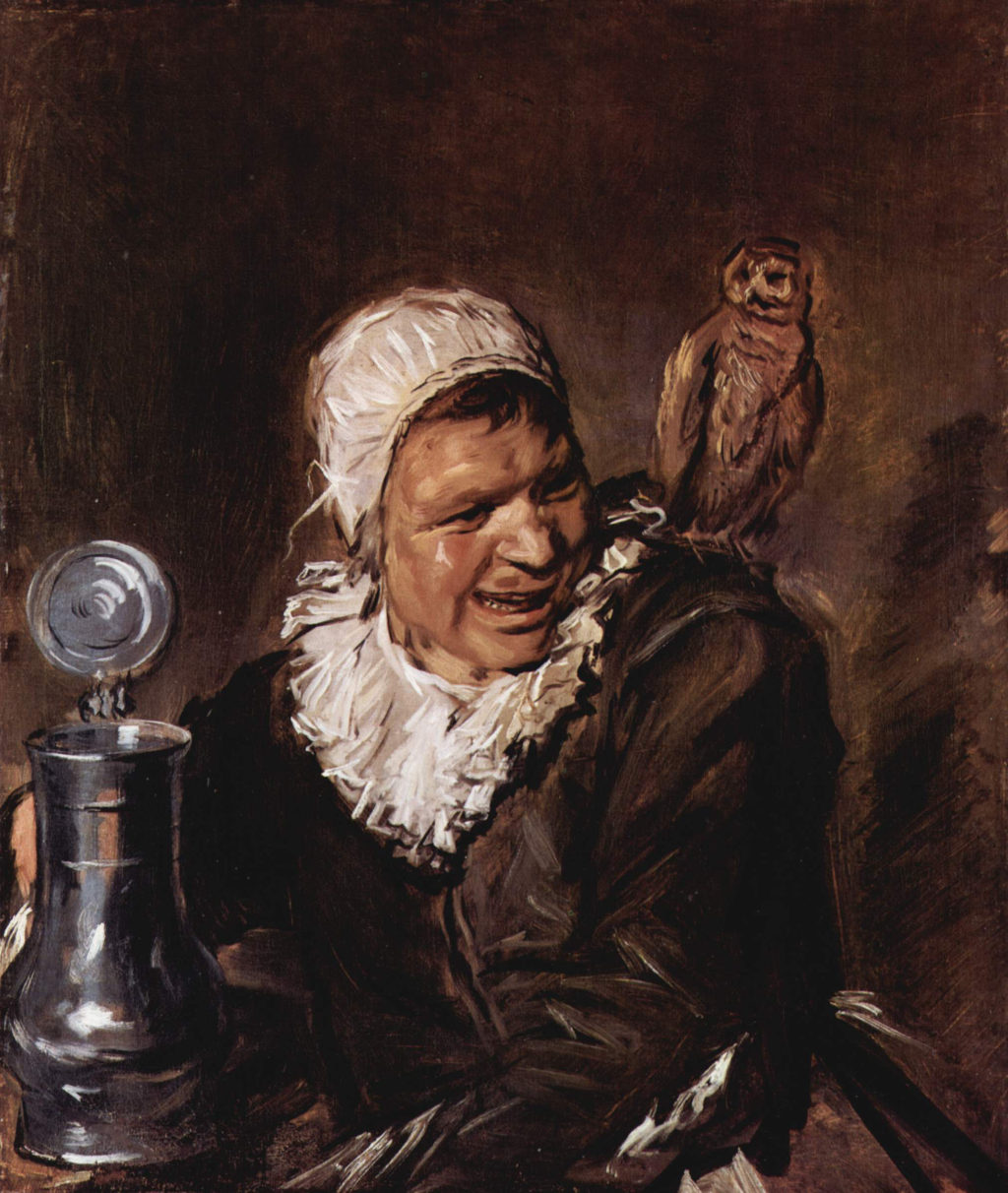
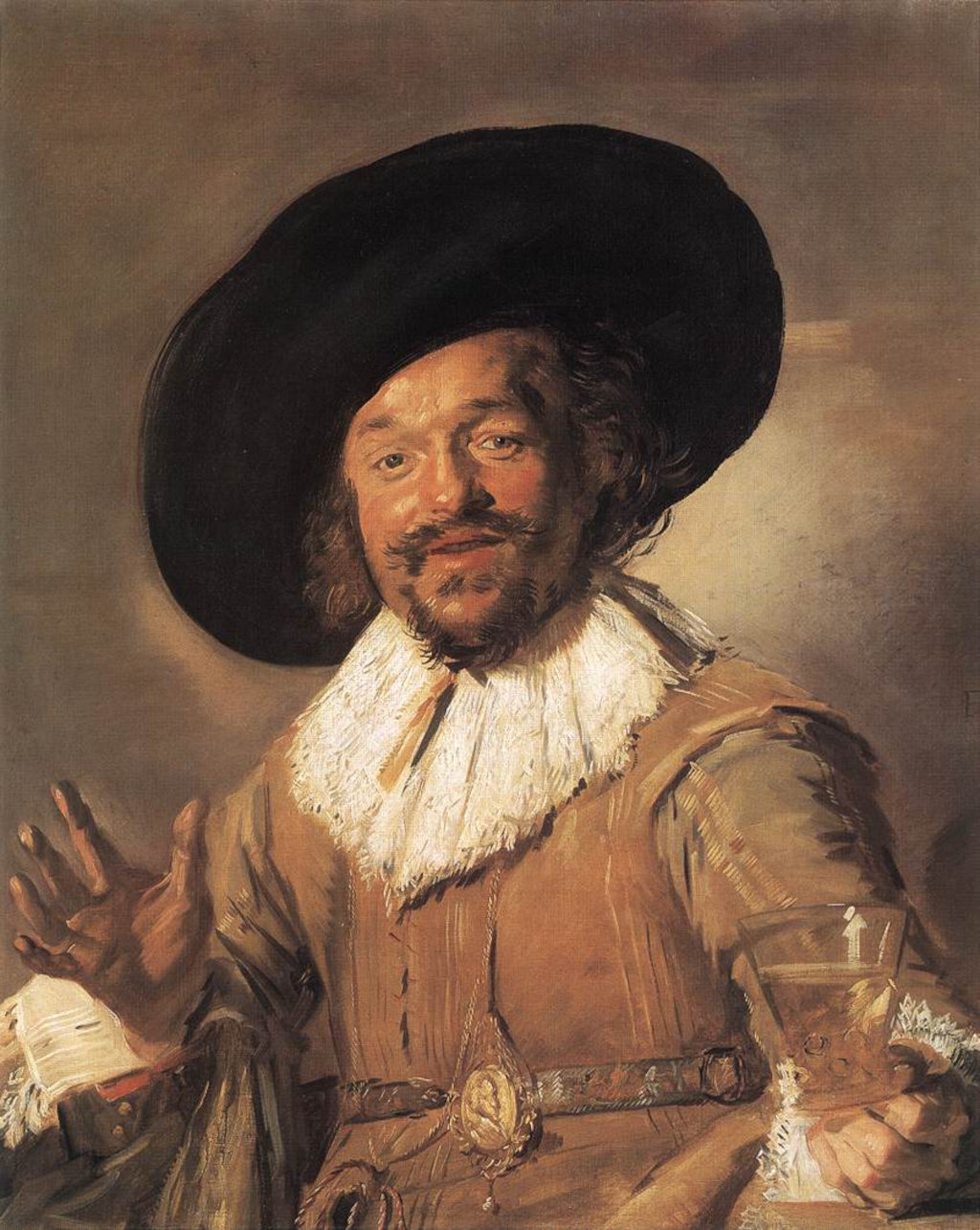
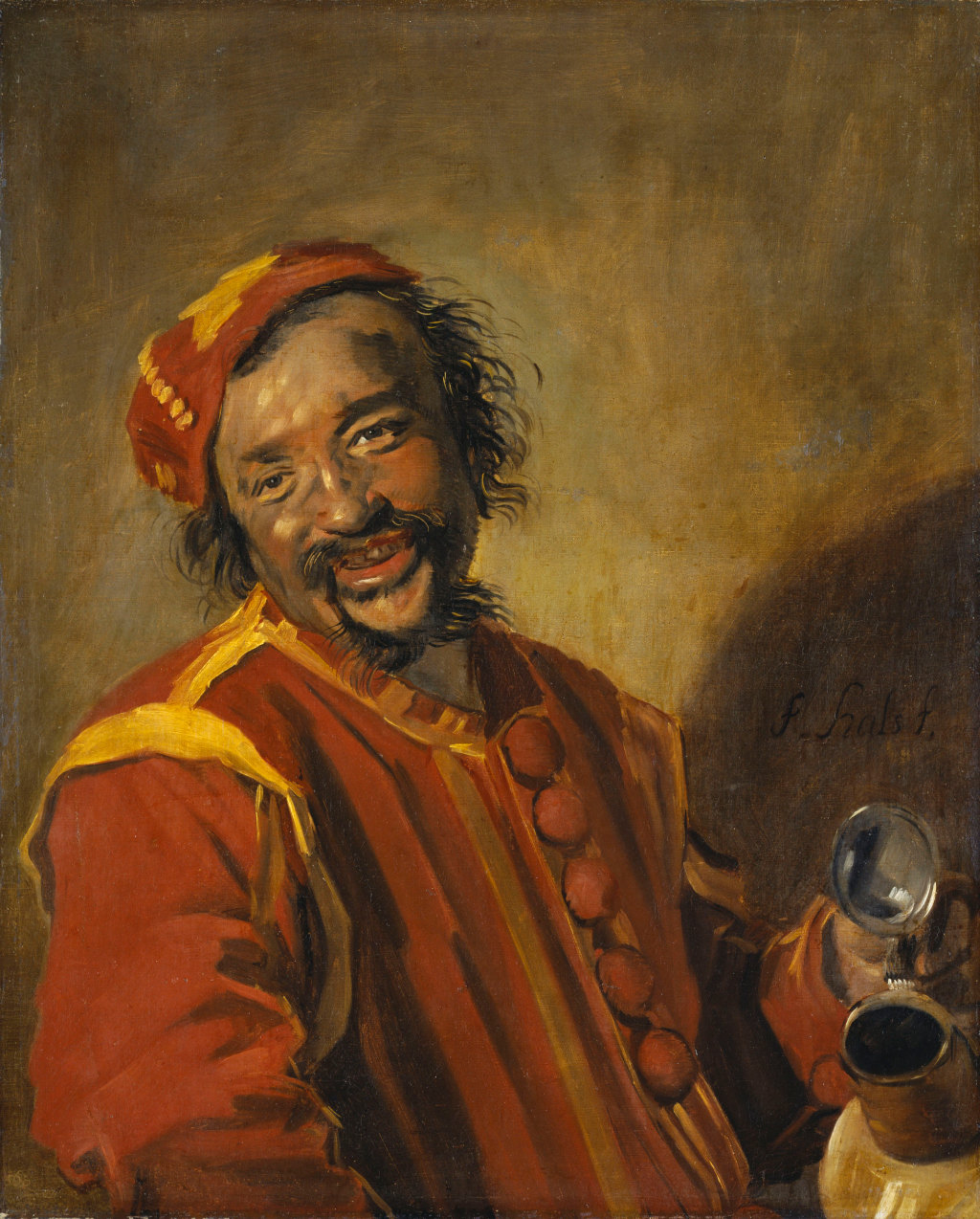
Spend a few moments concentrating only on Heythuijsen's expression. Unlike the open smile of The Merry Drinker or the exuberant laughter of Malle Babbe, the emotion here is deliberately restrained. The confidence comes from calm self-possession rather than obvious animation.
Merchant Patronage in Haarlem
To understand why portraits such as Willem Heythuijsen became so important, it is necessary to appreciate the economic circumstances of the Dutch Republic during the early seventeenth century. Haarlem flourished through industries including brewing, bleaching and, above all, textile production. Merchants who successfully navigated these expanding markets acquired fortunes that rivalled those of Europe's traditional landed nobility. Yet unlike aristocrats, their status depended upon commercial reputation rather than inherited lineage.
Portraiture therefore acquired new significance. A successful merchant required an image that communicated reliability, judgement and prosperity to business partners, family and future generations. These portraits were not intended simply as decorations. They formed part of a broader culture of self-representation in which clothing, posture, expression and surroundings combined to project carefully considered public identities.
Frans Hals proved exceptionally well suited to this market. Rather than reducing prosperous merchants to static symbols of wealth, he captured the qualities that had often contributed to their success in the first place: intelligence, energy, confidence and social ease. His sitters appear capable of conversation rather than merely capable of posing.
The portrait of Willem Heythuijsen illustrates this approach. Although every element of the costume reflects expense, the painting never feels dominated by material display. Instead, Hals persuades us that the merchant wears such finery naturally because it belongs to his everyday world. Prosperity becomes part of personality rather than an external performance.
This subtle distinction helps explain why Hals' portraits have aged so well. Fashion inevitably changes, yet confidence, intelligence and composure remain immediately recognisable. By concentrating upon universal aspects of human behaviour, Hals created portraits that communicate across four centuries of cultural change.
Looking Closely: Wealth Without Excess
Notice how few luxurious objects appear within the composition. Hals does not surround Heythuijsen with jewellery, furniture or expensive possessions. Instead, the sitter himself becomes the primary symbol of success. This restraint gives the portrait a timeless dignity.
How Frans Hals Created the Illusion of Presence
At first sight, Portrait of Willem Heythuijsen appears far less animated than paintings such as The Merry Drinker or Malle Babbe. There is no raised glass, no burst of laughter and no dramatic gesture. Yet this apparent stillness presents an even greater artistic challenge. Hals must persuade us that a man standing quietly before us is every bit as alive as someone caught in the middle of conversation.
Rather than relying upon movement, Hals creates life through subtle shifts of balance, carefully judged eye contact and natural posture. Every part of the figure suggests relaxed confidence. Nothing appears forced, rehearsed or ceremonially arranged. The sitter occupies space as though he has stood this way countless times before.
Composition: Stability Without Rigidity
The composition achieves a delicate balance between formality and informality. Willem Heythuijsen occupies the centre of the canvas with authority, yet the figure avoids the perfect symmetry that often characterised earlier portraiture. Hals introduces gentle asymmetry through the distribution of weight, the position of the hands and the slight rotation of the torso. These adjustments are almost imperceptible individually, but together they prevent the portrait from appearing static.
The empty surrounding space also plays a significant role. Hals resists the temptation to fill the composition with elaborate furnishings or architectural settings. Instead, the figure stands confidently against a restrained background, allowing attention to remain focused upon posture, expression and costume. The absence of unnecessary detail strengthens the portrait rather than diminishing it.
The sword introduces a subtle diagonal that enlivens the composition without disturbing its calm dignity. At the same time, the broad black costume forms a stable vertical mass that anchors the figure within the picture. Hals continually balances movement against stillness, creating a portrait that feels composed but never lifeless.
Looking Closely: Balance
Cover the sitter's sword with your hand. The portrait immediately becomes calmer but also slightly less dynamic. Now reveal it again. Notice how the gentle diagonal created by the weapon introduces just enough movement to prevent the composition from becoming rigid.
Expression: Confidence Without Arrogance
One of Hals' greatest achievements lies in the subtlety of Heythuijsen's expression. Unlike many aristocratic portraits of the period, the sitter does not seek to intimidate the viewer. His face remains composed, attentive and quietly self-assured. There is neither exaggerated seriousness nor theatrical confidence. Instead, Hals presents the expression of a man accustomed to responsibility and success.
The eyes play a central role. Their direct yet relaxed gaze establishes psychological contact with the viewer, while softness around the eyelids prevents the portrait from appearing confrontational. Hals understood that genuine authority rarely requires overt displays of power. Calm assurance communicates status more effectively than dramatic gestures.
The mouth contributes equally to the portrait's psychological complexity. Rather than smiling openly, Heythuijsen's lips suggest the faintest hint of satisfaction. The expression remains deliberately restrained, encouraging viewers to project their own interpretations onto the sitter.
Brushwork: Controlled Freedom
As in many of Hals' greatest portraits, technical confidence underpins every aspect of the painting. From a normal viewing distance, the rich black fabrics appear substantial, the lace collar finely woven and the polished leather convincing. Close inspection reveals broad, energetic brushstrokes that describe rather than painstakingly reproduce each material.
The black costume provides an excellent example of Hals' mastery. Painting convincing black fabric is notoriously difficult because subtle variations of tone must replace obvious colour contrasts. Hals overcomes this challenge through shifts between warm browns, cool greys and dense black passages, allowing reflected light to define folds and texture without sacrificing richness.
The lace collar demonstrates similar economy. Individual threads are largely absent. Instead, carefully placed highlights and shadows suggest the intricate structure of expensive lace while avoiding unnecessary detail. Hals trusted the viewer's eye to complete the illusion.
Even the face reveals restraint. Warm flesh tones emerge through broad passages of ochre, rose, cream and grey rather than countless blended transitions. Tiny accents of brighter pigment around the eyes, nose and lips provide precisely the degree of emphasis required for living skin.
Looking Closely: Black Fabric
Move your attention away from the face and study the black costume instead. Notice that it is not painted with a single shade of black. Browns, blues, greys and warm reflected highlights combine to create depth. Hals understood that truly convincing black always contains colour.
Light and Material
Light flows gently across the composition, revealing different materials through carefully observed reflections rather than dramatic theatrical effects. The lace collar catches the brightest illumination, naturally directing attention towards the face. The polished sword hilt introduces smaller accents of reflected light, while the broad black costume absorbs much of the surrounding illumination.
This orchestration of light reinforces the portrait's psychological structure. We first notice the face, then the hands, then the elegant costume before gradually appreciating the finer details of texture and craftsmanship. Hals controls the viewer's visual journey with precision, ensuring that personality always remains more important than luxury.
Costume, Sword and Symbolism
Every element of Willem Heythuijsen's appearance was chosen carefully. Seventeenth-century portraiture rarely included clothing or accessories by accident, particularly in commissioned works intended to represent prosperous members of urban society. Yet Hals avoids reducing the sitter to a collection of expensive possessions. Instead, costume and symbolism work together to reinforce character.
The magnificent black costume immediately communicates wealth. Black dyes of this depth and richness were expensive to produce, making finely tailored black garments among the most prestigious forms of dress available to prosperous Dutch merchants. Their restrained elegance reflected values admired within the Dutch Republic: prosperity expressed through quality rather than excessive ornament.
The broad lace collar carries similar significance. Far more than decorative fashion, lace represented considerable expense and refined taste. Hals paints it with confidence, allowing viewers to recognise its quality almost instinctively despite the economy of his brushwork. The collar therefore becomes both a display of wealth and a demonstration of the painter's technical brilliance.
The sword introduces perhaps the most intriguing symbolic element. Although Heythuijsen built his fortune through commerce rather than military service, ceremonial swords frequently appeared in portraits of prosperous gentlemen as symbols of honour, civic responsibility and social standing. Rather than suggesting battlefield experience, the weapon communicates respectable authority within urban society.
Taken together, costume, sword and posture construct an image of ideal mercantile success. Hals celebrates a society in which commercial achievement could earn respect comparable to noble birth, while reminding viewers that true authority ultimately depends upon character rather than possessions alone.
Legacy and Influence
Although Portrait of Willem Heythuijsen was created to celebrate a successful Haarlem merchant, its importance extends far beyond the life of a single individual. The painting represents one of the defining achievements of Dutch Golden Age portraiture, demonstrating how Frans Hals transformed conventional commissions into psychologically compelling works of art.
During Hals' lifetime, portraits of prosperous merchants formed an important part of artistic practice within the Dutch Republic. Wealthy citizens increasingly commissioned paintings that reflected both commercial success and personal identity. Hals distinguished himself from many contemporaries by avoiding excessive ceremony. Rather than presenting sitters as distant symbols of status, he captured them as living individuals whose personalities remained central to the composition.
By the eighteenth century, artistic taste had shifted. The visible brushwork that modern audiences celebrate was often criticised as insufficiently polished when compared with the smooth finishes favoured by academic classicism. Hals' reputation consequently declined for a time, despite the enduring quality of his work. The nineteenth century brought a dramatic reassessment as artists searching for greater honesty and immediacy rediscovered the Dutch master's achievements.
Gustave Courbet admired Hals' direct observation of ordinary people. Édouard Manet studied Hals' portraits closely, particularly his ability to describe form through broad, economical brushstrokes. John Singer Sargent found inspiration in Hals' treatment of elegant sitters, especially the ability to make posture and gesture communicate character. Vincent van Gogh praised Hals' handling of black costumes and living flesh, seeing him as an artist whose confidence anticipated modern painting.
Today, Portrait of Willem Heythuijsen remains an important reminder that portraiture can reveal social history while transcending it. The painting documents the emergence of a prosperous commercial elite within the Dutch Republic, yet its enduring appeal lies in qualities that remain universally recognisable: confidence, dignity, composure and quiet self-belief.
Looking Closely: Personality Before Status
Imagine removing the sword, the lace collar and the expensive clothing. Much of the sitter's wealth would disappear, yet his confidence would remain. Hals persuades us that character ultimately matters more than costume, allowing personality to outlast fashion by several centuries.
The Journey of the Painting
Like many seventeenth-century portraits, Portrait of Willem Heythuijsen spent much of its early history within private ownership. Commissioned to commemorate one of Haarlem's most successful merchants, it almost certainly remained closely associated with the sitter and his estate during the years immediately following its completion. Such portraits frequently passed through families by inheritance before gradually entering the wider European art market during later centuries.
Although the complete chain of ownership cannot be reconstructed without interruption, the portrait eventually entered one of Europe's distinguished collections of Old Master painting. Today it belongs to the Alte Pinakothek in Munich, where it occupies an important place among masterpieces of Dutch, Flemish and German art. Displayed alongside works by Rubens, Rembrandt, Van Dyck and Dürer, the painting illustrates the diversity of seventeenth-century portraiture while highlighting Hals' naturalism.
Modern conservation has reinforced appreciation of Hals' technical assurance. Scientific examination reveals confident brushwork laid down with minimal revision, confirming that apparent spontaneity resulted not from haste but from accumulated experience. The portrait therefore provides valuable evidence for understanding Hals' mature working methods as well as his artistic vision.
The painting's reputation has continued to grow throughout the twentieth and twenty-first centuries. Increasing scholarly interest in Dutch urban culture, mercantile patronage and painterly technique has encouraged renewed appreciation of portraits that once seemed comparatively restrained beside Hals' more theatrical character studies.
Where is Portrait of Willem Heythuijsen Today?
The portrait is housed in the Alte Pinakothek, Munich, one of Europe's great museums of Old Master painting. Its extensive collection includes masterpieces by Albrecht Dürer, Peter Paul Rubens, Anthony van Dyck, Rembrandt van Rijn and numerous other artists whose work defined Northern European painting between the fifteenth and seventeenth centuries.
Seeing the original painting reveals qualities that are difficult to reproduce in photographs. The rich blacks of the costume possess depth, while the delicate lace collar appears to shimmer through economical brushwork. Standing several metres away, viewers experience a convincing illusion of living presence. Only on closer inspection does the surface dissolve into broad strokes of cream, grey, brown and black pigment.
Visitors should also observe the relationship between figure and surrounding space. Unlike portraits crowded with elaborate interiors or symbolic objects, Willem Heythuijsen occupies his environment with calm assurance. The apparent simplicity of the composition directs attention towards the sitter himself, reinforcing Hals' conviction that personality remains the true subject of portraiture.
Looking Closely: Standing Like a Merchant
Before studying the costume, imagine the sitter as a silhouette. Even without facial features or luxurious clothing, the relaxed distribution of weight communicates confidence. Hals understood that posture alone can reveal remarkable aspects of character.
Timeline
- c.1582/3 — Frans Hals is born in Antwerp before relocating with his family to Haarlem.
- 1610 — Hals joins the Haarlem Guild of Saint Luke as an independent master.
- c.1625 — Hals paints Portrait of Willem Heythuijsen during the height of his early maturity.
- 1620s–1630s — Haarlem experiences continued prosperity through international trade, with wealthy merchants becoming major patrons of portraiture.
- 1666 — Frans Hals dies in Haarlem.
- Nineteenth century — Courbet, Manet and Van Gogh help revive appreciation of Hals' painterly technique.
- Twentieth century — The portrait becomes recognised as one of Hals' greatest studies of mercantile confidence.
- Today — The painting is among the highlights of the Alte Pinakothek's Dutch Golden Age collection.
Interesting Facts
- Willem Heythuijsen was one of Haarlem's wealthiest merchants. His success came largely through the thriving textile trade that helped fuel the Dutch Golden Age economy.
- Frans Hals painted Heythuijsen more than once. This suggests a continuing relationship between artist and patron.
- The black costume was itself a luxury item. Rich black dyes were expensive to produce.
- The sword symbolises status rather than military achievement. It reinforces dignity and civic standing rather than suggesting that he was a professional soldier.
- Hals painted authority through posture. This work demonstrates that stillness can be as psychologically compelling as dramatic movement.
- Visible brushwork fascinated later artists. Manet, Sargent and Van Gogh admired Hals' economical handling of paint.
- The portrait documents a changing society. It celebrates wealthy merchants whose influence increasingly rivalled traditional aristocracy.
- The painting remains one of Hals' finest merchant portraits. It combines historical importance with artistic refinement.
Frequently Asked Questions
Further Reading
- Seymour Slive, Frans Hals, 3 vols. London: Phaidon, 1970–1974.
- Christopher D. M. Atkins, Frans Hals. London: Reaktion Books, 2012.
- Claus Grimm, Frans Hals: The Complete Work. New York: Harry N. Abrams, 1990.
- Norbert Middelkoop & Antoon Erftemeijer (eds.), Frans Hals: Eye to Eye with Rembrandt, Rubens and Titian. Rotterdam: nai010, 2024.
- Friso Lammertse et al., Frans Hals. National Gallery Global / Rijksmuseum, 2023.
- Mariët Westermann, A Worldly Art: The Dutch Republic 1585–1718. Yale University Press, 1996.
- Walter Liedtke, Dutch Paintings in The Metropolitan Museum of Art. Metropolitan Museum of Art, 2007.
References
- Alte Pinakothek. Collection catalogue entry for Portrait of Willem Heythuijsen.
- RKD – Netherlands Institute for Art History. Catalogue record for Frans Hals and Willem Heythuijsen.
- Seymour Slive. Frans Hals, 3 vols. London: Phaidon, 1970–1974.
- Christopher D. M. Atkins. Frans Hals. London: Reaktion Books, 2012.
- Claus Grimm. Frans Hals: The Complete Work. New York: Harry N. Abrams, 1990.
- Norbert Middelkoop & Antoon Erftemeijer (eds.). Frans Hals: Eye to Eye with Rembrandt, Rubens and Titian. Rotterdam: nai010, 2024.
- Friso Lammertse et al. Frans Hals. National Gallery Global / Rijksmuseum, 2023.
- Walter Liedtke. Dutch Paintings in The Metropolitan Museum of Art. New York: Metropolitan Museum of Art, 2007.
- Mariët Westermann. A Worldly Art: The Dutch Republic 1585–1718. New Haven: Yale University Press, 1996.
- Vincent van Gogh. The Letters. Van Gogh Museum / Huygens ING.