 by Tom Gurney
Tom Gurney BSc (Hons) is an art history expert with over 20 years experience
Published on June 29, 2026 / Updated on June 29, 2026
Email: tomgurney1@gmail.com / Phone: +44 7429 011000
Haarlem, the Dutch Golden Age and the Society Behind Hals' Paintings
Frans Hals did not paint in isolation. His portraits, civic guard paintings, family groups and character studies were shaped by the extraordinary world of the Dutch Republic during the seventeenth century. Haarlem was prosperous, urban, commercially ambitious and socially complex, providing Hals with the sitters, institutions and themes that define his career.
To understand why Hals' paintings look the way they do, it is necessary to understand the society that produced them. His patrons were not kings, popes or aristocratic courts, but merchants, brewers, civic officers, regents, married couples and prosperous citizens. Their values were shaped by trade, Protestantism, local government, charitable institutions and the pride of an independent republic.
This page explores the historical context behind Frans Hals' art: the Dutch Golden Age, Haarlem's economy, the rise of the merchant class, civic guard companies, Protestant visual culture, fashion, charity, daily life and the distinctive art market of the Dutch Republic. Together these subjects explain why Hals became one of the defining painters of his age.
- Artist Frans Hals (c.1582/83–1666)
- Main City Haarlem
- Historical Period Dutch Golden Age
- Political Context The Dutch Republic
- Main Patrons Merchants, civic officers, families and charitable governors
- Key Institutions Civic guards, guilds, churches and almshouses
- Why It Matters The world of Haarlem explains the subjects, style and social meaning of Hals' paintings.
Contents
- The Dutch Golden Age
- Haarlem in the Seventeenth Century
- Antwerp, Immigration and Hals' Background
- The Dutch Republic and Civic Society
- Protestantism and the Changing Art Market
- The Rise of the Merchant Class
- Civic Guards and Public Identity
- Charity, Regents and Social Welfare
- Fashion, Black Clothing and Lace
- Daily Life in Haarlem
- The Dutch Art Market
- Other Artists in Hals' World
- Why This Context Matters
- FAQs
- References
The Dutch Golden Age
Frans Hals worked during the Dutch Golden Age, a period in which the Dutch Republic became one of the most prosperous and culturally dynamic regions in Europe. Trade, shipping, banking, textile production and overseas commerce created new wealth on a scale that transformed urban life. This prosperity did not only enrich rulers or aristocrats; it also created a broad class of merchants, professionals and civic leaders who could afford to commission paintings.
This social structure was essential to Hals' career. Unlike artists working in courtly or religious settings, Hals painted for an urban public. His sitters were often merchants, brewers, militia officers, married couples and governors of charitable institutions. Their portraits reflect a society in which personal achievement, civic service and commercial success were deeply intertwined.
The Dutch Golden Age also produced a distinctive visual culture. Portraits, landscapes, still lifes, genre scenes and city views flourished in a market where private collectors and local institutions played an unusually important role. Hals' art belongs directly to this world: practical, urban, observant and intensely interested in human behaviour.
Why This Matters for Hals
Without the prosperity of the Dutch Golden Age, Hals would not have had such a large market for portraits. His career depended on a society in which ordinary citizens, not just nobles, wanted to be painted.
Haarlem in the Seventeenth Century
Haarlem was the centre of Frans Hals' artistic life. Although born in Antwerp, he spent nearly his entire career in Haarlem, and the city provided the patrons, institutions and social networks that shaped his work. Haarlem was prosperous, compact and culturally active, with a strong textile industry, brewing economy and civic identity.
The city was also home to painters, writers, rhetoricians, militia companies and charitable institutions. This gave Hals access to a broad range of subjects: wealthy merchants, civic officers, families, musicians, children, comic characters and regents. His paintings are therefore not merely portraits of individuals; they are portraits of Haarlem itself.
Haarlem's scale mattered. It was large enough to sustain a sophisticated art market but small enough for social networks to be tightly connected. A successful portraitist could become known across the city through commissions, family connections, guild membership and civic institutions. Hals' long residence in Haarlem helped make him the visual chronicler of its society.
Hals and Haarlem
Hals' paintings make most sense when seen as products of Haarlem's urban culture: prosperous, sociable, civic-minded and proud of its local institutions.
Antwerp, Immigration and Hals' Background
Frans Hals was born in Antwerp around 1582 or 1583, shortly before his family moved north to Haarlem. This migration formed part of a much larger movement of people from the southern Netherlands into the Dutch Republic after the political and religious upheavals of the late sixteenth century.
The Fall of Antwerp in 1585 was especially important. As Spanish forces regained control of the city, many Protestant and commercially active families moved north. They brought skills, capital, artistic traditions and international connections with them. Haarlem benefited greatly from this influx, particularly in textiles and the arts.
Hals therefore belonged to a generation shaped by migration. He was born in the southern Netherlands but became one of the great painters of the Dutch Republic. This background helps explain the mixture of Flemish inheritance and Dutch civic culture that runs through his work.
The Dutch Republic and Civic Society
Unlike many European states of the seventeenth century, the Dutch Republic was not dominated by an absolute monarch. Political power rested largely with provincial governments and prosperous towns, where merchants, magistrates and civic officers played an influential role. This civic structure shaped the kinds of portraits Frans Hals was asked to paint.
Service to the community carried considerable prestige. Militia officers, regents of charitable foundations and city officials commissioned portraits that celebrated public responsibility as much as personal success. Hals' great group portraits therefore reflect a culture that valued collective civic identity alongside individual achievement.
The republican system also encouraged a strong sense of local pride. Haarlem's institutions commissioned works that celebrated the city itself, helping Hals become not simply a portrait painter but the visual historian of Haarlem's civic life.
Why This Matters for Hals
Many of Hals' most ambitious commissions existed because Dutch cities celebrated civic service through portraiture rather than through royal propaganda.
Protestantism and the Changing Art Market
The Protestant Reformation transformed artistic patronage in the northern Netherlands. Large religious commissions became far less common than in Catholic Italy or Spain, while private collectors increasingly purchased portraits, landscapes, still lifes and scenes of everyday life. Artists adapted by serving an expanding commercial market rather than relying primarily on churches.
For Hals this change proved decisive. Portraits became one of the most prestigious artistic genres because prosperous citizens wanted lasting records of themselves and their families. Religious belief still influenced Dutch society, but it did so indirectly through values of modesty, industry and civic responsibility rather than through monumental church decoration.
This environment encouraged close observation of ordinary life. Instead of saints and biblical miracles, painters increasingly depicted merchants, musicians, domestic interiors and familiar social interactions, subjects that suited Hals' remarkable gift for portraying living personalities.
Looking Beyond the Church
The Dutch Republic did not abandon art after the Reformation—it redirected artistic energy toward private collectors and civic institutions, creating one of Europe's richest commercial art markets.
The Rise of the Merchant Class
The extraordinary expansion of Dutch trade created a confident merchant class whose influence extended well beyond commerce. Successful brewers, textile manufacturers, lawyers, physicians, shipowners and overseas traders became major patrons of the arts, commissioning portraits that expressed prosperity, education and good citizenship.
Unlike aristocratic portraiture elsewhere in Europe, these works often celebrate professional success rather than inherited rank. Clothing, posture and expression communicate confidence without excessive grandeur, reflecting a society in which commercial achievement could bring social prestige.
Hals excelled at portraying this new elite. His merchant portraits combine elegance with psychological immediacy, presenting successful individuals as active participants in an energetic urban society rather than distant members of a hereditary ruling class.
Civic Guards and Public Identity
The civic guard companies (schutterijen) were among the most visible institutions in Dutch urban life. Although originally organised for the defence of the city, by the seventeenth century they also served ceremonial, social and political functions. Membership was a mark of prestige, particularly for prosperous merchants and civic leaders.
These companies commissioned the monumental banquet portraits for which Frans Hals is now famous. Rather than arranging the officers in static rows, Hals depicted conversations, gestures and shared celebrations, transforming official records into lively portraits of civic identity.
The resulting paintings celebrated both the individuals portrayed and the collective ideals of cooperation, service and local pride that defined the Dutch Republic.
Key Paintings
See The Banquet of the Officers of the St George Militia Company and The Banquet of the Officers of the St Adrian Militia Company.
Charity, Regents and Social Welfare
Dutch towns placed great importance on organised charity. Almshouses, orphanages and hospitals were administered by regents and regentesses drawn from the city's respected citizens. These voluntary governors supervised finances, welfare and discipline, making charitable service an important expression of civic responsibility.
Late in life, Hals portrayed these officials with remarkable psychological depth. Their sober clothing and restrained expressions reflect the seriousness of their responsibilities while revealing the individuality of each sitter. These portraits provide an invaluable record of how public service was understood in the Dutch Republic.
Key Paintings
Explore The Regents of the Old Men's Almshouse and The Regentesses of the Old Men's Almshouse.
Fashion, Black Clothing and Lace
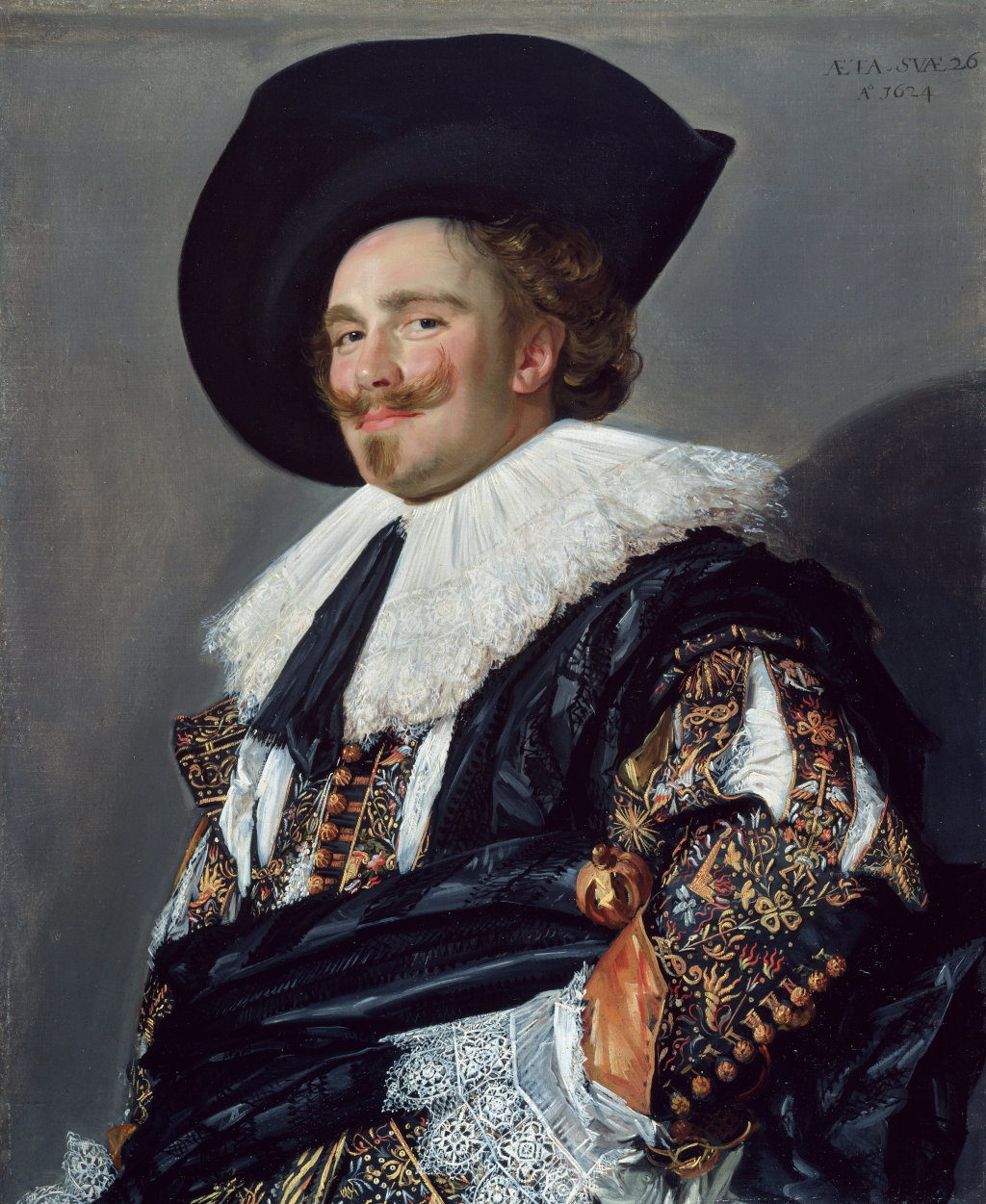
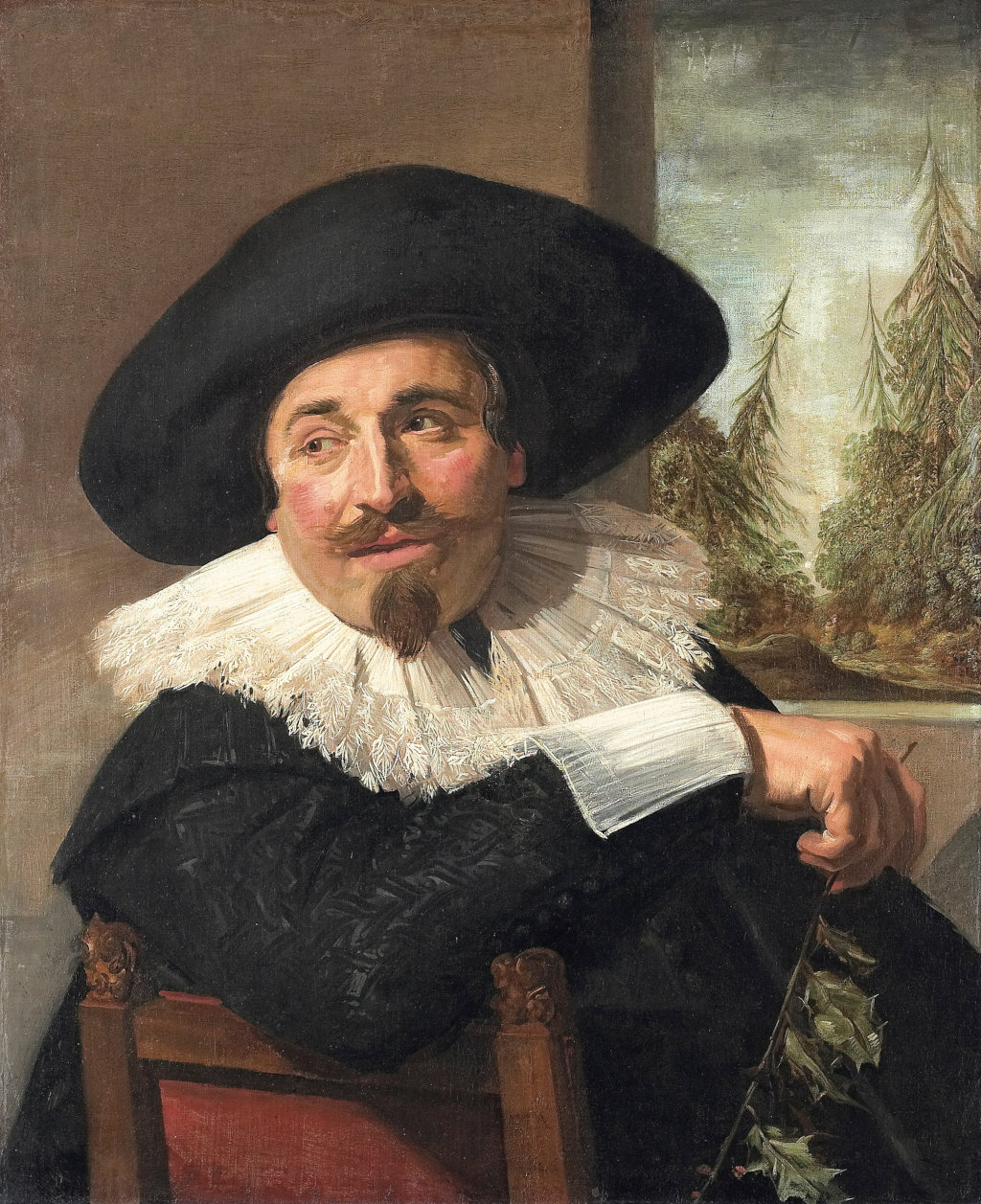
The distinctive appearance of Hals' portraits reflects the fashions of prosperous Dutch society. Black garments, broad-brimmed hats and elaborate white lace collars were expensive indicators of status rather than signs of simplicity. Producing deep, even black dyes required costly materials, while fine lace represented many hours of skilled craftsmanship.
Hals used clothing to communicate wealth and identity without allowing costume to overshadow personality. His mastery of black fabrics and delicate lace also became one of the defining technical achievements of his portraiture, reinforcing the dignity and prosperity of his sitters.
Looking Closely
Notice how Hals varies black tones and lace textures to distinguish fabrics, rank and personality. Costume becomes an extension of character rather than mere decoration.
Daily Life in Haarlem
Seventeenth-century Haarlem was a busy commercial city filled with canals, workshops, breweries, markets and churches. Merchants negotiated business, craftsmen belonged to guilds, musicians entertained in taverns, while families gathered in prosperous town houses. These everyday experiences form the social backdrop to many of Hals' portraits.
Rather than depicting mythological heroes or distant rulers, Hals focused on people his contemporaries would have recognised. Their clothing, gestures and expressions preserve a vivid record of ordinary urban life during the Dutch Golden Age.
Imagine Haarlem c.1635
Walk through the city's streets and you would encounter militia officers, brewers, textile merchants, children, musicians and prosperous families—the very people who appear throughout Hals' paintings.
The Dutch Art Market
The Dutch Republic possessed one of Europe's most sophisticated commercial art markets. Alongside commissioned portraits, artists produced paintings for dealers, auctions and private collectors. Competition encouraged specialisation, with portraitists, landscape painters, still-life specialists and genre painters serving different audiences.
Although Hals relied heavily on portrait commissions, he also benefited from this vibrant artistic economy. The existence of an open market encouraged innovation, allowing artists to develop distinctive styles that appealed to a broad range of buyers rather than a single court or church.
Other Artists in Hals' World
Frans Hals worked alongside many remarkable Dutch artists whose careers illuminate different aspects of the Golden Age. While Hals excelled in portraiture, contemporaries explored landscapes, domestic interiors, genre scenes and dramatic history painting. Together they created one of the richest artistic cultures in European history.
- Rembrandt van Rijn — psychological portraiture and biblical scenes.
- Johannes Vermeer — intimate domestic interiors.
- Judith Leyster — lively genre scenes and portraits influenced by Hals.
- Jan Steen — humorous scenes of everyday life.
- Jacob van Ruisdael — landscapes of the Dutch countryside.
- Pieter de Hooch — carefully ordered domestic interiors.
Why This Context Matters
Understanding the historical world of Frans Hals transforms the way his paintings are viewed. His portraits are not isolated masterpieces but products of a confident republic shaped by trade, migration, Protestantism, civic institutions and urban prosperity. Every smiling merchant, militia officer, regent and family group reflects broader developments within Dutch society.
Seen in this context, Hals emerges not only as an exceptional portrait painter but also as one of the greatest visual historians of the Dutch Golden Age. His art preserves the appearance, ambitions and values of an extraordinary society whose influence extended far beyond the Netherlands.
Frequently Asked Questions
References
- Christopher D. M. Atkins, Frans Hals, Reaktion Books, 2012.
- Seymour Slive, Frans Hals, 3 vols., Phaidon, 1970–1974.
- Simon Schama, The Embarrassment of Riches, University of California Press, 1987.
- Jonathan Israel, The Dutch Republic: Its Rise, Greatness and Fall 1477–1806, Oxford University Press, 1995.
- Friso Lammertse et al., Frans Hals, National Gallery / Rijksmuseum / Gemäldegalerie, 2023.
- Frans Hals Museum Collection Catalogue.
- RKD – Netherlands Institute for Art History.
- Rijksmuseum collection records.
- National Gallery, London, Frans Hals exhibition catalogue, 2023.