 by Tom Gurney
Tom Gurney BSc (Hons) is an art history expert with over 20 years experience
Published on June 29, 2026 / Updated on June 30, 2026
Email: tomgurney1@gmail.com / Phone: +44 7429 011000
The Laughing Cavalier: Why This Portrait Still Feels Alive
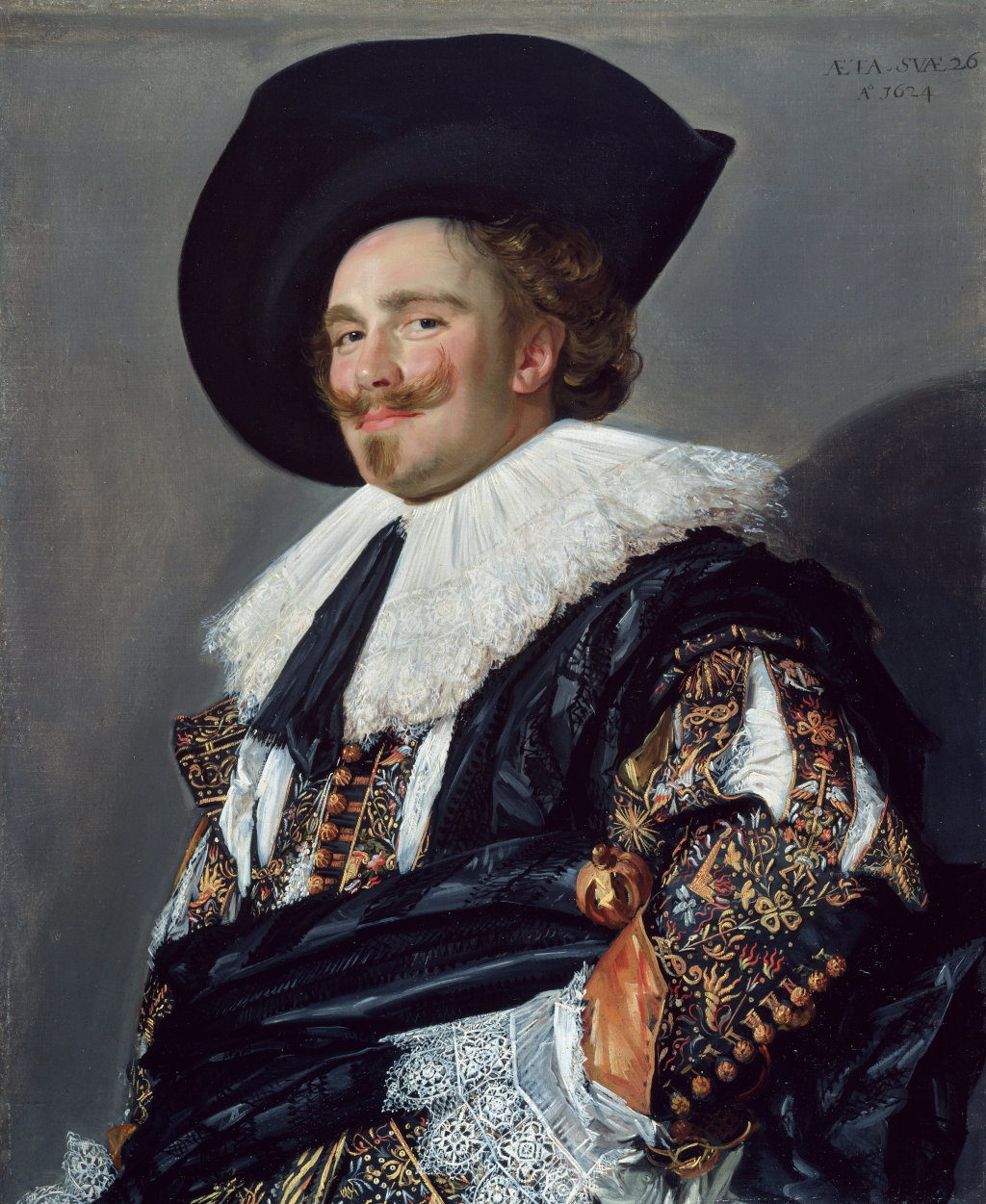
Why does a portrait painted four centuries ago still feel as though another person is standing in front of us? That question lies at the heart of The Laughing Cavalier, Frans Hals' most famous painting. Completed in 1624 and now housed in the Wallace Collection in London, the portrait has become one of the defining images of Dutch Golden Age art. [1]
The young man in black seems to meet the viewer with wit, confidence and a startling sense of presence, even though his name has disappeared from history.
The painting's familiar title is part of its appeal, but also part of its confusion. The sitter is not truly laughing, and there is no secure evidence that he was a cavalier.
Art UK notes that the title was coined only between 1875 and 1888, long after Hals had died.[2] Yet the nickname has endured because it captures something viewers instinctively recognise: a mood of vitality, amusement and self-possession that seems to animate the figure from within.
This article argues that the portrait's real achievement is not the smile itself, but the illusion of life that Hals builds around it. The direct gaze, rotating pose, upturned moustache, shimmering embroidery, bright lace collar and astonishingly economical brushwork all contribute to the impression that we are encountering a living individual rather than a painted likeness.
Hals does not merely record appearance. He persuades us that the sitter has turned towards us for a moment, aware of being seen.
The portrait also belongs to a society undergoing profound change. In the early seventeenth century, the Dutch Republic was becoming one of Europe's most prosperous commercial powers, and portraiture flourished among citizens who wished to record success, marriage, family and reputation.
Hals, working in Haarlem, responded to this world with a new kind of portrait: less stiff, less distant and more psychologically alive than many earlier examples.
Despite its fame, The Laughing Cavalier remains full of uncertainties. The inscription records that the sitter was twenty-six years old in 1624, but not his name. [1]
Tieleman Roosterman, a wealthy Haarlem linen and silk merchant, has often been suggested as a possible candidate, partly because Hals later painted a confirmed portrait of him in 1634.[3] RKD, however, stresses significant differences between the two portraits, so the identification remains unresolved.[4]
Rather than treating the painting simply as a famous image, this page explores how it works. We will look at the sitter, the historical setting, the brushwork, the costume, the symbolism, the painting's later reputation and its journey into the Wallace Collection.
The central question remains the same throughout: how did Frans Hals transform oil paint into one of the most convincing illusions of a living person in Western portraiture?

The man's confident pose, upturned hat and coy expression imbue the portrait with a unique vitality.
- Artist Frans Hals (c.1582/3–1666)
- Title The Laughing Cavalier
- Date 1624
- Medium Oil on canvas
- Dimensions 83 × 67.3 cm (32.7 × 26.5 in)
- Current Location Wallace Collection, London
- Movement Dutch Golden Age
- Subject Unknown gentleman, aged 26
- Known For Expressive brushwork, direct gaze and richly embroidered costume
- Why It Matters One of the most celebrated portraits of the seventeenth century and Frans Hals' defining masterpiece.
Contents
- Historical Background
- Annotated Guide to The Laughing Cavalier
- Looking at The Laughing Cavalier
- Who is the Laughing Cavalier?
- How Frans Hals Created the Illusion of Life
- Symbolism and Meaning
- Embroidery
- The Enduring Legacy of The Laughing Cavalier>
- The Journey of the Painting
- Where is The Laughing Cavalier Today?
- Timeline
Historical Background
To understand The Laughing Cavalier, it is first necessary to understand the society in which it was painted. When Hals completed the portrait in 1624, the Dutch Republic was emerging as one of the wealthiest and most dynamic regions in Europe.
International trade, shipbuilding, finance and textile manufacture transformed cities such as Amsterdam, Leiden and Haarlem into thriving commercial centres. Portraiture, once associated mainly with courts, aristocrats and ecclesiastical patrons, became an essential expression of identity for merchants, brewers, lawyers, civic officials and wealthy families.
Haarlem occupied a particularly important position within this culture. The city had strong traditions in linen production, brewing and civic organisation, and it became one of the great artistic centres of the northern Netherlands.
Hals spent almost his entire career there, developing a form of portraiture that matched the confidence of its patrons. His sitters were not kings or saints. They were citizens, officers, couples, children and local figures who wanted to be remembered with dignity, intelligence and social presence.
Hals was exceptionally suited to this environment. Rather than presenting sitters as rigid symbols of rank, he gave them movement, breath and temperament.
His early civic guard portraits, including The Banquet of the Officers of the St George Civic Guard of 1616, established his reputation for animating group portraiture while preserving individual character. By 1624 he had the confidence to apply the same vitality to a single sitter.
This is why The Laughing Cavalier feels so different from many earlier portraits. It is formal enough to display wealth and status, but informal enough to suggest encounter. The sitter does not appear locked into ceremony. He seems to have turned towards us, aware of our presence. That balance between dignity and immediacy is central to Hals' achievement.
Annotated Details from The Laughing Cavalier
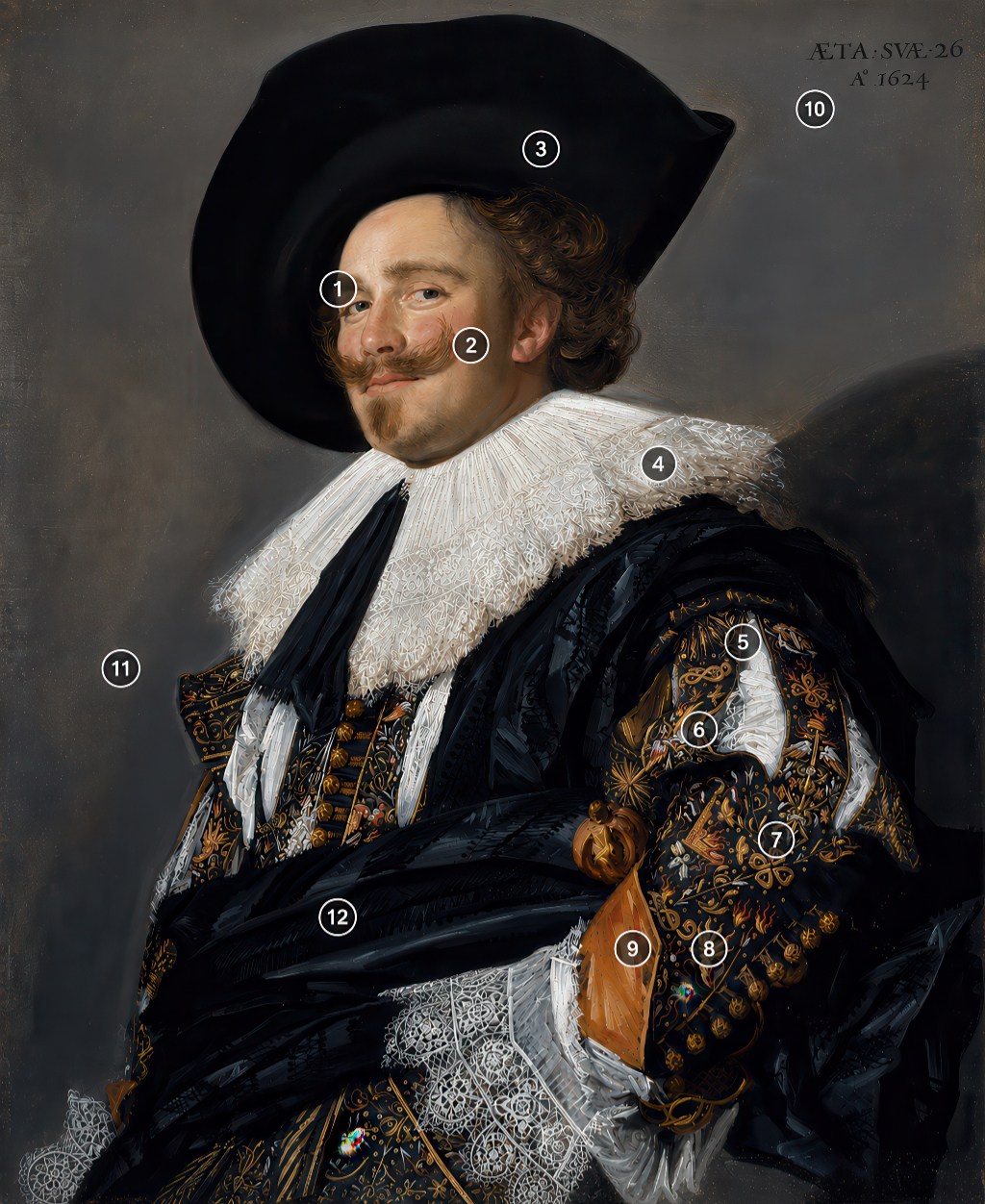
Annotated Guide to The Laughing Cavalier
-
1. Direct eye contact
Hals makes the sitter look directly at the viewer, creating the powerful impression of a living encounter rather than a distant formal portrait. -
2. The famous “laughing” expression
The sitter's lips are closed, but the lifted moustache, relaxed cheeks and alert gaze make the expression appear amused and self-confident. -
3. The enormous black hat
The broad hat frames the sitter's face and adds dramatic weight to the upper composition. -
4. The luxurious lace collar
The collar appears intricate from a distance, but close inspection reveals Hals' loose, economical brushwork. -
5. The embroidered sleeve
The sleeve is one of the painting's great visual attractions, combining luxury, fashion and symbolic decoration. -
6. Cupid's arrows and emblematic embroidery
The embroidered motifs include symbols traditionally associated with love, courtship and personal fortune. -
7. Lovers' knots
The knot-like motifs suggest fidelity, attachment and possibly marriage or betrothal symbolism. -
8. Flames and symbols of love
The flame-like decoration may refer to passion, desire or emotional intensity within seventeenth-century emblematic design. -
9. Orange sash
The warm sash adds a strong colour accent and helps guide the viewer's eye through the lower composition. -
10. Age inscription
The inscription records the sitter's age as twenty-six and the date as 1624, but it does not identify him by name. -
11. Three-quarter pose
The sitter's body turns away while the head turns back toward us, creating the sensation of a brief, living encounter. -
12. “Twenty-seven blacks”
The dark costume is built from many subtle tones rather than flat black, demonstrating Hals' sophisticated handling of shadow, fabric and reflected light.
Watch: The Story Behind The Laughing Cavalier
This short video explores one of Frans Hals' greatest masterpieces, examining the painting's mysterious sitter, its famous smile, and the remarkable brushwork that has fascinated viewers for almost four centuries.
It also explains why the title The Laughing Cavalier is actually misleading, as the sitter is neither laughing nor known to have been a cavalier.
As you watch, pay particular attention to the details discussed elsewhere on this page. Notice the direct eye contact, the subtle expression, the extraordinary lace collar and the richly embroidered sleeve, whose symbolic motifs include references to love, prosperity and honour. These details reveal why the portrait rewards prolonged study rather than a quick glance.
If possible, pause the video occasionally and compare individual details with the high-resolution image above. Frans Hals painted with astonishing freedom, allowing seemingly loose brushstrokes to resolve into convincing textures when viewed from the proper distance. This technique later inspired artists including Édouard Manet, Vincent van Gogh and John Singer Sargent.
Looking at The Laughing Cavalier
Imagine standing a few metres from the painting in the Wallace Collection. The first thing most viewers notice is the face. A broad black hat frames the head against a pale background, while the white lace collar seems almost to illuminate the sitter's features.
The eyes meet ours directly, and the upturned moustache encourages us to read the expression as amused. The effect is immediate and memorable.
Only gradually does the rest of the portrait reveal itself. The viewer's attention moves from the face to the extraordinary embroidered sleeve that dominates the lower half of the composition. Gold, orange, cream and silver motifs shimmer across the black doublet.
What first appeared as dark clothing becomes a dazzling display of texture, fashion and symbolism. Hals allows the costume to proclaim wealth, but he never lets it eclipse the sitter's humanity.
The pose is equally important. The body turns slightly to one side while the head rotates back towards the viewer. One arm bends confidently at the hip. This twist prevents the portrait from appearing static and creates the sensation of a momentary encounter. We do not feel that the sitter has been arranged like an object. We feel that he has paused.
There is very little background detail. Hals includes no columns, curtains, books, landscape or architectural setting. Many portrait painters used such accessories to suggest rank, education or grandeur. Hals removes them. Everything depends upon the figure himself: expression, posture, clothing and paint.
Looking Closely: First Impressions
Stand a few metres from the painting before moving closer. At first the lace, embroidery and face appear highly detailed. As you approach, much of that detail dissolves into visible strokes of paint. Hals painted for the eye at normal viewing distance, not for a magnifying glass.
Who is the Laughing Cavalier?
The sitter is unknown. Hals included the date and age but not a name, so the inscription tells us only that the man was twenty-six when the portrait was painted in 1624.[1] This allows historians to place his birth around 1597 or 1598, but it does not identify him.
The most discussed candidate is Tieleman Roosterman, a wealthy Haarlem merchant involved in the linen and silk trade. Cleveland Museum of Art identifies Roosterman as an extremely wealthy linen and silk merchant, aged thirty-six when Hals painted his confirmed portrait in 1634.[3] The Wallace Collection's 2021 exhibition Frans Hals: The Male Portrait displayed The Laughing Cavalier alongside the Cleveland portrait so that the possible identification could be examined directly.[5]
The theory is attractive because Roosterman was the right age and belonged to the kind of wealthy Haarlem milieu that could have commissioned such a portrait. His profession also makes the splendid costume especially suggestive. A successful textile merchant would have had both access to luxury fabrics and an obvious interest in presenting himself through them.
Yet the identification remains uncertain. RKD notes differences between the sitter in The Laughing Cavalier and the Cleveland Roosterman portrait, including hair and eye colour.[4] For that reason, the most accurate description remains “unknown gentleman”. The loss of his name may even have helped the painting's afterlife. Instead of being limited to a known biography, the sitter becomes a broader image of youthful confidence, self-fashioning and social ambition.
How Frans Hals Created the Illusion of Life
Every successful portrait preserves a likeness, but only a few create the sensation that the sitter is still present. Hals achieves this through a combination of composition, expression, brushwork, colour and viewing distance. None of these elements works alone. Together they create the remarkable impression that the sitter is alive.
Composition: A Moment, Not a Pose
The figure is not placed squarely before us. Hals turns the body slightly to the left while bringing the head back towards the viewer. This simple rotation gives the entire portrait movement. The sitter appears to have noticed us rather than merely posed for us.
The bent arm strengthens this effect. Resting at the hip, it widens the figure and forms a stable structure across the lower half of the canvas. It also brings the embroidered sleeve forward, making the costume one of the painting's main visual events. The broad hat balances this sleeve at the top of the composition, while the white collar frames the face.
The Psychology of Eye Contact
The eyes are central to the painting's power. Hals avoids both theatrical intensity and blank detachment. The sitter looks directly at the viewer with a calm, alert confidence. Human beings are highly sensitive to eye contact, and Hals uses that response to make the portrait feel unusually immediate.
Looking Closely: The Smile
Ignore the mouth for a moment and study the eyes and moustache. The sitter's lips are closed, but the upturned moustache and relaxed gaze encourage the brain to read the expression as a smile. Hals creates the illusion of laughter without actually painting laughter.
Brushwork and Technique
From a distance, The Laughing Cavalier appears precise. Close up, much of that precision dissolves into energetic brushwork. The lace collar becomes a network of white and grey touches. The embroidery breaks into flashes of colour. Facial hair is suggested by economical flicks of the brush rather than individual strands.
This apparent looseness is not carelessness. Hals understood how much information the eye needs in order to recognise a texture or form. He painted the effect of lace, silk, hair and flesh rather than every minute detail. CODART describes his mastery of paint and brush in the skin, hair and textiles of the sitter, emphasising how the figure fills the picture plane with monumentality despite the portrait's moderate size. [6]
Later artists admired this economy. The Rijksmuseum's 2024 exhibition described Hals as one of the most innovative artists of the seventeenth century, particularly for his brisk, impressionistic painting style. [7] Nineteenth-century painters saw in Hals a freedom of handling that seemed unexpectedly modern.
Colour and Light: Painting Black Without Painting Flat Black
The portrait seems dominated by black, yet the costume is far from monochrome. Hals varies the surface with warm brown-black, cool blue-black, charcoal grey and softened shadows. These shifts give volume to the clothing and prevent it from becoming a flat silhouette.
The restraint of the palette makes the embroidery sparkle. Gold, orange, pale blue and silver accents become more vivid because they are surrounded by carefully modulated darkness. The flesh tones are equally controlled, with warm pinks, ochres and grey shadows giving the face the impression of living skin.
The neutral background performs an important supporting role. It offers almost no distraction, allowing the sitter's face, collar and sleeve to carry the painting. Hals creates drama not by adding more detail, but by removing what is unnecessary.
Symbolism and Meaning
The embroidered costume is one of the painting's great attractions. Modern viewers often admire it as decoration, but a seventeenth-century audience would have been more alert to its symbolic language. The sleeves and chest include flames, Cupid's arrows, bees, lovers' knots, foliage and cornucopias. These motifs were familiar from emblem books, textiles and decorative arts, where they could suggest love, fidelity, industry, abundance and good fortune. [5]
It is important not to reduce the costume to a single hidden code. The symbols work together to create a public image of the sitter. Flames and arrows suggest courtship or honourable love. Bees evoke industry and productive labour. Lovers' knots imply fidelity. Cornucopias and foliage suggest prosperity and future abundance. In a commercial society such as Haarlem, these qualities were socially meaningful.
This symbolism has led some scholars to wonder whether the portrait may have been connected with engagement, marriage or another personal milestone. No surviving document confirms that interpretation, so it should remain a possibility rather than a fact. What can be said with confidence is that the clothing was not neutral. It helped shape how the sitter wished to be seen.
Looking Closely: The Embroidery
Think of the sleeve as a public statement rather than a secret puzzle. The motifs present the sitter as prosperous, fashionable, honourable and socially ready for adult responsibility. The costume is part of his identity.
Decoding the Embroidered Sleeve
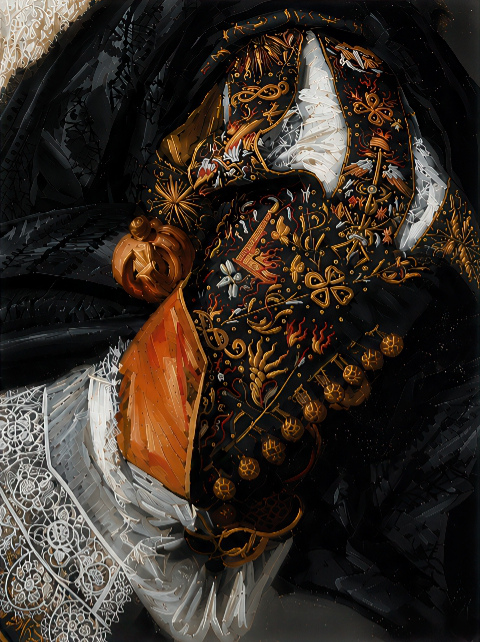
Although the sitter's confident expression attracts immediate attention, one of the true masterpieces of The Laughing Cavalier is his richly embroidered costume. Frans Hals devoted extraordinary care to the gold, red and silver threadwork that covers the black silk sleeve, transforming fashionable clothing into a sophisticated display of wealth, craftsmanship and symbolic imagery.
Seventeenth-century viewers would have recognised many of these embroidered motifs as part of the visual language of courtship, honour and prosperity. While not every symbol can be identified with complete certainty today, historians generally agree that the costume was designed to communicate far more than fashionable taste. It projected the sitter's education, social standing and perhaps even his hopes for marriage.
| Motif | Traditional Meaning | Where to Look |
|---|---|---|
| Cupid's arrows | Love, courtship and romantic devotion. | Among the gold embroidery on the upper sleeve. |
| Lovers' knots | Faithfulness, unity and enduring affection. | Repeated looping designs across the lower sleeve. |
| Flames | Passion, desire and the intensity of love. | Small red-and-gold flame motifs embroidered throughout the decoration. |
| Cornucopia (Horn of Plenty) | Abundance, prosperity and good fortune. | One of the larger embroidered devices near the centre of the sleeve, though its identification remains debated. |
| Palm branches | Victory, honour and moral virtue. | Interwoven with the decorative foliage. |
| Laurel leaves | Achievement, distinction and lasting reputation. | Part of the gold scrolling ornament. |
| Bees | Industry, diligence and productive labour. | Tiny naturalistic motifs worked into the embroidery. |
| Gold braid and buttons | Luxury, wealth and fashionable taste rather than symbolic meaning. | Running down the sleeve and bodice. |
Did You Know?
Many visitors assume the embroidery is simply decorative, but seventeenth-century audiences were accustomed to reading symbolic imagery woven into clothing, jewellery and household objects. Hals therefore painted not only an expensive costume, but a carefully constructed statement about the sitter's identity, aspirations and social status.
The Enduring Legacy of The Laughing Cavalier
During Hals' lifetime, the painting would have been admired as the portrait of a particular Haarlem gentleman. Its modern fame developed much later. After Hals' death in 1666, artistic taste gradually shifted towards smoother, more polished portraiture. His visible brushwork, now admired as a mark of genius, was sometimes considered rough by later generations.
The nineteenth century transformed his reputation. Artists and critics searching for more direct, expressive forms of painting rediscovered Hals. The National Gallery's 2023 exhibition presented The Laughing Cavalier as one of the world's best-known pictures and noted its first loan from the Wallace Collection for the largest Hals exhibition in more than thirty years.[8] That exhibition, followed by the Rijksmuseum presentation in 2024, reaffirmed Hals' place as one of the great innovators of European portraiture.[7]
Hals mattered to later painters because he showed that visible brushwork could strengthen realism rather than weaken it. Édouard Manet, John Singer Sargent and Vincent van Gogh all admired qualities in Hals that seemed to anticipate modern painting. Van Gogh's letters repeatedly reveal his fascination with Hals' handling of colour and brushwork.[9]
Today, The Laughing Cavalier remains Hals' defining image because it demonstrates the highest ambition of portraiture: the preservation of personality. The sitter's name may be lost, but his presence has survived.
The Journey of the Painting
Every great painting has two histories: the image on the canvas and the object that travels through time. For The Laughing Cavalier, the early history is incomplete. The portrait probably began in a private household, perhaps displayed in a room where visitors could admire both Hals' skill and the sitter's fashionable self-presentation.
The painting's documented modern fame begins in the nineteenth century. In 1865, Richard Seymour-Conway, 4th Marquess of Hertford, acquired the portrait in Paris. The Wallace Collection records that Hertford paid 51,000 francs, more than six times the estimate, after outbidding Baron James de Rothschild.[10] This dramatic purchase helped establish the painting's modern celebrity.
The portrait passed into the collection associated with Sir Richard Wallace. Lady Wallace bequeathed the collection to the British nation in 1897, and the Wallace Collection opened to the public in Hertford House. Since then, The Laughing Cavalier has become one of the museum's signature works.
Where is The Laughing Cavalier Today?
The Laughing Cavalier is displayed at the Wallace Collection in London, in the Great Gallery.[1] The setting matters. Hertford House retains the atmosphere of a historic private residence, making it easier to imagine how Old Master paintings once functioned in domestic interiors rather than only in modern white-walled galleries.
If you visit, begin several metres away. Let the painting create its first impression of living presence. Then move closer. The transformation from convincing detail to visible brushwork is one of the great pleasures of seeing Hals in person.
Timeline
- c. 1582/3 — Frans Hals is born in Antwerp before his family relocates to Haarlem.
- 1610 — Hals joins the Haarlem Guild of Saint Luke as an independent master.
- 1616 — Hals paints The Banquet of the Officers of the St George Civic Guard, helping establish his reputation in Haarlem.
- 1624 — Hals paints The Laughing Cavalier. The sitter is recorded as aged twenty-six.[1]
- 1634 — Hals paints the confirmed Portrait of Tieleman Roosterman, later compared with The Laughing Cavalier.[3]
- 1666 — Frans Hals dies in Haarlem.
- 1865 — The 4th Marquess of Hertford acquires the painting in Paris.[10]
- 1897 — Lady Wallace bequeaths the Wallace Collection to the British nation.
- 2021–2022 — The Wallace Collection centres Frans Hals: The Male Portrait around The Laughing Cavalier.[5]
- 2023–2024 — The painting is included in major Frans Hals exhibitions at the National Gallery and Rijksmuseum.[8][7]
Interesting Facts
- The title was added centuries later. Hals did not call the painting The Laughing Cavalier.
- The sitter is not laughing. His mouth is closed; the impression of laughter comes from the moustache, eyes and expression.
- He may not have been a cavalier. The title is a later nickname, not a confirmed military description.
- The sitter's identity remains unresolved. Tieleman Roosterman is possible but unproven.
- The costume is central to the painting. Its motifs suggest love, fidelity, industry and prosperity.
- The painting is modest in size. Its impact comes from composition and presence rather than scale.
- Hals painted for distance. Many details work best when viewed from across a room.
- The painting became famous long after Hals' death. Its greatest celebrity belongs to the nineteenth century and later.
Explore More Paintings by Frans Hals
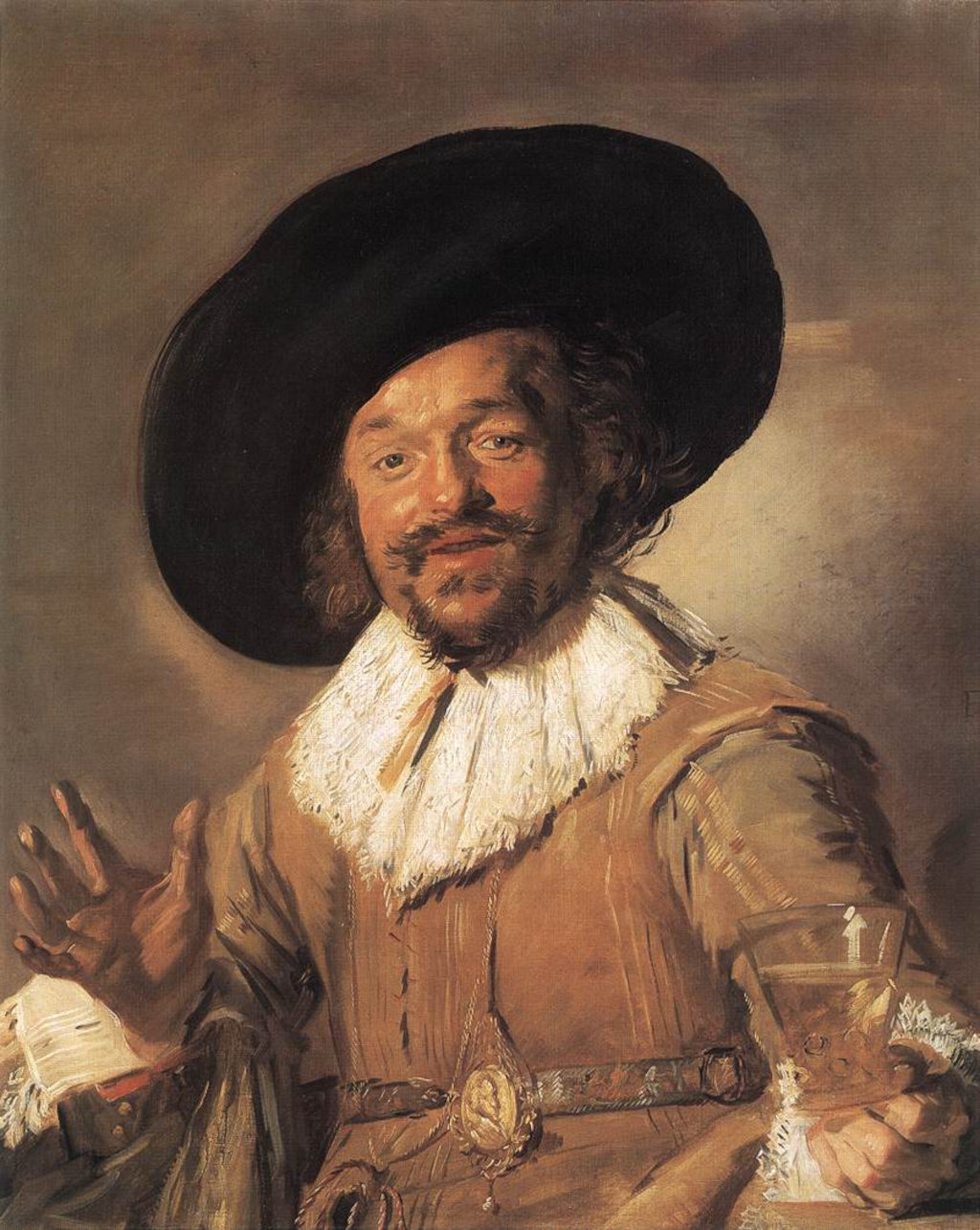
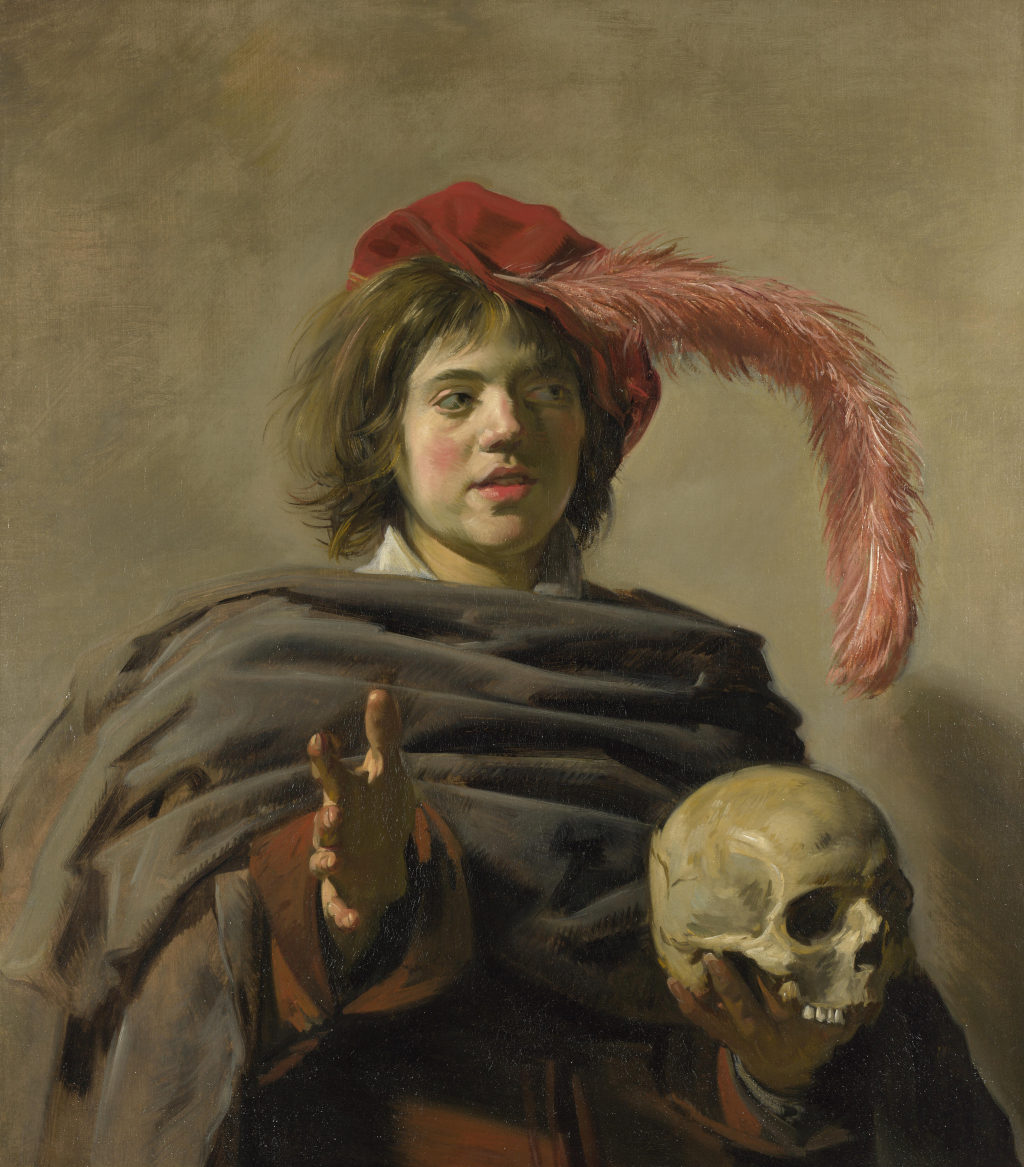
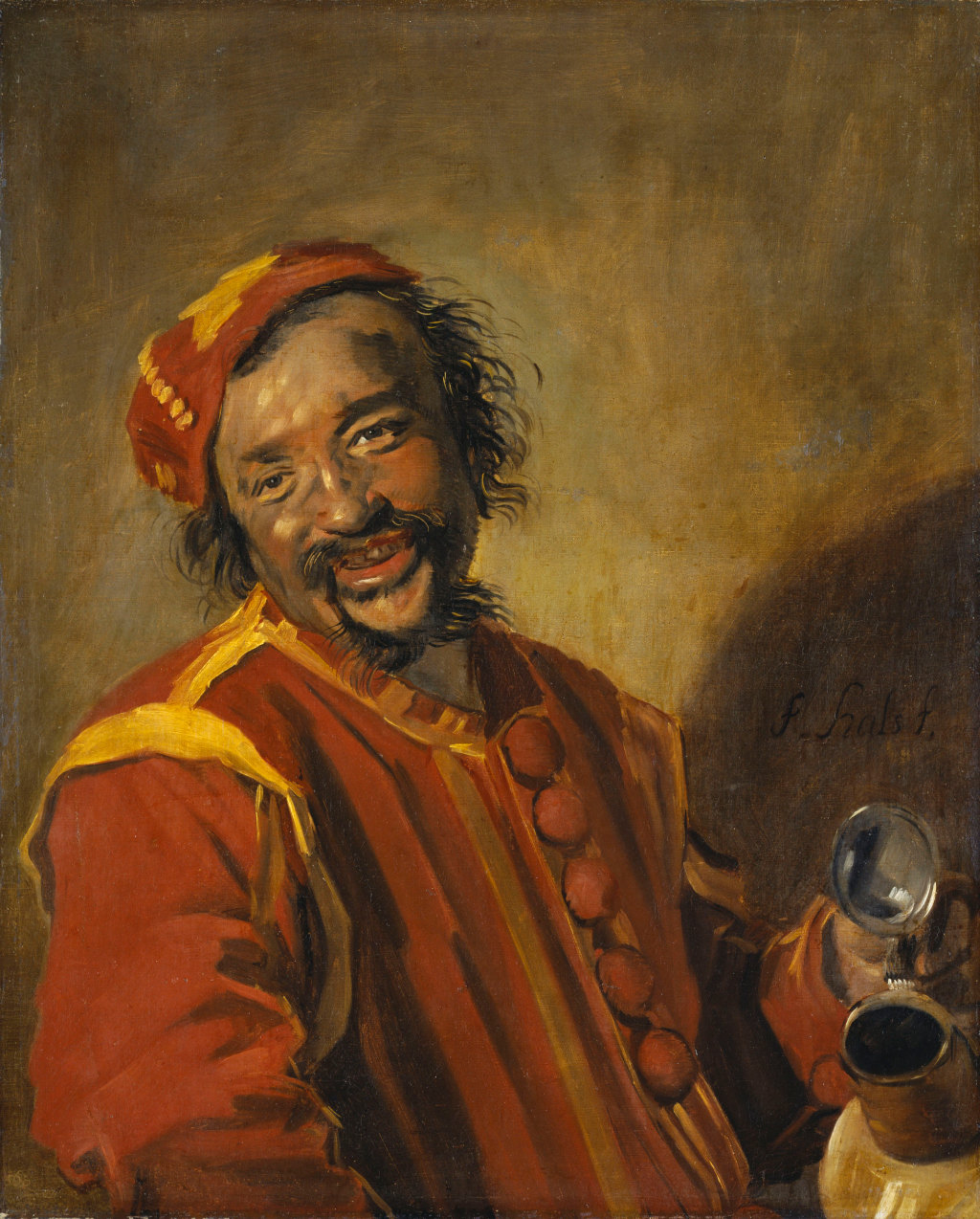
- The Merry Drinker
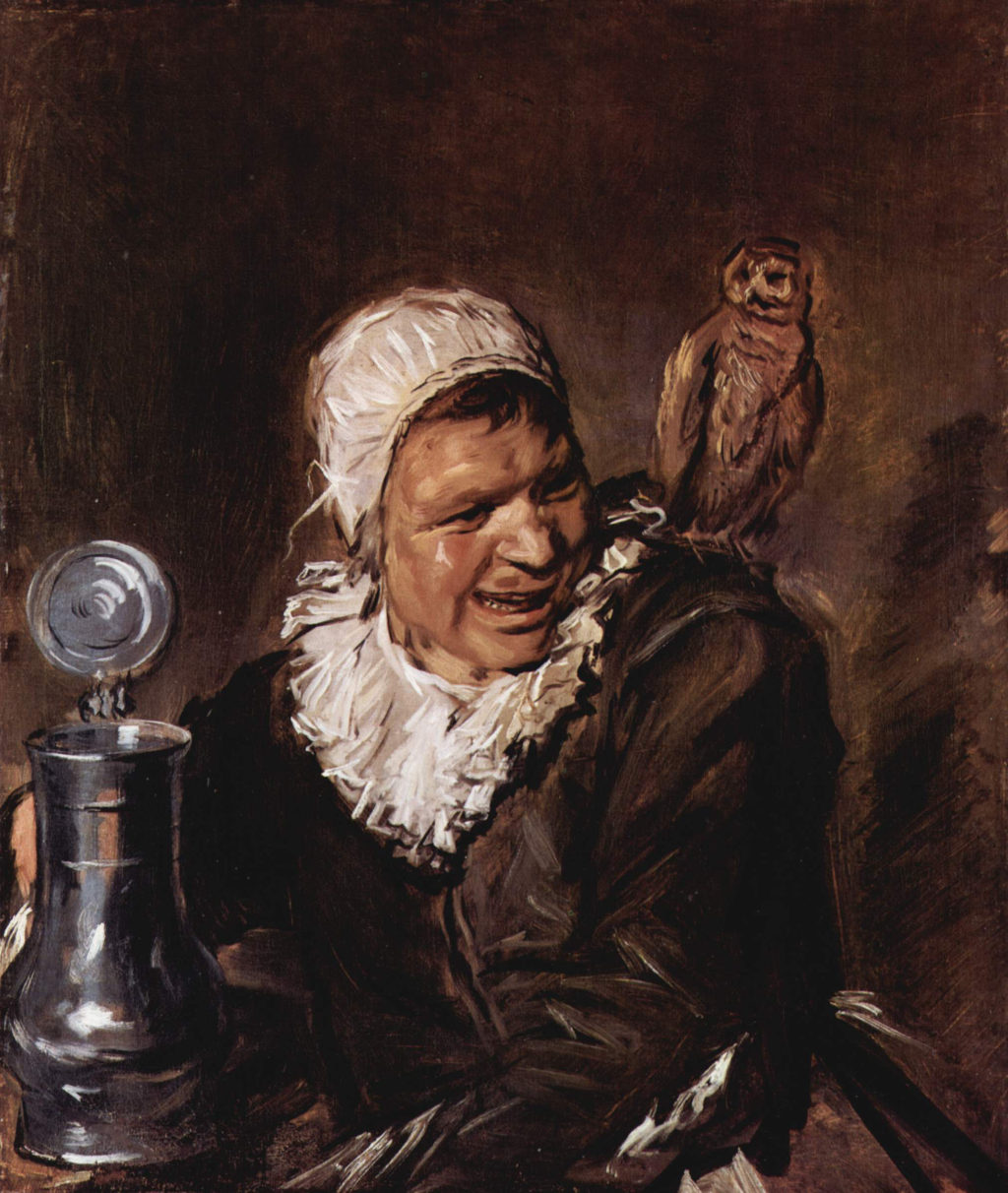
- Malle Babbe
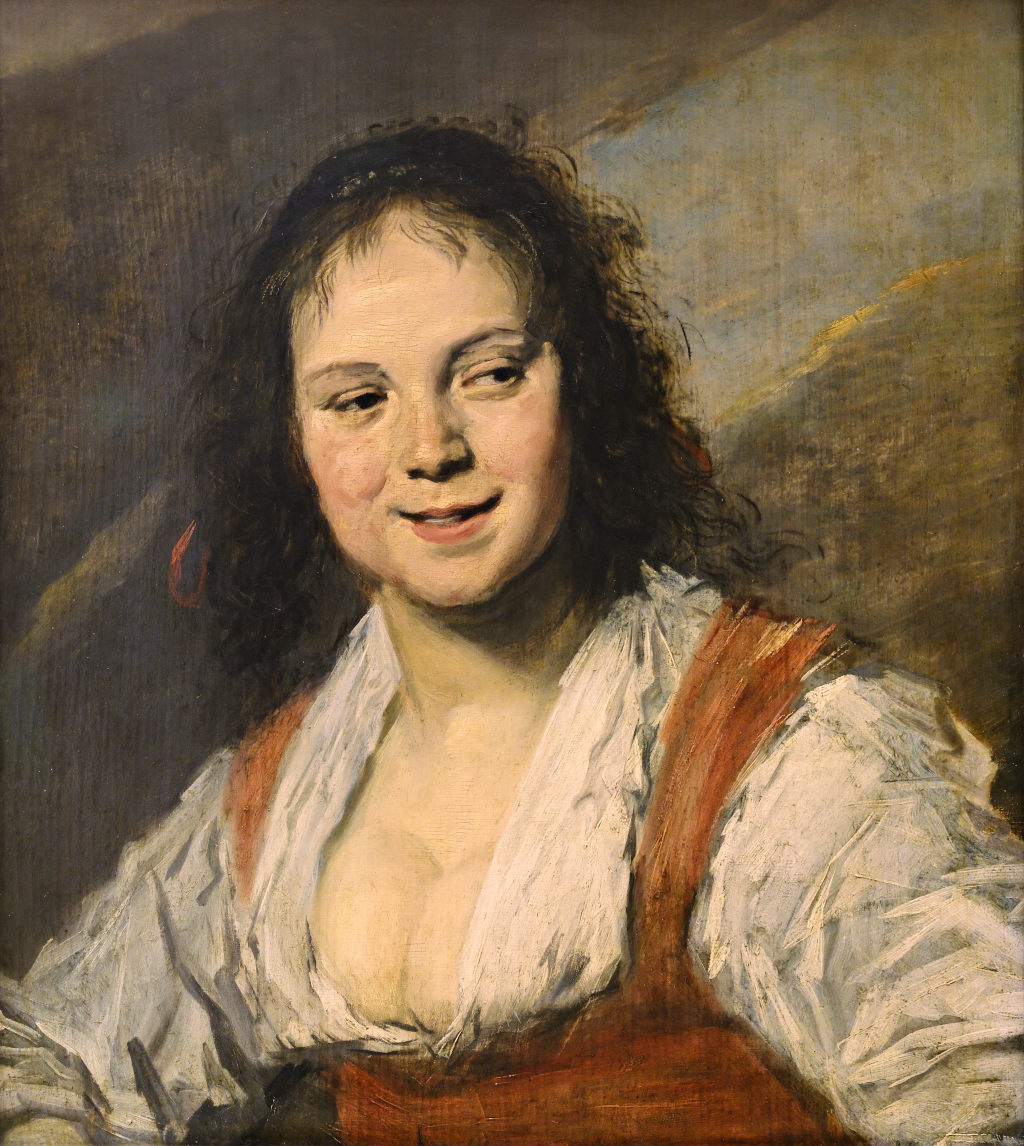
- The Gypsy Girl
- The Banquet of the Officers of the St George Civic Guard
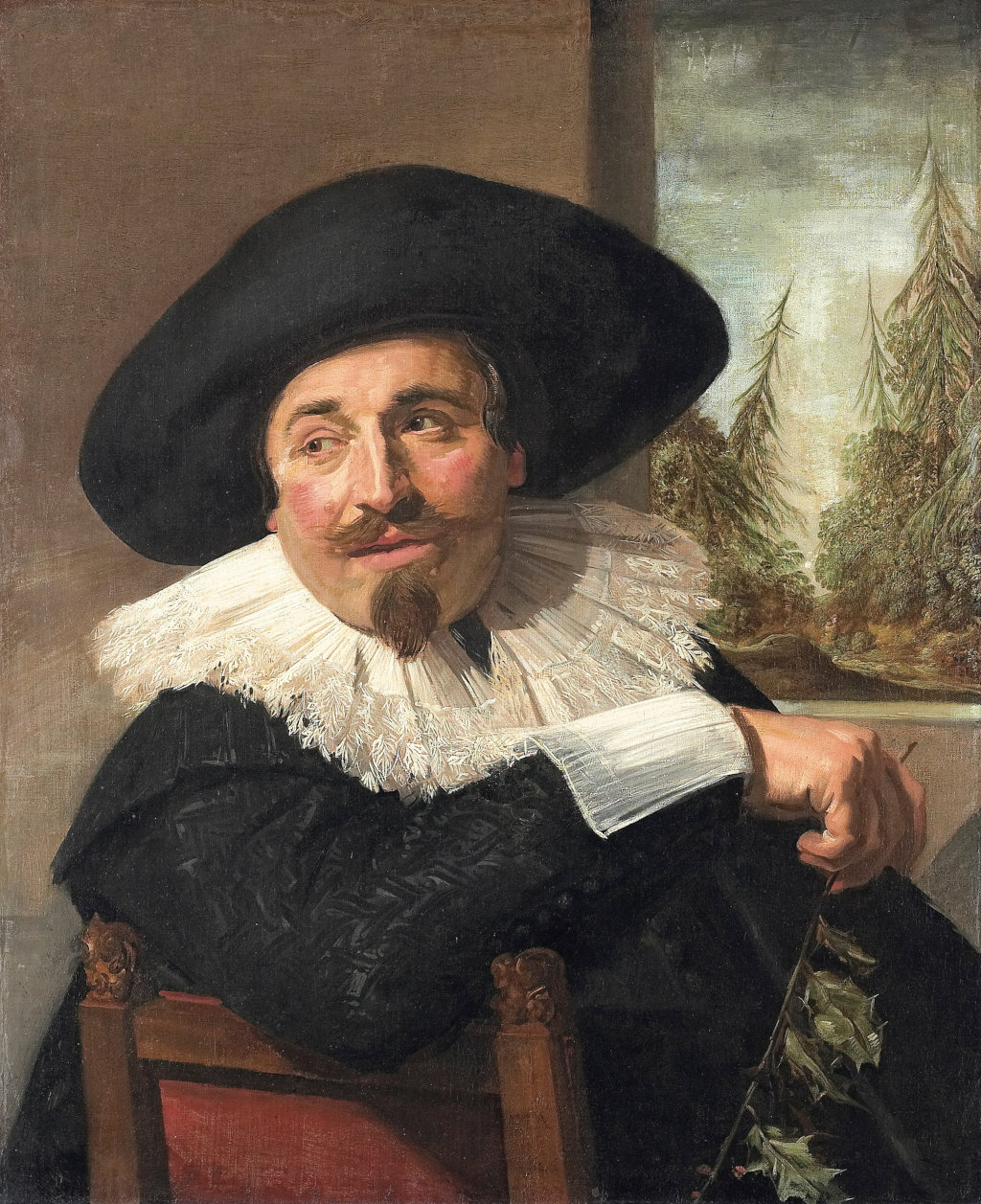
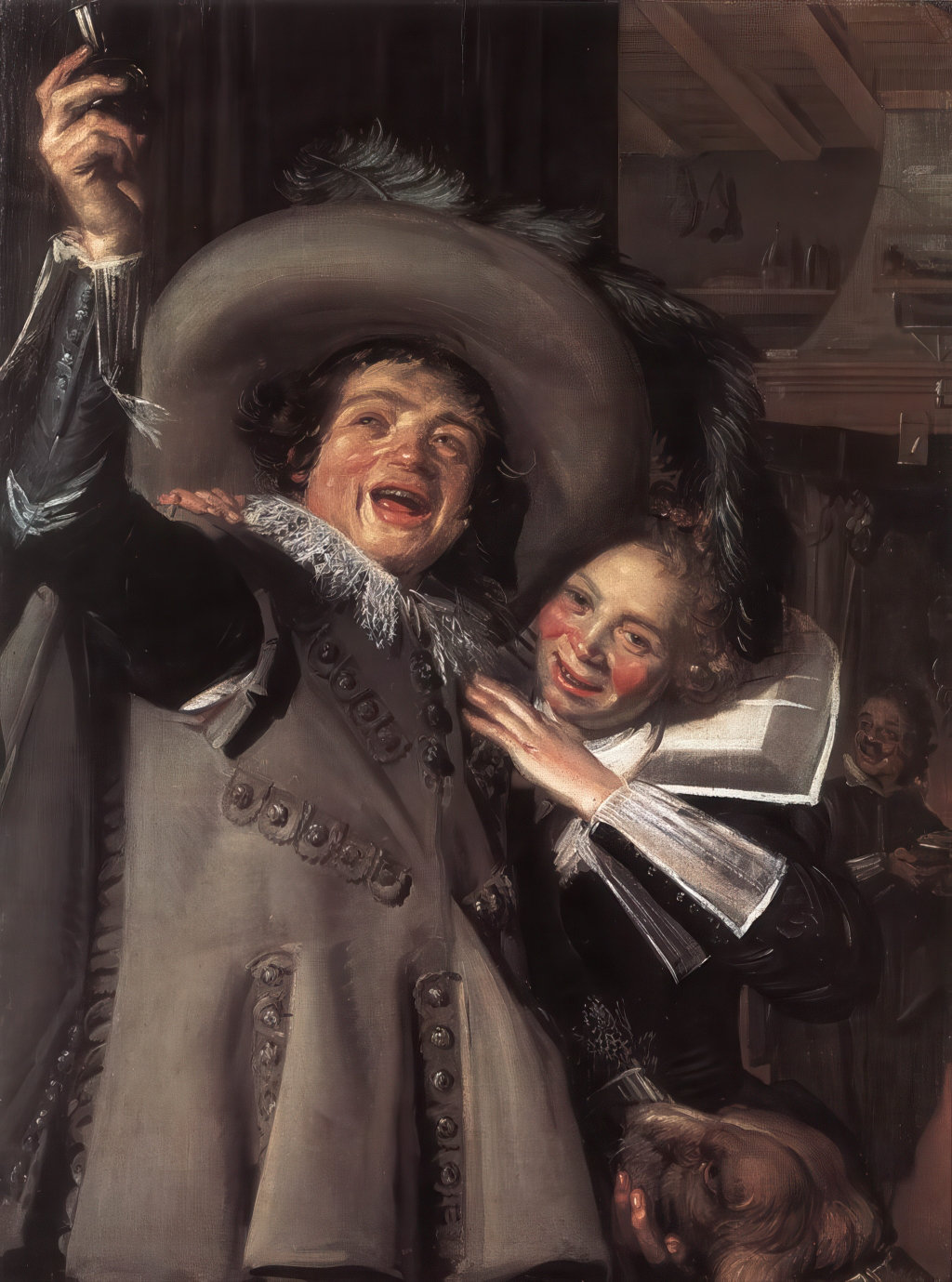
- Isaac Massa and Beatrix van der Laen
- Portrait of Willem Heythuijsen
FAQs
Further Reading
- Seymour Slive, Frans Hals, 3 vols., London: Phaidon, 1970–1974.
- Claus Grimm, Frans Hals: The Complete Work, New York: Harry N. Abrams, 1990.
- Christopher D. M. Atkins, Frans Hals, London: Reaktion Books, 2012.
- Mariët Westermann, A Worldly Art: The Dutch Republic 1585–1718, New Haven: Yale University Press, 1996.
- Walter Liedtke, Dutch Paintings in The Metropolitan Museum of Art, New York: Metropolitan Museum of Art, 2007.
- Rudi Ekkart and Quentin Buvelot, eds., Dutch Portraits: The Age of Rembrandt and Frans Hals, Zwolle: Waanders, 2007.
- Friso Lammertse, Bart Cornelis, Jaap van der Veen and Justine Rinnooy Kan, Frans Hals, London: National Gallery Global, 2023.
References
- The Wallace Collection, “The Laughing Cavalier,” collection record. Includes date, dimensions, gallery, sitter age and collection information. View Source.
- Art UK, “The Laughing Cavalier.” Notes that the title was coined between 1875 and 1888 and that the sitter is neither laughing nor a cavalier. View Source.
- Cleveland Museum of Art, “Portrait of Tieleman Roosterman,” collection record. Identifies Roosterman as a wealthy Haarlem linen and silk merchant. View Source.
- RKD Studies, “Frans Hals and his workshop: A1.13–A1.23.” Discusses the Roosterman identification and differences between the sitters. View Source.
- The Wallace Collection, “Frans Hals: The Male Portrait,” past exhibition and press material, 2021–2022. View Source.
- CODART Canon, “Laughing Cavalier.” Discusses Hals' mastery of paint, brush, textiles and monumentality. View Source.
- Rijksmuseum, “Frans Hals at the Rijksmuseum in 2024,” press release. Describes Hals as innovative for his brisk, impressionistic style. View Source.
- The National Gallery, “The ‘Laughing Cavalier’ is loaned for the first time to the largest Frans Hals exhibition for 30 years,” press release, 2022. View Source.
- Vincent van Gogh: The Letters, Van Gogh Museum / Huygens ING. Relevant letters discuss Hals, colour, black and visible brushwork. View Source.
- The Wallace Collection, “The Wallace Collection lends The Laughing Cavalier,” press release. Includes the 1865 purchase details and later loan history. View Source.
- Lelia Packer and Ashok Roy, eds., Frans Hals: The Male Portrait, London: The Wallace Collection / Philip Wilson Publishers, 2021.
- John Ingamells, The Wallace Collection Catalogue of Pictures, Volume IV: Dutch and Flemish, London: Trustees of the Wallace Collection, 1992.
- Seymour Slive, Frans Hals, 3 vols., London: Phaidon, 1970–1974.
- The Wallace Collection, The Laughing Cavalier, collection catalogue.