 by Tom Gurney
Tom Gurney BSc (Hons) is an art history expert with over 20 years experience
Published on June 29, 2026 / Updated on June 29, 2026
Email: tomgurney1@gmail.com / Phone: +44 7429 011000
Frans Hals' Joyful Celebration of Music and Youth
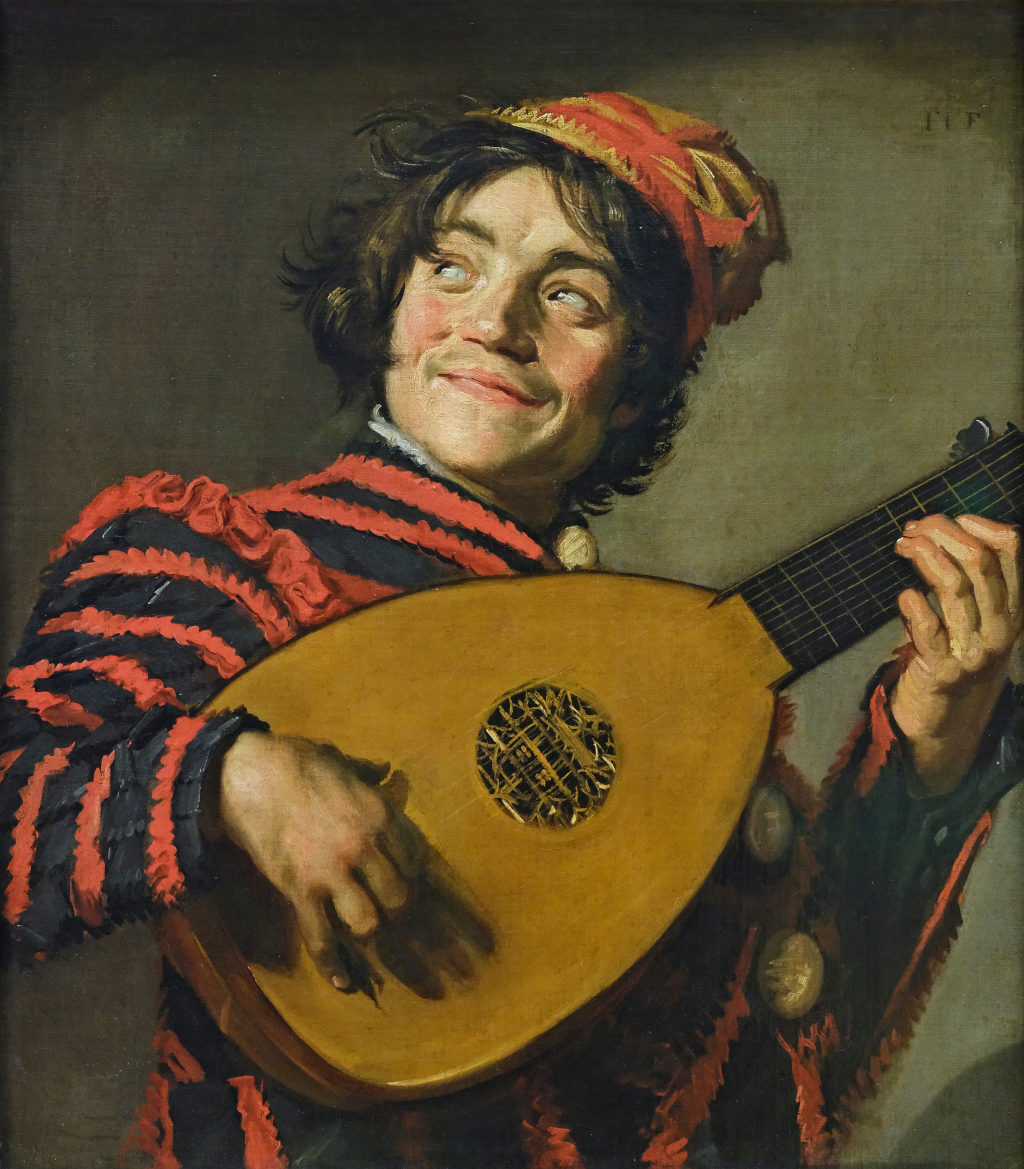
The Lute Player, painted around 1623–1624, is among Frans Hals' most animated masterpieces. Capturing a musician seemingly in mid-song, it showcases the loose brushwork, lively expression and immediacy that made Hals one of the greatest portrait painters of the Dutch Golden Age.
This page explores the painting's history, symbolism, technique, musical context and enduring influence.
- ArtistFrans Hals
- Datec.1623–1624
- Current LocationMusée du Louvre, Paris
- GenreTronie / Musical Figure
- Why It MattersA landmark in Hals' depiction of movement and spontaneous expression.
Contents
- Overview
- Description
- Music in the Dutch Golden Age
- Technique and Brushwork
- Meaning and Interpretation
- Provenance
- Legacy
- FAQs
- References
Overview
Painted around 1623–1624, The Lute Player marks one of the earliest moments in Frans Hals' career when his distinctive artistic personality is seen in full. Rather than presenting a static sitter posed solemnly before the viewer, Hals captures a fleeting instant: a young musician appears to sing while strumming his instrument, his mouth slightly open and his head turning as though responding to someone just beyond the picture plane.
The painting demonstrates many of the qualities that would later make Hals famous. His energetic brushwork, lively facial expression and remarkable ability to suggest movement all contribute to the illusion that the figure exists in real time rather than frozen within a painted image. The result is less a conventional portrait than a vivid performance captured on canvas.
Although often described as a portrait, many scholars instead classify the work as a tronie—a character study created to explore expression, costume and personality rather than to record the likeness of a specific individual. Whether or not the sitter was a real musician remains unknown, but the painting succeeds because it conveys the universal joy of music-making.
Why It Is Important
The Lute Player is one of the clearest demonstrations of Hals' revolutionary approach to portraiture, replacing rigid formality with movement, spontaneity and psychological immediacy.
Visual Description
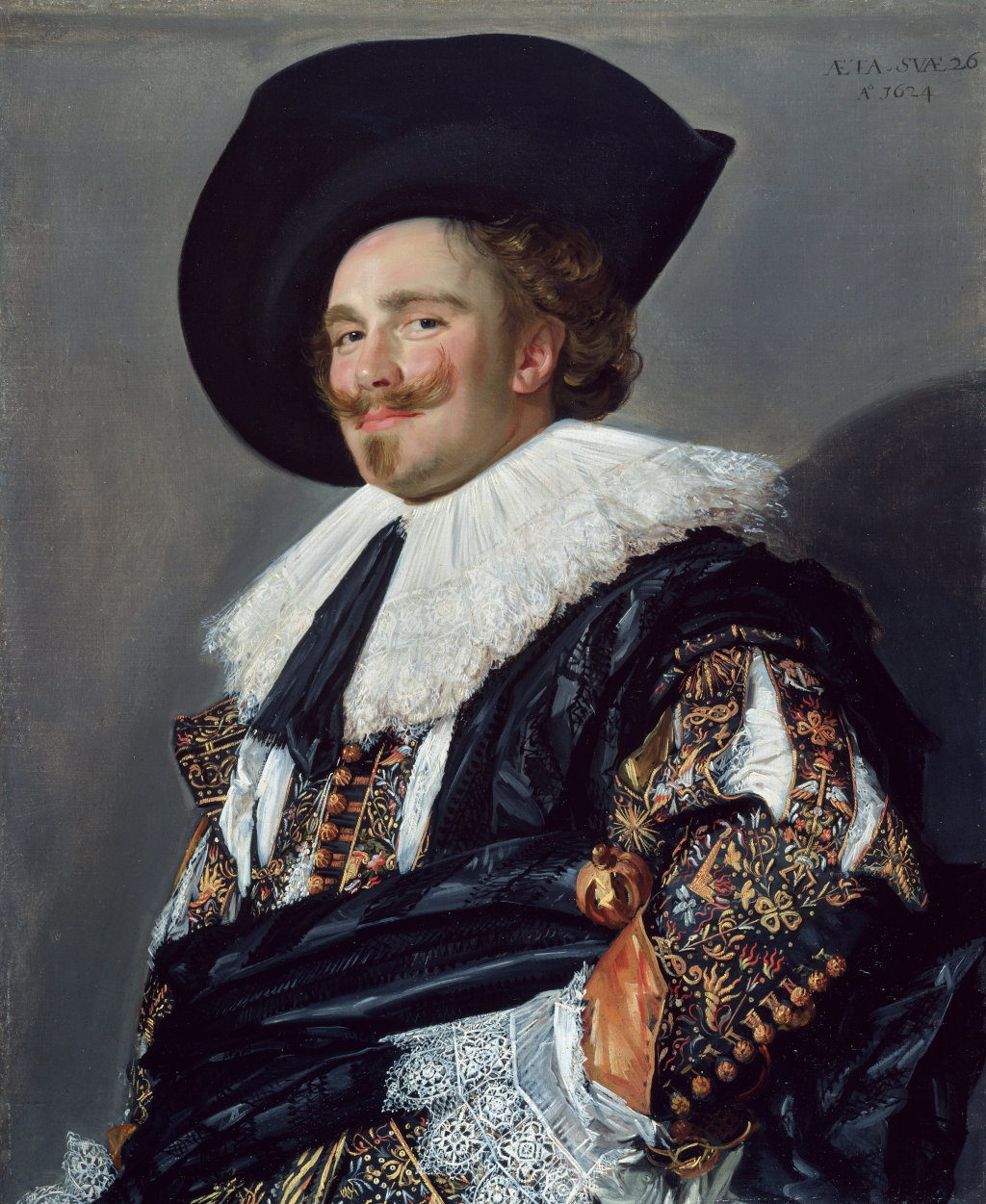
The composition is deliberately simple. Against a dark, neutral background, the young musician emerges dramatically into the light. His fashionable costume, broad hat and white lace collar immediately establish him as an elegantly dressed figure, while the lute occupies the lower portion of the composition, balancing the animated movement of the head and shoulders.
What immediately captures the viewer's attention is the expression. Unlike many seventeenth-century portraits, which present carefully controlled facial features, Hals depicts the sitter in the middle of an action. His lips part slightly as if singing, laughing or calling to another performer. The eyes sparkle with energy, and the slight turn of the body suggests that the performance continues beyond the boundaries of the canvas.
Closer examination reveals Hals' extraordinary technical confidence. Loose brushstrokes describe lace, silk, flesh and hair with astonishing economy. From nearby, individual marks appear spontaneous; from a distance they resolve into convincing textures that still seem remarkably modern today.
Music in the Dutch Golden Age
Music occupied an important place within seventeenth-century Dutch society. Lutes, violins, flutes and other instruments were played in homes, taverns and civic celebrations, while amateur music-making became an increasingly fashionable pastime among prosperous citizens. Paintings featuring musicians therefore appealed to collectors not only because they were attractive genre scenes but because they reflected familiar aspects of everyday life.
The lute itself carried multiple meanings. It could represent harmony, education and refined accomplishment, but in Dutch emblem books it was also associated with courtship, youthful pleasure and the fleeting nature of earthly enjoyment. Hals leaves these interpretations deliberately open, allowing viewers to appreciate both the vitality of the performance and the symbolic associations of the instrument.
Rather than presenting an idealised allegory, Hals captures the excitement of live performance. This sense of immediacy distinguishes The Lute Player from many contemporary musical scenes and demonstrates the artist's remarkable ability to transform an ordinary moment into an unforgettable image.
Portrait or Tronie?
One of the most intriguing questions surrounding The Lute Player is whether it should be regarded as a true portrait or as a tronie. During the Dutch Golden Age, a portrait normally commemorated a recognisable individual who had commissioned the work, whereas a tronie was a study of expression, costume or character without the intention of recording a specific person's identity.
Most modern scholars favour the latter interpretation. No documentary evidence identifies the sitter, and the emphasis falls less upon individual likeness than upon youthful energy, musical performance and theatrical expression. Hals appears to have been exploring the possibilities of movement and facial animation rather than preserving the appearance of a wealthy patron.
Yet the distinction is not entirely clear-cut. The remarkable naturalism of the face suggests that Hals probably worked from a real model. Rather than inventing an imaginary musician, he may have transformed an actual sitter into a universal character, blurring the traditional boundaries between portraiture and genre painting.
Did You Know?
Frans Hals produced several paintings of laughing drinkers, musicians and cheerful young men that occupy the fascinating space between portrait, genre scene and tronie. These works became enormously influential during the nineteenth century because they demonstrated that personality could be conveyed without strict formality.
Technique and Brushwork
The apparent ease with which Hals painted The Lute Player is one of the picture's greatest achievements. Hair, lace, velvet, skin and polished wood are all suggested with surprisingly economical strokes, yet each material remains immediately recognisable. This confidence was the result of extraordinary observation rather than careless execution.
Particularly striking is Hals' handling of the white lace collar. Viewed from only a few centimetres away, the collar dissolves into energetic dashes and broken highlights. As the viewer steps back, however, these individual marks merge into convincing lace. The same principle governs the face, where subtle touches of pink, brown, grey and cream combine to produce a remarkably lifelike complexion.
The lute itself demonstrates Hals' understanding of reflected light. Rather than outlining every string and contour with precision, he relies upon carefully placed highlights to imply the instrument's smooth polished surface. This painterly economy would later inspire artists such as Édouard Manet, Vincent van Gogh and John Singer Sargent.
Costume, Expression and Movement
Although the painting appears effortless, its composition is carefully orchestrated. The sweeping black hat balances the bright lace collar, while the diagonal angle of the lute guides the eye upward towards the animated face. Every element contributes to the impression that the musician has been interrupted in the middle of a performance.
The costume also reflects contemporary Dutch fashion. Rich black fabrics, broad hats and elaborate lace collars were expensive statements of prosperity, education and refinement. Hals uses these garments not simply as decoration but as vehicles for displaying his astonishing technical skill.
Above all, it is the expression that gives the painting its enduring appeal. The open mouth, lively eyes and turning head create an illusion of spontaneous human behaviour that was almost unprecedented in portraiture of the early seventeenth century. The figure seems ready to sing the next note before our eyes.
The Lute as a Symbol
To modern audiences, the lute may simply appear to be a beautiful musical instrument, but seventeenth-century viewers would have recognised its wider symbolic associations. Throughout the Dutch Republic, the lute represented harmony, refinement and education, reflecting the growing popularity of domestic music-making among prosperous families.
The instrument also carried more subtle meanings. Dutch emblem books frequently associated music with love, courtship and youthful pleasure, while at the same time reminding viewers that music existed only for a fleeting moment before disappearing. In this sense the lute could symbolise both the joys of life and its transitory nature.
Hals never forces a single interpretation upon the viewer. Instead, the instrument enriches the painting by adding layers of cultural meaning while remaining entirely convincing as part of a lively performance. The painting succeeds equally well as an observation of everyday life and as a meditation on youth, entertainment and the passing of time.
Symbolism at a Glance
| Element | Possible Meaning |
|---|---|
| Lute | Harmony, music and refined accomplishment. |
| Performance | The fleeting nature of pleasure and entertainment. |
| Youthful musician | Courtship, vitality and the enjoyment of life. |
Provenance and the Louvre
Today The Lute Player is housed in the Musée du Louvre in Paris, where it forms part of one of the world's greatest collections of Dutch Golden Age painting. Its presence alongside works by Rembrandt, Vermeer and other seventeenth-century masters highlights Hals' importance within the broader history of European art.
The painting entered the French royal collections during the eighteenth century before eventually becoming part of the Louvre's permanent holdings. Its long history of collecting reflects the growing international appreciation of Hals' work, particularly during the nineteenth century when French painters rediscovered his remarkably free brushwork.
Influence and Legacy
Although Hals enjoyed considerable success during his lifetime, his greatest influence emerged centuries later. During the nineteenth century, artists searching for a more direct and expressive style rediscovered paintings such as The Lute Player and recognised how modern Hals' brushwork appeared. Édouard Manet admired his painterly confidence, Vincent van Gogh praised his astonishing handling of black tones, and John Singer Sargent studied his effortless depiction of character.
Today The Lute Player remains one of the finest examples of Hals' ability to transform a fleeting human gesture into an enduring work of art. Its freshness, vitality and technical brilliance continue to surprise viewers, making it one of the defining images of the Dutch Golden Age.
Frequently Asked Questions
References
- Christopher D. M. Atkins, Frans Hals, Reaktion Books, 2012.
- Seymour Slive, Frans Hals, 3 vols., Phaidon, 1970–1974.
- Claus Grimm, Frans Hals: The Complete Work, Harry N. Abrams, 1990.
- Friso Lammertse et al., Frans Hals, National Gallery / Rijksmuseum / Gemäldegalerie, 2023.
- Musée du Louvre collection catalogue.
- RKD – Netherlands Institute for Art History.
- Walter Liedtke, Dutch Paintings in the Metropolitan Museum of Art, 2007.