 by Tom Gurney
Tom Gurney BSc (Hons) is an art history expert with over 20 years experience
Published on June 29, 2026 / Updated on June 29, 2026
Email: tomgurney1@gmail.com / Phone: +44 7429 011000
How Do You Paint Twenty Powerful Men Without Making a Single One Feel Unimportant?
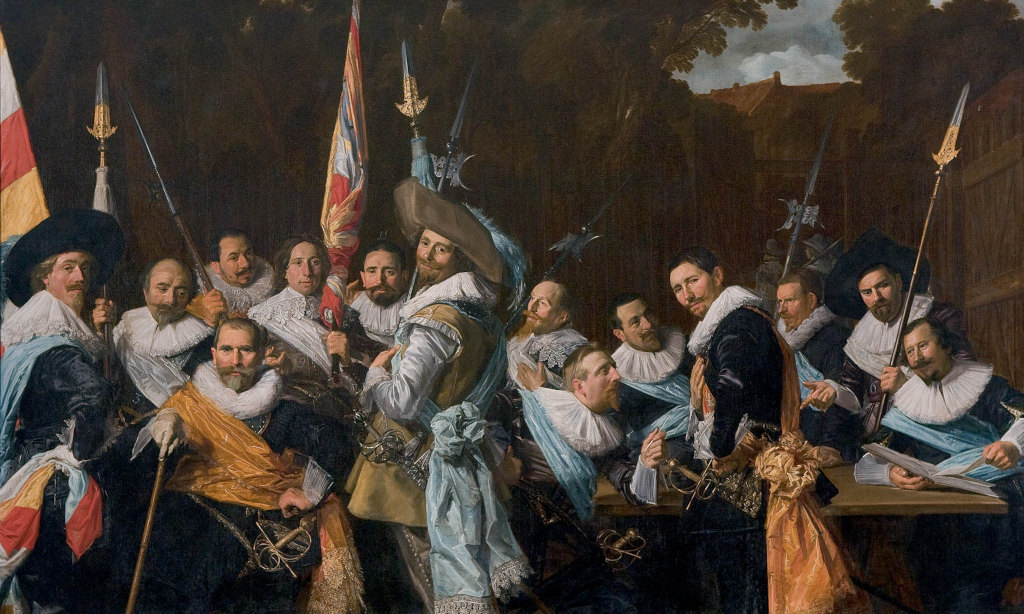
Few paintings better demonstrate Frans Hals' genius than Officers And Sergeants Of The St. Hadrian Civic Guard of 1633. At first glance it appears to be a lively dinner attended by richly dressed gentlemen. Look more closely, however, and the scale of Hals' achievement becomes clear. Every officer expected to be immediately recognisable. Every sitter had contributed towards the commission. Every individual wished to project dignity, authority and social standing. Hals somehow satisfies all of these demands while creating one of the most energetic and unified group portraits in European art.
By the early seventeenth century, portraits of Haarlem's civic guard companies had become an established tradition. These volunteer militias played an important role in protecting the city, maintaining public order during emergencies and participating in ceremonial occasions. Although their military responsibilities were limited during peacetime, membership represented considerable prestige. Officers were drawn from Haarlem's prosperous merchant families and civic elite, making these commissions as much statements of political influence as works of art.
Rather than arranging the officers in rigid rows, Hals transforms the gathering into a believable social occasion. Conversation appears to continue across the table, glasses are raised, banners catch the light and individual expressions vary naturally from one sitter to another. The painting captures not simply a formal record of office but the atmosphere of civic confidence that characterised the Dutch Republic during its Golden Age.
The work also marks an important stage in Hals' artistic development. By 1633 his brushwork had become increasingly assured, allowing him to coordinate a large number of figures without sacrificing spontaneity. Every officer retains a distinct personality, yet the composition functions as a remarkably coherent whole. Few painters before Hals had solved the problem of large-scale group portraiture with such apparent ease.
Today, the painting is recognised as one of the greatest civic guard portraits ever created. It demonstrates not only Hals' mastery of portraiture but also his ability to capture the collective identity of a community at a moment of exceptional prosperity and self-confidence.
- Artist Frans Hals (c.1582/3–1666)
- Date 1633
- Medium Oil on canvas
- Main Themes Civic pride, leadership, group portraiture and the Dutch Republic
- Current Location Frans Hals Museum, Haarlem
- Why It Matters One of the greatest civic guard portraits of the Dutch Golden Age and a masterpiece of large-scale composition.
Contents
- Historical Background
- Looking at the Painting
- Meaning and Symbolism
- Composition and Technique
- Legacy & Why It Still Matters
- Related Paintings
- Timeline
- Interesting Facts
- FAQs
- References
Who Were the Civic Guards?
| Modern comparison | St Adrian Militia Company |
|---|---|
| Professional army | ✗ No |
| Volunteer civic militia | ✓ Yes |
| Political and social elite | ✓ Yes |
| Ceremonial organisation | ✓ Yes |
| Responsible for local defence | ✓ Yes |
Historical Background
The civic guard companies formed an essential part of urban life throughout the Dutch Republic. Originally established to defend towns during periods of conflict, by the seventeenth century they had evolved into prestigious civic institutions combining military preparedness with ceremonial, political and social functions. Officers were typically drawn from wealthy merchants and influential citizens whose service reflected both personal status and commitment to the welfare of the city.
Haarlem possessed two principal civic guard companies, each maintaining its own traditions, headquarters and commissioned portraits. Periodically, newly elected officers celebrated their appointments with elaborate banquets, creating occasions that combined formal ceremony with convivial sociability. These events offered ideal opportunities to commission group portraits commemorating both the individuals involved and the collective identity of the company.
Frans Hals became Haarlem's greatest interpreter of these civic institutions. Across several decades he painted successive generations of officers, allowing modern viewers to trace changing fashions, personalities and artistic developments within the same organisations. The 1633 banquet represents the culmination of this experience, demonstrating complete confidence in handling both individual portraiture and large-scale composition.
Looking at the Painting
The first impression is one of movement. Unlike many earlier group portraits, where figures appear arranged in orderly rows, Hals creates the illusion that the banquet is unfolding before our eyes. Officers turn towards one another in conversation, glasses are lifted, banners lean across the composition and gestures overlap naturally. The result is a scene that feels animated rather than staged, even though every position has been carefully calculated.
Despite the large number of participants, individual personalities remain remarkably distinct. Some officers meet the viewer's gaze directly, projecting confidence and authority, while others are absorbed in conversation with their companions. Hals avoids repetition by varying expressions, poses and angles of view, ensuring that no two figures appear identical. This variety gives the painting an extraordinary sense of life while preserving the dignity expected of a prestigious civic commission.
The banquet table itself serves as the painting's organising structure. Rather than acting as a simple barrier between viewer and sitters, it guides the eye through the composition, connecting groups of officers into a single visual rhythm. Flags, weapons, hats and richly coloured sashes introduce additional movement, preventing the large canvas from becoming static despite its formal subject.
Looking Closely: Follow the Eye Contact
Choose one officer and trace where he is looking. Then follow the gaze of the next figure. Hals creates an invisible network of glances and gestures that links the entire company together, making the group feel like participants in a shared occasion rather than isolated portraits.
Meaning and Symbolism
Although the painting celebrates a specific company of officers, its significance extends well beyond portraiture. It embodies the civic ideals of the Dutch Republic: shared responsibility, public service and confidence in local government. The officers represent not hereditary aristocrats but prosperous citizens who combined commercial success with responsibility for the defence and administration of their community.
The Banquet
The meal itself symbolises fellowship and collective identity. Banquets marking the appointment of new officers reinforced personal relationships within the company while publicly demonstrating unity. Hals captures this atmosphere without reducing the gathering to a rigid ceremonial record. Conversation, gestures and relaxed interaction suggest genuine camaraderie alongside official dignity.
Colour and Rank
One of the painting's most striking features is the brilliant display of coloured sashes. These are not merely decorative. Different colours reflected the rank and responsibilities of individual officers within the militia company, while also helping Hals organise the composition visually. Bright reds, oranges and blues guide the viewer's eye across the canvas, creating balance within an exceptionally large and complex arrangement.
Flags, Weapons and Civic Identity
Standards, halberds and swords remind viewers of the company's military origins, even though by the 1630s ceremonial and civic responsibilities had become increasingly prominent. Rather than presenting an army preparing for battle, Hals portrays respected citizens whose authority rested upon service to Haarlem. The weapons therefore function as symbols of civic responsibility as much as military readiness.
Taken together, these elements transform the painting into an image of the Dutch Republic at its most confident. Prosperity, cooperation and civic pride are expressed not through grand historical events but through the interactions of ordinary citizens entrusted with public responsibility.
Composition and Technique
The greatest technical challenge facing Hals was maintaining unity across such a large composition. Every officer expected his portrait to be recognisable, yet no individual could dominate the painting entirely. Hals solves this problem through an intricate network of diagonals created by the table, banners, weapons and seated figures. These visual lines encourage the eye to move continuously around the composition instead of settling permanently on a single sitter.
His handling of paint is equally remarkable. Rich black costumes, white lace collars, polished metal and brightly coloured sashes are distinguished through confident, economical brushwork that never appears laboured. Close examination reveals surprisingly loose passages of paint, while viewing from a distance allows these individual strokes to merge into convincing textures and forms. This painterly freedom later inspired artists including Édouard Manet, John Singer Sargent and Vincent van Gogh.
Light provides another unifying element. Rather than spotlighting one central figure, Hals distributes illumination across the group, allowing faces, collars and banners to emerge rhythmically throughout the canvas. The effect is one of collective importance rather than individual hierarchy, perfectly suited to a painting celebrating civic cooperation.
Perhaps Hals' greatest achievement lies in the balance between portraiture and narrative. Every officer remains an identifiable individual, yet together they create the impression of a living event. The painting succeeds simultaneously as a historical record, a celebration of civic identity and a masterpiece of compositional design.
Legacy and Why It Still Matters
Officers And Sergeants Of The St. Hadrian Civic Guard represents one of the defining achievements of Dutch Golden Age painting. Frans Hals transformed what could have been a static record of office into a vibrant celebration of civic life, demonstrating that large group portraits could possess the immediacy and psychological vitality usually associated with individual portraiture.
The painting also established a new standard for balancing collective identity with individual character. Every officer remains recognisable, yet the composition never dissolves into a series of unrelated portraits. Hals achieves an extraordinary unity through movement, eye contact, colour and gesture, creating an image that feels both carefully organised and completely natural.
Later generations of artists admired this achievement. Nineteenth-century painters, particularly Édouard Manet, John Singer Sargent and Vincent van Gogh, praised Hals' freedom of brushwork and ability to suggest life through apparently effortless strokes of paint. They recognised that beneath the painting's spontaneity lay an exceptionally sophisticated understanding of composition and observation.
Why It Still Matters
The painting continues to resonate because it illustrates a distinctive political culture. Unlike the royal courts that dominated much of seventeenth-century Europe, the Dutch Republic celebrated the achievements of prosperous citizens who governed their own communities. Hals captures that confidence without resorting to grand historical allegory or military heroics. The officers appear as real people undertaking civic responsibilities, making the painting both historically informative and deeply human.
It also reminds us that portraiture can tell the story of an entire society. Through clothing, conversation, ceremony and shared celebration, Hals documents the values of Haarlem at one of the most successful moments in its history. The painting therefore functions not only as a masterpiece of art but also as a visual record of how the Dutch Republic understood itself.
Looking Closely: A Portrait of a Community
Instead of focusing on a single officer, step back and look at the entire group. Hals' greatest achievement is not any individual likeness but the convincing impression that these men belong together. The painting succeeds because it portrays a community as effectively as it portrays the people within it.
Explore More Frans Hals Paintings
- Banquet of the Officers of the St George Militia Company
- The Regents of the Old Men's Almshouse
- The Regentesses of the Old Men's Almshouse
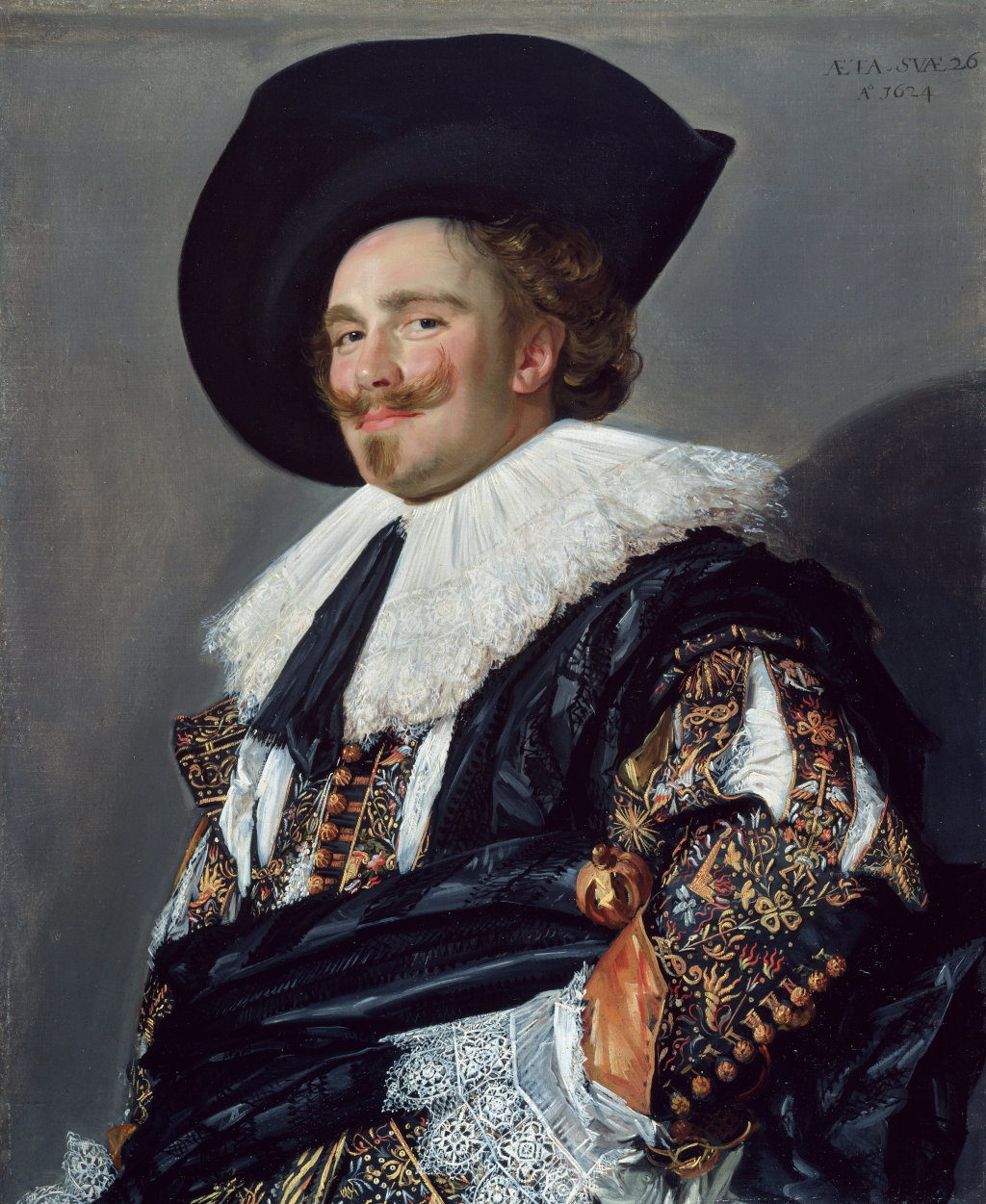
- The Laughing Cavalier
Timeline
- 1633 — Frans Hals completes Officers And Sergeants Of The St. Hadrian Civic Guard for Haarlem's civic guard.
- 17th century — The painting hangs in the militia headquarters, celebrating the officers' service and civic identity.
- 19th century — Renewed interest in Hals leads artists and critics to recognise the painting as a masterpiece of group portraiture.
- 20th century — Art historians reassess Hals' civic guard portraits as milestones in the development of European portrait painting.
- Today — The work remains one of the highlights of the Frans Hals Museum in Haarlem.
Interesting Facts
- Frans Hals painted several civic guard banquets over the course of his career, allowing historians to trace changes in his style.
- The coloured sashes worn by the officers help indicate rank while also organising the composition visually.
- Unlike many earlier group portraits, the officers appear to interact naturally rather than posing independently.
- The painting is celebrated for making a large group feel animated without sacrificing the individuality of the sitters.
- It remains one of the greatest surviving civic guard portraits of the Dutch Golden Age.
FAQs
Further Reading
- Seymour Slive, Frans Hals, 3 vols. London: Phaidon, 1970–1974.
- Christopher D. M. Atkins, Frans Hals. London: Reaktion Books, 2012.
- Claus Grimm, Frans Hals: The Complete Work. New York: Harry N. Abrams, 1990.
- Norbert Middelkoop & Antoon Erftemeijer (eds.), Frans Hals: Eye to Eye with Rembrandt, Rubens and Titian. Rotterdam: nai010 publishers, 2013.
- Friso Lammertse et al., Frans Hals. National Gallery Global, 2023.
References
- Frans Hals Museum. Officers And Sergeants Of The St. Hadrian Civic Guard (1633). Collection catalogue.
- RKD Studies. Frans Hals and his Workshop. Catalogue entry for the 1633 Officers And Sergeants Of The St. Hadrian Civic Guard.
- Seymour Slive. Frans Hals. 3 vols. London: Phaidon, 1970–1974.
- Christopher D. M. Atkins. Frans Hals. London: Reaktion Books, 2012.
- Claus Grimm. Frans Hals: The Complete Work. New York: Harry N. Abrams, 1990.
- Norbert Middelkoop & Antoon Erftemeijer (eds.). Frans Hals: Eye to Eye with Rembrandt, Rubens and Titian. Rotterdam: nai010 publishers, 2013.
- Friso Lammertse et al. Frans Hals. National Gallery Global, 2023.