


 by Tom Gurney
Tom Gurney BSc (Hons) is an art history expert with over 20 years experience
Published on June 19, 2020 / Updated on July 19, 2026
Email: tomgurney1@gmail.com / Phone: +44 7429 011000
John Singer Sargent Paintings: Introduction
John Singer Sargent's paintings cannot be understood only as a row of famous portraits. Portraiture made his name, but his painted career is wider and more restless: Paris Salon pictures, Spanish performance scenes, child groups, garden studies, travel paintings, murals, late war art, and works that sit between portrait, genre scene, landscape, and public statement. He was an oil painter of society, but also of movement, light, fabric, travel, architecture, and atmosphere. [1]
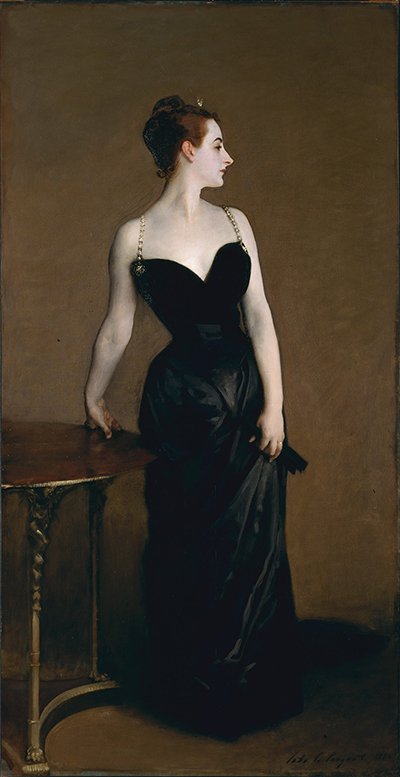
Sargent's range is easy to miss because the glamour of individual sitters can dominate the story. Madame X, Lady Agnew of Lochnaw, and Dr. Pozzi at Home are portrait landmarks, but El Jaleo, The Daughters of Edward Darley Boit, Carnation, Lily, Lily, Rose, and Gassed show a painter using scale, staging, light, and group arrangement for other purposes. His paintings are often about the conditions under which people appear: under Salon scrutiny, under lantern light, in a Paris foyer, on a theatrical stage, before public authority, or in the aftermath of war. [1]
The medium mattered. Sargent's oil paint could look liquid, fast, and luxurious, yet the best works are not simply displays of brushwork. They are built from decisions about surface, pose, space, light, and social meaning. His training with Carolus-Duran taught him to paint directly and preserve freshness. His study of Velazquez, Hals, Van Dyck, Reynolds, and other painterly masters gave him historical depth. His travels gave him subjects beyond the studio.
This paintings hub is a way into that larger field. It should help readers move between the major artwork pages while seeing the connections: Paris ambition, Spanish fascination, performance, portrait theatre, outdoor light, technical experiment, Boston public work, and late moral gravity. [1]
The best way to approach Sargent's paintings is by subject group rather than by fame alone. Some works are built around likeness, some around performance, some around travel, some around the unstable light of a specific hour, and some around public memory. Across those groups, the same painterly instincts recur: a love of fluent surface, an eye for social display, a habit of staging figures in charged space, and a refusal to let painting become merely descriptive.
Contents
- Introduction
- Paris Training And Salon Painting
- Portraits As Paintings
- Figure And Performance Paintings
- Children, Gardens And Domestic Space
- Travel And Spanish Painting
- Light, Process And Surface
- Public And Mural Painting
- Late Painting And War
- How To Use The Paintings List
- Key Paintings And Where To Go Next
Paris Training And Salon Painting
Sargent's painting career took shape in Paris. The Met's Heilbrunn essay notes that he entered the atelier of Carolus-Duran in 1874. Carolus-Duran encouraged direct painting, broad planes of thick pigment, and a finished work that retained the vitality of the sketch. That method became one of the foundations of Sargent's oil practice. [2], [1]
The training was also historical. Carolus-Duran directed students toward painters of freedom and surface: Hals, Rembrandt, Van Dyck, Reynolds, and especially Velazquez. Sargent absorbed those models not as museum quotations but as ways to organize paint. A dark background, a pale dress, a hand, a face, or a single standing figure could carry old-master authority while still feeling modern.
The Paris Salon gave Sargent a public arena. The Met's Sargent and Paris material describes how his first decade in the city brought portraits, figure paintings, travel subjects, and the scandalous culmination of Madame X. Musee d'Orsay notes that between 1877 and 1885 he presented one or more paintings at the Salon each year, usually a portrait and a travel painting. This rhythm is important. Sargent was not trying to be only a portraitist. He was using the Salon to show range. [2], [1]
Early travel paintings helped him build that range. Musee d'Orsay describes him as rejecting historical subjects and aligning himself with naturalist interests, while exploring rural or traditional subjects rather than modern industrial life. In travel pictures, each painting became an opportunity to study effects of light and color. That statement fits the way Sargent moved from Paris studios into Spain, Venice, North Africa, and later Mediterranean sites. [1], [3]
The Salon also sharpened risk. El Jaleo helped make him a sensation in 1882. The Daughters of Edward Darley Boit followed in 1883. Madame X brought scandal in 1884. These works are very different, but together they show the young painter treating the Salon as a place for experiment: performance, childhood, portraiture, dark interiors, and modern celebrity.
That sequence is one of the strongest arguments against reducing Sargent to later society success. In only a few years, he moved from Spanish theatrical spectacle to an unsettling child group and then to a portrait that tested the limits of public decorum. The works share scale and ambition, but each solves a different problem. El Jaleo asks whether paint can imply sound and movement. Daughters asks whether portraiture can become a spatial mystery. Madame X asks how far glamour can be pushed before it becomes social exposure.
The Musee d'Orsay account of Sargent's Paris decade also emphasizes the rhythm of portraits and travel pictures shown side by side. This pairing shaped his public identity. He could satisfy the Salon's demand for likeness while also presenting himself as a painter of modern travel, rural subjects, traditional practices, and light effects. The paintings hub needs that double view: studio and journey, sitter and scene. [1], [3]
Portraits As Paintings
Sargent's portraits are often discussed as images of people, but they are also major paintings in the technical sense. The portrait page gives the fuller sitter-and-society account; here the key point is that portraiture allowed Sargent to test paint itself. Skin, satin, velvet, white silk, black dress, red robe, hands, chairs, and drapery all became surfaces for his brush.
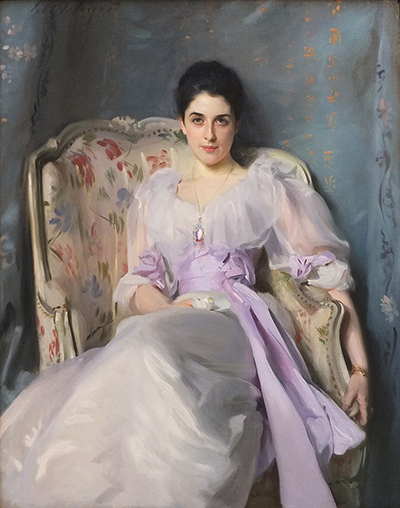
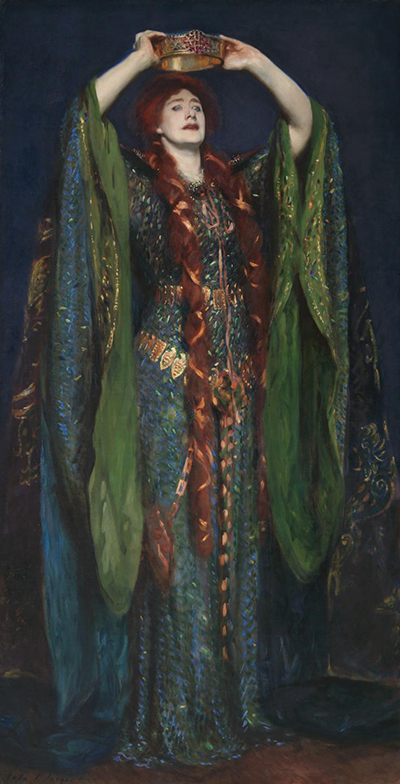
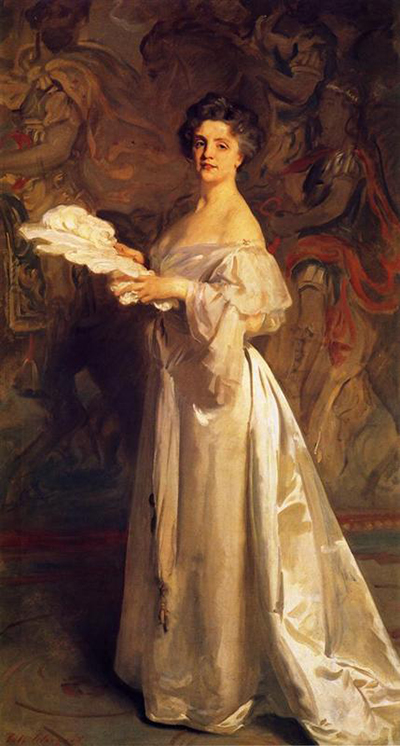
Madame X is a painting of a sitter, but also a severe structure of black, pale flesh, profile, and controlled space. Lady Agnew of Lochnaw is a social portrait, but also an arrangement of white dress, lilac sash, Chinese silk, chair, and direct gaze. Dr. Pozzi at Home turns red fabric into the dominant event of the canvas. Ellen Terry as Lady Macbeth lets costume and role take command of the whole image.
These works show how Sargent made likeness inseparable from surface. A sitter is not simply placed inside a painting; the sitter is made through paint. Fabric can compete with the face. A background can turn the body into a stage presence. A hand can carry as much psychology as the eyes.
Portraiture also gave Sargent a field for modern social drama. The Met's Sargent and Paris material describes Madame X as a calculated collaboration between two outsiders seeking recognition in the French capital. That phrase helps explain the larger portrait practice. Sargent's paintings often show identity as something performed under pressure. The paint is beautiful, but beauty does not remove tension. [2], [1]
The portrait paintings also show how Sargent could make the edge between figure and setting expressive. A sitter may be sharply present, but the surrounding space often tells the viewer how to read that presence. Lady Agnew's drapery and chair create fashionable ease; Madame X's spare setting makes her profile severe; Dr. Pozzi's red robe and interior warmth turn a professional man into a theatrical figure. In Sargent's oil portraits, setting is never harmless background.
Figure And Performance Paintings
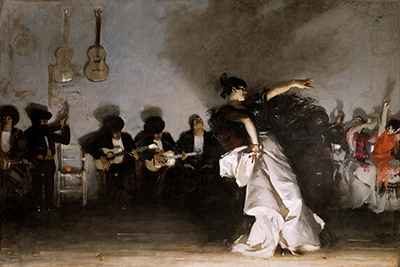
El Jaleo is the great early example of Sargent's figure painting outside formal portraiture. The Gardner Museum describes it as a monumental painting based on drawings made in southern Spain in 1879 and named for an Andalusian dance. The museum says it is a work one can almost hear: heels, fingers, hands, singing, and guitars. That musical force is achieved entirely through paint and composition. [4], [5]
The National Gallery of Art's 1992 focus exhibition described El Jaleo as a monumental eight-by-eleven-foot painting of a flamenco dancer in a theatrical setting. The exhibition brought the painting together with related paintings, drawings, watercolors, and books on Spanish dance, confirming that the work belonged to a large group of Spanish performance studies. [4]
As a painting, El Jaleo depends on shallow stage space. The dancer's skirt catches the strongest light, musicians sit in a dark row behind her, and shadows enlarge the action. The work is not a portrait of one named performer. It is a picture of performance as collective energy: dancer, guitarists, singers, clappers, and viewers.
This performance interest continues later through works such as La Carmencita, which Musee d'Orsay presents as a kind of brilliant response after the Madame X scandal. Spanish dance gave Sargent a way to join portraiture, theatre, movement, costume, and international exhibition culture. The paintings are thrilling, but they also belong to a nineteenth-century fascination with Spain that modern readers should approach with care. [3], [4]
The figure paintings also reveal Sargent's gift for making bodies create rhythm. In El Jaleo, the dancer's arms, skirt, and shadow drive the composition, but the seated figures keep the beat. In Ellen Terry as Lady Macbeth, raised arms and costume turn a theatrical role into a painted monument. In these works, the body is not simply represented. It organizes the entire canvas.
Children, Gardens And Domestic Space
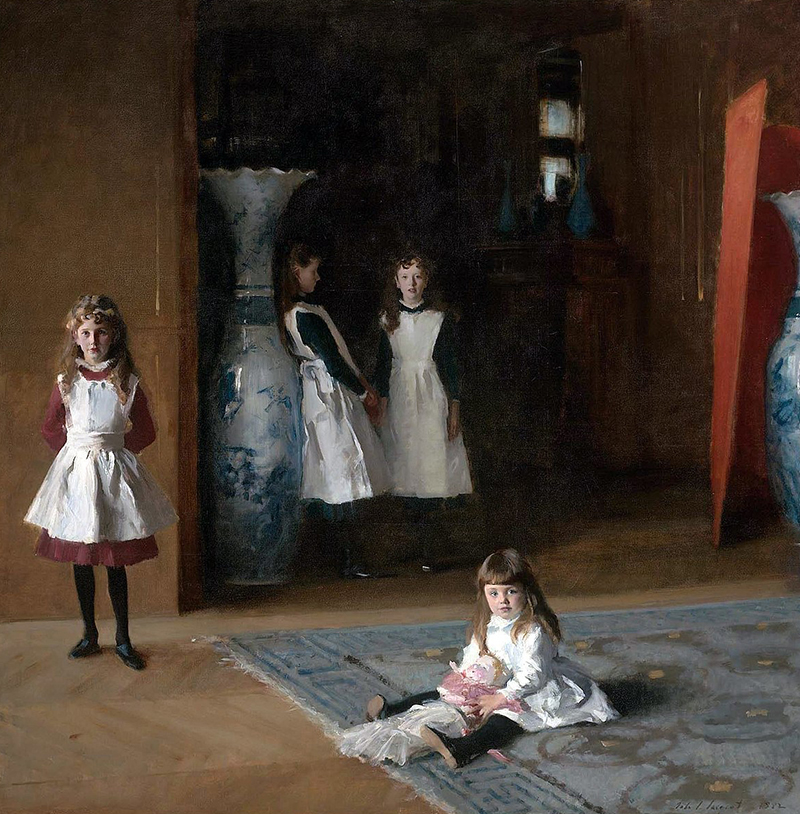
Sargent's child and garden paintings reveal another side of his oil practice. The Daughters of Edward Darley Boit is a family portrait, but it behaves like an interior scene. Four girls occupy a Paris apartment foyer, separated by darkness, distance, and age. The painting's square scale, empty center, Japanese vases, and Velazquez connection make it one of his most complex early works. [1]
The work matters for the paintings hub because it shows Sargent using portraiture and interior space together. The room is not background. It shapes the meaning of the children. A conventional family painting might gather the sisters into affection; Sargent lets space divide them.
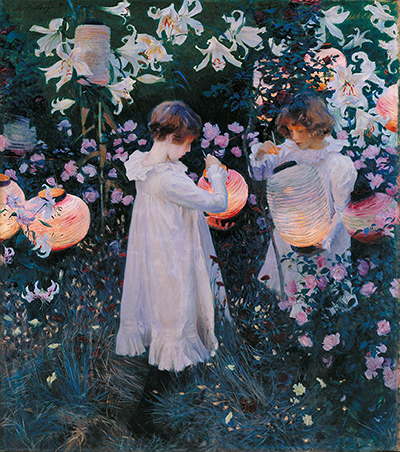
Carnation, Lily, Lily, Rose offers a very different mood, but it too is a major painting about conditions of seeing. British Art Studies shows that the work was made through repeated studies, technical revisions, and close attention to the fading natural light and artificial glow of lanterns. It looks like a passing moment, but it was built through two seasons of work, with studies of figures, flowers, lanterns, and surface. [6]
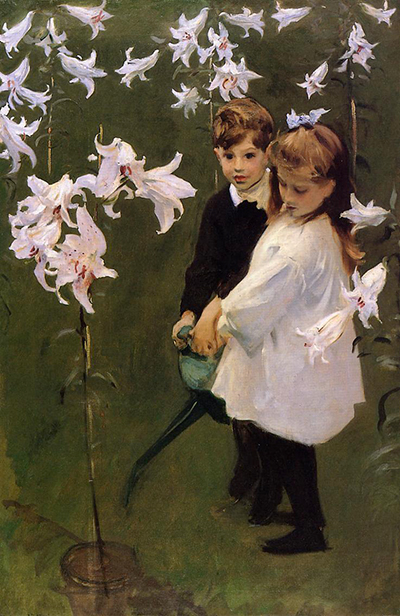
Garden works such as Garden Study of the Vickers Children also belong in this field. British Art Studies connects the decorative handling of lilies and child figures in that work to the later Carnation. Sargent was not simply placing children outdoors. He was exploring pattern, light, flower forms, figure placement, and the way a garden can become a designed field of color. [6]
Together, the child and garden paintings show that Sargent could make intimacy monumental. They avoid easy sweetness by turning childhood into space, light, time, and concentration.
They also show how far Sargent could move from the adult world of society portraiture without losing pictorial seriousness. The Boit girls and the Barnard children are not treated as decorative relief after fashionable sitters. They are central to two of his most ambitious paintings of the 1880s. Childhood gave Sargent a way to explore perception before identity hardens into rank, career, or public role.
Travel And Spanish Painting
Travel was central to Sargent's painting. The Met's Heilbrunn essay notes that after leaving regular class attendance, he traveled to study old masters and gather subjects, visiting Spain, Holland, and Venice. The Met also notes the influence of Monet and Impressionist painting on some sunlit canvases of the late 1870s. [2], [1]
Spain became one of the richest travel subjects. The National Gallery of Art's Sargent and Spain exhibition presented about 120 oils, watercolors, and drawings connected to more than three decades of Spanish travel. The exhibition material emphasizes landscapes, marine scenes, everyday life, architectural studies, and portrayals of people Sargent encountered. This breadth matters because Spain for Sargent was not only El Jaleo. It was also buildings, courtyards, ships, soldiers, trees, fountains, and coastal light. [4]
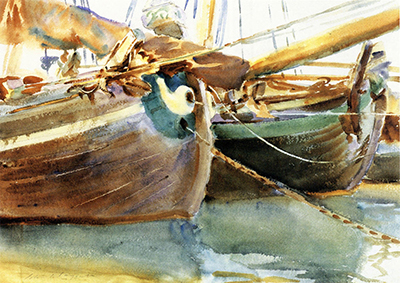
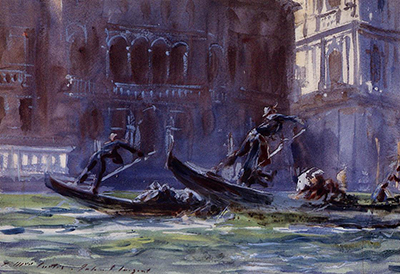
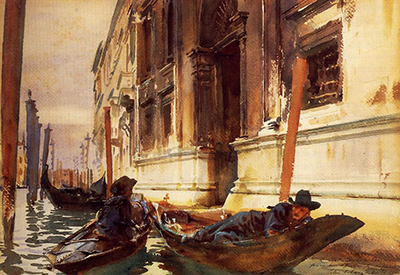
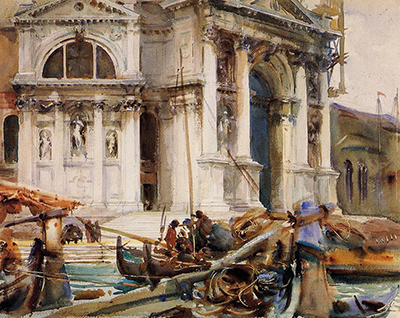
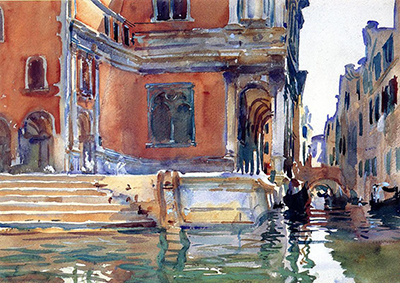
Venice was another major source, especially for paintings and watercolors that avoided the most obvious tourist grandeur. Musee d'Orsay notes that Sargent gradually sharpened his originality in Venice, showing a darker and more working-class face of the city. That comment helps separate his travel painting from simple postcard beauty. He was interested in pictorial problems and social textures, not only landmarks. [3]
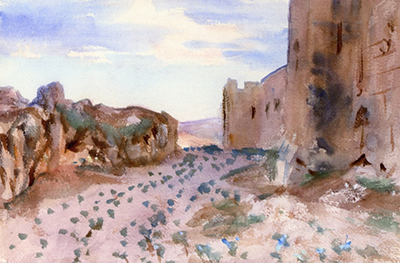
North Africa and other travel sites added still more variety. Across these works, Sargent often avoided industrial modernity and focused instead on rural, traditional, architectural, or performative subjects. This choice can now feel selective and shaped by outsider desire, but it also gave him sustained opportunities to study light, color, surface, and figure in unfamiliar settings.
The travel paintings should therefore be read as both observation and construction. They show what Sargent saw, but also what he wanted painting to do with travel: create effects of light, pattern, atmosphere, and cultural encounter.
The National Gallery of Art's Sargent and Spain material is especially useful because it refuses a narrow view of the Spanish works. It includes oils, watercolors, and drawings across more than thirty years, with architecture, marine scenes, landscapes, everyday life, and people he encountered. This breadth shows Sargent as a painter who returned to places and visual problems over time, not one who simply harvested a single dramatic subject. [4]
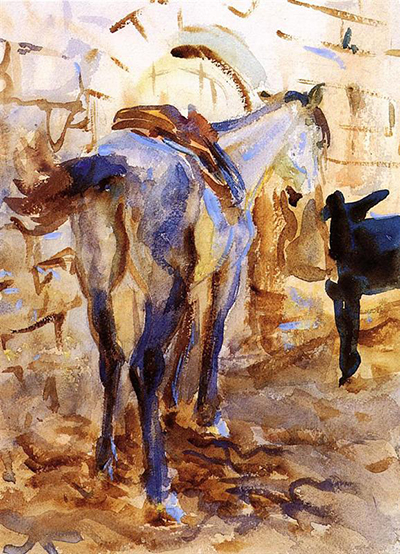
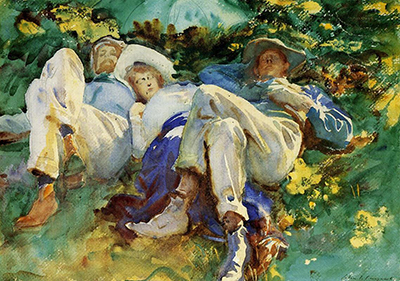
Travel also changed the relation between oil and watercolor. Some subjects appear most naturally in watercolor, where speed and transparency suit light and architecture. Others become oil paintings with more weight, surface, and scale. The paintings hub should keep oil painting central, but it should also point readers toward the watercolor page because Sargent's eye moved between media.
Light, Process And Surface
Sargent's paintings often appear effortless because the surface feels alive. British Art Studies makes clear, especially through Carnation, Lily, Lily, Rose, that this effect could require intense process. Technical examination revealed revisions, scraping back, wet-in-wet layers, altered lanterns and flowers, and careful surface choices. [6]
The article describes Sargent working on the painting as a sequence of moments rather than a single uninterrupted act. He studied figures and flowers separately, pursued the exact balance of natural twilight and lantern glow, and returned to the subject over two late-summer and autumn seasons. The apparently fresh result was the outcome of repetition and adjustment.
The same source discusses pigments, glazing, Megilp medium, and Sargent's concern for gloss and saturation. These details matter for the whole paintings page because they show that Sargent's painterly fluency was material, not magical. He understood how pigment, medium, varnish, and surface affected color and light.
This technical evidence also changes how one reads his bravura. Broad handling does not mean lack of structure. A loosely painted garment may sit on a carefully judged tonal foundation. A glowing passage may depend on layers. A visible brushstroke may be the final sign of many earlier decisions.
Sargent's paintings are therefore best seen as controlled freshness. He valued immediacy, but he often worked hard to produce it. The liveliness of the surface is one of his subjects.
This is important for reading all of the major oils. A viewer may first see bravura, but close looking often reveals correction, staging, and material calculation. In Carnation, technical evidence makes that visible. In portraits, one can see it through the controlled relation between face, hand, and garment. In Gassed, the apparent procession of bodies is held by a strict compositional rhythm. Sargent's ease is almost always earned.
Public And Mural Painting
Sargent's painted career also includes major public and mural work, especially in Boston. The MFA Sargent Archive finding aid describes him as turning away from portrait work by the mid-1900s and concentrating on large-scale mural commissions for the Boston Public Library, Harvard University's Widener Library, and the Museum of Fine Arts, Boston. [7], [8]
This shift matters because it shows that Sargent's ambition was not limited to easel paintings and private likeness. Public murals allowed him to work at scale, with allegory, architecture, and civic setting. They also connected him strongly to Boston, a city the MFA describes as his American home in an artistic sense. [7], [8]
The MFA object record for Architecture, Painting and Sculpture Protected by Athena from the Ravages of Time frames Sargent within the American late nineteenth- and early twentieth-century desire to decorate public buildings with large-scale painting and sculpture. Committees turned to artists who had earned acclaim as easel painters, and Sargent's facility with the brush and understanding of sitters helped make him a natural choice. [7], [8]
The public-commissions essay carries the fuller mural story. For the paintings hub, the key point is that Sargent's painting practice expanded from private portrait surface into architectural and civic space. His brushwork could serve a sitter, a room, a garden, a stage, or a public building.
The murals also complicate the idea of painting as portable object. Many Sargent works were made to move through exhibitions, dealers, collectors, and museums. Murals belong to architecture. They ask how painting behaves when it is tied to a building, a public program, and a civic audience. Sargent's move toward murals therefore marks a genuine enlargement of ambition, not a retreat from painting.
Late Painting And War
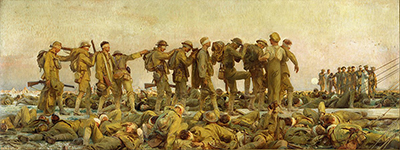
Gassed shows the late career under a very different moral pressure. Painted in 1919 after Sargent traveled to the Western Front as an official war artist, it turns his skills with bodies, rhythm, fabric, and large-scale arrangement toward the aftermath of chemical warfare. The painting is monumental but not triumphant.
Its importance for the paintings hub is clear: it prevents Sargent's oil painting from ending in elegance. The same painter who made white dresses, red robes, and black satin unforgettable could also make blinded soldiers moving in a line one of the great public images of the First World War.
Gassed also shows continuity. Sargent's long experience with pose and procession matters in the central line of soldiers. His ability to organize a large canvas matters. His command of light and fabric remains present. What changes is the subject. Beauty and technique are placed under historical strain.
The painting therefore belongs with the portraits and against them. In portraiture, Sargent often painted individuals under social pressure. In Gassed, individual identity recedes into collective injury. The late work expands the meaning of his painted career by showing what his gifts could do when society portraiture was no longer the central task.
It also reminds readers that Sargent's late painting cannot be separated from history. Travel and portraiture had often given him subjects of beauty, status, and sensation. War required a different response. Gassed retains his painterly command, but it turns that command toward vulnerability and care. The painting is essential because it prevents the career from closing around pleasure alone.
How To Use The Paintings List
The paintings list should be used as a map, not as a simple parade of images. Sargent's works are best approached by groups: Paris portraits, Spanish performance paintings, child and family pictures, society portraits, travel paintings, garden scenes, public murals, watercolors and oil studies, and late war painting. [1]
Readers beginning with the most famous works should start with Madame X, El Jaleo, The Daughters of Edward Darley Boit, Carnation, Lily, Lily, Rose, and Gassed. These five works show the broadest range: scandalous portrait, Spanish performance, child/interior group, garden light, and war memorial image.
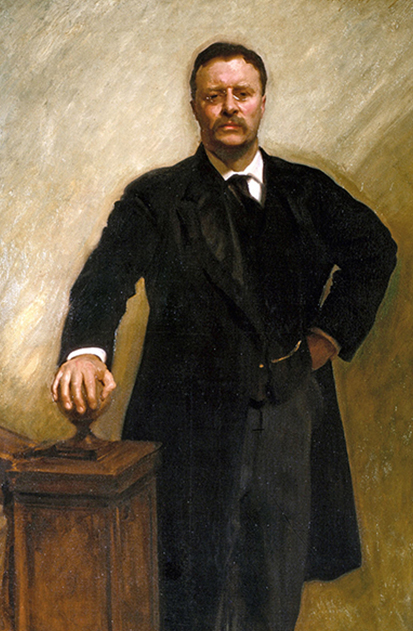
Readers interested in portraiture should move from the paintings list into the portraits hub and then to Lady Agnew, Ellen Terry, Dr. Pozzi, Theodore Roosevelt, and the military portrait pages. Readers interested in method should move toward drawings, style and technique, and the technical discussion of Carnation.
The list is also useful for seeing how Sargent's painting categories overlap. A portrait can be a theatre painting. A family picture can be an interior. A travel painting can be a study of light. A public work can grow from the authority earned in private commissions.
If using the paintings list chronologically, watch the changes in ambition. Early Salon works show Sargent proving himself in public. The 1880s bring some of the great figure and portrait statements. The 1890s show the height of fashionable portrait demand. Later works lead toward murals, travel, watercolor, and eventually war. The list becomes more useful when it is read as movement through career pressure rather than a static inventory.
Key Paintings And Where To Go Next
For Paris and scandal, start with Madame X and the biography page's Paris section. For Spanish performance, use El Jaleo and later Spanish subjects. For child and family space, use The Daughters of Edward Darley Boit. For garden light and process, use Carnation, Lily, Lily, Rose and style and technique. [1]
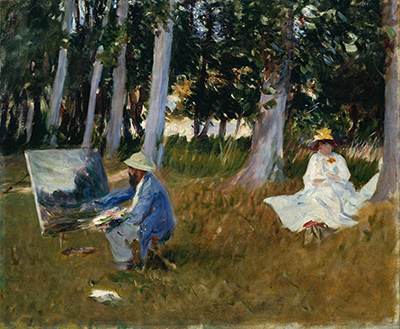
For society portraiture, use the portraits hub, Lady Agnew of Lochnaw, Ellen Terry as Lady Macbeth, Dr. Pozzi at Home, and the pages for individual sitters. For artistic friendships, use Claude Monet Painting by the Edge of a Wood, Auguste Rodin, and the drawings hub. For public work, use public commissions. For war and memorial painting, use Gassed.
The paintings essay should also send readers outward to watercolors, because Sargent's late travel art often moves between oil and watercolor concerns: light, place, architecture, and speed. The distinction between media matters, but the eye behind them is continuous.
Browse Sargent Paintings
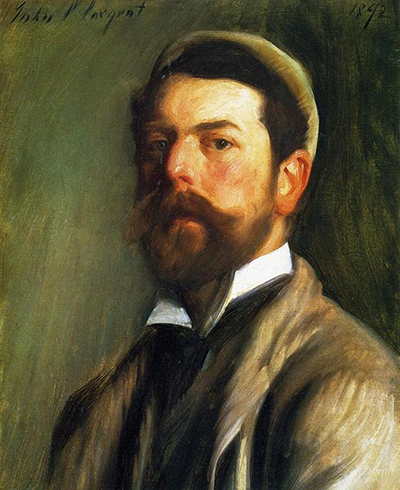
John Singer Sargent's Oil Paintings
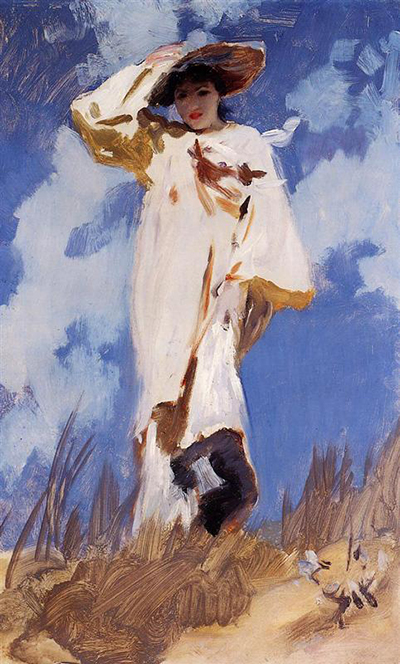
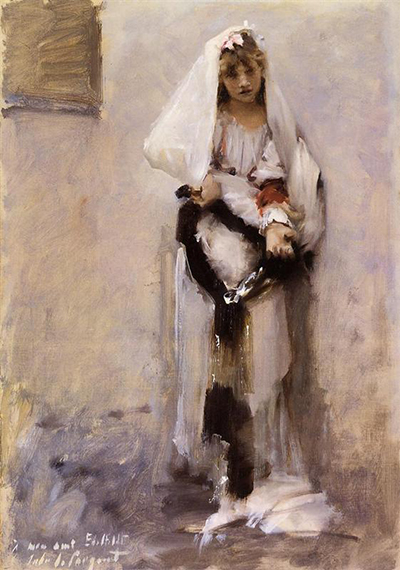
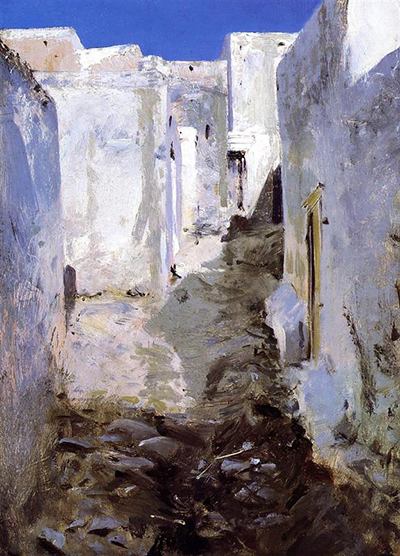
Dorothy Barnard
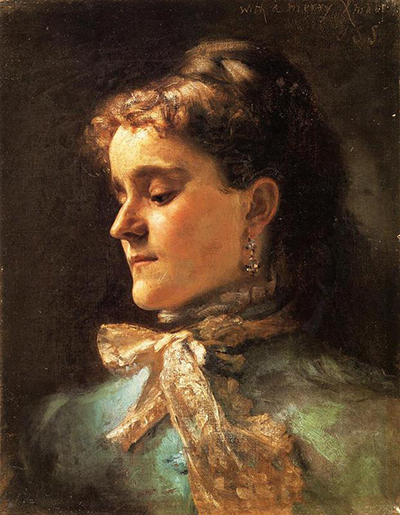
Emily Sargent
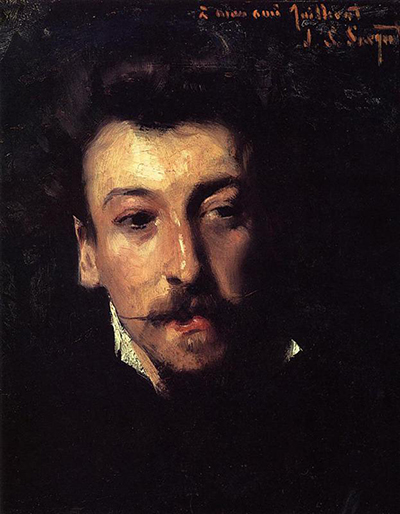
Eugene Juillerat
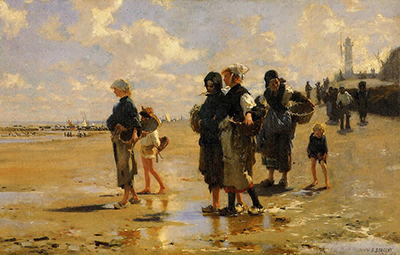
Fishing for Oysters at Cancale
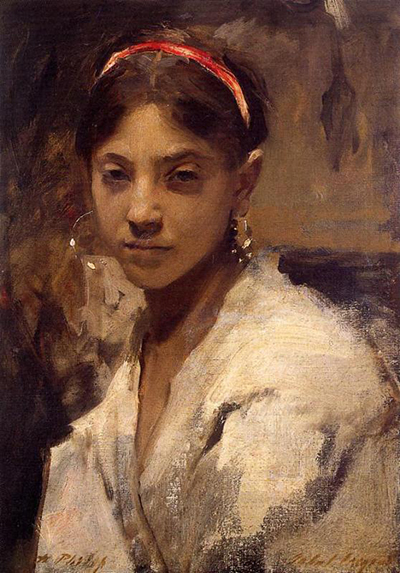
Head of a Capri Girl
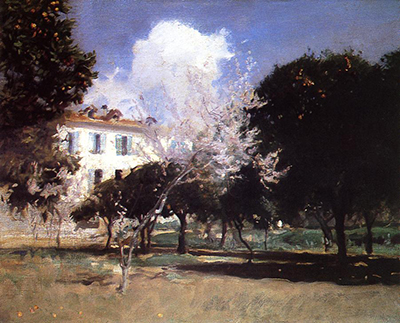
House and Garden
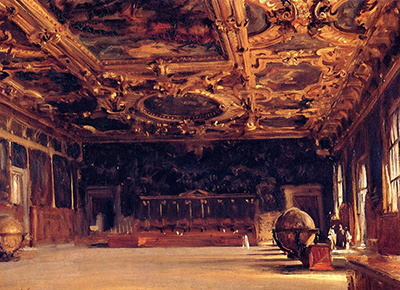
Interior of the Doge's Palace
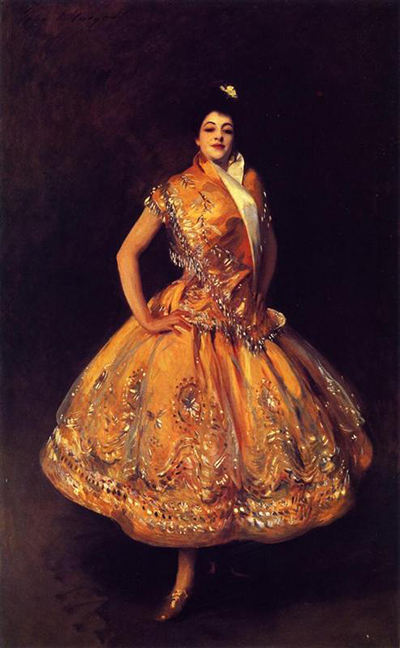
La Carmencita
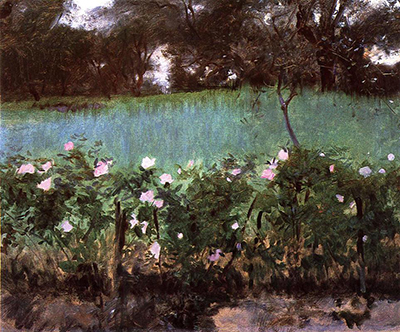
Landscape with Rose Trellis
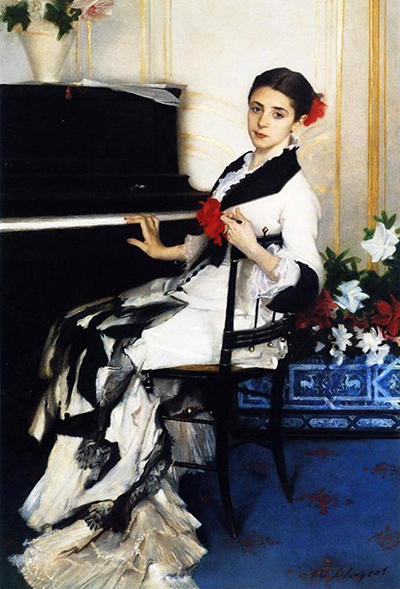
Madame Ramon Subercaseaux
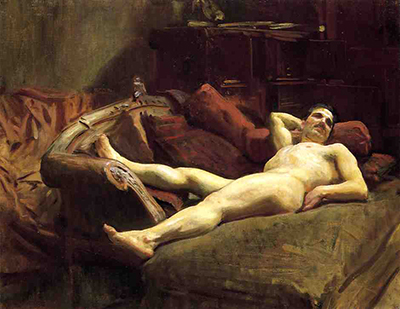
Male Model Resting
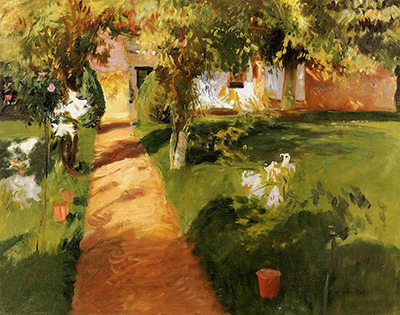
Millet's Garden
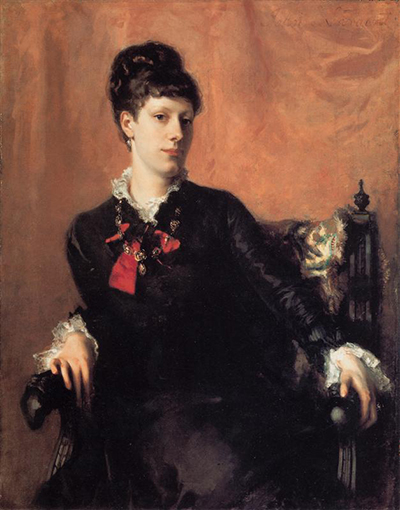
Miss Frances Sherborne Ridley Watts
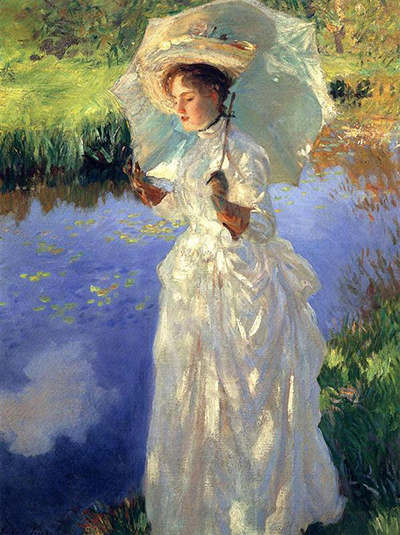
Morning Walk
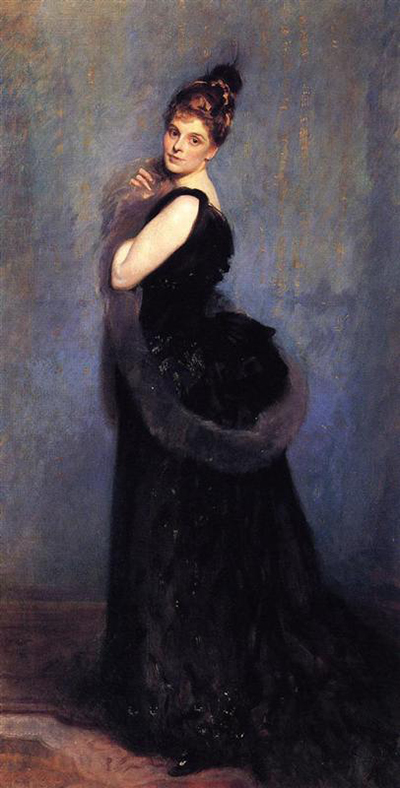
Mrs George Gribble
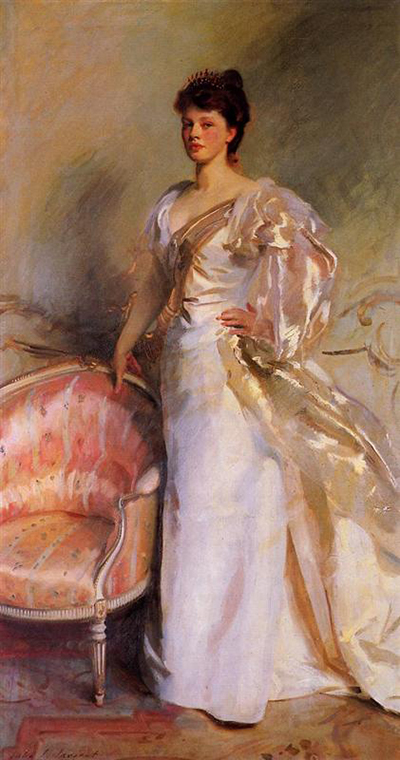
Mrs George Swinton
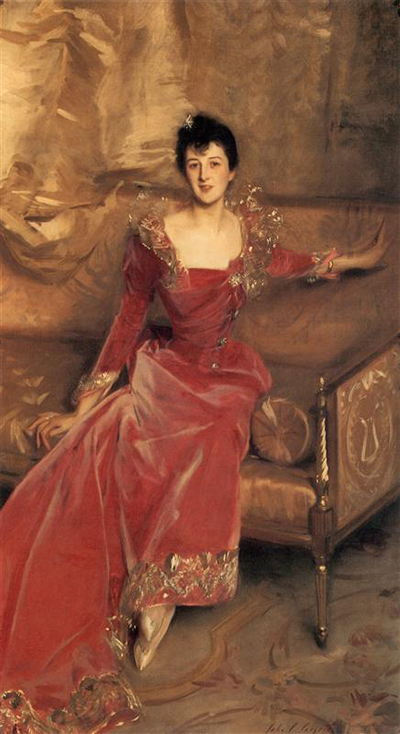
Mrs Hugh Hammersley
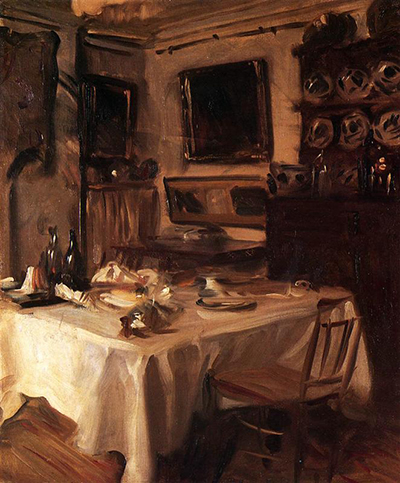
My Dining Room
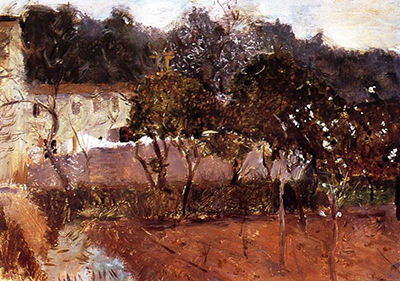
Nice
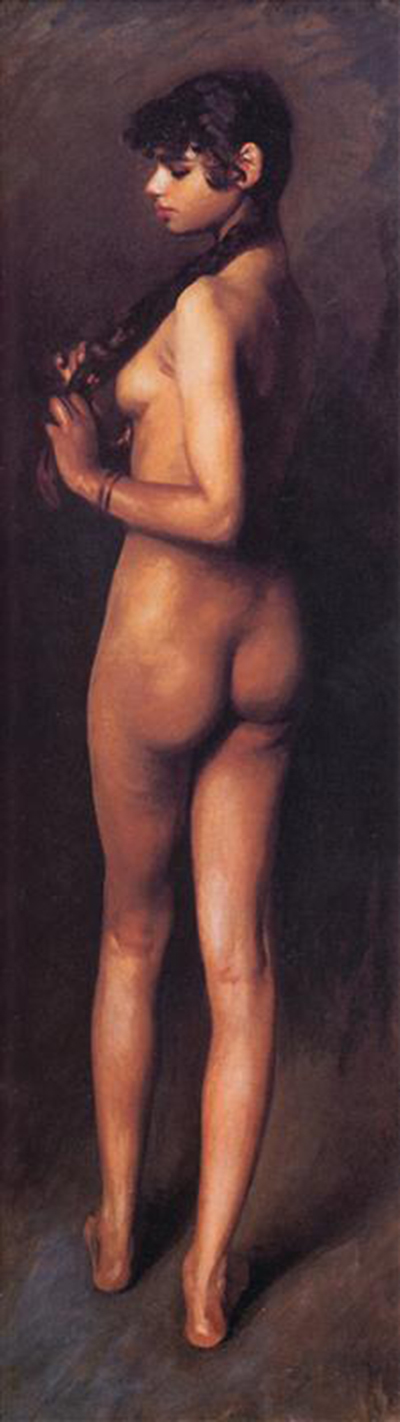
Nude Egyptian Girl
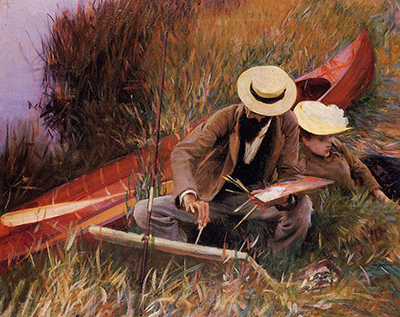
Paul Helleu Sketching his Wife
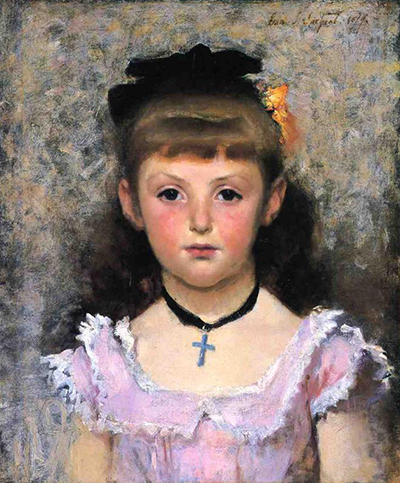
Portrait of Jeanne Kieffer
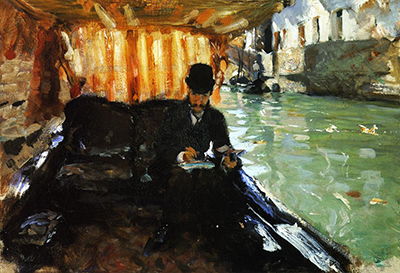
Ramon Subercaseaux
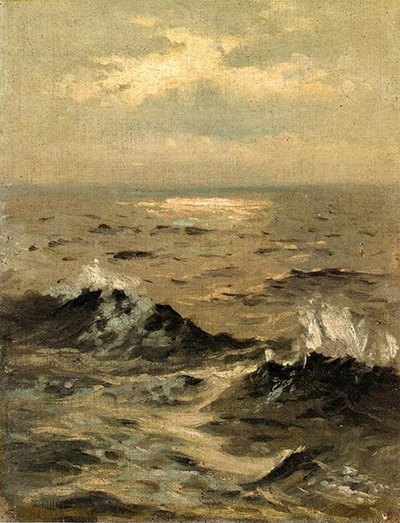
Seascape
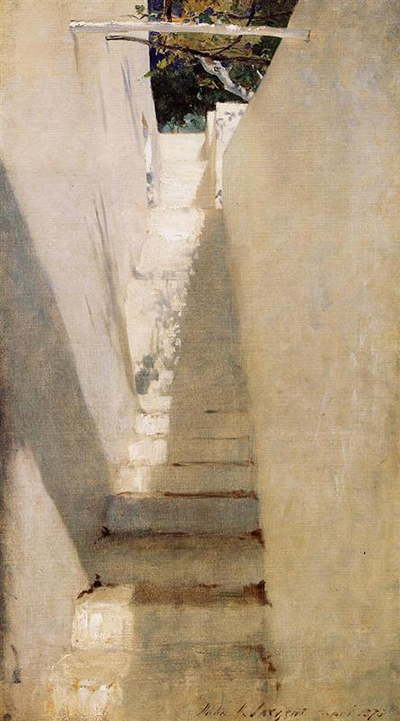
Staircase in Capri
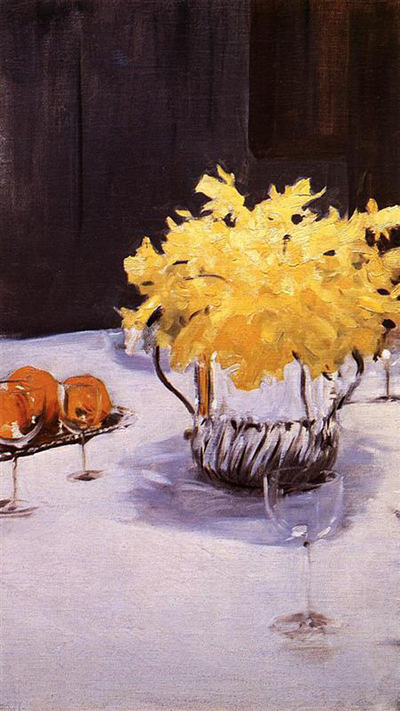
Still Life with Daffodils
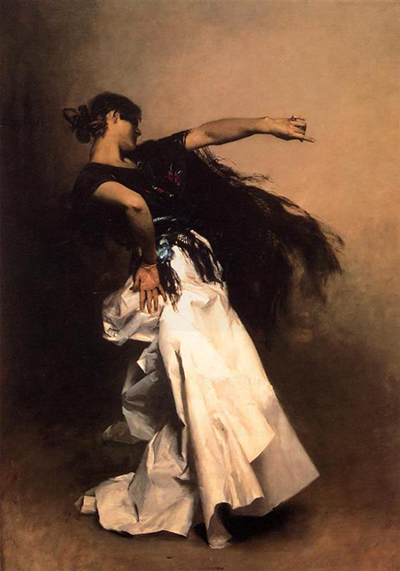
The Spanish Dancer
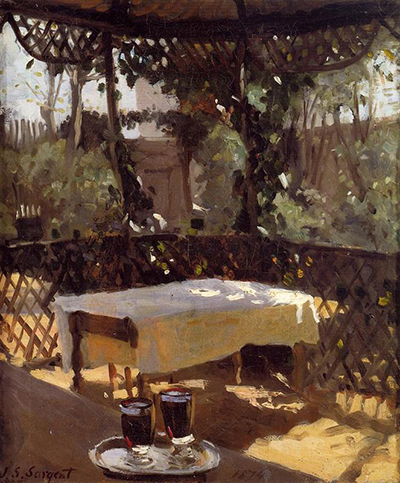
Two Wine Glasses
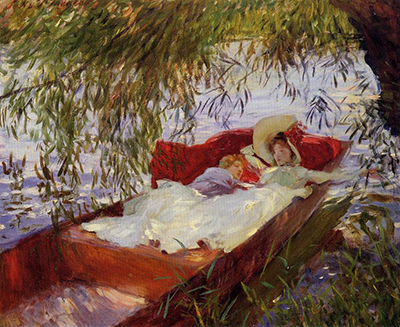
Two Women Asleep in a Punt under the Willows
Violet Sargent
John Singer Sargent Watercolours
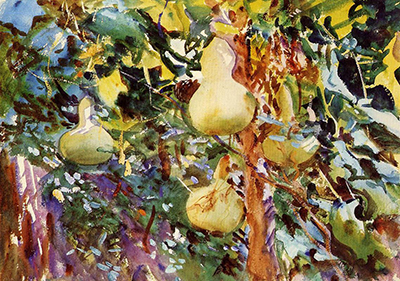
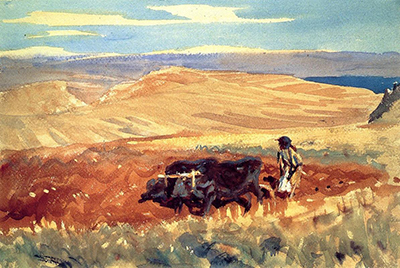
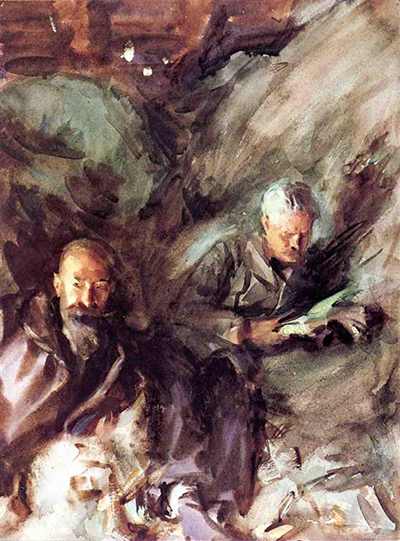
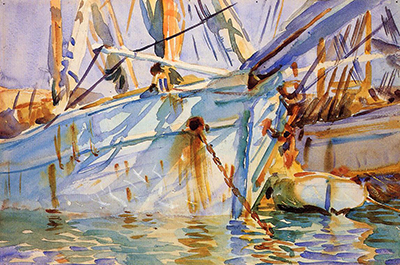
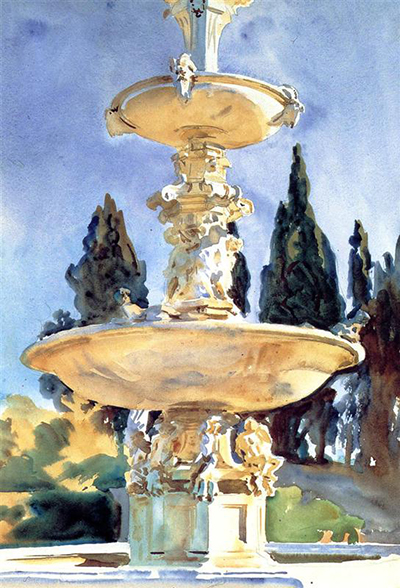
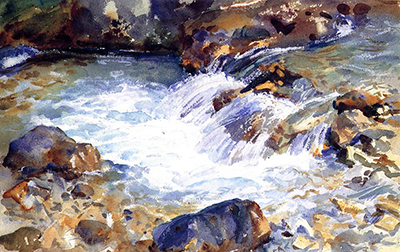
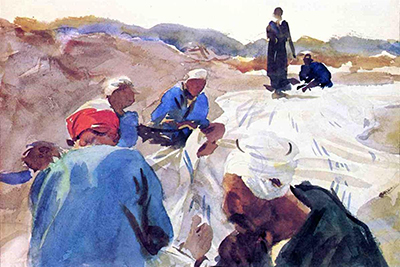
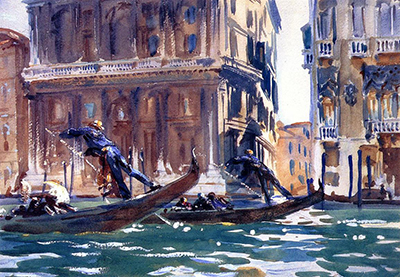
Watercolours offered Sargent a freedom from both his studio and also the demanding patrons who financed much of his career. The opportunity to explore the European countryside in extended periods brought real enjoyment to this free spirit.
He would cover both architecture and also purely natural scenes, such as the Venician architecture and the mountain ranges of the Alps. One stylistic characteristic of Sargent was to compose a more fragmented artwork, which became common in the generations that followed.
The bold cropping technique is something also found later in photography whereas artists in previous centuries followed a traditional method of centering the subject, leaving the main focus more complete. The angles used by this artist also made his work within this genre unique to the rest of his career.
Photographic evidence has shown that Sargent would frequently set up with two umbrellas protecting himself and his canvas, often angled against the hills on which he was often perched. His work in Switzerland was frequently completed in such conditions, appreciating the stunning landscape of this region and adapting his posture to remain comfortable.
The evidence of this section suggests that Sargent chose oils in most cases for his portrait paintings and watercolours for his landscapes. This, generally specaking, is true, although there was also plenty of crossover. For example, his portraits would include several artworks of the same subject, including oils, watercolours and pencil drawings.
A Siesta
A Spanish Barracks
A Spanish Interior
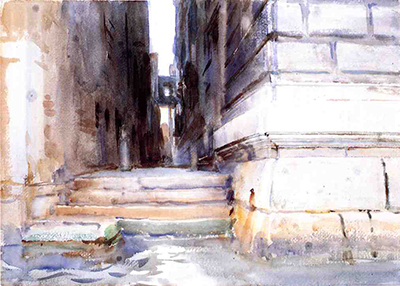
Base of a Palace
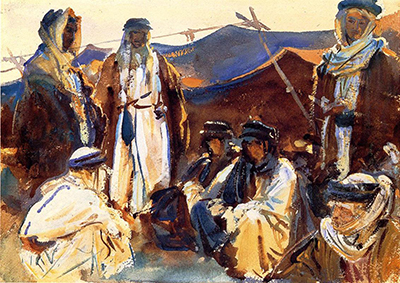
Bedouin Camp
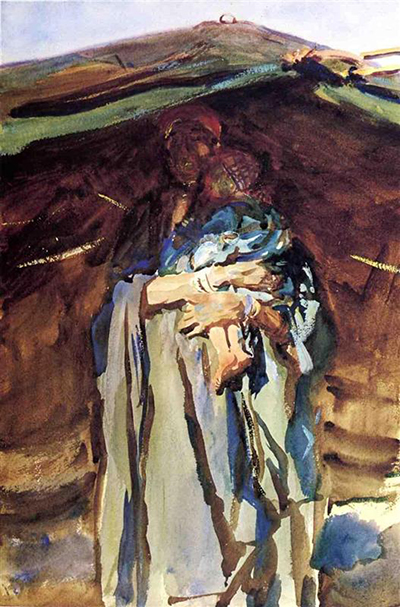
Bedouin Mother
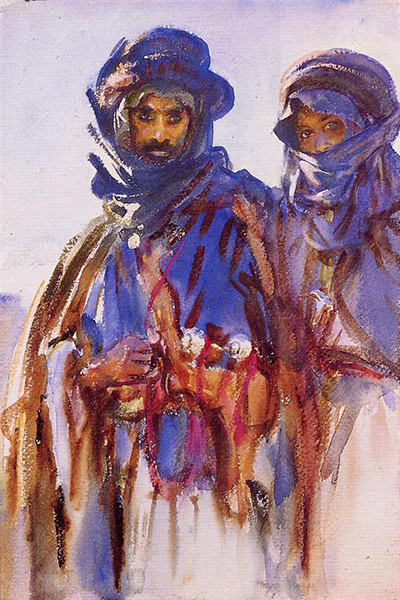
Bedouins
Boats Venice
Festa della Regatta
Fortress Roads and Rocks
Gondoliers Siesta
Gourds
Hills of Galilee
In a Hayloft
In a Levantine Port
In a Medici Villa
In the Tyrol
Mending a Sail
On the Canal
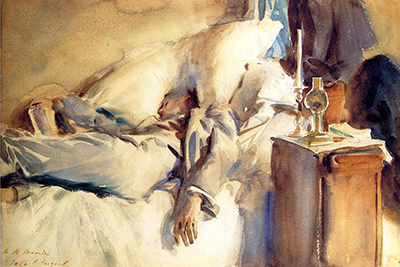
Peter Harrison Asleep
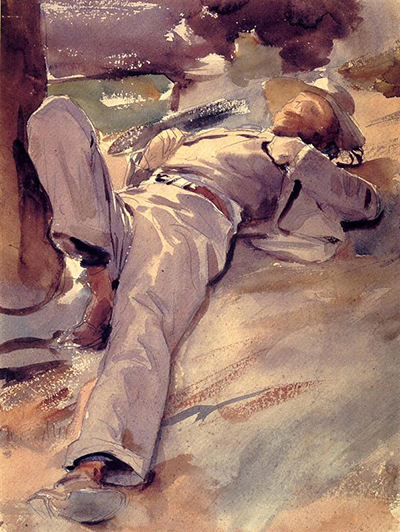
Peter Harrison
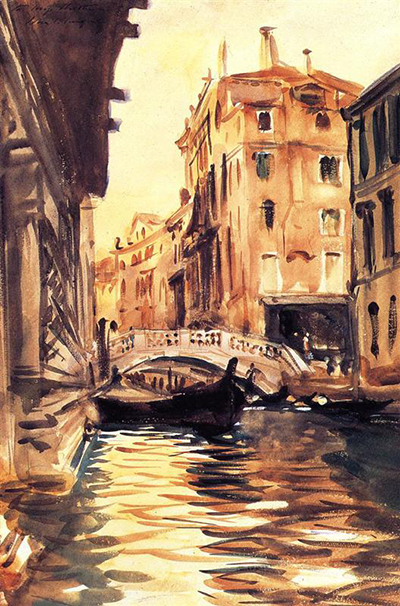
Ponte della Canonica
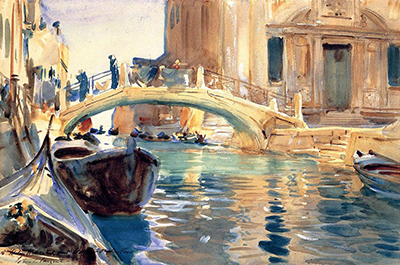
Ponte san Giuseppe di Castello Venice
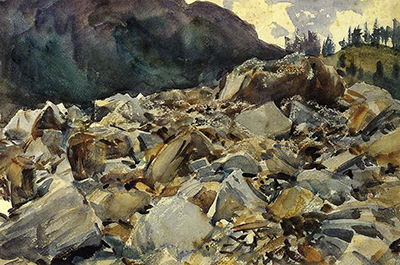
Purtud Alpine Scene and Boulders
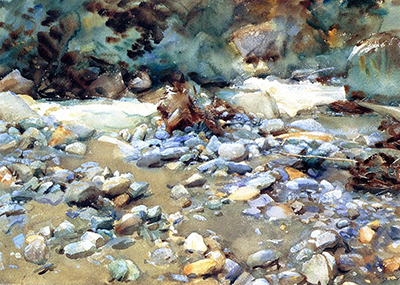
Purtud Bed of a Glacier Torrent
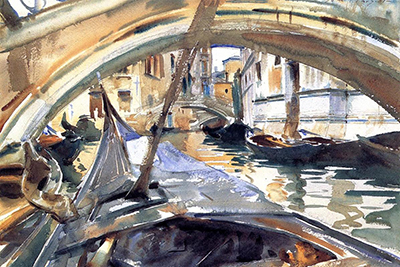
Rio de Santa Maria Formosa
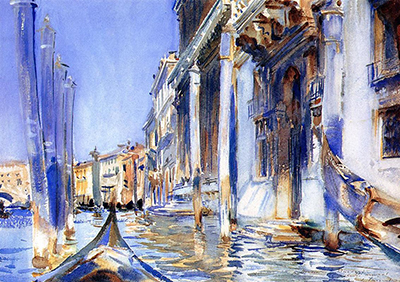
Rio dell Angelo
Saddle Horse Palestine
Santa Maria Della Salute
Scuola di San Rocco
Siesta
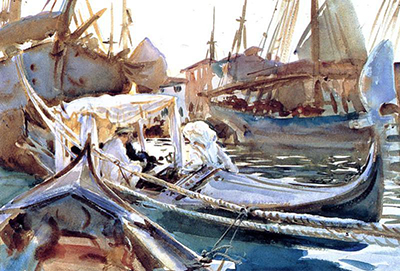
Sketching on the Giudecca
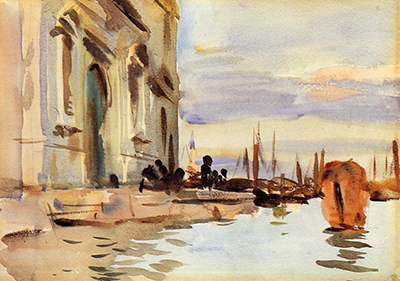
Spirito Santo Saattera
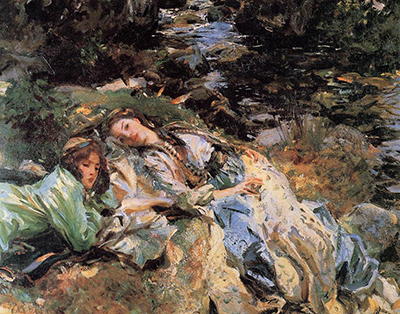
The Brook
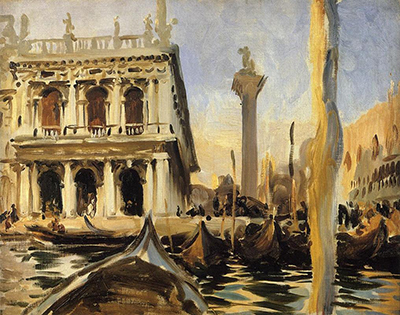
The Libreria
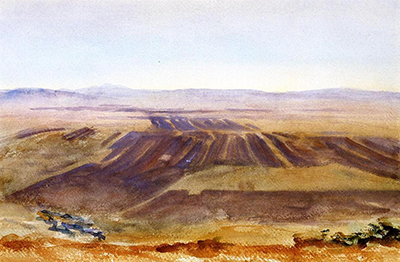
The Plains from Nazareth
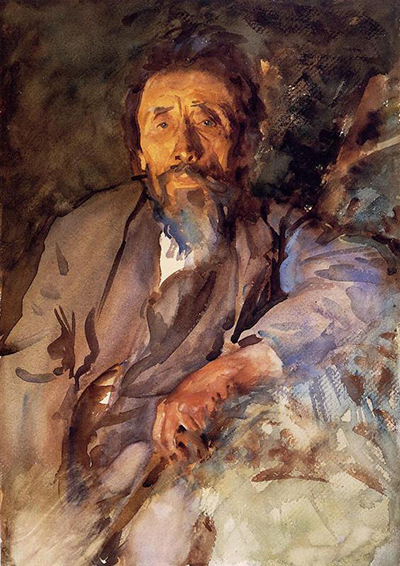
The Tramp
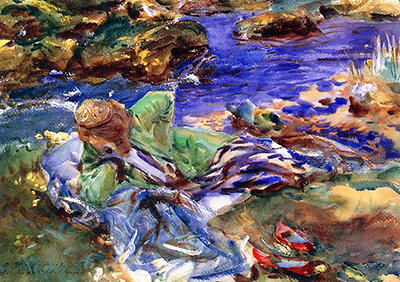
Turkish Woman by a Stream
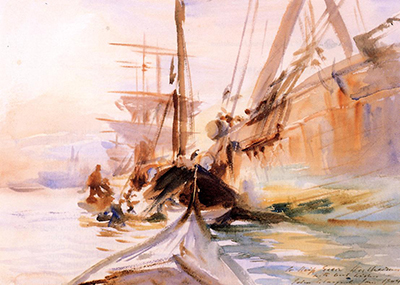
Unloading Boats in Venice
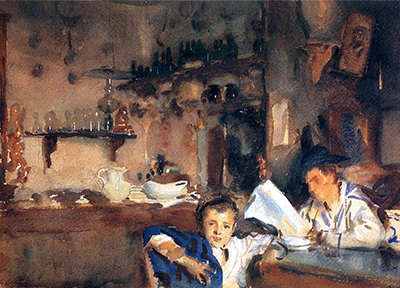
Venetian Interior
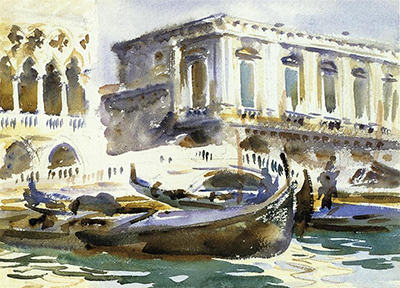
Venice the Prison
Frequently Asked Questions
His most famous paintings include Madame X, El Jaleo, The Daughters of Edward Darley Boit, Carnation, Lily, Lily, Rose, Lady Agnew of Lochnaw, Ellen Terry as Lady Macbeth, and Gassed.
No. Portraiture made him famous, but he also painted Spanish performance scenes, travel subjects, gardens, children, murals, watercolors, and the major war painting Gassed.
He combined direct painting, broad brushwork, old-master study, strong tonal structure, and a surface that often preserves the freshness of the sketch. Technical research shows that this freshness could require repeated revision and careful material choices.
Madame X caused a scandal at the Paris Salon in 1884. Its severe design, exposed dress, profile pose, and depiction of Virginie Gautreau challenged expectations of society portraiture. [1]
El Jaleo was one of the works that made Sargent a sensation at the Paris Salon of 1882. It showed a Spanish dancer and musicians in a dramatic theatrical setting. [1]
Yes, especially through travel works in oil and watercolor. Spain, Venice, Majorca, North Africa, and other sites gave him subjects in landscape, architecture, everyday life, and light. [4]
Yes. Later in his career he devoted major energy to mural projects in Boston, including work connected with the Boston Public Library and the Museum of Fine Arts, Boston. [7], [8]
Begin with one major work from each group: Madame X for portrait risk, El Jaleo for performance, Daughters for child/interior space, Carnation for light and process, and Gassed for late public meaning.
Discussion
Sargent's paintings ask whether technical beauty makes a subject easier to face or more difficult. His strongest works make beauty carry pressure rather than escape it.
Reader Insights
What is the first detail that shapes your reading of John Singer Sargent Paintings: pose, setting, light, costume, brushwork or historical context?
Which small visual decision begins to matter more after a longer look, and how does it change the mood of the page?
Which comparison helps most: another Sargent portrait, a travel subject, a public commission, or a work by one of his contemporaries?
Join the Conversation
Share a thoughtful comment below about what you notice, question or compare when looking at this page.
References
- The Metropolitan Museum of Art, *Sargent and Paris* https://www.metmuseum.org/fr/exhibitions/sargent-and-paris/inside-the-exhibition
- H. Barbara Weinberg, "John Singer Sargent (1856-1925)" https://www.metmuseum.org/de/essays/john-singer-sargent-1856-1925
- *John Singer Sargent: Eblouir Paris* https://www.musee-orsay.fr/en/program/whats-on/exhibitions/presentation/john-singer-sargent-eblouir-paris
- National Gallery of Art, *Sargent and Spain* https://www.nga.gov/exhibitions/sargent-and-spain
- Isabella Stewart Gardner Museum, *El Jaleo* https://www.gardnermuseum.org/experience/collection/13259
- Rebecca Hellen and Elaine Kilmurray, "Carnation, Lily, Lily, Rose and the process of painting" https://britishartstudies.ac.uk/issues/02/sargent-conservation
- Museum of Fine Arts, Boston, John Singer Sargent gallery https://www.mfa.org/gallery/john-singer-sargent
- Museum of Fine Arts, Boston, John Singer Sargent Archive finding aid https://www.mfa.org/collections/americas/the-john-singer-sargent-archive/finding-aid