 by Tom Gurney
Tom Gurney BSc (Hons) is an art history expert with over 20 years experience
Published on November 18, 2026 / Updated on November 18, 2026
Email: tomgurney1@gmail.com / Phone: +44 7429 011000
Bust of Louis XIV
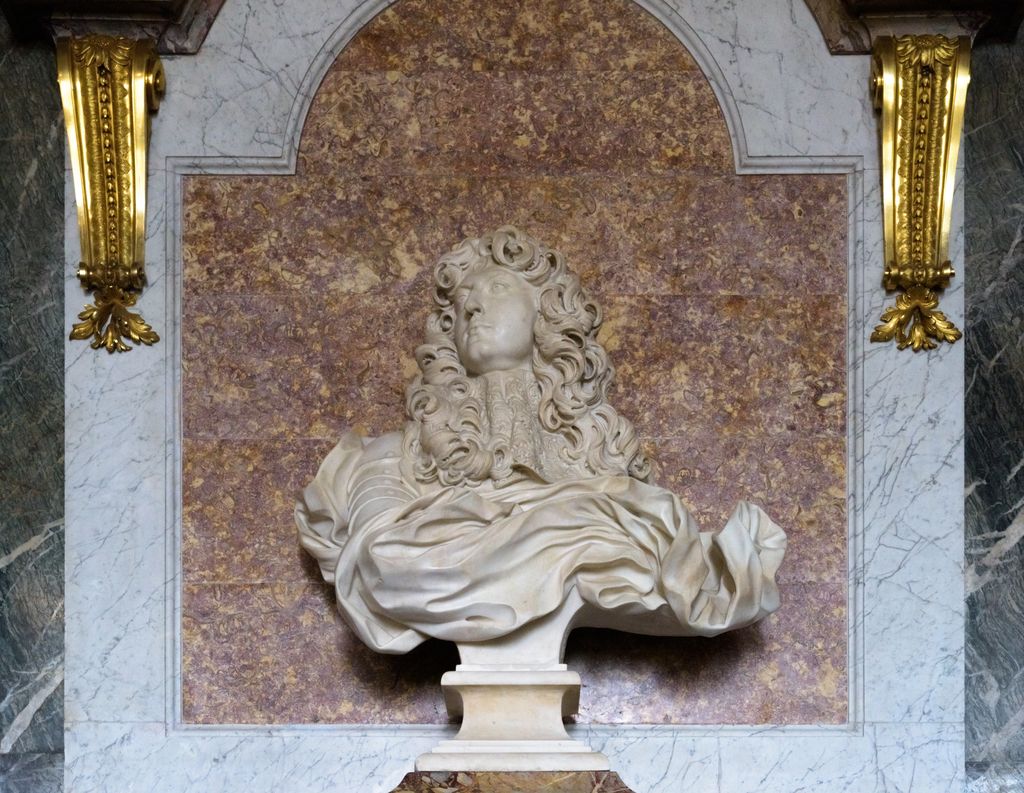
Louis XIV’s head rises above a sweep of marble drapery in the portrait Gian Lorenzo Bernini carved in France in 1665. The King turns his head and looks beyond the person standing before him. His hair spreads over his shoulders, while the cloth swings across the armour at his chest. A courtier who accompanied Bernini, Paul Fréart de Chantelou, kept a diary that follows the bust from the first talk of a commission to the final sitting. The finished marble at Versailles brings together two things the diary lets us examine separately: the work of studying a living face and the work of giving that likeness the bearing of a monarch. [1][2]
At a Glance
- Date1665
- Location or statusPalace of Versailles
- WorkMarble bust made during Bernini’s visit to France
The work in Bernini’s career
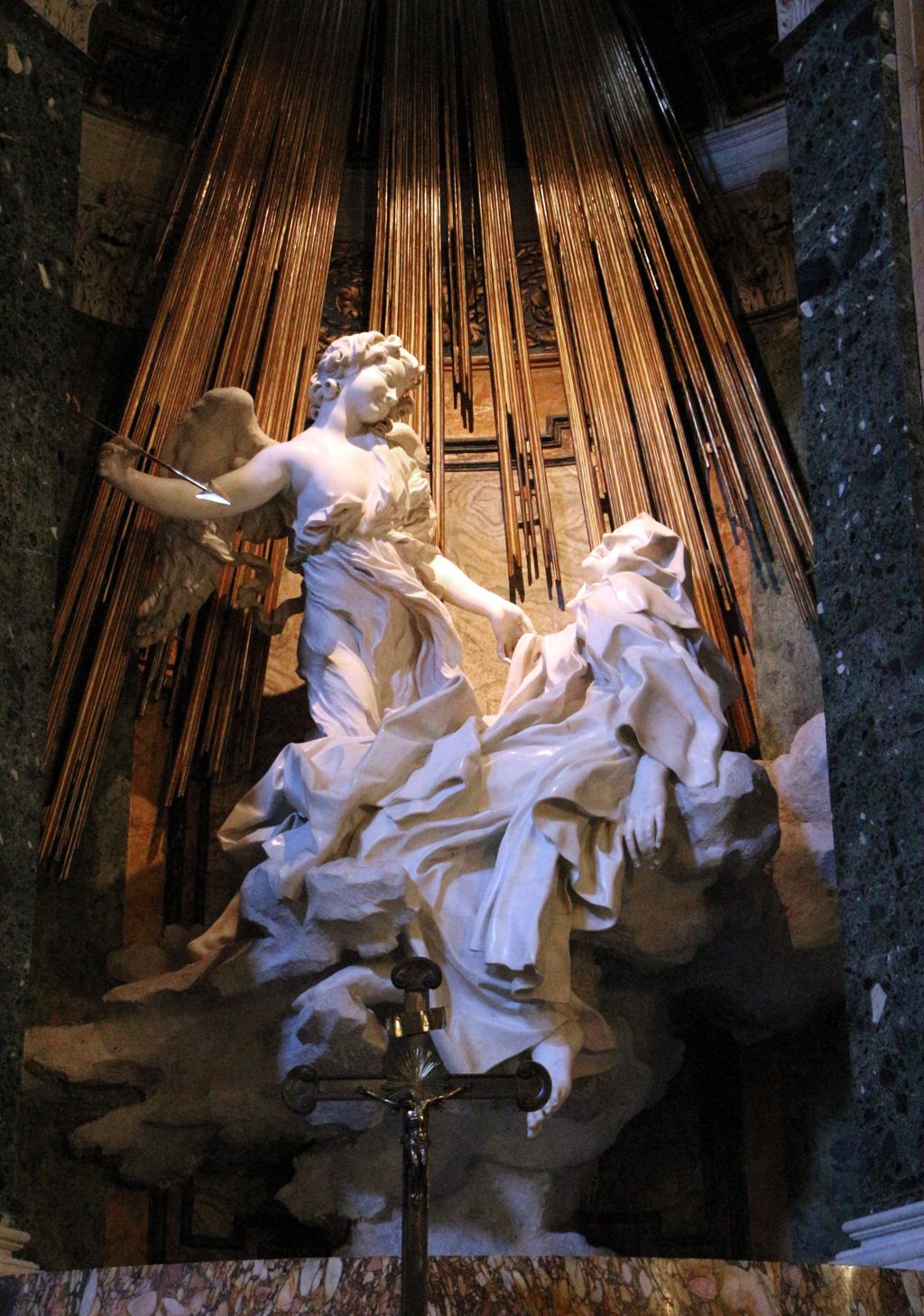
Ecstasy of Saint Teresa
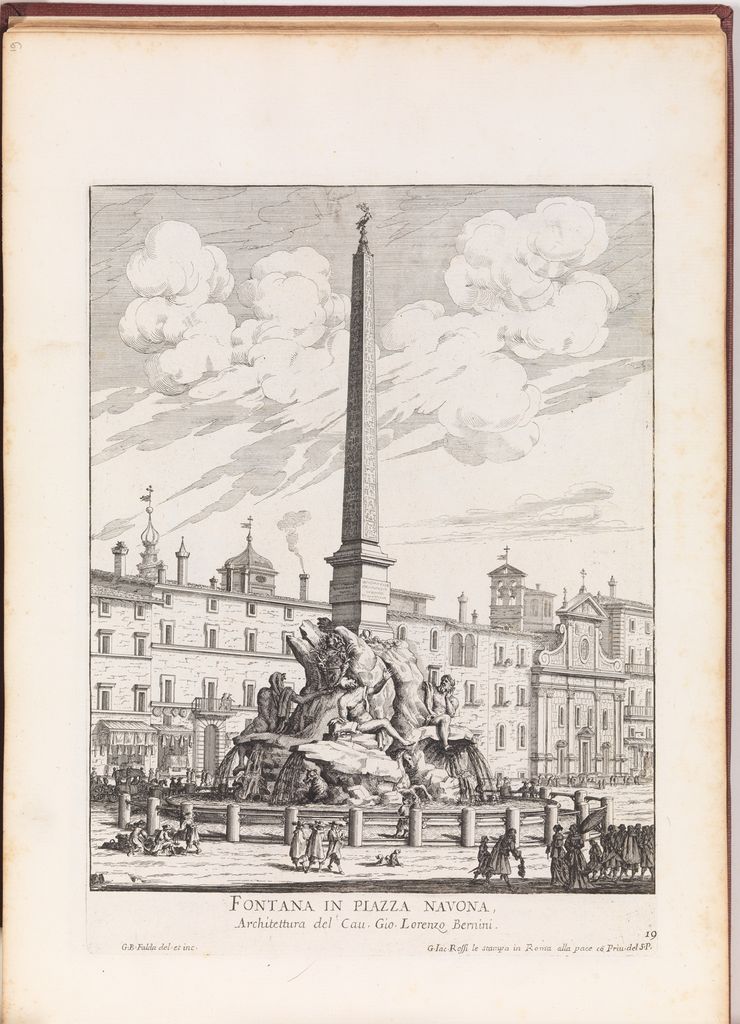
1647–52Fountain of the Four Rivers
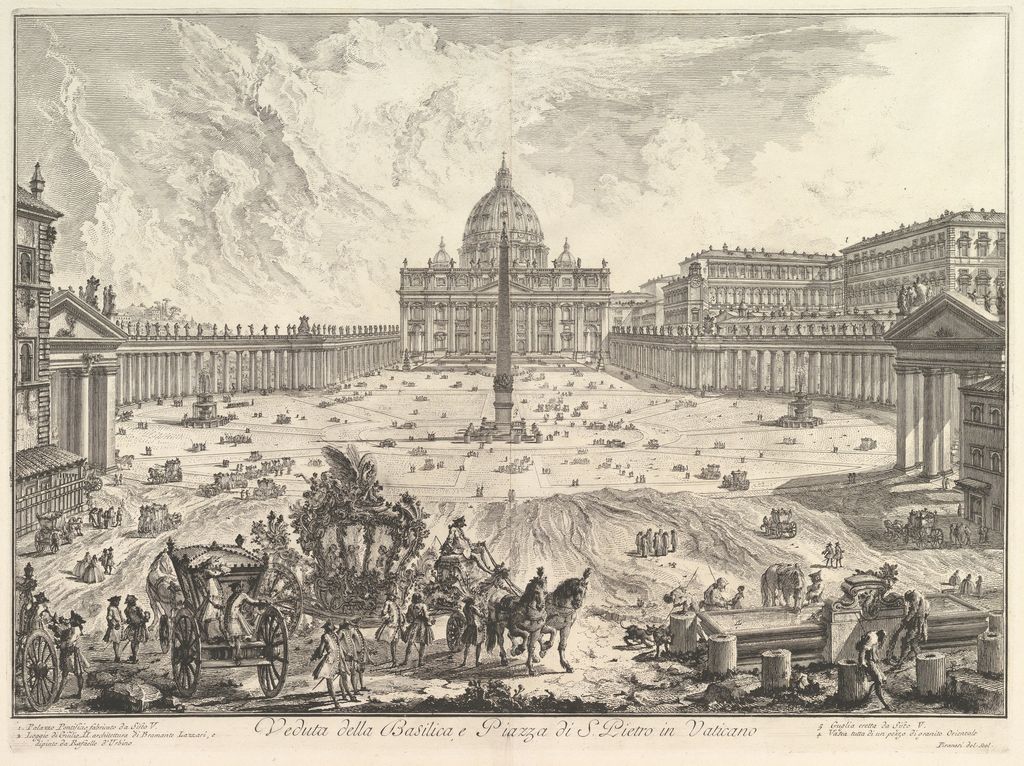
1648–51St Peter’s Square
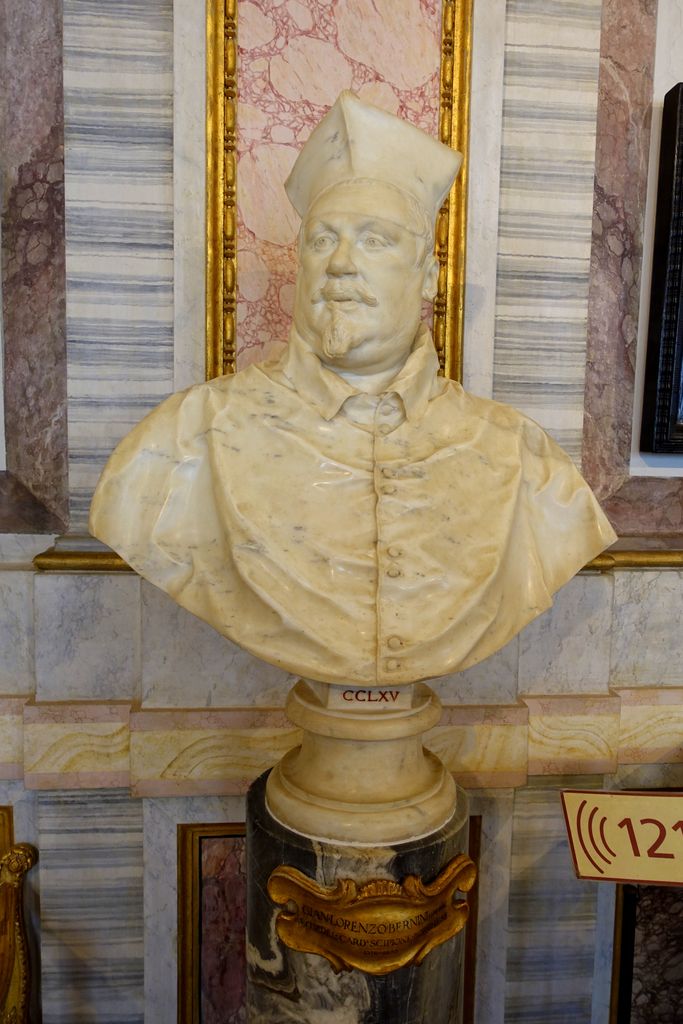
1656–67Bust of Louis XIV
1665A portrait during the Louvre visit
Bernini went to France to work on the Louvre. On 11 June 1665 Chantelou found him drawing heads while an associate worked on an elevation for the palace. Bernini had heard that Louis wanted portraits and had already asked for clay so he could try different actions for the bust. This was before Colbert had spoken to him directly about it. A study of the action meant working out how the body and head would carry themselves. The modelling of the King’s features would give that pose an individual identity. [2]
On 20 June Bernini presented his architectural proposals at Saint-Germain-en-Laye. In the same entry Chantelou records Louis asking for a portrait in marble and Bernini estimating that he would need twenty sittings of two hours each. Versailles’s account puts the eventual number at thirteen. The difference gives some sense of the negotiation involved in arranging time with a royal sitter. It also makes clear how quickly the portrait became a substantial obligation alongside the Louvre designs. [1][2]
The choice of stone took its own time. Chantelou’s entries for 21 and 22 June describe visits to look at blocks at the Tuileries, along the river and at Val-de-Grâce. Bernini found much of what was available unsuitable. The court also discussed making a standing statue first. Bernini argued for beginning with the bust, where he could work directly on the details of the likeness. Seen in the diary, the portrait took shape through practical choices about format, time and material before the better-known sittings began. [2]
Work before and during the sittings
Versailles describes Giulio Cartari roughing out the block and Bernini making observational sketches of the King. The preparation gave Bernini several kinds of evidence to work with. A drawing could record how Louis held himself while moving or speaking. The roughing established a mass of stone within which the more exact work would take place. The sittings supplied repeated encounters with the person the finished bust had to resemble. [1]
Those encounters sometimes became occasions for members of the court to watch and comment. The museum’s exhibition account describes an audience of more than forty on some occasions at the Mazarin Palace. The setting was very different from a private sitting with painter and subject alone. Chantelou’s diary records moments when the courtiers’ presence mattered, as well as exchanges in which Bernini could direct where Louis looked. The portrait grew out of many such adjustments over more than three months. [1][2]
In August, Hugues de Lionne asked Bernini about marks around the eyes. According to Chantelou, Bernini explained that he intended to make the pupils visible by cutting the marble so that it held shadow. A dark mark allowed him to test where the gaze would fall. A cut would have to produce the effect in daylight or under the interior lighting of the room. It is a small but unusually well documented example of how the appearance of the finished sculpture was worked out. The eyes had to seem to look in a definite direction, even though their apparent darkness would depend on the angle of light. [2]
The face, armour and moving cloth
The bust gives the viewer a large figure to read before individual features emerge. The broad sweep of the drapery supplies its outline below. Where the cloth crosses the breast, the armour makes a firmer shape within that movement. Higher up, the curls around the face give the head a broad frame made up of smaller shadows. Look from the arrangement of the chest to the direction of the nose and eyes. The figure seems to gather itself and turn in one movement, although the bottom of the portrait remains fixed. The face receives the force of those larger forms and then directs attention out into the room. [1]
Display height contributes to the effect. Versailles’s exhibition gave visitors an opportunity to study the marble closer to eye level than in its usual elevated display in the Diana Room. From below, the upper edge of the drapery and the underside of the chin play a larger part in the silhouette. Near eye level it is easier to examine the modelling of the eyes, mouth and hair. The two viewpoints explain how a portrait made through meetings at close quarters can also work as the dominant object in part of a palace interior. [1]
The drapery also solves a problem specific to the bust format. The lower edge has to end the figure without showing the rest of the body. Here the turning folds give that edge a direction of its own, as if the cloth continued beyond what the sculptor chose to show. The smooth passages on the armour give the eye somewhere to rest between the large folds and the smaller breaks in the hair. [1]
How Bernini carved the lace collar
At the neck, a narrow field of lace sits between surfaces that catch light quite differently. Heiko Damm’s study follows this detail through Chantelou’s September entries. On 19 September, Bernini took away a support beneath the roughly worked drapery and began on the collar. Someone had left him a sample of Venetian lace. On 21 September Chantelou noticed Bernini looking over at it now and again, but also noticed that the shape emerging in the marble differed from the sample. The following day Bernini joked to Chantelou that he was doing in marble what he had once declined to do on paper when patrons asked him for lace designs. [3]
The practical task was to suggest the fineness of thread in a material that could carry none of its flexibility. Damm treats the pattern as a design Bernini worked out for this particular object. Follow the collar where it meets the shoulder. The repeated indentations break up the light in a small area, while the armour below gathers it over smoother planes. Damm notes that the surviving visible armour consists principally of the riveted defences for the arm. He contrasts their relative plainness with the elaborate decoration on the historical armour that had been brought to the sculptor as a model. The differences between cloth, lace and metal depend as much on how Bernini distributed detail as on how he rendered each surface. [3]
The globe that was to support the king
When Louis asked about a pedestal at the last sitting, Bernini had an elaborate design in mind. Irving Lavin describes a gilded and enamelled copper globe of the Earth, which would have carried the bust. Beneath it, Bernini envisaged a copper drapery decorated with military trophies and virtues, all raised on a platform. The globe would bear an inscription calling it a small base. The understatement makes sense once you picture the proposed support: the thing described as small would be a model of the world, with the monarch above it. The pedestal was never executed. [4]
Lavin places the proposal alongside Louis’s sun emblem, adopted in 1662, in which a radiant face appears above the Earth. He also compares the marble with Bernini’s earlier bust of Francesco I d’Este. In the royal portrait, the raised gaze and mass of deeply cut curls lead him to consider associations with Alexander the Great and the sun god Helios. These comparisons come from Lavin’s reading of the sculptural and emblematic evidence. They help explain how the unmade globe would have changed what a viewer saw: the sweep of cloth and the king’s turn would have been read in relation to the sphere beneath him. [4]
Three portraits of the same sitter
In 2025 Versailles placed Bernini’s bust between two marbles of Louis by French sculptors. Jean Warin’s is dated 1665–66, virtually contemporary with Bernini’s, and Jean-Jacques Clérion’s to 1671–73. The installation photographs let the viewer compare what each artist made of the neckline, the turn of the face and the ending of the shoulders. The shared sitter and material focus attention on those decisions. The photographs archive a temporary arrangement in which the three busts could be studied at close range. [5]
The historic placement of Bernini’s marble addressed a different audience. Versailles records that visitors coming up the Ambassadors’ Staircase encountered it as they entered the royal state apartments through the Diana Room. In that approach, a bust high on a wall could announce the sovereign in advance of any encounter with him. The Italian exhibition notice includes a photograph of the marble in its niche, flanked by two smaller busts. Seen from that route, the pose had to register as part of the room. Seen beside Warin and Clérion, it could be studied through the choices made at the scale of a turn of the head or the edge of a collar. [5][6]
The last sitting and the move to Versailles
On 5 October the King saw the marble at the Louvre on a covered table and asked about the pedestal. He then returned to his usual position for the sitting. Chantelou records Bernini asking Louis to look towards the prince de Marsillac, marking the pupils with charcoal and declaring the work finished. The final placement of the gaze mattered enough to require the King’s presence again, and the question about the pedestal showed that the conditions in which the sculpture would be seen were already part of the conversation. [1][2]
Versailles traces the bust through display at the Louvre and Tuileries to the Diana Room at Versailles from 1684. Each move placed the same face in a different relation to its audience. The likeness Bernini had worked out in the presence of the King became an enduring portrait that people at court could see without the King there. Its direction of gaze and the way the cloth opens up the body give the figure a sense of surrounding space even at a distance. [1][2]
Discussion
The king turns his head above drapery that sweeps across his armour.
Reader Insights
How does the drapery affect the direction of the pose?
Where do cut shadows add emphasis to the eyes?
Which detail would you compare with Chantelou’s account of the sittings?
Join the Conversation
Share a detail, comparison or question about Bust of Louis XIV by Gian Lorenzo Bernini below.
References
- Château de Versailles. Genius and Majesty: Louis XIV by Bernini. Exhibition account and object discussion. View source
- Chantelou, Paul Fréart de. Journal du voyage du Cavalier Bernin en France. Edited by Ludovic Lalanne, 1885. Entries for 11, 20–22 June, 12 August and 5 October 1665, pp. 29–37, 93–95 and 200–201. View source
- Damm, Heiko. Agon und Spitzenkragen: Zur Rhetorik des Ornaments in Berninis Büste Ludwigs XIV.. Especially pp. 44–47.
- Lavin, Irving. Bernini’s Image of the Ideal Christian Monarch. Especially pp. 943–944.
- Château de Versailles. Le génie et la majesté: Louis XIV par Le Bernin. Exhibition account and installation photographs.
- Château de Versailles. Il genio e la maestà: Luigi XIV visto dal Bernini. Italian-language exhibition notice.