 by Tom Gurney
Tom Gurney BSc (Hons) is an art history expert with over 20 years experience
Published on November 18, 2026 / Updated on November 18, 2026
Email: tomgurney1@gmail.com / Phone: +44 7429 011000
Blessed Ludovica Albertoni
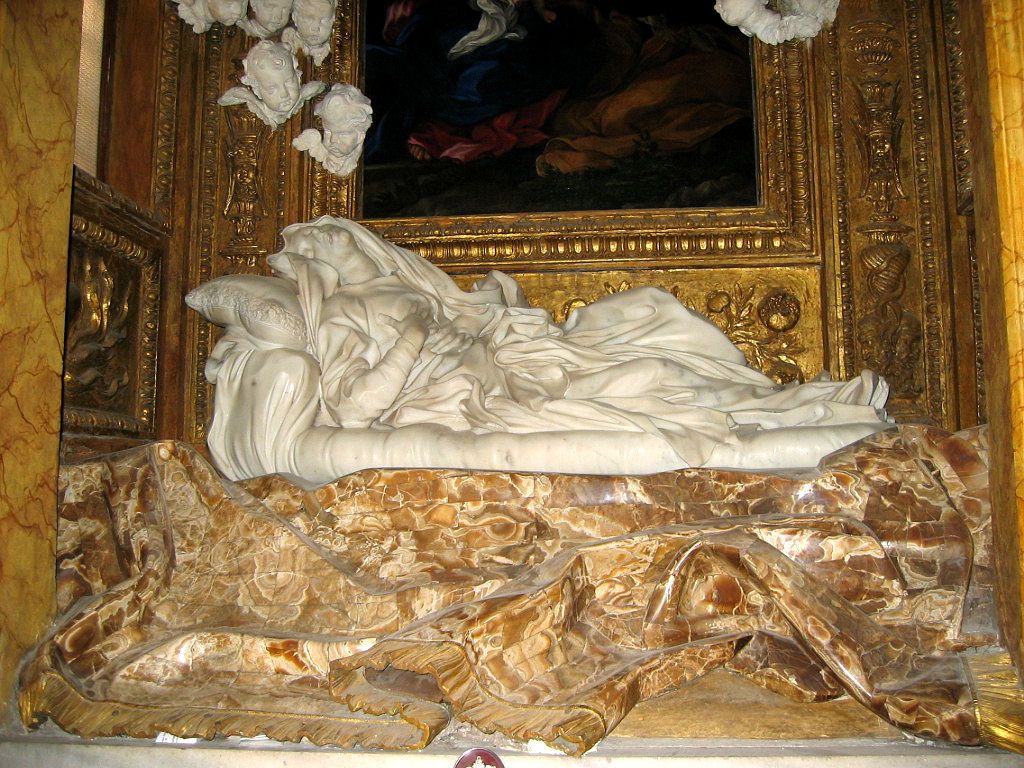
In the church of San Francesco a Ripa in Rome, Gian Lorenzo Bernini carved Ludovica Albertoni lying on a bed. Her head falls back into a pillow and her hands gather close to her breast. Light falling across the white marble picks out her face and hands before reaching the heavier folds lower down. A painting by Giovan Battista Gaulli hangs above the figure. The marble is often called the Ecstasy of Blessed Ludovica Albertoni, but it also belongs to a particular grave and altar. Bernini shaped the passage from life to death as a subject that could be read through the chapel around her. [1][2][3]
At a Glance
- DateCarving complete by October 1674
- Location or statusSan Francesco a Ripa, Rome
- WorkMarble effigy within a chapel ensemble
The work in Bernini’s career
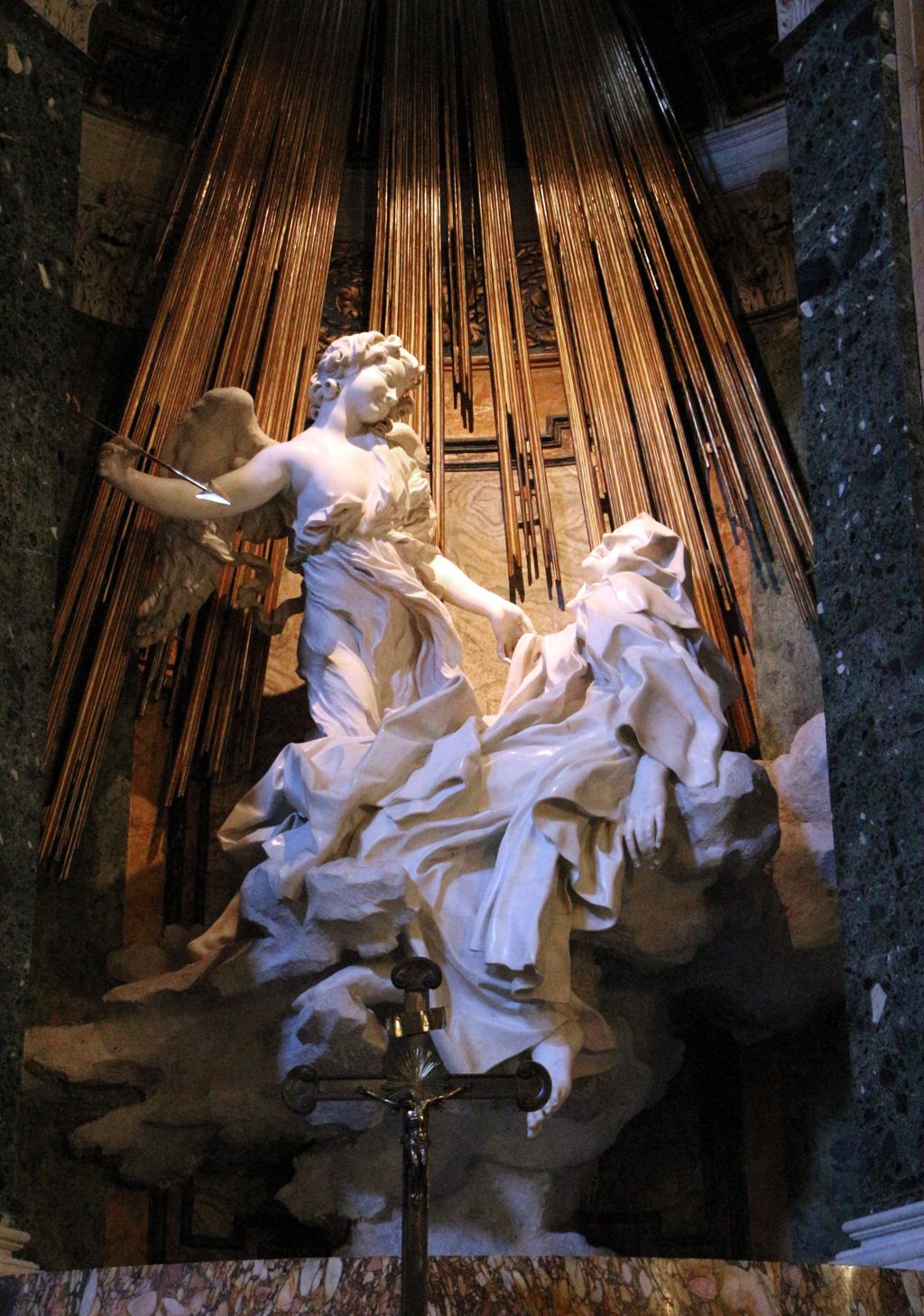
Ecstasy of Saint Teresa
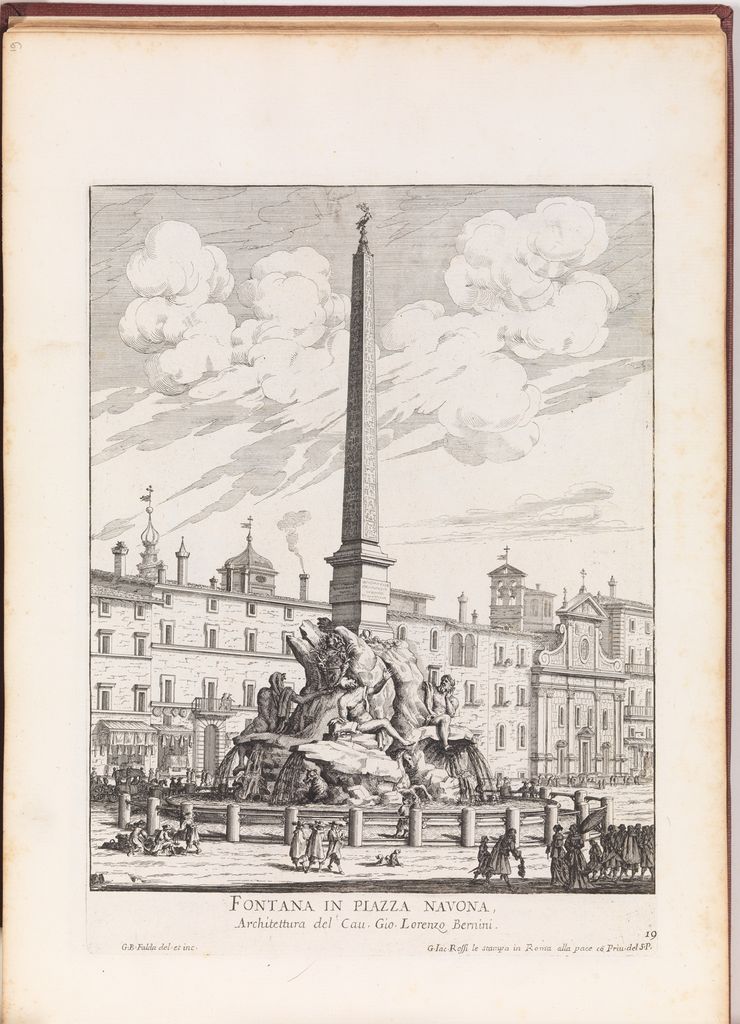
1647–52Fountain of the Four Rivers
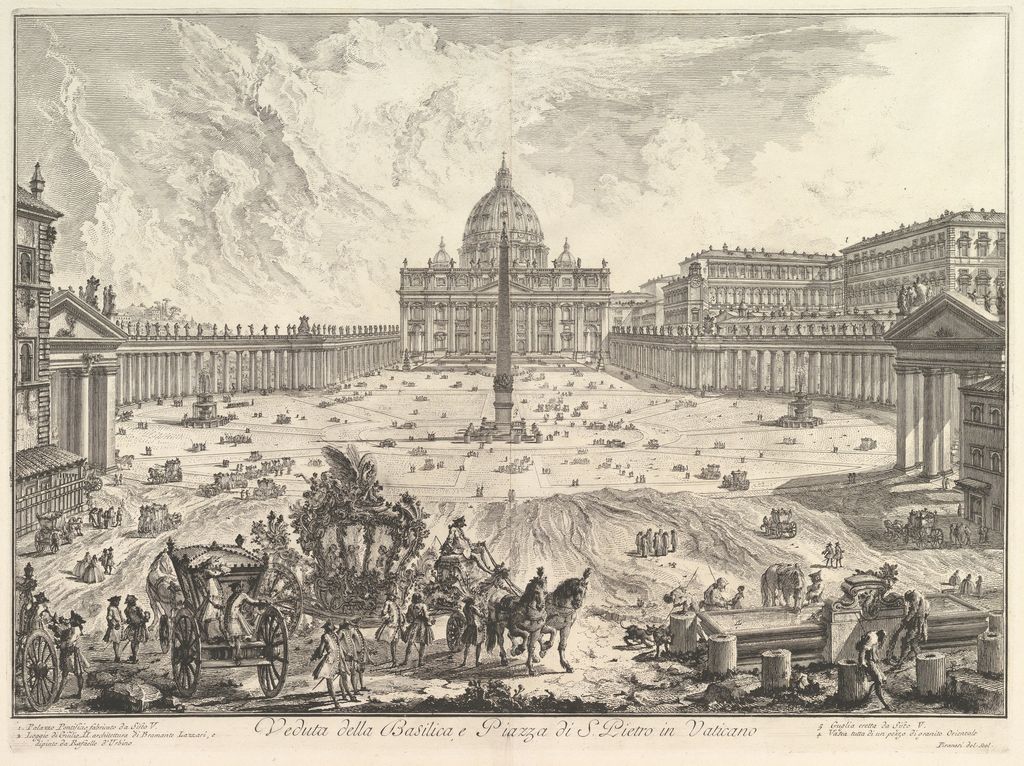
1648–51St Peter’s Square
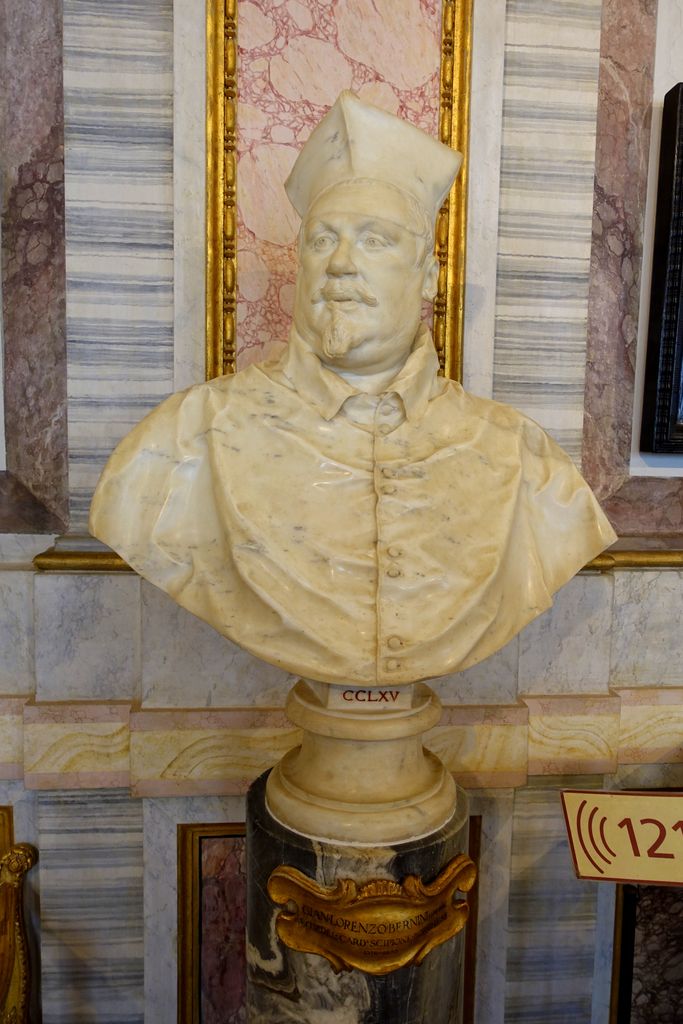
1656–67Blessed Ludovica Albertoni
Carving complete by October 1674A late commission for an older chapel
Ludovica lived in Rome from 1473 to 1533. Widowed, she became a Franciscan tertiary, a member of the Third Order, and according to the church’s account she devoted herself to the poor and to orphans. Her connection to San Francesco a Ripa was already commemorated locally before Bernini received the commission. The church identifies a fresco of her on the right wall of the chapel and a grave marker in the floor in front of the altar steps. As a visitor approaches, the marker fixes her name to a place on the ground, while the later marble shows a figure raised in the altar setting. [1][4]
The national heritage catalogue links the commission to Clement X’s recognition of Ludovica’s cult in 1671. It names Cardinal Angelo Paluzzi Albertoni as Bernini’s patron and cites a letter from Bernini’s pupil Giulio Cartari dated 14 October 1674 saying that the statue was finished. The church dates the marble to 1675. The letter is firmer evidence for when the carving was complete, while the chapel’s account gives 1675 for Gaulli’s painting. Together the records place the sculpture and the painted setting within the same late phase of work. [1][2]
Bernini worked within an earlier architectural setting. San Francesco a Ripa dates Giacomo da Mola’s design for the family chapel to 1625 and also calls it the Chapel of Saint Anne. The family names Paluzzi Albertoni and Altieri both appear in accounts of the site. The older dedication is visible in Gaulli’s painting of Saint Anne with the Virgin and Child. Bernini’s recumbent figure introduced a new focus beneath that image while the chapel continued to hold other reminders of local devotion, including a fresco of Saint Clare opposite the earlier likeness of Ludovica. [1]
A body seen through its drapery
The national catalogue records a width of two metres for the marble. The horizontal format lets the inclined head, breast and knees register as separate rises in a long silhouette. The pillow supports the head, while the lifted hands interrupt the line of the torso. The bed gives the body a settled position. Within it, the turned face and the folds crowding around the hands suggest movement at the point where the body is nearing rest. Seen from in front of the altar, that tension is evident even before details of the face come into view. [2][3]
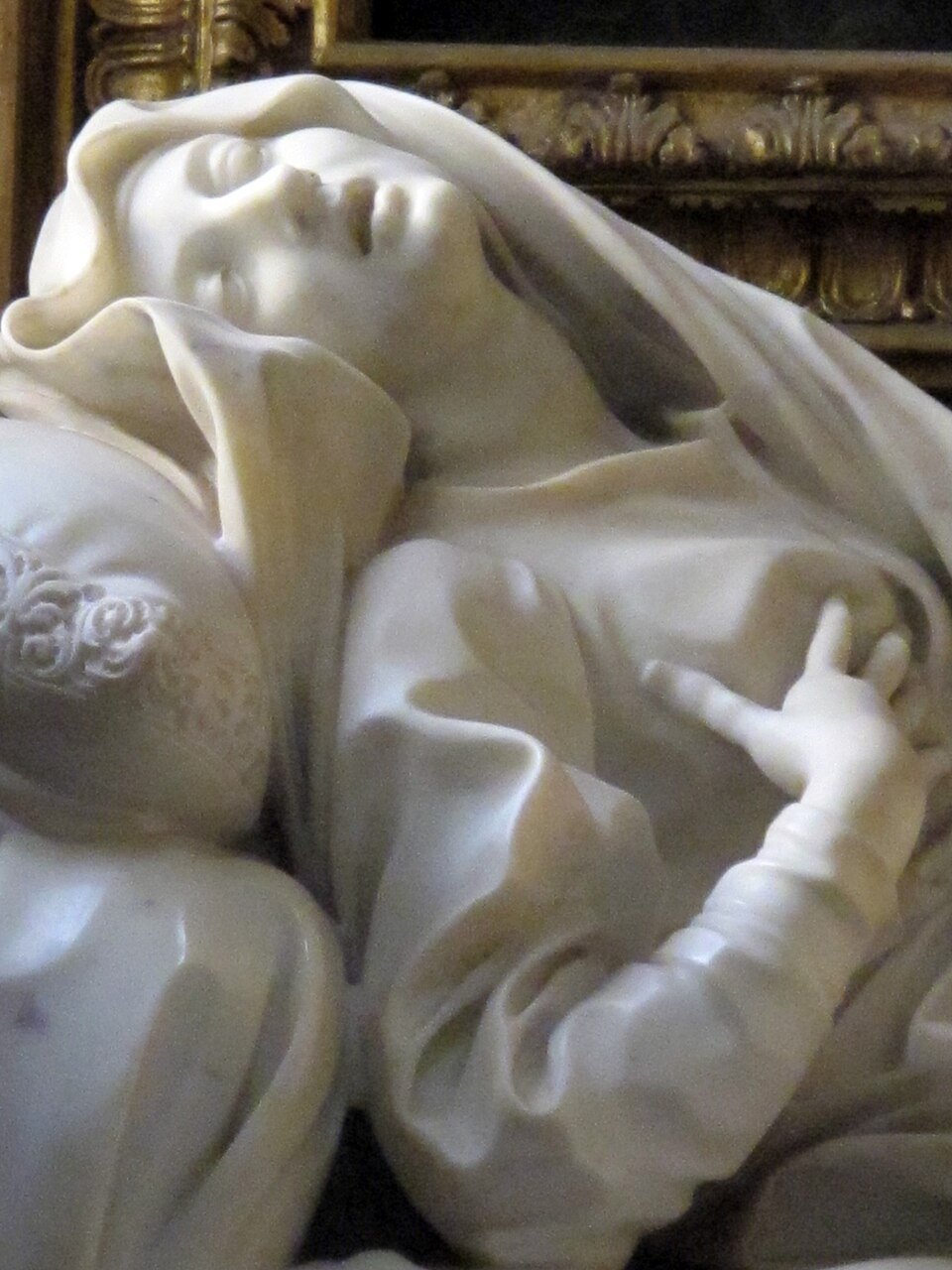
Bernini used several kinds of carved cloth to distinguish the body from its surroundings. The ornament at the pillow suggests worked fabric, and the volume of the blanket gives the bed a substantial edge. The folds of the figure’s clothing have a different task. They follow the elevations of the arms and legs and connect those parts across the length of the marble. A deeply cut hollow beside a ridge of cloth makes a boundary legible in shadow. Places where the folds run together give the eye a path from the hands towards the lower body. These differences in carving help keep the figure distinct from the bed even though the surfaces share the colour of the stone. [1][2][5]
From pen studies to clay
Two ink studies on one sheet help show what Bernini was deciding about the drapery. Ian Wardropper notes in Bernini: Sculpting in Clay that the earlier sketch puts Ludovica’s left arm over her right. The finished marble reverses that relationship. The drawings give little information about the face, but Bernini returns to the folds around the figure’s side. Wardropper follows the change from a proposed break in the folds to a continuous course in the London clay model and the marble. Paper let Bernini isolate the passage and reconsider it before the whole figure had to be resolved in depth. [5]
The London terracotta also preserves a change to the orientation of the figure. Anthony Sigel points out an added strip of clay, about a centimetre thick, at the lower rear edge. It tilts the model farther towards the person looking at it. That change is easy to miss in a photograph taken from the front because it affects the angle of the whole model. It matters in a chapel where the sculpture will be viewed from below and at a distance. The same technical study notes how carefully the eyes and brows were worked after the clay had firmed. Position and facial detail both received attention in the small model. [5]
Charity in the images and books of 1671–72
Bernini’s image of a dying woman appeared after a series of celebrations and publications that emphasised what Ludovica had done during her life. Morgan Currie’s study brings together a short biography by Solatio published in 1671 and a longer account commissioned from the Franciscan Fra Giovanni Paolo the following year. Giovanni Paolo was himself a descendant of Ludovica. Both biographies made charity central to her reputation. Currie also records that the family performed acts of charity at the celebratory Mass. The authors and patrons gave the same virtue a place in a printed account and in a ceremony that people could witness. [6]
Another painting by Gaulli shows Ludovica giving alms. It is distinct from his painting of Saint Anne, the Virgin and Child above Bernini’s marble. Currie considers Karen Lloyd’s suggestion that the almsgiving painting was intended for temporary use at the altar. If it was, the family was already thinking about how to present Ludovica in the chapel around the time of the beatification. Even without settling the painting’s original placement, its subject helps explain what a worshipper familiar with her story brought to the later sculpture. The marble gives the encounter a different focus, narrowing a life described through public acts to a moment in which her gestures are gathered close to her body. [6]
A view from the floor and a second life in clay
Edme Bouchardon drew the finished monument in red chalk during his years in Rome. The Louvre catalogue reconstructs his position from the way the large carved cloth overlaps the mattress and the face appears in three-quarter view. He was probably seated on the chapel floor, close to the marble. From there the textile in front of the sarcophagus rises into the view of the bed, and the viewer looks upwards along the body. The sheet carries evidence of a specific position that a frontal photograph taken at the level of the bed would lose. The Louvre also identifies a counterproof in Stockholm, made by transferring chalk from the drawing to a second sheet. [7]
Bouchardon changed his marks according to the cloth he was drawing. He used broken lines and broad hatching for the drape on the sarcophagus, and shorter curves for the soft bedding. Small spirals describe the pillow’s lace. These marks help distinguish the large hanging, the clothing and the pillow in a medium that has no depth of carving. The Louvre’s record also preserves an earlier inventory entry that called this drawing Sainte Thérèse. Its current identification anchors it to the particular position and forms at San Francesco a Ripa. [7]
A terracotta in the Louvre gives the completed sculpture another kind of afterlife. It is half a metre wide and is catalogued as a reduction made after 1674, after Bernini. The museum suggests it may be the example listed in the 1750 Crozat sale. That identification is provisional. The small clay figure already shows why the distinction between study and reduction matters. The London model records decisions made while the form was taking shape. A later reduction can preserve and transmit the form once those decisions have been made. Tadeusz Żuchowski’s study also describes a bronze from the Altieri collection with a lowered headrest and a simplified treatment of the clothing. He proposes Leonardo Retti as the maker of the model and leaves the date of casting open. [8][9]
Lorenzo Ottoni’s relief in Santa Maria in Campitelli offers a comparison at the scale of an altarpiece. There Ludovica is upright beneath the Holy Family. Currie compares her bent knees and hands pressed to her breast with those of Bernini’s recumbent figure. What changes is the direction in which the body’s movement can be read. In the relief the uplifted face directs the eye towards the figures gathered above, while Bernini’s long bed holds the movement between the hands, head and knees within its horizontal frame. Currie reads Ottoni’s pose as a deliberate reworking of the earlier chapel image. [6]
The surfaces involved in the light
Frank Fehrenbach distinguishes the two large concealed windows originally available to the setting from the left window that supplied the daylight he described. He draws attention to the lit forehead, right hand and knees. Looking between those points makes it possible to follow the figure across the long bed. His German study also examines the tendency to call such illumination heavenly. The chapel gives the word a visible basis. Light reaches the stone from a real opening, catches the projections and gathers around the stucco heads above the figure. [10][11]
A six-month treatment reported by Rome in 2020 included the removal of accumulated dust and atmospheric particles from the sculpture and other chapel surfaces. Gaulli’s altarpiece was outside the cleaning programme. Elisabetta Zatti also consolidated and adjusted the colour balance of the gilded background and stucco putti. Those details describe a treatment of several adjoining surfaces. They help explain why the present chapel reads through the brightness of the white figure and through the material around it, where painted, gilded and plaster surfaces receive the light differently. [12]
Daylight, marble and paint
An architectural study in The Art and Influence of Gianlorenzo Bernini describes the opening around the altar and the daylight admitted through a tall window hidden from the principal view. From the front, the face and upper body receive light without the opening itself competing for attention. Lower down, the deeper folds hold more shadow. A reddish-yellow marble drapery in front of the bed gives the white of the figure a coloured edge. Gaulli’s painting adds a further plane beyond and above it. The depth of the opening allows these surfaces to be read at different distances within a small space. From the altar steps, the edge of the opening frames both the bed and the canvas above it. [1][3]
Read from the floor upwards, the chapel leads from the grave marker to the body on the bed and then to Saint Anne, the Virgin and the Child. The marker gives the place a commemorative purpose. The figure gives that commemoration a moment and a human scale. The painting supplies the devotional setting in which the death is understood. From the front of the chapel, the stone has enough light for its smallest gestures to register, and the sequence remains visible without having to approach the bed. [1][2][3]
Discussion
Light picks out Ludovica’s hands and face above the bed’s heavier folds.
Reader Insights
Which folds make the bed feel like a physical support?
How does Gaulli’s painting change the reading of the marble below?
What does the chapel setting tell you about the figure that a detail photograph cannot?
Join the Conversation
Share a detail, comparison or question about Blessed Ludovica Albertoni by Gian Lorenzo Bernini below.
References
- San Francesco a Ripa. Cappella Paluzzi Albertoni. View source
- Catalogo Generale dei Beni Culturali. Ritratto di donna, national record 1200148017. View source
- Institute for Advanced Study. The Art and Influence of Gianlorenzo Bernini, pp. 122–24. Institute for Advanced Study digital copy. View source
- San Francesco a Ripa. Beata Ludovica Albertoni. View source
- Dickerson, C. D. III, Anthony Sigel and Ian Wardropper. Bernini: Sculpting in Clay. Metropolitan Museum of Art, 2012. Wardropper’s discussion of fig. 54 and Sigel’s discussion of figs. 259–60 and cat. 20. View source
- Currie, Morgan. Sanctified Presence: Sculpture and Sainthood in Early Modern Italy. Chapter 2, especially pp. 128 and 183–85.
- Musée du Louvre. La Bienheureuse Lodovica Albertoni, Edme Bouchardon. Drawing catalogue and Anne-Lise Desmas’s analysis.
- Musée du Louvre. La bienheureuse Ludovica Albertoni, terracotta after Bernini. RF 2454.
- Żuchowski, Tadeusz J. La beata Lodovica Albertoni di Gian Lorenzo Bernini. Bozzetti, modelli e figure di bronzo, pp. 175–193, especially the discussion of the Altieri bronze.
- Fehrenbach, Frank. Bernini’s Light, pp. 20–24.
- Fehrenbach, Frank. Colpi vitali. Berninis Beseelungen. Discussion of descriptions of light in Bernini’s chapels.
- Roma Capitale. Un’estasi di forme, luce e colore: restaurata la Cappella della Beata Albertoni del Bernini. Summary of the conservation treatment.