 by Tom Gurney
Tom Gurney BSc (Hons) is an art history expert with over 20 years experience
Published on November 18, 2026 / Updated on November 18, 2026
Email: tomgurney1@gmail.com / Phone: +44 7429 011000
Cathedra Petri
From the entrance to St Peter’s Basilica, look along the nave and between the columns of Bernini’s Baldachin. Farther away, an oval of light appears above a group of figures. It belongs to the Cathedra Petri, the monument Bernini and his collaborators made for the apse under Pope Alexander VII. Completed in 1666, the ensemble encloses a wooden chair venerated as Saint Peter’s episcopal seat. The bronze throne that holds it, the figures gathered around it and the light from the apse window make its presence felt from almost the full length of the church. [1][2][3]
At a Glance
- DateCompleted 1666
- Location or statusApse of St Peter’s Basilica
- WorkBronze and architectural ensemble enclosing the venerated chair
The work in Bernini’s career
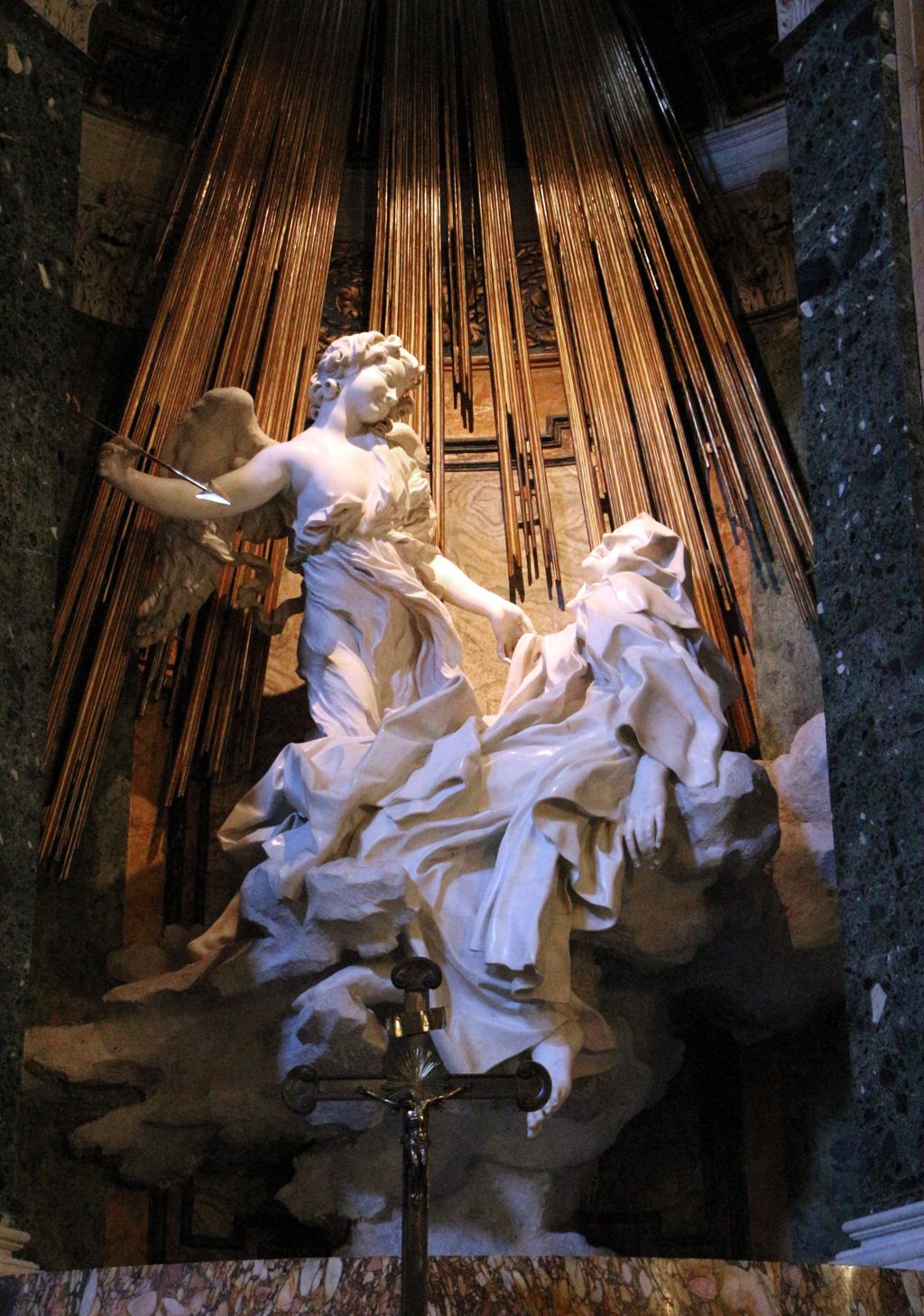
Ecstasy of Saint Teresa
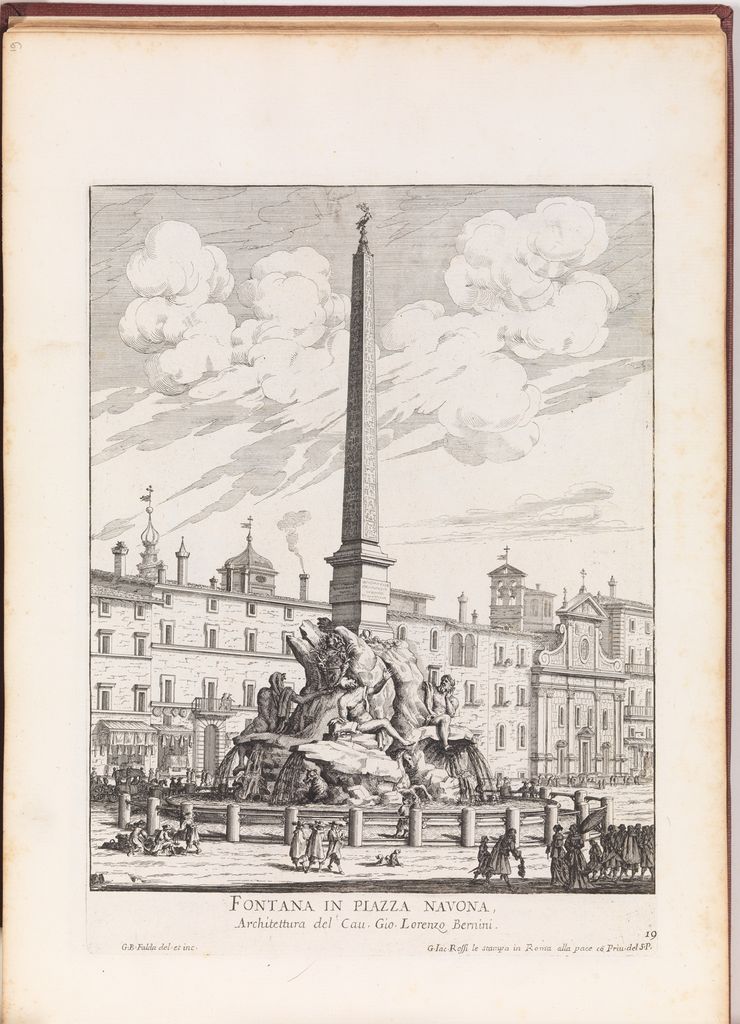
1647–52Fountain of the Four Rivers
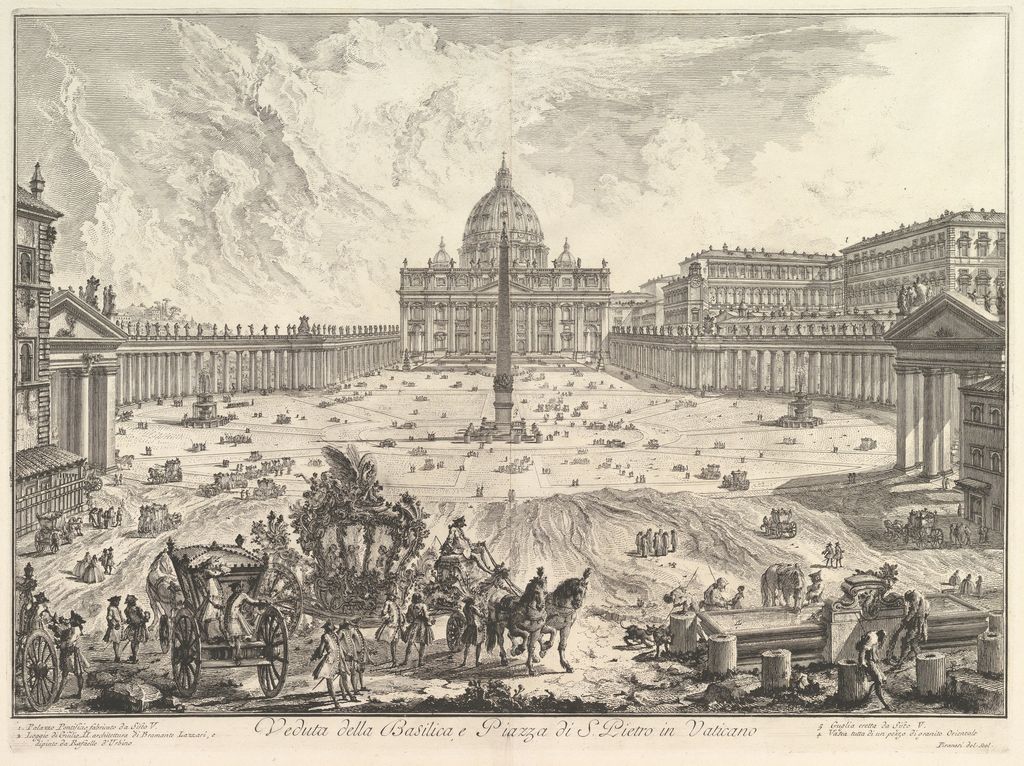
1648–51St Peter’s Square
1656–67Cathedra Petri
Completed 1666The wooden chair and the bronze throne
A cathedra is a bishop’s seat, and the relic in St Peter’s became a symbol of Peter’s authority and of the teaching office of his successors. The Fabbrica di San Pietro describes the wooden chair with its ivory decoration, including plaques of the labours of Hercules and ninth-century friezes. The Vatican Museums associate the historic throne with Charles the Bald and his visit to Rome in 875. The traditional identification with Peter belongs to the history of veneration. The Carolingian material and the recorded association with Charles concern the history of the surviving object. [1][2]
The transfer of the relic from the baptismal chapel to the apse created a new setting for it. Bernini enclosed the wood within a gilded bronze throne. An observer looking down the nave sees the form of a chair and the people assembled around it. The materials of the enclosed seat, including the ivory, belong to a much smaller object, at a scale suited to a person sitting in it. The bronze casing translates that familiar shape into something that can be read across the basilica. It makes the seat recognisable within the composition while sheltering the historic object within. [1][2][3]
The Fabbrica reports a height of 14.74 metres for the throne ensemble and a combined weight of 74 tonnes for its bronze statues and elements. These measurements describe a substantial load. Bernini’s arrangement gives the eye a different impression. Angels flank the throne and clouds fill the space beneath it, while the figures at its sides stretch up around the seat. The masses appear to gather and rise towards a central point before they spread out again around the window. [1][2]
Four writers of the Church
The four colossal bronze figures are Doctors of the Church, writers and teachers whose work carried particular authority in Christian tradition. At the front stand Ambrose on the viewer’s left and Augustine on the right. Athanasius and John Chrysostom stand behind them, representing the Greek tradition alongside the two Latin Doctors. The Fabbrica gives their height as almost six metres. At that scale they provide a strong outline around the throne even when the viewer is far enough away that individual facial features are difficult to make out. Their arrangement in depth also means that a view from the side changes how much of each figure can be seen. [1][5]
The groups of figures and the reliefs describe different aspects of the chair’s meaning. The Doctors give the monument an historical Church gathered around Peter’s seat. The images on the throne lead back to Peter himself. At the centre Christ entrusts Peter with his flock, an episode from the Gospel of John. To the right comes the giving of the keys, from Matthew, and to the left the washing of the feet, also from John. The keys recur with the tiara at the crown of the throne. The lower base carries the arms of Alexander VII on dark Aquitaine marble, placing the patron’s identity beneath the biblical and ecclesiastical imagery. [1]
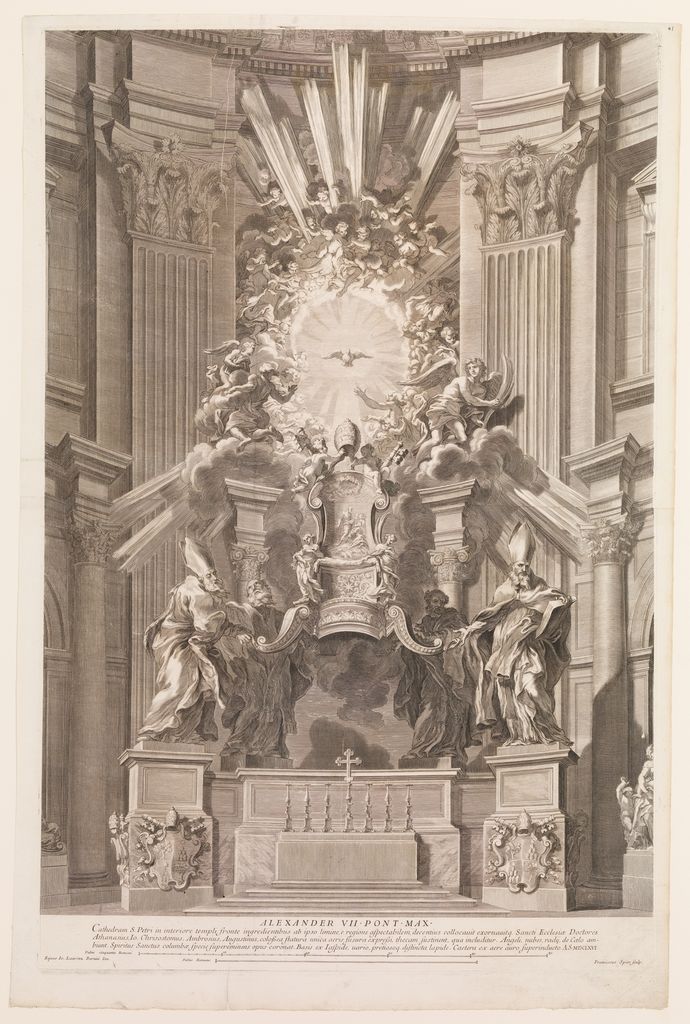
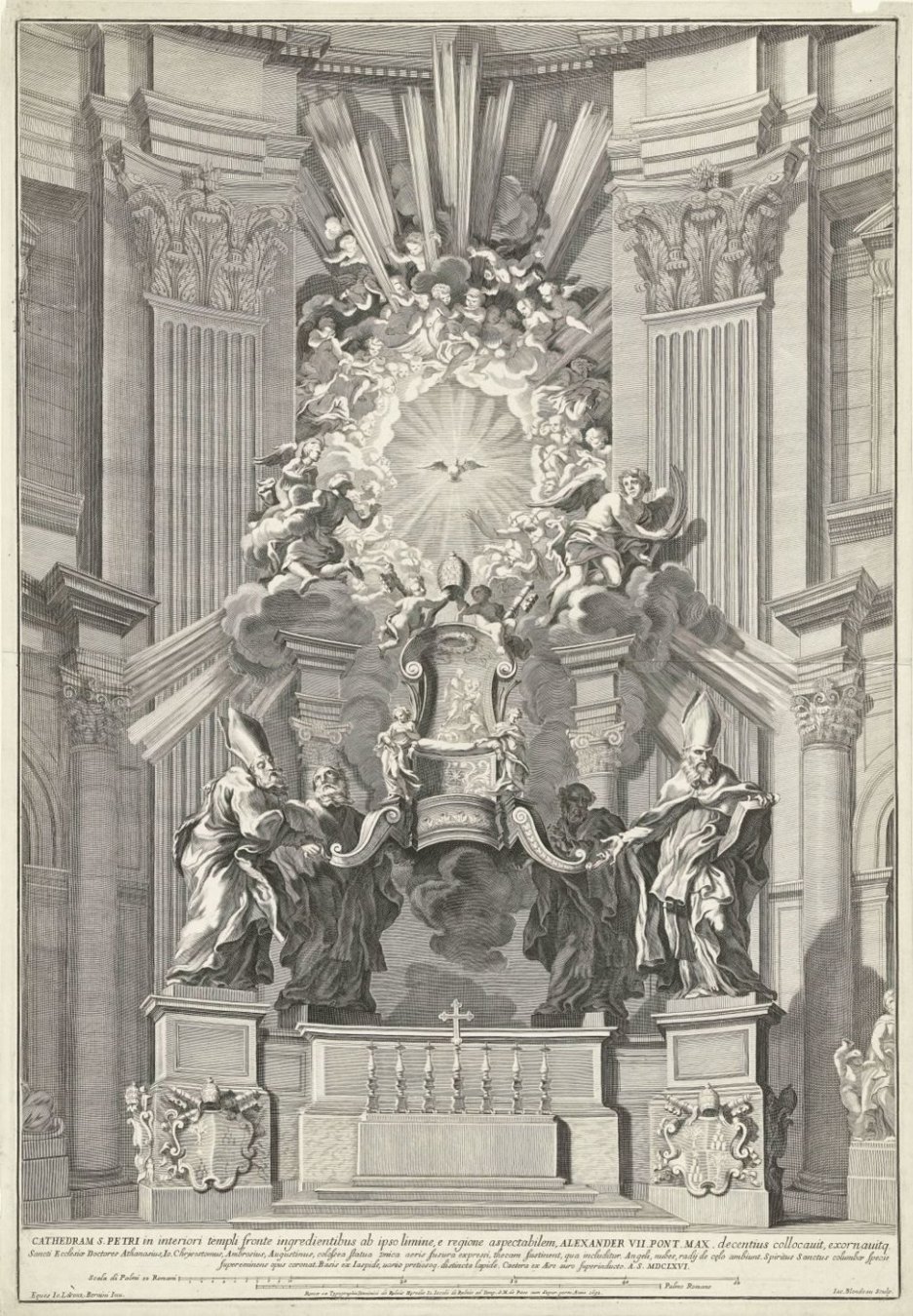
A seventeenth-century print by François Spierre, held by the Metropolitan Museum of Art, presents the finished monument frontally. It lets the viewer follow the symmetry around the chair and locate the tiers of figures on a single sheet. In the basilica the same arrangement is encountered from several distances. Ambrose and Augustine read clearly as the leading pair on a long approach. The bronze setting and the reliefs reward a closer look as details that recede into the silhouette at the other end of the nave. [1][5]
What survives of the casting process
The Vatican Museums preserve large preparatory models associated with the bronze figures, including heads of Athanasius and John Chrysostom and figures of angels. They describe clay mixed with straw and built over supports made of iron and wicker. That combination gave the modelling material a structure to hold it in place. The catalogue credits Bernini’s intervention in the modelling and identifies these as working objects from which moulds were taken for casting. The models therefore record a stage when a finished face or gesture in one material had to become a reproducible form in another. [2]
The heads also clarify the scale at which Bernini’s collaborators had to work. In the apse a head forms one part of a figure nearly six metres high, and that figure in turn belongs to a much larger group. In the museum the model can be considered on its own, making the modelling of the face and its surrounding forms easier to follow. A separate terracotta at the Museo Horne in Florence, discussed by Anthony Sigel, records a smaller study for an angel and cherub in the upper Glory. Sigel draws attention to the way the drapery, wings and facial features were modelled and to a tool mark at the back of the neck. The two groups of objects preserve different stages of work, from shaping the appearance of figures to preparing models that could supply moulds for bronze. [2][4]
Testing the angels from the crossing
Before there were full-size angels to position, the design had to be communicated on paper. The Detroit Institute of Arts catalogues a presentation sheet dated 1658, made by an unidentified artist in Bernini’s workshop. Its maker used black chalk beneath pen and brown wash, then added touches of white. In that format the workshop could propose changes in depth and brightness before the bronze and window existed. The attribution to the workshop also helps distinguish the person who drew this sheet from the person responsible for the design. The museum identifies the drawing as a step towards approval and places it before the workshop’s three-dimensional terracotta model. [11]
The Vatican Museums describes another step between paper and metal: a full-size mock-up of the altar in timber and plaster, assembled in the apse between 1658 and 1660. The smaller angels could be judged against that mock-up. The task at that point went beyond asking whether an individual figure was large enough. The figures also had to relate to the scale of the proposed altar, while the group as a whole had to stand out against a much larger architectural space. The paper drawing, small model and full-size trial consequently answered different questions about the same design. [11][12]
The full-size clay figures could be tested in the building before they were cast in bronze. Andrea Bacchi’s account of the models draws on Lione Pascoli, who tells of Bernini inviting the painter Andrea Sacchi to inspect the angels in place. Sacchi stopped a little beyond the crossing and advised making the figures larger. The story survives in a later biography, while the existence of two pairs of full-size models and their different dimensions can be checked against the surviving objects. Those are separate kinds of evidence for the decision to enlarge the figures. [7]
How far Sacchi stood from the work is as important to the story as the change he proposed. At the crossing the angels have to carry as figures amid the window, sky and cloud. When a model is seen close up, a hand or fold can seem large simply because its surface is near the eye. Seen from farther down the church, the same part may register chiefly as part of a silhouette. Putting models in the apse allowed the workshop to work at the scale of the monument and judge the result at the distance from which much of the congregation would see it. [7]
Bacchi distinguishes the payment evidence for the two sets. Records connect the smaller pair with assistants including Ercole Ferrata, Antonio Raggi and Lazzaro Morelli. For the larger pair, the absence of equivalent payments has encouraged an attribution to Bernini. It cannot by itself establish where the work of assistants ended. The larger figures retain marks associated with taking moulds. Those traces place the models at the point where a form approved at the scale of the building could be transferred into bronze. [7]
When the workshop became visible again
In 2010 the Vatican Museums opened a glass-walled conservation workspace for unfired clay models associated with the Chair and the altar of the Blessed Sacrament. The museum’s notice explains that the models’ dimensions required a dedicated space. Visitors were able to observe the work from a route around it. This was a different kind of exhibition from setting out small terracottas in cases. Someone looking in could see the conditions needed to reach and support works whose size reflects the monument for which they were made. The shared conservation project also makes it important to check each model’s destination before assigning it to the apse. [8]
Seeing the chair outside the bronze
In October 2024 the wooden chair came into public view during the work on the monument. French Vatican News reported the exhibition, and German coverage of the closing Mass of the Synod records the chair’s presence in the basilica before it was to be enclosed again. Inside the bronze throne, the chair has a place high in the composition even though its wood is concealed. Outside it, viewers can encounter the relic as an object with its own material and scale. The temporary display makes the relation between the two especially clear. The bronze provides the visible form in which the chair is honoured in the apse. It is the work designed to carry the significance of an object that the ordinary view cannot show. [9][10]
The window inside the design
An early full-scale model was in place by 1660, according to the Metropolitan Museum’s study of Vatican architecture. The window already in the apse imposed a limit on that version. In the realised project the composition extends around the window, giving the incoming light a place within the Glory. The centre of that oval carries a dove representing the Holy Spirit. Around it are gilded rays and gilded stucco angels and putti. Natural light enters at the point from which the sculpted rays appear to spread. A masonry opening thus becomes the centre of the religious image and the part of the monument most immediately visible on entering the basilica. [1][3][6]
That long approach gives the Cathedra much of its effect. The nearer Baldachin establishes a vertical frame. Within it lies the bright window, with the bronze throne below and the Doctors spread on either side. When the viewer walks towards the crossing, the nearer frame changes in apparent size more quickly than the far monument does. The grouping that first appeared compressed into a single distant view begins to separate into the altar canopy, the apse and the sculpted setting of the relic. Bernini’s two commissions belong to different moments in the building’s history, yet the nave brings them into the same field of view. [1][3][6]
Discussion
The light above the Cathedra can be seen from far down the nave.
Reader Insights
At what distance do the figures below the chair become distinct?
How does the bronze enclosure signal the presence of the venerated wooden chair?
What does the Baldachin contribute to the long view of the monument?
Join the Conversation
Share a detail, comparison or question about Cathedra Petri by Gian Lorenzo Bernini below.
References
- Zander, Pietro. The Cathedra of Saint Peter. Fabbrica di San Pietro. View source
- Vatican Museums. Gian Lorenzo Bernini, Modelli della Cattedra di San Pietro. View source
- Metropolitan Museum of Art. Gian Lorenzo Bernini (1598–1680). View source
- Sigel, Anthony. Visual Glossary in Bernini: Sculpting in Clay, p. 88, fig. 73 and cat. 32. Metropolitan Museum of Art, 2012. View source
- Metropolitan Museum of Art. Cathedram S. Petri in interiore templi fronte, François Spierre. View source
- Metropolitan Museum of Art. The Building of the Vatican: The Papacy and Architecture, p. 36. Bulletin 40, no. 3, 1982–83. View source
- Bacchi, Andrea. “The Role of Terracotta Models in Bernini’s Workshop,” in Bernini: Sculpting in Clay, Metropolitan Museum of Art, 2012, figs. 58–61 and notes 45–47. Pascoli’s anecdote, surviving models, documentary attribution and mould evidence.
- Vatican Museums. Bernini: il restauro si mette in vetrina, 2010. Italian announcement of the conservation workshop and visitor route.
- Vatican News. La chaire de saint Pierre exposée dans la basilique vaticane, October 2024. French report on the wooden chair’s temporary display.
- Vatican News. Papst bei Synoden-Schluss-Messe: Pastorale Dringlichkeiten sehen, 27 October 2024. German account of the chair’s display at the Mass and planned return to the monument.
- Detroit Institute of Arts. Study for St. Peter’s ‘Cattedra’, acc. 2018.21. The presentation drawing, workshop attribution, materials and relationship to the terracotta.
- Vatican Museums. Giovan Lorenzo Bernini e i suoi modelli, exhibition introduction, 2016. Full-size timber and plaster trial in the apse.