 by Tom Gurney
Tom Gurney BSc (Hons) is an art history expert with over 20 years experience
Published on November 18, 2026 / Updated on November 18, 2026
Email: tomgurney1@gmail.com / Phone: +44 7429 011000
How Bernini Worked
In August 1665, Hugues de Lionne visited Gian Lorenzo Bernini’s studio in Paris and asked about the dark marks on the eyes of his unfinished bust of Louis XIV. Bernini told him that he intended to make cuts whose shadows would do the work of the marks. At the presentation in October, he used charcoal to mark the pupils while the king looked towards the prince de Marsillac. The two episodes, recorded by Paul Fréart de Chantelou, reveal a sculptor testing where an effect should appear before deciding what to remove from the stone. They also reveal the role of light. The dark area that would direct the king’s gaze could come from a depression in the marble. [1]
At a Glance
- Preparatory mediaDrawings and clay models
- Finished media includeCarved marble and cast bronze
- Firsthand accountChantelou’s diary of the 1665 visit to France
Much of Bernini’s work involved trying out an effect in one material before committing it to another. A red-chalk drawing could settle how a figure turned. A clay sketch could show how a form occupied space. A founder might receive a full-size model and prepare a wax that gave Bernini another chance to intervene. The evidence for those steps survives unevenly. A letter can document a model that has vanished, while a fired fragment can keep the traces of a tool that no document names. [2][3][4]
Finding the pose on paper
In the Metropolitan Museum of Art’s Study for a Triton, Bernini uses red chalk to work out a figure for the fountain in Piazza Barberini. The triton lifts a shell to his mouth with his arms at different heights. Two folds above the navel make the turn visible even without the tail being fully described. The chalk is rubbed to give the chest volume and darken the area by the hair. A series of strokes establishes the position of the fingers. The upper body receives the closest attention. Ian Wardropper relates that emphasis to the part of the sculpture that would be especially visible from the piazza. [3][13]
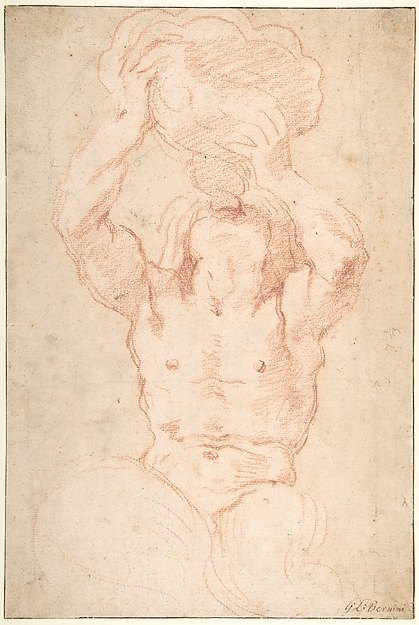
Several of these decisions carry through to the stone. The arms remain uneven and the triton still tilts his head up to blow. The shape of the shell changes, and the finished face acquires a moustache. In the fountain, the body joins a composition with dolphins below, the Barberini arms and a large shell supporting the figure. The drawing isolates a problem within that larger design. It lets us follow the work of deciding how a torso turns and supports a load, before the surrounding forms make the whole fountain readable at a distance. [3][5]
The connection between the drawing and the fountain is close enough to discuss individual decisions. The surviving clay studies are harder to connect directly. Wardropper discusses models that explore related combinations of sea creatures and human torsos, while observing that the Triton Fountain has no known clay model securely assigned to Bernini himself. An empty place in the surviving record leaves open what the studio actually made. [3]
What a clay sketch could do
Clay allowed a sculptor to judge a body as a volume. A drawn arm can seem entirely convincing from one angle. In a freestanding model, it must also make sense when the sculptor looks down on the shoulder or walks around the elbow. Adding a small quantity of clay can change the relation of the parts. A swipe from a thumb can establish a turn across a surface before individual features have been modelled. Publications on Bernini’s clay studies show how such marks sit beside others made with a narrow or toothed tool. Their combination records decisions made at different scales, from the mass of a form to the edge of a fold. [2][6]
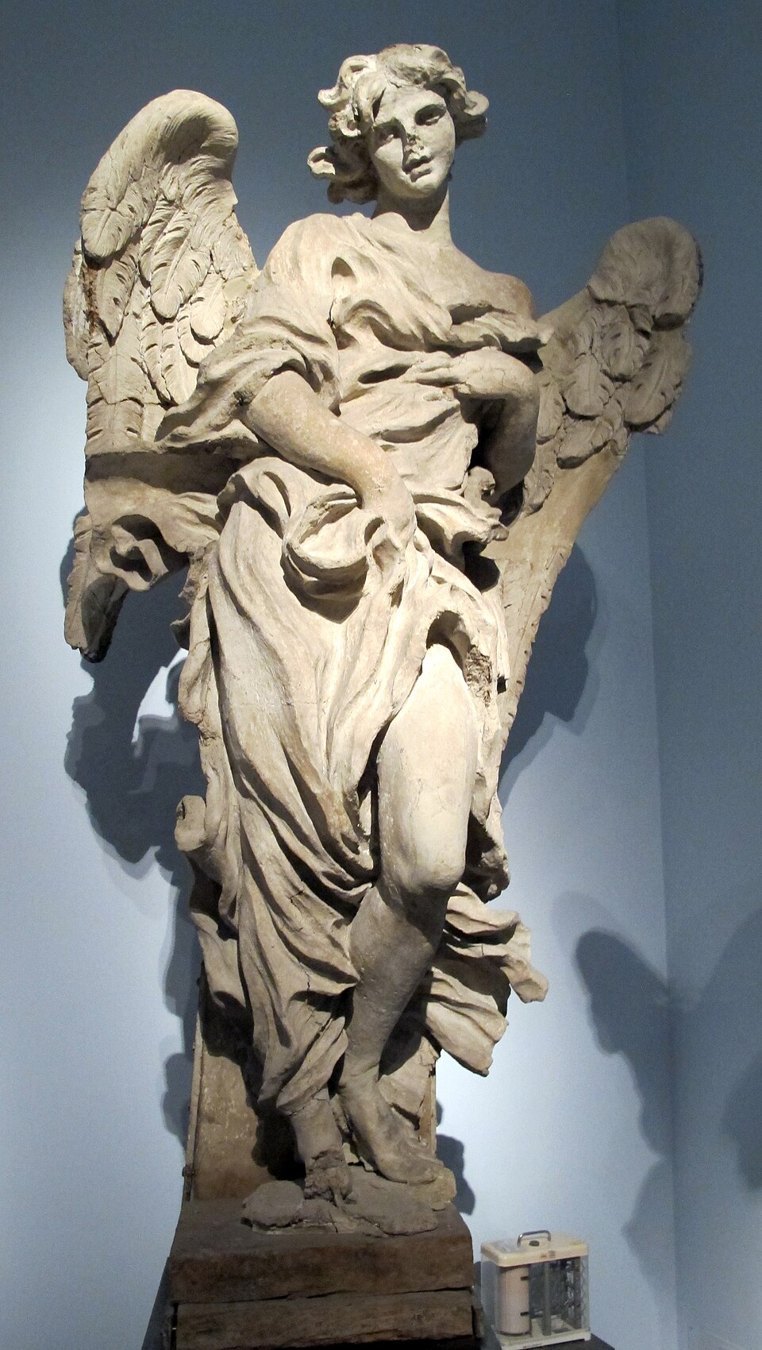
Andrea Bacchi distinguishes rapidly worked sketches, often called bozzetti, from the more elaborate modelli that could be shown to patrons. Bernini’s studies for the bridge angels, for example, preserve variations in arrangement and gesture. The detailed model for the Moor at Piazza Navona probably had a presentation function. A patron needed enough information to understand how a proposal would look. Work on the appearance of such a model could itself help secure approval. Large models served further purposes, including judging the effect of an object in position and supplying a stage in the production of a bronze. [2]
The Harvard terracotta for the Carlo Barberini memorial shows another use of clay. It represents the allegorical figure above the right side of the memorial in Santa Maria in Aracoeli. An earlier drawing in Leipzig shows a more rectangular arrangement with figures of Fame. In the later design a curving inscription field and seated figures give the front of the monument a different shape. The terracotta shows how the right-hand figure could sit above the plaque. The final marble arrangement also makes room for a central coat of arms, with the drapery redirected at the shoulder. [7]
The back of the terracotta holds evidence of the sculptor's position as he worked. The catalogue describes a core made of masses of clay, stacked and then broadened with strips. X-rays reveal the construction. Deep finger marks on the reverse support the conclusion that the study stood upright as it was modelled. These features show how Bernini gave himself a stable surface for developing a figure that would eventually be carved above a viewer’s head. [7]
Traces of revision
The Vatican terracotta known as Charity with Four Children has a cut beneath the woman’s left arm. The catalogue identifies this as a change made after firing. Its authors suggest that the cut may have allowed the figure to fit against a scale model of a sarcophagus. The extinguished torch beside one child offers a separate reason to connect the figure with a tomb. In the finished Charity on Urban VIII’s monument, the woman has two children. A document from 1630 gives evidence that their number was still under consideration at one point. [8]
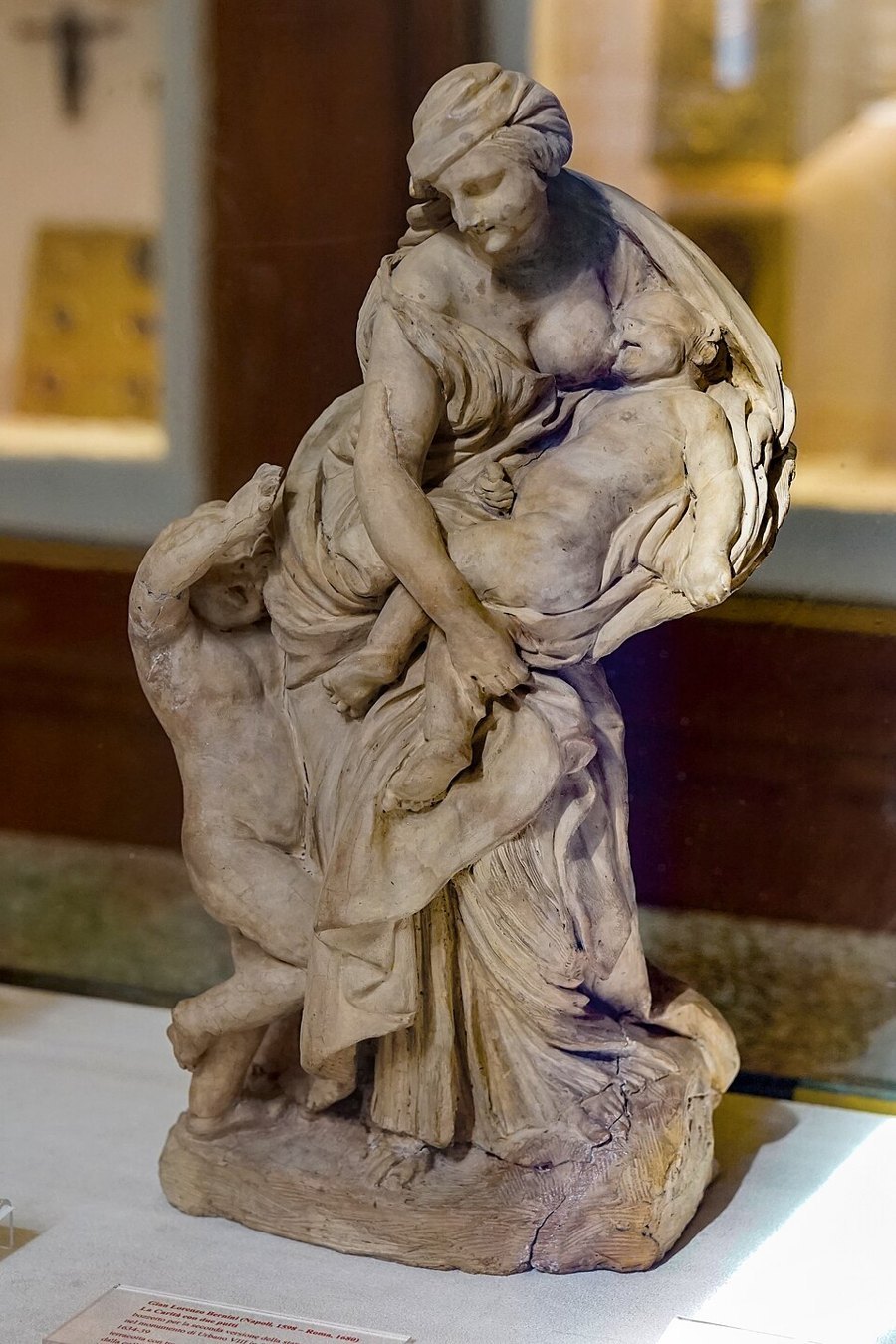
The terracotta’s attribution has been disputed. Dickerson and Sigel compare the modelling of the back of the head and the hairline with features on clay studies they regard as securely Bernini’s. They also consider features of the pose and drapery that sit less easily with his usual practice. A reader can follow the reasoning at the scale of the object itself. The impressions record the movement of fingers and tools, while the cut records a possible attempt to make the figure fit part of an architectural model. Each kind of evidence addresses a different question. [8]
From model to founder
Portrait commissions in bronze could require Bernini to work alongside a founder. Correspondence from 1623 about a portrait of Paolo Giordano II Orsini records a model going to the founder and a subsequent invitation to adjust the casting wax. C. D. Dickerson III proposes that a reference in an earlier letter may describe an initial study of the sitter’s head. The later correspondence establishes the handoff more securely. The wax gave Bernini the opportunity to revisit the likeness after a specialist had undertaken part of the production. [4]
At the Cathedra of Saint Peter, the scale of casting required substantial models. The Vatican Museums preserve models for the ensemble’s bronze figures made of clay mixed with straw and supported on armatures. Conservation of the head of Saint Athanasius documented clay and straw on supports of iron and wood. Its dimensions and materials put it at a very different stage from a sketch small enough to turn in the hand. The model had to hold the face and its details while serving in the work of producing a monumental bronze. [9][10]
Large commissions make individual contributions important. Bacchi associates the smallest exploratory sketches more often with Bernini’s own hands and describes frequent delegation of full-size models. Individual objects and documents still determine what can be credited. For the Aracoeli memorial, Bernini designed the composition and modelled the surviving terracotta for the figure on the right. Andrea Bolgi executed that figure in marble, while Stefano Speranza carved its counterpart on the left. Each contribution explains something about how the monument came into being. [2][7]
Reading a model through its repairs
A clay sculpture can preserve the time it spent in a studio and the work done to keep it intact afterwards. In the Vatican Museums’ restoration of Bernini’s models, the conservators found traces of tools and fingers, deep cracks associated in part with shrinkage, and later fills that had been concealed by coloured coatings. Some large fragments had been secured with modern nails. The marks have different origins even when seen next to one another. A finger mark can register work on wet clay, while a painted fill records a later attempt to make a loss less visible. Conservation makes it possible to distinguish the two stages before using the surface to reconstruct workshop practice. [14]
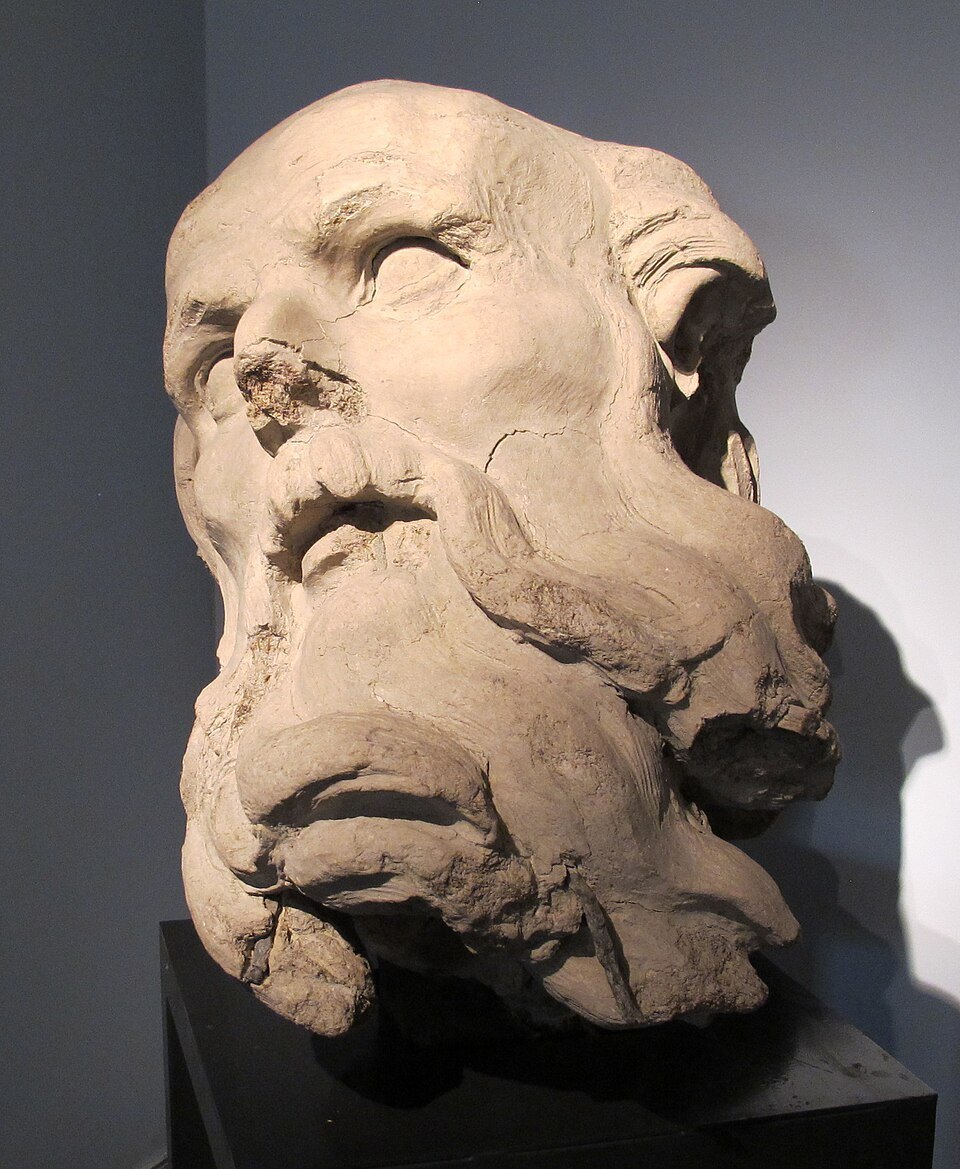
The underlying structure is particularly important in a large model. Straw mixed with clay and a framework of wood or metal distribute weight differently from fired clay in a small figure. The Vatican team found insect damage to organic components, and the conservators treated that problem before working on surface deposits and corroded iron. They report using a light cellulose-based material where fragments had to be joined or gaps structurally repaired. The new fills and joins make the sculpture stable enough to examine. The report identifies their extent, so the restored surface can still be interpreted as evidence with a documented treatment history. [14][15]
Following a change from one surface to another
Small fired studies offer another kind of record. Anthony Sigel describes the large handprint hidden under successive clay on a model, together with tool marks on the underlying area. The print is evidence of handling before the last layer was added. On an Angel with the Superscription, losses in the base show fingerprints from earlier shaping. Such traces can provide a sequence within one model from the pressure of a hand or tool to an addition that covered it. The place and depth of the mark matter as much as its outline when assessing how the object was made. [16]
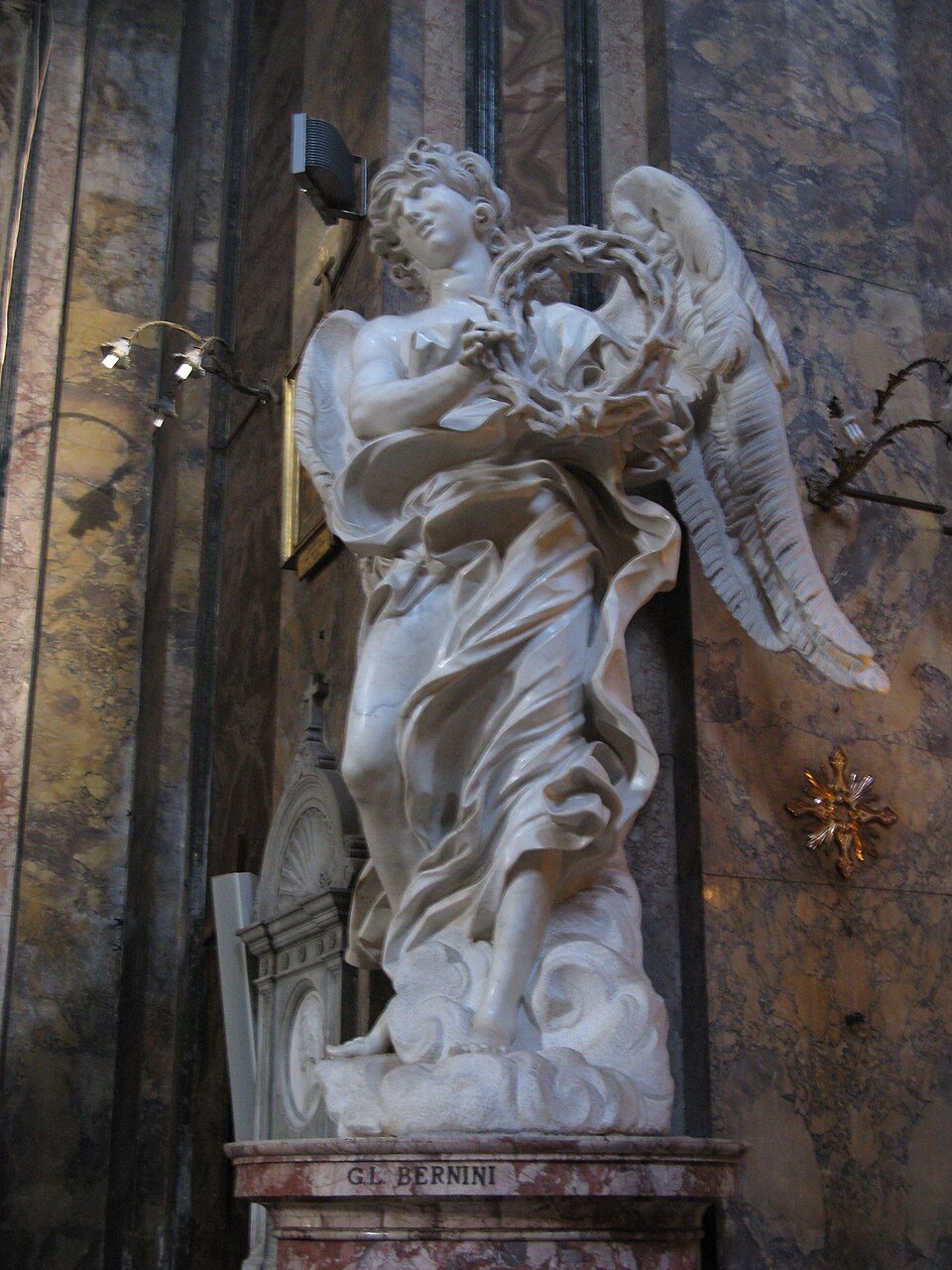
Comparison with a separate model focuses attention on choices of scale. The Louvre’s terracotta angel with the Crown of Thorns is linked to a particular bridge statue. Its compact dimensions allow the posture and the position of the crown to be handled together. In a large production model such as those for the Cathedra Petri, the supporting structure has to bear the mass of clay as individual parts are developed. The two examples expose different operations, and the term model covers both. Traces of pressure on a small sketch can be read in relation to the artist’s grip. On a figure built on a frame they can also indicate how an assistant reached or stabilised a part of the work. Attribution still depends on a combination of evidence. [15][16][17]
Making stone behave like other materials
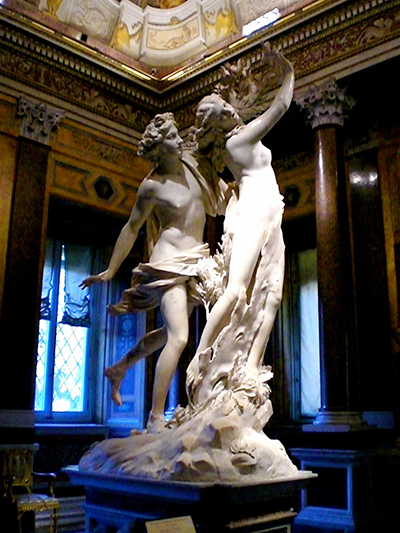
At the Galleria Borghese, Daphne’s transformation can be followed from surfaces that take up the light broadly to edges that divide it into many small shadows. Restoration in 1997 revealed that the thinnest parts had been protected with plaster during carving. The museum interprets this as a way to dampen vibration while the surrounding marble was still being worked. Bernini’s original placement of the group helped make that relationship legible as a visitor followed Apollo’s side. The carving works in tandem with the intended point of view. [11]
The portrait of Louis XIV offers an unusually detailed record of how such effects were prepared. Versailles describes Bernini watching the king at business and at play, making sketches and developing the general arrangement in clay. His assistant Giulio Cartari roughed out the marble. The king then sat while Bernini worked on the face. The portrait had to remain convincing from a studio visitor’s position, and it later occupied an elevated setting in the Diana Room. The lace, curls and direction of the gaze change in emphasis according to how near the viewer can get. [1][12]
The record of Bernini’s work leads repeatedly back to those practical circumstances. A pupil had to read in changing light. A bronze figure required a model stable enough for a founder to use. A church memorial called for a figure that could be understood high above the floor. Each surviving stage gives a way to see what the artist and his collaborators had to solve before a work could take its place.
Read the exhibition catalogue
Explore the models and their relationship to the finished sculpture.
Bernini: Sculpting in Clay. C. D. Dickerson III, Anthony Sigel and Ian Wardropper. Metropolitan Museum of Art, 2012
Photographs and X-rays show details of the terracottas and explain how models served the sculptor and his assistants. Read free at The Met.
Discussion
Chantelou records Bernini describing how cut marble would cast shadows in a portrait’s eyes.
Reader Insights
Where else does a shadow do work that colour might do in a painting?
What can a clay model show that a finished marble conceals?
Which changes between a model and the finished work might reflect the setting?
Join the Conversation
Share a detail, comparison or question about How Bernini Worked below.
References
- Chantelou, Paul Fréart de. Journal du voyage du cavalier Bernin en France. Edited by Ludovic Lalanne. Paris, 1885, entries for 12 August and 5 October 1665, pp. 93–95 and 200–201. View source
- Bacchi, Andrea. “The Role of Terracotta Models in Bernini’s Workshop.” In Bernini: Sculpting in Clay. The Metropolitan Museum of Art, pp. 47–61. View source
- Wardropper, Ian. “Sketching on Paper and in Clay.” In Bernini: Sculpting in Clay, especially p. 36 and fig. 38. View source
- Dickerson, C. D., III. “Bernini at the Beginning: The Formation of a Master Modeler.” In Bernini: Sculpting in Clay, pp. 13–14. View source
- Roma Capitale. Fontana del Tritone. View source
- Sigel, Anthony. “Visual Glossary.” In Bernini: Sculpting in Clay, pp. 87–107. View source
- Dickerson, C. D., III, and Anthony Sigel. “Allegorical Figure.” In Bernini: Sculpting in Clay, cat. 2, especially pp. 118–119. View source
- Dickerson, C. D., III, and Anthony Sigel. “Charity with Four Children.” In Bernini: Sculpting in Clay, cat. 1, pp. 112–117. View source
- Vatican Museums. Modelli della Cattedra di San Pietro. View source
- Vatican Museums. Ultimato il restauro della Testa di S. Atanasio di G. L. Bernini, 2010. View source
- Galleria Borghese. Apollo e Dafne. View source
- Château de Versailles. Genius and Majesty: Louis XIV by Bernini, exhibition account, 2025. View source
- The Metropolitan Museum of Art. Study for a Triton (recto); Anatomical Studies ? (verso), 1973.265. View source
- Vatican Museums. Giovan Lorenzo Bernini e i suoi modelli: Il restauro, Italian conservation report.
- Vatican Museums. Modelle der Cathedra Petri, German catalogue and materials description.
- Anthony Sigel. “Visual Glossary,” figs. 93 and 378, in Bernini: Sculpting in Clay, Metropolitan Museum of Art.
- Musée du Louvre. Ange portant la couronne d’épines, French object record RF 2312.