 by Tom Gurney
Tom Gurney BSc (Hons) is an art history expert with over 20 years experience
Published on November 18, 2026 / Updated on November 18, 2026
Email: tomgurney1@gmail.com / Phone: +44 7429 011000
Fountain of the Four Rivers
At the centre of Piazza Navona in Rome, a tall granite obelisk rises over rock pierced by openings. The weight above and the glimpses of daylight below give Gian Lorenzo Bernini’s Fountain of the Four Rivers its first surprise. Around the rock, four figures embody rivers associated with Europe, Asia, Africa and the Americas. Move along the rim of the basin and the figures appear one at a time alongside animals, plants and streams of water. Built between 1648 and 1651 under Pope Innocent X, the fountain combined Bernini’s design with the work of sculptors, stoneworkers and the people responsible for bringing water to the square. [1][2]
At a Glance
- Date1648–51
- Location or statusPiazza Navona, Rome
- WorkFountain with river personifications and granite obelisk
The work in Bernini’s career
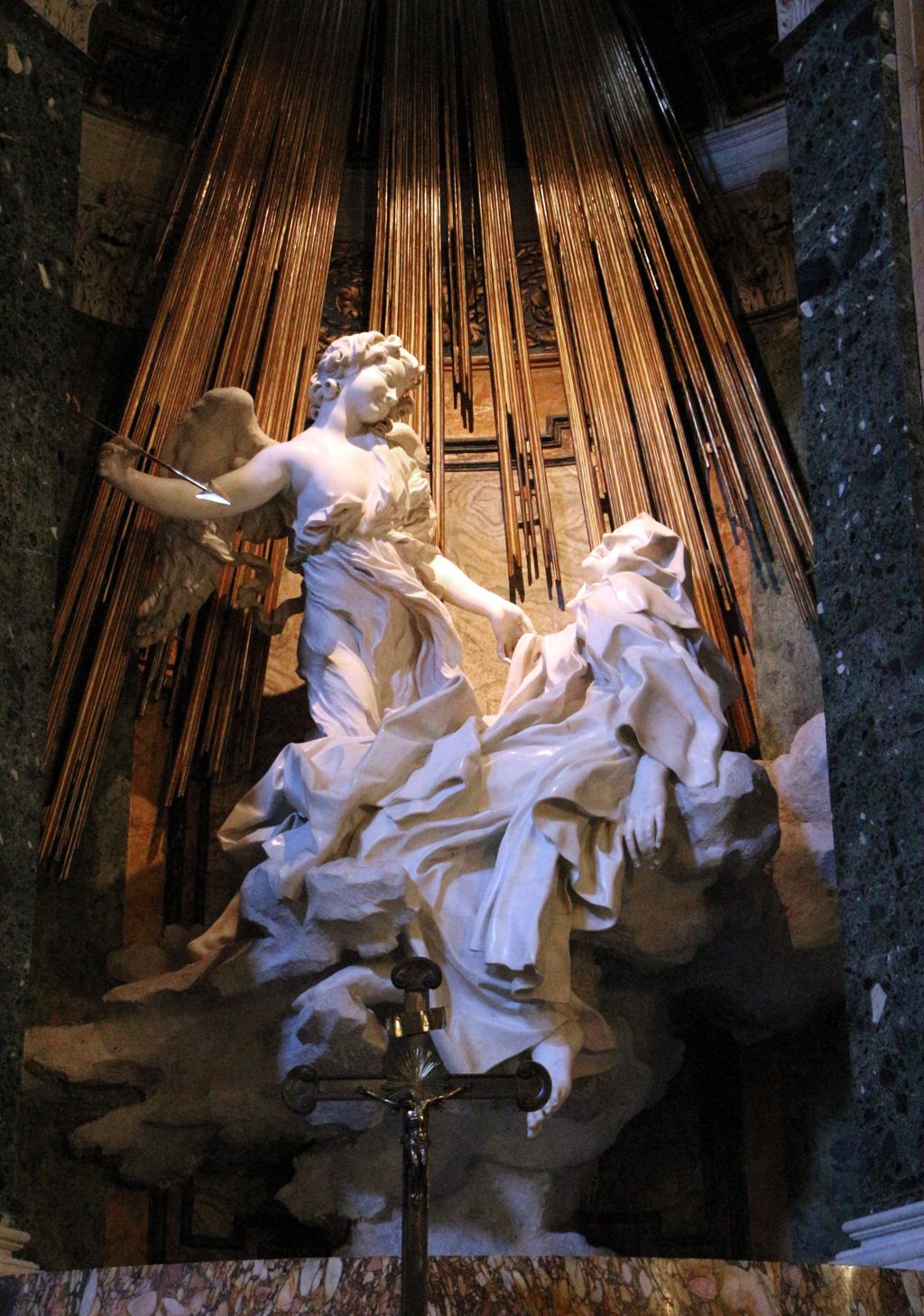
Ecstasy of Saint Teresa
1647–52Fountain of the Four Rivers
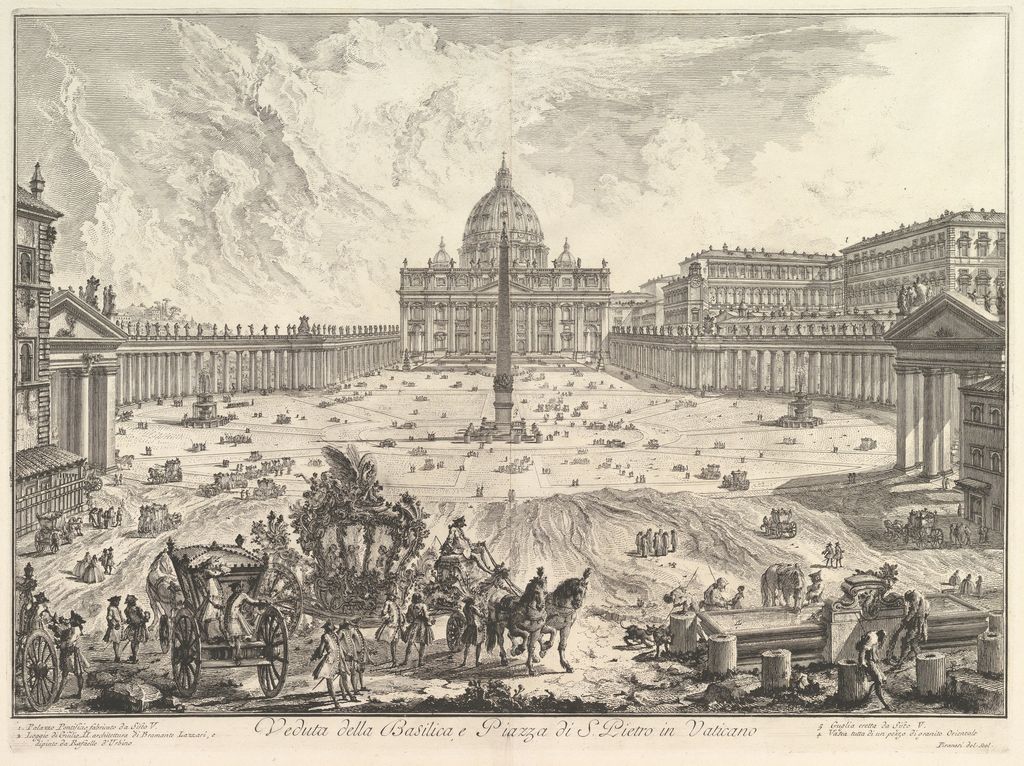
1648–51St Peter’s Square
1656–67A new centre for Piazza Navona
Piazza Navona already had fountains at either end by the late sixteenth century, and a watering trough occupied the site of the new monument. Innocent X was remaking the square around the palace of his family, the Pamphilj. His commission brought two projects together. A fresh supply of water would make a larger fountain possible, and an ancient obelisk would become its centrepiece. Rome’s heritage authority records that in 1647 the pope entrusted Francesco Borromini with planning the conduit. The water came from the Acqua Vergine aqueduct. Bernini won the commission for the fountain after a competition of designs, in which the authority records that he presented a silver model. [1]
The shaft had lain in pieces at the Circus of Maxentius on the Appian Way. The city’s monument record identifies it as a Roman work from the period of Domitian. Its relocation gave the Pamphilj project a conspicuous link with imperial Rome. Above the rock Bernini placed two marble coats of arms bearing a dove with an olive branch. A bronze dove crowns the obelisk, repeating the family emblem at a scale suited to the height. From across the square, the shaft and its summit identify the work before the heraldry or the individual figures at its base come into focus. [1]
The rock and its river figures
The rough central mass is travertine. Four openings turn it into a grotto, while a wide elliptical basin contains both the artificial rock and the water that flows from it. The irregular surfaces and hollows are conspicuous beside the smooth shaft. Looking through one of the apertures lets the eye travel past the mass that carries the obelisk. In views from the side, the contrast between the heavy upper element and the apparently broken ground below can be even stronger. The perception of instability depends on the arrangement of actual stone, whose structural demands were part of the project from the beginning. [1][2]
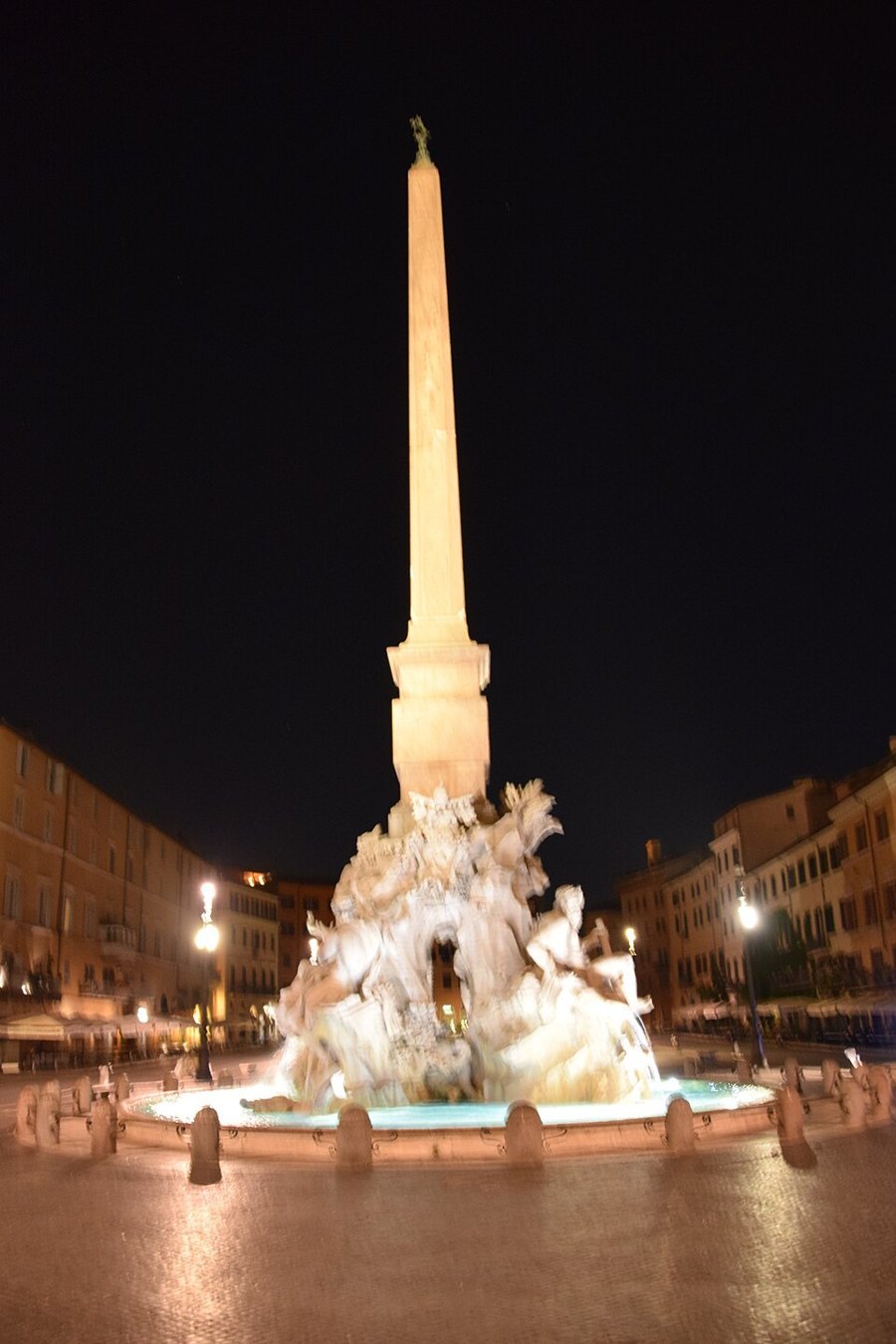
Each of the four large marble figures has a separate sculptor. Antonio Ercole Raggi carved the Danube, associated with Europe, with a horse nearby. Claude Poussin’s Ganges, for Asia, has an oar as a sign of navigation and is accompanied by a dragon. For Africa, Giacomo Antonio Fancelli carved the Nile with a cloth over its head. The veil refers to the source of the river, unknown to contemporary Europeans. A lion and a palm accompany the figure. Francesco Baratta carved the Río de la Plata for the Americas, with an arm raised and an armadillo nearby. The ensemble presents geography through familiar figures and selected attributes. A single river stands for an immense region in each case, following a seventeenth-century European scheme of four parts of the world. [1]
The rivers share a scale and a place around the rock, but their gestures lead the eye in different directions. The Ganges can be followed along the length of its oar. The raised arm of the Río de la Plata carries the eye up towards the shaft, while the covering over the Nile draws attention to the head through the features it conceals. The animals invite a closer look lower down. Because the figures face out in different directions, identifying all four requires a circuit of the basin. The iconography becomes clearest through the same movement that reveals the grotto’s interior. [1]
A clay lion that helped the builders
A terracotta lion at Rome’s Accademia Nazionale di San Luca makes the relationship between sculpture and construction unusually clear. The exhibition catalogue Bernini: Sculpting in Clay dates it to about 1649–50. At 59 centimetres long, it has enough room for a fully developed crouch. The forequarters are low, the haunches are high, and the mane surrounds the lowered head. The finished lion emerges from the grotto, which means that the animal’s pose had to be carried through into a series of blocks that also belonged to the architectural base. The clay preserves a stage when its body could still be examined independently of the rock. [2]
Anthony Sigel describes finding fine ruled lines on both flanks of the terracotta. One ran upright near the hind legs, crossed by another running along the body. He compared the marks with the stone lion in the piazza. In his reading, the vertical lines marked the plane where the rear of the lion met the grotto, and the horizontal ones located the junction between two courses of travertine blocks. What first appeared to be faint marks on a finished model could be read as instructions for assembling part of the monument. The model helped the workshop resolve where the image of a moving animal crossed the physical joints in its stone setting. [2]
There is also evidence of a different kind of modelling in the same commission. The silver presentation described by the city belonged to the stage when a design had to persuade the patron. The clay lion was a working object for a particular detail, and the catalogue records further models associated with the river figures. Those models help explain how a commission under Bernini’s name could accommodate the work of several named sculptors. The individual marbles had to make sense from their own sides of the basin while keeping the central shaft and the common rock formation legible from farther away. [1][2]
Two readings of the same shaft
The inscription on the base and the hieroglyphs on the shaft belong to different moments in the obelisk’s history. Munich’s State Museum of Egyptian Art points out that the base credits Caracalla with bringing the obelisk to Rome, whereas the museum attributes the original commission to Domitian. It separates that commission from Maxentius’s later transfer of the shaft to his circus on the Appian Way. Thus a visitor can read an inscription that tells us what was claimed about the stone when it was reset, without adopting that claim as its ancient provenance. [5]
Innocent X also asked Athanasius Kircher to interpret the hieroglyphs. His Obeliscus Pamphilius made the shaft the subject of a book, as well as the centre of a fountain. The Munich account contrasts Kircher’s reading with what became possible after Champollion’s work in the nineteenth century. That distinction changes the value of the book for a reader today. It documents what seventeenth-century scholars and patrons wanted to know and say about the signs. It does not provide a reliable transcription of what the ancient text says. An observer looking up from the basin can recognise a similar separation between the inscribed shaft and the Pamphilj dove added above it. [5]
Looking at the fountain before the piazza changed
The Museo di Roma holds a canvas attributed to Filippo Gagliardi that places Innocent X at the new fountain around 1651. The museum reads the visit represented there as unofficial because the usual procession of cardinals is absent. The painting is especially useful for what can be seen beside the fountain. From a point north of it, the painter shows the Pamphilj palace and the buildings at the southern end of the square, including Palazzo Orsini, which later made way for Palazzo Braschi. The obelisk is still legible in a view filled with people and buildings, while some of the river figures disappear into shadow. It is a record of one way to see the fountain in use, with the monument’s surroundings supplying information a close engraving would leave out. [6]
Sandrart’s Teutsche Academie offers another kind of early reception. Its critical edition records the fountain alongside the Pamphilj palace and Sant’Agnese as part of the works on the piazza under Innocent X. It also links the entry to a plate in the 1679 volume. The painting and the printed account made the monument available to different audiences. In the canvas it is part of a scene centred on a papal visit. In the book it belongs to an account of builders, patrons and works in Rome that could circulate outside the city. [6][7]
What two restorations make possible to see
At Palazzo Venezia, a small terracotta reproduces the composition. The institution records it as 47 centimetres high and traces it to Evangelista Gorga’s collection. Conservation made the fine rasp work easier to see. The catalogue offers alternatives for its purpose, including academic work or preparation for casting bronze versions. Its small size allows a viewer to take in the rivers and the obelisk at once. That usefulness does not establish that Bernini used this particular object to build the fountain. It is a different kind of survival from a workshop study for one of the animals. [8]
In the piazza, Roma Capitale’s conservation report identifies deposits from the water and biological growth among the problems treated. It also records the reconstruction of the missing segment of the Danube’s left index finger from photographic documentation. A viewing detail restored to the public monument can therefore come from a close study of earlier images as well as from work on the surviving stone. The report allows the addition to be identified as part of the object’s recent history while preserving the distinction between that work and the seventeenth-century figure. [9]
Two ways to see the fountain in print
An etching by Louis Rouhier in the Rijksmuseum depicts the fountain from the east. The catalogue dates the print to 1651, the year the monument was finished, and records later hand colouring associated with Anna Beeck. Its title gives prominence to the Pamphilj obelisk and Innocent X. The print thus preserves both an early view and a way of naming the monument through the patron and the shaft. The artwork on paper had its own subsequent history, including colouring and incorporation into an album. [3]
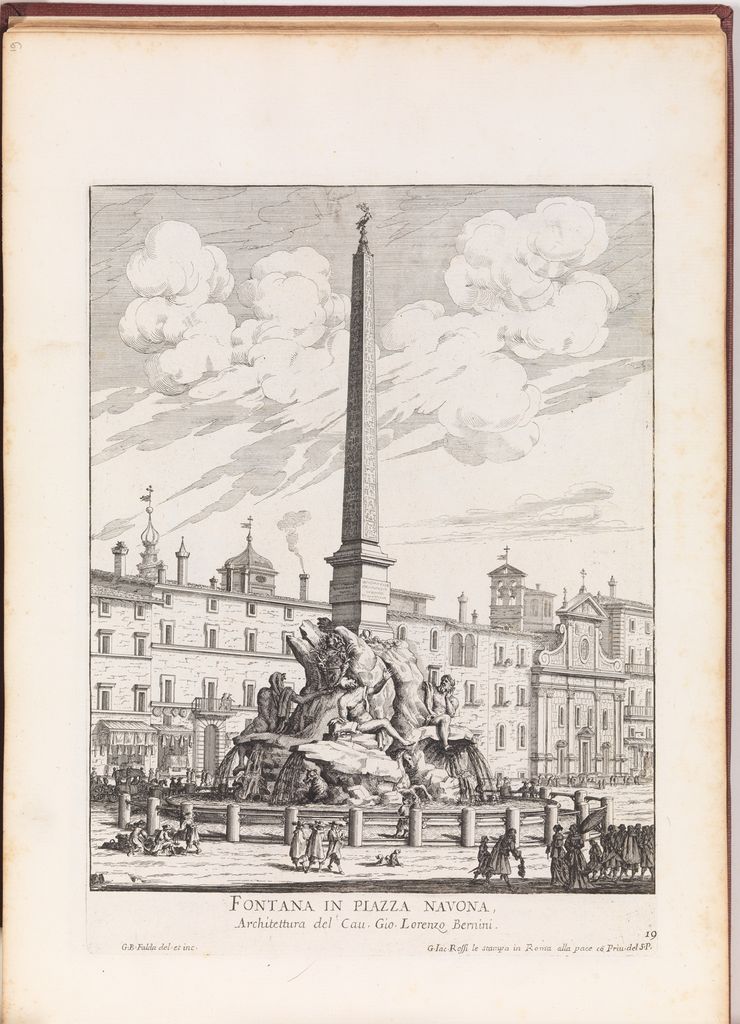
Giovanni Battista Falda’s etching for a series on the fountains of Rome gives the monument another context. An impression in the Rijksmuseum appears as plate nineteen in the album. Viewed in that setting, the Four Rivers fountain can be compared with other waterworks in the city. In the square itself, a viewer has the advantage of movement that each print has to condense into a single view. Approach along the piazza to see the obelisk’s relation to the buildings, then walk around the basin to follow the river figures and look through the openings. At the water’s edge the lower details become easier to pick out. From farther back, the rise from basin to dove makes the whole assembly readable among the surrounding buildings. [1][4]
Discussion
The obelisk appears to stand above openings in the fountain’s rock.
Reader Insights
From which side is the apparent gap beneath the obelisk clearest?
Which animals or plants help you distinguish the river figures?
How does walking around the fountain change the order in which its parts appear?
Join the Conversation
Share a detail, comparison or question about Fountain of the Four Rivers by Gian Lorenzo Bernini below.
References
- Sovrintendenza Capitolina ai Beni Culturali. Fontana dei Quattro Fiumi in piazza Navona. View source
- Dickerson, C. D. III, Anthony Sigel and Ian Wardropper. Bernini: Sculpting in Clay. Metropolitan Museum of Art, 2012. Sigel’s discussion of the lion, figs. 72 and 193–94, and catalogue entries 7–10. View source
- Rijksmuseum. Vierstromenfontein te Rome, Louis Rouhier, RP-P-1957-608-37. View source
- Rijksmuseum. Vierstromenfontein op Piazza Navona te Rome, Giovanni Battista Falda, BI-1893-A39-19. View source
- Staatliches Museum Ägyptischer Kunst, Munich. Obelisken in Rom, “Der Obelisk auf der Piazza Navona”, PDF p. 3. German account of successive settings, the inscription and Kircher’s interpretation.
- Museo di Roma. Visite d’Innocent X à la fontaine des rivières, MR 35459. French catalogue of the painting attributed to Filippo Gagliardi.
- Die Teutsche Academie critical edition. Vierströmebrunnen (Rom). German edition, early account and plate.
- VIVE, Museo di Palazzo Venezia. The Work at Palazzo Venezia, inv. 13340 and 13471. English conservation and catalogue record of the terracotta reproduction.
- Roma Capitale. La fontana dei Quattro Fiumi torna al suo antico splendore. Italian conservation report including the Danube repair and treatments to the basin and sculpture.