by Tom Gurney
Tom Gurney BSc (Hons) is an art history expert with over 20 years experience
Email: tomgurney1@gmail.com / Phone: +44 7429 011000
Degas and Cassatt: Introduction
Mary Cassatt and Edgar Degas shared an interest in the human figure, contemporary life and the possibilities of making images through several media. Their professional relationship included advice, printmaking experiments, portraits, exchanges of artwork and support for each other’s careers. The most revealing evidence lies in those particular activities, rather than in a single permanent description of one as teacher and the other as pupil.
Degas invited Cassatt to exhibit with the independent Impressionists in 1877. She made her debut with the group in 1879. The National Gallery of Art’s Degas/Cassatt exhibition account distinguishes that invitation from the later public appearance and traces a friendship that continued, despite changes in their working relationship, until Degas’s death in 1917. [1]
A painting with a revised corner, a theatre print in different states, a Louvre scene and two exchanged works provide concrete ways to follow the relationship. Each shows something different: another artist’s probable intervention, shared technical enquiry, representation of a colleague, or the commitment expressed through ownership.
At a Glance
- ScopeProfessional exchange between Mary Cassatt and Edgar Degas [1]
- Key datesInvitation 1877; Cassatt’s group debut 1879; art exchange after the 1886 exhibition [1] [2] [3] [4]
- ExamplesBlue-chair oil, opera-box drawing/impressions, Louvre print and exchanged works [5] [6] [7] [8] [9] [2] [3]
- Evidence limitsProbable corner contribution; source-attributed sitter and transaction details [5] [1] [9] [4]
Contents
- An invitation to an independent exhibition
- A corner in Little Girl in a Blue Armchair
- The print journal that never appeared
- An opera-box drawing and two impressions
- Cassatt as a museum visitor in Degas’s art
- The exchange of Girl Arranging Her Hair
- Owning, recommending and securing delivery
- Asking the public to compare
- A critic revises the pupil label
- Different directions after 1886
An invitation to an independent exhibition
The invitation of 1877 offered Cassatt a different public context from the Salon jury. It did not introduce her to professional art from the beginning. By then she had already trained and exhibited, and the decision to join the independent group belonged to an artist making choices about where her work should be seen. The biography follows that earlier development in more detail. [1]
Achille Ségard’s 1913 French account reports Cassatt remembering the invitation as a welcome opportunity to work without worrying about a jury’s judgement. This is a later reported recollection, not a transcript written at the moment of the invitation. Its value is in the professional independence being remembered; its surrounding chronology should not override more securely established exhibition dates. [10]
The distinction between invitation and debut matters. A two-year interval separates Degas’s approach from Cassatt’s first appearance with the group. Collapsing them would turn a developing professional decision into a single instant. Likewise, the relationship cannot be explained solely through a story of recognition in which Degas supplies all the initiative and Cassatt only receives it.
Independent exhibiting also involved a network larger than two people. Printmakers and painters worked alongside one another, exchanged methods and tested different forms of presentation. Cassatt’s relationship with Degas was important within that network, but it did not contain every source of her technique or every aspect of her subsequent work.
A corner in Little Girl in a Blue Armchair
Little Girl in a Blue Armchair provides a specific example of probable collaboration. The National Gallery dates the oil to 1878 and states that Degas probably worked on the rear corner of its setting. That qualification is essential: it identifies a particular area and a degree of certainty, rather than dividing the whole painting into unsupported percentages of authorship. [5]
The 2014 brochure describes evidence from magnification and infrared examination, together with a letter tradition. An earlier horizontal floor-wall boundary became a corner, the couch was reworked to fit the altered space, and a trial position for the dog on the floor was abandoned in favour of its place on a chair. These changes explain how the room’s final arrangement emerged through revision. [1]
Changing a corner is a consequential intervention. A straight back wall would hold the setting more nearly parallel to the canvas. A meeting of two walls introduces another direction and changes how the furniture relates to the room. The adjustment matters to the child’s surroundings even though it does not alter the subject into a different kind of scene.
The distinction between evidence and attribution remains important. Imaging can reveal a prior arrangement; paint handling and documentary information help build an argument about who contributed to it. Neither is equivalent to a chemical test that identifies Degas’s hand. Cassatt’s later account of his involvement is transmitted through the museum publication here, rather than newly verified from the original French autograph. [1]
The work’s possible appearance in the 1879 exhibition is also retained as a possibility in the current object history. A relationship story should not make that exhibition entry certain simply because it would produce a convenient sequence. The painting already provides substantial evidence of exchange without requiring every historical detail to become definite. [5]
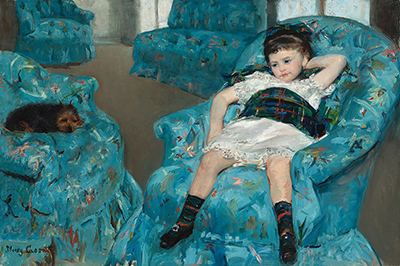
Little Girl in a Blue Armchair, 1878. National Gallery of Art, Washington. Image source. CC0 / Public domain. Resized only; whole composition retained.
The print journal that never appeared
In 1879–80, Cassatt and Degas worked with other artists towards Le Jour et la nuit, a proposed journal of original prints. Félix Bracquemond and Camille Pissarro were among the participants. Although the publication never appeared, the work associated with it encouraged technical experiment. The National Gallery’s account places Degas in a teaching role for particular printmaking methods during this period. [1]
That specific instruction should not become a description of Cassatt’s entire artistic life. Learning a process from a colleague is compatible with developing independent solutions within it. A failed publication can also have a productive history: the proposed journal did not need to reach readers for the participating artists to gain experience through preparing and revising prints.
Softground etching was especially relevant because it could preserve effects resembling drawing. A prepared drawing could be traced over a yielding ground on a plate, allowing selected lines to be developed through etching. Other methods then supplied different kinds of line and tone. The National Gallery explains these processes through surviving works rather than treating all of Cassatt’s prints as one uniform technique. [11]
The collaborative activity thus included discussion, instruction and comparison of results. It need not mean that every participant physically worked on every plate. Specifying the method and the object gives the word collaboration a useful meaning while preserving Cassatt’s authorship of her own compositions.
An opera-box drawing and two impressions
In the Opera Box (No. 3) offers an exact sequence to examine. The National Gallery’s preparatory recto, accession 1946.21.82.a, is an 1880 graphite drawing on wove paper. The seated woman holds a broad fan, with curved theatre divisions behind her. [6]
Two separate prints show different stages. Accession 1946.21.81 is catalogued as a second state of four, in softground etching and aquatint on laid paper. Accession 1946.21.80 is a fourth and final state on Japanese paper. Those catalogue labels identify the selected impressions; they should not be replaced by the state number attached to another museum’s sheet in an exhibition brochure. [7] [8]
The drawing faces in the opposite direction from the printed figure. That reversal is a useful reminder that transferring a design and printing an impression alter orientation. The print is not simply the drawing reproduced in another colour. It has its own worked surface, ink and paper, and can develop different visual relationships.
Comparing the selected impressions, the face is heavily shadowed in the earlier state and lighter in the final one. Darker surrounding areas in the later image give the head and shoulders a different relationship to the seat and theatre background. The fan remains a strong curved shape across the lower figure, but the balance of light and dark shifts around it.
The sequence makes artistic choice visible. A recognisable figure can remain while the effect of her surroundings changes substantially. Cassatt’s engagement with printmaking concerned such decisions, rather than merely mastering a process supplied by Degas. Looking at the actual sheets gives that professional development a material basis.
It also prevents a misleading hierarchy in which a preparation is interesting only because it leads towards something more complete. The graphite drawing preserves a particular distribution of marks and a view of the figure before printing. Each impression records another physical result. Their differences are the evidence, not imperfections to be ignored while searching for one ideal image.
Cassatt as a museum visitor in Degas’s art
Degas represented Cassatt in several works connected with the Louvre. One exact example is the Metropolitan Museum’s Mary Cassatt at the Louvre: The Etruscan Gallery, dated 1879–80, accession 19.29.2. It combines softground etching, aquatint, etching and drypoint, and is catalogued as the third of nine states. [9]
The standing figure is seen from behind, leaning against an umbrella, while a companion sits at the left holding an open book. Display divisions and exhibited objects create a grid around them. The standing body interrupts that structure with a different set of curves and angles. The image presents looking at art as a bodily activity within an organised public setting.
The two figures also establish different relationships with the exhibits. One stands facing into the gallery; the other holds a book and turns across the space. Their poses give the museum scene more than one direction of attention. Cassatt is represented as an active visitor rather than as a face offered directly to the portrait viewer.
The Metropolitan Museum names the seated companion as Lydia, while the 2014 National Gallery brochure treats that identification as possible. The difference should remain visible: Lydia is the museum’s identification, with uncertainty preserved across the sources. Neither the print nor the title establishes the date of an actual recorded outing. [9] [1]
The print’s own state matters as well. A third state is not the final state illustrated elsewhere, and a later pastel or oil of a related Louvre subject is a separate object. The series demonstrates sustained interest, but the precise order of every related drawing, print and painting is not fully established in the reviewed account. [1]
Watch: Mary Cassatt
Choose a film to explore the artist’s work, its interpretation and its wider setting.
Demonstrating Mary Cassatt's Color Printmaking Techniques
The Philadelphia Museum of Art demonstrates techniques used to make Cassatt’s colour prints.
Watch on YouTubeThe exchange of Girl Arranging Her Hair
A different kind of reciprocity appears in an exchange after the 1886 Impressionist exhibition. Cassatt’s oil Girl Arranging Her Hair, now at the National Gallery, entered Degas’s collection; she received his Woman Bathing in a Shallow Tub. The current owning museum accounts and Susan Alyson Stein’s Havemeyer chronology identify the exchange. [2] [3] [4]
The paired works are materially and visually distinct. Cassatt’s 1886 oil shows an upright young figure with a raised arm and a long braid. Pale clothing, patterned walls and objects on a washstand organise the interior around the body. The gesture opens the arm above the head while another hand meets the hair lower down. [2]
Degas’s 1885 work is charcoal and pastel. Its figure bends deeply over a shallow tub, bringing the curved back into a compact relation with head, arms and legs. The Metropolitan Museum records its support as formerly light-green wove paper, now warm grey, laid on silk bolting. That material history belongs to this exact sheet, rather than supplying an original paper colour for Cassatt’s pastels generally. [3]
The contrast makes the exchange more interesting than a claim that the artists produced equivalent bathing pictures. One composition extends through an upright body and vertical braid; the other folds a body closely around a low basin. Their ownership of each other’s work shows engagement across those differences. The original receipt or exchange letter has not been inspected here, so the transaction is presented through the museum and scholarly accounts.
Later collecting creates another chapter. Stein records Louisine Havemeyer’s acquisition of Girl Arranging Her Hair from the Degas collection sale in March 1918. Her chronology also separates Cassatt’s offer of Degas works, wartime storage in 1918–19 and their arrival in New York in June 1919. An 1886 exchange, a later sale and a delayed shipment are different events in the lives of the pictures. [4]
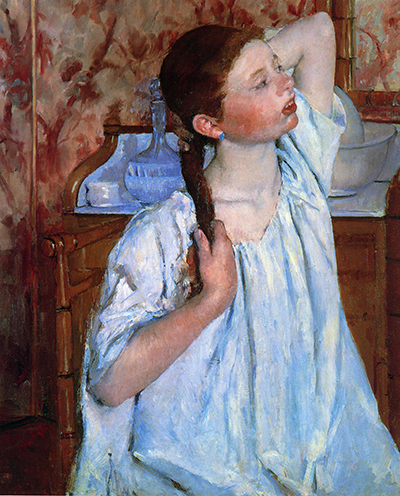
Girl Arranging her Hair.
Owning, recommending and securing delivery
The National Gallery’s 2014 account describes Degas owning nearly one hundred Cassatt works, chiefly prints, and Cassatt owning at least six works by Degas. Those are the publication’s dated assessments. Its discussion of his multiple impressions of The Visitor shows an interest in her process as well as her subjects; an old sale catalogue’s count of states should not automatically become a current catalogue count. [1]
Possessing several stages of a print gives a collector access to change. A revised area can be compared across sheets, allowing the work’s development to remain visible after the plate has moved on. That makes Degas’s collection relevant to the technical relationship, without proving exactly when Cassatt sent every impression or what either said on receiving it.
Cassatt’s advocacy also involved practical negotiation. Stein’s chronology describes the Havemeyers’ 1891 purchase of Degas’s The Collector of Prints, followed by Cassatt’s effort in 1894 to secure its release. Purchase, further work by the artist and delivery did not occur simultaneously. The picture was shipped later in 1894 and arrived in New York in February 1895, according to that account. [4]
The episode shows why collecting was more than a general enthusiasm for another artist. It could involve accompanying buyers, communicating with dealers and helping move a work from studio to collection. Cassatt’s role in those relationships gave her agency beyond the position of an artist whose own work Degas admired.
Asking the public to compare
Louisine Havemeyer’s printed speech of 6 April 1915 supplies another example of Cassatt’s advocacy. Havemeyer reports asking her advice about the exhibition and receiving a proposal to hang a Vermeer near Degas so that visitors could compare them. She then tells her audience that a borrowed Vermeer made the arrangement possible. The conversation is reported by Havemeyer, rather than preserved as a letter written by Cassatt. [12]
The proposal places judgement with the viewer. It invites an audience to consider a modern artist beside an older master, using actual works as the basis for comparison. Cassatt’s contribution is curatorial as well as conversational: the position of one picture relative to another becomes a way of making an argument without reducing it to a descriptive slogan.
The passage does not establish an exact illustrated pair here. Havemeyer discusses several everyday subjects in explaining Vermeer, and those examples should not automatically be identified as the single borrowed canvas. The secure point is the comparative proposal and her account of carrying it out. It demonstrates Cassatt’s active role in shaping how Degas could be seen by an American audience, rather than treating his reputation as something she only observed.
A critic revises the pupil label
Contemporary criticism provides another perspective. In his 1880 exhibition review, Joris-Karl Huysmans described Cassatt in relation to Degas as a pupil. The following year he revisited that judgement and praised her independence. Those reviews are consulted here in the 1902 reprint L’Art moderne: the writing concerns the earlier exhibitions, not an assessment first made in 1902. [13]
The change is evidence of a critic reconsidering what he saw. It does not establish formal lifelong pupilship in 1880 or prove an absence of exchange in 1881. The language of independence and influence belongs to an argument made by a reviewer, with assumptions about gender and artistic authority that should not be adopted as neutral facts.
That distinction offers a useful way to read the relationship more generally. A description can illuminate one activity and distort another when applied universally. Degas could teach a printmaking method, collect Cassatt’s work and depict her as a museum visitor. Cassatt could learn, experiment, exchange an important painting and promote his art. These roles coexist without collapsing into one permanent hierarchy.
Different directions after 1886
The final Impressionist exhibition in 1886 marked a change rather than a complete end to the relationship. The National Gallery’s account describes less frequent interaction as the artists’ work developed in different directions. It also reports Degas attending a Cassatt exhibition in Paris in 1914. [1]
Later colour work demonstrates why their practices should not remain fixed in the pattern of the proposed black-and-white journal. Cassatt developed colour intaglio, with separate plates and carefully coordinated printing, while Degas explored other processes and subjects. The prints and paintings make those distinct developments visible without requiring every later decision to be explained through the other artist. [11]
The relationship is strongest as a history of particular exchanges. Its surviving evidence includes methods taught, compositions revised, images made of a colleague and works chosen for private ownership. Examining each on its own terms gives a fuller account of Cassatt’s independence and of the substantial place Degas held within her professional life.
Further reading from museums
These publications offer different routes into the works and their histories.
Degas/Cassatt. National Gallery of Art, 2014 exhibition brochure.
A concise introduction to artistic exchange across painting and printmaking. Read the free brochure.
Cassatt artworks and studies
A source-bounded directory of documented works and studies, including the works in the National Gallery’s 2026 checklist and one clearly marked former attribution. Different print impressions are grouped by design and remain searchable by their recorded accessions. This is not a complete catalogue raisonné. Unlinked titles have no individual article here.
| Name | Date | Medium |
|---|---|---|
| A Child’s Bath — LACMA oil | 1880 | Oil on canvas |
| A Goodnight Hug | 1880 | Pastel |
| After the Bullfight | 1873 | Oil on canvas |
| Afternoon Tea Party | 1890–91 | Colour print |
| At the Theatre (Lydia Cassatt Leaning on Her Arms, Seated in a Loge) | About 1879 | Pastel |
| Automne, portrait de Lydia Cassatt | 1880 | Oil on canvas |
| Breakfast in Bed | 1897 | Oil on canvas |
| Bust of Ellen with Bows in Her Hair | 1898 | Pastel |
| By the Pond | About 1896 in Met and Terra records; about 1898 at MoMA | Not established |
| Child Drinking Milk from a Bowl; provisionally identified composition (qualified identification) | About 1890, following inventory and catalogue text | Pastel |
| Child in a Straw Hat | About 1886 | Oil on canvas |
| Child Picking a Fruit | 1893 | Oil on canvas |
| Children Playing on the Beach | 1884 | Oil on canvas |
| Clarissa, Turned Left, with Her Hand to Her Ear | About 1890–93 in Sotheby’s 2012 entry; about 1893 in GCMA notice | Pastel |
| Denise at her Dressing Table | About 1908–09 | Oil on canvas |
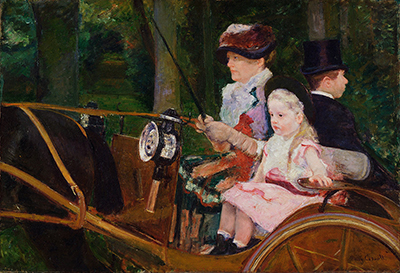
| Driving | 1881 | Oil on canvas |
| Eddy Cassatt (Edward Buchanan Cassatt) | 1875 | Oil on canvas |
| Ellen Mary Cassatt in a White Coat | About 1896 | Oil on canvas |
| Emmie and her Child | About 1890 | Oil on canvas |
| Gathering Fruit | About 1893 | Not established |
| Girl Arranging her Hair | 1886 | Oil on canvas |
| Head of a Child with a Red Hat | 1903, signed and dated | Pastel |
| Head of a Woman in a Large Hat | About 1909 | Pastel |
| Head of Simone in a Green Bonnet with Wavy Brim | About 1904 | Pastel |
| In the Garden | 1903 or 1904 | Oil on canvas |
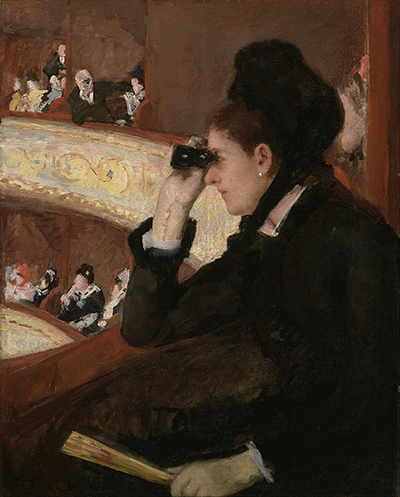
| In the Loge | 1878 | Oil on canvas |
| In the Omnibus | 1890–91 | Colour print |
| In the Omnibus [recto] — preparatory drawing | c. 1891 | Chalk and graphite |
| In the Opera Box (No. 3) [recto] — preparatory drawing | 1880 | Graphite |
| In the Opera Box (No. 3) — print | c. 1880 | Intaglio print |
| Jeune fille au jardin (Young Woman Sewing in a Garden) | 1880–82 | Oil on canvas |
| Jules Dried by His Mother; provisionally identified composition (qualified identification) | 1901, following catalogue text | Oil on canvas |
| Lady in Black, in a Loge, Facing Right | c. 1880 | Etching |
| Lilacs in a Window | About 1880–83 | Oil on canvas |
| Little Girl in a Blue Armchair | 1878 | Oil on canvas |
| Louise Nursing her Child | 1899 in Luxembourg caption; 1898–99 in loan and Arp records | Pastel |
| Madame Gaillard and Her Daughter Marie-Thérèse | 1897, Reynolda collection listing | Pastel |
| Maternal Caress | 1890–91 | Not established |
| Maternal Caress — preparatory drawing | About 1891 | Charcoal and graphite |
| Mathilde Holding a Baby Who Reaches out to the Right | About 1889, Christie’s catalogue | Pastel |
| Mimi as a Brunette | c. 1889 | Drypoint |
| Mimi Holding a Japanese Fan | c. 1889 | Drypoint |
| Modern Woman | 1892–93; displayed in 1893 | Not established |
| Mother about to Wash her Sleepy Child | 1880 | Oil on canvas |
| Mother and Child (Maternal Kiss) | 1896 | Pastel |
| Mother and Child (Nude Dark-Eyed Little Girl with Mother in Patterned Wrapper) | About 1898–99, Sotheby’s catalogue | Pastel |
| Mother and Child (The Oval Mirror) | About 1899 | Oil on canvas |
| Mother Berthe Holding Her Nude Baby | 1898–99 | Pastel |
| Mother in Purple Holding her Child | About 1914, Christie’s catalogue | Pastel |
| Mother Playing with Child | About 1897 | Pastel |
| Mother’s Kiss | 1890–91 | Colour print |
| Nurse Reading to a Little Girl | 1895 | Pastel |
| Poppies in a Field (formerly Cassatt; attributed to Victor Gabriel Gilbert) | About 1880, current museum record | Oil on panel |
| Portrait of an Elderly Lady | c. 1887 | Oil on canvas |
| Portrait of Madame AF Aude and her Two Daughters | 1899, Breeskin 1970 exhibition catalogue | Pastel |
| Portrait of the Artist | 1878 | Watercolour and gouache |
| Reading Le Figaro | 1878, NGA 2026 checklist; about 1877–78 in SAAM’s 2015 caption | Oil on canvas |
| Reflection — drypoint | c. 1890 | Drypoint |
| Sara Holding a Cat | About 1907–08 | Oil on canvas |
| Sara in a Green Bonnet | About 1901 | Oil on canvas |
| Sara with Her Dog, in an Armchair, Wearing a Bonnet with a Plum Ornament | 1901 | Pastel |
| Self Portrait | About 1880 | Watercolour and gouache |
| Simone in Blue Plumed Hat | About 1903 | Pastel |
| Simone Seated on the Grass next to her Mother | 1901–02 | Pastel |
| Sketch of Master St. Pierre | Date not established | Pastel |
| Sleepy Baby | About 1910 | Pastel |
| Smiling Mother with Sober Faced Child | Date not established | Pastel |
| Spanish Dancer Wearing a Lace Mantilla | 1873 | Oil on canvas |
| Summertime, horizontal painting | 1894–95, current Sotheby’s catalogue | Oil on canvas |
| Tea — print | c. 1890 | Drypoint |
| The Bath | 1890–91 | Not established |
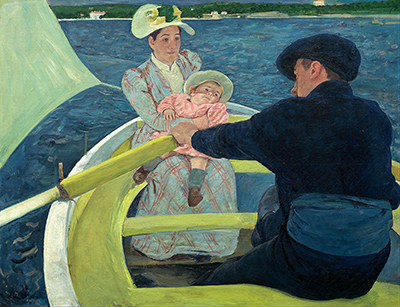
| The Boating Party | 1893–94 | Oil on canvas |
| The Caress | 1902 | Oil on canvas |
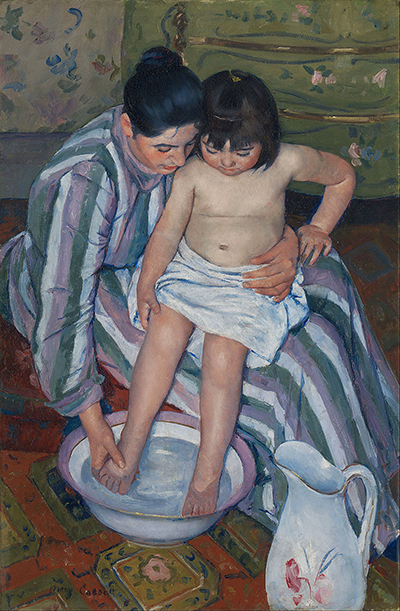
| The Child's Bath | 1893 | Oil on canvas |
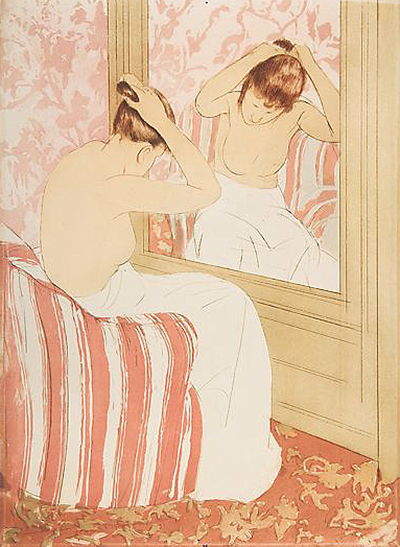
| The Coiffure | 1890–91 | Colour print |
| The Cup of Tea | About 1880–81 | Oil on canvas |
| The Fitting | 1890–91 | Colour print |
| The Lamp | 1890–91 | Colour print |
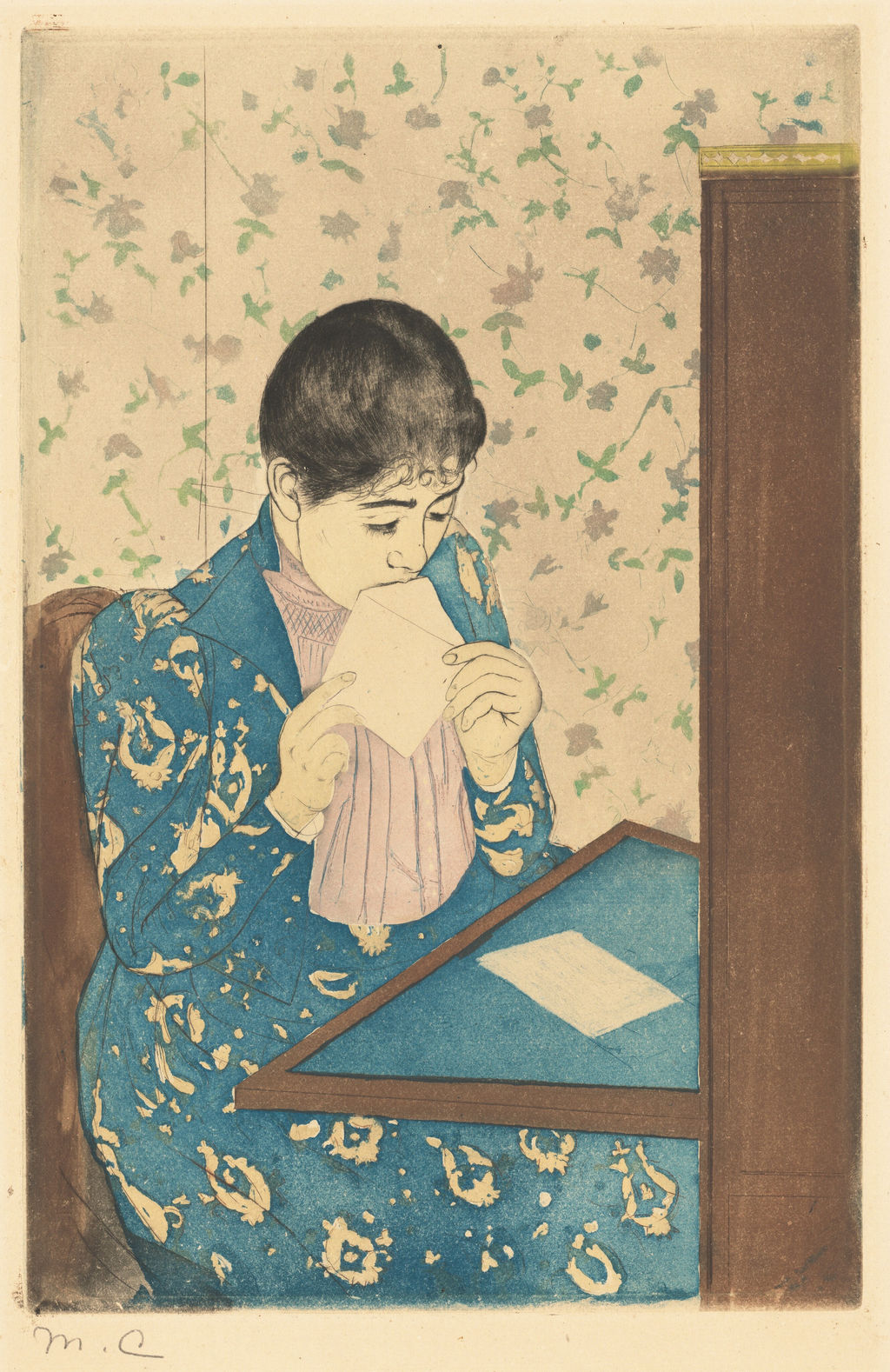
| The Letter | 1890–91 | Colour print |
| The Loge | About 1878–1880 | Oil on canvas |
| The Mandolin Player | 1868 | Oil on canvas |
| The Manicure (Les Ongles; The Nails) | About 1908 | Intaglio print |
| The Tea; Le Thé | About 1880 | Oil on canvas |
| The Visitor | c. 1880 | Intaglio print |
| Two Sisters | 1896 | Pastel |
| Two Women Seated by a Woodland Stream | About 1869 | Oil on canvas |
| Two Women Throwing Flowers During Carnival | 1872 | Oil on canvas |
| Under the Horse-Chestnut Tree | 1896–97, National Gallery and MoMA records | Not established |
| Woman Bathing (La Toilette) | 1890–91 | Colour print |
| Woman in a Loge (Woman with a Pearl Necklace) | 1879 | Oil on canvas |
| Woman Reading | 1878–79 | Oil on canvas |
| Woman Standing, Holding a Fan | 1878–79 | Distemper |
| Woman with a Fan | c. 1878–1879 | Oil on canvas |
| Woman with a Red Zinnia | 1891 | Oil on canvas |
| Woman with a Sunflower | About 1905 | Oil on canvas |
| Young Girl at a Window | c. 1883–1884 | Oil on canvas |
| Young Girl with Brown Hair, Looking Left | About 1913 (1997 summary catalogue) | Pastel |
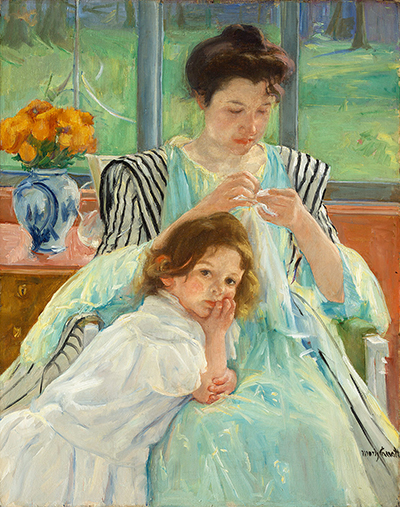
| Young Mother Sewing | 1900 | Oil on canvas |
| Young Woman in Green, Outdoors in the Sun | About 1914 | Oil on canvas |
Discussion
Look again at the images and ideas explored in Degas and Cassatt. These editorial prompts invite your observations.
Reader Insights
Mary Cassatt and Edgar Degas shared an interest in the human figure, contemporary life and the possibilities of making images through several media. What does this first detail make you notice?
The invitation of 1877 offered Cassatt a different public context from the Salon jury. Which connection would you explore further?
Which best demonstrates professional exchange: revising a painting, learning a process or choosing to own another artist’s work?
Join the Conversation
Share a detail, comparison or question about Degas and Cassatt below.
References
- National Gallery of Art, Degas/Cassatt exhibition brochure, 2014, complete brochure; particularly PDF pages 2, 4–11. Original correspondence is mediated through the publication. View source.
- National Gallery of Art, Girl Arranging Her Hair, 1963.10.97. View source.
- Metropolitan Museum of Art, Edgar Degas, Woman Bathing in a Shallow Tub, 29.100.41. View source.
- Susan Alyson Stein, assisted by Rebecca A. Rabinow, chronology in Splendid Legacy: The Havemeyer Collection, 1993, especially printed pages 212, 216 and 273–274; letters and archival transactions transmitted by the chapter, not independently inspected originals. View source.
- National Gallery of Art, Little Girl in a Blue Armchair, 1983.1.18, current qualified contribution and exhibition history. View source.
- National Gallery of Art, In the Opera Box (No. 3) [recto], 1946.21.82.a. View source.
- National Gallery of Art, In the Opera Box (No. 3), 1946.21.81, second state of four. View source.
- National Gallery of Art, In the Opera Box (No. 3), 1946.21.80, fourth and final state. View source.
- Metropolitan Museum of Art, Edgar Degas, Mary Cassatt at the Louvre: The Etruscan Gallery, 19.29.2, third of nine states. View source.
- Achille Ségard, Un peintre des enfants et des mères, Mary Cassatt, 1913, French, printed page 8; reported recollection of the invitation, paraphrased. View source. (in French).
- National Gallery of Art, Mary Cassatt, the Daring Printmaker, 23 January 2026. View source.
- Louisine W. Havemeyer, Remarks on Edgar Degas and Mary Cassatt, 6 April 1915, unnumbered scan page 6; reported conversation. View source.
- Joris-Karl Huysmans, L’Art moderne, French, 1902 reprint, printed pages 125 and 255–258, containing the 1880 and 1881 exhibition criticism; selected passages, not the complete book. View source. (in French).
- Art Gallery of Ontario, Cassatt–McNicoll:ImpressionistsBetweenWorlds. View source.
- Metropolitan Museum of Art, The Bath, 16.2.7. View source.
- National Gallery of Art, Children Playing on the Beach, 1970.17.19. View source.
- Colby College Museum of Art, Explore Inside Out: The Prints of Mary Cassatt; Mother Berthe Holding Her Nude Baby,2013.549. View source.
- Sotheby’s, syndicated auction catalogue hosted by Invaluable, Simone in Blue Plumed Hat, Watson collection, 18 May 2005, lot 20. View source.
- National Gallery of Art, The Boating Party, 1963.10.94. View source.
- The Huntington, Breakfast in Bed, 83.8.6. View source.
- Adelyn Dohme Breeskin / Smithsonian Institution Press; University of California scan indexed by Google Books, Mary Cassatt:A Catalogue Raisonné of the Oils,Pastels,Watercolors,and Drawings,1970,322pp; selected public search snippets pp91–92,143–144,316,318. View source.
- Metropolitan Museum of Art, The Private Collection of Edgar Degas: A Summary Catalogue, Cassatt entries, printed p.7, no.48. View source.
- Art Institute of Chicago, After the Bullfight, 1969.332. View source.
- Smithsonian American Art Museum, Art Inventories, After the Bullfight, siris_ari_180619. View source.
- Smithsonian American Art Museum, The Caress, 1911.2.1. View source.
- Museum of Modern Art, Under the Horse-Chestnut Tree,671.1940. View source.
- National Gallery of Art, Under the Horse-Chestnut Tree,1959.12.4. View source.
- Art Institute of Chicago, The Child’s Bath,1910.2,current expanded collection entry. View source.
- Virginia Museum of Fine Arts, Board of Trustees minutes,17September2020,loan recommendation7:ChildPickingaFruit75.18. View source.
- Cincinnati Art Museum, Les Ongles(The Nails;The Manicure),ca1908,1940.155,secondstate. View source.
- Sotheby’s, Clarissa Turned Left with Her Hand to Her Ear, 2012 lot 51. View source.
- Greenville County Museum of Art, Recent Acquisitions Funded by Sale of Alma Thomas Painting, 2021. View source.
- Metropolitan Museum of Art, The Coiffure,16.2.3. View source.
- Metropolitan Museum of Art, The Cup of Tea, 22.16.17. View source.
- Sotheby’s, Mother and Child (Nude Dark-Eyed Little Girl with Mother in Patterned Wrapper), 19 May 2010, lot 31. View source.
- Metropolitan Museum of Art, Denise at Her Dressing Table, 2005.129. View source.
- Denver Art Museum, Whistler to Cassatt:American Painters in France, bilingual exhibition livret,The Salon,no2. View source.
- Philadelphia Museum of Art, Driving, 1881. View source.
- Denver Art Museum, Whistler to Cassatt exhibition guide, stop 112: Bust of Ellen with Bows in Her Hair. View source.
- Museum of Fine Arts, Boston, Ellen Mary in a White Coat, 1982.630. View source.
- MaudHoweElliott(ed.) / UniversityofIllinoisUrbanaChampaign scan, Art and Handicraft in the Woman’s Building of the World’s Columbian Exposition,Chicago,1893,Chicago:RandMcNally,1894. View source.
- Amon Carter Museum of American Art, Woman Standing Holding a Fan, 2011.20. View source.
- Smithsonian American Art Museum, Special Installation of Nineteen American Masterworks, 2015. View source.
- Metropolitan Museum of Art, The Fitting, 16.2.8 final state. View source.
- Reynolda House Museum of American Art, Mary Cassatt collection listing: Madame Gaillard and Her Daughter Marie-Thérèse, 1897. View source.
- Wake Forest University, Wake Women 2023 schedule, Highlighting the Art of Women at Reynolda, captioned Cassatt image. View source.
- Detroit Institute of Arts, In the Garden, 36629. View source.
- National Gallery of Art, Gathering Fruit,1943.3.2757. View source.
- Sotheby’s, A Goodnight Hug,N09860lot11,14May2018. View source.
- Sotheby’s, Young Woman in Green Outdoors in the Sun, Modern Day. View source.
- Sotheby’s, syndicated auction catalogue hosted by Invaluable, Head of Simone in a Green Bonnet with Wavy Brim, Watson collection,18May2005,lot39. View source.
- Joslyn Art Museum, Art Break:Woman Reading,1943.38,program object caption. View source.
- Los Angeles County Museum of Art, A Child’s Bath, M.62.8.14. View source.
- National Gallery of Art, The Lamp, 5937. View source.
- Sotheby’s, Tête de Femme au Grand Chapeau, 2008 N08449 lot135. View source.
- National Gallery of Art, The Letter,1943.3.2763. View source.
- Metropolitan Museum of Art, Lilacs in a Window, 1997.207. View source.
- National Gallery of Art, The Loge,1963.10.96. View source.
- Arp Museum Bahnhof Rolandseck, Maestras: Malerinnen1500–1900,25February–16June2024,official five-page flyer. View source.
- Spanish official gazette / exhibition insurance schedule, BOE-A-2023-19808,21September2023,Maestras loan schedule. View source.
- Nationalmusée um Fëschmaart / ArpMuseum CollectionRauforUNICEF, Louise,NursingHerChild,1899,GR1.949;FromRenoirtoMonet2026–27. View source.
- Petit Palais / Paris Musées, Automne, portrait de Lydia Cassatt, PPP706; IIIF manifest 160008392. View source. (in French).
- Denver Art Museum, Whistler to Cassatt Access Guide, The Salon, stop 104. View source.
- Metropolitan Museum of Art, Maternal Caress, 16.2.5. View source.
- Philadelphia Museum of Art, Mother and Child Maternal Kiss, object 54049. View source.
- Metropolitan Museum of Art, Maternal Caress, preparatory drawing64.123.3, c1891. View source.
- Christie’s, Mathilde Holding Baby who Reaches out to Right, lot 5459369. View source.
- National Portrait Gallery / Catalog of American Portraits, Madame Meerson and her Daughter, SSSA2282. View source.
- Museum of Fine Arts Boston, In the Loge, 10.35. View source.
- Smithsonian art inventories, Child Drinking Milk from a Bowl, siris_ari_197517. View source.
- MutualArt public auction index; original auctioneer undisclosed without subscription, Child Drinking Milk from a Bowl, public listing dated 2 June 2024. View source.
- Museum of Modern Art, Mary Cassatt artist essay and print records. View source.
- National Gallery of Art, Mother's Kiss,1963.10.254. View source.
- National Gallery of Art, Mary Cassatt An American in Paris checklist, updated 24 February 2026. View source.
- Adelyn D. Breeskin / National Gallery of Art, Mary Cassatt 1844–1926, 1970 exhibition catalogue. View source.
- Metropolitan Museum of Art, Nurse Reading to a Little Girl, 62.72. View source.
- National Gallery of Art, In the Omnibus, 46725. View source.
- Metropolitan Museum of Art, Mother and Child (The Oval Mirror), 29.100.47. View source.
- Art Institute of Chicago, Ryerson and Burnham Archives, Bertha Honoré Palmer Correspondence Collection finding aid, selected Mary Cassatt entries, Box1Folder3. View source.
- Philadelphia Museum of Art, Woman in a Loge, 1978-1-5, object72182. View source.
- Metropolitan Museum of Art, Mother Playing with Child, 22.16.23. View source.
- Metropolitan Museum of Art, By the Pond,60.732bis. View source.
- Museum of Modern Art, By the Pond,673.1940. View source.
- Terra Foundation for American Art, By the Pond,1999.25. View source.
- Philadelphia Museum of Art, Poppies in a Field, attributed to Victor Gabriel Gilbert; formerly attributed to Mary Stevenson Cassatt, 1978-1-6. View source.
- Christie’s, Mother in Purple Holding Her Child, lot 5369421. View source.
- Sotheby’s, Tête d’enfant au chapeau rouge, American Art N09229, 20 November 2014, lot 39. View source.
- Christie’s, Sara Holding a Cat, lot 5561267. View source.
- Smithsonian American Art Museum, Art Inventories Catalog, Sara with Her Dog, in an Armchair, Wearing a Bonnet with a Plum Ornament; IAP 80170363 / siris_ari_180925. View source.
- Smithsonian American Art Museum, Sara in a Green Bonnet, 1929.6.11. View source.
- Mary Cassatt Catalogue Raisonné project, with Adelson Galleries, presented on Artnet, Sara with Her Dog, in an Armchair, Wearing a Bonnet with a Plum Ornament, work 424155733. View source.
- Metropolitan Museum of Art, Portrait of the Artist, 1975.319.1. View source.
- National Portrait Gallery, Mary Cassatt Self-Portrait, NPG.76.33. View source.
- Musée d’Orsay, Jeune fille au jardin,RF193720. View source. (in French).
- Sotheby’s, Simone Seated on the Grass Next to Her Mother, 30 September 2020, lot 33. View source.
- Dallas Museum of Art, Sleepy Baby,1952.38.M. View source.
- Sotheby’s, Smiling Mother with Sober Faced Child, 2022. View source.
- Smithsonian American Art Museum, Spanish Dancer Wearing a Lace Mantilla, 1967.40. View source.
- Spencer Museum of Art,University of Kansas, The Manicure,c1908,1991.0266. View source.
- Christie’s, Sketch of Master St Pierre, 2017 online lot. View source.
- National Gallery of Art, Child in a Straw Hat, 1983.1.17. View source.
- Sotheby’s, Summertime, Armand Hammer: The Private Collection, Modern Evening Auction 2026. View source.
- National Gallery of Art, Woman with a Sunflower, 1963.10.98. View source.
- National Gallery of Art, Afternoon Tea Party, 46731. View source.
- Museum of Fine Arts, Boston / Erica E. Hirshler, The Tea, 42.178. View source.
- The Nelson-Atkins Museum of Art, At the Theater,F77-33;French Paintings and Pastels appendixII. View source.
- Metropolitan Museum of Art, Woman Bathing La Toilette, 16.2.2. View source.
- Sotheby’s, Two Sisters, 2005 American Paintings sale N08134, lot 44. View source.
- Wichita Art Museum, Mother and Child, M109.53. View source.
- Smithsonian American Art Museum, Art Inventories, Two Women Seated by a Woodland Stream / Duex femmes assises aupres de l’eau, IAP 80170008. View source.
- Tacoma Art Museum / David Setford, Impressionist Painting: From Pleasure Gardens to the Palais Garnier, 22 October 2019. View source.
- Tacoma Art Museum, French Impressionism and the Northwest, Works of Art Adoption Program, 2019–2020, no. 10 / PDF p. 12. View source.
- Metropolitan Museum of Art, Young Mother Sewing, 29.100.48. View source.