 by Tom Gurney
Tom Gurney BSc (Hons) is an art history expert with over 20 years experience
Email: tomgurney1@gmail.com / Phone: +44 7429 011000
Modern Woman by Mary Cassatt: Introduction
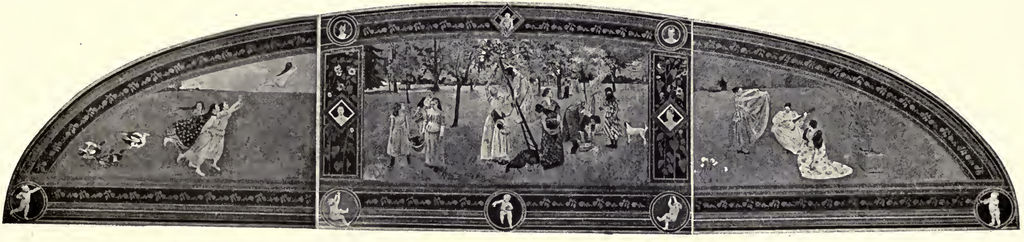
Women reach into an orchard, gather fruit and take part in other pursuits across a broad curved decoration. Cassatt’s Modern Woman was made in 1892–93 for the Woman’s Building at Chicago’s 1893 World’s Columbian Exposition. Its combination of women, girls and cultural activity offered a public statement on a scale very different from a small framed portrait. A period illustration preserves the overall arrangement. [1]
The original mural is unlocated. The Art Institute of Chicago’s account describes it as presumably destroyed, a qualification that should remain attached to its fate. No confirmed destruction date or place follows from that wording. The work is known through historical reproductions, descriptions and related evidence rather than an original surface available for examination. [2]
At a Glance
- ArtistMary Cassatt [1]
- TitleModern Woman [1]
- Date1892–93; displayed in 1893 [3] [4] [1]
- Original settingWoman’s Building, World’s Columbian Exposition, Chicago [1]
- Present statusUnlocated; presumably destroyed [2]
- Surviving visual records1894 monochrome overall reproduction and 1893 printed colour detail [1] [5]
This work across Mary Cassatt’s career
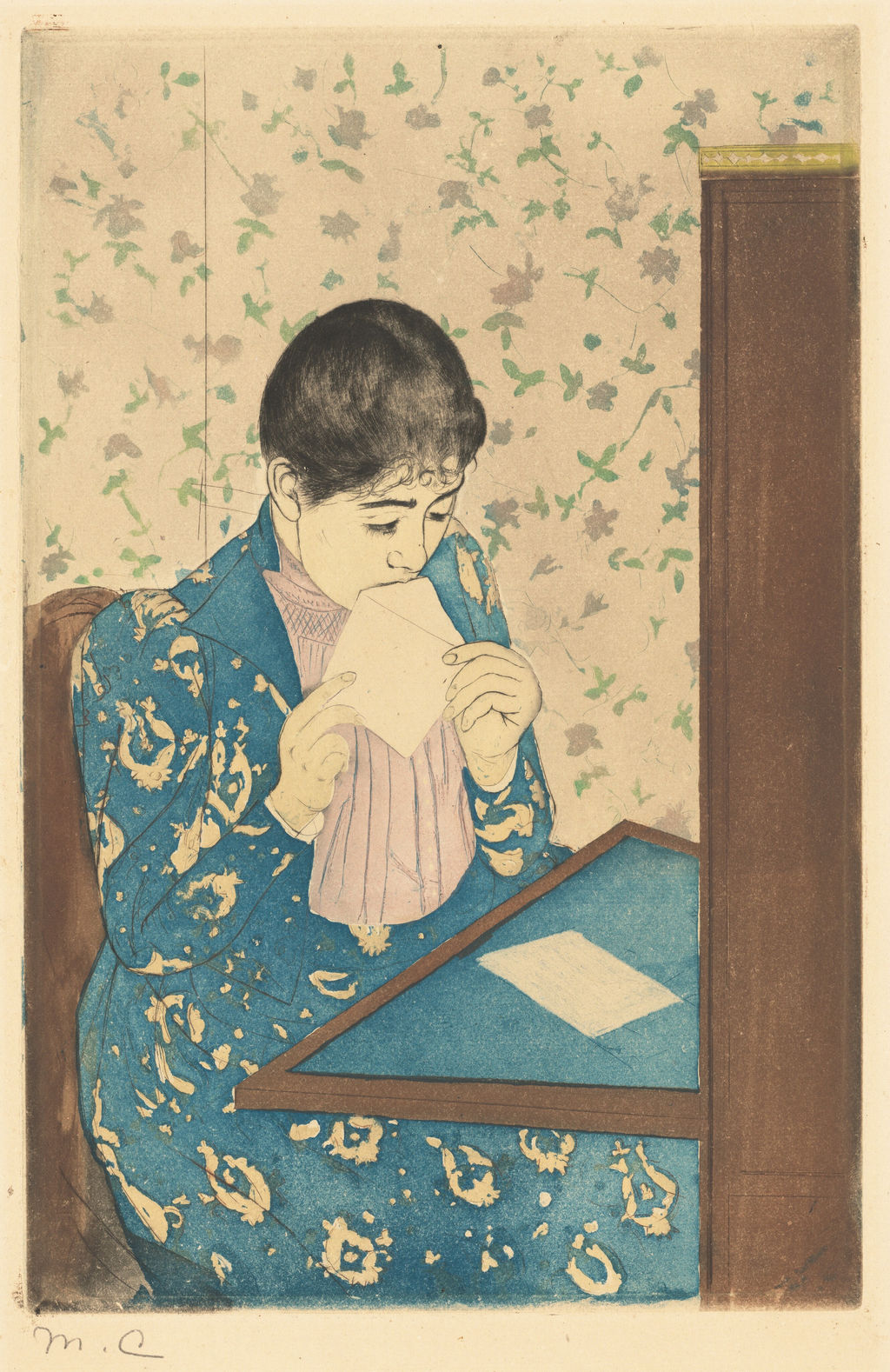
The Letter
1890–91 [10]Modern Woman (current article)
1892–93; displayed in 1893 [3] [4] [1]The Boating Party
1893–94 [11]The Child's Bath
1893 [12]Woman with a Sunflower
About 1905 [14]Young Woman in Green Outdoors in the Sun
About 1914 [15]Contents
- A decoration for a particular building
- What the 1894 overall reproduction shows
- The smaller figures in the border
- The central orchard
- The side groups and the contemporary description
- The letters described in Palmer’s archive
- Cassatt’s programme through later scholarship
- Walton’s colour detail
- Printed colour and the small dog
- A contemporary objection to the symbolism
A decoration for a particular building
Modern Woman belonged to an architectural setting. Its broad curved outline was designed for a tympanum, the wall area beneath a great arch, rather than for the proportions of an ordinary easel painting. The 1894 volume edited by Maud Howe Elliott places Cassatt’s work opposite a decoration on the theme of Primitive Woman. [1]
The relationship between the themes matters. A viewer encountered an account of modern womanhood within a building devoted to women’s contributions, alongside a contrasting vision of women in an earlier world. The commission invited a statement about women’s place in culture rather than only a record of one person’s appearance.
Annemarie Iker’s MoMA essay interprets Cassatt’s programme through the pursuit of scientific, artistic and cultural achievement. It describes a public image organised around women and girls rather than male protagonists. This is a modern scholarly account of the mural’s ambitions and the correspondence associated with it. [4]
That framework differs from calling every visible figure a portrait. The surviving reproductions show a staged decorative programme, not an identified group photograph. Individual gestures can carry symbolic meaning without each model being named or a single real orchard outing being documented.
The architectural shape also affects how the programme is read. The middle has greater height and width, while the outer sections taper towards curved ends. The viewer must connect activities distributed across that changing space, not simply inspect one centrally isolated body.
What the 1894 overall reproduction shows
Elliott’s volume reproduces the whole decoration on printed page 35. The book is the 1894 edition of Art and Handicraft in the Woman’s Building of the World’s Columbian Exposition, Chicago, 1893. Its publication year and the exposition year are different dates. [1]
The monochrome image shows a broad central section between smaller side groupings. Strong vertical decorative divisions articulate those sections, while an ornamented lower border binds them together. The arched top makes the ensemble read as one architectural object.
The middle is densely populated by figures and trees. Reaching arms, leaning bodies and an elevated figure around a ladder create changes of height within the orchard. The smaller outer scenes introduce different gestures and a different distribution of bodies.
The border is visually important. Repeated shapes and small child figures give it activity separate from the main orchard. It does not merely draw an empty line beneath the scene; it offers another scale of figure and ornament.
The reproduction is valuable precisely because it preserves these relationships across the whole. A detail can show a face or garment more clearly, but it cannot substitute for the width, divisions and arched boundary. The complete arrangement establishes how the individual scenes belonged together.
Its limits are equally important. A monochrome printed image does not disclose the original paint colours. Small marks in the reproduction cannot automatically be read as cracks, brushstrokes or material damage on the lost mural. They belong first to a printed record of its appearance.
The smaller figures in the border
The overall reproduction makes the difference of scale especially clear around the border. Small figures occupy rounded compartments, while repeated angular and linear ornaments connect them. Their bodies are read as part of a decorative rhythm before they can be inspected as individual actions.
This creates another relationship between people and architecture. The larger women in the main scenes appear within an orchard or activity group; the smaller border figures are incorporated into the frame itself. Human forms therefore operate at more than one level of the decorative object.
The repetition also helps carry the eye across divisions between the larger scenes. A viewer can follow the border along the ensemble even where a strong upright separates one panel from another. The frame supplies continuity while the interior scenes retain different subjects.
A detail confined to the orchard cannot show this second scale of figure. The border is one reason to retain the whole reproduction alongside a closer view, rather than allowing the central scene to stand for every part of the commission.
The central orchard
Fruit gathering provides the centre with a repeated action. Arms extend upward towards branches and downward towards other figures. A ladder introduces another height, allowing the programme to connect reaching, gathering and carrying within one orchard.
Those different positions matter to the image’s possible meanings. Fruit is not simply displayed as a still life. It is obtained, held and passed through bodily action. The relationship between the figures can therefore become as important as the presence of the trees.
Age differences also contribute. The programme includes women and younger girls, so an act of reaching can be read alongside an exchange across generations. That interpretation depends on the arrangement rather than a verified genealogy of the models.
The centre’s density contrasts with the architectural border. Tree forms and bodies overlap within the scene, while ornament around it gives a firmer frame. A viewer can move between the activity pictured in the orchard and the decorative object carrying it.
The orchard does not have to be understood as literal agricultural reportage. The scale of the commission and its title invite a broader account of what gathering might represent. Yet the visible action remains the foundation: people reach towards fruit and towards one another, rather than an abstract idea being written across an empty wall.
The side groups and the contemporary description
The account in Elliott’s volume describes a musical and dancing group to one side, including a stringed instrument and a skirt-dance pose. On the other, it identifies a flying figure of Fame pursued by women and ducks. It also praises the decorative border and its children. These are contemporary descriptions of the programme. [1]
The different activities broaden the title beyond one orchard task. Cultural performance, pursuit and fruit gathering occupy related parts of a larger account. The programme can move between physical action and symbolic ambition rather than reducing modern womanhood to one profession.
A description nevertheless makes selections. Naming Fame or a dance supplies a way to understand a figure, while the monochrome reproduction preserves a different kind of evidence about placement and shape. Text and image can support one another without becoming identical records.
The side groups also have to work within narrower spaces. Their tapering sections differ from the more expansive centre, so the arrangement of bodies changes. The whole design uses the architectural outline rather than pretending that every panel has equal rectangular proportions.
The same contemporary account reports that the two principal decorations were executed in Paris and sent to Chicago. This establishes a reported journey for the works; it does not identify the exact support, packing arrangements or every stage of installation. [1]
The letters described in Palmer’s archive
The Art Institute’s finding aid for the Bertha Honoré Palmer Correspondence Collection lists three Cassatt letters in Box 1, Folder 3, dated 10 September, 11 October and 1 December 1892. Its descriptions concern preparation and the contract, the mural’s meaning, and later progress and hopes for completion. They are archival summaries of documents, not the full letters themselves. [3]
This distinction affects what can be said with confidence. A dated archival entry identifies a surviving item and its general subject. It does not give every sentence, qualification or surrounding exchange. The summary should not be placed in quotation marks as if it were Cassatt’s exact speech.
The December entry records a hope of completing the work by February. A projected completion is different from evidence that completion actually occurred on that schedule. The mural’s eventual display in 1893 establishes a later public outcome, while the working timetable remains less precisely documented here.
The finding aid also preserves the practical character of the commission. Preparation, a misplaced contract and ongoing work belong to the making of a large public decoration. The object was not only an allegorical idea; it required negotiation and a sustained process of execution.
Those descriptions should not become a retrospective psychological diagnosis. A summary of one letter’s emotional language has a date and context. It cannot explain every figure, colour or compositional choice across the entire mural.
Cassatt’s programme through later scholarship
MoMA’s essay transmits Cassatt’s response to the question of men’s absence through an October 1892 letter to Palmer, cited in Nancy Mowll Mathews’s published correspondence. In Iker’s account, Cassatt treated the other exposition buildings as already providing ample representation of men. The passage reaches us through a scholarly publication and a modern museum essay. [4]
It is useful evidence for how the project has been understood, but does not turn a mediated passage into a newly examined autograph. The distinction is especially relevant for a lost object, where surviving words can easily appear to compensate for everything no longer visible.
The programme’s concentration on women remains apparent through the reproductions and descriptions. The more specific question is what their actions are made to signify. A women-centred cast does not by itself settle whether gathering fruit represents labour, education, leisure or a combination of ideas.
That openness is part of the mural’s reception. Different writers could accept the central action as visible fact and disagree about the message it carried. The debate concerns the relationship between representation and symbolism, not simply whether an orchard was present.
Walton’s colour detail
William Walton’s 1893 World’s Columbian Exposition: Art and Architecture includes a colour facsimile-typogravure titled Figures from Modern Woman. The associated caption locates Cassatt’s decoration at the south end of the Woman’s Building. The plate shows a portion of the central orchard, not the full tripartite mural. [5]
Within this printed detail, a ladder runs diagonally through the grouping. A woman in a pale garment with reddish stripes bends down from it. Her upper body inclines towards a younger figure who reaches up with an extended arm.
Behind that younger figure, another woman lifts her arms towards the branches. At the right, a figure in a darker patterned garment carries a basket. The sequence distributes activity among several people rather than allowing one isolated figure to perform every stage.
The basket at the right introduces an action different from plucking fruit. The figure holds a container low beside the body while turning her head away from the central reaching exchange. Gathering is presented as several related tasks, with attention moving in more than one direction rather than every participant looking towards one hand.
The ladder is particularly strong as an organising line. It connects ground level to the elevated body, cutting through the softer forms of clothing and foliage. The bent figure follows its direction partly downward, while the reaching arms create a counter-movement upward.
Clothing supplies different patterns within the printed image. Stripes mark the elevated garment; a yellow and dark blue costume distinguishes the younger figure; smaller warm motifs animate the darker dress at the right. These are descriptions of the period reproduction’s visible colours and shapes.
The detail can be examined as a historical image in its own right. It carries an account of Cassatt’s figures into a printed publication, with its own scale, ink and reproduction process. It adds information to the monochrome overall without becoming transparent access to the original mural.
Watch: Mary Cassatt
Choose a film to explore the artist’s work, its interpretation and its wider setting.
Demonstrating Mary Cassatt's Color Printmaking Techniques
The Philadelphia Museum of Art demonstrates techniques used to make Cassatt’s colour prints.
Watch on YouTubePrinted colour and the small dog
A dark dog appears near the ladder’s lower end in Walton’s colour plate. The accompanying text calls the animal white. That discrepancy is part of the surviving evidence: words and printed image do not agree about the visible colour. [5]
It would be misleading to resolve the difference by declaring one an exact record of the lost paint. A printed facsimile can change colour relationships, and a caption can contain its own error or interpretation. Without the original, the discrepancy should remain identified rather than concealed.
The same caution applies to the broader palette. Yellow, blue, green and reddish colours in the plate establish what a period reader could see in that reproduction. They do not certify the original pigments, every hue on the wall or the mural’s present condition.
The animal’s location is easier to describe than its original colour. It occupies the ground near the base of the ladder, beneath the larger bodies. Its smaller scale provides another change in height and attention within the central group.
This is an example of why several records are more useful than one seemingly complete image. The monochrome overall, colour detail and written description answer overlapping but different questions. Their disagreements help define the limits of reconstruction.
A contemporary objection to the symbolism
Walton’s caption commentary is openly critical. It argues that fruit gathering was an inadequate image for the claims being made for women’s place in modern civilisation. Its judgement is encapsulated in the fragment, “Miss Cassatt seems rather to have missed the point of her symbolism”. This is the critic’s published wording, not Cassatt’s statement of intention. [5]
The surrounding argument prefers the domestic labour pictured in MacMonnies’s Primitive Woman. That preference is revealing. The writer evaluates the modern programme through an expectation of which activities count as an appropriate public account of women.
The criticism should not be converted into a neutral verdict that the mural failed. It records a particular reader’s standards and dissatisfaction. It is valuable because it shows that the relationship between the orchard action and the title did not appear self-evident to everyone.
Nor should the sentence be reassigned to Child Picking a Fruit or Gathering Fruit as independent works. It concerns Cassatt’s exposition decoration and the programme’s symbolism. Similar fruit imagery does not make every later or related object the same target of criticism.
The objection also makes the mural’s ambitions more visible. A purely decorative orchard might not prompt a dispute about women’s civilisational claims. The criticism acknowledges that the commission was expected to communicate a larger proposition, even while disputing the chosen means.
A modern reading of knowledge and Eve
The Art Gallery of Ontario’s 2023 exhibition wall text offers a different reading. It interprets women picking fruit and passing it to girls as a reclamation of Eve and the Tree of Knowledge, turning an inherited story of female wrongdoing into an image of knowledge shared across generations. This is the exhibition’s curatorial interpretation. [16]
The contrast with Walton is substantive. One writer sees a mismatch between fruit gathering and modern achievement; the later account treats fruit precisely as a means of making achievement and transmission visible. The disagreement concerns what the action symbolises.
The visible gestures give the modern reading something concrete to examine. Reaching down from a ladder and reaching up towards a hand can be understood as an exchange between unequal positions or generations. The metaphor is tied to bodies and objects rather than floating free of the image.
At the same time, the wall text is not an original letter from Cassatt. Its interpretive language should retain its authorial setting. A persuasive modern reading can illuminate the programme without being presented as a verbatim explanation the artist herself supplied.
The two accounts therefore belong beside one another as reception history. They do not need to be forced into agreement. Their difference reveals how expectations of women’s work, education and public representation shape the interpretation of the same orchard.
Child Picking a Fruit: a separate oil
Child Picking a Fruit is an oil of 1893 in the Virginia Museum of Fine Arts, accession 75.18. The museum’s 2020 documentation identifies the work and credits the gift of Ivor and Anne Massey; the AGO wall text also presents it as a separate canvas related to the wider knowledge theme. [17] [16]
The oil concentrates on one woman supporting an unclothed child beneath a fruit tree. The child reaches upward, while the adult’s raised hand occupies the same general area of foliage and fruit. Their action compresses the orchard idea into a much smaller cast.
That relationship makes comparison useful, but does not make the oil a cut-out fragment of Modern Woman. It has its own canvas, date, accession and collecting history. The subject can be related while the physical objects remain wholly distinct.
The contrast also changes the scale of the exchange. The mural places fruit gathering within a wide programme of multiple groups and activities. The oil focuses on support, reaching and the direction of attention between two bodies. A broad allegory and a close figure composition can address related ideas through different structures.

Child Picking a Fruit.
Gathering Fruit: a separate colour print
Gathering Fruit is another distinct work, dated about 1893. The National Gallery’s Rosenwald impression, accession 1943.3.2757, is colour drypoint, soft-ground etching and aquatint on laid paper, Mathews and Shapiro 15, eleventh and final state. [18]
A ladder, an elevated adult and a child reaching towards fruit create a more direct formal comparison with the mural’s orchard detail. Yet the print organises its figures within a tall format and a different garden structure. It is not a photographic reduction of the mural.
Orientation also needs care. The familiar reproduced version of this print can appear reversed relative to the named National Gallery impression. Left and right should therefore be tied to the image actually being discussed, rather than assumed to describe every reproduction or physical sheet.
The physical identity of that reversed reproduction is not established by its resemblance. A design match can support discussion of ladder, reaching and support without certifying why the reversal occurred or which impression was photographed.
The print’s final-state number likewise describes its own development. It cannot be used as a timetable for the mural or proof that each related composition followed one exact preparatory sequence. Similar subjects can be explored across media without a fully documented order for every version.

Gathering Fruit — print design; the illustrated legacy impression is unidentified.
What lost means here
The current Art Institute account’s phrase unlocated and presumably destroyed preserves an important distinction. It records the absence of a located original and an assessment of its probable fate. It does not supply a confirmed loss event with a precise date and place. [2]
The period publications establish that images and descriptions survived even though the mural itself is unavailable. These are surviving records of the work, not surviving portions of its painted support. Related oils and prints add another kind of evidence, but remain separate artworks.
Exact numerical dimensions, support and paint medium are left unspecified here because a secure original technical account has not been established. Choosing one of several repeated summaries would create an appearance of precision without resolving their differences.
That limitation need not prevent close discussion. The arched whole, central orchard, contrasting side activities, reaching bodies and critical responses are all accessible through identified records. The most useful account follows what each can establish and retains the gaps that remain.
Modern Woman consequently occupies more than one history: a public commission, an ambitious arrangement of female activity, a subject of contemporary disagreement and a lost work studied through reproductions. Its surviving evidence allows those histories to be connected while leaving the absent original visibly absent from the account.
Cassatt artworks and studies
A source-bounded directory of documented works and studies, including the works in the National Gallery’s 2026 checklist and one clearly marked former attribution. Different print impressions are grouped by design and remain searchable by their recorded accessions. This is not a complete catalogue raisonné. Unlinked titles have no individual article here.
| Name | Date | Medium |
|---|---|---|
| A Child’s Bath — LACMA oil | 1880 | Oil on canvas |
| A Goodnight Hug | 1880 | Pastel |
| After the Bullfight | 1873 | Oil on canvas |
| Afternoon Tea Party | 1890–91 | Colour print |
| At the Theatre (Lydia Cassatt Leaning on Her Arms, Seated in a Loge) | About 1879 | Pastel |
| Automne, portrait de Lydia Cassatt | 1880 | Oil on canvas |
| Breakfast in Bed | 1897 | Oil on canvas |
| Bust of Ellen with Bows in Her Hair | 1898 | Pastel |
| By the Pond | About 1896 in Met and Terra records; about 1898 at MoMA | Not established |
| Child Drinking Milk from a Bowl; provisionally identified composition (qualified identification) | About 1890, following inventory and catalogue text | Pastel |
| Child in a Straw Hat | About 1886 | Oil on canvas |
| Child Picking a Fruit | 1893 | Oil on canvas |
| Children Playing on the Beach | 1884 | Oil on canvas |
| Clarissa, Turned Left, with Her Hand to Her Ear | About 1890–93 in Sotheby’s 2012 entry; about 1893 in GCMA notice | Pastel |
| Denise at her Dressing Table | About 1908–09 | Oil on canvas |
| Driving | 1881 | Oil on canvas |
| Eddy Cassatt (Edward Buchanan Cassatt) | 1875 | Oil on canvas |
| Ellen Mary Cassatt in a White Coat | About 1896 | Oil on canvas |
| Emmie and her Child | About 1890 | Oil on canvas |
| Gathering Fruit | About 1893 | Not established |
| Girl Arranging her Hair | 1886 | Oil on canvas |
| Head of a Child with a Red Hat | 1903, signed and dated | Pastel |
| Head of a Woman in a Large Hat | About 1909 | Pastel |
| Head of Simone in a Green Bonnet with Wavy Brim | About 1904 | Pastel |
| In the Garden | 1903 or 1904 | Oil on canvas |
| In the Loge | 1878 | Oil on canvas |
| In the Omnibus | 1890–91 | Colour print |
| In the Omnibus [recto] — preparatory drawing | c. 1891 | Chalk and graphite |
| In the Opera Box (No. 3) [recto] — preparatory drawing | 1880 | Graphite |
| In the Opera Box (No. 3) — print | c. 1880 | Intaglio print |
| Jeune fille au jardin (Young Woman Sewing in a Garden) | 1880–82 | Oil on canvas |
| Jules Dried by His Mother; provisionally identified composition (qualified identification) | 1901, following catalogue text | Oil on canvas |
| Lady in Black, in a Loge, Facing Right | c. 1880 | Etching |
| Lilacs in a Window | About 1880–83 | Oil on canvas |
| Little Girl in a Blue Armchair | 1878 | Oil on canvas |
| Louise Nursing her Child | 1899 in Luxembourg caption; 1898–99 in loan and Arp records | Pastel |
| Madame Gaillard and Her Daughter Marie-Thérèse | 1897, Reynolda collection listing | Pastel |
| Maternal Caress | 1890–91 | Not established |
| Maternal Caress — preparatory drawing | About 1891 | Charcoal and graphite |
| Mathilde Holding a Baby Who Reaches out to the Right | About 1889, Christie’s catalogue | Pastel |
| Mimi as a Brunette | c. 1889 | Drypoint |
| Mimi Holding a Japanese Fan | c. 1889 | Drypoint |
| Modern Woman | 1892–93; displayed in 1893 | Not established |
| Mother about to Wash her Sleepy Child | 1880 | Oil on canvas |
| Mother and Child (Maternal Kiss) | 1896 | Pastel |
| Mother and Child (Nude Dark-Eyed Little Girl with Mother in Patterned Wrapper) | About 1898–99, Sotheby’s catalogue | Pastel |
| Mother and Child (The Oval Mirror) | About 1899 | Oil on canvas |
| Mother Berthe Holding Her Nude Baby | 1898–99 | Pastel |
| Mother in Purple Holding her Child | About 1914, Christie’s catalogue | Pastel |
| Mother Playing with Child | About 1897 | Pastel |
| Mother’s Kiss | 1890–91 | Colour print |
| Nurse Reading to a Little Girl | 1895 | Pastel |
| Poppies in a Field (formerly Cassatt; attributed to Victor Gabriel Gilbert) | About 1880, current museum record | Oil on panel |
| Portrait of an Elderly Lady | c. 1887 | Oil on canvas |
| Portrait of Madame AF Aude and her Two Daughters | 1899, Breeskin 1970 exhibition catalogue | Pastel |
| Portrait of the Artist | 1878 | Watercolour and gouache |
| Reading Le Figaro | 1878, NGA 2026 checklist; about 1877–78 in SAAM’s 2015 caption | Oil on canvas |
| Reflection — drypoint | c. 1890 | Drypoint |
| Sara Holding a Cat | About 1907–08 | Oil on canvas |
| Sara in a Green Bonnet | About 1901 | Oil on canvas |
| Sara with Her Dog, in an Armchair, Wearing a Bonnet with a Plum Ornament | 1901 | Pastel |
| Self Portrait | About 1880 | Watercolour and gouache |
| Simone in Blue Plumed Hat | About 1903 | Pastel |
| Simone Seated on the Grass next to her Mother | 1901–02 | Pastel |
| Sketch of Master St. Pierre | Date not established | Pastel |
| Sleepy Baby | About 1910 | Pastel |
| Smiling Mother with Sober Faced Child | Date not established | Pastel |
| Spanish Dancer Wearing a Lace Mantilla | 1873 | Oil on canvas |
| Summertime, horizontal painting | 1894–95, current Sotheby’s catalogue | Oil on canvas |
| Tea — print | c. 1890 | Drypoint |
| The Bath | 1890–91 | Not established |
| The Boating Party | 1893–94 | Oil on canvas |
| The Caress | 1902 | Oil on canvas |
| The Child's Bath | 1893 | Oil on canvas |
| The Coiffure | 1890–91 | Colour print |
| The Cup of Tea | About 1880–81 | Oil on canvas |
| The Fitting | 1890–91 | Colour print |
| The Lamp | 1890–91 | Colour print |
| The Letter | 1890–91 | Colour print |
| The Loge | About 1878–1880 | Oil on canvas |
| The Mandolin Player | 1868 | Oil on canvas |
| The Manicure (Les Ongles; The Nails) | About 1908 | Intaglio print |
| The Tea; Le Thé | About 1880 | Oil on canvas |
| The Visitor | c. 1880 | Intaglio print |
| Two Sisters | 1896 | Pastel |
| Two Women Seated by a Woodland Stream | About 1869 | Oil on canvas |
| Two Women Throwing Flowers During Carnival | 1872 | Oil on canvas |
| Under the Horse-Chestnut Tree | 1896–97, National Gallery and MoMA records | Not established |
| Woman Bathing (La Toilette) | 1890–91 | Colour print |
| Woman in a Loge (Woman with a Pearl Necklace) | 1879 | Oil on canvas |
| Woman Reading | 1878–79 | Oil on canvas |
| Woman Standing, Holding a Fan | 1878–79 | Distemper |
| Woman with a Fan | c. 1878–1879 | Oil on canvas |
| Woman with a Red Zinnia | 1891 | Oil on canvas |
| Woman with a Sunflower | About 1905 | Oil on canvas |
| Young Girl at a Window | c. 1883–1884 | Oil on canvas |
| Young Girl with Brown Hair, Looking Left | About 1913 (1997 summary catalogue) | Pastel |
| Young Mother Sewing | 1900 | Oil on canvas |
| Young Woman in Green, Outdoors in the Sun | About 1914 | Oil on canvas |
Discussion
Look again at the images and ideas explored in Modern Woman by Mary Cassatt. These editorial prompts invite your observations.
Reader Insights
Women reach into an orchard, gather fruit and take part in other pursuits across a broad curved decoration. What does this first detail make you notice?
Modern Woman belonged to an architectural setting. How does it affect your reading of the whole work?
Does the fruit gathering read most strongly to you as labour, shared knowledge, or another kind of achievement?
Join the Conversation
Share a detail, comparison or question about Modern Woman by Mary Cassatt below.
References
- Maud Howe Elliott, ed., Art and Handicraft in the Woman’s Building of the World’s Columbian Exposition, Chicago, 1893, Rand McNally, 1894; printed p. 35 overall illustration and pp. 43, 45 contemporary account. Selected pages are used, not a claim to full-book reading. View source.
- Art Institute of Chicago, Mary Cassatt: After Impressionism, current institutional account; mural unlocated and presumably destroyed, without a confirmed loss date or place. View source.
- Art Institute of Chicago, Bertha Honoré Palmer Correspondence Collection finding aid, selected Cassatt entries, Box 1, Folder 3, September–December 1892; archival descriptions, not original letters or full transcriptions. View source.
- Annemarie Iker, Museum of Modern Art, Mary Cassatt, complete artist essay and notes; programme interpretation and October 1892 Palmer-letter passages transmitted through Mathews’s 1984 correspondence edition, not newly examined originals. View source.
- William Walton, World’s Columbian Exposition MDCCCXCIII: Art and Architecture, Architecture volume, 1893; unnumbered Figures from Modern Woman caption leaf, PDF p. 103, and colour facsimile-typogravure detail, PDF p. 105. Selected criticism and detail are distinct from the whole mural and its original colours. View source.
- Denver Art Museum, Whistler to Cassatt Access Guide, The Salon, stop 104. View source.
- Denver Art Museum, Whistler to Cassatt:American Painters in France, bilingual exhibition livret,The Salon,no2. View source.
- National Gallery of Art, Little Girl in a Blue Armchair, 1983.1.18. View source.
- Philadelphia Museum of Art, Driving, 1881. View source.
- National Gallery of Art, The Letter,1943.3.2763. View source.
- National Gallery of Art, The Boating Party, 1963.10.94. View source.
- Art Institute of Chicago, The Child’s Bath,1910.2,current expanded collection entry. View source.
- Metropolitan Museum of Art, Young Mother Sewing, 29.100.48. View source.
- National Gallery of Art, Woman with a Sunflower, 1963.10.98. View source.
- Sotheby’s, Young Woman in Green Outdoors in the Sun, Modern Day. View source.
- Art Gallery of Ontario, Cassatt–McNicoll: Impressionists Between Worlds, English large-print wall text, 2023, pp. 20–21; attributed Eve and knowledge interpretation, and the separate Child Picking a Fruit canvas. View source.
- Virginia Museum of Fine Arts, Board of Trustees minutes, 17 September 2020, selected loan-recommendation entry for Child Picking a Fruit, 75.18; object identity and gift credit, not proof that a proposed loan occurred. View source.
- National Gallery of Art, Gathering Fruit, about 1893, 1943.3.2757; separate final colour impression, Mathews and Shapiro 15 xi/xi. The reversed familiar reproduction is not identified as this physical sheet. View source.
- Art Gallery of Ontario, Cassatt–McNicoll:ImpressionistsBetweenWorlds. View source.
- Metropolitan Museum of Art, The Bath, 16.2.7. View source.
- National Gallery of Art, Children Playing on the Beach, 1970.17.19. View source.
- Colby College Museum of Art, Explore Inside Out: The Prints of Mary Cassatt; Mother Berthe Holding Her Nude Baby,2013.549. View source.
- Sotheby’s, syndicated auction catalogue hosted by Invaluable, Simone in Blue Plumed Hat, Watson collection, 18 May 2005, lot 20. View source.
- The Huntington, Breakfast in Bed, 83.8.6. View source.
- Adelyn Dohme Breeskin / Smithsonian Institution Press; University of California scan indexed by Google Books, Mary Cassatt:A Catalogue Raisonné of the Oils,Pastels,Watercolors,and Drawings,1970,322pp; selected public search snippets pp91–92,143–144,316,318. View source.
- Metropolitan Museum of Art, The Private Collection of Edgar Degas: A Summary Catalogue, Cassatt entries, printed p.7, no.48. View source.
- Art Institute of Chicago, After the Bullfight, 1969.332. View source.
- Smithsonian American Art Museum, Art Inventories, After the Bullfight, siris_ari_180619. View source.
- Smithsonian American Art Museum, The Caress, 1911.2.1. View source.
- Museum of Modern Art, Under the Horse-Chestnut Tree,671.1940. View source.
- National Gallery of Art, Under the Horse-Chestnut Tree,1959.12.4. View source.
- Cincinnati Art Museum, Les Ongles(The Nails;The Manicure),ca1908,1940.155,secondstate. View source.
- Sotheby’s, Clarissa Turned Left with Her Hand to Her Ear, 2012 lot 51. View source.
- Greenville County Museum of Art, Recent Acquisitions Funded by Sale of Alma Thomas Painting, 2021. View source.
- Metropolitan Museum of Art, The Coiffure,16.2.3. View source.
- Metropolitan Museum of Art, The Cup of Tea, 22.16.17. View source.
- Sotheby’s, Mother and Child (Nude Dark-Eyed Little Girl with Mother in Patterned Wrapper), 19 May 2010, lot 31. View source.
- Metropolitan Museum of Art, Denise at Her Dressing Table, 2005.129. View source.
- Denver Art Museum, Whistler to Cassatt exhibition guide, stop 112: Bust of Ellen with Bows in Her Hair. View source.
- Museum of Fine Arts, Boston, Ellen Mary in a White Coat, 1982.630. View source.
- Amon Carter Museum of American Art, Woman Standing Holding a Fan, 2011.20. View source.
- Smithsonian American Art Museum, Special Installation of Nineteen American Masterworks, 2015. View source.
- Metropolitan Museum of Art, The Fitting, 16.2.8 final state. View source.
- Reynolda House Museum of American Art, Mary Cassatt collection listing: Madame Gaillard and Her Daughter Marie-Thérèse, 1897. View source.
- Wake Forest University, Wake Women 2023 schedule, Highlighting the Art of Women at Reynolda, captioned Cassatt image. View source.
- Detroit Institute of Arts, In the Garden, 36629. View source.
- Sotheby’s, A Goodnight Hug,N09860lot11,14May2018. View source.
- Sotheby’s, syndicated auction catalogue hosted by Invaluable, Head of Simone in a Green Bonnet with Wavy Brim, Watson collection,18May2005,lot39. View source.
- National Gallery of Art, Girl Arranging Her Hair, 1963.10.97. View source.
- Joslyn Art Museum, Art Break:Woman Reading,1943.38,program object caption. View source.
- Los Angeles County Museum of Art, A Child’s Bath, M.62.8.14. View source.
- National Gallery of Art, The Lamp, 5937. View source.
- Sotheby’s, Tête de Femme au Grand Chapeau, 2008 N08449 lot135. View source.
- Metropolitan Museum of Art, Lilacs in a Window, 1997.207. View source.
- National Gallery of Art, The Loge,1963.10.96. View source.
- Arp Museum Bahnhof Rolandseck, Maestras: Malerinnen1500–1900,25February–16June2024,official five-page flyer. View source.
- Spanish official gazette / exhibition insurance schedule, BOE-A-2023-19808,21September2023,Maestras loan schedule. View source.
- Nationalmusée um Fëschmaart / ArpMuseum CollectionRauforUNICEF, Louise,NursingHerChild,1899,GR1.949;FromRenoirtoMonet2026–27. View source.
- Petit Palais / Paris Musées, Automne, portrait de Lydia Cassatt, PPP706; IIIF manifest 160008392. View source. (in French).
- Metropolitan Museum of Art, Maternal Caress, 16.2.5. View source.
- Philadelphia Museum of Art, Mother and Child Maternal Kiss, object 54049. View source.
- Metropolitan Museum of Art, Maternal Caress, preparatory drawing64.123.3, c1891. View source.
- Christie’s, Mathilde Holding Baby who Reaches out to Right, lot 5459369. View source.
- National Portrait Gallery / Catalog of American Portraits, Madame Meerson and her Daughter, SSSA2282. View source.
- Museum of Fine Arts Boston, In the Loge, 10.35. View source.
- Smithsonian art inventories, Child Drinking Milk from a Bowl, siris_ari_197517. View source.
- MutualArt public auction index; original auctioneer undisclosed without subscription, Child Drinking Milk from a Bowl, public listing dated 2 June 2024. View source.
- National Gallery of Art, Mother's Kiss,1963.10.254. View source.
- National Gallery of Art, Mary Cassatt the Daring Printmaker, 23 January 2026. View source.
- National Gallery of Art, Mary Cassatt An American in Paris checklist, updated 24 February 2026. View source.
- Adelyn D. Breeskin / National Gallery of Art, Mary Cassatt 1844–1926, 1970 exhibition catalogue. View source.
- Metropolitan Museum of Art, Nurse Reading to a Little Girl, 62.72. View source.
- National Gallery of Art, In the Omnibus, 46725. View source.
- Metropolitan Museum of Art, Mother and Child (The Oval Mirror), 29.100.47. View source.
- Philadelphia Museum of Art, Woman in a Loge, 1978-1-5, object72182. View source.
- Metropolitan Museum of Art, Mother Playing with Child, 22.16.23. View source.
- Metropolitan Museum of Art, By the Pond,60.732bis. View source.
- Museum of Modern Art, By the Pond,673.1940. View source.
- Terra Foundation for American Art, By the Pond,1999.25. View source.
- Philadelphia Museum of Art, Poppies in a Field, attributed to Victor Gabriel Gilbert; formerly attributed to Mary Stevenson Cassatt, 1978-1-6. View source.
- Christie’s, Mother in Purple Holding Her Child, lot 5369421. View source.
- Sotheby’s, Tête d’enfant au chapeau rouge, American Art N09229, 20 November 2014, lot 39. View source.
- Christie’s, Sara Holding a Cat, lot 5561267. View source.
- Smithsonian American Art Museum, Art Inventories Catalog, Sara with Her Dog, in an Armchair, Wearing a Bonnet with a Plum Ornament; IAP 80170363 / siris_ari_180925. View source.
- Smithsonian American Art Museum, Sara in a Green Bonnet, 1929.6.11. View source.
- Mary Cassatt Catalogue Raisonné project, with Adelson Galleries, presented on Artnet, Sara with Her Dog, in an Armchair, Wearing a Bonnet with a Plum Ornament, work 424155733. View source.
- Metropolitan Museum of Art, Portrait of the Artist, 1975.319.1. View source.
- National Portrait Gallery, Mary Cassatt Self-Portrait, NPG.76.33. View source.
- Musée d’Orsay, Jeune fille au jardin,RF193720. View source. (in French).
- Sotheby’s, Simone Seated on the Grass Next to Her Mother, 30 September 2020, lot 33. View source.
- Dallas Museum of Art, Sleepy Baby,1952.38.M. View source.
- Sotheby’s, Smiling Mother with Sober Faced Child, 2022. View source.
- Smithsonian American Art Museum, Spanish Dancer Wearing a Lace Mantilla, 1967.40. View source.
- Spencer Museum of Art,University of Kansas, The Manicure,c1908,1991.0266. View source.
- Christie’s, Sketch of Master St Pierre, 2017 online lot. View source.
- National Gallery of Art, Child in a Straw Hat, 1983.1.17. View source.
- Sotheby’s, Summertime, Armand Hammer: The Private Collection, Modern Evening Auction 2026. View source.
- National Gallery of Art, Afternoon Tea Party, 46731. View source.
- Museum of Fine Arts, Boston / Erica E. Hirshler, The Tea, 42.178. View source.
- The Nelson-Atkins Museum of Art, At the Theater,F77-33;French Paintings and Pastels appendixII. View source.
- Metropolitan Museum of Art, Woman Bathing La Toilette, 16.2.2. View source.
- Sotheby’s, Two Sisters, 2005 American Paintings sale N08134, lot 44. View source.
- Wichita Art Museum, Mother and Child, M109.53. View source.
- Smithsonian American Art Museum, Art Inventories, Two Women Seated by a Woodland Stream / Duex femmes assises aupres de l’eau, IAP 80170008. View source.
- Tacoma Art Museum / David Setford, Impressionist Painting: From Pleasure Gardens to the Palais Garnier, 22 October 2019. View source.
- Tacoma Art Museum, French Impressionism and the Northwest, Works of Art Adoption Program, 2019–2020, no. 10 / PDF p. 12. View source.