 by Tom Gurney
Tom Gurney BSc (Hons) is an art history expert with over 20 years experience
Published on June 19, 2020 / Updated on September 6, 2026
Email: tomgurney1@gmail.com / Phone: +44 7429 011000
Bosch and 's-Hertogenbosch: Introduction
Hieronymus Bosch is often introduced through Madrid, Lisbon, Vienna, London or Washington, because those are the places where many of his best-known paintings now hang. The historical painter, however, belongs first to 's-Hertogenbosch: the Brabant city that gave him his adopted name, his workshop setting, his civic identity and much of the devotional culture in which his art made sense. Bosch was born Jheronimus van Aken, but the name "Bosch" ties him to Den Bosch, the common short form of 's-Hertogenbosch. That change of name is not a decorative fact. It is one of the clearest signs that the artist's public identity was bound to a specific city [4] [6].
This guide sits beside the main Hieronymus Bosch overview and the document-led Bosch biography. Its focus is narrower: why 's-Hertogenbosch matters for reading Bosch. The city does not explain every bird, fruit, demon or burning building. It gives the paintings a historical ground: family craft, market-square work, churches, confraternities, civic records, social ambition and late medieval religious life.
Contents
- Jheronimus van Aken in Den Bosch
- De Kleine Winst and the Family Workshop
- City Records and Social Position
- The Brotherhood of Our Lady
- Urban Devotion and Bosch's Moral Imagination
- Modern Bosch in His Birth City
- Why the City Changes the Art
Jheronimus van Aken in Den Bosch
Bosch was born in or shortly before 1450, into a family of painters. Bosch500 describes the Van Aken line as a multigenerational painters' family: Bosch's great-grandfather, grandfather, father and several uncles practised the trade, and Jheronimus and his brothers probably learned from their father [4]. This is one of the safest starting points for Bosch's biography. He was not a self-invented outsider suddenly producing visions from nowhere. He emerged from a family business in a city where panel painting was a skilled urban craft.
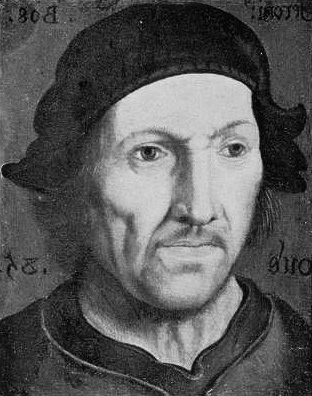
The family name "Van Aken" pointed back to Aachen, but the artist's chosen identity pointed to 's-Hertogenbosch. Current museum and biographical sources commonly identify him as Jheronimus Bosch or Hieronymus Bosch, and the signed name "Bosch" turns the city into part of the artist's public signature [6]. In that sense, the city is not merely where Bosch happened to live. It is part of how he presented himself.
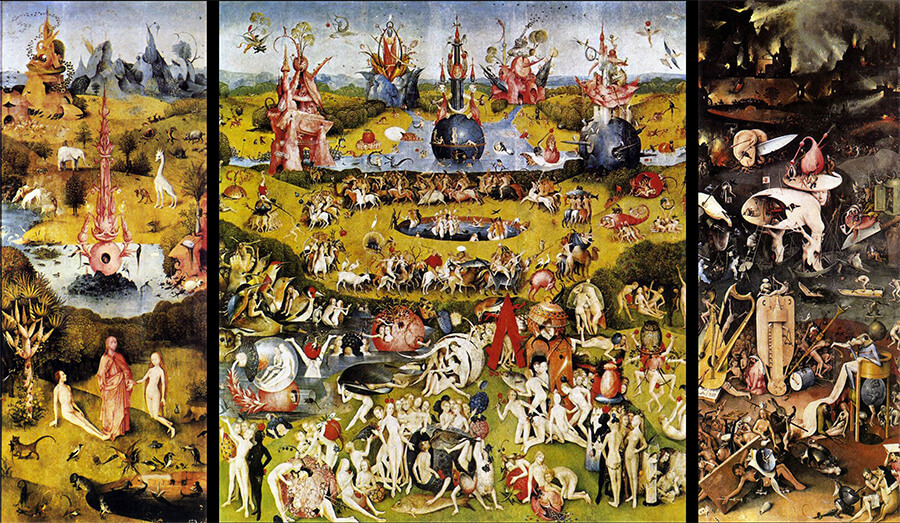
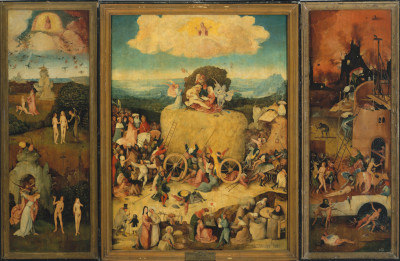
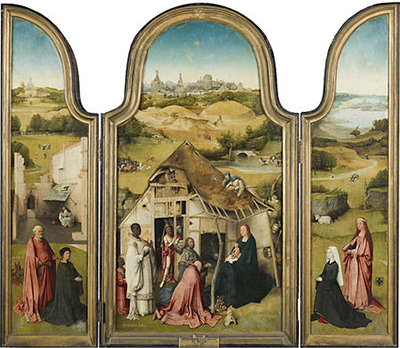
The surviving documents are practical rather than intimate. BoschDoc, the online database connected with Huygens ING/KNAW and the Bosch Research and Conservation Project, gathers written material about Bosch, his family, patrons, surroundings and works, chiefly from handwritten documents and early printed sources before 1800 [2]. Such records do not let us hear Bosch explain The Garden of Earthly Delights or The Haywain Triptych in his own words. They do something more modest and more reliable: they place him in a web of family, property, craft, membership and civic life.
De Kleine Winst and the Family Workshop
The strongest local anchor is De Kleine Winst, also known as the House of Bosch. Erfgoed 's-Hertogenbosch records that Bosch's father, Anthonis van Aken, bought the house on the market square in 1462. The local heritage account identifies it as a house where the Van Aken family worked for decades as painters, and as the place where Jheronimus likely spent his youth and received his training [5].
That matters because the workshop is a better historical frame than the myth of Bosch as a solitary dreamer. In a late medieval painters' household, art was made through materials, training, repetition, commissions, assistants, relatives and client relationships. Oak panels had to be prepared. Designs could be reused or adapted. Family members could learn by doing. A painter's house could be both a domestic space and a professional workplace.
De Kleine Winst also places Bosch at the market, where civic, commercial and social life met. This setting does not mean that every Bosch crowd is a portrait of Den Bosch society. It does help explain why his art is so alert to public behaviour: bargaining, display, folly, appetite, false piety, rank, performance and moral failure. The same local world that produced respectable devotional patrons also produced the social theatre that Bosch scrutinised.
For the wider problem of workshop practice, copies and disputed authorship, see Bosch Workshop and Attribution. The family workshop background is not a side note there. It helps readers understand why the Bosch corpus includes works by Bosch, works associated with his workshop, follower images, copies and later Boschian inventions [7] [8].
City Records and Social Position
Bosch appears in the documents of 's-Hertogenbosch between 1474 and 1516. Rijksmuseum notes an early record from 5 April 1474 in which he acted with his father and brothers as witnesses for his sister Katherijn [6]. The fact is small, but its shape is important. Bosch first becomes visible in the archive as part of a family acting within civic procedure.
By 1481 he was married to Aleid van de Meervenne. Bosch500 and Rijksmuseum both connect this marriage with increased prosperity and social standing, though the precise wedding date remains uncertain [4] [6]. Aleid came from a well-to-do family, and the marriage placed Bosch within a more comfortable social world than the bare image of the wandering visionary suggests.
These details are useful because Bosch's art can feel emotionally extreme while the documents show a socially embedded citizen. The painter of demons, false healers, fools and last judgments was also a husband, townsman, property-connected adult and member of local institutions. That tension is one reason the biography is so compelling. The art is not made less strange by the record. It becomes stranger because it was made from within ordinary structures of work, status and devotion.
The Brotherhood of Our Lady
Bosch's membership in the Brotherhood of Our Lady is one of the most important local facts in his life. Rijksmuseum gives the sequence: he became an ordinary member in 1486-87 and was elected a sworn brother in 1487-88 [6]. Bosch500 adds that his grandfather and father had also belonged to the Brotherhood, placing Jheronimus within a family pattern as well as a personal affiliation [4].
The Brotherhood was a devotional confraternity connected with St John's Church and the religious life of the city. Bosch500 describes the sworn brethren as an elite group that included clergy, educated men and important civic figures, and notes that members met regularly in religious and social settings [4]. Bosch was not merely living near late medieval devotion. He was participating in one of the city's significant devotional networks.
This fact should be used carefully. The Brotherhood is not a master key to Bosch symbolism. It does not prove what every monster, fruit or instrument means. It does show that Bosch's repeated concern with sin, temptation, judgment, prayer, holy endurance and moral choice belongs to a culture where such themes were publicly practised, preached, sung, pictured and debated.
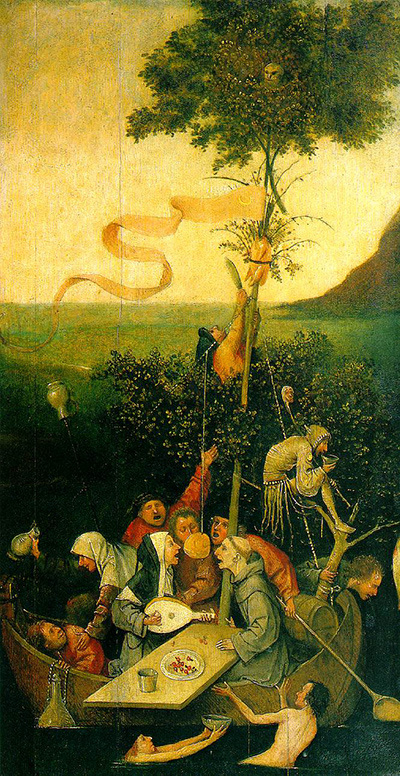
It also gives the paintings a communal setting. Bosch's triptychs and moral panels are often about decisions made by groups as much as individuals: crowds pursuing hay, fools packed into a boat, societies turning toward appetite, figures ignoring warning signs. In a city shaped by confraternities, churches, sermons, rituals and social rank, those themes were not abstract theology. They were ways of thinking about daily conduct.
Urban Devotion and Bosch's Moral Imagination
's-Hertogenbosch helps modern readers avoid two bad simplifications. The first is to make Bosch a private hallucination machine. The second is to make him a flat moral illustrator. The city supports a richer view. Bosch worked in a culture where religious images, civic identity, household devotion, satire, public ceremony and moral instruction overlapped. His paintings could be serious and comic at the same time because late medieval moral culture often used ridicule, inversion and grotesque imagery to expose sin.
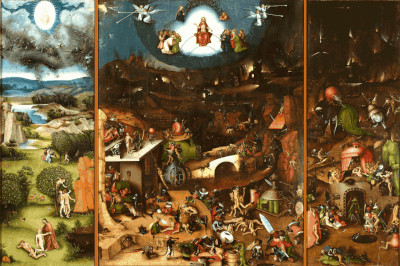
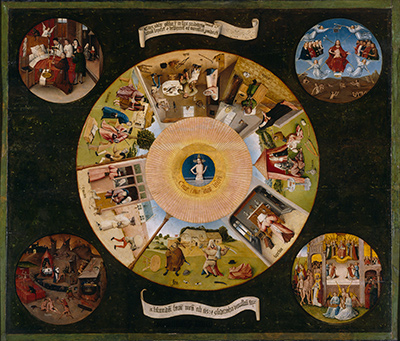
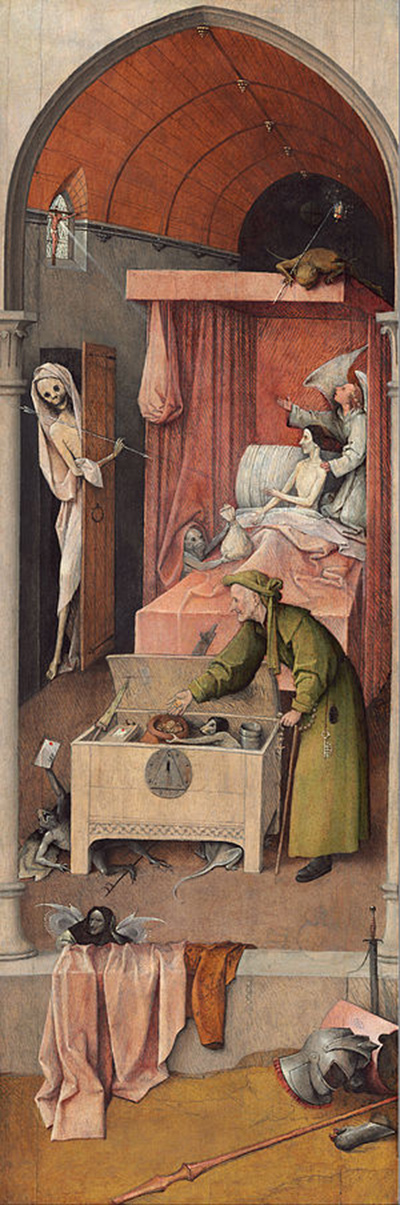
This is especially important for the paintings that stage life as a road or test. The Pedlar or Wayfarer, Death and the Miser, The Haywain and the Last Judgement all turn moral life into movement: a road, a last chamber, a crowd following a wagon, a passage toward salvation or punishment. Those images do not need to be reduced to local biography. But 's-Hertogenbosch gives them a world in which pilgrimage, confession, social display, death and judgment were shared concerns.
The city also matters for Bosch style and technique. Bosch's precision is not just imaginative. It belongs to trained craft: panel supports, underdrawing, oil paint, grisaille exteriors, workshop repetition and the close finish expected in Netherlandish painting. The Bosch Research and Conservation Project has made the material side of this art clearer by studying Bosch's paintings, drawings, workshop and followers through art-historical and technical research [7] [8].
Modern Bosch in His Birth City
Bosch's most famous paintings are now dispersed across Europe and the United States, but 's-Hertogenbosch remains central to modern Bosch research and public memory. BoschDoc itself grew from collaboration among institutions including Huygens ING, Radboud University Nijmegen and the City Archives of 's-Hertogenbosch [2]. Erfgoed 's-Hertogenbosch keeps the local house and archive record visible through its material on De Kleine Winst and the historic city [5].
The 2016 anniversary of Bosch's death brought that local importance into unusually sharp focus. The Bosch Research and Conservation Project was developed in preparation for the 2016 commemorations, and Het Noordbrabants Museum in 's-Hertogenbosch hosted the major exhibition Jheronimus Bosch: Visions of Genius [7] [10]. The museum's current collection information also treats Bosch as an important local figure, while noting that works by his followers may be seen in the old art galleries when displayed [10].
This modern attention should not turn the city into a tourist frame around the artist. Its value is evidential. 's-Hertogenbosch preserves the local record that keeps Jheronimus van Aken historically grounded even when the paintings travel far beyond Brabant. It reminds us that Bosch's demons, saints, fools and wayfarers were made by a trained painter in a real city, for viewers who knew the moral and devotional pressures his images transformed.
Why the City Changes the Art
To read Bosch through 's-Hertogenbosch is not to solve him. It is to put pressure on the right questions. What kind of painter emerges from a family workshop rather than an isolated studio myth? What changes when the adopted name "Bosch" is understood as a city identity? How do the Brotherhood of Our Lady, St John's Church, De Kleine Winst and local records alter the way we approach Bosch's moral imagery?
They make the paintings less rootless. The strangeness remains, but it no longer floats free. The grotesque bodies, hybrid creatures, saintly trials, infernal punishments and wandering figures belong to a world of craft, worship, trade, property, social ambition and shared moral anxiety. Bosch's city does not explain away the visions. It gives them weight.
That is why 's-Hertogenbosch belongs near the beginning of any serious encounter with Bosch. The paintings may now be scattered across museums, and their meanings remain famously difficult, but the historical artist starts in Den Bosch: Jheronimus van Aken, painter's son, workshop-trained craftsman, sworn brother, citizen, and the artist who made his city part of his name.
Discussion
Which detail in s-Hertogenbosch most changes how you read Bosch: the moral setting, the strange objects, the devotional context, the attribution evidence, or the way the image asks you to look?
Reader Insights
Start with one precise detail, then ask what it does in the wider scene rather than treating it as a fixed symbol.
Set the image beside Bosch's devotional culture, Netherlandish workshop practice and the current museum record before settling on an interpretation.
Where does the evidence feel strongest, and where does Bosch leave the viewer with useful uncertainty?
Join the Conversation
Have a thought or close-looking observation about s-Hertogenbosch? Share it below. Thoughtful responses may be added to this section as the Bosch pages develop.
References
- BoschDoc database, Huygens ING / KNAW: https://boschdoc.huygens.knaw.nl/
- Huygens ING / KNAW, BoschDoc resource page: https://www.huygens.knaw.nl/en/resources/boschdoc-2/
- Bosch500, "Family life": https://www.bosch500.nl/en/about-bosch/jheronimus-bosch/biography-jheronimus-bosch/family-life
- Bosch500, "Illustre Brotherhood of Our Blessed Lady": https://www.bosch500.nl/en/about-bosch/jheronimus-bosch/biography-jheronimus-bosch/illustre-brotherhood-of-our-blessed-lady
- Erfgoed 's-Hertogenbosch, "Het Huis van Bosch (De Kleine Winst)" (in Dutch): https://www.erfgoedshertogenbosch.nl/verhalen/de-kleine-winst-atelier-van-aken
- Rijksmuseum collection biography text for Jheronimus Bosch: https://www.rijksmuseum.nl/en/collection/object/The-Adoration-of-the-Magi--4c3ac889667135992081179acc058c34
- Bosch Research and Conservation Project, project description and publications: https://jheronimusbosch.org/index.php?option=com_content&view=article&id=48&Itemid=221&lang=en
- Closer to Bosch, BRCP high-resolution and technical research presentation: https://closertobosch.nl/
- Het Noordbrabants Museum, collection FAQ on Jheronimus Bosch (in Dutch): https://www.hetnoordbrabantsmuseum.nl/bezoek/plan-je-bezoek/veelgestelde-vragen/
- Het Noordbrabants Museum, contact and directions: https://www.hetnoordbrabantsmuseum.nl/en/visit/plan-your-visit/contact-and-route/