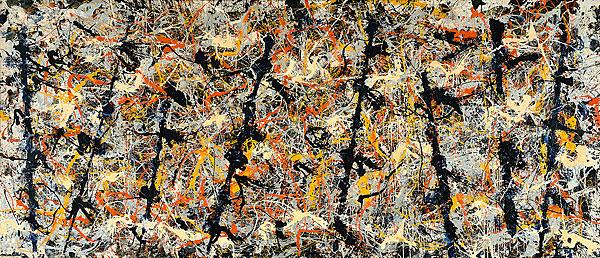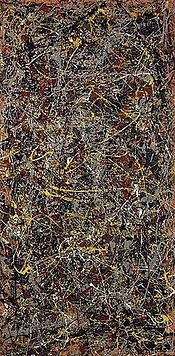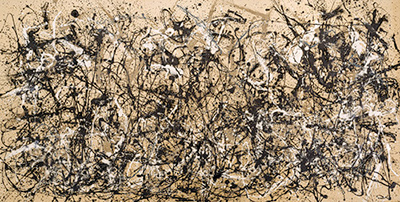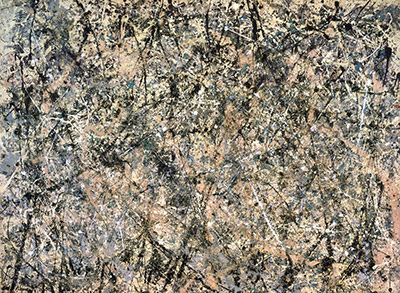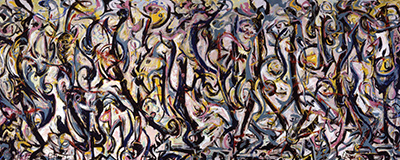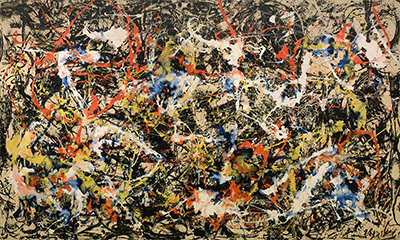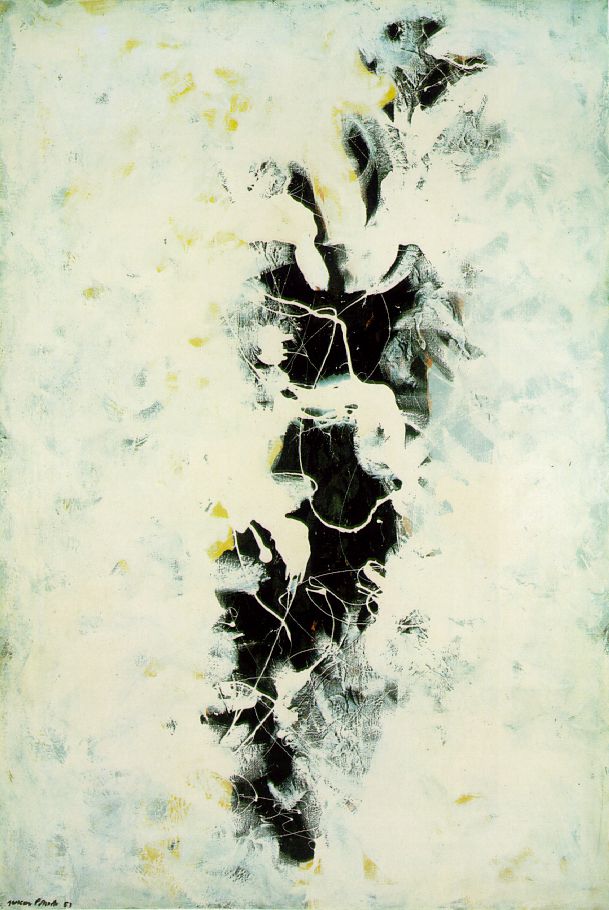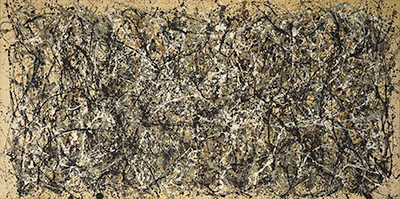
One: Number 31, 1950 — an example of Pollock’s painting.
 by Tom Gurney
Tom Gurney BSc (Hons) is an art history expert with over 20 years experience
Published on October 30, 2026 / Updated on October 30, 2026
Email: tomgurney1@gmail.com / Phone: +44 7429 011000
Lee Krasner and Jackson Pollock: Introduction
At their home in Springs, Lee Krasner painted in an upstairs bedroom while Jackson Pollock worked in the barn. Each studio held a separate artistic practice. Their relationship becomes more interesting when both spaces remain in view, along with the exchanges between artists who recognised each other’s seriousness. [1]
At a Glance
- ArtistsLee Krasner and Jackson Pollock
- Studios in SpringsKrasner: upstairs bedroom; Pollock: barn
- Related guidePollock biography
Contents
- Before their lives converged
- Looking, questioning and making
- The concentration of the Little Images
- Collage makes a different kind of surface
- A friendship that supported both artists
- Continuing to change
- Preserving Pollock, sustaining Krasner
Before their lives converged
Krasner brought substantial training and professional experience to the relationship. She had attended the National Academy of Design and studied with Hans Hofmann from 1937 to 1940. By 1940 she was exhibiting with American Abstract Artists. Academic training and participation in an artists’ exhibiting group both preceded her life with Pollock. [2]
Pollock had entered Thomas Hart Benton’s class at the Art Students League in 1930, studying composition and mural painting. Krasner’s professional standing emerges in their early working relationship: in 1942 she directed WPA projects for window displays and recruiting posters, employing Pollock on her teams. She was already organising work and opening professional connections. [1]
Their sustained acquaintance developed around John Graham’s 1942 exhibition at the McMillen Gallery. Helen A. Harrison’s biography places Krasner’s studio visit in late 1941 and recalls a passing encounter at an Artists Union party in 1936. These accounts describe different kinds of meeting; the exhibition provides the firm setting for their artistic connection. [3]
They married on 25 October 1945 and moved to Springs that November. Pollock initially used an upstairs bedroom; after the barn became his studio in 1946, Krasner worked in the bedroom. The separate workplaces gave physical form to two developing bodies of art within the life described in Pollock’s biography. [1]
Looking, questioning and making
Krasner’s recollections give this dialogue an unusually concrete shape. In her 1967 interview with Francine du Plessix and Cleve Gray, she described mornings as her best working time and an agreement to enter each other’s studios by invitation. Pollock would ask, “Does it work?” and responded to her paintings in similar terms. The question concerns a painting’s achieved effect, leaving room for judgement beyond an explanation of its subject. Speaking to Bruce Glaser that year, Krasner rejected accounts of painting as mere emotional discharge and insisted on the artist’s intellectual awareness. [4]
In Berton Roueché’s 1950 profile, it was Krasner who explained that Pollock’s numbers encouraged attention to the painting itself. Their speaker matters: she was an articulate interpreter of abstraction as well as a painter. Her testimony preserves acts of looking and criticism; it cannot establish that she made his artistic decisions for him. [4]
Harrison emphasises Krasner’s continuing attachment to Matisse and Mondrian’s grid as resources for organising an all-over surface. Contact with Pollock encouraged her to reassess her earlier Cubist language. Influence could mean discovering another artist’s problems while retaining different ways of solving them. Krasner also repeatedly reworked earlier paintings, transforming existing material into new collages. [3]
The concentration of the Little Images
Krasner’s Untitled of 1949 at the Museum of Modern Art offers a particular example. An oil painting on board, measuring 121.9 × 93.9 centimetres, it belongs to the works known as Little Images. MoMA describes repeated strokes of thick paint, sometimes squeezed directly from the tube, within a grid-like structure. Made on a tabletop in her bedroom, the painting turns proximity into a working condition: the surface accumulates through small, repeated decisions. Its scale offers concentration rather than a lesser version of a larger painting. [5]
MoMA also relates the marks to Krasner’s childhood study of Hebrew. She associated them with letters she could no longer read or write and with a private symbolic language. That memory opens a connection between writing and abstraction without supplying a translation. The marks do not encode a fixed message awaiting discovery. Nor does this one painting prescribe the appearance of every Little Image: its grid, density and repetitive application identify a specific solution within the series. [5]
Collage makes a different kind of surface
Krasner’s first solo exhibition took place at Betty Parsons Gallery in 1951. She began making collages in 1953 and exhibited them at the Stable Gallery in 1955. This sequence gives her development its own public rhythm. The move from small all-over paintings to collage involved changing the materials with which a painting could be constructed, as well as finding new opportunities to show the results. [2]
Milkweed, dated 1955, makes the material change tangible. Buffalo AKG Art Museum records oil, paper and canvas collage on canvas. The support measures 209.23 × 146.69 centimetres: this is an ambitious vertical work, substantially larger than the MoMA Untitled. Paper and canvas enter the composition as materials alongside oil paint. The distinction matters when comparing the artists’ methods. A painted gesture and an attached fragment can both organise a surface, but the fragment also brings its own edge and physical substance. [6]
The work entered the Buffalo collection in 1976 through Seymour H. Knox, Jr.’s gift; its accession number is K1976:5. Its history extends beyond the years of the marriage, just as the object survives beyond the conditions of its making. Reading such a collage solely as an illustration of private turmoil would miss the sustained compositional work demanded by joining paint, paper and canvas into a new whole. [6]
Watch: Jackson Pollock
Choose a film about Pollock’s paintings and ways of working.
A friendship that supported both artists
Alfonso Ossorio’s involvement places the household within a wider circle. As Gail Levin documents, he collected both artists, offered friendship and access to his New York townhouse, and in 1951 arranged advance payments towards a future Pollock purchase. Such support had practical consequences: accommodation, money and opportunities to remain engaged with exhibitions. The couple’s artistic life depended on more than a conversation between two people. [7]
Ossorio also bought Krasner’s Little Images and continued supporting her after Pollock’s death. He helped establish East Hampton’s Signa Gallery, where she exhibited regularly. In 1969 he gave her 1949 Untitled to MoMA—the board painting discussed above. The gift connects a collector’s early commitment to the later museum visibility of her work. His role brings Krasner’s paintings into the same history of patronage that is more often told through purchases of Pollock. [7]
Continuing to change
Pollock died on 11 August 1956. [1]
His death divides their shared life, but it does not mark the beginning of Krasner’s maturity. MoMA’s 1984 retrospective announcement explicitly placed her move towards monumental painting in the mid-1950s. The museum traced a career extending from dense early abstractions to large organic compositions and later collage. That chronology gives the paintings their necessary continuity across a devastating personal loss. [8]
Krasner subsequently used the barn studio. Her Earth Green paintings continued an interest in nature-derived forms. In 1976 she incorporated Hofmann student drawings into new collages. A sheet made decades earlier could become material for another composition. Reuse gave her past work an active place in the present. [3]
In 1959 she began her Umber and Off-White paintings and completed two mosaic murals for 2 Broadway. Her exhibition history registers that continuing activity: the Whitechapel retrospective in 1965, Large Paintings at the Whitney in 1973–74, and the 1977 Pace exhibition Eleven Ways to Use the Words to See. The 1981 exhibition Krasner-Pollock: A Working Relationship also made the partnership itself a subject of study. [2]
Krasner attended the Houston opening of her retrospective in October 1983. [3]
Organised by Barbara Rose, the exhibition reached MoMA on 20 December 1984, running until 12 February 1985. Krasner had died that June. MoMA presented approximately fifty paintings from 1946 to 1980, acknowledging how long her reputation had been overshadowed by Pollock’s. The breadth of the exhibition made an argument through duration and change: her achievement required an encounter with several decades of work. [8]
Preserving Pollock, sustaining Krasner
Krasner’s management of Pollock’s estate was another form of consequential judgement. Kirk Varnedoe and Pepe Karmel’s account of MoMA’s collecting history describes complex negotiations, including an unsuccessful proposed acquisition during a period when she was occupied with her own commission. Her responsibilities as an artist and as the estate’s representative existed simultaneously. [9]
In 1980, after a decade of negotiations, MoMA announced the acquisition of seven paintings from the estate: four purchases and three gifts from Krasner. She also promised Gothic, which entered the museum after her death in 1984. These decisions helped the museum represent the breadth of Pollock’s development, rather than only his best-known poured paintings. Stewardship involved selecting, negotiating and placing works where they would shape future understanding. It was substantial labour alongside a career that continued to develop in its own right. [9]
That longer view informs The Met’s Krasner and Pollock: Past Continuous, scheduled from 4 October 2026 to 31 January 2027. Curated by David Breslin and Brinda Kumar with CJ Salapare, it brings together more than 120 works from over eighty lenders in twelve chapters. The museum distinguishes its full-career approach from earlier exhibitions centred on their years together. Its title comes from a Krasner painting of 1976, placing her later work within the very terms of the comparison. [10]
The exhibition’s announced pairings range from the Little Images and Pollock’s poured paintings to Krasner’s Earth Green and Umber series. This offers a productive way to consider their relationship: follow each artist’s experiments over time, then look for the points where materials, scale, critical exchange and shared circumstances bring them into conversation. Their proximity becomes a way of seeing differences more clearly, while Krasner’s decades after 1956 remain part of the history being told. [10]
Pollock artworks directory
Explore the distinct works discussed in these guides. This selection is not a complete catalogue. Green Silver and Untitled, 1949 are two guides to the same painting.
Discussion
Look again at the images and ideas explored in Lee Krasner and Jackson Pollock. These editorial prompts invite your observations.
Reader Insights
Which detail in “Before their lives converged” changes how you understand this work?
What comparison comes to mind after “Looking, questioning and making”?
What would you like to discuss about “The concentration of the Little Images”?
Join the Conversation
Share a detail, comparison or question about Lee Krasner and Jackson Pollock below.
References
- Elizabeth Levine and Anna Indych, chronology in Kirk Varnedoe, with Pepe Karmel, Jackson Pollock (New York: MoMA, 1998), pp. 317, 319, 321, 328; physical PDF pp. 340, 342, 344, 351. View source.
- Museum of Modern Art, “Lee Krasner: Selected Chronology”, press release 79 (1984), both pages. View source.
- Helen A. Harrison, “Lee Krasner”, Pollock-Krasner House and Study Center, biography. View source.
- Lee Krasner, interviews with Bruce Glaser (1967), Francine du Plessix and Cleve Gray (1967), and Berton Roueché’s “Unframed Space” (1950), reprinted in Pepe Karmel, ed., Jackson Pollock: Interviews, Articles, and Reviews (MoMA, 1999), pp. 19, 28, 33; physical PDF pp. 23, 30, 37. View source.
- Museum of Modern Art, Lee Krasner, Untitled, 1949, object 500.1969, collection data and 2019 gallery label. View source.
- Buffalo AKG Art Museum, Lee Krasner, Milkweed, 1955, K1976:5, collection record. View source.
- Gail Levin, “The Extraordinary Interventions of Alfonso Ossorio, Patron and Collector of Jackson Pollock and Lee Krasner”, Archives of American Art Journal 50, nos. 1–2 (2011), pp. 10–16; physical PDF pp. 7–13. View source.
- Museum of Modern Art, “Retrospective of the Paintings of Lee Krasner to Be Exhibited at The Museum of Modern Art”, 16 November 1984, pp. 1–3. View source.
- Kirk Varnedoe and Pepe Karmel, “Introduction: Pollock and the Museum of Modern Art,” in Jackson Pollock: New Approaches (MoMA, 1999), pp. 11–12; physical PDF pp. 15, 14. View source.
- Metropolitan Museum of Art, Krasner and Pollock: Past Continuous, exhibition announcement, 24 February 2026. View source.