 by Tom Gurney
Tom Gurney BSc (Hons) is an art history expert with over 20 years experience
Email: tomgurney1@gmail.com / Phone: +44 7429 011000
Martin Johnson Heade in Florida: Introduction
Martin Johnson Heade settled in St. Augustine in 1883, beginning a later period in which marriage, patronage, painting and nature writing became closely associated with Florida. He continued landscapes and tropical subjects while developing the cut-flower pictures for which his last decades are especially remembered. Henry Morrison Flagler’s support and the hotel studios supplied a more stable professional setting. Heade’s writing as Didymus also questioned the sporting excesses of the same tourist world that helped sustain his art.[1][2][3]
At a Glance
- Permanent settlementSt. Augustine, 1883
- MarriageElizabeth Smith, 1883
- Important patronHenry Morrison Flagler
- Hotel contextPonce de Leon, opened in 1888
- Continuing subjectsMarshes, tropical bird-and-flower pictures and floral still lifes
- Writing nameDidymus, in Forest and Stream
- DeathSt. Augustine, 4 September 1904
- Historical imagePonce de Leon parlours, 1895; hotel context rather than an identified studio
Contents
- Settling in St. Augustine
- Elizabeth Smith and the household
- Flagler and the hotel environment
- The 1895 parlour photograph
- Florida marshes and Flagler’s collecting
- Magnolias and continued tropical subjects
- Didymus and the sporting audience
- Birds, trade and conservation
- Last years and later recovery
- Annotated details
Settling in St. Augustine
Florida followed decades of travel and changes of residence. Kelly’s NGA biography identifies 1883 as the year Heade settled permanently in St. Augustine and married. The move brought a more sustained local setting without ending his interest in subjects developed elsewhere.[1]
Charlotte M. Porter’s Florida Museum essay places the decision after earlier winter visits. She describes the artist encouraging his new wife, Elizabeth Smith, to move south. The distinction between visiting Florida and becoming a resident matters to the chronology.[2]
The paintings did not all become records of the same immediate locality. Marsh and swamp subjects joined continued orchids, hummingbirds and cut flowers. The late practice was an overlap of interests, rather than a complete replacement of landscape by still life.[1]
Heade’s age also gives the move significance. He was in his sixties, with a substantial earlier career behind him. Greater stability became the setting for continued artistic activity rather than an immediate retirement.
Annotated Details from Martin Johnson Heade in Florida
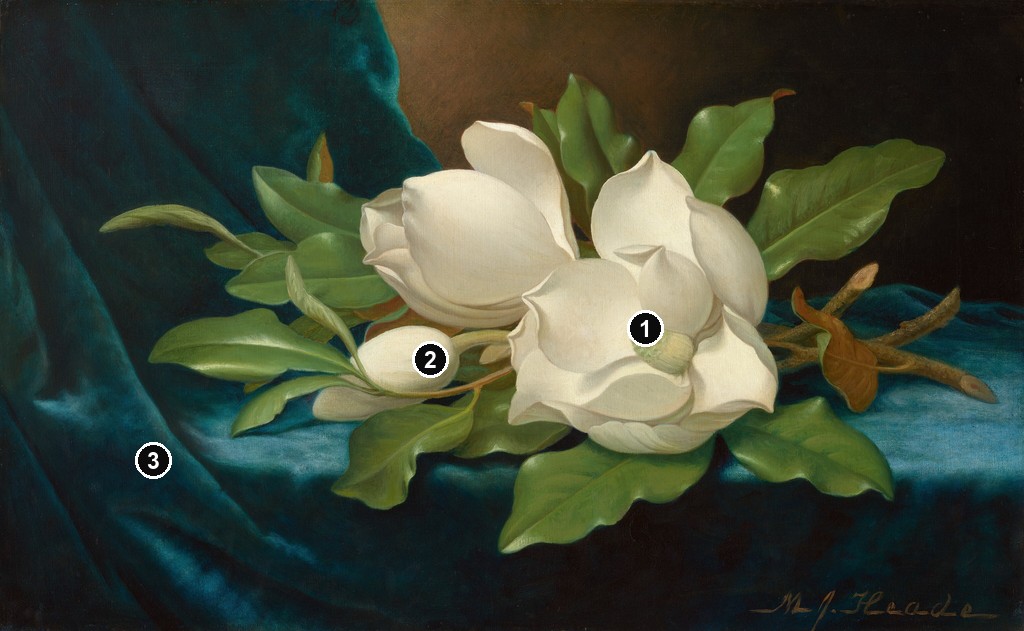
The numbered points identify visible features discussed in this article. Return from each detail to the whole composition. Martin Johnson Heade, Giant Magnolias on a Blue Velvet Cloth, c.1890. Oil on canvas, 38.4 × 61.5 cm. National Gallery of Art, 1996.14.1. Gift of The Circle of the National Gallery of Art in Commemoration of its 10th Anniversary; National Gallery of Art. Image source. CC0 / Public domain. Resized only; native appearance preserved.
Details from MARTIN JOHNSON HEADE IN FLORIDA
Compare the cropped details with the complete images above. Notice how their colours, shapes and positions contribute to the larger compositions.
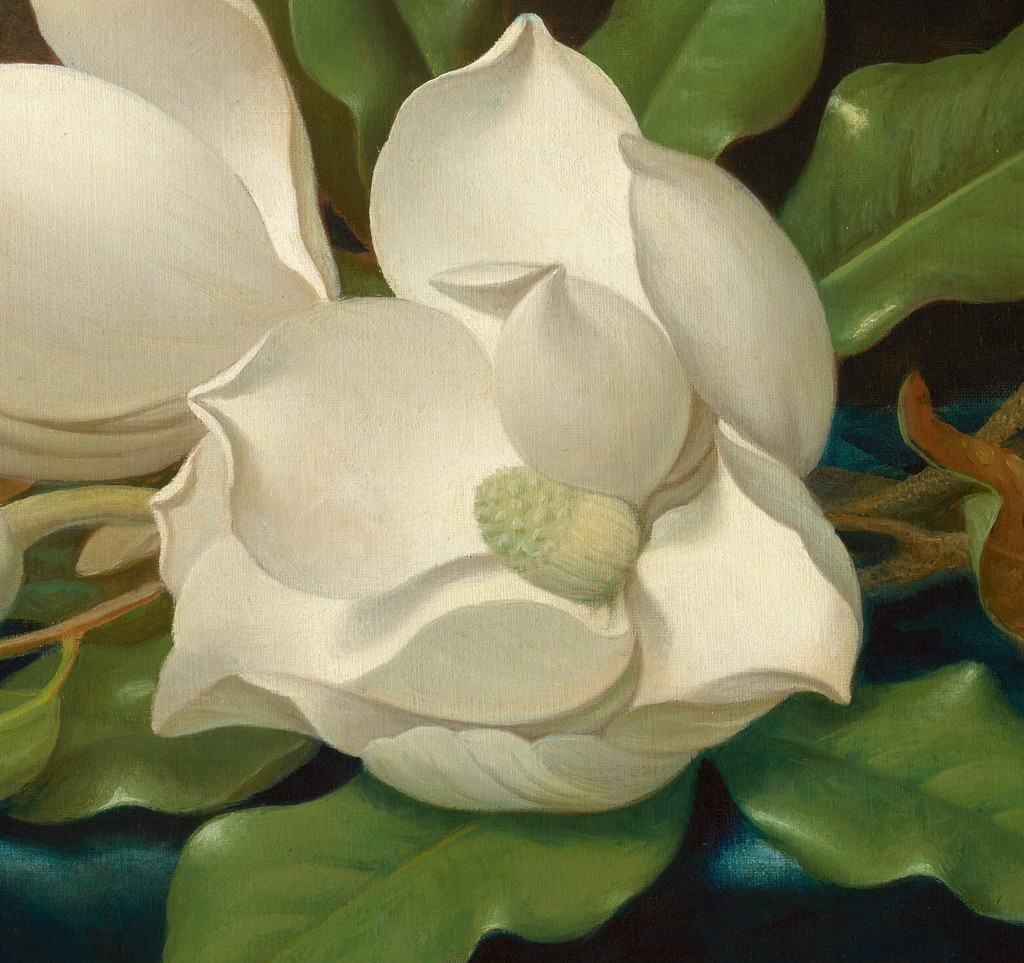
Open magnolia centre
Pale petals surround the greenish centre of the open foreground magnolia. Their overlapping curves create depth within the bright flower.
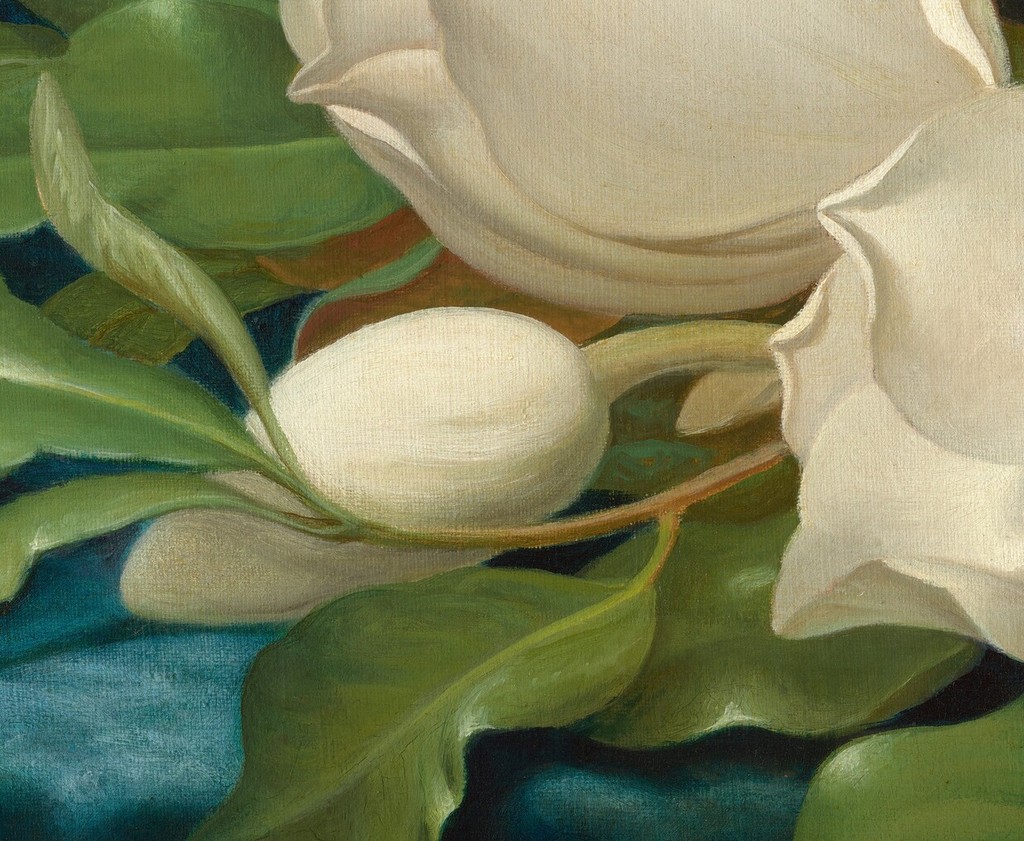
Closed bud and leaves
A closed pale bud lies beside broader green leaves. Its rounded surface contrasts with the more open petals above.
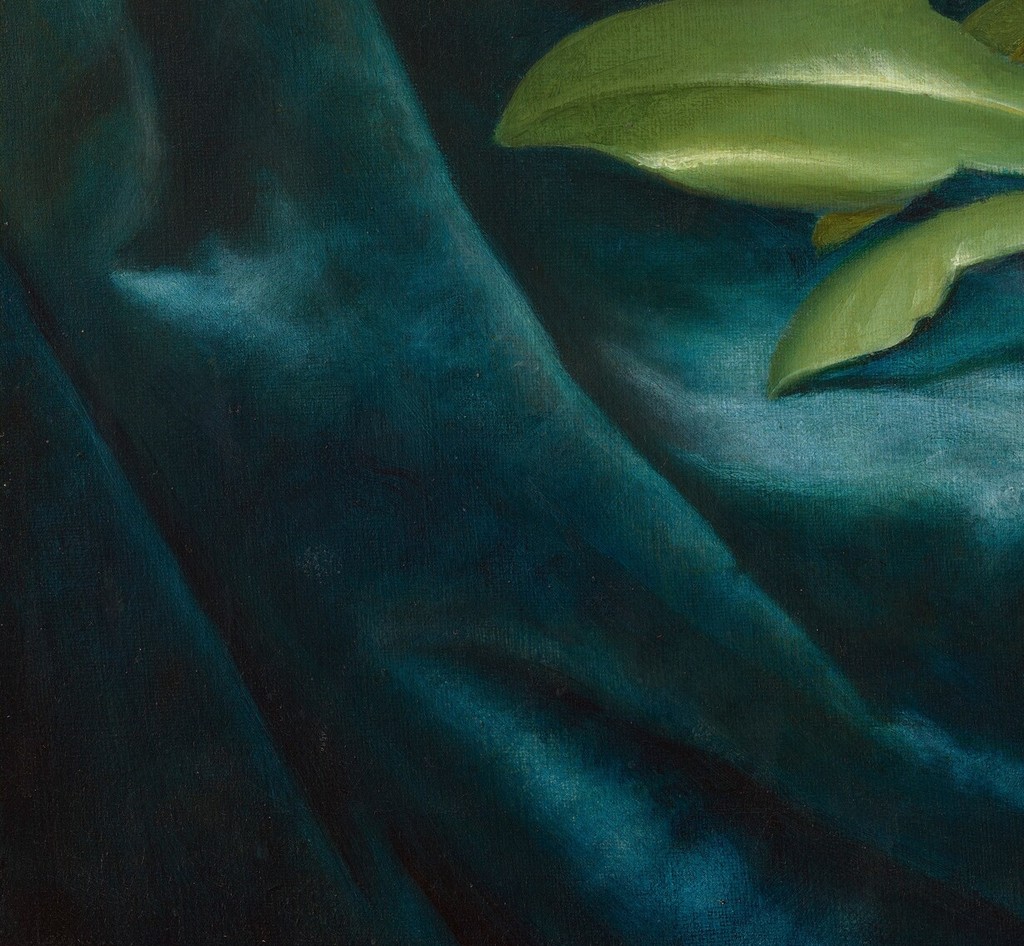
Blue cloth folds
Blue-green folds alternate between shadow and broad light. Their changes in tone support the flowers without becoming a flat background.
Elizabeth Smith and the household
Porter records a St. Augustine household in 1884 and a nearby property holding by the following year. Her account connects Heade’s local investment interests with hopes for the growing resort and railway economy. These details provide context for residence as more than a seasonal studio visit.[2]
The marriage and settlement also distinguish this period from the artist’s earlier itinerancy. Kelly interprets the change as greater domestic and professional security. That is a biographical assessment, rather than a record of every private circumstance within the household.[1]
Elizabeth Smith belongs within this story by name, but the consulted material does not justify inventing her responses to individual canvases or her role in arranging specific flowers. The documented household provides the setting; unrecorded private actions should remain unasserted.
Flagler and the hotel environment
Henry Morrison Flagler became an important buyer and commissioner of Heade’s work. Kelly describes sustained patronage during the Florida years. It provided opportunities different from the artist’s earlier, less secure relationship with the northeastern art market.[1]
The Ponce de Leon Hotel belonged to Flagler’s development of luxury tourism in St. Augustine. Flagler College’s institutional history dates the hotel to 1888 and discusses its architects, interior design and modern services. The opening year is used here in preference to the incorrect 1886 date in Porter’s older regional essay.[5]
Porter describes artists’ studios associated with the hotel as places for exhibiting, teaching and meeting visitors. Guests could encounter pictures within a social environment of touring, receptions and lessons. The setting connected production with an audience already present in the resort.[2]
Patronage should nevertheless remain attached to what is established. Flagler’s support of the artist does not prove that every late magnolia or orchid canvas was made on his commission. Exact collecting histories can differ even where works share a period and location.
The distinction also matters within the building’s decoration. The college’s history identifies mural artists and interior designers as part of the larger hotel project. It should not be converted into a claim that all painted decoration at the Ponce was Heade’s work.[5]
The 1895 parlour photograph
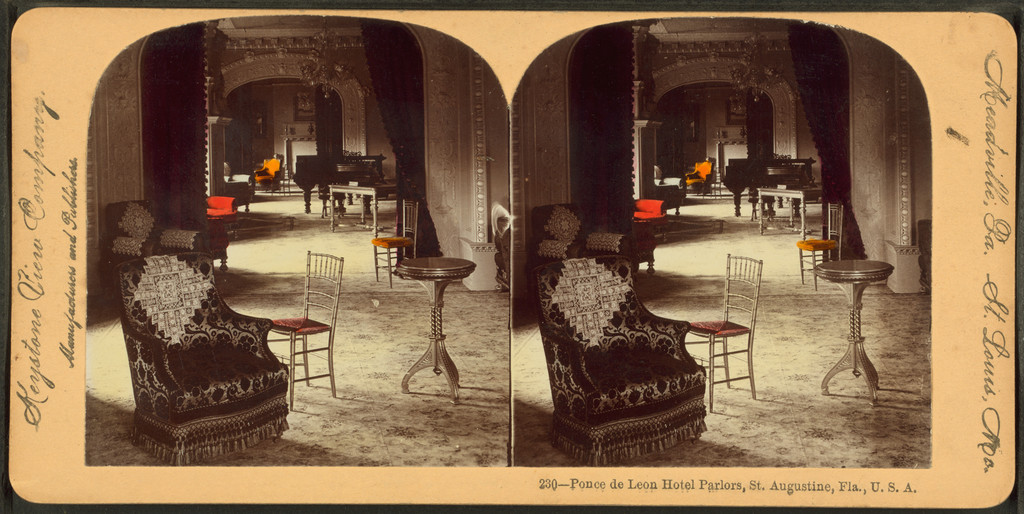
The accompanying stereoscopic card shows the Ponce de Leon Hotel parlours in 1895. It comes from the New York Public Library’s Robert N. Dennis collection through the reviewed reproduction record. The complete paired views retain their border, original caption and selective historical colour.[6]
Ornate arches, upholstered furniture and a piano establish an elaborate interior setting. They help readers consider the hotel environment in which visitors met and viewed art. The card is a period image of a shared social space rather than a portrait of Heade.
It also is not an identified photograph of his studio. No visible picture is labelled here as a verified installation of his work. The historical connection is the hotel itself, and keeping that connection explicit makes the photograph useful without giving it an unsupported identity.
The stereoscopic format is part of the object’s history. Two closely related views were arranged for a particular kind of viewing experience. Retaining the whole card allows that form to remain visible alongside the depicted interior.
Florida marshes and Flagler’s collecting
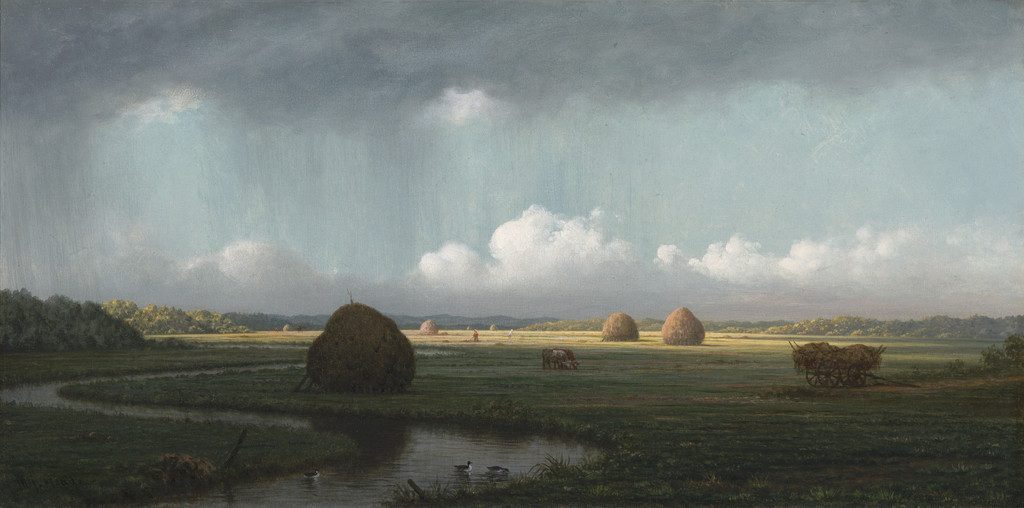
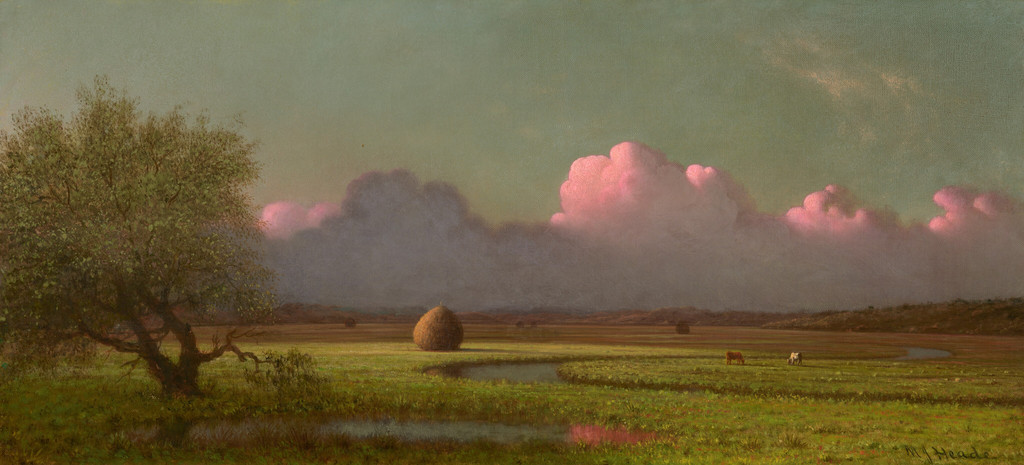
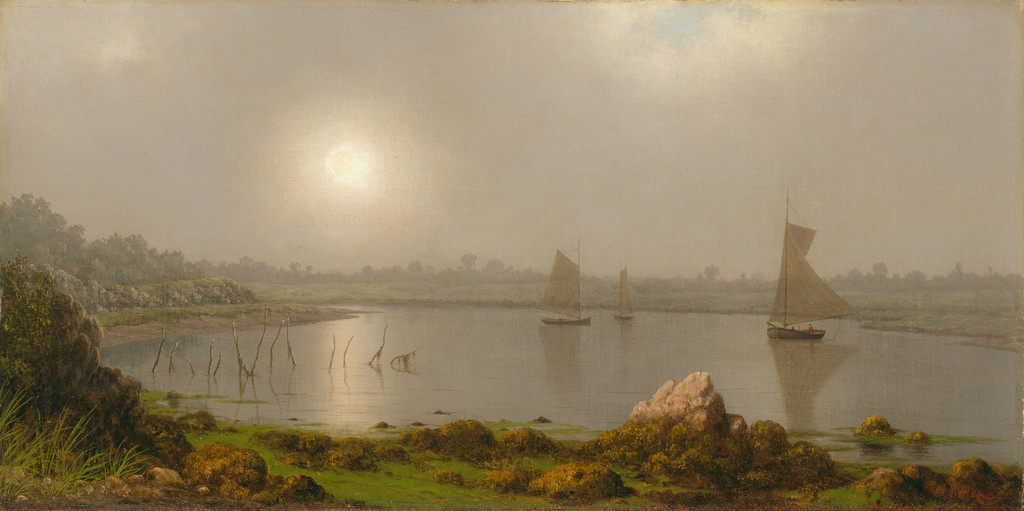
Kelly places marsh and swamp painting among Heade’s continuing later subjects. The Florida context extended an earlier interest in open wetland, atmosphere and water. It did not require every composition to abandon motifs already explored in Massachusetts and other coastal regions.[1]
The Flagler Museum’s account of Whitehall’s library identifies The Great Florida Marsh on its north wall and connects Heade with Flagler’s patronage. Whitehall is a separate setting from the St. Augustine hotel. The record supplies a documented collecting connection without conflating the two interiors.[8]
This distinction broadens the local story beyond a single studio. Works could be produced under patronage and encountered in different buildings associated with the same collector. A painting’s subject, studio setting and later display place are separate parts of its history.
The marsh paintings overview examines the earlier working landscapes in greater detail. Those pictures also provide comparisons for the persistence of broad horizons and shifting light within Heade’s wider practice.
Watch: Martin Johnson Heade
Choose a film to explore the artist’s work, its interpretation and its wider setting.
Museum Minute: Heade Hummingbirds
A brief Shelburne Museum introduction to Heade’s hummingbird paintings.
Watch on YouTubeMagnolias and continued tropical subjects
The NGA’s Giant Magnolias on a Blue Velvet Cloth, dated c.1890, belongs to the late floral group. Cut blossoms, a bud, leaves and stems lie on folded fabric, establishing an interior arrangement rather than a flowering tree outdoors.[1]
The subject fits the Florida period, but the particular canvas has its own later collecting history. Kelly traces that history through private ownership and dealers before the NGA acquisition. It is not presented here as a picture transferred directly from Flagler to the museum.[1]
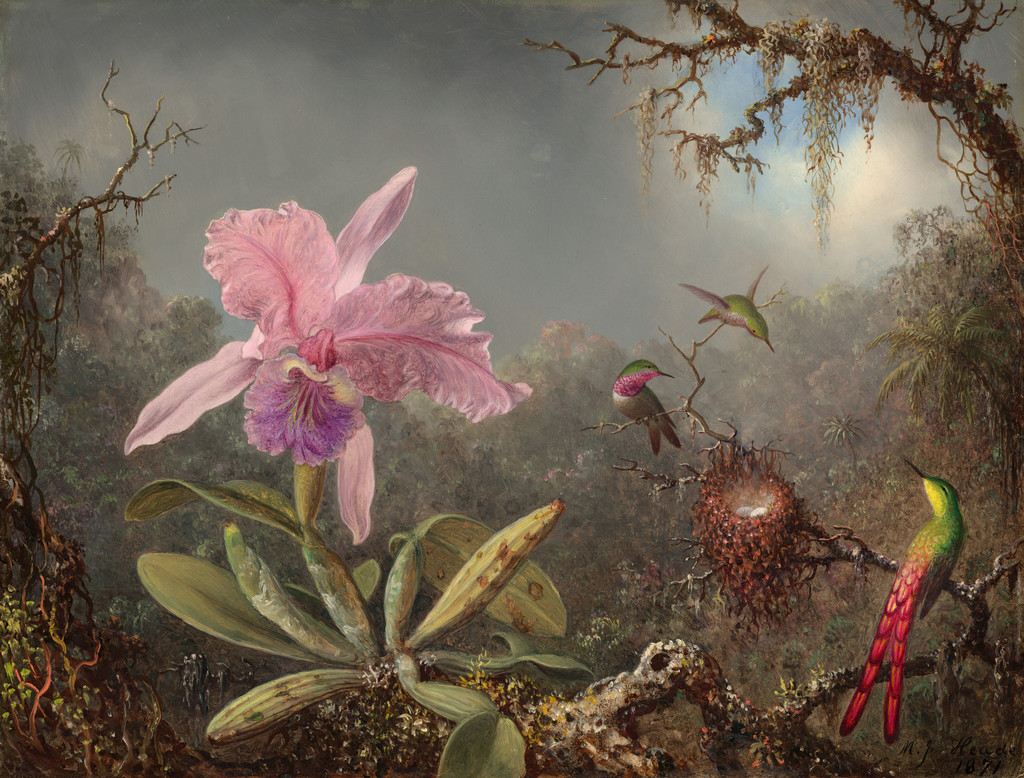
The Carter’s Two Hummingbirds above a White Orchid carries the approximate date c.1875–90. Its range overlaps the years before and after settlement, so it does not identify a precise Florida completion date. The image illustrates a continuing tropical pictorial interest, with that chronology left qualified.[9]
A firmer late example is the Thyssen’s Orchid and Hummingbird near a Mountain Waterfall, dated 1902. Manthorne’s entry discusses its close botanical subject and distant landscape. The date demonstrates the persistence of tropical compositions decades after the earlier journeys.[7]
The overlap is important. Magnolias did not simply replace hummingbirds, and Florida landscapes did not erase the earlier tropical material. The artist continued several subjects within a more settled life.
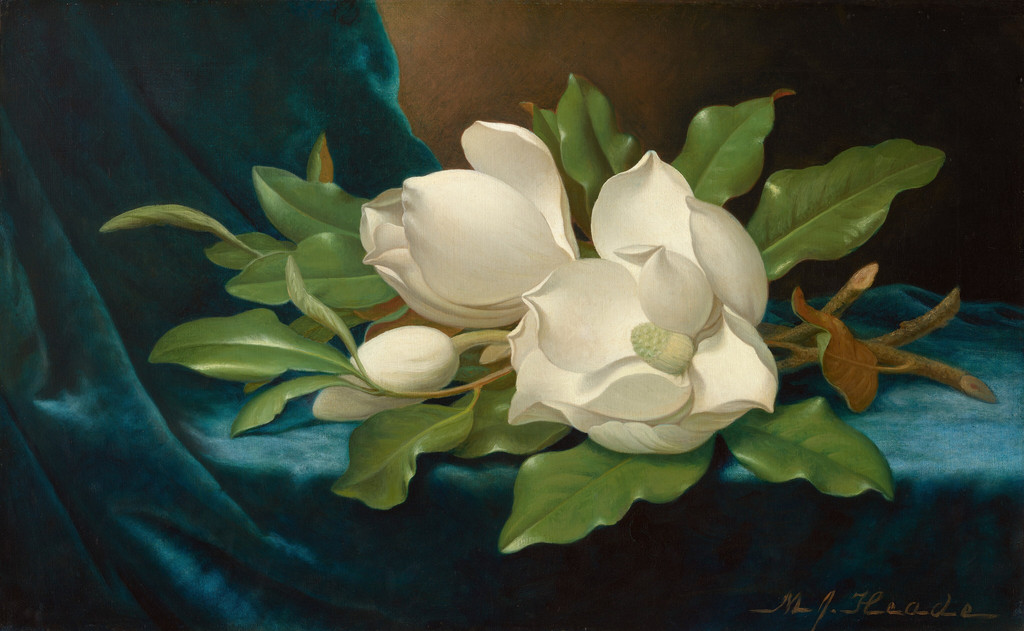
Martin Johnson Heade, Giant Magnolias on a Blue Velvet Cloth, c.1890. National Gallery of Art, 1996.14.1. Image source. CC0 / Public domain. Resized only; native appearance preserved.
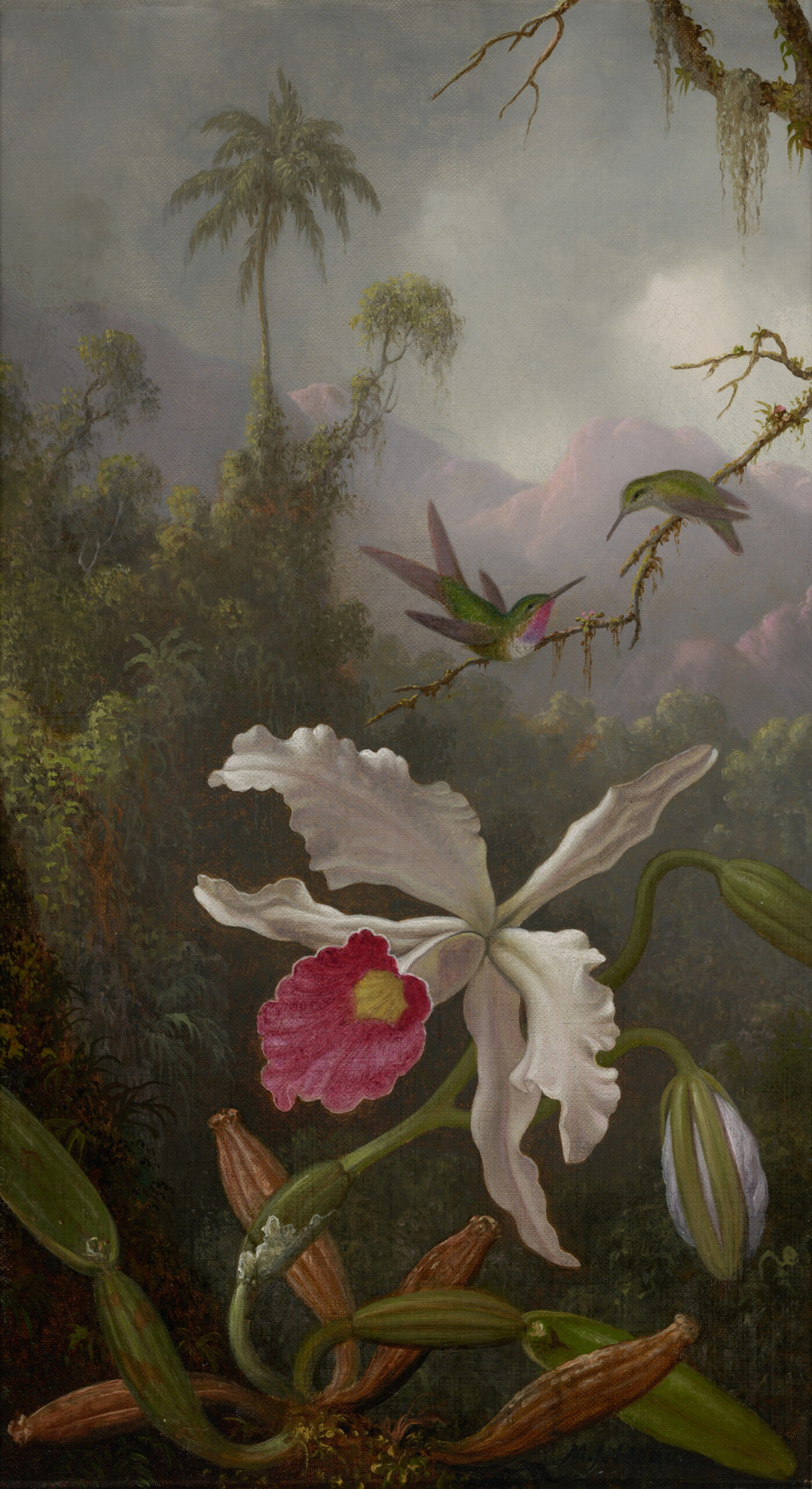
Martin Johnson Heade, Two Hummingbirds above a White Orchid, c.1875–90. Amon Carter Museum of American Art, 1981.33. Approximate chronology overlaps settlement; precise Florida execution is unproved. Image source. Public domain. Resized only; native appearance preserved.
Didymus and the sporting audience
Heade’s writing as Didymus complicates the picture of a painter comfortably serving wealthy visitors. Porter’s Forest and Stream essay describes criticism of exclusive hunting preserves, excessive catches and commercial killing. The artist could benefit from the resort environment while questioning some of its activities.[3]
The criticism was not an opposition to all hunting. Heade remained a participant in sporting life. Porter instead presents a position concerned with moderation, access, game management and the consequences of commercial exploitation.[2][3]
That distinction prevents a simple division between art patron and environmental critic. The same regional world supplied audiences, outdoor pursuits and targets for argument. His writing addressed how people used nature and how the benefits and costs of that use were distributed.
Birds, trade and conservation
Porter describes Didymus’s objections to killing birds for the plume trade and to market shooting. She also discusses concern about dwindling animals and criticism of political responses that arrived too late. These arguments make environmental loss part of the Florida story.[3]
The account relates that criticism to sensible game laws and enforcement. It is used here as historical interpretation of Heade’s position, rather than advice about present hunting regulations. No modern rule is inferred from the nineteenth-century discussion.
Porter’s natural-history essay also connects hummingbirds with observation, writing and scientific interests. These activities sit beside the Florida flower paintings without making every canvas a conservation manifesto. A subject’s place within a wider life does not settle its individual symbolic purpose.[4]
The magazine material has been consulted through the museum’s later transcription and bibliography. Its excerpts are paraphrased rather than presented as independently read original pages. This preserves the substance of Porter’s account without claiming a primary consultation that did not occur.
Last years and later recovery
Heade died in St. Augustine on 4 September 1904. Kelly describes the decline of wider attention to his art and its recovery during the twentieth-century revival of interest in American painting, especially from the 1940s.[1]
That later recovery changed the setting in which the Florida pictures were encountered. Still lifes and tropical compositions could be studied in museum collections beside the earlier coast and marsh works. Their relationships became available to audiences well beyond the hotel visitors of Heade’s lifetime.
Florida is therefore more than the location of his final address. Residence, Elizabeth Smith, Flagler’s support, studio audiences and arguments about nature all belong to the period. Their combination helps explain a late career that remained active across subjects rather than withdrawing into one narrow category.
Artworks directory
A collected selection of 26 individually identified museum paintings, including thirteen extended artwork studies. This is a bounded directory, rather than a complete catalogue raisonné. Two Boston entries retain dates from the 2002 conservation study. Links open a companion article where available, otherwise the cited institutional record or publication; unillustrated objects remain included.
Frequently Asked Questions
It shows the hotel parlours in 1895. No Heade studio or specific installation of his paintings is established in the reviewed image record.[6]
No. Porter describes a sporting participant criticising excess, monopoly and commercial exploitation, alongside support for management and enforcement.[3]
Discussion
Look again at the images and ideas explored in Martin Johnson Heade in Florida. These editorial prompts invite your observations.
Reader Insights
What does the complete1895stereoscopic card reveal about the hotel environment?
How do late magnolias compare with continuing tropical pictures?
How does Didymus’s criticism of sporting excess complicate the patronage setting?
Join the Conversation
Share a detail, comparison or question about Martin Johnson Heade in Florida below.
References
- Franklin Kelly, American Paintings of the Nineteenth Century, Part I (NGA, 1996), printed pp.287–288 and 295–298. Settlement, patronage, later subjects, death and magnolia history. View source
- Charlotte M. Porter, Florida Museum, “Florida Interests”. Household, local development and studio audiences; hotel opening year corrected through institutional history. View source
- Charlotte M. Porter, Florida Museum, Didymus / Forest and Stream essay. Historical argument about hunting, trade, access and conservation; primary excerpts paraphrased through the museum. View source
- Charlotte M. Porter, Florida Museum, “Natural History”. Broader bird-study and writing context. View source
- Flagler College, “Hotel Ponce de Leon becomes Flagler College”. Institutional hotel history and 1888 chronology. View source
- Wikimedia Commons / NYPL, Ponce de Leon Hotel Parlors, 1895. Exact historical stereoscopic card and source record. View source
- Katherine E. Manthorne, Thyssen, Orchid and Hummingbird near a Mountain Waterfall, CTB.1979.44. Separate 1902 work and interpretation. View source
- Henry Morrison Flagler Museum, Whitehall Library. The Great Florida Marsh and patronage in a separate collecting/display setting. View source
- Amon Carter Museum of American Art, Two Hummingbirds above a White Orchid, 1981.33. Exact work and approximate c.1875–90 chronology. View source
- Splash image source.
Ponce de Leon Hotel parlours, St. Augustine, 1895. Historical stereoscopic card, New York Public Library, Robert N. Dennis collection. Hotel context; no Heade studio or installation is identified. Public domain / PD-US-expired; PD-scan. Resized only; complete stereoscopic card retained.
View source