 by Tom Gurney
Tom Gurney BSc (Hons) is an art history expert with over 20 years experience
Email: tomgurney1@gmail.com / Phone: +44 7429 011000
York Harbor, Coast of Maine by Martin Johnson Heade: Introduction
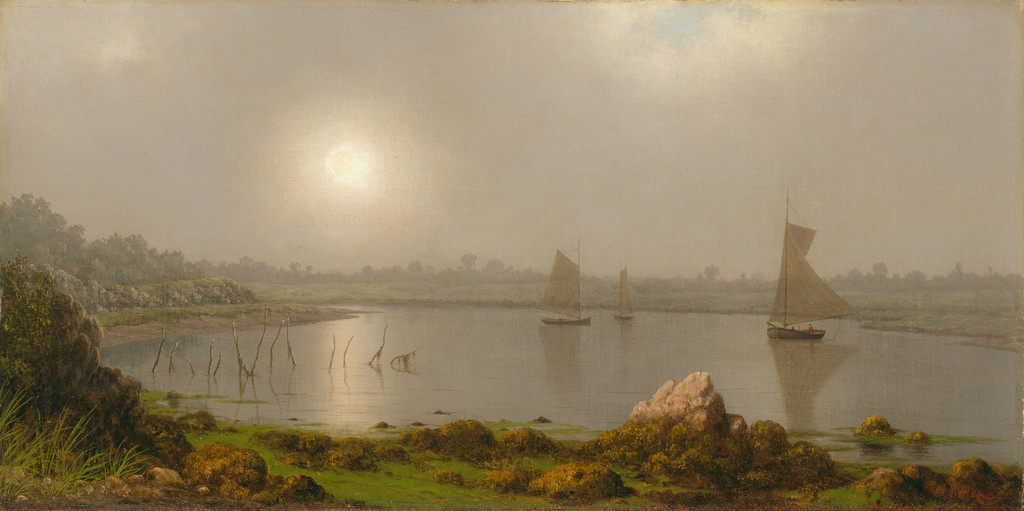
Martin Johnson Heade’s York Harbor, Coast of Maine places three sailboats in a quiet inlet beneath a pale, hazy sky. Broken stakes, foreground rocks and the boats’ reflections give the water a structure without disturbing its broad stillness. Painted in 1877, this oil on canvas belongs to the Art Institute of Chicago. A museum essay connects its composition with later ideas of luminism and with the changing New England coast, while the collection record preserves a more specific history of ownership, acquisition and exhibition.[1][2]
At a Glance
- ArtistMartin Johnson Heade (1819–1904)
- TitleYork Harbor, Coast of Maine
- Date1877
- MediumOil on canvas
- Dimensions38.7 × 76.8 cm
- CollectionArt Institute of Chicago
- Accession1999.291
- Former titleSailing Sloops in a Bay
This work across Martin Johnson Heade’s career
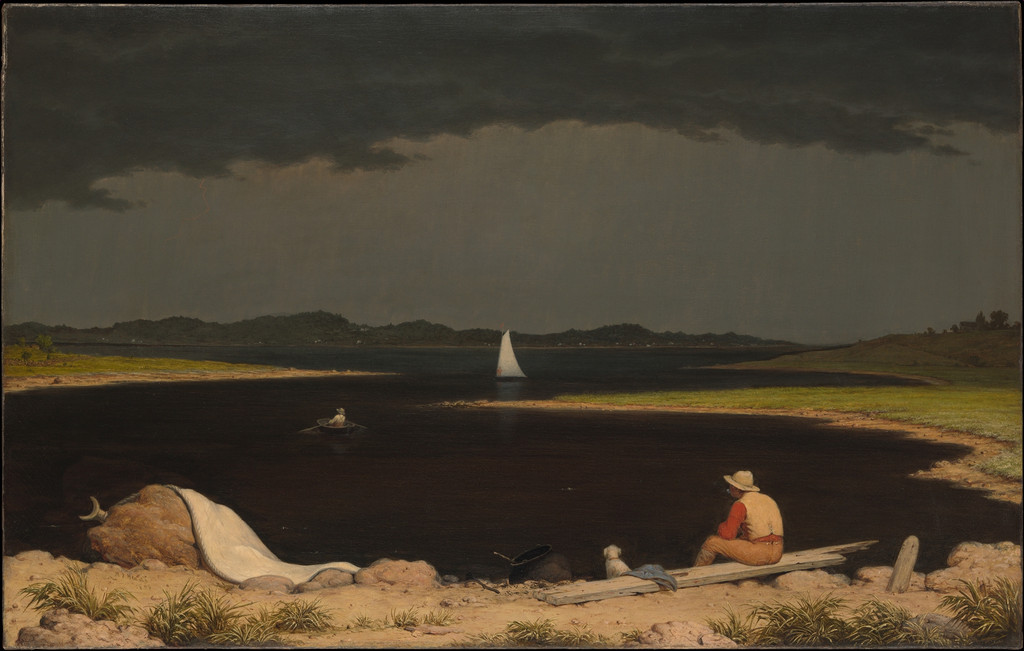
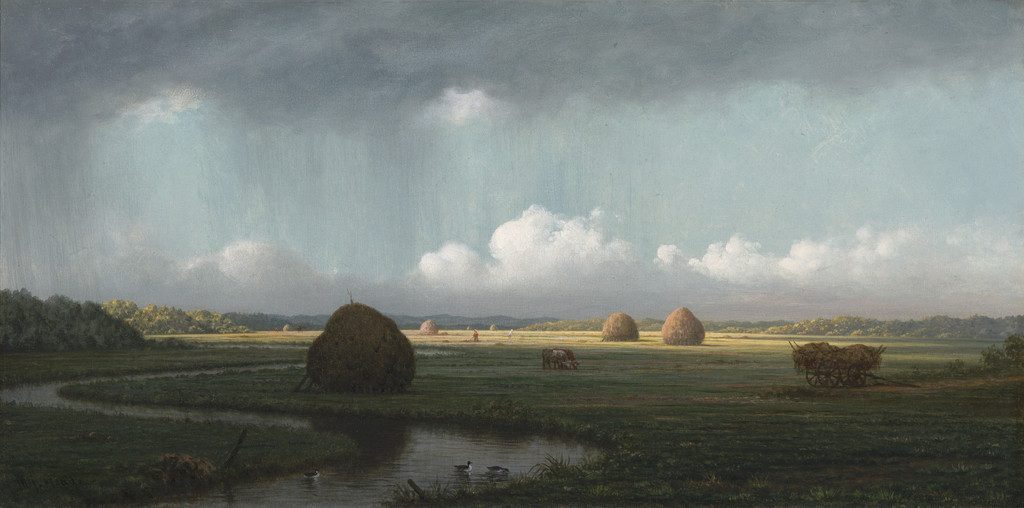
Sudden Shower, Newbury Marshes
c.1865–75View of Marshfield
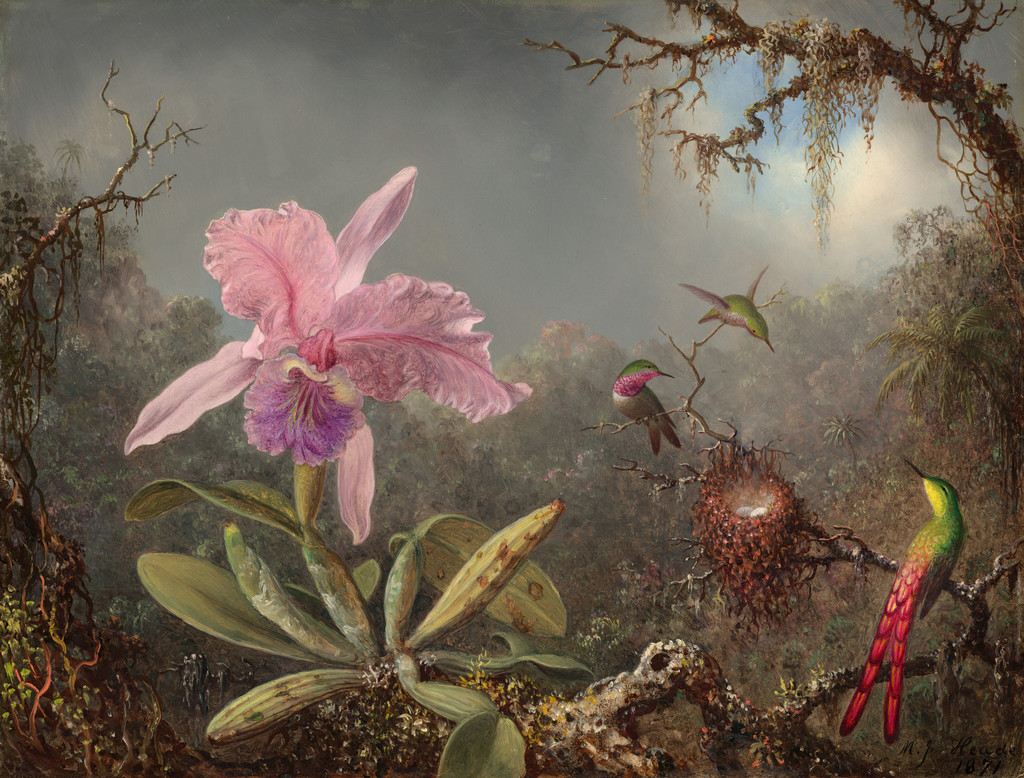
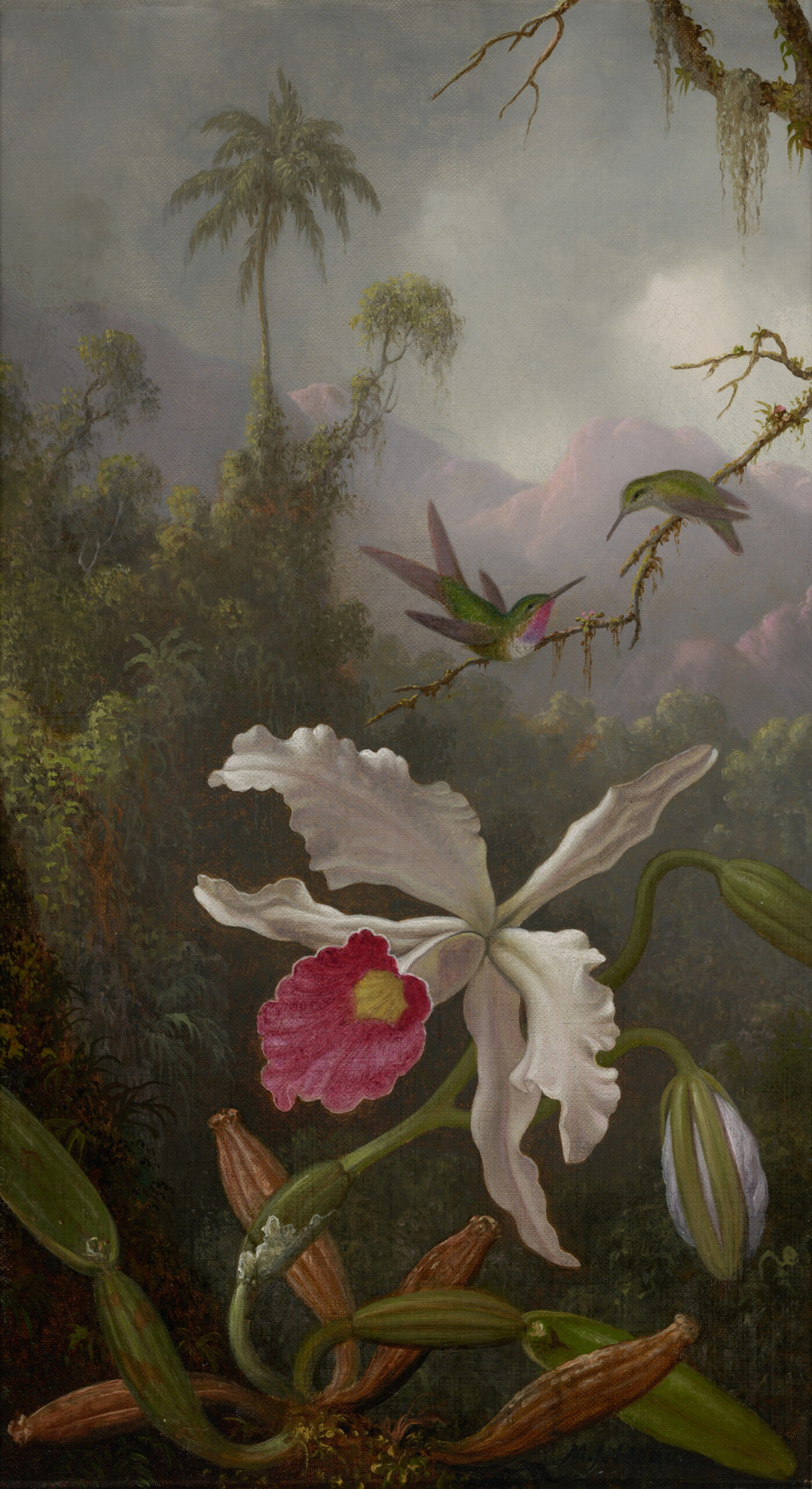
c.1866–76Hummingbird and Passionflowers
c.1875–85Newburyport Meadows
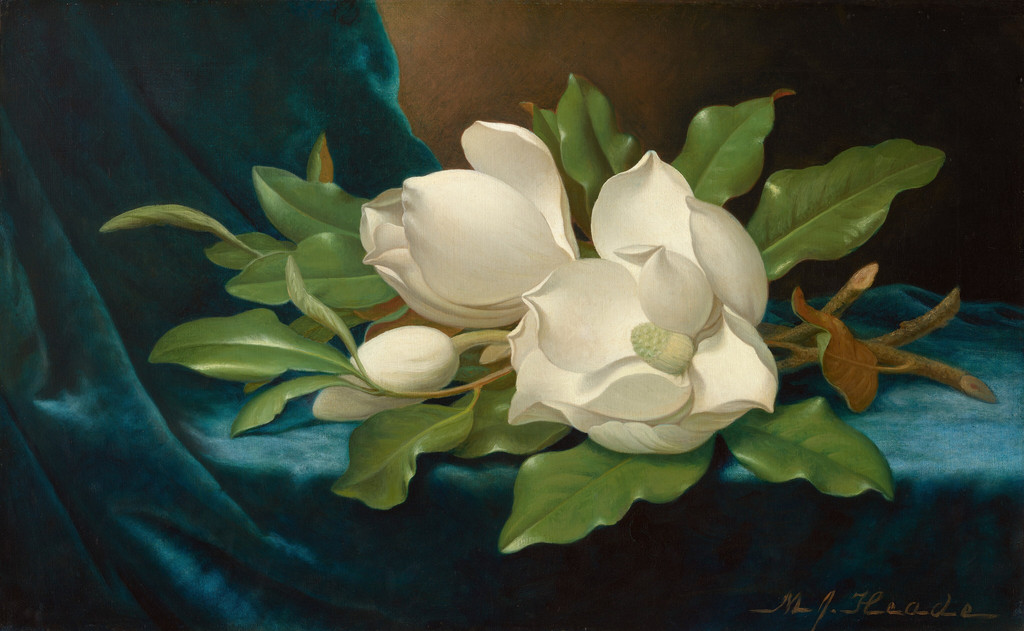
c.1876–81Magnolias on Light Blue Velvet Cloth
c.1885–95Contents
- Three boats across quiet water
- Stakes, rocks and the pale sun
- Reflections and interrupted depth
- From Sailing Sloops in a Bay to York Harbor
- The 1999 acquisition and later exhibition
- Luminism, the working coast and a quiet counterpart to storms
- Annotated details
Three boats across quiet water
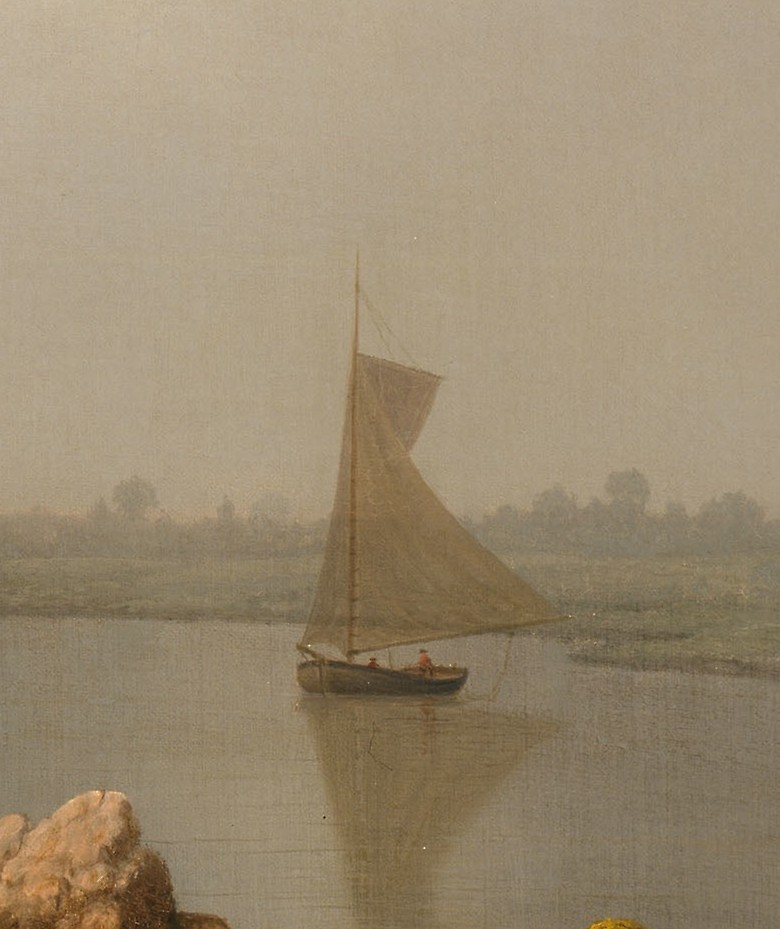
The boats form a loose sequence across the middle distance. The largest lies towards the right, with its broad sail rising against a subdued sky. A second sits farther left and a much smaller vessel occupies the interval between them. Their unequal size establishes different distances within the inlet.
This spacing keeps the water open. The vessels do not gather around one central point or block the route towards the far shore. Much of the inlet remains available as a broad reflective field, allowing the boats to appear small within a continuous landscape.
The largest sail is darker than the brightest part of the sky but lighter than much of the surrounding vegetation. It therefore remains noticeable without becoming a brilliant white accent. Its sloping shape also differs from the thin upright mast of the small middle vessel, making each boat legible through a different silhouette.
Sarah E. Kelly’s museum essay describes three sailing sloops in cool, hazy light. Later in the account she interprets them as fishing boats quietly engaged in work. Her reading connects the apparently serene inlet with a human use of the coast, rather than treating the water as an empty space outside economic life.[2]
Annotated Details from York Harbor, Coast of Maine
The numbered points identify visible features discussed in this article. Return from each detail to the whole composition. Martin Johnson Heade, York Harbor, Coast of Maine, 1877. Oil on canvas, 38.7 × 76.8 cm. Art Institute of Chicago, 1999.291. Image source. CC0 / Public domain. Resized only; native appearance preserved.
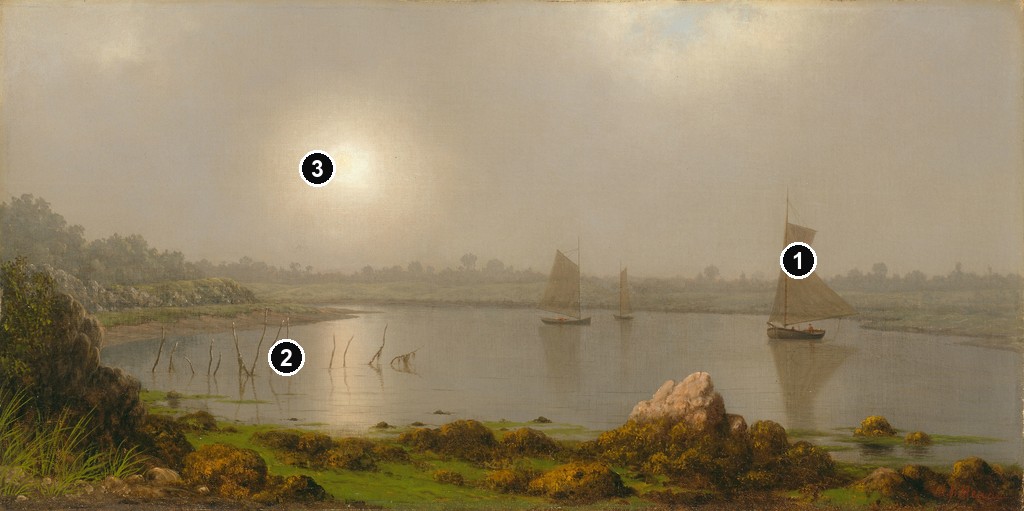
Details from YORK HARBOR, COAST OF MAINE
Compare the cropped details with the complete images above. Notice how their colours, shapes and positions contribute to the larger compositions.
Near sailing vessel
A tall brown sail rises above a small hull and figures. Its reflection extends the upright form into the quiet harbour.
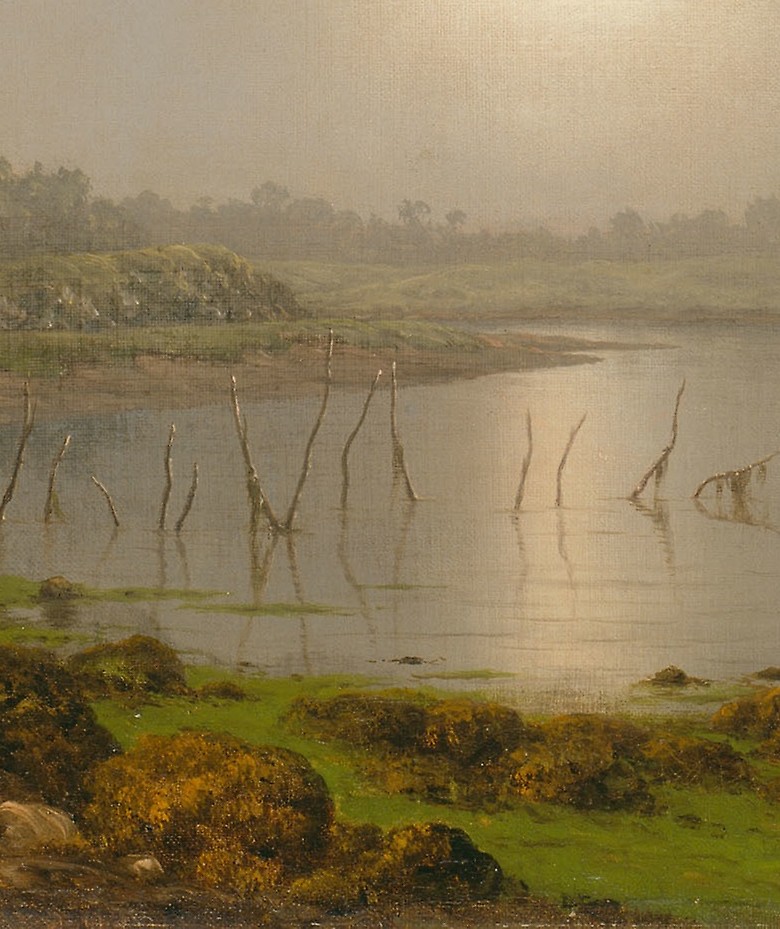
Bare branches in the shallows
Thin bare branches project from the shallow water. Their broken verticals contrast with the level harbour surface.
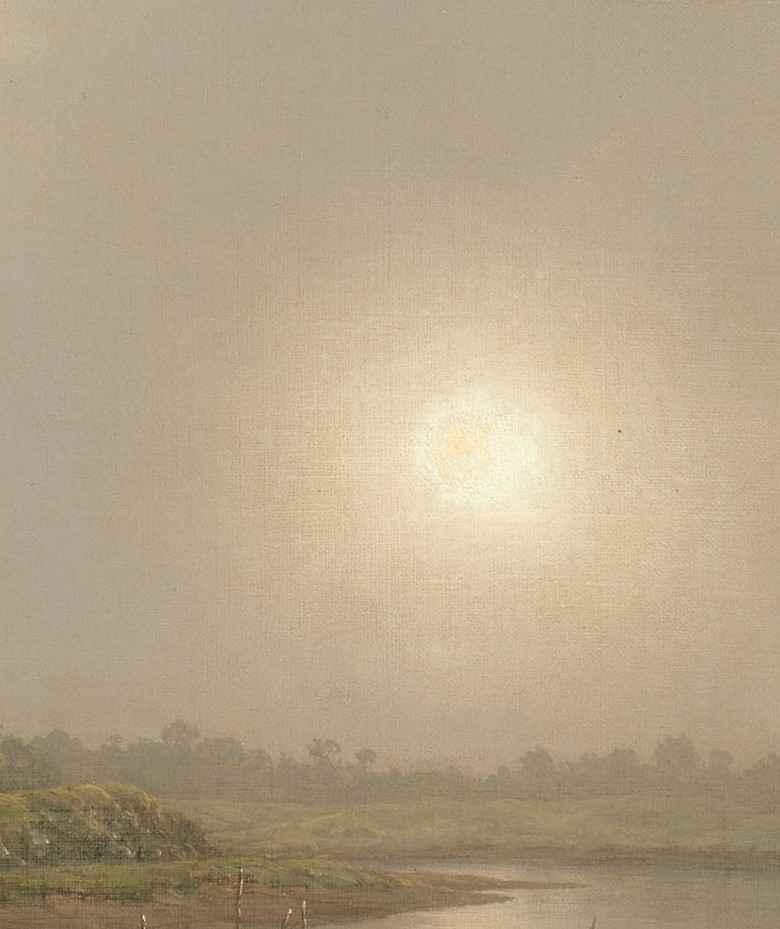
Sun and pale reflection
A pale disk shines through the hazy sky. A lighter band beneath carries its illumination down towards the water.
Stakes, rocks and the pale sun
At the left, thin stakes rise from the shallow water in an irregular group. Some lean, some stand more upright, and others are little more than short interruptions. Their spare shapes offer a different kind of vertical pattern from the larger sails and masts.
The nearer shore is more substantial. Rounded and angular rocks emerge among grasses and warm green growth, creating a rough band across the lower edge. Their outlines interrupt the comparatively smooth water, giving the viewer a foreground from which to look into the inlet.
A pale sun is visible through the haze left of centre. It does not create a sharply separated zone of brightness around itself. Instead, the sky remains broadly luminous, with the orb acting as a modest point of emphasis within an already light field.
The far bank is muted by distance. Buildings and vegetation form a low, softly differentiated strip beyond the boats. The picture consequently moves from the distinct rocks and grasses nearby towards shapes whose identity becomes less exact across the water.
This difference in description gives the small foreground details a purpose. They do not need to accumulate everywhere in order to suggest an inhabited coast. A few rough forms near the viewer can establish the shore while the more distant parts remain atmospheric.
Reflections and interrupted depth
The water repeats the boats without producing perfectly crisp mirror images. Darker vertical passages beneath the sails and hulls connect the vessels with the inlet’s surface. Slight horizontal changes in tone spread around them, softening the reflections into the surrounding water.
At the left, the stakes and their reflections create a finer pattern. The eye can follow those thin lines down into the pale surface, then move towards the boats farther out. Near objects and distant vessels are therefore connected by related vertical interruptions at different scales.
Kelly draws attention to the comparable visual weight of sky and sea and to the repeated verticals of boats, reeds and rocks. Her description explains how the composition can feel unified despite the differences between solid shore, moving vessels and reflective water.[2]
The horizontal format reinforces that connection. The canvas is nearly twice as wide as it is high, and its low coastline allows the light sky to spread across much of that width. The same breadth gives the inlet room to continue around the small vessels instead of becoming a narrow passage between large foreground barriers.[1]
Stillness here is a pictorial effect, not proof that all movement has stopped. Sails and working boats imply activity, while the softened light and broadly unbroken water encourage slower attention. The painting can describe a coast in use and still make it feel unusually hushed.
From Sailing Sloops in a Bay to York Harbor
The work was formerly known as Sailing Sloops in a Bay. In a note to her essay, Kelly credits Theodore E. Stebbins Jr. with identifying the setting as York Harbor in southern Maine. The change replaces a generic account of boats and water with a named locality, while retaining the same physical painting.[2]
The named title helps connect the canvas with Heade’s New England coastal subjects. It should not, however, be used to invent an exact modern viewpoint or a documented day spent painting outdoors. The consulted account supplies the locality identification, not a complete reconstruction of the artist’s movements at the site.
The 1877 date is stated by the current collection record. Unlike works assigned a wide approximate range, this painting therefore offers a specific year within Heade’s mature career. The year belongs to the painting’s identity; the later accession number records its acquisition by Chicago.[1]
An exact title and accession are especially useful within an artist’s coastal work. Quiet water, low shores and small sailboats recur in different pictures. Similar motifs alone are not enough to exchange their dates, locations or ownership histories.
Watch: Martin Johnson Heade
Choose a film to explore the artist’s work, its interpretation and its wider setting.
Museum Minute: Heade Hummingbirds
A brief Shelburne Museum introduction to Heade’s hummingbird paintings.
Watch on YouTubeThe 1999 acquisition and later exhibition
The museum’s provenance records William Evans II of Barneveld, New York, followed by descent through 1993. It then records New York dealer stages before the sale to the Art Institute in 1999. These are the stages supplied by the institution, rather than a claim to identify every owner from the year of painting onwards.[1]
The acquisition was supported by designated funds, endowments and prior gifts. The full institutional credit identifies Mrs. Herbert A. Vance, the Americana, Lacy Armour and Roger McCormick endowments, and several earlier donors. That pooled credit differs from an account in which one contemporary patron commissioned the painting directly from Heade.[1]
The collection record also documents its inclusion in American Sublime in 2002, at Tate in London and the exhibition’s subsequent American venues. The published 2004 museum essay places the work within the Art Institute’s discussion of notable acquisitions. Together these records show specific later moments in its public and scholarly history.[1][2]
Those historical appearances do not guarantee a present gallery installation. They establish an exhibition history that can be stated independently of changing display arrangements. The most secure way to identify the object remains its current museum record and accession 1999.291.
Luminism, the working coast and a quiet counterpart to storms
Kelly’s interpretation places the painting within luminism, a twentieth-century critical term applied to certain nineteenth-century pictures. She connects its horizontal format, restrained handling and pervasive light with scholarly discussions of Transcendentalism. The current museum commentary continues that interpretive framework.[1][2]
The term is useful when attached to the particular formal qualities under discussion. It is less useful if it makes every Heade painting seem equally tranquil. His storm canvases and closely focused tropical subjects create different relationships between weather, objects and distance, even while light remains important across them.
Kelly also reads York Harbor against tourism, commerce and development along the post-Civil War New England coast. In her account, the small fishing boats suggest a remembered harmony between land, sea and labour. That is a museum interpretation of the painting’s historical implications, not a surviving artist statement announcing the exact programme of this canvas.[2]
Her comparison with Emerson similarly describes a possible intellectual affinity. It does not establish a personal friendship or show that Heade illustrated a particular passage at the writer’s request. The distinction allows the philosophical reading to remain useful without turning it into invented biography.
Heade’s Rio de Janeiro Bay, dated 1864, provides another way to examine quiet distance. There, a calm harbour lies beyond forceful surf breaking against near rocks. In York Harbor, the roughness remains largely within solid shore forms, leaving the inlet’s surface less dramatically interrupted.[3]
The Carter’s 1868 Thunder Storm on Narragansett Bay makes the comparison sharper. Boats and shore figures occupy water under a dark, threatening sky. Here the pale sun, low bank and softened reflections spread a more continuous light, showing how a similar coastal vocabulary can produce a very different experience.[4]
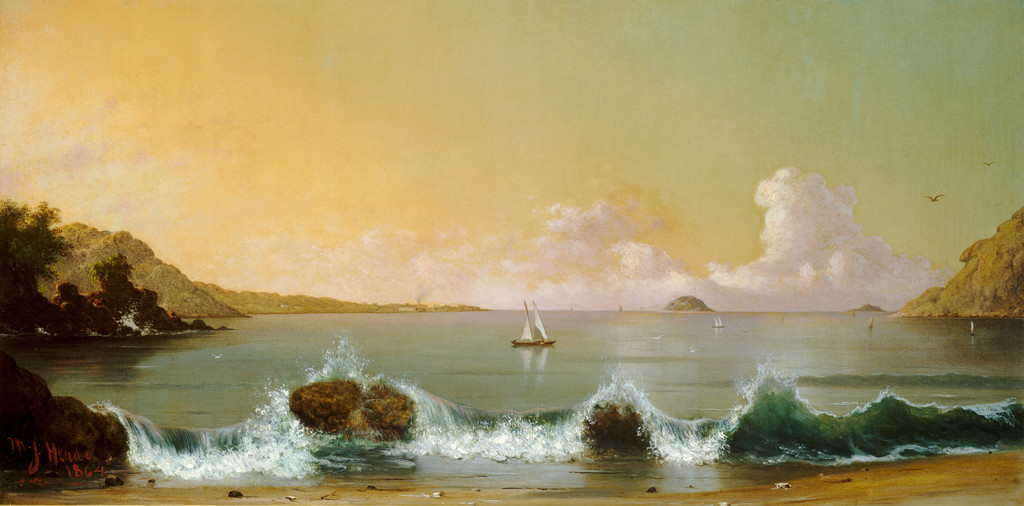
Martin Johnson Heade, Rio de Janeiro Bay, 1864. Oil on canvas. National Gallery of Art, 1965.2.1. Image source. CC0 / Public domain. Resized only; native appearance preserved.
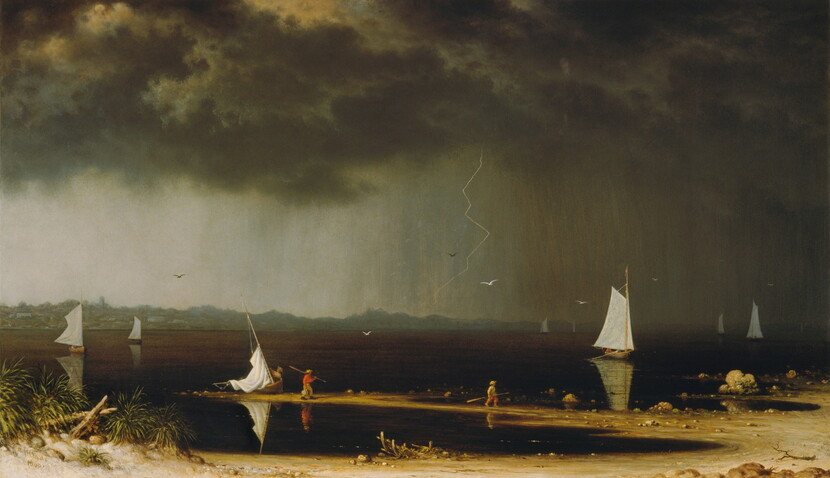
Martin Johnson Heade, Thunder Storm on Narragansett Bay, 1868. Oil on canvas. Amon Carter Museum of American Art, 1977.17. Native 830-pixel-wide museum image; no enlargement. Image source. Public domain. Resized only; native appearance preserved.
Artworks directory
A collected selection of 26 individually identified museum paintings, including thirteen extended artwork studies. This is a bounded directory, rather than a complete catalogue raisonné. Two Boston entries retain dates from the 2002 conservation study. Links open a companion article where available, otherwise the cited institutional record or publication; unillustrated objects remain included.
Frequently Asked Questions
Kelly’s museum note says Stebbins identified the setting of the formerly named Sailing Sloops in a Bay as York Harbor in southern Maine. The titles refer to the same painting.[2]
The museum records a purchase in 1999, accession 1999.291. That is distinct from the painting’s 1877 date.[1]
Discussion
Look again at the images and ideas explored in York Harbor, Coast of Maine by Martin Johnson Heade. These editorial prompts invite your observations.
Reader Insights
How do three boats and their reflections organise depth?
What changes in the Brazilian surf or Narragansett storm?
How do the stakes and near bank keep the quiet inlet connected with use?
Join the Conversation
Share a detail, comparison or question about York Harbor, Coast of Maine by Martin Johnson Heade below.
References
- Art Institute of Chicago, York Harbor, Coast of Maine, 1999.291. Current metadata, credit, provenance and 2002 exhibition history checked against the museum’s API. View source
- Sarah E. Kelly, “York Harbor, Coast of Maine,” Art Institute of Chicago Museum Studies 30(1), 2004, printed pp.16–17 and associated endnotes. Composition, former title and Stebbins identification; philosophical and coastal-development readings attributed to the author. View source
- Franklin Kelly, American Paintings of the Nineteenth Century, Part I (NGA, 1996), printed pp.288–291. Exact 1864 Rio de Janeiro Bay comparison, distinct from the Maine inlet. View source
- Amon Carter Museum of American Art, Thunder Storm on Narragansett Bay, 1977.17. Exact separate 1868 storm painting. View source
- Splash image source.
Martin Johnson Heade, York Harbor, Coast of Maine, 1877. Oil on canvas, 38.7 × 76.8 cm. Art Institute of Chicago, 1999.291. CC0 / Public domain. Resized only; native appearance preserved.
View source