 by Tom Gurney
Tom Gurney BSc (Hons) is an art history expert with over 20 years experience
Email: tomgurney1@gmail.com / Phone: +44 7429 011000
Ariadne: Durand’s Engraving after Vanderlyn: Introduction
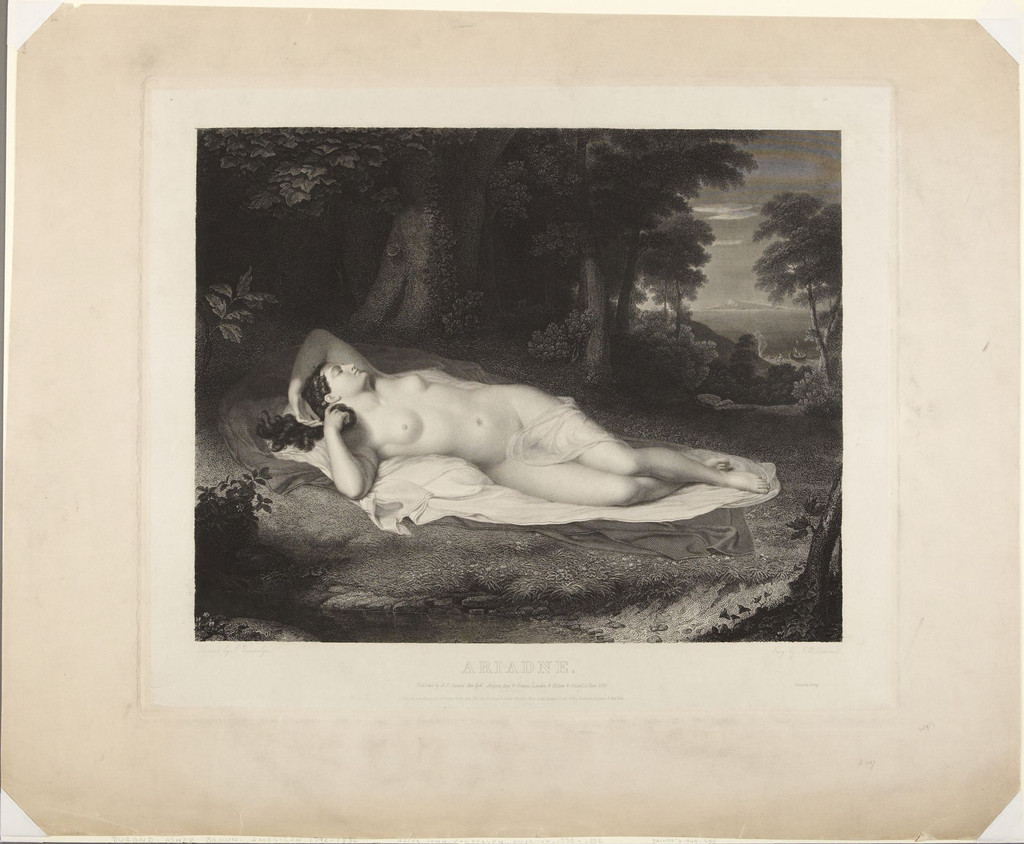
A sleeping woman occupies a sheltered opening beside the sea in Asher Brown Durand’s Ariadne. Her pale figure and the cloth beneath her stand out against a dense setting of trunks, branches and shaded ground. Published in 1835 after John Vanderlyn’s painting, the engraving records an important achievement in the career Durand pursued before becoming known chiefly for landscapes.[1]
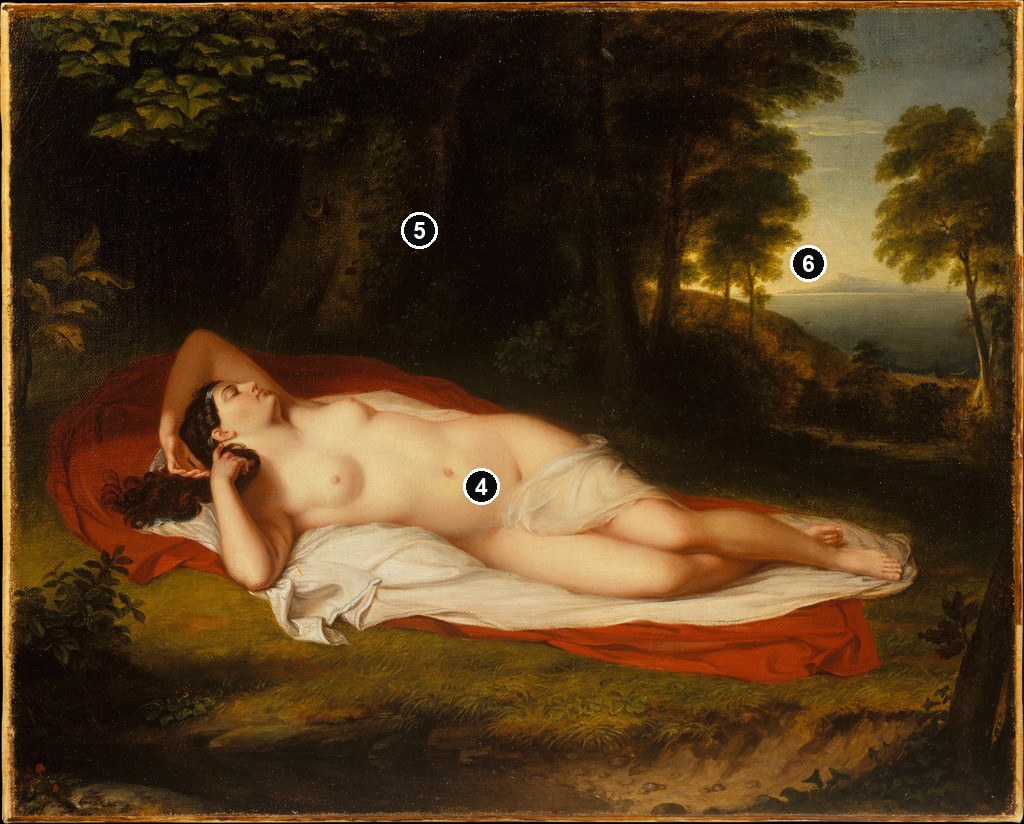
The impression shown here belongs to Princeton University Art Museum. A second image presents Durand’s own painted copy in the Metropolitan Museum of Art. Together, they make the passage from colour to engraved line visible, while keeping three different objects distinct: Vanderlyn’s original painting, Durand’s preparatory oil and the published print.[2]
At a Glance
- EngraverAsher Brown Durand (1796–1886), after John Vanderlyn
- TitleAriadne
- Date1835
- MediumEngraving
- PrinterAlbert B. King
- Image dimensions36 × 45.3 cm
- Plate dimensions45 × 53.5 cm
- Sheet dimensions58.5 × 71.8 cm
- CollectionPrinceton University Art Museum, Mather Collection
- Accessionx1949-255
This work across Asher Brown Durand’s career
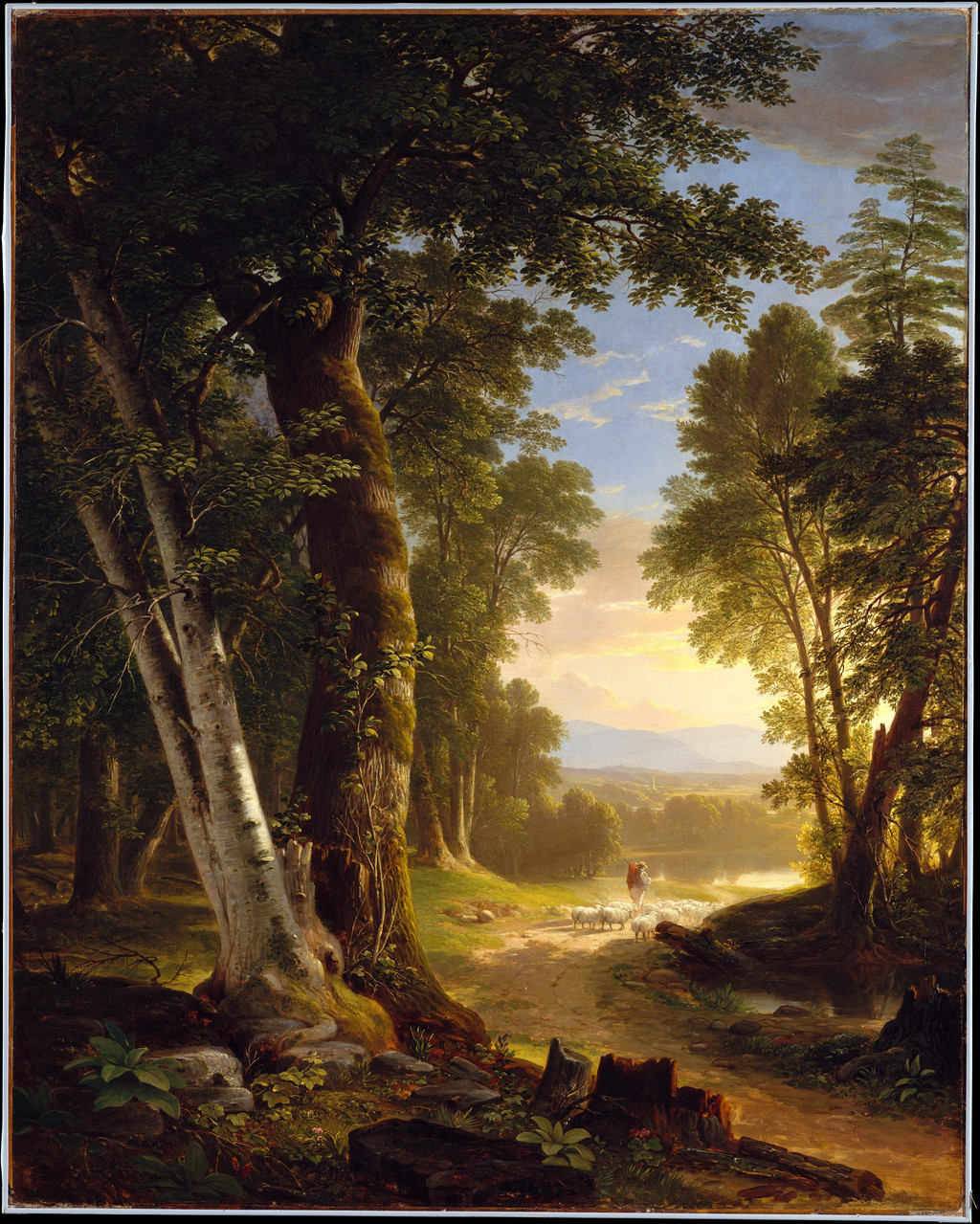
The Beeches
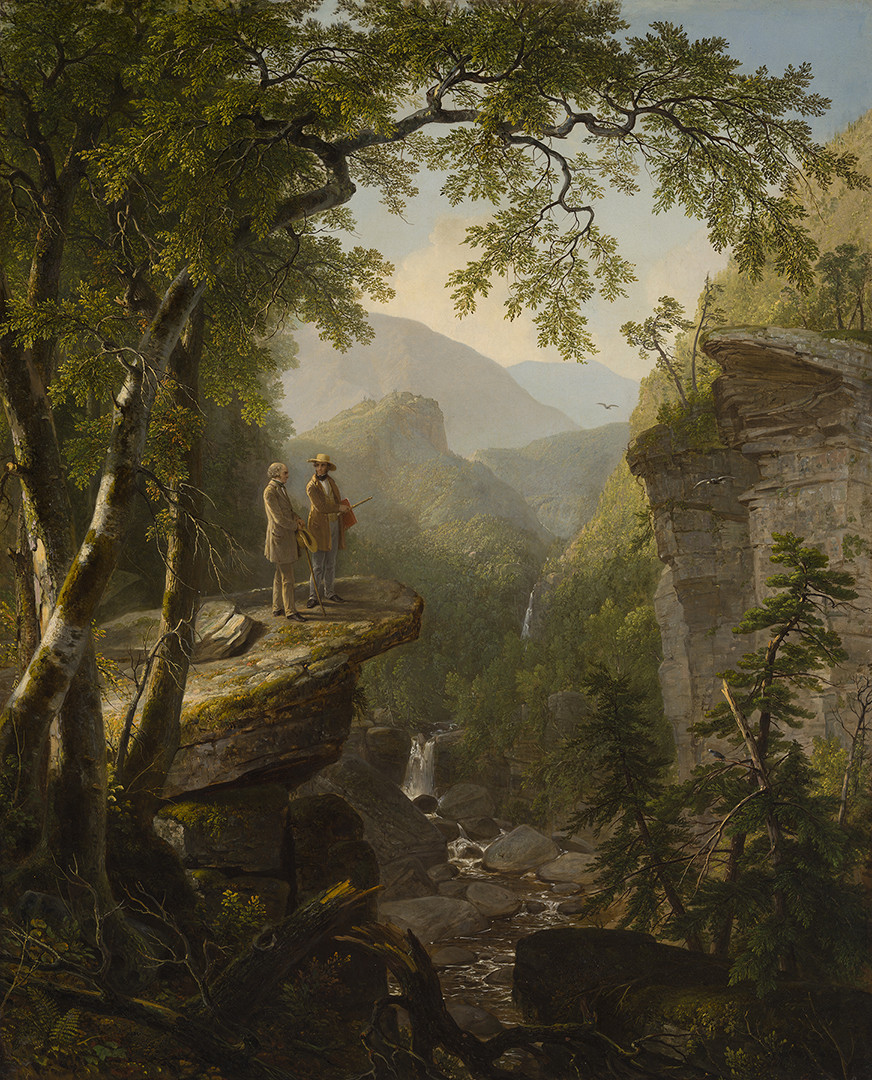
1845Kindred Spirits
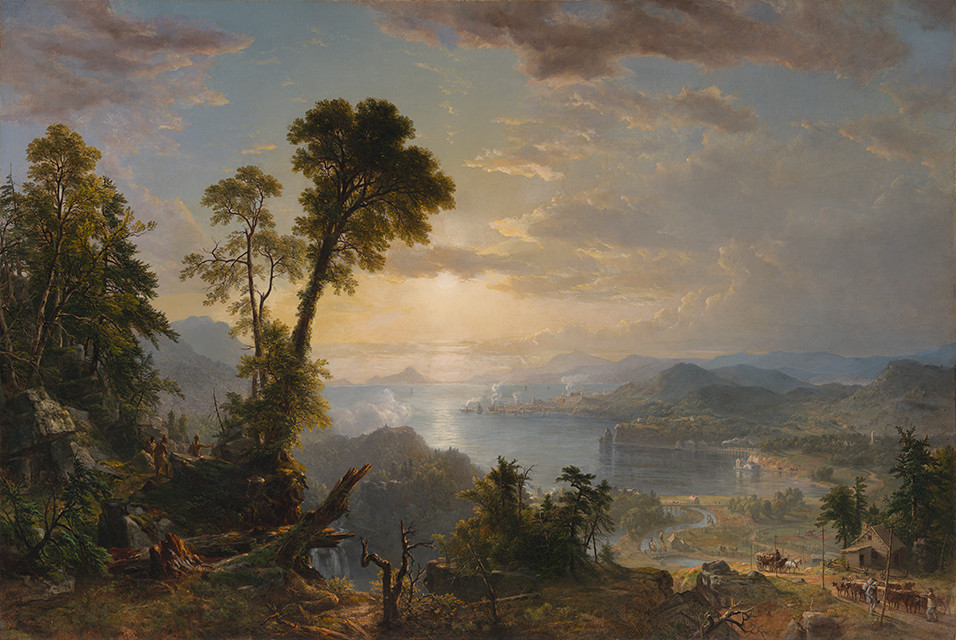
1849God’s Judgment Upon Gog
ca.1851–52River Scene
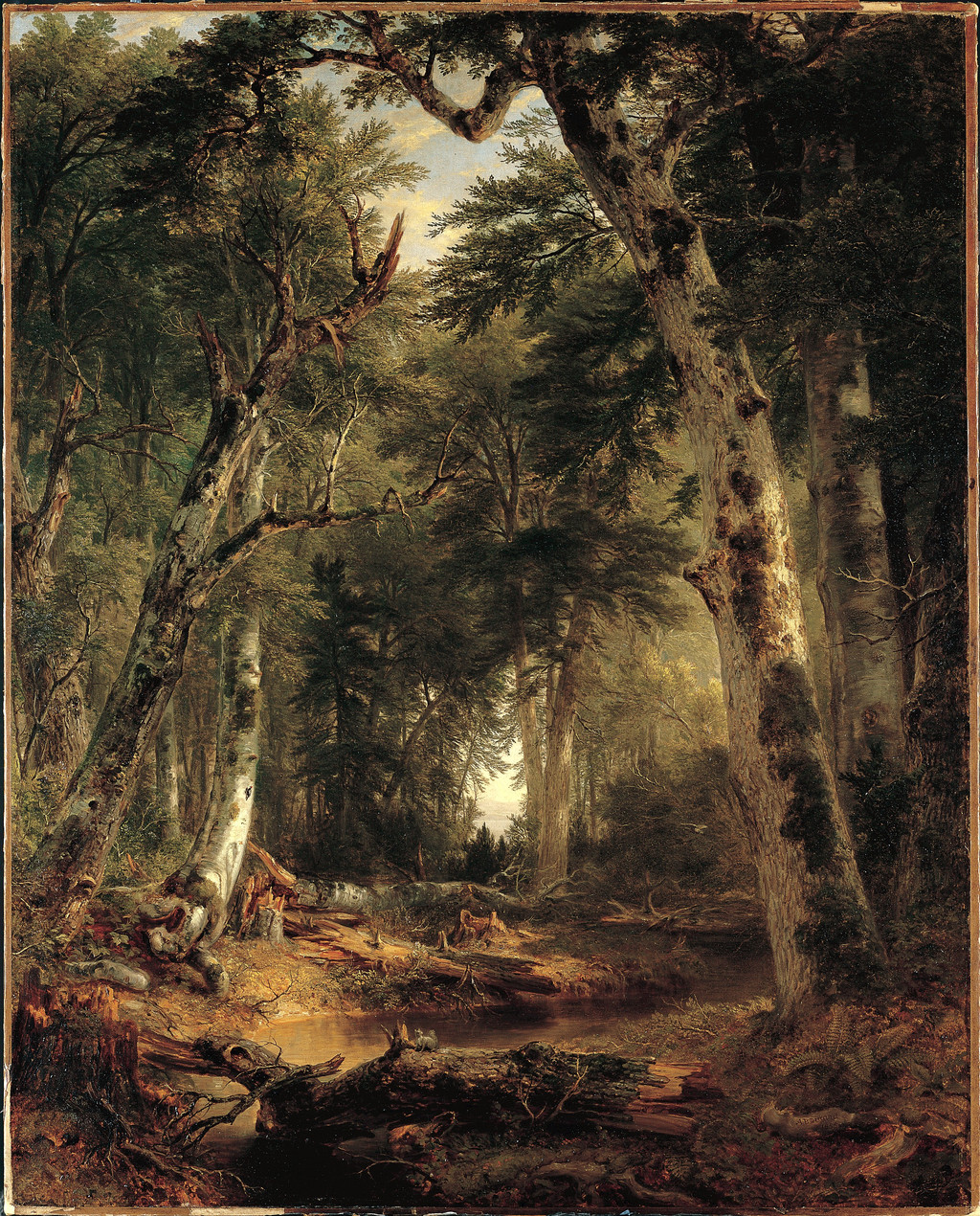
1854In the Woods
1855The Catskills
1859Sunday Morning
1860Summer Afternoon
1865Contents
- The sleeping figure and the sea
- What engraved line can do
- Vanderlyn’s original and Durand’s oil copy
- Reading the complete sheet
- Printer, engraver and publisher
- A major work near a professional turning point
- Annotated details
The sleeping figure and the sea
The woman lies across the lower part of the image, her body following a long diagonal from the raised head and arm at the left toward the legs at the right. Folded cloth beneath her supplies a second pattern of slopes and curves. The foreground remains close enough for these forms to carry the composition.
Trees rise behind the head and shoulders, while a large trunk and spreading branches extend over the scene. Their darker surfaces give the pale figure a sheltered setting. Small plants and irregular ground connect the body’s resting place with the surrounding woodland.
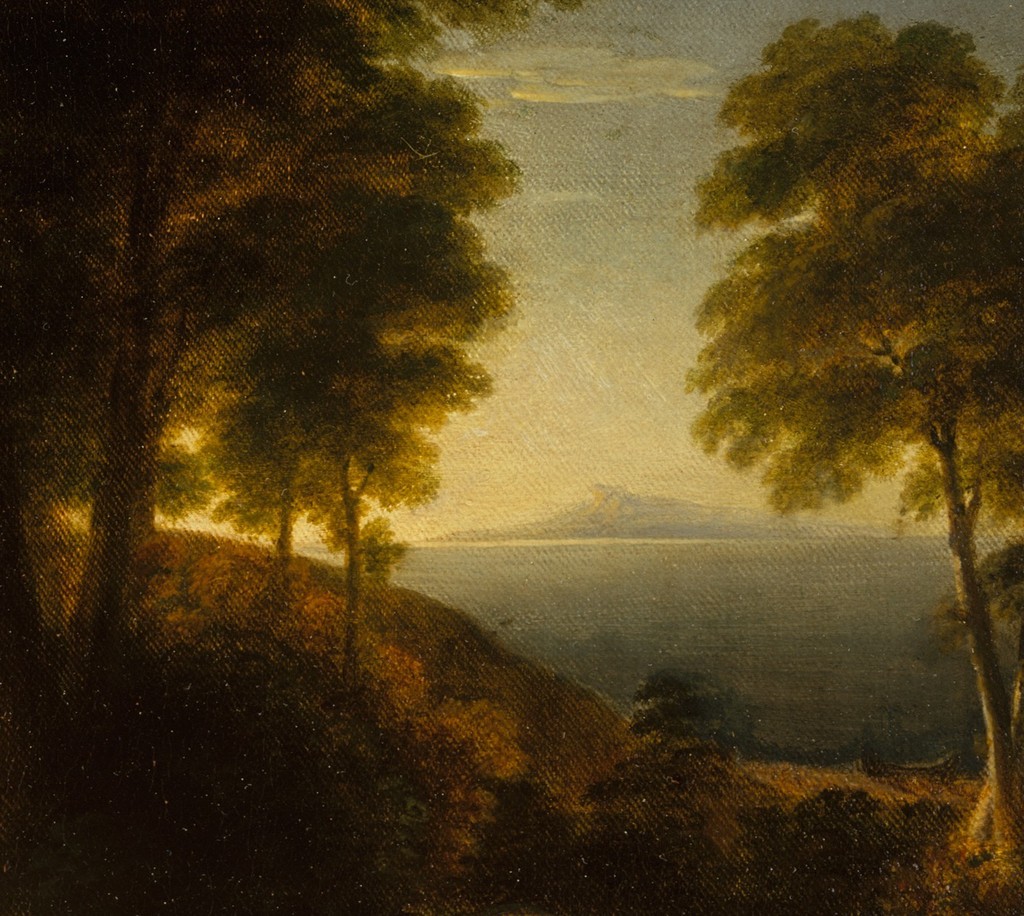
An opening at the right leads beyond the vegetation toward water and distant land. This interval changes the scale of the scene: the viewer can move from the sleeping figure to a much more extensive coastal setting. The background also keeps Ariadne’s isolation visible without supplying a second principal figure.
The Met identifies the subject as Ariadne, the Cretan princess abandoned by Theseus on the island of Naxos. That narrative supplies the circumstances of the sleep and separation shown in the composition.[2]
The print does not arrange the story as a sequence of several episodes. Its attention remains on one resting body within a particular environment. Knowledge of the myth therefore changes how the quiet scene is understood, even though the absent Theseus contributes no visible action of his own.
Annotated Details from Ariadne: Durand’s Engraving after Vanderlyn
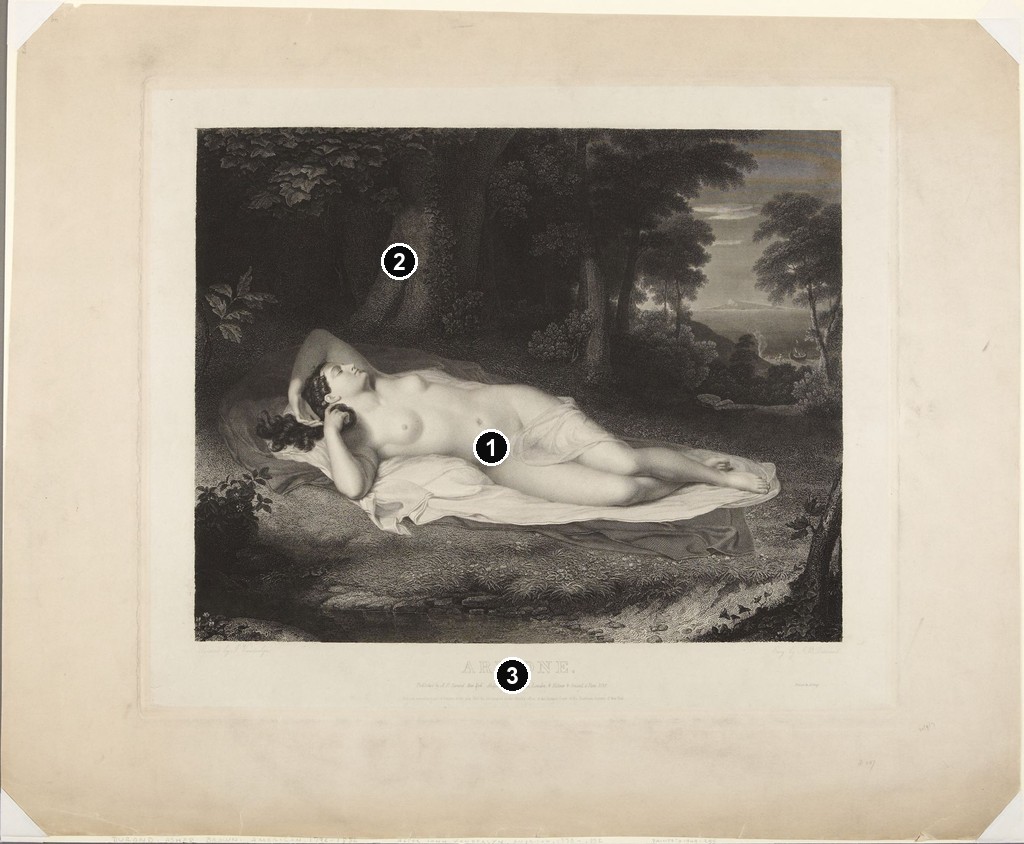
The numbered points identify visible features discussed in this article. Return from each detail to the whole composition. The captions keep each work’s identity, date and medium separate.
Ariadne Engraving
Asher Brown Durand after John Vanderlyn, Ariadne, 1835. Engraving, printed by Albert B. King. Princeton University Art Museum, Mather Collection, x1949-255. Line and tone describe cloth, figure and woodland within a monochrome image. Princeton University Art Museum; Mather Collection. Image source. Public domain. Resized only; native appearance, complete carrier and margins preserved.
Ariadne Oil Copy
Asher Brown Durand after John Vanderlyn, Ariadne, about 1831–35. Metropolitan Museum of Art, 97.29.2. Gift of Samuel P. Avery, 1897. Durand’s preparatory oil copy, distinct from Vanderlyn’s original. The Metropolitan Museum of Art; gift of Samuel P. Avery,1897. Image source. CC0 / Public domain. Resized only; native appearance, complete carrier and margins preserved.
Details from ARIADNE: DURAND’S ENGRAVING AFTER VANDERLYN
Compare the cropped details with the complete images above. Notice how their colours, shapes and positions contribute to the larger compositions.
Ariadne Engraving
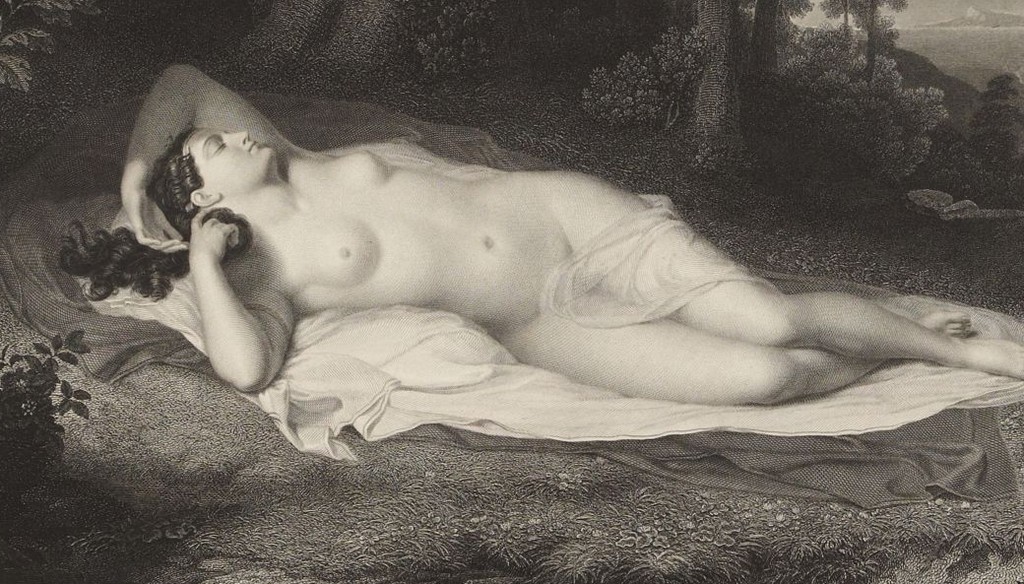
Sleeping figure and folded cloth
The pale sleeping figure lies across folded cloth within the darker setting. Engraved marks describe the different surfaces.
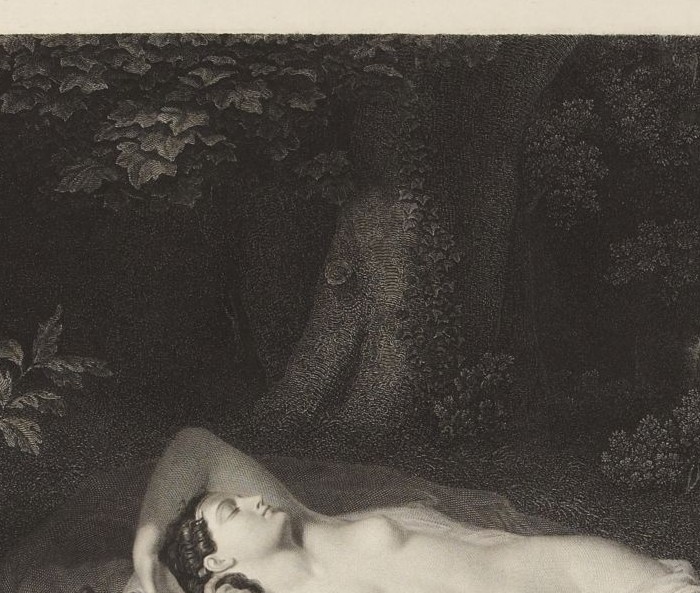
Line within the wooded setting
Closely worked marks form trunks and foliage above the figure. Their tonal density contrasts with the lighter body.
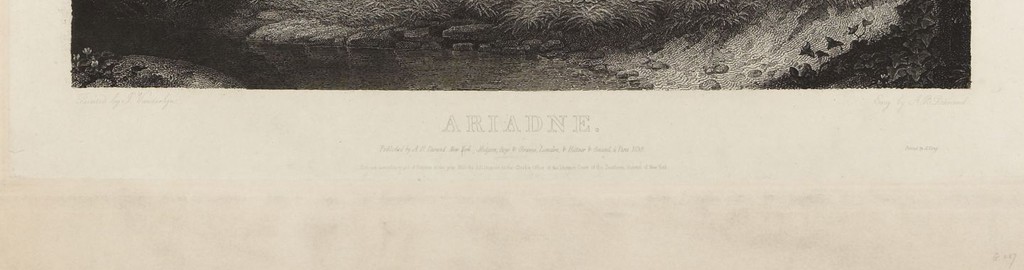
Title and lettering below the image
The title and finer lettering occupy the lower sheet beneath the scene. Their faint appearance is preserved; publisher transcription follows the institutional record.
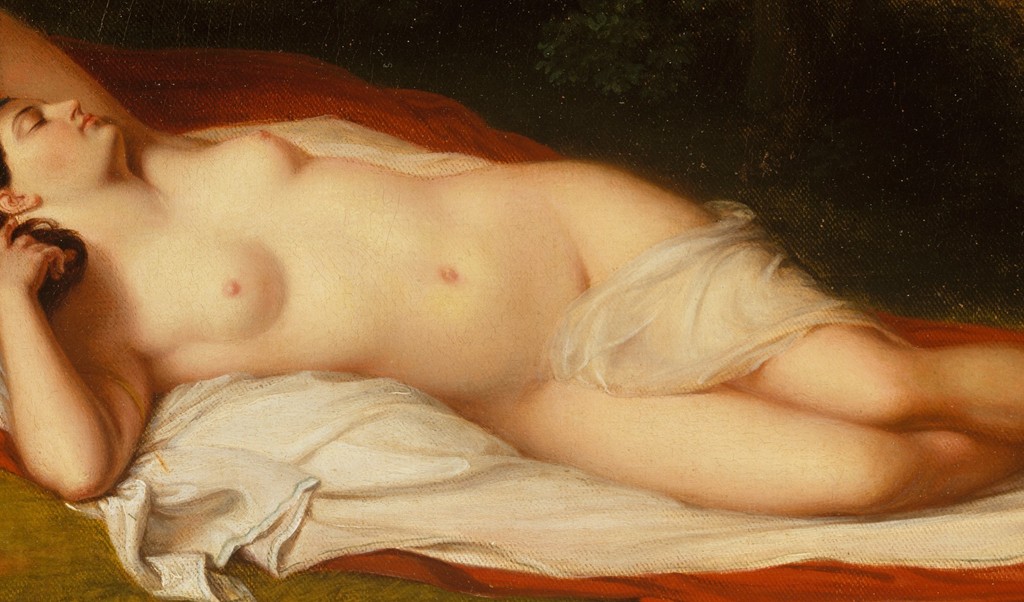
Ariadne Oil Copy
Pale figure and coloured cloth
The pale figure lies against white and red cloth. Colour supplies distinctions that the related engraved sheet communicates through marks.
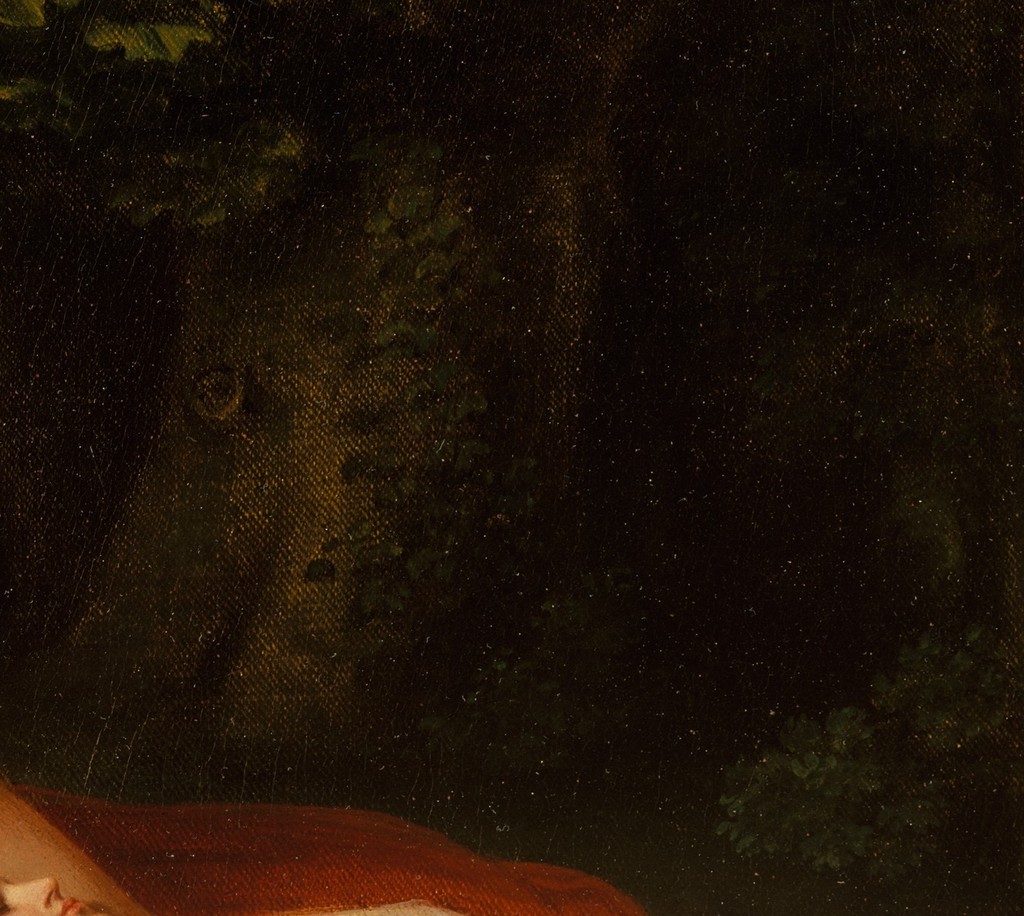
Trees above the figure
Dark trunks and foliage enclose the figure from above. Their warm and cool changes retain the painted surface’s colour.
Sea through the right opening
A lighter sea and distant shore appear through the wooded opening at the right. The crop connects that distance with the near trees.
What engraved line can do
The pale body is the clearest light area within the woodland setting. Changes in tone around the limbs and torso make its rounded form distinguishable from the flatter cloth underneath. The face and resting arms remain part of this continuous arrangement of light and shadow.
Across the print, closely grouped lines create darker passages. More open intervals allow the paper’s lighter surface to remain visible. The resulting pattern can suggest a solid trunk, dense foliage or softer modelling according to how the marks follow the form.
The cloth provides another opportunity to compare surfaces. Its folds change direction more abruptly than the rounded body, creating narrow dark intervals beside lighter ridges. These alternations help separate fabric from skin even though both are represented in the same printed ink.
The surrounding trees demand a different distribution of marks. Irregular branches interrupt the upper opening, while foliage gathers into dark masses. That variety gives the woodland enough substance to support the figure without making every part of the scene equally prominent.
This is a translation of a painted composition into a different means of description. The print cannot simply reproduce the oil’s red drapery, brown trunks or green foliage as those colours. It establishes relationships between them through tone, contour and the direction and concentration of lines.
Marilyn S. Kushner and Linda S. Ferber discuss Durand’s working passage from painted source to drawing and then to the engraved plate. Their account places the print within an established craft practice that required both close study of another artist’s design and decisions about its new medium.[4]
Vanderlyn’s original and Durand’s oil copy
Vanderlyn’s original Ariadne dates from 1809–14 and belongs to the Pennsylvania Academy of the Fine Arts, according to the Met’s account. The coloured comparison reproduced here is Durand’s copy after that work, rather than Vanderlyn’s canvas itself.[2]
The Met dates the copy to about 1831–35. It records the medium as oil on canvas, dimensions of 43.5 × 49.2 cm and accession 97.29.2. Samuel P. Avery gave it to the museum in 1897.
In this oil, red fabric creates a strong colour accent beneath the pale figure. The brown-green trees and deeper shadows establish the surrounding enclosure, while the sea opening remains lighter. Those relationships make useful points of comparison with the monochrome print.
The copy is also an independent surviving stage in Durand’s work. The Met explains that he usually made a small oil version before engraving a painted source. Its presence here allows the preparatory process to be considered through an actual object rather than through an imagined reconstruction.
John Durand’s 1894 memoir gives a closely related account. Although the original painting was available in his father’s studio, John says Durand first made a reduced copy in colour at the intended engraving’s size. He praises its drawing, modelling and communication of the original’s overall effect.[3]
John’s assessment belongs to a retrospective family memoir. The present museum objects provide firmer identities for the surviving oil and print; his account supplies testimony about the sequence of work. These kinds of evidence can be used together without treating a son’s praise as a modern technical examination.
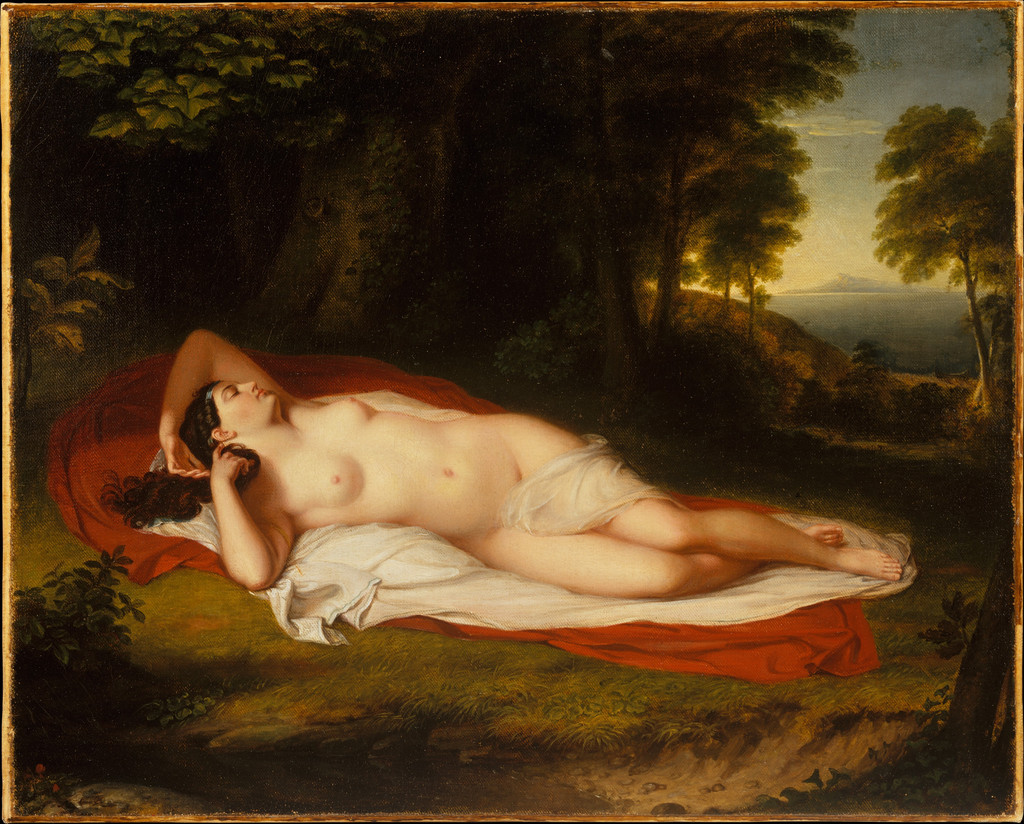
Asher Brown Durand after John Vanderlyn, Ariadne, about 1831–35. Oil on canvas, 43.5 × 49.2 cm. Metropolitan Museum of Art, 97.29.2. Gift of Samuel P. Avery, 1897. Durand’s copy, made before the engraving. The Metropolitan Museum of Art; gift of Samuel P. Avery,1897. Image source. CC0 / Public domain. Resized only; native appearance, complete carrier and margins preserved.
Watch: Asher Brown Durand
Choose a film to explore the artist’s work, its interpretation and its wider setting.
Friendship and landscape, Asher B Durand's Kindred Spirits
Smarthistory and Crystal Bridges discuss friendship, memory and landscape in Kindred Spirits.
Watch on YouTubeReading the complete sheet
The Princeton image includes the paper surrounding the printed composition. These broad margins are part of the surviving impression, with the lower area carrying the title and production credits. Keeping them visible allows the picture to be read as a published object.
The museum records three different measurements. The image is 36 × 45.3 cm, the plate 45 × 53.5 cm and the sheet 58.5 × 71.8 cm. These describe different extents and should remain separately identified.[1]
Below the composition, the inscriptions identify Vanderlyn as painter and Durand as engraver. They also credit the printer. The sheet consequently distinguishes the person who supplied the painted design from the people who translated and printed it.
The publication line names Durand in New York, Hodgson, Boys & Graves in London and a publisher in Paris. The city names show the geographical reach envisaged for the published work. They do not establish how many impressions were actually sold in each place.
Princeton’s record also transcribes the 1835 copyright entry for the Southern District of New York. The date appears within the object’s own publication apparatus, as well as in the museum’s current catalogue identification.
The Princeton impression is credited to the Mather Collection and carries accession x1949-255. Those details attach the displayed sheet to a specific collection object. They also prevent its margins, inscriptions and individual appearance from being mistaken for the appearance of every surviving impression.
Printer, engraver and publisher
Princeton identifies Albert B. King as the printer. Durand’s role as engraver concerns the plate and its translation of the painted image; King’s credit concerns the printing of the impression. The inscription’s separate names make that collaboration explicit.[1]
Durand also appears in the publication line. His involvement therefore extended beyond making the image-bearing plate. This helps explain why the practical reception and sale of the print mattered within the account of his professional career.
John’s memoir describes difficulties in obtaining satisfactory impressions and reports that many had to be discarded. He also says that a considerable number remained unsold. These are historical claims made in 1894, rather than findings from a present survey of the surviving edition.[3]
The account should not be used to diagnose this Princeton sheet as defective. Its value here is to show that the printed result and the commercial circulation of an image could pose problems distinct from the engraver’s work on the plate.
John also connects the disappointing sales with the limited audience for this kind of nude subject. That interpretation reflects his account of public taste. It gives one contemporary family perspective on reception without establishing a single response shared by all nineteenth-century viewers.
A major work near a professional turning point
Kushner and Ferber record Durand’s purchase of Vanderlyn’s Ariadne in 1831 and place the 1835 engraving near the end of his principal professional engraving career. Their discussion treats it as a culminating work in a practice that had included portraits, reproductive prints and banknotes.[4]
This background expands the meaning of Durand’s later reputation. His landscapes followed years spent judging proportion, modelling and the translation of painted effects. Ariadne preserves that sustained attention within a subject quite different from his forest interiors.
The change in professional emphasis should not be understood as the disappearance of his interest in prints. Kushner and Ferber describe a continuing engagement with print collecting later in life. The major shift concerned the work for which he increasingly became known.
A comparison with The Beeches makes the difference visible. In Ariadne, the woodland supports a principal figure borrowed from another painter’s mythological design. In the later landscape, trees, road and rural activity become the composition’s primary subject. The print remains valuable both for its own concentrated image and for the earlier craft it preserves.
Artworks directory
A collected selection of 19 individually identified paintings, prints and a graphite study, including fifteen dedicated artwork articles. This directory is not a complete catalogue raisonné. Links lead to a companion article where available, otherwise the consulted institutional record. Progress is identified by title, date and museum; an unverified accession is omitted. Unillustrated objects remain searchable.
Frequently Asked Questions
John Vanderlyn. The Met identifies his original painting as dating from 1809–14 and belonging to the Pennsylvania Academy of the Fine Arts.[2]
Princeton measures the image, the plate and the complete sheet separately. The broad paper margins and lower inscriptions extend beyond the pictorial composition.[1]
Discussion
Look again at the images and ideas explored in Ariadne: Durand’s Engraving after Vanderlyn. These editorial prompts invite your observations.
Reader Insights
Which passages make the difference between the figure’s skin and the folded cloth clearest?
How does seeing the coloured oil copy change your reading of the engraved tones?
What do the sheet’s margins and production credits add to your experience of the image?
Join the Conversation
Share a detail, comparison or question about Ariadne: Durand’s Engraving after Vanderlyn below.
References
- Princeton University Art Museum, Ariadne, x1949-255. Current object record, inscriptions, dimensions, production credits and public-domain image. View source
- Metropolitan Museum of Art, Ariadne, 97.29.2. Durand’s oil copy after Vanderlyn; object record and account of the preparatory procedure. View source
- John Durand, The Life and Times of A. B. Durand (1894). Selected Chapter VI passages, especially printed pp.75–77; reduced copy, reception and printing difficulties. View source
- Marilyn S. Kushner and Linda S. Ferber, A Master Engraver: Founding Fathers, Banknotes, and the Great American Nude (2010). Main text printed pp.53–55 and notes in The American Landscapes of Asher B. Durand. View source
- Splash image source.
Asher Brown Durand after John Vanderlyn, Ariadne, 1835. Engraving, printed by Albert B. King. Princeton University Art Museum, Mather Collection, x1949-255. Complete sheet shown; image, plate and sheet dimensions are recorded separately. Princeton University Art Museum; Mather Collection. Public domain. Resized only; native appearance, complete carrier and margins preserved.
View source