 by Tom Gurney
Tom Gurney BSc (Hons) is an art history expert with over 20 years experience
Email: tomgurney1@gmail.com / Phone: +44 7429 011000
Asher Brown Durand Biography: Introduction
Asher Brown Durand was born in New Jersey in 1796 and died there in 1886, after a career that joined skilled engraving, portrait painting, landscape and public service to art. His familiar woodland scenes grew from a much longer history of making and looking at images. Understanding that history gives the landscapes a place within the craft, institutions and friendships of nineteenth-century American art.[1]
Durand’s son John published a substantial memoir in 1894, combining recollection, documents and selected passages from his father’s writing. It is a valuable source, though its family perspective and occasional date differences require comparison with chronology and exact museum records.[3]
At a Glance
- BornAugust 21, 1796, Jefferson Village, now Maplewood, New Jersey
- DiedSeptember 17, 1886, Maplewood
- TrainingPeter Maverick, apprenticeship 1812–1817; partnership followed
- Early achievementEngraving after Trumbull’s Declaration of Independence, completed 1823
- European journey1840–1841
- National Academy presidency1845–1861
- WritingNine Letters on Landscape Painting, 1855
- Later homeMaplewood from 1869
Asher Brown Durand in context
Bars show approximate historical periods. c. means circa (about).
Hudson River School
c. 1825–1880 [15]Notes and sources
Hudson River School. An approximate span from Cole’s New York arrival to the Centennial. The name is a later critical category. Kevin J. Avery, Metropolitan Museum of Art.
Each bar runs from the artist’s birth to their death.
John Trumbull
1756–1843 · Birth–death [16]John Vanderlyn
1775–1852 · Birth–death [17]Asher Brown Durand
1796–1886 · Birth–death [18]Thomas Cole
1801–1848 · Birth–death [19]Notes and sources
John Trumbull. Life dates verified in the Met’s 2013 institutional account. Metropolitan Museum of Art.
John Vanderlyn. Life dates from the current Met object record. Metropolitan Museum of Art.
Asher Brown Durand. Career periods and exact works appear in the companion views. [1]
Thomas Cole. Life dates and landscape context. Metropolitan Museum of Art.
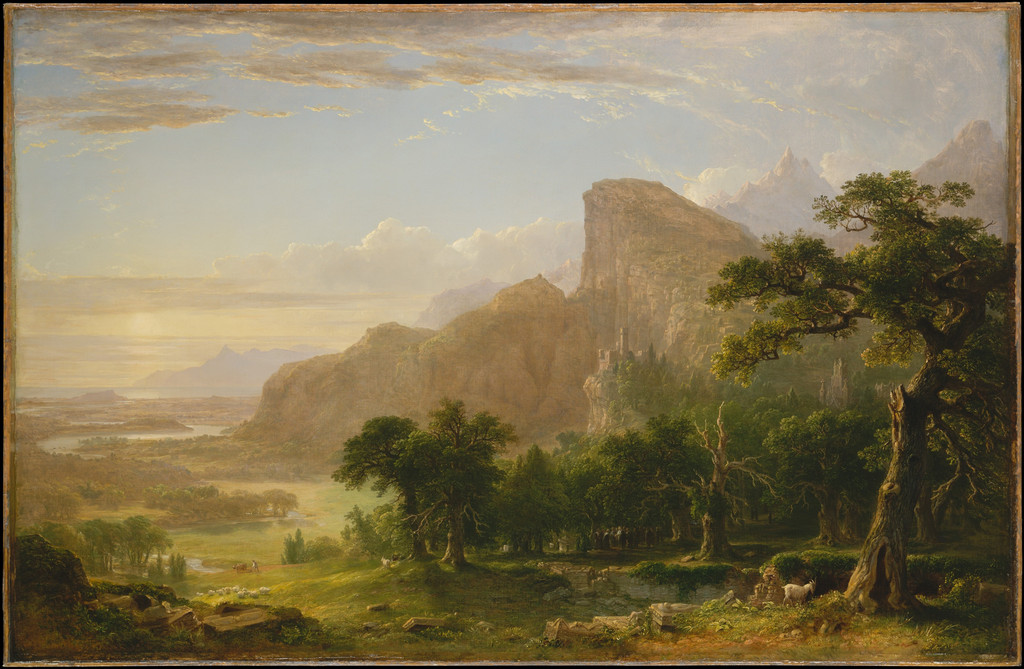
The Beeches
1845Kindred Spirits
1849God’s Judgment Upon Gog
ca.1851–52River Scene
1854In the Woods
1855The Catskills
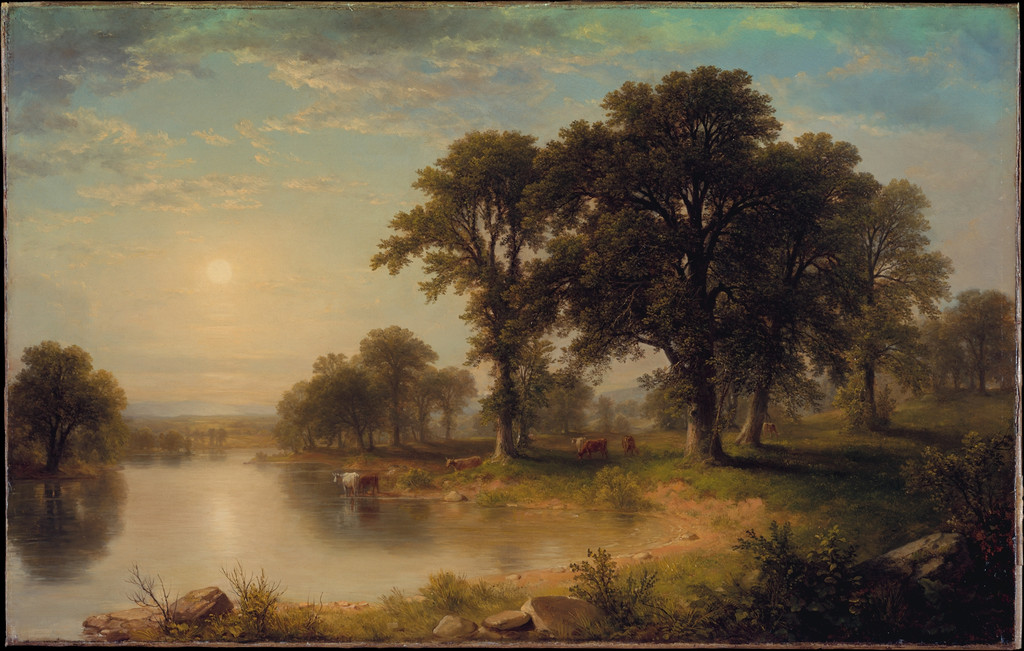
1859Sunday Morning
1860Summer Afternoon
1865Contents
- Family craft and early looking
- Finding an apprenticeship
- Partnership and the Trumbull commission
- Business, family and artistic institutions
- Ariadne and the changing balance of media
- Cole and the journey to Schroon Lake
- Europe in 1840–1841
- The Academy and a public landscape career
- Memorials and different patrons
- Annotated details
Family craft and early looking
Durand’s early recollections, preserved in John’s memoir, describe a father who worked as a watchmaker and silversmith while undertaking many other practical tasks. The household joined mechanical skill with the demands of a large family. Making an object could require making or adapting the tools needed for it.[3]
Durand remembered village schooling in reading, writing, arithmetic, geography and religious instruction. Interruptions between teaching terms left time for outdoor activity and work in his father’s shop. His account presents these experiences together rather than treating formal education as his only training.
He practised drawing figures and animals and studied printed images that came within reach. Schoolbook illustrations, watchmakers’ cards and banknote vignettes provided examples of how lines could represent form. Examining them with a magnifier encouraged him to investigate their manufacture as well as their subjects.
The account also records unsuccessful experiments with etching before he concentrated on the graver. This distinction matters: recognising an effect in a print did not mean immediately possessing the materials or instruction to reproduce it. His early progress involved trial, close examination and the limits of available knowledge.
These are retrospective memories rather than a surviving daily record of childhood. They nevertheless give a specific foundation for an artist who later valued close observation. The interest in images was already connected with an interest in the means of making them.
Four stages of Asher Brown Durand’s career
These periods group related developments; painting, travel and local work overlap across their boundaries.
From the family shop to major prints
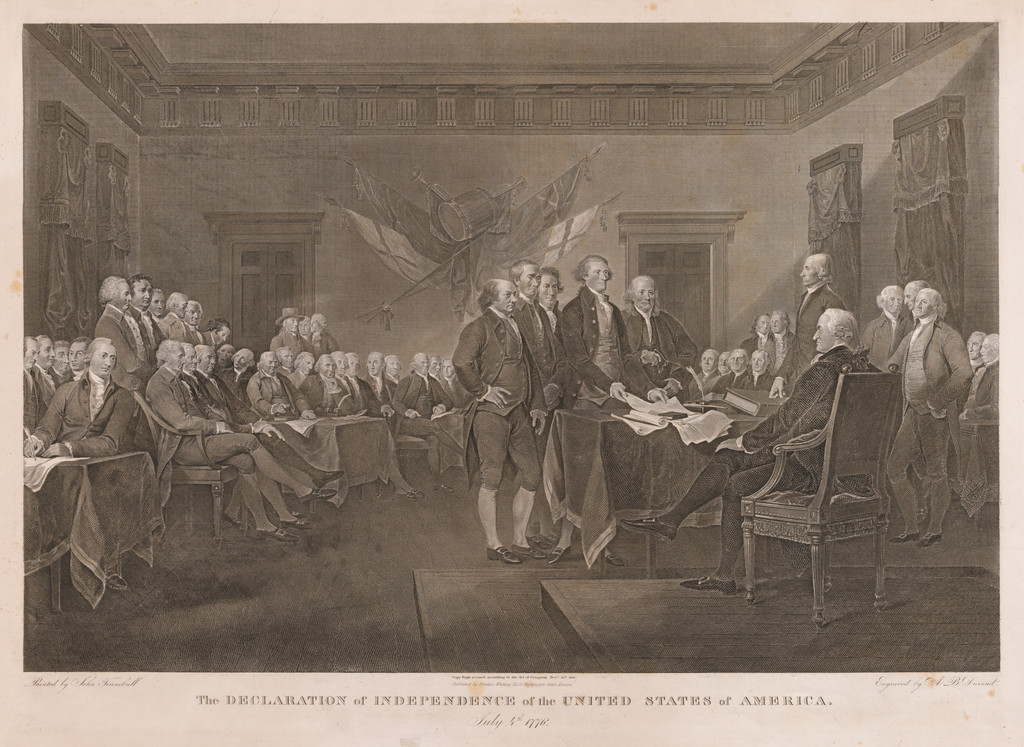
Workshop experiment, the 1812–1817 apprenticeship and partnership preceded the 1823 Declaration print, commercial engraving and early painting. [3]
Prints, portraits and landscape study
Ariadne, portrait commissions, the 1837 Adirondack journey with Cole and the 1840–1841 European tour mark overlapping developments. [5]
The Academy, commissions and letters
The 1845–1861 presidency, memorial and literary paintings, changing land use and the 1855 letters gave landscape a public and written presence. [5]
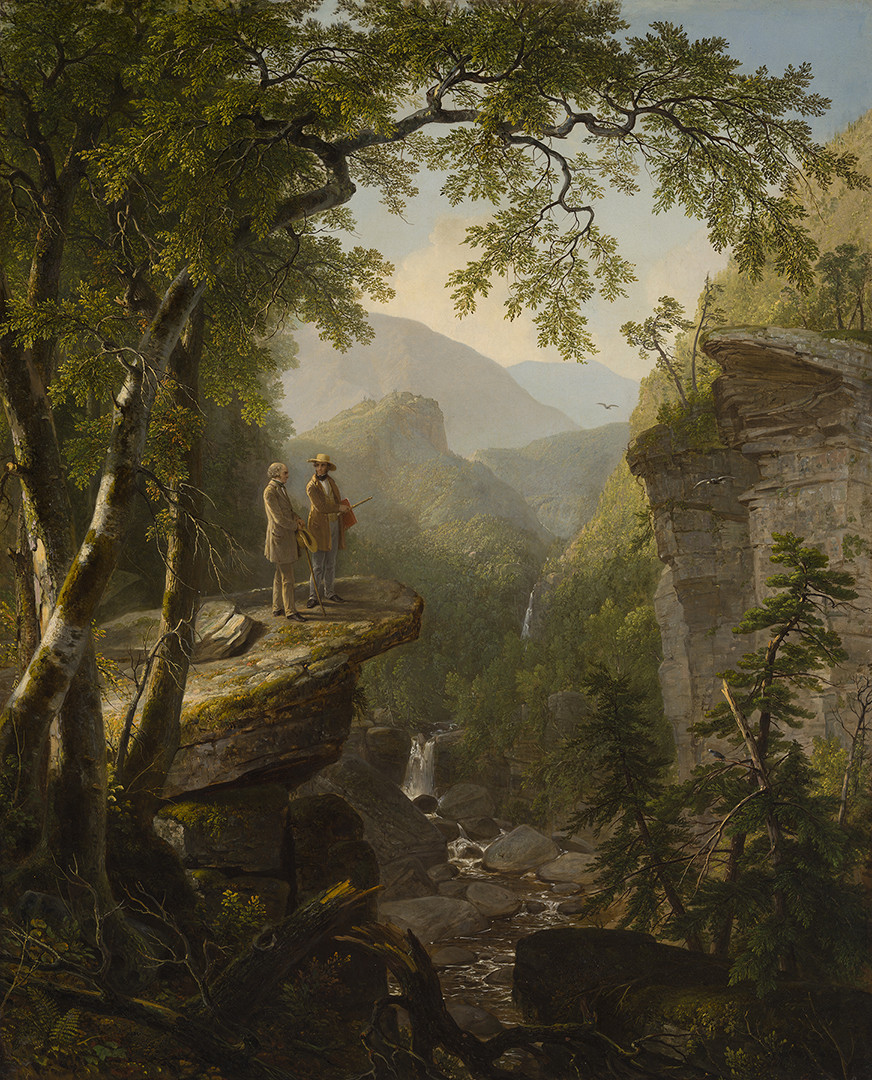
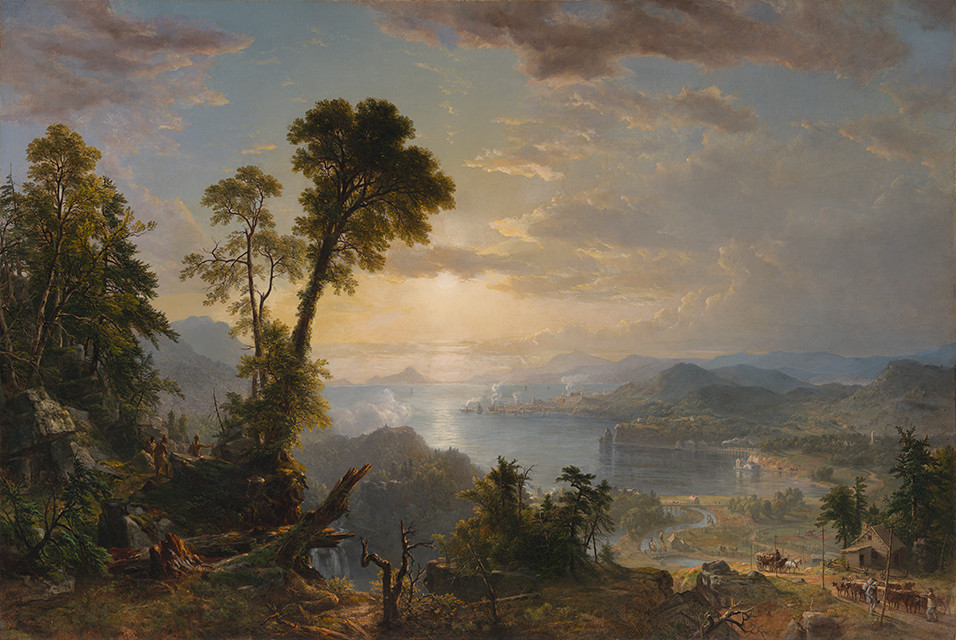
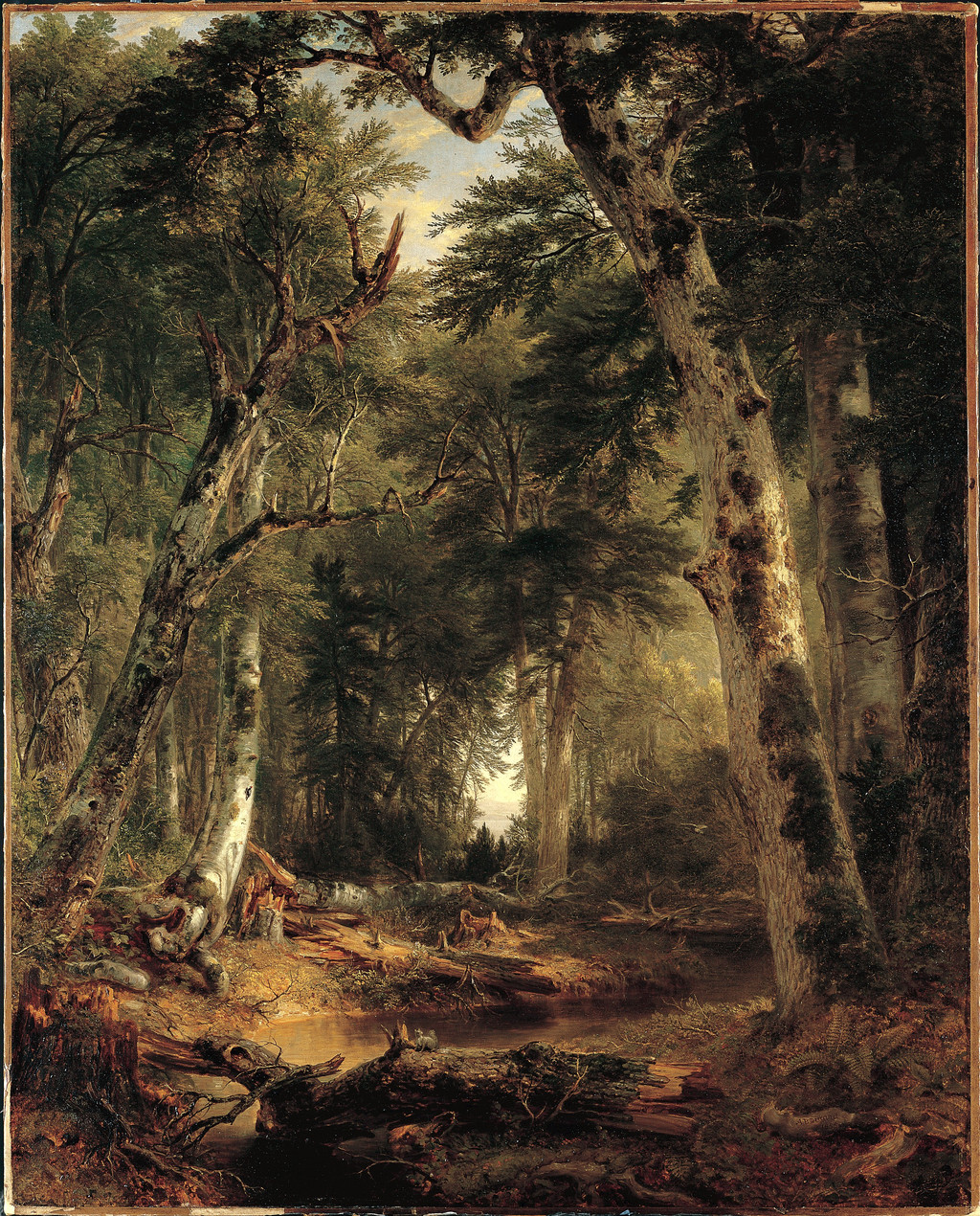
Continued painting and recognition
Later commissions and summer work continued around the 1869 move to Maplewood. Exhibiting outlasted retirement; sources differ between 1878 and 1879 for the last painting. [8]
Annotated Details from Asher Brown Durand Biography
The numbered points identify visible features discussed in this article. Return from each detail to the whole composition. The captions keep each work’s identity, date and medium separate.
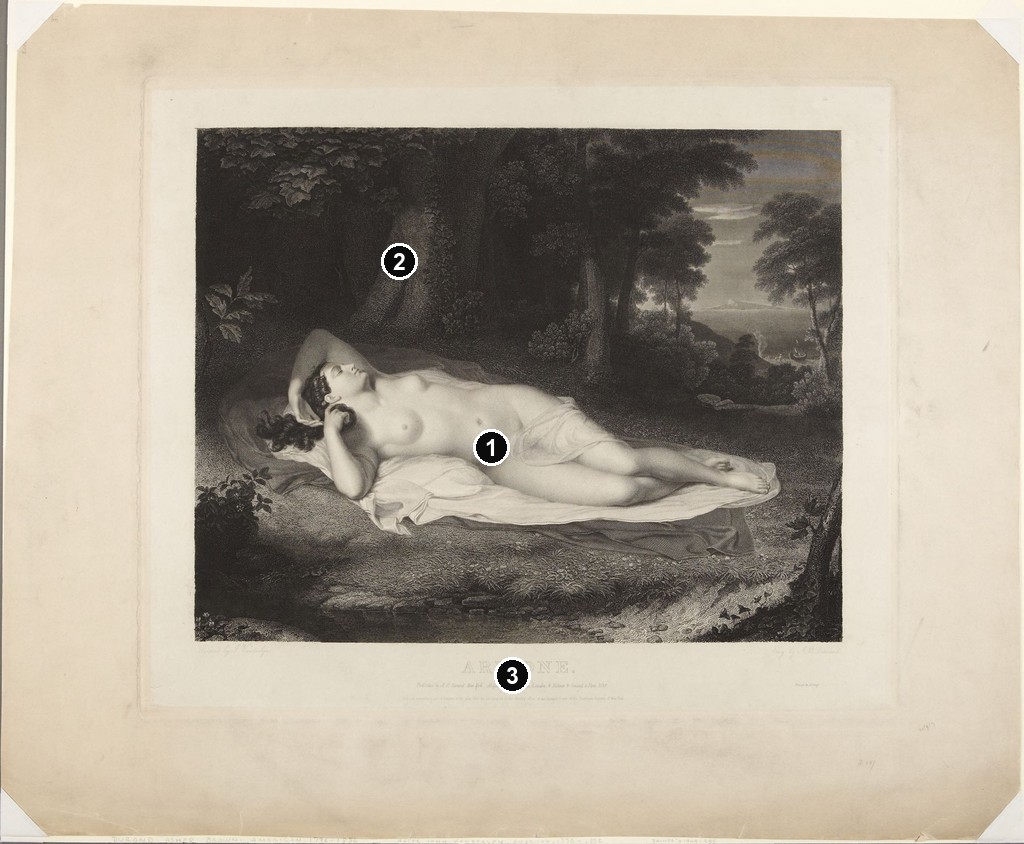
Ariadne Engraving
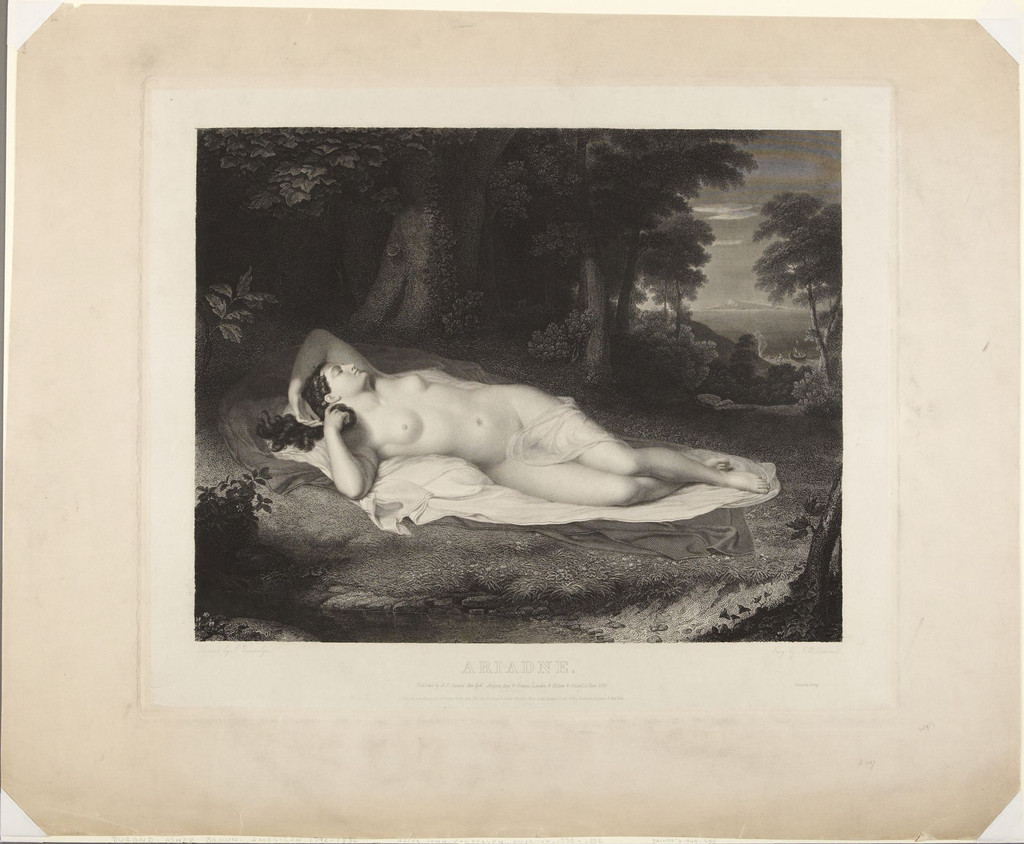
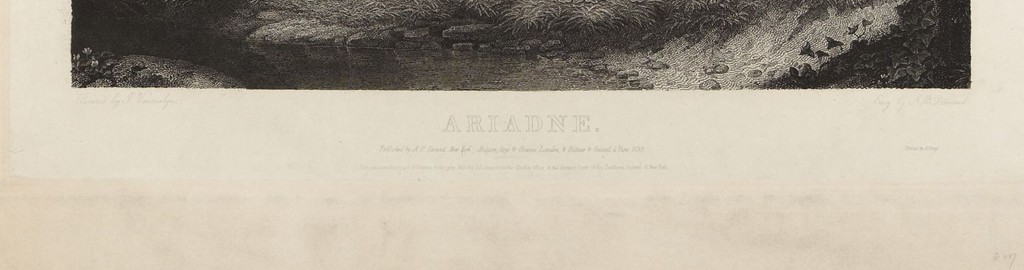
Asher Brown Durand after John Vanderlyn, Ariadne, 1835. Engraving, printed by Albert B. King. Princeton University Art Museum, Mather Collection, x1949-255. Line and tone describe cloth, figure and woodland within a monochrome image. Princeton University Art Museum; Mather Collection. Image source. Public domain. Resized only; native appearance, complete carrier and margins preserved.
Kindred Spirits
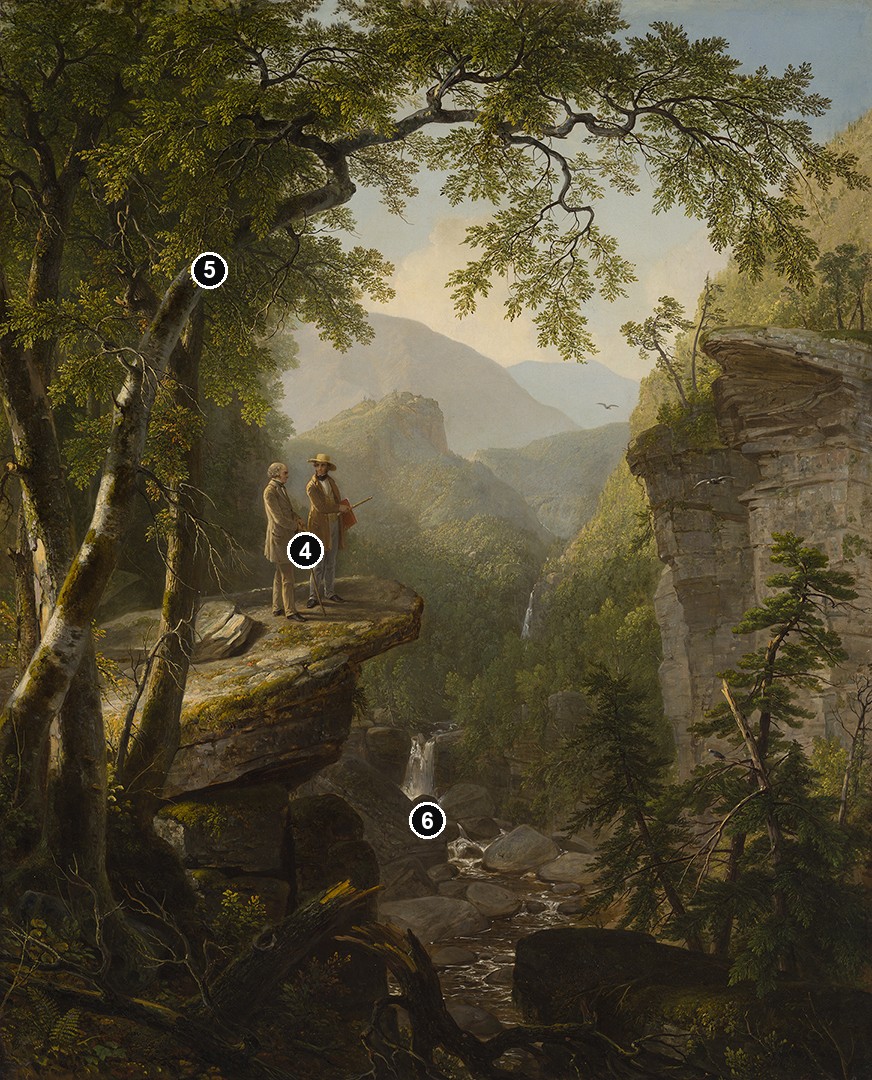
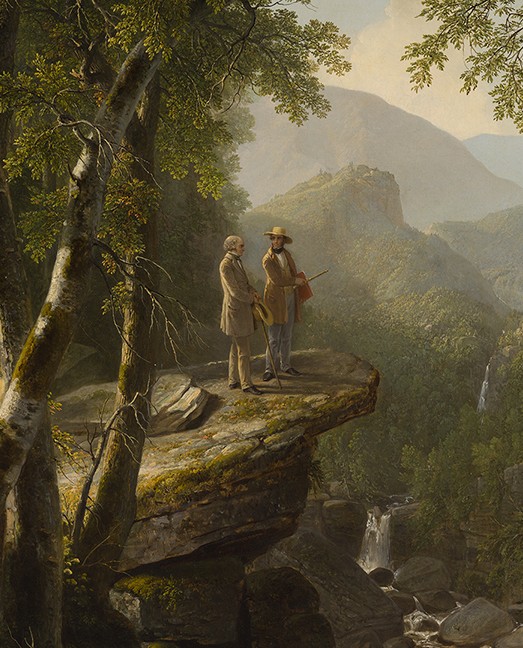
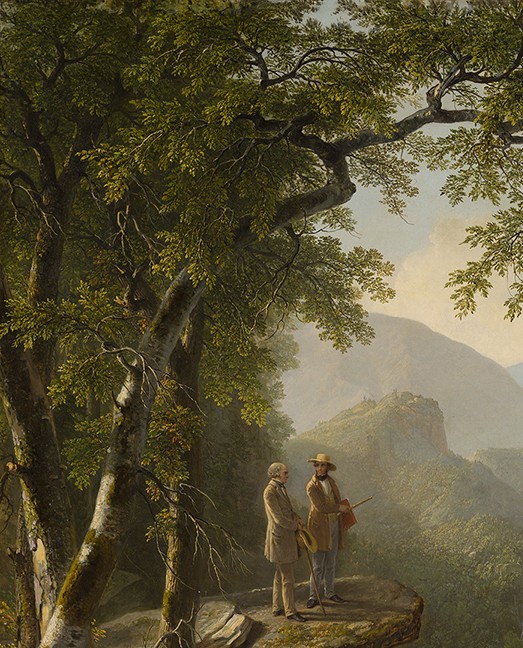
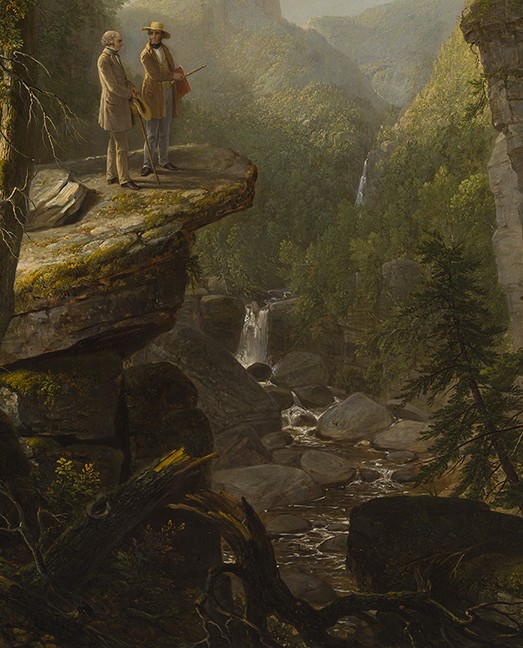
Asher Brown Durand, Kindred Spirits, 1849. Crystal Bridges Museum of American Art, 2010.106. Commissioned by Jonathan Sturges as a memorial to Thomas Cole and given to William Cullen Bryant. Broad composition shown at its available native resolution. Crystal Bridges Museum of American Art; museum-uploaded open-access reproduction. Image source. CC0 / Public domain. Resized only; native appearance, complete carrier and margins preserved.
Details from ASHER BROWN DURAND BIOGRAPHY
Compare the cropped details with the complete images above. Notice how their colours, shapes and positions contribute to the larger compositions.
Ariadne Engraving
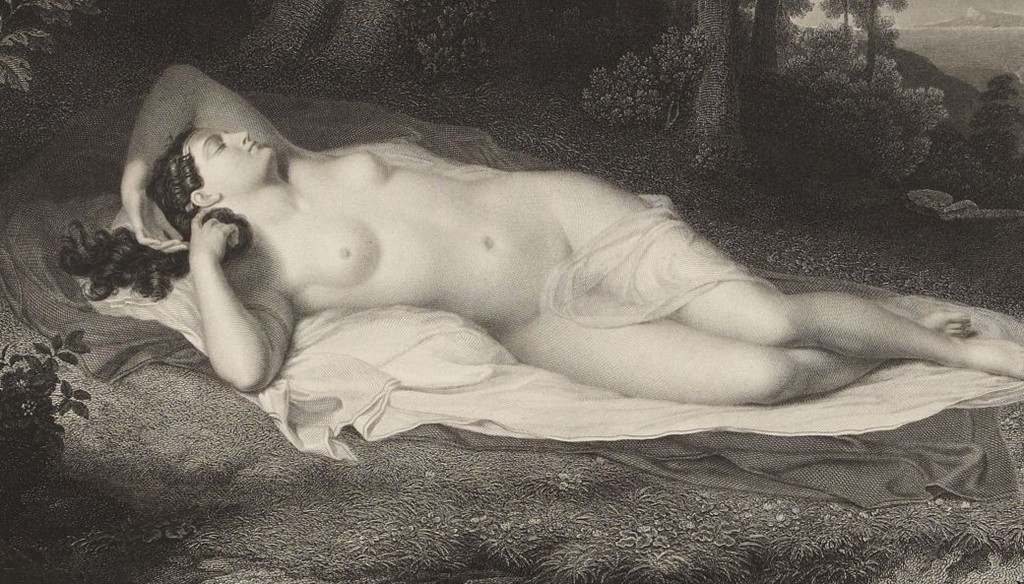
Sleeping figure and folded cloth
The pale sleeping figure lies across folded cloth within the darker setting. Engraved marks describe the different surfaces.
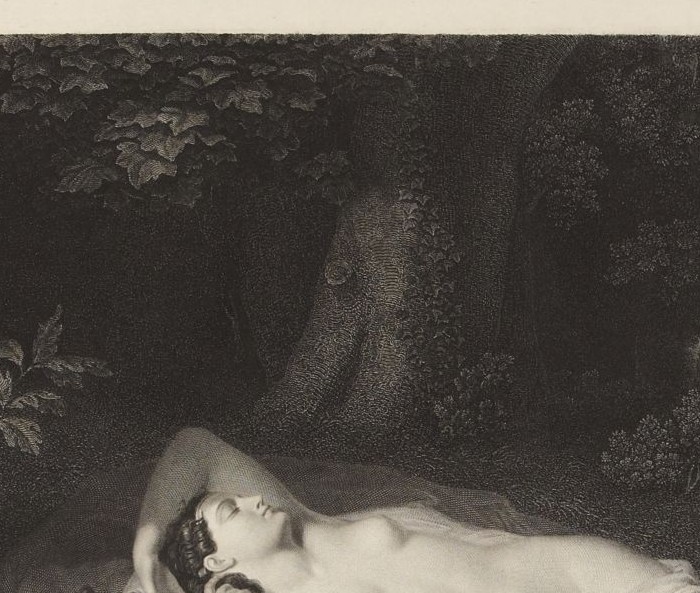
Line within the wooded setting
Closely worked marks form trunks and foliage above the figure. Their tonal density contrasts with the lighter body.
Title and lettering below the image
The title and finer lettering occupy the lower sheet beneath the scene. Their faint appearance is preserved; publisher transcription follows the institutional record.
Kindred Spirits
Two men on the ledge
Two small standing figures occupy an open rock ledge above the gorge. The broad crop retains their relationship with the surrounding landscape; tiny facial details are not inferred.
Enclosing tree and branches
A large near trunk and spreading branches enclose the figures’ space. Their darker forms frame the brighter distant opening.
Water descending through the gorge
A pale fall and rocky watercourse continue below the ledge. The broad view connects water with the depth of the gorge.
Finding an apprenticeship
John’s memoir preserves Durand’s account of efforts to obtain professional training. Enos Smith, an amateur miniature painter, encouraged the young artist and helped arrange an approach to the New York engraver W. S. Leney. The proposed terms exceeded the family’s means, and this first attempt did not lead to an apprenticeship.[3]
Durand remembered the journey’s print shops with unusual vividness. Their coloured engravings impressed him before he had visited the major European collections of his later life. The memory places commercial displays among the early sources of artistic excitement.
Peter Maverick, working near Newark, offered a practicable arrangement. Durand entered his engraving room in October 1812 for a five-year apprenticeship. The date marks a formal change from experimenting in the family shop to working within a professional business.
His initial tasks included copying an engraved head in pencil and lettering a copper plate. He then worked on illustrations and other commissions. The memoir describes a mixture of book images, banknote designs, diplomas and miscellaneous work, showing the breadth of an engraver’s everyday employment.
Partnership and the Trumbull commission
In 1817 Durand became Maverick’s associate and established the firm’s New York branch. Partnership followed apprenticeship; the two stages should not be compressed into one continuous period of pupil training. The arrangement lasted until 1820.[2]
The commission to engrave John Trumbull’s Declaration of Independence contributed to the end of that association. John’s memoir describes Maverick’s wish to share in the undertaking and the resulting disagreement. Its account gives the professional opportunity a business context as well as an artistic one.[3]
Durand worked on the large plate for several years. Completed, printed and published in 1823, it established his reputation. The task demanded the translation of painted figures, portraits and tonal relationships into a printed surface that could circulate beyond the original painting.
The model was Trumbull’s smaller painting now at Yale, as the modern engraving essay’s notes identify. The subject presents the drafting committee before Congress rather than documenting a single gathering at which every signer signed. These object distinctions prevent a celebrated print from becoming an inaccurate account of the event.[6]
The memoir also identifies Neale, an English printer brought over for the undertaking. That detail qualifies patriotic claims about the print’s production. Its importance to American art did not require every participant in its manufacture to have been American-born.
Business, family and artistic institutions
Durand married Lucy Baldwin in 1821. She died in 1830 after illness; he married Mary Frank in 1834. These family dates belong to his life without establishing a psychological explanation for every change of subject or style.[1]
During the 1820s he worked in commercial engraving partnerships involving his brother Cyrus and other colleagues. Kushner and Ferber distinguish Asher’s pictorial skills from Cyrus’s mechanical contributions to banknote work. The business brought different kinds of expertise into the same printed products.[6]
Durand also helped build institutions for artists. He chaired the November 1825 meeting to form the New-York Drawing Association. Snook’s chronology records his election among the fifteen founders of the National Academy of Design in January 1826. The precursor and the Academy’s formal founding are related milestones.[5]
Exhibitions provided settings in which his prints and paintings could appear together. His professional identity therefore developed through overlapping activities. A successful engraver could paint, join artists’ discussions and help organise an institution before landscape became his predominant public work.
Ariadne and the changing balance of media
Durand purchased John Vanderlyn’s Ariadne in 1831 and made a reduced oil copy before translating it into a major engraving. The 1835 print represents substantial reproductive work, with the painting’s figure, foliage and tonal transitions conveyed through engraved lines.[6]
John’s memoir describes the difficulty of producing satisfactory impressions and the disappointing commercial outcome. Those comments concern the family’s account of the undertaking, rather than establishing the quality of every surviving sheet. The selected Princeton impression receives separate treatment in the Ariadne article.[3]
Painting became increasingly important during the same decade. Luman Reed commissioned portraits of American presidents and encouraged Durand’s new direction. Portraits and figure subjects formed part of this transition before landscape became dominant.[2]
The shift is clearer when described as a changing balance of work. Durand’s expertise in prints remained part of his history, while new patrons and subjects enlarged his painting practice. An abrupt story of total rejection would obscure those continuing connections.
Asher Brown Durand after John Vanderlyn, Ariadne, 1835. Princeton University Art Museum, x1949-255. Gift of George L. King and David S. Mather. Complete print sheet with lettering retained. Princeton University Art Museum; Mather Collection. Image source. Public domain. Resized only; native appearance, complete carrier and margins preserved.
Cole and the journey to Schroon Lake
Thomas Cole was a friend and an important landscape example. In 1837 the Durands and Coles travelled to Schroon Lake in the Adirondacks. Snook records the excursion’s dates, while Olson relates Durand’s studies from this period to his increasing attention to individual trees.[5][9]
The journey placed observation within a shared activity. Artists could work in the same region while selecting different forms and organising their later paintings in different ways. Friendship did not remove the character of each painter’s practice.
Avery notes that Durand had exhibited occasional landscapes before the 1837 trip. The episode can therefore be understood as important encouragement within a developing interest, rather than the first instant at which he ever considered landscape.[2]
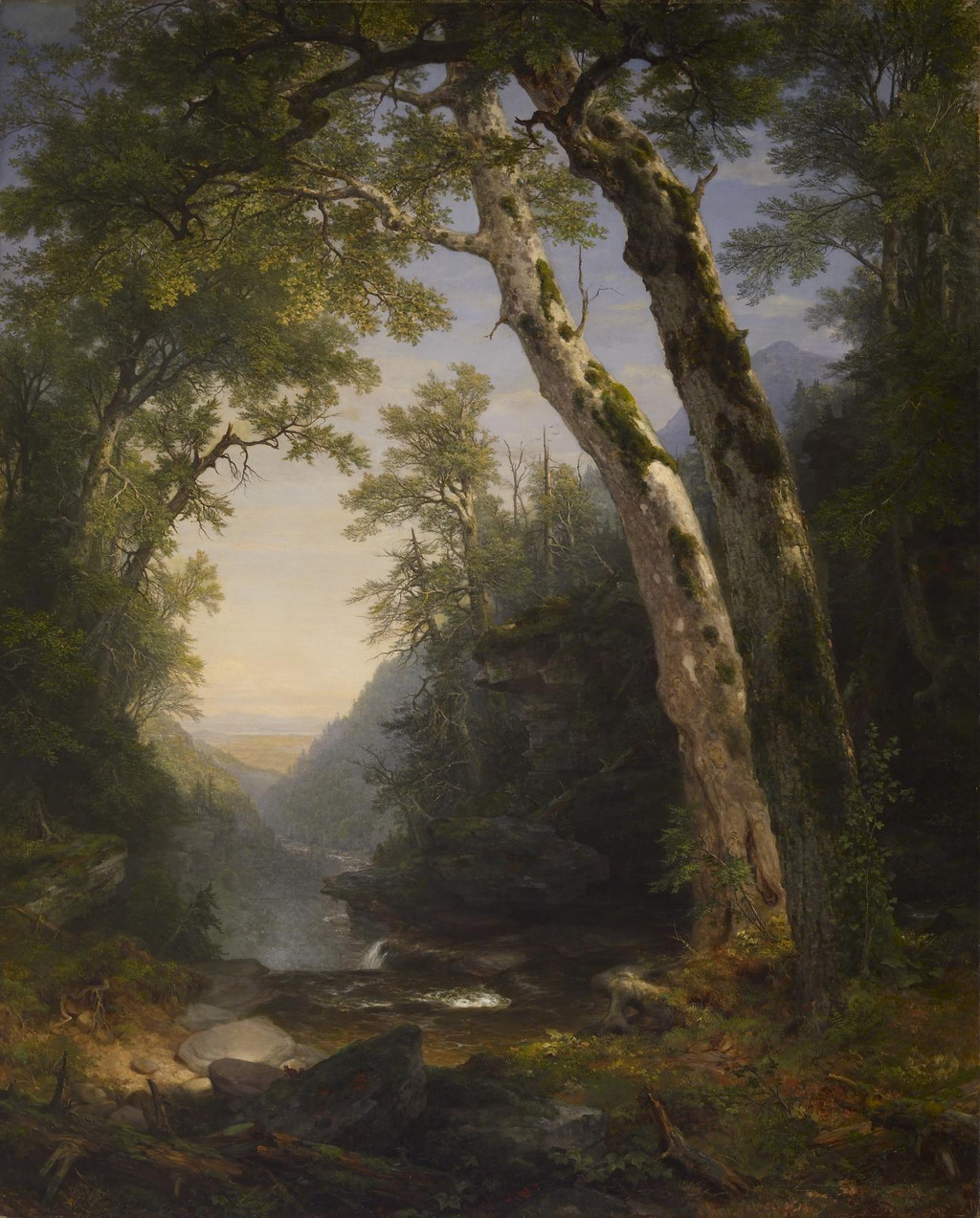
Trees became especially productive subjects for repeated looking. A trunk’s contours, branches and foliage could occupy a study without a large narrative. Olson cautions that many such studies were independent investigations, not preparatory drawings that can be assigned automatically to a named canvas.
Europe in 1840–1841
Durand left New York on June 1, 1840, with John William Casilear, John Frederick Kensett and Thomas P. Rossiter. Snook’s chronology and John’s primary account support that departure, correcting the April date in Avery’s later summary. The journey combined galleries, copying and outdoor study.[5][3]
In London, Charles Robert Leslie showed the visitors works and oil studies by John Constable. Durand’s recorded response valued their naturalness. The encounter provided a European example of close landscape observation, alongside his experience of American scenery.[3]
His notes also describe watching David Wilkie paint. They concern Wilkie’s procedure in that encounter, not a complete account of Durand’s own later painting method. A witness’s description of another artist should retain that distinction.
The tour continued through continental Europe and Italy. Collections and scenery offered different forms of study: a copied painting examined an established composition, while a drawing outdoors recorded an encountered place. These activities could contribute to later work without requiring the same use of every study.
Durand returned in 1841. His subsequent advocacy of American landscape did not erase the journey or its lessons. European examples and native observation belonged to a practice that selected and recombined experience.
The Academy and a public landscape career
Snook records Durand’s election as National Academy president on May 14, 1845. He remained president until his resignation on March 28, 1861. These dates correct the memoir’s later dating of the term and agree with the broad 1845–1861 period in current museum biographies.[5][1]
The presidency placed Durand within the public organisation of art during years when his landscapes attracted substantial attention. Exhibitions and patronage helped bring his work before audiences beyond his own studio. His role involved institutional continuity as well as personal example.
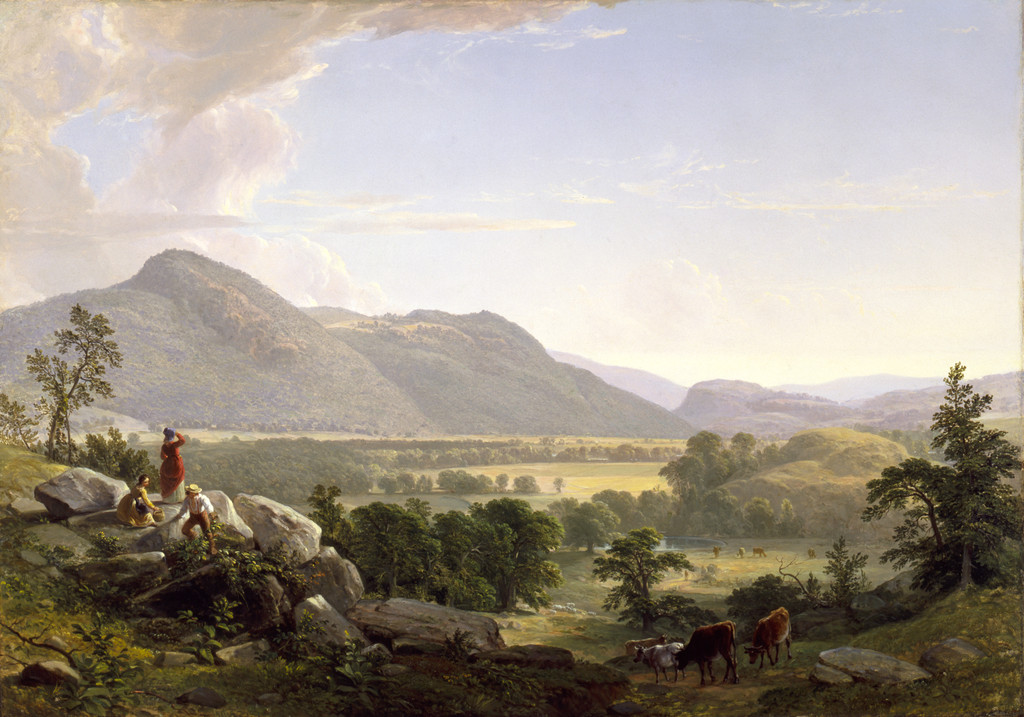
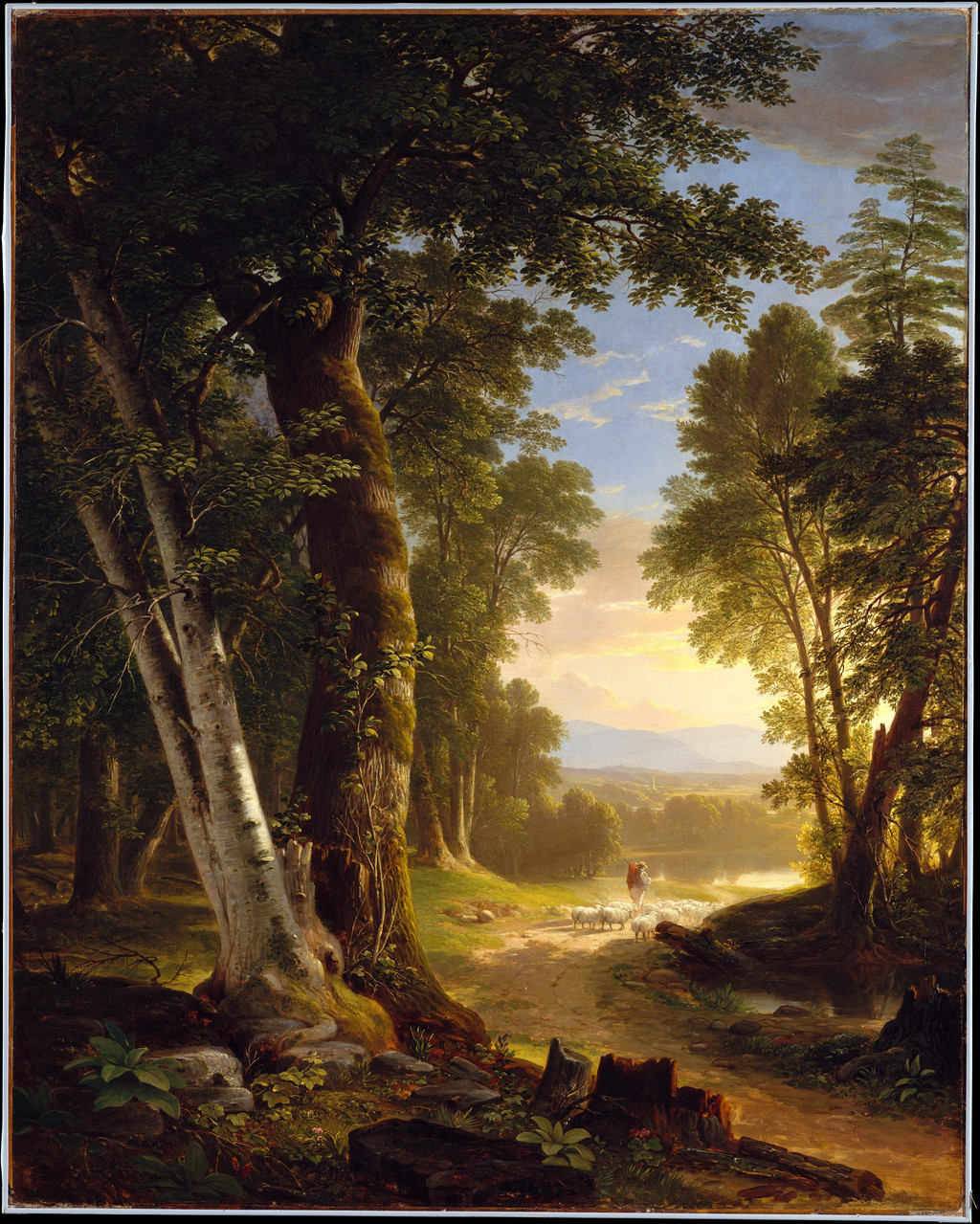
Exact paintings show the range of that activity. The Beeches, 1845, organises large trunks around a path and flock; Dover Plains, 1848, opens across a cultivated valley. Their difference makes the landscape career more varied than a sequence of woodland interiors alone.
The American Art-Union also distributed his paintings. Snook’s chronology records repeated annual involvement and a print after Dover Plains sent to members in 1850. The circulation of a landscape could therefore include both the painted object and a reproduced image.[5]
Watch: Asher Brown Durand
Choose a film to explore the artist’s work, its interpretation and its wider setting.
Friendship and landscape, Asher B Durand's Kindred Spirits
Smarthistory and Crystal Bridges discuss friendship, memory and landscape in Kindred Spirits.
Watch on YouTubeMemorials and different patrons
Cole’s death in 1848 was followed by Kindred Spirits, 1849. Jonathan Sturges commissioned the memorial and gave it to William Cullen Bryant. Crystal Bridges’ provenance and John’s memoir preserve the different roles of painter, commissioner and recipient.[10][3]
The work places Cole and Bryant within a gorge whose trees and distant opening give the figures an extensive environment. It remembers a relationship through a constructed landscape, while its subsequent collecting history brought a private gift into a public museum.
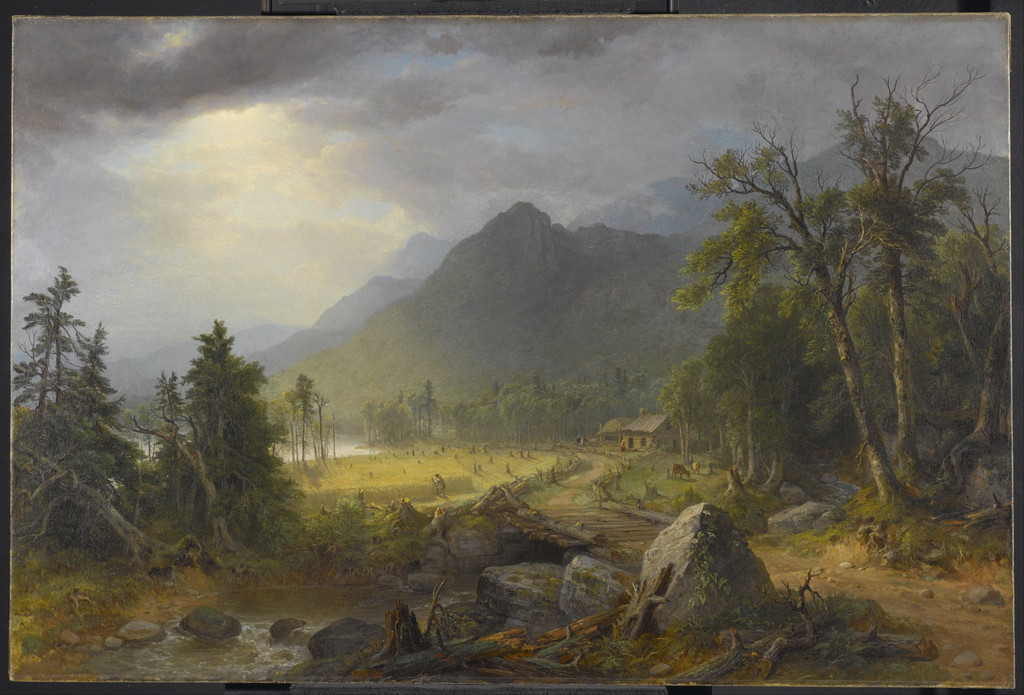
Other commissions addressed different subjects. Charles Gould’s Progress, 1853, develops a panorama of changing land use. Rebecca Bedell’s research treats aspects of Gould’s motives as interpretation and distinguishes later financial events from the painting’s earlier date.[11]
William T. Walters commissioned landscapes including The Catskills and Sunday Morning. These patrons should not be assigned one identical motive or programme.[3] Their separate objects, correspondence and collection records provide the firmer basis for understanding what each commission involved.
Asher Brown Durand, Kindred Spirits, 1849. Crystal Bridges Museum of American Art, 2010.106. Commissioned by Jonathan Sturges and given to William Cullen Bryant. Crystal Bridges Museum of American Art; museum-uploaded open-access reproduction. Image source. CC0 / Public domain. Resized only; native appearance, complete carrier and margins preserved.
Writing about landscape in 1855
Durand’s nine Letters on Landscape Painting appeared in The Crayon between January and July 1855. The periodical was associated with his son John and William James Stillman. Snook’s chronology establishes the series within a year of continued exhibitions and summer study.[5][7]
The consulted primary excerpts discuss careful study of forms, individual trees, masses of foliage and the relationship between selection and representation. Durand distinguishes exercises useful to beginners from broader practices of more experienced painters. His guidance therefore cannot be reduced to copying every detail with equal emphasis.[3]
Gallati places the letters within contemporary artistic debate and discusses their imagined pupil. That literary address does not prove the existence of a single documented student behind every instruction. The series could teach a wider readership through the form of personal guidance.[7]
The letters also explain why landscape mattered to Durand. Observation, feeling and religious association could reinforce one another. Their moral and spiritual language belongs to an artist’s argument, rather than supplying modern clinical evidence about landscape’s effects.
Later work and the move to Maplewood
Durand resigned the Academy presidency in 1861 and moved to the family property in Maplewood in April 1869. The move is often described as retirement, but Snook records subsequent exhibitions and travel. A change of residence did not bring an immediate end to making or showing art.[5]
Orcutt’s study of the later years examines continuing recognition alongside changes in critical fashion. Younger painters attracted attention with different subjects and scale, yet Durand’s presence persisted. The later work should be examined individually instead of explained through a universal assumption of decline.[8]
The chronology records nine works at the 1876 Centennial Exhibition, including the major engravings Declaration of Independence, Musidora and Ariadne. Earlier accomplishments remained part of his public identity while his landscape career continued.[5]
His final painting is usually identified as Sunset: Souvenir of the Adirondacks. Its inscribed 1878 date and the memoir’s 1879 dating differ. The qualified 1878–1879 range preserves that uncertainty rather than forcing a precise final-work date from conflicting evidence.[8]
Portraits and the preservation of evidence
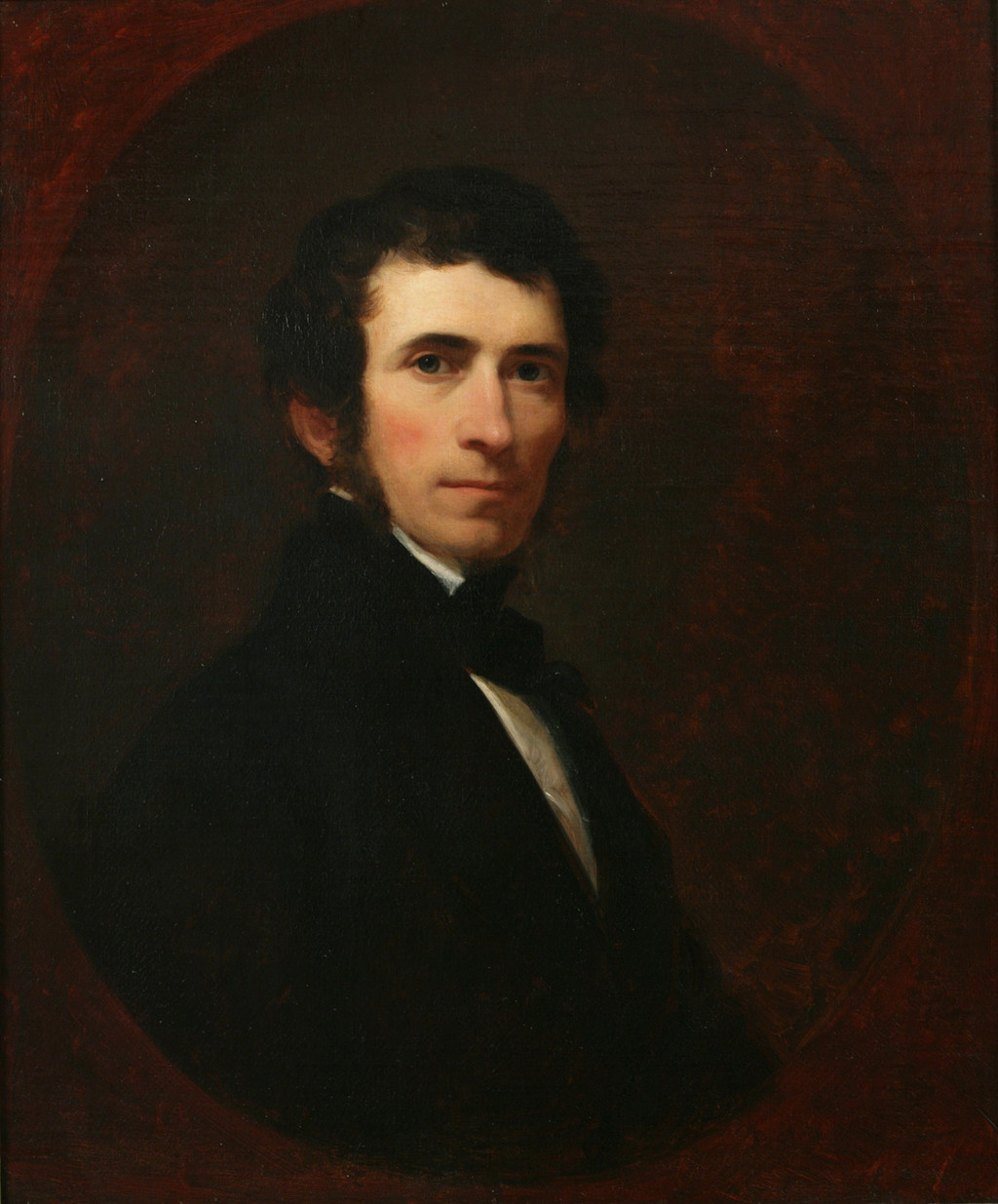
The selected self-portrait from around 1835 shows Durand against a reddish painted ground, wearing a dark coat and white shirt. His direct gaze and the concentrated arrangement give the face prominence. It belongs beside the biography as a painted self-image from the period when his work was changing, without supplying evidence for an undocumented state of mind.
The photographic portrait associated with Mathew Brady, dated approximately 1845–1850, presents a different object. Durand is seated, with a hand resting on a cane. Scratches, spots and the documentary rim remain visible in the accepted reproduction. They are features of the surviving photographic carrier, not details to be removed in order to invent a pristine modern portrait.[13]
A painting and a photograph preserve appearance through different means. Looking at both can extend a biography beyond a list of dates, while their qualified dates prevent the images from being assigned to a particular event without evidence.
Ferber’s introduction traces another form of preservation through Durand’s long association with the New-York Historical Society. Paintings connected with Luman Reed’s collection entered its holdings, and later gifts from Durand’s children and grandchildren enlarged the record of his work and circle.[4]
Those institutional and family decisions helped preserve paintings, prints and studies for later comparison. The resulting collection reflects a history of acquisition and stewardship, rather than providing an automatic count of everything the artist made. Biography depends partly on what people chose to retain and make accessible.
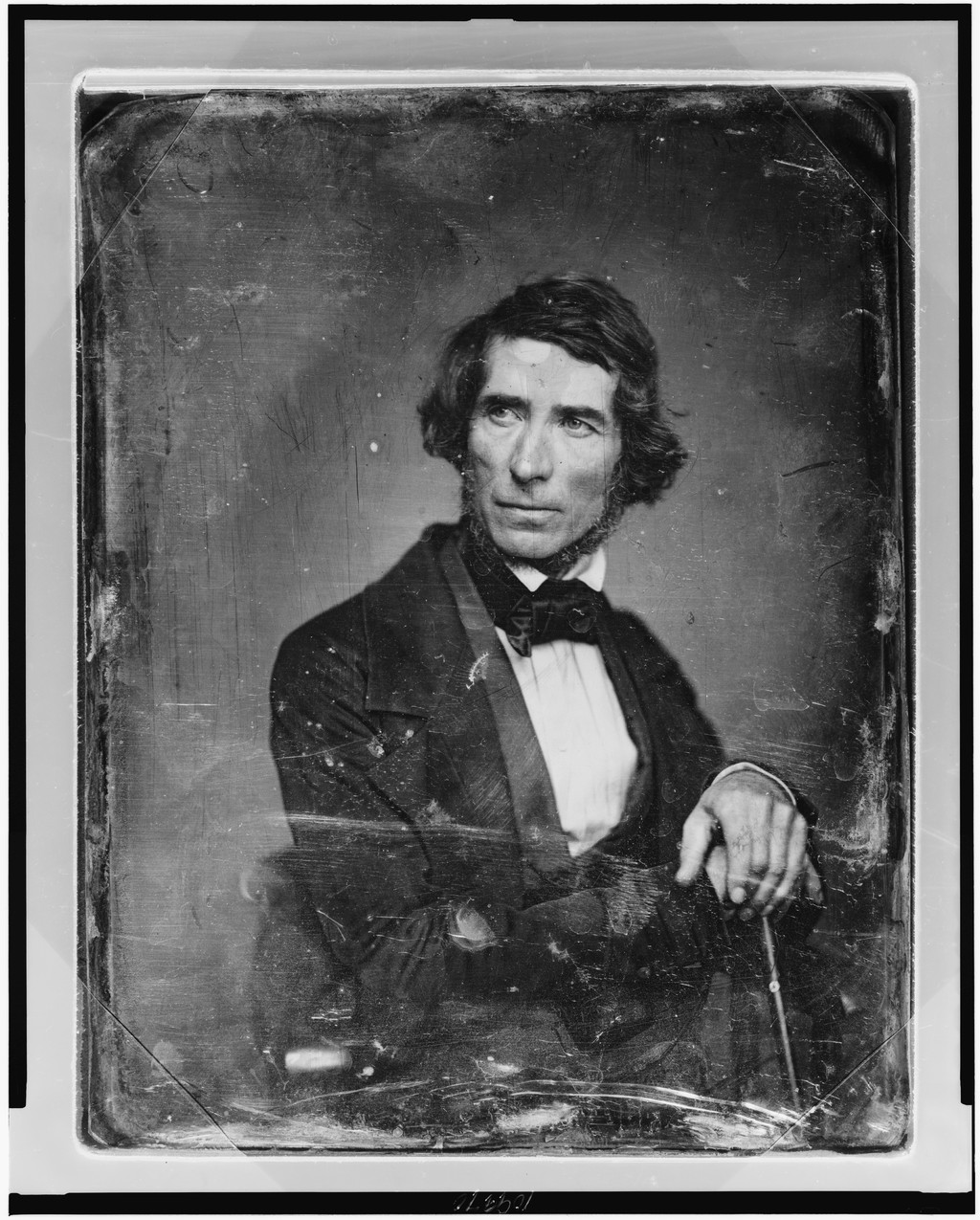
Mathew Brady, portrait of Asher Brown Durand, ca.1845–1850. Library of Congress, via Wikimedia Commons. Public domain. The complete photographic carrier, scratches and spots are preserved. Mathew Brady, ca.1845–50; Library of Congress, via Wikimedia Commons. Image source. Public domain. Resized only; native appearance, complete carrier and margins preserved.
Death and the record of a long career
Durand died at Maplewood on September 17, 1886, aged ninety. Snook’s chronology and the consulted ending of Daniel Huntington’s memorial address agree on the September date. A November reference in a modern introduction is an error rather than evidence of a second event.[5][12]
His funeral was held in New York and he was buried at Green-Wood Cemetery in Brooklyn. The geographical movement from a New Jersey childhood to a New York career and back to Maplewood forms one thread through the biography.[5]
The objects preserve other threads. An engraved historical assembly, a painted portrait, a close tree study and a memorial landscape record different activities within the same life. Reading them alongside the memoir and current collection records makes those connections more precise.
Durand’s reputation rests partly on the landscapes associated with the Hudson River School. His biography gives that grouping a wider foundation: practical craft, print circulation, patrons, institutions, travel and writing all helped shape the artist who painted them.
Artworks directory
A collected selection of 19 individually identified paintings, prints and a graphite study, including fifteen dedicated artwork articles. This directory is not a complete catalogue raisonné. Links lead to a companion article where available, otherwise the consulted institutional record. Progress is identified by title, date and museum; an unverified accession is omitted. Unillustrated objects remain searchable.
Frequently Asked Questions
Jefferson Village, New Jersey, now Maplewood, on August 21, 1796.[1]
His formal training was a five-year engraving apprenticeship with Peter Maverick, beginning in 1812. Partnership followed in 1817.[3]
From May 14, 1845, until his resignation on March 28, 1861, according to Snook’s chronology.[5]
Discussion
Look again at the images and ideas explored in Asher Brown Durand Biography. These editorial prompts invite your observations.
Reader Insights
How might a career in printed lines inform later attention to trees and landscape forms?
What does continued exhibiting after 1869 add to the meaning of retirement?
Which parts of Durand’s biography are most clearly preserved through exact objects?
Join the Conversation
Share a detail, comparison or question about Asher Brown Durand Biography below.
References
- Smithsonian American Art Museum, Asher B. Durand. Complete consulted biography; broad chronology and family dates. View source
- Kevin J. Avery, Asher Brown Durand (1796–1886), Met, 2009. Complete essay; transition, patrons and European example, with departure date corrected through primary evidence. View source
- John Durand, The Life and Times of A. B. Durand, 1894. Consulted selected pp.17–29,72–77,143–154,167–179,197–202 and Appendix I, pp.211–217; family memoir and reproduced documents. View source
- Linda S. Ferber, Introduction: Durand, A Life in Art, 2010. Consulted printed pp.13–17; broad account of the career, with death-date typo excluded. View source
- Sarah Barr Snook, Asher B. Durand: A Chronology, 2010. Consulted printed pp.245–246,248–249,251–252; dated institutional, family and exhibition milestones. View source
- Marilyn S. Kushner and Linda S. Ferber, A Master Engraver, 2010. Consulted printed pp.53–55 and notes; engraving career, banknotes and model distinctions. View source
- Barbara Dayer Gallati, Durand’s Letters on Landscape Painting, 2010. Consulted printed pp.205–210 and notes; literary address and contemporary debate. View source
- Kimberly Orcutt, Neither Gone nor Forgotten: Durand’s Later Years, 2010. Consulted printed pp.219–225 and notes; later reception and final-work dating. View source
- Roberta J. M. Olson, Durand’s Trees as Spiritual Sentinels of Nature, 2010. Consulted printed pp.151–158 and notes; tree studies and preparation limits. View source
- Crystal Bridges, Kindred Spirits, 2010.106. Current object and provenance; memorial gift. View source
- Rebecca Bedell, Asher Durand’s Progress Reconsidered, 2019. Complete article and notes; patronage and interpretation. View source
- Daniel Huntington, Asher B. Durand: A Memorial Address, 1887. Actually consulted ending, printed pp.47–48; September death date. View source
- Wikimedia Commons, Asher Brown Durand, half-length portrait. Exact consulted image record; Mathew Brady, ca.1845–1850, Library of Congress, public domain. View source
- Splash image source.
Asher Brown Durand, Self-Portrait, ca.1835. New York Historical, via Google Art Project and Wikimedia Commons. Public domain. Complete painted field retained. New York Historical / Google Art Project. Public domain. Resized only; native appearance, complete carrier and margins preserved.
View source - Kevin J. Avery, “The Hudson River School”, Metropolitan Museum of Art (2004). Origins in 1825 and decline in the 1870s–1880s; c. 1825–1880 is an approximate comparative range. View source
- National Gallery of Art, John Trumbull: 1756–1843. Artist life dates. View source
- Smithsonian American Art Museum, John Vanderlyn: 1775–1852. Artist life dates. View source
- Smithsonian American Art Museum, Asher Brown Durand: 1796–1886. Artist life dates. View source
- Smithsonian American Art Museum, Thomas Cole: 1801–1848. Artist life dates. View source