 by Tom Gurney
Tom Gurney BSc (Hons) is an art history expert with over 20 years experience
Email: tomgurney1@gmail.com / Phone: +44 7429 011000
Summer Afternoon by Asher Brown Durand: Introduction
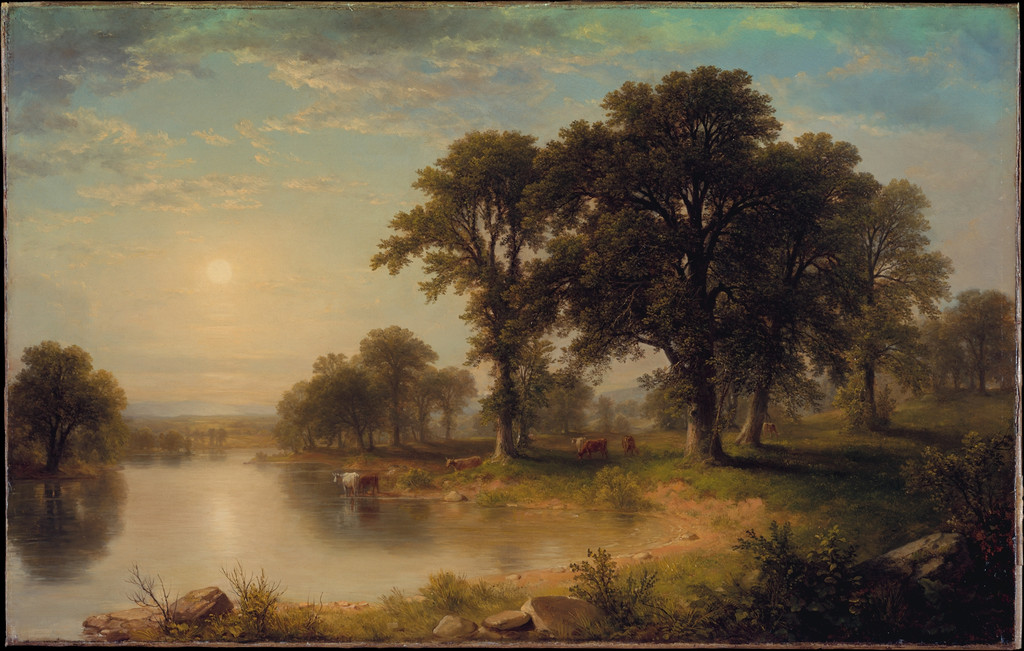
A low sun brightens the water beneath a broad group of trees in Asher Brown Durand’s Summer Afternoon. Cattle drink and graze along the bank, while fields and hills fade into a warm distance. The Metropolitan Museum of Art dates this oil painting to 1865 and identifies it as a commission for the collector Morris K. Jesup.[1]
At a Glance
- ArtistAsher Brown Durand (1796–1886)
- TitleSummer Afternoon
- Date1865
- MediumOil on canvas
- Dimensions57.2 × 88.9 cm
- CollectionMetropolitan Museum of Art, New York
- Accession15.30.60
- Museum creditBequest of Maria DeWitt Jesup, from the collection of her husband, Morris K. Jesup, 1914
This work across Asher Brown Durand’s career
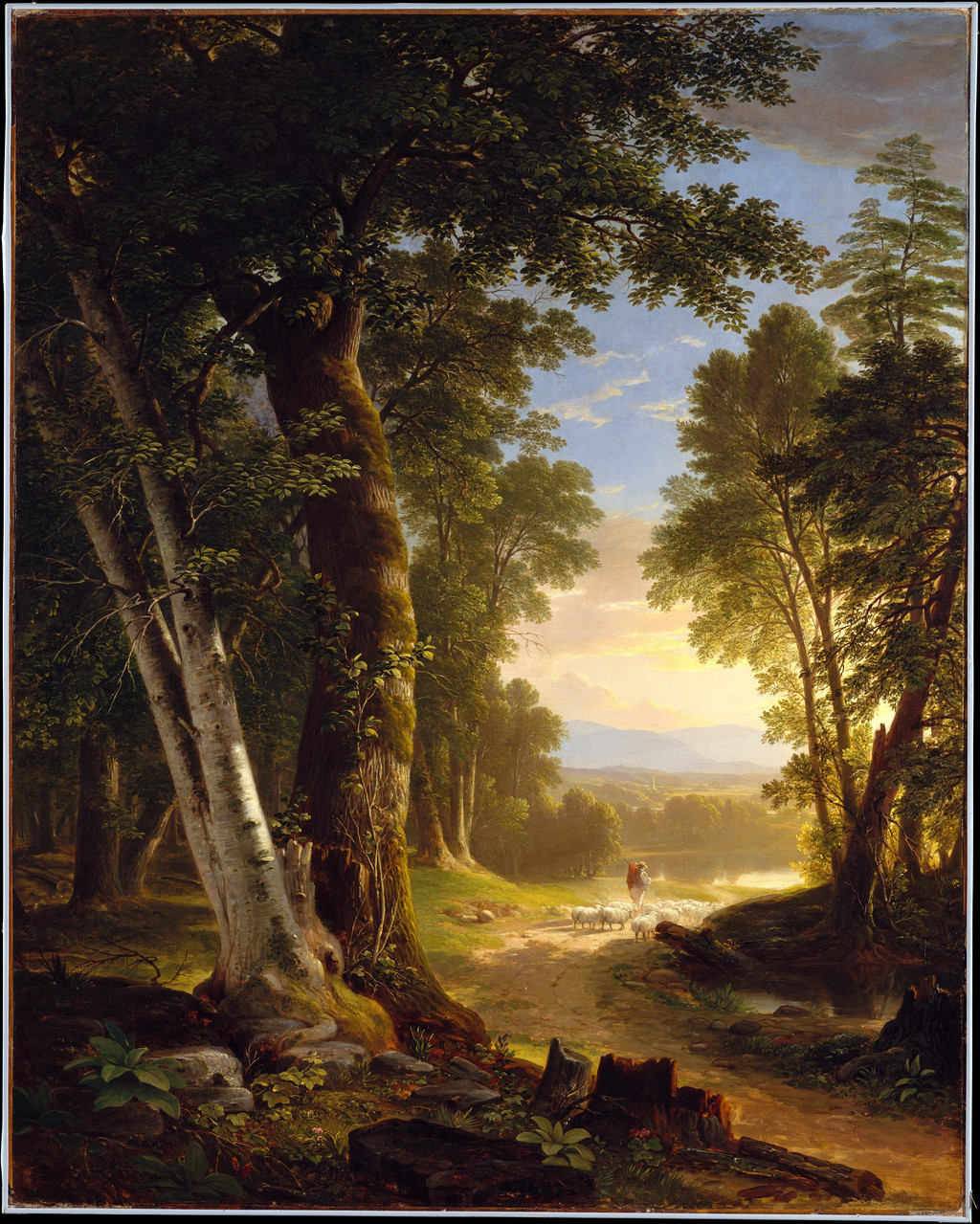
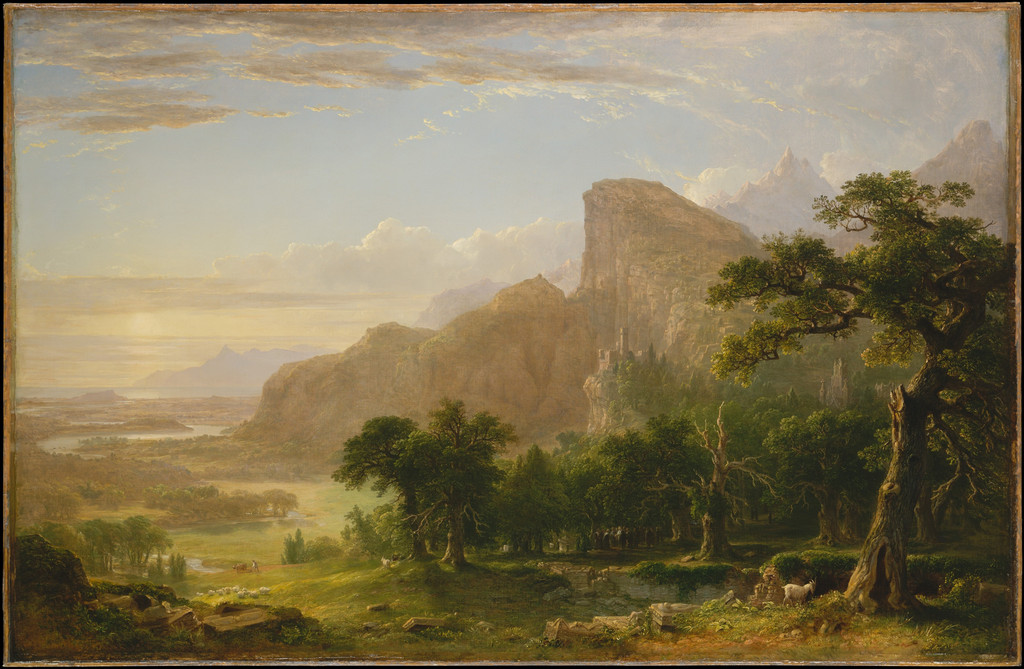
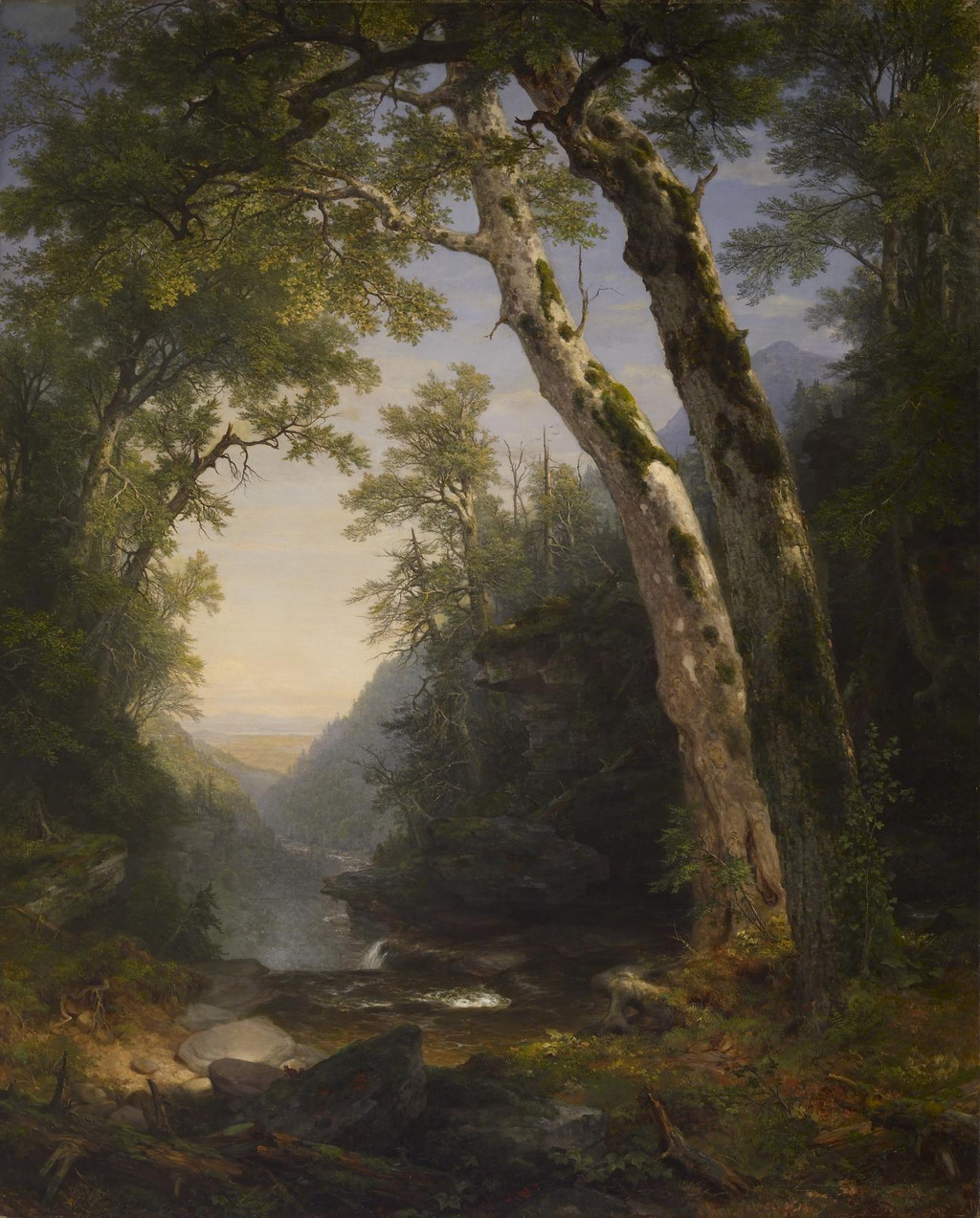
The Beeches
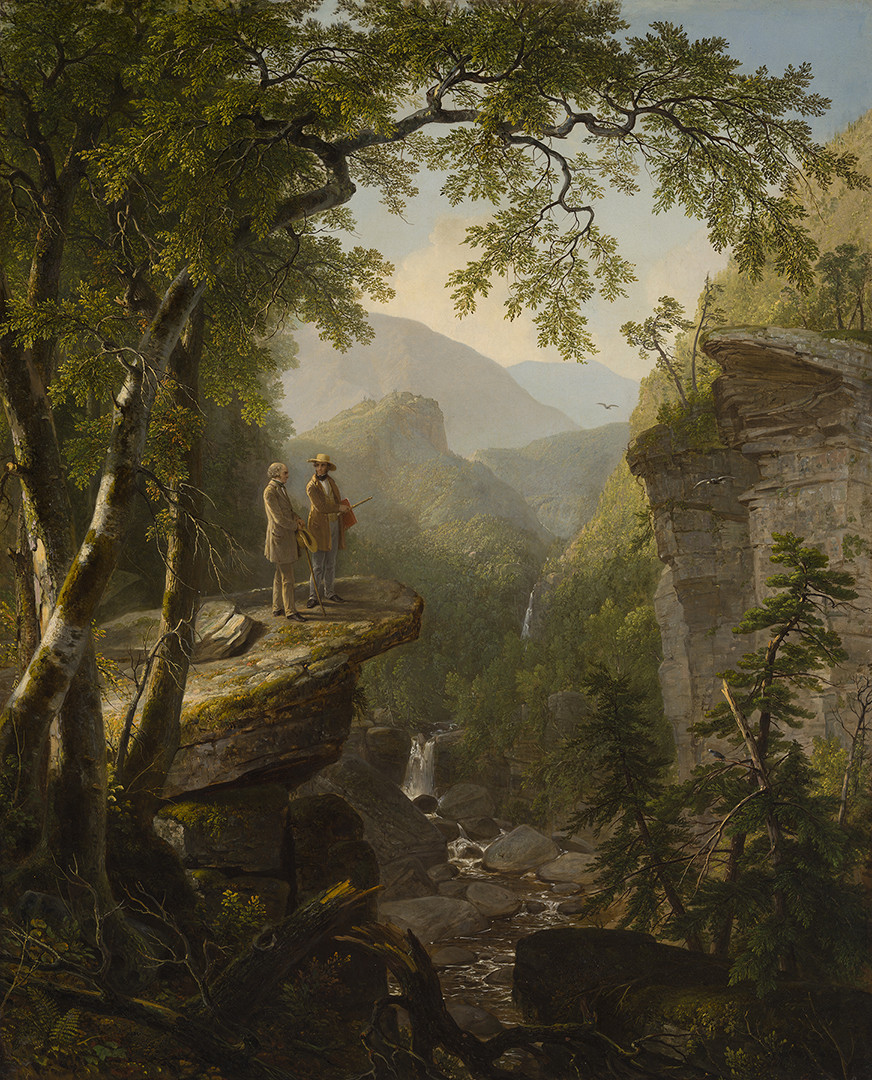
1845Kindred Spirits
1849God’s Judgment Upon Gog
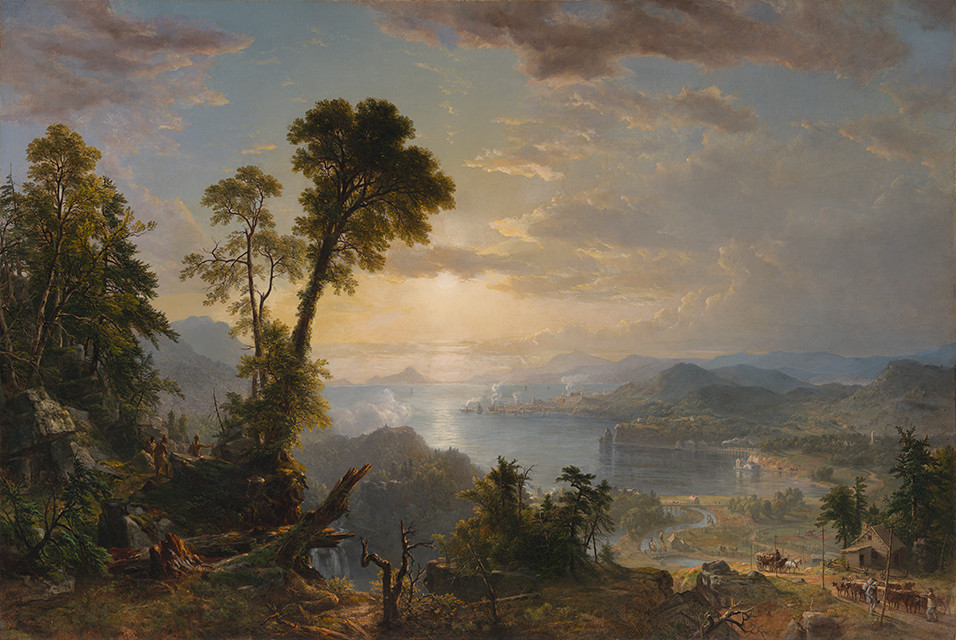
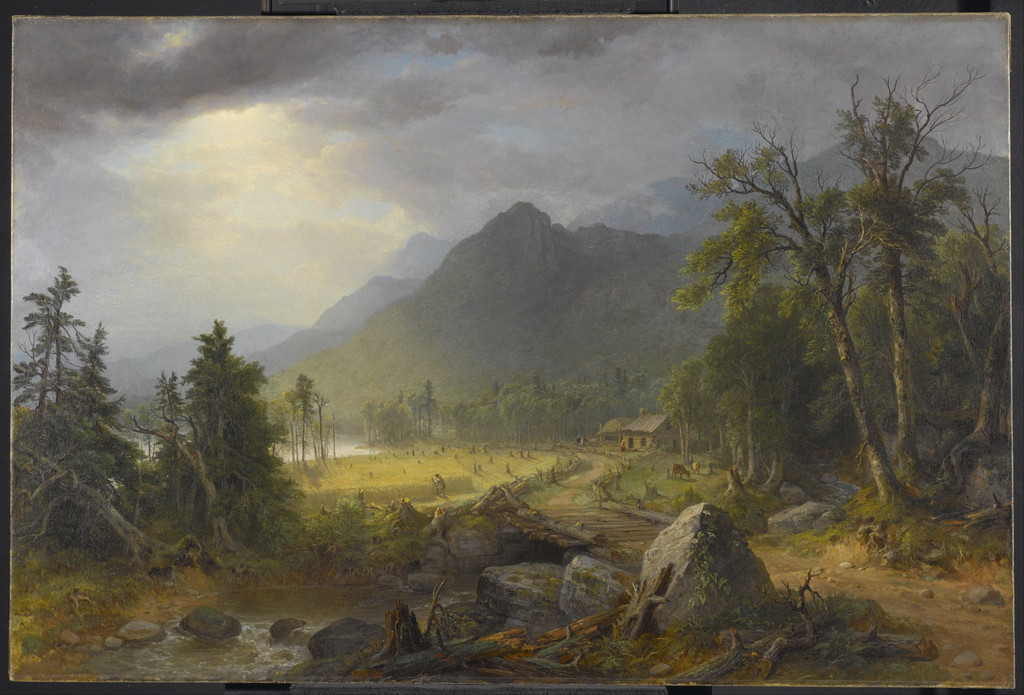
ca.1851–52River Scene
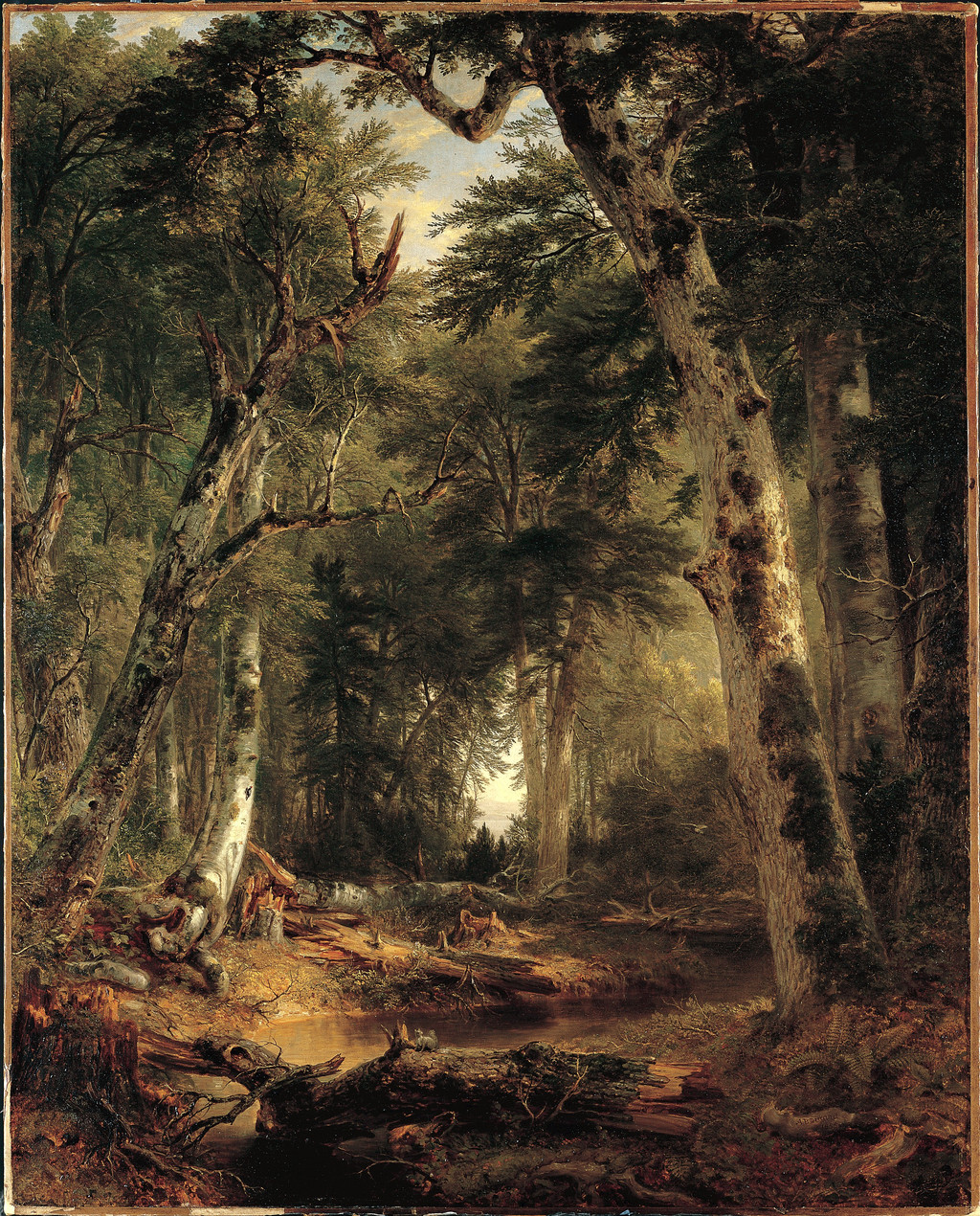
1854In the Woods
1855The Catskills
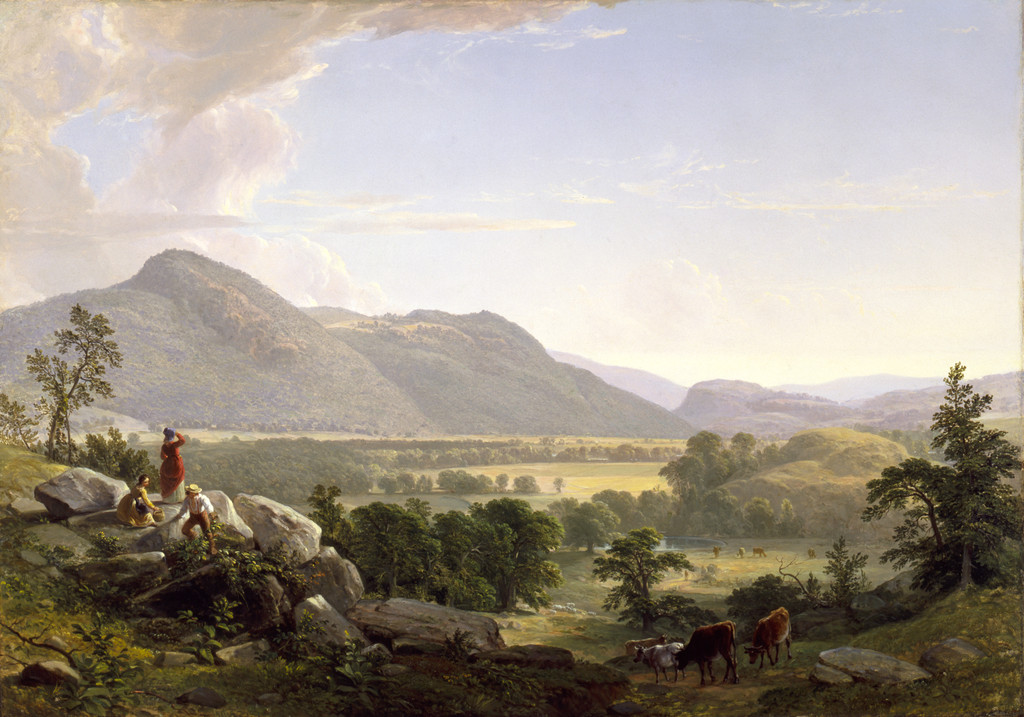
1859Sunday Morning
1860Contents
- Sunlight across the water
- Trees, cattle and shelter
- A broad canvas and its supplied edges
- Jesup’s commission and the museum bequest
- A painting from the later career
- Comparisons with River Scene and Sunday Morning
- Annotated details
Sunlight across the water
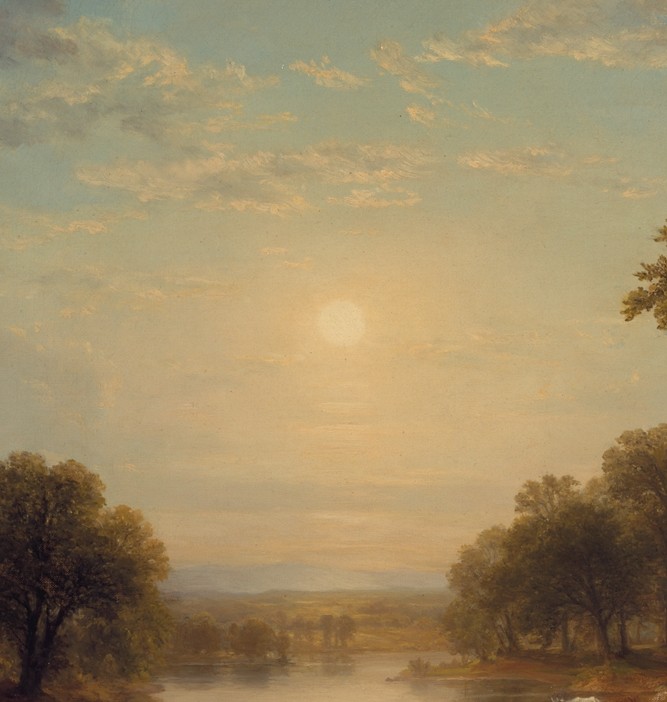
The sun appears low in the sky at the left, above the distant country. A brighter passage extends beneath it across the water, drawing the eye between sky and foreground. This connection gives light an organising role throughout the canvas.
The surrounding clouds are gently varied. Some retain cooler blue-grey tones, while others catch a warmer illumination. Their breadth allows the sunlight to spread through the scene instead of isolating the sun as a sharply defined, brilliant object.
The water opens widely near the lower left. Its surface is relatively smooth, interrupted by reflections and small horizontal changes. Beside it, the bank curves around a sheltered area before continuing toward the trees. This bend makes the foreground feel close and accessible.
Reflected darkness below the left trees contrasts with the brighter central water. The surface therefore holds traces of both wooded ground and open sky. Its luminosity becomes more apparent because it occupies a landscape with areas of substantial shade.
The far hills are low and softly defined. Their subdued forms leave the stronger contrasts to nearer trees, cattle and bank. They also make the sunlit distance feel extensive without introducing a competing mountain summit.
Annotated Details from Summer Afternoon
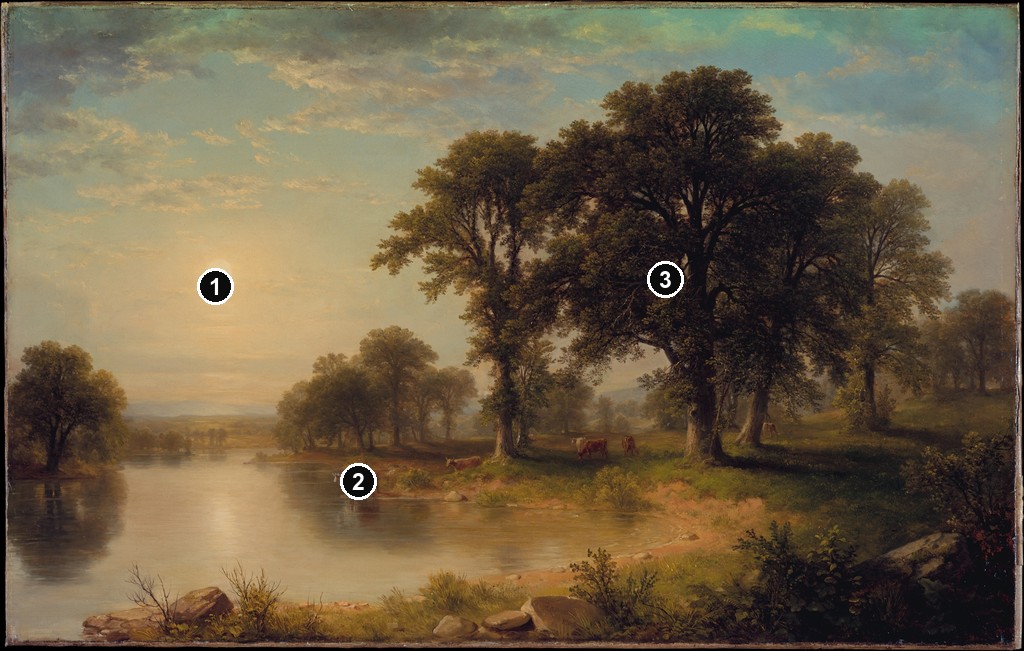
The numbered points identify visible features discussed in this article. Return from each detail to the whole composition. Asher Brown Durand, Summer Afternoon, 1865. Oil on canvas, 57.2 × 88.9 cm. Metropolitan Museum of Art, 15.30.60. Bequest of Maria DeWitt Jesup, from the collection of her husband, Morris K. Jesup, 1914. Supplied canvas rim and dark surround retained. The Metropolitan Museum of Art. Image source. CC0 / Public domain. Resized only; native appearance, complete carrier and margins preserved.
Details from SUMMER AFTERNOON
Compare the cropped details with the complete images above. Notice how their colours, shapes and positions contribute to the larger compositions.
Low sun and reflected light
A pale low sun appears above the left water. A lighter reflection carries its illumination down through the landscape.
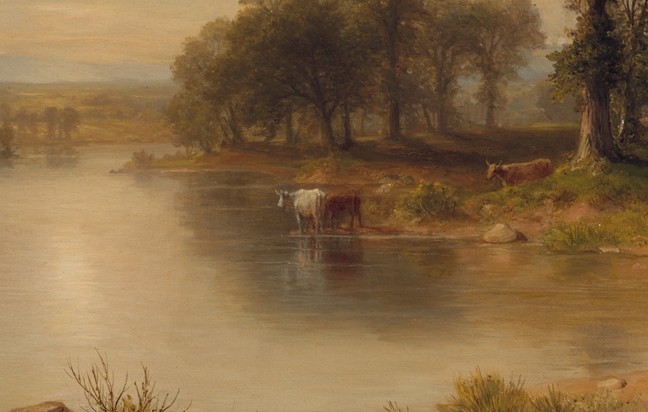
Cattle drinking at the bank
Pale and brown cattle stand together at the water’s edge. The nearer bank gives their group a place within the broad pastoral scene.
Large trees sheltering the right bank
Large trees occupy the right bank and spread their canopy across the sky. Their shadows contrast with the brighter open water.
Trees, cattle and shelter
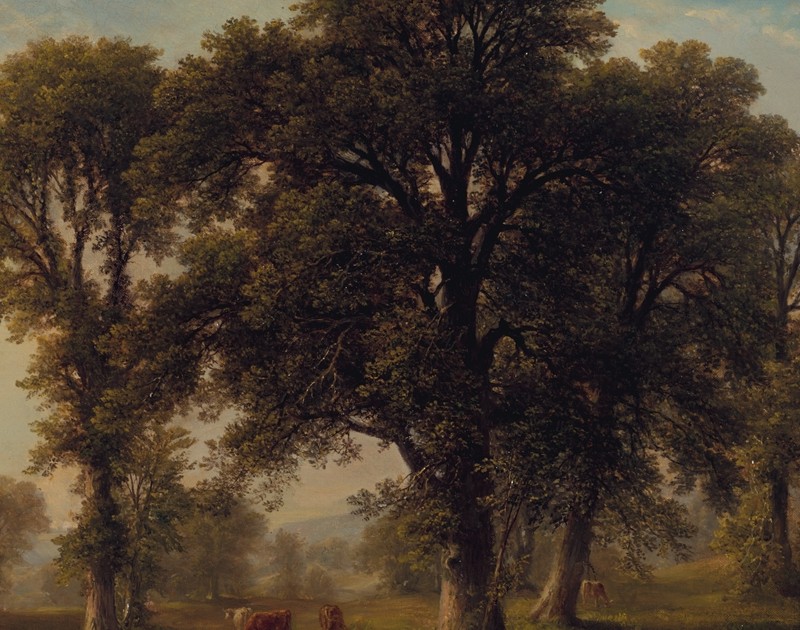
A large tree group occupies the right side. Its crowns spread high across the sky, and thick trunks divide into branching structures beneath them. The trees provide the scene’s most substantial forms and its deepest interior shadows.
Separate crowns overlap within the group. Some branches remain visible against the sky, while others disappear into dark foliage. These differing degrees of clarity give the canopy depth and keep it from reading as a single flat silhouette.
Cattle are dispersed between the water and the trunks. Near the left end of the bank, pale and brown animals stand close to the water. Others occupy the grass farther right. Their distribution connects the open shore with the sheltered ground beneath the trees.
The animals are small enough to preserve the trees’ commanding scale. Yet differences in colour and attitude make them individually noticeable. They give the land an ordinary use, while helping the viewer measure the distance between shoreline and wooded slope.
The bank catches warm light in exposed areas and falls into shade beneath the canopy. Its irregular outline follows the water’s curve. This changing boundary gives the scene a more intricate structure than a simple division into bright left and dark right.
Close plants and stones appear along the lower edge. These near forms provide a place for the viewer beside the water. The landscape’s distance remains grounded in something immediately tangible: rock, grass and the uneven margin of the shore.
A broad canvas and its supplied edges
The horizontal format suits the spread of water, bank and canopy. The composition has room for the brighter left opening and the more enclosed right-hand ground without compressing either area into a narrow strip.
Its actual canvas dimensions are 57.2 × 88.9 cm. It is a smaller work than Durand’s large upright forest interiors, although the broad arrangement still gives the viewer a succession of near and far relationships.[1]
The museum’s supplied image shows an irregular canvas rim within a dark surround. Keeping those edges visible preserves the distinction between the artwork and its photographic presentation. The dark outer area should not be interpreted as a landscape detail painted by Durand.
Within the canvas, the balance of light and shade can be followed independently of that surround. The sun, luminous water and illuminated bank make an extensive bright passage, while the trees retain their internal shadows. The effect depends on their relationship rather than on brightness alone.
Watch: Asher Brown Durand
Choose a film to explore the artist’s work, its interpretation and its wider setting.
Friendship and landscape, Asher B Durand's Kindred Spirits
Smarthistory and Crystal Bridges discuss friendship, memory and landscape in Kindred Spirits.
Watch on YouTubeJesup’s commission and the museum bequest
The Met identifies Morris K. Jesup as the commissioner of Summer Afternoon. Its account also notes his ownership of The Beeches and other paintings associated with the Hudson River School.[1]
The connection brings together two quite different Durand landscapes within one collector’s interests. The Beeches places its most imposing trees in a tall composition; Summer Afternoon spreads its canopy and water through a wider field. Their shared presence in Jesup’s collection does not make one a repeat of the other.
The current acquisition credit names Maria DeWitt Jesup’s 1914 bequest from her husband’s collection. Commissioning and museum acquisition are distinct stages, separated by almost half a century. The object number, 15.30.60, provides a precise way to identify this particular work.
John Durand’s memoir lists a Summer Afternoon painted for Mr. J. Whiting under 1855. That earlier entry belongs to a different work and should not supply the patron or date of the Met’s 1865 canvas.[2]
A painting from the later career
The 1865 date places the work after Durand stepped down as National Academy of Design president in 1861. Kimberly Orcutt’s study of his later years stresses that withdrawal from public responsibilities did not mean an immediate end to painting.[3]
Orcutt distinguishes the growing tendency to commemorate Durand’s earlier achievements from his continued artistic activity. That distinction gives this later commission a useful context: a painter could be treated as a historical figure while still producing new work.
Here, the continued attention to ordinary landscape is visible in the relation between individual tree forms and a softer distance. The canvas invites close observation of trunks and shore, while giving atmosphere an extensive role. It does not need to be assigned to a later movement to recognise those choices.
For a wider account of how Durand’s public position and working life changed, see his biography. The painting itself provides a concrete encounter with the later career rather than an assumption that age inevitably produced decline.
Comparisons with River Scene and Sunday Morning
River Scene, 1854, also brings trees and cattle beside water. The Met interprets its herd as returning along a road toward an unseen barn.[4] In Summer Afternoon, the cattle are more dispersed, allowing light and shade around the bank to organise their setting.
Sunday Morning, 1860, gives rural rest and devotion a more explicit subject. The New Britain Museum discusses its idle plough, sheep and churchgoing figures.[5] Summer Afternoon leaves the day’s activities less specified. Its title directs attention to a season and a period of light, and its composition makes that atmosphere available through water, trees and inhabited ground.
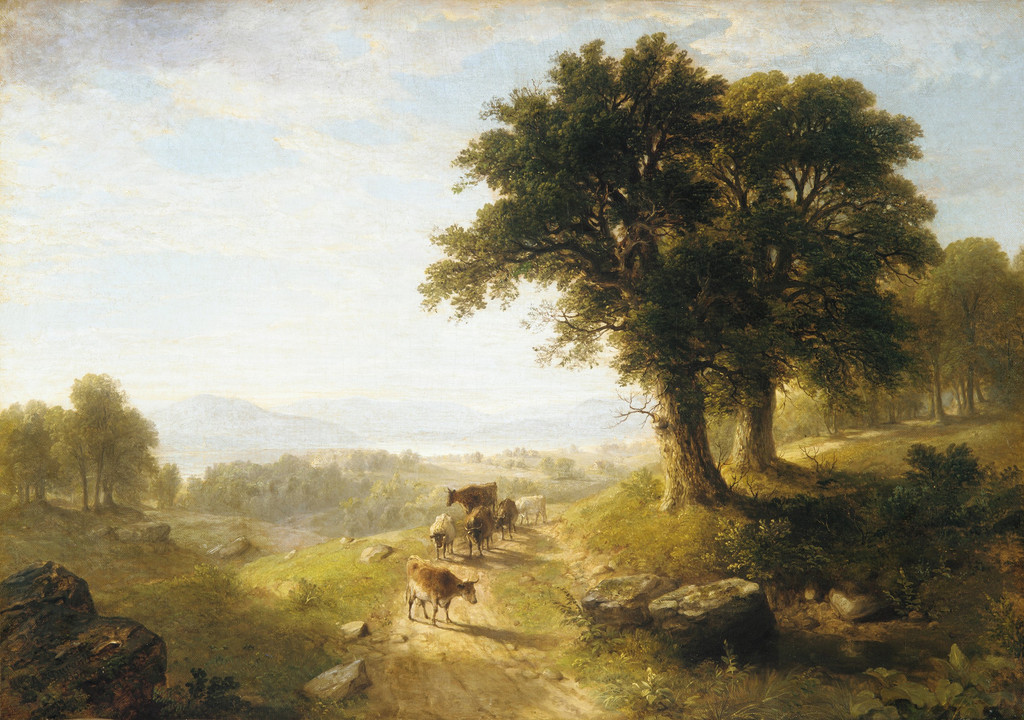
Asher Brown Durand, River Scene, 1854. Metropolitan Museum of Art, 1970.58. Bequest of Mary Starr Van Winkle, 1970. The Metropolitan Museum of Art. Image source. CC0 / Public domain. Resized only; native appearance, complete carrier and margins preserved.
Artworks directory
A collected selection of 19 individually identified paintings, prints and a graphite study, including fifteen dedicated artwork articles. This directory is not a complete catalogue raisonné. Links lead to a companion article where available, otherwise the consulted institutional record. Progress is identified by title, date and museum; an unverified accession is omitted. Unillustrated objects remain searchable.
Frequently Asked Questions
The Met identifies Morris K. Jesup. It later entered the museum through Maria DeWitt Jesup’s bequest.[1]
No. The supplied image retains the canvas rim and dark area around it; the landscape occupies the canvas within that boundary.
Discussion
Look again at the images and ideas explored in Summer Afternoon by Asher Brown Durand. These editorial prompts invite your observations.
Reader Insights
Do the sun and its reflection act as one centre of attention for you?
How does the cattle’s spacing connect the open water with the shaded trees?
What changes when you compare this wide composition with the upright Beeches?
Join the Conversation
Share a detail, comparison or question about Summer Afternoon by Asher Brown Durand below.
References
- Metropolitan Museum of Art, Summer Afternoon, accession 15.30.60. Complete current record and narrative consulted; 1865 identity, Jesup commission, dimensions and 1914 acquisition credit. View source
- John Durand, The Life and Times of A. B. Durand (1894). Selected chapters actually consulted; printed p.175 lists the separate 1855 Whiting work. Retrospective family account. View source
- Kimberly Orcutt, “Neither Gone nor Forgotten: Durand’s Later Years,” in Asher B. Durand (1796–1886): American Landscapes, Fundación Juan March (2010), printed pp.219–225. Complete essay and notes actually read; continued painting and retrospective public reputation. Catalogue illustrations are not reused here. View source
- Metropolitan Museum of Art, River Scene, accession 1970.58. Complete current record and narrative consulted for the exact 1854 comparison. View source
- New Britain Museum of American Art, Sunday Morning, accession 1963.4, and artist biography. Complete institutional essay and notes consulted; exact 1860 painting and devotional interpretation. View source
- Splash image source.
Asher Brown Durand, Summer Afternoon, 1865. Oil on canvas, 57.2 × 88.9 cm. Metropolitan Museum of Art, 15.30.60. Bequest of Maria DeWitt Jesup, from the collection of her husband, Morris K. Jesup, 1914. Supplied canvas rim and dark surround retained. The Metropolitan Museum of Art. CC0 / Public domain. Resized only; native appearance, complete carrier and margins preserved.
View source