 by Tom Gurney
Tom Gurney BSc (Hons) is an art history expert with over 20 years experience
Email: tomgurney1@gmail.com / Phone: +44 7429 011000
Asher Brown Durand’s Style and Technique: Introduction
Asher Brown Durand’s landscapes combine close attention to particular forms with careful organisation of the whole scene. A tree can be recognisable through its trunk, branching and foliage, while also framing a road or opening a passage into the distance. His style depends on this relationship between observed objects and a composed space.
The artist’s written advice gives a useful starting point. In the 1855 Letters on Landscape Painting, he treats drawing and knowledge of nature as foundations for decisions about colour, execution and selection. The paintings can be examined beside those ideas without assuming that every canvas was made through one identical procedure.[1]
At a Glance
- ArtistAsher Brown Durand (1796–1886)
- Earlier practiceEngraving and reproductive prints
- Recurring landscape concernsIndividual trees, foreground forms, light and organised distance
- Written evidenceSelected extracts from the 1855 Letters on Landscape Painting
- Examples shownAriadne, The Beeches, In the Woods and River Scene
- Approach hereVisible form and handling, supported by primary writing and museum scholarship
Contents
- Engraved line and painted form
- Trees with particular structures
- Foreground detail and the scale of attention
- The Beeches and an opening into distance
- European pictures and outdoor observation
- A broader pastoral arrangement in River Scene
- Colour, execution and the viewer
- Reading technique through a reproduction
- Annotated details
Engraved line and painted form
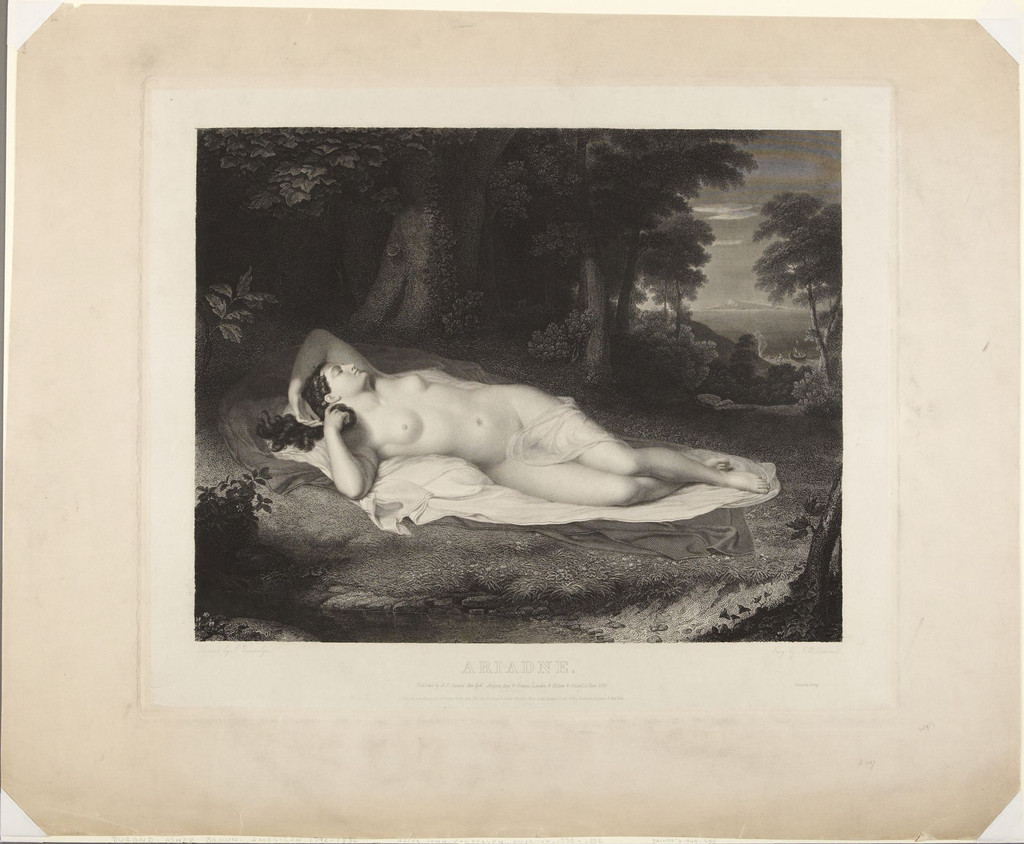
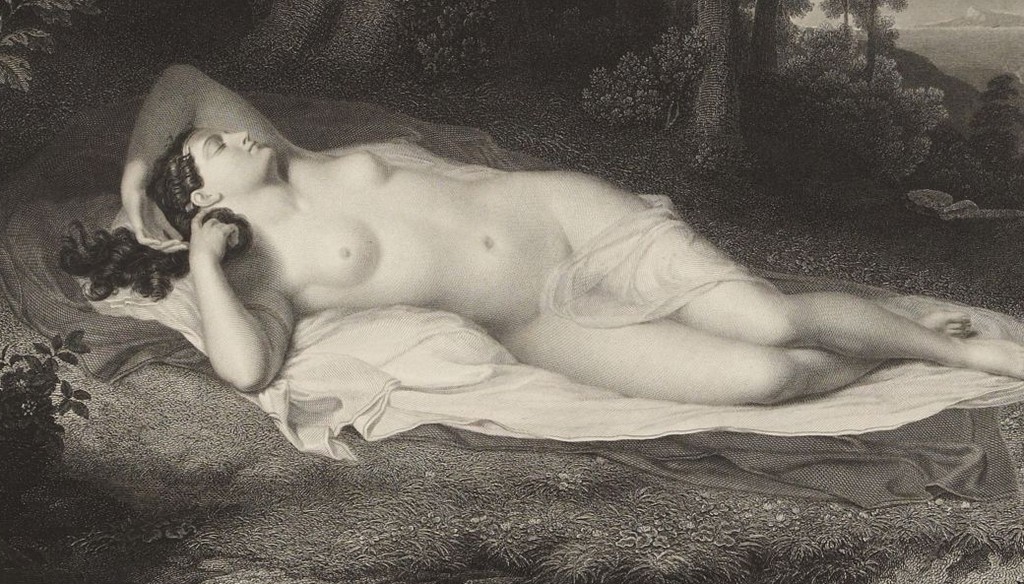
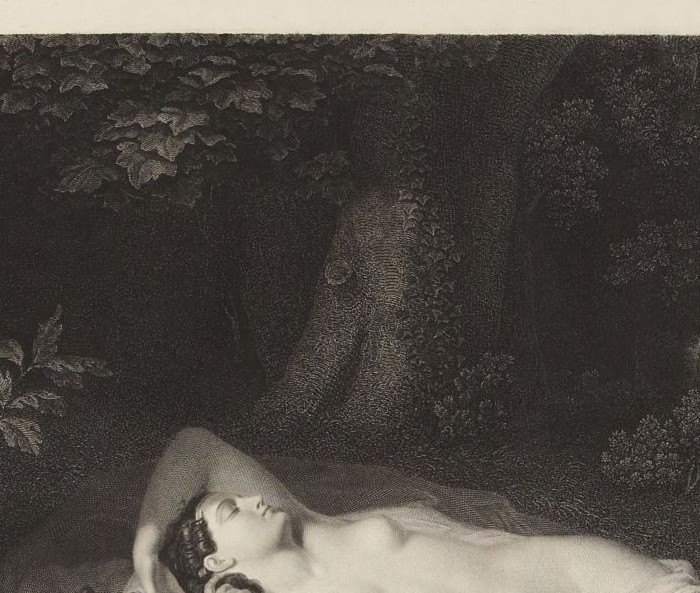
Durand’s professional engraving career required sustained decisions about contour and tone. In Ariadne, the pale sleeping figure is distinguished from darker woodland through the distribution of marks. Folded cloth and rounded limbs receive different descriptions within the same monochrome image.
Kushner and Ferber place the print near Durand’s major transition toward painting, while emphasising the continued importance of his draughtsmanship. Their account also identifies an oil copy and graphite preparation in the translation of Vanderlyn’s painted composition.[5]
This background helps explain an established interest in how a form becomes convincing. A trunk or limb must have more than a clear outside boundary: changes of tone describe its volume and relation to surrounding objects. Printmaking gave Durand repeated opportunities to consider such problems.
Oil painting alters the means available. A warm light can differ from a cool shadow through colour as well as value. The painted surface can join many small descriptions within a broad atmospheric effect. These possibilities expand the earlier craft rather than simply reproducing engraving in another material.
The comparison concerns related visual demands. It does not mean that every landscape detail was painted as though Durand were cutting a plate, or that his painted work can be explained by the engraving years alone.
Annotated Details from Asher Brown Durand’s Style and Technique
The numbered points identify visible features discussed in this article. Return from each detail to the whole composition. The captions keep each work’s identity, date and medium separate.
Ariadne Engraving
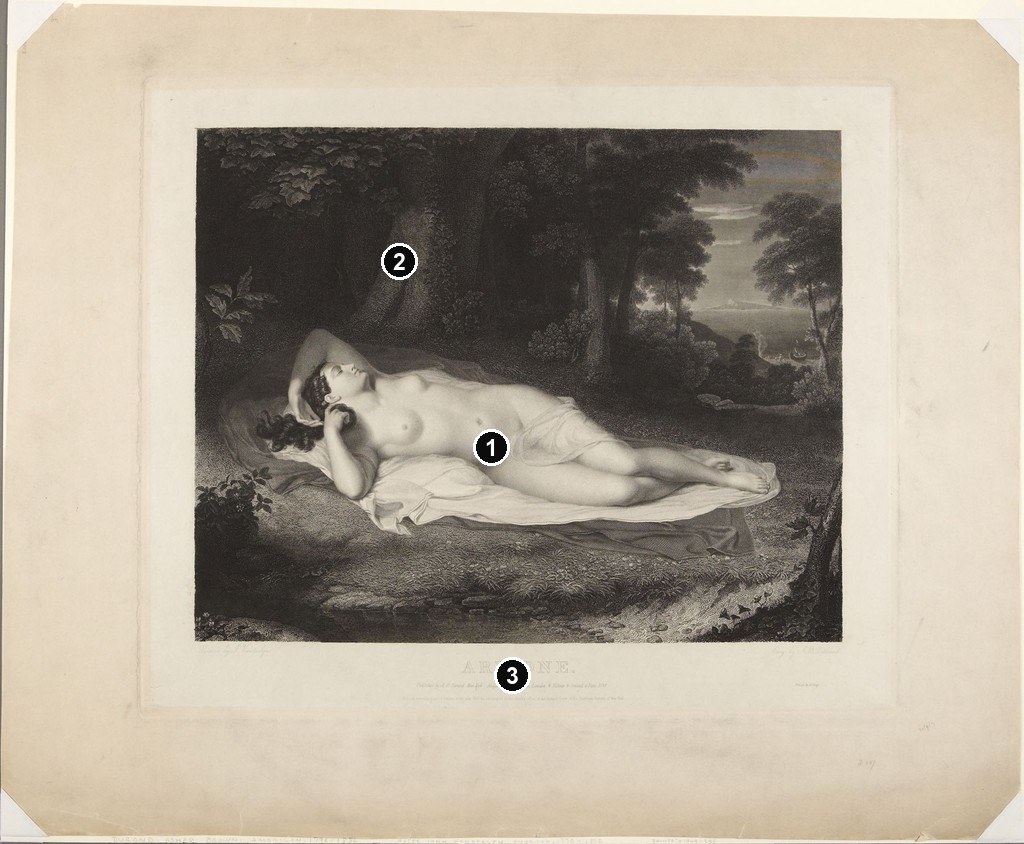
Asher Brown Durand after John Vanderlyn, Ariadne, 1835. Engraving, printed by Albert B. King. Princeton University Art Museum, Mather Collection, x1949-255. Line and tone describe cloth, figure and woodland within a monochrome image. Princeton University Art Museum; Mather Collection. Image source. Public domain. Resized only; native appearance, complete carrier and margins preserved.
River Scene
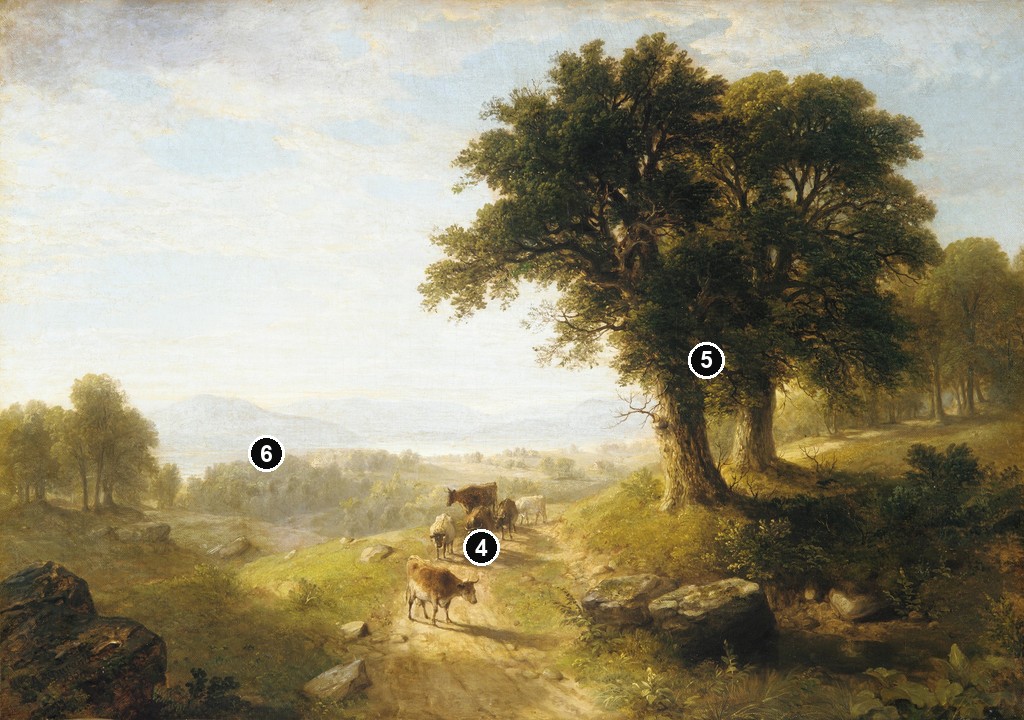
Asher Brown Durand, River Scene, 1854. Metropolitan Museum of Art, 1970.58. Bequest of Mary Starr Van Winkle, 1970. The Metropolitan Museum of Art. Image source. CC0 / Public domain. Resized only; native appearance, complete carrier and margins preserved.
Details from ASHER BROWN DURAND’S STYLE AND TECHNIQUE
Compare the cropped details with the complete images above. Notice how their colours, shapes and positions contribute to the larger compositions.
Ariadne Engraving
Sleeping figure and folded cloth
The pale sleeping figure lies across folded cloth within the darker setting. Engraved marks describe the different surfaces.
Line within the wooded setting
Closely worked marks form trunks and foliage above the figure. Their tonal density contrasts with the lighter body.
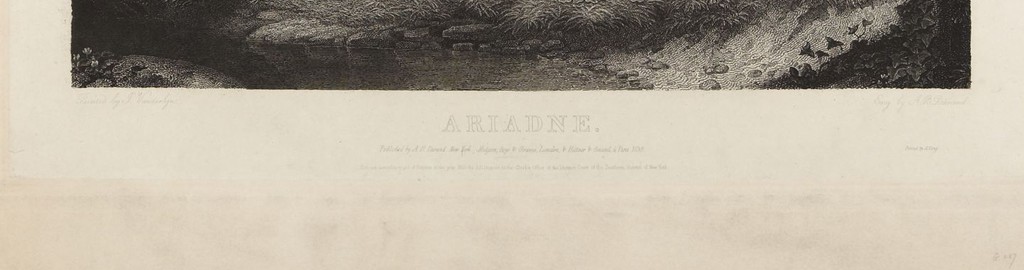
Title and lettering below the image
The title and finer lettering occupy the lower sheet beneath the scene. Their faint appearance is preserved; publisher transcription follows the institutional record.
River Scene
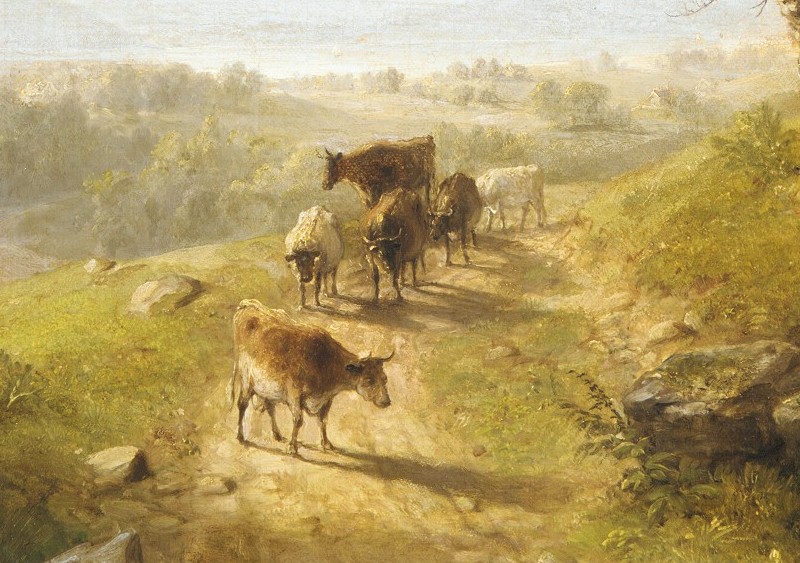
Cattle descending the road
A line of cattle follows the descending road towards the nearer ground. The pale track connects them with the opening beyond.
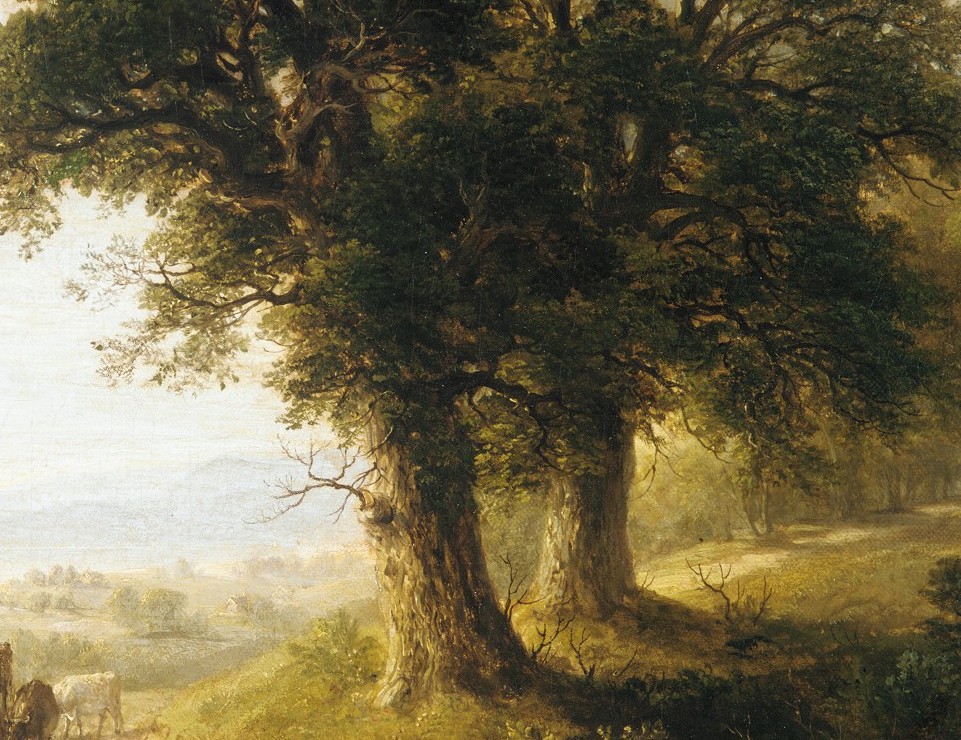
Trees above the road
Large right-hand trees spread their canopy above the road. Their dark mass balances the lighter left side.
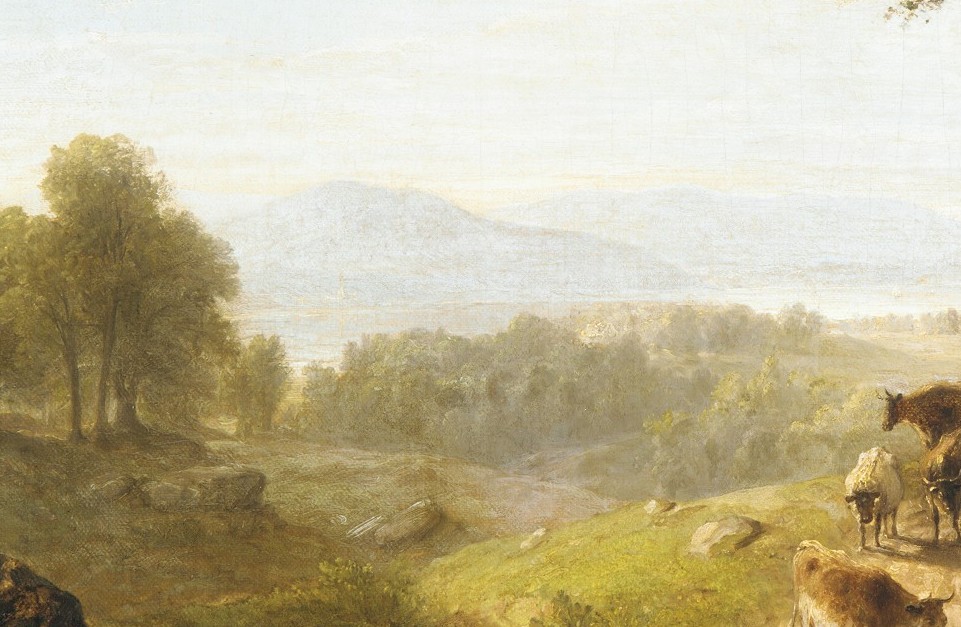
Water and distant open country
Pale water and distant ground open beyond the near vegetation. Their quieter tones distinguish distance from the stronger foreground forms.
Trees with particular structures
In Durand’s landscapes, the nearest trees often carry much of the composition’s weight. Their trunks rise from identifiable places in the foreground, and the directions of their branches shape the openings above and around them. Irregularities give individual forms a presence distinct from the larger wooded mass.
Olson’s study of the tree drawings explains the sustained observation behind this attention. She discusses changes in graphite marks, contour and texture, while distinguishing specific preparatory relationships from the more general knowledge developed through repeated study.[2]
The distinction helps when looking at a finished forest. A painted trunk may draw on a familiarity with branching and surface acquired across many studies. It need not be the direct copy of one surviving drawing.
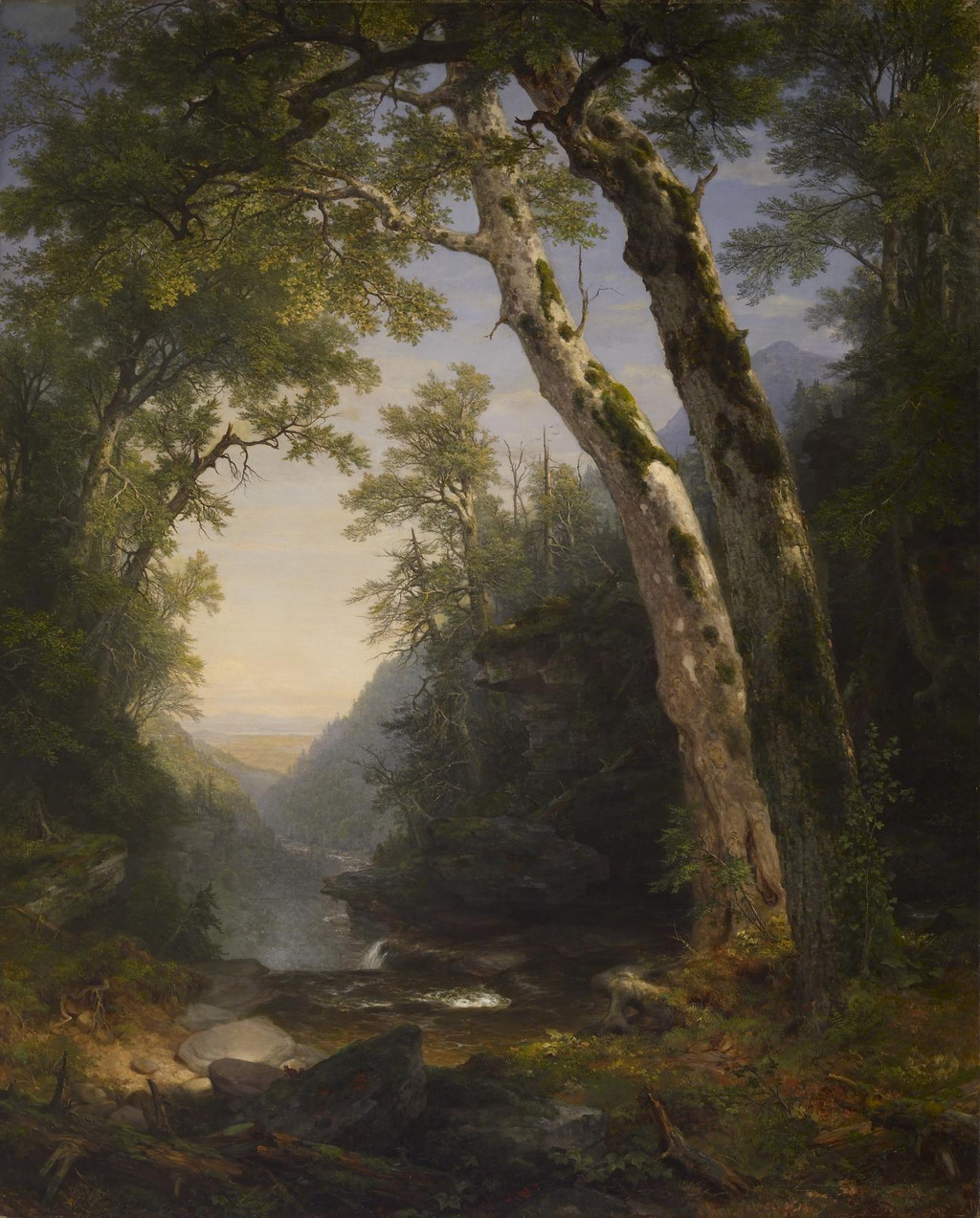
In the Woods places pale trunks against darker foliage. Their differences of angle and width give the enclosure a structure that can be followed. Fallen wood and lower vegetation prevent the ground from becoming an undifferentiated dark area beneath them.
The spaces between trees are equally important. Narrow openings, overlapping branches and deeper shadow create a sense of positions within the forest. The picture depends on these relationships among forms as much as on the description of any single trunk.
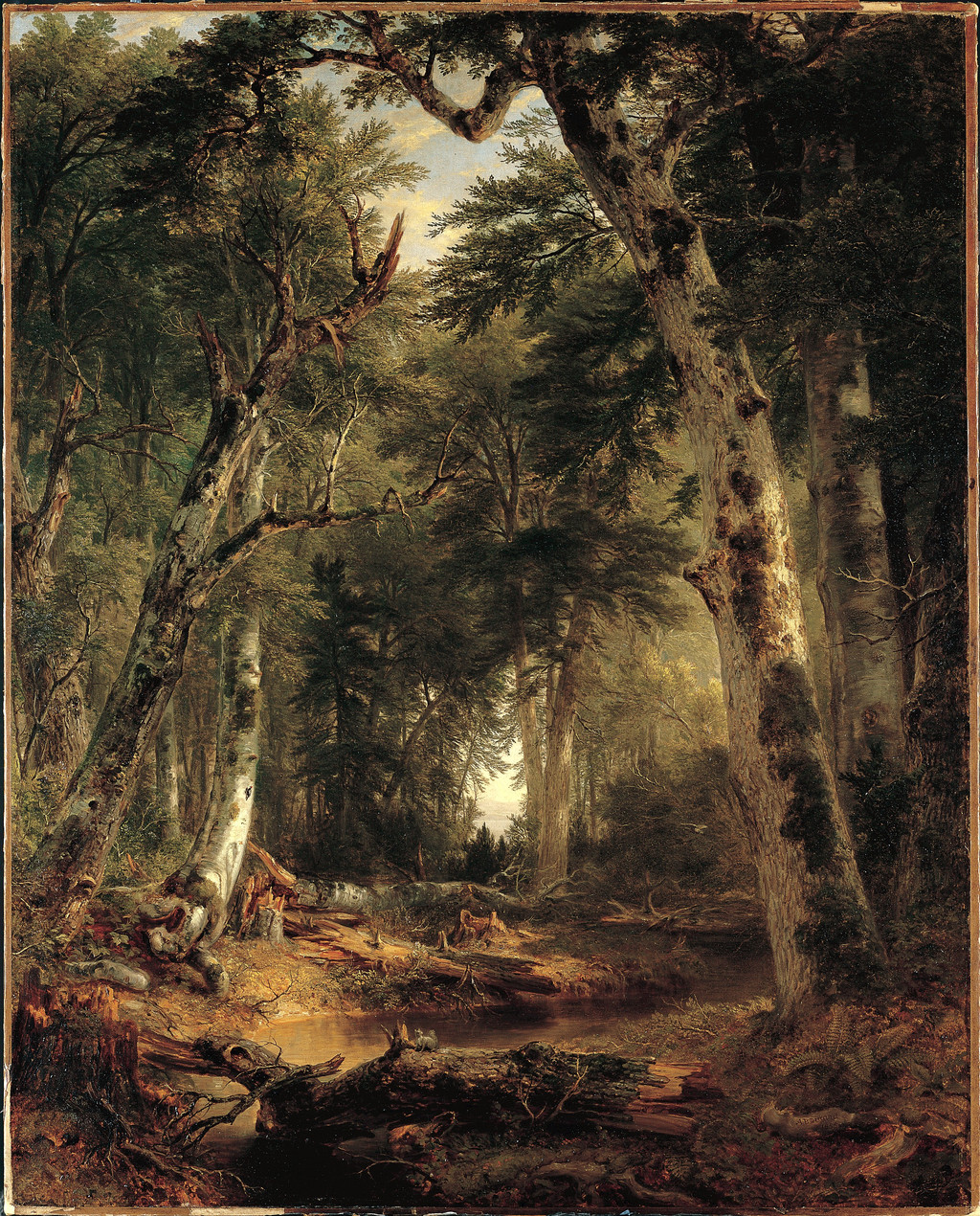
Asher Brown Durand, In the Woods, 1855. Metropolitan Museum of Art, 95.13.1. Pale trunks, darker intervals and a lower stream organise the wooded enclosure. The Metropolitan Museum of Art. Image source. CC0 / Public domain. Resized only; native appearance, complete carrier and margins preserved.
Foreground detail and the scale of attention
Durand’s advice identifies rocks and tree trunks as subjects suited to close study. He distinguishes them from running water and extensive foliage, which cannot be represented with precisely the same degree or kind of description.[1]
This offers a useful way to look through a canvas. The nearest forms may invite concentrated inspection of edges, surfaces and small plants. More distant areas can communicate their position through broader masses and changes in atmosphere.
A painting must connect these different scales of attention. If every part were described with equal insistence, the viewer could lose the hierarchy that makes the scene understandable. Durand’s written distinction between imitation and representation allows detailed knowledge to serve a larger pictorial effect.
In In the Woods, near trunks and fallen timber provide substantial points of reference. Vegetation gathers around them, while the stream introduces a different kind of surface below. Looking can move among these features without requiring the entire forest to become a catalogue of separate objects.
The small Leaf and Tree Study offers another scale. Its isolated graphite forms leave much of the page open. The finished landscape has to integrate comparable observations into an environment that extends beyond any one detail.
The Beeches and an opening into distance
The Beeches, 1845, establishes a particularly clear relationship between dominant foreground trees and a more open distance. The tall trunks occupy the sides, while the road and small rural figures help lead the eye through the central interval.
The Met’s catalogue identifies both basswood and beech trees in the foreground. It also relates the work to an 1844 outdoor oil study, with the qualification that this was the first such documented basis for a Durand landscape as far as the authors knew.[3]
The nearest trees exceed the painted field: their tops continue beyond the upper edge. This brings their scale close to the viewer, while the distance remains smaller and lighter. The framing creates a landscape that feels sheltered at the front and extensive beyond it.
The road contributes movement within that arrangement. Its route gives the lower foreground a direction, while the small figures and flock provide points of scale. A viewer can inspect the nearest trunks and then follow the passage toward the opening.
The result is a composed encounter with country. The detailed trees belong to a larger structure of light, movement and depth, rather than occupying the canvas as disconnected botanical specimens.
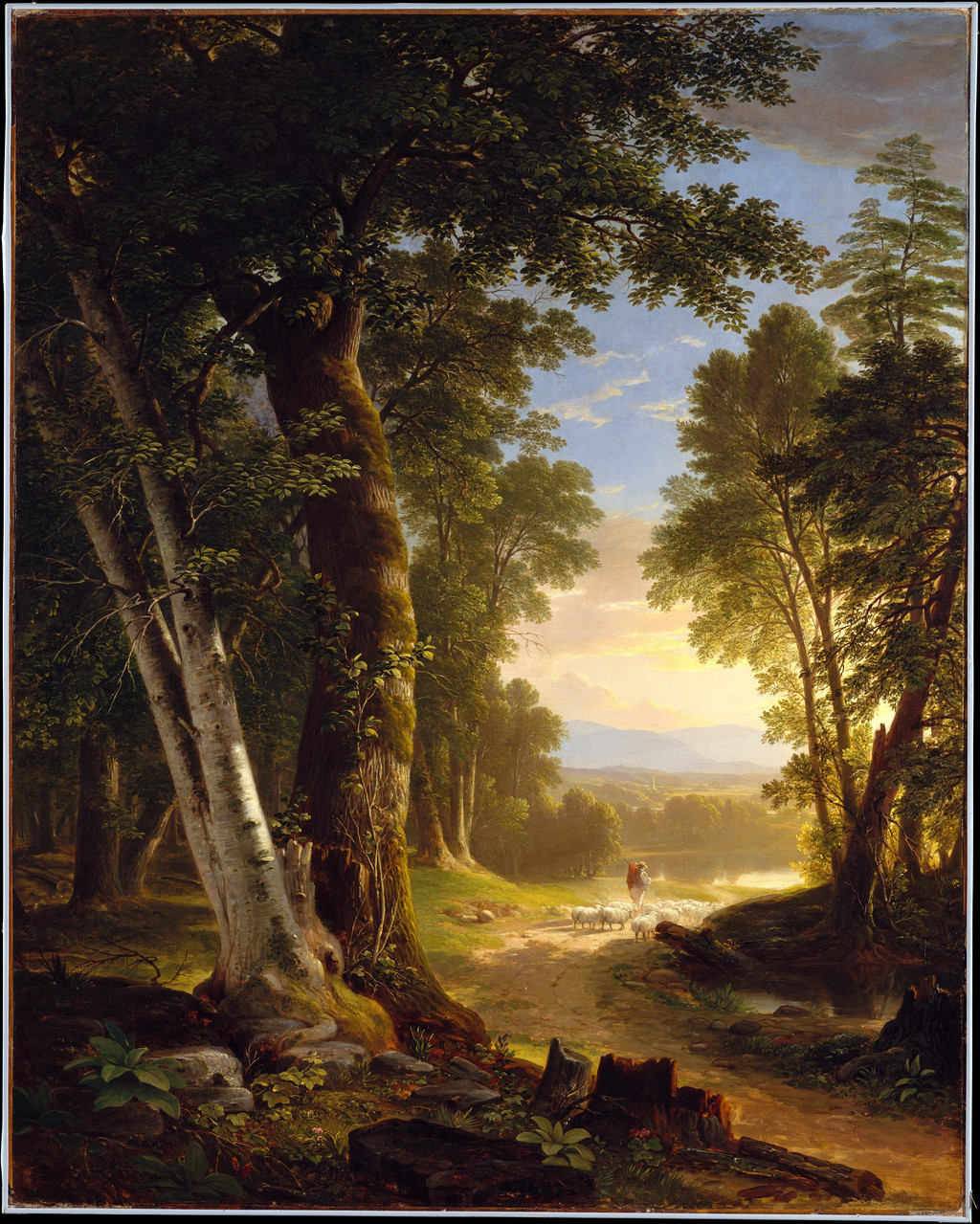
Asher Brown Durand, The Beeches, 1845. Metropolitan Museum of Art, 15.30.59. Large foreground trees frame a road and lighter distance; their tops pass beyond Durand’s painted field. The Metropolitan Museum of Art. Image source. CC0 / Public domain. Resized only; native appearance, complete carrier and margins preserved.
European pictures and outdoor observation
The Met’s catalogue connects the composition of The Beeches with Constable’s The Cornfield. It discusses the large framing trees, rural route and figures as elements Durand adapted. His outdoor study and his attention to another painter’s work therefore contributed to the same finished picture.[3]
John Durand’s account of the European journey preserves the artist’s admiration for Constable. During visits associated with Charles Robert Leslie, Durand saw studies that attended to familiar subjects and changing conditions of sky and weather.[1]
These encounters matter because they connect observation with a larger history of painting. Durand’s interest in nature did not prevent him from judging the achievements of other artists or learning from their arrangements. Independence involved making choices from several kinds of experience.
The memoir also preserves an initially critical response to Turner, alongside a later, more appreciative observation about his skies. Those differing judgements caution against turning one travel remark into a permanent account of Durand’s taste.
His interest in another artist’s method likewise needs a precise identity. The detailed procedure recorded during a visit to David Wilkie’s studio describes Wilkie’s practice. It should not be reassigned to Durand as his own paint-layer recipe.
Watch: Asher Brown Durand
Choose a film to explore the artist’s work, its interpretation and its wider setting.
Friendship and landscape, Asher B Durand's Kindred Spirits
Smarthistory and Crystal Bridges discuss friendship, memory and landscape in Kindred Spirits.
Watch on YouTubeA broader pastoral arrangement in River Scene
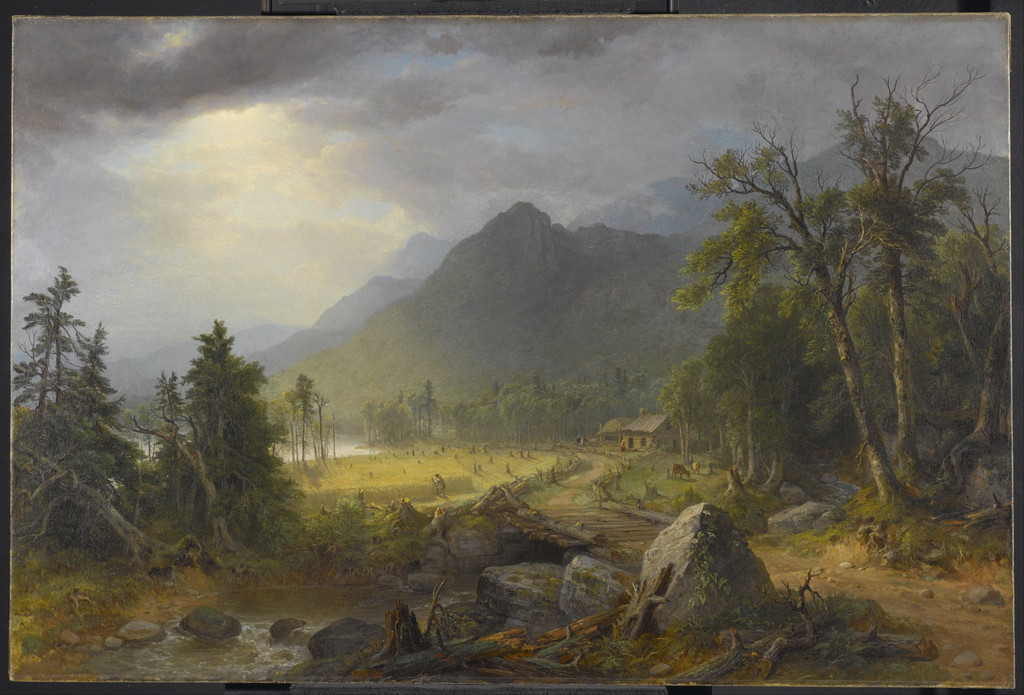
River Scene, 1854, offers a different organisation from the enclosing woodland interiors. A large tree occupies the right, cattle follow a descending road and water opens the landscape at the left. Low hills and a settlement appear farther away.
The Met describes the scene’s mellow light and measured pace, relating its diagonal division of space and prominent trees to English landscape painting. These are institutional observations about the composition, rather than proof of a specific English location.[4]
The diagonal route gives the viewer a way to move from near ground toward the river. The cattle help measure that movement, their forms becoming smaller as they occupy positions along the road. The larger tree provides a stable mass beside the opening.
Light and distance work together. Warm foreground tones differ from the paler, hazier hills, while dark foliage makes the water and sky seem more open. The painting can remain calm while its arrangement continues to direct attention.
Comparing this scene with In the Woods shows that Durand’s attention to trees did not produce one fixed kind of space. Trees can surround a viewer, frame a distant prospect or anchor the side of a broad rural view. Their function changes with the composition.
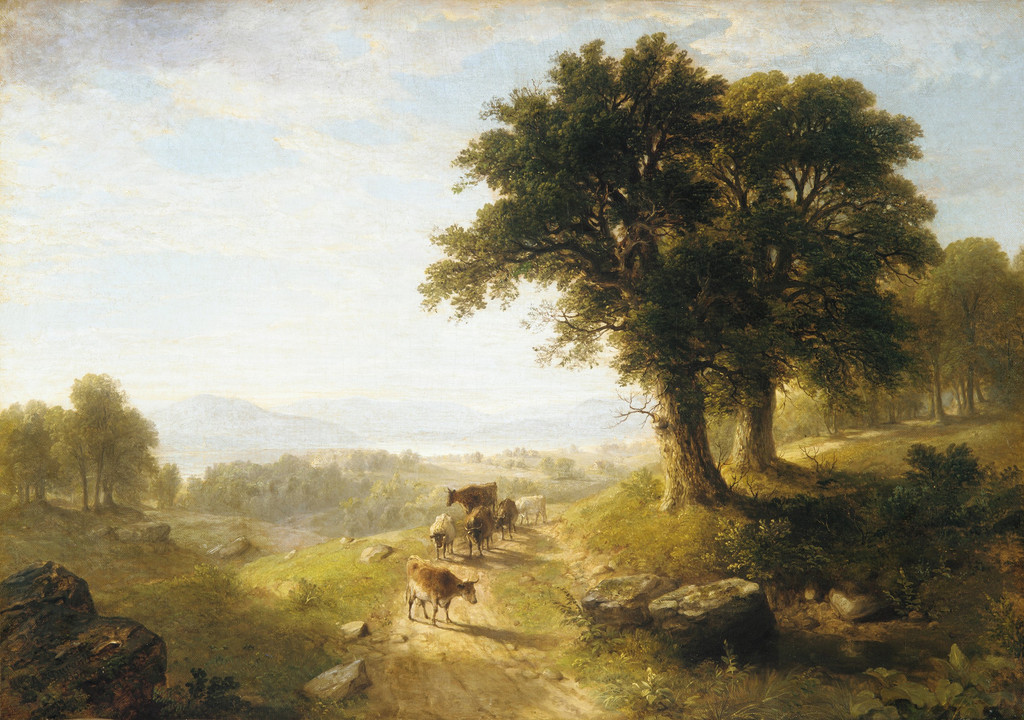
Asher Brown Durand, River Scene, 1854. Oil on canvas, 61 × 86.7 cm. Metropolitan Museum of Art, 1970.58. Bequest of Mary Starr Van Winkle, 1970. The diagonal road and large trees organise a broader rural view. The Metropolitan Museum of Art. Image source. CC0 / Public domain. Resized only; native appearance, complete carrier and margins preserved.
Colour, execution and the viewer
The letters’ extracts place colour and execution in relation to the whole picture. Durand values harmony and warns against a show of skilful handling that distracts from design or character. The painter’s means should support what the viewer encounters.[1]
This argument helps explain the patience invited by many landscapes. A rough trunk or bright area of distance may attract attention, yet it remains connected with neighbouring forms. The picture asks the viewer to follow those relationships rather than admire an isolated display of brushwork.
Durand also describes broad colour studies as useful to a mature painter, while advising a beginner to establish drawing and knowledge first. That distinction leaves room for different degrees of finish and different uses of a study. It does not demand that every object made outdoors resemble an exhibition canvas.
His emphasis on less conspicuous means is a statement of priorities. It does not establish that every stroke was hidden or that all paintings received identical surface treatment. The written advice and the surviving objects can be compared without making them interchangeable kinds of evidence.
Reading technique through a reproduction
A clear reproduction can show a composition’s main relationships, broad colour patterns and many visible details. It helps locate trees, roads, figures and changes in distance. A native image also places limits on the smaller passages that can be examined reliably.
The images here retain their supplied appearance and complete compositions. They support comparisons of form, tone and organisation. They do not supply the evidence needed to identify pigments, reconstruct every layer or describe an object’s present condition in detail.
Durand’s own advice remains the stronger source for his stated artistic priorities. The landscapes show how particular arrangements work, while museum scholarship helps establish specific sources and study relationships. Together, they make his technique understandable as a practice of observing, selecting and communicating through a picture.
Artworks directory
A collected selection of 19 individually identified paintings, prints and a graphite study, including fifteen dedicated artwork articles. This directory is not a complete catalogue raisonné. Links lead to a companion article where available, otherwise the consulted institutional record. Progress is identified by title, date and museum; an unverified accession is omitted. Unillustrated objects remain searchable.
Frequently Asked Questions
Individual trunks, branching patterns and surfaces are integrated into the larger composition. Olson’s study relates this attention to sustained drawing and observation.[2]
No. The Met’s catalogue identifies Constable’s The Cornfield alongside outdoor study in the development of The Beeches.[3]
They support visible comparisons of form and colour. The consulted evidence does not include pigment analyses or a universal layer sequence.
Discussion
Look again at the images and ideas explored in Asher Brown Durand’s Style and Technique. These editorial prompts invite your observations.
Reader Insights
Which openings between trees give a woodland its depth?
How does the road organise your movement through The Beeches or River Scene?
Where does close description contribute most strongly to the effect of the whole painting?
Join the Conversation
Share a detail, comparison or question about Asher Brown Durand’s Style and Technique below.
References
- John Durand, The Life and Times of A. B. Durand (1894). Selected European passages, especially printed pp.148–151, and Appendix I, pp.211–217, on drawing, study, selection, colour and execution. View source
- Roberta J. M. Olson, “A Magnificent Obsession”: Durand’s Trees as Spiritual Sentinels of Nature (2010). Actually consulted printed pp.151–158 and notes: arboreal observation and study relationships. View source
- Metropolitan Museum of Art, The Beeches, American Paintings in The Metropolitan Museum of Art, volume I. Actually reviewed printed pp.414 and 416: composition, tree identities, outdoor study and Constable. View source
- Metropolitan Museum of Art, River Scene, 1970.58. Current object record and account of the light, pace and composition. View source
- Marilyn S. Kushner and Linda S. Ferber, A Master Engraver: Founding Fathers, Banknotes, and the Great American Nude (2010). Printed pp.53–55 and notes: print preparation, draughtsmanship and the transition toward painting. View source
- Splash image source.
Asher Brown Durand after John Vanderlyn, Ariadne, 1835. Engraving, printed by Albert B. King. Princeton University Art Museum, Mather Collection, x1949-255. Line and tone describe cloth, figure and woodland within a monochrome image. Princeton University Art Museum; Mather Collection. Public domain. Resized only; native appearance, complete carrier and margins preserved.
View source