 by Tom Gurney
Tom Gurney BSc (Hons) is an art history expert with over 20 years experience
Email: tomgurney1@gmail.com / Phone: +44 7429 011000
High Point: Shandaken Mountains by Asher Brown Durand: Introduction
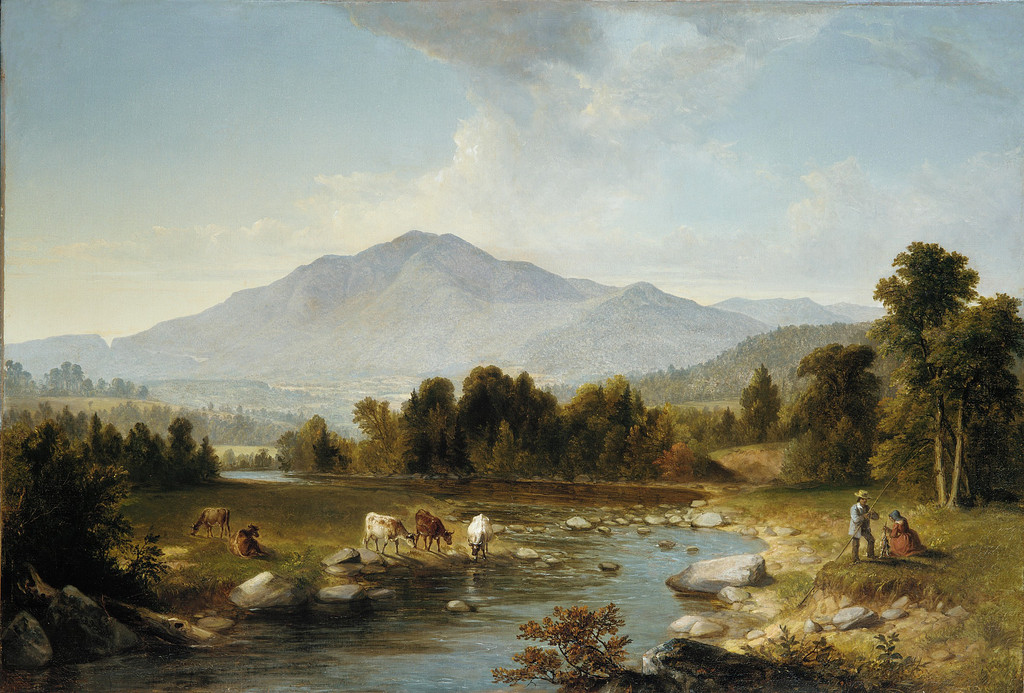
A broad blue-grey mountain rises beyond a stream, five cattle and two people fishing in Asher Brown Durand’s High Point: Shandaken Mountains. The landscape belongs to the Metropolitan Museum of Art, which dates it to 1853 and associates the subject with the country near Olive, New York. Its large horizontal canvas gives mountain scenery and ordinary activity room to coexist.[1]
At a Glance
- ArtistAsher Brown Durand (1796–1886)
- TitleHigh Point: Shandaken Mountains
- Date1853
- MediumOil on canvas
- Dimensions83.2 × 121.9 cm
- CollectionMetropolitan Museum of Art, New York
- Accession77.3.1
- Museum creditBequest of Sarah Ann Ludlum, 1877
This work across Asher Brown Durand’s career
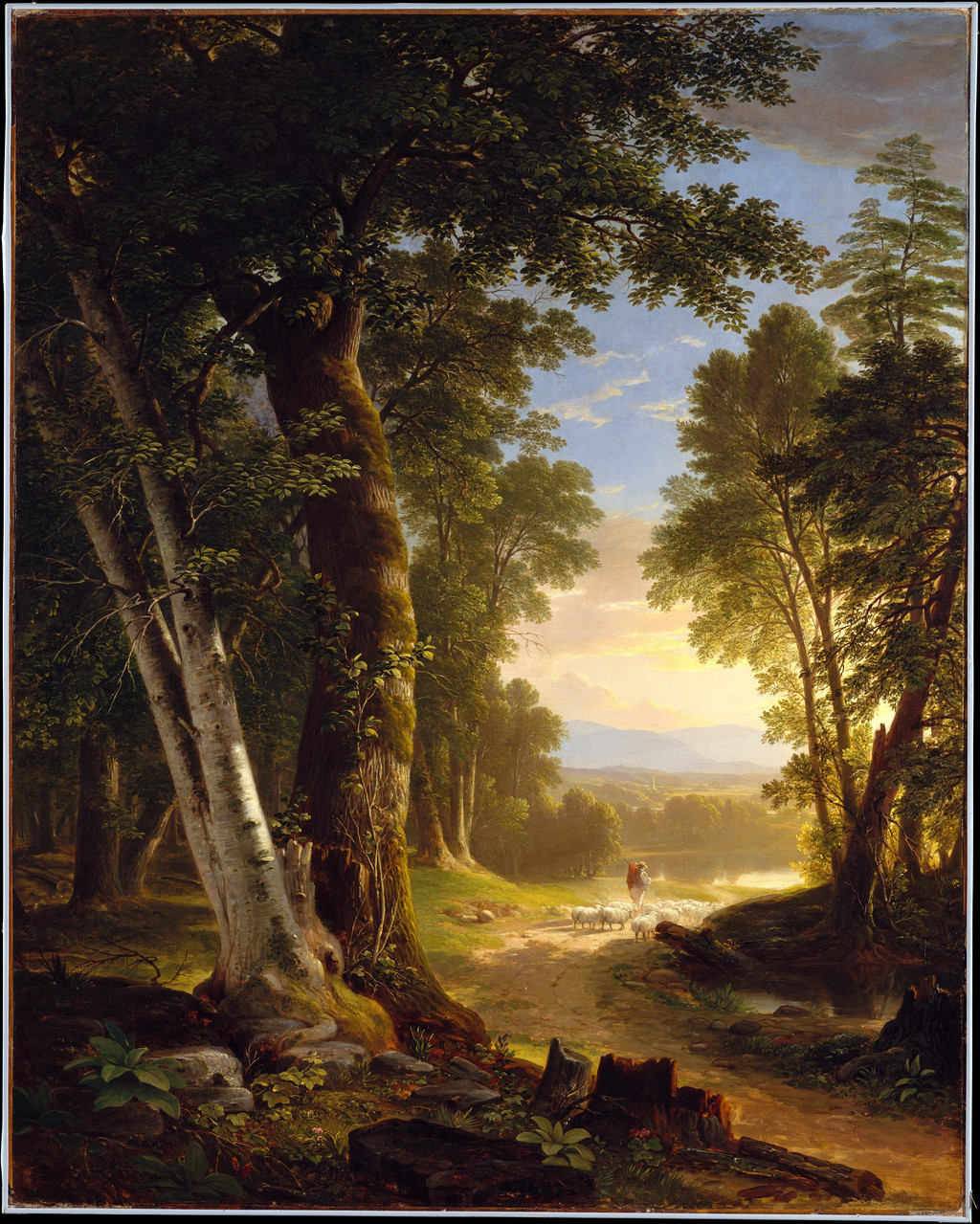
The Beeches
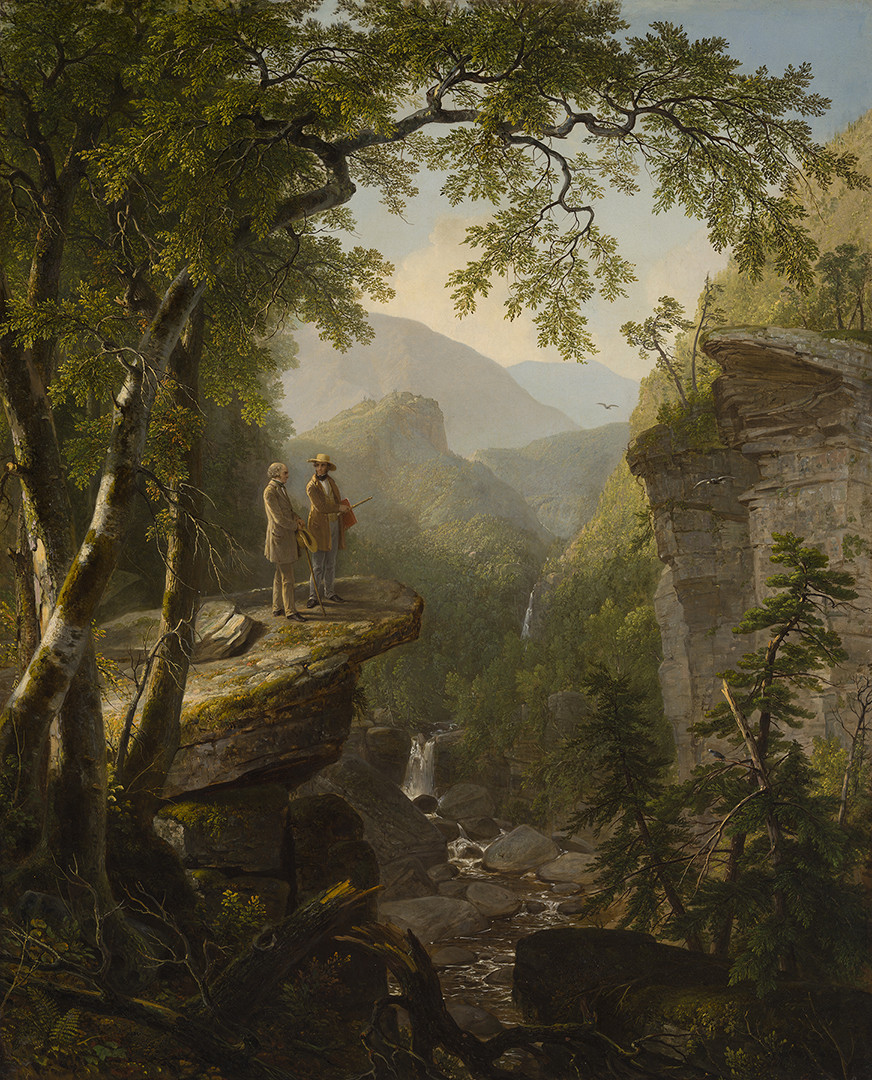
1845Kindred Spirits
1849God’s Judgment Upon Gog
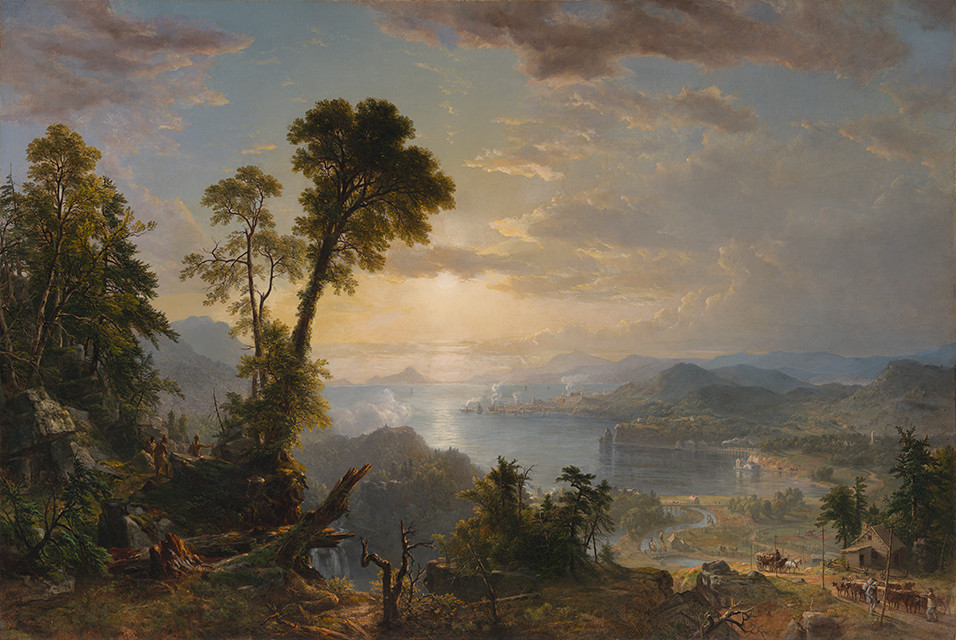
ca.1851–52River Scene
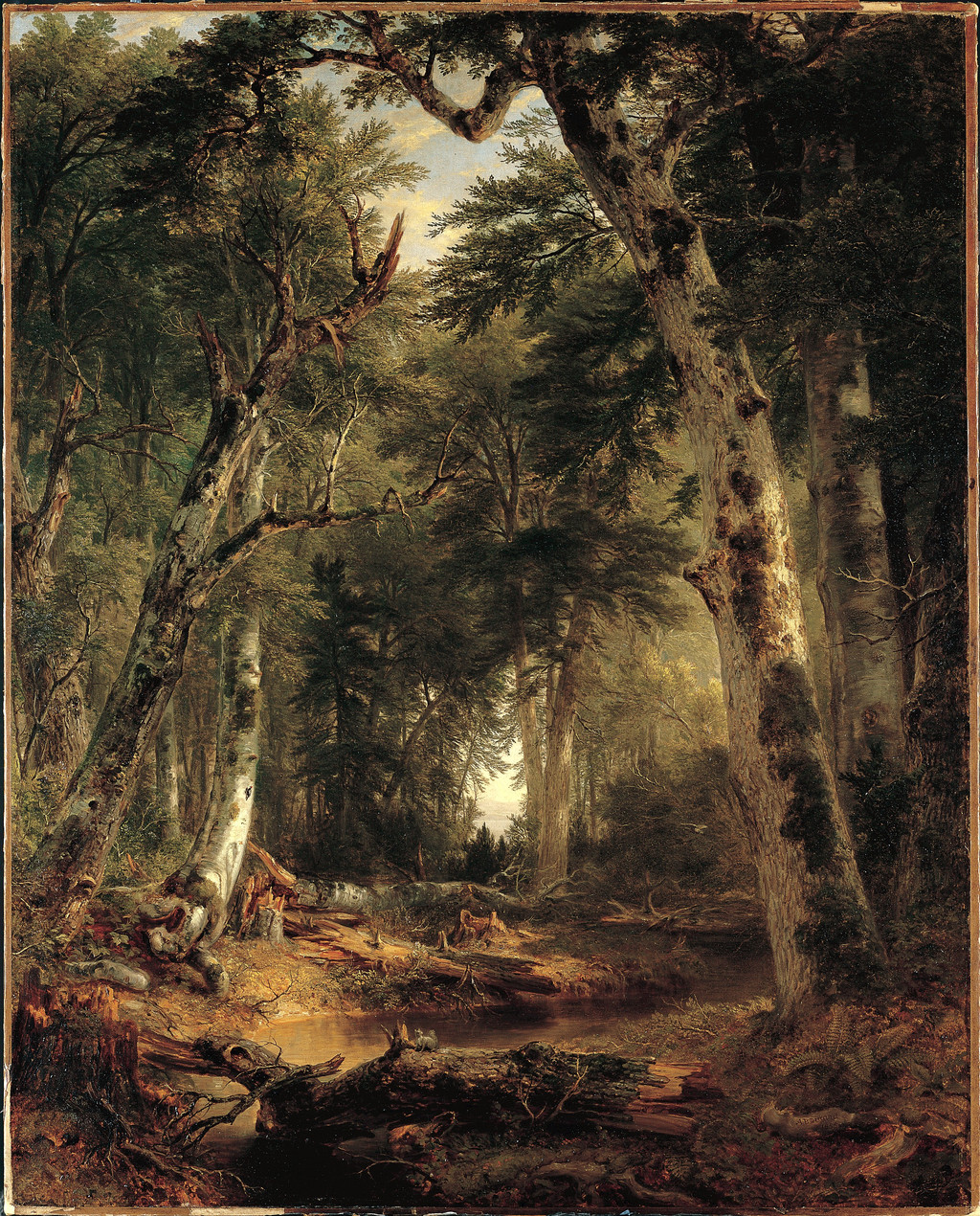
1854In the Woods
1855The Catskills
1859Sunday Morning
1860Summer Afternoon
1865Contents
- The mountain across the canvas
- A stream and five cattle
- The fishing pair on the right bank
- The 1853 exhibition and earlier studies
- Ludlum and the museum collection
- Comparisons with Dover Plains and River Scene
- Annotated details
The mountain across the canvas
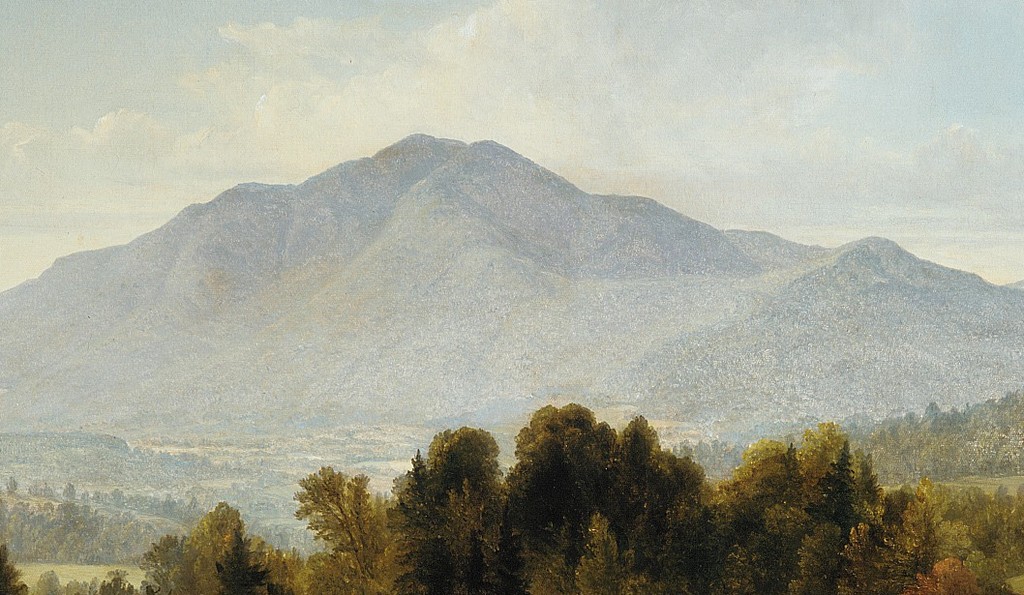
High Point supplies the painting’s largest continuous form. Its summit rises left of centre, followed by a long descending ridge. Smaller elevations extend toward the right. Durand has given the mountain breadth as well as height: its presence reaches across the valley instead of being concentrated in a single pointed peak.
The blue-grey slopes are softly articulated. Variations within them suggest folds and wooded surfaces, while their overall tone separates them from the warmer, more sharply defined vegetation below. This difference helps establish distance without making the mountain disappear into a featureless silhouette.
Above the summit, cloud spreads through a pale sky. The sky occupies a substantial part of the canvas, leaving the mountain ample air rather than crowding its top against the picture’s edge. Its gentle changes of brightness continue the spaciousness established by the land.
Closer tree groups interrupt the view of the valley floor. Their rounded crowns form a second, smaller rhythm beneath the extensive ridge. As the eye moves between these scales, the mountain becomes part of a sequence of distances: near stones, trees and fields, then the higher land beyond.
The painting’s calm is especially apparent in the relationship between summit and foreground. The mountain could dominate a more compressed or sharply contrasted composition. Here, its broad form allows the streamside activities to remain legible and unhurried.
Annotated Details from High Point: Shandaken Mountains
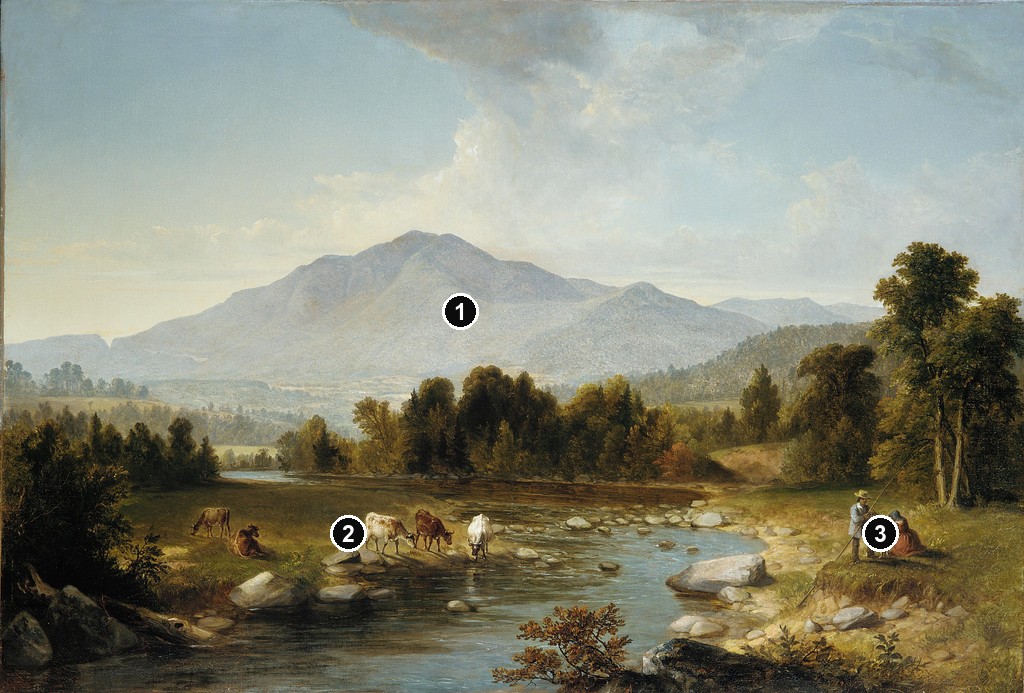
The numbered points identify visible features discussed in this article. Return from each detail to the whole composition. Asher Brown Durand, High Point: Shandaken Mountains, 1853. Metropolitan Museum of Art, 77.3.1. Bequest of Sarah Ann Ludlum, 1877. The painting was exhibited before the later summer return studies discussed by the museum. The Metropolitan Museum of Art. Image source. CC0 / Public domain. Resized only; native appearance, complete carrier and margins preserved.
Details from HIGH POINT: SHANDAKEN MOUNTAINS
Compare the cropped details with the complete images above. Notice how their colours, shapes and positions contribute to the larger compositions.
Mountain above the nearer trees
The broad blue-grey mountain rises behind nearer wooded ground. Changes of tone separate it from the foreground.
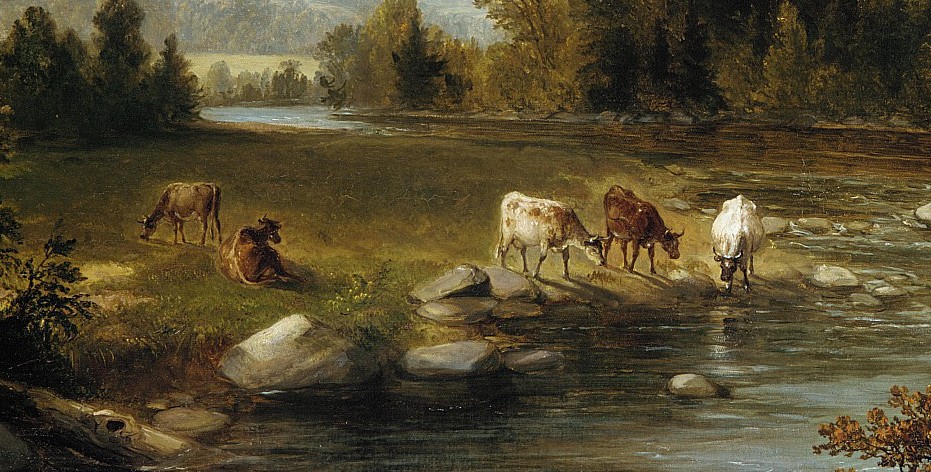
Five cattle beside the stream
Five cattle stand or rest beside the stream. Their different poses distinguish the near ground from the broad mountain above.
Fishing figures on the bank
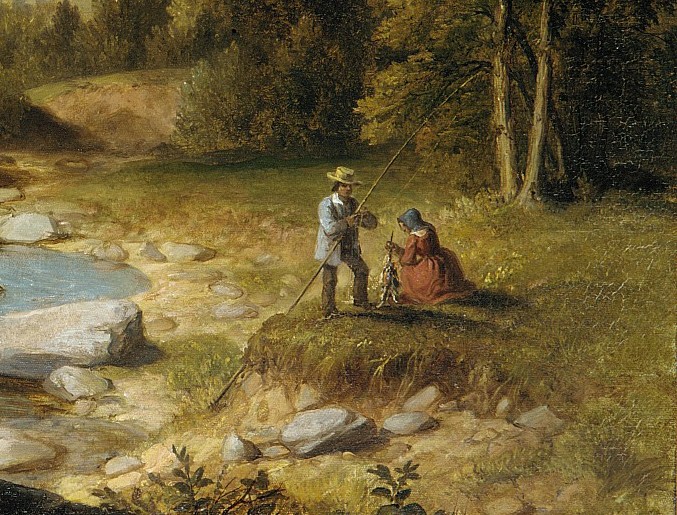
Two figures occupy the right bank with long rods. Their small forms give human scale to the water and surrounding trees.
A stream and five cattle
The stream enters at the lower edge and curves toward the left middle distance. Stones break its surface and line its banks, creating intervals of moving and still-looking water. Its course gives the foreground a clear direction without becoming a straight channel that carries the viewer too quickly away.
Five cattle occupy the left bank. One lies down while others stand, graze or lower their heads. Their contrasting coats create separate points of attention across the darker grass. The animals’ differing attitudes also prevent them from becoming a decorative row repeated at equal intervals.
The nearest light-coated animals stand close to the water. Their pale bodies connect the grassy bank with the bright stones and reflections beside them. Farther left, darker cattle blend more closely with the surrounding ground. These shifts make the group part of the landscape’s light and shade.
The stream’s bend opens a view between the nearer trees. Water and vegetation therefore work together: the trees give the banks substance, while the winding opening makes it possible to imagine moving farther into the country. The foreground is a place to occupy as well as a threshold to the distance.
Along the lower edge, rocks and plants remain close enough to invite scrutiny. These irregular forms keep the viewer grounded beside the stream. They also give the mountain’s large, relatively soft shape something concrete against which to be measured.
The fishing pair on the right bank
Two people appear on the opposite bank, beside a tall tree. One stands with a fishing rod; the other sits low to the ground. Their pale and red clothing distinguishes them from the tree’s shade and the warm grass around them.
The pair gives the right bank a human scale. The standing figure can be compared with the nearby trunk and rocks, while the seated figure brings attention closer to the water. Together, they make this part of the landscape feel usable rather than merely available to look at.
Their position balances the cattle on the left. Neither group occupies the centre of the canvas, leaving the stream to connect them. The painting’s arrangement permits people, animals and landscape to remain distinct while belonging to the same setting.
The Met interprets the fishing pair as an expression of the rural leisure increasingly sought by an urban public. That reading concerns the picture’s audience and pastoral appeal; the figures themselves are not identified as named visitors.[1]
Seen in that light, the landscape offers more than a distant mountain spectacle. The visitors can stop, fish and remain beside the water. Their small scale preserves the larger view, but their activity suggests a sustained experience within it.
Watch: Asher Brown Durand
Choose a film to explore the artist’s work, its interpretation and its wider setting.
Friendship and landscape, Asher B Durand's Kindred Spirits
Smarthistory and Crystal Bridges discuss friendship, memory and landscape in Kindred Spirits.
Watch on YouTubeThe 1853 exhibition and earlier studies
The Met records the painting’s appearance at the National Academy of Design’s annual exhibition in 1853. It also connects Durand’s later summer visits in 1853 and 1855 with studies of High Point, recalling sketches made during an earlier visit in 1847.[1]
Those dates matter. Summer studies from the year of an exhibition need not have preceded the exhibited canvas. The earlier visit provides a documented background, while the later returns show that Durand continued to study the region after completing this particular painting.
Repeated visits could deepen an artist’s familiarity with a subject without every study serving one final work. Here, it is useful to distinguish the history of an ongoing regional interest from the exact sequence of preparation for a single canvas.
Margaret Stenz’s Brooklyn Museum guide places Durand’s travels beyond the famous Kaaterskill Clove, including Olive, Marbletown, Shandaken and Shokan during the 1840s and early 1850s. Her discussion explains the wider geographical range behind his mountain landscapes.[2]
The guide discusses several related views whose precise sites remain uncertain. They should not be treated as interchangeable records of the same position. For the broader relationship between travel, study and composed scenery, see Durand’s Catskills and landscape travel.
Ludlum and the museum collection
John Durand’s 1894 memoir lists High Point, Shandakin under 1853 and names Mr. N. Ludlam as its patron. This retrospective entry gives the canvas a place in the artist’s family account of his pictures and patrons.[3]
Although the memoir attributes the subsequent bequest to him, the Met’s current credit identifies Sarah Ann Ludlum’s 1877 bequest. The early ownership and the later museum acquisition are separate stages in the work’s history. Keeping both names and dates attached to their sources avoids compressing that history into an unspecified gift.
Comparisons with Dover Plains and River Scene
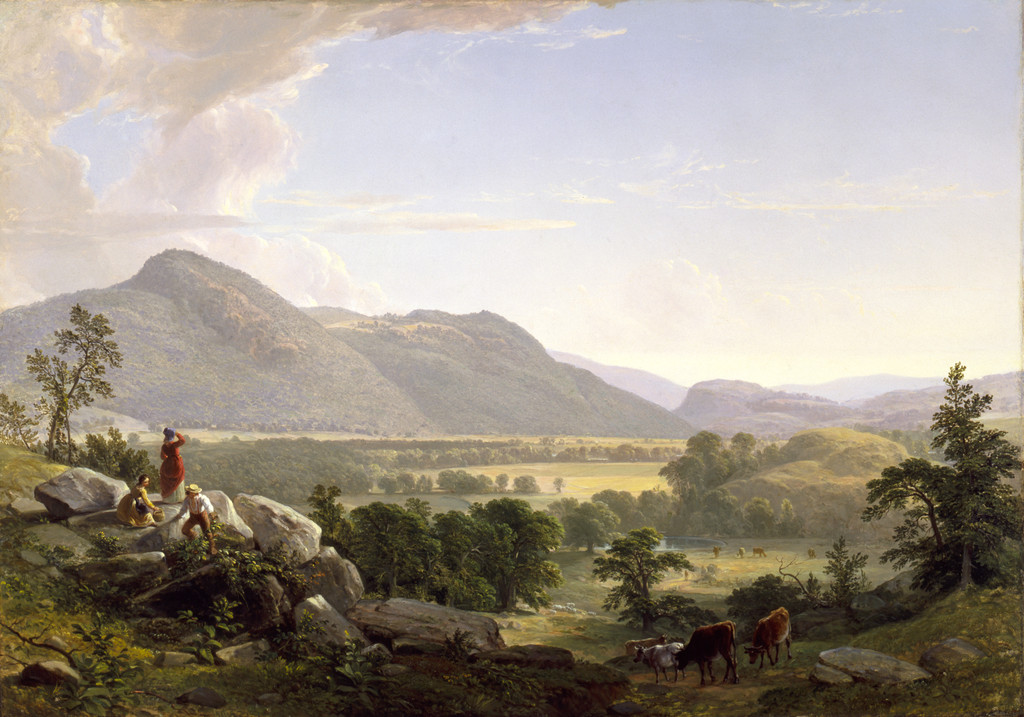
In Dover Plains, Durand places conspicuous foreground viewers at an elevated ledge above a cultivated valley. That 1848 Smithsonian painting offers a useful comparison for the relationship between a broad prospect and small figures.[4]
High Point brings its people down to the bank. The difference changes the viewer’s imagined position: the experience is close to water and animals rather than primarily that of looking outward from a height.
River Scene, 1854, places cattle along a descending road beside water. Its title leaves the locality unspecified.[5] Together, these works show how Durand could vary the relationship between a named region, ordinary activity and the larger landscape. In High Point, the mountain stays extensive while the near stream supplies a setting for both grazing and leisure.
Artworks directory
A collected selection of 19 individually identified paintings, prints and a graphite study, including fifteen dedicated artwork articles. This directory is not a complete catalogue raisonné. Links lead to a companion article where available, otherwise the consulted institutional record. Progress is identified by title, date and museum; an unverified accession is omitted. Unillustrated objects remain searchable.
Frequently Asked Questions
The Met relates it to the country near Olive, New York, and identifies the mountain with Ashokan High Point. This does not establish a present-day viewing route.[1]
No. The canvas appeared in that year’s annual Academy exhibition; later summer study should not automatically be described as its preparation. The museum also identifies earlier sketches from 1847.[1]
Their individual identities are not established in the consulted record. The Met discusses their role in the painting’s appeal to an urban audience.[1]
Discussion
Look again at the images and ideas explored in High Point: Shandaken Mountains by Asher Brown Durand. These editorial prompts invite your observations.
Reader Insights
Does your attention move first toward the mountain or toward the stream?
How do the resting and standing cattle change the pace of looking?
Does the fishing pair make the landscape feel closer to a place you could occupy?
Join the Conversation
Share a detail, comparison or question about High Point: Shandaken Mountains by Asher Brown Durand below.
References
- Metropolitan Museum of Art, High Point: Shandaken Mountains, accession 77.3.1. Complete current record and narrative consulted; identity, dimensions, bequest, exhibition, study dates and interpretation of the fishing pair. View source
- Margaret Stenz, Following in the Footsteps of Asher B. Durand: A Walker’s Guide, Brooklyn Museum (2007). All five pages’ text consulted; wider Shandaken-region travel. Historical guide, not current walking directions. View source
- John Durand, The Life and Times of A. B. Durand (1894). Selected chapters actually consulted, including the printed p.175 entry naming Mr. N. Ludlam. Retrospective family account. View source
- Smithsonian American Art Museum, Dover Plains, Dutchess County, New York, accession 1978.126. Complete current record consulted for the exact 1848 comparison. View source
- Metropolitan Museum of Art, River Scene, accession 1970.58. Complete current record and narrative consulted for the exact 1854 comparison. View source
- Splash image source.
Asher Brown Durand, High Point: Shandaken Mountains, 1853. Oil on canvas, 83.2 × 121.9 cm. Metropolitan Museum of Art, 77.3.1. Bequest of Sarah Ann Ludlum, 1877. The Metropolitan Museum of Art. CC0 / Public domain. Resized only; native appearance, complete carrier and margins preserved.
View source