by Tom Gurney
Tom Gurney BSc (Hons) is an art history expert with over 20 years experience
Published on October 6, 2016 / Updated on February 1, 2026
Email: tomgurney1@gmail.com / Phone: +44 7429 011000
Claude Monet in Trouville
Monet in Normandy- Location: Trouville-sur-Mer, Normandy, France
- Year Visited: Summer 1870
- Duration: Approximately 6–8 weeks
- Artistic Focus: Beach scenes, promenade views, seaside leisure
- Key Works: The Beach at Trouville, The Boardwalk at Trouville, Hôtel des Roches Noires
- Notable Figures: Camille Doncieux, Eugène Boudin
- Painting Method: En plein air (directly on the beach)
- Historical Context: Painted weeks before the Franco-Prussian War
List of Featured Claude Monet Trouville Paintings

Chronological Table of Claude Monet's Trouville Paintings (1870)
| Title | Date | Current Location | Notes |
|---|---|---|---|
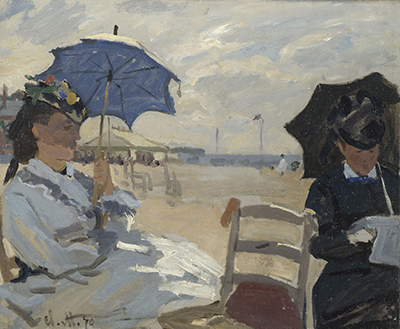
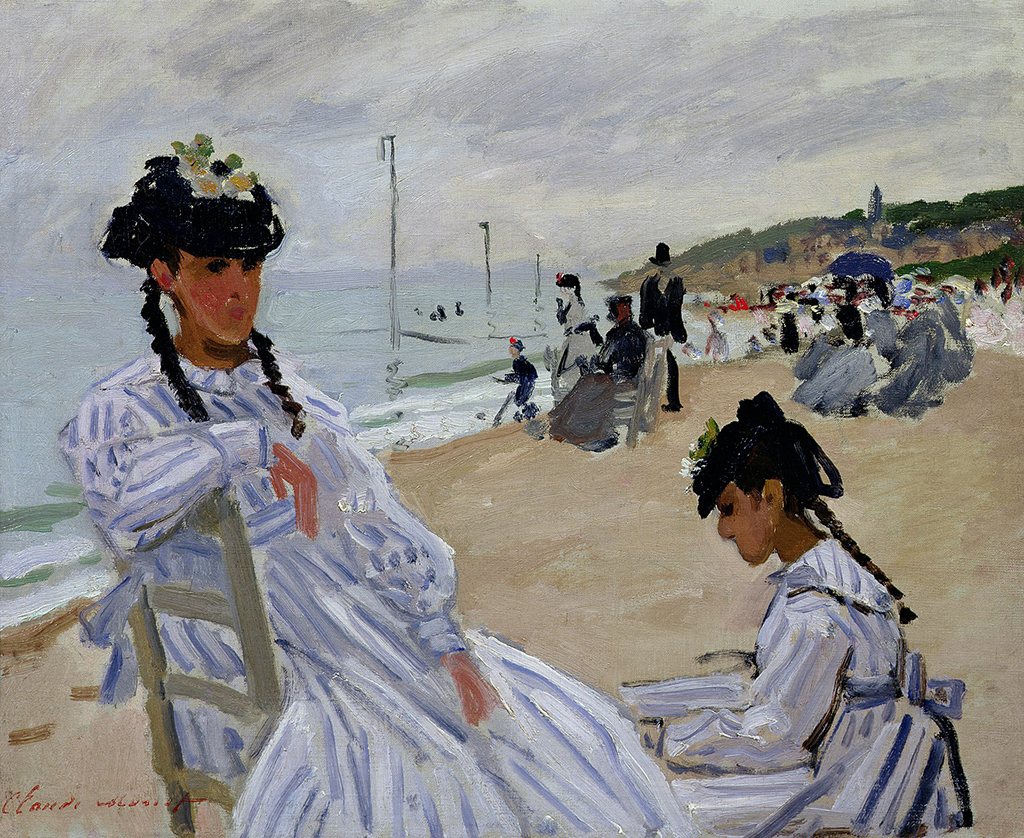
| On the Beach at Trouville | 1870 (early summer) | Wadsworth Atheneum Museum of Art, Hartford | One of the earliest works from the stay; depicts Camille and possibly Eugène Boudin seated on the sand. Visible grains of sand embedded in paint. |
| The Beach at Trouville | 1870 (July) | National Gallery, London | Features Camille Doncieux seated with another woman. Strong foreground cropping and luminous beach atmosphere. |
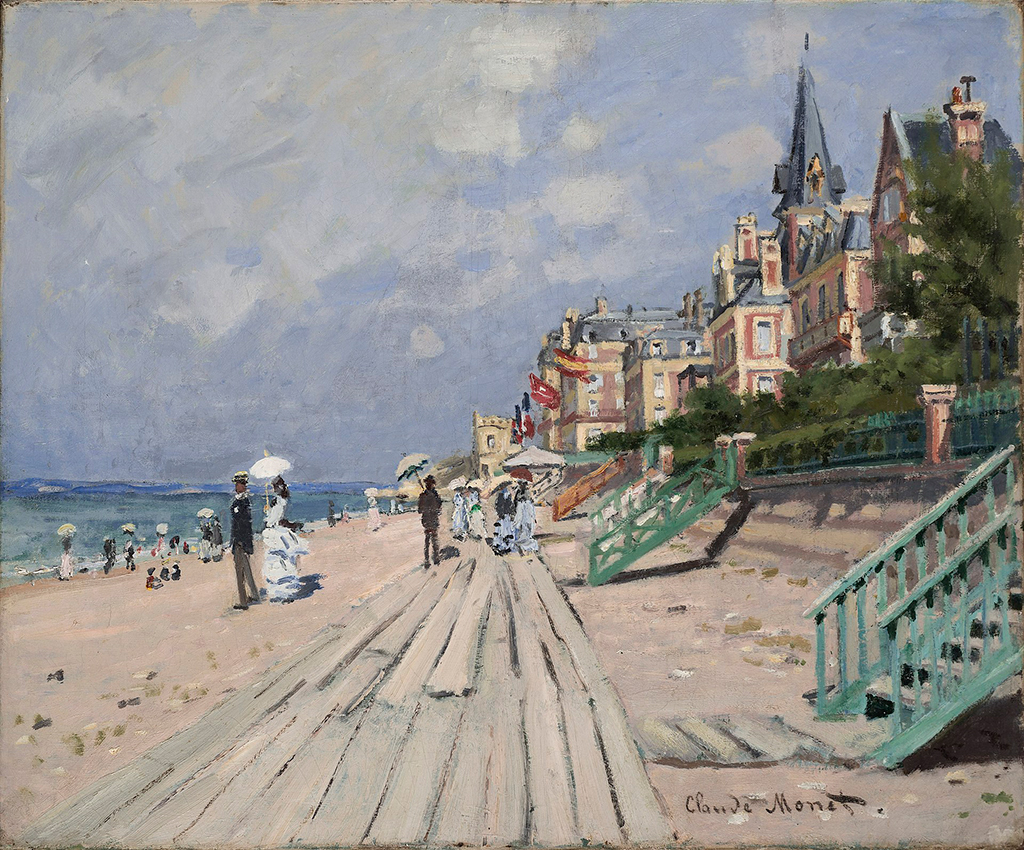
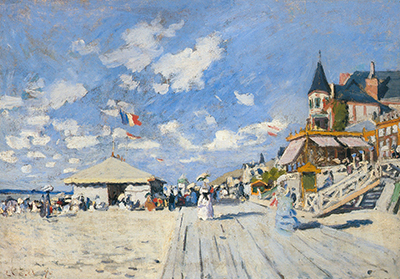
| The Boardwalk at Trouville | 1870 (July-August) | Musée d'Orsay, Paris | Focuses on fashionable visitors along the promenade; emphasizes modern leisure culture. |
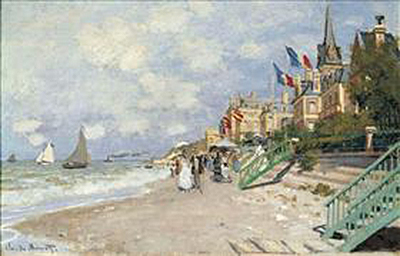
| Hôtel des Roches Noires, Trouville | 1870 (mid-summer) | Musée d'Orsay, Paris | Vertical composition highlighting the grand seaside hotel, fluttering flags, and expansive sky. |
| Trouville, the Beach | 1870 | Private Collection | Wide expanse of sand and distant sea; simplified figures under bright sunlight. |
| Trouville, Low Tide | 1870 | Private Collection | Emphasis on receding shoreline and reflective wet sand. |
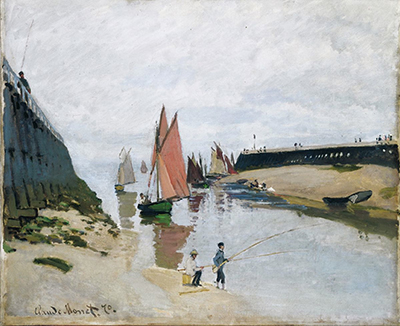
| Fishing Boats at Trouville | 1870 | Private Collection | Likely painted near harbour area; looser marine composition compared to beach scenes. |
| Boats on the Beach at Trouville | 1870 | Private Collection | Focuses on working vessels rather than leisure figures. |
| The Beach at Trouville, Study | 1870 | Private Collection | Small-scale sketch; rapid execution suggesting preparatory or exploratory study. |
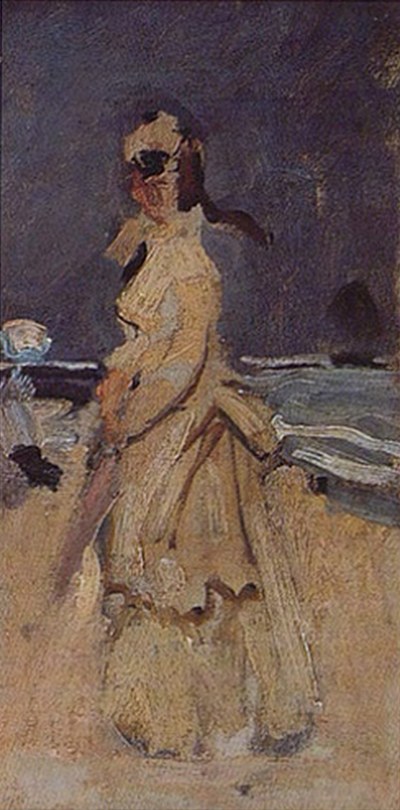
| Camille on the Beach at Trouville | 1870 | Private Collection | Close-up composition centred on Camille; strong wind effects visible in dress and parasol. |
| Promenade at Trouville | 1870 | Private Collection | Depicts movement along boardwalk; cropped figures echo photographic influence. |
| The Beach at Trouville in the Wind | 1870 | Private Collection | Animated sky and fabric movement convey coastal gusts. |
| View of Trouville | 1870 | Private Collection | Broader town view; less figure-focused, more atmospheric. |
| Beach Scene, Trouville | 1870 | Private Collection | Likely mid-to-late stay; lighter palette and freer brushwork. |
| Figures on the Beach at Trouville | 1870 | Private Collection | Loose grouping of fashionable beachgoers; emphasis on sunlight rather than detail. |
Frequently Asked Questions About Monet in Trouville
When did Claude Monet visit Trouville?
Claude Monet stayed in Trouville-sur-Mer during the summer of 1870, shortly after marrying Camille Doncieux. His visit lasted approximately six to eight weeks before the outbreak of the Franco-Prussian War later that year.
Where did Monet stay in Trouville?
Although exact lodging records do not survive, Monet likely stayed in modest accommodation in Trouville or nearby Deauville. Despite limited finances, he painted fashionable hotels such as the Hôtel des Roches Noires overlooking the beach.
What paintings did Monet create in Trouville?
Major works from his Trouville stay include The Beach at Trouville, The Boardwalk at Trouville, On the Beach at Trouville, and Hôtel des Roches Noires. These paintings focus on beach leisure, promenade scenes, and seaside architecture.
Did Monet paint directly on the beach?
Yes. Monet painted en plein air directly on the sands of Trouville. Some works even contain embedded grains of sand in the paint surface, confirming that he worked outdoors in windy coastal conditions.
Why is Monet's Trouville period important?
The Trouville paintings represent one of Monet's last major French painting campaigns before he left for London during the Franco-Prussian War. They show his growing confidence in capturing modern leisure, bright coastal light, and spontaneous brushwork.