 by
Tom Gurney
Tom Gurney BSc (Hons) is an art history expert with over 20 years experience
Email:
tomgurney1@gmail.com
/ Phone:
+44 7429 011000
Eastman Johnson’s Drawings: Introduction
Drawing was a profession for Eastman Johnson before oil painting made his reputation. It gave him access to literary patrons, allowed close attention to individual faces and remained part of his thinking about figures and compositions. His surviving sheets range from commissioned likenesses to studies whose intended finished pictures are still uncertain.
The distinction between study and finished work is not always simple. A drawing can be carefully resolved and framed, while also relating to a painting. Johnson’s work on paper is most useful when considered through its own marks, support, purpose and history, rather than treated as a lesser version of his oils.
At a Glance
- Early profession Portrait drawing
- Longfellow commissions From September 1846 [1]
- Ojibwe Youth Dated 4 October 1857 [2]
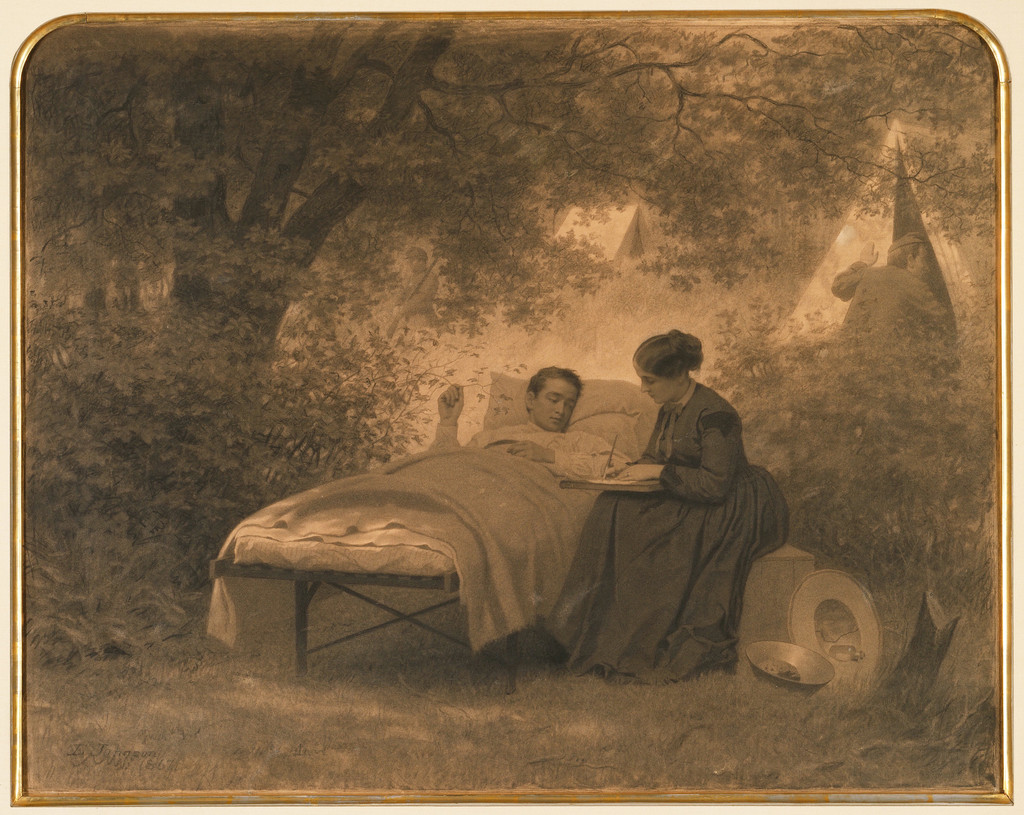
- Featured sheet The Letter Home , 1867 [3]
Contents
- Portrait drawing and the Longfellow circle
- Charcoal, paper and the modelling of a face
- The Lake Superior drawings
- Later uses of the Ojibwe works
- A Civil War-era figure study
- The Letter Home as a substantial drawing
- From a drawing to a painted figure
Portrait drawing and the Longfellow circle
Henry Wadsworth Longfellow began commissioning Johnson’s crayon portraits of his sisters and close friends in September 1846. The National Park Service identifies a series of ten such portraits in the Longfellow House collection and records a double portrait of the poet’s sons in 1848. The ten works belong to this particular commission, not a count of Johnson’s entire output. [1]
The commissions show how drawings could operate within a household’s social life. Portraits gathered relatives and friends into a collection that could preserve their likenesses and associations. Their value was personal as well as artistic, connecting the young draughtsman with people whose cultural interests extended beyond the making of a single image.
The wider Longfellow collection includes many other artists, family artworks and objects acquired through travel. Johnson’s presence within it should not turn every drawing or portrait in the house into his work. The variety also explains why a modern photograph of a room is evidence of a collecting environment rather than a complete display of his drawings. [1]
The dining-room photograph reproduced here documents a later arrangement associated with Alice Longfellow. Johnson’s over-door portraits lie outside its frame, and the visible central family painting is not presented as his. The photograph gives a setting for discussing patronage while the individual drawings retain their own identities. [4]
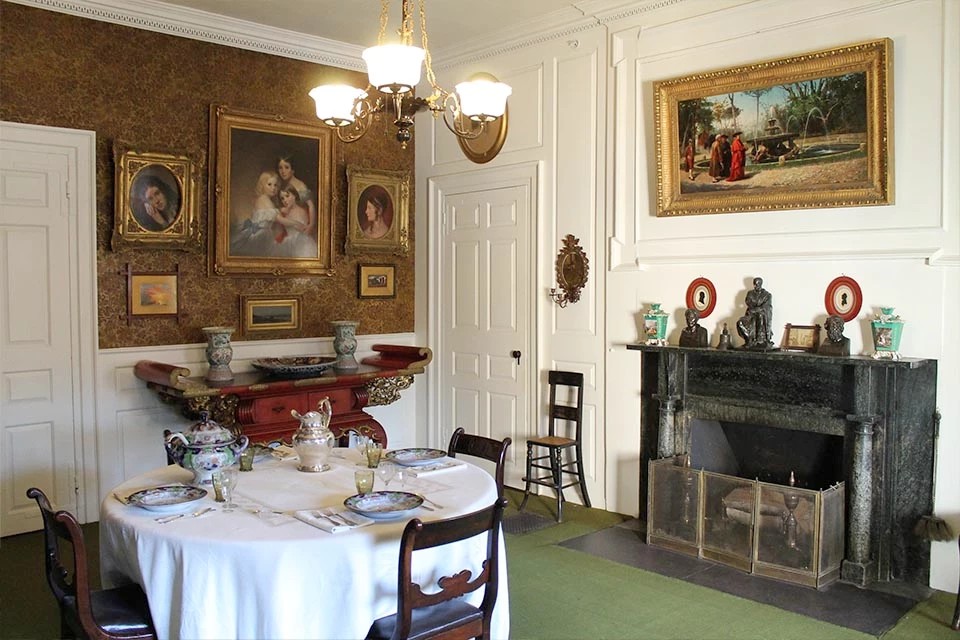
Dining room at Longfellow House–Washington’s Headquarters National Historic Site, 2018. The room reflects Alice Longfellow’s later arrangement; Johnson’s over-door drawings are outside this photograph, and the central family painting is not attributed to him. NPS Photo / Kate Hanson Plass. Public domain.
Image source
.
Public domain
.
Charcoal, paper and the modelling of a face
Patricia Hills’s technical survey describes Johnson combining fine marks with broader tonal masses. Charcoal, blending and pale accents could make a face emerge from a middle tone, with some details lost in shadow and others defined by light. This balance was a central resource of his early portrait practice. [5]
Such modelling differs from tracing every feature with an equally firm outline. A cheek can be felt through a gradual change in tone, while the nose or eyelid needs only a small accent. The drawing’s likeness can depend on relationships across the face as much as on an inventory of separate features.
The word crayon in a historical record should be read alongside the exact medium given for the work. Charcoal, graphite and white crayon do different jobs, and a broad period term does not mean that every sheet was made with identical materials. A record identifying white highlights in one drawing cannot establish their presence in all the others.
The Lake Superior drawings
Johnson travelled to the Lake Superior region in 1856 and 1857, where family connections and his interest in subjects for art brought him into contact with Ojibwe communities. The catalogue describes his 1857 work with local guide Stephen Bunga. The setting was inhabited Ojibwe territory amid expanding settlement and land speculation, rather than an empty landscape awaiting an artist. [2]
Ojibwe Youth provides a precise anchor within that body of work. The catalogue records charcoal and white crayon on paper, 42.5 × 34.3 cm, initialled and dated 4 October 1857. It belongs to the St. Louis County Historical Society, accession 62.181.23. The date attached to this sheet should not be shifted to 1856 merely because Johnson also visited that year. [2]
Its title has changed. Older descriptions assigned the sitter different genders, but the catalogue reports the historical society’s 2020 confirmation that the sitter’s gender is unknown. The current title and neutral pronouns preserve that limit. An inherited caption is part of a drawing’s reception, rather than an unquestionable identification of its subject. [2]
This is especially important for works that have been used as historical records. Close observation can preserve valuable information while leaving names, circumstances and the artist’s selection unexplained. A recognisable individual presence should not be replaced by a generic label, but neither should a modern account invent biographical certainty absent from the record.
Later uses of the Ojibwe works
A 2006 University of Minnesota Duluth announcement for a Tweed Museum exhibition described the collection’s significance and its relationship to later Ojibwe art. It noted that artist Carl Gawboy had used Johnson’s Lake Superior works as reference points for representations of Ojibwe life during the fur-trade era. [6]
That example gives the drawings a history beyond Johnson’s own career. Their details could be examined, reused and reconsidered by an artist addressing an Indigenous past from another position. The announcement describes one exhibition and one artist’s engagement; it is not evidence of a single response shared by all Ojibwe viewers.
The collection’s later life also changes the question asked of a drawing. A nineteenth-century viewer might have sought a picturesque subject, while a later artist or researcher might ask about clothing, setting, identity or the limits of the record. The sheet can remain the same object while its uses and responsibilities change.
Watch: Eastman Johnson
Choose a film to explore the artist’s work, its interpretation and its wider setting.
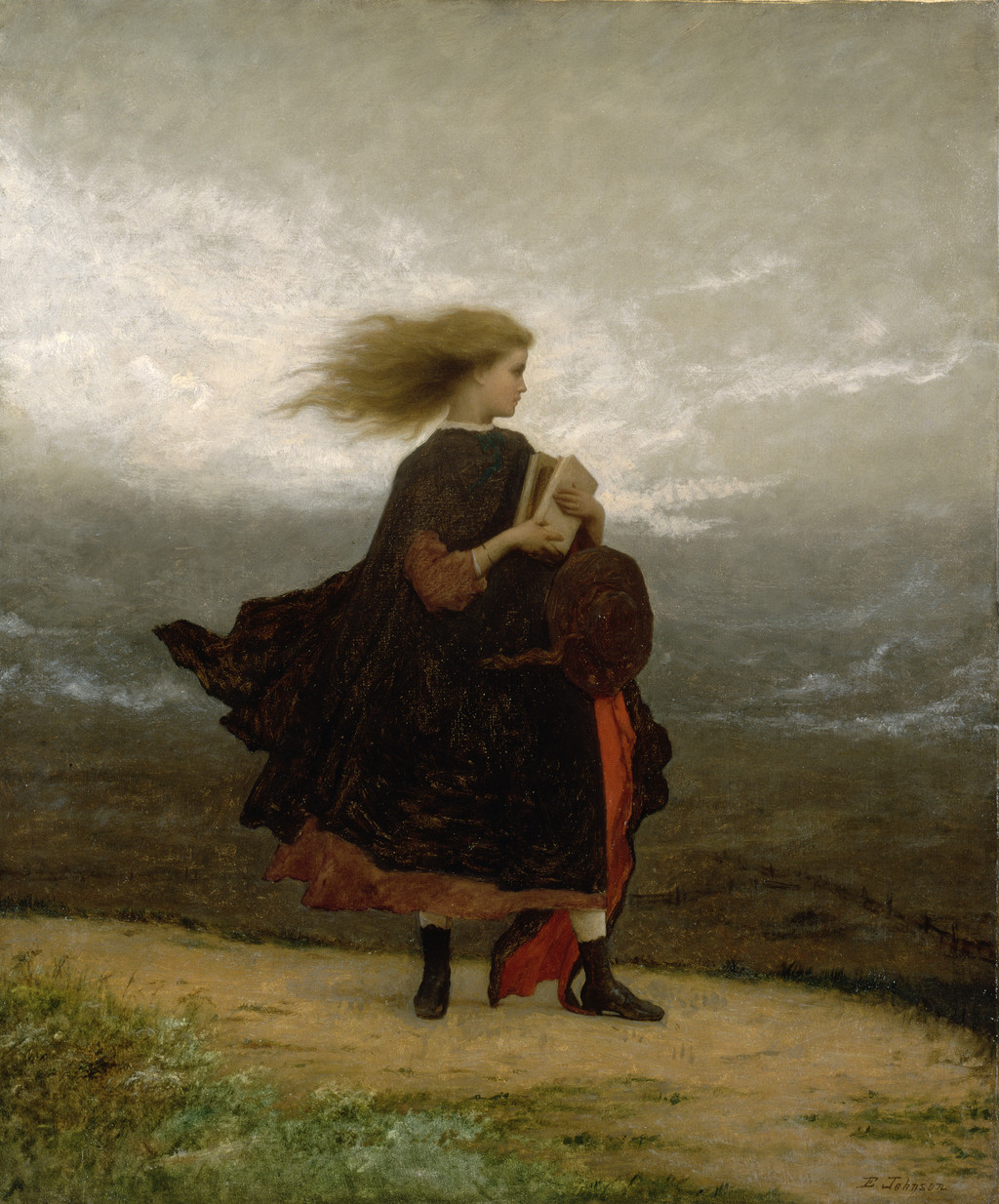
Director's Choice - The Girl I Left Behind Me by Eastman Johnson
The Smithsonian American Art Museum looks at Johnson’s The Girl I Left Behind Me.
Watch on YouTubeA Civil War-era figure study
Johnson’s Seated Man , dated 1863, is a pencil drawing discussed by Nancy K. Anderson in the National Gallery’s catalogue of the John Wilmerding collection. It shows a seated Black youth near a window, with a separate study of a woman’s head on the sheet. The drawing measures 21.9 × 25.4 cm. [7]
Anderson considers possible contexts for the sitter and compares the pose with Johnson’s painted figures. The proposals do not identify him securely as a freed person or a worker in military transport. No finished painting containing this exact figure has been established by the consulted account.
The uncertainty does not diminish the sheet’s value as evidence of looking. A posture, a distribution of weight and the relationship between body and nearby light can be studied without a complete narrative. The drawing records an artistic problem even where the sitter’s biography and the intended destination of the study remain open.
The Letter Home as a substantial drawing
The Letter Home , 1867, takes drawing into a more elaborate pictorial form. The Minneapolis Institute of Art records charcoal and graphite on paper, accession 74.17, with an image area of 60.96 × 76.2 cm. It is a substantial sheet, not a tiny notation of a passing pose. [3]
A wounded man lies beneath trees while a woman sits beside him, writing. The horizontal bed, her upright figure and the surrounding foliage organise a complete encounter. Light gathers around the two participants, while a more distant figure remains less emphatic among the trees.
Drawing allows the scene to move through a wide range of greys and browns without losing its structure. Dark foliage encloses the paler central opening, the bedding catches light and the writer’s clothing supplies a stronger mass beside it. The relation between the two people remains clear within a dense outdoor setting.
The museum calls the drawing a study for the related Boston painting. That designation establishes a relationship without proving the exact order of every revision. The museum identifies the woman as Johnson’s sister, Mrs. May. That identification and the historical frame information belong to its documentation, rather than to facts recovered from the faces alone. [3]
The museum also records an original outer wooden frame bearing Sanitary Commission medals. Those medals are not visible in the supplied image, which retains the inner surround. The distinction matters when comparing a record of the complete framed object with a reproduction concentrated on the drawn scene.
From a drawing to a painted figure
The relationship between Girl with Glass , dated 22 September 1875, and The New Bonnet provides a different example. The Met catalogue relates the drawing to the painted central figure and reports evidence of underdrawing and transfer. Here, a carefully prepared form could be carried into a larger pictorial arrangement. [8]
This is a more specific connection than a general resemblance between poses. It shows why drawings need not fall into a single category of spontaneous first thoughts. They could also preserve a resolved figure and help Johnson maintain its structure while developing the surrounding scene.
His work on paper therefore spans several kinds of attention: the commissioned likeness, the observed person, the unresolved figure study and the sustained narrative composition. The technique and portraits pages follow those relationships into painting, while the drawings remain evidence with their own scale, materials and histories.
Artworks directory
Browse twenty-one selected objects discussed in these articles, including the Gifford portrait and the Prang print after Johnson. Dates identify individual objects, including the San Diego Drummer Boy study. Use All media to include the chromolithograph.
| Name | Date | Medium |
|---|---|---|
| Kitchen at Mount Vernon | 1857; Charles Butt canvas | Oil on canvas |
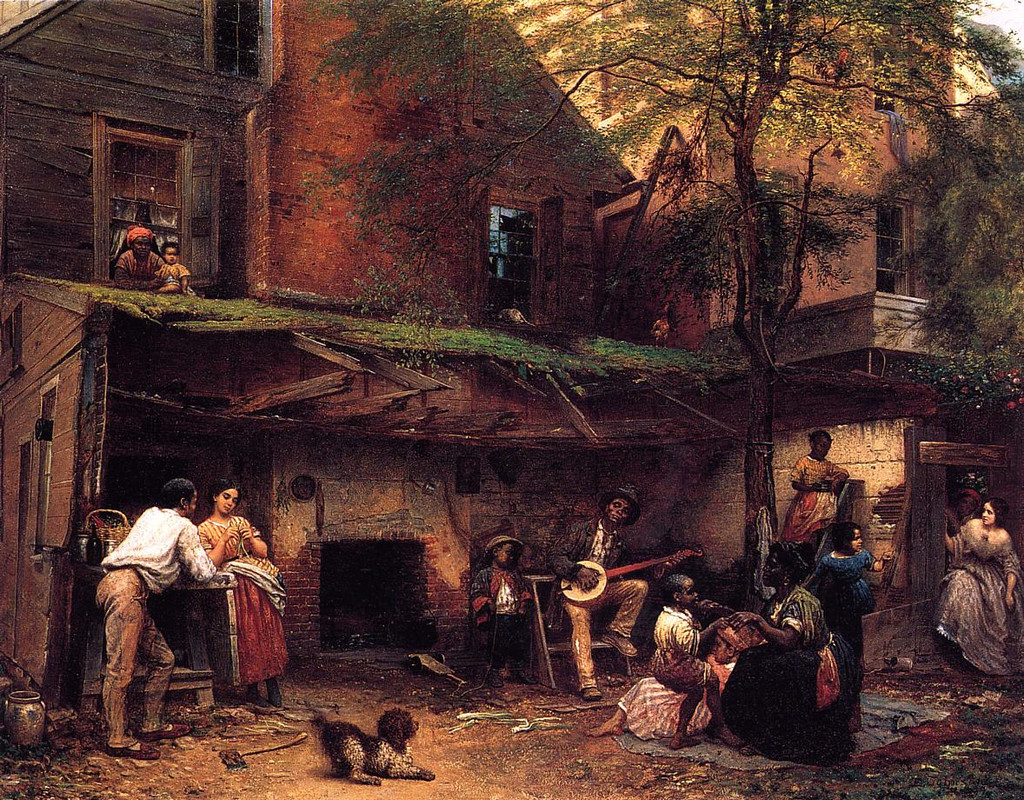
| Negro Life at the South | 1859; New York Historical original | Oil on linen |
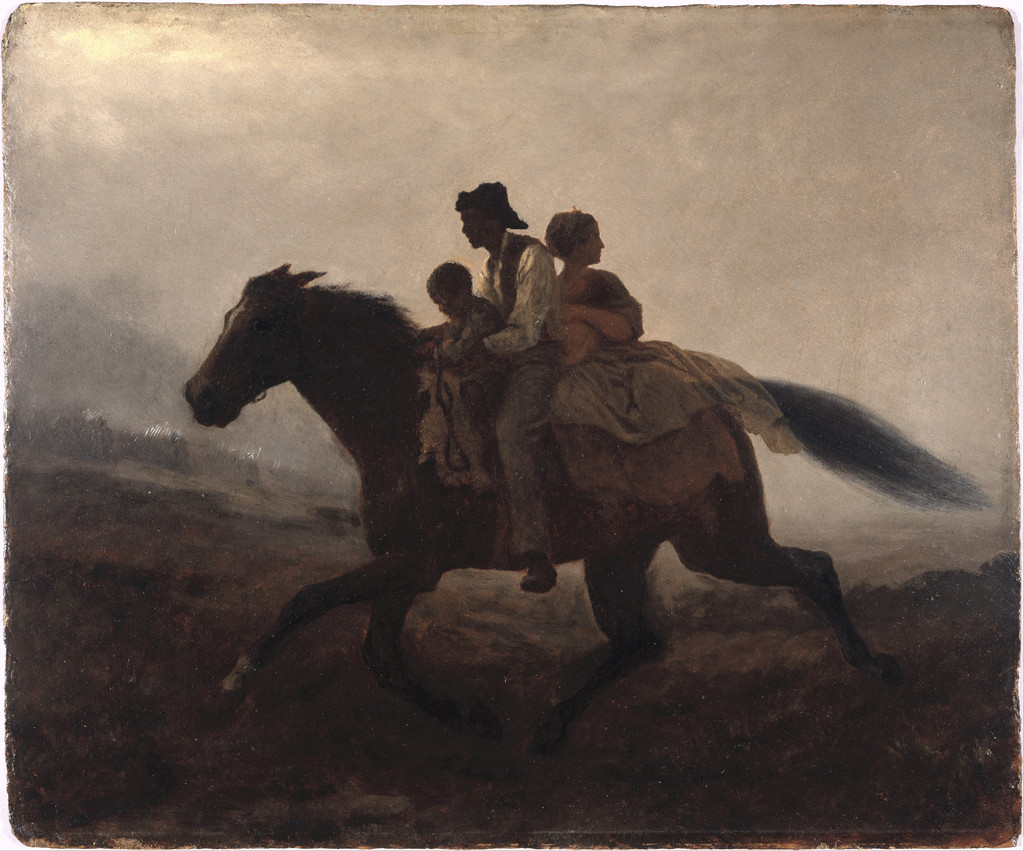
| A Ride for Liberty—The Fugitive Slaves | About 1862; Brooklyn version | Oil on paperboard |
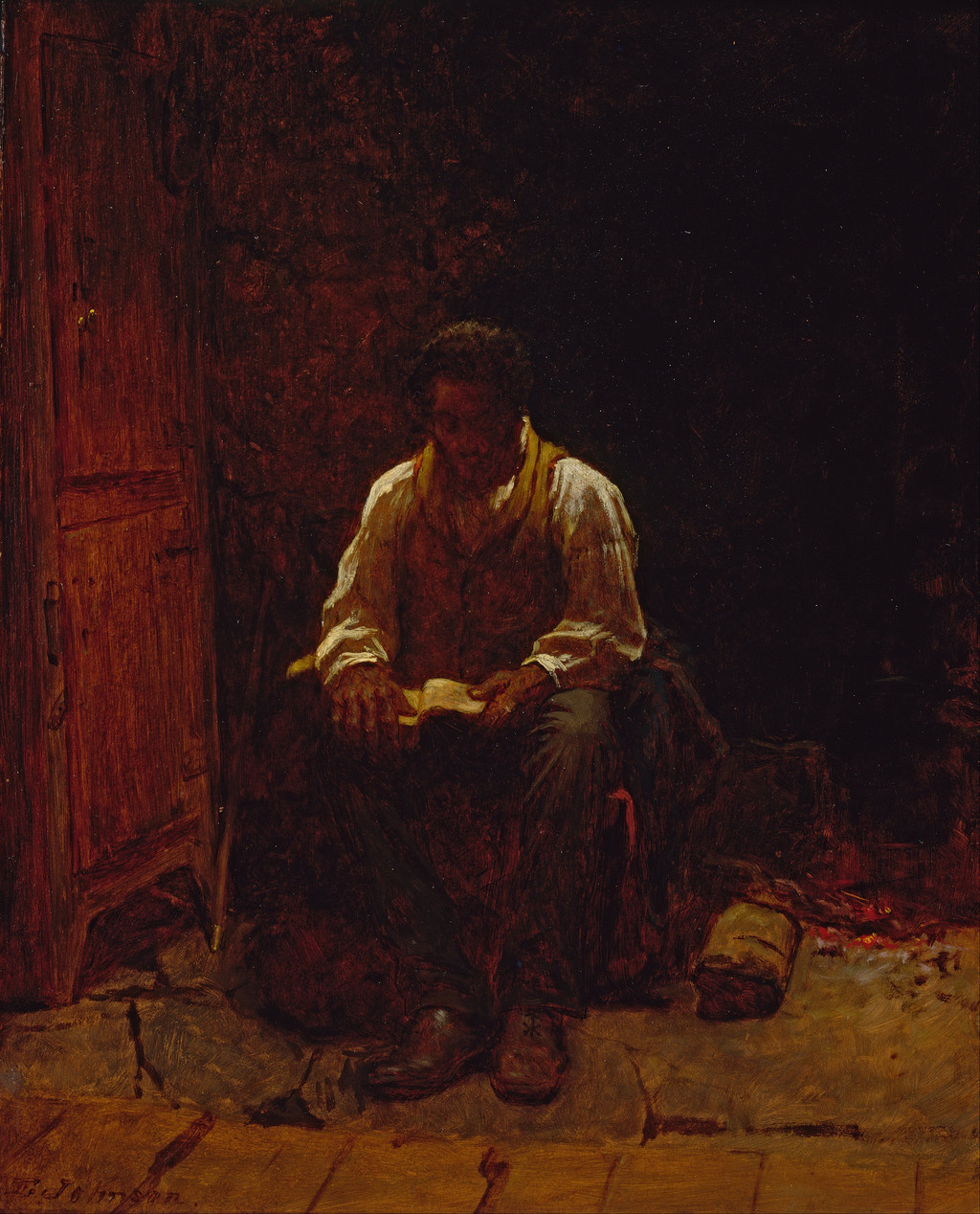
| The Lord Is My Shepherd | 1863 | Oil on fiberboard |
| Sugaring Off | About 1864–65; unfinished RISD canvas | Oil on canvas |
| The Wounded Drummer Boy (San Diego study) | About 1864–71; study, not the finished canvas | Oil on board |
| The Early Scholar | About 1865; NGA study | Oil on academy board on canvas |
| Fiddling His Way | 1866; Chrysler canvas | Oil on canvas |
| The Letter Home | 1867; Minneapolis drawing | Charcoal and graphite on paper |
| The Boyhood of Lincoln | 1868; Michigan canvas | Oil on canvas |
| The boyhood of Lincoln—An evening in the log hut (Prang after Johnson) | About 1868; separate reproductive print | Chromolithograph, W. Harring / L. Prang & Co., after Johnson |
| The Brown Family | 1869; NGA version | Oil on paper on canvas |
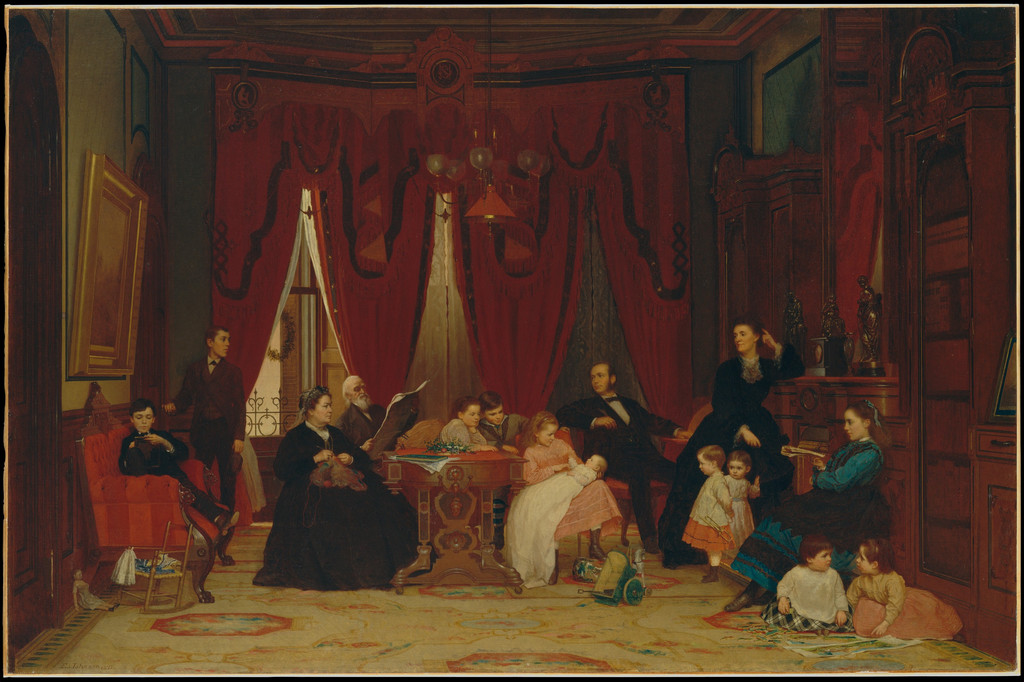
| The Hatch Family | 1870–71 | Oil on canvas |
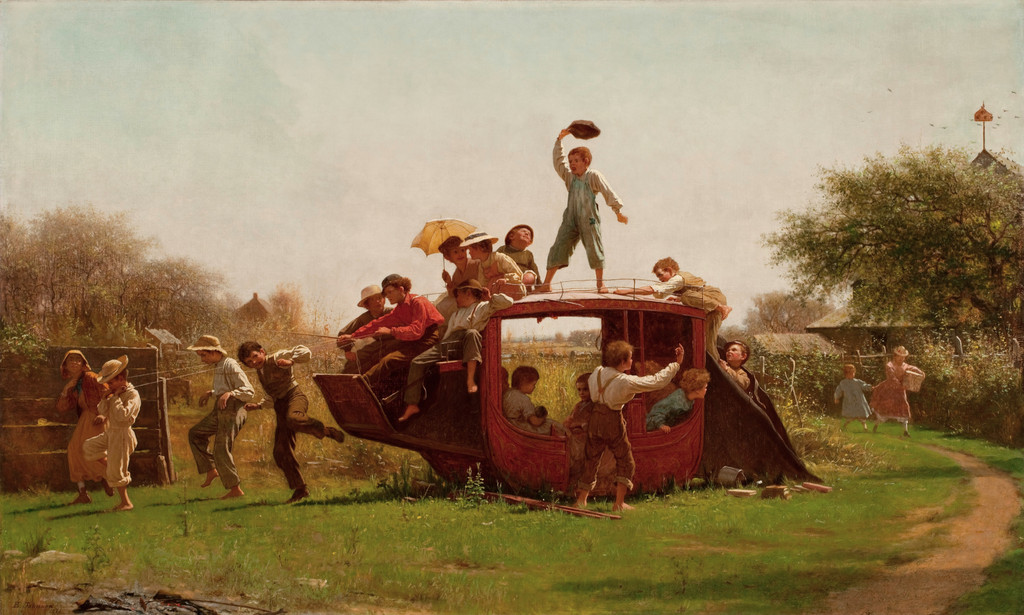
| The Old Stagecoach | 1871 | Oil on canvas |
| The Girl I Left Behind Me | About 1872 | Oil on canvas |
| The Toilet | 1873 | Oil on paper board |
| Husking Bee, Island of Nantucket | 1876; Chicago canvas | Oil on canvas |
| The New Bonnet | 1876 | Oil on academy board |
| Sanford Robinson Gifford | 1880; possibly posthumous | Oil on academy board |
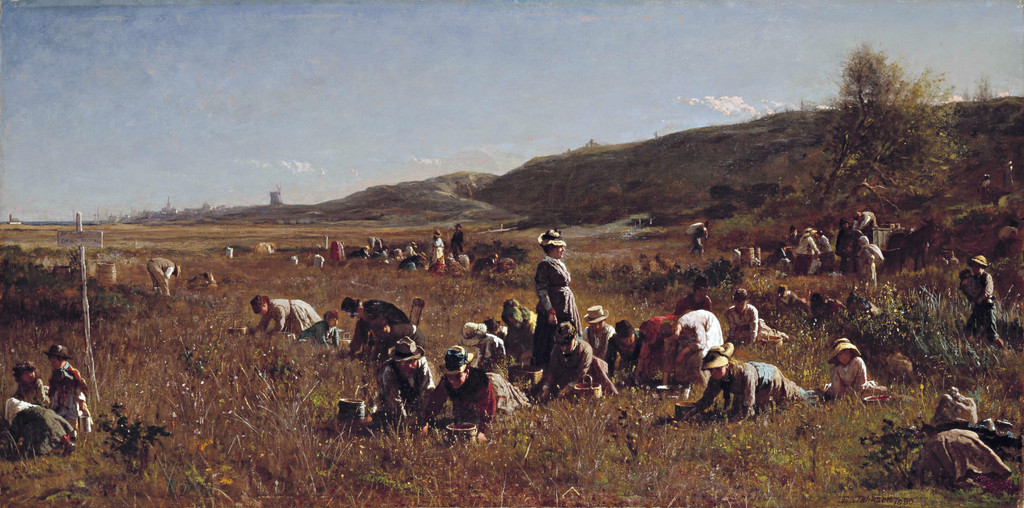
| The Cranberry Harvest, Island of Nantucket | 1880; Timken canvas | Oil on canvas |
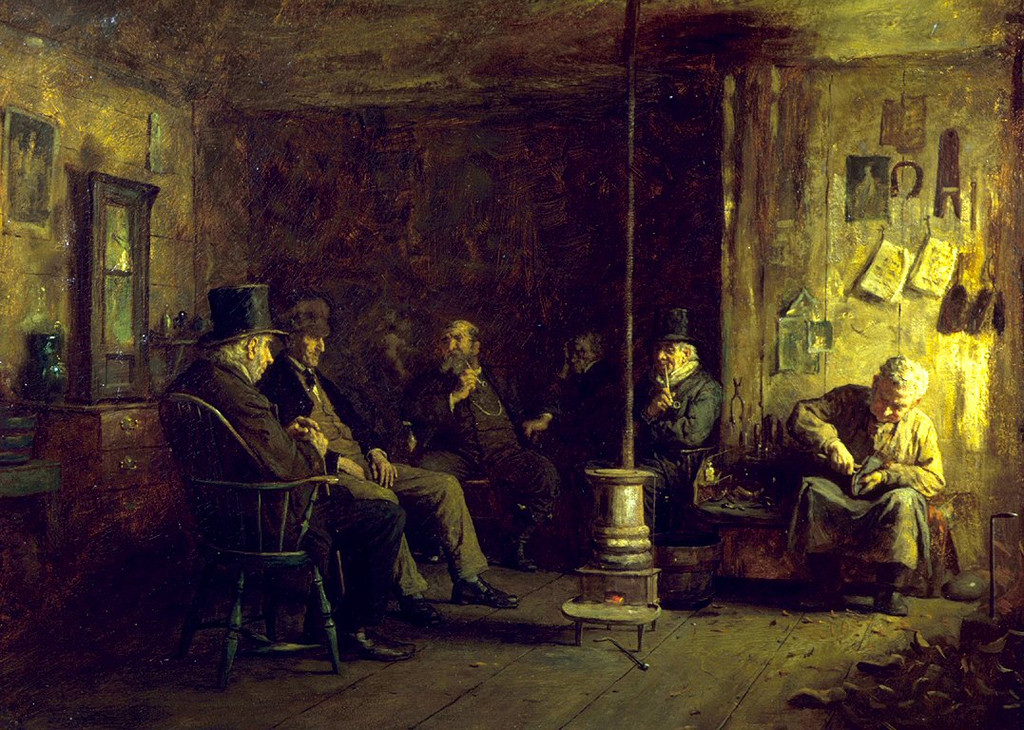
| The Nantucket School of Philosophy | 1887 | Oil on panel |
Frequently Asked Questions
No. The surviving work includes commissioned portraits and substantial pictorial drawings as well as studies. A relationship to a painting does not by itself establish a sheet’s exact place in a working sequence.
The catalogue records the historical society’s statement that the sitter’s gender is unknown. The neutral title avoids repeating conflicting older assignments as facts. [2]
Discussion
Look again at the images and ideas explored in Eastman Johnson’s Drawings. These editorial prompts invite your observations.
Reader Insights
How does The Letter Home organise attention using tone rather than a wide range of colours?
What questions can a dated drawing answer, and which questions about the sitter remain unresolved?
Compare a commissioned likeness with a figure study. How might purpose affect the drawing’s degree of finish?
Join the Conversation
Share a detail, comparison or question about Eastman Johnson’s Drawings below.
References
- National Park Service , Longfellow House Fine Art Collection. Ten crayon portraits commissioned from September 1846, 1848 double portrait and the wider collection. View source
- Patricia Hills and Abigael MacGibeny , Ojibwe Youth, 4 October 1857, Hills no. 38.4.1. Visits, Stephen Bunga, object fields, titles and the reported 2020 identification limit. Original correspondence was not separately consulted. View source
- Minneapolis Institute of Art , The Letter Home, 1867, 74.17. Medium, dimensions, study designation, retrospective sitter information and frame record. View source
- National Park Service , Longfellow House Dining Room. Modern room arrangement and photograph context; Johnson’s over-door drawings are outside the supplied view. View source
- Patricia Hills , Technical Information on Johnson’s Practices. Drawing materials and tonal modelling; exact media remain object-specific. View source
- University of Minnesota Duluth , Eastman Johnson: Paintings and Drawings of the Lake Superior Ojibwe, 26 June 2006. Historical Tweed exhibition announcement and Carl Gawboy’s use of the collection. View source
- Nancy K. Anderson , Seated Man, in American Masters from Bingham to Eakins: The John Wilmerding Collection, 2004, pp. 84–86. Pencil study, comparisons and qualified sitter proposals. View source
- Natalie Spassky and others , American Paintings in The Metropolitan Museum of Art, Volume II, 1985, pp. 229–232. New Bonnet entry, Girl with Glass and mediated transfer evidence. View source
- Splash image source.
Eastman Johnson, The Letter Home, 1867. Charcoal and graphite on paper; image 60.96 × 76.2 cm, sheet 68.74 × 87.63 cm. Minneapolis Institute of Art, The Julia B. Bigelow Fund, 74.17. Public domain. Public domain .
View source