 by
Tom Gurney
Tom Gurney BSc (Hons) is an art history expert with over 20 years experience
Email:
tomgurney1@gmail.com
/ Phone:
+44 7429 011000
The Brown Family by Eastman Johnson: Introduction
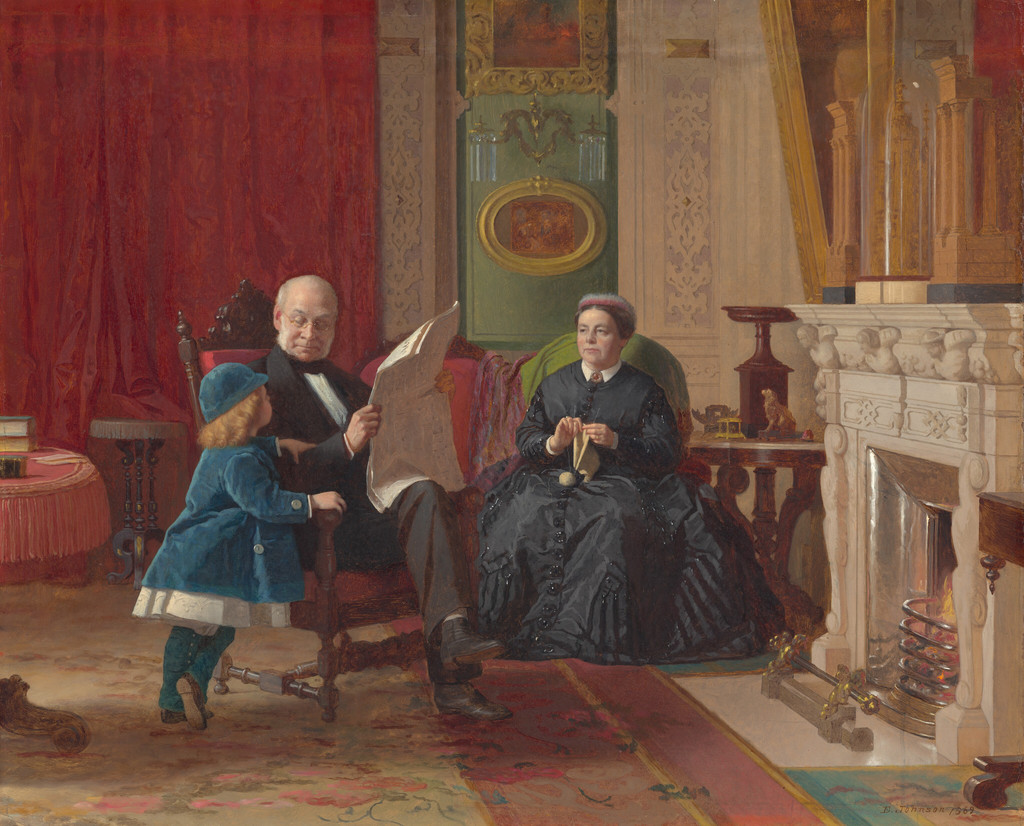
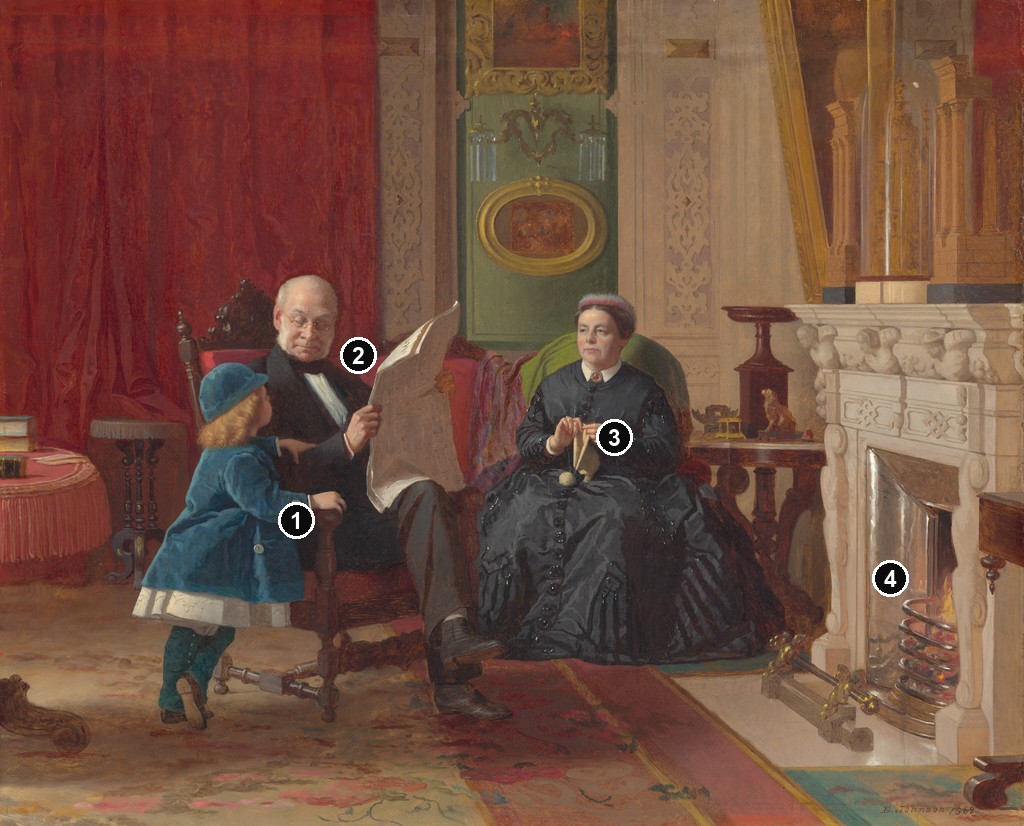
A small child in blue reaches towards his grandfather’s arm in Eastman Johnson’s The Brown Family . The older man pauses over a newspaper, while the grandmother looks across from her knitting. Their encounter takes place in a room whose rich colours and elaborate furnishings are almost impossible to overlook.
Johnson painted two related versions in 1869. The work illustrated here is the smaller, paper-supported picture in the National Gallery of Art. A larger canvas, catalogued in San Francisco, includes much more of the upper room. The distinction changes both the balance of the composition and the way its much-discussed critical reception should be understood. [1] [2]
At a Glance
- Artist Eastman Johnson
- Title The Brown Family
- Date 1869
- Medium Oil on paper on canvas
- Dimensions 59 × 72.4 cm
- Sitters James Brown, Eliza Maria Brown and William Adams Brown
- Collection National Gallery of Art, Washington
- Accession 1978.72.1
- Credit Gift of David Edward Finley and Margaret Eustis Finley
These details identify the smaller NGA version, not the larger canvas discussed below. [1]
This work across Eastman Johnson’s career
Fiddling His Way
1866; Chrysler canvasThe Letter Home
1867; Minneapolis drawingThe Boyhood of Lincoln
1868; Michigan canvasThe Brown Family (current article)
1869; NGA versionThe Hatch Family
1870–71The Girl I Left Behind Me
About 1872Notes and sources
Fiddling His Way. A Black musician’s playing gathers the attention of a household. [3]
The Letter Home. A wounded man and a woman writing connect spoken words with an absent home. [4]
The Boyhood of Lincoln. Firelight makes an imagined scene of Lincoln reading into an image of aspiration. [5]
The Brown Family (current article). A child’s reaching arm connects three generations within an elaborate interior. [1]
The Hatch Family. Fifteen figures inhabit a library through a carefully distributed set of activities. [6]
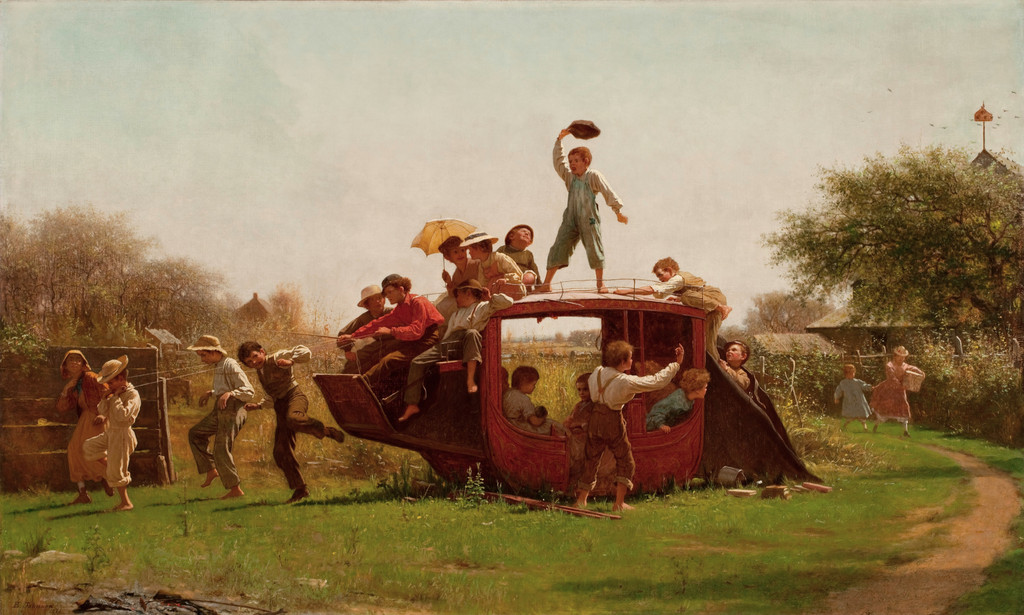
The Old Stagecoach. Children give a broken vehicle a new purpose through play. [7]
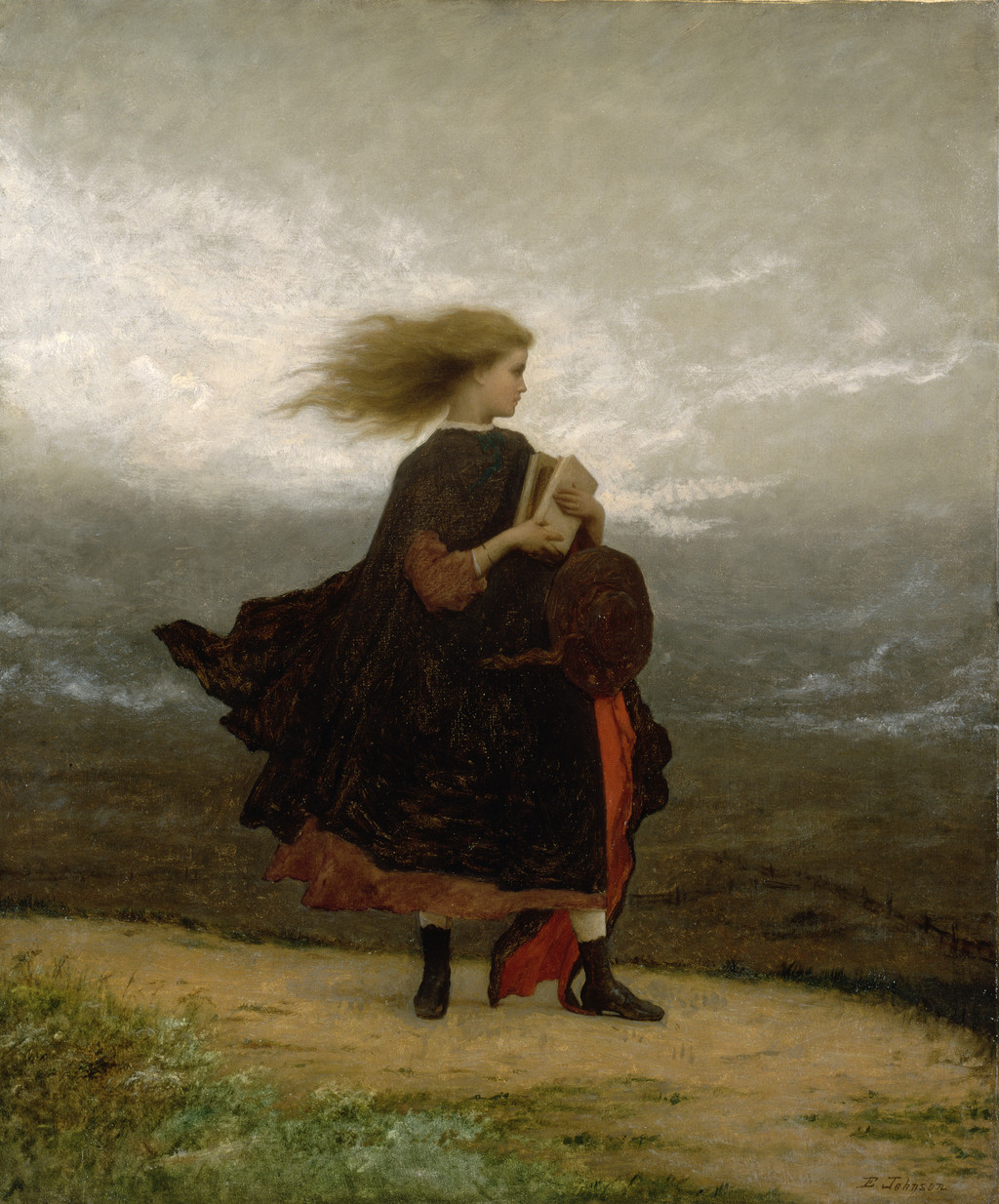
The Girl I Left Behind Me. A still figure, books and wind-driven clothing hold competing directions of attention. [8]
Contents
- Grandparents and a visiting child
- A room that competes with its occupants
- Two versions and two balances
- A Christmas gift and unexplained misunderstandings
- Photography and the constructed interior
- What the 1869 reviewers disliked
- Banking, inheritance and a possible dynastic reading
- Paper, revisions and the painted surface
- From family gift to the National Gallery
- Annotated details
Grandparents and a visiting child
The boy is William Adams Brown, grandson of James and Eliza. His parents are absent from the composition, giving the relationship between old age and early childhood particular prominence. John Davis’s NGA catalogue entry places the picture within a wider nineteenth-century interest in family groups that joined grandparents and grandchildren. [2]
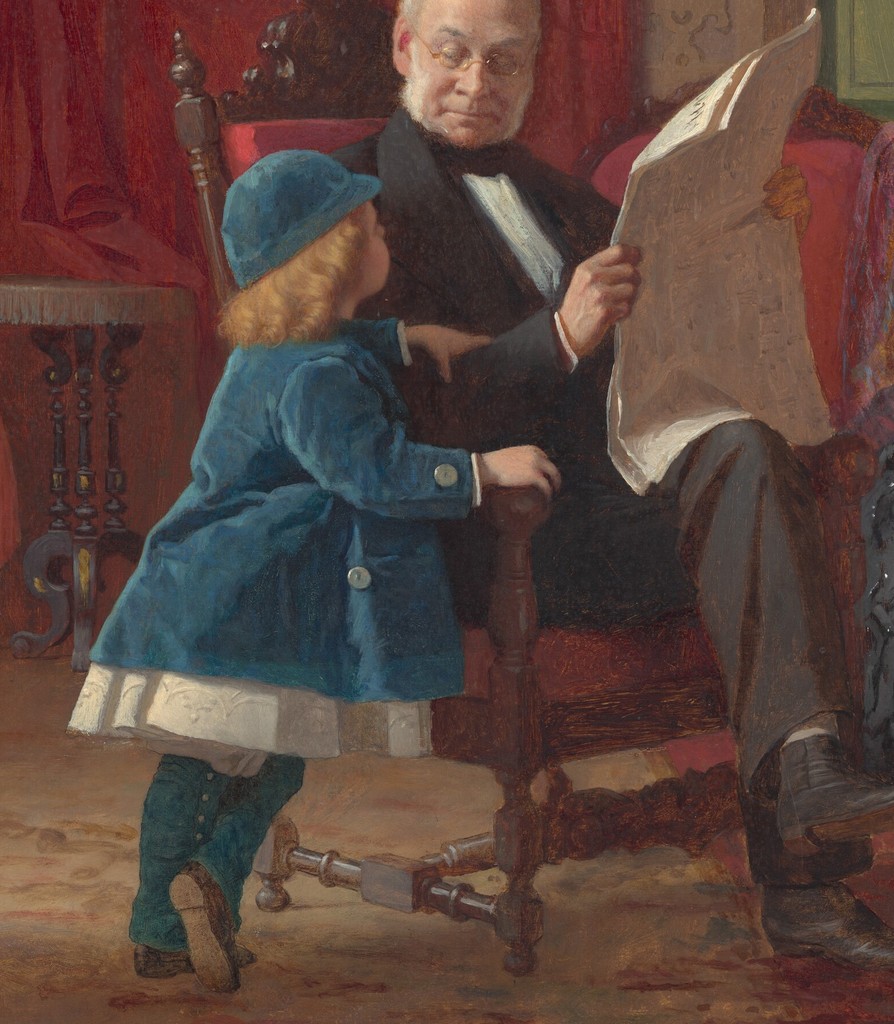
William stands to the left of his grandfather’s chair, wearing a blue outdoor coat and cap. His blond curls remain visible beneath the cap, and his clothes form a bright, compact shape against the room’s deeper reds. He is close enough to make bodily contact, but still looks like a newcomer interrupting an established activity.
The point of contact is small and consequential. William’s hand rests on the older man’s arm as James holds the open newspaper. The child’s upward glance and the grandfather’s lowered gaze connect across that gesture. Johnson makes the interruption legible without needing a written account of what the boy is saying.
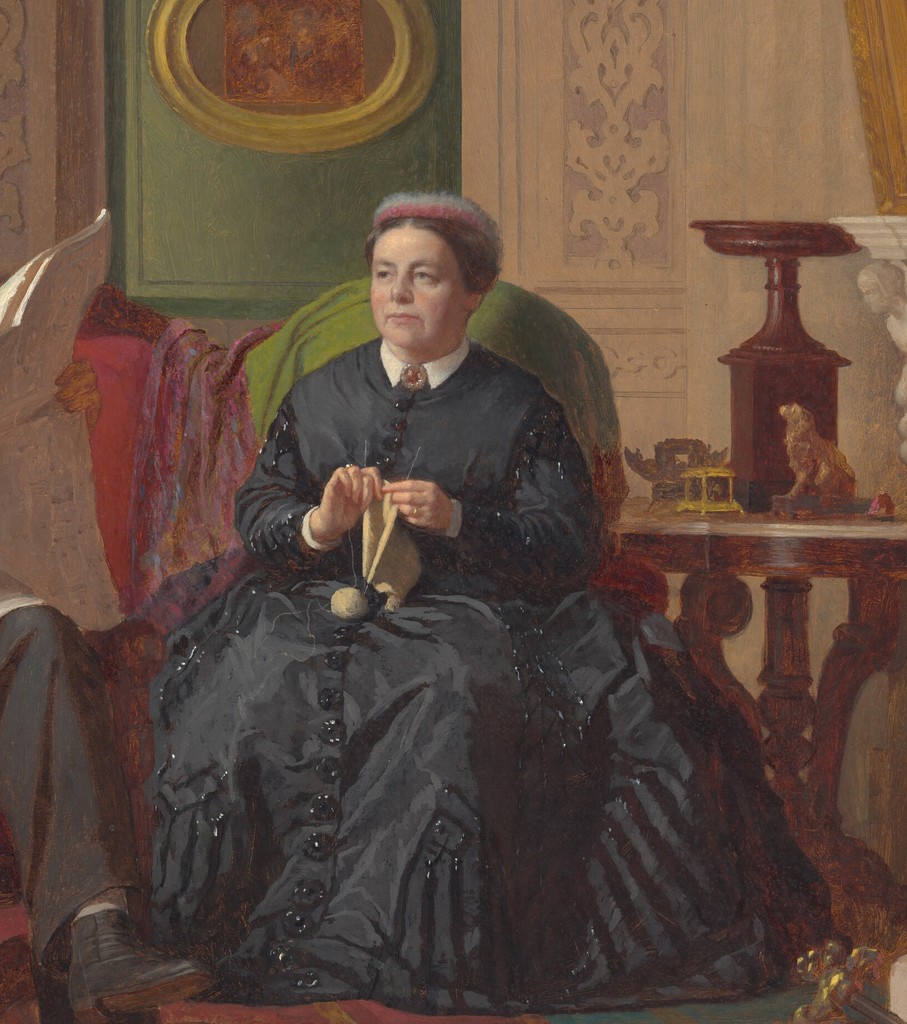
Eliza’s role is quieter. She remains seated at the right with knitting in her hands and a ball of yarn against her dark dress. Her slight turn towards the other figures guides our attention across the room. The encounter can therefore remain concentrated on James and William while including an observing participant.
The activities also suggest different connections beyond the immediate group. The newspaper brings current information into the parlor; the child’s outdoor clothing implies movement from elsewhere; knitting supplies a sustained domestic occupation. These relationships make the family gathering feel inhabited, although they do not establish a particular day, conversation or reason for the visit.
Annotated Details from The Brown Family
The numbered points identify visible features discussed in this article. Return from each detail to the whole composition. Eastman Johnson, The Brown Family, 1869. Oil on paper on canvas, 59 × 72.4 cm. National Gallery of Art, Gift of David Edward Finley and Margaret Eustis Finley, 1978.72.1. Public domain. This is the smaller Washington version. Image source. Public domain. Numbers added to a separate overview; detail images are native crops. No recolouring, retouching, reconstruction or enlargement.
Details from THE BROWN FAMILY
Compare the cropped details with the complete images above. Notice how their colours, shapes and positions contribute to the larger compositions.
The child’s reaching arm
The child’s blue clothing stands out against the red furnishings. One hand reaches towards the seated man’s arm, creating a connection that interrupts his attention to the newspaper.
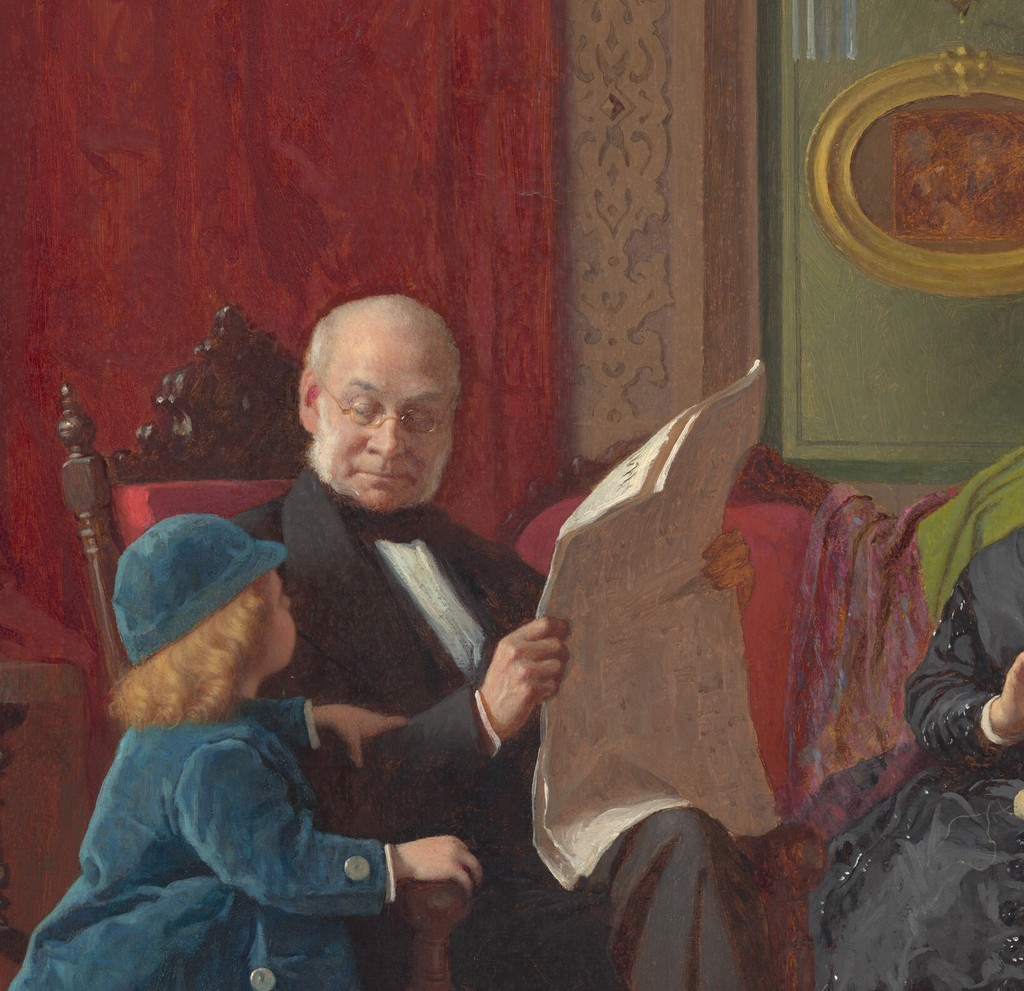
A face above the newspaper
The newspaper rises diagonally beside the older man’s head. His glasses, dark coat and pale shirt bring a recognisable likeness into the larger arrangement of furniture and family activity.
Knitting and a separate direction of attention
The woman holds her knitting in front of her dark dress while looking across the room. Her hands and gaze give her a distinct occupation within the three-person group.
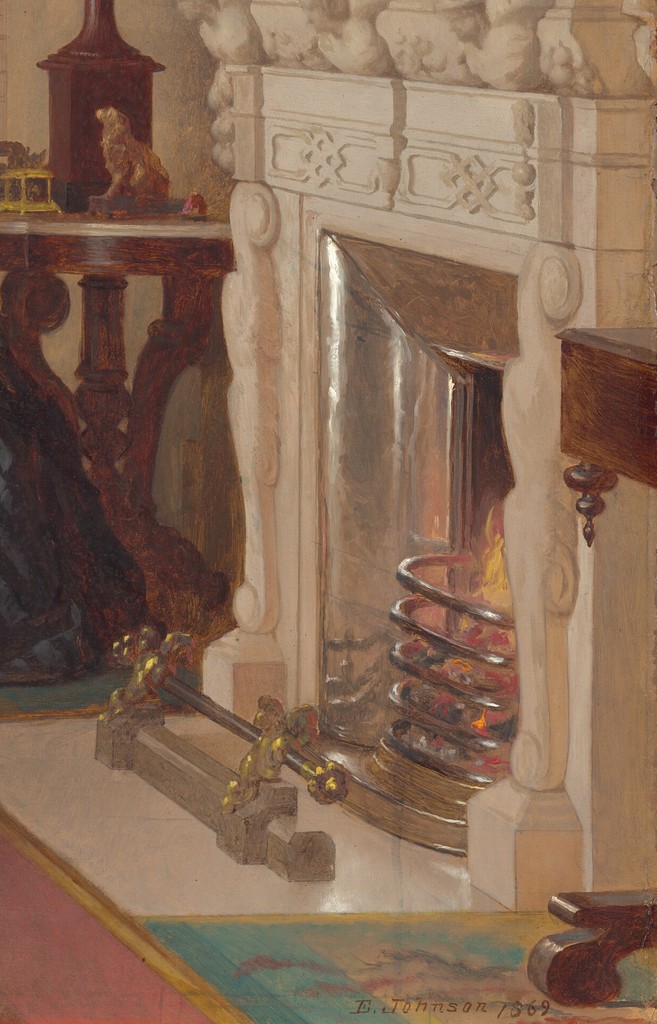
The fireplace as a second bright centre
The pale mantel and fire occupy a substantial area beside the figures. Carved details, the grate and the floor surround make the room’s furnishings active parts of the composition.
A room that competes with its occupants
Red curtains occupy much of the left background, while the carpet carries related colour across the foreground. Between the drapery and fireplace, a green panel with gold-framed decoration introduces a cooler vertical area. The people sit within a setting that is strongly divided and richly patterned before any individual furnishing is examined.
At the right, the pale carved fireplace supplies the largest light architectural mass. Its relief heads, mouldings, grate and metal fittings give it an unusually insistent presence. Small objects on nearby furniture receive highlights of their own. The interior can draw the eye away from the child’s gesture and then return it through the placement of faces and chairs.
Davis connects the room with the Browns’ attachment to their furnishings. His account traces a decorative ensemble associated with Léon Marcotte and French Renaissance Revival taste, incorporating objects retained from an earlier home. The family subsequently moved major parts of the interior again, making the room’s material continuity part of its history. [2]
That history complicates the idea of home as a fixed address. Furniture, wall treatments and the mantel could help carry a familiar domestic identity from one residence to another. The painting records an attachment to an ensemble of things as well as a particular arrangement of people.
The exact residence represented remains less secure than the recognisable furnishings. Davis’s notes discuss conflicting family recollections about the University Place and Park Avenue homes. Similar rooms were recreated after a move. A precise address should therefore not be supplied as if the painting’s setting had been settled beyond doubt. [2]
Two versions and two balances
The larger 1869 canvas, identified in the NGA catalogue as belonging to the Fine Arts Museums of San Francisco, extends the interior substantially above the figures. It gives greater scope to ceiling, chandelier and decorative architecture. In the smaller Washington picture, the family occupies a larger proportion of the available field. [2]
This is more than a difference in physical size. Reducing the expanse above the sitters changes the route through the composition. William’s contact with his grandfather becomes more prominent, and the relationship among the three people competes less with the upper room. The furnishings still matter, but they surround a more concentrated human exchange.
Davis notes smaller differences as well: particular ornaments do not appear identically in the two works. These variations discourage treating the NGA version as a mechanically reduced photograph of the larger canvas. It is a related painted object with its own support, framing of the subject and material history. [2]
The paper support might initially suggest a preparatory sketch. Its high degree of finish and a later family letter make that simple explanation inadequate. The relationship between study, replica and selected repetition needs to be considered through the documentary evidence, rather than decided from size alone.
A Christmas gift and unexplained misunderstandings
In December 1870, James and Eliza gave the smaller picture to their grandson James Clifton Brown and his wife, Amelia, in England. John Crosby Brown’s accompanying letter described it as a repetition of part of the family portrait and referred to misunderstandings behind its creation. Davis reproduces the substance of that letter in the catalogue. [1] [2]
The promised explanation of those misunderstandings has not been recovered in the consulted account. It would be tempting to connect the smaller composition directly with the hostile criticism of the larger painting and claim that the Browns ordered an edited room. Davis raises that possibility as a question, but the surviving letter does not establish it as the reason. [2]
The documented gift supplies a firmer conclusion. This version became an object through which the grandparents’ likenesses could travel to another branch of the family. Its meaning was therefore shaped not only by public exhibition and criticism, but also by private exchange and inheritance.
Photography and the constructed interior
Davis discusses Brown family photographs attributed to Mathew Brady as sources for parts of Johnson’s composition. The comparison concerns both the room and aspects of the figures’ arrangement. In particular, he identifies a close relationship between Eliza’s hands in the painting and in a family photograph. [2]
That evidence introduces photography into the making of a work that also depends on drawn perspective, painted colour and selected narrative action. It does not make the picture an unedited photographic transcription. The differing versions, the boy’s role and the organisation of the room all demonstrate choices within the painted composition.
Photography also helps explain why some family furnishings can be followed across different homes. Davis’s account compares photographic records of the interiors rather than relying on the portrait alone. Those images are evidence in the scholar’s reconstruction; they have not been reproduced here as independently cleared illustrations.
Watch: Eastman Johnson
Choose a film to explore the artist’s work, its interpretation and its wider setting.
Director's Choice - The Girl I Left Behind Me by Eastman Johnson
The Smithsonian American Art Museum looks at Johnson’s The Girl I Left Behind Me.
Watch on YouTubeWhat the 1869 reviewers disliked
Johnson exhibited the larger canvas at the National Academy of Design in 1869 under the title Portraits . The critical controversy therefore belongs first to that exhibited object. It should not be introduced as if reviewers had assembled around the smaller NGA painting. [2]
As Davis explains, many writers admired the child but objected to the room’s conspicuous decoration. Their responses ranged from criticism of elaborate upholstery and colour to attacks on the sitters’ taste. Clarence Cook’s extended review treated Johnson’s attention to the furnishings as a laborious encounter with an unappealing setting. [2]
The dispute reveals that precision was not automatically a virtue. Reviewers could recognise the skill required to describe an interior while questioning whether its objects deserved so much pictorial attention. The portrait became a place where artistic judgment and the social judgment of wealthy patrons were entangled.
The smaller picture now offers a useful way to reconsider that dispute. Its concentrated family interaction remains clear even within a richly decorated room. The child’s hand, grandfather’s pause and grandmother’s glance can be appreciated without adopting the reviewers’ contempt for the Browns’ possessions.
Banking, inheritance and a possible dynastic reading
James Brown was a leading figure in the family’s international merchant-banking business. Davis connects the portrait’s intergenerational structure with questions of family continuity and changing business responsibilities. William’s position beside his grandfather can consequently be read within a wider history of lineage and inherited standing. [2]
That interpretation gains interest from the objects passed between generations and residences. Family identity was expressed through both people and possessions. Nevertheless, a dynastic reading is an argument about the picture’s context, not a surviving instruction from the patron explaining every figure or ornament as a symbol.
The same distinction is useful in The Hatch Family , where Johnson placed three generations within another affluent interior. Neither picture has to choose between affection and display. Their interest comes partly from the way familiar domestic gestures and visible prosperity occupy the same scene.
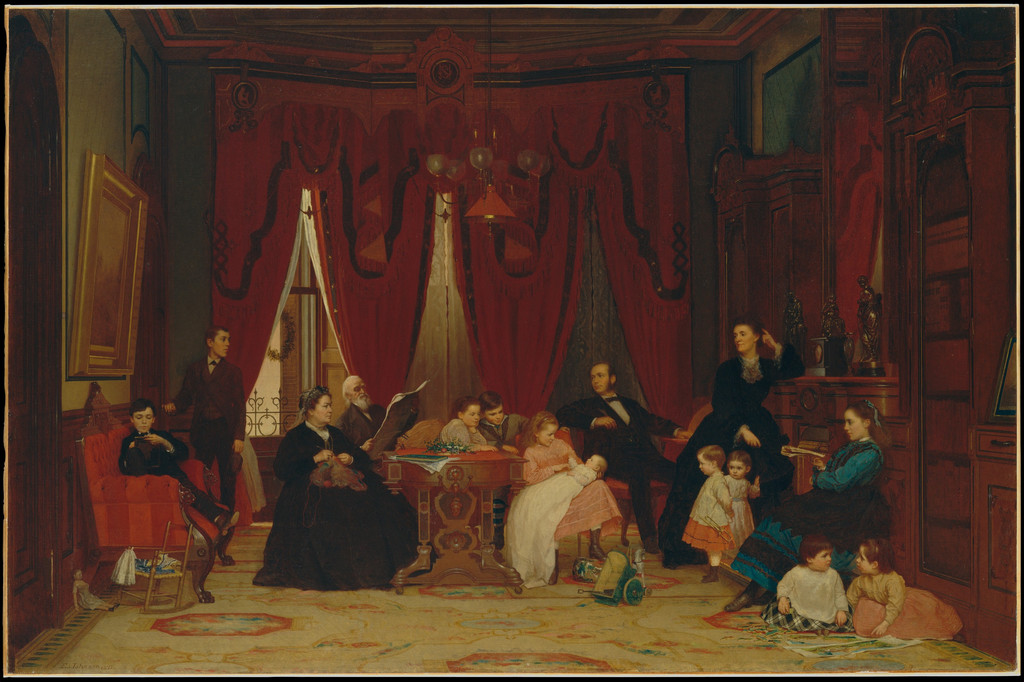
Eastman Johnson, The Hatch Family, 1870–71. Oil on canvas, 121.9 × 186.4 cm. The Metropolitan Museum of Art, Gift of Frederic H. Hatch, 1926, 26.97. Public domain.
Image source
.
Public domain
.
Paper, revisions and the painted surface
The NGA’s 1996 technical account identifies a paper support with a narrow band, about four centimetres wide, added along the top. Both pieces were lined to fabric. The resulting object therefore should not be described simply as an ordinary stretched canvas, even though canvas forms part of its present structure. [2]
The report describes a very thin cream-coloured priming and extensive underdrawing, including perspective lines for the carpet and fireplace. Infrared reflectography and x-radiography revealed slight adjustments to the man and child. These observations show that the detailed interior was developed through planning and revision, rather than appearing fully resolved in one application. [2]
Paint was generally applied thinly, with the figures more finished than the background. Small raised touches occur in the fire and metal highlights. The technical entry also records varnish removal and restoration before the 1978 acquisition. Those are dated findings from the published account, not a guarantee about every aspect of the object’s current condition. [2]
From family gift to the National Gallery
The Washington version remained within the extended family after its 1870 presentation in England. It passed through the Clifton Brown, Calvert and Garnett-Orme ownership histories before reaching Peter H. Davidson & Co. The NGA records its purchase on 15 November 1978 and credits the gift of David Edward Finley and Margaret Eustis Finley. [1]
Its museum identity preserves both an intimate encounter and a complicated object history. A small gesture that interrupts newspaper reading sits within a room associated with wealth, memory and migration between homes. Johnson’s two versions let us see how much the balance among those elements can change when the same family is given a different amount of pictorial space.
Artworks directory
Browse twenty-one selected objects discussed in these articles, including the Gifford portrait and the Prang print after Johnson. Dates identify individual objects, including the San Diego Drummer Boy study. Use All media to include the chromolithograph.
| Name | Date | Medium |
|---|---|---|
| Kitchen at Mount Vernon | 1857; Charles Butt canvas | Oil on canvas |
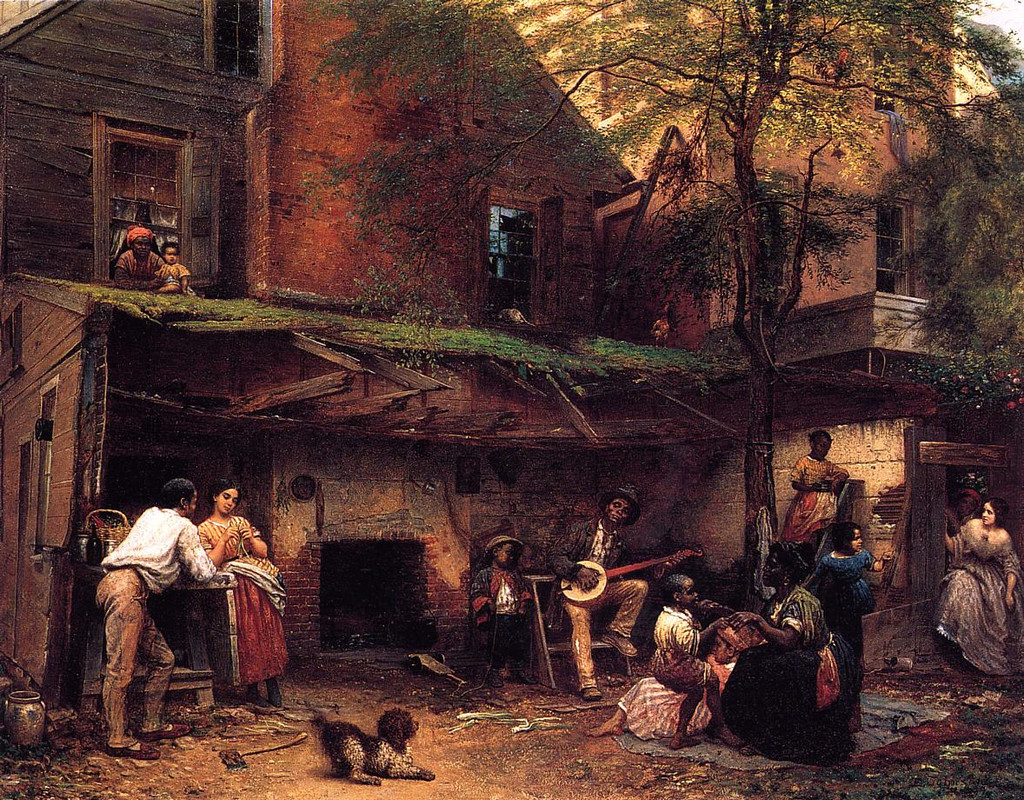
| Negro Life at the South | 1859; New York Historical original | Oil on linen |
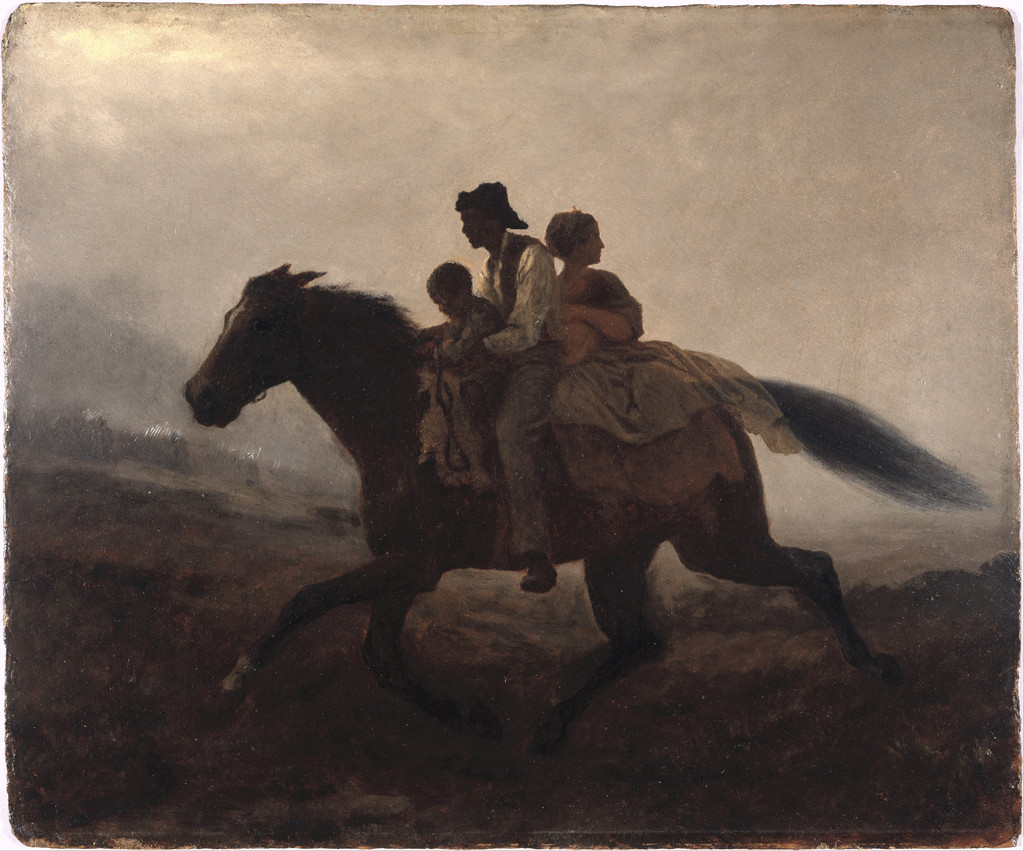
| A Ride for Liberty—The Fugitive Slaves | About 1862; Brooklyn version | Oil on paperboard |
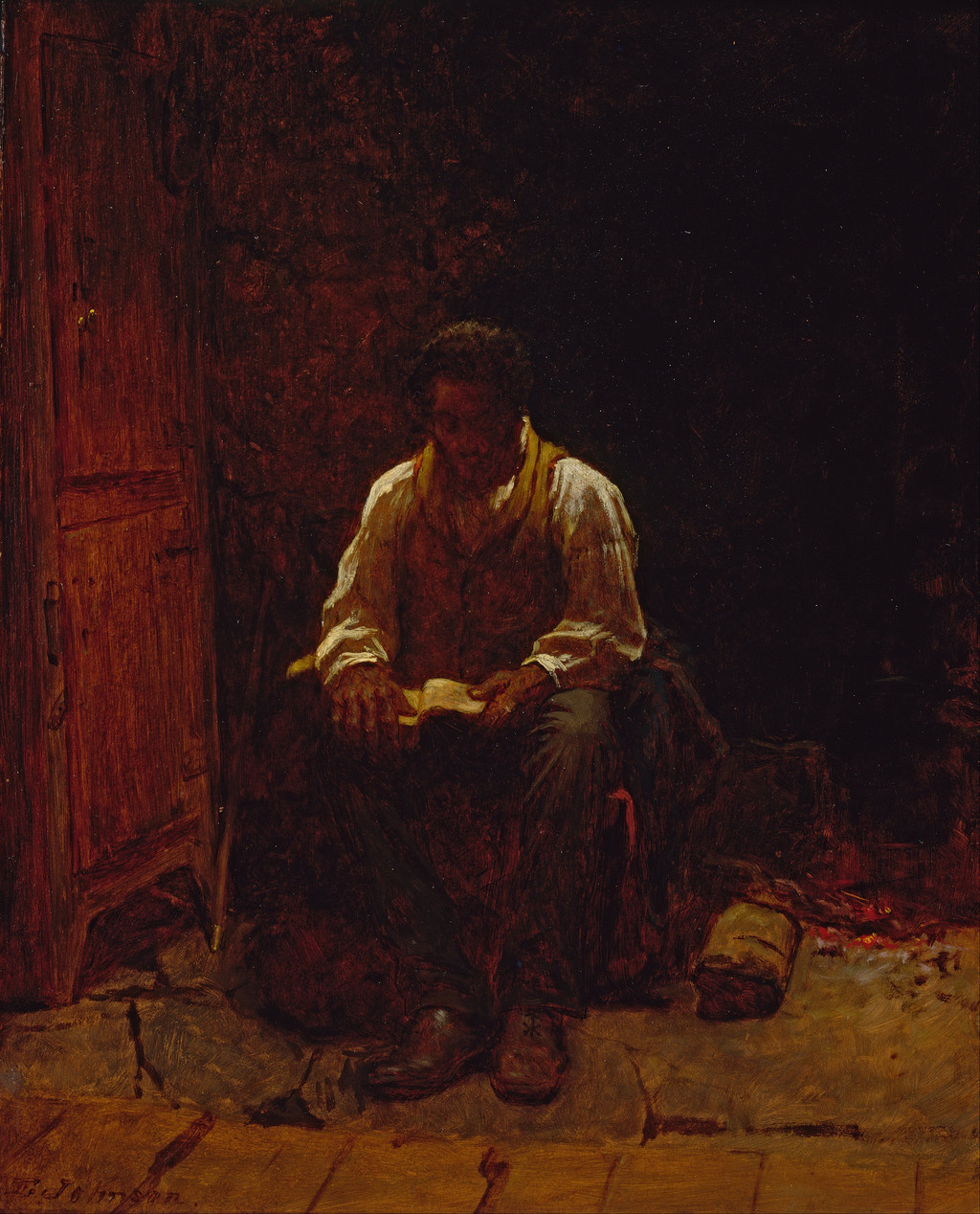
| The Lord Is My Shepherd | 1863 | Oil on fiberboard |
| Sugaring Off | About 1864–65; unfinished RISD canvas | Oil on canvas |
| The Wounded Drummer Boy (San Diego study) | About 1864–71; study, not the finished canvas | Oil on board |
| The Early Scholar | About 1865; NGA study | Oil on academy board on canvas |
| Fiddling His Way | 1866; Chrysler canvas | Oil on canvas |
| The Letter Home | 1867; Minneapolis drawing | Charcoal and graphite on paper |
| The Boyhood of Lincoln | 1868; Michigan canvas | Oil on canvas |
| The boyhood of Lincoln—An evening in the log hut (Prang after Johnson) | About 1868; separate reproductive print | Chromolithograph, W. Harring / L. Prang & Co., after Johnson |
| The Brown Family | 1869; NGA version | Oil on paper on canvas |
| The Hatch Family | 1870–71 | Oil on canvas |
| The Old Stagecoach | 1871 | Oil on canvas |
| The Girl I Left Behind Me | About 1872 | Oil on canvas |
| The Toilet | 1873 | Oil on paper board |
| Husking Bee, Island of Nantucket | 1876; Chicago canvas | Oil on canvas |
| The New Bonnet | 1876 | Oil on academy board |
| Sanford Robinson Gifford | 1880; possibly posthumous | Oil on academy board |
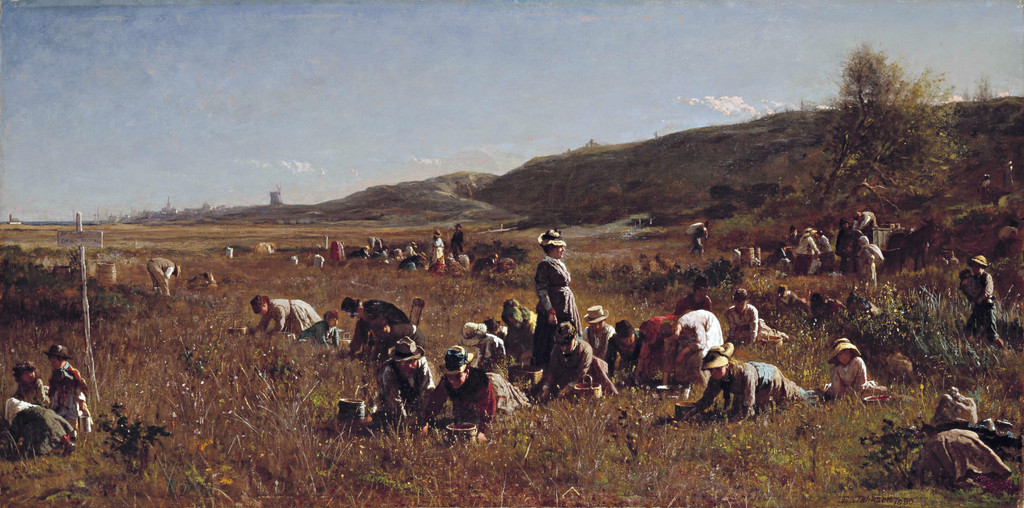
| The Cranberry Harvest, Island of Nantucket | 1880; Timken canvas | Oil on canvas |
| The Nantucket School of Philosophy | 1887 | Oil on panel |
Frequently Asked Questions
They are James Brown, his wife Eliza Maria Brown and their grandson William Adams Brown. William’s parents are not included. [2]
The smaller version became a family gift, but the precise circumstances behind its creation remain unresolved. A letter mentions misunderstandings without supplying the explanation in the consulted record. [2]
The larger canvas, catalogued in San Francisco, was exhibited at the National Academy. Those reviews should not be assigned directly to the smaller Washington version. [2]
Davis identifies family photographs attributed to Mathew Brady as sources for parts of the room and figures. The painting nevertheless contains its own selection, arrangement and revisions. [2]
Discussion
Look again at the images and ideas explored in The Brown Family by Eastman Johnson. These editorial prompts invite your observations.
Reader Insights
How does the child connect the seated adults, and where does the room compete with that exchange?
Compare the two versions through their records. Which conclusions belong to one object rather than both?
How do furnishings and inherited objects contribute to the family’s public image without explaining its private thoughts?
Join the Conversation
Share a detail, comparison or question about The Brown Family by Eastman Johnson below.
References
- National Gallery of Art. The Brown Family , 1869, 1978.72.1. Current object information, provenance, acquisition, inscriptions and public-domain image. View source
- John Davis. “The Brown Family.” In American Paintings of the Nineteenth Century , Part I, National Gallery of Art, 1996, pp. 376–382. Sitters, two versions, family documents, photographs, reception and technical notes. Original family letters, photographs and nineteenth-century periodicals are consulted through this scholarly account. View source
- Fiddling His Way,1866,89.60. View source
- The Letter Home,1867,74.17; current collection data. View source
- Boyhood of Lincoln,1868,1895.90. View source
- The Hatch Family, 1870–71, 26.97. View source
- The Old Stagecoach, 1871, L1888.22. View source
- The Girl I Left Behind Me, c.1872, 1986.79. View source
- Splash image source.
Eastman Johnson, The Brown Family, 1869. Oil on paper on canvas, 59 × 72.4 cm. National Gallery of Art, Gift of David Edward Finley and Margaret Eustis Finley, 1978.72.1. Public domain. This is the smaller Washington version. Public domain .
View source